A UK Boomer, Gen X, Millenial and Gen Z Man On Sex In 2025

Salt–N–Pepa might have famously sung the words ‘Let’s Talk About Sex, Baby’, but let’s face it, talking about our bedroom antics isn’t always comfortable, especially when it comes to sharing the nitty gritty details of what you like, how much you’re having and – scariest of all – your feelings about it.

Fortunately in 2025 conversations around sex have become so much more commonplace thanks to an ever-changing cultural shift that champions emotional openness, but according to new data, men are being left behind.

A survey on over 2,000 UK adults from Lovehoney, the UK’s leading sexual wellness brand, has uncovered the deep emotional disconnects around sex, intimacy and identity that the men of the UK are struggling with.

According to the stats, 40% of men worry about their sexual performance (compared to just 21% of women) and many still avoid honest conversations with their partner.

In fact, 10% of men want to talk more openly about sex with their partner, but don’t – that’s equivalent to over 2.25 million male adults.

And worries about sex is an intergenerational issue when it comes to men – the survey found that 79% of men have worries about sex, increasing to 86% of Gen Z men and 87% of Millennial men.

“It’s a finding that speaks volumes about modern masculinity,” GP and men’s health expert, Dr Anand Patel, who has teamed up with Lovehoney, tells us.

“We’re living through a time when men are under pressure to be everything at once; emotionally open, sexually confident, but still somehow ‘in control’. The result? Performance anxiety, miscommunication, and in some cases, total disconnect.”

So what do the men of the UK actually think about sex in 2025? And as the data has found generational differences when it comes to worries about sex, what are Boomers feeling versus fresh-faced Gen Zers?

Enter Gideon, Kian, Gill and Keith – a Gen Z, a Millenial, a Gen X and a Boomer who’ve shared their lived experiences of sex, dating, and identity in a bid to shatter stereotypes and give voice to real, often-overlooked male perspectives.

Here are their stories.

“It’s magic, not a miracle”: Gideon, 27, Gen Z
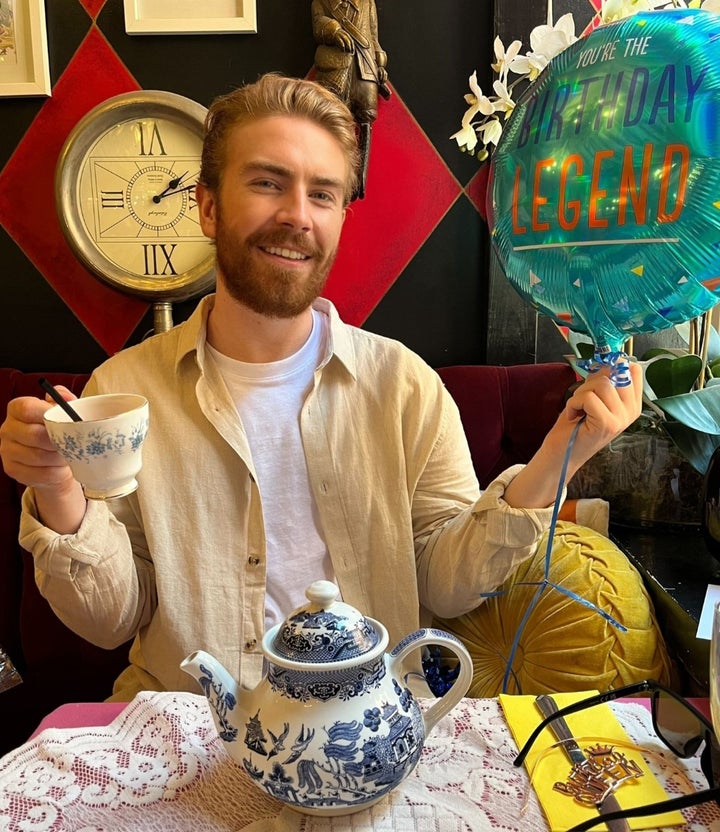
Gideon, Gen Z
Gideon, Gen Z

From a young age, Gideon Allen knew he was different.

“I just felt this spark within me,” he remembers. “I grew up obsessed with crystals and mermaids. It spoke to something in me.”

Now 27, Gideon is a gay actor and part-time witch living in Liverpool – a man who blends mysticism, kink and a no-BS approach to dating in equal measure.

“People ask me why I don’t magic up a boyfriend,” he laughs. “But it’s magic, not a miracle. You can only do so much.”

Despite his openness around kink and communication, Gideon is single and, frankly, unimpressed.

“People tend to over-promise and under-deliver in bed,” he says. “A lot of men brag about their sexual achievements – if you want to call it that – but when it actually comes down to getting dirty, they’re lacklustre. All bark and no bite.”

As a gay man, Gideon is also tired of being used as someone else’s experiment.

“One of my biggest gripes is straight-identifying men who flirt or make suggestive moves, then brush it off as a joke. It’s not flattering. It’s exhausting,” he says. “I become their secret, a way to explore without being seen. That secrecy isn’t just isolating, it’s emotionally draining.”

Gideon typically waits three days before sleeping with someone. Not because of prudishness, but because he believes intimacy should be intentional.

“In the gay community, there’s often pressure for immediate gratification. But I think a little waiting creates trust. It helps me feel emotionally and physically safe.”

While Gideon doesn’t claim to practice black magic, he admits some spells aren’t exactly squeaky clean.

“I have voodoo dolls in my lair, but I don’t stick pins in them,” he says, mischievously. “Let’s just say…people who cross me tend to have things go wrong. They fall down the stairs, lose a job, hairlines recede. Was it me? Who knows. But I like to think it was.”

Right now, though, the love life is on pause.

“Honestly, it feels like most men don’t know what they’re doing – emotionally, sexually or communicatively. Maybe it’s the ginger in me. We do have a higher pain threshold, after all.”

“People assume I’m a player – but I’m just honest about sex and what I want”: Kian, 29, Millennial
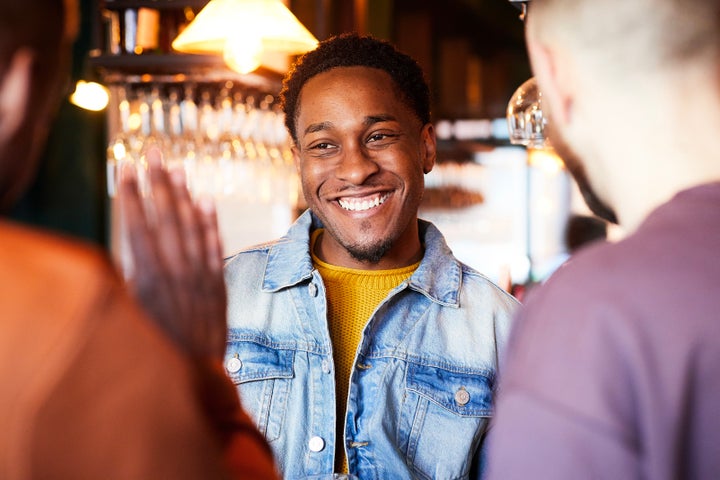
Kian, Millennial
Kian, Millennial

Kian’s not the type to play games. Despite being regularly labelled a player by women who make snap judgements based on his looks and style, he’s upfront about what he wants, both emotionally and sexually.

“I dress well and I get attention,” he says. “But I’m very introverted. I like to keep to myself. I’m not the guy who walks up to women in bars with cheesy lines. I just like a real conversation – if it flows, it flows.”

Right now, Kian’s happily single. He hasn’t been in a relationship for four years, his longest was at 18 and lasted four years and he’s not in any rush to settle down.

Instead, he’s enjoying the freedom of a no-commitment relationship.

“We’re friends first. Sometimes we’re intimate, sometimes we just watch a movie. There’s no pressure,” he explains.

“In regards to body counts I don’t tell anyone by number.

“Men will tell their friends the real number, but not women – because girls do judge. If the number’s too low, they think you’re inexperienced. If it’s too high, they think you’ve been around. Either way, you can’t win.”

When it comes to sex, Kian wants to make every woman feel attractive, no matter what.

“I’ve met women who are confident about their bodies, and others who are body shy and want to keep their top on during sex. I don’t judge. I’ll always tell them they’re attractive – inside and out. I want them to feel good. You are your own person. That’s what matters.”

Kian’s mum is one of his closest confidantes. “She gives the best advice – always honest, never judges me. I tell her everything. She just wants me to be happy and settled. That makes a huge difference.”

His dad passed away five years ago, and among his six siblings, some are in long-term relationships, while others are doing their own thing and in no hurry.

Whether it’s sex, commitment, or trust, Kian believes open communication is the key to everything.

“If a woman’s been hurt in the past, it can take a while for her to trust. But I’d rather we talked about it. That’s how relationships grow, rather than pretending everything’s fine.”

“We’re not monkeys in a zoo”: Gil, 46, Gen X

Gil, Gen X
Gil, Gen X

46-year-old Gil is sexually active, happily single, and refreshingly open about everything from erectile dysfunction to his experiences with sex work. However, the modern LGBTQ+ landscape looks very different from the one he grew up in.

And not all of the changes are positive.

For Gil, one of the biggest issues is how formerly gay-only spaces are now being “monopolised and misappropriated.”

“You get women who act completely normal in a straight bar,” he explains, “but they come to a queer bar, get their boobs out, dance up against you, and tell you: ‘I love gay men because they leave me alone.’

“I came here to be with other gay men, not to take selfies with straight women grinding against me. We’re not monkeys in a zoo.”

The same goes for Pride. Gil is blunt: “If you think Pride is just a party, I’m sorry –you’re not really welcome.

“London Pride is now super overcrowded. Half the people there are straight. I get it – be an ally. But understand why we have Pride. It started as a protest. People fought for our rights. That meaning has been lost.”

Gil is refreshingly candid about getting older and how that affects his sex life.

“I’m less active than I used to be – and that’s okay,” he shrugs. “Sometimes I rely on the little blue pill. Brewer’s droop is real, especially after a few drinks. That’s part of ageing. It doesn’t bother me.”

One topic Gil’s particularly passionate about is HIV education.

“I want people to understand that ‘undetectable’ means untransmittable. If someone is HIV positive but undetectable, they can’t pass it on. I’ve had safe sex with men who are undetectable and been absolutely fine.”

He credits organisations like 56 Dean Street and the Terrence Higgins Trust for their life-changing work: “There’s no excuse for outdated prejudice in 2025.”

Above all, Gil believes openness in relationships is key.

“I’ve always been an open book. And I think when you’re honest about sex, ageing, and insecurities, it helps others feel they can be too.

“There used to be so many taboos, but people are more open now and that’s a good thing. We’ve got to keep the conversations going.”

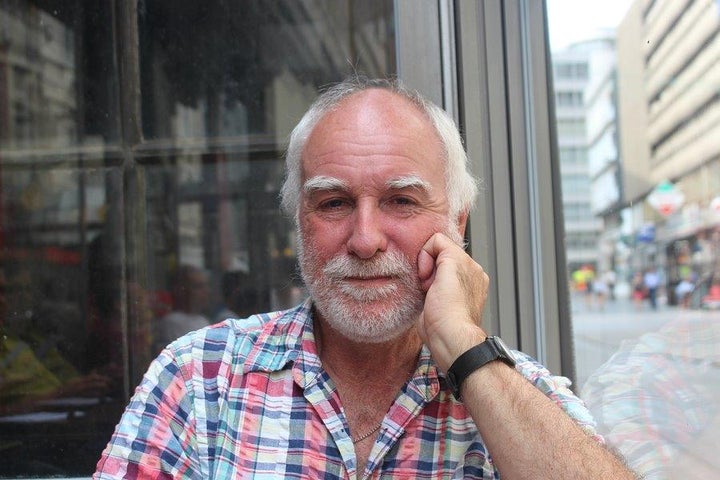
“You don’t stop having sex at 70 – but you do have to talk about it more”: Keith, 70, Boomer
Keith, Boomer
Keith, Boomer

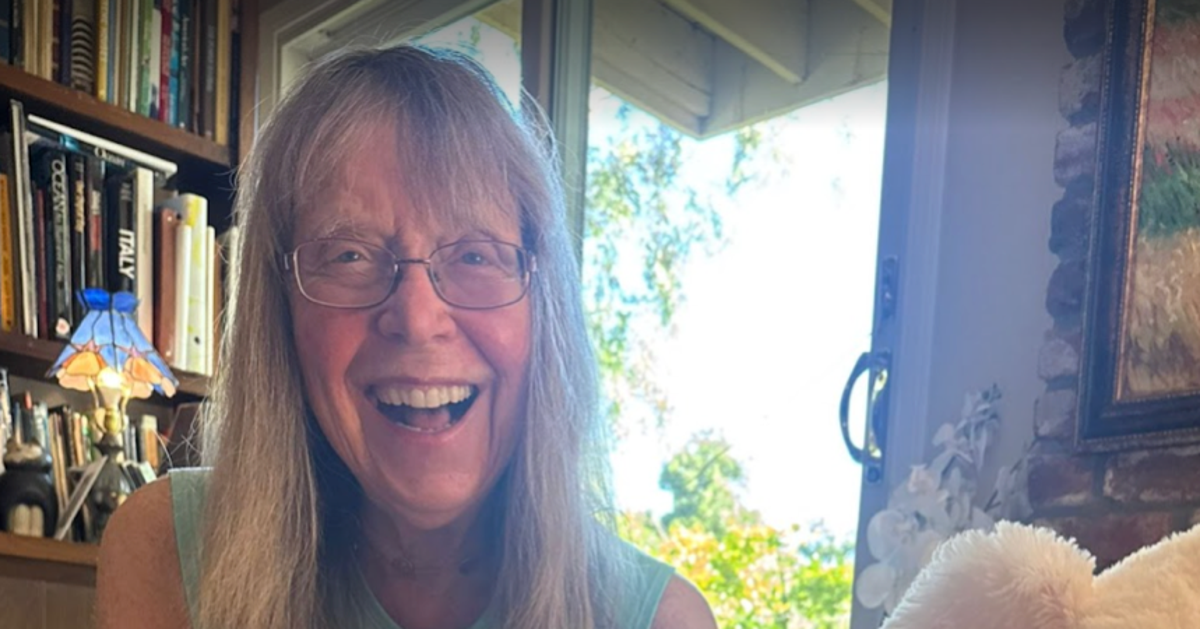
Boomers aren’t exactly known for their sexual openness – they’re the generation where what happens behind closed doors, stays behind closed doors. But Keith is done with that stereotype.

The 70-year-old part-time actor and retired teacher from Hastings has been married to Heather, 61, for 25 years. He credits their lasting relationship to one thing – open communication, even when it’s uncomfortable.

From erectile dysfunction and dwindling libidos to keeping things spicy in their autumn years, Keith and Heather talk about it all.

“Men don’t talk about sex,” says Keith. “At least not properly. If they do, it’s all pub banter. We’re afraid of appearing vulnerable. You don’t want people to think you’re less than.”

It’s an attitude Keith has tried to challenge in his own marriage. When he noticed their sex life drying up, he didn’t brush it under the carpet – he brought it up.

“At first, the lack of sex caused tension. It became: ‘Not another headache.’ I started to feel rejected. I thought, ‘Just say you don’t fancy me anymore.’”

He soon realised it wasn’t personal. It was biological. Their once-great sex life had been sideswiped by the triple whammy of menopause, hormonal changes, and erectile dysfunction.

“I didn’t go to the doctor, I used to teach biology, so I knew it was the blood pressure meds. And I figured I’d rather be alive than take something that messed with that.

“Sexual intimacy doesn’t have to mean going all the way. There’s still a sense of grief, sure. But there are still things you can do for each other that feel good. You adapt.”

Keith also wants more couples to understand the biology of desire – and how changes in sex drive don’t have to spell disaster.

“So many relationships end because one partner thinks the other’s not interested anymore. But hormones change, especially for women. It’s not rejection – it’s just biology.

“You’ve got to talk. Talk when it’s not right. Talk when it is. If sex stops, it doesn’t mean the love has.”

His final piece of advice to younger generations?

“Talk to each other. Don’t be afraid to talk when things aren’t working – or when they are. Enjoy sex. Communicate. And never feel ashamed of it.”

Share Button

You’re Not Being Ghosted. You’re Just Addicted To ‘The Ping’

No one likes being ghosted. But what if you’re not actually being ghosted? What if the other person is genuinely just…busy? But someone being busy and feeling ghosted can often feel like the same thing when dating in a culture that expects instant responses.

As Monica Berg, relationship expert and author of “Rethink Love,” explains: “For many of us, especially those with anxious attachment patterns that were formed in early childhood, a pause in connection can feel like abandonment — not because it’s the reality of the situation, but because it reminds us of old feelings and stories.”

When we’re in the early stages of love, we’re flooded with cortisol, dopamine and all the chemical chaos that makes infatuation feel urgent and obsessive (the feeling of “butterflies,” for example). Layer in those unresolved attachment stories from childhood, and suddenly we’re reliving them in real time.

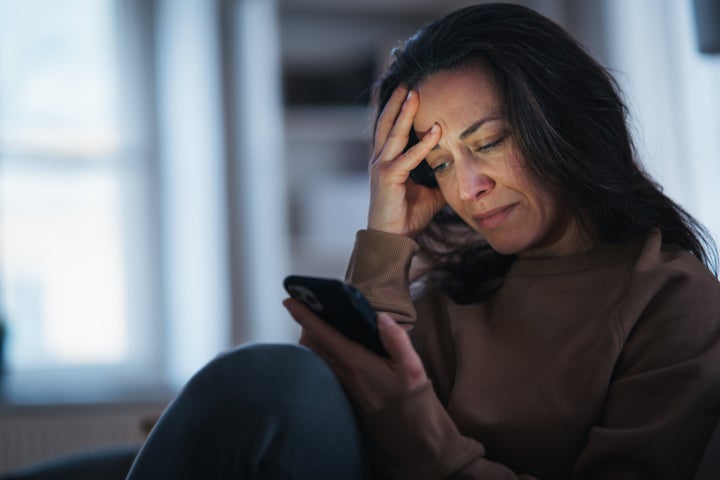
Waiting by the phone never gets any easier. But you can reframe these moments to make them less anxiety inducing.

Vuk Saric via Getty Images

Waiting by the phone never gets any easier. But you can reframe these moments to make them less anxiety inducing.

“If we believe we’re ‘not enough’ or that ‘everyone abandons me,’ then even a delayed text can feel like confirmation of those beliefs,” Berg said.

How Instant Text Gratification Messes With Your Head

While dating apps can often feel like “The Hunger Games,” and no one wants to waste time or emotional investment on a swipe, this obsession with immediate responses from someone who is essentially a stranger can create unrealistic expectations for many single people. It dismisses the reality that the other person may have their own schedule, priorities or boundaries, none of which are necessarily a reflection of how they feel about you.

Still, the absence of a ping on your phone can trigger a defensive response: “He can’t be that busy. He must not be into me,” or “I don’t want someone too busy to text me.”

“The constant accessibility of modern communication — texts, DMs, voice notes, read receipts — creates the illusion that we should always be available,” Berg said. “Especially in new relationships, this immediacy can feel intoxicating at first: They messaged again! They’re thinking of me! But very quickly, it can become anxiety-inducing and even addictive,” she explains.

But that reaction, Berg adds, often reinforces a cycle of emotional dependence on the ping itself. The dopamine hit we get when someone we like — or think we like — texts us back becomes the metric for our self-worth.

Receiving texts and notifications triggers a dopamine hit — the neurotransmitter responsible for pleasure and infatuation. Pairing the constant contact with the consistent dopamine can make “us feel a false sense of intimacy, when real trust and intimacy evolves over time,” Berg said.

The false intimacy of text-based relationships can make pauses or gaps in talking so much more upsetting.

Halfpoint Images via Getty Images

The false intimacy of text-based relationships can make pauses or gaps in talking so much more upsetting.

“Instead, we can find ourselves diving headfirst into emotional enmeshment,” Berg adds. “Boundaries — both energetic and emotional — become blurred, and we’re starting off in codependency, fantasy and expectation.”

Psychologically, she said, this sets us up for attachment dysregulation. “Our nervous systems become hijacked by anticipation, constantly scanning for connection or perceived rejection, and we are caught in an infatuation loop that will inevitably end — whether we end up together or not.”

Building on this, psychotherapist Israa Nasir explains how the dopamine feedback loop in texting and dating apps specifically keeps us focused on external rewards ― likes, replies, matches ― rather than turning inward to consider if we truly like the person.

“When we rely on external validation (like someone texting back, matching with us, or complimenting us) we’re outsourcing our sense of self-worth to others,” she explains. “These moments of approval trigger dopamine spikes, reinforcing the idea that we are only ‘OK’ when someone else chooses us.”

The more we rely on others for reassurance, Nasir adds, the less we develop and trust our own internal coping mechanisms. Which means when someone doesn’t text back, “the brain interprets it as a threat, triggering anxiety, self-doubt and shame. This keeps us in a reactive loop, instead of a grounded state.”

Nasir also points out that dating apps are deliberately “gamified,” designed like slot machines to maximise user engagement, not necessarily emotional well-being. “This behavioural design wires us for compulsive checking and distorted thinking patterns, making it harder to form secure, healthy connections.”

Making Peace With The Lack Of ‘Ping’

So what should you do if you feel panicked or dysregulated when you don’t hear back from a romantic interest within a certain timeframe?

Berg recommends seeing the trigger as an invitation to grow. “When that familiar panic sets in, the first thing to do is pause. Breathe. Call it out. You might even say out loud, ‘Here is my old story. I feel it, but I know it’s not real.’ From here, you can now challenge the story instead of letting it run the show. I often say that we don’t have control over our first thought, but we do have control over our second.”

Berg admits that challenging these habitual, negative thought patterns is a skill that is required in any phase of a relationship but especially in these early moments. “It can also help us to remember that love, real love, isn’t built in instant replies — it’s built in trust, in patience, in spiritual growth.”

And remember that a pause in communication isn’t always a rejection. “Often, it’s just life,” Berg said. “Our lives are so fast-paced and busy. What’s more important is the work of learning to regulate and soothe our own nervous systems, not outsource our peace of mind or our sense of worth to someone else’s response times. This is the shift from what I call ‘reactive interest’ to ‘conscious interest.’ And it’s where real connection begins.”

Nasir offers practical guidance on navigating the ambiguity of digital communication, including differentiating between whether someone is actually ghosting you or simply someone needing space or living their life offline.

“Track patterns, not moments: Look at their overall communication habits. Were they consistently responsive before, or had replies already started slowing down? Consider time and context: If it’s been a few hours or even a day, they may just be living life offline,” she explains. “Ghosting typically involves a sudden, complete drop-off with no explanation over an extended period (usually a week or more).”

“Reduce time doom-scrolling or waiting for a ping. Instead, engage in meaningful, self-affirming activities: friendships, hobbies, creativity, solo travel or dining, rest. These fill your emotional reserves and make dating feel like a part of life, not the whole thing.”

– Israa Nasir, psychotherapist

If you suspect you’re really being ghosted, Nasir suggests asking directly, once. “If you’re unsure, it’s OK to check in with a grounded message. If there’s no response after that, it’s information, not necessarily personal failure.”

When nothing is guaranteed in love or life and when dating feels like it’s doing more harm than good now more than ever, Nasir further emphasises the importance of building emotional resilience.

“The most important thing is to make sure your entire life is not centred on romance or dating,” she said. “Reduce time doom-scrolling or waiting for a ping. Instead, engage in meaningful, self-affirming activities: friendships, hobbies, creativity, solo travel or dining, rest. These fill your emotional reserves and make dating feel like a part of life, not the whole thing.”

She also recommends building in regular check-ins with yourself after interactions: “How did I feel? Did I show up as myself? This centres your experience, rather than obsessing over theirs. Practice sitting with discomfort—like the unknown of a delayed reply — without reacting impulsively. Use grounding tools like breath work, movement, or journaling to stay present. This rewires your nervous system to see uncertainty as tolerable, not dangerous.”

As Berg puts it: “The goal of a relationship is not constant contact or infinite good feelings — it’s real connection, which can only occur slowly over time.”

Share Button

Artists help pupils and centre users create murals

The murals are created at a special education school and wellbeing and cancer support centre.

Share Button

The hidden climate battle between forests and the ocean

Terrestrial plants drove an increase in global photosynthesis between 2003 and 2021, a trend partially offset by a weak decline in photosynthesis — the process of using sunlight to make food — among marine algae, according to a new study published in Nature Climate Change on August 1. The findings could inform planetary health assessments, enhance ecosystem management, and guide climate change projections and mitigation strategies.

Photosynthetic organisms — also known as primary producers — form the base of the food chain, making most life on Earth possible. Using energy from the sun, primary producers fix, or convert, carbon from the air into organic, or carbon-based, matter. But primary producers also release carbon through a process called autotrophic respiration, which is somewhat akin to breathing. The rate of carbon gain after accounting for loss through respiration is called net primary production.

“Net primary production measures the amount of energy photosynthetic organisms capture and make available to support nearly all other life in an ecosystem,” said first author Yulong Zhang, a research scientist in the lab of Wenhong Li at Duke University’s Nicholas School of the Environment. “As the foundation of food webs, net primary production determines ecosystem health, provides food and fibers for humans, mitigates anthropogenic carbon emissions and helps to stabilize Earth’s climate.”

Previous research on net primary production has typically focused on either land or ocean ecosystems, leaving gaps in our understanding of net primary production across Earth and the potential implications for climate mitigation.

For this study, the team explored annual trends and variability in global net primary production, with a focus on the interplay between land and ocean ecosystems.

“If you’re looking at planetary health, you want to look at both terrestrial and marine domains for an integrated view of net primary production. The pioneering studies that first combined terrestrial and marine primary production have not been substantially updated in over two decades,” said co-author Nicolas Cassar, Lee Hill Snowdon Bass Chair at the Nicholas School who jointly oversaw the research with Zhang.

Satellite Insights

Observations from satellites offer continuous perspective on photosynthesis by plants and marine algae called phytoplankton. Specifically, specialized satellite instruments measure surface greenness, which represents the abundance of a green pigment called chlorophyll produced by photosynthetic life. Computer models then estimate net primary production by combining greenness data with other environmental data, such as temperature, light and nutrient variability.

The authors of the new study used six different satellite-based datasets on net primary production — three for land and three for oceans — for the years from 2003 to 2021. Using statistical methods, they analyzed annual changes in net primary production for land and, separately, for the ocean.

They found a significant increase in terrestrial net primary production, at a rate of 0.2 billion metric tons of carbon per year between 2003 and 2021. The trend was widespread from temperate to boreal, or high-latitude, areas, with a notable exception in the tropics of South America.

By contrast, the team identified an overall decline in marine net primary production, of about 0.1 billion metric tons of carbon per year for the same time period. Strong declines mainly occurred in tropical and subtropical oceans, particularly in the Pacific Ocean.

All told, trends on land dominated those of oceans: Global net primary production increased significantly between 2003 and 2021, at a rate of 0.1 billion metric tons of carbon per year.

Environmental Drivers

To understand the potential environmental factors at play, the team analyzed variables such as light availability, air and sea-surface temperature, precipitation and mixed layer depth — a measure that reflects the extent of mixing in the ocean’s top layer by wind, waves and surface currents.

“The shift toward greater primary production on land mainly stemmed from plants in higher latitudes, where warming has extended growing seasons and created more favorable temperatures, and in temperate regions that experienced local wetting in some areas, forest expansion and cropland intensification,” said Wenhong Li, a professor of earth and climate sciences at the Nicholas School and a co-author on the study.

Warming temperatures appeared to have an opposite effect in some ocean areas.

“Rising sea surface temperatures likely reduced primary production by phytoplankton in tropical and subtropical regions,” Cassar added. “Warmer waters can layer atop cooler waters and interfere with the mixing of nutrients essential to algal survival.”

Although land drove the overall increase in global primary production, the ocean primarily influenced year-to-year variability, especially during strong climate events such as El Niño and La Niña, the authors found.

“We observed that ocean primary production responds much more strongly to El Niño and La Niña than land primary production,” said co-author Shineng Hu, an assistant professor of climate dynamics at the Nicholas School. “A series of La Niña events was partly responsible for a trend reversal in ocean primary production that we identified after 2015. This finding highlights the ocean’s greater sensitivity to future climate variability.”

Broad Implications

The study points to the important role of terrestrial ecosystems in offsetting declines in net primary production among marine phytoplankton, according to the authors.

But they added that declines in net primary production in tropical and subtropical oceans, coupled with stagnation on land in the tropics, can weaken the foundation of tropical food webs, with cascading effects on biodiversity, fisheries and local economies. Over time, these disruptions could also compromise the ability of tropical regions to function as effective carbon sinks, potentially intensifying the impacts of climate warming.

“Whether the decline in ocean primary production will continue — and how long and to what extent increases on land can make up for those losses — remains a key unanswered question with major implications for gauging the health of all living things, and for guiding climate change mitigation,” Zhang said. “Long-term, coordinated monitoring of both land and ocean ecosystems as integrated components of Earth is essential.”

Funding: Y.Z., W.L., and G.S. were partially supported by the Duke University-USDA Forest Service collaboration (23-JV-11330180-119). N.C. was supported by the National Science Foundation (OCE-2123198). J.M. was supported by the Oak Ridge National Laboratory. J.X. is supported by the National Science Foundation (Macrosystem Biology) and NEON-Enabled Science Program (DEB-2017870).

Share Button

700,000 years ahead of their teeth: The carbs that made us human

As early humans spread from lush African forests into grasslands, their need for ready sources of energy led them to develop a taste for grassy plants, especially grains and the starchy plant tissue hidden underground.

But a new Dartmouth-led study shows that hominins began feasting on these carbohydrate-rich foods before they had the ideal teeth to do so. The study provides the first evidence from the human fossil record of behavioral drive, wherein behaviors beneficial for survival emerge before the physical adaptations that make it easier, the researchers report in Science.

The study authors analyzed fossilized hominin teeth for carbon and oxygen isotopes left behind from eating plants known as graminoids, which includes grasses and sedges. They found that ancient humans gravitated toward consuming these plants far earlier than their teeth evolved to chew them efficiently. It was not until 700,000 years later that evolution finally caught up in the form of longer molars like those that let modern humans easily chew tough plant fibers.

The findings suggest that the success of early humans stemmed from their ability to adapt to new environments despite their physical limitations, says Luke Fannin, a postdoctoral researcher at Dartmouth and lead author of the study.

“We can definitively say that hominins were quite flexible when it came to behavior and this was their advantage,” Fannin says. “As anthropologists, we talk about behavioral and morphological change as evolving in lockstep. But we found that behavior could be a force of evolution in its own right, with major repercussions for the morphological and dietary trajectory of hominins.”

Nathaniel Dominy, the Charles Hansen Professor of Anthropology at Dartmouth and senior author of the study, says isotope analysis overcomes the enduring challenge of identifying the factors that caused the emergence of new behaviors — behavior doesn’t fossilize.

“Anthropologists often assume behaviors on the basis of morphological traits, but these traits can take a long time — a half-million years or more–to appear in the fossil record,” Dominy says.

“But these chemical signatures are an unmistakable remnant of grass-eating that is independent of morphology,” he says. “They show a significant lag between this novel feeding behavior and the need for longer molar teeth to meet the physical challenge of chewing and digesting tough plant tissues.”

The team analyzed the teeth of various hominin species, beginning with the distant human relative Australopithecus afarensis, to track how the consumption of different parts of graminoids progressed over millennia. For comparison, they also analyzed the fossilized teeth of two extinct primate species that lived around the same time — giant terrestrial baboon-like monkeys called theropiths and small leaf-eating monkeys called colobines.

All three species veered away from fruits, flowers, and insects toward grasses and sedges between 3.4 million to 4.8 million years ago, the researchers report. This was despite lacking the teeth and digestive systems optimal for eating these tougher plants.

Hominins and the two primates exhibited similar plant diets until 2.3 million years ago when carbon and oxygen isotopes in hominin teeth changed abruptly, the study found. This plummet in both isotope ratios suggests that the human ancestor at the time, Homo rudolfensis, cut back on grasses and consumed more oxygen-depleted water.

The researchers lay out three possible explanations for this spike, including that these hominins drank far more water than other primates and savanna animals, or that they suddenly adopted a hippopotamus-like lifestyle of being submerged in water all day and eating at night.

The explanation most consistent with what’s known about early-human behavior, they report, is that later hominins gained regular access to underground plant organs known as tubers, bulbs, and corms. Oxygen-depleted water also is found in these bulging appendages that many graminoids use for storing large amounts of carbohydrates safely away from plant-eating animals.

The transition from grasses to these high-energy plant tissues would make sense for a species growing in population and physical size, Fannin says. These underground caches were plentiful, less risky than hunting, and provided more nutrients for early humans’ expanding brains. Having already adopted stone tools, ancient humans could dig up tubers, bulbs, and corms while facing little competition from other animals.

“We propose that this shift to underground foods was a signal moment in our evolution,” Fannin says. “It created a glut of carbs that were perennial — our ancestors could access them at any time of year to feed themselves and other people.”

Measurements of hominin teeth showed that while they became consistently smaller — shrinking about 5% every 1,000 years — molars grew longer, the researchers report. Hominins’ dietary shift toward graminoids outpaced that physical change for most of their history.

But the study found that the ratio flipped about 2 million years ago with Homo habilis and Homo ergaster, whose teeth exhibited a spurt of change in shape and size more suited to eating cooked tissues, such as roasted tubers.

Graminoids are ubiquitous across many ecosystems. Wherever they were, hominins would have been able to maximize the nutrients derived from these plants as their teeth became more efficient at breaking them down, Dominy says.

“One of the burning questions in anthropology is what did hominins do differently that other primates didn’t do? This work shows that the ability to exploit grass tissues may be our secret sauce,” Dominy says.

“Even now, our global economy turns on a few species of grass–rice, wheat, corn, and barley,” he says. “Our ancestors did something completely unexpected that changed the game for the history of species on Earth.”

Share Button

Hidden gene in leukemia virus could revolutionize HIV treatment

A research team from Kumamoto University has made a groundbreaking discovery that reveals how the human T-cell leukemia virus type 1 (HTLV-1) silently persists in the body, potentially laying the foundation for new therapeutic approaches. Their findings, published on May 13, 2025, in Nature Microbiology, identify a previously unknown genetic “silencer” element that keeps the virus in a dormant, undetectable state.

HTLV-1 is a cancer-causing retrovirus known to lead to adult T-cell leukemia/lymphoma (ATL), an aggressive and often fatal disease. Although most infected individuals remain asymptomatic for life, a fraction eventually develops leukemia or other inflammatory conditions. The virus achieves long-term persistence by entering a “latent” state, during which its genetic material hides inside the host’s genome with minimal activity — evading immune detection.

In this study, the research team, led by Professor Yorifumi Satou from the Joint Research Center for Human Retrovirus, Kumamoto University, identified a specific region within the HTLV-1 genome that functions as a viral silencer. This sequence recruits host transcription factors, particularly the RUNX1 complex, which suppresses the virus’s gene expression. When this silencer region was removed or mutated, the virus became more active, leading to greater immune recognition and clearance in lab models.

Remarkably, when the HTLV-1 silencer was artificially inserted into HIV-1 — the virus that causes AIDS — the HIV virus adopted a more latent-like state, with reduced replication and cell killing. This suggests that the silencer mechanism could potentially be harnessed to design better therapies for HIV as well.

“This is the first time we’ve uncovered a built-in mechanism that allows a human leukemia virus to regulate its own invisibility,” said Professor Satou. “It’s a clever evolutionary tactic, and now that we understand it, we might be able to turn the tables in treatment.”

The findings offer hope not only for understanding and treating HTLV-1, especially in endemic regions like southwestern Japan, but also for broader retroviral infections.

Share Button

When I Was 7, I Stopped Feeling Any Kind Of Pain – Now I Know Why

I got my wisdom teeth pulled without anesthesia or laughing gas.

When the dental surgeon sent me home with a packet of prescription-strength Advil, I didn’t take it. Instead, I drove to the community centre and taught my weekly guitar class, my cheeks swelling into grapefruits as my students practiced their D-G-A chord progressions.

Ego-wise, calling out wasn’t an option (I was only loveable because I was reliable, I told myself) and this didn’t warrant a sick day, anyway. I barely felt a thing.

I also don’t remember feeling discomfort when my knee popped out in gym class, or when I fainted during a sweltering marching band parade, or when my appendix almost exploded.

My high pain tolerance didn’t just apply to physical wounds, either; it also dulled the emotional ones. Fear, guilt, awkwardness, jealousy, grief, heartache – I could numb it all.

I learned this skill when I was 7 years old.

My older brother had undiagnosed bipolar disorder. Emotions swelled inside of him, too big to contain, so he’d punch holes in the walls, or burst into our rooms at 3am, or threaten to end his life. Reactions only fuelled the fire – my mother’s anxiety and my father’s guilt like kindling below the log.

Coaxing my brother up from a low or down from a high required a calm, collected presence – someone who could stifle their reactions and use logic to mediate the situation. Someone whose own emotions didn’t get in the way. I was the ideal candidate.

By middle school, my parents had started relying on me to deescalate his episodes. When I succeeded, I was called all of the things I wanted to be: a good girl. The easy one. Such a blessing. Twice, the dispatchers on the other end of the 911 call complimented my maturity and bravery. So did the cops who took my brother to yet another inpatient facility.

Eventually, I wore my robotic mask into the world to see how other people responded. Teachers loved that I got straight As and never spoke out of turn. Friends stopped calling me bossy. Adults deemed me “one of the most well-mannered children they’d ever met”.

It seemed that everyone else liked me better when I had no needs of my own, so somewhere along the line, my emotional suppression went from a temporary tactic to a permanent state of being. By the time my best friend died by suicide when we were 19, I felt almost nothing.

The author and her best friend Will on a trip to Disney World in 2008, four years before his death.

Courtesy of Maria Cassano

The author and her best friend Will on a trip to Disney World in 2008, four years before his death.

This skill had its perks, but it also had its detriments: all logic and no emotion makes Maria an abysmal girlfriend. The only thing I could feel was the hit of dopamine that accompanied a new love interest, so I sabotaged relationship after relationship in pursuit of it.

Yes, I was incapable of feeling pain – but I was also incapable of empathy, vulnerability, and connection.

At 28, I ended a three-year relationship with a good guy so I could pursue an impulsive fling with a not-so-good one. Something had to give. I was tired of being a romantically inept robot. Desperate to figure out what was wrong with me, I booked an appointment with a psychologist who specialised in childhood trauma.

Right off the bat, she diagnosed me with a dissociative disorder.

If I were capable of feeling anything, I would’ve felt relief. My high pain tolerance suddenly made so much sense.

According to WebMD, “dissociation is a break in how your mind handles information,” and that includes sensory inputs from your body.

One study in The Journal of Pain found that those with PTSD-induced dissociation exhibited hyposensitivity to pain. Basically, the higher the dissociation, the higher the tolerance. An overload of trauma can cause the nervous system to shut down entirely.

In one of our intake sessions, I asked my therapist why I felt so addicted to my numbness. Her response was fascinating.

“Your body has its own pain-relief system, and it actually produces opioids,” she said. “When you’re dissociated, the endogenous opioid system is in overdrive. You’re pumping out endorphins all the time to protect yourself from emotional or physical pain. Like any drug, it’s addictive.”

In other words, I didn’t need anaesthesia because I was constantly making my own.

I wanted to be human again. I wanted to feel love, joy and gratitude – but, like a bottle of Vicodin, dissociation was my coping mechanism.

The author playing guitar in her bedroom at the height of her dissociative disorder.

Courtesy of Maria Cassano

The author playing guitar in her bedroom at the height of her dissociative disorder.

So much of my identity was tied up in my numbness. I believed I would no longer be fiercely reliable. I’d have to call out sick from work. I’d have to stop answering my phone at all hours of the night for the people who loved me because I lacked boundaries. I’d be susceptible to illness, anxiety, stress, and worst of all, heartbreak. I would no longer be the girl who could handle anything.

I didn’t know who I was without my dissociation, but I wanted to find out.

Four weeks after my diagnosis, I started Eye Movement Desensitization and Reprocessing, or EMDR. It’s a psychotherapy technique that uses bilateral eye movements to stimulate memory processing, which helps the brain recover from trauma. Essentially, you focus on your worst memories and move your eyes back and forth.

My hopes were not particularly high. How could something as small as eye movements fix something as big as depersonalisation-derealisation disorder?

But EMDR worked, and it worked fast.

In my first EMDR session, my therapist told me to focus on my earliest negative memory while I watched a blue square bounce back and forth on my computer screen. I did it once: Nothing. Twice: Nada. Three times: Nope. And then the dam broke open. Sensations poured into my cells. I could feel everything, all at once.

One emotion loomed especially large, casting a shadow over the rest: I was terrified of being unlovable. That’s why I left everyone else before they could leave me — before they could sense the messiness underneath the cold, polished armour.

This odd therapy technique completely overrode my body’s hyperactive pain-relief system. Over the next 48 hours, I experienced all of the hurt, grief, abandonment and heartache I had blocked out for the past two decades. It was excruciating, and I wanted nothing more than to turn back into a robot.

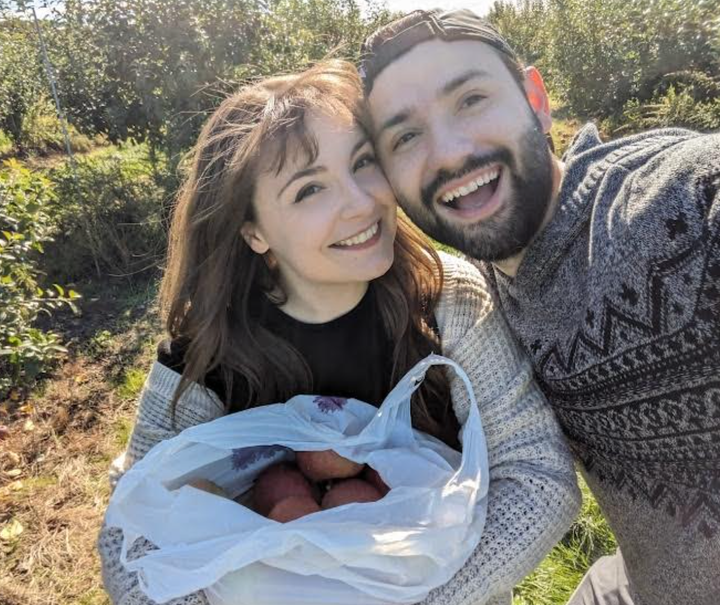
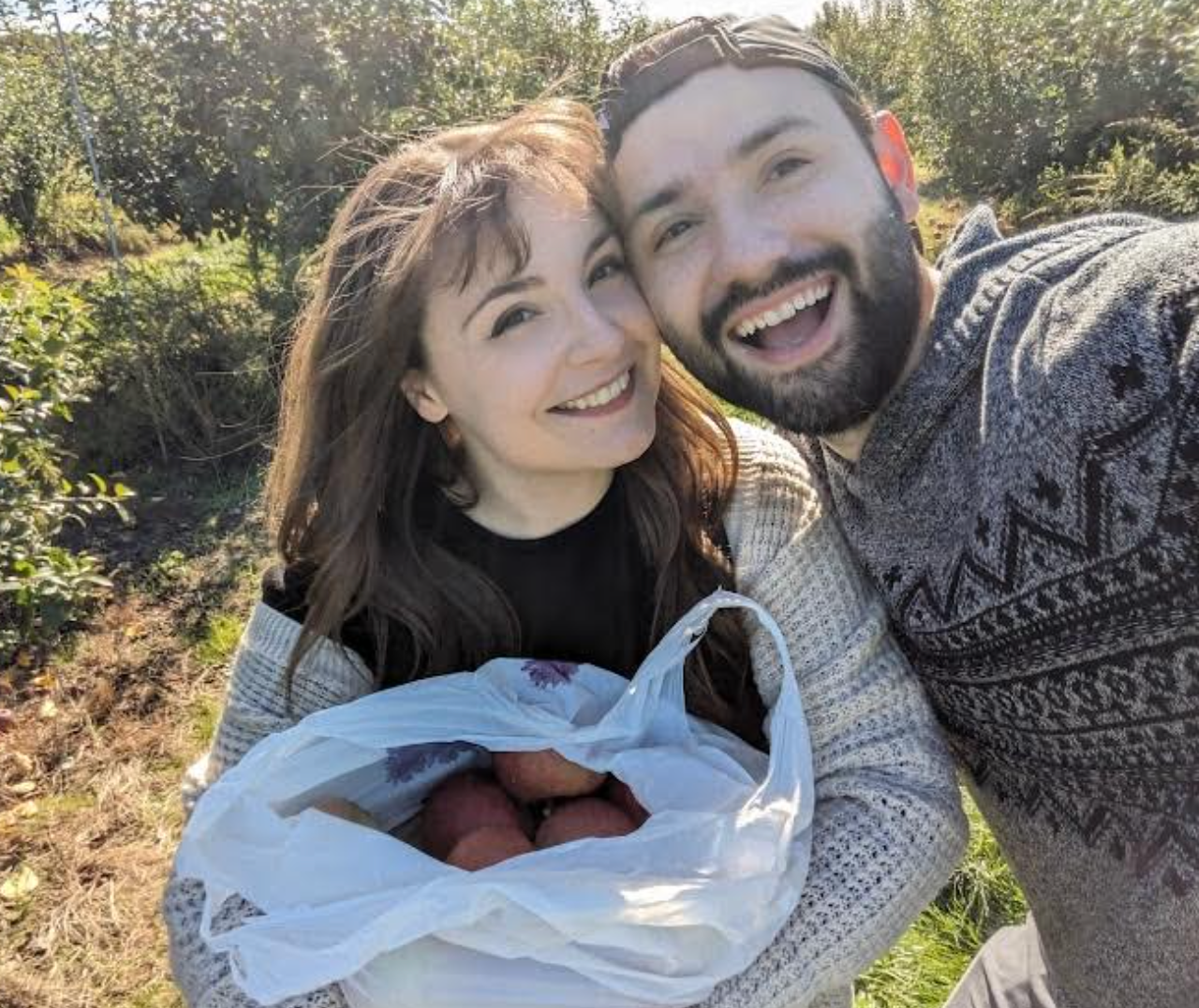
The author and her boyfriend Seb picking apples on a gorgeous fall day.

Courtesy of Maria Cassano

The author and her boyfriend Seb picking apples on a gorgeous fall day.

But with the help of EMDR and this knowledgeable, compassionate therapist, I kept going. We spent the next four years sifting through these memories and emotions, finally processing them so I could let them go.

When pain arose, I felt it. I let the messiness settle in my body, making peace with its presence. Despite the raw discomfort of vulnerability, the hurt of rejection, the guilt of past mistakes, and the occasional panic attack, I resisted the foggy, familiar lure of numbness.

I’m still tempted by it – I’m sure all addicts are – but I’ve never gone back.

Now, I’m in a healthy relationship with a kind, supportive man. He slept over one night two years ago and never left, but I don’t feel the urge to jump ship. I no longer want to chase the dopamine hit of someone new. I want this man to know and accept every part of me, the way I’ve come to know and accept every part of myself.

While I’m not cured (healing is a nonlinear, never-ending road), I’ve learned that pain is a fundamental part of life. Without it, you’re not truly living. It’s the catalyst for transformation. It’s the compass that leads you toward growth. It’s the contrast that illuminates all the beautiful parts of being a fractured, feeling human being.

Maria Cassano is a writer and editor whose work has appeared in Bustle, CNN, Food & Wine, Allure, NBC, The Daily Beast, Elite Daily, and YourTango, among dozens of other publications. Represented by Emma Fulenwider at WordServe Literary, Maria’s memoir about healing from dissociation, “Numb, Party of One,” is currently out on submission to publishing houses. Learn more about it at mariacassano.com/numb.

Do you have a compelling personal story you’d like to see published on HuffPost? Find out what we’re looking for here and send us a pitch at pitch@huffpost.com.

Share Button

My Son And I Were Turned Away From Ikea’s Play Area For 1 Disturbing Reason. Here’s What They Don’t Understand.

In late June, a few days before Disability Pride Month began, I took my 7-year-old child on an outing to an Ikea store.

As I filled out a waiver so he could enter the store’s small play area, I noticed I was the only parent present.

It turned out that parents typically drop off their children while they shop, but that wasn’t an option for me.

My son has a rare, severe form of epilepsy called Dravet syndrome, among other medical conditions, and he can’t be without a grown-up carrying his seizure rescue medication, as I was.

The scary reality is that around one in five children with Dravet syndrome die in childhood because the seizures can be so severe. There is currently no cure.

I explained this to a staff member and told her that I’d need to be in the room with my child. She informed me that no parents were allowed into the play area.

“But isn’t there a policy for kids with disabilities?” I asked.

She told me a service dog could accompany a child, but a parent could not.

I stopped signing the form. I said to the staff member, “That’s discrimination against kids with disabilities.” She didn’t respond.

I hadn’t known about the store’s play area before this visit, and I had been happy to see that it wasn’t a playground – just a space with toys like a train set and dart board. Since my son had a seizure at an indoor playground a year ago, I’d stopped taking him to them. But now, even this play space was not an option for him.

My child and I were both upset. He loves going to Ikea to walk through the showroom and eat in the cafeteria – a place open enough that it was the only indoor restaurant he ate in during our four years of masking during the Covid-19 pandemic. We have several Ikea furniture items, including bunk beds, a coat/shoe cubby and a toy chest. He helped us build them all.

Since his severe seizures began about two years ago, he’s had to change his life in significant ways. Heat, sports, just running around to play, illness and excitement have all become triggers for him. Summer is especially hard – on hot days, he can’t be outside. In fact, we had driven the hour to Ikea in traffic just so he could walk and have a change of scenery in a large, air-conditioned space because the temperature outside was dangerous for him.

I told him, “This isn’t OK.”

He said, “We should talk to someone.”

I was proud of him.

After talking to a few staff members, we spoke with a manager, who said he wasn’t familiar with the policy, and he’d get back to me the next day. He didn’t.

Later, I looked online, and there was a section on the Ikea website directing caretakers of children with disabilities to start a conversation with the Ikea store manager about how the child can best have their needs accommodated in the play area. I was hopeful that when we went in the future, we could show the policy to the staff.

However, that doesn’t undo the pain my child felt after hearing that he wasn’t welcome in that play space because of his disabilities. During the hour-long car ride home afterward, we talked a lot about discrimination. I reinforced that what happened wasn’t OK, and that the more than 3 million kids with disabilities in our country deserve to be included.

I told him about my older sister, his late aunt, who had microcephaly and faced various barriers to equal access too, like having to sit on the sidelines of playgrounds in her wheelchair. It upset me.

When I was 10, in 1993, I read about new accessible playgrounds in an issue of Scholastic News, and I hoped we could build one for her. Sadly, she died a few weeks later, but in her memory, my family and I worked with the Cincinnati Parks Department to build an accessible playground. My son thought that was cool.

I also explained that many groups of people face discrimination for reasons such as gender, race, sexual orientation, immigration status and more, and we need to be allies and stand up against all forms of discrimination.

I also told him that one way to help is to make disabilities more visible and raise awareness, as we have done in his school class for the past three years.

This June, for Dravet Syndrome Awareness Month, he and I held a neighbourhood lemonade and cupcake fundraiser and donated money to the Dravet Syndrome Foundation, which helps fund the kind of critical epilepsy research that the Trump administration has recently cut.

After our experience at Ikea, as one of his bedtime books, we re-read the picture book All the Way to the Top, about a child who protested and helped advocate for the Americans with Disabilities Act, which passed 35 years ago.

Afterward, I told him about children with disabilities who went to Congress this summer, asking their leaders not to make it harder for them to go to the doctor and get the medicine and treatment they need.

Unfortunately, President Donald Trump’s domestic policy billhas since passed, and many people, including children with disabilities, will be harmed as a result.

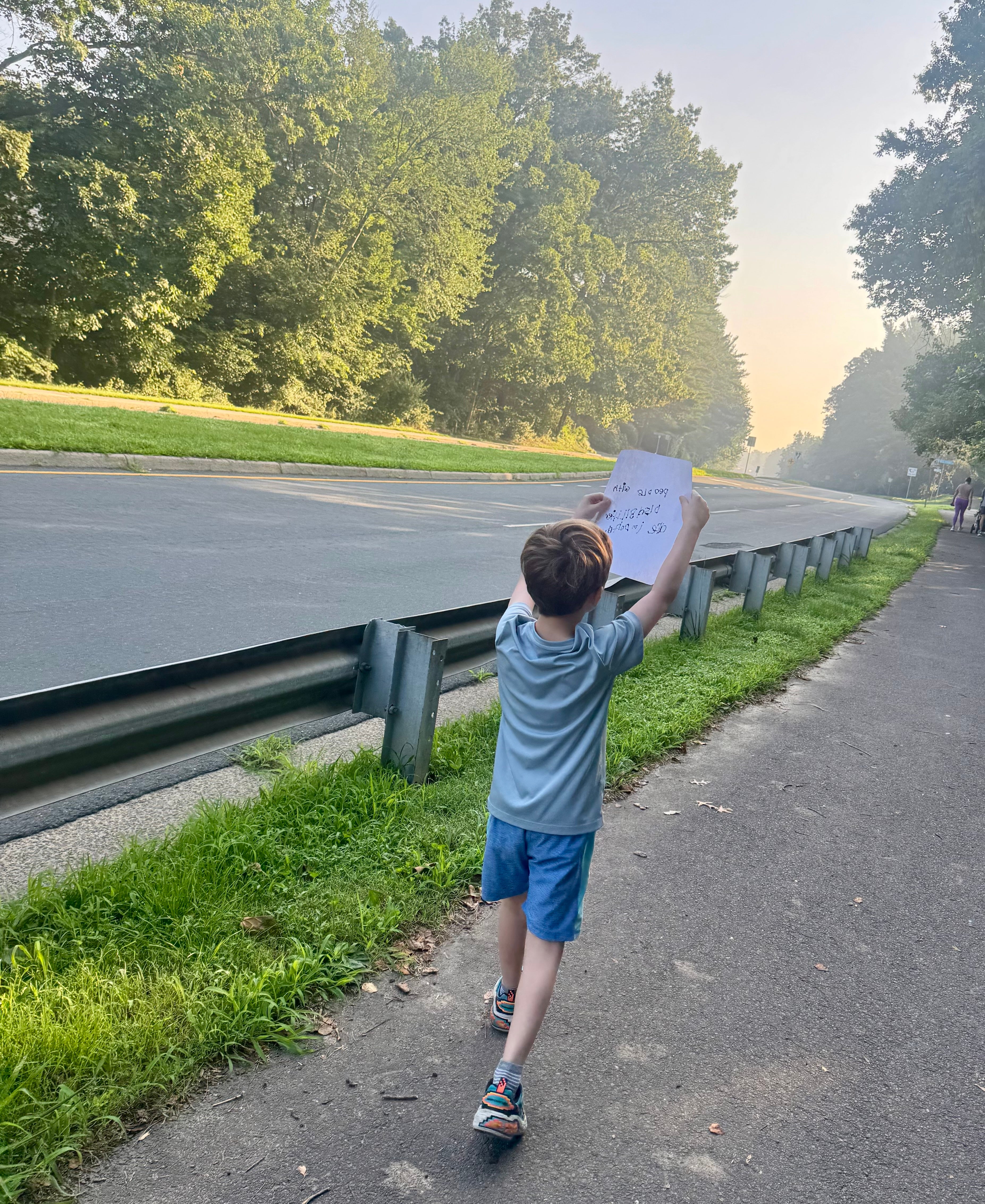
Two days after the bill passed, my child woke up and said, “I want to make a sign about disabilities.”

He asked for my help with spelling before writing the words, “People with disabilities are important” in pencil and then tracing over them with marker. He stood by our Disability Pride yard sign, and then, since the temperature was cooler out, he walked down our street and held it up for cars passing by.

He said that when he grows up, he wants to be an “activist” and “protester.”

I told him that he already is.

[Editor’s Note: HuffPost reached out for a response, and Ikea US issued the following statement: “At IKEA, we strive to offer a safe and inclusive environment for children to play while in our stores. Our Småland policies are in place to keep children safe when they are in our space. Regarding this family’s recent experience in our College Park, MD store, we are incredibly sensitive to feelings of exclusion, and so we have shared information with the family about our accommodations process, so that they may have a more positive experience at IKEA. We are constantly working to improve how we create an inclusive space while maintaining policies that keep all children safe.”]

Do you have a compelling personal story you’d like to see published on HuffPost? Find out what we’re looking for here and send us a pitch at pitch@huffpost.com.

Share Button

A New Study Challenges The ‘Ideal’ Daily Step Count. And It’s Lower Than You Think.

Walking 10,000 steps per day has become a popular goal in the modern age, but it turns out this benchmark might not be the fitness gold standard after all.

According to a study published in The Lancet last week, getting 7,000 daily steps is enough to see meaningful health benefits. Researchers conducted a meta-analysis and systemic review of data from previous studies and found diminishing returns above that number.

Compared to walking 2,000 steps per day, reaching 7,000 steps was associated with a 47% lower risk of death, 25% lower risk of cardiovascular disease, 38% lower risk of dementia, 28% lower risk of falls, 22% lower risk of depressive symptoms, 14% lower risk of type 2 diabetes and 6% lower risk of cancer. The improvements in health outcomes beyond 7,000 steps were more modest by comparison.

“The 10,000-step target, which originated in marketing campaigns, has often been seen as too high for many,” Dr. Asim Cheema, a specialist in internal medicine and cardiology at the telehealth platform Your Doctors Online, told HuffPost.

“Even a moderate amount of daily physical activity, such as walking 7,000 steps, can have significant health benefits,” he added. “This study indicates that a lower target can still yield substantial benefits for cardiovascular health, mental well-being and overall longevity. It suggests that you don’t need to aim for the highest threshold to make meaningful changes to your health.”

Indeed, many have traced the 10,000 steps a day rule back to a 1960s Japanese marketing campaign. This kind of research offers a helpful perspective shift away from the widespread cultural fixation on getting 10K steps every single day.

“These findings are refreshing, because they challenge the ‘all-or-nothing’ mindset that often surrounds fitness,” said Anjan Pathak, co-founder of wellness platform Vantage Fit. “For years, 10,000 steps per day was treated as a universal rule, even though its roots were more commercial than scientific. This study offers a more compassionate approach.”

The Real Takeaways For Step Counts

The conclusions of the study don’t necessarily mean you should treat 7,000 steps as some new gold standard, however. These findings don’t make 10,000 steps a bad goal, either.

“For those who already walk 4,000 steps, increasing to 5,000 or more will show benefit,” said Hannah Arem, scientific director of implementation science for the health care system MedStar Health. “For those who can, reaching this goal of 7,000 is likely to increase benefits. Beyond 7,000 steps, this study suggests that the health benefits for the outcomes examined are only incremental. That said, there may be health benefits other than those assessed in this study that come from increasing step counts.”

Dr. Matthew Badgett, an internal medicine physician at Cleveland Clinic, emphasised that it’s hardly news that there are diminishing returns above a certain amount of activity. And even if certain risk reductions start to plateau above 7,000 steps, you’re still experiencing benefits when you go beyond that number.

“The study still finds that 10,000 is better than 7,000 ― it’s just not as beneficial as going from 2,000 to 7,000 steps,” he said. “I think the real takeaway is that any amount of activity is going to be beneficial, and you continue to benefit from doing more on top of that, even if the added activity doesn’t lead to as much benefit. Whether your goal is to hit 7,000 or 10,000 doesn’t really matter, but I don’t want people to see this news and decide to cut their usual 10,000 to 7,000.”

Of course, there are extreme examples of individuals who do so much physical activity that it ultimately causes harm to their bodies. But that concern does not apply to the vast majority of people.

“If the average person can go from 2,000 to 7,000 steps per day, they will benefit. And if they can go from 7,000 to 10,000, they will also benefit,” Badgett added.

“I think the real takeaway is that any amount of activity is going to be beneficial, and you continue to benefit from doing more on top of that, even if the added activity doesn’t lead to as much benefit.”

– Dr. Matthew Badgett, internal medicine physician at Cleveland Clinic

Badgett also stressed that analysis of step counts doesn’t offer the full picture of health and fitness.

“Step counters aren’t measuring exercise per se,” he said. “What if you’re a cyclist or you swim a lot or lift weights? These are forms of exercise that [don’t] show up on a step counter, but they’re still hugely beneficial for health. Even running, which is better exercise than walking, gets you fewer steps per mile, because each step moves you further.”

Badgett pointed to two important aspects of fitness: regular exercise and just generally not being sedentary.

“I think 7,000 steps a day is generally a marker of non-sedentary nature,” he said. “Someone who’s getting 2,000 steps per day is probably sitting down at their desk to work from home in the morning, and then they barely leave the desk all day, other than to go one room over for the bathroom or kitchen. And then after work, they just sit and watch TV. Someone who gets closer to 7,000 steps probably does chores around the house, might do some yard work after work, or even drives to work, which brings, inevitably, a little bit of walking.”

Indeed, getting small bursts of steps throughout the day is much healthier than sitting the whole time. If you know you aren’t being so sedentary and are also getting regular exercise, you don’t need to fixate on exact step counts.

“I talk to my patients more about moving around throughout the day and also setting aside time to do a specific exercise, whether it’s weightlifting, running or swimming,” Badgett noted. “I might explore how many steps they’re getting as a baseline to establish a goal, but for someone who is older and has physical limitations, I prefer time goals ― like 20 minutes, rather than a specific number of miles or steps. It’s all really patient-dependent.”

How To Get Your Steps In

As the Lancet study shows, even small increases in your steps can bring substantial benefits, particularly in reducing the risk of mortality and a number of health conditions.

“Move more throughout the day,” Arem advised. “That doesn’t mean you have to go to the gym if that doesn’t fit in your lifestyle. Get off the bus or subway a stop earlier. Take the stairs instead of the elevator for a floor or two. Park farther away from the door in the parking lot.”

These little changes are attainable and thus a good way to kick off your fitness journey.

“Fitness in any form is a long game, and the first priority doesn’t have to be a step count ― it should be creating the habit,” said Dave Paul, host of the “Walking Is Fitness” podcast. “Start small and pick a time of day that you can do it consistently. I mean no more than five or ten minutes. You can always add more later, but if you try and do too much to start, it can feel overwhelming, which can lead to giving up.”

Personal context matters, so you have to determine what is right for you ― whether it’s short strolls or upping your walking game with rucking.

“Walk while taking calls, park a bit farther, or take short strolls during breaks. Health isn’t about chasing perfection. It’s about showing up for yourself every day, in small, meaningful ways.”

– Anjan Pathak, co-founder of wellness platform Vantage Fit

“Begin by setting a realistic goal that you can comfortably achieve and gradually increase your steps over time,” Cheema suggested. “For example, aim to walk 2,000 steps a day and increase by 500 steps each week. It can also be helpful to break up your walking into smaller sessions throughout the day, such as walking after meals. Consistency is key to building a sustainable habit.”

He also emphasised the importance of overall lifestyle factors like nutrition, sleep and stress management. And if you have physical limitations like joint problems, turn your walks into swims or stints on the elliptical.

“I also recommend the ‘Japanese walking’ method for patients who can tolerate more intensity in their walking routines, as this has shown health benefits with a lesser overall number of steps,” said family and emergency physician Dr. Ali Shehata.

During the hot summer months, you might also move your treks to an indoor venue like the mall or treadmill section at the gym ― or even invest in your own walking pad.

“Make movement part of your routine rather than an added burden,” Pathak advised. “Walk while taking calls, park a bit farther, or take short strolls during breaks. Health isn’t about chasing perfection. It’s about showing up for yourself every day, in small, meaningful ways. If 7,000 steps a day is what gets someone moving without fear or shame, then that’s a wonderful place to start.”

Share Button

I’m A Grandma To 10 Kids – Here Are 4 Common Mistakes Grandparents Make

Grandparents can have such a positive effect on family life – but sometimes, they might overstep, and things can swiftly turn sour.

Research from Michigan Medicine found almost half of parents have butted heads with grandparents over parenting choices, often involving discipline, snacks and screen time.

Yet when families get along, the benefits can be far-ranging – not only do studies show that grandparents who are actively involved in their grandchildren’s lives tend to live longer, but kids with close relationships to their grandparents often experience fewer behavioural problems.

Parenting expert Esther Wojcicki, who is a grandmother to 10 children, is a firm believer that successful grandparenting starts with “respecting your adult children’s parenting choices”.

The author of How to Raise Successful People and founder of the Parenting TRICK app, has walked us through four common mistakes grandparents make – as well as advice for building healthier, happier family dynamics.

Here’s what she had to say…

1. Overstepping parental boundaries

“Many grandparents instinctively feel they know what’s best, having already raised their own children,” said Wojcicki. “It’s natural to want to guide your adult kids in their parenting journey, but taking charge or telling them what they should or should not do can cause tension.” Remember, your child is an adult.

Solution

“Open, honest communication is vital. Parents and grandparents should discuss expectations and boundaries before issues arise. It can help to have the grandparents acknowledge – verbally or even in writing – that the parents are in charge,” she said.

“Agree not to undermine their authority or contradict their parenting decisions, especially in front of the children. If a misstep happens, address it promptly and honestly. Failing to do so can erode trust – one of the most crucial elements in any relationship.”

2. The problem with sweets and toys

The parenting pro said while it’s very tempting to show love with presents, showering grandchildren with sweets and toys – especially when parents disapprove – can create bigger problems. “While the intention is affection, it can feel like undermining the parents’ wishes and household routines,” she explained.

Solution

Her advice is simple: before bringing treats or gifts, check with the parents. “Ask if certain toys or foods are off-limits, and respect their decisions. A thoughtful note, an outing, or a shared activity can be more meaningful than material gifts, and they reinforce healthy boundaries and habits,” she added.

3. Encouraging secrets

It’s not unheard of for grandparents to let children break a rule with a wink and a “just don’t tell your mum or dad”.

“While it seems innocent – letting them stay up late or sneak an extra cookie – it teaches children that it’s okay to keep secrets from their parents, which is a dangerous precedent,” said the author.

Solution

She warns never to encourage secret-keeping, even over minor issues. “This can send mixed messages about honesty and can even risk children’s safety in more serious situations. Instead, focus on creating memorable moments you’d all be happy to share openly,” she added.

4. Criticism and undermining

And lastly, while it can be tough watching your child parent differently than you did – and even harder not to comment on things like snacks, screen time, or even clothing choices, Wojcicki said criticising your adult child’s parenting – or poking fun at your grandchild – can “hurt feelings and sow discord”.

Solution

Her advice is to aim for encouragement over criticism. “If you disagree with a parenting choice, share your thoughts privately and respectfully,” she said.

“Remember: unless a child’s safety or health is at risk, it’s the parent’s prerogative to make their own mistakes and learn, just as you did.”

Share Button