Emily Jones ignored medical advice to work as she said patients wouldn’t have been seen otherwise


Emily Jones ignored medical advice to work as she said patients wouldn’t have been seen otherwise
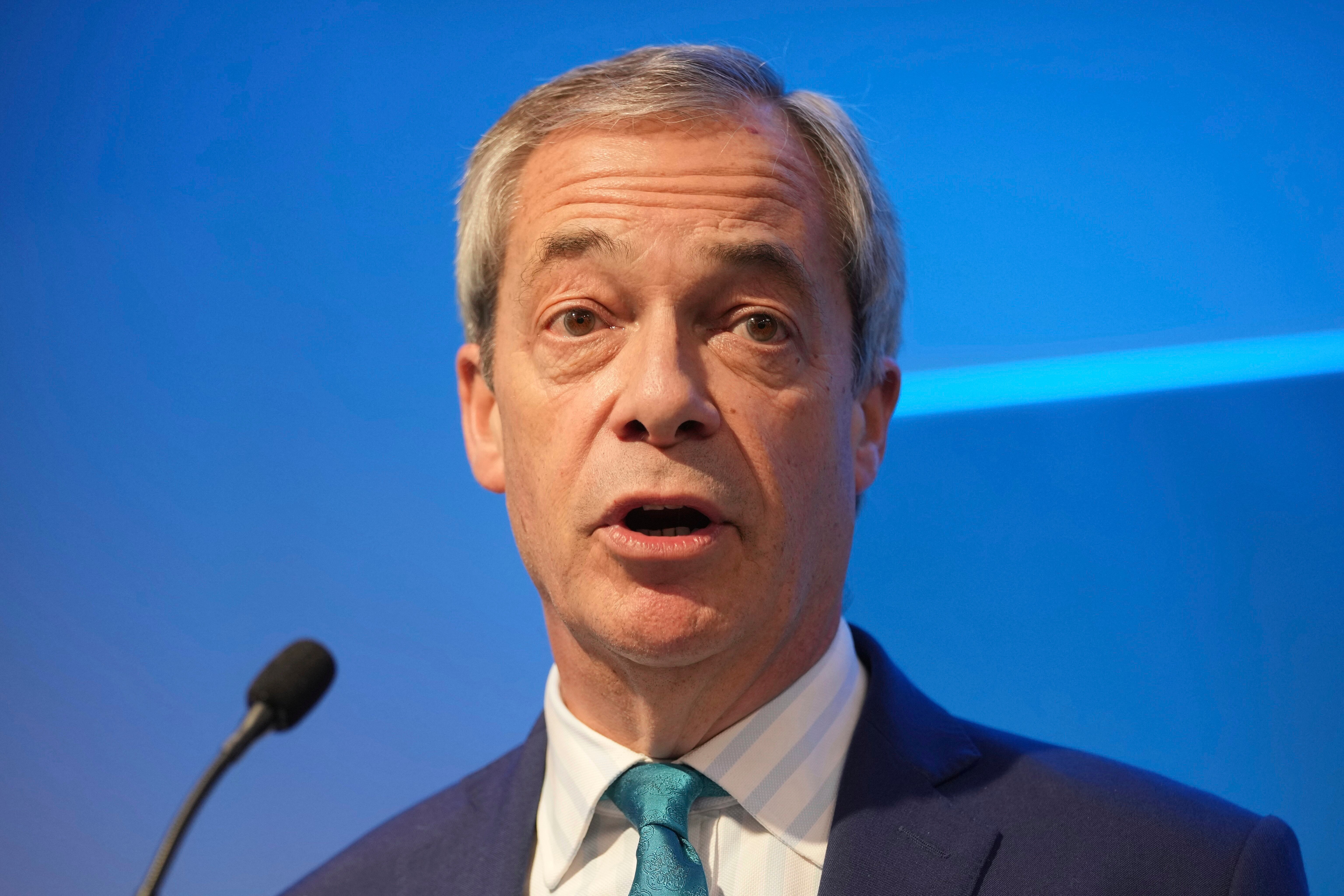
Nigel Farage has a brand new plan to help save Britain from “societal collapse”, apparently.
In a press conference, the Reform UK leader declared his party would cut crime in half amid a rise of alleged “lawlessness” in Britain.
As his party continues to lead in the polls, here’s the £17.4bn vision he set out for how Reform would manage criminals if it were to win the next general election – including the rather bizarre figures who inspire him…
Advertisement
Farage suggested sending British prisoners overseas to countries like El Salvador in Central America to complete their sentences.
This is one of the arguments Reform has presented as part of the argument in favour of leaving the European Convention on Human Rights.
Farage told the media today: “We can send some of our worst violent criminals overseas to serve their terms.
Advertisement
“If that means that [child murderer] Ian Huntley goes to El Salvador…our attitude is so be it.”
When reminded that the detainees in El Salvador have questionable human rights – they are isolated, do not have access to significant legal recourse and held in concerning conditions – Farage quickly backtracked, calling it an “an extreme example.”
Reform UK MP Sarah Pochin then jumped in: “If they [offenders] lose some human rights about family visiting or whatever else it might be, Sky News in the cell. then it’s a good thing, because it’s about time we got tougher with these people.”
But veteran broadcaster Andrew Neil still slammed the idea on Times Radio, saying: “I don’t like his idea of sending prisoners to El Salvador, to some godforsaken hellhole, we’re a civilised nation we shouldn’t be doing that.”
Advertisement
According to Farage, pop-up prisons inspired by the Nightingale hospitals set up during the Covid pandemic would help ease the capacity crisis in Britain’s justice system.
He said 12,400 offenders who have committed low-level crimes could be put up in these new constructions at the cost of £5bn over a five-year parliament.
Advertisement
But Farage overlooked how many of the Nightingale Covid centres never had a patient – as the Guardian reported in 2020 – and that two-thirds of those beds were allegedly unfit for use.
Reform would also unveil 100 pop-up custody centres for crime hot spots, and reopen 50 “mothballed premises” for use as courts.
Farage admitted his party’s attitude would be inspired by Rudy Giuliani’s crackdown on crime during his time as New York mayor three decades ago.
Advertisement
In his famous “broken windows” theory, Giuliani famously focused on lower level crime in an effort to deter larger criminal operations.
The Reform UK leader said they were “borrowing from the Giuliani playbook unashamedly”.
“What Rudy Giuliani did to New York in the 1990s was nothing short of a blooming miracle,” he said.
Giuliani, formerly a lawyer for Donald Trump, was disbarred in New York earlier this year when he was found to be in contempt of court for falsely accusing officials in Georgia of committing election fraud in 2020.
Although this plan would cost £17.4bn over a five-year parliament, Farage said:“It’s not really a question of ‘can we afford to do this?’ It’s a question of ‘can we afford not to do this?’ That’s just how grim and serious the situation is.”
Advertisement
“Of course you’re going to say where is the money going to come from,” he noted, before suggesting the funds would come from abolishing the HS2 project, Net Zero and diversity, equality and inclusion programmes.
He then pointed to Javier Milei, Argentina’s libertarian president.
He said Milei was accused of being a “madman” but “look what’s happening”.
Farage continued: “He has cut the size of the public sector by about 15%, 20% in some cases. Argentina is beginning to see the beginnings of an economic miracle.”
Miliei has undoubtedly improved the country’s struggling economy – its high inflation has cooled and its currency controls have fallen – but public sector salaries have also declined in response, and protests have become a weekly occurrence.
Advertisement

via Associated Press
Of course, all of Farage’s proposals are based on several assumptions.
Firstly, that the country is on the cusp of “nothing short of societal collapse” due to its high crime rate.
Secondly, he set out the premise for his plan by saying: “The crime survey for England and Wales is based on completely false data. If you look at police recorded crime… there are some significant rises in crimes of all kinds, particularly crimes against the person.”
Advertisement
There was a 14% increase in crime last year on the year before – but prior to that, there have been significant successive falls over the last three decades.
Thirdly, the MP for Clacton also claimed “tourists are increasingly reluctant to come to London”.
Actually, out of all the city destinations in the world, London had the second highest rate of international arrivals in 2023 with 18.8 arrivals, according to the UN World Tourism Organisation.
Naturally, Farage’s political opponents were quick to tear into the announcement.
Labour Party chair Ellie Reeves said: “Nigel Farage repeatedly tried to block tough measures to make our streets safer.
Advertisement
“Reform is more interested in headline-chasing than serious policy-making in the interests of the British people.”
Chris Philp the Tories’ shadow home secretary, said: “Nigel Farage is writing his own crime fiction.
“Their own document admits it is unfunded – which means they are not being honest about the price you will pay for their policies just like Labour.
“This is the same Nigel Farage who calls immigration enforcement ‘divisive’, wants an amnesty for illegal immigrants who’ve ‘integrated’, and says mass deportation is a ‘political impossibility’. You cannot trust a word he says.”
Advertisement
And former chief inspector of prisons, Nick Hardwick, told Times Radio: “Where I think what he’s saying just doesn’t add up is that first of all, what he’s proposing will cost far, far more than he’s suggesting and secondly, I don’t actually think it will address the real concerns that people have got about crime.”

Five tips on buying sports bras from a biomechanics professor.

Even though I have insomnia, my issue doesn’t actually lie in getting to sleep.
Nope – I nod off just fine. My problem is staying in dreamland; more often than not, I wake up at 3am and simply cannot get back to sleep.
There are things I’ve learned to do to cope with the problem. “Clock blocking”, refusing to stay in bed for more than 20 minutes, and (paradoxically) willing myself to stay awake have all been effective at getting me back to sleep.
Advertisement
But given that almost a third of us wake up in the middle of the night at least three times a week – and that multiple friends had cited 3am as their most common early rising hour – I thought I’d ask Dr Seeta Shah from PANDA London if there’s anything “special” about that time.
Here’s what she told us…
“Waking up around 3am is a surprisingly common experience,” Dr Shah confirmed.
This, she said, could be down to a mixture of biological and lifestyle factors, like your body’s natural sleep cycle.
“During a typical night’s sleep, we go through multiple 90-minute cycles that include different stages of sleep, from light to deep and REM sleep,” the doctor said.
Advertisement
“Around 3am, most people are transitioning between cycles, and the sleep tends to be lighter at this point. That makes us more susceptible to waking, especially if there are external disturbances such as noise, light, temperature changes or even the need to use the loo.”
Then, she said, there’s a hormonal component. “In the early hours of the morning, the body begins to increase its production of cortisol, the ‘stress hormone,’ in preparation for waking,” she explained.
“This natural rise in cortisol, combined with a dip in melatonin (the sleep hormone), can make the body more alert and prone to waking around this time.”
Advertisement
Cortisol usually dips to a low at around midnight and slowly rises thereafter.
“If you’re feeling anxious or have an active mind, this early-morning wakefulness can quickly turn into prolonged sleeplessness,” Dr Shah told us.
“Lifestyle factors such as alcohol consumption, late-night screen use, inconsistent bedtimes, and even blood sugar dips can all contribute to waking at this hour,” the doctor explained.
If you suspect this may be the cause of your early morning wake-ups, consider changing your habits and seeing how it affects your kip.
Advertisement
But “if waking at 3am becomes a regular pattern, it’s worth examining both physical and mental health, as well as evening habits, to identify and address any underlying causes,” Dr Shah cautioned.
The NHS said that if poor sleep is affecting your day-to-day life and causing you distress, you should speak to your GP about it.

I still remember the backlash when it turned out that Ned Fulmer, the ex-BuzzFeeder who had been dubbed the “wife guy” of online group Try Guys, had cheated on his partner with his colleague.
He was let go from his Try Guys role amidst public outrage. And now, Astronomer’s CEO Andy Bryon has stepped down from his role following a TikTok clip which some online sleuths say shows him cheating with his HR lead at a Coldplay concert.
Advertisement
Though the company have not confirmed Andy was the person in the viral video, they have written in a statement that “Our leaders are expected to set the standard in both conduct and accountability, and recently, that standard was not met.”
I have already shared that I’m not the biggest fan of how some people are engaging with the “Coldplay affair.”
Advertisement
Nor do I think that public reaction should influence a person’s professional status before an official investigation.
For instance, the company’s Senior Director of People, “identified” by TikTok detectives, has had her LinkedIn profile bombarded by commenters who think she got her promotion by hiding her boss’ romance.
The comments came despite there being absolutely no evidence that this was the case (the company has since revealed she “was not there. This is a rumour started on Twitter”).
Advertisement
This is wrong. A likely innocent woman’s professional page is now littered with potentially career-disrupting claims due to almost certainly baseless delusions of online “accountability.”
That’s the sort of perversely gleeful dogpiling I’m sure Jon Ronson’s So You’ve Been Publicly Shamed would have a field day with.

via Associated Press
Advertisement
Lawyer Eric Kingsley, firm partner at Kingsley Szamet Employment Lawyers, told us: “Legally, the private life of an individual usually will not be cause for termination unless the private life somehow overlaps the professional environment or threatens the organisation.”
But in the case of both Fulmer and, if true, Bryon, there’s more to the story than just “bad vibes.”
“If the conduct in question involves other staff members or directly affects the workplace environment, the rationale for termination greatly changes,” the lawyer said.
Fulmer’s relationship was with a relatively junior employee, while Bryon’s suspected “affair” was alleged to be with his HR lead.
Advertisement
“A Chief Executive Officer being involved in a romantic relationship with an employee, even more so if there exists a position of power, creates huge potential for problems of favouritism, coercion, and the risk of legal action based upon harassment or retribution,” Kingsley added.
“Even if the relationship remains voluntary, the potential can damage the morale of employees, cause intra-company disputes, or violate stated policies of the company. Some companies place explicit policies regarding intra-company relations in place in order to avoid complications.”

@instaagrace via TikTok
Advertisement
Meanwhile, Thomas Roulet, a fellow and director of studies in psychology and behavioural science at King’s College, Cambridge, says that “If someone’s personal life affects their professional performance and engagement, yes, we could definitely consider HR interventions (it could be a warning or go as far as getting fired).”
The same goes if their performance and judgement are affected by the relationship, he added.
But I don’t think unfairly prying and overly moralistic internet commenters keep those rules in mind in their hunt for a perceived “bad guy” – Astronomer’s Senior Director of People is proof that many of us make the court of public opinion far too punishing, despite using inconsistent “laws.”
That misses the point; it’s all about power dynamics.
As it happens, piling on an (again, likely innocent) woman who you believe to have gotten her promotion based solely on hiding an affair without any evidence whatsoever is not exactly the best use of our collective power.
Advertisement
I fear the “reward” of firing a person armchair warriors believe to have cheated has left some to believe that their beliefs about adultery, whether grounded or not, ought to result in indiscriminate real-life action.
Personally, I don’t think that unkind quest has anything to do with accountability; we are confusing our own amateur sleuthing for genuine, professional investigation.
Just because the two might sometimes have the same result, though, does not mean it’s fair to equate them.
Advertisement



Free tickets will be given to patients in Gloucestershire to help alleviate symptoms of depression.

Yellowstone, a popular tourist destination and namesake of an equally popular TV show, was the first-ever national park in the United States. And bubbling beneath it – to this day – is one of Earth’s most seismically active networks of volcanic activity.
In a new study, published July 18 in the high impact journal Science Advances, Western engineering professor Bing Li and his collaborators at Universidad Industrial de Santander (Industrial University of Santander) in Colombia and the United States Geological Survey used machine learning to re-examine historical earthquake data from the Yellowstone caldera over a 15-year period. The team was able to retroactively detect and assign magnitudes to approximately 10 times more seismic events, or earthquakes, than previously recorded.
A caldera – like the one at Yellowstone Park spanning parts of Wyoming, Idaho and Montana – is a large depression or hollow formed when a volcano erupts and the magma chamber beneath it empties, leading to the collapse of the land above. This is different than a volcanic crater, which is formed by outward blasting.
The historical catalogue for the Yellowstone caldera now contains 86,276 earthquakes spanning the years 2008 to 2022, significantly improving previous understanding of volcanic and seismic systems through better data collection and systematic analyses.
A key finding in the study is that more than half of the earthquakes recorded in Yellowstone were part of earthquake swarms – groups of small, interconnected earthquakes that spread and shift within a relatively small area over a relatively short period of time. This is unlike an aftershock, which is a smaller earthquake that follows a larger mainshock in the same general area.
“While Yellowstone and other volcanoes each have unique features, the hope is that these insights can be applied elsewhere,” said Li, an expert in fluid-induced earthquakes and rock mechanics. “By understanding patterns of seismicity, like earthquake swarms, we can improve safety measures, better inform the public about potential risks, and even guide geothermal energy development away from danger in areas with promising heat flow.”
Molten-detecting machines
Prior to the application of machine learning, earthquakes were generally detected through manual inspection by trained experts. This process takes time, is cost-intensive and often detects fewer events than possible now with machine learning. Machine learning has sparked a data-mining gold rush in recent years as seismologists revisit the wealth of historical waveform data stored in datacenters across the world and learn more about current and previously unknown seismic regions around the world.
“If we had to do it old school with someone manually clicking through all this data looking for earthquakes, you couldn’t do it. It’s not scalable,” said Li.
The study also shows that earthquake swarms beneath the Yellowstone caldera have occurred along relatively immature, rougher fault structures, compared to more typical mature fault structures seen in regions such as southern California and even immediately outside the caldera.
The roughness was measured by characterizing earthquakes as fractals, which are geometric shapes that exhibit self-similarity, meaning they appear similar at different scales. First visualized by Benoit Mandelbrot in 1980, fractal patterns are seen in coastlines, snowflakes, broccoli, and even the branching of blood vessels. The fractal-based models, targeting roughness versus regularity, were able to characterize these earthquake swarms, which the researchers believe were caused by the mix of slowly moving underground water and sudden bursts of fluid.
“To a large extent, there is no systematic understanding of how one earthquake triggers another in a swarm. We can only indirectly measure space and time between events,” said Li. “But now, we have a far more robust catalogue of seismic activity under the Yellowstone caldera, and we can apply statistical methods that help us quantify and find new swarms that we haven’t seen before, study them, and see what we can learn from them.”
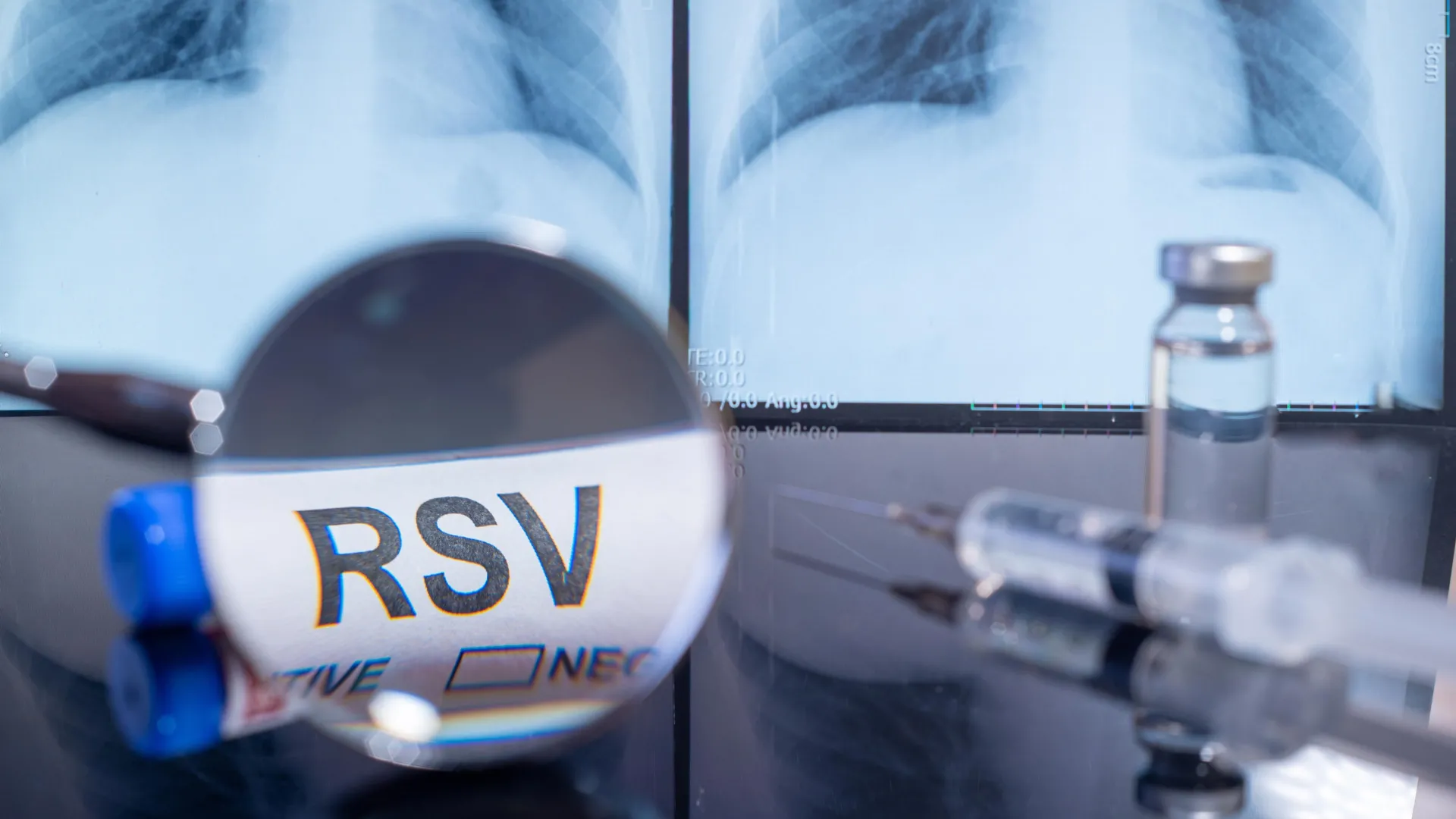
Vaccination of pregnant women has been linked to a drop in newborns being admitted to hospital with a serious lung infection, research suggests.
Researchers found the respiratory syncytial virus (RSV) vaccine, introduced across the UK in late summer 2024, led to a 72 percent reduction in babies hospitalized with the virus if mothers were vaccinated.
The findings are the first to show the real-world effectiveness of the vaccine in pregnant women in the UK.
Uptake of the jab among pregnant women could help to limit the number of sick babies each winter, reducing hospital pressures, experts say.
RSV is a common virus that causes coughs and colds but can lead to a severe lung infection called bronchiolitis, which can be dangerous in babies, with some requiring admission to intensive care. The virus is the main infectious cause of hospitalization for babies in the UK and globally.
Receiving the vaccine during pregnancy helps to protect both mother and baby. Antibodies – proteins which help to prevent the virus causing severe infection – produced by the mother in response to the vaccine are passed to the fetus, providing protection from severe RSV for the first six months after birth.
The research team, led by the Universities of Edinburgh and Leicester, recruited 537 babies across England and Scotland who had been admitted to hospital with severe respiratory disease in the winter of 2024-2025, the first season of vaccine implementation. 391 of the babies tested positive for RSV.
Mothers of babies who did not have RSV were two times more likely to have received the vaccine before delivery than the mothers of RSV-positive babies – 41 percent compared with 19 percent.
Receiving the vaccine more than 14 days before delivery offered a higher protective effect, with a 72 percent reduction in hospital admissions compared with 58 percent for infants whose mothers were vaccinated at any time before delivery.
Experts recommend getting vaccinated as soon as possible from 28 weeks of pregnancy to provide the best protection, as this allows more time for the mother to generate and pass on protective antibodies to the baby, but the jab can be given up to birth.
Previous research has found that only half of expectant mothers in England and Scotland are currently receiving the RSV vaccine, despite its high success at preventing serious illness.
The findings highlight the importance of raising awareness of the availability and effectiveness of the new vaccine to help protect babies, experts say.
The study is published in the journal The Lancet Child and Adolescent Health. The research collaboration also included the Universities of Bristol, Oxford, Queen’s University Belfast, UCL and Imperial College London and 30 hospitals across England and Scotland.
The study was funded by the Innovative Medicines Initiative (IMI) Respiratory Syncytial Virus Consortium in Europe (RESCEU), the Wellcome Trust and National Institute for Health and Care Research (NIHR) Health Protection Research Unit in Respiratory Infections, Imperial College London.
Dr Thomas Williams, study lead from the University of Edinburgh’s Institute for Regeneration and Repair, and Paediatric Consultant at the Royal Hospital for Children and Young People in Edinburgh, said: “With the availability of an effective RSV vaccine shown to significantly reduce the risk of hospitalization in young infants in the UK, there is an excellent opportunity for pregnant women to get vaccinated and protect themselves and their infants from RSV bronchiolitis this coming winter.”
Professor Damian Roland from the Leicester Hospitals and University and Consultant in Paediatric Emergency Medicine, said: “Our work highlights the value of vaccination and in keeping with the treatment to prevention principle of the NHS 10 Year plan we would ask all health care systems to consider how they will optimize the roll out of RSV vaccination for mothers.”
Here’s an update on our ongoing 100 days of sex experiment, which is now up to 108 days and still going. At this point I’ve figured out that if Rachelle and I spend time in the same room together during the course of a day, it’s going to be a sex day.
Sex has become such a breezy experience for us now that it feels like we’ve made a long-term change to this aspect of our lives. It’s hard to imagine returning to our pre-experiment reality. It feels like we’ve left that old reality pretty far behind.
I can feel the difference in my body. Just being close to her now makes my cells buzz with electricity in anticipation. We don’t really have to try to make anything happen deliberately. Our bodies, minds, feelings, and energy will just naturally flow in that direction at least once a day. It would take more effort to prevent ourselves from going there.
I remember that’s how I’d feel during the early years of our long-distance relationship when we’d reconnect after being apart for 2-3 months. Now that feeling of intense attraction is our daily reality. It’s like this experiment invited and encouraged our bodies to love each other even more, so the feelings of love and intimacy are more embodied now. They’re not just in the mind and heart – it’s like these feelings are in the cells too now. So the physical chemistry that was already good is now way higher. This benefit has been a pleasant surprise.
By doing this for so many days in a row, we’ve chipped away at any forms of friction or deflection. Whatever reasons we might have previously had for skipping a day have been replaced by patterns of engagement. All the nos and maybes have been replaced by yeses. The yeses are pretty powerful now and easily breeze past any previous deflection points. It’s like we’ve recoded our minds to keep reminding us of the good reasons for saying yes to sex and giving us a more awareness of the long-term benefits.
I don’t feel this mental recoding is unique to sex. Imagine a writer writing for 100+ days in a row and also committing to making the writing experience smoother each time. Pretty much any form of resistance or procrastination will surface during that time, and the writer will have a chance to meet and resolve each instance. After 100+ days, you might figure that just about all resistance would have been addressed. At that point it may be harder not to write, especially if the writing is enjoyable or rewarding.
We’ve also created a greater variety of pathways into sex. So if we just go through our normal days together, they include multiple easy transition points that our bodies now predict could lead to sex. This is becoming a bit silly for us actually. Now if we just cuddle each other, our bodies can start getting riled up sexually, and pretty soon we’re kissing and more.
This is a pretty interesting place to be in our relationship. It’s different, yet we aren’t finding anything problematic about it. It makes us feel super close and connected with each other, and I feel it’s up-leveled our kindness and communication as well. It’s been a major deep dive into increased intimacy together. We’ve both been immensely loving towards each other all throughout this shared adventure. Having sex feels like an expression of kindness and caring for each other. We’re both generously going way beyond meeting each other’s needs here.
We keep checking in with each other to ask ourselves if it’s too much. And we keep concluding that it’s definitely not too much. It’s actually very nice to connect like this every day.
This is a puzzling experience to integrate. I’ve never done anything like this before, and I feel that I’ve crossed in a different kind of reality somewhere along the way. It feels like it’s still evolving and shifting too, although not as much as during the first three months.
It feels like my reality has been wrapped in a blanket of love, and now the blanket is there to stay. It feels easy to maintain, and I don’t see any reason to remove the blanket. It’s a really nice blanket, and I appreciate its presence.
One impact this is having is that it’s making me question where else in my life I might explore something similar. Like what other area of life is already good, and I could wrap that area in an extra blanket of love as well? I feel I’ve already chipped away at some of this in my relationship with my home, especially by resolving some areas of friction with it and figuring out how to enjoy maintenance and upgrade projects. I’m also advancing with a more yin, relaxed, casual style of blogging, which will soon open up into making more videos. Another interesting candidate would be my relationship with money, which has been healthy and supportive for 26 years now. I might even do something more expansive and weave multiple areas together since it’s all vibrational work at the core anyway. Even better would be to take this to a social level and engage with people who want to explore similar upgrades in their lives.
I feel that this sex experiment has been a gateway into a different vibrational reality. My inner senses have been buzzing with a lot of energy lately. I really can’t see this energy that we’ve stirred up remaining solely within our relationship. It’s a lot of energy, and I feel that it’s still increasing. Channeling it into physical sex is very yummy, yet I feel there’s more than enough to flow into other directions too, like writing, videos, social connections, and more. I have this sense that I’m entering a phase of opening in all directions at once. Actually I’d say that I’m well into it now. That feels really good to me at this time. I feel very ready and very energetically resourced for this.
One reflection that came through in the past few days was that I gained an even stronger appreciation for the role that exploration plays in my life and work. This sex experiment was one of many explorations I’ve done where the purpose was discovery, not to obtain some specific result. My intentions were rooted in curiosity and wonder… also to explore connection, love, and intimacy.
Exploring has paid off so very well for me in so many areas of life. The more I explore, the better my life becomes. Exploration is the key that unlocks so many doors, especially when I explore in directions where part of me is hesitant to commit myself. Many explorations have led to permanent changes that I’ve integrated very well into my life. I sense that if I really want to wrap more areas of life in an even bigger blanket of love, I’ll want to open myself to even more exploring. And the real key to exploring, at least for me, has been to make specific exploration-based commitments, such as a 30-day challenge (or in this case a 100-day challenge).

Subaru Telescope has made an exciting discovery: a small body beyond Pluto, with implications for the formation, evolution, and current structure of the outer Solar System.
The object was found as part of the survey project FOSSIL (Formation of the Outer Solar System: An Icy Legacy), which takes advantage of the Subaru Telescope’s wide field of view. The object was discovered through observations taken in March, May, and August 2023 using the Subaru Telescope. The object is currently designated 2023 KQ14; a more classical name will be assigned later by the International Astronomical Union. After that, follow-up observations in July 2024 with the Canada-France-Hawaii Telescope and a search for unrecognized sightings of the object in old data from other observatories allowed astronomers to track the object’s orbit over 19 years. Due to its peculiar distant orbit, 2023 KQ14 has been classified as a “sednoid,” making it only the fourth known example of this rare type of object.
Numerical simulations conducted by the FOSSIL team, some of which used the PC cluster operated by the National Astronomical Observatory of Japan, indicate that 2023 KQ14 has maintained a stable orbit for at least 4.5 billion years. Although its current orbit differs from those of the other sednoids, the simulations suggest that their orbits were remarkably similar around 4.2 billion years ago.
The fact that 2023 KQ14 now follows an orbit different from the other sednoids indicates that the outer Solar System is more diverse and complex than previously thought. This discovery also places new constraints on the hypothetical Planet Nine. If Planet Nine exists, its orbit must lie farther out than typically predicted.
Dr. Yukun Huang of the National Astronomical Observatory of Japan who conducted simulations of the orbit comments, “The fact that 2023 KQ14‘s current orbit does not align with those of the other three sednoids lowers the likelihood of the Planet Nine hypothesis. It is possible that a planet once existed in the Solar System but was later ejected, causing the unusual orbits we see today.”
Regarding the significance of this discovery, Dr. Fumi Yoshida states, “2023 KQ14 was found in a region far away where Neptune’s gravity has little influence. The presence of objects with elongated orbits and large perihelion distances in this area implies that something extraordinary occurred during the ancient era when 2023 KQ14 formed. Understanding the orbital evolution and physical properties of these unique, distant objects is crucial for comprehending the full history of the Solar System. At present, the Subaru Telescope is among the few telescopes on Earth capable of making such discoveries. I would be happy if the FOSSIL team could make many more discoveries like this one and help draw a complete picture of the history of the Solar System.”
