Use our interactive tracker to see if treatment waits are getting better at your local hospital.


Use our interactive tracker to see if treatment waits are getting better at your local hospital.
The UK’s pioneering licensed IVF technique to reduce the risk of mitochondrial diseases carried out in Newcastle has seen eight babies born, published research shows.
All eight babies show no signs of having mitochondrial DNA disease. The babies, four girls and four boys, including one set of identical twins, were born to seven women at high risk of transmitting serious disease caused by mutations in mitochondrial DNA. The findings, reported on July 16 by the Newcastle team who pioneered mitochondrial donation using fertilized human eggs, indicate that the new treatment, known as pronuclear transfer, is effective in reducing the risk of otherwise incurable mitochondrial DNA diseases.
Published in two papers in The New England Journal of Medicine (NEJM), the findings describe the reproductive and clinical outcomes of pronuclear transfer treatments performed to date. All babies were healthy at birth, meeting their developmental milestones, and the mother’s disease-causing mitochondrial DNA mutations were either undetectable or present at levels that are very unlikely to cause disease.
The technique was pioneered in human eggs by a team based at Newcastle University, UK and the Newcastle upon Tyne Hospitals NHS Foundation Trust in work funded by Wellcome and NHS England.
The mother of a baby girl born following mitochondrial donation said: “As parents, all we ever wanted was to give our child a healthy start in life. Mitochondrial donation IVF made that possible. After years of uncertainty this treatment gave us hope—and then it gave us our baby. We look at them now, full of life and possibility, and we’re overwhelmed with gratitude. Science gave us a chance.”
The mother of a baby boy added: “We are now proud parents to a healthy baby—a true mitochondrial replacement success. This breakthrough has lifted the heavy cloud of fear that once loomed over us.
“Thanks to this incredible advancement and the support we received, our little family is complete. The emotional burden of mitochondrial disease has been lifted, and in its place is hope, joy, and deep gratitude.”
The NHS Mitochondrial Reproductive Care Pathway offers mitochondrial donation, through a research study, in addition to other reproductive options for women with mitochondrial disease.
Professor Sir Doug Turnbull, Newcastle University part of the Newcastle team said: “Mitochondrial disease can have a devastating impact on families. Today’s news offers fresh hope to many more women at risk of passing on this condition who now have the chance to have children growing up without this terrible disease. Within the framework of the NHS in a well-regulated environment, we are able to offer mitochondrial donation as part of a research study to affected women in the UK.“
Mitochondrial DNA disease
Every year, around one in 5,000 children is born with mitochondrial DNA mutations that can cause devastating disease. Mitochondria produce the energy required for life and contain a small piece of DNA that only encodes some of the instructions required for energy production. Harmful mutations in mitochondrial DNA can result in reduced availability of energy, particularly affecting tissues that have high energy demands – for example heart, muscle and brain. Mitochondrial DNA is maternally inherited, and these diseases are therefore passed from mother to child. Although males can be affected, they do not pass on the disease. Despite years of research there is still no cure for people with mitochondrial DNA disease.
In the absence of a cure for mitochondrial DNA diseases, attention has focused on IVF-based technologies to reduce the risk of disease by limiting transmission of disease-causing mitochondrial DNA mutations from mother to child. The new IVF-based mitochondrial donation technology, pronuclear transfer, which was legalized in the UK in 2015, is designed to reduce the risk of mitochondrial DNA disease in children born to women who carry high levels of disease-causing mitochondrial DNA mutations.
The Newcastle team now include pronuclear transfer as part of a research study along with a range of reproductive options offered to women at risk of transmitting mitochondrial disease to their children.
Pronuclear transfer
The technique, known as pronuclear transfer is performed after the egg is fertilized. It involves transplanting the nuclear genome (which contains all the genes essential for our individual characteristics, for example, hair color and height) from an egg carrying a mitochondrial DNA mutation to an egg donated by an unaffected woman that has had its nuclear genome removed. The resulting embryo inherits its parents’ nuclear DNA, but the mitochondrial DNA is inherited predominantly from the donated egg.
The reproductive outcomes paper
The UK-based Newcastle team who developed and optimized pronuclear transfer for use in fertilized human eggs now report on outcomes of pronuclear-transfer treatment to reduce the risk of mitochondrial DNA disease.
Levels of disease-causing mitochondrial DNA detected in babies born after pronuclear transfer treatment ranged from undetectable to 16% in neonatal blood. The presence of mitochondrial DNA mutations in babies born after pronuclear transfer treatment results from carryover of maternal mitochondria surrounding the nuclear DNA at the time of transplantation. Carryover of maternal mitochondrial DNA is a known limitation of mitochondrial donation technologies.
The team is seeking to better understand and address this issue as part of an underpinning research program.
Professor Mary Herbert, lead author of the reproductive outcomes paper who carried out the research at Newcastle University said: “The findings give grounds for optimism. However, research to better understand the limitations of mitochondrial donation technologies, will be essential to further improve treatment outcomes.
“Mitochondrial donation technologies are currently regarded as risk reduction treatments owing to carryover of maternal mitochondrial DNA during the mitochondrial donation procedure. Our ongoing research seeks to bridge the gap between risk reduction and prevention of mitochondrial DNA disease by addressing this problem.”
Pronuclear-transfer treatment is offered as part of an integrated program that includes preimplantation genetic testing (PGT) for reducing the risk of mitochondrial DNA disease. In accordance with HFEA regulations, pronuclear transfer is offered only to those women who are unlikely to benefit from PGT treatment.
At the time of reporting the integrated program of PGT and pronuclear transfer, clinical pregnancies were confirmed in 8 of 22 (36%) patients who underwent pronuclear transfer and 16 of 39 (41%) of patients who underwent PGT. Pronuclear transfer has resulted in eight births and one further pregnancy. PGT has resulted in 18 births. In the children from pronuclear transfer, levels of disease-causing mitochondrial DNA mutations were either undetectable or well below the levels at which disease symptoms are observed.
The clinical outcomes paper
The Newcastle team describe the pathway developed to provide the best possible care for women with pathogenic mitochondrial DNA mutations. It describes in detail how the mothers of the first children born with the technique were monitored and supported in pregnancy, and their babies closely followed from birth.
Some of the mothers already had symptoms of mitochondrial disease including vision loss and heart problems. Others had family members with the disease and remain at risk of developing symptoms and passing it on.
All eight babies, including a set of identical twins, were healthy at birth and are described as developing normally – five have had no medical problems since. In the paper, the team note that three babies overcame some early health issues that they believe they are not able to attribute directly to mitochondrial donation.
The Newcastle team offers advice and treatment to women with harmful mitochondrial DNA mutations in the UK. They are carefully monitored during pregnancy and after mitochondrial donation, six of seven progressed without incident. One woman developed a rare complication of pregnancy with a high level of fats detected in her blood (hyperlipidaemia) which responded well to a reduced fat diet.
All eight babies, including the set of twins, were born by normal vaginal delivery or elective caesarean section. All babies had normal weight for gestational age. The level of disease-causing mitochondrial DNA mutation was measured in blood and urine cells and was undetectable in five babies. Three babies had low levels of disease-causing mitochondrial DNA mutations – 5 and 9%, 12 and 13%, 16 and 20% in blood and urine respectively. These levels are well below the 80% level required for clinical disease for these mutations. The researchers note that at follow-up at 18 months, the level of the disease-causing mutation in the child with 5 and 9% was undetectable in blood and urine.
All children are enrolled in an 18-month developmental study and at the date of reporting all the babies were meeting their relevant developmental milestones.
One child developed some brief startles (involving neck flexion and eye blinking) at age 7 months, which resolved without treatment after 3 months. Another, a breast-fed baby, developed high blood fats (hyperlipidaemia) which had also affected the mother during pregnancy, and was successfully treated through a low-fat diet. This child was also diagnosed with an abnormal heart rhythm (cardiac arrhythmia) which is being successfully treated with a reducing amount of anti-arrhythmic medication. (Although the children born following PGT are not routinely followed-up, the team note that a cardiac anomaly was detected in one child.) A third child had a urinary tract infection that responded quickly to antibiotic treatment.
The authors say that the children’s health conditions are not thought to be related to the maternal mitochondrial DNA mutations as the low levels detected in these babies would not be expected to cause disease symptoms. Symptoms for these mutations are only seen with levels above 80%. Any effect of the pronuclear transfer procedure itself would be expected to have a more uniform clinical manifestation, that is, to affect children in the same way. However, follow-up studies will be of paramount importance in detecting any patterns in childhood conditions.
The team emphasize that follow-up studies are essential for detecting any patterns in childhood conditions and say they will continue to offer assessments up to the age of 5 years.
Professor Bobby McFarland, Director of the NHS Highly Specialised Service for Rare Mitochondrial Disorders (Newcastle Hospitals NHS Foundation Trust) and Professor of Paediatric Mitochondrial Medicine at Newcastle University is first author of one of the papers. He said: “While longer term follow-up of children born following mitochondrial donation is of paramount importance, these early results are very encouraging. Seeing the joy and relief these children have brought to their parents is such a privilege.
“We believe the follow-up process we have put in place is thorough, since it allows us to detect and review even minor health conditions in children born after pronuclear transfer such as a urinary tract infection.”
The Lily Foundation, a charity dedicated to fighting mitochondrial disease has supported the Newcastle work. “We’re absolutely delighted with the results of these published papers,” said Liz Curtis, Lily founder and CEO. “We fought long and hard for this change so that families could have choices. After years of waiting, we now know that eight babies have been born using this technique, all showing no signs of mito. For many affected families, it’s the first real hope of breaking the cycle of this inherited condition.”
FACT FILE
Law – In a first worldwide and following extensive public debate and scientific and ethical review, UK legalization was <a href="https://www.ncl.ac.uk/press/articles/archive/2015/10/worldfirstledbynewcastleuniversity/”>approved in 2015 to enable the Human Fertilisation and Embryology Authority (HFEA) to allow mitochondrial donation treatments for women at high risk of transmitting serious mitochondrial DNA disease to their children. Following this, the law has now changed in Australia.
Licence – Licences are regulated and granted by the HFEA. Newcastle Fertility Centre part of Newcastle Hospitals NHS Foundation Trust was granted the <a href="https://www.ncl.ac.uk/press/articles/archive/2017/03/mitochondrialicence/”>first license to perform clinical mitochondrial donation by pronuclear transfer in 2017. A clinical pathway was established with mitochondrial clinicians as part of NHS England’s Highly Specialised Service.
Mitochondrial disease refers to a group of genetic conditions that disrupt how our mitochondria – the energy producers in our cells – function.
Pre-implantation genetic testing (PGT) is a procedure that helps couples avoid passing on genetic conditions to their children. This extra step tests embryos for genetic conditions.
Pronuclear transfer (PNT) involves transferring the nuclear DNA of a fertilized egg into a fertilized donor egg to prevent the transmission of mitochondrial DNA (mtDNA) disease.
Funding
The team acknowledge that the Mitochondrial Reproductive Care Pathway is supported by the NHS at The Newcastle upon Tyne Hospitals NHS Foundation Trust (NUTH). Support was provided by Wellcome. Infrastructural support was provided by Newcastle University, a National Institute for Health and Care Research (NIHR) Biomedical Research Centre award to NUTH. The NHS Highly Specialised Services for Rare Mitochondrial Disorders is supported by NHS England and a career development award was made to Dr Hyslop from Health Education England and the NIHR.
Vitamin D is not only an essential nutrient, but also the precursor of the hormone calcitriol, indispensable for health: it regulates the uptake of phosphate and calcium necessary for bones by the intestines, as well as cell growth and the proper function of muscles, nerve cells, and the immune system.
Now, researchers have shown for the first time in Frontiers in Endocrinology that a particular gene, called SDR42E1, is crucial for taking up vitamin D from the gut and further metabolizing it – a discovery with many possible applications in precision medicine, including cancer therapy.
“Here we show that blocking or inhibiting SDR42E1 may selectively stop the growth of cancer cells,” said Dr Georges Nemer, a professor and associate dean for research at the University of College of Health and Life Sciences at Hamad Bin Khalifa University in Qatar, and the study’s corresponding author.
Faulty copy
Nemer and colleagues were inspired by earlier research that had found a specific mutation in the SDR42E1 gene on chromosome 16 to be associated with vitamin D deficiency. The mutation caused the protein to be cut short, rendering it inactive.
The researchers used CRISPR/Cas9 gene editing to transform the active form of SDR42E1 in a line of cells from a patient with colorectal cancer, called HCT116, into its inactive form. In HCT116 cells, the expression of SDR42E1 is usually abundant, suggesting that the protein is essential for their survival.
Once the faulty SDR42E1 copy had been introduced, the viability of the cancer cells plummeted by 53%. No fewer than 4,663 ‘downstream’ genes changed their expression levels, suggesting that SDR42E1 is a crucial molecular switch in many reactions necessary for the health of cells. Many of these genes are normally involved in cancer-related cell signaling and the absorption and metabolism of cholesterol-like molecules – consistent with the central role of SDR42E1 in calcitriol synthesis.
These results suggest that inhibiting the gene can selectively kill cancer cells, while leaving neighboring cells unharmed.
Cuts two ways
“Our results open new potential avenues in precision oncology, though clinical translation still requires considerable validation and long-term development,” said Dr Nagham Nafiz Hendi, a professor at Middle East University in Amman, Jordan, and the study’s first author.
But starving selected cells of vitamin D is not the only possible application that immediately sprang to the mind of the researchers. The present results suggest that SDR42E1 cuts two ways: artificially ‘dialing up’ levels of SDR42E1 in local tissues through gene technology might likewise be beneficial, leveraging the many known health effects of calcitriol.
“Because SDR42E1 is involved in vitamin D metabolism, we could also target it in any of the many diseases where vitamin D plays a regulatory role,” said Nemer.
“For example, nutrition studies have indicated that the hormone can lower the risk of cancer, kidney disease, and autoimmune and metabolic disorders.”
“But such broader applications must be done with caution, as long-term effects of SDR42E1 on vitamin D balance remain to be fully understood,” warned Hendi.
A study led by a scientist at the University of California San Diego offers new warnings on the dangers of human interactions with wildlife.
Assistant Professor Shermin de Silva of the School of Biological Sciences studies endangered Asian elephants and has reported on their shrinking habitats, a downturn that has resulted in territorial conflicts between people and elephants.
Along with her study coauthors, de Silva now provides fresh evidence in the journal Ecological Solutions and Evidence on the serious consequences of humans supplying food to wild animals. The report indicates that such provisioning can lead wildlife to become habituated to people, causing the animals to become bolder and more prone to causing problems. Even for those who live in areas without native elephant populations, the new study provides cautionary information about interactions with any wildlife species living among us.
Wild elephants are a prime attraction in Asia, with Sri Lanka and India featuring some of the world’s last abundant populations of Asian elephants.
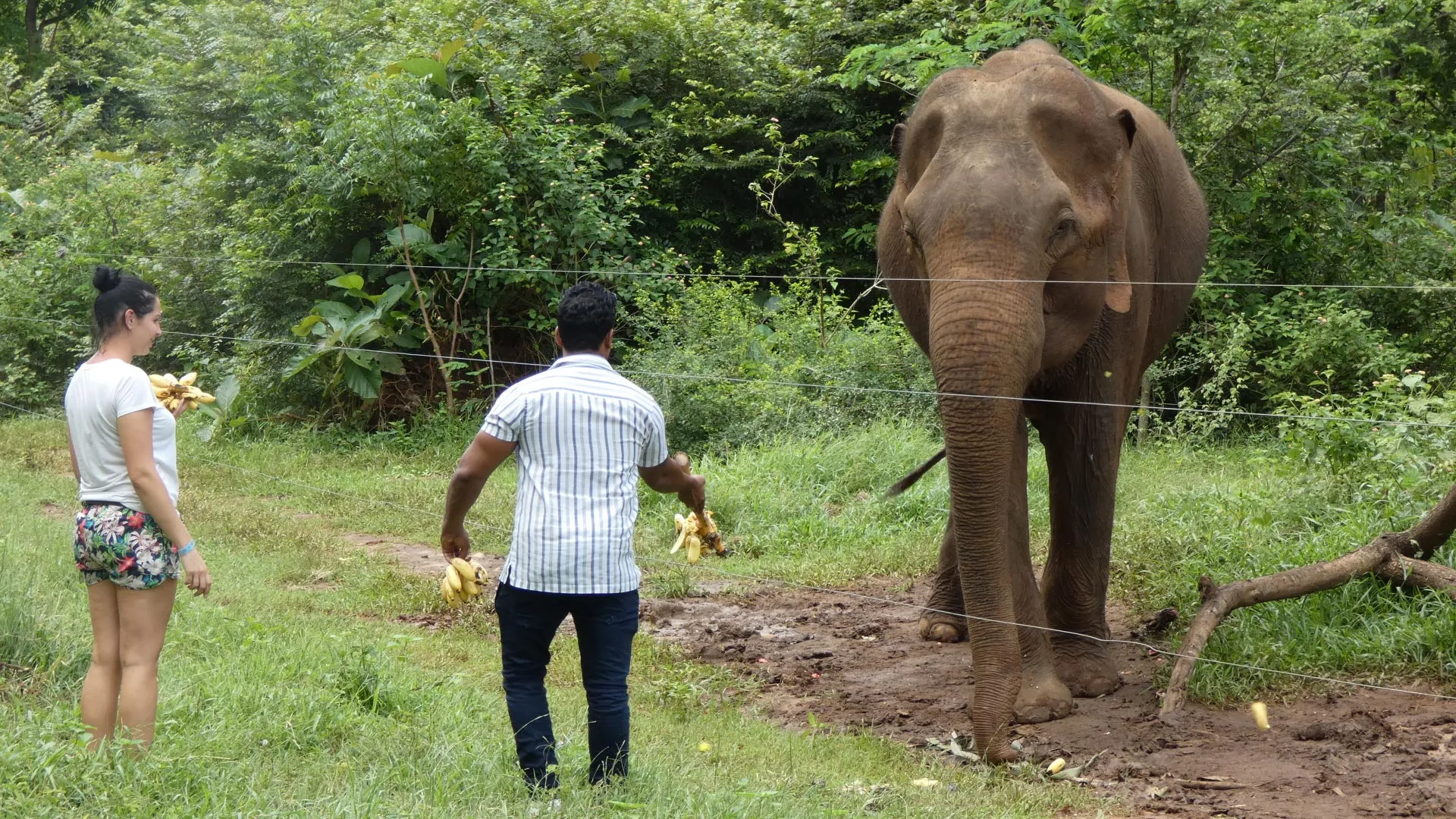
In Sri Lanka, de Silva studied 18 years of elephant-tourist interactions at Udawalawe National Park. She found that the elephants congregating near tourists at the park’s southern boundary have developed “begging” behavior and have become habituated to sugary foods, sometimes breaking through fences to continue being fed. As a result of elephants being drawn to the fence, several people have been killed or injured, and at least three elephants have been killed, while others have ingested plastic food bags and other contaminants. Such close human-wildlife encounters, including tourists feeding animals from sightseeing vehicles, also increases the risk of disease transmission to animals.
In India’s Sigur region, study coauthors Priya Davidar and Jean-Philippe Puyravaud of the Sigur Nature Trust observed feeding interactions with 11 male Asian elephants, four of which died from suspected human causes. One elephant was successfully rehabilitated and returned to natural foraging behavior.
“Many people, especially foreign tourists, think Asian elephants are tame and docile, like domestic pets,” said de Silva, a faculty member in the Department of Ecology, Behavior and Evolution and founder of the non-profit conservation organization Trunks & Leaves. “They don’t realize these are formidable wild animals and try to get too close in order to take photographs or selfies, which can end badly for both parties.”
Of the 800 to 1,200 elephants estimated living in Udawalawe National Park, the study found that 66 male elephants, or nine to 15% of the local male population of Asian elephants, were observed begging for food. Some elephants, including a popular male named Rambo, became local celebrities as they solicited food from tourists over several years.
“Food-conditioned animals can become dangerous, resulting in the injury and death of wildlife, people or both,” the researchers note in their paper. “These negative impacts counteract potential benefits.”
Since wild elephant feeding cannot be adequately regulated as an ongoing activity, the authors of the study recommend that feeding bans should be strictly enforced.
The researchers recognize that tourists are for the most part acting with good intentions, like people in many areas around the world who feed or leave food for wild animals in their regions. They can act from a motivation that they are helping friends in nature and take gratification from such interactions. “But this encourages wild animals to seek food from people, attracting them to areas that can put themselves or people at risk,” said de Silva. “It can be a conduit for disease transfer between species. Such feeding can also cause animals to lose their ability to forage for themselves if the behavior becomes prevalent, especially with young animals.”
Such interactions, de Silva says, can change animals’ movement patterns and possibly force them to lose knowledge of natural food sources if they become too dependent on handouts.
With rare exceptions, people should avoid feeding wild animals, de Silva urges, and encourages people to engage in responsible tourism.
Resident doctors will walk out for five consecutive days from 25 July over a dispute about pay.

If you know me, you’re probably tired of hearing me rattle on about my running, walking, and strength training adventures (sorry, loved ones).
That’s partly because I’m insufferable. But it’s also because I never imagined I’d get into sports – before the age of 23, I hated the idea.
Advertisement
Now, though, I worry I’ve become a victim of the same conscientiousness some research suggests might have put me off physical activity for years. Until about two months ago, I found myself skipping as many as three workouts a week – if I wasn’t giving it 100%, I reasoned, I’d better not go at all (this, despite knowing that any exercise is better for you than none).
But recently I’ve been enjoying the delights of the “crappy,” half-assed workout, and my exercise routine has never been more consistent.
I spoke to Anna Mathur, psychotherapist and author of the upcoming book The Good Decision Diary, about the joys of doing something badly instead of skipping it altogether.
Advertisement
The author told me that ambition isn’t a bad thing, but goals rooted in shame or unrealistic expectations can set you on a fast path to disappointment.
“This leads to feelings of stress, pressure, unease, burnout, etc.,” she shared.
“Lofty goals often fail because they ignore the gritty reality of life, our fluctuating energy, ever-changing resources, the unexpected curveballs, responsibilities in other areas of our lives, and our nervous system state.
“We might set out with ‘I’ll wake up at 5am and run every day’ and when we inevitably miss a day because we’re sick, exhausted or had a late night at work, we feel like we’ve failed.”
Advertisement
As someone who used to bail from my beloved jogs unless I felt I could finish a record-beating 10k, I found myself nodding at her advice.
To combat unfair and inflexible goals, be they for a new squat PR or a crochet project, the therapist sticks to what she calls “the 70% rule… if a choice feels 70% good enough, it’s probably time to act.
“Waiting for the perfect moment or plan can keep us in a state of paralysis and stop us from starting. Half-doing something (going for a 10-minute walk instead of a 45-minute workout, writing a messy journal entry instead of none at all) is often how momentum builds and we take the pressure off.”
Advertisement
I have at least 70% conviction to work out most days, and if that only leads to a 45% effort, well, so be it.
In fact, even my 10-minute walk to the gym is so much better than nothing than I realise in the moment – even if I turn around and leave once there.
A few weeks ago, I spent three days pretty much solely in bed, dreading the prospect of my newly adopted gym routine.
Advertisement
This, despite the fact that my running PR was the best it had ever been, and my squats were the heaviest I’d tried.
That’s because, Mathur cautioned, “Good decisions aren’t just about the outcome (although that’s where we’re culturally taught to focus: on the external, the deliverables, the achievements) – they’re about how they make you feel on the way there too, how you grow as you go, whether you resent the aim, burn out trying to get there.
“One sign that a goal is backfiring is when it starts creating more anxiety than momentum,” she added.
Advertisement
“Maybe it’s affecting your sleep, mood, or relationships. Maybe it’s fuelling rumination, shame, or a harsh inner critic, or you keep falling short or ‘failing.’”
Though a backfiring goal might look impressive from the outside, she continues, it might be time to reconsider or reconfigure it once it leaves you feeling disconnected from yourself.
“A good decision feels like something you can return to, that doesn’t carry that all-or-nothing, walking-on-a-tightrope quality, and is not something you’re constantly bracing against,” she ended.
Advertisement
My new, more flexible routine (if I miss my previous early-or-nothing morning slot, fine; I’ll do something a little less machine-heavy in my crammed 6pm gym) is one example, but the approach works for a far wider range of goals too.
The Good Decision Diary by Anna Mathur publishes 7 August 2025 (Penguin Life, £16.99)


Diane Abbott has been suspended by Labour for a second time amid fresh allegations of anti-semitism.
The veteran MP appeared to double down on previous comments she made about Jewish, Irish and Traveller people not experiencing the same type of racism as black people, which saw her lose the party whip two years ago.
In an interview with the Radio 4′s Reflections programme, Abbott said she did not look back on that incident with regret.
Advertisement
She said: “Clearly, there must be a difference between racism which is about colour and other types of racism because you can see a Traveller or a Jewish person walking down the street, you don’t know.
“I just think that it’s silly to try and claim that racism which is about skin colour is the same as other types of racism. I don’t know why people would say that.”
In a statement, a Labour Party spokesperson said: “Diane Abbott has been administratively suspended from the Labour Party, pending an investigation. We cannot comment further while this investigation is ongoing.”
Advertisement
It means Abbott will not have the Labour whip and will have to sit as an independent MP.
The initial row erupted over a letter Abbott sent to The Observer in 2023, in which she said: “They undoubtedly experience prejudice. This is similar to racism and the two words are often used as if they are interchangeable.
“It is true that many types of white people with points of difference, such as redheads, can experience this prejudice.
“But they are not all their lives subject to racism. In pre-civil rights America, Irish people, Jewish people and Travellers were not required to sit at the back of the bus.
Advertisement
“In apartheid South Africa, these groups were allowed to vote. And at the height of slavery, there were no white-seeming people manacled on the slave ships.”
She later claimed the letter had been sent to the newspaper in error and apologised “unreservedly” for any “anguish” they had caused.
The former shadow home secretary was eventually given back the Labour whip before last year’s general election – but has been a regular critic of Keir Starmer’s leadership.
Advertisement
Abbott, who is the MP for Hackney North and Stoke Newington, was criticised by the Jewish Labour Movement.
In a post on X, they said: “Anti-semitism is anti-Jewish racism. It targets Jews regardless of how they look, and many of our community are visibly Jewish and suffer racism for it.
“We are disappointed that Diane Abbott MP has doubled down on comments she previously appeared to apologise for, and are pleased to hear that Labour are looking into them.”
Advertisement
The row comes just a day after four Labour MPs lost the whip for persistent breaches of party discipline.
Neil Duncan-Jordan, Brian Leishman, Chris Hinchliff and Rachael Maskell were all suspended by government chief whip Alan Campbell.
Advertisement
All four voted against the government’s flagship welfare bill last week, but it is understood they have been disciplined for “actively organising against the government” over several months.
Seven Labour MPs also lost the whip last July after voting to scrap the two-child benefit cap, although four of them later had it restored.

Data for the NHS in England shows the waiting list for gynaecology is one of the largest.

Though exercising too close to your bedtime may actually harm your sleep more than it helps, the NHS says that getting enough movement in your day is key to consistently good slumber.
Johns Hopkins Medicine writes that we don’t actually know why physical activity helps you snooze. It might be because working out releases “happy chemicals”, endorphins, or because it raises your body’s core temperature, they suggest.
Advertisement
A half-hour of exercise is linked to better sleep that same night, nonetheless.
And now, a new review has been published in the journal BMJ Evidence-Based Medicine that has named the low-impact exercise that could improve the sleep of insomniacs like me by almost two hours.
The scientists looked at 22 previous randomised controlled trials involving over 1,300 people with insomnia.
They found that while cognitive behavioural therapy (CBT) was helpful for managing the condition, so too was exercise.
Advertisement
“Among the various modalities examined, yoga, Tai Chi, and walking or jogging appear to be particularly effective,” they wrote.
Not only did yoga improve sleep time by just under two hours on average, but it also helped participants to nod off half an hour earlier than usual.
The review found that the positive sleep effects of Tai Chi and CBT combined may last for as long as two years for people with insomnia, while those associated with aerobic activity or aerobic activity with strength training seemed to last for seven months.
Advertisement
Of the activities included in the research, though, yoga won out in sheer added minutes of kip.
As we mentioned above, the relationship between sleep and exercise is still not fully understood.
Perhaps that’s why this study didn’t recommend an exact amount of yoga or time at which to do it.
“To confirm and extend these findings, future research should prioritise large-scale, high-quality RCTs with standardised intervention protocols,” they wrote in their paper.
The more data we have, the more exercise and sleep scientists can rest easy (sorry….).

Imagine if your dog’s favorite game — sniffing out treats or toys — could help protect America’s vineyards, orchards, and forests from a devastating invader.
It turns out, it just might.
A new study led by Virginia Tech found that volunteer dog-handler teams — made up of everyday people and their pets — can effectively detect the elusive egg masses of the spotted lanternfly, an invasive insect that’s damaging farms and forests across the eastern and central United States.
It’s the first study to show that citizen dog-handler teams can achieve detection success rates comparable to professional conservation detection dogs.
“These teams demonstrated that citizen scientists and their dogs can play a meaningful role in protecting agriculture and the environment from invasive species,” said Sally Dickinson, the study’s lead author, who recently earned her Ph.D. from Virginia Tech’s College of Agriculture and Life Sciences. “With proper training, dog owners can turn their pets into powerful partners for conservation.”
An invasive pest, a hidden target
The spotted lanternfly, native to Asia, was first detected in Pennsylvania in 2014. Since then, it’s spread rapidly to 18 states, laying its eggs on trees, stone, lumber, and even cars and trailers, where it can hitch a ride to a new home.
Catching the bug early is key — but finding its egg masses is no easy task.
“They often resemble mud smears or lichens and are tucked into bark crevices, cracks, or hidden undersides,” said Mizuho Nita, a plant pathologist at Virginia Tech’s Alson H. Smith Jr. Agricultural Research and Extension Center, who co-authored the study. “Finding them is like searching for a needle in a haystack.”
That’s where the dogs come in.
With a sense of smell that’s tens of thousands of times more acute than humans’, dogs can be trained to sniff out spotted lanternfly egg masses without disturbing the environment. Previous research has shown that professional conservation detection dogs can do this with high accuracy. But professional dogs are expensive, and there aren’t nearly enough of them to cover the growing threat.
So the researchers asked: “What if we tapped into the tens of thousands of dog owners already doing scent detection as a hobby around the country?” Known as recreational scent work, this sport allows dogs to find hidden scents for fun in homes, parks, and training classes.
Dogs of all shapes, sizes, and snouts
Over 1,000 dog owners expressed interest in the study. More than 40 percent had prior experience in sport scent detection or related activities. Ultimately, 182 teams from across the U.S. were selected and given devitalized – or non-hatching – egg masses as training aids. Participants trained their dogs at home or in small groups, with oversight from a designated local trainer.
After several months of training, the dogs were put to the test in two environments – one indoor and one outdoor. In the controlled indoor environment, dogs had to complete an odor recognition test, identifying the box with the spotted lanternfly egg mass from among multiple boxes with other items and scents. Those that passed the odor recognition test advanced to a field test, where they had to find the scent in an outdoor environment with competing smells.
The results? Dogs correctly identified the egg masses 82 percent of the time in the controlled tests. In real-world field trials, accuracy dropped to 61 percent — still better than many human searches. Of the dogs that passed both tests, 92 percent were successful in finding live egg masses with minimal extra training.
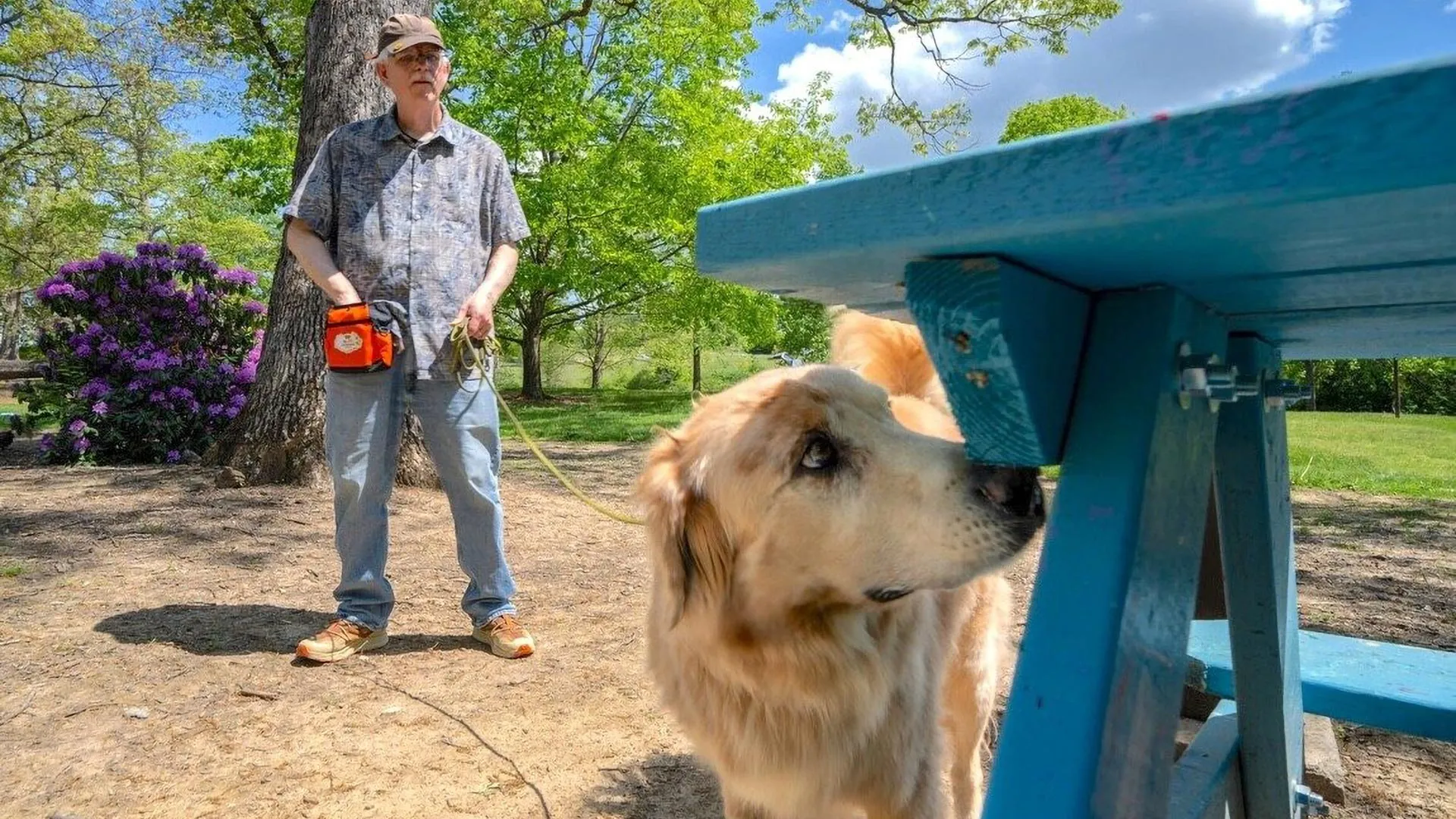
Study participant Bill Wellborn of Roanoke said his 7-year-old Tibetan terrier, Pepe, enjoyed the challenge. Over the course of six months, they trained with devitalized spotted lanternfly egg masses two or three times a week for 15 to 30 minutes.
“Anytime you can stimulate your dog, it’s good for them,” Wellborn said. “Pepe obviously enjoys it. And it’s a way we can take dog skills and training to help our community.”
Katie Thomas of Radford and her pit bull mix, Finch, also volunteered for the study, hoping to put their seven years of recreational scent work to real-world use.
“Being able to do the same thing for the greater good — for citizen science — adds another layer we didn’t have before,” she said.
Agriculture’s new best friend?
Erica Feuerbacher, an animal behaviorist and Dickinson’s graduate advisor and co-author, said the findings show the untapped power of community science.
“There are thousands of people out there doing scent work with their dogs just for fun,” said Feuerbacher, associate professor in the School of Animal Sciences. “What Sally’s study shows is that this can be more than a hobby — these citizen-scientists and their dogs can be a valuable resource for fighting the spread of an invasive pest.”
Sniffing out the spotted lanternfly may be just the beginning. A separate study co-authored by Nita, Dickinson, and Feuerbacher with researchers from Texas Tech University found that trained pet dogs could also detect powdery mildew, a major fungal disease of grapes and vineyards, with over 90 percent accuracy.
Together, these studies point to a growing role for dogs — and their owners — in safeguarding agriculture.
For Dickinson, a longtime firefighter and career search-and-rescue canine handler, the project reflects a personal mission: giving more dogs and their humans a chance to do meaningful work.
“This research is about more than detection,” she said. “It’s about empowering people to work alongside their dogs to protect the places and communities they care about.”
About the research
The project was supported by the U.S. Department of Agriculture’s National Institute of Food and Agriculture through the Agriculture and Food Research Initiative’s Tactical Sciences for Agricultural Biosecurity program.
The research team included Dickinson, Feuerbacher, and Nita from Virginia Tech and Edgar Aviles-Rosa and Nathan Hall from Texas Tech University.
