New DNA analysis rewrites the story of the Beachy Head Woman

A long-standing mystery surrounding a Roman-era skeleton discovered in southern England may finally be close to an answer.

Earlier studies suggested the young woman, known as the Beachy Head Woman, may have had recent ancestry from sub-Saharan Africa or the Mediterranean. New genetic research now points in a different direction, indicating she was most likely from Britain.

Using advanced DNA sequencing, researchers aimed to resolve questions that have surrounded the Beachy Head Woman for more than a decade.

A Skeleton Found in a Basement

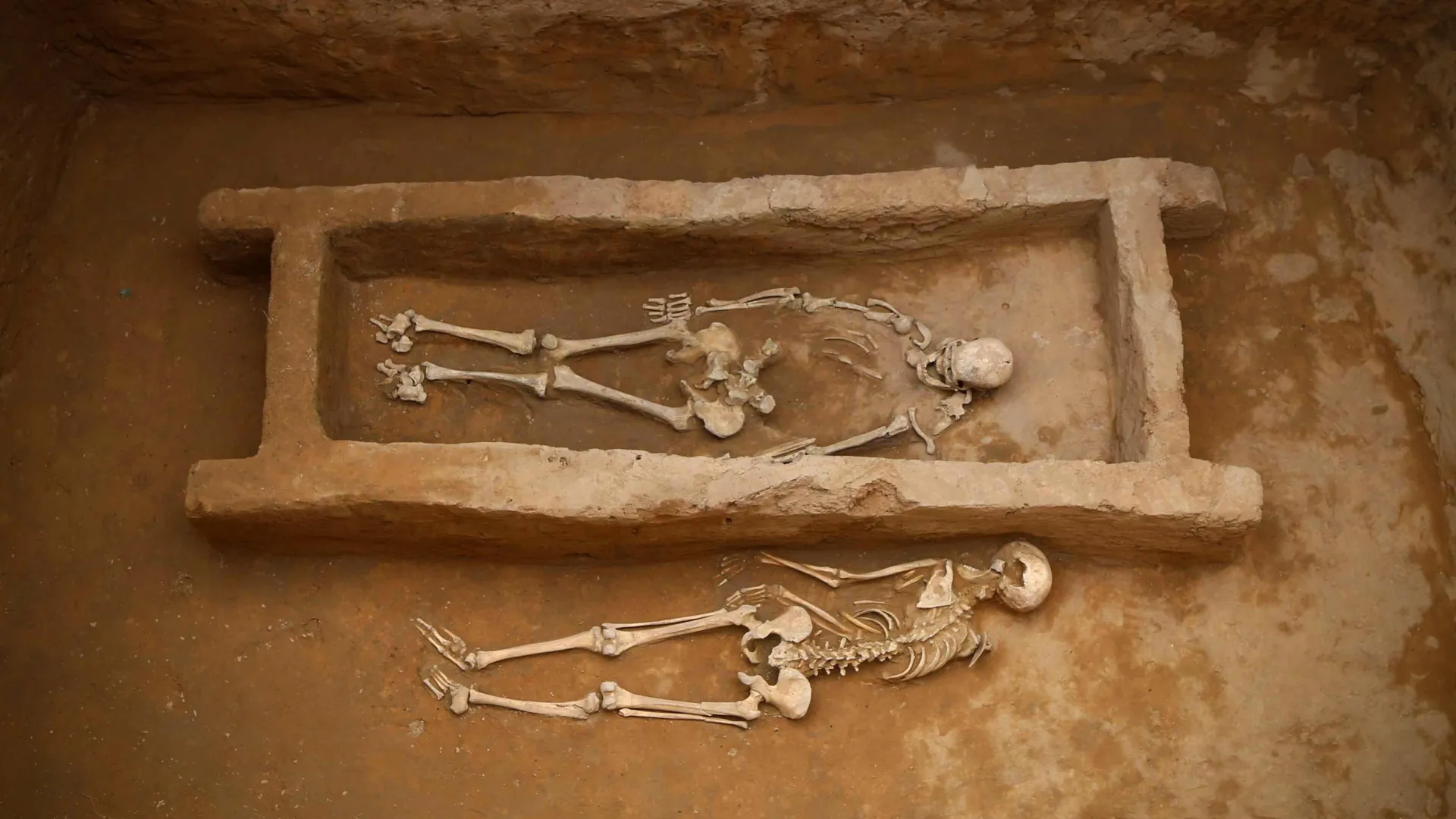
The remains were rediscovered in 2012 during the Eastbourne Ancestors Project, when a box was opened in the basement of Eastbourne Town Hall. Inside was the skeleton of a young woman from the Roman era. A handwritten label indicated she had been found near the Beachy Head headland sometime in the 1950s, but little additional information was available.

Public attention grew after early research suggested the woman may have had recent sub-Saharan African ancestry. If correct, the skeleton would have represented rare early evidence of African ancestry in Roman Britain.

Later, unpublished research proposed a different origin, suggesting she may have come from the Mediterranean, possibly Cyprus. That conclusion, however, relied on poorly preserved DNA, leaving uncertainty around her true background.

New DNA Methods Bring New Answers

Researchers have since returned to the skeleton with improved analytical tools. According to Dr. William Marsh, one of the scientists who analysed the DNA, the new results suggest a much closer connection to Britain.

“By using state-of-the-art DNA techniques and newly published genomes, we were able to determine the ancestry of the Beachy Head Woman with much greater precision than before,” William reveals. “We show she carries genetic ancestry that is most similar to other individuals from the local population of Roman-era Britain.”

Dr. Selina Brace, an ancient DNA specialist and senior author of the study, says the evolving interpretation reflects how science progresses over time.

“Our scientific knowledge and understanding is constantly evolving, and as scientists, it’s our job to keep pushing for answers. Thanks to the advancement of technology that has occurred in the past decade since Beachy Head Woman first came to light, we are excited to report these new comprehensive data and share more about this individual and her life.”

The research findings were published in the Journal of Archaeological Science.

Life in Roman Britain

Britain’s earliest major encounter with Ancient Rome occurred in 55BCE, when Julius Caesar led a military campaign to what is now Kent. Roman Britain itself was established nearly a century later under Emperor Claudius.

At its height, Roman control extended from southern England to the Antonine Wall north of modern-day Glasgow. The region included extensive networks of forts, roads, and towns linked to the wider Roman Empire, facilitating movement across Europe, north Africa, and beyond.

Historical inscriptions and archaeological evidence show that travel between Britain and north Africa was common during this period and continued even after Roman rule ended. Ancient DNA studies have also identified people with mixed European and sub-Saharan ancestry living in Dorset and Kent during the seventh century.

What We Know About the Beachy Head Woman

During the Roman occupation, the area around Beachy Head was dotted with settlements and infrastructure tied to the empire. Archaeological sites nearby include a villa at Eastbourne, a fort at Pevensey, and rural communities at Bullock Down and Birling. Several burials have been found in the region, including adults and a child.

The exact burial location of the Beachy Head Woman remains unknown, but radiocarbon dating indicates she died between 129 and 311 AD, aligning with the Roman period in Britain.

Physical analysis of her skeleton offers further insight into her life. She was likely between 18-25 years old at the time of her death and stood slightly over 1.5 meters tall. A healed injury on her leg points to a serious but survivable wound earlier in her life.

Chemical signatures in her bones also provide clues about her diet. Carbon and nitrogen levels suggest she regularly consumed seafood.

From Early DNA Clues to Clearer Evidence

Initial genetic analysis began in 2017, when researchers first attempted to extract DNA from the remains. Those early results hinted at a Mediterranean origin, but the DNA was limited in quantity and quality.

Because the data were insufficient to support firm conclusions, the findings were not published.

By 2024, advances in ancient DNA techniques made it possible to recover far more genetic material. Researchers returned to the skeleton and successfully sequenced significantly higher-quality DNA.

This expanded dataset allowed for a more detailed comparison with known populations. The analysis showed the Beachy Head Woman’s DNA most closely matched rural communities from Roman-era Britain, with no evidence of recent African or Mediterranean ancestry. Based on these results, researchers concluded she likely originated from southern England.

Reconstructing a Face From the Past

The improved DNA data also enabled modern forensic analysis. Scientists predicted that the Beachy Head Woman probably had light skin pigmentation, blue eyes, and fair hair. These findings were used to update her digital facial reconstruction.

As DNA technology continues to advance, researchers expect even deeper insights into the lives of people who lived thousands of years ago, allowing forgotten individuals like the Beachy Head Woman to be better understood within their historical world.

Share Button

Researchers tested AI against 100,000 humans on creativity

Can generative artificial intelligence systems like ChatGPT genuinely create original ideas? A new study led by Professor Karim Jerbi from the Department of Psychology at the Université de Montréal, with participation from renowned AI researcher Yoshua Bengio, takes on that question at an unprecedented scale. The research is the largest direct comparison ever conducted between human creativity and the creativity of large language models.

The study, published in Scientific Reports (Nature Portfolio), points to a significant shift. Generative AI systems have now reached a level where they can outperform the average human on certain creativity measures. At the same time, the most creative people still show a clear and consistent advantage over even the strongest AI models.

AI Reaches Average Human Creativity Levels

Researchers evaluated several leading large language models, including ChatGPT, Claude, Gemini, and others, and compared their performance with results from more than 100,000 human participants. The findings highlight a clear turning point. Some AI systems, including GPT-4, exceeded average human scores on tasks designed to measure divergent linguistic creativity.

“Our study shows that some AI systems based on large language models can now outperform average human creativity on well-defined tasks,” explains Professor Karim Jerbi. “This result may be surprising — even unsettling — but our study also highlights an equally important observation: even the best AI systems still fall short of the levels reached by the most creative humans.”

Further analysis by the study’s co-first authors, postdoctoral researcher Antoine Bellemare-Pépin (Université de Montréal) and PhD candidate François Lespinasse (Université Concordia), revealed a striking pattern. While some AI models now outperform the average person, peak creativity remains firmly human.

In fact, when researchers examined the most creative half of participants, their average scores surpassed those of every AI model tested. The gap grew even larger among the top 10 percent of the most creative individuals.

“We developed a rigorous framework that allows us to compare human and AI creativity using the same tools, based on data from more than 100,000 participants, in collaboration with Jay Olson from the University of Toronto,” says Professor Karim Jerbi, who is also an associate professor at Mila.

How Scientists Measure Creativity in Humans and AI

To evaluate creativity fairly across humans and machines, the research team used multiple methods. The primary tool was the Divergent Association Task (DAT), a widely used psychological test that measures divergent creativity, or the ability to generate diverse and original ideas from a single prompt.

Created by study co-author Jay Olson, the DAT asks participants, whether human or AI, to list ten words that are as unrelated in meaning as possible. An example of a highly creative response includes words like “galaxy, fork, freedom, algae, harmonica, quantum, nostalgia, velvet, hurricane, photosynthesis.”

Performance on this task is strongly linked to results on other established creativity tests used in writing, idea generation, and creative problem solving. Although the task is language-based, it goes well beyond vocabulary. It engages broader cognitive processes involved in creative thinking across many domains. The DAT also has practical advantages, as it takes only two to four minutes to complete and can be accessed online by the general public.

From Word Lists to Real Creative Writing

The researchers then explored whether AI success on this simple word association task could extend to more complex and realistic creative activities. To test this, they compared AI systems and human participants on creative writing challenges such as composing haiku (a short three-line poetic form), writing movie plot summaries, and producing short stories.

The results followed a familiar pattern. While AI systems sometimes exceeded the performance of average humans, the most skilled human creators consistently delivered stronger and more original work.

Can AI Creativity Be Adjusted?

These findings raised another important question. Is AI creativity fixed, or can it be shaped? The study shows that creativity in AI can be adjusted by changing technical settings, particularly the model’s temperature. This parameter controls how predictable or adventurous the generated responses are.

At lower temperature settings, AI produces safer and more conventional outputs. At higher temperatures, responses become more varied, less predictable, and more exploratory, allowing the system to move beyond familiar ideas.

The researchers also found that creativity is strongly influenced by how instructions are written. For example, prompts that encourage models to think about word origins and structure using etymology lead to more unexpected associations and higher creativity scores. These results emphasize that AI creativity depends heavily on human guidance, making interaction and prompting a central part of the creative process.

Will AI Replace Human Creators?

The study offers a balanced perspective on fears that artificial intelligence could replace creative professionals. While AI systems can now match or exceed average human creativity on certain tasks, they still have clear limitations and rely on human direction.

“Even though AI can now reach human-level creativity on certain tests, we need to move beyond this misleading sense of competition,” says Professor Karim Jerbi. “Generative AI has above all become an extremely powerful tool in the service of human creativity: it will not replace creators, but profoundly transform how they imagine, explore, and create — for those who choose to use it.”

Rather than signaling the end of creative careers, the findings suggest a future where AI serves as a creative assistant. By expanding ideas and opening new paths for exploration, AI may help amplify human imagination rather than replace it.

“By directly confronting human and machine capabilities, studies like ours push us to rethink what we mean by creativity,” concludes Professor Karim Jerbi.

About the Study

The paper titled “Divergent creativity in humans and large language models” was published in Scientific Reports on January 21, 2026. The research brought together scientists from Université de Montréal, Université Concordia, University of Toronto Mississauga, Mila (Quebec AI Institute), and Google DeepMind.

Professor Karim Jerbi led the study, with Antoine Bellemare-Pépin (Université de Montréal) and François Lespinasse (Université Concordia) serving as co-first authors. The research team also included Yoshua Bengio, founder of Mila and LoiZéro, and a pioneer of deep learning, the technology behind modern AI systems such as ChatGPT.

Share Button

Ancient people carried a wild potato across the American Southwest

More than 10,000 years ago, people living in the southwestern United States carried a wild ancestor of the modern potato across long distances. According to a study published January 21, 2026 in the open-access journal PLOS One, this movement likely helped the plant spread beyond its original habitat. The research was led by Lisbeth Louderback of the University of Utah, U.S., along with her colleagues.

The findings suggest that Indigenous communities played an active role in shaping the plant’s future. By moving and using this wild potato, they may have begun the earliest stages of domestication while also building a distinctive cultural tradition in the Four Corners region.

The Four Corners Potato and Its Ancient Use

The plant at the center of the study is known as the Four Corners potato (Solanum jamesii). It is a small but hardy and nutritious wild potato that still grows across southwestern North America today, ranging from southern Utah and Colorado into northern Mexico.

To learn how the potato was used in the past, researchers examined ground stone tools from 14 archaeological sites. These sites span a wide stretch of time, from several hundred to many thousands of years old. The tools were tested for tiny starch granules left behind when plants were processed for food.

Stone Tools and Genetic Clues Tell the Story

Starch from the Four Corners potato was identified on tools from nine of the sites. Some of the evidence dates back as far as 10,900 cal BP. Most of these locations sit near the modern northern edge of the potato’s range, along the borders of Colorado, Utah, Arizona, and New Mexico.

Earlier genetic research adds another layer of evidence. Some living populations of the Four Corners potato in this northern area show strong genetic signs that they originated much farther south. This supports the idea that people carried the plant across the region, extending its range north into Utah and Colorado, where it still grows today.

Early Domestication and Living Cultural Traditions

Researchers note that repeated use of a plant and its movement beyond its natural range are both key indicators of early domestication. In this case, those behaviors appear to have begun thousands of years ago.

Even today, the Four Corners potato holds cultural importance for Indigenous communities. Alongside laboratory work, the research team interviewed 15 Navajo (Diné) elders. These conversations confirmed that the wild potato remains known, eaten, and used for spiritual purposes.

Lisbeth Louderback adds: “By combining new archaeobotanical data and elder interviews with transport patterns identified by genetic sequencing of the Four Corners potato, we have defined an anthropogenic range distinct from its natural distribution. This reveals a unique cultural identity developed by ancient transport of this species — one that continues into the present day.”

Cynthia Wilson adds: “The mobility of Indigenous foodways was driven by kinship-based practices across the landscape. Indigenous knowledge holders, especially matrilineal women, held on to these seedlings and stories across generations to sustain ties to ancestral land and foodways.”

Funding: This work was funded by the National Science Foundation (Award BCS-1827414). General funding was also received from Red Butte Garden and the Natural History Museum of Utah.

Share Button

Cosmetic doctor sorry for picking apart singer Troye Sivan’s looks on TikTok

The singer hit out at Dr Zayn Khalid Majeed – who says he will try to have a positive impact with his content.

Share Button

Donald Trump Praises ‘Great And Very Brave’ British Soldiers As He Backs Down In Nato Row

Donald Trump has praised “the great and very brave soldiers of the United Kingdom” as he backed down after a furious row erupted over his comments about the contribution Nato troops made in Afghanistan.

The US president paid tribute to the 457 British soldiers who lost their life in the war, which was triggered by the 9/11 attacks on the World Trade Centre.

To date, it is the only time Nato has triggered Article 5, which states all members must come to the aid of another if they are attacked.

In remarks which drew widespread condemnation, including from Keir Starmer, Trump said the military alliance has never come to America’s aid.

He said: “We have never really asked anything of them, you know, they’ll say they sent some troops to Afghanistan, or this or that, and they did. They stayed a little back, little off the frontlines.”

It is understood Starmer, who called his comments “frankly appalling” and suggested Trump should apologise, raised the matter in a phone call with the president on Saturday.

Shortly afterwards, Trump posted: “The GREAT and very BRAVE soldiers of the United Kingdom will always be with the United States of America! In Afghanistan, 457 died, many were badly injured, and they were among the greatest of all warriors. It’s a bond too strong to ever be broken. The U.K. Military, with tremendous Heart and Soul, is second to none (except for the U.S.A.!). We love you all, and always will! ”

A Downing Street spokesperson said: “The prime minister raised the brave and heroic British and American soldiers who fought side by side in Afghanistan, many of whom never returned home. We must never forget their sacrifice, he said.”

Tory leader Kemi Badenoch said: “I’m pleased President Trump has now acknowledged the role of the British armed forces and those brave men and women who gave their lives fighting alongside the US and our allies.

“It should never have been questioned in the first place.”

Share Button

Andy Burnham Tees Up Battle With Keir Starmer By Launching MP Bid

Andy Burnham has launched his bid to be Labour’s candidate in a crunch by-election and return to Westminster as an MP.

The Manchester mayor told Labour bosses of his intentions to stand in Gorton and Denton following the resignation on health grounds of sitting MP Andrew Gwynne.

In a letter posted on X, Burnham – who quit as an MP in 2017 – said it was time for him to try to return to parliament.

As a mayor, he has to seek special permission from Labour’s ruling National Executive Committee (NEC) to be allowed to apply to be a candidate.

Burnham said it had been “a difficult decision”, but vowed to run a “hopeful and unifying campaign” if chosen to as Labour’s candidate.

He there was now “a direct threat to everything Greater Manchester has always been about from a brand of politics which seeks to pit people against each other” – an apparent reference to Reform UK and the rise of the far-right.

He added: “I see this by-election as the front line of that fight for the Manchester way and I feel I owe it to a city which has given me so much to lead it from the front, despite the risks involved.”

<div class="js-react-hydrator" data-component-name="Twitter" data-component-id="3861" data-component-props="{"itemType":"rich","index":10,"contentIndexByType":1,"contentListType":"embed","code":"

I have today written to the Chair of Labour’s National Executive Committee seeking permission to enter the selection process for a candidate for the forthcoming Gorton and Denton by-election.

Read my letter here.👇🏻 pic.twitter.com/TwKgADsuSB

— Andy Burnham (@AndyBurnhamGM) January 24, 2026

","type":"rich","meta":{"author":"Andy Burnham","author_url":"https://twitter.com/AndyBurnhamGM","cache_age":86400,"description":"I have today written to the Chair of Labour’s National Executive Committee seeking permission to enter the selection process for a candidate for the forthcoming Gorton and Denton by-election.Read my letter here.👇🏻 pic.twitter.com/TwKgADsuSB— Andy Burnham (@AndyBurnhamGM) January 24, 2026\n\n\n","options":{"_hide_media":{"label":"Hide photos, videos, and cards","value":false},"_maxwidth":{"label":"Adjust width","placeholder":"220-550, in px","value":""},"_theme":{"value":"","values":{"dark":"Use dark theme"}}},"provider_name":"Twitter","thumbnail_height":1350,"thumbnail_url":"https://pbs.twimg.com/media/G_cZpBIW4AAb7Vr.jpg:large","thumbnail_width":1080,"title":"Andy Burnham on Twitter / X","type":"rich","url":"https://twitter.com/AndyBurnhamGM/status/2015107556943745277","version":"1.0"},"flags":[],"enhancements":{},"fullBleed":false,"options":{"theme":"news","device":"desktop","editionInfo":{"id":"uk","name":"U.K.","link":"https://www.huffingtonpost.co.uk","locale":"en_GB"},"originalEdition":"uk","isMapi":false,"isAmp":false,"isMobile":false,"isAdsFree":false,"isVideoEntry":false,"isEntry":true,"isMt":false,"entryId":"6974f686e4b0dcc403079f33","entryPermalink":"https://www.huffingtonpost.co.uk/entry/andy-burnham-tees-up-battle-with-keir-starmer-by-launching-mp-bid_uk_6974f686e4b0dcc403079f33","entryTagsList":"labour-party,keir-starmer,andy-burnham","sectionSlug":"politics","deptSlug":null,"sectionRedirectUrl":null,"subcategories":"","isWide":false,"isShopping":false,"headerOverride":null,"noVideoAds":false,"disableFloat":false,"isNative":false,"commercialVideo":{"provider":"custom","site_and_category":"uk.politics","package":null},"isHighline":false,"vidibleConfigValues":{"cid":"60afc140cf94592c45d7390c","disabledWithMapiEntries":false,"overrides":{"all":"60b8e525cdd90620331baaf4"},"whitelisted":["56c5f12ee4b03a39c93c9439","56c6056ee4b01f2b7e1b5f35","59bfee7f9e451049f87f550b","5acccbaac269d609ef44c529","570278d2e4b070ff77b98217","57027b4be4b070ff77b98d5c","56fe95c4e4b0041c4242016b","570279cfe4b06d08e3629954","5ba9e8821c2e65639162ccf1","5bcd9904821576674bc55ced","5d076ca127f25f504327c72e","5b35266b158f855373e28256","5ebac2e8abddfb04f877dff2","60b8e525cdd90620331baaf4","60b64354b171b7444beaff4d","60d0d8e09340d7032ad0fb1a","60d0d90f9340d7032ad0fbeb","60d0d9949340d7032ad0fed3","60d0d9f99340d7032ad10113","60d0daa69340d7032ad104cf","60d0de02b627221e9d819408"],"playlists":{"default":"57bc306888d2ff1a7f6b5579","news":"56c6dbcee4b04edee8beb49c","politics":"56c6dbcee4b04edee8beb49c","entertainment":"56c6e7f2e4b0983aa64c60fc","tech":"56c6f70ae4b043c5bdcaebf9","parents":"56cc65c2e4b0239099455b42","lifestyle":"56cc66a9e4b01f81ef94e98c"},"playerUpdates":{"56c6056ee4b01f2b7e1b5f35":"60b8e525cdd90620331baaf4","56c5f12ee4b03a39c93c9439":"60d0d8e09340d7032ad0fb1a","59bfee7f9e451049f87f550b":"60d0d90f9340d7032ad0fbeb","5acccbaac269d609ef44c529":"60d0d9949340d7032ad0fed3","5bcd9904821576674bc55ced":"60d0d9f99340d7032ad10113","5d076ca127f25f504327c72e":"60d0daa69340d7032ad104cf","5ebac2e8abddfb04f877dff2":"60d0de02b627221e9d819408"}},"connatixConfigValues":{"defaultPlayer":"16b0ecc6-802c-4120-845f-e90629812c4d","clickToPlayPlayer":"823ac03a-0f7e-4bcb-8521-a5b091ae948d","videoPagePlayer":"05041ada-93f7-4e86-9208-e03a5b19311b","defaultPlaylist":"2e062669-71b4-41df-b17a-df6b1616bc8f"},"topConnatixThumnbailSrc":"data:image/png;base64,iVBORw0KGgoAAAANSUhEUgAAAAEAAAABCAQAAAC1HAwCAAAAC0lEQVR42mNkYAAAAAYAAjCB0C8AAAAASUVORK5CYII=","customAmpComponents":[],"ampAssetsUrl":"https://amp.assets.huffpost.com","videoTraits":null,"positionInUnitCounts":{"buzz_head":{"count":0},"buzz_body":{"count":0},"buzz_bottom":{"count":0}},"positionInSubUnitCounts":{"article_body":{"count":4},"blog_summary":{"count":0},"before_you_go_content":{"count":0}},"connatixCountsHelper":{"count":0},"buzzfeedTracking":{"context_page_id":"6974f686e4b0dcc403079f33","context_page_type":"buzz","destination":"huffpost","mode":"desktop","page_edition":"en-uk"},"tags":[{"name":"labour party","slug":"labour-party","links":{"relativeLink":"news/labour-party","permalink":"https://www.huffingtonpost.co.uk/news/labour-party","mobileWebLink":"https://www.huffingtonpost.co.uk/news/labour-party"},"section":{"title":"Politics","slug":"politics"},"topic":{"title":"Labour Party","slug":"labour-party","overridesSectionLabel":false},"url":"https://www.huffingtonpost.co.uk/news/labour-party/"},{"name":"keir starmer","slug":"keir-starmer","links":{"relativeLink":"news/keir-starmer","permalink":"https://www.huffingtonpost.co.uk/news/keir-starmer","mobileWebLink":"https://www.huffingtonpost.co.uk/news/keir-starmer"},"url":"https://www.huffingtonpost.co.uk/news/keir-starmer/"},{"name":"andy burnham","slug":"andy-burnham","links":{"relativeLink":"news/andy-burnham","permalink":"https://www.huffingtonpost.co.uk/news/andy-burnham","mobileWebLink":"https://www.huffingtonpost.co.uk/news/andy-burnham"},"url":"https://www.huffingtonpost.co.uk/news/andy-burnham/"}],"isLiveblogLive":null,"isLiveblog":false,"backfillRelatedArticles":[],"signInUrl":"https://login.huffpost.com/login?dest=https%3A%2F%2Fwww.huffpost.com%2Fentry%2Fandy-burnham-tees-up-battle-with-keir-starmer-by-launching-mp-bid_uk_6974f686e4b0dcc403079f33%3Fhp_auth_done%3D1","cetUnit":"buzz_body","enableIncontentPlayer":true,"bodyAds":["

\r\n\r\n HPGam.cmd.push(function(){\r\n\t\treturn HPGam.render(\"inline-1\", \"entry_paragraph_1\", false, false);\r\n });\r\n\r\n","

\r\n\r\n HPGam.cmd.push(function(){\r\n\t\treturn HPGam.render(\"inline\", \"entry_paragraph_2\", false, false);\r\n });\r\n\r\n","

\r\n\r\n HPGam.cmd.push(function(){\r\n\t\treturn HPGam.render(\"inline-2\", \"entry_paragraph_3\", false, false);\r\n });\r\n\r\n","

\r\n\r\n HPGam.cmd.push(function(){\r\n\t\treturn HPGam.render(\"inline-infinite\", \"repeating_dynamic_display\", false, false);\r\n });\r\n\r\n"],"adCount":0,"midArticleAdPartner":null},"isCollectionEmbed":false}”>

I have today written to the Chair of Labour’s National Executive Committee seeking permission to enter the selection process for a candidate for the forthcoming Gorton and Denton by-election.

Read my letter here.👇🏻 pic.twitter.com/TwKgADsuSB

— Andy Burnham (@AndyBurnhamGM) January 24, 2026

Burnham’s decision tees up a major battle with Downing Street, where allies of Keir Starmer want the NEC to block his candidacy so he can’t mount a leadership challenge against the prime minister.

Speaking to BBC Breakfast in November, he refused to rule out making a third bid to lead Labour at some point in the future.

He said: “I am not going to sit here this morning and rule out what might or might not happen in the future. Why would I? I don’t know what the future holds.”

But blocking his candidacy would potentially trigger a civil war in the party, with senior figures including Labour mayor Sadiq Khan demanding that Burnham be allowed to stand.

Khan told a Fabian Society conference on Saturday: “I’m a firm believer in the best team having all the talent playing for them.”

Energy secretary Ed Miliband told the same event: “I very much hope the local party will have the option of selecting Andy Burnham as the candidate”.

Even if he were chosen as Labour’s candidate, there is no guarantee that Burnham would be elected as polls indicate the Gorton and Denton seat is now a three-way marginal between Labour. Reform UK and the Greens.

Share Button