The judgement provides a clear framework for what equality laws mean, but it remains to be seen what will change.


The judgement provides a clear framework for what equality laws mean, but it remains to be seen what will change.

Sediment cores drawn from four lakes in Guatemala record the distinct direction that ground shaking traveled during a 1976 magnitude 7.5 earthquake that devastated the country, according to researchers at the Seismological Society of America’s Annual Meeting.
The earthquake, which killed more than 23,000 people and left about 1.5 million people homeless, took place along the Motagua Fault, at the boundary between the North American and Caribbean tectonic plate boundary.
Severe ground shaking from the 1976 earthquake caused landslides and sediment-laden turbidity currents that can be seen clearly in cores taken from the lakebeds. Normally, researchers might expect that this shaking would produce the thinnest sediment deposits in lakes furthest away from an earthquake, since seismic waves weaken as they travel away from an earthquake epicenter.
But in the Guatemalan lakes, the cores with the thickest sediment traces of the earthquake occur at the end of the fault rupture, said Jonathan Obrist-Farner, a geologist at Missouri University of Science and Technology. “What we see is lakes that are actually the closest to the epicenter but just away from the rupture path have very thin deposits.”
Jeremy Maurer, a geophysicist also at Missouri University, suggested that the unusual pattern had in this case recorded the directivity of the 1976 shaking.
It’s not unusual for scientists to find evidence of past earthquakes in lake sediment cores, Maurer added, noting examples from New Zealand to Turkey that offer a glimpse at how far away a particular earthquake could have an impact.
“What hasn’t been done as much is looking at where these lakes are located in relationship to the fault,” said Maurer. “Are they off-axis or on-axis? Does the direction of the rupture have an effect on sediment deposits?”
When the U.S. Geological Survey collected field data after the 1976 earthquake, “they found, for example, adobe houses that were 10 kilometers south of the main rupture path that were still standing, yet those that were actually on the fault trace and towards the propagation direction all collapsed,” said Maurer. “I think there’s a lot of evidence that points to the directivity of the rupture and now we’re just looking at it sedimentologically from the lakes.”
The researchers began recovering and analyzing cores from the lakes in 2022. “We thought it would be a very interesting opportunity to not just look at the 1976 earthquake, but actually learn a little bit more about the paleoseismic history of the plate boundary, which we know very little of,” said Obrist-Farner, who is originally from Guatemala.
Although there was a brief rush of seismologists to the region after the 1976 earthquake, the impacts of a 36-year civil war and sparse instrumentation have left the plate boundary poorly monitored. Paleoseismic data like the lake records are important for building a more complete picture of the country’s seismic risk.
Last year Obrist-Farner’s team retrieved their largest cores yet from the lakes, with lengths of sediment that may represent up to four thousand years of lake history. Their initial analysis shows evidence of the 1816 earthquake of at least magnitude 7.5 that is known mostly from historical documents.

At the Seismological Society of America’s Annual Meeting, researchers posed a seemingly simple question: how wide are faults?
Using data compiled from single earthquakes across the world, Christie Rowe of the Nevada Seismological Laboratory at the University of Nevada, Reno and Alex Hatem of the U.S. Geological Survey sought a more comprehensive answer, one that considers both surface and deep traces of seismic rupture and creep.
By compiling observations of recent earthquakes, Rowe and Hatem conclude that from Turkey to California, it’s not just a single strand of a fault but quite often a branching network of fault strands involved in an earthquake, making the fault zone hundreds of meters wide.
“So that suggests that significant parts of the broad array of fractures that develops over many earthquakes can be activated in a single earthquake,” said Rowe, who noted that this width sometimes roughly corresponds to the width of Alquist-Priolo zones established for safe building in California.
“We want to know how this might change things like the shaking patterns that you would expect, or how much radiated energy you get from an earthquake,” Rowe explained. “Because it’s not the same if you have slip distributed on many strands as when it is all on one strand of the fault.”
At the same time, the researchers found that the width of creep zones at these earthquakes are much narrower, both near the surface and 10-25 kilometers deep in the earth. The creep zones, between 2 and 10 meters wide, “may be the most localized behavior a fault does,” Rowe said.
The study emphasizes the importance of thinking of faults in a more three-dimensional manner, said Rowe.
“As a geologist, it’s always kind of been a cognitive disconnect for me when I talk to earthquake modelers who have these two-dimensional features that they model earthquakes on,” she said. “Because the sheer resistance, the strength or the friction, comes from a volume of rock that’s deforming during an earthquake or in between earthquakes. So the size of that volume controls the strength of the fault in some really tangible ways.”
The researchers used a variety of data in their study, including rupture maps, creeping zone width from surveys of slowly shifting monuments along faults and satellite observations, the locations of earthquake aftershocks, low velocity damage zone widths, and the zones delineated by certain types of rock such as pseudotachylyte, ultramylonite and mylonite that are a signature of creep and deformation.
The findings also have implications for how scientists study past earthquakes to calculate earthquake recurrence intervals on faults, Rowe noted.
Slip rates and recurrence intervals can be constrained using localized measurements, but it can be difficult to disentangle the slip that occurred during an earthquake and aseismic slip that occurred after the event. The 2014 Napa, California earthquake is a good example of this phenomenon, said Rowe, noting that almost half of the slip measured after that event occurred slowly after the earthquake.
But if the Napa earthquake occurred thousands of years ago and researchers came across its traces in the rock record, “you would just see a bigger earthquake. You might lump all of that slip as a single event,” Rowe said.
Creep isn’t always accounted for in calculating recurrence intervals, “so finding out that creep zones are quite narrow means that we should be aware that we could be convolving creep with seismic slip when we look at those paleoseismic records,” she added.

For scientists who want to learn about the geological history of a planet, river deltas are a great place to start. Deltas gather sediment from a large area into one place, which can be studied to reveal climate and tectonic histories or signs of past life. That’s why NASA sent its most recent Mars rover to Jezero Crater, home to a prominent and well-preserved delta.
And that’s why planetary scientists are also interested in finding deltas on Saturn’s moon Titan. Titan is the only planetary body in the solar system besides Earth that has liquid currently flowing across its surface, so its deltas could be a scientific treasure trove.
One problem: Titan appears to be largely devoid of deltas, a new study finds, despite its large rivers of liquid methane and ethane.
“It’s kind of disappointing as a geomorphologist because deltas should preserve so much of Titan’s history,” said Sam Birch, an assistant professor in Brown University’s Department of Earth, Environmental and Planetary Sciences who led the work.
But the absence of deltas raises a host of new questions.
“We take it for granted that if you have rivers and sediments, you get deltas,” Birch said. “But Titan is weird. It’s a playground for studying processes we thought we understood.”
Titan is the largest of Saturn’s 274 confirmed moons. Its thick nitrogen and methane atmosphere gives rise to a host of Earth-like climate and weather features. Titan has clouds, wind and rain as well as rivers, lakes and seas. But instead of water, Titan’s fluid bodies contain methane and ethane, which are liquid at Titan’s chilly surface temperatures.
Scientists learned of Titan’s liquid bodies when the Cassini spacecraft flew by in 2006. Peering through Titan’s thick atmosphere with Cassini’s synthetic aperture radar (SAR), the spacecraft revealed spidering channels and large flat areas consistent with large bodies of liquid.
Largely missing from Cassini’s SAR images, however, were deltas — even at the mouths of large rivers. It wasn’t clear, however, whether the deltas were truly absent, or whether they just didn’t show up in Cassini’s SAR data. That’s the question Birch and his colleagues tried to answer with this new study, published in the Journal of Geophysical Research: Planets.
The problem with Cassini’s SAR data is that shallow liquid methane is largely transparent in any images. So while the SAR images could see the broad seas and river channels, it’s harder to confidently make out coastal features because it’s difficult to see where the coast ends and where the sea floor begins.
For the study, Birch developed a numerical model to simulate what Cassini’s SAR would see if it looked at a landscape scientists understand well: Earth. In the model, the water in Earth’s rivers and oceans was replaced by Titan’s methane liquid, which has different radar absorption properties compared to water.
“We basically made synthetic SAR images of Earth that assume properties of Titan’s liquid instead of Earth’s,” Birch said. “Once we see SAR images of a landscape we know very well, we can go back to Titan and understand a bit better what we’re looking at.”
The research found that the synthetic SAR images of Earth clearly resolved large deltas and many other large coastal landscapes.
“If there are deltas the size of the one at the mouth of the Mississippi River, we should be able to see it,” Birch said. “If there are large barrier islands and similar coastal landscapes like those we see all along the U.S. Gulf Coast, we should be able to see those.”
But when Birch and his colleagues combed over the Titan images in light of their new analysis, they came up mostly empty. Aside from two probable deltas near Titan’s south pole, the rest of the moon’s rivers were entirely delta-free. The researchers found that only about 1.3% of Titan’s large rivers that terminate at coastlines have deltas. On Earth, in contrast, nearly every river of similar size has a delta.
It’s not entirely clear why Titan generally lacks deltas, Birch says. The fluid properties of Titan’s rivers should make them perfectly capable of carrying and depositing sediment. It could be, the researchers say, that sea levels on Titan rise and fall so rapidly that deltas are smeared across the landscape more quickly than they can be built up in a single spot. Winds and tidal currents along Titan’s coasts may also play an equally large role in preventing delta formation.
And missing deltas aren’t the only mystery raised by the new research. The new analysis of Cassini SAR data of Titan’s coasts revealed pits of unknown origin deep within lakes and seas. The study also found deep channels on the floors of the seas that seem to have been carved by river flows, but it’s not clear how they got there.
All of these surprises will require more research to fully understand, Birch says.
“This is really not what we expected,” Birch said. “But Titan does this to us a lot. I think that’s what makes it such an engaging place to study.”
Nigel Farage can hardly be accused of not making his intentions clear.
“Reform are parking their tanks on the lawns of the Red Wall,” he told activists and candidates at a working men’s club in County Durham last week.
“Today is the first day I’ve said that, but I absolutely mean it – we’re here, and we’re here to stay.”
Advertisement
With local elections – and the crunch Runcorn by-election – looming on May 1, Farage is turning on the charm as he tries to woo traditional Labour voters to the Reform cause.
Somewhat bizarrely for a man who has made no secret in the past of his admiration for Margaret Thatcher, Farage is now talking about “reindustrialising” the UK, demanding the nationalisation of British Steel and even cosying up to the trade unions.
It is all part of a strategy of winning over those Labour voters in the North and the Midlands who backed Brexit in 2016, supported Boris Johnson’s Tories in 2019 and then, disillusioned, returned to the Labour fold last year.
Advertisement
Millions of votes and dozens of Red Wall seats are up for grabs at the next general election as Farage sets his sights on 10 Downing Street.
Former Labour MP Jonathan Ashworth, now chief executive of the Labour Together think-tank, believes Farage is on a hiding to nothing, however.
He told HuffPost UK: “Northerners aren’t daft and will smell Farage’s bullshit from a mile away.
“Farage has spent his whole political career backing Thatcherite economics which devastated industrial communities. He opposes workers’ rights and decent pay rises. It’s clear as day the NHS will never be safe in Reform hands.
Advertisement
“All Reform offers the so-called Red Wall is a route to helping the Tories back into power, leaving working people paying the price.”
A No.10 source, meanwhile, said: “While Nigel Farage was in CountyDurham pretending to care about the working class, [business secretary] Johnny Reynolds was literally at Immingham Port watching the raw materials being unloaded to keep British Steel going.
“And when the PM visited Scunthorpe he got a standing ovation from the workforce, so this idea that we can’t win there now is nonsense.”
Advertisement

PAUL ELLIS via AFP via Getty Images
Exclusive analysis for HuffPost UK by pollsters Ipsos shows there is potential for Reform to make real inroads into Labour’s heartlands.
In former manufacturing and mining areas in the north of England and south Wales, there is a strong feeling among voters that they have been left behind by successive Tory and Labour governments.
Advertisement
Jobs, policing, public transport and affordable housing are all areas of concern for these voters, while only 24% think public services will improve in the next two to three years.
Gideon Skinner, the firm’s senior director of UK politics, said there is “fertile ground of public discontent for Reform UK to take advantage of, both nationally and in their target areas”.
“In particular, people are attracted to Reform because they see it as a party that will deliver change, and keep their promises,” he said. “They have a leader in Farage who is seen as strong with a lot of personality, who understands the problems facing Britain – especially on getting immigration under control – and who represents traditional British values.”
Advertisement
So far, Labour’s strategy for dealing with the Reform threat has been to highlight Farage’s past comments about moving the NHS to a French-style insurance model and to accuse the party of being “Putin’s poodles”.
Farage’s well-known support for Donald Trump is also seen as another weak spot, something he has appeared to acknowledge by criticising the US president in recent weeks.
Skinner added: “Reform UK still have work to do to correct some of the more negative views about them, which makes these local elections an important test for them.
Advertisement
“Nationally, while they lead on immigration and are neck-and-neck on crime, they trail Labour on other key issues like the NHS, the economy, housing, transport, and education.
“People are worried that a Nigel Farage-led government would be divisive, too close to Donald Trump, and that Reform doesn’t have enough talent to build a competent administration. And overall Keir Starmer still leads Nigel Farage in the public’s mind as best prime minister.”
One Labour Party veteran said: “While our attacks on Farage about the NHS are not the silver bullet, they are cutting through and damaging Reform. It is definitely better than calling them far right and putting our heads in the sand.
Advertisement
“There isn’t much point going after Farage in the way there wasn’t with Boris; he needs to blow himself up, and he will. The Reform attack needs to be nuanced and should develop into a wider critique of their bonkers economic policies, or lack of them to be more precise.”

via Associated Press
The local elections on May 1 will tell us more about which of Reform’s main rivals has more to worry about at the moment.
Advertisement
The Tories are defending more than 900 seats and, by Kemi Badenoch’s own admission, are heading for a bad night. Around 600 fewer Labour seats are up for grabs, meaning they won’t sustain as much damage.
Whatever happens, it seems certain that Reform are on course for major gains – as a Survation poll for The Sun appeared to confirm last week.
But an ally of Keir Starmer told HuffPost UK that the political landscape will look very different come the next general election.
Advertisement
“The Tories and Reform are either going to have to kill the other or merge before the next election,” he said. “If Reform kill the Tories, then the choice is whether you want Keir or Farage to be prime minister.
“We win in that scenario because millions of people who cannot stand the thought of Farage in No.10 will vote Labour to stop it happening.
“But if the Tories kill Reform then that is potentially a problem for us because they are more likely to unite that centre-right and right-wing vote.
Advertisement
“Basically, the people who voted Reform last year are never going to vote Labour. We need to attract those who didn’t vote Reform but could drift off to them next time.”
The defining battle of the next four years in British politics could well be whether or not Labour succeeds in preventing Nigel Farage from painting the Red Wall turquoise.



A new smart insole system that monitors how people walk in real time could help users improve posture and provide early warnings for conditions from plantar fasciitis to Parkinson’s disease.
Constructed using 22 small pressure sensors and fueled by small solar panels on the tops of shoes, the system offers real-time health tracking based on how a person walks, a biomechanical process that is as unique as a human fingerprint.
This complex personal health data can then be transmitted via Bluetooth to a smartphone for quick and detailed analysis, said Jinghua Li, co-author of the study and an assistant professor of materials science and engineering at The Ohio State University.
“Our bodies carry lots of useful information that we’re not even aware of,” said Li. “These statuses also change over time, so it’s our goal to use electronics to extract and decode those signals to encourage better self health care checks.”
It’s estimated that at least 7% of Americans suffer from ambulatory difficulties, activities that include walking, running or climbing stairs. While efforts to manufacture a wearable insole-based pressure system have risen in popularity in recent years, many previous prototypes were met with low energy limitations and unstable performances.
To overcome the challenges of their precursors, Li and Qi Wang, the lead author of the study and a current PhD student in materials science and engineering at Ohio State, sought to ensure that their wearable is durable, has a high degree of precision when collecting and analyzing data, and can provide consistent and reliable power, said Li.
“Our device is innovative in terms of high resolution, spatial sensing, self-powering capability, and its ability to combine with machine learning algorithms,” she said. “So we feel like this research can go further based on the pioneering successes of this field.”
The study was recently published in the journal Science Advances.
This team’s system is also made unique through its use of AI. Using an advanced machine learning model, the wearable can recognize eight different motion states, including static ones like sitting and standing to more dynamic movements such as running and squatting.
Additionally, since the materials the insoles are made of are flexible and safe, the device, much like a smartwatch, is low-risk and safe for continuous use. For instance, after the solar cells convert sunlight to energy, that power is stored in tiny lithium batteries that don’t harm the user or affect daily activities.
Because of the distribution of sensors from toe to heel, the researchers could see how the pressure on parts of the foot is different in activities such as walking versus running.
During walking, pressure is applied sequentially from the heel to the toes, whereas during running, almost all sensors are subjected to pressure simultaneously. In addition, during walking, the pressure application time accounts for about half of the total time, while during running, it accounts for only about a quarter.
In health care, the smart insoles could support gait analysis to detect early abnormalities associated with foot pressure-related conditions (such as diabetic foot ulcers), musculoskeletal disorders (such as plantar fasciitis) and neurological conditions (such as Parkinson’s disease).
The new system also used machine learning to learn and classify different types of motion. That offers opportunities for personalized health management, including real-time posture correction, injury prevention and rehabilitation monitoring. Customized fitness training may also be a future use, the researchers said.
According to the study, these smart insoles showed no notable deterioration in performance after 180,000 cycles of compression and decompression, showing their long-term durability.
“The interface is flexible and quite thin, so even during repetitive deformation, it can remain functional,” said Li. “The combination of the software and hardware means it isn’t as limited.”
Researchers expect the technology will likely be available commercially within the next three to five years. Next steps to advance the work will be aimed at improving the system’s gesture recognition abilities, which, according to Li, will likely be helped with further testing on more diverse populations.
“We have so many variations among individuals, so demonstrating and training these fantastic capabilities on different populations is something we need to give further attention to,” said Li.
Other co-authors include Hui Guan, Chen Wang, Peiming Lei, Hongwei Sheng, Huasheng Bi, Jinkun Hu, Chenhui Guo, Yichuan Mao, Jiao Yuan, Mingjiao Shao, Zhiwen Jin and Wei Lan from Lanzhou University in China.

With the rise of AI-powered writing assistants, typing up your job application can be quicker than ever.
OpenAI’s ChatGPT, for example, is a chatbot powered by machine learning that can write out detailed resumes and cover letters in less than five minutes with the prompts you give it. But if you are doing this, know that recruiters can tell.
Advertisement
“Easily 25% of apps appear to be AI-generated,” said Bonnie Dilber, a recruiting manager with app-automation company Zapier.
And these blatant examples do not leave a winning impression on recruiters. At worst, “it signals to me that the person may not know what they are talking about or how to blend AI-generated content with their own ideas,” Dilber said.
The biggest red flag, recruiters said, is when your application reads like a copy-pasted, robotic and formulaic template.
Advertisement
If you are using an AI-powered writing assistant, think of the hundreds of other job candidates who are doing the same. For recruiters who sift through many applications, the ones that are done through AI become obvious, because they have similar sentence structures and they use the same case studies.
Dilber gave the example of asking “Why are you interested in this position?” on a job application and getting candidates who use the same word-for-word response of “Company’s mission of ‘insert mission statement’ resonates with me and my experience in ‘insert their current job.’”
“First time I saw it, it was cute, the next few times, it becomes obvious they all plugged this into the same tool.”
– Bonnie Dilber, a recruiting manager with Zapier
Advertisement
“After seeing this exact same response over and over again, it becomes clear that the candidates are all using AI,” she said.
When the application asked about how to use Zapier’s product, which automates tasks, Dilber said, “a bunch of people all came up with the same use case of a flower shop. First time I saw it, it was cute. The next few times, it becomes obvious they all plugged this into the same tool.”
For Gabrielle Woody, a university recruiter for the financial software company Intuit, the telltale sign of a ChatGPT-written application is also the “robotic tone” that is markedly different than how early-career professionals actually talk.
Advertisement
“I almost always see words like ‘adept,’ ‘tech-savvy’ and ‘cutting-edge’ repeatedly now on resumes for tech roles,” she said. “I mostly review intern and entry-level resumes, and many of the early-career candidates I reviewed were not using those terms in their applications before ChatGPT.”
“A good recruiter can spot an AI-written application from a mile away,” said Laurie Chamberlin, head of LHH Recruitment Solutions in North America. For her, the clear giveaway is the generic buzzwords.
“We might catch candidates listing skills like ‘excellent communicator’ or ‘team player,’ but they don’t back them up with real-life examples,” she said. “The absence of specificity, authenticity and personal touch can be a red flag.”
Advertisement
In some cases, it’s obvious because of the lack of editing. Tejal Wagadia, a recruiter for a major tech company, said that she will see job applications that still have the font, parentheses or phrasing like “add numbers here” that ChatGPT will give in its summarised answers.
“They will literally copy and paste that into their resume without any kind of editing,” Wagadia said. This can backfire for candidates, because it signals you are careless. “If you’re missing that level of detail, it shows the employer that you’re not detail-oriented. Yeah you use technology, but not well,” she added.
Ideally, you use AI writing tools as a starting point, recruiters said. Woody said ChatGPT can help job candidates generate ideas about which experiences to present on their resumes: “You can ask ChatGPT to break down a job description or identify the most relevant skills and experiences for the position you’re applying to.”
Advertisement
In other words, AI writing assistants can help you write a first draft, but you need to edit and write your final draft with specific, detailed experiences only you know to share.
Wagadia advised making your job search “targeted and not templated.” So don’t mass-apply with hundreds of AI-generated job applications.
“It’s better to have five targeted applications where you put in effort than 100 where the other person can clearly tell that you’re not interested,” Wagadia said.
Advertisement
And don’t lie. Tech and digital marketing recruiter Kelli Hrivnak cautioned applicants against using the suggested achievements generative AI tools can create in their answers if they are not true: “If you have misled the company, then this jeopardises your integrity as an employee,” Hrivnak said.
Ultimately, a strong job application will include personal anecdotes and specific achievements that are relevant to the role you’re applying to. That level of good storytelling cannot be automated.
“If the company was simply looking for AI-generated work, they’d use an AI tool,” Dilber said. “They are trying to hire a human for the unique things only humans can offer, so make sure your application showcases that.”
Advertisement


My first date with Jordan was moving along seamlessly when out of nowhere he made a strange joke about my appearance.
“Wow, good thing you don’t have anything in your teeth,” he said while I was busy laughing, “because your teeth stick out so much it’s like, ‘Whoa.’”
Advertisement
He imitated what I apparently looked like — something between a piranha and a chipmunk. For most people, this might not have been a big deal. But for me — someone with a long history of body dysmorphic disorder, this was devastating.
I met Jordan on a dating site my daughter had encouraged me to check out not long after she’d left for college. She messaged me one afternoon with concern.
“I’m seeing a lot of selfies of you with the cats,” she said. “What’s going on? Are you getting out with your friends and meeting new people?” On her next visit home, she helped me set up a profile on a dating app.
Advertisement
Jordan’s profile pictures revealed a handsome man with deep hazel eyes and a full dark moustache and goatee. He was divorced and now living in Madison, Wisconsin, when he popped into my queue of potential dates after he, too, swiped right on my profile. We messaged for a few days and then made plans to meet at a popular bar-restaurant on Madison’s west side.
I had no sooner agreed to the date than my anxiety kicked in and I began obsessing over my appearance. Dating with body dysmorphic disorder had always been excruciating.
Defined by the Diagnostic and Statistical Manual of Mental Disorders, body dysmorphic disorder (BDD) falls under the category of an obsessive-compulsive disorder, specifically a preoccupation with one or more perceived defects or flaws in physical appearance that are not observable or appear slight to others. It’s estimated that in the United States, 5 million to 10 million people suffer from this disorder. My BDD revolves around my face, specifically my nose, jaw and teeth. Like other mental illnesses, BDD varies in its severity, affecting everyone differently. Left untreated, it can lead to devastating effects, including anxiety, depression and suicidal ideation.
Advertisement
Though my obsession with my facial defects never ceases to exist completely, it had been at a minimum for the few months preceding my date, giving me enough confidence to say yes to Jordan. In fact, as I got ready to go out, I found myself unexpectedly excited as I dug out my high-waisted black pants, new silver silk top and dangling sequin earrings. Putting on my makeup, I carefully played up my eyes with a dusty mauve shadow and highlighter above my cheekbones, attempting to draw attention away from the lower areas of my face. I must have thought I looked decent enough because I took a selfie and posted it to Facebook just before heading out the door.
It was a cool March evening when I pulled up to the Bonfyre Grill. I saw Jordan as soon as I walked in — he was standing at the bar, gazing intently at the doorway. Our eyes met and he smiled. He was shorter than his pictures revealed, but other than that, he looked much as I’d expected.
After a nervous greeting (on my part, because he appeared calm and confident), we ordered drinks and settled into our conversation. Jordan told me he moved to the U.S. in the early ’90s to attend law school. We both had kids, though I had only one, and she was off at graduate school. Jordan had two — a daughter in college who lived nearby and a younger son still at home. I’d been hoping to find a future partner who didn’t have young kids, but it wasn’t a total deal-breaker.
Advertisement
Forty-five minutes later, I revelled in how well our date was going. Jordan was gregarious and funny to the point of being entertaining — I was laughing so hard both my stomach and face hurt. He was also a passionate conversationalist with a deep voice and British accent I found uncommonly attractive. Even more endearing was his attentive disposition — he asked me questions about my work and complimented me on raising my daughter alone as a single mom.
As we relaxed into our second hour and another drink, Jordan inched his barstool closer to mine. Now facing each other with our knees brushing, he reached out and took my hand. I relished our mutual attraction as we planned for a second date.
A moment later, things took a surprising turn for the worse when Jordan made the joke about my teeth. I immediately froze up in shock. Before I could gather myself, he made another joke-like comment about my nose. I tried to play it off, but it was too late. A freight train had been let loose, and it was headed to a deep, dark oblivion.
Advertisement
I had never been on a date with anyone who had commented on one of my BDD focus areas, and I had no idea how to respond. In an instant, all the pain of my struggle rushed back to me, and I went into flight mode. Jordan quickly picked up on my change of demeanor and followed with, “Don’t get me wrong, you’re cute as hell,” but I was already searching for the exit.
“Before I could gather myself, he made another joke-like comment about my nose. I tried to play it off, but it was too late. A freight train had been let loose, and it was headed to a deep, dark oblivion.”
My struggle with body dysmorphic disorder started decades ago after suffering a mental breakdown at 28. As is common with this disorder, I didn’t trust the doctors’ diagnosis or recommendations. I didn’t need psychotherapy or medication. I needed a plastic surgeon, an orthognathic surgeon and an orthodontist. The only way to stop the obsessing and mental pain, I believed, was to fix my face. That was the beginning of a long and painful road.
Advertisement
I continued to have severe anxiety and daily obsessiveness for months before I finally agreed to try medication and therapy. A year later, I was no longer having panic attacks, but the obsessions were still strong. I now had depression added to my diagnosis from struggling so long with no reprieve. Unable to see the light at the end of the tunnel, I became desperate. I didn’t want to die, but I didn’t know how much longer I could go on suffering. The mental pain had become more than I could take.
Every day became a fight for survival, taking all I had to get to work, parent my daughter and maintain our small household. I began an early morning routine of prayer and spiritual reading. I meditated and visualised myself healthy, happy and defect-free. I read self-help and BDD recovery books, feverishly highlighting passages and going back to those helpful parts regularly. Many of those books became lifesaving. I set out to retrain my brain to think different thoughts and to put a hard stop to the devastating ones. Slowly, I started to have good days. Slowly, the fog lifted. And when I finally made it out of the dark two years later, I never wanted to go back again. The pain of living that existential death was worse than living with an imperfect face.
I decided it made no difference whether or not I was “deformed.” What was killing me wasn’t the deformities — real or imagined, slight or major — but the meaning I’d applied to them.
Advertisement
Jordan was, perhaps, insensitive and careless in his remarks about my face, but he certainly couldn’t have known the weight of his words or the impact they would have on me. But at that moment, staying in his presence was too painful. I ended the date promptly, telling him I had an early morning the next day and needed to call it a night.
“Do you still want to get together midweek then?” he asked as I was putting my coat on to leave.
“Sure,” I responded, knowing I never would.
I stopped interacting with Jordan and went back to therapy. That was over a year ago now, just two weeks before the country went into lockdown with the pandemic. Therapy, along with the solitude that quarantine provided, allowed me time to heal and to get my mind back on track.
Now, as the COVID-19 numbers decrease and with summer here, I’ve been thinking about dating again. With so much time alone, I’ve pondered how nice it would be to have a companion, a future partner, love.
Advertisement
A few weeks ago, I got back on the dating app and recently swiped right on a man named Matt.
Matt is five years younger than me, fit, tattooed and handsome. A military veteran now working as an engineer, he’s been sweet and gentlemanly in our messages. We’ve made plans to meet for lunch on Sunday. I’m not cured of my body dysmorphic disorder and may never be. Further, there is no guarantee the date will go well. But what lies ahead of me is a choice. I choose to live — struggles, imperfections and all.
Tammy Rabideau is a writer living in Madison, Wisconsin. Her writing has been featured in The New York Times, Rebelle Society and other publications. She is working on a memoir based on her New York Times Modern Love essay. You can follow her on Twitter at @TammyRabideau2.


From the Japanese cypress to the ponderosa pine, wood has been used in construction for millennia. Though materials like steel and concrete have largely taken over large building construction, wood is making a comeback, increasingly being used in public and multi-story buildings for its environmental benefits.
Of course, wood has often been passed over in favor of other materials because it is easily damaged by sunlight and moisture when used outdoors. Wood coatings have been designed to protect wood surfaces for this reason, but coating damage often starts before it becomes visible. Once the deterioration can be seen with the naked eye, it is already too late.
To solve this problem, a team of researchers at Kyoto University is working to create a simple but effective method of diagnosing this nearly invisible deterioration before the damage becomes irreparable.
“If we can ‘see’ what the eye cannot, we can extend the life of wooden structures and improve sustainability in the building industry,” says corresponding author Yoshikuni Teramoto.
The team is endeavoring to bring data-driven tools into traditional wood maintenance by combining mid-infrared spectroscopy with machine learning. They’ve started by testing artificially weathered wood coatings along with coatings containing cellulose nanofiber, a plant-derived additive that can improve the durability of these coatings.
Their machine learning component uses a technique called partial least square, which they employed to build a model to predict the extent of deterioration. They also used a genetic algorithm to identify the most informative infrared signals, improving both accuracy and interpretability.
“We were surprised to find that very subtle chemical changes — far too small to detect visually — could be captured by infrared spectroscopy and predicted by the model,” says Teramoto.
This approach allows the researchers to detect subtle chemical changes and estimate the level of deterioration with high accuracy. By making it possible to diagnose early coating deterioration quickly and without damaging the wood, their method could also reduce the need for costly visual inspections by detecting early warning signs of deterioration and preventing further decay.
With their study, the researchers have also demonstrated how chemistry and data-driven modeling techniques can work together to support smarter maintenance of sustainable buildings. “We hope this technology will help bridge the gap between traditional craftsmanship and modern data science,” continues Teramoto.
The research team is now conducting tests on real wooden buildings, with plans to improve their model for application in new paint and coating product development.
Beyond wood, the team’s method may also be applied to materials like concrete or metal to unlock new possibilities for diagnosing other kinds of early material failure, improving the sustainability of other applications and industries in the process.

According to a study presented to the British Association of Aesthetic Plastic Surgeons (BAAPS) in November 2024, over 50% of individuals who travel abroad for cosmetic surgery end up regretting their decision.
BAAPS commented on the study, saying: “The findings underscore the hidden costs and potential risks of bargain procedures abroad, with Turkey emerging as a prominent destination.”
Advertisement
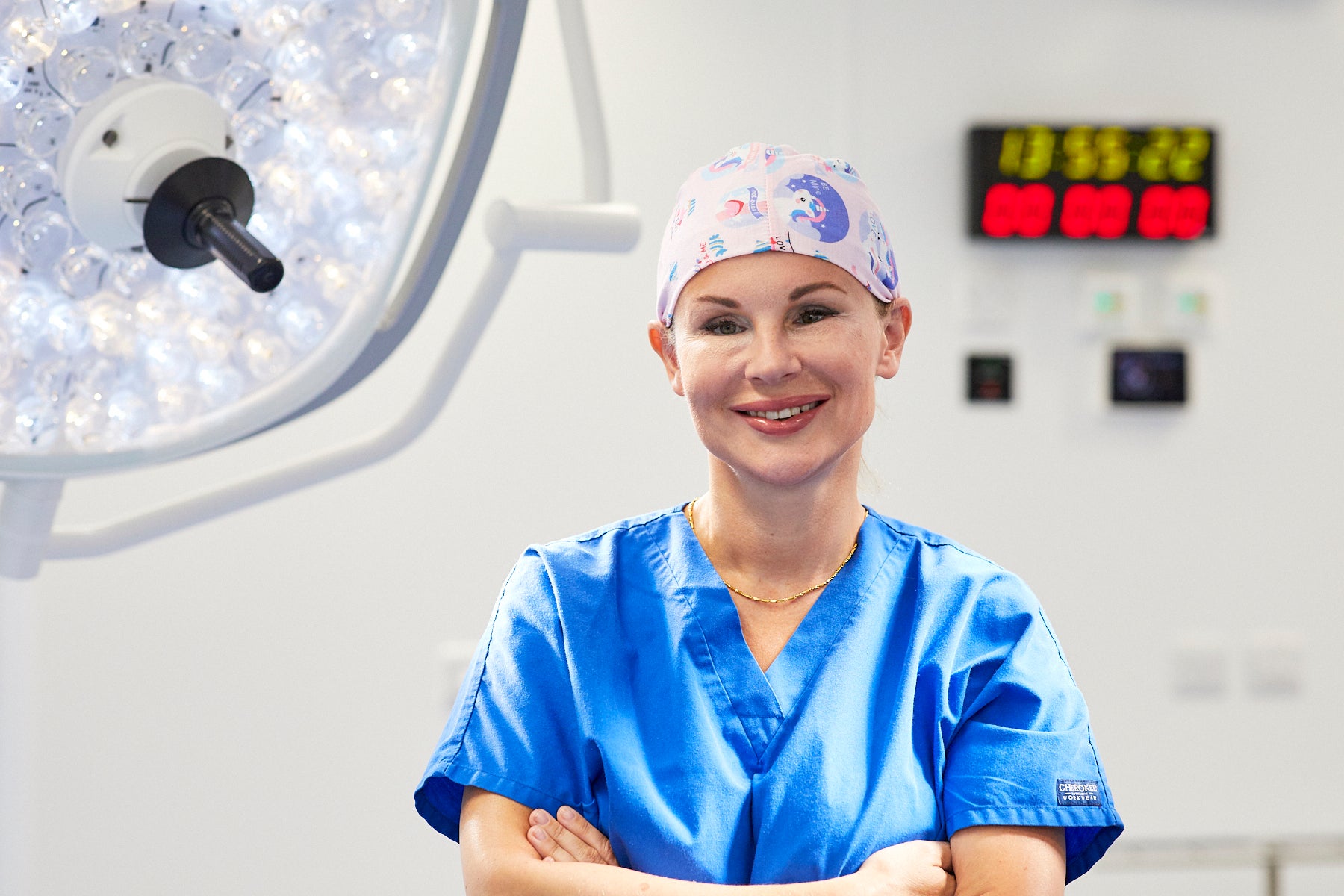
To learn more about this high regret rate and the issues people face when heading abroad for cosmetic surgery, HuffPost UK spoke with leading consultant plastic surgeon Elena Prousskaia.
Prousskaia says: “As a consultant plastic surgeon with almost 20 years of experience, I regularly see patients dealing with the consequences of low-cost cosmetic procedures performed overseas.
“Many return home with results that are not only disappointing but, in some cases, medically concerning – requiring urgent or complex revision surgery.”
Advertisement
These complications aren’t simple, either.
The consultant reveals: “The complications I most often treat include infection, poor scarring, asymmetry, and, occasionally, permanent tissue damage.
“Commonly, these are for breast augmentation and body contouring surgery. These outcomes aren’t just bad luck – they’re frequently the result of inadequate preoperative screening, rushed consultations and trying to fit in too many patients.”
Undergoing surgery – cosmetic or not – is no small feat, and Prousskaia warns that doing so right after travelling is not advised: “In some cases, patients undergo surgery within 24 hours of landing, without time to recover from travel or receive thorough medical evaluations.”
Advertisement
Proussakaia says: “When it comes to postoperative care, this can be lacking. This could include not having enough time to properly recuperate before discharge, being given inadequate advice to carry on recovery at home and not being properly schooled about how to spot complications.
“Often, when surgery goes wrong, this is during the aftercare – it is such a critical time to be well supported and informed.”
In the UK, she reveals, we are held to stringent regulatory standards.
“Surgeons are GMC-registered, facilities are inspected, and patients must be given sufficient time and information to make informed decisions. Overseas, standards vary widely. Some clinics prioritise volume over safety, and patients may not meet their surgeon until the day of surgery.
Advertisement
“Revision surgery is not straightforward. Operating on already-compromised tissue increases the risk of further complications, and the psychological impact – from regret to anxiety – can be profound.”
If you are still considering heading overseas for cosmetic treatment, the surgeon recommends following these steps:
“Cosmetic surgery should never be rushed or treated as a ‘bargain’. It’s still surgery — with all the risks that entails. Always choose safety over savings.”