Using AI to find the polymers of the future

Nylon, Teflon, Kevlar. These are just a few familiar polymers — large-molecule chemical compounds — that have changed the world. From Teflon-coated frying pans to 3D printing, polymers are vital to creating the systems that make the world function better.

Finding the next groundbreaking polymer is always a challenge, but now Georgia Tech researchers are using artificial intelligence (AI) to shape and transform the future of the field. Rampi Ramprasad’s group develops and adapts AI algorithms to accelerate materials discovery.

This summer, two papers published in the Nature family of journals highlight the significant advancements and success stories emerging from years of AI-driven polymer informatics research. The first, featured in Nature Reviews Materials, showcases recent breakthroughs in polymer design across critical and contemporary application domains: energy storage, filtration technologies, and recyclable plastics. The second, published in Nature Communications, focuses on the use of AI algorithms to discover a subclass of polymers for electrostatic energy storage, with the designed materials undergoing successful laboratory synthesis and testing.

“In the early days of AI in materials science, propelled by the White House’s Materials Genome Initiative over a decade ago, research in this field was largely curiosity-driven,” said Ramprasad, a professor in the School of Materials Science and Engineering. “Only in recent years have we begun to see tangible, real-world success stories in AI-driven accelerated polymer discovery. These successes are now inspiring significant transformations in the industrial materials R&D landscape. That’s what makes this review so significant and timely.”

AI Opportunities

Ramprasad’s team has developed groundbreaking algorithms that can instantly predict polymer properties and formulations before they are physically created. The process begins by defining application-specific target property or performance criteria. Machine learning (ML) models train on existing material-property data to predict these desired outcomes. Additionally, the team can generate new polymers, whose properties are forecasted with ML models. The top candidates that meet the target property criteria are then selected for real-world validation through laboratory synthesis and testing. The results from these new experiments are integrated with the original data, further refining the predictive models in a continuous, iterative process.

While AI can accelerate the discovery of new polymers, it also presents unique challenges. The accuracy of AI predictions depends on the availability of rich, diverse, extensive initial data sets, making quality data paramount. Additionally, designing algorithms capable of generating chemically realistic and synthesizable polymers is a complex task.

The real challenge begins after the algorithms make their predictions: proving that the designed materials can be made in the lab and function as expected and then demonstrating their scalability beyond the lab for real-world use. Ramprasad’s group designs these materials, while their fabrication, processing, and testing are carried out by collaborators at various institutions, including Georgia Tech. Professor Ryan Lively from the School of Chemical and Biomolecular Engineering frequently collaborates with Ramprasad’s group and is a co-author of the paper published in Nature Reviews Materials.

“In our day-to-day research, we extensively use the machine learning models Rampi’s team has developed,” Lively said. “These tools accelerate our work and allow us to rapidly explore new ideas. This embodies the promise of ML and AI because we can make model-guided decisions before we commit time and resources to explore the concepts in the laboratory.”

Using AI, Ramprasad’s team and their collaborators have made significant advancements in diverse fields, including energy storage, filtration technologies, additive manufacturing, and recyclable materials.

Polymer Progress

One notable success, described in the Nature Communications paper, involves the design of new polymers for capacitors, which store electrostatic energy. These devices are vital components in electric and hybrid vehicles, among other applications. Ramprasad’s group worked with researchers from the University of Connecticut.

Current capacitor polymers offer either high energy density or thermal stability, but not both. By leveraging AI tools, the researchers determined that insulating materials made from polynorbornene and polyimide polymers can simultaneously achieve high energy density and high thermal stability. The polymers can be further enhanced to function in demanding environments, such as aerospace applications, while maintaining environmental sustainability.

“The new class of polymers with high energy density and high thermal stability is one of the most concrete examples of how AI can guide materials discovery,” said Ramprasad. “It is also the result of years of multidisciplinary collaborative work with Greg Sotzing and Yang Cao at the University of Connecticut and sustained sponsorship by the Office of Naval Research.”

Industry Potential

The potential for real-world translation of AI-assisted materials development is underscored by industry participation in the Nature Reviews Materials article. Co-authors of this paper also include scientists from Toyota Research Institute and General Electric. To further accelerate the adoption of AI-driven materials development in industry, Ramprasad co-founded Matmerize Inc., a software startup company recently spun out of Georgia Tech. Their cloud-based polymer informatics software is already being used by companies across various sectors, including energy, electronics, consumer products, chemical processing, and sustainable materials.

“Matmerize has transformed our research into a robust, versatile, and industry-ready solution, enabling users to design materials virtually with enhanced efficiency and reduced cost,” Ramprasad said. “What began as a curiosity has gained significant momentum, and we are entering an exciting new era of materials by design.”

Share Button

Boy Meets World Star Danielle Fishel Discloses Cancer Diagnosis

Boy Meets World’s Danielle Fishel has revealed she has been diagnosed with early-stage breast cancer.

“I was recently diagnosed with DCIS, which stands for ductal carcinoma in situ, which is a form of breast cancer,” the former Disney star said at the top of the latest episode of her Pod Meets World podcast. “It is very, very, very early. It’s technically stage zero.”

“I’m going to be fine. I’m having surgery to remove it. I’m going to be on some follow-up treatment,” added Danielle, who played Topanga Lawrence on the popular ’90s sitcom.

DCIS is an early, noninvasive form of breast cancer that affects the cells of the milk ducts in the breast, according to Johns Hopkins Medicine. It can show up on a mammogram but typically does not cause symptoms.

Patients who seek timely treatment and diagnosis have excellent prognoses. However, if left untreated, the cancer can become invasive and spread elsewhere in the body.

The 43-year-old told her listeners she had originally wanted to tell only a select few people about her diagnosis. On reflection, though, she realised how much there is to be gained when cancer patients and survivors share their experiences.

“The only reason I caught this cancer when it is still stage zero is because the day I got my text message that my yearly mammogram had come up, I made the appointment,” she said, noting that as a working mum-of-two, “it would be so easy to say, ‘I don’t have time for that. I went to my mammogram last year. I was fine last year. I don’t need to go’”.

“I want to share this because I hope that it will encourage anyone to get in there if it’s time for your appointment,” she added. “If you’ve never had an appointment before, get in there.”

Danielle said she still has some big decisions to make.

“I still have doctors I need to meet with ― oncologists, radiation specialists, hormone therapists, all kinds of stuff that I have still in front of me to decide,” she said, letting listeners know that she still plans to be a part of every podcast episode if she can.

Her friends and co-hosts, fellow Boy Meets World actors Will Friedle and Rider Strong ― who she said were two of the first to know about the cancer ― said they will support and accommodate Danielle however she needs.

Share Button

Noticing This Pattern On Your Skin Could Reveal Heart Issues

To a trained medical eye, something like a spot or a bruise can reveal a lot more about a person’s health than they might realise.

So too can a “net-like pattern” on your skin, the American Academy of Dermatology Association (AADA) writes.

A lot of the time, the web on the surface of your skin reveals nothing more than the fact that you’re cold, their site reads. It mostly shows up on the legs.

The NHS says that the “net” they’re talking about shows up as “red or blue coloured blotches on white skin, and dark or brownish coloured blotches on black and brown skin”

It may go away when you warm up or can be caused by your medication (another trigger for the condition that the AADA says you don’t usually need to worry about).

But “this netlike pattern can also be a sign of a disease” ― specifically cardiovascular disease, they add.

What disease?

If you’ve ruled out being cold and/or your medicine’s side effects, the “net-like pattern” may also belie something called cholesterol embolization syndrome.

The NHS describes cholesterol emboli as follows: “In people with severe atherosclerosis (narrowed arteries caused by a build-up of cholesterol), small pieces of cholesterol can sometimes break away from the side of a blood vessel, resulting in an embolism.”

It’s a bit like the deep vein thrombosis people who take long flights are at risk for, except instead of introducing a blood clot into the bloodstream, cholesterol embolization syndrome puts chunks of cholesterol plaque into your veins instead.

The skin condition the AADA described, livedo reticularis, can happen when small arteries get blocked.

If plaque enters your bloodstream, it can affect your blood’s ability to circulate ― cholesterol emboli most often affect blood flow to your kidneys.

What happens if I notice it?

Again, especially if you’ve ruled out cold or medications, “it’s important to see a doctor to find out whether you have an undiagnosed disease,” the AADA says.

That’s because “The blockage can lead to damaged tissues and organs” if left untreated.

The Mayo Clinic says that you should see a doctor if:

  • The discoloured, mottled skin doesn’t go away with warming
  • You have discoloured, mottled skin along with other symptoms that concern you
  • Painful lumps develop in the affected skin
  • Sores develop in the affected skin
  • You also have a condition that affects the blood flow in your limbs
  • Your skin symptoms are new and you have a connective tissue disease

“Usually, cholesterol emboli occur as complications of angiograms or other procedures involving your blood vessels,” Cleveland Clinic writes.

“The condition mostly affects adults over age 60 with atherosclerosis and other forms of cardiovascular disease,” they add, stating that men, smokers, and those with high blood pressure and/or cholesterol are especially at risk.

Though “researchers estimate a 63% mortality rate,” your odds change according to the patient, and the condition is thankfully rare (it may affect up to 3% of adults).

Share Button

Women harmed by vaginal mesh in England get payout

More than 100 women who experienced complications have received payouts from manufacturers.

Share Button

‘Ridiculous’: Craig Revel Horwood Addresses Rumours About Strictly’s Future Amid Ongoing Drama

Strictly Come Dancing judge Craig Revel Horwood has dismissed calls for the show to be cancelled following a number of recent controversies.

Craig is currently gearing up for this year’s series of Strictly, which will be his 22nd as part of the judging panel.

In the last few months, the long-running BBC dance show has been dominating the headlines thanks to an internal investigation sparked by complaints made by a number of former contestants.

During a new interview with The Times, Craig was asked about the fact that “some have called for it to be cancelled”, a suggestion he branded “ridiculous”.

“It’s a wonderful show that’s in 61 countries,” he insisted, before noting that he “like everyone else” is eager to “know the results of the investigation”.

Craig went on to say he was “shocked” to read reports about certain allegations behind the scenes of Strictly, explaining: “At every rehearsal there is lighting and sound, a crew member, as well as the pro, celeb and a choreographer, so there’s a lot of people in those rooms. And they have windows too.”

“That’s why I can’t wait for the investigation because it could be all blown out of proportion or it could be… anything,” he added. “But we want the results sooner rather than later.”

The Strictly Come Dancing judging panel as of 2021

BBC/Ray Burmiston

Elsewhere in the interview, Craig said he welcomes new measures being introduced to the show aiming to protect both its celebrity contestants and their professional partners.

“All I can say is that, first, chaperones are a good idea. Second, thank goodness things have changed,” he said, referring to the harshness that has long existed in the world of dance.

Craig claimed last month that he was following the drama “like everybody else, through the press”, and was “just finding out” about the accusations.

“For us, it’s complete news. Every day that I read about something I think, ‘That can’t be right’, so I’ll wait and see what happens with the investigations, but certainly we have nothing to do with that,” he said.

Strictly will return to our screens next month, with the 15 contestants being unveiled earlier in the month.

The BBC previously detailed the new changes being implemented this time around, which are intended to “strengthen welfare and support” for all on-screen talent.

Share Button

Boy with incurable tumour is not allowed NHS drug

Ronnie Hood, from Sudbury, does not qualify for ONC201 because his tumour is a millimetre too small.

Share Button

The bee’s knees: New tests created to find fake honey

Researchers led by Cranfield University have developed new ways to detect sugar syrup adulteration in honey, paving the way for fast and accurate tests to discover fake products.

There is growing consumer demand for honey, with £89.8 million worth of honey imported to the UK in 2023. But as a high-value product it is vulnerable to fraud, with syrups added to dilute the pure honey — a report from the European Commission in 2023 found 46% of 147 honey samples tested were likely to have been adulterated with cheap plant syrups.

Because honey’s characteristics vary due to sources of nectar, season of harvest and geography, it can be very difficult and complex to detect adulterated products. Authentication methods are costly and time consuming, and there is a growing appetite for reliable testing and the adoption of new rules to combat fraud.

Now scientists at Cranfield University have successfully tested two new methods to authenticate UK honey quickly and accurately.

Detecting fake honey without opening the jar

A research project led by Dr Maria Anastasiadi, Lecturer in Bioinformatics at Cranfield University, with the Food Standards Agency and the UK’s Science and Technology Facilities Council (STFC), used a specialist light analysis technique to detect fake honey without opening the jar.

Samples of UK honeys spiked with rice and sugar beet syrups were tested using the non-invasive Spatial Offset Raman Spectroscopy (SORS) method — developed originally at STFC’s Central Laser Facility (CLF) — more commonly used in pharmaceutical and security diagnostics. This proved highly accurate in detecting sugar syrups present in the honey. SORS rapidly identified the ‘fingerprint’ of each ingredient in the product, and the scientists combined this technique with machine learning to successfully detect and identify sugar syrups from various plant sources.

The analysis method is portable and easy to implement, making it an ideal screening tool for testing honey along the supply chain.

Dr Anastasiadi commented: “Honey is expensive, and in demand — and can be targeted by fraudsters which leaves genuine suppliers out of pocket and undermines consumers’ trust. This method is an effective, quick tool to identify suspicious samples of honey, helping the industry to protect consumers and verify supply chains.”

The paper Application of Spatial Offset Raman Spectroscopy (SORS) and Machine Learning for Sugar Syrup Adulteration Detection in UK Honey was published in Foods 2024, vol. 13.

DNA traces in honey used to decipher real from fake

DNA barcoding was used in a second study, in collaboration with the Food Standards Agency and the Institute for Global Food Security at Queen’s University of Belfast, to detect rice and corn syrups spiked in UK honey samples.

Scientists used 17 honey samples collected from bee farmers around the UK, representing different seasons and floral nectar sources, and bought four samples of UK honey from supermarkets and online retailers. The samples were then spiked with corn and rice syrups produced in a range of countries.

DNA barcoding — a method already used in food authentication to identify plant species in products — was effective in breaking down the composition of each sample, to successfully detect syrups even at 1% adulteration level.

“To date, DNA methods haven’t been widely used to examine honey authenticity,” commented Dr Anastasiadi. “But our study showed that this is a sensitive, reliable and robust way to detect adulteration and confirm the origins of syrups added to the honey.

“The large variation of honey composition makes it particularly difficult to authenticate. So having this consistent technique in the testing armoury could take the sting out of honey fraud.”

Sophie Dodd, who is completing her PhD on the topic of honey authentication at Cranfield University added, “It is vital to have samples of known origin and purity to validate the methods, so we want to extend our thanks to the Bee Farmers Association who we work closely with in our projects.”

The two methods developed can work together to increase chances of detecting exogenous sugar adulteration in honey.

Share Button

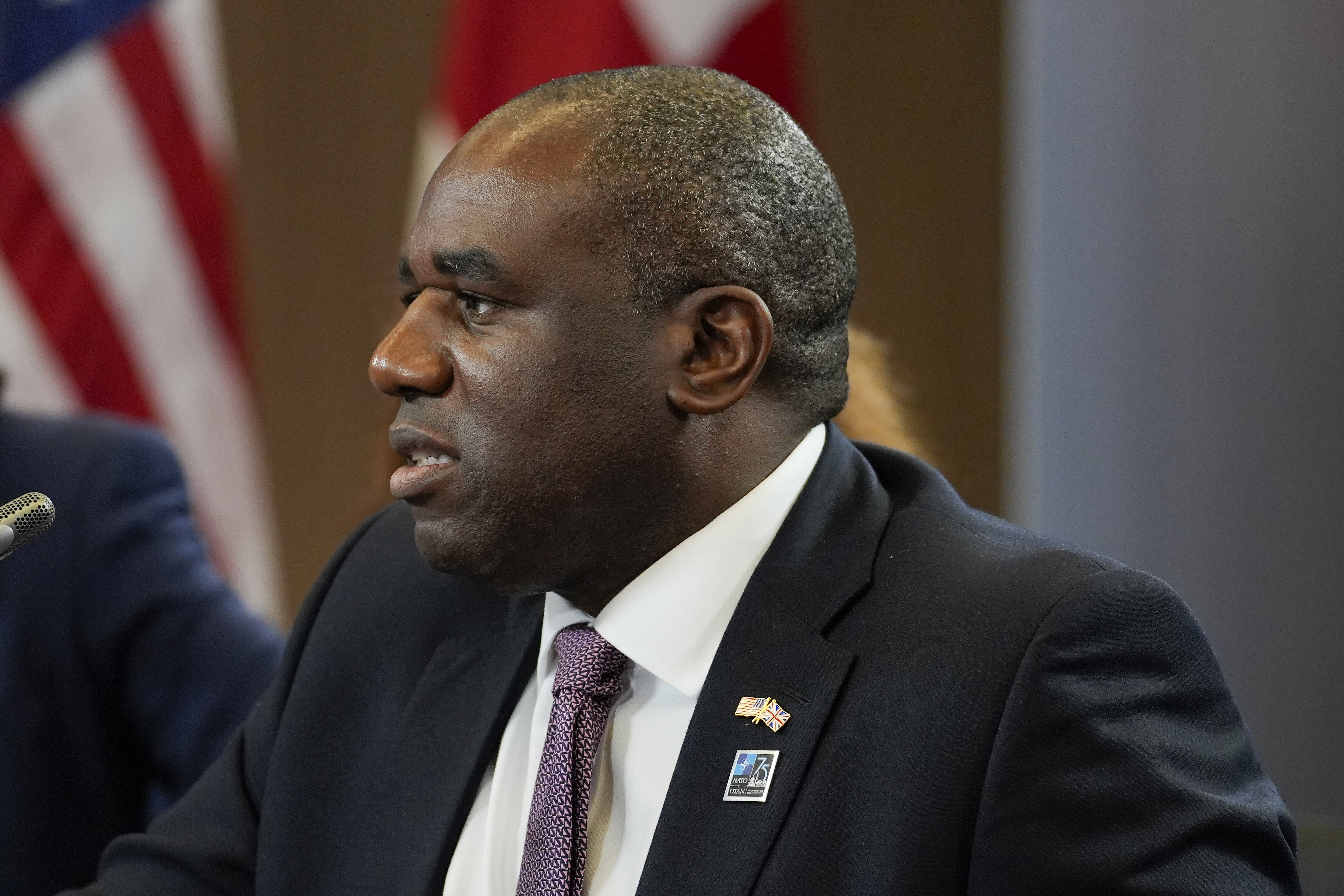
Foreign Secretary David Lammy Warns Risk Of ‘Full-Scale Regional War’ In Middle East Is Rising

David Lammy has warned the “risks of a full-scale regional war are rising” in the Middle East.

Writing in The Observer with his his French counterpart Stephane Sejourne, the foreign secretary discussed the ongoing efforts to negotiate a lasting ceasefire between Hamas and Israel before Iran strikes out, and possibly pulls the whole region into a wider conflict.

Tehran has warned it may retaliate against Israel after two senior militia figures – one in Hamas and one in Hezbollah – were assassinated in recent weeks.

Israel also launched an airstrike into the south of Lebanon on Saturday, killing at least 10 Syrian nationals. Israel claimed it was targeting a Hezbollah weapons depot.

Iran chooses to escalate and hit out at Israel, its allied militia in Lebanon, Iraq, Syria and Yemen could join in.

In a piece published on Saturday evening, Lammy and Sejourne wrote: “Fighting between Israel and Lebanese Hezbollah has intensified.

“Iranian threats of further escalation mean the risks of a full-scale regional war are rising.”

They continued: “We are witnessing a destructive cycle of violence. One miscalculation, and the situation risks spiralling into an even deeper and more intractable conflict.

“This cycle, with its tendency towards escalation, is making progress towards a political solution harder.”

The pair spoke about their first joint UK-France visit in more than a decade to the Middle East last week, explaining that it showed “our commitment to working even more closely together”.

They met with Israel’s foreign minister, Israel Katz, and the Palestinian Authority’s prime minister, Mohammad Mustafa during their trip.

While the latest round of ceasefire talks in Doha, Qatar, ended on Friday without any agreement, more negotiations are scheduled for next week.

Despite optimism from the US, Qatar and Egypt about the ceasefire agreements, Hamas are less confident.

Hamas’ political bureau member Sami Abu Zuhri told AFP news agency that it was an “illusion” to say a deal is approaching, saying: “We are not facing a deal or real negotiations but rather the imposing of American diktats.”

In their piece, Lammy and Sejourne called for further ceasefire talks, for the remaining hostages held by Hamas to be freed and for both sides to work towards a two-state solution.

They said the toll of the conflict is “unacceptable”, and pointing out the Gaza has reported its first case of polio in 25 years, added: “Brave healthcare workers across humanitarian organisations are racing to prevent an all-out polio outbreak but they can only start vaccinating if it’s safe to do so.”

They added that it was “never too late for peace”, and an all-out conflict across the region “is in nobody’s interest”, while calling for diplomacy.

“Any Iranian attack would have devastating consequences, not least in the undermining current Gaza ceasefire negotiations,” the ministers said. “There can be no delays or excuses. We must all come together.”

“Only a political solution can deliver the peace we so desperately need,” the pair added. “That’s why we want not just a ceasefire in Gaza but why we are urging Israel, Hezbollah and Lebanon to engage with the US-led discussions to resolve their tensions diplomatically, based on the principles set out by UN security council resolution 1701.”

Their warning comes as US secretary of state Antony Blinken has flown to Israel to support a ceasefire deal.

The West has been nervously watching the Middle East ever since the Iran-backed militants of Hamas killed 1,200 people on Israeli soil and took 250 others hostage in October.

Israel immediately declared war, put a blockade on aid going into the Palestinian territory of Gaza and invaded the land.

Hamas-run authorities in Gaza say the death toll for Palestinians is now exceeding 40,000.

Share Button

Russia Facing ‘Costliest’ Period Of War Yet With More Than 1,000 Casualties Per Day, UK Says

There have been more than 1,000 Russian casualties per day among the troops fighting against Ukraine over the last three months, according to UK intelligence.

The ministry of defence reported over the weekend that “poorly trained Russian soldiers are being used as cannon fodder in an attempt to overwhelm strong Ukrainian forces”.

More than 1,000 soldiers have been killed or wounded soldiers each day on average throughout the summer, the British department claimed, meaning the last three months has become “the costliest” period for Russian forces since the war began.

The MoD tracked the losses going back to March 2022, shortly after Russia first invaded Ukraine in a land grab.

Throughout the first year of war, Russian losses averaged at under 550 per day.

In 2023, the average increased to just under 800 per day.

The MoD speculated that more than 56,250 Russian personnel are likely to have been wounded or killed over the past three months.

Moscow rarely reveals how many casualties have been caused by the war.

Russian President Vladimir Putin said in June that the ratio of “irretrievable losses” between the warring countries was one to five in favour of Moscow, but did not offer exact figures.

In April, the BBC reported 50,000 Russian soldiers have died since the invasion in 2022.

<div class="js-react-hydrator" data-component-name="Twitter" data-component-id="2056" data-component-props="{"itemType":"rich","index":13,"contentIndexByType":1,"contentListType":"embed","code":"

For the past three months Russian military casualties have been averaging more than 1,000 killed or wounded soldiers a day.

Poorly trained Russian soldiers are being used as cannon fodder in an attempt to overwhelm strong Ukrainian defences.#StandWithUkraine #SlavaUkraini pic.twitter.com/mxH36XNQgd

— Ministry of Defence 🇬🇧 (@DefenceHQ) August 16, 2024

","type":"rich","meta":{"author":"Ministry of Defence 🇬🇧","author_url":"https://twitter.com/DefenceHQ","cache_age":86400,"description":"For the past three months Russian military casualties have been averaging more than 1,000 killed or wounded soldiers a day. Poorly trained Russian soldiers are being used as cannon fodder in an attempt to overwhelm strong Ukrainian defences.#StandWithUkraine #SlavaUkraini pic.twitter.com/mxH36XNQgd— Ministry of Defence 🇬🇧 (@DefenceHQ) August 16, 2024\n\n\n","options":{"_hide_media":{"label":"Hide photos, videos, and cards","value":false},"_maxwidth":{"label":"Adjust width","placeholder":"220-550, in px","value":""},"_theme":{"value":"","values":{"dark":"Use dark theme"}}},"provider_name":"Twitter","title":"Ministry of Defence 🇬🇧 on Twitter / X","type":"rich","url":"https://twitter.com/DefenceHQ/status/1824446652423237794","version":"1.0"},"flags":[],"enhancements":{},"fullBleed":false,"options":{"theme":"news","device":"desktop","editionInfo":{"id":"uk","name":"U.K.","link":"https://www.huffingtonpost.co.uk","locale":"en_GB"},"originalEdition":"uk","isMapi":false,"isAmp":false,"isVideoEntry":false,"isEntry":true,"isMt":false,"entryId":"66c1d1bce4b05da5552844c7","entryPermalink":"https://www.huffingtonpost.co.uk/entry/uk-russia-facing-more-than-1000-casualties-per-day-in-war_uk_66c1d1bce4b05da5552844c7","entryTagsList":"russia,ukraine,vladimir-putin","sectionSlug":"politics","deptSlug":null,"sectionRedirectUrl":null,"subcategories":"","isWide":false,"headerOverride":null,"noVideoAds":false,"disableFloat":false,"isNative":false,"commercialVideo":{"provider":"custom","site_and_category":"uk.politics","package":null},"isHighline":false,"vidibleConfigValues":{"cid":"60afc140cf94592c45d7390c","disabledWithMapiEntries":false,"overrides":{"all":"60b8e525cdd90620331baaf4"},"whitelisted":["56c5f12ee4b03a39c93c9439","56c6056ee4b01f2b7e1b5f35","59bfee7f9e451049f87f550b","5acccbaac269d609ef44c529","570278d2e4b070ff77b98217","57027b4be4b070ff77b98d5c","56fe95c4e4b0041c4242016b","570279cfe4b06d08e3629954","5ba9e8821c2e65639162ccf1","5bcd9904821576674bc55ced","5d076ca127f25f504327c72e","5b35266b158f855373e28256","5ebac2e8abddfb04f877dff2","60b8e525cdd90620331baaf4","60b64354b171b7444beaff4d","60d0d8e09340d7032ad0fb1a","60d0d90f9340d7032ad0fbeb","60d0d9949340d7032ad0fed3","60d0d9f99340d7032ad10113","60d0daa69340d7032ad104cf","60d0de02b627221e9d819408"],"playlists":{"default":"57bc306888d2ff1a7f6b5579","news":"56c6dbcee4b04edee8beb49c","politics":"56c6dbcee4b04edee8beb49c","entertainment":"56c6e7f2e4b0983aa64c60fc","tech":"56c6f70ae4b043c5bdcaebf9","parents":"56cc65c2e4b0239099455b42","lifestyle":"56cc66a9e4b01f81ef94e98c"},"playerUpdates":{"56c6056ee4b01f2b7e1b5f35":"60b8e525cdd90620331baaf4","56c5f12ee4b03a39c93c9439":"60d0d8e09340d7032ad0fb1a","59bfee7f9e451049f87f550b":"60d0d90f9340d7032ad0fbeb","5acccbaac269d609ef44c529":"60d0d9949340d7032ad0fed3","5bcd9904821576674bc55ced":"60d0d9f99340d7032ad10113","5d076ca127f25f504327c72e":"60d0daa69340d7032ad104cf","5ebac2e8abddfb04f877dff2":"60d0de02b627221e9d819408"}},"connatixConfigValues":{"defaultPlayer":"8b034f64-513c-4987-b16f-42d6008f7feb","clickToPlayPlayer":"5a777b9b-81fe-41a6-8302-59e9953ee8a2","videoPagePlayer":"19654b65-409c-4b38-90db-80cbdea02cf4"},"topConnatixThumnbailSrc":"data:image/png;base64,iVBORw0KGgoAAAANSUhEUgAAAAEAAAABCAQAAAC1HAwCAAAAC0lEQVR42mNkYAAAAAYAAjCB0C8AAAAASUVORK5CYII=","customAmpComponents":[],"ampAssetsUrl":"https://amp.assets.huffpost.com","videoTraits":null,"positionInUnitCounts":{"buzz_head":{"count":0},"buzz_body":{"count":0},"buzz_bottom":{"count":0}},"positionInSubUnitCounts":{"article_body":{"count":9},"blog_summary":{"count":0},"before_you_go_content":{"count":0}},"connatixCountsHelper":{"count":0},"buzzfeedTracking":{"context_page_id":"66c1d1bce4b05da5552844c7","context_page_type":"buzz","destination":"huffpost","mode":"desktop","page_edition":"en-uk"},"tags":[{"name":"Russia","slug":"russia","links":{"relativeLink":"news/russia","permalink":"https://www.huffingtonpost.co.uk/news/russia","mobileWebLink":"https://www.huffingtonpost.co.uk/news/russia"},"relegenceId":3691301,"section":{"title":"Politics","slug":"politics"},"topic":{"title":"Ukraine","slug":"ukraine","overridesSectionLabel":false},"url":"https://www.huffingtonpost.co.uk/news/ukraine/"},{"name":"Ukraine","slug":"ukraine","links":{"relativeLink":"news/ukraine","permalink":"https://www.huffingtonpost.co.uk/news/ukraine","mobileWebLink":"https://www.huffingtonpost.co.uk/news/ukraine"},"relegenceId":3696312,"section":{"title":"Politics","slug":"politics"},"topic":{"title":"Ukraine","slug":"ukraine","overridesSectionLabel":false},"url":"https://www.huffingtonpost.co.uk/news/ukraine/"},{"name":"Vladimir Putin","slug":"vladimir-putin","links":{"relativeLink":"news/vladimir-putin","permalink":"https://www.huffingtonpost.co.uk/news/vladimir-putin","mobileWebLink":"https://www.huffingtonpost.co.uk/news/vladimir-putin"},"relegenceId":3697205,"url":"https://www.huffingtonpost.co.uk/news/vladimir-putin/"}],"isLiveblogLive":null,"cetUnit":"buzz_body","bodyAds":["

\r\n\r\n HPGam.cmd.push(function(){\r\n\t\treturn HPGam.render(\"inline-1\", \"entry_paragraph_1\", false, false);\r\n });\r\n\r\n","

\r\n\r\n HPGam.cmd.push(function(){\r\n\t\treturn HPGam.render(\"inline\", \"entry_paragraph_2\", false, false);\r\n });\r\n\r\n","

\r\n\r\n HPGam.cmd.push(function(){\r\n\t\treturn HPGam.render(\"inline-2\", \"entry_paragraph_3\", false, false);\r\n });\r\n\r\n","

\r\n\r\n HPGam.cmd.push(function(){\r\n\t\treturn HPGam.render(\"inline-infinite\", \"repeating_dynamic_display\", false, false);\r\n });\r\n\r\n"],"adCount":0},"isCollectionEmbed":false}”>

For the past three months Russian military casualties have been averaging more than 1,000 killed or wounded soldiers a day.

Poorly trained Russian soldiers are being used as cannon fodder in an attempt to overwhelm strong Ukrainian defences.#StandWithUkraine #SlavaUkraini pic.twitter.com/mxH36XNQgd

— Ministry of Defence 🇬🇧 (@DefenceHQ) August 16, 2024

The MoD update comes shortly after Ukraine’s surprise incursion into Russia earlier this month, which has infuriated the Kremlin.

Kyiv has now taken 445 square miles (1,150 sq kilometres) of Russian land – a fraction of the whopping 42,000 sq miles (109,000 sq kilometres) of Ukrainian land Moscow has illegally annexed.

According to the UK’s MoD though, Russia has been cracking down on access to information for its own population to limit criticism over its invasion.

Moscow has limited WhatsApp and YouTube use by “deliberately slowing traffic” and increasing state control of communications and media.

YouTube may be blocked completely by autumn, the MoD predicted.

<div class="js-react-hydrator" data-component-name="Twitter" data-component-id="4862" data-component-props="{"itemType":"rich","index":20,"contentIndexByType":2,"contentListType":"embed","code":"

Russia is restricting access to information to limit criticism of its destructive invasion of Ukraine.

Communications channels are being pulled away as the Kremlin tightens its grip on free expression.
#StandWithUkraine🇺🇦 pic.twitter.com/GvRZTasHpF

— Ministry of Defence 🇬🇧 (@DefenceHQ) August 17, 2024

","type":"rich","meta":{"author":"Ministry of Defence 🇬🇧","author_url":"https://twitter.com/DefenceHQ","cache_age":86400,"description":"Russia is restricting access to information to limit criticism of its destructive invasion of Ukraine. Communications channels are being pulled away as the Kremlin tightens its grip on free expression. #StandWithUkraine🇺🇦 pic.twitter.com/GvRZTasHpF— Ministry of Defence 🇬🇧 (@DefenceHQ) August 17, 2024\n\n\n","options":{"_hide_media":{"label":"Hide photos, videos, and cards","value":false},"_maxwidth":{"label":"Adjust width","placeholder":"220-550, in px","value":""},"_theme":{"value":"","values":{"dark":"Use dark theme"}}},"provider_name":"Twitter","title":"Ministry of Defence 🇬🇧 on Twitter / X","type":"rich","url":"https://twitter.com/DefenceHQ/status/1824748207085081075","version":"1.0"},"flags":[],"enhancements":{},"fullBleed":false,"options":{"theme":"news","device":"desktop","editionInfo":{"id":"uk","name":"U.K.","link":"https://www.huffingtonpost.co.uk","locale":"en_GB"},"originalEdition":"uk","isMapi":false,"isAmp":false,"isVideoEntry":false,"isEntry":true,"isMt":false,"entryId":"66c1d1bce4b05da5552844c7","entryPermalink":"https://www.huffingtonpost.co.uk/entry/uk-russia-facing-more-than-1000-casualties-per-day-in-war_uk_66c1d1bce4b05da5552844c7","entryTagsList":"russia,ukraine,vladimir-putin","sectionSlug":"politics","deptSlug":null,"sectionRedirectUrl":null,"subcategories":"","isWide":false,"headerOverride":null,"noVideoAds":false,"disableFloat":false,"isNative":false,"commercialVideo":{"provider":"custom","site_and_category":"uk.politics","package":null},"isHighline":false,"vidibleConfigValues":{"cid":"60afc140cf94592c45d7390c","disabledWithMapiEntries":false,"overrides":{"all":"60b8e525cdd90620331baaf4"},"whitelisted":["56c5f12ee4b03a39c93c9439","56c6056ee4b01f2b7e1b5f35","59bfee7f9e451049f87f550b","5acccbaac269d609ef44c529","570278d2e4b070ff77b98217","57027b4be4b070ff77b98d5c","56fe95c4e4b0041c4242016b","570279cfe4b06d08e3629954","5ba9e8821c2e65639162ccf1","5bcd9904821576674bc55ced","5d076ca127f25f504327c72e","5b35266b158f855373e28256","5ebac2e8abddfb04f877dff2","60b8e525cdd90620331baaf4","60b64354b171b7444beaff4d","60d0d8e09340d7032ad0fb1a","60d0d90f9340d7032ad0fbeb","60d0d9949340d7032ad0fed3","60d0d9f99340d7032ad10113","60d0daa69340d7032ad104cf","60d0de02b627221e9d819408"],"playlists":{"default":"57bc306888d2ff1a7f6b5579","news":"56c6dbcee4b04edee8beb49c","politics":"56c6dbcee4b04edee8beb49c","entertainment":"56c6e7f2e4b0983aa64c60fc","tech":"56c6f70ae4b043c5bdcaebf9","parents":"56cc65c2e4b0239099455b42","lifestyle":"56cc66a9e4b01f81ef94e98c"},"playerUpdates":{"56c6056ee4b01f2b7e1b5f35":"60b8e525cdd90620331baaf4","56c5f12ee4b03a39c93c9439":"60d0d8e09340d7032ad0fb1a","59bfee7f9e451049f87f550b":"60d0d90f9340d7032ad0fbeb","5acccbaac269d609ef44c529":"60d0d9949340d7032ad0fed3","5bcd9904821576674bc55ced":"60d0d9f99340d7032ad10113","5d076ca127f25f504327c72e":"60d0daa69340d7032ad104cf","5ebac2e8abddfb04f877dff2":"60d0de02b627221e9d819408"}},"connatixConfigValues":{"defaultPlayer":"8b034f64-513c-4987-b16f-42d6008f7feb","clickToPlayPlayer":"5a777b9b-81fe-41a6-8302-59e9953ee8a2","videoPagePlayer":"19654b65-409c-4b38-90db-80cbdea02cf4"},"topConnatixThumnbailSrc":"data:image/png;base64,iVBORw0KGgoAAAANSUhEUgAAAAEAAAABCAQAAAC1HAwCAAAAC0lEQVR42mNkYAAAAAYAAjCB0C8AAAAASUVORK5CYII=","customAmpComponents":[],"ampAssetsUrl":"https://amp.assets.huffpost.com","videoTraits":null,"positionInUnitCounts":{"buzz_head":{"count":0},"buzz_body":{"count":0},"buzz_bottom":{"count":0}},"positionInSubUnitCounts":{"article_body":{"count":9},"blog_summary":{"count":0},"before_you_go_content":{"count":0}},"connatixCountsHelper":{"count":0},"buzzfeedTracking":{"context_page_id":"66c1d1bce4b05da5552844c7","context_page_type":"buzz","destination":"huffpost","mode":"desktop","page_edition":"en-uk"},"tags":[{"name":"Russia","slug":"russia","links":{"relativeLink":"news/russia","permalink":"https://www.huffingtonpost.co.uk/news/russia","mobileWebLink":"https://www.huffingtonpost.co.uk/news/russia"},"relegenceId":3691301,"section":{"title":"Politics","slug":"politics"},"topic":{"title":"Ukraine","slug":"ukraine","overridesSectionLabel":false},"url":"https://www.huffingtonpost.co.uk/news/ukraine/"},{"name":"Ukraine","slug":"ukraine","links":{"relativeLink":"news/ukraine","permalink":"https://www.huffingtonpost.co.uk/news/ukraine","mobileWebLink":"https://www.huffingtonpost.co.uk/news/ukraine"},"relegenceId":3696312,"section":{"title":"Politics","slug":"politics"},"topic":{"title":"Ukraine","slug":"ukraine","overridesSectionLabel":false},"url":"https://www.huffingtonpost.co.uk/news/ukraine/"},{"name":"Vladimir Putin","slug":"vladimir-putin","links":{"relativeLink":"news/vladimir-putin","permalink":"https://www.huffingtonpost.co.uk/news/vladimir-putin","mobileWebLink":"https://www.huffingtonpost.co.uk/news/vladimir-putin"},"relegenceId":3697205,"url":"https://www.huffingtonpost.co.uk/news/vladimir-putin/"}],"isLiveblogLive":null,"cetUnit":"buzz_body","bodyAds":["

\r\n\r\n HPGam.cmd.push(function(){\r\n\t\treturn HPGam.render(\"inline-1\", \"entry_paragraph_1\", false, false);\r\n });\r\n\r\n","

\r\n\r\n HPGam.cmd.push(function(){\r\n\t\treturn HPGam.render(\"inline\", \"entry_paragraph_2\", false, false);\r\n });\r\n\r\n","

\r\n\r\n HPGam.cmd.push(function(){\r\n\t\treturn HPGam.render(\"inline-2\", \"entry_paragraph_3\", false, false);\r\n });\r\n\r\n","

\r\n\r\n HPGam.cmd.push(function(){\r\n\t\treturn HPGam.render(\"inline-infinite\", \"repeating_dynamic_display\", false, false);\r\n });\r\n\r\n"],"adCount":0},"isCollectionEmbed":false}”>

Russia is restricting access to information to limit criticism of its destructive invasion of Ukraine.

Communications channels are being pulled away as the Kremlin tightens its grip on free expression.
#StandWithUkraine🇺🇦 pic.twitter.com/GvRZTasHpF

— Ministry of Defence 🇬🇧 (@DefenceHQ) August 17, 2024