Russian Government Spokesperson Has A Rather Unhelpful Take On UK Riots – And Brits’ Right To Protest

A top Russian politician in Vladimir Putin’s government has weighed in on the far-right riots in the UK, claiming people “have every right to express their disagreement” with the government.

Maria Zakharova, the spokesperson for Russia’s foreign ministry, took aim at Downing Street rather than the anti-immigration extremists who have caused chaos up and down the country over the last week.

In a statement released on Russia’s ministry of foreign affairs’ website, she claimed the British government was paying “lip service to what it called the democratic principles” after home secretary Yvette Cooper told police to be as “tough and harsh as possible”.

More than 400 protesters have been arrested in the last week with many charged for their connection to the disorder.

It comes after social media misinformation incited looting, arson, disorder and violence up and down the country.

Zakharova said: “It is now up to the UK authorities and police to stay within the confines of the law.”

It’s worth remembering there is an international arrest warrant out against Putin for the unlawful deportation of Ukrainian children to Russia.

Still, Zakharova claimed: “It must be recalled that people have every right to express their disagreement with the government policies.

“In this context, Russia calls on London to refrain from any unjustified or unproportionate [sic] use of violence against protestors and ensure their right to freedom of assembly.”

Russia actually has a history of violently suppressing early signs of dissent itself.

Moscow even arrested peaceful protesters who held up blank pieces of paper shortly after Putin invaded Ukraine in February 2022.

Zakharova also claimed: “Russia is known for opposing and never allowing itself to meddle into the domestic affairs of other countries.”

Moscow has, over the years, been accused of interfering in major events in other countries, including the last UK general election and the ongoing Paris Olympics.

Russia has repeatedly denied such accusations, though.

Zakharova continued: “This is why our country refrains from lecturing others on ways of overcoming their internal challenges and crises.

“On the contrary, it is the Western countries, led by the United States, who act this way.

“They would have been better off paying more attention to their own challenges instead of seeking to undermine stability around the world.”

The UK, along with Ukraine’s other Western allies, has been providing military aid and financial support to Kyiv to protect it against Russia’s land grab over the last two and a half years.

Moscow has subsequently taken aim at the West repeatedly, often threatening to deploy its nuclear weapons.

Share Button

NHS sets out ‘safer’ child gender services model

Six regional clinics will open over the next two years, with an emphasis on mental health support.

Share Button

Bone-building drug coming for post-menopause women

Abaloparatide protects against the bone-thinning condition osteoporosis and is approved for NHS use.

Share Button

AI in healthcare: what are the risks for the NHS?

Generative AI will be transformative for NHS patient outcomes, a senior government advisor says.

Share Button

Drug bypasses suppressive immune cells to unleash immunotherapy

By recruiting the immune system to combat tumor cells, immunotherapy has improved survival rates, offering hope to millions of cancer patients. However, only about one in five people responds favorably to these treatments.

With a goal of understanding and addressing immunotherapy’s limitations, researchers at Washington University School of Medicine in St Louis have found that the immune system can be its own worst enemy in the fight against cancer. In a new study in mice, a subset of immune cells — type 1 regulatory T cells, or Tr1 cells — did its normal job of preventing the immune system from overreacting but did so while inadvertently restraining immunotherapy’s cancer-fighting power.

“Tr1 cells were found to be a heretofore unrecognized obstacle to immunotherapy’s effectiveness against cancer,” said senior author Robert D. Schreiber, PhD, the Andrew M. and Jane M. Bursky Distinguished Professor in the Department of Pathology & Immunology, and director of the Bursky Center for Human Immunology & Immunotherapy at Washington University School of Medicine. “By removing or circumventing that barrier in mice, we successfully reenergized the immune system’s cancer-fighting cells and uncovered an opportunity to expand the benefits of immunotherapy for more cancer patients.”

The study is available in Nature.

Cancer vaccines represent a new approach to personalize cancer immunotherapy. Aimed at the mutant proteins specific to a patient’s tumor, such vaccines induce killer T cells to attack tumor cells while leaving healthy cells unharmed. Schreiber’s group previously showed that more effective vaccines also activate helper T cells, another immune cell type, that recruit and expand additional killer T cells to destroy the tumors. But when they tried to add increased amounts of the helper T cell target to supercharge the vaccine they found they generated a different type of T cell that inhibited rather than promoted tumor rejection.

“We tested the hypothesis that by increasing helper T cell activation we would induce enhanced elimination of the sarcoma tumors in mice,” said first author Hussein Sultan, PhD, an instructor in pathology & immunology. So he injected groups of tumor bearing mice with vaccines that activated killer T cells equally while triggering a different degree of helper T cell activation.

Much to the researchers’ surprise in this latest study, the vaccine meant to hyperactivate helper T cells produced the opposite effect and inhibited tumor rejection.

“We thought that more helper T cell activation would optimize elimination of the sarcoma tumors in mice,” Sultan said. “Instead, we found that vaccines containing high doses of helper T cell targets induced inhibitory Tr1 cells that completely blocked tumor elimination. We know that Tr1 cells normally control an overactive immune system, but this is the first time they have been shown to dampen its fight against cancer.”

Tr1 cells normally put the brakes on the immune system to prevent it from attacking the body’s healthy cells. But their role in cancer has not been seriously explored. Looking through previously published data, the researchers found that tumors from patients who had responded poorly to immunotherapy had more Tr1 cells compared with tumors of patients who had responded well. The number of Tr1 cells also increased in mice as tumors grew bigger, rendering the mice insensitive to immunotherapy.

To bypass the inhibiting cells, the researchers treated the vaccinated mice with a drug that enhances killer T cells’ fighting power. The drug, developed by biotechnology startup Asher Biotherapeutics, carries modifications in the immune-boosting protein called interleukin 2 (IL-2) that specifically revs up killer T cells and reduces the toxicity of unmodified IL-2 treatments. The additional boost from the drug overcame Tr1 cells’ inhibition and rendered the immunotherapy more effective.

“We are committed to personalizing immunotherapy and broadening its effectiveness,” said Schreiber. “Decades of researching basic tumor immunology have expanded our understanding of how to trigger the immune system to achieve the most robust antitumor response. This new study adds to our understanding of how to improve immunotherapy to benefit more people.”

As co-founder of Asher Biotherapeutics — which provided the mouse version of the modified IL-2 drugs — Schreiber is indirectly involved in the company’s clinical trials testing the human version of the drug as a monotherapy in cancer patients. If successful, the drug has the potential to be tested in combination with cancer treatment vaccines.

Share Button

Dozing at the wheel? Not with these fatigue-detecting earbuds

Everyone gets sleepy at work from time to time, especially after a big lunch. But for people whose jobs involve driving or working with heavy machinery, drowsiness can be extremely dangerous — if not outright deadly. Drowsy driving contributes to hundreds of fatal vehicle accidents in the U.S. each year, and the National Safety Council has cited drowsiness as a critical hazard in construction and mining.

To help protect drivers and machine operators from the dangers of drifting off, engineers at the University of California, Berkeley, have created prototype earbuds that can detect the signs of drowsiness in the brain.

The earbuds detect brain waves in the same way as an electroencephalogram (EEG), a test that doctors use to measure electrical activity in the brain. While most EEGs detect brain waves using a series of electrodes attached to the head, the earbuds do so using built-in electrodes that are designed to make contact with the ear canal.

The electrical signals detected by the ear buds are smaller than those picked up by a traditional EEG. However, in a new study, the researchers show that their Ear EEG platform is sensitive enough to detect alpha waves, a pattern of brain activity that increases when you close your eyes or start to fall asleep.

“I was inspired when I bought my first pair of Apple’s AirPods in 2017. I immediately thought, ‘What an amazing platform for neural recording,'” said study senior author Rikky Muller, an associate professor of electrical engineering and computer sciences at UC Berkeley. “We believe that this technology has many potential uses, and that classifying drowsiness is a good indicator that the technology can be used to classify sleep and even diagnose sleep disorders.”

Using an earbud as an EEG electrode poses a variety of practical challenges. In order to obtain an accurate EEG, electrodes need to make good contact with the skin. This is relatively easy to achieve in traditional EEGs, which use flat metal electrodes stuck to the scalp. However, it is much trickier to design an earbud that will fit snugly — and comfortably — in a wide variety of ear sizes and shapes.

When Muller’s team started working on the project, other groups developing Ear EEG platforms were either using wet electrode gels to ensure a good seal between the earbud and the ear canal, or creating custom-molded earpieces for each individual user. She and her team wanted to design a model that was dry and user generic, so that anyone could stick them in their ears and get reliable readings.

“My personal goal was to try to make a device that could be used every day by someone who would really benefit from it,” said Ryan Kaveh, a UC Berkeley postdoctoral scholar and co-first author of the study. “In order to do that, I knew that it would have to be reusable, fit a variety of people, and [be] easy to manufacture.”

Kaveh co-led the study with graduate student Carolyn Schwendeman and collaborated with Ana Arias’s lab at UC Berkeley to design the final earpiece in three sizes: small, medium and large. The earpiece incorporates multiple electrodes in a cantilevered design that applies gentle outward pressure to the ear canal and uses flexible electronics to ensure a comfortable fit. The signals are read out through a custom, low-power, wireless electronic interface.

In a 2020 paper, the researchers showed that these earpieces can detect a number of physiological signals, including eye blinks, alpha brain waves and the auditory steady-state response, which is the brain’s response to hearing a steady pitch. In the new study, they improved the earpiece design and incorporated machine learning to demonstrate how the earpieces could be used in a real-world application.

As part of the experiment, they asked nine volunteers to wear the earpieces while doing a series of boring tasks in a darkened room. Every so often, the volunteers were asked to rate their level of drowsiness, and their response times were measured.

“We found that even when the signal quality from the earpieces seemed worse, we could still classify the onset of drowsiness with the same level of accuracy as much more complicated, bulky systems,” Kaveh said. The earpieces also retain their accuracy when categorizing drowsiness in brand-new users, a characteristic of devices that could work ‘out of the box’.

Muller, who developed the Ear EEG with the support of the Bakar Fellowship and the Bakar Prize, is continuing to refine the design and explore other potential applications of the device, which can also record signals beyond EEG, such as heart beats, eye movements and jaw clenches.

“Wireless earbuds are something we already wear all the time,” Muller said. “That’s what makes Ear EEG such a compelling approach to wearables. It doesn’t require anything extra.”

This study was supported in part by the Ford University Research Program and a Bakar Spark Award.

Share Button

Elephants on the move: Mapping connections across African landscapes

Elephant conservation is a major priority in southern Africa, but habitat loss and urbanization mean the far-ranging pachyderms are increasingly restricted to protected areas like game reserves. The risk? Contained populations could become genetically isolated over time, making elephants more vulnerable to disease and environmental change.

A recent study from the University of Illinois Urbana-Champaign and the University of Pretoria in South Africa demonstrates how African conservation managers could create and optimize elephant movement corridors across a seven-country region. The study offers a map showing landscape connections that would support elephants’ habitat needs and allow for more gene flow among populations.

“Other research groups have integrated genetic and spatial data before, but usually it’s done on a more local scale. Ours was the first to combine both types of data for southern African elephants across such a large geographic area,” said lead author Alida de Flamingh, who completed the study as part of her doctoral program in the Department of Animal Sciences, part of the College of Agricultural, Consumer and Environmental Sciences (ACES) at Illinois. She is now a postdoctoral researcher at the Carl R. Woese Institute for Genomic Biology.

Scale is meaningful because African elephants have very large home ranges — roaming up to 11,000 square kilometers, or more than 2.7 million acres — and they often travel long distances out of their way to avoid unsuitable habitat. Capturing that scale in a single analysis was no easy feat.

“This was a massive effort. We went out with our partners in the Conservation Ecology Research Unit at the University of Pretoria to collect non-invasive DNA samples from elephant dung across the whole range,” de Flamingh said. “CERU also contributed data from GPS trackers on 80 collared elephants across nearly 54,000 locations.”

GPS collar data shows how elephants move across the landscape but can’t indicate whether that movement leads to gene flow. Conversely, DNA data documents gene flow, but can’t show how elephants moved to make that happen. Integrating the two data sets required a landscape genetics approach.

“Landscape genetics adapts some ideas from electrical circuit theory to discuss how animals might move and achieve gene flow. Our approach looks at resistances or costs elephants encounter as they move along multiple pathways through the region, accounting for the possibility of losing or gaining individual paths,” said co-author Nathan Alexander, a postdoctoral researcher at the Illinois Natural History Survey. Alexander worked on the project during his doctoral program in the Department of Natural Resources and Environmental Sciences in ACES.

Costs in this case included steep slopes, barren areas with little to no vegetation, densely populated human settlements, and areas far from water. The researchers combined these environmental challenges with DNA data to explain how elephants might navigate their habitat, identifying key routes to maintain gene flow across protected areas.

“We did not find a simple linear relationship where more suitable habitats are less costly. Instead, we found a pronounced nonlinear pattern where the least suitable habitats have the biggest impact on elephant movement or distribution across the landscape,” de Flamingh said. “Intermediate habitats aren’t necessarily dictating their movements as much as these really, really unsuitable habitats. That’s positive, if you think about it. They’re tolerant of intermediate habitats and can still move through them.”

What qualifies as a “really, really unsuitable” habitat? The researchers identified areas like the vegetation-free Makgadikgadi salt pans in Botswana, as well as densely populated human settlements. Providing connections for elephants that avoid these areas will also reduce human-elephant conflict, a distinct threat to elephants.

De Flamingh said the insights gained from this study can help governmental authorities and NGOs in southern Africa to develop robust conservation initiatives on the ground.

“Southern Africa has the largest number of elephants in all of Africa. So any conservation efforts there, especially those that avoid human-elephant conflict, would protect pretty large populations of elephants,” said senior author Al Roca, an animal sciences professor in ACES. “Our partners at CERU, as well as our funders — the International Fund for Animal Welfare and the African Elephant Conservation Fund of the U.S. Fish and Wildlife Service — are really critical in those efforts.”

The study, “Integrating habitat suitability modeling with gene flow improves delineation of landscape connections among African savanna elephants,” is published in Biodiversity and Conservation. The paper is dedicated to the memory of co-author Rudi van Aarde, who was instrumental in launching the study as head of CERU, and who passed away while the research was ongoing.

Roca is also affiliated with the Carl R. Woese Institute for Genomic Biology, the Illinois Natural History Survey, and the School of Information Sciences at Illinois.

Share Button

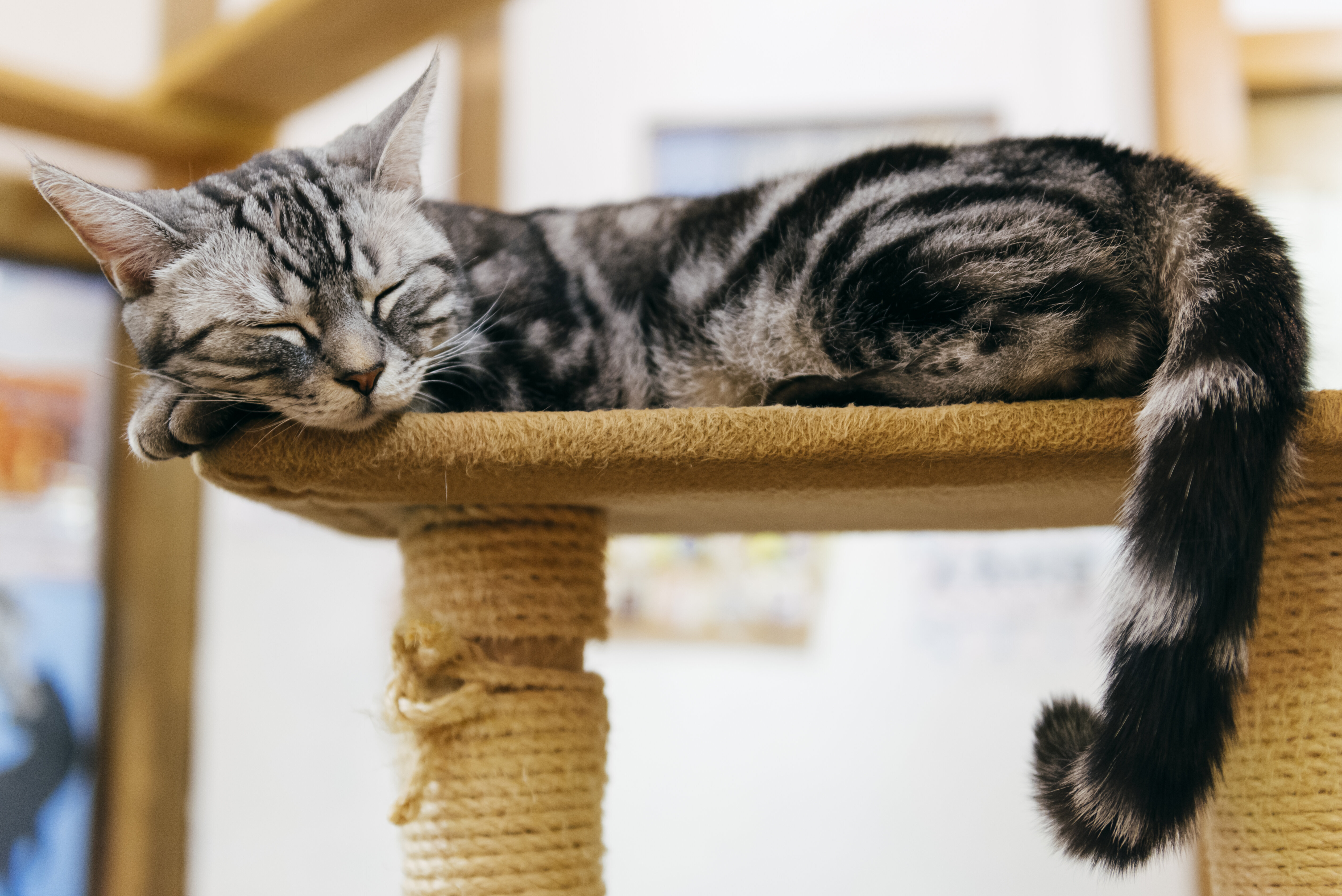
Cat Trees Are Actually Really Important For Cats’ Well-Being, According To A Behaviourist

If you share a home with a cat, you’ve probably noticed: Cats tend to seek out heights. What cat owner among us hasn’t caught their pet leaping onto counters or soaring onto shelves so high up that we can’t reach them without a ladder or stepping stool?

This love of high spaces is part of cats’ natural instincts, according to Stephanie Merlin, a certified feline behaviorist and cat well-being educator who runs the popular Instagram account @thefulfilledfeline.

“Cats are both predator and prey, so having a high vantage point is a natural way to help them feel safe and secure,” Merlin wrote. “This isn’t just about fun and games; it’s deeply rooted in their biology.”

One way to support your cat’s evolutionary need for heights is through investing in a cat tree, a dedicated structure with multiple tiers for cats to climb and perch on. The benefits of cat trees “go way beyond offering vertical space,” Merlin explained. “Many include scratching surfaces, cozy beds, hidden nooks and plenty of spots to leap and explore.”

Cat trees crucially provide cats with space to express their natural instincts, Merlin noted, and failing to provide this space can have consequences for you and your pet. “Without these outlets, cats can become bored and frustrated, leading to stress and potentially destructive behaviors, such as scratching furniture,” she explained. Cats may even “hid[e] out of fear because they lack the security of a high vantage point.”

Especially if your household has two or more cats, a cat tree “can be a game-changer,” Merlin wrote.

This is because, in multi-cat homes, cats are essentially sharing their territory and, in their view, competing for limited resources. “Without enough space and separate ‘pathways’ where cats can avoid each other, conflicts are more likely,” as well as increased tension, Merlin explained. “Vertical space offers a fantastic way to expand a cat’s ‘real estate’ and avoid these conflicts.”

Share Button

21 Of The Funniest Tweets About Cats And Dogs This Week (July 27-Aug. 2)

Share Button

The Funniest Tweets From Parents This Week (July 27-Aug. 2)

Share Button