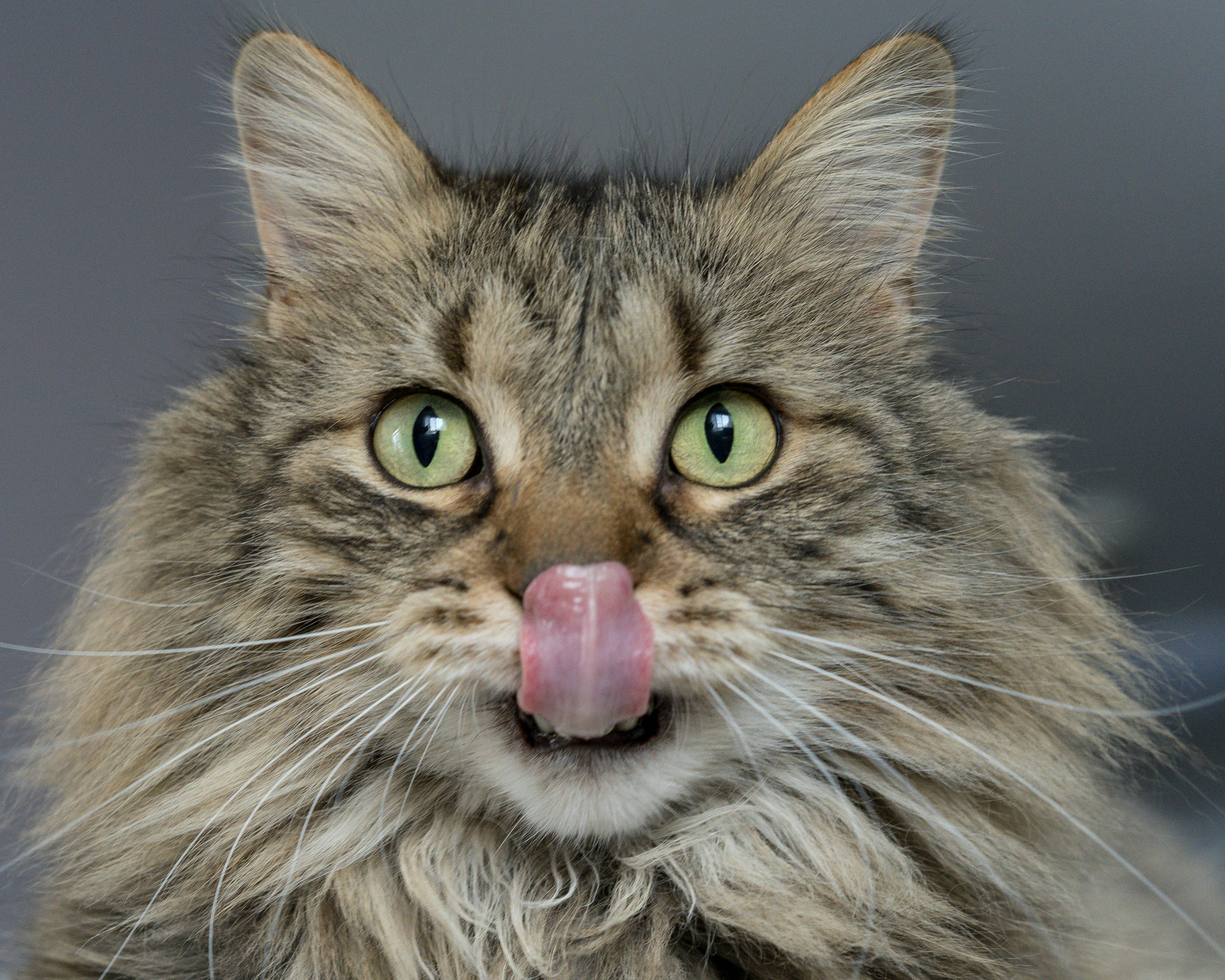
Here’s Why Cats Really Lick Each Other, And It’s Less Cute Than I Thought

We’ve written before at HuffPost UK about the heartwarming reason cats might lick their owners, as well as the pretty cute meaning behind a feline headbutt.

So perhaps it’s overdue for us to look at some of the furry friends’ less pure intentions.

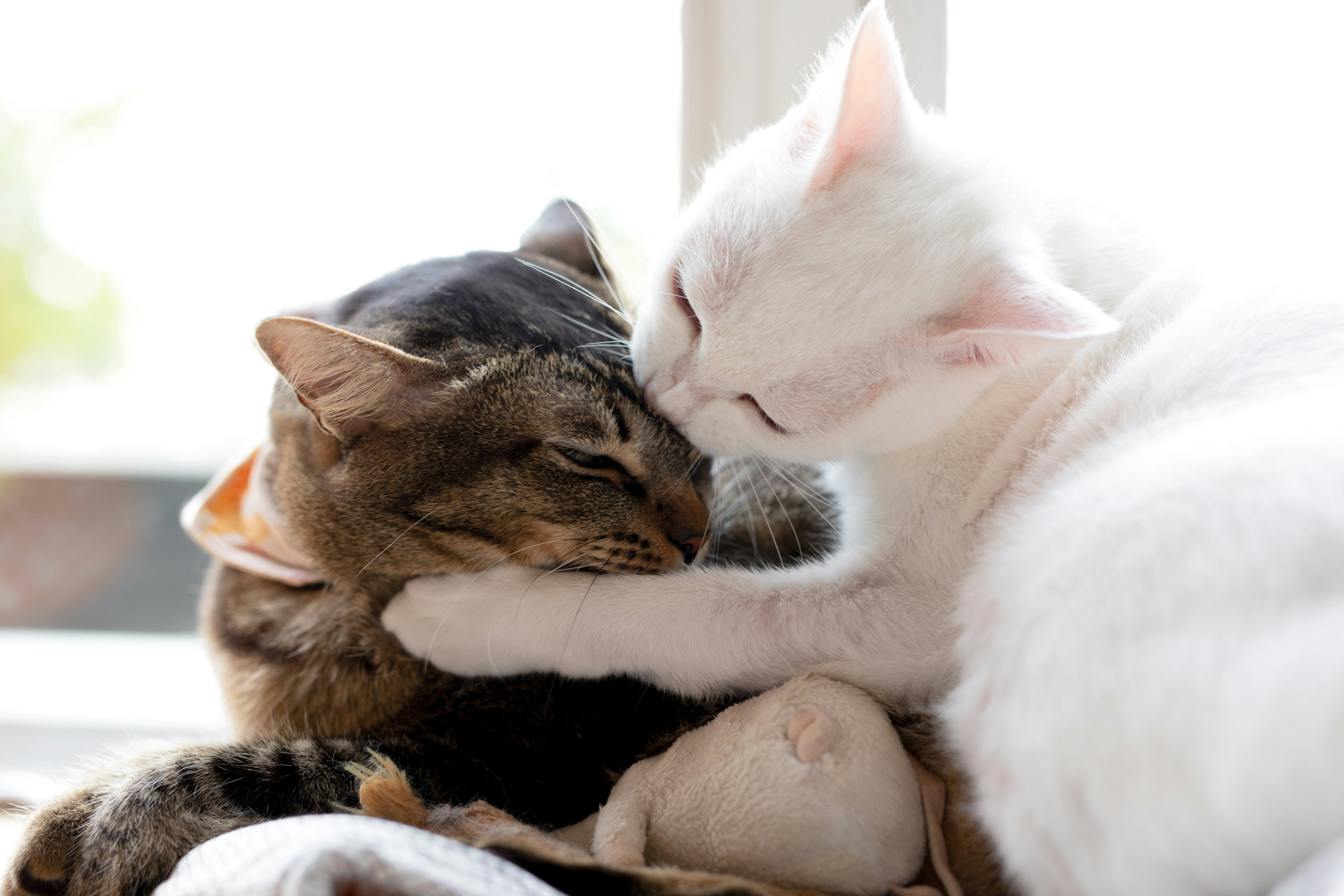
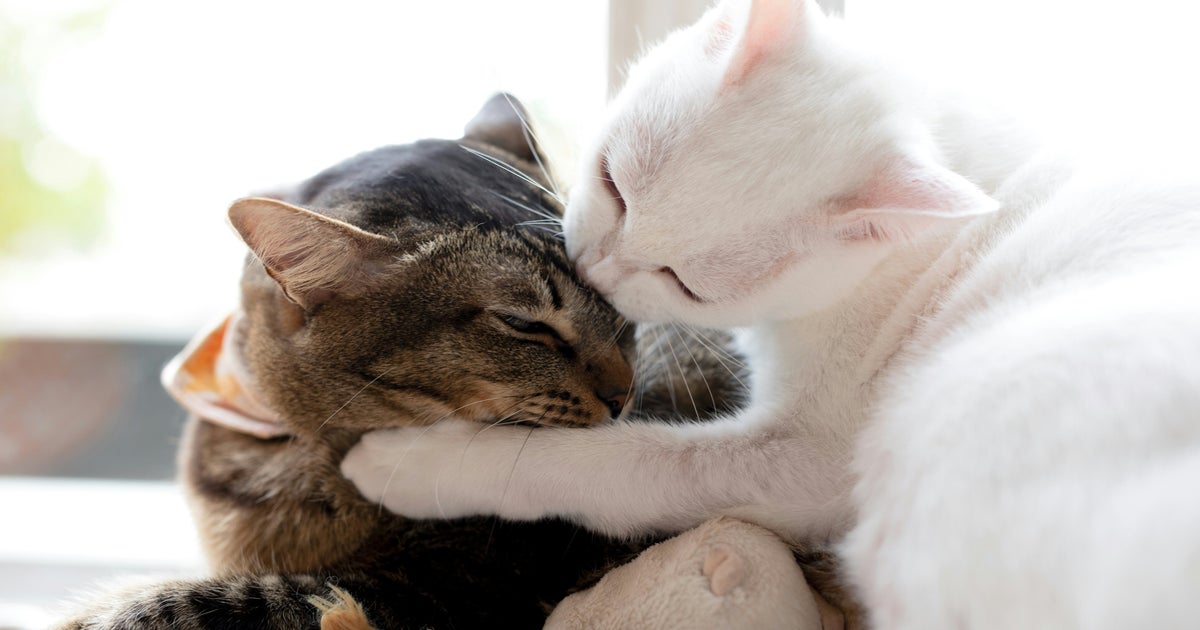
According to a new study published in the journal Applied Animal Behaviour Science, it turns out that cats’ “allogrooming” – including licking one another – isn’t always as wholesome as it looks.

Instead, the research, led by Morgane Van Belle, a cat behavioural scientist at Ghent University in Belgium, found the action has “multiple social functions”.

Allogrooming should therefore “not be used on its own to infer that the cats are socially bonded,” the study – which involved analysing 106 videos of feline pairs from 53 households – reads.

What does it mean when cats lick one another?

1) To show escalating tension

Sometimes, cats seem to lick each other as a kind of pre-conflict warning sign – like when one cat is annoyed by another pet stealing their favourite sunbathing spot.

This type of licking has been described as “passive-aggressive”.

In this case, the recipient of the lick might flatten their ears to show they’re not exactly loving the interaction.

Allogrooming in this case might be a “subtle agonistic signal to covertly solve conflict,” the paper reads. This type of licking might come alongside head shaking and even striking and biting.

2) To de-escalate a possible fight

Other times, the researchers said, licking can be “used as a form of appeasement to avoid escalation”.

Before a fight gets too serious, one cat might lick another as a way of re-establishing the peace.

“For me, [this] shows that they are quite elegant in the way they resolve conflict,” Van Belle told The New York Times.

“They could walk over and swat another cat in the face to get the blanket it is lying on. Instead, they lick it a little and fuss around. They have these very subtle ways of resolving conflict… that shows they are intelligent and flexible in their behavior, rather than simply being jerks.”

3) To intimidate each other

Some cases involved one cat “leaning over the other one” while licking them, which might be an intimidation or even bullying tactic.

Whatever the reason, the cat being licked in these cases typically shows signs of displeasure.

4) To clean one another

87% of the time, cats licked one another in the head and neck area.

That’s a hard spot for cats to reach by themselves, though it just so happens to be a very enjoyable place for most cats to be groomed, too.

5) To bond

Some licking is used for the adorable reason we assume it is: strengthening social bonds.

This is likely to be true if the cats are also playing together and have synchronised body posture.

Seeking physical contact with another cat, including snuggling, was followed by allogrooming in 41% of cases, for instance.

Licking was also sometimes used to initiate play.

6) To help one another relax

Lastly, licking may help the recipient relax.

Previous research showed that in various animals, “The behaviour has an immediate relaxing effect for the groomee, as it leads to a reduction in heart rate… and a release of beta-endorphins [natural pain and stress relievers].

“More research is needed to further explore and confirm the suggested functions for allogrooming in cats,” the paper ended.

“Ultimately, this knowledge can contribute to the recognition, resolution and prevention of social stress between cats in multi-cat households.”

Share Button

Researchers Think Cats Could Help Our Brains Age Better

Owning a pet, be it a cat or a dog, has previously been linked to lower heart disease risk. This is especially true for cat owners aged between 40 and 64.

Our feline friends may also reduce stress and boost our mood.

As if they don’t do enough for us already, researchers from the University of Bath, Auburn College of Veterinary Medicine in the US, and École Nationale Vétérinaire de Toulouse in France have said they might help us to age better too.

Why might cats help us to age better?

Their paper, published in the journal Biology Open, reads: “Pet cats may inform human ageing since humans and cats age similarly and they develop health challenges that mirror those observed in humans”.

Unlike a lot of lab animals, they added, cats tend to live long enough to develop age-related brain changes, like those seen in humans.

And, on the flip side, because they live a lot shorter lives than us, we can study their ageing at a much faster rate than we could in people.

The researchers used a biological model which looked at how multiple species age at a physical level.

They tracked 3,754 data points – like MRI (not CAT, sadly) scans, blood samples, and developmental milestones – gathered across human, cat, and other mammal species.

They found that cat and human brains seem to age remarkably similarly. Both species experience age-related neurodegeneration.

Like us, cats age in bursts. And they reach the equivalent of human old age: a teenage cat is the rough equivalent of a person in their 80s, ageing-wise.

“It was interesting to see that cats show patterns of age-related brain atrophy similar to those observed in humans,” said PhD candidate Brier Rigby Dames, who was involved with the research.

“These findings add to growing evidence that companion animals can provide valuable insights into ageing.”

Cat owners are increasingly requesting more detailed pet scans

Speaking to the University of Bath, the study’s co-author, Dr Ryan Gibson, said that more and more pet owners are sending their cats in for increasingly detailed scans as they age.

This, he said, might provide an exciting opportunity.

“This expanded clinical access creates meaningful opportunities for translational research (research that bridges the gap between scientific findings and healthcare), improving our understanding of aging and neurologic disease in ways that can benefit both feline and human patients,” he said.

For her part, Brier Rigby Dames said: “There’s potential to develop large-scale veterinary health databases for companion animals, analogous to human health databases such as the UK Biobank.

“These kinds of resources could enhance our ability to study ageing and disease using real-world clinical and owner-reported data collected across species.”

Share Button

Here’s The Real Reason Your Cat Licks You, And It’s Pretty Heartwarming

Ever had your shoe stolen by a dog?

Well, according to experts, your furry friend is likely just reassured by your scent and wants to be near it.

Cute as that seems, dogs have so many other ways of showing affection (wagging their tail, running up to you, leaning against you) that you might be left wondering why they had to turn to your favourite slipper in the first place.

Surely that’s the sort of behaviour you’d expect from notoriously cryptic cats, whose rarer displays of affection include stretching at, kneading on, and licking their owner?

And does your cat licking you mean they like you at all?

It could be a form of “allogrooming”

According to PetMD, we can’t be 100% sure (typical felines) ― but one of the leading theories vets have is that your cat might lick you to get closer to you.

“Mothers groom their kittens and cats may groom one another, which is called allogrooming,” the publication shared.

This helps to strengthen social bonds and increases a sense of belonging (aww).

Blue Cross’ animal behaviourist, Claire Stallard, said that allogrooming is the most likely reason your cat is licking you.

Other causes may include your cat seeking attention from you, your cat liking the taste of your skin (yes, really ― be careful with this if you’re wearing lotions, fake tan, or perfume), and them identifying you as a part of their group.

Rarely, the habit could indicate stress or anxiety. This is especially likely if their ears are flat to their head and/or their tail is swishing

See your vet if your cat suddenly starts licking you a lot out of nowhere, though. Very occasionally, this can be caused by medical conditions that create nausea.

Why are cats’ tongues so scratchy?

A study published in Proceedings of the National Academy of Sciences found that cats’ tongues actually have little hooks, rather than cones, which allow them to hold saliva on their tongue.

When cats lick themselves (or you), this is designed to comb their fur and distribute the cleansing saliva evenly across the surface they go for ― sometimes at the cost of a scratching sensation on your skin.

Per BBC Science Focus, this is partly because cats (unlike dogs) are solitary hunters. When a cat is hunting, they need to disguise their scent ― their specially-designed tongue helps them to do this to themselves easily.

This is less important for dogs, whose pack-hunting technique requires less disguise from both their prey and potential predators.

Share Button

TikTok Says These 2 Sounds Can Get Cats To Come To You ― Here’s What The Experts Think

I’ll put my hands up ― I straight-up didn’t believe the TikTok trend that saw cats come to their owner’s side as if a dog had been called by name, thanks to two short sounds.

″‘Mah-AH’… means, come here [in cat],” a vet shared on the app. Video after video of cat owners using the trick to summon their furry friends played in quick succession, but I wondered whether it was all just hype.

So, I reached out to three cat experts ― vet Dr Liza Cahn, a consultant for Embrace Pet Insurance, Mieshelle Nagelschneider, cat behaviour specialist and owner of The Cat Behaviour Clinic, and veterinarian expert Dr Dwight Alleyne ― about the trend.

And?

“Many of our cat clients have tried ‘Ma-AH’ with their cats and have had immediate results,” Nagelschneider told HuffPost UK.

“Even with our own cats, we can call them over and over again with ‘come here’ with no response and then with ‘ma-AH,’ it definitely gets their attention.”

Dr Alleyne, however, says “The effectiveness of this will depend on multiple factors.”

Cats may simply find the sound novel and appealing, he told HuffPost UK, and “the owner may have unknowingly conditioned their cat to the sound through a positive interaction.”

Dr Cahn agrees, sharing that “If your cat comes, they are most likely responding to your tone of voice and body language. This response will also be reinforced if they receive praise or treats.”

All three experts agreed that “mah-AH” could well work to get cats to come closer to you ― but the two vets weren’t convinced the tones had anything intrinsically appealing to the pets.

In other words, “mah-AH” will probably work depending on your cat’s temperament ― but it’s not quite the same as saying “come here” in cat.

So… what is?

Even Nagelschneider, who seemed most convinced by “mah-AH,” said there are other sounds ― like a kitten’s “mew-mew-mew” ― which will elicit a similar response.

Dr Alleyne told HuffPost UK that a lot of combinations of soothing sounds and cupboard love will get your cat to heel ― “Other methods that may work better include the actual calling of the cat’s name, using treats or clickers, or using a high pitched sound or tone to get them to come,” he wrote.

Dr Cahn says that despite what you might have heard, training cats isn’t as tough as you’d think.

“To train your cat to come when called, first, choose a cue word (such as “come” or “here”) and a high-value reward like a tasty treat or favourite toy,” she told HuffPost UK.

“You can either wait until your cat naturally approaches you, or get them to head your way by luring them with the treat or toy. Use the cue word just as they arrive, and immediately give them their reward.”

Over time you can increase the distance ― over time, your cat will learn to associate the reward with responding to your call.

So, “mah-AH” may not be a magic word; but positive reinforcement, high-pitched sounds, and new experiences are a pretty great way to train your cat regardless.

In that sense, the trick is likely to work at least some of the time.

Share Button

Cat Trees Are Actually Really Important For Cats’ Well-Being, According To A Behaviourist

If you share a home with a cat, you’ve probably noticed: Cats tend to seek out heights. What cat owner among us hasn’t caught their pet leaping onto counters or soaring onto shelves so high up that we can’t reach them without a ladder or stepping stool?

This love of high spaces is part of cats’ natural instincts, according to Stephanie Merlin, a certified feline behaviorist and cat well-being educator who runs the popular Instagram account @thefulfilledfeline.

“Cats are both predator and prey, so having a high vantage point is a natural way to help them feel safe and secure,” Merlin wrote. “This isn’t just about fun and games; it’s deeply rooted in their biology.”

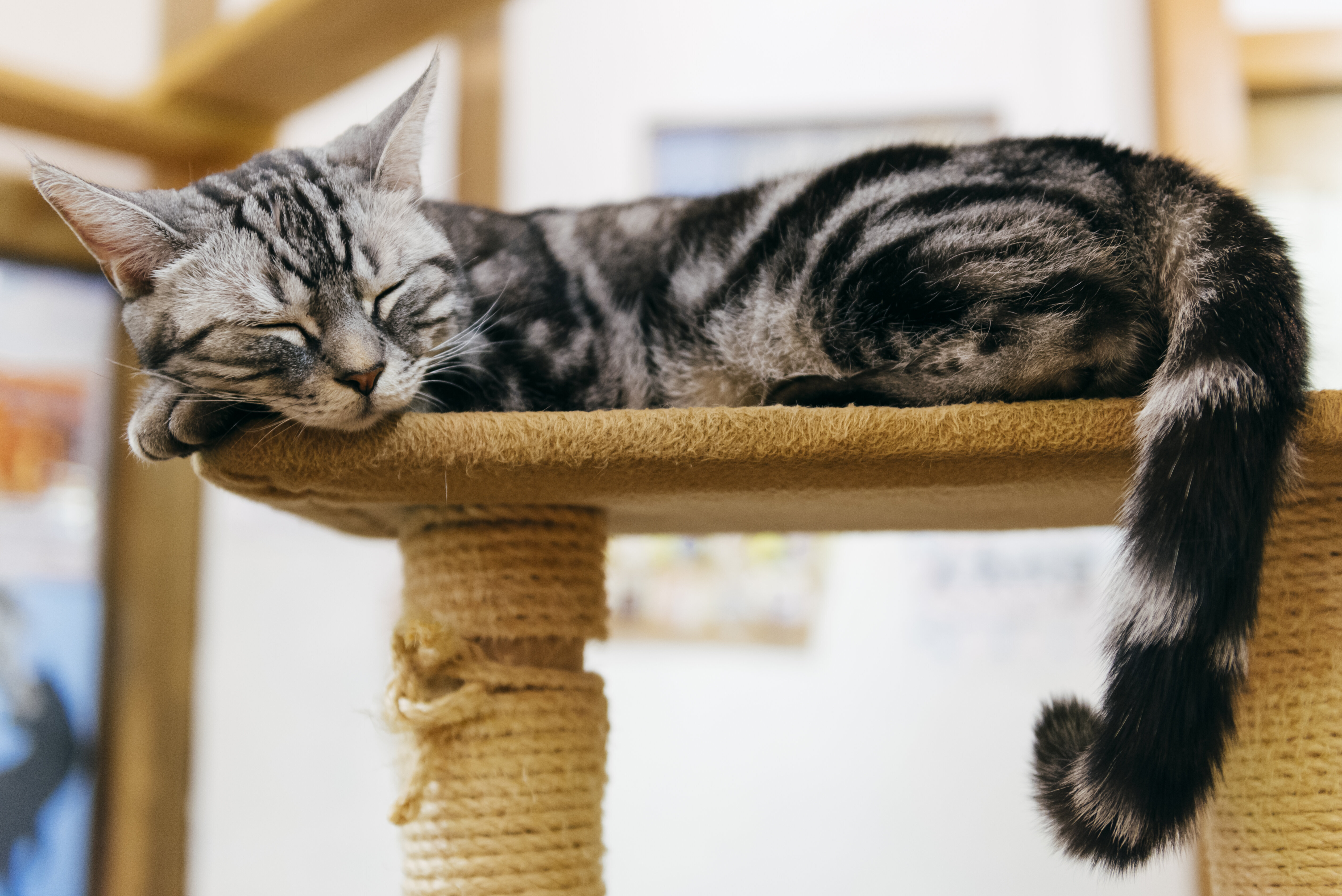
One way to support your cat’s evolutionary need for heights is through investing in a cat tree, a dedicated structure with multiple tiers for cats to climb and perch on. The benefits of cat trees “go way beyond offering vertical space,” Merlin explained. “Many include scratching surfaces, cozy beds, hidden nooks and plenty of spots to leap and explore.”

Cat trees crucially provide cats with space to express their natural instincts, Merlin noted, and failing to provide this space can have consequences for you and your pet. “Without these outlets, cats can become bored and frustrated, leading to stress and potentially destructive behaviors, such as scratching furniture,” she explained. Cats may even “hid[e] out of fear because they lack the security of a high vantage point.”

Especially if your household has two or more cats, a cat tree “can be a game-changer,” Merlin wrote.

This is because, in multi-cat homes, cats are essentially sharing their territory and, in their view, competing for limited resources. “Without enough space and separate ‘pathways’ where cats can avoid each other, conflicts are more likely,” as well as increased tension, Merlin explained. “Vertical space offers a fantastic way to expand a cat’s ‘real estate’ and avoid these conflicts.”

Share Button

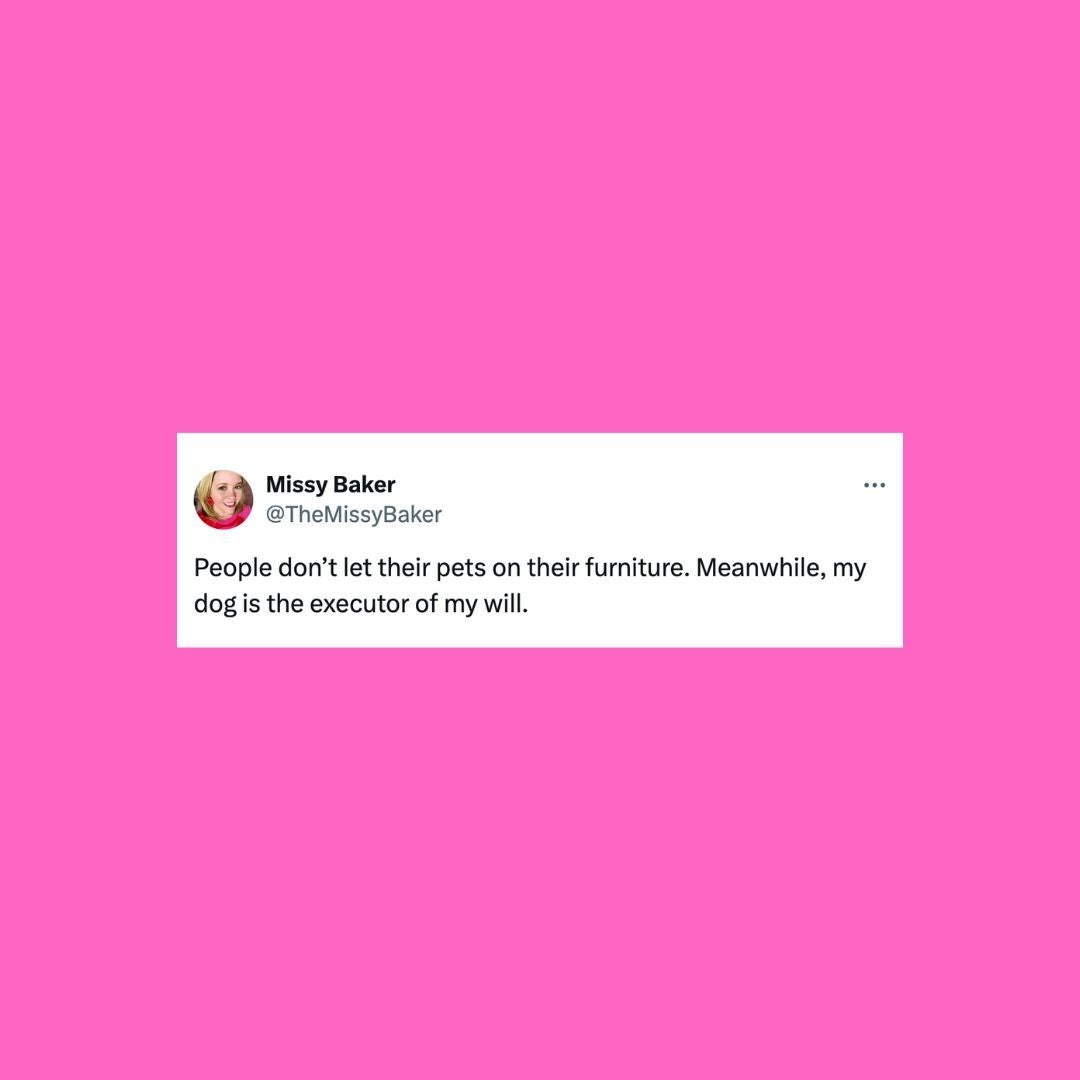
21 Of The Funniest Tweets About Cats And Dogs This Week (July 27-Aug. 2)

Share Button

This Is The Weird Reason Why Your Cat Sometimes Stares At You With Their Mouth Open

I’ve had my oldest cat for almost 13 years and there’s not a lot that tiny tabby does that surprises or confounds me these days apart from that open-mouth stare.

If you’re a cat owner, you’ll know it. Your usually very lucid cat is suddenly staring at you, mouth agape for around 30 seconds before they seem to break out of this weird glitch and go back to being their furry little selves.

I always assumed it was down to daydreaming but apparently, it’s much more scientific than that.

Why cats sometimes sit with their mouths open

So, no offence to my sweet cat but the last time she did this, I realised if I didn’t get to the bottom of this mystery, I’d always think she was a little strange and that’s probably not fair on my four legged pensioner.

Finally, I found my answer. According to Charlottesville Cat Care Clinic: “Cats have an extra organ that allows them to taste scents in the air, which is why your cat stares at you with her mouth open from time to time.”

… I still think she’s a little strange, actually. This hasn’t fixed anything.

This is called the Jacobson’s Organ and it is something that all cats have, even lions and tigers. The cat centre revealed: “Cats (along with snakes and also a few other mammals) have a magnificent organ called the vomeronasal organ, most often known as the Jacobson’s organ.

“Wrinkling and lifting its lips enables a cat to open up the ducts to the Jacobson’s organ. [This organ] seems to play a large role in the sense of smell in all wild and domestic cats, no matter their size or species.”

Now I can’t stop picturing a tiger, out in the wild, eyes glazing over and mouth hanging open, just taking in the scent of the air.

Share Button

23 Of The Funniest Tweets About Cats And Dogs This Week (Dec. 2-8)

Share Button

20 Of The Funniest Tweets About Cats And Dogs This Week (Sept. 30-Oct. 6)

Woof — it’s been a long week.

If you feel like you’ve been working like a dog, let us offer you the internet equivalent of a big pile of catnip: hilarious tweets about pets.

Each week at HuffPost, we scour Twitter X (yes, Elon Musk is apparently fur real) to find the funniest posts about our furballs being complete goofballs. They’re sure to make you howl.

(And if you want more, no need to beg ― you can check out last week’s batch right here.)

Share Button

20 Of The Funniest Tweets About Cats And Dogs This Week (Aug. 12-18)

If you feel like you’ve been working like a dog, let us offer you the internet equivalent of a big pile of catnip: hilarious tweets about pets.

Each week at HuffPost, we scour Twitter X.com (is Elon Musk fur real?) to find the funniest posts about our furballs being complete goofballs. They’re sure to make you howl.

(And if you want more, no need to beg ― you can check out last week’s batch right here.)

Share Button