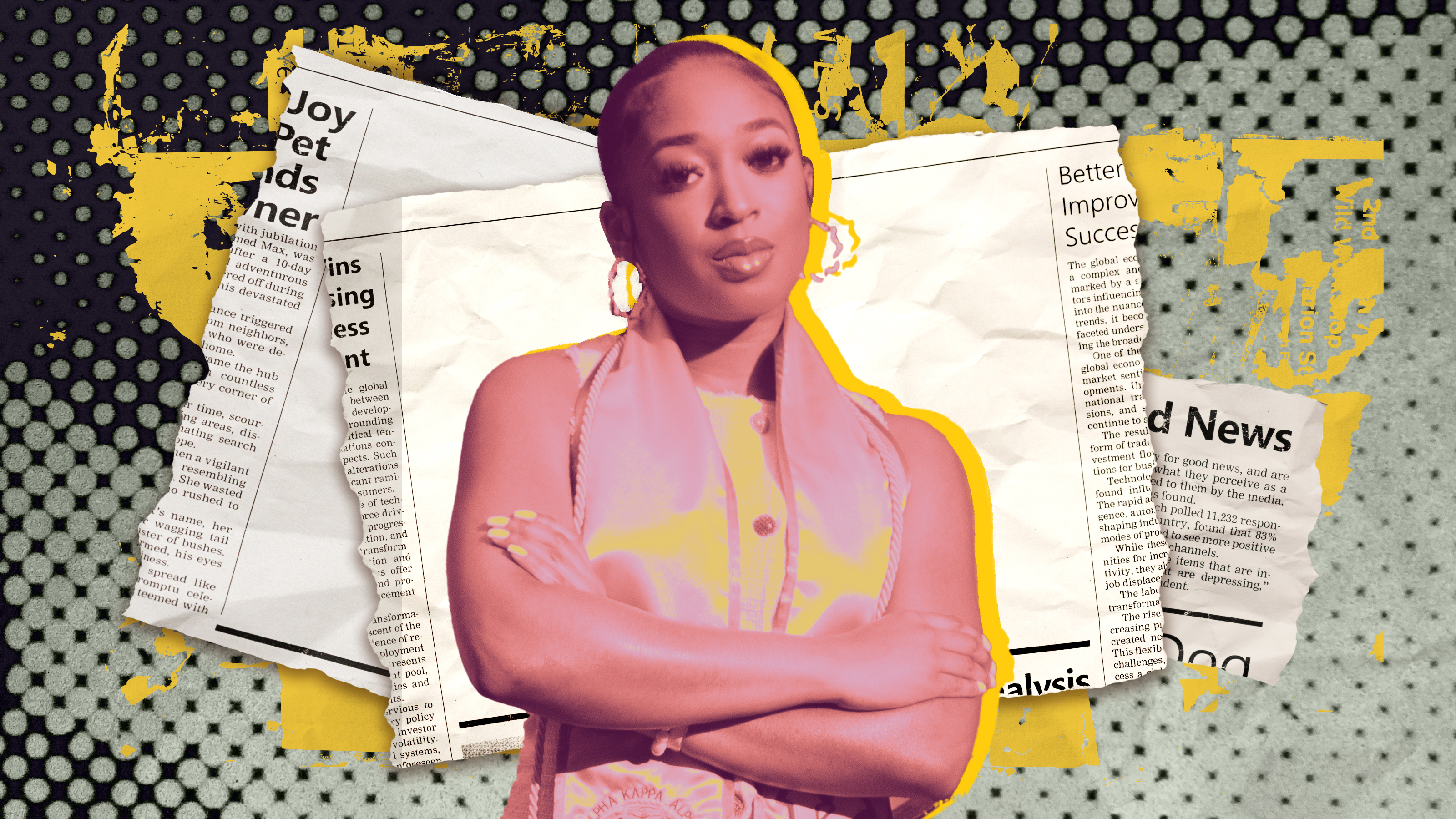
‘It’s Never Been A Better Time To Be Someone Who Doesn’t Drink’

I first removed alcohol from my life around 2015. I have alcohol use disorder, which is how I came to reckon with my relationship with the substance.

This was at a time in New York when alcohol-free cocktails were starting to be taken more seriously. I’m lucky that my alcohol use disorder doesn’t present in a way that makes me uncomfortable being in spaces where alcohol is also being served. So, serendipitously, I entered into the phase of my life where I was no longer drinking alcohol, right when some changes were happening with alcohol-free options.

Bartenders were pushing against the boundaries that had previously limited “mocktails” to unbalanced, syrupy juices. The imagination of the drinks world was moving beyond the Shirley Temple. For someone who wrote about food and drinks and so whose job required her to, in part, be dining out and picking up on what was going on in bars and restaurants, this was impossible not to notice.

“I appreciate things like Dry January, [but] it’s important to remember that sobriety has likely been painful for those with substance use disorders. They make a hard decision every day to stay sober.”

– Julia Bainbridge

Beverage menu real estate was being given to alcohol-free drinks ― those drinks were being given fun names, just like the cocktails were ― that all showed a level of care and intention. So I got in my car and drove cross country a couple of times; that’s how I did research for my book, Good Drinks. It was so clear that something was happening, and I just wanted to celebrate it. It was certainly happening in New York; I guess I wanted to see if it was happening coast to coast.

I really cast a wide net. I wanted to be on the ground, tasting with people and talking to people. There was just such passion and talent across the board, even in smaller towns that you wouldn’t anticipate. So with the book, I almost struggle with saying I wrote it. It rests on the work of professional bartenders, who were the ones thinking about and developing these beverages, and I’m lucky that they allowed me to capitalise on that newfound energy and take a snapshot of what adult alcohol-free drinking was looking like around the country at that point in time.

Something I saw was bartenders who had come to not drinking themselves, and a light bulb kind of going off the next time they looked at their offerings, deciding that they wanted to better serve people like themselves or their friends who no longer drank alcohol, but still enjoyed the pleasure of a good drink.

I think we almost do these drinks a disservice by comparing them to cocktails. Stop worrying about whether or not it tastes akin to an alcoholic version of the drink and just focus on whether or not it tastes good, you know?

I’m lucky to currently live in New York, where you’re sort of hard-pressed to find a restaurant that’s not being more thoughtful about that. It’s never been a better time to be someone who doesn’t drink.

And when it comes to the drinks themselves, most of the spirits, the non-alcoholic spirits on the market, are not meant to be drunk neat, or without some kind of mixer, even if that mixer is just tonic or soda water. And I think brands have done a good job of showing consumers how to use these products via recipes on their websites, but you have to know to seek out that information. And many people don’t; I wouldn’t if I weren’t, in essence, studying this category. I would encourage people to go to the websites of the products they buy to get some guidance.

So that said, just like consumers need to be educated about how to use these products, so do professional bartenders, and not all of them are taking that on. Someone who is skilled at making classic alcoholic cocktails won’t necessarily be skilled in this realm because the liquids themselves operate differently. It’s not a plug-and-play situation. By which I mean you can’t necessarily substitute two ounces of alcohol-free gin for the gin and a cocktail recipe.

“I’m not anti-alcohol. … It’s pleasurable, and it’s fine for those who can manage it consistently well. But I’m also glad that there’s increasingly more room to talk about the many and nuanced ways in which it’s hard to do that.”

But in these past few years, brands really are showing up strong. I think wine, in particular, is improving as the technology has improved, to allow for gentler dealcoholisation methods. Alcohol-free wines are getting legitimately good. And some even are able to carry through a subtle varietal character. And that’s hard, that’s hard to do. But finally, we just have people actually putting money and effort into this. I think we’re going to see more functional alcohol-free beverages come to the market in the near future.

I think the popularity of Dry January, and certainly that there are all these products on the market, says something. Maybe I’m also reluctant to overstate the alcohol-free trend because what we also know about people’s drinking behaviour, and certainly through Covid, is that there’s still a lot of problematic and unhealthy drinking going on. But in general, I like Dry January. It started as a public health campaign, and I think it’s safe to say it has become a real cultural phenomenon.

In my opinion, it lowers the barrier to entry into examining one’s relationship to alcohol. And we have to remember alcohol is a drug, and it’s a highly addictive one. It’s really not unusual to develop some kind of problem with it, at least for a little while. My point is that most of us have had, at least, a brush with alcohol’s more destructive side. And I think it could be argued that that’s part of the reason that Dry January has become such a welcome pause.

I’m not anti-alcohol. I think it’s inextricably linked with our history. It’s pleasurable, and it’s fine for those who can manage it consistently well. But I’m also glad that there’s increasingly more room to talk about the many and nuanced ways in which it’s hard to do that. And by that I mean, like, consume it in a healthy way on a regular basis. I think it really does help open the door to that conversation a little further.

I guess I’ll get on my soapbox a little. I do think we should be careful not to lump together the sober curious and those in recovery. I think one day, hopefully, the distinction won’t matter, and the paradigm will shift to the point that this just isn’t a thing. Drink, don’t drink, whatever. We don’t need a label. We don’t need a dedicated dry month.

But while I very much appreciate that some people are choosing a sober lifestyle, and as I said, I appreciate things like Dry January, it’s important to remember that sobriety has likely been painful for those with substance use disorders. They make a hard decision every day to stay sober. And to do that, they usually have to engage in multiple forms of treatment. I think we do have to acknowledge that sobriety has been hard-won for many people.

Julia Bainbridge is a James Beard Award-nominated writer and editor who has worked at and written for a variety of publications, including Condé Nast Traveler, Bon Appétit, The New York Times, The Wall Street Journal and The Washington Post. In 2020, her book Good Drinks: Alcohol-Free Recipes for When You’re Not Drinking for Whatever Reason was named one of the best cookbooks of 2020 by the LA Times, Wires and Esquires magazines. She is currently pursuing a master’s degree in social work at Columbia University.

Help and support:

Share Button

The Most Common Symptoms Of XBB Covid Variant, According To Doctors

If you’ve been following Covid news, then you’re likely well aware there’s a new variant in town that’s concerning the scientific community.

Known as XBB, the variant is believed to be the most immune-evasive to date and currently accounts for over 40% of infections in the United States, according to data from the US Centers for Disease Control and Prevention.

It’s been called the “kraken variant” by some, and according to the World Health Organisation, it has now been identified in at least 28 other countries.

As the BBC reported, some cases of XBB.1.5 variant, which evolved from XBB, have already been recorded in the UK – the mutation helped it beat the body’s immune defences, but has also reduced its ability to infect human cells, the report said.

Because XBB is relatively new, scientists are still working to figure out if and how the variant behaves differently from other recent variants. Though XBB’s symptoms are expected to be on par with past omicron infections, doctors say they are seeing some issues becoming more prevalent than others.

“Viruses typically mutate to become more contagious and less severe; it appears that this is happening with this strain of the coronavirus,” Dr. Henry Redel, the chief of infectious disease at Saint Peter’s University Hospital in New Brunswick, New Jersey, tells HuffPost US.

We asked infectious disease experts what they’re seeing in US hospitals right now. Here’s what they said.

The most common XBB Covid symptoms appear to be congestion and body aches.

There’s limited data on XBB, but experts suspect the symptoms associated with XBB infections will be similar to the symptoms people experienced with Covid throughout 2022.

That said, evidence has shown that the symptom profile has shifted a bit with each variant. Omicron caused more cold-like symptoms (like fatigue, runny nose, sneezing and muscle aches), for example, whereas delta and alpha more commonly triggered anosmia (loss of smell) and ageusia (loss of taste).

So, what is on the docket for XBB? “In general, I think people are more achy and still have congestion and headache,” Dr Julie Parsonnet, an infectious diseases specialist with Stanford Health Care, tells HuffPost. You may also expect to see the other usual symptoms: fever, chills, cough and sore throat.

Less common symptoms include loss of taste and smell and shortness of breath.

Anosmia and ageusia appear, anecdotally, to be less common with XBB. Experts don’t expect ageusia and anosmia to make a comeback just yet.

“Since XBB is part of the Omicron group, I expect that loss of taste and smell will not be common, but I have not seen data yet,” says Dr. Thomas Campbell, a professor in the department of infectious disease at the University of Colorado Anschutz Medical Campus.

One thing doctors on the front lines are seeing less of: severe shortness of breath, Redel says. Rarely have recent patients needed supplemental oxygen, he added. Redel notes he’s seeing many more Covid patients come in with classic upper respiratory symptoms – like runny nose, congestion and sore throats – along with fever and muscle aches.

Common symptoms have changed since the original iteration of the coronavirus.

Malcolm P Chapman via Getty Images

Common symptoms have changed since the original iteration of the coronavirus.

What causes symptoms to change between subvariants?

Because so many people have been infected – in some cases, multiple times — it’s tough to pin down exactly how the symptomatology is influenced by the host versus specific traits of the virus. Parsonnet suspects that immunity plays a pretty big role.

“There is likely a strong element of underlying immunity, but there may also be differences in the virus’s ability to cause symptoms,” Parsonnet tells HuffPost.

According to Dr. Martin Krsak, an infectious disease expert at the University of Colorado Anschutz Medical Campus, people’s genetics and underlying health – i.e. whether they have a chronic disease or prior injury – also influence the type of symptoms they develop.

Like Parsonnet, Krsak says that each variant and the way it infects our cells likely impacts symptoms as well. “Variants have a different capacity to evade prior immunity and also a different capacity to bind to the main target on human cells,” he says.

Does the current Covid booster prevent you from getting infected with XBB?

A pre-print study from Japan determined that XBB came to be during the summer of 2022 when two sub-variants of the BA.2 omicron lineage combined. Scientists believe that, in this process, XBB picked up mutations that help it better evade immunity conferred by both vaccination and previous infections.

XBB’s mutations also let it attach to our cells more easily, enabling it to spread more efficiently than other versions of omicron.

“It binds tighter, appears more transmissible, and is also immune-evasive,” says Dr. Eric M. Poeschla, the head of the Division of Infectious Diseases at the University of Colorado Anschutz Medical Campus. It’s unknown whether those mutations alter the virus’ clinical profile and the symptoms it causes, Parsonnet says.

The updated Covid booster, which was tweaked in 2022 to target newer variants of Omicron, doesn’t work super well at preventing infections of XBB, considering there are so many new infections in the community, Parsonnet says.

But the fact that there hasn’t been a rapid increase in deaths shows that the shots, combined with the immense amount of immunity gained from past infections, continue to protect many people from severe outcomes. Together, that immunity will help blunt the XBB wave, according to Poeschla.

Of course, there’s always the very real risk of long Covid, which is a debilitating condition that can follow even a mild case of the coronavirus. Long Covid can cause lasting fatigue, brain fog, respiratory issues and more. There’s still a lot for us to learn about XBB and the symptoms or potential complications it may cause.

But there’s one thing we know for sure: There’s a benefit to being vaccinated rather than not. “The bivalent booster offers some protection against all omicron-based variants and is highly recommended, especially for those over 65 or with serious other risks,” Poeschla says.

Experts are still learning about Covid-19. The information in this story is what was known or available at the time of publication, but guidance could change as scientists discover more about the virus. To keep up to date with health advice and cases in your area, visit gov.uk/coronavirus and nhs.uk.

Share Button

5 Signs Your ‘Dry January’ Should Maybe Be A Permanent Thing

So you’re trying Dry January – aka a month of no alcoholic beverages. Perhaps you’re doing it to save money, because you’re worried you drink a little too much or because your friend doesn’t want to do it alone.

Regardless, there’s probably a part of you that’s “sober-curious,” meaning you’re thinking about how alcohol affects you and your life.

As you skip out on drinks throughout the month, you may notice signs that make you even more sober-curious. Maybe you realise how much you’ve been relying on alcohol or how much better your life is without it.

Below, experts share the signs your Dry January challenge should become a more permanent part of your lifestyle and list tips for sticking with it.

1. You realise all you’ve missed out on because of drinking

While alcohol is something many of us turn to when we feel upset, want to have fun or need to wind down, it can also limit our lives. For example, when you’re drunk, you can’t drive to a Zumba class or play with your baby niece.

“Dry January presents a host of opportunities to experience what we otherwise might have missed out on,” says Brook McKenzie, the chief operating officer at Renewal Lodge by Burning Tree, an addiction treatment center. With all that extra time you had during Dry January, he explained, you might have gotten to try something new and exciting.

Further, you might recognise all you missed out on — either in general or sober. “Often, due to the prevalence of alcohol in our culture, people can go years — even decades — without having experienced things like a first kiss, an intimate conversation, a child’s first steps, a movie, meal, birthday, [or] Christmas without the use of alcohol,” says James Hartley, a U.K.-based counsellor who’s been sober for three and a half years.

2. Your interests change

According to Hartley, you may find your old interests boring or need to re-find the value of something without a drink.

“Enjoying yourself without alcohol takes some relearning, and you might find that some things you thought you enjoyed, you actually don’t, and you might find that you start developing new interests,” he says.

For example, you might find more value in small group gatherings than parties, or enjoy playing recreational soccer over drinking alone at home.

3. You feel better emotionally, mentally and physically

As you probably know, alcohol can make you feel groggy, moody and nauseous, to start. So, abstaining from it has many benefits.

“You might experience an increase in energy, alertness, positive thinking, less depressed symptoms, more restful sleep and overall an improvement in your well-being,” says Cathrin Moeller, a licensed marriage and family therapist with Thriveworks in Colorado Springs, Colorado, who specialises in addiction, depression, coping skills, stress and relationships.

Elena Touroni, a consultant psychologist and co-founder of The Chelsea Psychology Clinic, explained how this works: “As we all know, alcohol is a depressant and it impacts our brain’s ‘happy’ hormones, like serotonin and dopamine,” she says. “One of the benefits of cutting out alcohol is that you’re likely to feel more balanced in mood, less anxious, etc.” Those changes may help you at your job, too, as work feels more doable and less stressful.

4. Your relationships have improved

Since alcohol can take us away from friends, family, special events and more, you may have noticed the deepening of your relationships in Dry January.

“People are coming around [you] more, they are [giving] positive feedback that drinking less has been good for them, and [your] interactions with people are more genuine and less superficial,” says Kendall Phillips, a licensed professional counselor.

Connecting with others in a meaningful way is vital to our well-being. It can lengthen your life, strengthen your immune system and lower levels of anxiety and depression.

5. Staying away from alcohol was difficult for you

If you notice distressing emotions come up more than they have in other months – and wish you could quiet them with a drink – that could be because you used alcohol to numb them in the past, according to Moeller.

“If that is the case, it is important to seek support in working through this with a licensed mental health professional,” she adds.

Ultimately, it comes down to dependence. “The main difference between social drinking and being a ‘problem drinker’ is reliance,” Touroni says. Some signs of reliance she shared are struggling without having alcohol to turn to, thinking about alcohol a lot and feeling like you need it in social situations.

“If during this period a person is having physical, emotional or psychological cravings and withdrawals, this does signify a more serious problem,” adds Dee Johnson, an addiction therapist based at Priory Hospital Chelmsford in the UK. As a result, staying away from alcohol may be especially difficult – and something you need professional help with, she says, as Dry January can be dangerous for people whose bodies are addicted to alcohol.

Dry January is a good way to examine your relationship with alcohol and decide whether you should make more concrete changes to your drinking habits.

Nenov via Getty Images

Dry January is a good way to examine your relationship with alcohol and decide whether you should make more concrete changes to your drinking habits.

Do those signs necessarily mean you’re dealing with addiction?

The short answer: No. However, continuing to pay attention to your relationship with alcohol is crucial.

“Alcohol misuse is usually a slow burner that increases subtly over time, to the point that as physical tolerance levels slowly increase, it is quite common for the realisation to hit that there really is an issue only at crisis or near to [the] crisis point,” Johnson says.

(FYI, the signs of alcoholism include feeling powerless to alcohol, drinking in high-risk situations, developing a tolerance, noticing withdrawal symptoms without it, facing problems in your personal and professional life because of your need for alcohol, and more.) Also, Johnson adds, you don’t have to drink “every day” or “just the hard stuff” to have an addiction.

Truth be told, we all have something we turn to when we need to cope: sex, food, alcohol, yoga, friends. To some degree, that’s normal and OK. The problem is when it interferes with your life and well-being.

“What’s important is the relationship you have to that thing and whether, in the long term, that is preventing you from living a fuller and more contented life,” Hartley adds. “Whether you term yourself as ‘an addict’ is irrelevant: The truth is, you have a problem with the way things currently are, and it may be worthwhile having a go at changing that a little.”

Tips For Exploring A Sober Lifestyle

Regardless of how you define your relationship with alcohol, what can help you avoid it (especially when it’s basically everywhere)? Here are some options, straight from these experts:

  • Working with a therapist
  • Asking your family and friends to support you
  • Practicing new coping skills
  • Leaning in to your religion or spirituality
  • Finding new hobbies and interests
  • Asking someone to be your accountability partner
  • Attending meetings focused on quitting alcohol
  • Not going to bars
  • Taking it one day at a time
  • Thinking about how much better you feel
  • Brainstorming your goals (those related to staying sober and other ones).

If you slip up, be gentle with yourself. This happens, and your hard work isn’t lost. “It is part of the journey to experience setbacks, as with any goal,” Moeller said. “Think of it as part of the journey versus a failure.”

Remember, you’re not alone in what you’re going through, and help is out there.

Help and support:

Share Button

Just What Is Really Going On With Rishi Sunak’s Speaking Style?

Rishi Sunak’s speaking style has attacted some attention since he became the UK’s third (and final) prime minister of 2022.

While he hasn’t received quite the level of criticism aimed at his predecessor Liz Truss and her famously stilted manner, there have been some comparisons to the cringey Will MacKenzie from The Inbetweeners.

As the actor behind the character, Simon Bird, joked to The Times: “I’m absolutely baffled why anyone would see any similarities at all between this privately educated, socially awkward, out-of-touch caricature and … ah. Scrap that.”

Sunak’s first speech of 2023, where he made five promises to rejuvenate the nation, was also subject to some ridicule over its delivery.

Here’s a sneak peek…

The Guardian’s John Crace said Sunak spoke “breathlessly and earnestly. And vacuously”, while The Times’ Quentin Letts dubbed it a “wonderfully terrible” talk where Sunak spoke acted as “wide-eyed as a Girl Guide talking about badges”.

The Telegraph’s Madeleine Grant even said it was like “painting by numbers but with words” or “Count von Count from Sesame Street was moonlight as PM”.

Twitter has also frequently pointed out that Sunak would be the ideal children’s presenter.

But is there a reason why Sunak has such a particular delivery?

Speaking to HuffPost UK, Ges Ray, who teaches people how to speak in public for a living, suggests that Sunak might have deliberately chosen to have more of a “low profile” compared to his predecessors.

Ray notes that Truss adopted the voice of Margaret Thatcher, with her voice dropping in tone and timbre when she took up her place in No.10.

He adds: “Those who watched Boris Johnson noted his ability to adopt the bumbling orator style as a chosen persona, part of his high profile.”

By comparison, he says that Sunak uses an “encourage tone” with “relatively simple and straightforward language”, which allows his critics to categorise him as “primary school teacher, reaching above the noise of the classroom with warm encouragement”.

“Which is the audience that matters? His immediate critics, or the population at large, perhaps more open to the contrast with recent PMs?”

– Ges Ray, speech coach

If the PM wants to change his delivery, Ray suggests he needs to work on “voice tones, gravitas, his physical stature” to improve as a speaker.

But he also asks: “Which is the audience that matters? His immediate critics, or the population at large, perhaps more open to the contrast with recent PMs?

“Could it be – and this is simply personal conjecture! – that with the enormous demands of the greatest of Great Offices of State he has eschewed, and indeed distanced himself from the path of his two immediate predecessors, deliberately choosing not to develop a new speaking style?”

When analysing Truss’s speech during her time in the spotlight, journalist Viv Groskop of the How To Own A Room podcast, explained that there are advantages to being a less conventional speaker.

She told HuffPost UK: “In previous decades we have been used to speakers ― and politicians in particular ― who look and sound more confident than most of us. But often that approach now comes across as stuffy and old-fashioned.

“Now that we are surrounded by TikTok content, TED talks, YouTube and we constantly have people talking at us and trying to get our attention, our perception of what is authentic and worth our time is changing fast.”

But then, we should consider Sunak’s very privileged background, son-in-law to a billionaire and the richest PM ever to take up a seat in No.10.

Some sketch-writers did picked up on Sunak’s slight tone-switch when he started answering journalists’ questions during his speech this week.

Letts noted that a “sparkier, more commanding, combative Sunak” emerged when challenged by the media on his vision.

“He dropped that dreadful Timmy-the-Hamster voice and sounded more like a corporate high-flyer grasping supply-chain problems,” Letts commented.

Does this mean Sunak is still playing with his speaking style? Only time will tell if we’ll ever experience another gem to rival Truss’s “pork markets” again.

Share Button

‘I’m 26. I’ve Never Found Love And I Don’t Think I Ever Will’

You’re reading Love Stuck, where trained therapists answer your dating, sex and relationship dilemmas. You can submit a question here.

By the time we reach our mid-twenties, it can feel like most people have been in a few relationships – but what if this isn’t your reality? You want love but you’re ashamed to admit it hasn’t quite happened yet. You ask yourself if something is wrong with you, and more urgently, if you’ll ever find love.

This is the case for this week’s reader, Patricia. “I’m 26 years old, and I’ve never had a boyfriend,” she writes. “This wouldn’t be a problem in itself, but ever since I moved to a new country/became independent, I feel more pressured to find a significant other.”

This pressure, she says, comes not just from her family but from casual acquaintances, even strangers, who throw out comments such as “you’re such a nice girl, how come you’re single’? or “we weren’t made to be alone”.

“This paired with the fact that I only managed to have flings so far, which never developed into serious/meaningful relationships,” Patricia says. The story goes more or less like this: I meet someone, we spend time together getting to know each other, and after a couple of weeks they say they’re not ready for a serious relationship.”

These experiences have left Patricia questioning if there’s something wrong with her and if she’s worthy of a relationship. “I know that romantic love is an experience that many humans never have and that it is still possible to live a fulfilling life in spite of that, so I have been trying to accept that it might never happen to me,” she says. “However, I must admit that sometimes I feel like I’m missing out on something major that seems to be natural to most people.”

Counselling Directory member Laila Fish shares her advice for Patricia.

Why can there be so much pressure to get into a relationship and how can you release herself from this pressure?

There are a range of pressures on people to embark on relationships, says Fish, including family and societal expectations.

“Family members may have good intentions, they may have experienced this pressure themselves, and would like to see you in a relationship as maybe they are worried about you moving to a new country – despite how frustrating this sounds for you!” she says.

The next time a family member or friend asks Patricia about relationships, Fish wants her to pay attention to herself – “does it make you feel sad or frustrated – this can often tell us a lot” – and take a deep breath before responding. Meanwhile, to release herself from societal pressures, Fish says it’s helpful to avoid comparing herself to other people her age.

“Embrace your independence. It sounds like you are doing amazingly and enjoy all the opportunities ahead of you,” she advises Patricia. “Knowing what you want allows you to tune out society’s messages that don’t reflect your desires currently.

“It can be tough seeing everyone you know meeting someone romantically, but that doesn’t mean it is something that you necessarily want and that’s OK.”

How can you hold on to hope you’ll find someone special?

“Patricia sounds confident and independent and needs to believe in herself that when the time is right she will find the right person, and until then to enjoy meeting new people,” Fish says.

“Patricia says that the people she meets only last a short while. I would advise reframing this perspective into thinking how interesting and great an opportunity to meet new people is. Then, if one day a relationship happens, it does.”

Fish recommends she focuses on herself first and works on her self-esteem.

“Don’t be afraid of feeling like you are missing out on something – that something is ‘you’ and independence right now is your best friend. Also, be kind to yourself and challenge your negative beliefs that you may not be worthy.”

What practical tips would you give this reader to get into a relationship?

Expanding your interests and social activities can provide opportunities to meet different people, Fish says, but it’s important to start with what you want to do.

“Spending time thinking about your likes and dislikes as well as your goals can enable you to be clearer about who you are,” she explains. “Discovering other goals to focus on such as your professional life, your health, alongside meeting someone, can help you feel more confident and empowered if/when you do.”

She suggests Patricia ‘dates herself’ to get to know herself. “Go for a walk in the park, journal about your values and aims in life, go to that museum and see that film – this will all help towards you developing your self-esteem and consequently feeling worthy.”

In the end: “Focusing on finding happiness in your own life will pay dividends to avoid any relationship escalator your family or society is rushing you towards.”

Love Stuck is for those who’ve hit a romantic wall, whether you’re single or have been coupled up for decades. With the help of trained sex and relationship therapists, HuffPost UK will help answer your dilemmas. Submit a question here.

Share Button

8 ‘Gross’ Things Your Body Does That Are Actually Good For You

Have you ever wondered why you have earwax or why you fart? Although these bodily functions might seem gross, they are actually beneficial to maintaining your overall health. So even though they may be stinky, unsightly or a huge nuisance – you need them for optimal functioning.

To provide more insight on the most common disgust-inducing body mechanisms, we chatted with a few doctors on what you might notice and why they happen. Here’s what to know:

1. Earwax

If you’ve noticed a clogged feeling in your ears, then it may be due to a buildup of earwax, also known as cerumen. However, when it’s not causing damage and discomfort, earwax is actually good for you.

“Not only is earwax normal, it’s necessary. Earwax protects the ears from things that could hurt the eardrum, such as dust, hair or small insects,” says Dr. Jaclyn Railsback, an internal medicine physician at Cleveland Clinic Florida Weston Hospital.

Certain factors that may affect the amount of earwax you have include previous ear surgery or trauma, recurrent ear infections, or wearing hearing aids or deep earplugs.

“Unless there is a serious condition, such as hearing loss or infection, it is best to leave earwax alone in most cases,” Railsback says.

2. Leaky nipples

Not everyone has leaky nipples, however, those who just had a baby will likely experience this phenomenon.

“Your body would rather produce too much milk than not enough in the early stages of breastfeeding,” says Dr. Whitney Casares, the founder and CEO of the Modern Mamas Club. “All that extra milk can get messy as your body works out the balance of supply and demand between you and your baby and you may end up with leaky nipples and a wet shirt.”

Leaky nipples are a normal part of the breastfeeding process and are a clear sign of heavy milk production for nursing people. That said, if other discharge leaks from the nipples, or if there’s pain, you’ll want to consult with your doctor to rule out any underlying conditions.

3. Flatulence

While passing gas may be embarrassing and gross, it’s a natural result of the digestive process.

“It is a way for your body to expel both swallowed air as well as the fermented byproducts of undigested food,” says Dr. Brett Mendel, a gastroenterologist and Everlywell adviser.

The volume and frequency of flatulence can vary greatly between individuals and can be affected by diet, activity level, antibiotic use and even altitude.

Additionally, farting may indicate that your diet is high in fibre which can signal improved gut health and that of the microbiome. Plus, it can help prevent unwanted stomach pain and bloating which is commonly caused by “holding it in”.

While farting is normal, too much may not be a good thing. “Excess gas leading to bloating and abdominal pain can be signs of serious medical conditions you should share with your doctor,” Mendel says.

According to Healthline, excessive flatulence is categorised as farting more than 20 times per day. While this is frequently caused by diets high in fibre, in some rare cases it can be indicative of other issues such as Crohn’s disease or dumping syndrome.

4. Burps

You’ve probably been told not to belch at the dinner table, but sometimes you just have to let it out for your health.

“Burping is the body’s way of expelling excess gas from your stomach and even though it seems gross, it is a normal bodily function,” Railsback says. “When we swallow food or drinks, it goes through the esophagus and into the stomach where stomach acids and digestive enzymes work to break food down into nutrients that we use for energy which creates gas during the process.”

If you always hold in your burps because you’re embarrassed or they are just not something you like to do, then you might experience bloating and an overinflation of the stomach that may cause discomfort.

While burping a few times isn’t a cause for concern, if it persists, then you might want to take a trip to the doctor’s office. “While burping is a normal function, it can be associated with certain conditions like GERD, indigestion, gastritis, ulcers and IBS,” Railsback says.

5. Vaginal discharge

While using the restroom, you might notice some discharge when you wipe. Although this clear jelly-like substance might seem gross, it’s actually a sign of a healthy reproductive system.

Vaginal discharge is a way your body carries away dead cells and bacteria, keeping the vagina clean and preventing infection,” Casares said.

While discharge is normal, Casares noted that if your discharge has a fishy odor, causes itching or changes color, you’ll want to get checked out by a medical professional to rule out any underlying conditions or infections.

6. Mucus

After blowing your nose, you’ll most likely see mucus in a tissue. Mucus is naturally produced by the cells in your mouth, throat, nose and sinuses.

“Mucus plays an important role in lubricating and protecting your upper and lower airway,” Railsback says. “Its slippery consistency helps trap potential irritants as it contains special antibodies and proteins to help fight harmful germs that may be introduced into your respiratory tract.”

Railsback noted that healthy mucus tends to be thin and clear, but if you’re sick or have other lung disease, mucus can become thick, colourful and can potentially cause difficulty breathing.

7. Pooing

As the popular saying goes, “everybody poops.” While it may not smell pleasant, “bowel movements are the mechanism for our body to get rid of materials that cannot be digested,” Mendel says. “It is generally accepted that normal bowel movements are from three times a day to three times a week.”

According to the Bristol Stool Chart, a “sausage-like” poop with cracks or a “smooth soft sausage or snake-like” type of poop is ideal (Types 3 and 4). Anything that falls too far out from the descriptions above should be flagged to a professional for evaluation.

While pooping is healthy, alterations in bowel movements can be an indicator of overall health. For example, if you have chronic constipation, diarrhea, or blood in your stool, you’ll want to schedule an appointment with your physician.

8. Pus

When you get an infection, like a staphylococcus (a bacterial infection) or folliculitis (infection of a hair follicle), you might notice that pus develops. While it may be an eyesore to look at, pus is actually a good thing.

“The white stuff coming out of an infection ― known as pus ― is the collection of defensive white blood cells that are attacking bacteria to trap and kill them,” said Dr. William Li, a doctor and author of Eat To Beat Disease.

It’s usually normal to have some pus present shortly following the presence of a wound – around one or two days after. This means that the white blood cells have flocked to the open wound and are working to fight germs and bacteria. If the wound is healing, it’ll usually be odour-free and not show signs of discolouration.

When you get an infection, however, the pus may smell and the wound may be hot to the touch so you’ll want to be sure to head to the doctor to get it treated and prescribed medication to clear it as soon as possible.

Share Button

How To Pull Off A Therapy Session In The Middle Of Your Workday

Just as you take care of your physical health, therapy is an important aspect of taking care of your mental health. Making a therapy appointment can be a tricky task, especially if your therapist’s schedule overlaps with your workday.

It’s normal to experience a range of intense emotions following your therapy session. Understand that it may seem tough to transition back to work if you’re feeling emotionally and mentally drained. There are also a few ways to make going about your to-do list a little easier post-session.

If you plan to schedule your appointment during work hours, aim for a day when your workload may be lighter and you can work from home, if possible. Moreover, try to block some additional “transition time” in your schedule for after the visit, says Katie Duke, a nurse practitioner on the health care advisory board of the Figs clothing company in Santa Monica, California.

If you have the appointment on a busier workday, it is also helpful to inform your therapist if there are any important meetings that are happening after the session so that the therapist can also be mindful about tailoring what is talked about in the visit, says Alyssa Mancao, a therapist and founder of Alyssa Marie Wellness in Los Angeles.

Mancao also recommends being aware of time so you can spend the last 10 minutes of the visit on coping techniques to transition back to “work mode.”

And if you need a little extra help beyond that, here are a few expert-approved tips on how to pull yourself together after therapy if your appointment is during work:

Go for a walk

Mancao recommends going for a 15-minute walk after your therapy session to help calm your nervous system and transition your mind from being in “therapy mode.”

Take some time to get some fresh air and go for a walk outside or make a few rounds in your office building, if possible.

Try a quick breathing exercise

Deep breathing is a practice that helps cultivate mindfulness, aka. the ability to be present. Mindfulness can help calm your busy mind, improve your mood and reduce any stress you may be experiencing.

“Taking slow, controlled breaths that engage the diaphragm sends signals to our brain to evoke calmness and relaxation,” says Andrea Elkon, a psychologist with Best Within You Therapy & Wellness, based in Atlanta.

She recommends trying the following diaphragmatic breathing practice:

  • Aim to count to at least four as you inhale, imagining your diaphragm as a balloon filling with air
  • Exhale for at least another four counts, releasing all of the air
Taking a moment to unwind after your workday therapy session will help you better jump back into your tasks.

Westend61 via Getty Images

Taking a moment to unwind after your workday therapy session will help you better jump back into your tasks.

Give yourself a little pep talk

If you’re feeling especially overwhelmed or drained after your therapy session, understand that it is completely OK to feel this way. Don’t be too hard on yourself. Don’t let your inner voice criticise you.

“Instead, remind yourself that seeing a therapist is one of the best investments you can make for your mental health and well-being. Shift your focus on how seeking therapy has made a positive difference in your life,” Duke says.

Engage your senses with a distraction

When you focus on your senses in the present, it will shift your attention away from the painful memories and emotions that therapy might trigger, Elkon says.

To engage your senses, try activities like colouring, rubbing lotion on your hands, playing with a fidget toy or drinking a cup of hot tea or a very cold drink.

Nourish yourself with a snack

If you scheduled a therapy appointment during your workday, make sure to have a snack and water on hand after the session.

“Your body will likely have a stress response to the therapy session, leaving you feeling depleted, and having a healthy snack with some water is a way to nourish yourself,” says Kristin Meekhof, a therapist and author of A Widow’s Guide to Healing.

Jump into your to-do list or plan an event

It may be comforting to feel in control by tackling some items you’ve been putting off.

“Engaging in some sort of task that involves your thinking or planning brain will quiet the emotion centres and help you feel centred in the moment,” says Neha Chaudhary, a psychiatrist and chief medical officer of BeMe Health, a mobile mental health platform.

Chaudhary recommends drafting an email to someone at work (but not sending it!), writing down a grocery list or meal plan for the week, or thinking about the next place you want to travel and what activities you would do there.

Take it slow when going back to work

It’s normal to feel like you need to occupy your mind with work-related things immediately after your therapy appointment. However, be sure to not ignore any emotions you may be feeling.

Take slow steps as you start completing your work duties, and keep a journal handy to write down any of your thoughts and feelings as they come, says Regine Muradian, a psychologist based in California.

“Give yourself some grace, and remind yourself that you don’t need to finish everything today,” she says.

Share Button

‘Habit Stacking’ Could Be The Answer To Actually Sticking To Your 2023 Resolutions

It’s the same every year – we make a list of resolutions for the New Year the length of our arm, before inevitable breaking them half way through January.

The fact of the matter is, trying to implement so many changes into our lives at once is no easy feat.

Change can be tricky, especially if it involves breaking a habit of a lifetime and requires a whole lot of discipline. However, there is a method that could make us stick to our self-promises for good.

Enter ‘habit stacking’.

The concept is fairly straightforward, as TikToker Elle Leonard explains in her now viral video, habit stacking involves ‘stacking’ a habit you want to do on top of one you already have, meaning it’s more likely to become part of your daily routine.

In her video, Elle uses the example of wanting to speak to her grandparents more. In her home she has mugs that her grandmother gave her and now, whenever she uses one, she uses it as a reminder to phone her relatives there and then to check in.

By incorporating her daily habit of having a morning coffee with a new habit of speaking to her grandparents, she’s managed to stick to it.

And it’s not just TikTok that loves habit stacking, the pros do too.

According to James Clear, author of #1 New York Times bestseller Atomic Habits, “your brain builds a strong network of neurons to support your current behaviours. The more you do something, the stronger and more efficient the connection becomes.”

He defines the formula for habit stacking as: After/Before current habit, I will new habit.

Habit stacking, explains Clear, lets you take advantage of the strong connections you have for a habit you already carry out in order to stick to a new one.

“You have patterns and behaviours that have been strengthened over years. By linking your new habits to a cycle that is already built into your brain, you make it more likely that you’ll stick to the new behaviour,” he writes on his website.

By stacking your habits, effort is less, the new parts of your routine are more natural, and voila! You’re on the road to long-lasting behavioural change.

Another key way of making sure that habit stacking is successful, is clearly setting a highly specific and actionable cue on which to attach your new habit to.

For instance, let’s take ‘eating more healthily’ as a resolution we want to stick to in 2023. According to Clear, this isn’t, well, clear enough.

Instead, to make it actionable, you’d stack it onto something you already do, for instance: “When I cook dinner for myself at night, I will cook a portion of vegetables every single time.”

Or how about, “when I wake up, while I’m waiting for/making my coffee, I will eat a piece of fruit.”

This is far less vague than ‘eat healthier’ as it’s a habit you can incorporate into the one you already carry out.

Here’s another example that many of us will no doubt be promising ourselves in 2023: drinking more water.

Instead of just vowing to do that, we can build it into our routines on top of an action we already carry out – “after I brush my teeth, I will drink a glass of water”, “before I eat my lunch, I will drink a glass of water”, “when I close my laptop for the day, I will drink a glass of water.”

Clear explains: “Be specific and clear: After I close the door. After I brush my teeth. After I sit down at the table. The specificity is important. The more tightly bound your new habit is to a specific cue, the better the odds are that you will notice when the time comes to act.”

Here’s his list of habits you can ‘anchor’ a new one to:

  • Get out of bed.
  • Take a shower.
  • Brush your teeth.
  • Get dressed.
  • Brew a cup of coffee.
  • Eat breakfast.
  • Take the kids to school.
  • Start the work day.
  • Eat lunch.
  • End the work day.
  • Change out of work clothes.
  • Sit down for dinner.
  • Turn off the lights.
  • Get into bed.

Happy stacking!

Share Button

The Term ‘Geriatric Pregnancy’ Isn’t Just Offensive, It’s Also BS

Despite the fact that more and more people are waiting longer to get pregnant, having a baby later on in life still comes with a great deal of stigma.

The phrase “geriatric pregnancy” was once commonly used to categorise pregnancies in people over the age 35 before it was eventually replaced by the term “advanced maternal age.” Describing one’s pregnancy as geriatric or elderly was and is not only harmful, causing many people to feel high levels of anxiety about their so-called ticking body clock, it’s flat-out inaccurate.

While it’s true that the risk of experiencing pregnancy complications or infertility increases with age relative to those who are younger, the vast majority of people 35 and up have smooth and successful pregnancies. Not to mention, even if there is an issue, there are many tests and treatments available to help people over 35 go on to have healthy pregnancies in most cases.

“The most likely thing in these pregnancies is that absolutely everything will be fine,” Melissa Rosenstein, a maternal-fetal medicine specialist, and obstetrician and gynaecologist with the University of California, San Francisco, tells HuffPost.

Where the phrase ‘geriatric pregnancy’ came from

Advanced maternal age pregnancies occur when the mother is going to give birth after the age of 35. The risk of any issues goes up as you get older, according to Rosenstein.

But there isn’t anything special about age 35 when it comes to pregnancy risks and complications. It’s not like the risk of your baby having a chromosome abnormality is lower at 34 and suddenly sky rockets the next year. “It’s a gradual progression,” Rosenstein says.

The age 35 was selected decades ago when doctors needed a way to inform which pregnant patients received genetic testing. Back then, studies had indicated that people over 35 had a greater risk of pregnancy loss from amniocentesis – a procedure that evaluates the foetus’s genetics — and doctors decided that only people 35 and up would qualify for this type of genetic testing.

Now, amniocentesis is a much safer procedure, offered to all pregnant people, but there is some remaining stigma about being pregnant after 35.

These days, it’s much more common to get pregnant after 35 as more people delay parenthood and marriage in order to prioritise their careers and education, or because of other personal circumstances.

“Many to most of my patients are over 35 — it’s not really a big deal,” Rosenstein says.

While it’s true that the risk of experiencing pregnancy complications or infertility increases with age relative to those who are younger, the vast majority of people 35 and up have smooth and successful pregnancies.

Adene Sanchez via Getty Images

While it’s true that the risk of experiencing pregnancy complications or infertility increases with age relative to those who are younger, the vast majority of people 35 and up have smooth and successful pregnancies.

The actual risks of being pregnant after age 35

Women and people with uteruses are born with all of the eggs they will have in their lifetime, and as they age, their egg supply – and quality – diminishes. With that, the chances that something will go wrong with the chromosomes during ovulation – the release of the egg from the ovary – also increases.

Research has shown that pregnant people of advanced maternal age are more likely to experience ectopic pregnancy, chromosomal abnormalities, gestational diabetes, preeclampsia and need to undergo caesarean delivery.

The risk of infertility also increases as you get older — it may take you longer to get pregnant and you may have a higher chance of having a miscarriage if you get pregnant, according to Rosenstein. But if you have regular periods every month, there is a good chance that you will be fine.

This doesn’t mean that all people who get pregnant over the age of 35 are doomed. In fact, in the vast majority of advanced maternal age pregnancies, everything is completely fine.

“When you do studies, you see that the risk of complications is higher in the older women, but the absolute risk is still very low,” Rosenstein says.

According to Jill Purdie, obstetrician and gynaecologist, and medical director at Northside Women’s Specialists of Pediatrix Medical Group, we now have more accurate tests that can be done early in pregnancy to assess if the mother or foetus have any health issues.

“With early and routine prenatal care, many pregnancy complications can be caught and treated early before they cause a significant issue,” Purdie says. Certain lifestyle choices – like maintaining a healthy body weight and exercising – may help mitigate some of these risks as well.

That said, it’s really hard to predict who is going to have trouble getting pregnant, and being pregnant, in the future. If you are concerned, it’s worth talking to your doctor about how regular, or irregular, your menstrual cycles are and when your mother went through menopause.

Having a baby is a big decision, and Rosenstein says it’s important to do it when you’re ready, at whatever age that may be.

“Although there is some increased risk as outlined above for women of advanced maternal age in pregnancy, the majority of women are able to have a successful and healthy pregnancy at a later age,” Purdie says.

Share Button

The One Mistake That’s Tripping Up Our New Year’s Resolutions, According To A Psychologist

We all want our New Year resolutions to work, but – every year – it always proves particularly difficult to make them stick.

It’s also hard not to drop any plans you may have had for self-improvement by spring, promising to yourself that you’ll try again when the next January rolls around.

We’ve all been there – trying to make the goals smaller, and rewarding yourself along the way, but nothing feels like it works.

Don’t give up yet though.

Senior lecturer in psychology at the University of Law, Mark Jellicoe, has suggested some more evidence-based techniques which could make 2023 the year you actually stick to those healthier habits.

So, here’s what to do – and not to do – this January.

Don’t tell everyone

We know, the usual wisdom advises you to tell more people, so there’s more social pressure – or more accountability – meaning you might be more likely to actually follow through.

But, Jellicoe sats: “There is growing evidence that would suggest doing this can be detrimental.”

Jellicoe suggests that the act of telling someone about the goal – and the subsequent praise you may receive – could “lead us to deceiving ourselves that we have already achieved” it.

So you might end up not actually ending attempting the goal with as much gusto as you may have beforehand.

Do manifest (a little)

A trend which has emerged in recent years suggests if an individual really wants something, they tell themselves actively they already have it to push their mindset into a more optimistic one.

It’s like a wider interpretation of the phrase, “dress for the job you want not the job you have”.

But, as Jellicoe points out that “manifesting is no magic bullet”, and there is little direct evidence suggesting this would help you realise a goal.

However, he suggests that “several supported scientific approaches” have a similar mindset ascribed to manifestation.

He explains: “It makes sense that if we orient ourselves towards an outcome then we might be more motivated to achieve it, which would invoke the pattern of thinking and behavioural beliefs to help us do this.”

The psychologist also suggests that manifesting was most effective when combined with setting goals.

Do set goals

It’s hard to set out clear, achievable targets – and it can sometimes feel too much like homework.

But, this is one of the most effective ways to make sure you reach that end goal.

Jellicoe suggests looking to the WOOP model – Wish, Outcome, Obstacle and Plan – to make sure the targets you set are realistic.

“This approach encourages us to think about the reality of our situation and the likely obstacles that come between us and our ultimate goals, so we can plan ways to overcome them.”

He suggests combining this with the more classic means to approach your goals – SMART – Specific, Measurable, Achievable, Realistic and Timebound, for the best results.

“Resolutions, or goals, are like alchemy. There are many reasons why we fail to achieve our resolutions. Often goals can be too vague or in reality, the resolution might be a wish that we are just not that committed to,” he explains.

3. Know your limits

Jellicoe also touches on the impact ab individual’s personality can have on achieving your goals too.

He advises looking at personalities through the five traditional factors which have been identified within most individuals: openness, conscientiousness, extraversion, agreeableness, neuroticism.

He urges anyone looking to change their habits to find out your personality type online so you can adapt your strategies appropriately.

For instance, those who are more conscientious are more likely to see goals through; but equally that could make someone stick at a goal when it’s no longer relevant.

Share Button