So Long, Granny Haircuts. Here’s What Women Are Doing Instead Today

It’s never too late to have a truly fabulous haircut. Yes, hair changes as we age, and you may not have the same thick and healthy tresses you sported when you were 18. But that’s no reason to resort to what some stylists call a “granny haircut.”

In the old days, it meant a tight perm and a blue rinse. Now, it refers to any wash-and-wear, low-maintenance cut.

But there are endless options to keep things fresh and lively, so there’s no need to resort to a full-on granny style (unless you absolutely want to). Hairstylists point to older style icons as inspiration.

“I always think of the women of Advanced Style on Instagram and how cool their hair always looks with their outfits,” said hair designer Luisa Popović. (If you haven’t followed it yet, it’s a project of photographer Ari Seth Cohen that’s dedicated “to capturing the sartorial savvy of the senior set.”)

Other stellar examples, she said, include Vivenne Westwood, who died in 2022, and who was famed for her signature bright orange hair. She also cited the “powerful looks” of Michèle Lamy, the raven-haired 79-year-old French fashion designer. “It all just emanates fearlessness,” Popović said.

Vivienne Westwood (left) and Michèle Lamy (right)

Getty Images

Vivienne Westwood (left) and Michèle Lamy (right)

Tempted? Talk to a stylist.

If you’re ready for a refresh, redo or bold new direction, stylists have lots of fresh ideas that can make you feel at the top of your style game, no concessions to age required. “A big haircut can really change up the energy in your life,” said stylist Nikki Providence. “If things feel stagnant, sometimes a haircut can shake everything loose.”

“When we’re changing our hairstyle, our age doesn’t have to decide whether we go for long or short hair,” said stylist Mahogany Grace. “The health of hair matters a lot in choosing a new style. Try chatting with a couple of professionals to get ideas on how to style it based on its current condition.”

“I think personal preference should guide a client’s choices,” she said. “If a client is 20 or 80 and they love a bob, long hair or a pixie, they should wear one. As a stylist, my job is to make each cut unique by bringing a client’s individual features and beauty.’

How to choose the cut you want

How to decide which cut to choose? “There’s such a wide range of styles, cuts, colors available, now more than ever,” Popović said. “Spend some time looking online, or at magazines and books, to get inspired, and experiment in baby steps if you’re a little nervous to branch out from your usual.” In terms of those “baby steps,” Grace suggested that it might be a good idea to “reshape your current cut, maybe by adding softer layers around the face” as a good beginning.

Stylist Sonna Brado said, “One of the main questions I get from consumers on my Instagram feed is, ‘How do I find someone to look at my face shape and design something for me? I’m 50-something and feeling frumpy.’ Her advice for clients is to follow their own gut feelings, and to find a stylist who can interpret those feelings into a terrific haircut.

Stylist Akihisa Yamaguchi believes there’s a great cut out there, just waiting for you. “I definitely think that it’s possible to get your desired volume, texture and have fuller looks, while avoiding something that feels like an ‘old lady style,’‘’ she said. “I love medium-length bobs that instantly give you full volume hair and a nice saddle face frame layer that works nicely for the face.”

If you want to cut things short, there are smart ways to go about it, the stylists said. “If your hair has lost ‘presence,’ meaning it’s thin or wispy, a shorter or blunter cut will likely help it to look stronger and more solid,” Providence advised. “A bob can be sleek or soft, but the idea is for it to look intentional.”

Popović agreed, and suggested that pleasing yourself is most important: “The bob seems to be getting a lot of slack these days, but I’ll always love a good, sharp bob. It can be so chic. I ultimately think clients should go with styles that make them feel good, makes their hair look as healthy as possible and are maintainable with their daily routines. There’s no cookie-cutter style that works across the board for older clients.”

Consider adding some volume with hairpieces.

If your hair has been thinning, you might want to boost the volume of your existing cut with some artificial options. “I’m a huge user of hair extensions and hairpieces,” said stylist and creative director Paul Labrecque, who noted that Halo Couture is a favorite brand. Ditto from Popović: “I absolutely love wigs for switching up a look and having tons of versatility without a big commitment,” she said.

Labrecque uses tape-ins to fill in where hair has thinned. “It’s great for an A-line bob, to get that sharp point in the front,” he said. “If a woman has crown thinning, I use top pieces, which can be very small and made custom to cover crown splits and recessions.” There are some things to watch out for with extensions, however. “I shy away from poor-quality hair, or hair that’s overly short or long. The most flattering styles to me on older, duller hair sit under the chin and extend no longer than two inches from the collarbone.”

While thinning can be a problem for everyone, those who rely on relaxers may experience it more. “If you’ve relaxed your hair for a lifetime, you’re much more prone to hair recession,” Labrecque said. “Plus, weaves and extensions, over time, can hinder hair thickness.” He suggested “a fall, like Halo’s Hybrid Fall, can help. Halo’s version is attached with a thin fishing string, and it can reduce hair stress.”

Your styling routine needs an update, too.

How you take care of your hair after that great cut can also be secretly aging you. “When it’s overstyled, especially with too much hair spray or teased hair, that can be very ‘old lady’ style,” Yamaguchi said.

Providence agreed, saying that it’s OK to be a little low-key: “Let go of high-maintenance styles, and feel free to cut it short or pull it back. Pixie cuts were so cool in the ’90s, work on almost any texture, and can be fun and youthful all over again. I like when there’s a little softness to the edges. Let go of perfectionism, because it’s just holding you back.”

And whatever you do, remember that you’re allowed to have fun. “In this time, in this culture, it can be scary to age publicly, or even to evolve,” Providence said. “But I see openly aging as the ultimate show of confidence and independence. The world is more open than ever to all textures and types of hair. It’s a golden age for individualism, if you can see through the standard bland, ultra-polished styles on Instagram. Out there in real life, people are embracing wigs, creative color, locs, braids, twists and natural textures, opening the door to looking however they want.”

Share Button

Doctors up for longer hours for more overtime pay, says Keir Starmer

The Labour leaders says NHS staff in England will volunteer for longer hours to cut waiting lists.

Share Button

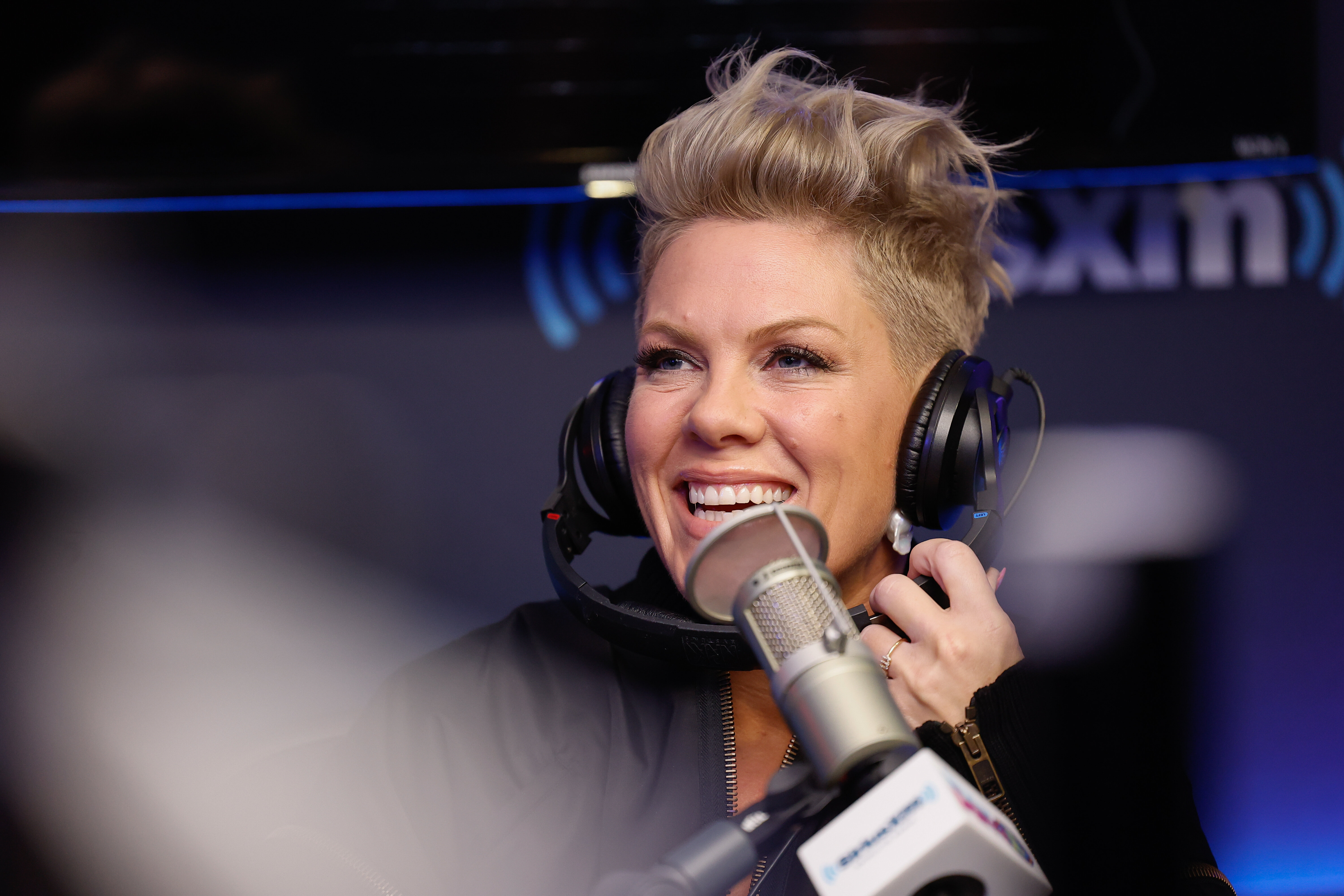
Pink Shares What She Considers The Worst And Best Singles Of Her Career

Pink is sharing her true feelings about her work.

The Los Angeles Times asked the pop rocker what she considered her “best and worst singles” in an interview published Wednesday.

“Worst? I mean, there’s been so many,” she replied. “Maybe ‘True Love.’”

Pink is pictured at SiriusXM Studios on Feb. 22 in New York City.

Mike Coppola via Getty Images

The 2012 song, which features English singer Lily Allen, includes lyrics like “You’re an asshole but I love you” and “I really hate you so much I think it must be true love.” Pink’s husband, former motocross star Carey Hart, appears in the music video.

Pink had a sweet reason for selecting the track as her worst, describing it as “mean.”

“Carey’s got thick skin, but I owe him a love song,” she said.

She also came up with an additional contender for the bottom spot.

“Oh wait, I did put out that SpongeBob thing,” she said, referencing a 2009 track for Nickelodeon’s sealife-centric cartoon.

“‘We’ve Got Scurvy’? I wish I never did that. That was a real mistake.”

(While the Times’ transcription doesn’t specify what her tone was, we have to assume she was kidding, because who could regret starring in this music video?)

As for her best singles, the Grammy winner chose the 2001 smash hit “Get the Party Started” and 2008’s “So What,” which was about a temporary separation from Hart. Ironically, the song also helped the two reconcile. According to Us Weekly, the pair patched things up after Pink got in touch with Hart to ask him about appearing in the track’s music video.

She alluded to the tune’s role in their reunion during her Times interview, saying: “‘So What’ was fun from start to finish — writing it, singing it, performing it, the video. It was part of what got Carey and I back together.”

Share Button

Judi Dench Gets To Meet Seal Pup Who Shares Her Name

Judi Dench has received the seal of approval from a British wildlife charity.

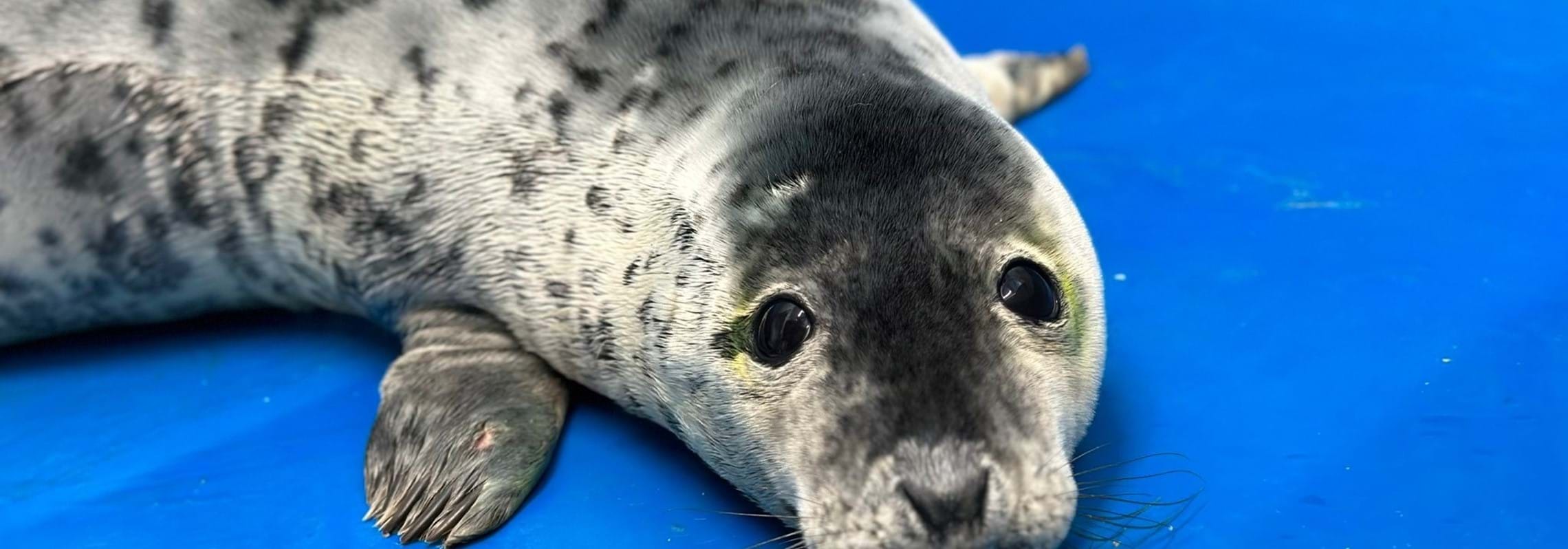
The acclaimed British actor met a gray seal pup named after her when she visited the Cornish Seal Sanctuary in Gweek, England, last month, the organization shared in a press release this week.

Dench, 88, was in the region with family on Sept. 22 and decided to stop by the sanctuary. The facility took in an injured and dehydrated female pup the same day.

Judi Dench, the seal pup.

Cornish Seal Sanctuary

“It was like fate,” sanctuary fundraising manager Leanne Atwood said in the release. “It just so happened that, as Dame Judi and her family explored the Sanctuary, this pup was admitted to our Seal Hospital.”

Since the sanctuary’s theme for naming seals this season is “actors and actresses,” there was only one moniker choice for the female pup.

“We knew we just had to name her after Judi Dench, who was already on our list of name ideas,” Atwood said.

The actor was “so excited to be able to meet pup Judi,” who is estimated to be about 3 weeks old.

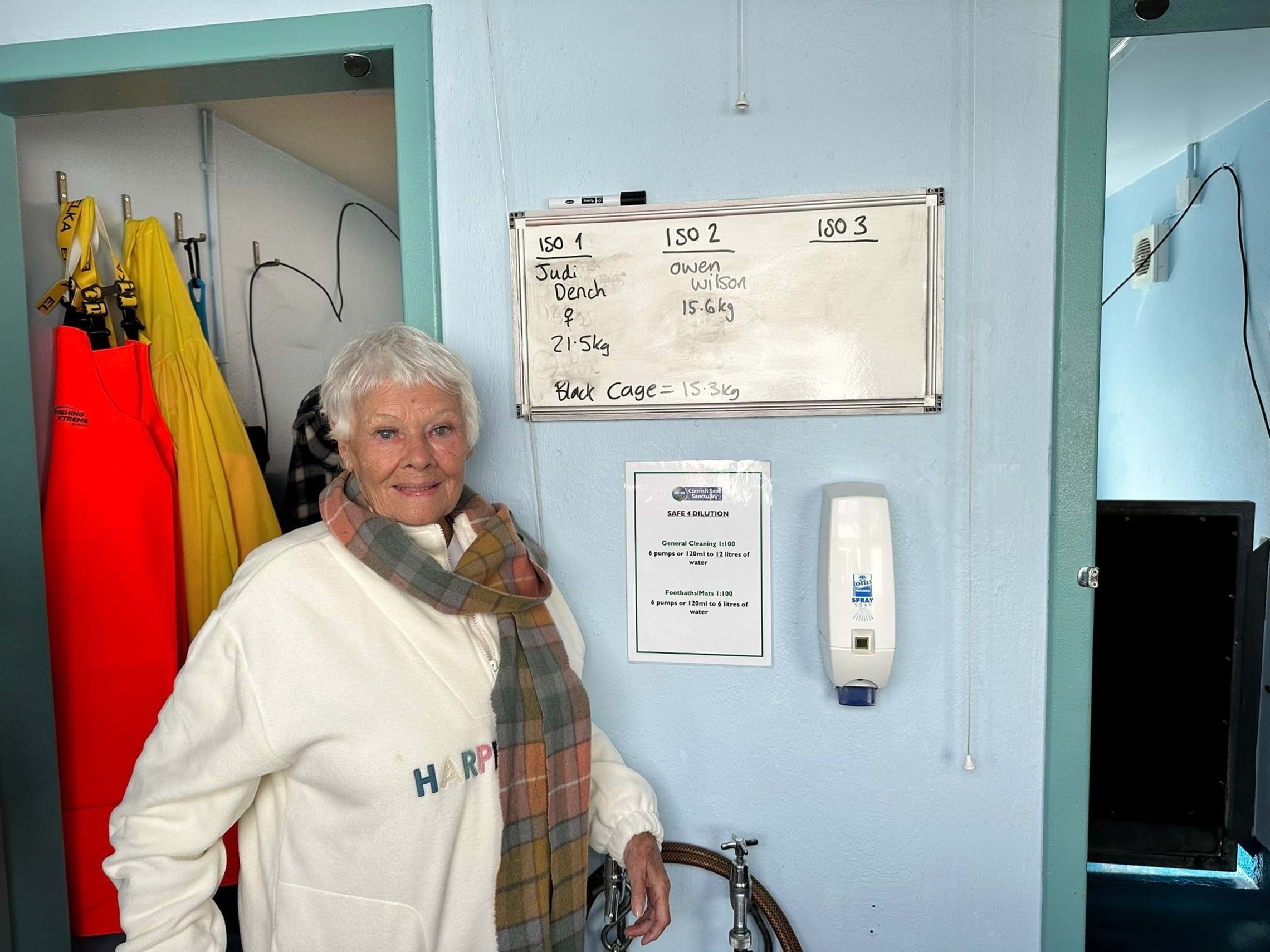
A photo shows a scarf-clad Dench posing in front of a whiteboard that indicates another seal at the sanctuary is named Owen Wilson.

Judi Dench, the human, on her visit to the seal sanctuary.

Cornish Seal Sanctuary

As for Judi, the seal, the sanctuary hopes to be able to release her back to the wild after she’s recovered.

Gray seals live in coastal areas along the North Atlantic Ocean, including Great Britain and Northern Europe, as well as eastern Canada and the northeastern United States. Wildlife experts on both sides of the ocean urge people to give seal pups space, noting that people often mistake the young critters for orphans when the mother is actually nearby. If a pup is clearly sick or injured, the general recommendation is to contact local wildlife authorities to help.

Share Button

Keir Starmer Says He Would Scrap The Rwanda Scheme Even If It Is Legal And Working

Keir Starmer has vowed to axe the government’s Rwanda policy even if it is ruled legal and shown to be working.

The Labour leader said he would introduce a “pragmatic plan” to deal with the problem of small boats carrying asylum seekers across the English Channel if he becomes prime minister.

The Supreme Court will this week beginning hearing the government’s case as to why their plan to deport asylum seekers to Rwanda does not breach international law.

But appearing on the BBC this morning, Starmer said the scheme would be axed if Labour wins the next election.

Asked by presenter Victoria Derbyshire if he would scrap it even if the Supreme Court rules it is legal and it reduces the number of small boat crossings, Starmer said: “Yes. I believe it’s the wrong policy, it’s hugely expensive, it’s a tiny number of individuals who would go to Rwanda.”

Derbyshire replied: “Even if everybody can see that it’s working, the criminal gangs are declining, fewer people are getting in those boats, fewer people are drowning, you would still reverse it?”

Starmer said: “We’ve been told time and again by the government, even saying that they’ve got a Rwanda scheme would reduce the numbers – that hasn’t happened.”

The Labour leader said the small boat crossing would only stop once the criminal gangs organising the journeys are “smashed”.

He added: “As a pragmatist, I want a pragmatic plan that is actually going to fix this problem, not rhetoric which has got this government absolutely nowhere.”

Share Button

Throwing A Mattress Out A Window, Burning Shoes … Are Shock Tactics In Parenting A Good Idea?

Arnold Schwarzenegger, 76, has filled many roles in his life — bodybuilder, actor, politician — and people have scrutinised his performance in these very different realms. Schwarzenegger is also a father of five, and he’s recently been opening up about some unconventional parenting tactics he used when raising his children.

Schwarzenegger shares Katherine, 33, Christina, 31, Patrick, 30, and Christopher, 26, with ex-wife Maria Shriver. He disclosed in 2011 that he fathered a son, Joseph Baena (now 26), with the family’s housekeeper.

In an appearance on “Jimmy Kimmel Live” on Monday to promote his upcoming book, “Be Useful: Seven Tools for Life,” Schwarzenegger explained, “For the way I grew up, I was lenient, but I think for American standards I was probably strict.” He demanded that all of his children “make their own bed, scrub their own showers, they have to clean their own toilet and they have to wash their own clothes.”

One day, in response to his son repeatedly letting the nanny make the bed, Schwarzenegger said, “I opened up the doors, grabbed the mattress and threw it out the balcony down into the swimming pool.” Patrick then had to retrieve the mattress and pillows, which his dad had also tossed out the window.

The former Republican governor of California also reported that he threw his daughter’s shoes into the fireplace and burned them after she failed several times to put the shoes away properly.

He also said he taught his son to turn off the lights when he left his bedroom to conserve electricity by unscrewing one lightbulb each time he forgot — until his son was left in the dark.

“He was 5 years old, and he was freaking out going alone into his room at night when it was dark,” Schwarzenegger said. “I put the lightbulbs back, [and] from that point on he always turned off the lights.”

Though these incidents are unusual, every frustrated parent has had the thought, “Someone needs to teach that kid a lesson!”

Even if they’re effective, are shock parenting tactics a good idea? HuffPost asked child therapists to weigh in on the pros and cons of this approach to managing kids’ behaviour.

The Potential Effect Of Shock Tactics

Schwarzenegger related these incidents with pride, triumphant that they had been effective.

There are some advantages to an outsized reaction. “Shock tactics can get your child’s attention for sure. And it can be useful in breaking habits,” psychologist Jen Hartstein told HuffPost.

But there are a number of potential downsides, including damaging your child’s trust, increasing their anxiety and depression, and harming your relationship with them.

Though Schwarzenegger explained that he told his daughter he would burn the shoes if she left them in the wrong place again and then followed through on this promise, such a drastic move — particularly when unplanned and executed in the heat of the moment — might cause anxiety or lead a kid to conclude that a parent is unsafe.

A child might wonder, “If I do this, how’s my dad going to react?” said Jennifer Kelman, a licensed clinical social worker who is a mental health expert on JustAnswer. If your reactions are sometimes extreme, “that child learns to walk on eggshells,” she told HuffPost.

Hartstein pointed out that these kinds of tactics often rely on evoking shame in your child. “If your child becomes afraid of you or worried that they will be shamed for making mistakes, it will negatively impact trust,” she explained, which is “the basis of a child/parent relationship.

“It can also cause young people to have an increase in anxiety or depression due to being invalidated and taught through fear, not reinforcement and support.”

Alternative Ways To Encourage Kids To Change Their Behavior

A shock tactic might achieved its desired result: your kid changing their behaviour. But there are other ways to accomplish this that won’t involve risks to your relationship — or destruction of property, for that matter.

Kelman offered the example of explaining to your kid that if they leave their shoes out again, they will have to do some volunteer work with a community organisation. It’s a consequence but a less punitive and frightening one.

In the example of making the bed, Kelman suggested stripping the sheets from the bed and making the child wash them and remake the bed. This tactic would hopefully deter a child from failing to make their bed again and doesn’t pose any physical or psychological danger.

It’s important for parents to set boundaries, Kelman explained. These will be different for every family, but whatever boundary is set should be consistently enforced.

“There needs to be a consequence when time and time again, your child is crossing that boundary and not respecting it,” Kelman said.

“Setting your boundary, being clear on what the consequences are, if it’s not met, and then sticking to it without being harmful,” she continued, is a healthy way for parents to respond to kids’ behaviour.

However, it’s important to spend more time focusing on what your child is doing right rather than what they are doing wrong.

“Research suggests that punishment does not teach new behaviours,” Hartstein explained. Punishment can be important, but positive reinforcement is more effective in getting your child to change their ways.

“If you want to teach new behaviours or want your children to change behaviours, you have to reinforce the things you want while ignoring the things you don’t want,” Hartstein said, adding that children want attention and will try to get it any way they can, even when that attention is negative.

Positive reinforcement is the basis of systems like sticker charts, but it can also be as simple as consistent praise (“Great job putting your shoes on the shoe rack! Thank you!”)

Of Course, You Will Snap At Some Point — It’s What You Do After That Matters

Although few of us will pitch a mattress out the window, almost all of us will have an outsized reaction to our child’s behaviour. When our requests or reminders are repeatedly ignored, we eventually lose it — sometimes in a unique way but predominantly just by yelling.

“All of us are humans, whether we’re parents or children, and we do lose our minds. We do get our buttons pushed, and we may not always react well,” Kelman said.

In addition to scaring our children, yelling definitely qualifies as negative attention. It’s not the kind of positive reinforcement that is more likely to change their behaviour. It can also scare your child.

Such moments, however, actually offer you a chance to connect with your child and strengthen your relationship.

Kelman explained: “This is your opportunity to go back to child and say, ‘You know what? I was reflective on how Mommy handled it. I didn’t love how I handled it. I lost my mind. I’m so sorry if you were scared. I’m so sorry, and I want to do it better next time.’”

Doing this shows your child that you, too, are a fallible human. It also models for them “that you can go back and apologise and be expressive about your feelings” and teaches them “that you’re safe and that they can come to you when they lose their mind,” Kelman said.

“We should never just beat ourselves up” when we explode like that, she said. “We have to go back and be open and vulnerable. You’re teaching so much to your child. … We want them to be able to feel safe enough to come to us.”

Share Button

20 Of The Funniest Tweets About Cats And Dogs This Week (Sept. 30-Oct. 6)

Woof — it’s been a long week.

If you feel like you’ve been working like a dog, let us offer you the internet equivalent of a big pile of catnip: hilarious tweets about pets.

Each week at HuffPost, we scour Twitter X (yes, Elon Musk is apparently fur real) to find the funniest posts about our furballs being complete goofballs. They’re sure to make you howl.

(And if you want more, no need to beg ― you can check out last week’s batch right here.)

Share Button

Consistent metabolism may prove costly for insects in saltier water

Increased salinity usually spells trouble for freshwater insects like mayflies. A new study from North Carolina State University finds that the lack of metabolic responses to salinity may explain why some freshwater insects often struggle in higher salinity, while other freshwater invertebrates (like mollusks and crustaceans) thrive. Salinity in this case refers to the concentrations of all the salts in an aquatic environment, not just sodium.

“Freshwater habitats in general are getting saltier for a number of reasons, including road salt and agricultural runoff, extraction of coal and natural gas, drought, and sea level rise,” says David Buchwalter, professor of toxicology at NC State and corresponding author of the research. “Freshwater insects and other organisms that live in these systems are used as indicators of the ecosystem’s health. When these systems get saltier, we see that insect diversity decreases, but we aren’t sure why.”

Aquatic animals (including insects and crustaceans) must constantly maintain the correct balance of water and salts within their body — a process called osmoregulation. Theoretically, the most favorable environment for aquatic animals would be one where external salinity levels are close to those inside the animal. That way the animal doesn’t have to work as hard to maintain osmoregulation.

However, the opposite seems to be true for freshwater insects — higher salinity is always associated with increased rates of ion uptake in insects, but it is also associated with developmental delays or death.

“We thought that freshwater insects might be shifting so much of their energy toward osmoregulation in saltier environments that they cannot grow or thrive,” Buchwalter says. “So we measured the metabolic rates of crustaceans and insects in dilute and saline environments to see if metabolic responses to salinity were similar.”

The team looked at three types of freshwater animals — two species of gammarid, or “scud,” which is a small freshwater crustacean; one freshwater snail; and three aquatic insect species.

In the first test, they measured the animals’ metabolism by placing them in waters with different concentrations of salt ions and looking at their rates of oxygen consumption. They observed that more dilute conditions made the crustaceans and snail breathe harder, increasing their metabolism, while insects’ metabolic rates were constant regardless of salinity.

advertisement


Next, the team looked at whether an increase in breathing rates was linked to the transport of a particular ion. Radioactive isotopes of the salt ions calcium and sodium allowed the researchers to measure how much and how quickly the animals took up different ions.

The researchers found that calcium was the key driver of non-insects’ increased metabolism in lower salinity. In other words, the crustaceans and snail worked harder to transport the calcium ions they required in an environment where calcium was harder to find.

In contrast, the insects’ metabolic rates remained constant in both saline and dilute environments, even though they had a higher calcium ion transport rate in the saline environment. Insects seem to have very little demand for calcium; in fact, previous research has shown that excess calcium is potentially toxic to them.

The researchers think that the animals’ use of internal energy, or active transport, when moving the salts could be the explanation.

“When we see non-insects’ metabolisms increase in dilute environments, it could be due to the fact that they have to work harder to take in more calcium,” Buchwalter says. “And while it seems counterintuitive, the opposite is true for insects who are working harder in a more saline environment to maintain equilibrium, although their respiration rates don’t increase. Instead, they appear to utilize resources that would otherwise be dedicated to growth and development to ‘undo’ excessive ion uptake when things get saltier.

“Moving salt ions has an energy cost to the animal,” Buchwalter says. “So for freshwater insects, the idea that organisms should thrive in environments that are close to their internal salinity is wrong. Additionally, their low demand for calcium may help them thrive in very dilute environments where insects typically dominate the ecology. In contrast, low calcium appears to be stressful for the crustaceans and snail in this study. It is fascinating that species living in the same habitats can have such different physiologies.”

Future work will explore whether these physiological differences are based on the ancestry of the organisms tested, or the use of calcium in their exoskeletons/shells.

The work appears in the Journal of Experimental Biology and was supported by the National Science Foundation under grant IOS 1754884. First author and Ph.D. candidate Jamie Cochran was supported by a Goodnight Doctoral Fellowship. Catelyn Banks, formerly a student at the North Carolina School of Science and Mathematics, also contributed to the work.

Share Button

Fathers’ parental leave might protect men against alcohol-related morbidity

Men who have been on parental leave have a significantly reduced risk of being hospitalized due to alcohol consumption. This is shown by a study published in Addiction from researchers at the Department of Public Health Sciences, Stockholm University.

The aim of the study was to assess whether fathers’ parental leave influences alcohol-related morbidity and mortality. In order to try to find out if that is the case, the researchers have investigated the effects of parental leave policy that was implemented in Sweden in 1995. The policy encouraged fathers to use parental leave by reserving 30 days of leave for their use alone and resulted in the proportion of fathers using parental leave increasing from 43 percent to 75 percent.

“Our findings were pretty remarkable considering the severity of the studied outcome. Although alcohol-related hospitalizations were rather uncommon, we found that after the policy was implemented there was a 34% decrease in these hospitalizations among fathers in the two years after birth, as well as smaller decreases up to 8 and 18 years after birth,” says Helena Honkaniemi, researcher at the Department of Public Health Sciences, Stockholm University.

“Most changes were found among hospitalizations for alcohol intoxication and alcohol-related mental and behavioral disorders. Additional analyses evaluating actual changes in parental leave use from before to after the policy suggest that these health consequences could be explained by the increase in fathers’ parental leave use, rather than other underlying trends,” says Helena Honkaniemi.

However, no changes were found for alcohol-related mortality.

Co-author Associate Professor Sol Juárez believes that the results of the study could be useful for policymakers.

“Policymakers should consider that fathers’ parental leave not only promotes more gender-equal participation in childcare, but can also reduce alcohol-related harms,” Juárez says.

The study “Alcohol-related morbidity and mortality by fathers’ parental leave: A quasi-experimental study in Sweden” draws on Swedish register data of all fathers of singleton children born from January 1992 to December 1997, three years before and after the policy was implemented.

Share Button

Astronomers discover first step toward planet formation

Astronomers have gotten very good at spotting the signs of planet formation around stars. But for a complete understanding of planet formation, we also need to study examples where planet formation has not yet started. Looking for something and not finding it can be even more difficult than finding it sometimes, but new detailed observations of the young star DG Taurus show that it has a smooth protoplanetary disk without signs of planet formation. This successful non-detection of planet formation may indicate that DG Taurus is on the eve of planet formation.

Planets form in disks of gas and dust, known as protoplanetary disks, around protostars, young stars still in the process of forming. Planet growth is so slow that it’s not possible to watch the evolution as it happens, so astronomers observe many protostars at slightly different stages of planet formation to build up a theoretical understanding.

This time an international research team led by Satoshi Ohashi at the National Astronomical Observatory of Japan (NAOJ) used the Atacama Large Millimeter/submillimeter Array (ALMA) to conduct high-resolution observations of a protoplanetary disk around a relatively young protostar, DG Taurus located 410 light-years away in the direction of the constellation Taurus. The team found that DG Taurus has a smooth protoplanetary disk, without any rings which would indicate that planets are forming. This led the team to believe that DG Taurus system will start forming planets in the future.

The team found that in this pre-planet-formation stage, the dust grains within 40 AU (about twice the size of the orbit of Uranus in the Solar System) of the central protostar are still small, while beyond this radius the dust grains have started to grow in size, the first step in planet formation. This is contrary to theoretical expectations that planet formation starts in the inner part of the disk.

These results provide surprising new information about the dust distribution and other conditions at the start of planet formation. Future studies of more examples will further improve our understanding of planet formation.

Share Button