Yes, Really – Period Sex Is Good For You (And Here’s How To Do It)

The number one film on Netflix at the moment, Fair Play, is an erotic thriller where the two characters have to conceal their relationship due to work policy.

As the film progresses, tensions rise as one is promoted and their relationship takes a dark turn.

However, this tension isn’t actually what’s got people talking, it’s actually a scene featuring period sex. Once considered highly taboo, this scene has been praised by Men’s Health, GQ, and viewers on X.

While period sex is unexpected in the film, it can actually be incredibly beneficial and enjoyable for both parties as long as you’re both comfortable and consenting.

Additionally, according to a period sex survey carried out by the period experts at Bodyform, half of adults say that they’d ‘never’ have period sex but 39% of people that get periods say that during their period is when they’d be most inclined to have sex.

So, what are the benefits of period sex?

So, aside from being something that 39% of us just want to be doing on our periods, what are the actual health benefits of having sex during your period?

According to Healthline, the biggest downside to having period sex is just the mess. Blood can get on you, your partner and your bedsheets, especially if you have a heavy flow. But, when isn’t sex just a little messy? Isn’t that part of the fun? Just me?

However, when it comes to the benefits of period sex, it seems that they can make having a period… almost enjoyable which is huge news for the 80% of us that will experience period pain at least once in our lifetimes.

This is because when you have an orgasm, the muscles of your uterus contract and release, bringing relief from period cramps. Of course, sex also triggers the release of endorphins, which are “feel good hormones”.

Finally, if you’re a migraine sufferer that tends to experience attacks during your period, a 2013 study found that many of those who do have sex during their periods say it partially or entirely relieves their attacks.

Are there any risks to having sex during your period?

Regardless of where you are in your cycle, you should practice safe sex but during your period, you should take extra caution. According to Sherry A.Ross, MD and women’s health expert, “It’s possible to not only get pregnant during your period but also to contract an STI.”

How to have period sex

Basically, it’s up to you! According to the period experts at Clue, some people choose to have sex in the shower to reduce mess while others simply put a towel down and others just enjoy getting a little bit messy!

Your period and sex life are both individual to you so whatever you think you’d feel most comfortable doing is what matters. If you’ve never done it before, you may want to work your way up to doing it without the shield of a shower or towel but there’s no shame in diving right in and either way, your uterus will thank you!

Let’s hope that representation like on Fair Play helps to stop period sex stigma all together.

Share Button

How To Travel To Paris And NOT Get Bed Bugs

Recently, I haven’t been able to open a single app without being confronted with the menacing form of a bed bug. After taking hold of Paris’ mattresses, it seems the critters have started to establish their London stronghold, too (oh, good).

We know from personal experience how ridiculously disruptive the little bugs can be. So, we thought we’d reach out to the pros to find out how to protect ourselves while travelling.

HuffPost UK spoke to ecologist, conservation scientist, and entomologist Professor Adam Hart about the bed-based terrors. Here’s what he had to say:

1) Inspect, inspect, inspect

Whether you’re staying at a friend’s house or a hotel, it’s a good idea to get up close and personal with your mattress, Professor Hart told HuffPost UK. In fact, it was his first piece of advice.

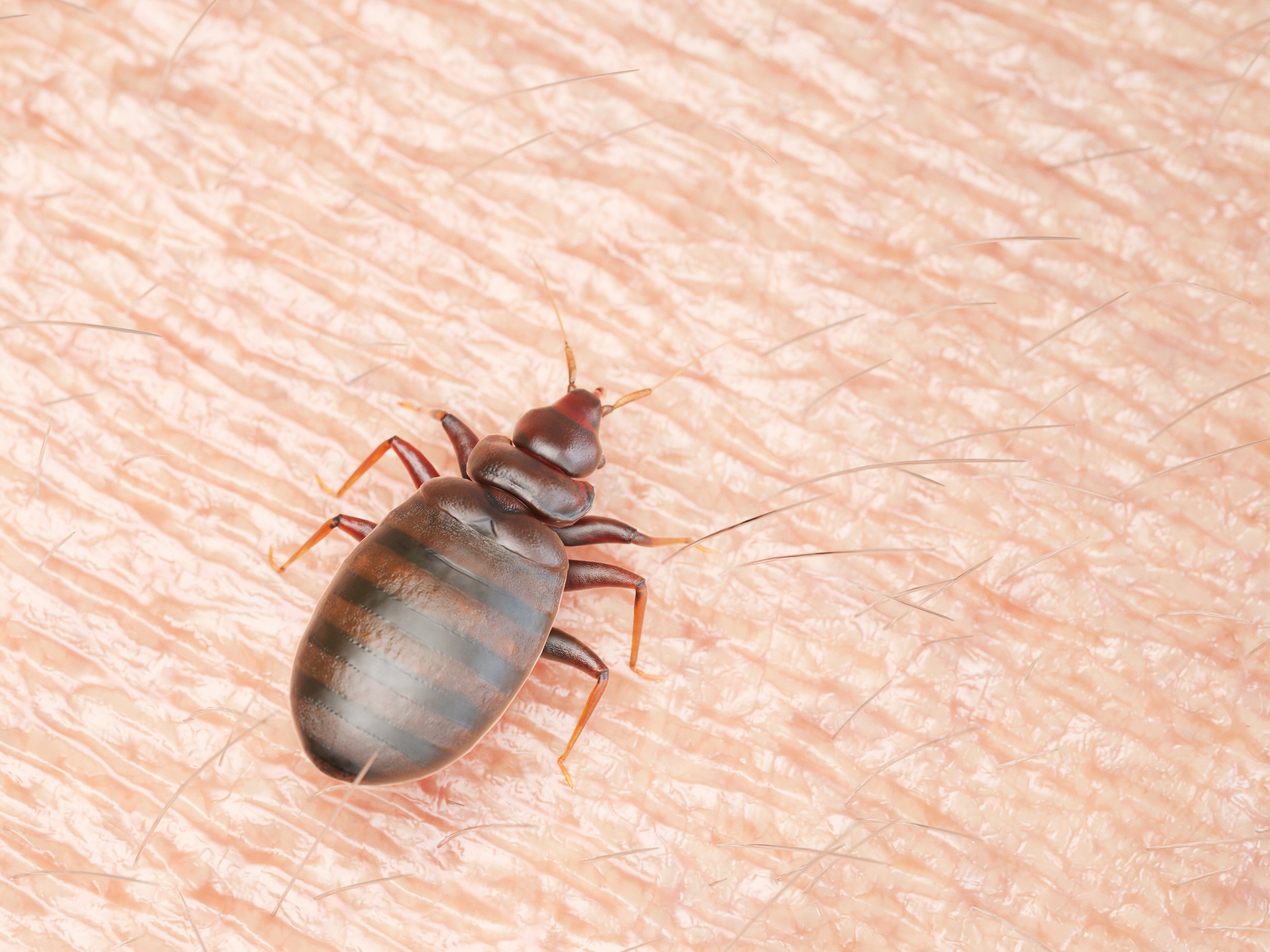
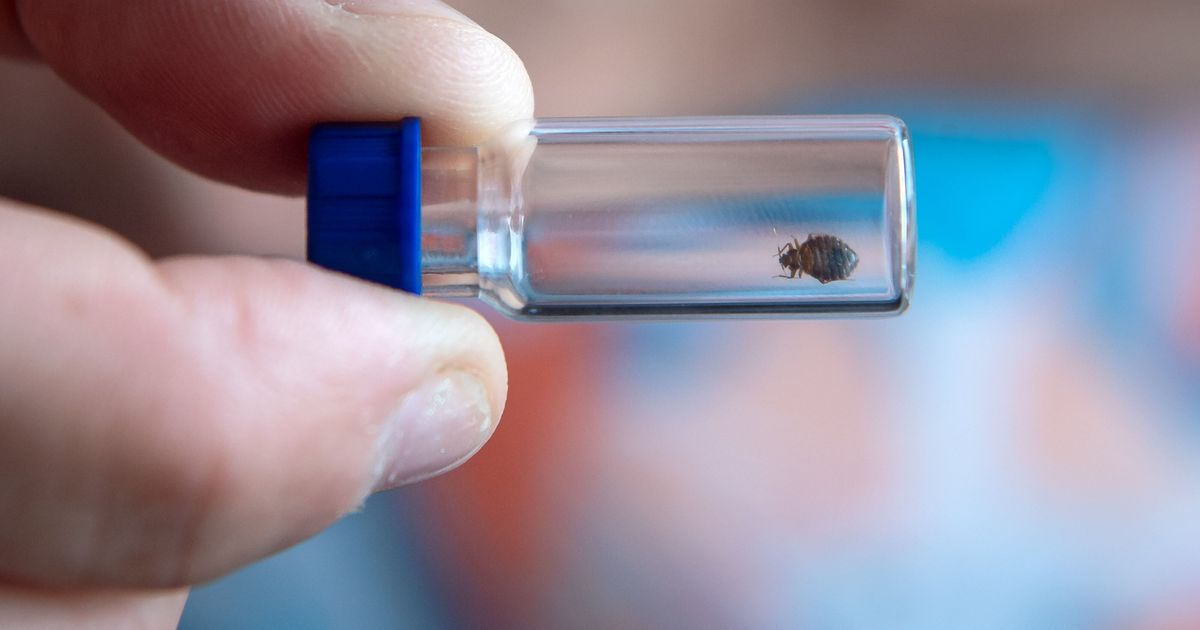
“When travelling, the best thing to do is to inspect your bed carefully,” Hart says. He advises we “look online to find out what eggs, larvae and adults look like, and to see how bed bug droppings and blood marks look. That way you will be able to see if you might have a problem.“

2) Think outside the box

One of the many terrifying things about bedbugs is how good they are at hiding. Professor Hart advises we look a little further than our mattress and sheets when trying to find the beasties.

“Check other areas, like around and behind the headboard,” he says. Bed bugs may also hide in places like sofa and chair seams and old drawer joints.

3) Cover your clothes

Speaking of bed bugs’ many homes, you’ve likely already heard about their ability to cling to our clothes. So, it makes sense that Professor Hart advises us to keep our outfits securely covered while travelling.

“If you are worried then keep your clothes packed inside your closed bag. Some people even pack their clothes in Ziplock-style bags to keep any bed bugs out,” he says.

4) Wash everything the second you get home

If you’re worried about bringing bugs home, Hart says you should steam-clean or machine-clean your clothes (and bags, if possible) the second you get home.

“When you return home wash clothes at a high temperature and tumble dry; dry-cleaning and steam cleaning also kill bed bugs in fabrics that be washed or dried at high temperatures,” he says.

Heat is important here, so don’t lower the temps too much.

Ah, the joys of travel…

Share Button

Young children who are close to their parents are more likely to grow up kind, helpful and ‘prosocial’

A loving bond between parents and their children early in life significantly increases the child’s tendency to be ‘prosocial’, and act with kindness and empathy towards others, research indicates.

The University of Cambridge study used data from more than 10,000 people born between 2000 and 2002 to understand the long-term interplay between our early relationships with our parents, prosociality and mental health. It is one of the first studies to look at how these characteristics interact over a long period spanning childhood and adolescence.

The researchers found that people who experienced warm and loving relationships with their parents at age three not only tended to have fewer mental health problems during early childhood and adolescence, but also displayed heightened ‘prosocial’ tendencies. This refers to socially-desirable behaviours intended to benefit others, such as kindness, empathy, helpfulness, generosity and volunteering.

Although the correlation between parent-child relationships and later prosociality needs to be verified through further research, the study points to a sizeable association. On average, it found that for every standard unit above ‘normal’ levels that a child’s closeness with their parents was higher at age three, their prosociality increased by 0.24 of a standard unit by adolescence.

Conversely, children whose early parental relationships were emotionally strained or abusive were less likely to develop prosocial habits over time. The researchers suggest this strengthens the case for developing targeted policies and support for young families within which establishing close parent-child relationships may not always be straightforward; for example, if parents are struggling with financial and work pressures and do not have much time.

The study also explored how far mental health and prosocial behaviour are fixed ‘traits’ in young people, and how far they fluctuate according to circumstances like changes at school or in personal relationships. It measured both mental health and prosociality at ages five, seven, 11, 14 and 17 in order to develop a comprehensive picture of the dynamics shaping these characteristics and how they interact.

The research was undertaken by Ioannis Katsantonis and Dr Ros McLellan, both from the Faculty of Education, University of Cambridge.

advertisement


Katsantonis, the lead author and a doctoral researcher specialising in psychology and education, said: “Our analysis showed that after a certain age, we tend to be mentally well, or mentally unwell, and have a reasonably fixed level of resilience. Prosociality varies more and for longer, depending on our environment. A big influence appears to be our early relationship with our parents. As children, we internalise those aspects of our relationships with parents that are characterised by emotion, care and warmth. This affects our future disposition to be kind and helpful towards others.”

The study used data from 10,700 participants in the Millennium Cohort Study, which has monitored the development of a large group of people born in the UK between 2000 and 2002. It includes survey-based information about their prosociality, ‘internalising’ mental health symptoms (such as depression and anxiety) and ‘externalising’ symptoms (such as aggression).

Further survey data provided information about how far the participants’ relationships with their parents at age three were characterised by ‘maltreatment’ (physical and verbal abuse); emotional conflict; and ‘closeness’ (warmth, security and care). Other potentially confounding factors, like ethnic background and socio-economic status, were also taken into account.

The Cambridge team then used a complex form of statistical analysis called latent state-trait-occasion modelling to understand how far the participants’ mental health symptoms and prosocial inclinations seemed to be expressing fixed personality ‘traits’ at each stage of their development. This enabled them, for example, to determine how far a child who behaved anxiously when surveyed was responding to a particular experience or set of circumstances, and how far they were just a naturally anxious child.

The study found some evidence of a link between mental health problems and prosociality. Notably, children who displayed higher than average externalising mental health symptoms at a younger age showed less prosociality than usual later. For example, for each standard unit increase above normal that a child displayed externalising mental health problems at age seven, their prosociality typically fell by 0.11 of a unit at age 11.

There was no clear evidence that the reverse applied, however. While children with greater than average prosociality generally had better mental health at any single given point in time, this did not mean their mental health improved as they got older. On the basis of this finding, the study suggests that schools’ efforts to foster prosocial behaviours may be more impactful if they are integrated into the curriculum in a sustained way, rather than being implemented in the form of one-off interventions, like anti-bullying weeks.

advertisement


As well as being more prosocial, children who had closer relationships with their parents at age three also tended to have fewer symptoms of poor mental health in later childhood and adolescence.

Katsantonis said that the findings underlined the importance of cultivating strong early relationships between parents and children, which is already widely seen as critical to supporting children’s healthy development in other areas.

“So much of this comes back to parents,” Katsantonis said. “How much they can spend time with their children and respond to their needs and emotions early in life matters enormously.”

“Some may need help learning how to do that, but we should not underestimate the importance of simply giving them time. Closeness only develops with time, and for parents who are living or working in stressful and constrained circumstances, there often isn’t enough. Policies which address that, at any level, will have many benefits, including enhancing children’s mental resilience and their capacity to act positively towards others later in life.”


Share Button

Researchers identify largest ever solar storm in ancient 14,300-year-old tree rings

An international team of scientists have discovered a huge spike in radiocarbon levels 14,300 years ago by analysing ancient tree-rings found in the French Alps.  

The radiocarbon spike was caused by a massive solar storm, the biggest ever identified. 

A similar solar storm today would be catastrophic for modern technological society — potentially wiping out telecommunications and satellite systems, causing massive electricity grid blackouts, and costing us billions of pounds. 

The academics are warning of the importance of understanding such storms to protect our global communications and energy infrastructure for the future.         

The collaborative research, which was carried out by an international team of scientists, is published today (Oct 9) in The Royal Society’s Philosophical Transactions A: Mathematical, Physical and Engineering Sciences and reveals new insights into the Sun’s extreme behaviour and the risks it poses to Earth.  

A team of researchers from the Collège de France, CEREGE, IMBE, Aix-Marseille University and the University of Leeds measured radiocarbon levels in ancient trees preserved within the eroded banks of the Drouzet River, near Gap, in the Southern French Alps.   

The tree trunks, which are subfossils — remains whose fossilization process is not complete — were sliced into tiny single tree-rings. Analysis of these individual rings identified an unprecedented spike in radiocarbon levels occurring precisely 14,300 years ago. By comparing this radiocarbon spike with measurements of beryllium, a chemical element found in Greenland ice cores, the team proposes that the spike was caused by a massive solar storm that would have ejected huge volumes of energetic particles into Earth’s atmosphere. 

Edouard Bard, Professor of Climate and Ocean Evolution at the Collège de France and CEREGE, and lead author of the study, said: “Radiocarbon is constantly being produced in the upper atmosphere through a chain of reactions initiated by cosmic rays. Recently, scientists have found that extreme solar events including solar flares and coronal mass ejections can also create short-term bursts of energetic particles which are preserved as huge spikes in radiocarbon production occurring over the course of just a single year.” 

advertisement


Potentially catastrophic

The researchers say that the occurrence of similar massive solar storms today could be catastrophic for modern technological society, potentially wiping out telecommunications, satellite systems and electricity grids - and costing us billions of pounds. They warn that it is critical to understand the future risks of events like this, to enable us to prepare, build resilience into our communications and energy systems and shield them from potential damage. 

Tim Heaton, Professor of Applied Statistics in the School of Mathematics at the University of Leeds, said: “Extreme solar storms could have huge impacts on Earth. Such super storms could permanently damage the transformers in our electricity grids, resulting in huge and widespread blackouts lasting months. They could also result in permanent damage to the satellites that we all rely on for navigation and telecommunication, leaving them unusable. They would also create severe radiation risks to astronauts.”    

Miyake Events

Nine such extreme solar storms — known as Miyake Events — have now been identified as having occurred over the last 15,000 years. The most recent confirmed Miyake Events occurred in 993 AD and 774 AD. This newly-identified 14,300-year-old storm is, however, the largest that has ever been found — roughly twice the size of these two. 

The exact nature of these Miyake Events remains very poorly understood as they have never been directly observed instrumentally. They highlight that we still have much to learn about the behaviour of the Sun and the dangers it poses to society on Earth. We do not know what causes such extreme solar storms to occur, how frequently they might occur, or if we can somehow predict them.  

Professor Bard said: “Direct instrumental measurements of solar activity only began in the 17th century with the counting of sunspots. Nowadays, we also obtain detailed records using ground-based observatories, space probes, and satellites. However, all these short-term instrumental records are insufficient for a complete understanding of the Sun. Radiocarbon measured in tree-rings, used alongside beryllium in polar ice cores, provide the best way to understand the Sun’s behaviour further back into the past.” 

advertisement


The largest, directly-observed, solar storm occurred in 1859 and is known as the Carrington Event. It caused massive disruption on Earth — destroying telegraph machines and creating a night-time aurora so bright that birds began to sing, believing the Sun had begun to rise. However, the Miyake Events (including the newly discovered 14,300-yr-old storm) would have been a staggering entire order-of-magnitude greater in size. 

Professor Heaton said: “Radiocarbon provides a phenomenal way of studying Earth’s history and reconstructing critical events that it has experienced. A precise understanding of our past is essential if we want to accurately predict our future and mitigate potential risks. We still have much to learn. Each new discovery not only helps answer existing key questions but can also generate new ones.” 

Cécile Miramont, Associate Professor of Paleoenvironments and Paleoclimates at IMBE, Aix-en-Provence University, said: “Finding such a collection of preserved trees was truly exceptional. By comparing the widths of the individual tree rings in the multiple tree trunks, we then carefully pieced together the separate trees to create a longer timeline using a method called dendrochronology. This allowed us to discover invaluable information on past environmental changes and measure radiocarbon over an uncharted period of solar activity.” 

Share Button

Plate tectonic surprise: Geologist unexpectedly finds remnants of a lost mega-plate

Utrecht University geologist Suzanna van de Lagemaat has reconstructed a massive and previously unknown tectonic plate that was once one-quarter the size of the Pacific Ocean. Her colleagues in Utrecht had predicted its existence over 10 years ago based on fragments of old tectonic plates found deep in the Earth’s mantle. Van de Lagemaat reconstructed lost plates through field research and detailed investigations of the mountain belts of Japan, Borneo, the Philippines, New Guinea, and New Zealand. To her surprise, she found that oceanic remnants on northern Borneo must have belonged to the long-suspected plate, which scientists have named Pontus. She has now reconstructed the entire plate in its full glory. Suzanna van de Lagemaat will defend her dissertation on this plate tectonics puzzle at Utrecht University on Friday, October 13.

Understanding the movements of the tectonic plates that make up the earth’s rigid outer shell is essential to understand the planet’s geological history. The movements of these plates strongly influenced how the planet’s paleogeography and climate have changed over time, and even where to find rare metals. But large oceanic plates from the geological past have since disappeared into the earth’s mantle by means of subduction. They have left behind only fragments of rock hidden in mountain belts. Van de Lagemaat studied the planet’s most complicated plate tectonic region: the area around the Philippines. “The Philippines is located at a complex junction of different plate systems. The region almost entirely consists of oceanic crust, but some pieces are raised above sea level, and show rocks of very different ages.”

Reconstruction

Using geological data, Van de Lagemaat first reconstructed the movements of the current plates in the region between Japan and New Zealand. That revealed how large the area was of plates that must have disappeared in the current western Pacific region. “We also conducted field work on northern Borneo, where we found the most important piece of the puzzle. We thought we were dealing with relicts of a lost plate that we already knew about. But our magnetic lab research on those rocks indicated that our finds were originally from much farther north, and had to be remnants of a different, previously unknown plate.” But the important realisation was yet to come. “11 years ago, we thought that the remnants of Pontus might lie in northern Japan, but we’d since refuted that theory,” explains Douwe van Hinsbergen, Van de Lagemaat’s PhD supervisor. “It was only after Suzanna had systematically reconstructed half of the ‘Ring of Fire’ mountain belts from Japan, through New Guinea, to New Zealand that the proposed Pontus plate revealed itself, and it included the rocks we studied on Borneo.”

Relics

The relics of Pontus are not only located on northern Borneo, but also on Palawan, an island in the Western Philippines, and in the South China Sea. Van de Lagemaat’s research also showed that a single coherent plate tectonic system stretched from southern Japan to New Zealand, and it must have existed for at least 150 million years. That is also a new discovery in the field.

Waves

The previous predictions of the existence of Pontus were made possible because a subducted plate leaves behind traces when it ‘sinks’ into the earth’s mantle: zones in the mantle with anomalous temperatures or compositions. These anomalies can be observed when seismographs pick up signals from earthquakes. Earthquakes send waves through Earth’s interior, and when they travel through an anomaly, such as a fragment from an old plate, the anomaly produces a disruption of the signal. Geologists can trace these disruptions to the existence of phenomena in the mantle, such as fragments of tectonic plates. That allows them to look 300 million years into the past; older plate fragments have ‘dissolved’ at the boundary between the mantle and the core. The study from 11 years ago showed that a large subduction zone must have run through the western paleo-Pacific Ocean, which separated the known Pacific plates in the east from the hypothetical Pontus plate in the west. This hypothesis has now been independently demonstrated by Van de Lagemaat’s research.

Share Button

Indi Gregory: Critically ill baby girl is dying, judge told

A doctor tells a High Court judge of the “terrible reality” facing seven-month-old Indi Gregory.

Share Button

Cervical cancer: 17,500 women to have smear tests re-checked

It is part of a major review of cervical screening in Northern Ireland, dating back to 2008.

Share Button

Rachel Reeves Pledges Covid Fraud Crackdown In Barnstorming Labour Conference Speech

A Labour government would recover billions of pounds lost to Covid fraud as part of its mission to “rebuild Britain”, Rachel Reeves has declared.

The shadow chancellor said taxpayers had lost £7.2bn during the pandemic, with “every single one of those cheques signed by Rishi Sunak as chancellor”.

She said that if Labour wins the next election, it will appoint a “Covid corruption commissioner” whose job it will be to recover as much of that money as possible.

In a barnsotring speech to the Labour conference which earned several standing ovations, Reeves also said she would crack down on the use of private jets by government ministers.

On Covid fraud, she said: “We will go after those who profited from the carnival of waste during the pandemic.

“Today, the cost to the taxpayer of covid fraud is estimated at £7.2 billion, with every single one of those cheques signed by Rishi Sunak as Chancellor.

“And yet just 2% of all fraudulent covid grants have been recovered. So, I can announce today that we will appoint a Covid corruption commissioner.

“Supported by a hit squad of investigators, equipped with the powers they need and the mandate to do whatever it takes to chase down those who have ripped off the taxpayer, take them to court, and claw back every penny of taxpayer’s money that they can.

“That money belongs in our NHS, it belongs in our schools, it belongs in our police. And conference, we want our money back.

“We are ready to serve, we are ready to lead, we are ready to rebuild Britain.”

Reeves also said she would “crack down on Tory ministers’ private jet habit”.

“What is Rishi Sunak so scared of up there in his private jet – meeting a voter?,” she said.

“We will enforce the ministerial code on the use of private planes and save millions of pounds for taxpayers in the process.”

Share Button

Turn Out Most Animals Are Pretty Frickin’ Gay, Research Finds

We’ve recently written about how many members of Gen Z are LGBT+ (spoiler alert; it’s a lot). And a recent study recently showed that same-sex attraction is far from limited to humans; lots (like, up to 80% in some cases) of animals are sexually fluid, too.

The project examined all the existing research on same-sex activity among animals. It was led by scientists at Estación Experimental de Zonas Áridas in Spain ― they created a database of all the studies’ conclusions.

So, what did they find?

They discovered that same-sex sexual activity has been recorded in 1,500 animal species, from birds to bees (literally).

Mammals were much more likely to be recorded as engaging with gay sex than other species (about 4%), with non-human primates particularly likely to display homosexual behaviour ― “it has been observed in at least 51 species from lemurs to apes,” they say.

That’s likely an underrepresentation of actual homosexual activities, the researchers add.

“This figure is probably underestimating the actual prevalence of same-sex sexual behaviour in mammals, since this behaviour has attracted the attention of behavioural ecologists and evolutionary biologists only recently,” they say ― and there’s already a research bias towards mammals over other animals, which could explain some of the discrepancies.

In fact, longer-term studies find that homosexual activity occurred in 80% of the mammal population ― the more you observe the animals, it seems, the more sexually fluid they prove themselves to be.

Those who performed same-gender sex acts commonly displayed activities like courtship, mounting, genital contact, copulation and pair bonding ― mounting and genital contact were the most common acts (87% of the same-sex sexual acts in their dataset).

OK, but ― why?

Because it doesn’t help to further the population, same-sex activity among animals is considered an “evolutionary conundrum” and a “Darwinian paradox,” the researchers say.

Of course, lots of the animals who engaged with same-sex sexual activity also had sex with a different gender. And our conception of “homosexual” and heterosexual” is just that ― our human conception.

“Same-sex sexual behaviour as it is used here does not denote sexual orientation (ie an overall pattern of sexual attraction/arousal over time), sexual orientation identity (the sexual orientation that individuals perceive themselves to have), categories of sexual beings (homosexuals, heterosexuals, etc), nor sexual preference,” the researchers say.

They warned that their findings shouldn’t be used to analyse homosexuality in humans ― they’re different.

With that said, a lot of the studies that the researchers looked at suggested homosexual activity in animals could have an adaptive role “in maintaining social relationships and mitigating conflict.”

Part of the reason they think this is because homosexual behaviour has evolved in so many species in similar environments, suggesting it has benefits for those in their circumstances.

They also found that “The prevalence of same-sex sexual behaviour was also associated with adulticide [grown adults of a species killing other adults of the same species], but only for males.”

But the researchers don’t think this disproves the theory that same-sex activity is used to calm conflict ― in fact, they think it confirms it.

That’s because if animals usually engage in homosexual activity during times of violence, it’s more likely that violent results will be associated with the act.

“Because the association was more intense in males than in females, we presume that adulticide was a stronger force triggering the evolution of same-sex sexual behaviour in males. If this hypothesis is confirmed, it seems that same-sex sexual behaviour mitigates rather than negates adulticide, as there are still many species that commit this type of aggressive behaviour,” they say.

The authors of the study added that the field is under-researched, and more study is needed. In the meantime, though ― that’s pretty interesting, right?

Share Button

I’ve Survived A Bed Bug Infestation. Here’s What You Actually Need To Know

Few things in life make me want to rip my skin off — bed bugs, however, could incite me to peel myself like a tangerine.

Lately, my skin has been itching. With so many stories about bed bugs in Paris, the idea of an overrun London has rendered me tacky-tongued and breaking out into cold sweats. Not to mention googling with ferocity how to ward off the invasion of tiny bloodsuckers.

I’ve become obsessed. Smelling phatom smells and peeling back corners of carpets just to “make sure” that it’s all good. That we’re safe. Why? Because I’ve lived through this before.

Living alone is supposed to be fun — empowering, even. Here I was, 24 and doing it all by myself. Except I wasn’t as alone as I thought I was.

Dormant inside the cavity walls, thousands of bed bugs lay in wait. The cold winter and the vacant flat had meant they’d retreated into hibernation, only to ambush when the heating — and the smell of breakfast, lunch and tea (i.e. me) sat her sorry self down on the carpet.

I didn’t notice anything for the first week. My furniture was organised, clothes put away and for a brief moment in time, I was at peace. Reaching this milestone was a huge accomplishment. As a working-class girl from North Wales, I never thought I’d be in a position to afford living alone.

My run of good fortune had finally ended, though. And, a week later I was struck with glandular fever. Lying in bed, unable to move my skin began to itch as small welts appeared up and down my legs and arms.

Black dots appeared around plug sockets and in the corners of my room. Mould, I thought. Then, to my horror, a small reddish thing scuttled across the carpet.

My heart dropped and my stomach hit the floor. I googled “bed bugs” and I sank further into my bed. My flat was infested and I was bedbound.

The realisation that night by night I would be the subject of torture by many tiny mouths made me sob uncontrollably as I watched black dots, their faecal matter, leave traces along my furniture, my bedding and my walls.

My legs slowly became red raw from scratching, but mentally the load was more painful.

Shame crept into my thoughts and set there like a millstone around my neck. What would people think of me if I told them? Would my landlord blame me? How could I ever escape from this fresh hell?

A week passed, slowly. I was feeling somewhat better, though still incredibly unwell. I was able to shower and get dressed, which meant tending to the scabs across my scarred body. I ordered packages upon packages of bed bug spray, traps and natural remedies like tea tree and lavender oils.

On the phone, I begged and pleaded with my landlord to find me alternative accommodation while the infestation was seen to. But, as a young woman, they intimidated me. Threatening me with eviction and fines until I could prove I hadn’t brought them in with my own furniture.

After making threats of my own to bring on legal proceedings, they soon moved me to a budget hotel where I could finally sleep in peace. In the meantime, exterminators lay more boobie traps throughout the flat.

When my stay came to an end, I was advised to take on the role of “bait” in order to weasel the critters out of the walls and into the traps. Reluctantly, I returned.

With nobody able to visit me, I became more and more isolated. My mental health deteriorated as I began to feel too nauseous to eat and too anxious to go to bed. I was signed off from work on extended sick leave long after my glandular fever passed. My money drained and I sank further and further into my overdraft. With only statutory sick pay to support me, I became more and more depressed at the situation I had found myself in.

I didn’t sleep for weeks. To the legs of my bed, I taped double-sided sticky tape — only for them to crawl up the walls and drop from the ceiling onto my duvet. I taped up plug sockets and watched them pile onto one another, as they got more and more stuck. Beneath the cills, the sellotape caught almost transparent juveniles. It was becoming a peepshow of horror. And I was still getting bitten.

It didn’t matter how many times I cried on the phone, literally begging my estate agents to release me from my contract. The answer was always no. Until I sent them photos of infected sores on my legs and threatened legal action against them.

After four months, I was free. What followed, though, was just as difficult as the infestation itself. My furniture, bedding and my most beloved belongings, my books, were incinerated. What I was able to salvage, filled me with dread. What if they were still there? What if I brought them with me?

For months afterwards, I would crawl the carpet picking apart every fibre in search of signs they’d hitched a ride. Every speck of dust was obsessively inspected and cleaned. Over time, my scars began to fade and I was able to find some semblance of normal.

A month passed in my new flat, and not one new bite. The relief washed over me and my health improved. I slept better. I was able to leave a sock on the floor. My bed no longer had double-sided sticky tape wrapped around its legs. I was free.

Even now, when I visit anywhere, the legacy of that trauma surfaces. I check the walls and peek behind wallpaper in hotels. So far, so good. Until recently.

The threat of bedbugs coming back into my life has meant old habits have resurfaced. I think about them constantly and check every inch of my house for signs of vampiric life. If they make their way to my home, I’ll be left with no option but to burn the place to the ground.

Share Button