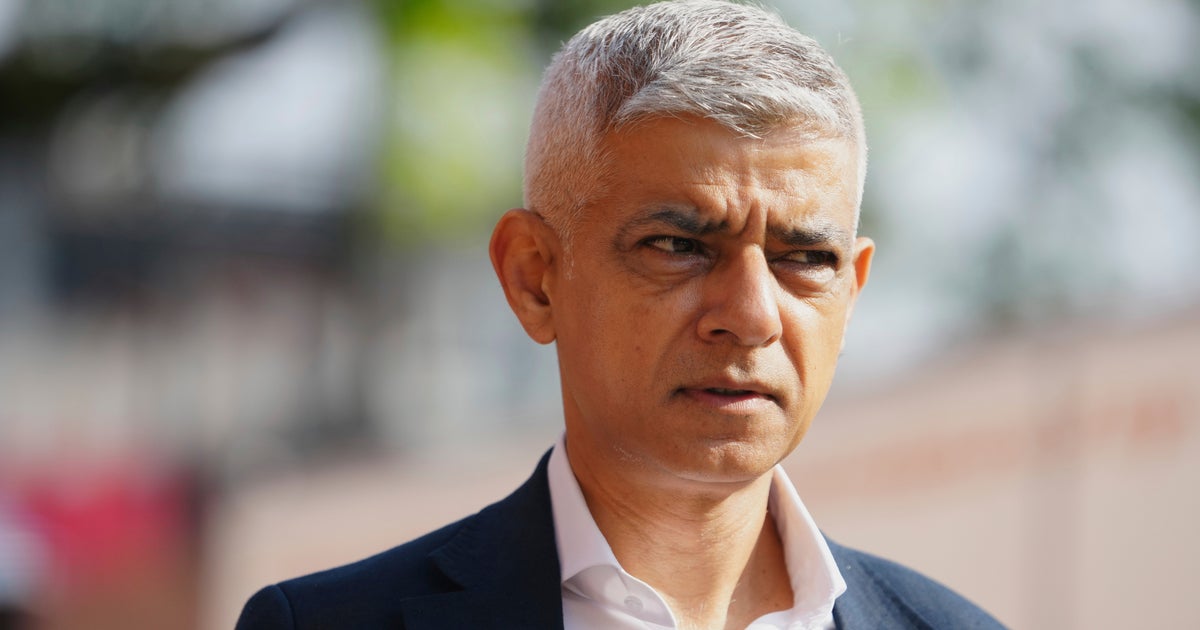
Writing in the Guardian, the London mayor said: “President Donald Trump and his coterie have perhaps done the most to fan the flames of divisive, far-right politics around the world in recent years.”
Advertisement
He pointed to Trump’s former adviser Elon Musk, who urged far-right protesters in London at the weekend to “fight back or die” in their supposed bid to protect free speech.
Khan said: “For far too long, our politicians and pundits have refused to condemn the rising tide of hatred in this country, instead choosing to dabble in dog-whistle politics and dangerous rhetoric themselves.”
Khan also said Trump’s habit of “scapegoating minorities, and illegally deporting US citizens, deploying the military to the streets of diverse cities” was not part of western values, but “straight out of the autocrat’s playbook”.
Advertisement
Khan also sent a clear message to Keir Starmer, saying: “For our leaders, silence is no longer enough.
“The time has come to stand up and say: this is not who we are.”
The London mayor did acknowledge that the UK has to maintain its special relationship with the States – but suggested Starmer makes it clear that “we reject the politics of fear and division”.
The politician also snuck in a sly reference to the record number of Americans who are making London their home since Trump’s return to the White House.
Advertisement
The London mayor has rowed with Trump in the past, accusing him of using xenophobia, racism and “otherness” as an electoral tactic during his first state visit back in 2019.
But this intervention will not have been welcomed by the prime minister, who has spent months carefully planning this unprecedented second state visit so as to most effectively woo Trump.
Starmer is trying desperately to keep a lid on all of the contentious issues which could cause the state visit to implode – including references to late convicted sex offender Jeffrey Epstein – but it remains to be seen how much will actually go to plan.
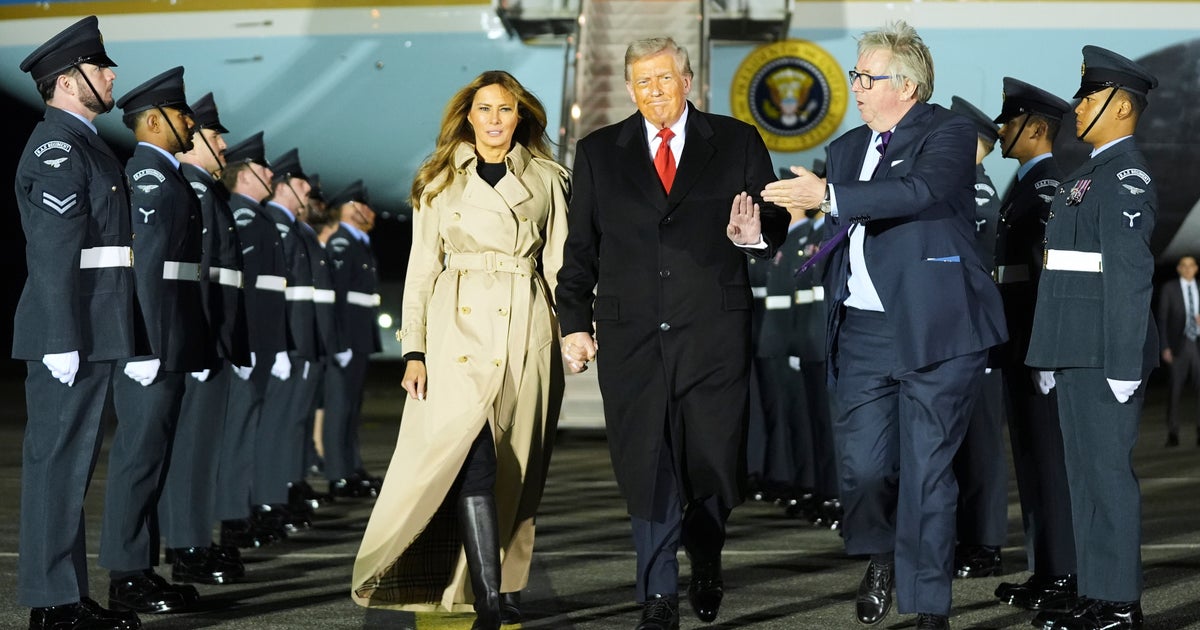
Donald Trump apparently overlooked all the protests against his state visit to the UK when he touched down in central London last night.
The US president told reporters on Air Force One that his whistle-stop tour was going to “a beautiful event” and urged them to “enjoy yourselves, OK?”
Advertisement
Initially greeted by home secretary Yvette Cooper at Stansted, he and first lady Melania Trump were then whisked off to the US ambassador’s property in Regent’s Park and told broadcasters: “A lot of things here, they warm my heart.”
“Relationships are great,” he said, adding that the King has been a “friend of mine for a long time, and everybody respects him, they love him”.
Trump is yet to mention the sudden sacking of the UK’s ambassador to the US Peter Mandelson last week, when new details about his relationship with late convicted sex offender Jeffrey Epstein were revealed.
To make matters worse, Trump himself has been fighting off criticisms over his own friendship with Epstein from his own MAGA fanbase in recent months.
And coming to Britain is evidently not the best way for him to escape the scandal: four protesters were arrested for projecting a photo of Trump and Epstein onto the wall of Windsor Castle last night.
Advertisement
Climate demonstrators also interrupted a dinner for Republicans in Windsor last night, challenging Trump’s famous “drill baby drill” mentality.
Holding banners which read, “oil money kills”, and beating drums, they shouted: “How many will you kill if you drill, baby, drill?”
Around 1,600 police officers have been deployed to keep an eye on the demonstrations.
Still, Starmer will be hoping he can distract the president with flashy shows of grandeur with this “unprecedented” state visit.
Trump will be met by the Prince and Princess of Wales on Wednesday morning in Windsor, before being welcomed to the castle by King Charles and Queen Camilla.
The Palace is also set to unveil the largest military ceremony ever organised for a state visit in living memory, with a joint RAF and US air Force flypast and a Red Arrows demonstration.
Advertisement
While Trump is here for a good time, Starmer will be trying to get some politics done – and the government already announced a “tech prosperity deal” last night, which will be revealed in its entirety on Thursday when the leaders meet at Chequers.
Pressure is on Starmer to reduce US tariffs on steel and aluminium, too, but that plan seems to have been put on the backburner for now.
During a recent interview with The i Paper, Hugh – who can currently be seen in action as Robert Crawley in the third and final Downton Abbey movie, The Grand Finale – admitted that the Earl Of Grantham might not be the only franchise role he’s played for the final time.
But while the British actor thinks it’s unlikely he’ll return as the iconic bear’s adoptive father, fans need not worry that this means the films are done altogether.
“I’m sure they’ll want to make more but no one is indispensable,” he said. “I think I’ve probably had my last dance on that one because I’m getting a bit old now.”
HuffPost UK has contacted the Paddington team for comment.
The W1A star, who will turn 62 later this year, last played the hapless Mr Brown in 2024’s Paddington in Peru, in which the much-loved bear returned to South America after his Aunt Lucy went missing.
If Hugh’s prediction turns out to be true, he wouldn’t be the first Paddington actor to leave the franchise.
At the time, Sally said in a statement she “felt the right time to hand the reins over to another” actor, and “one can’t get much better than” Emily.
The Oscar nominee later claimed that she had made the decision not to return as she didn’t want to do a Paddington film without director Paul King, saying it “would’ve broken my heart” to do the movie with someone else.
Now the big occasion has officially rolled around and the timing couldn’t be worse for the prime minister.
Advertisement
Any visit from the divisive Republican, who is pretty unpopular in the UK, presents a rather tense moment for the British politicians who have to host him.
But Starmer’s most unpredictable ally is now coming to town just as Downing Street is beset by problems coming from all sides.
Here’s a look at some of the issues most likely to trip up the prime minister during Trump’s hurried 48-hour stay.
Advertisement
1. Relations with Epstein
Trump has been trying desperately to dampen down questions around his past links to the late convicted sex offender over in the US, but fresh revelations continue to revive questions around their friendship and have made it across the pond.
A political campaign group called Everyone Hates Elon unveiled a huge picture of Trump and Epstein outside of Windsor Castle on Monday, ahead of his visit.
Advertisement
Epstein’s ongoing legacy has sent waves across the UK in recent days too.
It came after newly-released emails from 2008 revealed Mandelson had called for Epstein’s 18-month prison sentence for soliciting a child for prostitution to be challenged.
Starmer said: “Had I know then what I know now, I’d have never appointed him.”
Trump, who had a strong bond with Mandelson, was allegedly displeased Starmer did not inform him of the ambassador’s sacking personally.
Both men are likely to face very difficult questions about the issue during their joint press conference on Thursday.
Advertisement
2. Starmer’s domestic struggles
Trump is known for seeing himself as a “winner”, and is keen to surround himself with other supposed victors – including Starmer, who won the general election on a landslide – even if they don’t align politically.
But just over a year later, the PM is now facing repeated questions about his future in the role – could Trump subsequently be about to cool on Starmer?
After 12 months of unpopular policies like cuts to welfare and international aid, the prime minister tried to turn over a new page on September 1, promising a period of “delivery, delivery, delivery”.
Even his own MPs are questioning whether he will last in the post until Christmas.
3. Anti-Trump protests
Those opposed to the US president are hoping to put together an even bigger demonstration against him after the Tommy Robinson-led far-right march at the weekend.
They are set to gather outside Windsor Castle from 5.30pm today, although Trump will not be visiting the royal residence until Wednesday morning – but protesters are hope he sees it on the media.
Advertisement
Meanwhile, Lib Dem leader Ed Davey will show his own frustration at Trump’s appearance by boycotting the state banquet tomorrow.
Similarly, Green Party MP Ellie Chowns has filed an Early Day Motion (EDM) saying Trump does not “deserve the honour of a second UK state visit”, due to the Epstein scandal.
She also criticised the use of US F-35 military jets in the flypast with the Red Arrows during the visit, as the planes are used in Israel on its war against Gaza.
Advertisement
She said: “State visits are honours; Trump doesn’t deserve one.”
Her motion was supported by seven other MPs including Jeremy Corbyn.
Starmer has timed the visit so it is during parliamentary recess, so MPs are not able to show their potential disdain for the president face-to-face – but Trump is known to be a keen newsreader, and could soon find out about the resistance to his presence here.
As the far-right rally at the weekend, known as the “Unite the Kingdom” march, demonstrated, there’s a growing body of people who claim free speech is under threat in the UK.
Advertisement
Former Trump adviser Elon Musk even appeared via video link to tell the crowds that “violence is coming” to the UK and to call for a “change of government in Britain”.
Even though – as cabinet ministers noted – the rally itself was proof that free speech is alive and well in the UK, there are fears Trump could revive this debate during his stay.
Demonstrators carry England and Union Jack flags during a Tommy Robinson-led Unite the Kingdom march and rally in London, Saturday Sept. 13, 2025.
via Associated Press
Advertisement
5. Ongoing pressure over Ukraine
Away from the grandeur of the state visit, Starmer also wants to make some progress on stopping Russia’s war in Ukraine – with Trump’s help.
While the US president has repeatedly sided with Vladimir Putin in his quest to end the conflict, his frustration over Moscow’s refusal to come to the negotiating table seems to pushing him to finally align with his European allies.
Trump finally admitted that Russia was the aggressor in the war over the weekend and said he was willing to impose secondary sanctions on Moscow.
Advertisement
However, he claimed he would only do that if other Nato nations completely weaned its off Russia’s cheap fossil fuel exports.
Before the war, the EU got around 45% of its natural gas from Russia. That is expected to fall to around 13%, but that might not be far enough, according to Trump.
In what he called a letter to Nato allies, he said: “The purchase of Russian oil, by some, has been shocking! It greatly weakens your negotiating position, and bargaining power, over Russia.”
Advertisement
Ukrainian president Volodymyr Zelenskyy has also demanded a “clear position” from Trump on ending the war, adding: “I very much hope he [Starmer] will be able to have a very specific discussion on the security guarantees of the US for Ukraine.”
6. Splits over the Middle East
The US secretary of state Marco Rubio is clearly not a fan of Labour’s plans to recognise a Palestinian state later this month during the UN’s General Assembly.
During a visit to Israel, he backed Israeli prime minister Benjamin Netanyahu and said the UK’s move would have “no impact whatsoever” on moving towards a two-state solution, and instead just “embolden Hamas.”
Advertisement
He claimed the UK, along with France, Canada, Australia and Belgium, were also doing this solely because of their domestic problems.
7. Trade and the economy
While Starmer did secure the first tariff deal with Trump earlier this year after his so-going “liberation day”, Britain still wants to get the US president’s ongoing penalties on steel and aluminium trade lifted.
But there’s allegedly little sign of a meeting between chancellor Rachel Reeves and her US counterpart Scott Bessent on that topic during this state visit.
Advertisement
Tech and energy deals are also expected to be announced during Trump’s trip, which may help power new AI data centres.
Bagpipers play as President Donald Trump and Britain’s Prime Minister Keir Starmer arrive at Trump International Golf Links, near Aberdeen, Scotland, Monday, July 28, 2025.
via Associated Press
Starmer will have to do a delicate balancing act to make sure none of these sore spots threaten his strong relationship with the mercurial US president.
Most of us know that coffee, wine, and tea can turn your pearly whites a little darker, though some people naturally have yellower teeth thanks to the thickness of their dentin and enamel.
But according to Dr Edoardo Felici, a cosmetic dentist at Apa Aesthetic Clinic, sometimes “healthy” habits can lead to less-bright smiles.
Advertisement
“The patients I see are often shocked when I tell them it isn’t their coffee that’s doing the most staining,” he told us.
Acidic drinks weaken your enamel
When you drink acidic beverages, your enamel softens temporarily.
So, if you consume colourful foods and drinks (like turmeric and matcha) while your teeth are in this more vulnerable state, the dentist shared that this leaves you at a higher risk of staining.
“It’s often smoothies, juices and even kombucha that cause bigger issues,” Dr Fellici said.
“These drinks, while part of many wellness routines, are high in natural sugars and acids that can soften enamel, making teeth more prone to discolouration.”
Advertisement
Green juices, sparkling water, and apple cider vinegar all soften your teeth for a while.
If these don’t have pigmented ingredients of their own, try not to follow them with foods like berries – that colour is likely to stick longer on your gnashers.
How can I prevent staining from “healthy” drinks?
Dr Felici advised using a straw to drink acidic and/or colourful drinks and rinsing your mouth with water straight after consumption to eliminate the acids.
And because your enamel is also more exposed following brushing, the dentist said we should all be waiting for at least half an hour after our morning scrub before eating and drinking.
Advertisement
“Teeth are often the first thing people notice, so it’s frustrating when patients are following what they believe are healthy habits, yet still struggle with stains,” Dr Felici ended.
“Wellness should work with your smile, not against it – with a few tweaks, you can keep both your health goals and your teeth in great shape.”
Hannah Einbinder has confirmed rumours that the upcoming fifth season of Hacks will be the last.
The comedian and actor shared what she described as the “bittersweet” news while speaking to reporters on the red carpet at the Emmy Awards on Sunday night.
“We’re going to start [filming] next week, and knowing it’s the last season is really bittersweet,” she told E! host Heather McMahan. “But I think it’s right, you know?”
Advertisement
Hannah added that she thought the end of the fifth season was the right time to end the show, as it was better to call time on Hacks when it is still popular and loved.
“I think it’s nice to do something as many times as it should be done,” she explained on the awards show red carpet. “Not overstay your welcome. Rip it and do it and laugh and cry.”
Hannah Einbinder and Jean Smart in Hacks
JAKE GILES NETTER/HBO
Advertisement
Hacks has been an awards darling since it debuted in 2019, with Jean Smart winning an Emmy for every season she has played comedian Deborah Vance.
Series creators Lucia Aniello, Paul W. Downs, and Jen Statsky previously admitted they had a five-season plan for their hit US series. After the events of season four, the trio hinted that Hacks may go on for even longer, but sadly for fans, that is evidently no longer the case.
“We are now breaking up season five, and we have to see how many episodes it will take us to get to where we know we’re going to go,” Paul W. Downs told Variety, breaking down the events of the season four finale.
Advertisement
“The final scene of the final episode has been in our minds since 2015, and we’re excited to get there. But that may take more episodes than we can fit in the season.”
While there’s no official word yet on exactly when season five of Hacks will air, it’s worth noting that previous seasons have debuted in the spring.
Scientists already think that regular poor sleep, especially in midlife, might increase your odds of developing dementia (less than five hours a night has been associated with double the risk).
The researchers involved in the study found that those with “chronic insomnia” could face an increased dementia risk.
How much bad sleep does it take to raise my dementia risk?
In this paper, “chronic insomnia” was defined as having trouble sleeping for at least three nights a week for at least three months.
Some 2,750 participants with an average age of 70 were tracked for 5.6 years. They were all dementia-free at the start of the study, and 16% had chronic insomnia.
Advertisement
After conducting memory and thinking tests as well as brain scans, the scientists found that those who reported insomniac sleep patterns had more amyloid plaque formation, which is linked to dementia development.
Of those who self-reported chronic insomnia at the start of the study, 14% went on to develop insomnia, compared to 10% among those who didn’t have sleep issues.
People with insomnia were 40% more likely to develop mild cognitive impairment or dementia than those without insomnia.
Advertisement
Speaking to MedicalNewsToday, the study’s lead author, Dr Diego Z Carvalho, said: “In our models, the impact of insomnia on the risk of mild cognitive impairment/dementia was higher than having two cardiometabolic conditions like hypertension and diabetes, or being 3.5 years older than your actual age, which are known risk factors.”
Why might insomnia affect dementia risk?
We still can’t say for sure, but Dr Carvalho suggested this research has given him some ideas.
“We found that insomnia with reduced sleep was not only associated with Alzheimer’s disease biomarkers like amyloid, but also with poorer cerebrovascular health with greater evidence for small vessel disease as shown by white matter hyperintensities,” he said.
This matters because both the buildup of amyloid plaque proteins and poorer heart and vessel health are independently linked to increased dementia risk.
Advertisement
The lead researcher also recommended that more doctors include sleep tests in their regular screenings, especially with older patients.
A surge in net migration has been widely blamed for causing a substantial backlog to driving tests in the UK right now – but that’s actually the full picture.
Officials from the Driver and Vehicle Standards Agency (DVSA) told the transport secretary Heidi Alexander over the weekend that the unprecedented surge in immigration since 2021 is to blame for the backlog.
Advertisement
Learners are currently waiting up to six months to take a test, compared to just over six weeks in 2018-2019.
That’s far from the DVSA’s target wait time of seven weeks.
At the end of August, there were 644,398 future tests waiting to be booked, which is almost three times higher than the 219,786 total recorded in February 2020.
According to minutes released via a Freedom of Information request, the cabinet minister was urged to consider “immigration options” and “minimum learning periods” by transport officials.
Advertisement
But, as the government pointed out, there are multiple factors playing into the problems around booking a driving test at the moment.
Why is there a delay to driving tests?
Immigration is one of multiple factors pushing back driving tests.
According to the Department for Transport, an increase in the population of 17-year-olds in recent years is partially behind the backlog.
There’s also been a sharp rise in demand for provisional driving licences since 2019, a large component of which was driven by applicants born outside the UK.
Advertisement
However, for many this will be for identity purposes – not for taking a driving test.
A provisional driving licence is a valid form of ID and costs just £34 if applied for online, while a standard passport can cost £94.50.
There’s also the ongoing delays from the pandemic, as well as a shortage of examiners.
A government spokesperson also criticised the DVSA’s comments around immigration, saying: “This is incomplete analysis of the many causes of driving test wait times.
“This government has seen net migration fall by 300,000 since July last year.
“We inherited a broken driving test system where many learners found themselves stuck in a frustrating limbo, but the government has taken decisive action to address this and the DVSA has carried out over 20,000 more tests between June to August this year and the pass rate remains the highest it’s been since May 2021.”
Advertisement
Why is this important?
A surge of anti-immigration sentiment has swept across the UK in recent months, resulting in demonstrations outside asylum hotels and Saturday’s far-right march through London.
It’s widely believed that online misinformation is one of the main catalysts for such displays.
As data from the Office for National Statistics points out, net migration has halved since its record levels in 2023, falling to 431,000 in the year ending December 2024.
But, concerns over immigration are at the highest outside of 2015, with 49% of the British public saying immigration is an important issue facing the UK today.
Being a parent to an adult child is certainly different from raising a toddler, a school-age kid or even a teenager. What they needed from you five, 10 or 20 years ago isn’t what they need from you today.
If your bond with your adult child isn’t where you want it to be, don’t despair. We asked therapists who deal with family issues to share the most significant things parents can do to create a happier, healthier relationship with their grown kids.
Advertisement
Here’s what we learned.
1. Stop giving unsolicited advice
When your adult child comes to you with an issue about their career, their relationship or their own kids, it’s easy to assume they’re seeking your trusted input on the matter. But consider that they may just be looking for a compassionate ear.
The best way to find out what they need is to ask, “Are you looking for advice or are you wanting to vent?” said Dallas marriage and family therapist Sarah Epstein.
Adult children “may not want consistent feedback on their choices,” Epstein told HuffPost. “If parents can embrace only offering advice when asked, and learn the skills to listen thoughtfully, their relationship will almost certainly strengthen.”
Advertisement
Winifred Reilly, a marriage and family therapist in Berkeley, California, said it’s important to “stay in your lane” as the parent of an adult child.
“There was a time when we could pick our kids up under one arm and carry them out of the playground. It was our job to call all the shots,” Reilly, who is also the author of “It Takes One to Tango,” told HuffPost. “Once they’re adults, we need to be literally and figuratively more hands off.”
“Once they’re adults, we need to be literally and figuratively more hands off.”
– Winifred Reilly, marriage and family therapist
Advertisement
That doesn’t mean you don’t play an important role in their life anymore. It just means your role has transitioned to “more of a trusted adviser,” Reilly said.
“Instead of, ‘Here’s what I think you should do,’ a better and more respectful move is, ‘Would you like to hear my thoughts on that?’” Reilly said.
“When invited, we can say what we’re thinking and ask what they’re thinking. When we’re not invited, it’s a good idea not to chime in,” said. “The overall message needs to be one of love and respect, even if we don’t fully agree with their decisions.”
Advertisement
2. Show your child that you believe they’re capable of handing difficult situations
On a related note, West Los Angeles clinical psychologist David Narang said that one of the keys to building a strong relationship with your grown kids is to think of yourself as “a sounding board for a powerful adult,” instead of “the rescuer of a helpless child”.
In other words, you should operate under the assumption that your child is capable of tackling the difficult situation at hand, he said.
A common mistake among parents of adult kids is “getting too caught up in” the struggles their child is facing, Narang said. Perhaps you’re a parent who is hell-bent on getting your child to follow your advice. Or maybe you get so worked up about the situation that it makes your already stressed-out child even more overwhelmed, he said.
Advertisement
At this stage of life, your value as a parent is “in your capacity to withstand the suffering that your child is trying to tolerate,” Narang added.
His advice? Allow your child to “air out their distress,” and keep the conversation focused on them. Then, help them arrive at their own solutions.
“As a parent, your understanding of your child’s suffering carries unique power to help him or her feel supported,” Narang said. “Similarly, your awareness of your child’s inner strength has a unique impact to help your child see that strength in him- or herself, especially given your memory of all the times you have witnessed that strength.”
Advertisement
Taking this approach will help bring you and your child closer “because they will feel your support while still experiencing themself as a competent adult,” he said.
Ippei Naoi via Getty Images
These habits should help you create a better relationship with your adult children.
3. Stop playing the blame game and focus on repair instead
Blaming yourself – or your child – for the cracks in your relationship isn’t going to make things better between the two of you.
Advertisement
Instead of pointing fingers, “turn blame into responsibility to do better in the future,” licensed mental health counsellor Tracy Vadakumchery, also known as The Bad Indian Therapist, told HuffPost.
“Your child knows that you did your best,” Vadakumchery said. “Them bringing up their issues with you does not mean they think you’re a bad parent.”
“If your urge is to blame somebody as part of your problem-solving, it’s important that you recognise this as a defence mechanism for feelings of guilt,” she said. “What if there’s no one to blame? Blaming is shaming and accomplishes nothing.”
Advertisement
It’s more productive to focus on repairing your bond: apologise sincerely for any hurt you’ve caused, and make a promise to do things differently moving forward.
And if you’re not already working with a therapist, finding a mental health professional you can talk to “might not be a bad idea,” Vadakumchery said.
4. Do a relationship check-in
You might assume no news is good news as the parent of a grown kid. If your adult child hasn’t raised any issues lately, you figure things must be fine between you. Or perhaps you sense the relationship isn’t on good footing, but you’re not sure where things went wrong.
Advertisement
In any case, doing a relationship check-in – where you have “a big-picture conversation about the health of the relationship” – is a great step to take, Epstein said.
“Checking in can include questions like, ‘How does our relationship feel to you?’ ‘Do you enjoy our conversations?’ ‘What do you enjoy most or least?’ ‘Do you feel supported?’” she said.
Initiating a check-in demonstrates that you’re open to hearing feedback and having potentially difficult conversations, and that you’re willing to make changes to your behaviour in order to improve your connection.
Advertisement
“In some families, parents dictate how their relationship with their adult children should look and enforce it through a sense of obligation. They explain expectations to their child without ever asking the child what they want from the relationship,” Epstein wrote in a recent blog post for Psychology Today.
“An audit like this one instead signals a desire to get to know your adult child’s needs within the relationship and to commit to a bond that works for both of you.”
Oliver Rossi via Getty Images
A relationship check-in is a powerful way to improve your bond with your adult child.
Advertisement
5. Avoid telling your adult child how they should think or feel
If you have a more challenging relationship with your grown kid and they finally open up to you about something, “know that it took a lot for them to feel comfortable enough to do that,” Vadakumchery said.
“How you respond will either confirm or deny their belief: ‘That’s why I don’t tell you anything,’” she said.
That means steering clear of phrases that discount or minimize their experience, like “That didn’t happen,” “Don’t feel that way” or “I’m sorry you feel that way,” Vadakumchery said.
Advertisement
“While it’s true that memory can be unreliable, even if you’re right, telling your child that what they experienced didn’t happen will not only make them feel unheard or unseen, but you’re training them to not trust their intuition and not come to you about things,” she said. “Listen first before responding.”
And remember that most arguments between two people who care about each other are typically more about underlying feelings than they are about the topic at hand, Vadakumchery noted.
“Instead of focusing on the details, focus on their emotions,” she said. “If you don’t know what to say, sometimes the best response is to just be there. You don’t necessarily have to say anything. Just show that you’re listening.”
Advertisement
6. Honour – and encourage – boundaries in the relationship
Adult children may set boundaries with their parents around certain charged topics of conversation, like their appearance, finances or career choice. Or the boundaries may be physical ones, like “Please call before stopping by the house,” Epstein said.
Rather than bristling at these requests, “parents can listen and honor those boundaries and even commend their child for standing up for what they need to make the relationship work,” she said.
It may help to remember that the intention of boundaries is to help people connect in better, healthier ways. So your child establishing some guidelines isn’t an effort to push you away ― it’s a way to create more honesty and trust in the relationship that will hopefully bring you closer together.
But what about superstitions like horseshoes? How come an animal’s foot covering came to mean good luck, so much so that you can still find some nailed to the doors of people’s homes?
Advertisement
According to riding wear suppliers at Discount Equestrian, the answer is a little wilder (and darker) than I thought.
Why are horseshoes considered lucky?
One story, the horse experts said, related to 10th-century monk and bishop St Dunstan and the devil (oh!).
“The legend of the horseshoe is closely associated with St Dunstan, today the patron saint of goldsmiths, locksmiths, and jewellers,” they said.
Advertisement
“As the story goes, while living as a hermit in Glastonbury, he was visited by Satan, who asked him to use his blacksmithing skills to shoe the devil’s hoof.”
The legend says that because St Dunstan recognised the visitor for who he was, he nailed a red-hot horseshoe to his hoof.
So, the devil learned to be afraid of the iron symbol and steered clear of houses which displayed them on their doors.
Advertisement
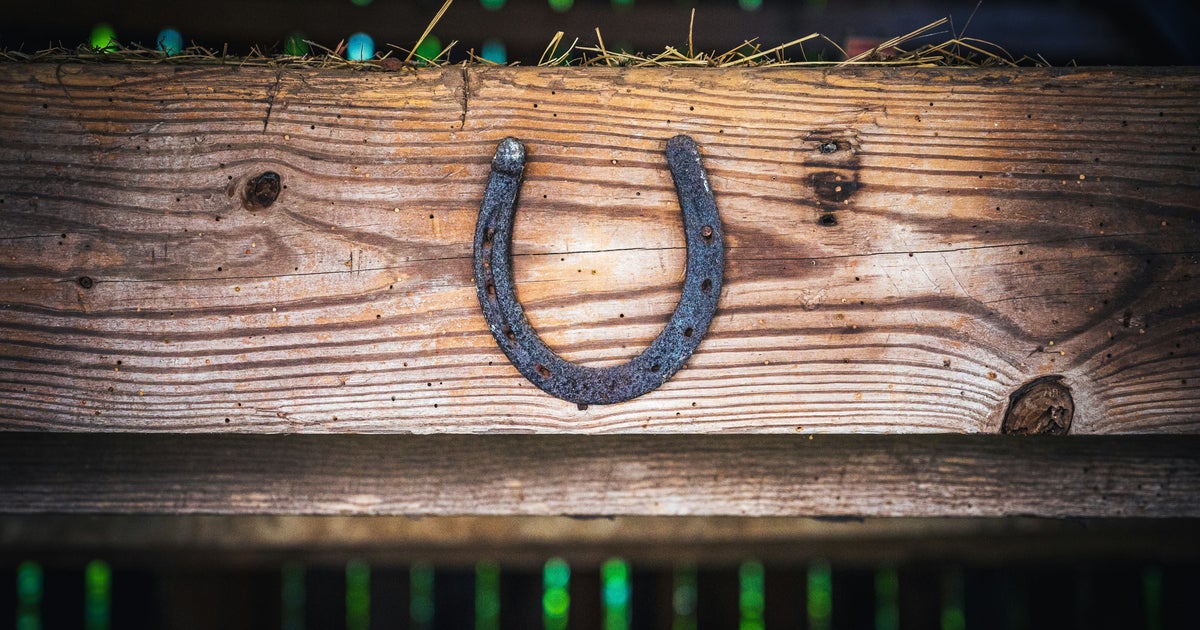
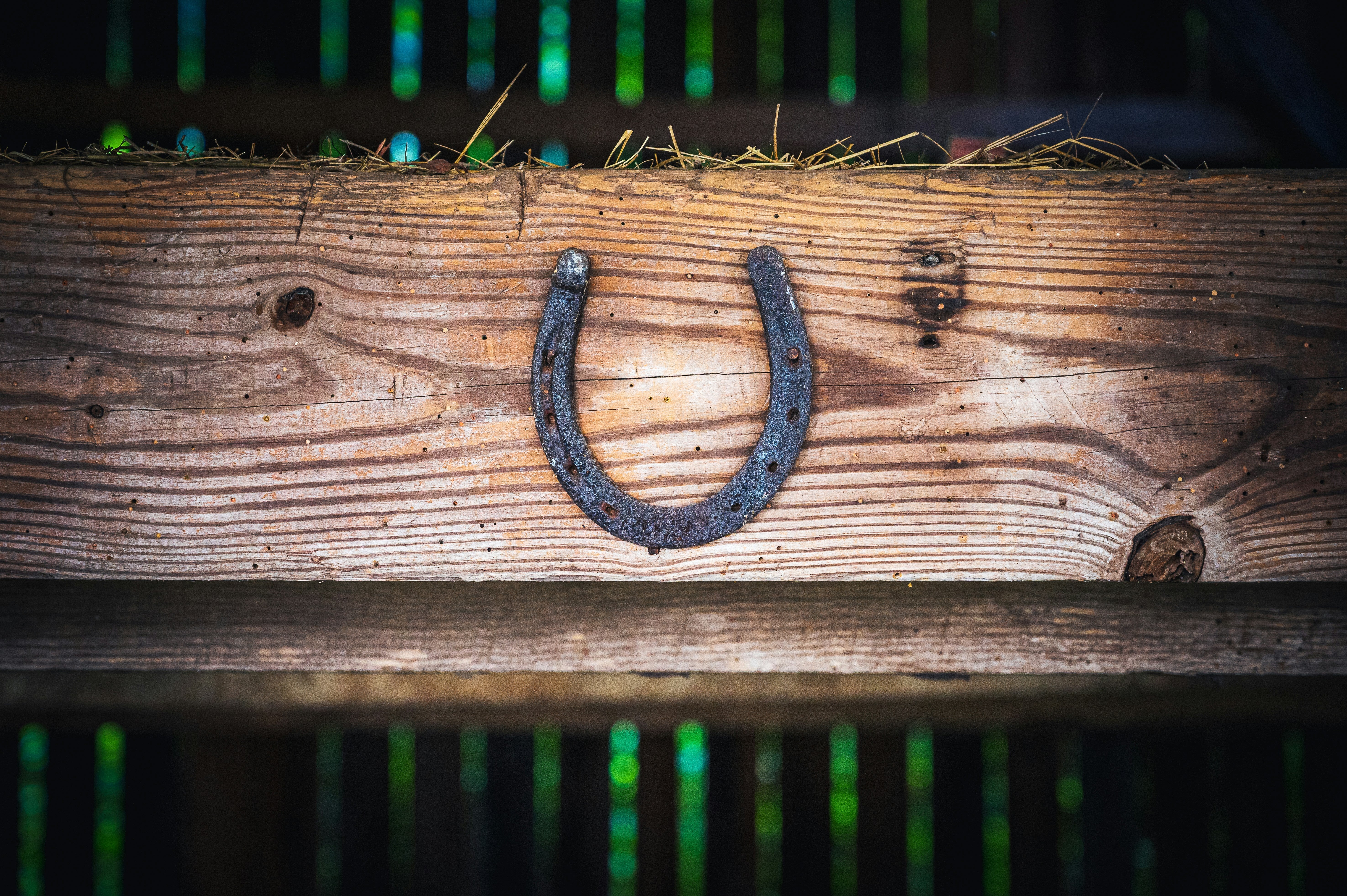
Some also believe that nailing seven holes into a horseshoe attached to your door will add to its luckiness.
The ‘n’ angle, with the heels pointing down, has been believed to pour blessings on visitors, while the “U” shape may be used to keep any good fortune from spilling out.
Iron has long been considered lucky
This is not the only factor that goes into the choice, Discount Equestrian said.
“The horseshoe is a perfect example of a symbol that has crossed centuries without people really knowing why they use it,” the pros explained.
“It combines practicality that iron was once precious, with deep religious folklore about protecting the home. When people hang one today, they’re unknowingly repeating a thousand-year-old superstition.”