Nestled among new originals like the romantic comedy The Life List and the true crime documentary Con Mum on Netflix’s list of most-watched movies right now is a rather unexpected film.
After debuting on the platform on Wednesday, the 2023 psychological thriller Don’t Worry Darling is currently its third most-watched movie, at the time of writing.
Advertisement
Given the film features leading performances from Oscar nominee Florence Pugh and global superstar Harry Styles, it’s perhaps not a massive surprise that people might be curious to check out Don’t Worry Darling for themselves.
Before being cast in Don’t Worry Darling, Harry had only one major film credit to his name, after landing a supporting role in Christopher Nolan’s war epic Dunkirk, so intrigue was understandably high about whether the chart-topper’s musical success and on-stage charisma would transfer to the big screen.
Advertisement
Unfortunately for him, though, the general consensus was that it did not.
Don’t Worry Darling didn’t exactly get the best reviews of Harry Styles’ career
Warner Bros/Moviestore/Shutterstock
Don’t Worry Darling holds an unenviable 38% critical score on Rotten Tomatoes, with many reviews singling out the As It Was singer’s acting as one of the film’s biggest flaws (although it’s worth pointing out that it has a much healthier Rotten Tomatoes audience score of 74%, not to mention a satisfyingly precise score of 3.0 stars on Letterboxd).
If you’ll excuse the minor spoiler, what’s interesting is that Don’t Worry Darling winds up touching on the radicalisation of men online and the rise of incel culture, and its arrival on Netflix comes at a time when these themes are being widely discussed thanks to one of the platform’s original offerings, the four-part drama Adolescence.
As a piece of political theatre, it took some beating.
Sitting down in the Oval Office for his first face-to-face meeting with Donald Trump since his re-election, Keir Starmer reached into the inside pocket of his suit and produced an envelope.
The prime minister could barely contain his excitement as he told the president: “It is my pleasure to bring from His Majesty the King a letter – he sends his best wishes and his regards, of course – but he also asked me to bear this letter and bring it to you.”
Advertisement
In it, King Charles invited Trump to come to the UK for a second state visit, an unprecedented honour for a sitting president.
“The answer is yes,” Trump told the PM. “I look forward to being there and honouring the King.”
But if Starmer hoped that appealing to Trump’s love of the Royal Family would spare the UK when it came to his “reciprocal” tariffs, he was very much mistaken.
And while that was less than the levy imposed on many other nations, and the EU, it still has the potential to cause huge damage to the UK economy and send unemployment soaring.
HuffPost UK can reveal that Trump’s actions – which have also sent markets around the world into freefall and increased the chances of a global recession – have breathed new life into the campaign to block his state visit.
Thousands of voters have so far backed a campaign set up by the Stop Trump Coalition in the wake of the tariff announcement, filling in an online form to lobby their local MP.
Advertisement
“Donald Trump has started a global trade war,” say the group. “This threatens to cause a new worldwide recession. It can’t be allowed to succeed.
“The Starmer strategy of trying to be Trump’s friend isn’t working. It is only holding the government back from responding to Trump’s tariffs, or criticising the other outrageous actions he takes daily.
“It is time to cancel the visit and stand up for ourselves.”
While Trump’s invitation was officially a decision for the King alone, everyone knows that No.10 was the driving force behind it.
This has allowed Downing Street to insist that it is ultimately a decision for Buckingham Palace when – or if – the visit does end up going ahead.
A poll by Ipsos taken before Trump’s tariff announcement showed that the British public are evenly split on whether we should be rolling out the red carpet for him once again. Some 46% were in favour, with 44% against.
Advertisement
Keiran Pedley, director of UK politics for the company, said Starmer now “faces a delicate balancing act”.
“The US president is unpopular in Britain and the public were already split down the middle on whether the visit should go ahead last month.,” he told HuffPost UK.
“It is hard to see how his announcements on tariffs would have made the visit more popular. However, there are political and diplomatic realities to contend with, and Starmer will be keen to get the balance right.”
Trump unveiled the tariffs he was slapping on countries around the world at a White House press conference.
via Associated Press
The PM does have plenty of political cover at Westminster, however, with even parties which are instinctively hostile to Trump refusing to join the growing clamour for the state visit to be cancelled.
Calum Miller, the Lib Dems’ foreign affairs spokesperson, said: “Trump has turned his nose up at the special relationship between the UK and the US by slapping the same tariffs on Britain as he has on Iran.
“His appalling treatment of President Zelenskyy still looms large in many of our minds, so I understand how great the temptation is to cancel his state visit.
“But we have to remember that Trump thinks of himself as a ‘deals’ man. The one thing he thinks he understands is a negotiation – and the state visit is our ace in the hole when it comes to dealing with the president.
“The government should keep all options open and be tough in talks ahead of any visit to try to end this trade war before it starts.”
Carla Denyer, co-leader of the Greens, said the visit should not have been offered in the first place, but stopped short of saying it should not happen.
“I can’t imagine many Brits will be thrilled to see Starmer rolling out the red carpet for a man that has proposed the ethnic cleansing of Gaza, blamed Zelenskyy for the war in Ukraine, and is now wreaking havoc on the global economy with his tariffs,” she said.
Trump with Queen Elizabeth II laugh during a Buckingham Palace banquet at his last state visit to the UK in 2019.
via Associated Press
Advertisement
It may well be that the solution for the PM will be found in a classically British political fudge.
Would it really be all that surprising if no suitable date could be found in the King’s packed diary to squeeze in the visit before Trump leaves office in 2029?
That would spare the monarch – who is thought to be no great fan of the president either – some embarrassment while also avoiding a political firestorm for Starmer.
The most likely outcome, however, is that it will go ahead, although probably not until nearer the end of Trump’s four-year term.
Advertisement
Starmer will hope that an economic deal is done with the US by then, sparing the UK the worst of Trump’s tariffs, while also drawing some of the sting from the state visit controversy.
Whatever happens, his eagerness to be the King’s messenger boy will be added to the growing list of political mis-steps he has made since enter No.10 last July.
“I can’t stop thinking about him,” my client said. “I even daydream about our wedding.”
She stared at me intently from across the coffee table where our two cups of peppermint tea sat untouched. When I didn’t respond, she lowered her voice and said, “I just feel like we’re meant to be together.”
I’d been counselling this client long enough to know the “him” to whom she was referring was not her husband of 15 years. Instead, it was the much younger man she’d met two months prior at a yoga retreat.
Advertisement
“OK,” I said, reaching for my mug. “Let’s try to figure out why this person has such a hold on you.”
My client could have easily spent another hourlong session obsessing over “hot yoga guy” — which she’d done many times before — but I wasn’t going to let her. My job as a therapist was to help bring deeper awareness to her emotional experience and to identify what was simmering just beneath the surface, driving compulsive thoughts and behaviours. In this case — limerence.
Almost everyone, at some point, has experienced a romantic crush. However, unlike a typical crush, limerence is defined by obsessive ruminations, deep infatuation and a strong desire for emotional reciprocation — an unfulfilled longing for a person.
According to Dorothy Tennov, American psychologist and author of “Love and Limerence: The Experience of Being in Love,” limerence “may feel like a very intense form of being in love that may also feel irrational and involuntary.”
Advertisement
Tennov identified the most crucial feature of limerence as “its intrusiveness, its invasion of consciousness against our will.”
Limerence differs from the liminal dating phenomenon known as “situationships,”or “we’re dating but we’re also not quite dating.” While both feed off uncertainty, when someone is experiencing limerence, they often prefer the idea of their limerent object (LO) over being with that person in real life. In fact, they might actually feel something akin to disgust when in the physical presence of their LO. I understand this feeling all too well — my own limerent object held my heart and mind hostage for years.
Levi and I met on the first day of my sophomore year of high school in the mid-’90s. I was wearing baggy denim overalls and combat boots, and my blond hair was long and parted down the middle. I’d just gotten my braces off and my teeth were the straightest they’d ever be. Our relationship unfolded to the soundtrack of Baz Luhrmann’s “Romeo + Juliet” and “August and Everything After” by The Counting Crows. There were knowing looks and homemade mixtapes — filled with Dire Straits, Jewel and Better Than Ezra — passed discreetly in the hallway between classes. We were running through the wet grass, desperately wanting, but never quite having. We never actually dated.
Advertisement
Earlier that summer, my family — minus my father — had moved to Woodstock, Vermont, from Boston. My parents were unhappily married, but instead of divorcing, they decided to lead two separate lives. My mother, a retired school administrator and former nun, moved to rural Vermont, and my dad stayed behind to work at his law firm.
Levi wanted to be my boyfriend. He was unwavering and absolute with his feelings as only a love-struck teenager could be. In response, I held him at arm’s length while dating other people. But late at night, I’d let him sneak into my bedroom on the top floor of my family’s rambling farmhouse and we’d lie tangled up together underneath the shiny soccer medals and enormous round window that hung above my bed. By homeroom the next morning, it was like it never happened.
Courtesy of Anna Sullivan
The author’s family home in Woodstock, Vermont.
Advertisement
Nobody needed to tip-toe around my house. After the move, my mother’s drinking escalated to the point where she often passed out in her bedroom before dinner. My father visited us once or twice a month. He spent the weekend arguing with Mom and left without saying goodbye. On Monday morning, I’d wake to find him gone and a pile of cash on the kitchen counter. By the time I left for college, my sister and I were basically parenting ourselves.
After college I moved to Manhattan. I casually dated — and even had a few serious relationships — but I’d be lying if I said I didn’t think about Levi. I thought about him a lot. Out of nowhere, his image would pop up, haunting my consciousness like a ghost. Memories of us lying in my twin-size bed, bathed in moonlight, played on a loop with Jewel crooning in the background, “dreams last for so long / even after you’re gone.” Eventually, I began to question whether I still had feelings for this person. Was he the one who got away?
The strange thing was every time Levi and I happened to be in the same city at the same time, I avoided seeing him. Something prevented me from exploring an actual relationship with him in real time. A therapist reasoned it was hard for me to let go of his memory because we never had closure, but her take always felt slightly off. My feelings for Levi felt primal — instinctual. Bone deep. Something I couldn’t shake.
Advertisement
In my late 20s — practically estranged from my father by this point — Levi reached out to me. It was a basic missive, but still, reading his name in my inbox sent an electric current up my spine. I felt like I’d been plugged into a wall. I replied and said I was good, even though I wasn’t. I’d just ended a long relationship that I thought was going to end in marriage. I was fleeing to New Mexico to pursue a graduate degree in counselling. My life was poorly packed in 20 boxes, stacked haphazardly in my parents’ garage. “How are you?” I redirected.
Levi invited me to coffee. I lost five pounds before we met at a familiar spot in our hometown the following week. I arrived wheeling a suitcase because I was hopping a flight to Santa Fe later that afternoon. He looked a lot different in person than he did in my imagination — older, his hair thinning.
Seeing him was like a controlled science experiment. He mostly talked about himself, and I felt relieved when it was time to go. Later that afternoon, as I boarded my flight, he emailed me: “If you’re still in town let’s meet for a drink….” His invite gave me goosebumps. I never responded.
Advertisement
Eventually, I finished graduate school and began my career as a counsellor. I met my husband, Alex, in Santa Fe, and we later got married and had two children. The years passed and we built a beautiful life together, though it hasn’t always been easy. Our older son was born with many challenging issues. Shortly after his first birthday, I lost my mother to fast-moving bone cancer. Less than two years later, I was diagnosed with breast cancer and underwent a unilateral mastectomy and adjuvant hormone treatments that pushed me into premature menopause.
Through it all, Alex stuck by me. He held my hand at my oncology appointments. He did the lion’s share of parenting our two toddlers while I recovered from surgery. He rocked me back to sleep when I woke in the night riddled with anxiety about mortality and motherhood, and he made me laugh when all I wanted to do was cry. Sometimes, I look back on those first years of married life and wonder how we ever made it through. But somehow, we did — together.
And yet, every now and then, I thought about Levi. He’d enter my consciousness without warning like a spectral whack-a-mole or a goblin. And then, just as quickly, his image would disappear, leaving me feeling guilty and ashamed. Even though I didn’t feel physically attracted to this person, the thoughts felt like a betrayal to my husband, who I loved. My sweet husband, who nursed me back to health after cancer and snaked the shower drain whenever my hair clogged it. How could I still be thinking of some random person from my past? I was starting to think I needed a seance for my psyche. Instead, I decided to utilise my professional training as a therapist to identify — once and for all — the origin of these adolescent ruminations.
Advertisement
Courtesy of Anna Sullivan
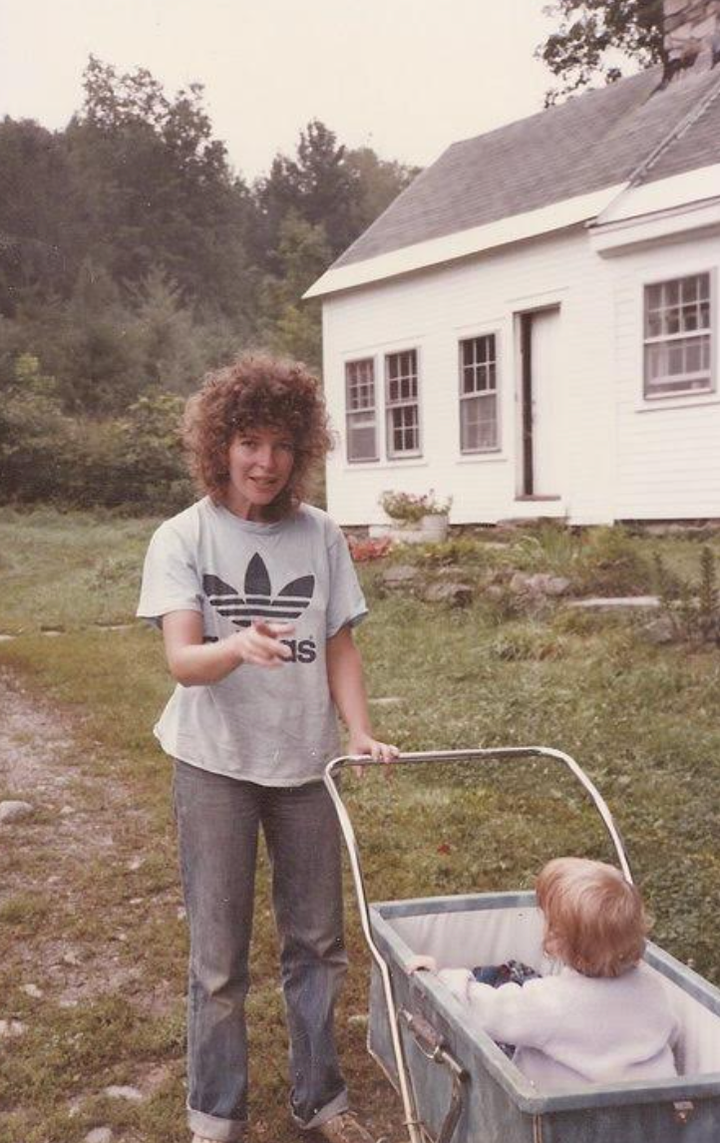
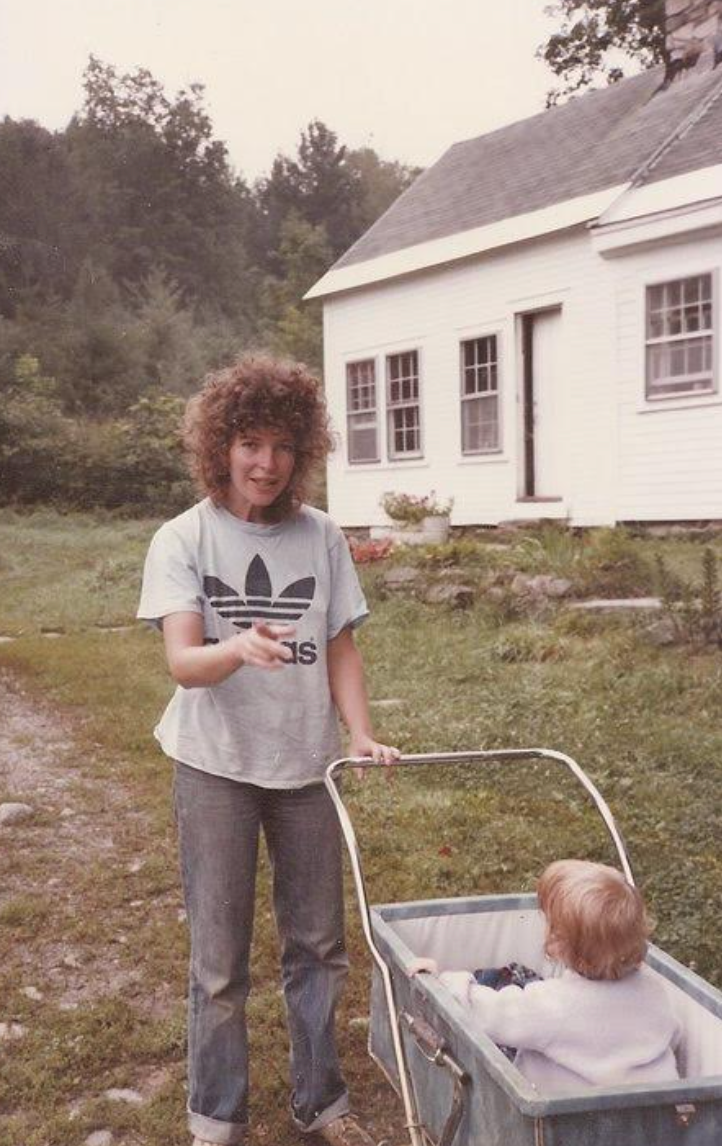
Anna with her mother (1982).
I first learned about attachment theory in graduate school. The theory, originated by British psychiatrist John Bowlby in the 1960s, posits that attachment is formed during the first few years of life and determined by the quality of relationships between children and their primary caregivers. It offers a psychological framework for understanding how early relationships with caregivers impact interpersonal relationships, behaviours and emotional regulation throughout life.
Psychologist Mary Ainsworth later expanded on Bowlby’s work by conducting the “Strange Situation” experiment where babies were left alone for a period of time before being reunited with their mothers. Based on her observations, Ainsworth concluded that there were different types of attachment, including secure, ambivalent-insecure and avoidant-insecure. Later, a fourth type of attachment was added, disorganised attachment, based on research performed by Mary Main and Judith Solomon, two psychologists from the University of California, Berkeley.
Advertisement
During my practicum, I took a quick online assessment and wasn’t at all surprised to learn that I have anxious/insecure attachment — the unfortunate combo of disorganised and fearful-avoidant. Learning about my attachment style was a critical first step toward gaining a deeper understanding of how I operate in relationships. For instance, it made me recognise my tendency to disconnect during difficult emotional experiences. My college boyfriend referred to this behaviour as “going into Anna land,” which looked like avoiding emotionally charged conversations, daydreaming and pulling away.
Over the years, the more I learned about attachment theory, the more I wondered if my anxious attachment and age-old coping mechanisms had something to do with Levi? They both seemed to share deeply entrenched and unconscious patterns of behaviour, and there seemed to be an obvious commonality between the two — fantasy.
When I was young, I adopted various mental and emotional coping mechanisms to help me feel safe. I carried these limerent strategies — detachment, avoidance and fantasy — into adolescence. Back then, I needed to escape the reality of my childhood home — my sad, lonely mother and my emotionally unavailable father. My limerent object became the lightning rod for all my emotions, both good and bad. My relationship with Levi helped to ease my insecurities and fear of abandonment, but limerence becomes pathological when a person prioritises the fantasy version of someone over the real, live version of them — especially because those two versions don’t often add up.
Advertisement
It took me a long time to distill the idea of my LO from the reality of my experience. Love demands a willingness to meet the other person in the moment, and the truth is, some nights I’d hide from Levi — in a closet or my sister’s room — as he wandered around my dark, empty house looking for me.
Coming to terms with how — and why — I created these maladaptive coping strategies was a pivotal turning point in my emotional development. As a child, I longed to grow up with answers and a sense of certainty — to be taught to believe in things like God and the Red Sox. During adolescence, my limerent object became my mental, emotional and spiritual bypass to get me through. As an adult, I was still using archaic coping mechanisms as a means to self-regulate. I knew that if I wanted to be fully autonomous and present in my life, I needed to let them go.
These days, as a mother and wife, I understand that love is an action, not just a feeling. I am responsible for creating my own happily-ever-after. While it’s impossible to have all the answers, I try to be honest with myself and others about the things I don’t understand. I believe that showing up and being present with the people I love, even when it’s difficult, is the best thing I can do — like when my son has a sensory meltdown and I sit with him until he stops screaming, or when my husband and I have a disagreement, I stay in the room and work it out.
Advertisement
Equally difficult, I allow — often force — myself to witness moments of beauty — like how my younger son still loves to climb into my bed each morning and press himself into the folds of my body. I know these moments are fleeting.
Courtesy of Anna Sullivan
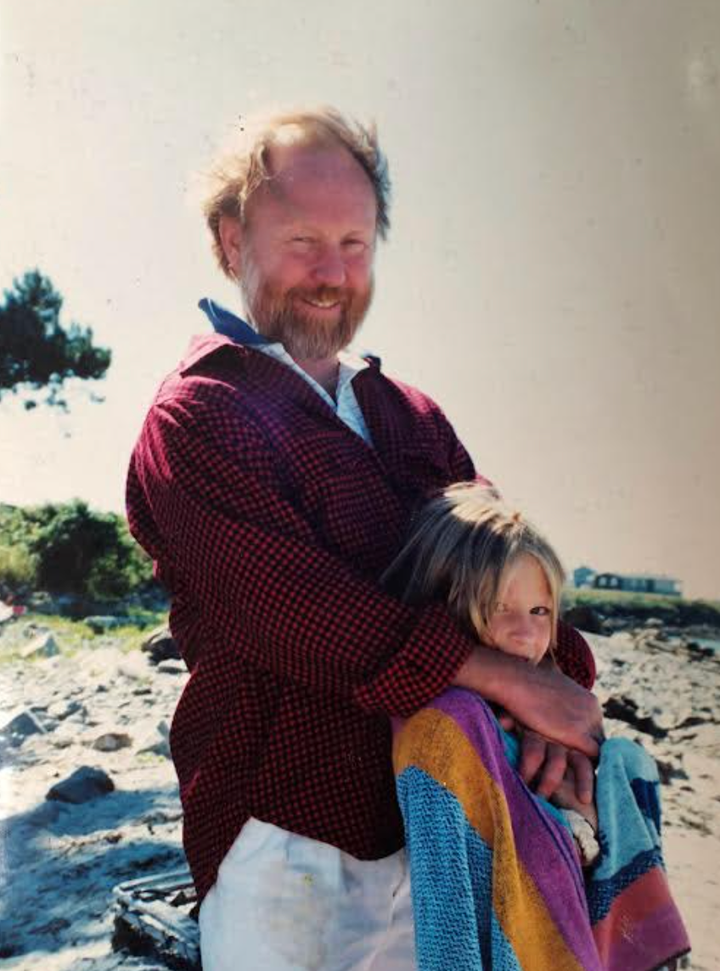
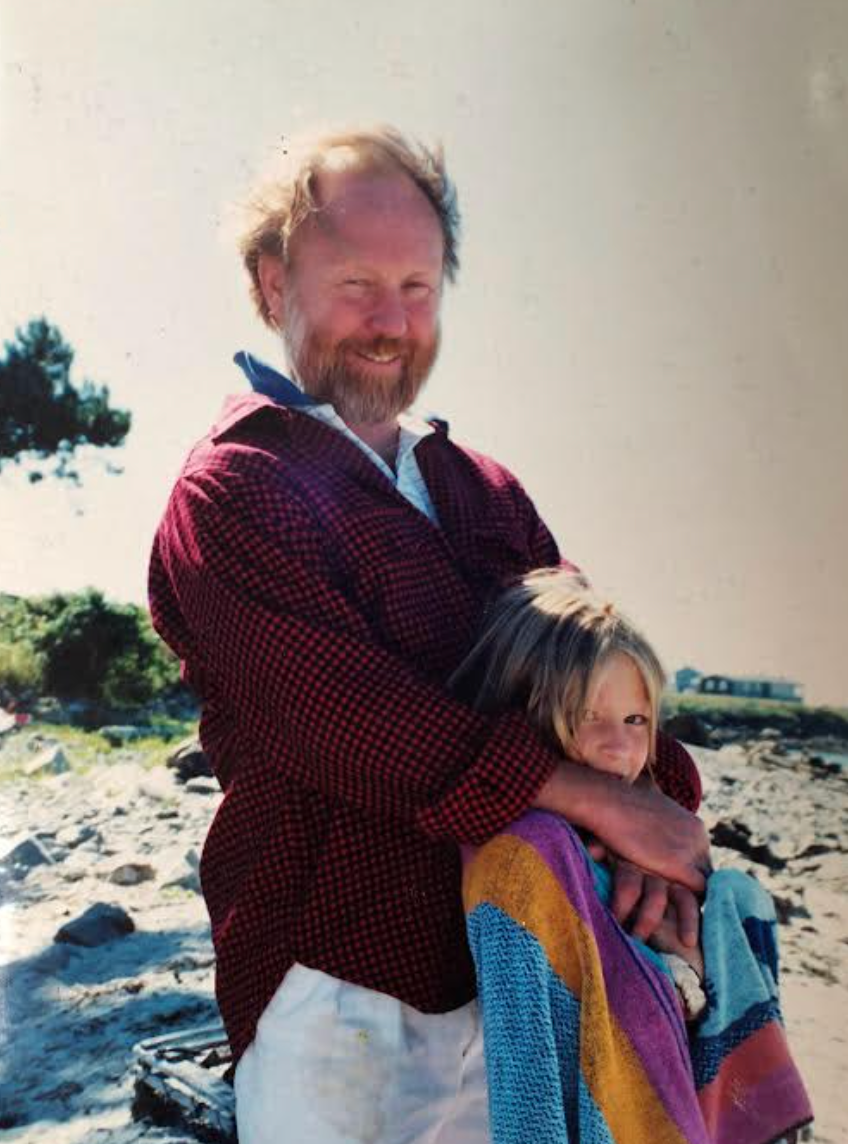
Anna with her father (1988).
Limerence is not love. It’s born from an unmet psychological need, and I believe that it can only be extinguished through the act of self-compassion. This involves the ongoing practice of forgiving myself for the mistakes I made when I was young, and forgiving my parents for their limitations, too. The truth is, my parents often failed me, but that doesn’t mean that they were failures. I know they loved me and did the best they could.
Advertisement
Over time, I’ve gotten better at sitting with uncomfortable feelings like grief, shame, anxiety and sadness. Therapy has helped a lot. And Al-Anon, which taught me how to practice discernment, or “the wisdom to know the difference.” At the end of the day, I know that I’ve developed the skills and self-assurance to move through life’s challenges without needing to check out. I’m working to rebuild my self-esteem from within instead of seeking validation from others, and I’m much more aware when I turn to fantasy as a means of self-regulation (like binging a show on Netflix). Most importantly, I’ve come to accept that my deepest longings belong to me — these primeval yearnings cannot be filled by another person.
Occasionally, I still think of my limerent object. Levi will appear in my dreams or pop into my head at random times during the day, and he’s always a much younger version of himself. However, the memories now feel less charged, and slightly melancholic. I understand the longing for a person who was always there and never there. Like a ghost, he’ll forever roam the halls of my childhood home — lit up with moonlight — searching for someone to hold in the night.
Note: Some names and identifying details have been changed to protect the privacy of individuals mentioned in this essay.
Advertisement
Anna Sullivan is a mental health therapist, author and co-host of “Healing + Dealing.” She has written for The New York Times, Vogue, Cosmopolitan, HuffPost, Today, Newsweek, Salon and more. She is currently writing a book, “Truth Or Consequences,” about going through early induced menopause due to cancer treatment. Find more from her at annasullivan.net.
The diagnosis was delusional on Truth Social early on Thursday.
US President Donald Trump cast himself as a doctor performing surgery in a post regarding his “Liberation Day” onslaught of trade-war escalating tariffs.
“The operation is over!” Trump wrote. “The patient lived, and is healing. The prognosis is that the patient will be far stronger, bigger, better, and more resilient than ever before. Make America great again!”
If healing can be defined as global markets plummeting after Trump’s announcement of a 10% across-the-board tariff on foreign goods (plus much more for major trade partners like China and the European Union), then congratulations, “Dr Trump.”
But we’re thinking he could use a dose of reality.
According to Skift Research’s Global Travel Outlook report, travel companies are anticipating a 24% rise in the number of trips people are planning for the year ahead compared to 2024.
For many of us, this will mean jetting off on flights abroad and, according to pain management doctor Dr. Sean Ormond from Atlas Pain Specialists who is working in collaboration with Total Travel Protection, we could ruin our holidays before they’ve started by taking certain medications on our flights.
Advertisement
Dr. Ormond shares: “As a pain management doctor, I always emphasise the importance of being mindful of medications, especially while flying.
“Air travel can impact how drugs work in your body, and some meds can cause serious issues at high altitudes.”
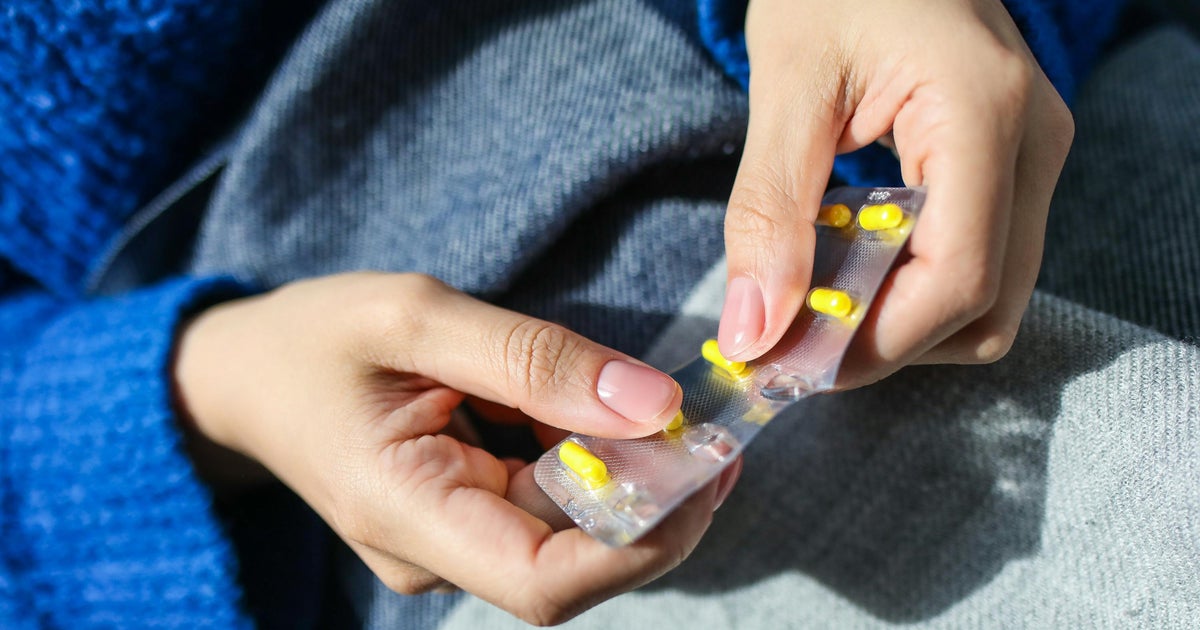
7 medications you should never take on a flight
Opioid painkillers
Opioids, such as codeine, can make you drowsy, Dr Ormond urges, “but in the air, their effects can be so much stronger.”
Advertisement
He warns that they can slow down your breathing (already not ideal in a low-oxygen environment) as well as making you feel dizzy, nauseated or even confused.
He advises: “If you need pain relief, consider non-opioid options like ibuprofen or acetaminophen instead.”
Sleeping pills
Trying to knock yourself out for a long-haul flight? Be careful, says Dr Ormond.
“Sleeping pills can leave you overly groggy, disoriented, or even sleepwalking in the aisle (yes, it happens!). And if there’s an emergency, you don’t want to be too out of it to react.”
Advertisement
Instead, he recommends that a good eye mask, neck pillow, and noise-canceling headphones are much safer bets.
Anti-anxiety meds
If you’re a nervous flyer, these may seem like the ideal solution but Dr Ormond warns that they can hit harder at altitude, saying: “You might feel extra sluggish, have trouble breathing, or even pass out mid-flight.
“If flying makes you anxious, try deep breathing, distraction techniques, or even natural remedies like melatonin.”
Advertisement
Diuretics
These meds help with swelling and blood pressure, but they also make you pee- a lot.
“Planes are already dehydrating, so diuretics can leave you dizzy, weak, and lightheaded. If you have to take them, drink extra water (and maybe choose an aisle seat!).”
Drowsy Antihistamines
Old-school allergy meds can knock you out, but not in a good way. They can make you groggy, slow your reaction time, and increase the risk of blood clots since you’re sitting still for so long.
Dr Ormond advises: “If allergies or motion sickness are a problem, go for non-drowsy options like Claritin or Allegra.”
Advertisement
Strong Muscle Relaxers
Muscle relaxers can make you feel wobbly and weak, which isn’t great when you’re in a cramped airplane seat. They can also make it harder to wake up and move around, increasing the risk of blood clots.
Instead, he says, if you have muscle pain, try gentle stretching and those air-activated heat patches instead.
Blood Thinners – Use with care
If you’re on blood thinners, be extra mindful on long flights.
“Sitting for hours raises the risk of blood clots, and if you bump yourself, even a minor injury could cause excessive bleeding. Get up and move every hour, wear compression socks, and talk to your doctor about precautions.”
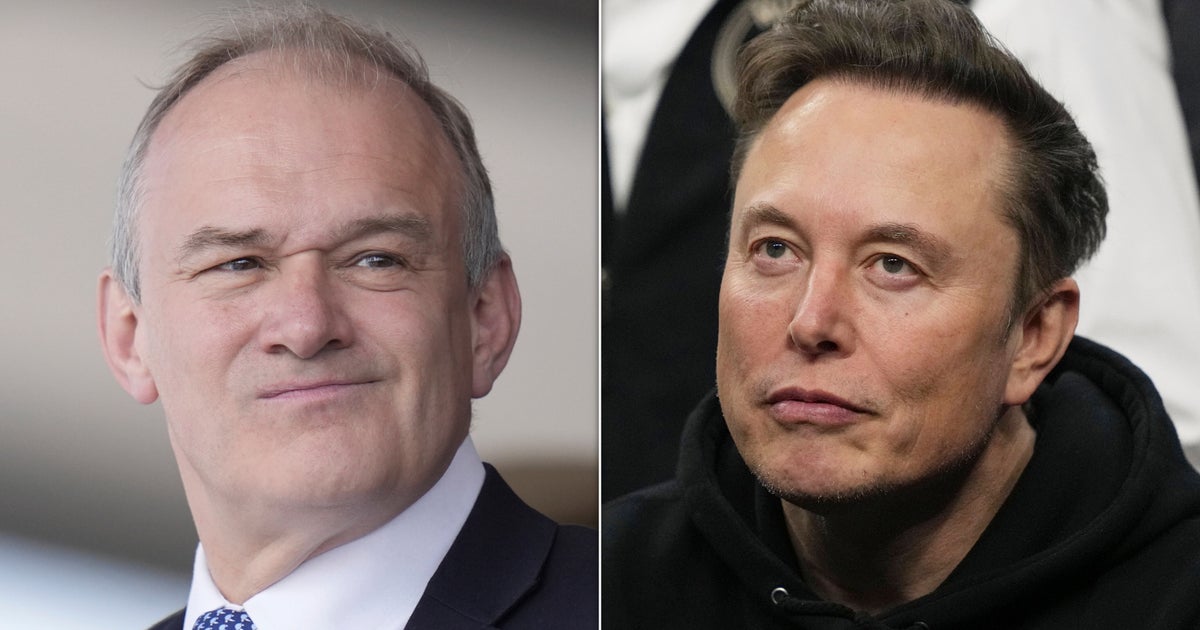
The Lib Dem leader, who has a long-running feud with the world’s richest man, also hit out at the government reportedly preparing to water down its tax on tech firms in order to agree a trade deal with America.
That came after Davey said Musk “clearly knows nothing about Britain” at the height of the row over child grooming gangs.
In an interview with Channel 4 News, Davey was asked what he would do to threaten Trump amid fears of a global trade war.
He said: “Let’s put tariffs on Teslas. You know, let’s look at the tech bros. I mean, I’m told that No. 10 in the talks, they’ve discussed cutting the digital services tax, which is a tax paid by very large, 20 multinationals in the tech industry, mostly American.
Advertisement
“It’s a very modest tax. They’ve had a monopoly for ages and the idea that we would give up that tax on these hugely wealthy people, including of course Elon Musk, the richest man in the world, at the same time we’re cutting aid to the poorest in our world and welfare benefits in the UK, that would be, I think, unthinkable.”
Keir Starmer has refused to join the likes of Canada and the EU in threatening retaliatory tariffs against the US.
He said said the government will instead continue to negotiate the terms of a trade deal with Washington which ministers hope will see the tariffs of British imports either reduced or removed completely.
Advertisement
However, the government has put the White House on notice by giving British firms until May 1 to set out how retaliatory tariffs will effect them.
A 417-page list of US products that could have tariffs imposed them has already been drawn up by the government.
Trade secretary Jonathan Reynolds said: “It remains our belief that the best route to economic stability for working people is a negotiated deal with the US that builds on our shared strengths.
Advertisement
“However, we do reserve the right to take any action we deem necessary if a deal is not secured.”
Europe is trying to “occupy” Ukraine by offering to send peacekeeping troops to the war-torn country, according to a Russian diplomat.
UK prime minister Keir Starmer has offered to put British boots on the ground to support Kyiv if Russia agrees to the US’s peace plans – and as long as there is an American security guarantee.
Advertisement
Some EU countries and Nato allies have already indicated they would join this plan, as part of Starmer’s “coalition of the willing”.
Moscow has not agreed to a permanent truce yet, nor has Donald Trump agreed to provide a security backstop to a peacekeeping plan, so any such plan is still a long way off.
But Rodion Miroshnik – Putin’s so-called “ambassador-at-large” for Ukraine’s alleged “crimes” – attempted to cast doubt on the offer to send a “reassurance force” on Wednesday.
Advertisement
According to the Russian state news agency TASS, Miroshnik said: “The Europeans have announced a project to build a reassurance force that, according to the organisers, will be sent to Ukraine after a peace agreement is signed.
“This could, in fact, be viewed as a blatant occupation of Ukraine by Europe.”
It was Vladimir Putin who invaded Ukraine in 2022 and who continues to occupy a fifth of its sovereign territory.
Moscow has even claimed Ukraine would have to formally cede that occupied land in any permanent truce.
Advertisement
But Miroshnik still bizarrely alleged Europe wants to “take control over [Ukraine’s] political regime militarily while retaining external governance of this land regardless of how negotiations may end.”
Ukraine has actually welcomed any physical support from its allies, and asked for at least 200,000 troops to deter any future Russian aggression.
President Volodymyr Zelenskyy said this week that Kyiv was meeting with several countries “who are ready to deploy a contingent in one form or another”.
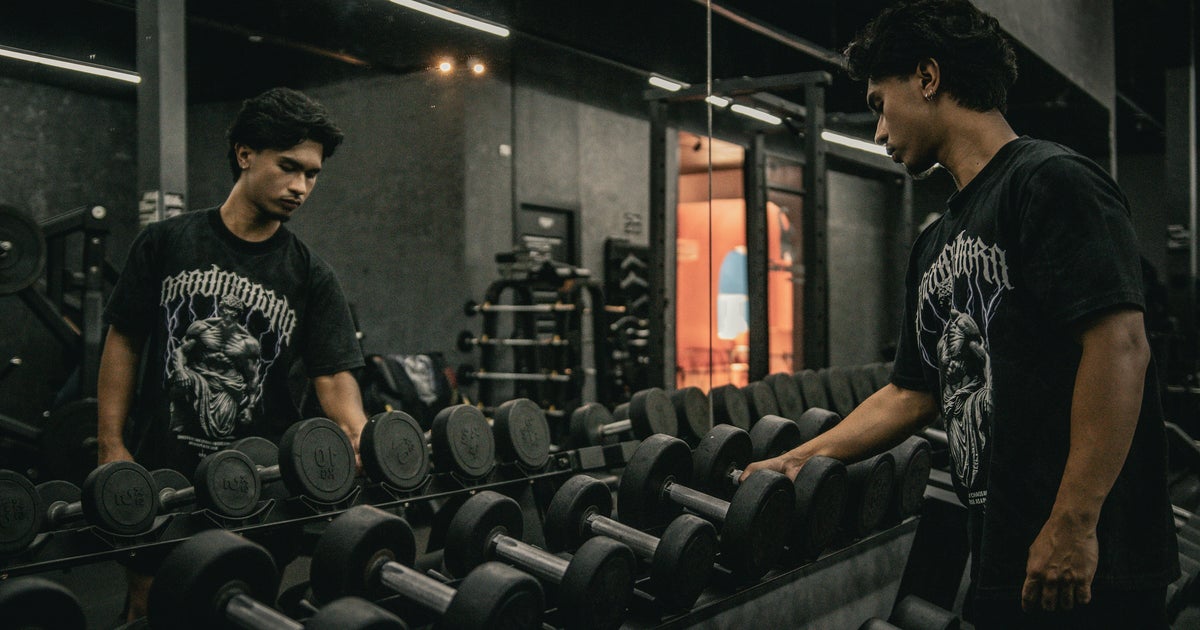
This morning, I left my spin class, walked up to the weights section to get the rest of my workout in, and promptly turned back around.
The squat rack (my huge, bustling gym only has one) had a three-person line around it, excluding the lifters circling, keen-eyed, like beefy kestrels.
Advertisement
Meanwhile, dustballs might as well have been blowing across the grey acres of treadmill belts upstairs.
Why does this happen? After all, my experience is far from unique – Redditor u/IndependentHawk9655 asked the members of r/AskUK, “Why does every chain gym in the UK still prioritise cardio equipment that never gets used over the weights room/resistance machines which are always absolutely rammed?”
So, we spoke to Maria Vazquez, head of training at MYWOWFIT, about what’s really going on.
Advertisement
It’s strategic
“It’s all about strategy,” Vazquez told HuffPost UK.
She explains that “Most beginners are more comfortable jumping on a treadmill or elliptical than going straight to strength training equipment.
“So having a lot of cardio machines means gyms can accommodate the high volume of new members who are still getting into their routine.”
“Machines like treadmills and ellipticals require less supervision, lower liability risk,” Vazquez shared.
“Squat racks and Smith machines require more space, proper form and sometimes a spotter which can deter some gym goers.”
Lastly, there’s the time math; a treadmill user might be on there for 40 minutes, while someone is unlikely to spend that long on a Smith machine.
Advertisement
The lifter, unlike the runner, can allow someone else to “work in” their sets too.
But if that logic is sound, why is the squat rack still always busy?
The problem is that gyms might not have adapted to new trends, the expert said.
“In my experience, this [pattern of equipment use] is all changing. More people are getting into strength training and gyms are starting to balance out their offerings,” Vazquez explained.
“There is definitely a demand for more squat racks, benches and space for heavier lifting. But for now, cardio will probably remain the priority because it’s just more practical for the majority.”
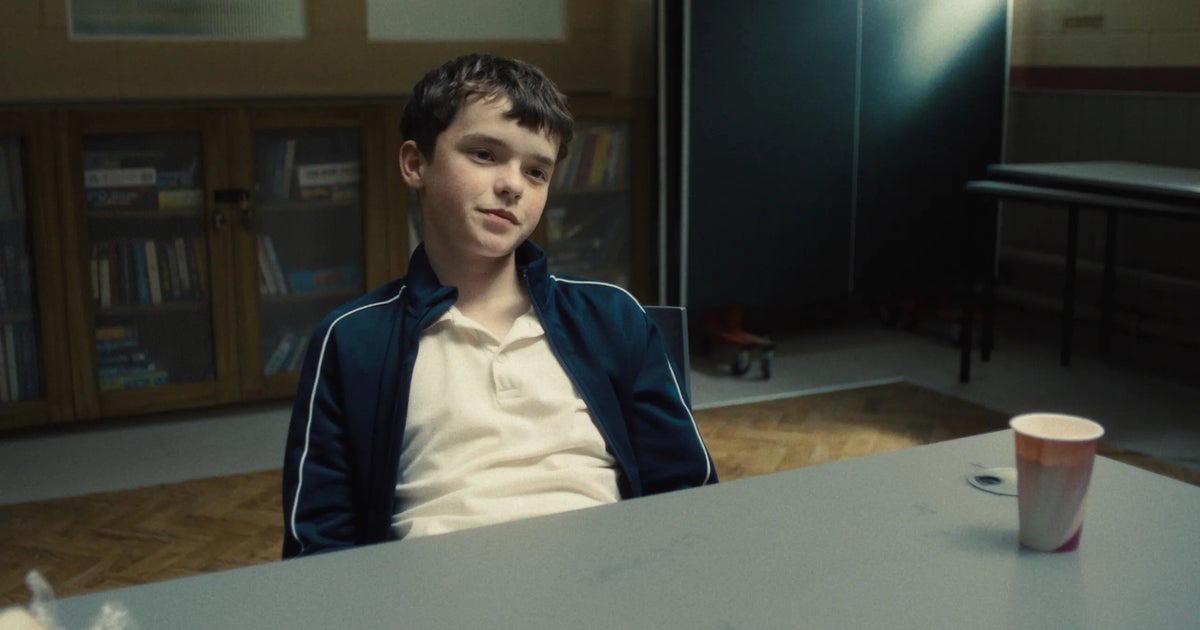
Kemi Badenoch has repeated a conspiracy theory about Adolescence which has been denied by one of the programme’s creators.
The Tory leader told GB News that the Netflix drama is “based on a real story, but my understanding is that the boy who committed that crime was not white”.
Advertisement
In the show, a white boy is arrested after a young girl is stabbed to death.
Posting on X, the right-wing commentator Ian Miles Cheong told his 1.2 million followers: “Netflix has a show called Adolescence that’s about a British knife killer who stabbed a girl to death on a bus and it’s based on real life cases such as the Southport murderer.
“So guess what. They race swapped the actual killer from a black man/migrant to a white boy and the story has it so he was radicalized online by the red pill movement.
“Just the absolute state of anti-white propaganda.”
X owner Elon Musk replied the post saying: “Wow.”
Advertisement
He told the News Agents podcast: “They’ve claimed that Stephen and I based it on a story, and another story, so we race-swapped because we were basing it on here and it ended up there, and everything else. Nothing is further from the truth.
“I have told a lot of real life stories in my time, and I know the harm that can come when you take elements of a real life story and put it on screen and the people aren’t expecting it. There is no part of this that’s based on a true story, not one single part.”
He added: “We’re not making a point about race with this. We are making a point about masculinity. We’re trying to get inside a problem. We’re not saying this is one thing or another. We’re saying this is about boys.”
Stephen Graham told the Radio Times that his inspiration for Adolescence came from a series of different killings he had read about.
He said: “Where it came from, for me is there was an incident in Liverpool, a young girl, and she was stabbed to death by a young boy. I just thought, why?
“Then there was another young girl in south London who was stabbed to death at a bus stop. And there was this thing up north, where that young girl Brianna Ghey was lured into the park by two teenagers, and they stabbed her. I just thought, what’s going on? What is this that’s happening?”
Recent studies reveal that about 700,000 people in the UK are autistic, which works out as around one in every 100 people in the population. Research also indicates that the numbers could be twice as high, as there are so many people still undiagnosed.
With this in mind, Dr Selina Warlow, a clinical psychologist and owner of The Nook Neurodevelopmental Clinic, has shared a glossary of terms that give insights into some of the traits of autism, providing support when it comes to recognising symptoms.
Advertisement
She says: “Conversation around neurodiversity is becoming normalised, and that’s so positive to see.
“But the figures show a need for more awareness to help people identify whether they [are autistic], so they can start their assessment journey. Receiving a diagnosis can open access to expert resources that support autistic people to thrive in society.”
From masking to autistic burnout – a psychologist explains 8 traits of autism
Stimming (Self-Stimulatory Behaviour)
“Stimming is a term that refers to repetitive movements or sounds often associated with autism to manage sensory overload. This includes rocking, tapping, hand-flapping and spinning”, explains Dr Warlow.
While these aren’t exclusive to autistic people, autistic people are more likely to use them as tools of self-regulation.
Advertisement
“Masking is behaviour autistic people may use to hide their true characteristics to match those of neurotypical individuals”, says Dr Warlow.
“This could involve copying facial expressions, planning conversations in advance, or holding in ‘stimming’, for example swapping hand clapping, with playing with a pen.”
Autistic burnout
“Autistic burnout – being extremely tired both mentally and physically – can be associated with the act of ‘masking’ (concealing autistic behaviours) for a long period of time, or sensory or social overload.”
Advertisement
Dr Warlow shares that some of theymptoms of autistic burnout include withdrawal from social life, reduced performance, and increased sensitivity to certain stimuli.
Literal thinking
For some autistic people, language is always very literal, which can result in confusion with figures of speech, irony or indirect requests.
“For instance”, Dr Warlow adds, “being told to ‘pull your socks up’ might be understood literally, not as a motivational phrase, so using exact words may be more helpful during conversations.”
Advertisement
Assessment
Prior to diagnosis, a person showing signs of being autistic may choose to be assessed. This process can either happen through the NHS by visiting your GP or you can seek a private assessment.
Dr Warlow says that a diagnosis can be both “an emotional, but also empowering time”, while you learn about autism and adjust your lives to cater for its strengths and needs.
Hyperfocus
Hyperfocus is where an autistic person is able to focus intensely on an activity, and can become absorbed in it to the point of forgetting about the time. This is useful in work or hobbies but can result in neglect of other aspects of life such as food or rest.
Advertisement
Dr Warlow advises: “If it is possible to identify hyperfocus patterns, alarms can be used to help keep tasks moving.”
Special interests
Autistic people can have a particular interest which they find fascinating and dedicate lots of time to learning about. Special interests usually begin presenting in childhood but can also form as an adult. Special interests could include anything from dinosaurs or superheroes to hobbies like gardening.
Dr Warlow adds: “Chris Packham is an example of a person with autism who turned his childhood special interest in animals into a successful career, becoming one of the UK’s best-loved natural world TV presenters.”
Advertisement
Dr Warlow reveals that the term AuDHD – a combination of Autism Spectrum Disorder (ASD) and Attention Deficit Hyperactivity Disorder (ADHD) – is gaining traction in the neurodiverse community, with over 12,000 monthly Google searches, 375,000 posts on TikTok and 172,000 hashtags on Instagram.
“Many autistic people also have ADHD, which can bring certain benefits and difficulties at the same time. While autism is characterised by a desire for sameness and a focus on details, ADHD is defined by impulsivity and difficulty focusing.”
If you think you may be autistic, speak to your GP for a referral.