James Cameron is opening up about the time he narrowly escaped death on the set of his 1989 film The Abyss.
While appearing at Beyond Fest in Los Angeles on a panel after a screening of The Abyss: Special Edition, the filmmaker revealed that he nearly didn’t survive to see the film actually hit the cinemas due to an underwater mishap, according to Variety.
Advertisement
“We had the ‘angels,’ which were the safety divers that were right there, and each one was assigned to one or two of the actors and just kept them in sight the whole time. [But] they weren’t watching me,” Cameron said of the precautions his team had in place for everyone’s safety while filming.
Cameron explained that the movie was shot “30 feet down” under water, which meant he had to wear “heavy weights” around his feet and waist to keep him submerged so he could move his camera around.
But one day on set, the unthinkable happened.
The director said he ran out of air at one point and tried to alert the underwater director of photography, Al Giddings, on the PA system.
His warnings fell on deaf ears though, as Cameron explained to the panel’s moderator, Jim Hemphill, that Giddings “had been involved in a diving accident and he blew out both eardrums”.
Advertisement
“I’m wasting my last breath of air on an underwater p.a. system going ‘Al… Al…’ and he’s working away with his back to me,” he added of the horrifying incident.
Cameron said that he was able to remove his gear and tried to resurface to get air, but that’s when another hiccup took place.
He said the “angels” began trying to help him, but wound up making matters worse by shoving a faulty breathing mask in his mouth.
“He sticks a regulator in my mouth that he didn’t check. It had been banging around the bottom of the tank for three weeks and had a rip through the diaphragm, so I purged carefully and took a deep breath… of water. And then I purged it again, and I took another deep breath… of water,” he said.
“At that point it was almost check-out point and the safety divers are taught to hold you down so you don’t embolise and let your lungs overexpand going up,” he continued.
Advertisement
Cameron said though he knew what he was doing as an experienced diver, but the safety diver wouldn’t let him go.
This left the Titanic filmmaker only one choice…to throw blows at the diving assistant.
“I had no way to tell him the regulator wasn’t working. So I punched him in the face and swam to the surface and therefore survived,” Cameron shared.
The Abyss was considered a box-office disappointment when it released, only earning around $9 million (£7.38 million) in the US. The film was initially met with mixed reviews, but later became a cult classic.
The former Baywatch star shone in a stripped-back version of her signature look while attending the Isabel Marant show at Paris Fashion Week on Thursday.
In photos from the event, Pamela wore a sleeveless yellow dress and a colour-coordinated bag from the brand, with neutral heels.
Advertisement
She paired the look with simple studs and a necklace, and wore her wavy, iconic blonde hair down.
Anderson attends the Isabel Marant Womenswear Spring/Summer 2024 show as part of Paris Fashion Week on Sept. 28.
Stephane Cardinale – Corbis via Getty Images
Anderson pictured during a fashion week appearance in Paris, France.
Antoine Flament via Getty Images
Pamela has rocked similarly fresh-faced looks at other fashion shows recently, including The Row’s runway show at Paris Fashion Week on Wednesday and at the Proenza Schouler show earlier this month during New York Fashion Week.
Anderson attends The Row runway show during Paris Fashion Week on Sept. 27.
Rachpoot/Bauer-Griffin via Getty Images
Advertisement
Sofia Richie and Pamela Anderson at the Proenza Schouler Spring 2024 Ready To Wear show on Sep. 9 in New York.
Gilbert Flores via Getty Images
The actor regularly went makeup-free in her documentary, Pamela, A Love Story, and has spoken about why she’s scaled back her signature look.
“She was the best,” she told the outlet of her close friend. “And since then, I just felt, without Alexis, it’s just better for me not to wear makeup.”
Pamela described the experience of being makeup-free as “freeing, and fun, and a little rebellious too.”
Advertisement
“Because I did notice that there were all these people doing big makeup looks, and it’s just like me to go against the grain and do the opposite [of] what everyone’s doing,” she added.
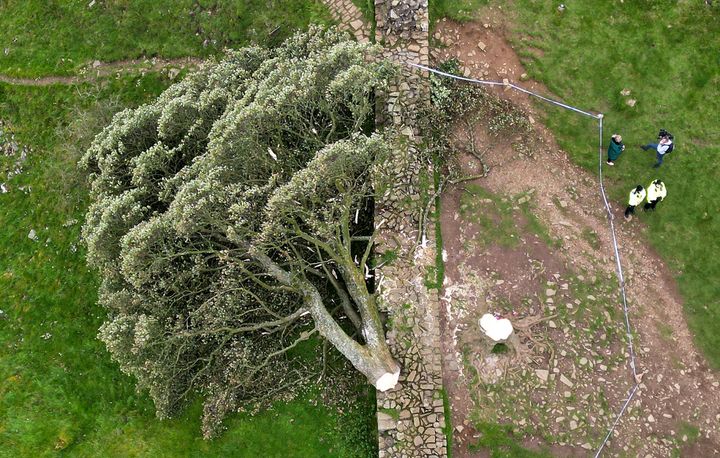
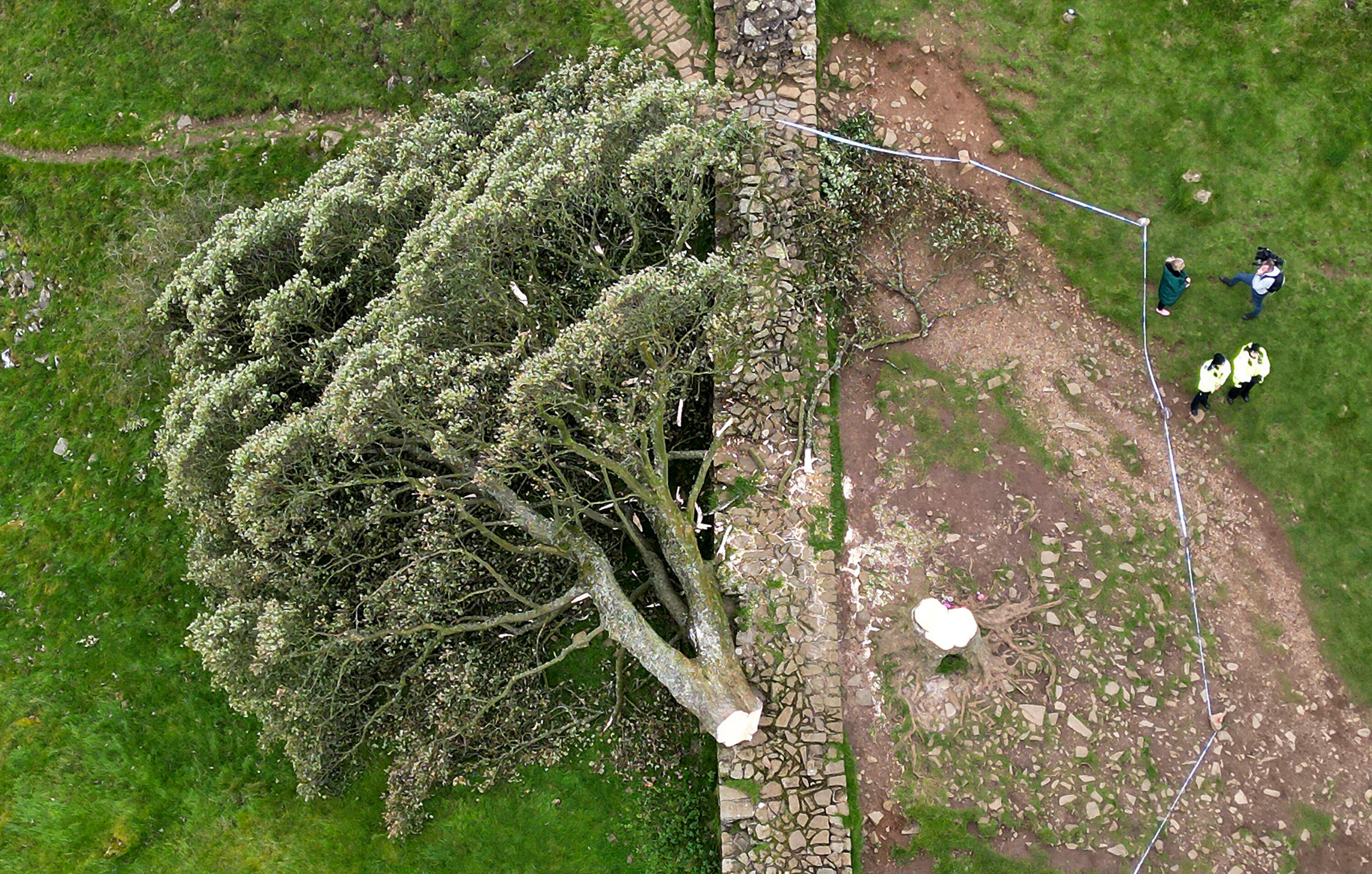
The solitary bit of foliage was known for growing at a natural trough between two small hills at the Roman-era Hadrian’s Wall, creating quite the picturesque scene.
Advertisement
The tree was often named after the 1991 film it starred in, Robin Hood: Prince of Thieves, and was a real tourist attraction.
The Northumberland icon was even named Tree of the Year in 2016 by Woodland Trust.
Its exact age was unknown, but it was believed to be around 300 years old.
However, it was found cut in two in a reported act of vandalism on Thursday morning – prompting an outpouring of sadness on social media.
Aerial view of the ‘Sycamore Gap’ tree on Hadrian’s Wall lying on the ground.
Jeff J Mitchell via Getty Images
Still, the National Trust general manager Andrew Poad told BBC Breakfast that the stump which remained was “healthy” and so could be used to grow new shoots – a technique known as coppicing.
Advertisement
He said: “It’s a very healthy tree, we can see that now, because of the condition of the stump, it may well regrow a coppice from the stump, and if we could nurture that then that might be one of the best outcomes, and then we keep the tree.”
However, the estate manager at the Woodland Trust, said it would take a few years to develop into “even a small tree” – and up to 200 years “before it is anywhere close to what we have lost”.
He added: “Once a tree of this age has gone, the sad truth is you can’t replace them within any visible timeframe. It takes centuries.”
A 16-year-old boy was arrested on the suspicion of criminal damage as part of a police investigation into the incident on Thursday.
Police said at the time that he was in custody and helping with the investigation.
Northumberland National Park Authority officials have also concluded that the tree was “deliberately felled”.
Advertisement
The high sheriff of Northumberland, Diana Barkes, said the incident was a “huge loss” to everyone, according to the BBC.
She added: “Whether we can create something out of the wood for people to come and remember the tree and remember their loved ones, I don’t know, but maybe.”
Over brunch on the Upper East Side, a new acquaintance looks into my eyes and asks, “Is it OK to say, like, congratulations on getting away from all that?”
I’ve just told her about my Hasidic upbringing, about leaving the community and the husband I married at 19. Every time I share this with someone new, it feels like I’ve dropped a grenade into the centre of our conversation.
Advertisement
“Of course!” I say. “Thank you so much.” I keep it simple. The blast of my disclosure has already filled up the space in the room.
Walking home, I think about my new acquaintance spending her young adulthood in a college dorm. While she was rushing a sorority, I was embedded into an entirely different circle of women. Instead of dressing up for frat parties, mine sat in prayer groups and exchanged numbers for local wig stylists.
I got married in 2004. Someone named Britney kept showing up on the cover of magazines in the supermarket checkout lines, flashing her tan stomach while I chose to keep my eyes on my own calf-length skirt. I’d just moved to Lakewood, New Jersey, with a man with whom I had shared six formal dates and then a wedding.
The presence of the largest American yeshiva (a religious college where Bible study was the only subject) and the low real estate prices meant that Lakewood was a hub for young, vibrant, God-fearing couples like us. The identical beige townhouses were filled with black-hatted husbands and modestly dressed wives who agreed to follow laws such as keeping kosher, observing the Sabbath, and the one newest to me: observing family purity.
Advertisement
It was a system designed to protect our relationship; we agreed to touch each other only during the “clean” days of each month, and to abstain from touch each month for the length of my menstrual period, plus for seven blood-free days afterward.
During the months before my wedding, my bridal teacher had taught me to swipe a square white cloth inside my vagina twice on each of my clean days. But weeks after my wedding, on day six of my seven clean days, I hit a complication. There was a splotch on my tissue in the morning light. I wasn’t sure whether the stain was big enough to require that I start counting my seven clean days all over again.
Sighing, I scrawled my husband’s phone number on the outside of an envelope, placed my tissue inside, and dropped it in the mailbox of the rabbi who would hold my specimen up to the daylight, scrutinise the edges of the blood stains, and call my husband.
But the rabbi was unable to rule on the blood without more information, information that must come from my physical body. “There is a lady for these situations,” he said, and then gave us a phone number.
“Mammele, do you usually bleed like this?”
The woman held a tissue up, drops of my blood smeared on the dull white cloth. I held onto the sides of what seemed like a makeshift gynaecologic exam table in the middle of her husband’s study.
Advertisement
My bare feet were in the stirrups, as instructed, my skirt pulled up to my waist, my vagina on the other side of a floral yellow sheet. In the eight weeks since my marriage, it had been penetrated by a man’s naked part for the very first time, then a doctor’s speculum and a white linen cloth four inches square, and now the woman’s fingers.
I, however, was instructed never to touch myself, unless it was before going in a ritual bath. Then I was to inspect every crevice of my body in front of a full-length mirror, checking for loose hairs or bits of fluffy tissue. I re-read my bridal class notes every week, determined to get it all right.
“No. I mean, I don’t know,” I said to the woman’s headscarf, bowed below my waist. Her sharp fingers poked inside me, but my gratitude was so much greater than the discomfort.
Please make me pure, I begged the One Above, as I pushed the stiff brown bangs of my wig back from my hot face. I thought aboutmy mother and my four older sisters, all of whom kept small white squares for the inspection of their own menstrual blood in their bedside tables. I wished they could be with me, holding my hand and telling me whether the blood we shared was prone to leaking out of us in between periods.
I had been taught to keep those matters private, though, just between husband, wife, and essential rabbinic personnel.
Advertisement
“I will call the rabbi for you, Mammele,” she said, a phone propped between her ear and shoulder.I heard God’s trusted servant talk to the rabbi about the shade of my blood, the amount of it. I tried to sit up, but she motioned me back down.
I wondered if her husband used the study at night, if he smelled the trepidation of the women who had been there during the day, legs splayed in the middle of the room, his wife’s head between them. I wondered if she washed the sheet. I also wondered when it would be appropriate to put my vagina away, but as I watched her write the rabbi’s words on a scrap of paper, I remembered what we both knew.
My body no longer belonged to me.
“Kosher!” she said, a smile breaking up her worried face for the first time in our encounter. “You may continue to count your seven days!”
“What did the rabbi say?” I asked, sitting up, folding the sheet behind my thighs.
She was already shuffling the papers together, shoving them into a drawer. She turned back toward me, looked at my face as if she had forgotten it had been there the whole time.
“It was blood from the outside area, from some little shaving cuts or something, but it is not menstrual blood.” I was allowed to shave, but I swallowed a flicker of embarrassment for having indulged in a practice that would put my day count in question.
Advertisement
But I was clean! Relief hit me. I could serve God now, and my husband.
When she left the room so I could “put myself together,” I heard her through the curtain, soothing a baby. I hoped that God was watching my devotion, that He would bless me with a house filled with children of my own very soon.
Thirteen years later, after birthing two children, divorcing my first husband, then marrying and divorcing a second Jewish man, I realised I would never be able to relax near a naked male body. The dreams I had of women weren’t going away. I couldn’t pray it away. I couldn’t even marry it away.
And more: I could no longer believe in a God who would demand sacrifices of flesh and heart.
I moved out of the shtetl, to New York City, where I shucked the fear and self-loathing and dated women out in the open, sharing passionate kisses on city streets.
Photo By Noa Green
The author today
In the nearly two decades after that woman took time out of her busy day to inspect my blood and deem me pure, I saw the shape of her kindness come through the hands and hearts of other women. It was delivered in platters of home-cooked pastries, baskets of onesies for my babies, and phone calls to see how I am feeling from women I barely know. But the thick rope of that kindness began to fray as I changed, as I slowly snuck one toe at a time outside of my closet doors.
Advertisement
I know I will never again meet a woman and undergo a pro bono ritualistic vaginal exam in her living room within minutes of saying hello. Mostly, that is really excellent news.
But a small part of me, underneath the broken section of my heart, will miss that forever. I miss the ability to skip the preamble with someone who has been on the same exact wavelength since birth. I miss operating in sync with a platoon of people marching toward a clear vision of heaven.
Sometimes, I even miss having my blood flow onto the same cloths that my sisters use, that my mother, and grandmother, and her mother used, too. By leaving the rituals and rules, the white examination cloths and the pro bono exams, I left all of them behind, too. The people.
As I walk along the East River in rainbow-striped workout pants, I think about the way I ended the conversation with my very sweet and thoughtful acquaintance at brunch. It has been habitual, since I left the enclave, my careful shuttering of myself. I smile and nod and say I’m fine, even when I feel the echo of loneliness in my entire being.
The “congratulations” offered to me over this morning’s cafe table hovers in my mind and, for a moment, I want to turn around, walk back, give the celebratory word right back. I want to be honest, for once, and say that congratulations, while a generous sentiment, is too shiny for what I have experienced.
Advertisement
I am not sure what response phrase can encompass all of it, but it’s something more textured, like my natural, loose hair waving in the breeze. Something like: I wish gentleness for you ― and for all who have loved you.
Dr. Sara Glass is a psychotherapist, speaker, and writer in NYC. She has published pieces in The New York Times, The Daily News, and Psychology Today. Her memoir, “Kissing Girls on Shabbat,” is in publication with Simon & Schuster, with a scheduled release date in June 2024. You can follow her on Instagram @drsaraglass.
There’s nothing like buying an airline ticket to launch cortisol levels into the stratosphere.
Should you use an aggregator or book directly with the airline? Will searching on a Tuesday afternoon score you a deal you couldn’t find shopping for a flight on a Saturday night? Does purchasing inside the legendary “Goldilocks window” really give you the best shot at securing the cheapest fare? And do you really need that trip insurance?
Basically … how do we save the most time and money without sacrificing our sanity?
That’s exactly what Raj Punjabi and I wanted to find out on this week’s episode of “Am I Doing It Wrong?” — HuffPost’s podcast that explores the all-too-human anxieties we have about trying to get our lives right.
To do so, we lovingly pummelled HuffPost senior reporter Caroline Bologna with all of our airline ticket-related questions, and she expertly separated travel facts from flight fiction so we — and you — can find the very best deals:
After you’ve had a listen above or wherever you get your podcasts, subscribe to “Am I Doing It Wrong?” so you don’t miss a single episode, including last week’s investigation of the ins and outs and tipping. Next week we’re tackling job interviews — including the one thing you never want to say.
Need some help with something you’ve been doing wrong? Email us at AmIDoingItWrong@HuffPost.com and we might investigate the topic in an upcoming episode.
Russian media just put out more supposed evidence that an admiral Ukraine claims to have killed is actually alive – but experts still don’t know what to believe.
On Monday, Ukraine alleged that Viktor Sokolov, the commander of Russia’s Black Sea Fleet, died along with 33 other officers following a missile strike on Moscow’s naval headquarters in Crimea last Friday.
But, on Tuesday, Russia’s defence ministry released a video on Telegram – supposedly filmed the day before – which apparently showed the admiral remotely attending a large military conference with the defence minister.
While the BBC used facial recognition software to confirm the man in the clip was indeed Sokolov, the broadcasters were not able to pinpoint when it was filmed.
The clip prompted Ukraine’s military to clarify their statement, saying: “According to available sources, the commander of the Black Sea Fleet is among the dead. Many have not yet been identified due to the fragmentation of body parts.”
Advertisement
However, it’s also not clear how Kyiv would be able to look at the area it struck because it took place in Russian occupied land.
The following day, the Russian state media started to issue more unverified videos of the admiral – and this time, he could be heard speaking to journalists.
An undated clip posted on the Russian state-run TV network, Zvezda, seemed to show Sokolov saying the Black Sea Fleet has been “fulfilling goals that are set by command”.
Another video posted by a local news outlet showed Sokolov responding to a question about the impacts about a Ukrainian strike, saying: “What happened to us? Nothing happened to us. Life goes on.”
This turn of events – the latest in the ongoing information war between the two countries – have left experts quite bewildered.
Advertisement
The US think tank, the Institute for the Study of War, said in its daily update that it is “unprepared at this time to make an assessment about the authenticity of the footage or the date of the filming”.
It added: “The Kremlin and Russian Ministry of Defence have been notably silent on the matter and have not directly confirmed that Sokolov is alive.”
Russia also has a reputation for obscuring narratives which might cause embarrassment for the Kremlin.
While Sokolov’s fate is still unknown, clips on social media suggest the attack last Friday did take place in one form or another.
Russia also claimed at the time that it had shot down five incoming missiles and only one serviceman had died in the incident, though it admitted its headquarters were damaged.
Advertisement
Russia’s foreign ministry spokesperson, Maria Zakharova, said at a briefing that the West were to blame for the strike.
She said: “There is no doubt that the attack had been planned in advance using Western intelligence means, NATO satellite assets and reconnaissance planes and was implemented upon the advice of American and British security agencies and in close co-ordination with them.”
The Black Sea has become the new focal point of the war, with Kyiv attacking Russian warships to stop any advances towards the Ukrainian mainland, deter cruise missiles and disrupt Moscow’s blockade on Ukraine’s ports.
Ukraine is also determined to liberate Crimea, which was illegally annexed by Russia in 2014.
During a flight on 31 July 2022, the Blue star was said to have been “slurring his words and staggering around” after drinking a whole bottle of port before a British Airways flight from Glasgow to London City Airport.
Advertisement
Ryan was refused more alcohol on board the plane, and after being told to return to his seat, made comments about cabin crew member Leah Gordon, referring to her as a “chocolate cookie” before grabbing her wrists.
Earlier this year, Gordon recalled: “He was making comments about my complexion, you’re my chocolate darling, my chocolate cookie, and I’m going to have your chocolate children.”
She added: “I was intimidated, I felt a bit embarrassed like I wasn’t doing my duty properly.
“To get comments about my colour whether intentional or not, it was just unacceptable and so derogatory. I just felt like it wasn’t fair and I shouldn’t have to put up with it. I don’t go to work to be assaulted or harassed.”
Lee on stage at the O2 Arena in December 2022
Simone Joyner via Getty Images
Advertisement
Ryan was found guilty in January, and on Thursday morning, he was given a prison sentence of 12 months suspended for 18 months, for what Judge Nicholas Wood described as his “totally unacceptable and disgraceful” crimes.
″[That] may be the sort of language used in the entertainment industry, but that is somewhat of an indictment on the entertainment industry and it has no place on an aircraft, being directed at cabin crew,” the judge told Ryan.
“You know that and I think you have learned your lesson.”
“If any good could come out of this, it has brought you to your senses”, he added.
The former Celebrity Big Brother and Strictly Come Dancing contestant was also ordered to pay £2,500 in compensation to the cabin crew member in question, £750 to other members of the team and £510 in legal costs.
Ryan has said he has no memory of the incident due to the amount of alcohol he had consumed.
He previously argued: “My band member is Black, I’m not racist, I’ve had Black girlfriends, mixed-race girlfriends. It was banter, just drunk banter I suppose, there was no malice or intention to upset anyone.”
Pop superstar Kylie Minogue is still going from strength to strength, 16 albums, 36 years and countless awards, nominations and records-shattered after her musical debut.
And, at a packed-out, intimate gig at London’s Shepherd’s Bush Empire on Wednesday evening to celebrate the release of her latest offering, Tension, she received perhaps the most impressive accolade of them all – the endorsement of national treasure, new Bake Off host and queen of people’s hearts, Alison Hammond.
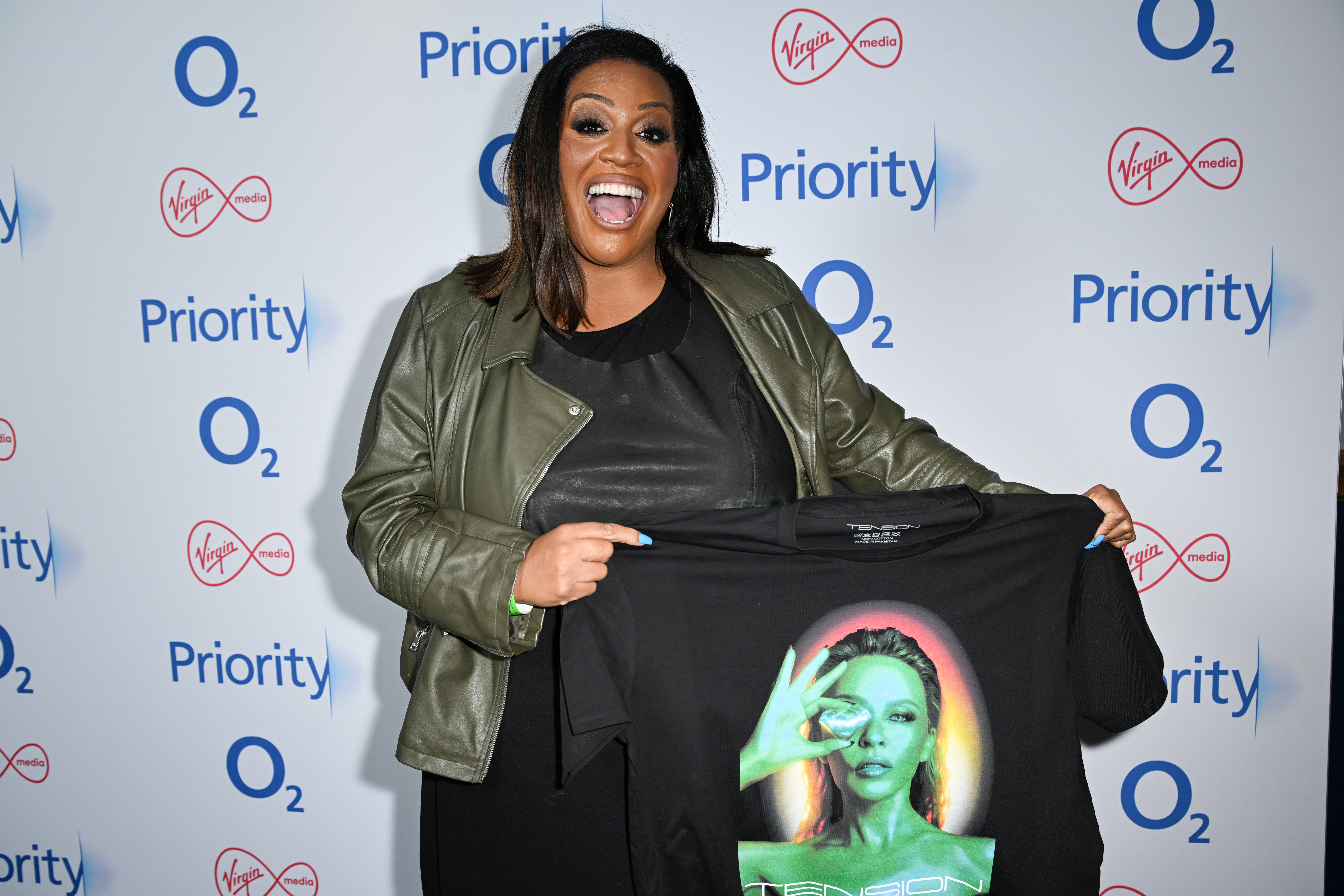
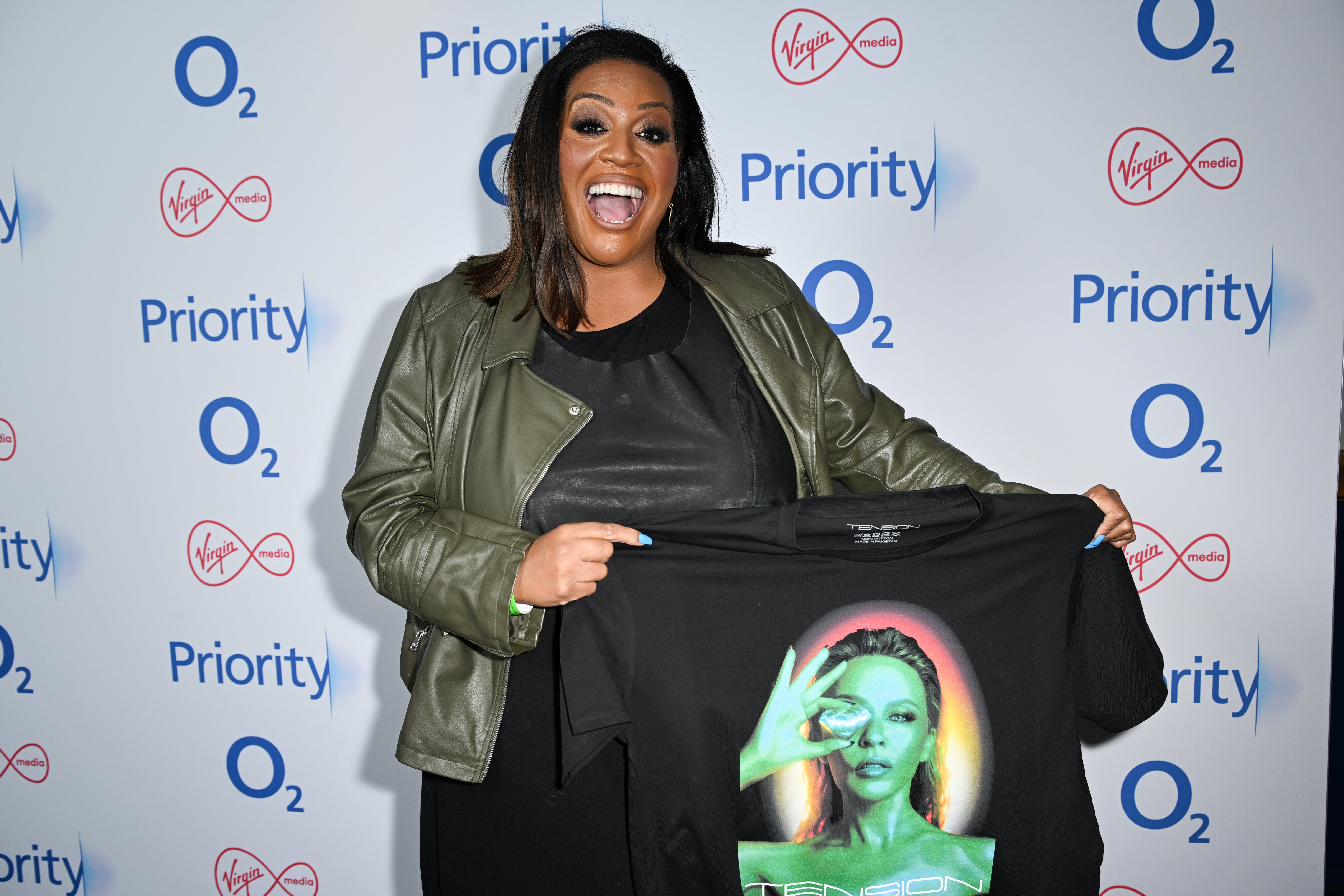
Spotted on a balcony overlooking Kylie as she tore through hits like Can’t Get You Out Of My Head, Spinning Around and recent smash Padam Padam, Alison came close to stealing the show with the sheer amount of joy she was exuding – and the Kylie t-shirt she was seen waving to the crowds below her.
“Alison Hammond waving a Kylie t-shirt at the Kylie gig has restored my joy for the rest of the year,” one fan posted, alongside a video of the momentous occasion.
Another commented that the beloved daytime host’s “real-time reaction to Padam Padam was almost as good as seeing Padam Padam live for the first time.”
Meanwhile, a review of the night for Evening Standard added that Alison’s simple attendance at the gig made for “made for quite the support act.”
Kylie filled the evening with chart-topping hits and fan favourites for plenty of other famous fans who were also in attendance, including Drag Race UK’s Graham Norton and Michelle Visage, as well as Rylan and Alex Scott.
Have you ever been told to ‘just try time management’? If you’ve got ADHD, it’s likely that you’ve tried every time management hack in the world, but none of them seem to work.
We often know what to do, we just can’t do it. Having a brain that only experiences time as ‘now’ or ‘not now’ can make it extremely difficult to plan ahead, organise our time, or prioritise our work. This is linked with the 30% developmental delay in executive functioning skills such as memory, self-awareness, and motivation – it is not your fault.
Advertisement
Having a Ferrari brain with bicycle brakes means that we might zoom ahead on the things we’re interested in, but crash into walls when we need to slow down. At work, this can be extremely difficult as we try to juggle endless competing demands.
As neurotypical solutions don’t work for neurodivergent brains, here’s 3 ADHD-friendly time management hacks to thrive at work:
1) Hack your interest based nervous system
People with ADHD have interest based nervous systems, which means we thrive off interest, adrenaline, and novelty. By understanding what interests you, and how you can incorporate gamification and fun into planning ahead, you can stay one step ahead of procrastination by planning ahead.
As an ADHD Coach, I’m constantly supporting clients to figure out the ways that work best for them to manage their time – from colour blocking their work in their calendar in advance and wearing watches, to setting up calendar reminders and arranging weekly body doubling sessions to focus on the things they don’t want to do. You can also never have too many clocks around you!
Advertisement
As we have a limited number of ‘spoons’ of energy, it’s also sensible to hack your days by doing something you don’t want to do first thing in the morning. For me, this is going to the gym – I incorporate my interest based nervous system by sleeping in my gym clothes and finding accountability buddies!
2) Turn marathons into sprints
As our brains are constantly seeking dopamine and stimulation, we can turn long term projects into sprints by incorporating artificial deadlines and accountability. It’s much easier to work with short term goals that feel immediate and urgent, which can be harnessed with regular 1:1 meetings and dopamine boosts such as positive feedback celebrating our ‘wins’.
For example, I break down long term objectives into three month goals. Setting short term priorities can help us to break these down further, such as by setting weekly or daily goals, and to share these with another person for accountability, checking in on how it went at the end of the day.
Instead of trying to do everything on your to do list, picking just one thing to get done can help you to get started, overcoming the common challenge of ADHD decision paralysis.
Having visual reminders of short term sprints can be highly effective and motivate us to get them done, such as by visualising our progress with trackers. This also helps us remember what to not do – if something isn’t one of our sprint goals, it’s a ‘not now’! Writing down distractions or ideas in a notebook enables us to return to these when we review our next set of sprints.
Advertisement
3) Ask for help
Asking for help at work may feel overwhelming for people with ADHD, but it’s important to remember that you deserve to be supported – and this helps everybody! One highly effective technique for time management at work is by asking your team to use a briefing document for new work.
This sets out in a shared document what a project will involve, breaking objectives into short term actions, and scheduling any check ins with colleagues as needed. In general, it can be very helpful to have written instructions for everything in the workplace, and to regularly ask your manager what you should prioritise and how you will know when a piece of work is complete.
Having additional check ins is a common reasonable adjustment employers can implement to help employees with ADHD to manage their time effectively. This could be with a colleague, or externally with an ADHD Coach, for example.
Ultimately, it’s important to have a foundation of psychological safety at work to empower you to feel safe enough to focus on the ‘not now’. Having colleagues who clearly set out expectations and support you to ‘do what you know’ empowers you to use your super whizzy brain within a structure of safety and support.
It might feel like we’re surviving from day to day, but creating an environment tailored to our brains can enable us to use these unique traits to thrive at work because of our ADHD, not in spite of it.
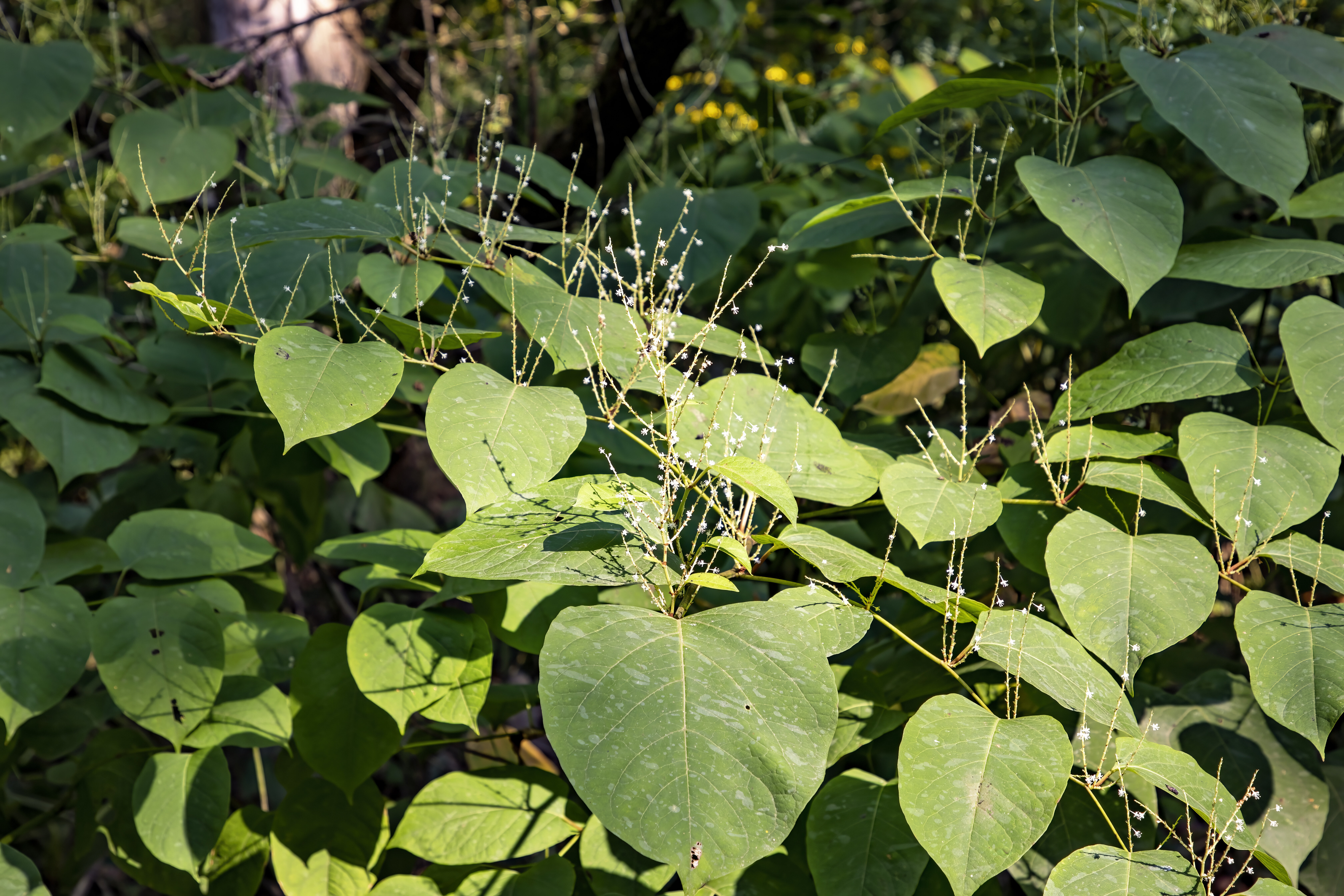
We’ve written before about how much Japanese knotweed can affect the value of your property.
The invasive plant is notoriously hard to kill and can damage the foundations of your home.
In fact, Japanese knotweed can be so devastating that you can be fined thousands for knowingly spreading the plant throughout your neighbourhood or into the wild (you can even be jailed for up to two years).
So, it’s a good idea to work out how at-risk your postcode is. Luckily, Environet has taken the data from its Japanese knotweed heat map (which documents over 58,000 known infestations throughout the UK) to find the biggest hotspots for the weed in 2023.
Advertisement
Here are the top ten affected locations, and some advice on what to do if you do spot the plant:
The top ten Japanese knotweed hotspots in the UK are, in order:
First of all, Nic Seal, CEO of Environet, says that vigilance is key. “Make sure you know what knotweed looks like and how it differs from other common garden weeds like ivy and bindweed, so you can keep an eye out for it in your garden and neighbourhood,” he warns.
You can email a photo of the plant to Environet’s free ID service at expert@environetuk.com if you’re not sure what you’re looking at.
Advertisement
“Knotweed is easily identifiable during summer, but as we head through the autumn and into winter, the above-ground growth dies back and it becomes much harder to spot. It’s also easier to conceal, so anyone viewing a property to buy should be extra careful,” Seal adds.
Simply lifting the plant out of your soil won’t stop growth, as Japanese knotweed “can grow from a tiny fragment of root or rhizome in the soil”.
To treat the issue properly, you need to use chemical weed killers which are best administered by pros.
And because Japanese knotweed is classed as ‘controlled waste’ under the Environmental Protection Act 1990, you can’t just bury or burn it after you’ve tackled the issue.
You’ll have to “use a registered waste carrier and an authorised landfill site or suitable disposal site,” according to Gov.uk.
Advertisement
You must also “notify the Environment Agency at least one month before you bury knotweed” (it’ll have to be at least five metres deep), make sure you only burn knotweed on the site it came from, and check with your local council to make sure it’s permitted in the first place.