Body Inclusivity Is Still Lacking At Fashion Week, Starting With Who’s Invited

New York Fashion Week begins Friday, and after years of a demand for more body inclusivity, the industry event still has a long way to go. Although many fashion brands have made an effort to introduce plus-size clothing and models, even the crowd invited to attend doesn’t feel inclusive to many.

Blogger Chastity Garner told HuffPost that she felt like an outsider from the beginning. When she was at fashion week in 2015, she was 360 pounds and couldn’t wear any of the clothing on the runways. “What was I really attending for?” she asked. “It’s like when you want a seat at the lunch table in school. I’m a person who loves fashion and wants to be included in fashion, but I didn’t feel included at fashion week.” To Garner, this wasn’t a surprise. “You can barely shop in malls if you’re over a certain size, so I expected not to be represented at fashion week,” she said.

Instagram influencer Greivy was only invited to one New York Fashion Week show in February — for Tiffany Brown, a designer who has featured full-figured models in the past. “The PR [public relations] people are limiting the reach their client can get by making a list that isn’t inclusive,” she shared. In the past, Greivy was invited to shows for Cynthia Rowley, Libertine, Anna Sui and more designers, but this year she chose not to email PR teams to request invitations. “I knew I would just be disappointed because TikTok influencers get all the seats now. It’s ridiculous,” she said. “I know very well these TikTokers don’t reach out like I used to, either. They don’t know how or who is in charge.” Greivy sees a constant struggle to prove she belongs at fashion week: “Sometimes, designers have a few seats, but plus-size influencers are more than just a sacrifice.”

Most attendees of designer shows are dressed by the brand. However, plus-size guests are often left out of clothing pulls. “Brands are only dressing sample sizes. It’s really hard to show up and not wear the brand while everyone else is because I don’t fit the clothing,” Greivy said. “It feels like I’m not cool or like I’m a loser because I stick out.” She has noticed these brands have oversize pieces that may fit, but they don’t offer them to her in the first place. “They want their image to be a certain way, and that way is sample size,” Greivy said. “Sometimes, a jacket can or belt can fit five different sizes, but they only gift the clothes to people who are a size 2. I’ll probably get a handbag or a shoe from the brand, but that’s it.”

For DJ Ty Alexander, being left out of fashion week has become the norm. Not only did she receive no invitations this year, but the influencer hasn’t attended since 2017. “In addition to being plus size, I am also Black, so most of my existence in fashion — in the world, really — feels like I’m on the outside looking in,” she said. “There is pressure in the world to stay thin. This isn’t a fashion issue. Fashion is only mimicking what society is doing. Everything about the world is thin, and I’m afraid that will not change.”

Models are also being affected, as they are instructed to maintain their tall, thin physique for runways. Surrendering to standards proved detrimental to Nathalia Novaes’ mental health. She views the fashion industry as the catalyst for her eating disorder, a struggle she endured for seven years as a model. “I built this international career that I’m super grateful for. But I built that with a body that wasn’t really natural because I was dieting all the time,” she told HuffPost. “I was never able to relax around food. I was always hungry.”

She cited a 2014 fashion week in Brazil as a particularly toxic experience. “All the models are really focused on not gaining weight. Nobody was actually eating,” she recalled. “I remember going back to my home with this mental exhaustion and feeling of hunger. I couldn’t eat because I had all of these shows.” By the end of fashion week, Novaes would resort to binging. “I was starving myself so much. It’s a triggering environment where everyone is self-conscious,” she said.

“Inclusivity is more than just the model on the runway. It’s also the clothing that is being offered.”

– Chastity Garner, blogger

When Novaes was just a size 4, clients started to complain about her weight. “I was called a balloon,” she said. “I have big hips, and I think they’re beautiful. But I’m not like the stereotypical model that’s a straight line.” Eventually, Novaes’ work stopped completely. She dropped her agency at the time, and it was eager to let her go. “I told my agency I was leaving. They said they were relieved because I wasn’t getting any work,” Novaes said.

Models and influencers aren’t the only ones privy to industry pressures; photographers avoid shooting larger bodies, as well. “Body exclusivity has been the norm for a fairly good portion of my career,” said photographer Alvin Toro. “Everything from the runway shows to editorials, advertisements and catalog shoots have been and still are plagued with outdated beauty ‘standards.’ The 1990s brought digital image manipulation and the rise of the supermodel. With them came the unrealistic beauty standards we are still fighting against today during fashion week.”

Toro said he even fell into patterns of body exclusivity in his own shoots. “It was almost impossible to have anyone consider your work if the models did not fit the editor’s vision,” he said. “Because of the top-down way the industry works, advertising agencies and brands would adopt a similar stance.”

In an industry that still struggles to be fully body-inclusive, it is up to the models, influencers and photographers as individuals to spark change. After years of dieting, Novaes decided enough was enough. “I sent an email to my agents and said: ’OK, I’m probably going to gain weight, but I’m just not going to diet. I don’t want to hear any comments about my body anymore,’” she said.

Toro, meanwhile, has taken steps to showcase more diversity in his work. In 2019, the photographer partnered with Hungarian fashion designer Eni Hegedus-Buiron of Lulu et Gigi Couture for an editorial shoot in Paris, which featured several plus-size models and a double amputee.

However, designers often use plus-size models to check off a box and avoid criticism or controversy. As plus-size fashion became more mainstream, the industry realised it could profit by tokenising curvy models. “Real inclusivity looks like more than a token model. It looks like more than this one girl who gets a chance to walk for a major brand,” Garner said. “Inclusivity is more than just the model on the runway. It’s also the clothing that is being offered.”

Although progress has been made, people are still excluded from fashion week because of their size. “When I became a plus-size model, I was a size 8, which is ridiculous,” Novaes said. “I didn’t get much work, because whenever [designers] want to cast someone diverse, they go for the extreme. They think, ‘OK, putting this plus-size woman in makes us inclusive.’” The model sees it as an either-or situation: You’re either plus size or you’re not, and there is no in between.

Body-inclusive efforts are seen as a rebellion against the status quo. Designers receive honourable mentions for introducing a greater size range, but there is no consideration of why those sizes weren’t present to begin with. “These brands need to do better. Just because we’re over a size 14 doesn’t mean we can’t be invited [to fashion week],” Greivy said.

Share Button

Black Employees Face Backlash From White Managers When They Self-Promote At Work

The classic career advice many of us hear is: “The work does not speak for itself. You need to make sure others know about it, too.“

But recent research complicates the suggestion that everyone should advocate for themselves by promoting their own accomplishments.

A 2022 study published in the Journal of Applied Psychology surveyed a racially diverse and stratified sample of professionals, all from a large global financial institution and who all had white managers. Employees answered a survey about their self-promotional behavior with prompts such as “I talk proudly about my contributions or education with others at [company name],” and a group of management researchers used manager surveys and human resources information to see how supervisors rated the employees’ performance.

The researchers found that although white, Asian and Latinx employees received higher job ratings when they talked more about their contributions and accomplishments, Black employees were penalised by white managers for doing the same thing. Black employees who rated themselves highly on self-promotion received lower ratings of their job performance and assessments of their fit with the organisation.

In other words, self-promoting at work benefited white, Asian and Latinx employees while it had negative consequences for Black colleagues.

What explains this racial bias? The researchers think that white supervisors could be holding negative stereotypes of lower job competence against their Black employees while other racial groups were not dealing with the same thing.

As a result, when Black employees excel and communicate their accomplishments, strengths and contributions, their white managers see this as something that goes against their stereotypes of Black employees’ competence and skills.

“When managers perceive the violation of their stereotypical ‘norm’ of Black employees, they feel uneasy and thus react negatively,” said Jiaqing Sun, an assistant professor in the London School of Economics’ department of management, and a co-author of the study.

“The unique bias revealed in our study is more likely to happen in [occupations] highly emphasising competence, education, and skills, and also with a low representation of Black employees, such as financial banking, high technology and higher education,” Sun told HuffPost via email.

“It’s really not you, it’s them.”

– Career coach Ebony Joyce

The study controlled for employees’ education levels, tenure at the company, length of time in their current position and how long they had worked with their direct manager to “really try to isolate the extent to which self-promotion is positively impacting performance ratings,” said Sandy Wayne, a management professor at the University of Illinois at Chicago and the lead author of the study.

“What we did find was that African Americans, controlling all those other potential predictors of performance ratings, were getting lower ratings than other groups when they engaged in higher levels of self-promotion.”

Black employees can find sponsors to advocate on their behalf, but this is not their problem to fix.

Career coach and diversity consultant Ebony Joyce said the study’s findings resonated with her experience as a Black professional and with what she has seen with clients.

“We’re faced with this double-edged sword. You’re taught to do the work, put your head down and your work will speak for itself,” she said. “And you notice after a while that everyone is getting promoted around you. And you’re like, ‘I’m doing the work. What do I need to do?’ And then when it comes to advocating for yourself, that doesn’t work, either.”

Joyce said she has worked with many Black clients in this situation who wonder if there is another certification or degree that they need to get to be promoted. To them, Joyce advises, “You already have the education and the expertise and everything that you need already. You are just not supported within the organisation that you are in.”

If you’re a Black employee looking to stay within your organisation, it can help to find a sponsor at your company, outside of your direct manager, who can speak up on your behalf. As Morgan Stanley senior client adviser Carla Harris put it in a TED talk, a sponsor is someone, usually within your same company, who is not just going to speak positively about you but will be willing to spend “their valuable political and social capital on you” and “has the power to get it — whatever it is for you — to get it done behind closed doors.”

Wayne said it is also critical for Black employees “to track and to maintain documentation on areas in which you have excelled and accomplished a great deal, so almost more objective indices of one’s competence and performance, rather than just communicating that yourself to your manager.”

But in many cases, the best option is to leave.

This is what Joyce said she did when she experienced this trap of self-promotion. At her then-job, she noticed people she started with the same day were getting promoted while she was not. Joyce would do the things being asked of her in performance reviews and would go to leadership and human resources with documentation, but she still saw no change and continued to watch less-experienced co-workers advance.

“[I was] getting overlooked to where it was really a slap in the face and almost, I felt like, an embarrassment to me, as to ‘What am I not doing?’” she said. “After, I think, year three of not being promoted, I had decided to leave the organisation, which was the best thing for me. And the next place that I chose to work was for a manager who looked like me.”

For Black employees who do exit unsupportive companies, Joyce advises them to look at the turnover of diverse staff and the representation in leadership of places they want to work at next to lower the chances of the situation happening again.

Ultimately, however, the burden should not be on Black employees to deal with their white managers’ bad managing. Instead, it is the organisation’s responsibility to rectify the problem.

“The backlash toward Black employees’ self-promotion only exists when the manager holds a negative competence-related stereotype, so the most direct method to mitigate the bias is to mitigate the stereotypes,” Sun said. “This is, of course, not an easy job, but it is organisations’ responsibility and the only pathway to create an equitable workplace.”

Or, as Joyce put it, “This is one of those cases where it’s really not you, it’s them.”

Share Button

The UK Economy Has Flatlined. So What Does That Mean For Your Finances?

The UK just managed to avoid falling into recession towards the end of last year.

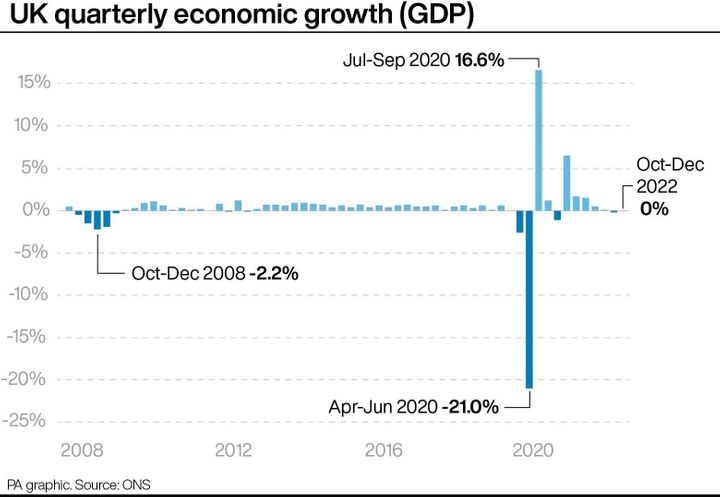
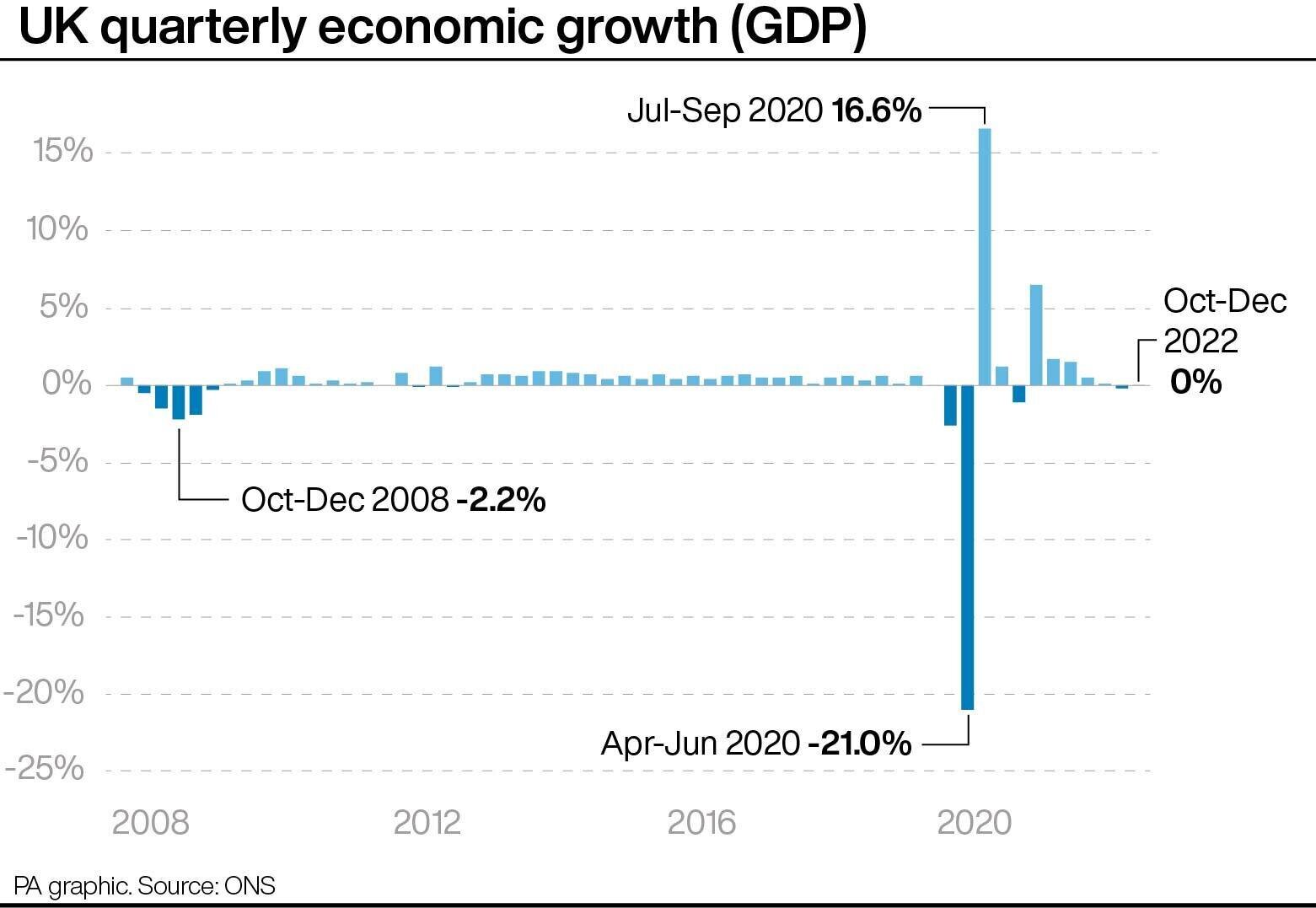
After shrinking for one quarter, it (ever so slightly) jumped back between October and December by just…not growing at all.

Chancellor Jeremy Hunt said this was a sign “our economy is more resilient than many feared” – but warned that we’re still not “out of the woods yet”.

It’s also worth noting that Friday’s data – which has helped experts decide if we’re in recession – is only the first estimate. These numbers are often revised later.

But what does all this mean?

What has just happened to our economy?

Data from the Office for National Statistics (ONS) said the economy recorded zero growth between October and December.

According to the ONS’s director of economic statistics Darren Morgan, it comes down to a few different factors – including strikes.

“Public services were hit by fewer operations and GP visits, partly due to the impact of strikes, as well as notably lower school attendance,” he said.

“The break in Premier League football for the World Cup and postal strikes also caused a slowdown.

“However, these falls were partially offset by a strong month for lawyers, growth in car sales and the cold snap increasing energy generation.”

Across the whole of 2022, the economy did grow by 4%, despite the cost of living crisis squeezing household incomes.

UK quarterly economic growth (GDP)

PA Graphics via PA Graphics/Press Association Images

UK quarterly economic growth (GDP)

What is a recession?

A recession is defined as two consecutive quarters (so six months in total) where the economy shrinks. This is also known as a decrease in the value of goods and services we produce, Gross Domestic Product, or GDP.

If GDP declines in value people’s income tend to fall.

In the third quarter of 2022, July to September, the economy did shrink by 0.2%. But because it didn’t shrink again the next quarter, we’ve just missed out on meeting the criteria for a recession.

The last recession was in 2020 at the height on the pandemic, but it only lasted for six months, although it did see a 20.4% reduction in the UK economy between April and June in 2020 though – the largest on record.

Before that, the 2008 global financial crash went on for five quarters.

Why is 2023 still expected to feel like we’re in recession?

Even if we don’t meet the technical definition for being in a recession right now, experts believe that it will very much feel like the country is in a period of negative growth already.

After all, the UK is still the only G7 country which now has a smaller economy than it did prior to the pandemic.

And experts at the International Monetary Fund (IMF) still expect the UK to be the only G7 country to fall into recession this year, and set to perform even worse than Russia.

And 2023 is still set to feel like a recession for many, according to an economist at National Institute of Economic and Social Research (NEISR).

“A focus on the economic crisis faced by most of the British population, rather than technicalities, offers a more insightful perspective,” NEISR’s Paula Bejarano Carbo told POLITICO.

One in four UK households (potentially seven million families) will not be able to fully pay off their food and energy bills in 2023 – that’s an increase from one in five last year, according to NEISR.

So how would a recession affect you?

The job market

Recessions usually trigger companies to let more people go, as consumers spend less and businesses have to adjust their margins.

This pushes unemployment levels up.

Employers may also reduce workers’ hours, cut wages, pull back on bonuses and financial incentives or introduce a hiring freeze to an effort to reduce their outgoings.

The stock market will probably struggle too. As people tend to send less, companies report lower earnings, investors consider liquidating their stocks.

Consumer buying habits

Everything becomes more expensive in a recession – and inflation is already at a 40-year-high of 10.5%.

The Bank of England has been increasing interest rates in recent months in an effort to decrease the double-digit inflation. That means the price of borrowing increases.

So your credit card balance will also come with higher payments, and anyone looking to secure a mortgage will likely only be offered more expensive deals.

Only if you have a fixed rate mortgage will your monthly payback stay the same.

So lenders may want to think twice before letting people take out loans, which could affect people’s ability to go after large purchases.

Government spending

More economic growth means the government usually gets more money in taxes.

It can then spend more on benefits, public services, government workers wages or reduce taxes – but this can equally all be negatively affected if the economy shrinks too.

How can you prepare for a possible recession?

The Office for Budget Responsibility (OBR) still expects the economy to shrink by 1.4% in 2023, with the recession causing an overall drop of 2% in GDP.

Although it is expected to grow again by 2025, it’s still best to prepare now.

  • Pay off your debt sooner rather than later – interest rates are expected to continue rising this yer
  • Save, if you can, in the event of sudden redundancy
  • Try to secure multiple sources of income
  • Look for a recession-proof career, if possible.
Share Button

Former Chancellor Philip Hammond Spells It Out: ‘We’ve Got Poorer Because Of Brexit’

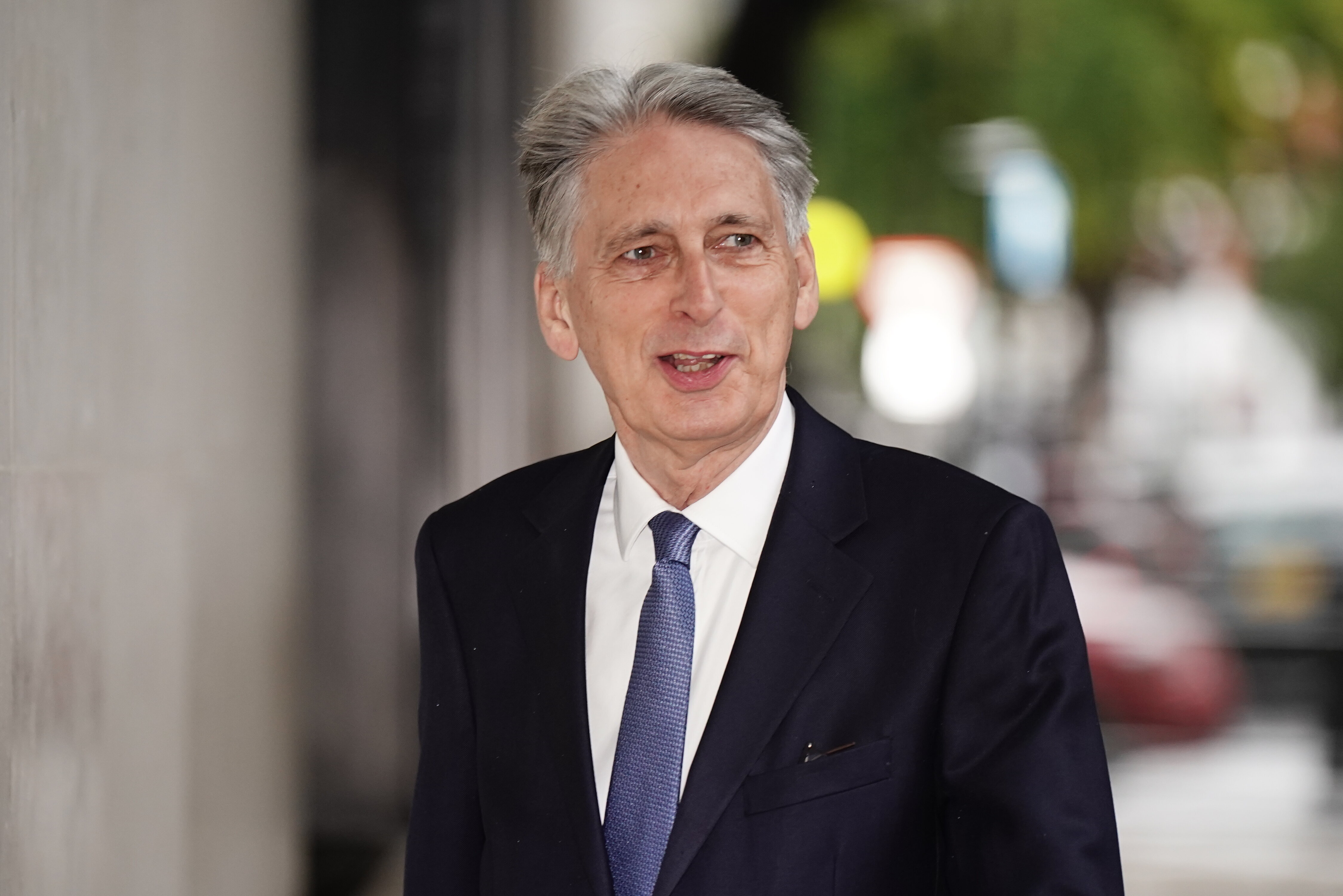
Britain has got poorer because of Brexit, former chancellor Philip Hammond has admitted.

The senior Tory said the Covid-19 pandemic and the soaring cost of energy have also contributed to the cost of living crisis.

His comments are significant because the government has repeatedly denied that leaving the European Union has had a negative impact on the economy.

Speaking to Bloomberg TV, Hammond said: “The truth is we’ve got poorer. We’ve got poorer because of Brexit, we’ve got poorer because of Covid, we’ve got poorer because of the changed energy economy in the world, the higher price of the energy we consume.

“And that has to be reflected in reduced living standards and the transmission mechanism for those external shocks into the domestic economy is inflation.”

Hammond – who was chancellor between 2016 and 2019 and an MP for 22 years – backed Remain in the Brexit referendum.

His comments come after the International Monetary Fund forecast last month that the UK economy will perform worse than every other major country in 2023.

Even Russia – hit by swingeing economic sanctions by the global community due to its invasion of Ukraine – will out-perform Britain, the IMF said.

In its latest World Economic Outlook update, which was released on the third anniversary of Brexit, the IMF predicted the UK economy will shrink by 0.6% this year, compared to its October prediction that it would grow by 0.3%.

By contrast, every other country in the G7 group of advanced nations will see their economy grow – with America’s set to expand by 1.4%.

Russia’s economy will grow by 0.3% over the next 12 months, the IMF said.

Among the other G7 nations, the IMF’s 2023 predictions show growth, 0.1% in Germany, 0.7% in France, 0.6% in Italy, 1.8% in Japan and 1.5% in Canada.

China’s economy will grow by 5.2%, the IMF said, with India’s expanding by 6.1%.

Overall, the IMF said the global economy will grow by 2.9%.

Share Button

Rishi Sunak Rejects Call From Deputy Tory Chairman For Return Of Death Penalty

Rishi Sunak has rejected calls for the return of the death penalty made by the new deputy chairman of the Conservative Party.

Lee Anderson said he backed the death penalty because “nobody has ever committed a crime after being executed”.

He told The Spectator magazine that capital punishment has a “100% success rate” when it came to stopping repeat offenders.

But speaking to reporters during a visit to Cornwall on Thursday, the prime minister said that was “not my view” and “not the government’s view”.

Sunak added: “But we are united in the Conservative Party in wanting to be absolutely relentless in bearing down on crime and making sure people are safe and feel safe.”

The prime minister said his government had “tightened up sentencing laws for the most violent criminals” and “they spend longer in prison”.

The death penalty for murder in the UK was outlawed permanently in 1969, with it totally abolished for all crimes in 1998.

Anderson was the most eye-catching appointment made as part of Sunak’s mini-reshuffle on Monday.

A former Labour councillor before converting to the Tories, he has been no stranger to controversy since being elected as MP for Ashfield in 2019.

He has criticised food bank users and also the England men’s football team for taking the knee in protest at racism.

Earlier, children’s minister Claire Coutinho said that while she was a “big fan” of Anderson, she didn’t back the return of capital punishment.

Share Button

Itchy Breasts And Nipples: The Causes And Treatments For This Common Issue

Basically, anywhere on your body can sometimes feel itchy, but some places are a little more unsettling than others.

If you’ve ever experienced itchiness, or irritation on your breasts or even your nipples, you know the frustration of needing to scratch a place you can’t easily access in public. Unfortunately, there are various reasons and treatments for itchy breasts, so it might take time to figure out the issue.

But that doesn’t mean the situation is hopeless. Below, dermatologists break down the potential causes and offer advice for itchy breasts.

Eczema is a common reason.

“Eczema of the breast is a common cause of itchy breasts and nipples,” said Dr. Azadeh Shirazi, a dermatologist based in La Jolla, California. “The tissue and skin is more sensitive and more prone to irritation.”

The most common form of eczema is atopic dermatitis, which typically manifests as itchy, dry, irritated skin around creases like the backs of the knees and elbows. It can, however, occur on the breasts and nipples as well. There’s also contact eczema, or contact dermatitis, a similar itchy flare-up that stems from contact with an irritant.

“Itchy breasts or nipples can be caused by an irritant dermatitis, such as excessive rubbing or chafing on harsh fabrics,” said Dr. Lauren Penzi, a New York-based dermatologist. “It can be caused by a true allergic contact dermatitis to certain ingredients in soaps, fabrics, laundry detergent, etc.”

She pointed to a study that found Cl+Me-isothiazolinone, cobalt chloride, thimerosal, nickel sulfate, and 4-tert-butylphenol-formaldehyde resin were common causes of nipple eczema. These ingredients are sometimes used in clothing, cleaning products, cosmetics and other personal care items.

“For those who may be experiencing a sensitivity to something they are coming into contact with ― which can be a new detergent, a new bra or undergarment, a new soap or clothing ― it can help to avoid fragrance or certain ingredients that can be irritating on the skin,” said New York City dermatologist Dr. Marisa Garshick.

She recommended sensitive skin-friendly detergents like All Free and Clear and skincare brands like Vanicream, which offers products free of fragrances, dyes, lanolin, parabens and formaldehyde. Also, be mindful of the synthetic fabrics and dyes in the clothing you buy.

“I recommend washing new undergarments before wearing them as many manufacturers use chemicals that leach out onto the skin, causing itching and rashes,” Shirazi said.

Itchy breasts and nipples can be signs of a variety of medical conditions.

Sakan Piriyapongsak / EyeEm via Getty Images

Itchy breasts and nipples can be signs of a variety of medical conditions.

The issue can also be a result of body and skin changes.

“Itchy breasts are often caused by dry skin, breast growth ― due to pregnancy, puberty or weight gain, for example, ― hormonal changes, mastitis, yeast infection and breastfeeding,” said Dr. Hadley King, a dermatologist in New York City. “Nipples often get dried out and irritated from breastfeeding.”

Be mindful of irritation from friction or rubbing, as this can also lead to itchiness. Sometimes, itchy breasts may also have to do with seasonal changes, especially in the colder months.

“Extreme temperatures like a really hot shower or cool, dry weather can all lead to skin irritation, itching, and inflammation,” Shirazi noted. “The breasts and nipples are often forgotten, and we tend to skip moisturising this delicate area.”

Garshick also encouraged moisturising year-round, especially when your skin feels dry and inflamed.

“In these cases, using a moisturising cream or ointment can be helpful to nourish the skin as well to provide a protective barrier to keep moisture in and minimise potential friction and external irritation,” she said. “Thick creams such as Cerave moisturising cream or Vaseline Healing ointment work well for this.”

In rare cases, itchy breasts may indicate something more serious.

“There is a rare but important entity called Paget’s disease of the breast that can present like an eczema of the nipple,” Penzi said. “It usually presents as persistent scaling, eczematous, or ulcerated lesion involving the nipple-areolar complex.”

Paget’s disease typically only affects one nipple, so pay attention if you notice irritation on only one side.

“Itching and rashes can be a sign of Paget’s disease of the breast linked to underlying breast cancer where cancer cells from an existing breast tumour travel through the milk ducts to the nipple and areola,” Shirazi echoed.

Inflammatory breast cancer is another rare diagnosis that can sometimes lead to itchiness. Other symptoms may include swelling, discolouration, tenderness and other rapid changes in the breast over a period of weeks.

It’s important to contact a doctor if things don’t improve.

“There are lots of common causes of itchy breasts and nipples that are not concerning or indicative of a more serious underlying condition,” King explained. “But if common causes are ruled out, and the itching does not improve, particularly if it is unilateral and accompanied by a rash, then it’s important to have this evaluated by a doctor in order to make sure that it’s not breast cancer.”

A dermatologist can help you determine the cause of this issue and the best course of treatment. In the rare case of cancer, you may need a biopsy to confirm the diagnosis. Even if cancer is not a factor, seek medical attention if your itchiness doesn’t improve over time or respond to traditional treatments.

“If at-home treatments are not sufficient, it is best to see a board-certified dermatologist as a prescription topical may be needed, such as a prescription topical steroid or topical non-steroid anti-inflammatory,” Garshick said. “In some cases, an oral medications such as steroids, JAK inhibitors or injectable medications, such as Dupixent, can be helpful as well. For some individuals, where there is a concern for a contact allergy, it can help to consider patch testing, a type of allergy testing.”

Share Button

Could A Sleep Divorce Save Your Relationship?

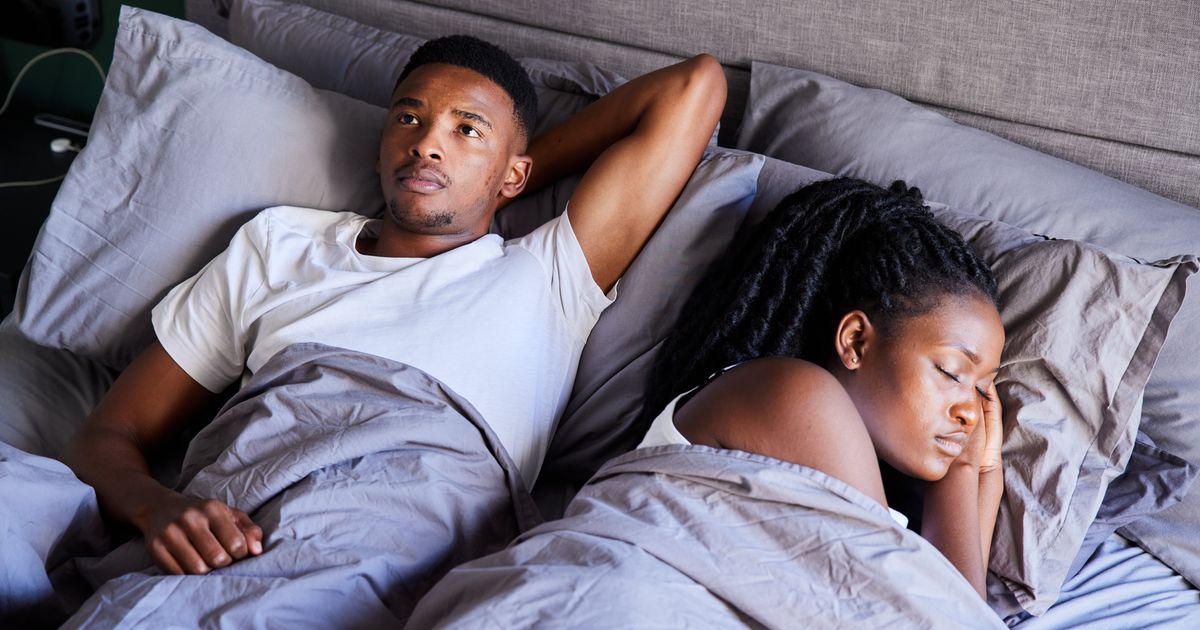
Some of us see sleeping with a partner as an act of intimacy, however for others it can cause discomfort and have a negative effect on sleep. If the latter rings true, you might want to opt for a “sleep divorce”.

A sleep divorce is simply sleeping apart, in separate beds or bedrooms, so that both partners can get a good night’s rest.

“No one talks about sleep divorce and it is so common,” says relationship psychologist Mairead Molloy, from elite dating agency Berkeley International.

She’s right – a survey by the National Sleep Foundation in 2017 found that one in four married couples chose to sleep in separate rooms.

There are lots of reasons why a couple might choose to sleep separately. You might work different shifts, one of you might be a loud sleeper, or you might have children and co-sleep.

“If your partner snores, moves a lot or gets up in the middle of the night, you wake up, interrupting your rest,” says Molloy. “This takes a toll on you both physically and psychologically.”

While the name “sleep divorce” doesn’t exactly have the most positive connotations, it doesn’t have to be a negative experience.

“Sleeping in another room helps not only improve your comfort and rest but also to keep your personal space,” says Molloy.

Peter Saddington, a sex and relationship counsellor,previously told HuffPost UK he works with lots of couples who want to entertain the idea of sleeping separately but are worried about what it will mean for their marriage and sex life.

People get anxious about what it means, he said, because they worry it’s “a sign of the end days”.

But while some might worry that sleeping apart spells the end for intimacy, Molloy and Saddington believe the opposite is true.

“Sleeping in the same bed can become mundane,” said Saddington. “You see your partner not always necessarily looking their best – sweaty, disheveled – but if you’re just there for sex you can put more effort in and present yourself when you’re feeling at your best. For some people it can even heighten excitement.”

Molloy agrees a sleep divorce can give your sex life a boost. “Being separated at night favours the existence of an erotic space in which you miss the other person. Thus, it increases your desire to be together,” she suggests.

If you are tempted, it might be worth trialling it for a couple of months. That way, if it doesn’t work for you, you can go back to your previous arrangement.

But if you do see an improvement in how rested you feel, “keep going,” Saddington advised. “It is not always bad news to sleep separately.”

If you’re a very romantic person who’s horrified by the idea of spending the night alone, an intermediate solution could be sleeping in the same bed but with separate duvets or blankets, known as the Scandinavian sleep method, suggests Molloy.

“Overall, this is a good way to sleep together,” she says, “but still comfortable if your partner moves a lot and invades your space.”

Share Button

Susanna Reid Defends Madonna After Comments About Her Grammys Appearance: ‘She Should Be Proud Of Herself’

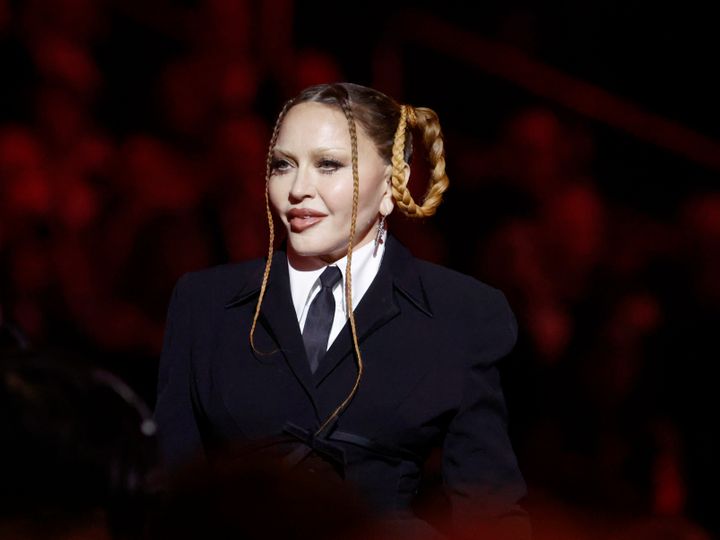
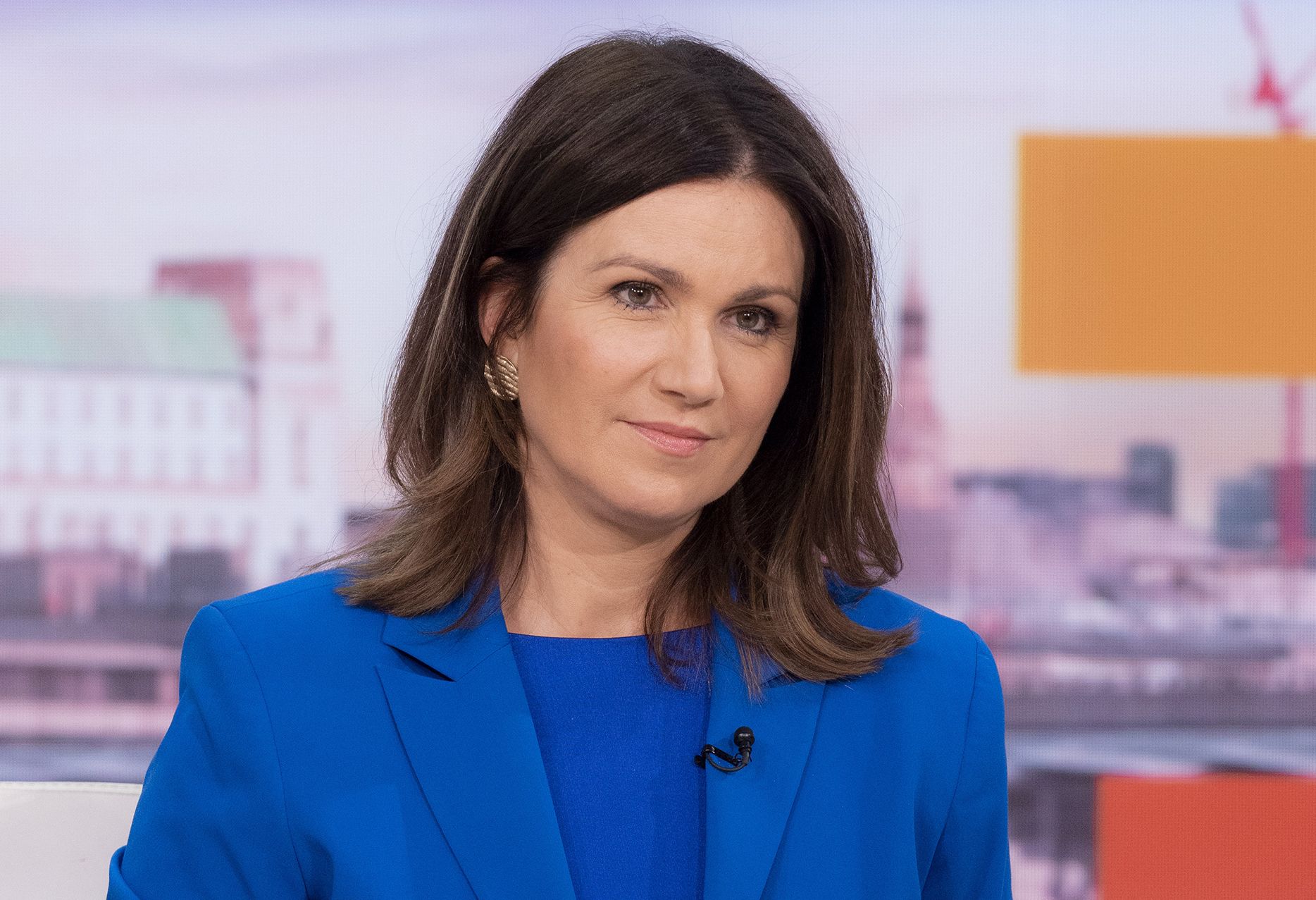
Susanna Reid has defended Madonna after the star spoke out against misogynistic and ageist comments about her appearance.

The Good Morning Britain presenter said the Like A Prayer singer should “feel proud of herself”, while criticising those who have been passing comment on Madonna since she popped up at the Grammys over the weekend.

Discussing a recent Instagram post, in which Madonna said she was once again “caught in the glare of ageism and misogyny that permeates the world we live in”, on the ITV breakfast show, Susanna said: “She’s 64 years old and I think she is damned if she does, damned if she doesn’t. If she aged naturally people would still be focused and obsessed with her appearance.

“People are going to be obsessed with how Madonna appears and she thinks it is an example of misogyny, ageism and she also blames the long lens of the camera which took her photo.”

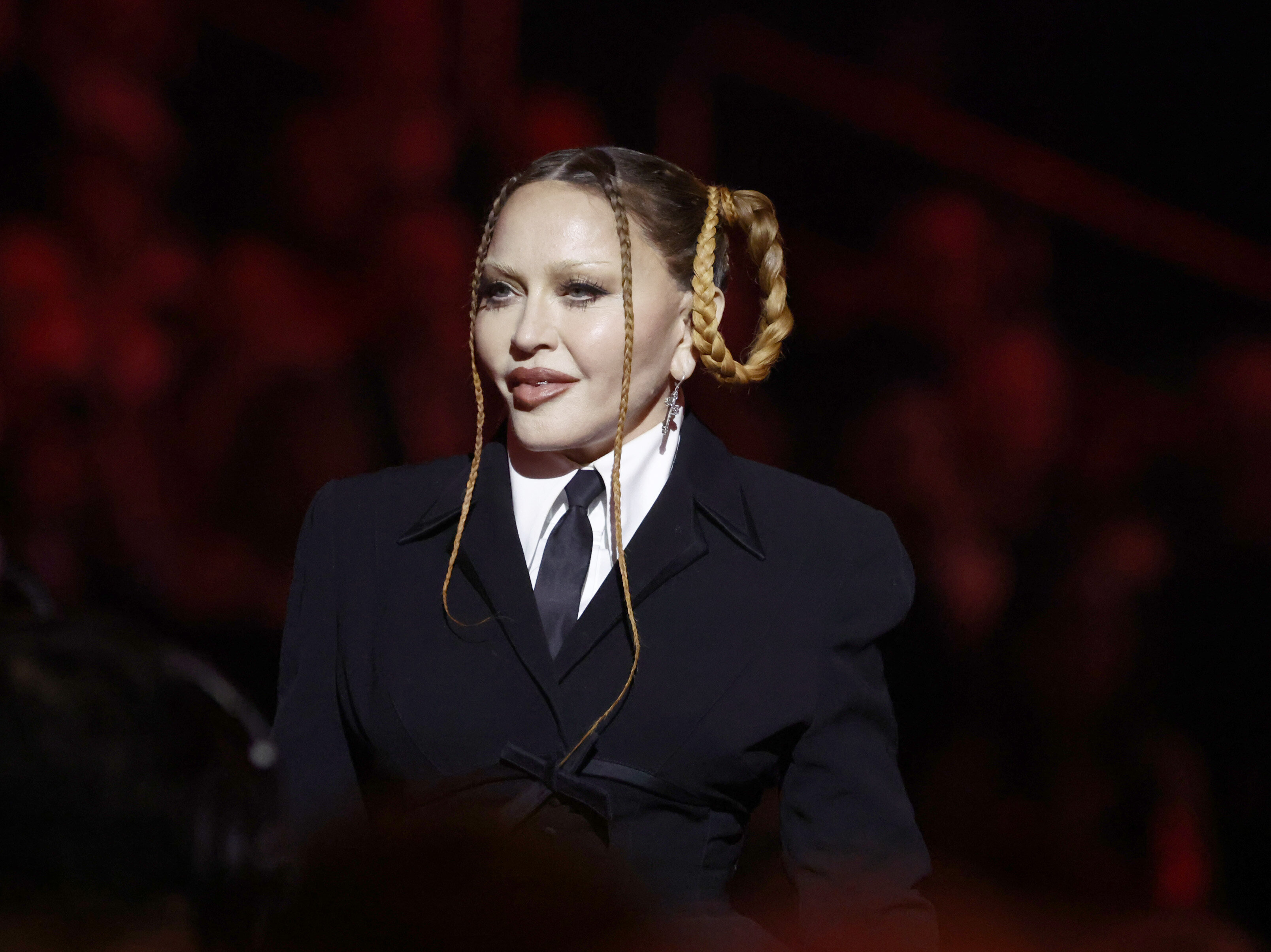
Madonna speaks onstage during the Grammys

Frazer Harrison via Getty Images

She continued: “Frankly, do you know what? I think she should just look however she wants to look and there we go and there you have it.

“She should feel proud of herself whatever she does.”

The Queen of Pop appeared on stage at Sunday’s Grammys to introduce Sam Smith and Kim Petras’ performance of their hit collaboration, Unholy, during which she paid tribute to her fellow “troublemakers and rebels”.

It prompted scrutiny and speculation on social media and in the press, with some questioning if the 64-year-old had undergone cosmetic surgery.

Responding to the criticism on Instagram, Madonna said: “Many people chose to only talk about close-up photos of me taken with a long lens camera by a press photographer that would distort anyone’s face.

“Once again I am caught in the glare of ageism and misogyny that permeates the world we live in. A world that refuses to celebrate women pass [sic] the age of 45 and feels the need to punish her if she continues to be strong-willed, hard-working, and adventurous.

“I have never apologised for any of the creative choices I have made nor the way that I look or dress and I’m not going to start.”

Madonna pointed out that she’s been “degraded by the media since the beginning of my career but I understand that this is all a test and I am happy to do the trailblazing so that all the women behind me can have an easier time in the years to come.”

She concluded: “I look forward to many more years of subversive behaviour – pushing boundaries – Standing up to the patriarchy – and Most of all enjoying my life.”

Good Morning Britain airs weekdays at 6am on ITV1.

Share Button

Everything We Know About The Search For Nicola Bulley

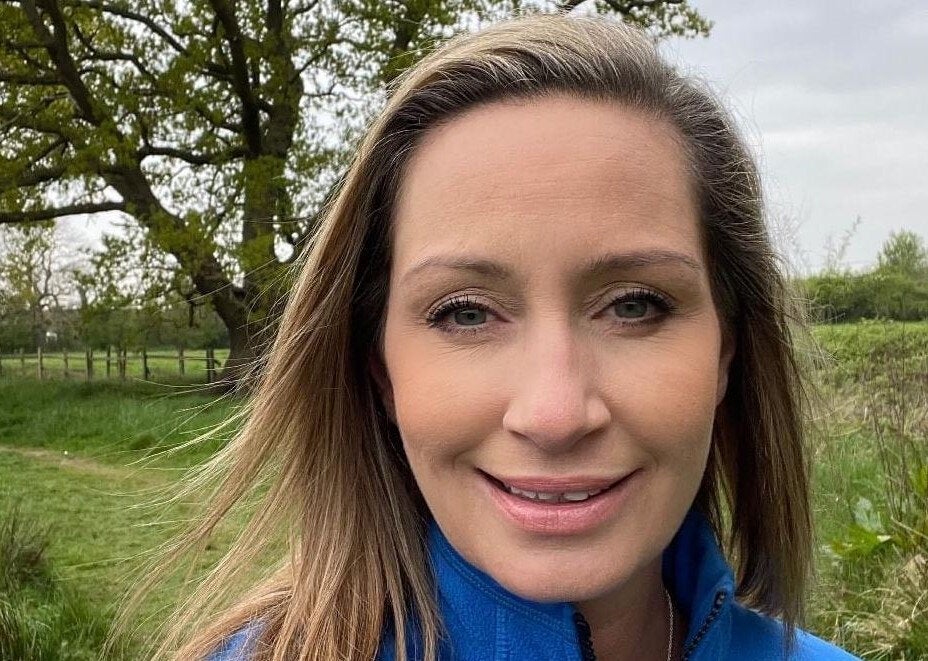
The search for missing mother-of-two Nicola Bulley in Lancashire has entered its thirteenth day, and questions are mounting.

Police think the mortgage adviser tragically fell into the water while walking her dog along the River Wyre.

But family and friends have questioned the theory, and diving experts have been recruited to help get to the bottom of the mystery.

What do we know?

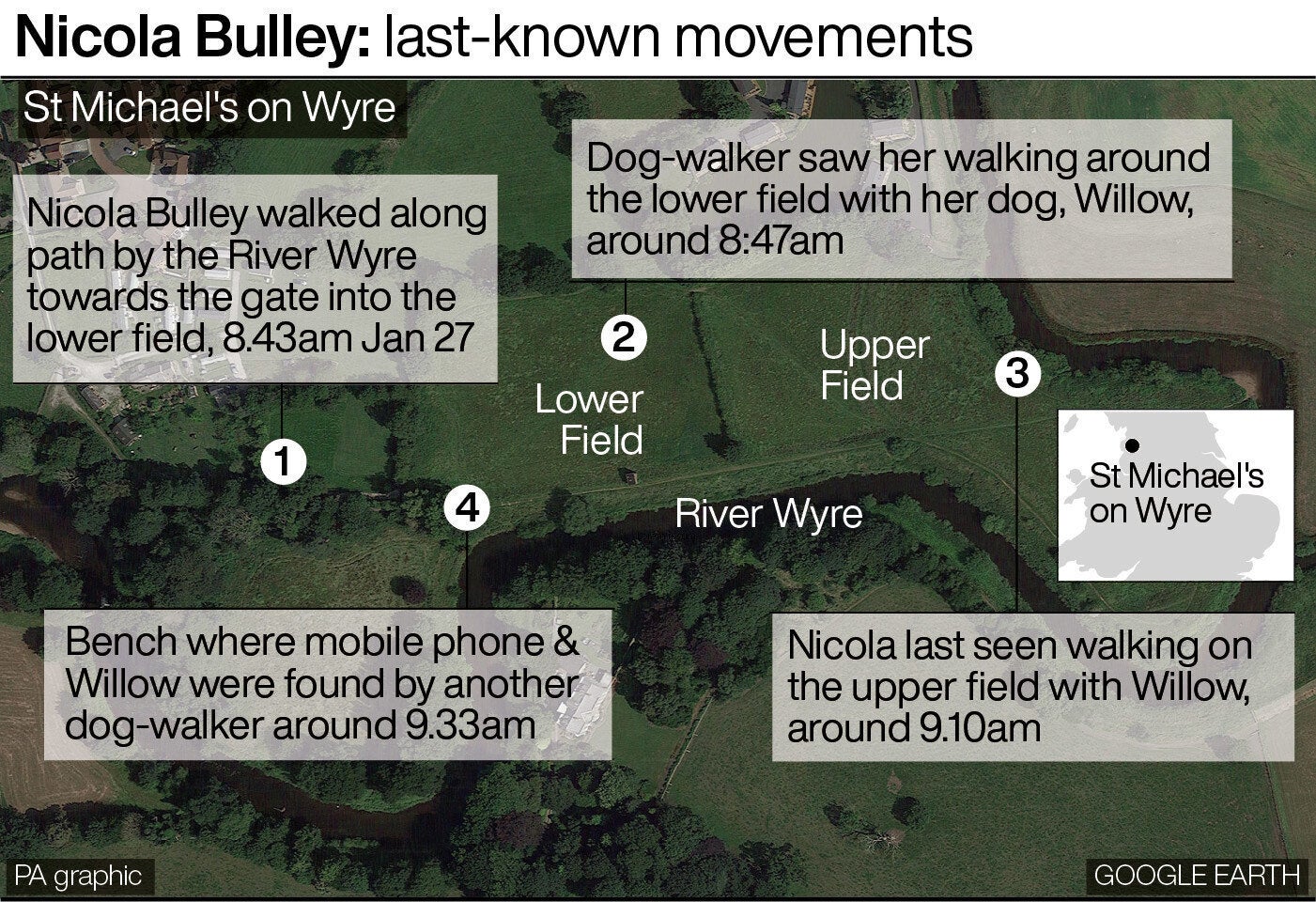
Nicola, 45, of Inskip, Lancashire, went missing on January 27 in St Michael’s on Wyre after dropping her daughters, aged six and nine, off at school.

Lancashire Police say she took her spaniel, Willow, for a walk along the path by the River Wyre, heading towards a gate and bench in the lower field.

Nicola sent an email to her boss, followed by a text message to her friends to book a playdate at 8.57am, before logging on to a Microsoft Teams call.

Her phone was back in the area of the bench before the Teams call ended ten minutes later, at 9.30am, with her mobile remaining logged on after the call.

Another dog walker found her phone on a bench beside the river, with Willow darting between the two.

According to police, she was wearing a black Engelbert Strauss coat, black jeans and had long green walking socks tucked into her trousers under ankle length green wellington boots.

Her hair was tied into a ponytail and she was wearing a pale blue fitbit.

Nicola Bulley's last-known movements.
Nicola Bulley’s last-known movements.

via PA Graphics/Press Association Images

What is the police theory?

Lancashire Police has said it was working on the hypothesis that Nicola may have fallen into the River Wyre.

Superintendent Sally Riley urged against speculation, but said it was “possible” that an “issue” with Nicola’s dog may have led her to the water’s edge.

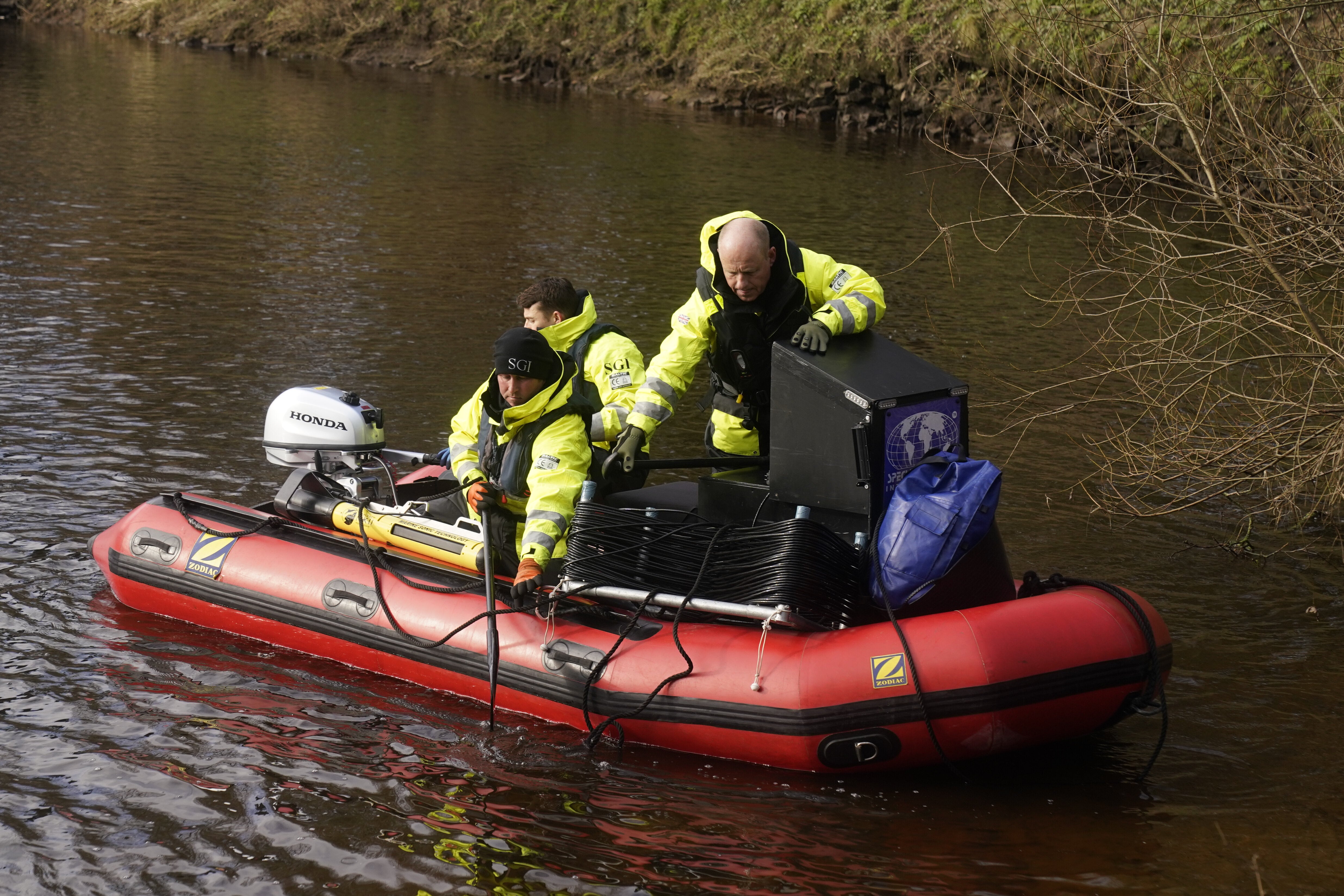
The force has been working with the Coastguard, Lancashire Fire and Rescue and underwater experts to search the river and riverbank using sonar, pole cameras and underwater drones.

Police say they will also be searching an area upstream, where the River Wyre empties into the sea at Morecambe Bay.

Police have described the search for Nicola as “unprecedented”, with a team of 40 detectives investigating 500 different lines of inquiry and police receiving “thousands” of pieces of information.

<img class="img-sized__img landscape" loading="lazy" alt="Lancashire Police superintendent Sally Riley speaks to the media at St Michael’s on Wyre village hall.” width=”720″ height=”538″ src=”https://www.wellnessmaster.com/wp-content/uploads/2023/02/everything-we-know-about-the-search-for-nicola-bulley-5.jpg”>
Lancashire Police superintendent Sally Riley speaks to the media at St Michael’s on Wyre village hall.

Peter Byrne via PA Wire/PA Images

What has the family said?

Family and friends have questioned the police theory that she fell into a river.

In a Facebook post, her sister Louise Cunningham urged people to “keep an open mind” as there is “no evidence whatsoever” to support the hypothesis.

A family friend, Heather Gibbons, has said “nothing is making sense” and that speculation, rife on social media, about the disappearance, was “hard” for the family to take.

She said her disappearance has led to members of the public arriving from far and wide, some bringing children and taking selfies, making the area feel like a “tourist spot”.

Nicola’s two daughters “desperately” miss their mother and “need her back”, her partner, Paul Ansell, said in statement last week.

What are the diving experts saying?

Peter Faulding, leader of underwater search experts Specialist Group International (SGI), has been searching the river for two days after being called in by the family to help.

Faulding, who is sometimes used by police, has said if his team cannot locate Nicola in the river then she is not there and he would not rule out “third party involvement” in her disappearance.

He has suggested the phone being left on a bench overlooking the river could be a “decoy”.

<img class="img-sized__img landscape" loading="lazy" alt="Workers from private underwater search and recovery company, Specialist Group International, on the river in St Michael’s on Wyre, Lancashire.” width=”720″ height=”479″ src=”https://www.wellnessmaster.com/wp-content/uploads/2023/02/everything-we-know-about-the-search-for-nicola-bulley-6.jpg”>
Workers from private underwater search and recovery company, Specialist Group International, on the river in St Michael’s on Wyre, Lancashire.

Danny Lawson – PA Images via Getty Images

Faulding said that in his 20 years of search experience he had never seen such an “unusual” case and was “baffled” as to what had happened.

He said: “If Nicola is not in that stretch of the river my view is there could be a third party involvement and this (phone) was a decoy placed by the river.”

What else is fuelling speculation?

Questions have also being raised about gaps in CCTV coverage of the area where she vanished from.

A camera close to where Nicola vanished was not working at the time of her disappearance, and the force says it is still a “possibility” she left the area by one path not covered by cameras which is crossed by the main road through the village.

Officers are trying to trace dashcam footage from 700 drivers who passed along the road at the time she disappeared.

Police acknowledge there is a ten-minute window where they cannot account for Nicola’s movements: between 9.10am, the last confirmed sighting, and 9.20am when Nicola’s phone is believed to have been on the bench.

Police: Not a victim of crime

But police have rejected suggestions that Nicola could have been a victim of crime.

Superintendent Riley said “every single” potential suspicion or criminal suggestion that had come in had been looked at by detectives and discounted.

She said: “I would like to reassure the community that nothing in this investigation so far, it has been checked out if it has come in suggesting crime, it has been checked and discounted.

“So every single potential third party line of inquiry and potential suspicious or criminal element has been looked at and discounted.

“It does remain our belief that Nicola sadly fell into the river and that this is a missing persons inquiry.”

The National Crime Agency had also looked at the investigation by Lancashire Police and had also failed to identify any other suspicious line of inquiry, she said.

Riley told reporters at a press conference in the village that Faulding is not included in “all the investigation detail”.

She said: “Our search has not found Nicola in the river and then a re-search in parts by SGI has found the same.

“That does not mean … that Nicola has not been in the river.”

Share Button

Rishi Sunak Orders Dramatic Whitehall Shake-Up In Bid To Reboot His Leadership

Rishi Sunak has created a new energy department as part of a dramatic shakeup of government departments, in an attempt to reset his premiership after 100 days in office.

They cabinet reshuffle on Tuesday has seen Greg Hands appointed chairman of the Conservative Party, replacing Nadhim Zahawi who was sacked over his tax affairs.

Under the new structure, the department for business, energy & industrial strategy (BEIS) has been broken up into three.

Grant Shapps has moved sideways to lead a new energy security and net zero department. Its creation fulfils a pledge Sunak made during the summer Tory leadership contest.

There is a new department of science, innovation and technology to be led by Michelle Donelan.

Kemi Badenoch has been appointed business secretary, after the remaining parts of BEIS were merged with the department for international trade, creating the business and trade department (BaT).

Lucy Frazer has been promoted from housing minister to replace Donelan as culture secretary.

The government said the new departments would “ensure the right skills and teams are focused on the prime minister’s five promises”.

Sunak has chosen to keep Dominic Raab in post, despite the deputy prime minister being subject to an investigation in to multiple claims of bullying, which he denies.

Share Button