Pubs and restaurants in Scotland will have to become table service-only for three weeks from December 27, Nicola Sturgeon has announced.
Indoor hospitality and leisure venues will also have to ensure a one-metre distance between groups.
Advertisement
The first minister said the series of stricter Covid measures would need to be introduced to tackle to spread of the Omicron variant.
Large-scale Hogmanay celebrations will be cancelled and live sports will be “effectively spectator-free” for three weeks from Boxing Day.
Advertisement
Outdoor public events in will be capped at 500 people. Numbers at indoor public events are to be limited to 100 standing or 200 seated.
Sturgeon told the Scottish Parliament: “Difficult though it is, please follow this advice over New Year – minimise Hogmanay socialising as much as you can.
Advertisement
“If we all follow the advice to minimise the contact we have outside our own households, we will help limit the spread of infections. This is the bedrock of our plan for the immediate period ahead.”
In England, Boris Johnson yesterday stopped short of introducing immediate new restrictions.
Earlier, Cabinet Office minister Steve Barclay said the government would be looking “closely” at the data to see if a so-called circuit breaker lockdown was needed.
Advertisement
Transmission of Omicron has been described as “eye-wateringly high” by a leading expert.
Sir Jeremy Farrar, director of the global charitable foundation Wellcome, said “we’re in the most difficult, most uncertain time, perhaps of the whole pandemic, certainly since March of 2020.”
Rishi Sunak has offered a £1 billion support package to businesses hit by Covid restrictions amid concerns over the “eye-wateringly high” transmission of the Omicron variant.
The chancellor has come forward with additional help for the hospitality and leisure sectors in England following days of urgent lobbying from MPs, firms and industry officials.
Advertisement
It includes one-off grants of up to £6,000 per premises for businesses in the affected sectors in England, which the Treasury expects will be administered by local authorities and to be available in the coming weeks.
The government also intends to use taxpayers’ cash to cover the cost of statutory sick pay for Covid-related absences for firms with fewer than 250 employees.
Advertisement
Cultural organisations in England can also access a further £30 million funding during the winter via the culture recovery fund, the Treasury said.
Sunak’s announcement follows crisis talks with business leaders after he cut short a Government business trip to California.
Advertisement
Businesses have seen takings plummet due to Christmas festivities being scaled back amid fear over the spread of Omicron.
It comes as Sir Jeremy Farrar, director of the global charitable foundation Wellcome, warned “we’re in the most difficult, most uncertain time, perhaps of the whole pandemic, certainly since March of 2020”.
Paul Hunter, Professor in Medicine at the University of East Anglia (UEA), also said the previous rapid increase in cases appears to be slowing and, if that is true, there is no need for a lockdown.
Boris Johnson said of the new funding: “With the surge in Omicron cases, people are rightly exercising more caution as they go about their lives, which is impacting our hospitality, leisure and cultural sectors at what is typically the busiest time of the year.
Advertisement
“That’s why we’re taking immediate action to help with an extra £1 billion in grants to these industries and reintroducing our Statutory Sick Pay Rebate Scheme.
“I urge people across the country to please get boosted now to secure vital protection for yourselves, your loved ones and your communities.”
Sunak added: “We recognise that the spread of the Omicron variant means businesses in the hospitality and leisure sectors are facing huge uncertainty, at a crucial time.
“So we’re stepping in with £1 billion of support, including a new grant scheme, the reintroduction of the Statutory Sick Pay Rebate Scheme and further funding released through the culture recovery fund.”
The extra support builds on existing schemes in place to assist businesses, the Treasury said.
The devolved administrations will receive around £150 million of funding through the Barnett formula as part of the support announced, the department added.
This includes around £80 million for the Scottish Government, £50 million for the Welsh Government and £25 million for the Northern Ireland Executive.
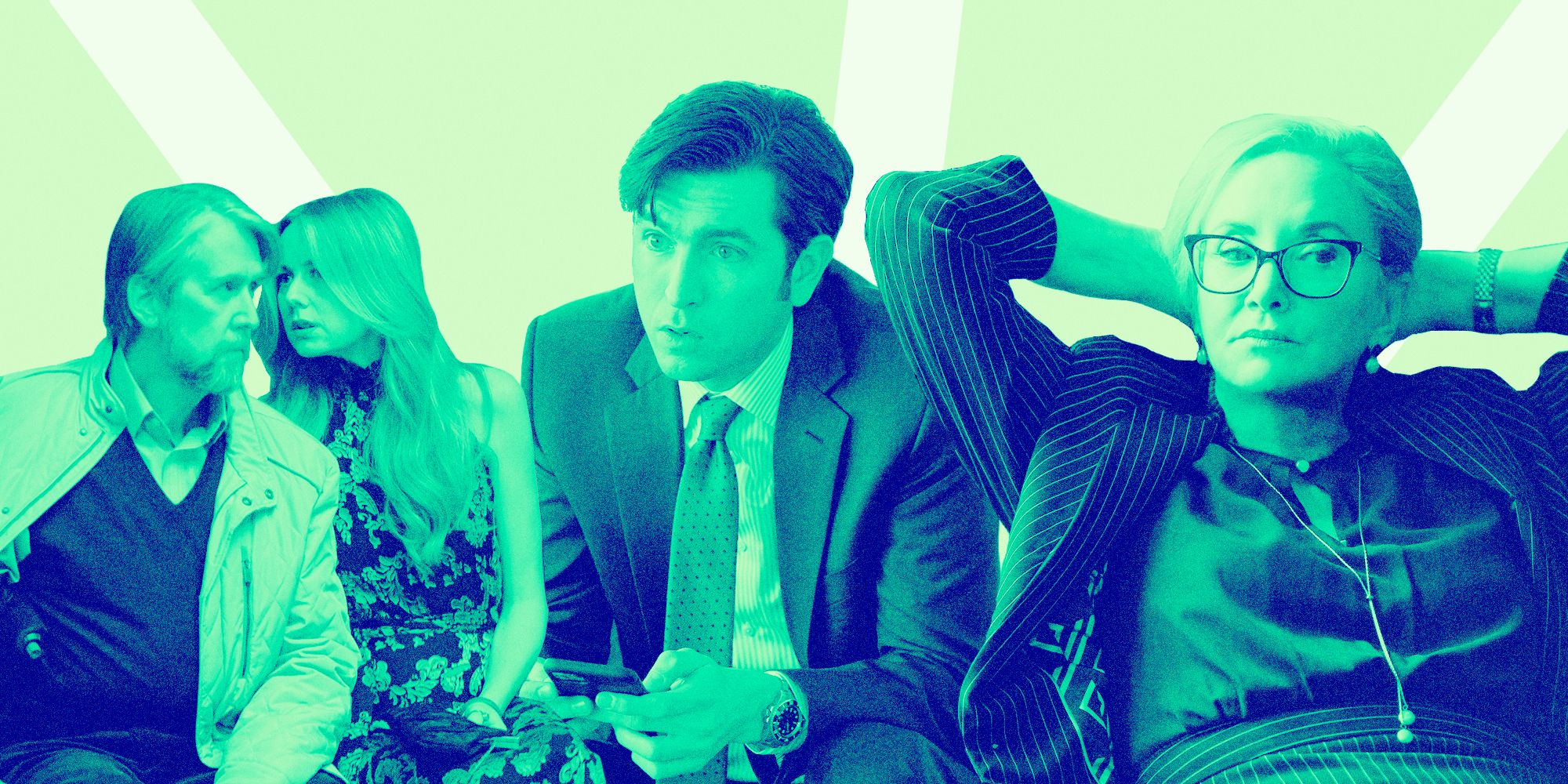
One of the few pure, unequivocally great delights of 2021 was the long-awaited return of Succession. Delayed by the pandemic, the show’s third season soared to new heights. Week after week, the writing on Succession is some of the best on TV right now, producing endlessly quotable and meme-able lines.
What makes a great Succession line? Among other things, it’s the precision, density, hilarity, ability for a line to live rent-free in our minds, or all of the above.
Advertisement
This list of superb lines, listed chronologically, could have gone on forever. So if something isn’t here, it doesn’t mean it wasn’t an excellent piece of writing. As Cousin Greg explained: “Headline is, uh, the internet is big, uh, obviously, uh, and I haven’t, I can’t, I couldn’t read it all, but I’m working through, I guess.”
“Who said I didn’t kill anyone?” — Kendall (Jeremy Strong)
Advertisement
At the beginning of the season, this line, followed by the sly grin on his face, was grimly funny. But now, it seems prescient and chilling, given how much that season one car accident, when Kendall did indeed kill someone, figures heavily into the final two episodes of season three.
“We get it.” — Hugo (Fisher Stevens)
Advertisement
“We hear/here for you,” the sequel.
“Do you know how many emails I get a day? I don’t read my emails!” — Logan (Brian Cox)
Yes, Logan used his mountain of emails to deny culpability in covering up the many scandals at Waystar. But also, this is very relatable. Apologies if I’ve missed your email.
“It’s kind of a greeting card from hell. It’s a Times New Roman firing squad.” — Connor (Alan Ruck)
Advertisement
This is Connor’s description of Shiv’s letter attacking Kendall after the Roy siblings decide not to join Kendall in his coup against their dad. It isn’t necessarily the most memorable or funniest line. But it exemplifies the brilliant precision and depth of the writing on this show. “Times New Roman firing squad” isn’t something someone might realistically blurt out. But as soon as you read it and hear it, you know exactly what it means.
“Well, I guess the government isn’t a fucking Pez dispenser. You don’t push a button and something pops out the other end.” — Gerri (J. Smith Cameron)
Gerri, Waystar’s general counsel and acting CEO (and often the most competent person in the room), has one of her finest moments during the tense FBI raid on the company. It’s probably one of the few times in his life that Logan realises he can’t get out of a fiasco by telling someone to fuck off, paying them off, or outmanoeuvring them.
“This just doesn’t work for me. So, fuck you and God bless.” — Kendall
“Little Lord Fuckleroy” ending a conference call with his dad, siblings and Waystar executives. Succession has the best encyclopedia of insults, greetings and signoffs.
“Nice and strong. Strong one. Strong for a man.” — Cousin Greg (Nicholas Braun)
Cousin Greg orders a rum and coke at some absurdly early time in the morning, urged by Logan, who has invited Greg to a meeting to bribe him into abandoning Kendall’s coup attempt.
I have now taken to calling my drinks “strong for a man.” The way Braun, a giant, grips the tiny glass with both of his hands is perfect.
Also, a runner-up from the same scene: “Different times. Different times indeed. Better times? Not for all.” Brian Cox’s enunciation of “Coca Cola” also lives rent-free in my brain, as well as his delivery of “What Greg wants, Greg must have!” One of the many joys of watching Succession is how there is so much going on in every single moment.
“We’re about to lose the company at the shareholder meet, all because you wouldn’t give our dad a timely fucking Evian. Good day!” — Roman (Kieran Culkin)
Advertisement
Again, it’s the precision here. Not just “you wouldn’t give our dad some water so he wouldn’t collapse while hiking in the Hamptons and stubbornly insisting he didn’t need any help!” It’s the specificity of “a timely fucking Evian.” Also, I’d like to try ending a phone call with an angry “Good day!”
“I’d castrate you and marry you in a heartbeat.” — Tom (Matthew Macfadyen)
Tom and Greg, a (very toxic) love story. This is the scene in which Tom tells Greg some seemingly random story about Nero and Sporus (“not IP I am familiar with,” Greg responds). But it will all make sense later — especially the line: “Nero pushed his wife down the stairs.” Boy, did we not know what Tom had up his sleeve.
This isn’t even a line of dialogue, just a moment that lives rent-free in my brain. Kendall’s kids’ giant pet rabbit has gotten sick because they fed it too much bagel (which Kendall permitted them to do, overruling their babysitter). Juliana Canfield manages to convey several different sentiments, including “WTF” and “I knew this would happen,” all in one shot.
“Oh, I just do what my dad tells me … like you guys.” — Sandi (Hope Davis)
The sickest of burns.
“I don’t do requests because I’m not a DJ. But I hear you.” — Lisa (Sanaa Lathan)
One of my tiny quibbles with this otherwise perfect season of television: It needed more Sanaa Lathan!
“Cold and inhospitable. That seems to check out.” — Shiv (Sarah Snook)
Advertisement
Shiv’s acute observation while inside a rendering of her mother’s vagina was, at first, hilarious because, well, she was inside a mock-up of her mother’s vagina at her brother’s birthday party. But after watching the brutal season three finale, we now realise that this line is funny because it’s true.
“I feel like I’m taking a shit in the Guggenheim, y’all.” — Stewy (Arian Moayed)
An all-time great one-liner from Stewy when Logan is not an active participant at a meeting but is, of course, watching everyone through the glass windows of the conference room.
“The man dying of thirst is suddenly a mineral water critic?” — Tom
Tom is so mean to Greg, but it’s such a perfect line!
“I may not love you, but I do love you.” — Shiv
Comical but also brutal, one of the defining combinations of what makes Succession so satisfying to watch. Shiv and Tom’s marriage of convenience has always seemed on the verge of collapse, but never more than after everything that happened this season.
“My mom’s getting remarried to a bowl of porridge.” — Roman
The use of food metaphors to describe people on “Succession” is unparalleled. Earlier this season, Logan insults Frank by referring to him as “mashed potatoes.” Caroline describes her fraught relationship with daughter Shiv by explaining that “you’re my onion.” And Kendall snipes at Logan: “You’ve lied so much you don’t even fucking know anymore. Your brain’s scrambled egg, look at you.”
“Fuck it! How bad can it be?” — Willa (Justine Lupe)
Advertisement
Imagine telling this to the person you’ve agreed to marry! How romantic!
“I didn’t keep track of the exact number of expletives he used, Siobhan, OK? I’m not a fuckometer.” — Roman
The Succession “fuckometer” is through the roof.
“What am I going to do with a soul, anyway? Souls are boring. Boo, souls!” — Cousin Greg
This was somehow more romantic than Connor and Willa agreeing to get married.
“Oh, go on, go on. Fuck off, you nosy fucking pedestrians.” — Logan
Me, to everyone who grumbled about how this season was “boring.” Fuck you and God bless.
The number of people testing positive for Covid-19 in a day in the UK is back above 90,000.
A further 91,743 lab-confirmed Covid cases have been recorded in the UK as of 9am on Monday, the government said.
Advertisement
A further 44 people had died within 28 days of testing positive for Covid-19. Infections had fallen below 90,000 over the weekend when testing typically falls off.
It comes as Boris Johnson’s senior ministers met to discuss the rising tide amid warnings the NHS could be overwhelmed without further action to stop the spread of the Omicron variant.
Advertisement
The government’s chief scientific adviser Sir Patrick Vallance and England’s chief medical officer Professor Chris Whitty briefed an unscheduled meeting of the Cabinet on Monday.
Downing Street denied it was an emergency meeting, saying ministers were being updated on a fast-changing situation.
Advertisement
It comes after the government’s Scientific Advisory Group for Emergencies (Sage) warned daily hospital admissions could reach 3,000 without further restrictions.
Earlier, deputy prime minister Dominic Raab refused to rule out the possibility that additional measures could be required before Christmas – now less than a week away.
“I just can’t make hard, fast guarantees,” he told Sky News.
The government has said that it will if necessary recall Parliament to allow MPs to vote on any new regulations it proposes for England.
Advertisement
However, that could prove politically problematic for Johnson, with not only senior ministers objecting to any further controls.
Last week Johnson suffered the biggest backbench rebellion of his premiership with 100 Tory MPs voting against rules requiring Covid passports for entry into nightclubs and other venues.
Any additional proposals could spark another revolt at a time when the Prime Minister is politically weakened by the ongoing row over parties in Downing Street last Christmas and the Tories’ crushing defeat in the North Shropshire by-election.
Johnson has reportedly been presented with a series of options to tackle the spread of the virus, ranging from guidance asking people to limit indoor contacts, to rules on household mixing, social distancing and a curfew on pubs and restaurants, to full lockdown.
This is a breaking news story and will be updated. Follow HuffPost UK on Twitter, Facebook and Instagram.
Jeremy Clarkson has sliced off “half of his thumb” in a gruesome kitchen accident.
The former Top Gear presenter got a lot more than he bargained for when he was using was making chilli-flavoured crisps with girlfriend Lisa Hogan for his Diddly Squat Farm.
Advertisement
He had been using a mandolin slicer to cut up the potatoes, but ended up slicing off part of his thumb whilst doing so.
In his latest column in The Sunday Times, Jeremy wrote: “You slide the potato along it and the razor-sharp blade takes a slice off the bottom. Then you slide it again and it takes another. And you keep doing this, with much vigour, until eventually your thumb is in the firing line and it take a slice off that. A big slice. A crisp-sized slice.
Advertisement
“Lisa noticed that under the mandolin, among the slices of potato, there was a piece of meat.
“It was like a miniature pork chop, about 2cm long, 1cm wide and 3mm thick. And, yes, it was half my thumb.”
Advertisement
Jeremy
Brian J Ritchie/Hotsauce/Shutterstock
Jeremy explained how Lisa gasped and dropped the piece of his thumb on the floor, before trying to reattach it.
However, Jeremy ended up in further agony as Lisa has been handing Carolina reaper chillies and hadn’t washed her hands before handling the wound.
He added: “Now, you may know that a chilli that scores a record 2.2 million on the Scoville scale can cause a fair bit of irritation when taken orally, but this is nothing compared with what it does when it’s applied to an open wound, along with a dash of salt for extra agony. You may have heard the scream from where you were. Even if you were in Stuttgart.”
After calling a local doctor to asses him, Jeremy was warned he could lose the use of his thumb.
Advertisement
Jeremy said: “Since the opposable thumb is all that separates us from goats, I decided I’d better do as I was told.”
Detailing the problems the injury is causing him, he added: “I can’t do up button-flied trousers. I can’t open a door. I can’t sign my name and I can’t even wipe my bottom.”
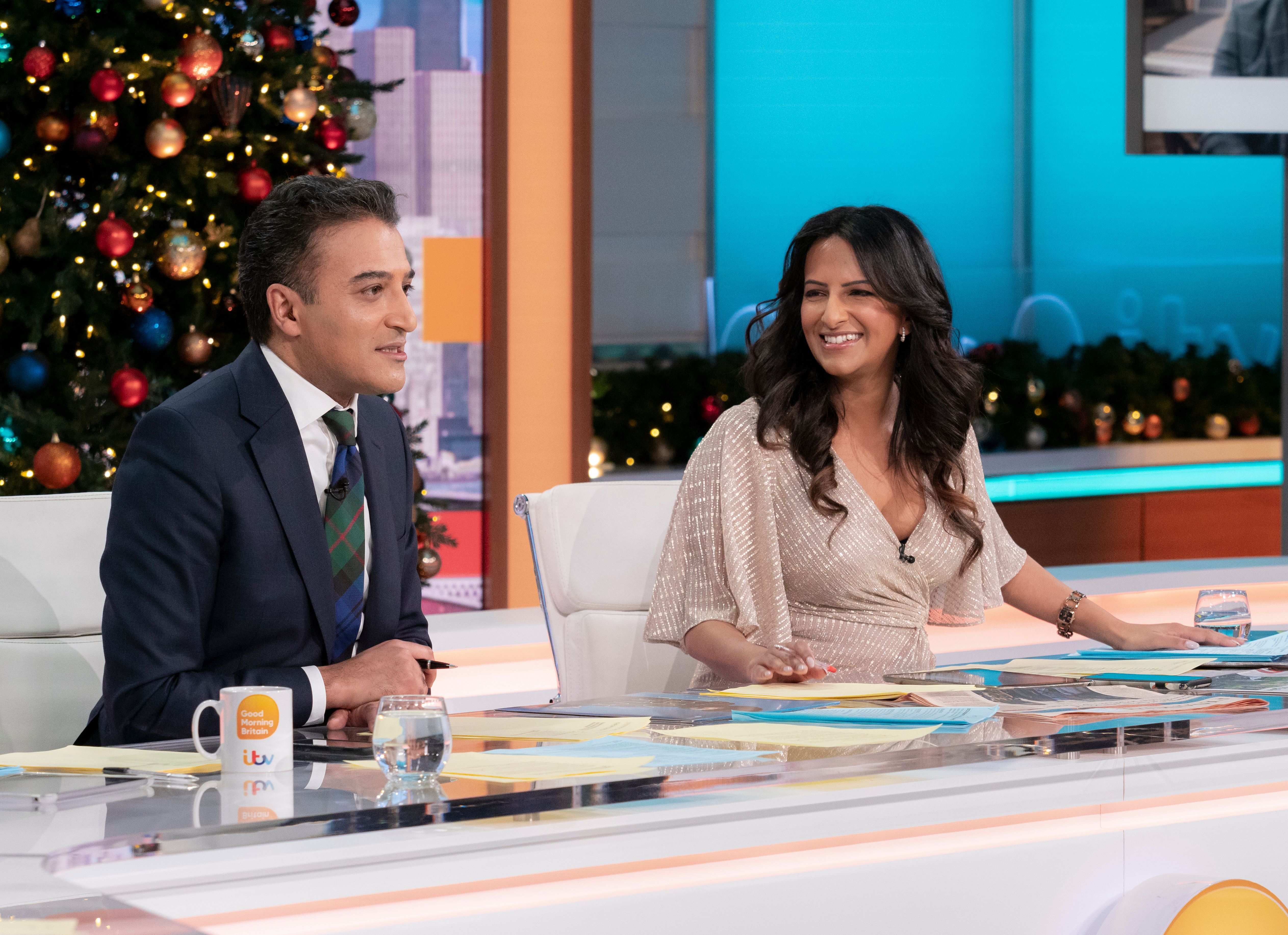
The breakfast show was due to air between 29 and 31 December, but bosses have axed the show “to protect our teams”.
Advertisement
The Sun reports that the show will air from 6am as planned for the rest of this week.
ITV confirmed that a special GMB Christmas Day show will also air from 7 to 9am.
Advertisement
A spokesperson said in a statement: “GMB was due to be on air from Weds 29 – Fri 31 December 2021 but due to the pandemic and to protect our teams, we have decided to give them an extended break.
“GMB will not broadcast next week, but will be back on air on Tues 4 Jan 2022.”
It was forced to merge with GMB and share the same studio, as had been done during the first lockdown due to Covid.
Ranvir Singh, who is one of GMB’s main presenters, was also missing from her guest-hosting role on Lorraine, with Andi Peters drafted in to replace her.
Giovanni has been with Strictly since 2015, and despite making it to the final on multiple occasions – including with Debbie McGee, Faye Tozer and Georgia May Foote (with whom he would later begin a romantic relationship that lasted over a year) – the Glitterball trophy has always eluded him.
Advertisement
That is, until now.
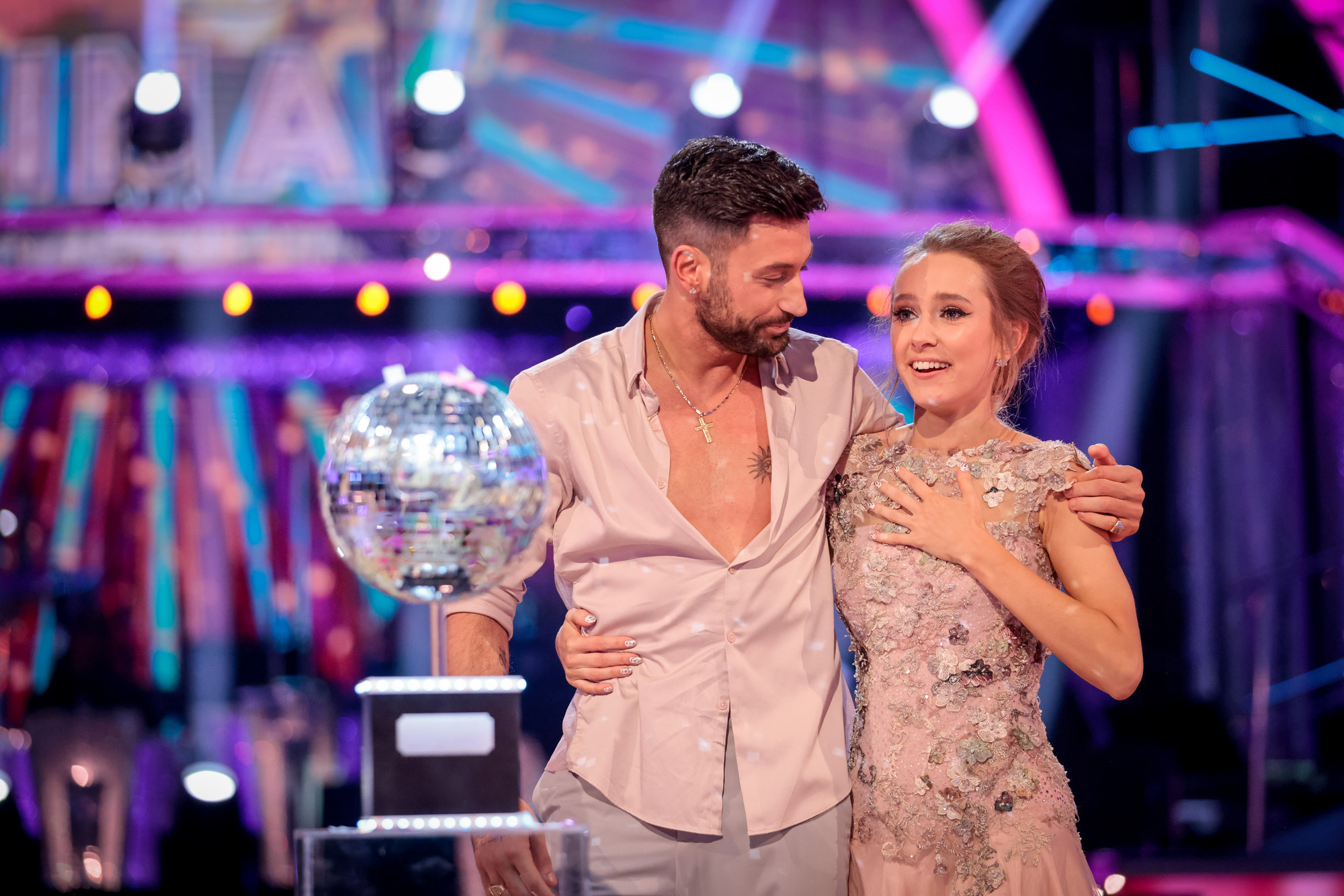
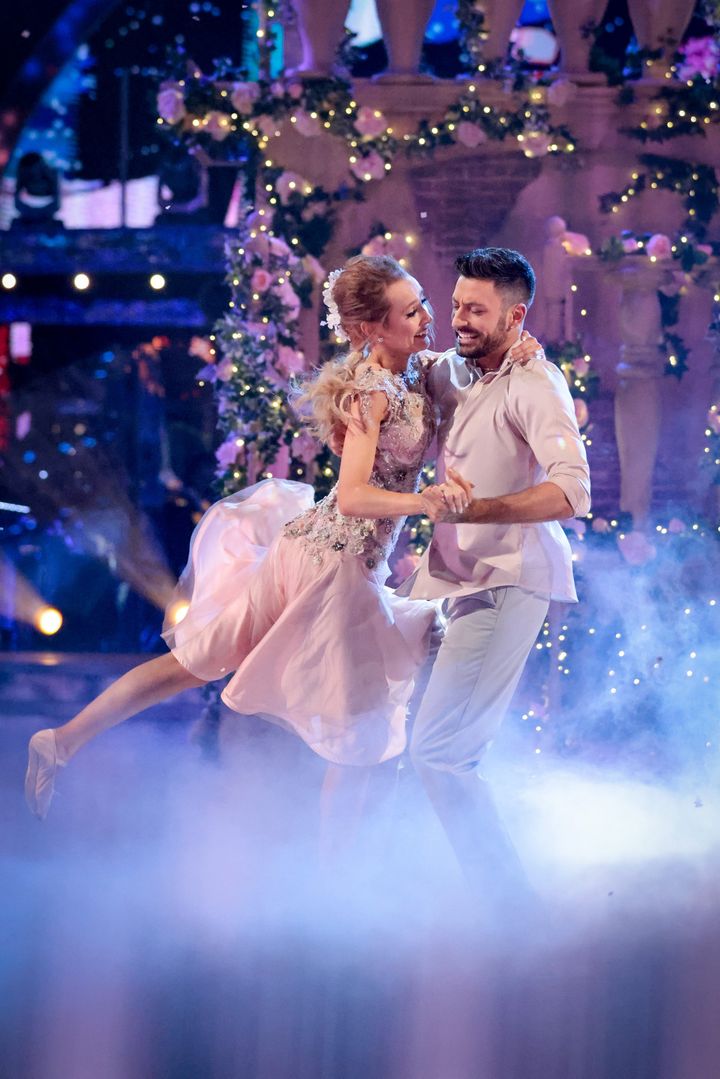
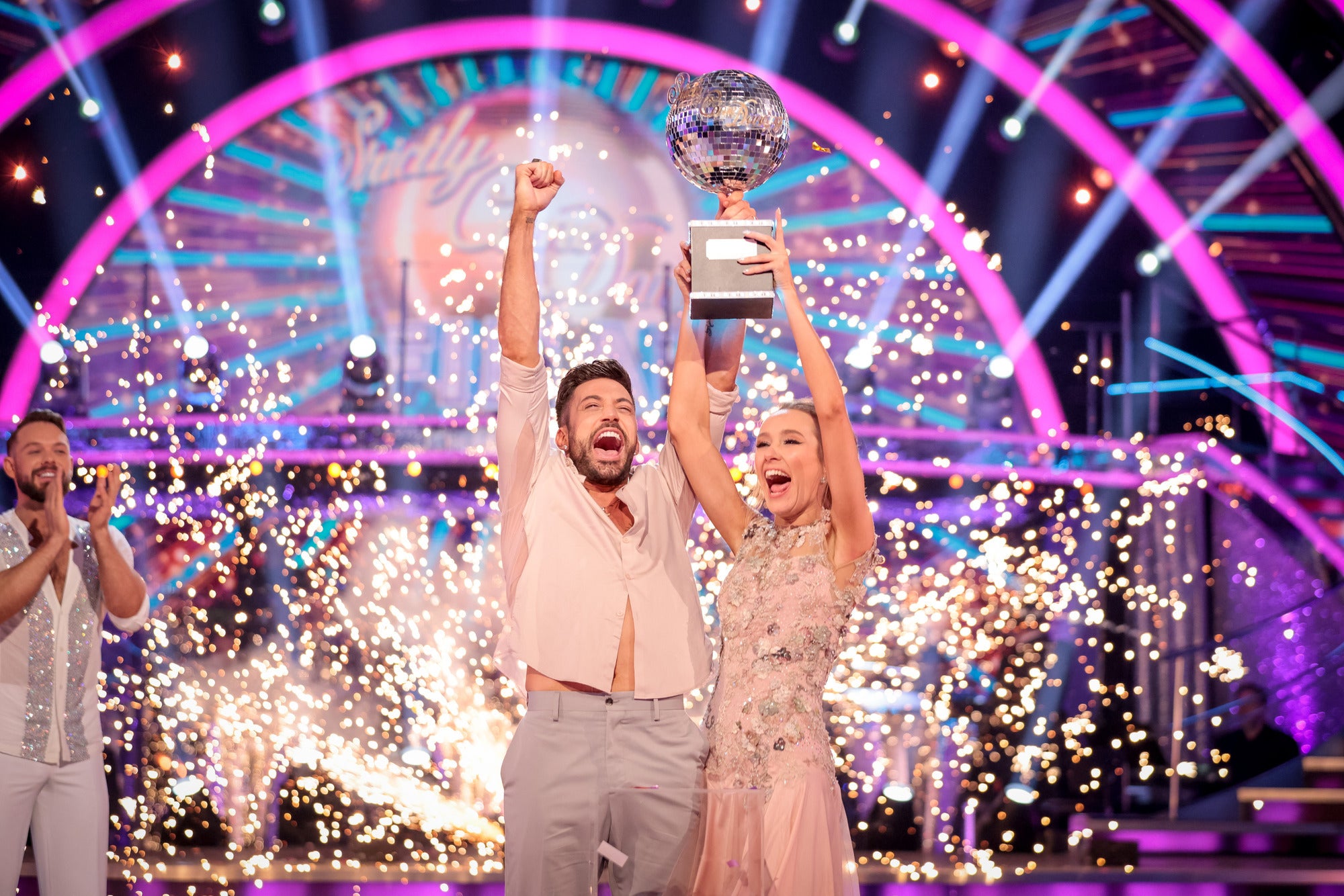
During this year’s final, he and Rose triumphed over John Whaite and Johannes Radebe, with the EastEnders star becoming the first ever Strictly winner with a physical disability.
Advertisement
The following morning, the Italian dancer revealed a Strictly victory had been every bit worth the wait, in a cheeky Instagram post.
A short clip on his Instagram story showed him lying in bed looking longingly while Christina Perri’s romantic ballad A Thousand Years plays… only for it to be revealed he has the Glitterball trophy on the pillow next to him.
Advertisement
Giovanni was over the moon to have finally bagged the Glitterball trophy
Instagram/Giovanni Pernice
Meanwhile, Strictly fans on Twitter couldn’t help pointing out Giovanni’s win constitutes another 2021 victory for his home country of Italy, after Eurovision, the Euros and Giuseppe’s triumph in this year’s Great British Bake Off final…
What a fantastic year for Italy 🇮🇹 ! 🏆Strictly Come Dancing 🏆The Great British Bake Off 🏆UEFA European Championship 🏆Eurovision Song Contest ▶️👏A-MA-ZING 🇮🇹 🇬🇧👏◀️ pic.twitter.com/XdCYVbogly
Rose and Giovanni winning #Strictly means that Italy have won this, Bake Off, the 100 metres, Euro 2020, the high jump (with Qatar) and the winner of the Eurovision Song Contest.
After his and Rose’s win, Giovanni said: “I have to say thank you to this beautiful young lady who made all my dreams come true. It took me seven years to get that thing and you became the best dancer, the best teammate I could have asked for, you are a dream so thank you for everything.”
She added: “I just want to say you’re so amazing, you pushed me to believe in myself more than I believed in myself.
“You’re an incredible teacher and a wonderful friend and we have gone through a lot, and I just want you to know you’ve always got a piece of my heart.”
Strictly Come Dancing champion Rose Ayling-Ellis has been hailed as “a shining example to deaf and hearing people alike” by various charities, while her win has been celebrated as “a victory for the deaf community”.
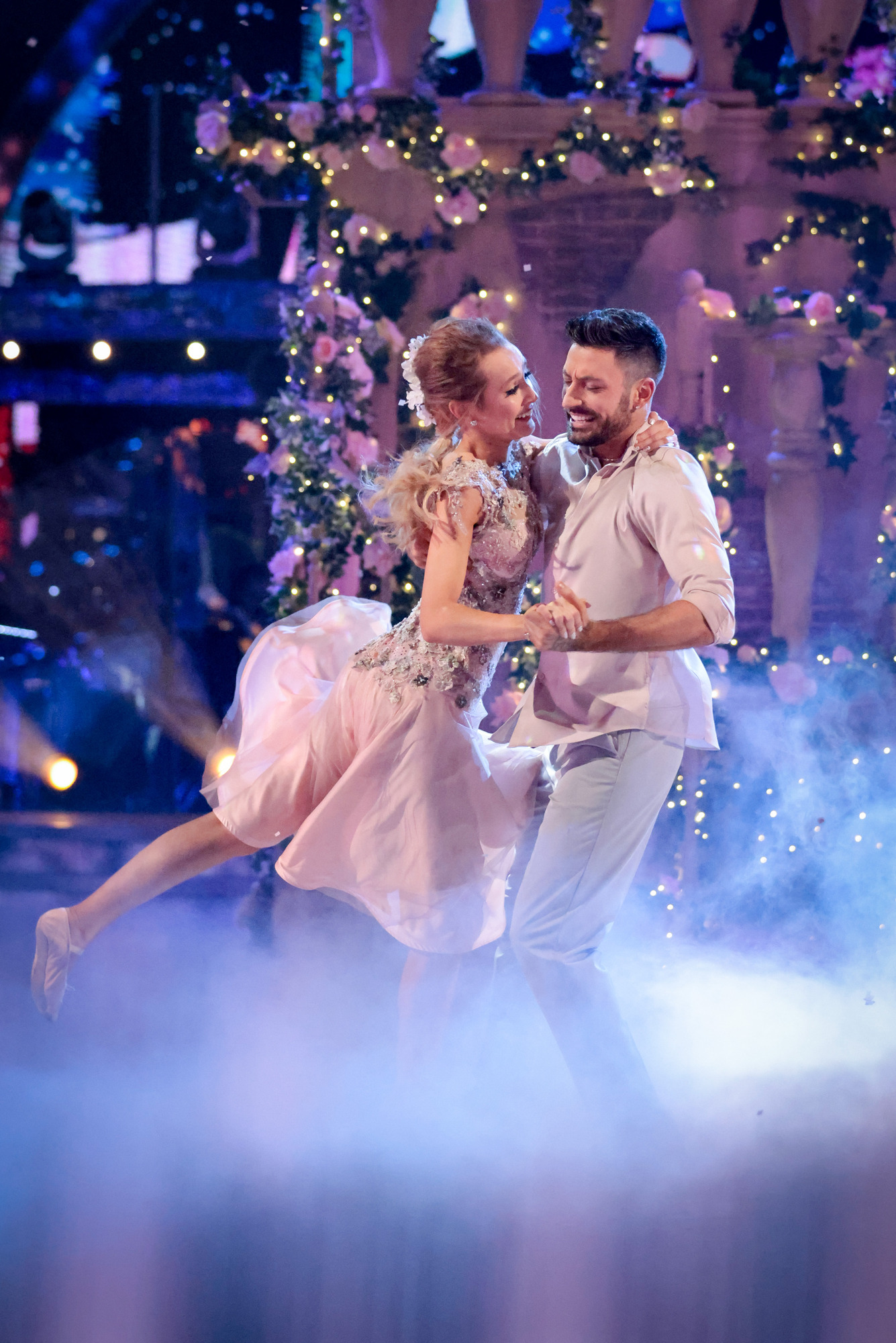
The EastEnders star, who is deaf, has used an interpreter during the series and her Couple’s Choice dance, which she repeated during the final, shared her experiences of deafness and featured a long period of silence.
Advertisement
Disability equality charity Scope has now has called on more broadcasters to feature disabled people’s talents, saying there is still a long way to go to improve representation of disabled people on TV.
Yes, it’s a TV show. But there are deaf and disabled children at home watching @bbcstrictly tonight saying to themselves “I can do it”. And that’s magical.
Congratulations from all of us at Scope, @RoseAylingEllis. You have done yourself proud 💜
James Taylor, executive director of strategy at the charity, said: “For Rose Ayling-Ellis to have starred week after week on Saturday night prime time – and then lift the glitterball trophy – is a massive step forward.
Advertisement
Advertisement
“However, there is still a very long way to go until disabled people are featured fairly on screen. There are 14.1 million disabled people in the UK and their lives and stories are not being told.
“Seeing disabled people on TV will only help improve understanding and break down barriers.
“So, the fact that Rose’s journey has been beamed into living rooms week-in week-out is excellent progress and must be the start of real change.
Advertisement
“We have seen a victory for representation on our screens, challenging the stereotypes of what disabled people can do.
“We want more broadcasters to step up and feature the talents of disabled people.”
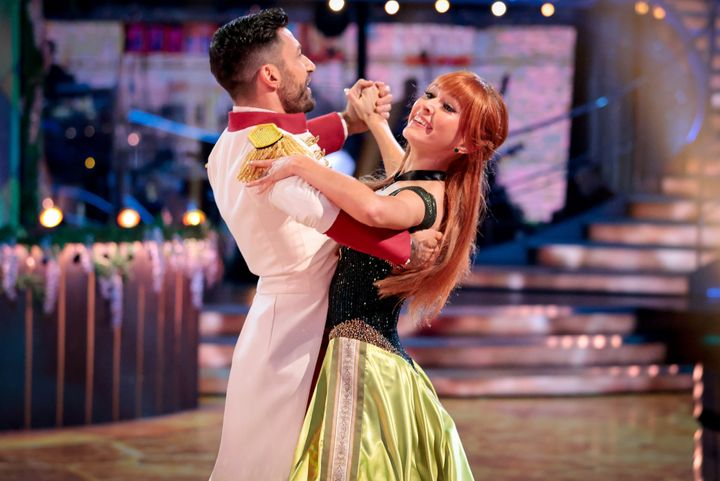
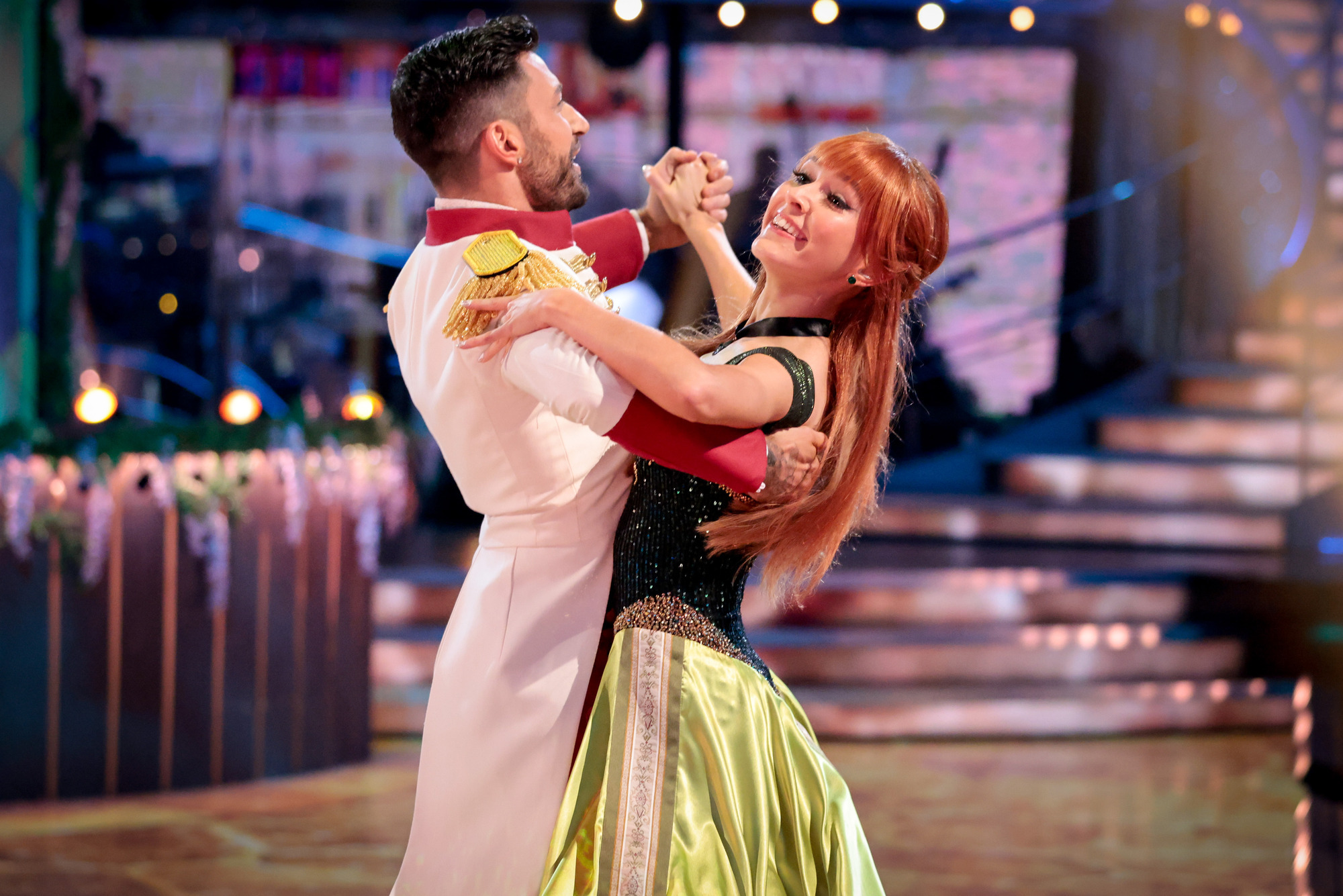
Rose also performed a number inspired by Frozen during the live final
BBC/Guy Levy
Mark Atkinson, chief executive at the Royal National Institute for Deaf People, said Rose’s appearance on the show has given audiences “a beautiful insight into the deaf community and deaf culture”.
He added: “Her victory isn’t just a personal achievement, but also a victory for the deaf community.
“She has shown that deaf people can do anything, if society addresses those barriers and provides the right access and support.
“Giovanni has been a perfect example of this, working with Rose and adapting his teaching style to help her succeed.
“At RNID, we are all thrilled that Rose has won, and we are confident that her legacy will mean lasting change for the one in six people who are deaf or have hearing loss.
Advertisement
“We hope Rose’s success will open up employment opportunities for deaf people and reduce barriers, and we’re excited to see what she will undoubtedly go on to achieve in her future career.”
Rose Ayling-Ellis performing her Strictly show dance
She said: “It’s hard to overstate just what an impact Rose has made, not only on deaf children and young people, but also on the public’s understanding of deafness.
“Throughout her Strictly journey, she’s been a shining example to deaf and hearing people alike.
“This could be a new dawn for deaf children and young people everywhere because it’s clear for all to see that with the right support and the will to succeed, they can aim for the stars.
“Strictly may have come to an end, but we sincerely hope that this surge of interest in deafness and the desire to engage with deaf people continues long into the future.”
AJ Odudu and Kai Widdrington had originally been due to compete in the final, but was forced to withdraw due to a serious injury, meaning the show went ahead with just two competitors.
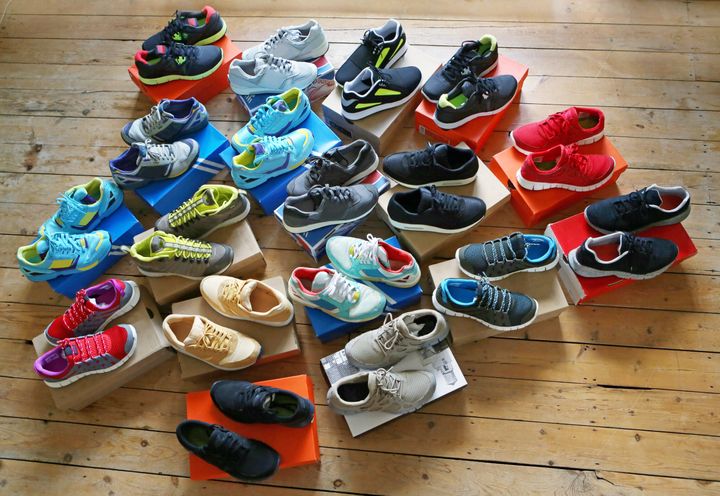
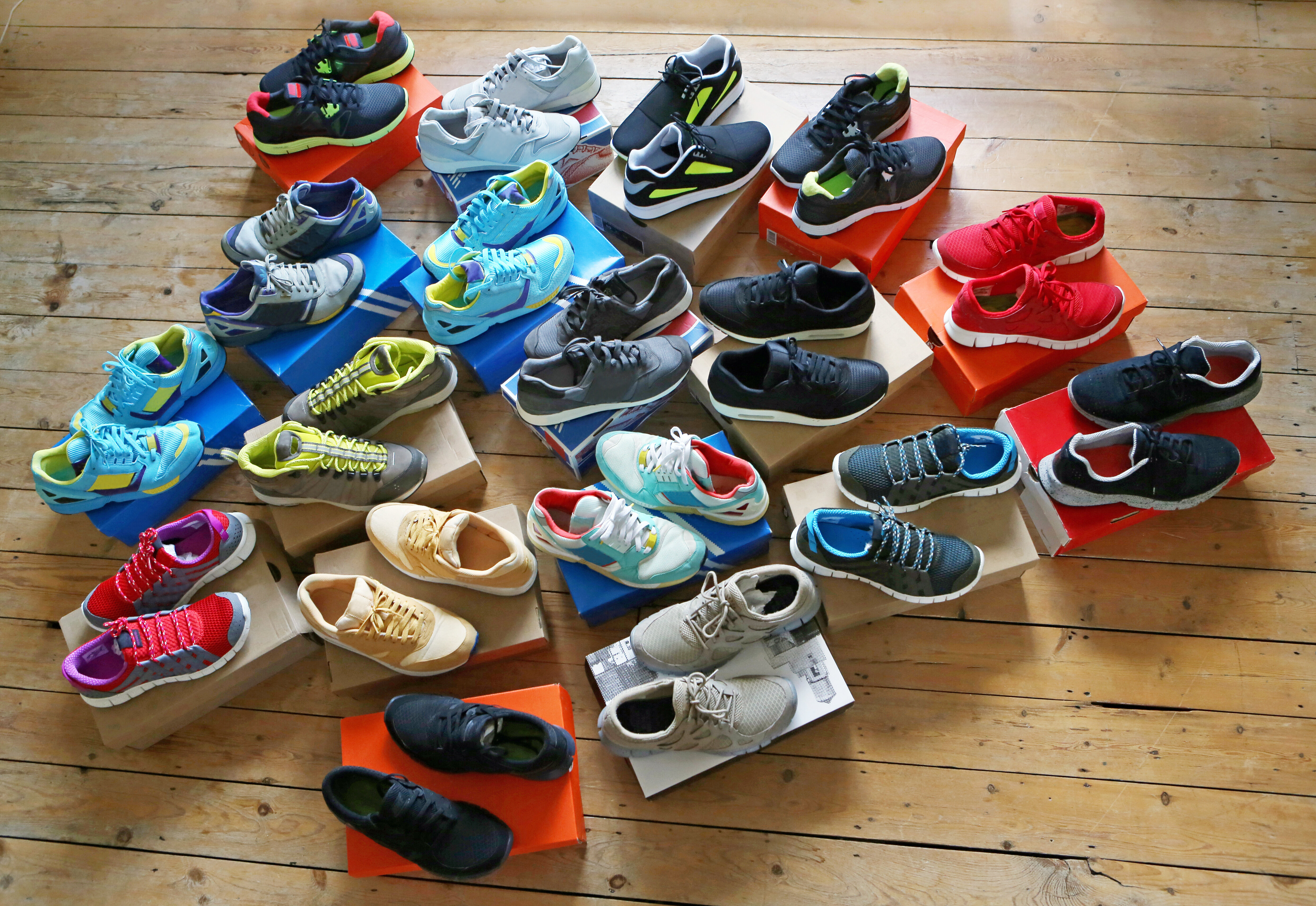
Fancy sneakers, baseball cards, comic books – there are many items people love to collect.
A Morning Consult survey from earlier this year suggested that millennials in particular are fans of collecting physical objects, as well as digital collectibles like NFTs (non-fungible tokens). Gen Xers were the second highest percentage of respondents who collect things. The survey also polled Gen Zers and baby boomers.
Advertisement
Of course, hobbyists have been collecting things like coins, stamps and books for generations. But is there something about collecting that might appeal especially to today’s young adults? HuffPost asked mental health experts to break down some of the potential factors.
There’s a sense of nostalgia and connection to childhood
Advertisement
“One of the reasons people collect is for the sake of nostalgia, or connection with something meaningful to them,” says Rachel Thomasian, a licensed therapist and owner of Playa Vista Counseling in Los Angeles. “Whether it’s art or dolls, there can be a connection to items. Often collecting helps people connect to their childhoods or a special time or person in their lives.”
In the early stages of the Covid-19 pandemic, many of us took a renewed interest in things we did as kids. For millennials, this meant tie-dying, doing puzzles and playing video games, among other things.
Advertisement
“A lot of people turned to ways to reconnect with their childhood,” says Jocelyn McDonnell, a licensed clinical professional counsellor and member of the cognitive behavioural therapy team at the Family Institute at Northwestern University. “Many millennials collected things as a hobby growing up – like Pokémon cards and sports cards. I think some people have re-looked at these hobbies for the first time during the pandemic.”
Collecting fosters feelings of accomplishment and power
“For some, there is a thrill and sense of accomplishment that comes along with acquiring an entire collection,” Thomasian says. “For us millennials, I can’t help but wonder if growing up with the catchphrase ‘collect them all’ and during a time when we sought to complete a collection of McDonald’s toys has something to do with our tendency to collect.”
She also pointed to the financial challenges millennials face with stagnant wages, rising debt and increased housing and healthcare costs that have become their reality.
Advertisement
“I bet there is a sense of accomplishment that comes from being able to buy and collect things that is deprived of most millennials,” Thomasian says. “Previous generations were able to buy homes more easily and feel pride in that, but when that doesn’t feel as much of an option, people can seek that same feeling from other items.”
McDonnell similarly notes that collecting can offer a feeling of power and achievement.
“Ask someone who’s really into collecting what they’re gaining from it – enjoyment, fun and maybe it’s a status symbol in some ways,” she says. “It’s the idea that ‘Maybe I can pay for this rare card now, but I couldn’t when I was 10.’”
There’s a feeling of hope in building a collection
Collecting can help millennials reconnect with the simpler and in some ways happier times of their youth. But it can also offer a sense of hope and promise for the future.
“Many millennials are weathering the effects of the second recession of their short working lives, which has had a very specific impact on their conceptualization of what paths their lives were supposed to take,” said Jenny Maenpaa, a New York-based psychotherapist.
A lot of millennials entered the workforce in a shaky economy that limited their earning potential, and may have found themselves in a similar position during the pandemic – but with more responsibilities like children and ageing parents. As a result, it makes sense they might turn to something from a more hopeful time.
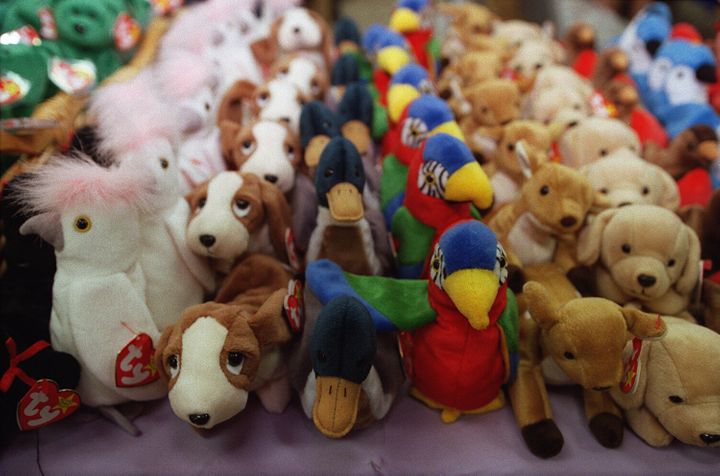
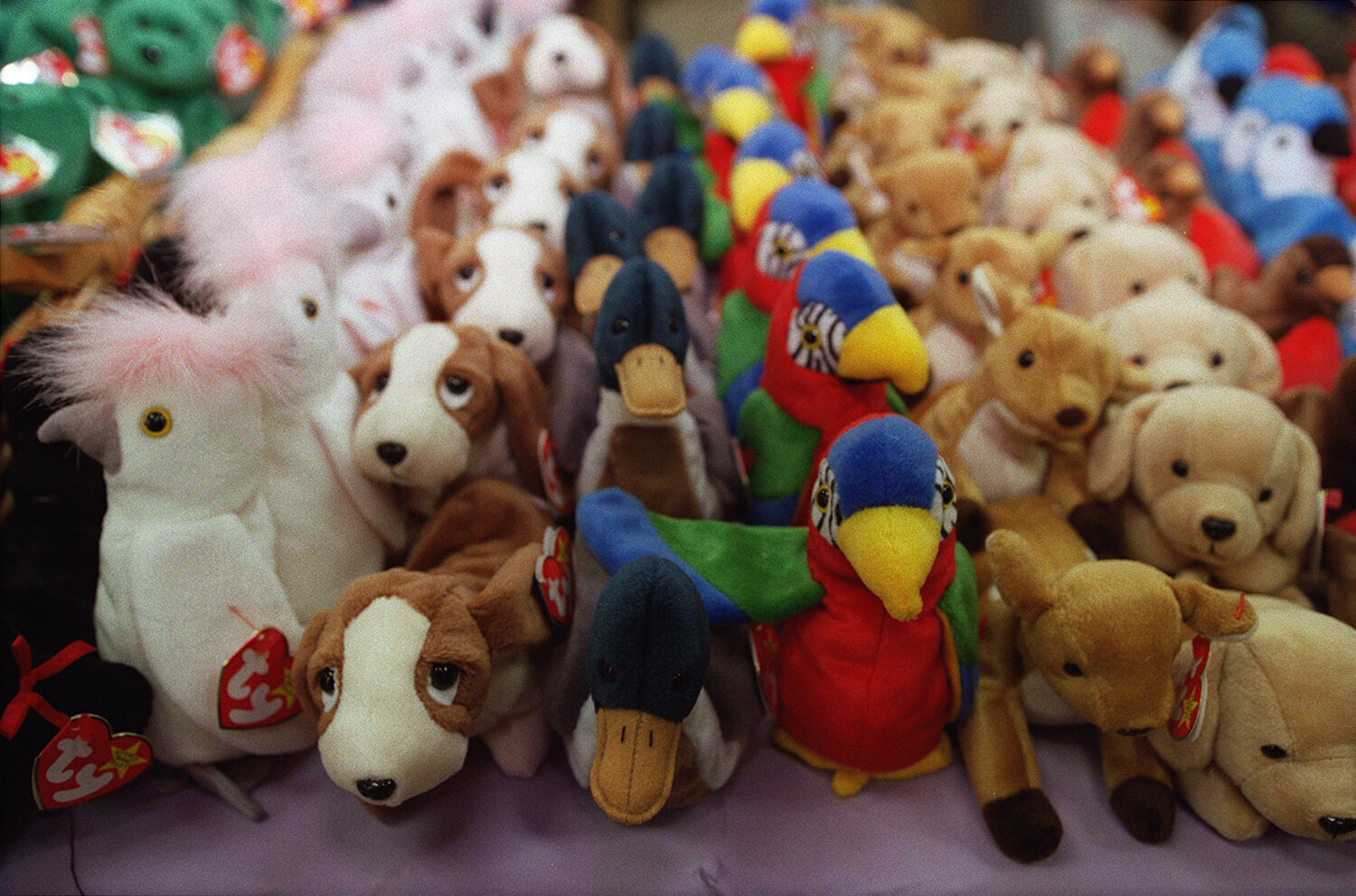
“For many millennials, who grew up collecting POGS and Beanie Babies, the idea of collecting something tangible is comforting and represents a time when they felt more hope for the future and none of the existential dread that grips many today,” Maenpaa says. “Collecting items also implies that you still believe you will have a home to fill someday with things that matter to you, even if you aren’t in that position today and have no idea how you’re going to get there.”
Richard Newstead via Getty Images
There’s a sense of accomplishment in curating a collection of items you love.
A sense of security is something many of us have been craving amid the uncertainty of the pandemic. We need tangible rewards and proof that we have some power and agency in our lives.
“So much is out of our control during Covid that the little dopamine hit of collecting another item is especially rewarding and in our control,” says Rachel Kazez, a Chicago-based therapist and the founder of All Along, a resource to help people find therapy and understand mental health.
Indeed, the act of locating and procuring something for a collection can activate the pleasure centre of the brain, so this hobby can provide a feeling of comfort and stability.
“As a therapist I see more people collecting things as a way to comfort or self-soothe,” says Kati Morton, a licensed marriage and family therapist in Santa Monica, California. “Having things they love around them can help them feel more at home, or remind them of happier times. I have even had a few patients collect things as a way to always have ‘home’ with them because they moved a lot as children.”
Between 9/11, the financial crisis and the pandemic, millennials experienced a lot of stress and uncertainty during particularly formative years.
“The trauma and stress millennials have gone through during key times in their life makes them more likely to collect things as a way to self-soothe or comfort themselves,” Morton says.
Collecting can help people connect with others.
“Collecting objects might be for fun, because it is part of an interest or to fit in and be seen to be part of a ‘tribe,’” says Noel McDermott, a London-based psychotherapist. “Consuming is a core activity in our culture and overproduction of things is a feature of our times. Whereas collecting in the past was the preserve of the wealthy and idle few, it is much more widespread now.”
McDermott pointed to the large social media communities and groups of people who follow influencers who focus on particular collections or items. Being “in the know” and up to date with the latest trends can feel good, especially in the age of FOMO.
“I think millennials collect for both a sense of individuality and community,” says Meg Gitlin, a psychotherapist in New York and the voice behind the therapy insight Instagram City Therapist. “This may seem paradoxical but I think both are true. Many collectors are involved in larger groups with the same interests, but there’s also something ‘special’ about claiming ownership over something that’s hard to find and fully understand.”
Advertisement
She also believes that living through the major shift into the digital world and internet age might have something to do with millennials’ interest in collecting items.
“I would imagine that for people like me, collecting is a way to preserve an attachment to meaning in the physical world,” Gitlin says.
San Francisco Chronicle/Hearst Newspapers via Getty Images via Getty Images
There are still online communities dedicated to selling and collecting Beanie Babies.
It’s a form of self-expression
As Gitlin noted, collecting can be about both communal connection and individual expression.
“Objects are an extension of ourselves,” Mueller says. “What we choose represents us. They define us as people and are a form of self-expression. Collecting in a specific area is the ultimate self-expression.”
Collecting vintage postcards might be a way to show your interest in history, travel and art. What you collect is a reflection of what you prioritise in your discretionary spending. Your interest in collecting could also be about a specific childhood trauma or defining experience.
“For some, it can be filling an emotional void,” says Gina Moffa, a psychotherapist in New York. “For any reason, the key is having an emotional attachment to the items and putting individualised meaning upon them. The key is in knowing and understanding which of these categories one may fall into when looking at the need to collect.”
They might be investing in the future
“Collecting can be a great way to make and keep memories,” said Kathryn Smerling, a New York-based psychotherapist. “However, people are also collecting to resell. It’s also entrepreneurial, not necessarily to hold on to things.”
Indeed, millennials have witnessed the ways collectibles can grow in value over time – including our own childhood toys like American Girl dolls and Beanie Babies. Collecting items can therefore feel like a form of investing.
Advertisement
“Our internet savvy leads us to up the ante on the search and gives us the skills to scour the ins and outs of the internet for the item we are collecting,” Gitlin says. “Additionally, I think our generation has seen how collectors’ items have gone up in value exponentially. We are able to enter the market for ourselves and buy something that could potentially (and likely) triple or quadruple in value.”
And now the investment includes digital collections as well – whether it’s cryptocurrency or NFTs.
“Digitally savvy, millennials as a group are in a unique position right now with collecting,” says Sue Varma, a psychiatrist in New York. “For the most part, millennials are not intimidated by geographic boundaries – in the art world or elsewhere – making their access to collectibles that much larger. In fact, they are leaning more towards the online art viewing and Instagram-only art collections.”
In addition to investing in potential financial growth, she notes that collecting can be a way to invest in yourself and your day-to-day happiness.
“Because of the pandemic, more millennials are spending a lot more time in their homes,” Varma says. “And they are willing to spend on art, sports memorabilia and collectibles to make their homes more welcoming.”
If you’ve already had enough of cheesy Christmas films and festive TV specials then BBC One might have just the thing to keep you entertained this week.
New four-part thriller The Girl Before is set to air across four consecutive nights in the lead-up to the big day, and it is certainly an antidote to the usual Christmas schmaltz.
Advertisement
If that sounds like something up your street and you want to know more, here’s what we can tell you about it…
What is The Girl Before about?
Advertisement
According to the BBC, The Girl Before “tells the story of Jane, who gets the chance to move into a beautiful, ultra-minimalist house designed by an enigmatic architect.
“There’s just one catch: the occupants must abide by his list of exacting rules. Jane starts to feel the house changing her in unexpected ways, but when she makes the shocking discovery about her predecessor Emma (Jessica Plummer), she’s forced to confront unnerving similarities. As the two women’s timelines interweave, Jane begins to question if her fate will be the same as the girl before…”
Advertisement
Jane moves into One Folgate Street
BBC/42/Amanda Searle
Who is in The Girl Before cast?
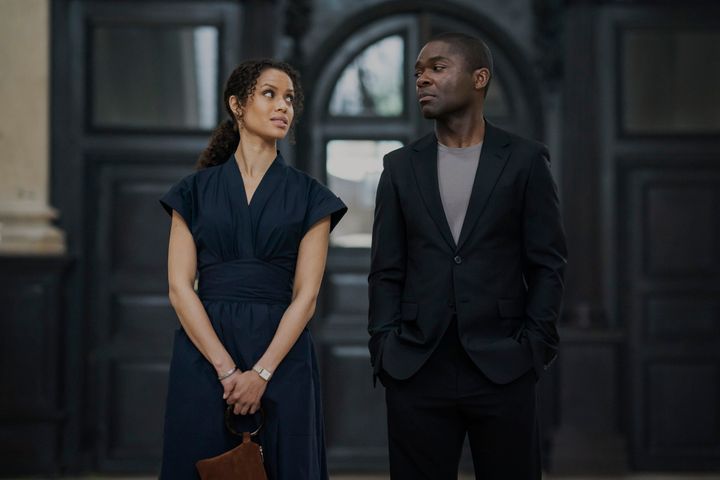
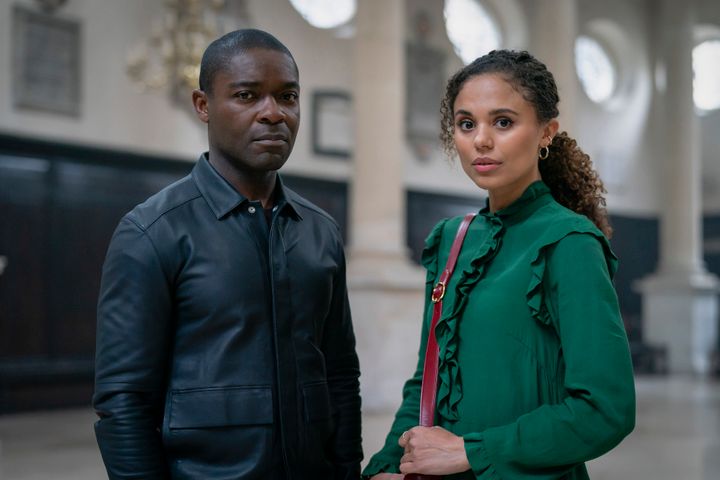
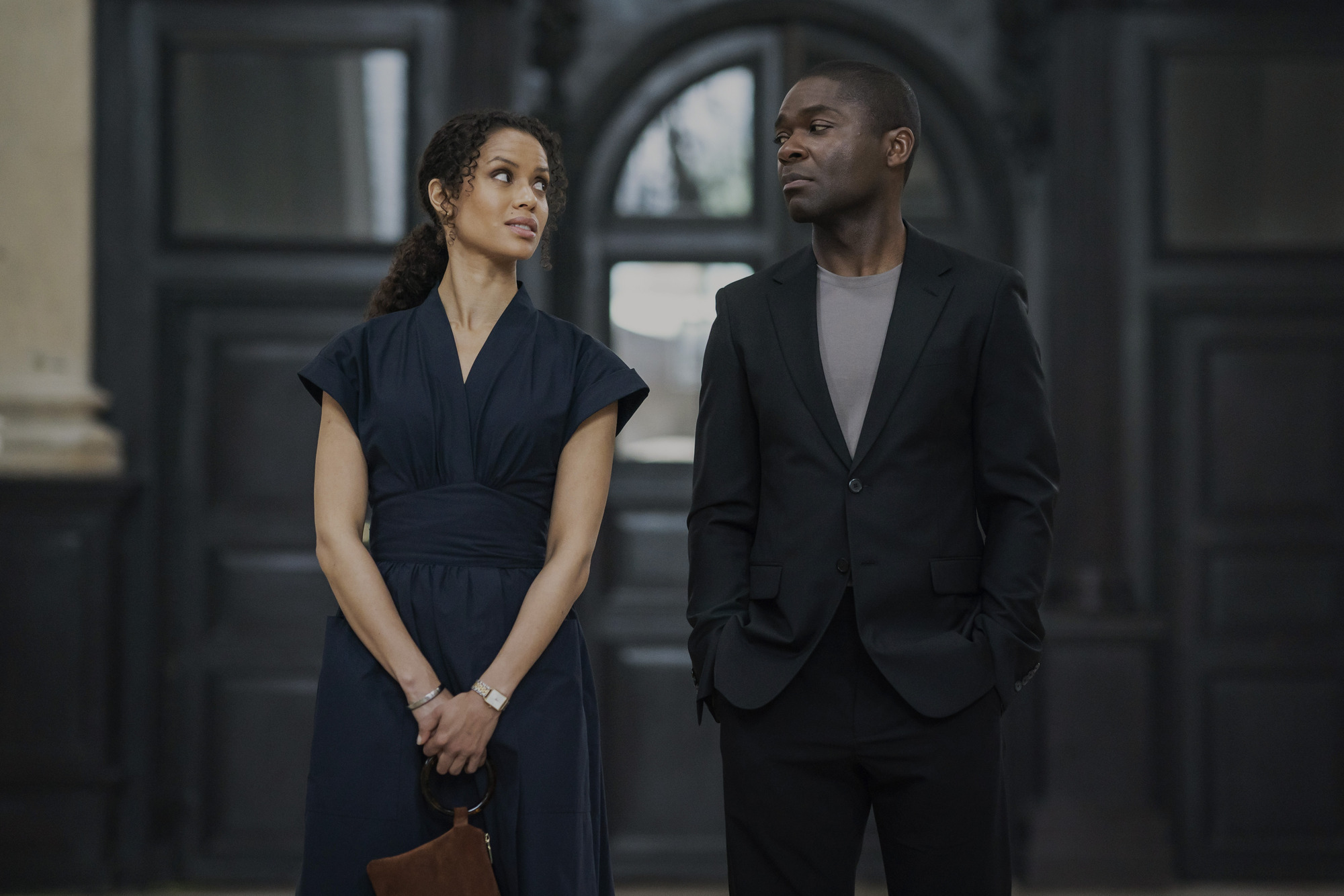
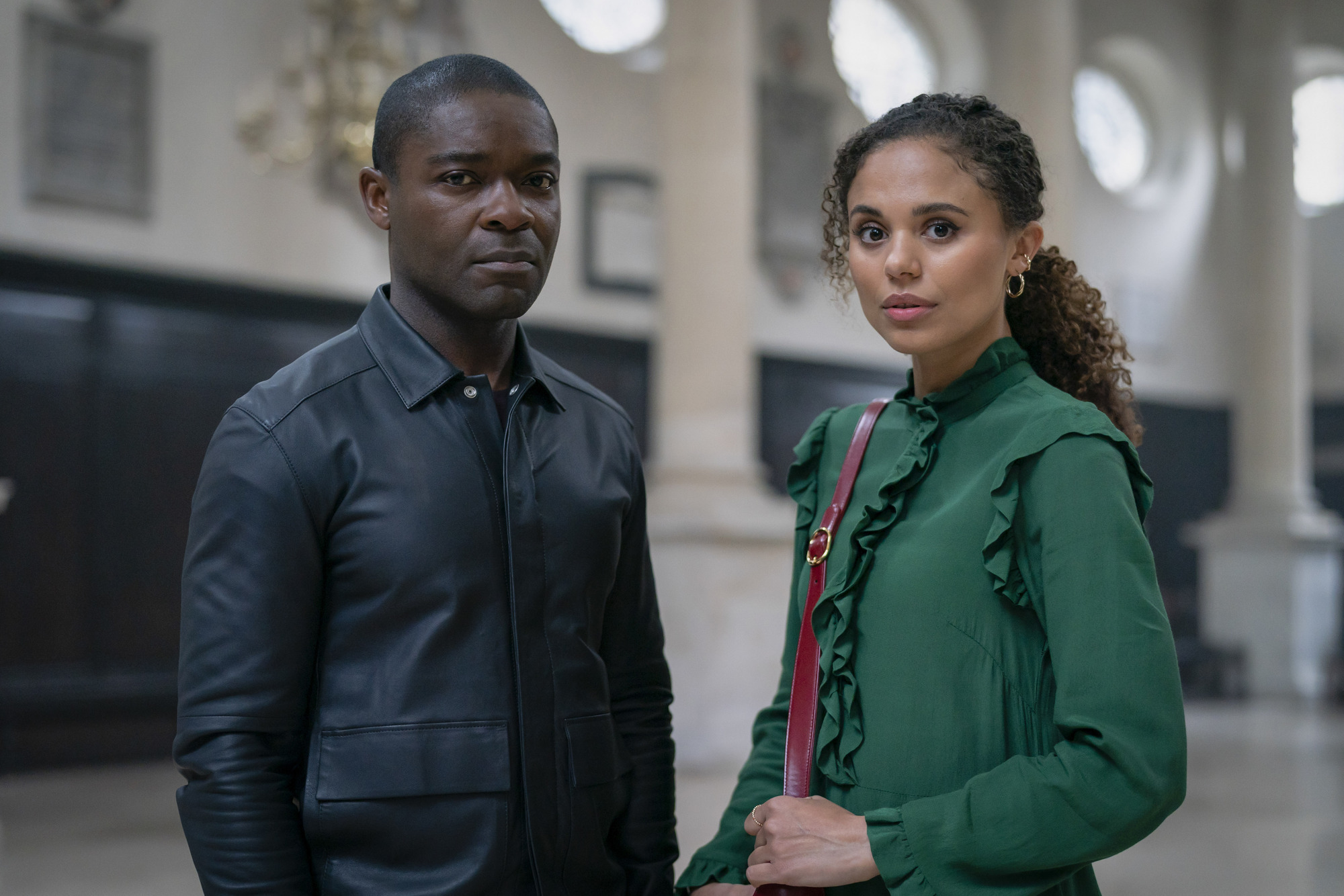
Gugu Mbatha-Raw (The Morning Show, Loki, Black Mirror) plays Jane Cavendish, a financial PR exec who takes solace in One Folgate Street.
Having been shell-shocked by a recent trauma, the minimalist house is a retreat from Jane’s strife, and the discipline required to live there chimes with her own work ethic and high standards. However, the mystery of what happened to the girl who lived there before soon begins to consume her.
“She’s incredibly raw on the inside,” Gugu says. “One Folgate Street really explores the opportunity for Jane to have a fresh start, but how all those things are still tormenting her in the house.”
Advertisement
Gugu Mbatha-Raw plays Jane
BBC/42/Amanda Searle
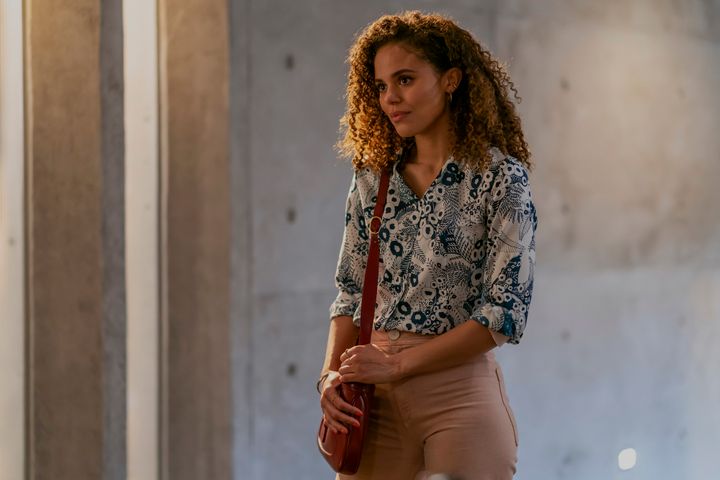
Jessica Plummer (EastEnders, I’m A Celebrity) plays Emma Matthews, the woman who previously lived at One Folgate Street.
Emma moves into the house at a point in her life where she is unsatisfied with her career and partner, and is still traumatised by two separate acts of violence in her past, which she has always felt too ashamed to share.
Jessica says: “Emma uses distractions as a coping mechanism. She wants to put to bed things that aren’t working anymore and reinvent herself all over again.”
However, while she hopes to find security and safety, her life soon spirals out of control.
Jessica Plummer as Emma
BBC/42/Amanda Searle
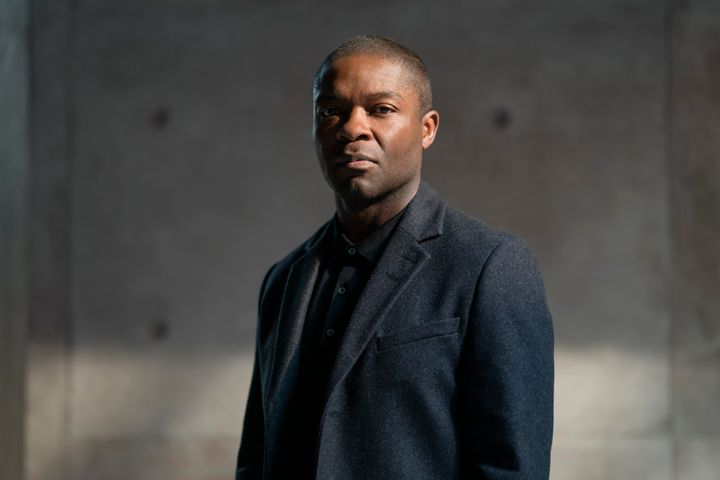
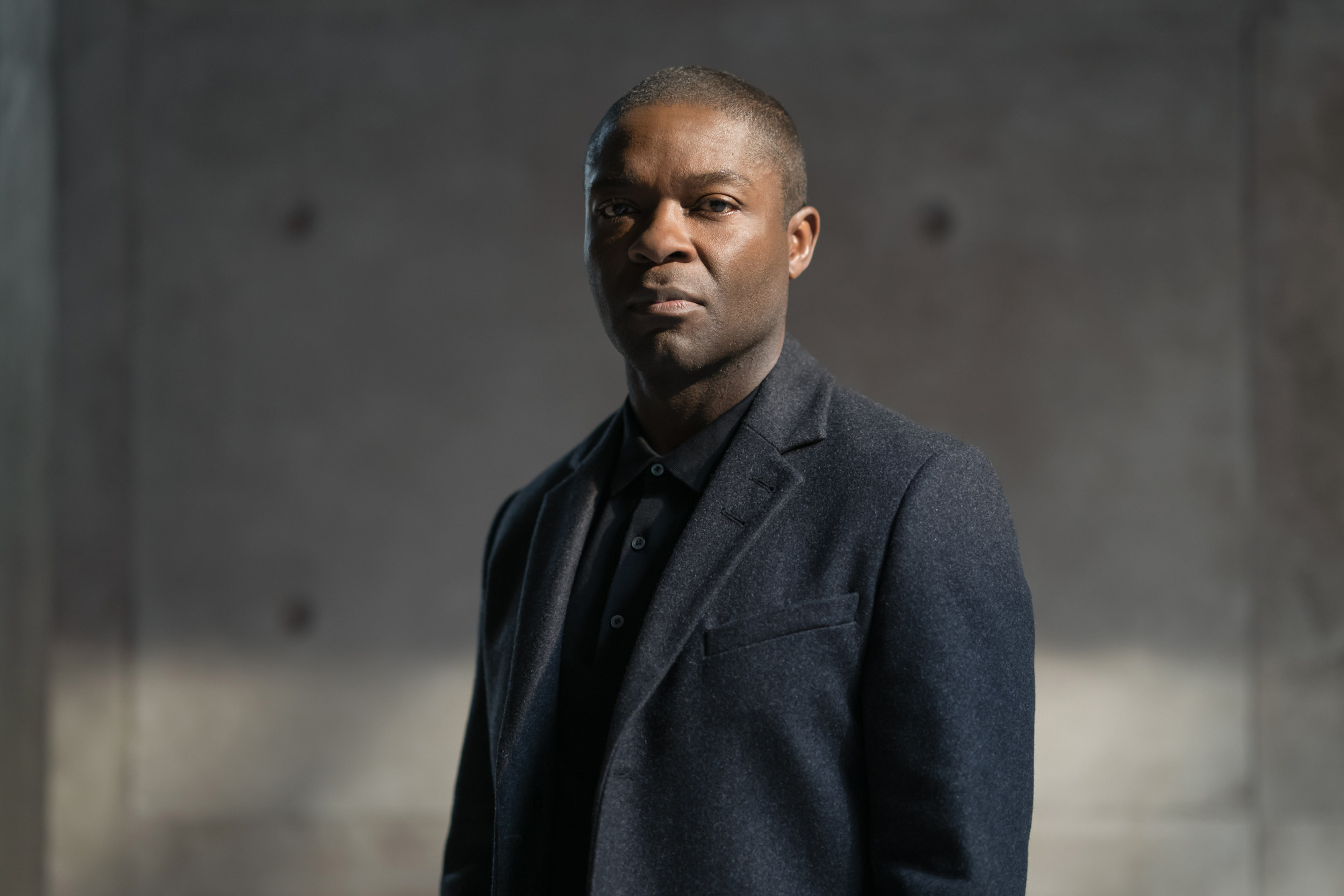
David Oyelowo (Selma, Nightingale, Spooks) plays Edward Monkford, the successful but enigmatic architect of One Folgate Street. Edward is described as being such a perfectionist that the slightest flaw in his surroundings causes him almost physical pain, while his grief has manifested itself into the extreme minimalism present in his architecture.
“He also has this fascinating condition called repetition compulsion,” David explains.
“In speaking to some therapists for research, I found that we all have a certain degree of this going through life and either making the same mistakes or making some of the same choices – basically habitually finding ourselves in situations that may or may not be healthy for us… It was intriguing to explore that, but then also the concept of this guy who is trying to control his life, manipulate his life, be fully in the driving seat of his life to a very unhealthy degree.”
Viewers will be left wondering if Edward is dangerous, or merely damaged, and whether he is a victim, or a killer…
David Oyelowo plays Edward
BBC/42/Amanda Searle
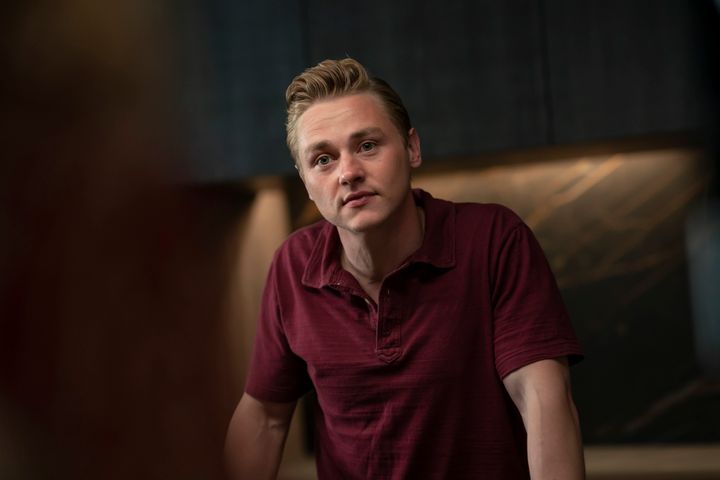
Ben Hardy (Bohemian Rhapsody, X-Men: Apocalypse, EastEnders) plays Simon Wakefield, Emma’s partner. He suspects Emma is out of his league and will do anything to make her feel he’s “the one” for her.
“He’s very much a beta to Edward’s alpha male,” Ben says. “The character is very submissive… he beats himself up for being so submissive because he wants to be the alpha.”
Advertisement
Ben Hardy plays Simon
BBC/42/Amanda Searle
What book is The Girl Before based on?
The Girl Before has been adapted for TV from the the 2016 novel of the same name by author JP Delaney.
After the book’s release, it became an instant New York Times and Sunday Times bestseller and sold over a million copies in 40 countries.
The writer has also published titles including The Perfect Wife, Believe Me and Playing Nice.
JP Delaney is a pseudonym with the same author having also published the Carnivia trilogy under the name Jonathan Holt, and titles including The Food Of Love, The Wedding Officer and Undressing under the name Anthony Capella.
The show airs over four nights from Sunday
BBC/42/Amanda Searle
How does the TV adaptation differ to the book?
According to JP Delaney, who also worked on the script for the TV series, it is “simpler” plot-wise than the book as some of the “twists and turns” had to be cut out. That said, he assures readers that the show has ended up being “very similar as an overall plot”.
However, he notes that the main difference is that the book “is very much within its genre” as a thriller, so is “all about the plot and pace”, whereas the TV series is “more nuanced and character-driven than the book”.
“In TV, you have a chance to unpack people’s characters a bit more… That’s been one of the most fun things about doing it,” he adds.
When is The Girl Before on?
Advertisement
The Girl Before airs from Sunday 19 to Wednesday 22 December at 9pm on BBC One, with episodes available to stream on iPlayer.