‘People Are Struggling, My Priority Is Cutting The Cost Of Living,’ Says Green Party By-Election Candidate

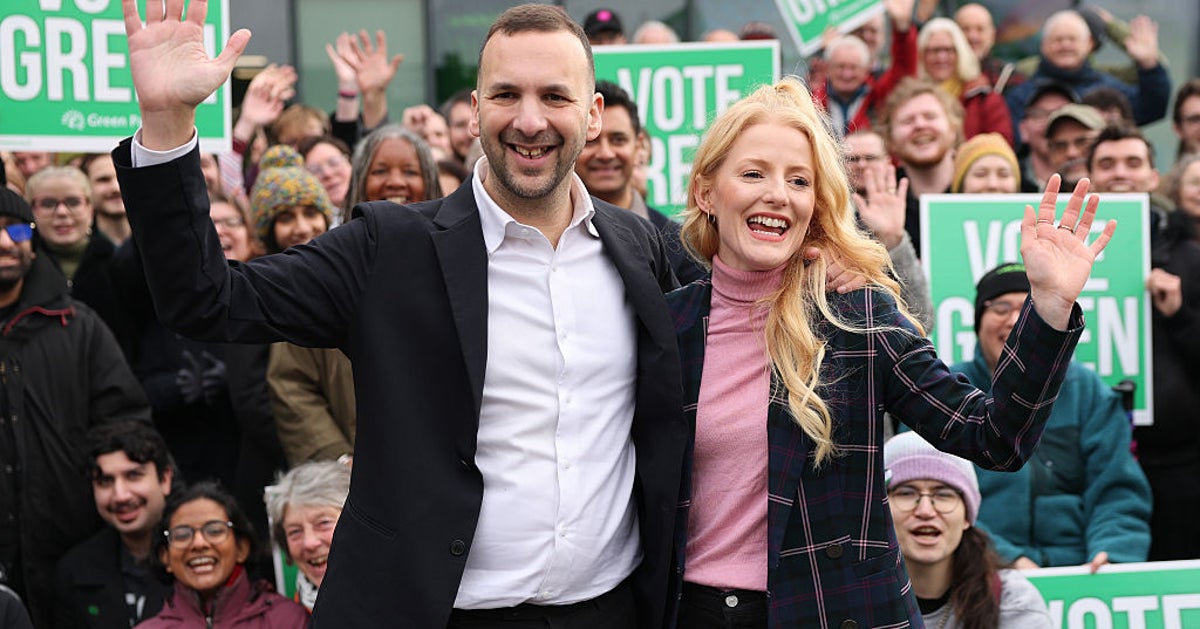
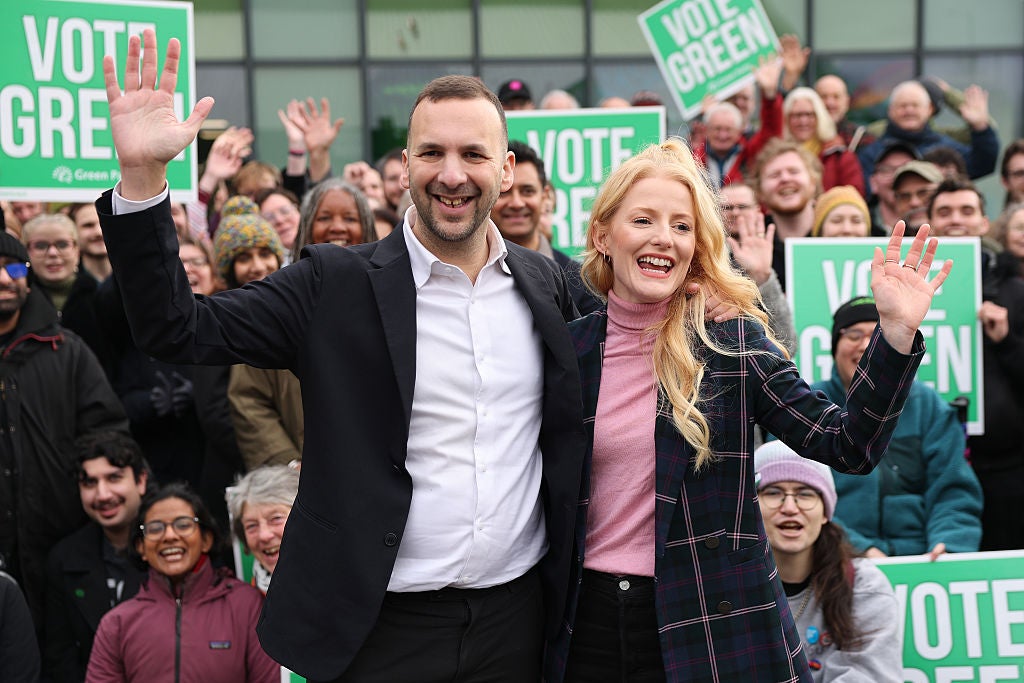
It’s been a whirlwind few days. At the start of the week I was at college doing a plastering course, and now I’m the Green Party’s candidate in the most high profile by-election we’ve ever properly contested.

I’m not your average politician. I didn’t go to university to study politics. I’m a plumber in Manchester – and through that job I spend my days in kitchens, bathrooms and front rooms. And from what I see, people are struggling.

We are not a poor country, we’re not a poor city – but government after government has treated us poorly. I see that in the cold homes, the repairs that people save up for months to do and the struggle that so many of us have with our mental health.

That’s why my number one priority will always be taking action to cut the cost of living – cheaper bills through public ownership, rent controls, free bus travel for young people. Insulating homes properly.

While Reform refuse to make the richest in our society pay their fair share, and flirt with privatising the NHS, I’ll be a champion for slashing inequality, re-wiring our economy to work for all of us and giving people the physical and mental healthcare they need.

Of course not everyone in Britain is struggling. In fact, the 50 richest families hold more wealth than 50% of the population. That kind of wealth is unimaginable to the people of Gorton and Denton, and despite widespread calls for a proper wealth tax, it’s a wealth that this government seems happy to watch accumulate.

As a plumber, my job is to assess a problem properly, take advice and find the right long term solution. That’s exactly how I’ll approach politics – and it’s a stark contrast to the other parties.

Labour is riven with U-turns, stitch-ups and lies. They do over their own mayor – and they’ll do over the rest of us too.

Reform is a party that drools over a dangerous US president, that is backed by big finance. In Matt Goodwin they’ve picked an extreme candidate, who has made his disdain for Muslims widely known, and who sees this place as just as a rung on the radical right career ladder.

In me, voters have the chance for something completely different. I’ll be an MP for all of Gorton and Denton, and i’ll be focused on tangible things to make our lives better. Where there’s a blockage, I’ll fix it – and where something needs repairing I’ll get my hands dirty.

In the coming weeks we’re going to see a lot of focus on our part of the world. Reform are backed by far-right thugs like Tommy Robinson, Labour are desperately trying to convince people that they’re still relevant. But this is Manchester, and we do things differently here.

I’ll be going door to door – with hundreds of fellow Mancunians – being very clear that there’s only one party that can be trusted on the cost of living, on taxing the very wealthiest and on bringing real justice to the Palestinians after years of British support for a genocidal Israeli regime.

I’m so proud to be from this amazing city – and I cannot wait to get going.

Hannah Spencer in the Green Party candidate in the Gorton and Denton by-election.
Share Button

New Twice-Yearly Injections May ‘Help Millions’ With High Blood Pressure

As part of a global trial called KARDIA-2, researchers injected people with hard-to-treat high blood pressure with a medication called zilebesiran.

This is designed to be administered every six months.

It was given to 663 people with poorly-managed hypertension (high blood pressure) alongside their existing treatment.

The participants’ hypertension was not well managed with their existing medication.

The results, published in JAMA Network, suggest these injections may have the potential to “help millions with high blood pressure”, Queen Mary University of London, whose researchers led the study, said.

What did the injections do?

In this study, participants were given a dose of zilebesiran alongside their usual treatment.

Zilebesiran stops the production of a protein called angiotensinogen in the liver. Blocking that protein helps blood vessels to relax, thus lowering blood pressure.

The hypertension of the participants in this study was better-managed with the assistance of angiotensinogen injections alongside the “normal” medication, which, for one reason or another, was not working optimally for them.

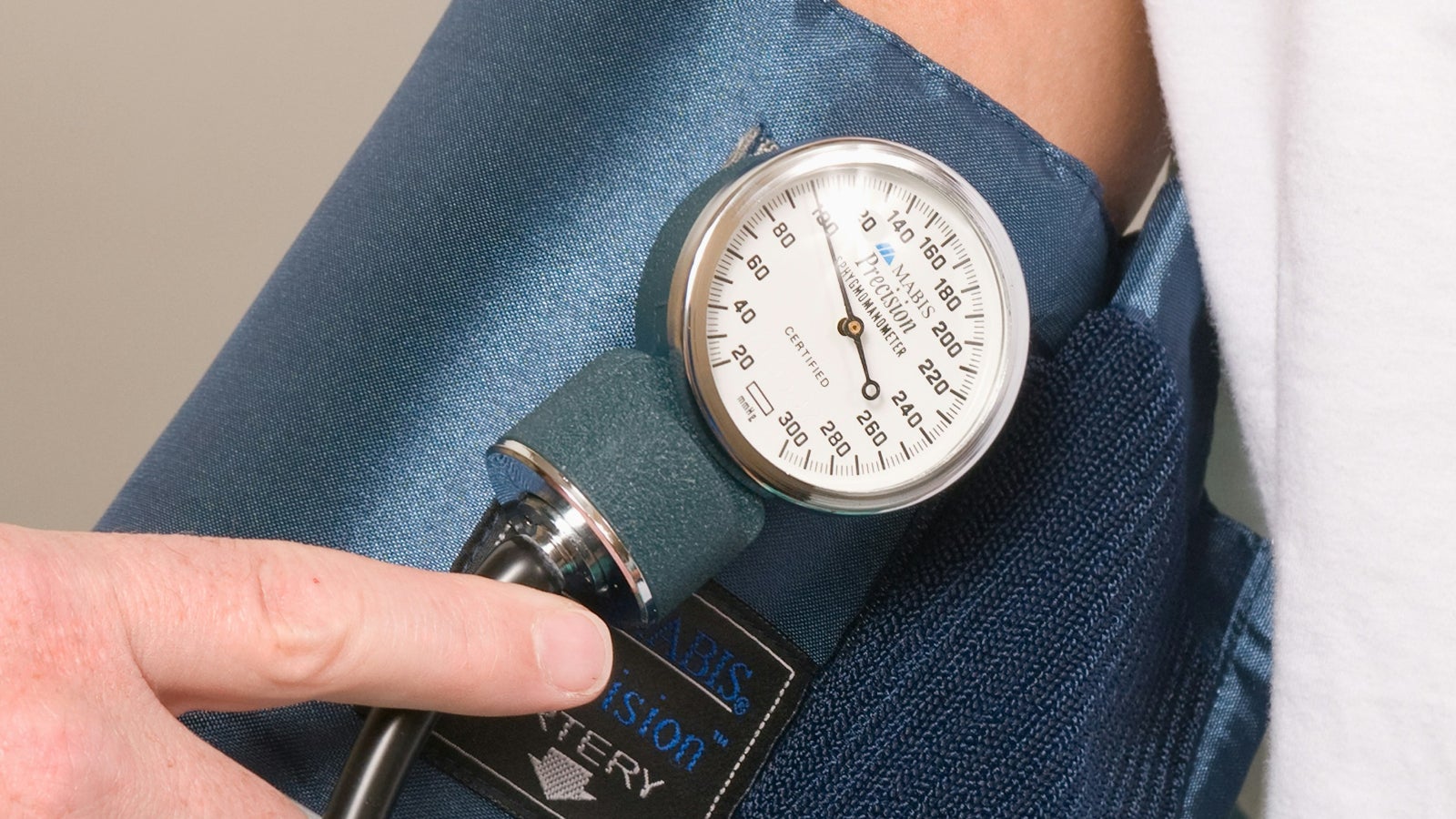
The drug, which is far longer-lasting than medication which patients may have to take daily, matters because blood pressure is both hard to spot and vital to consistently treat.

It can lead to heart attacks and strokes if left unmanaged. It usually has no symptoms and is “very common,” the NHS said.

It affects about one in three UK adults.

What’s next?

KARDIA-3, a follow-up project, will investigate the effects of zilebesiran on people with high blood pressure and established cardiovascular disease, as well as people at risk of heart conditions.

And a large global outcomes study is set later this year to see how it affects stroke, heart disease, and cardiovascular event risk.

The study’s lead investigator, Dr Manish Saxena, said: “Hypertension is a global health concern as blood pressure control rates remain poor and is a leading cause of heart attacks and strokes.

“This study demonstrates the efficacy and safety of zilebesiran when added to commonly used first-line blood pressure-lowering drugs. The novelty of this treatment is its long duration; giving just one injection every six months could help millions of patients to better manage their condition.”

Share Button

Trump Claims Putin Personally Agreed Not To Attack Kyiv Amid Plummeting Temperatures

Donald Trump claims to have convinced Vladimir Putin to stop the Russian bombardments on Kyiv for one week amid freezing conditions.

His request comes after Russia intensified its attacks on Ukrainian infrastructure, leaving civilians without electricity or heat at the height of winter.

Temperatures across Ukraine are expected to worsen this weekend, dropping to a staggering low of -28C on Sunday night.

Putin is yet to publicly confirm he agreed to Trump’s request, though some Russian bloggers close to the military claimed partial ceasefires were being imposed earlier today.

Speaking at a cabinet meeting at the White House on Thursday, the US president said: “I personally asked President Putin not to fire on Kyiv and the cities and towns for a week during this … extraordinary cold.”

He claimed Putin has “agreed to that”.

“A lot of people said, ’Don’t waste the call. You’re not going to get that,” Trump claimed. “And he [Putin] did it. And we’re very happy that they did it.”

Kremlin spokesperson Dmitry Peskov refused to tell reporters earlier on Thursday if a mutual halt on energy facilities had been discussed with Ukraine.

Trump’s promise comes hours after Ukrainian president Volodymyr Zelenskyy warned on Moscow that Putin is planning another large-scale barrage.

He said in an online video late on Wednesday that “every single Russian strike” discredits the progress made from any peace talks.

Russia has continued to target civilian areas around 600 miles away from the frontline.

This is a method Moscow has imposed on the Ukrainian population every winter since it invaded back in February 2022.

Ukraine and Russia agreed to a temporary halt to strikes in March 2025, during US-mediated talks in Saudi Arabia – but the break was never observed by Russian troops.

Putin continues to hold onto its maximalist goals in Ukraine, despite Trump’s push for a peace settlement.

The Russian president has insisted Ukraine must give up more sovereign land if it wants to end the war – a demand Kyiv has repeatedly rejected.

Share Button

Reform UK Mocked After Police Refuse To Probe ‘Misleading’ Labour Post On X

Nigel Farage’s party reported their rivals over a clip in which Matt Goodwin, their candidate in next month’s Gorton and Denton by-election, appeared to criticise Manchester.

In actual fact, he was attacking the Conservative Party conference which had taken place in the city the week before.

Reform said the social media post broke electoral laws on misleading voters.

But in a statement on Thursday, Greater Manchester Police said: “We can confirm we have received a report and after assessment, informed the complainant there is no offence identified.”

Labour then posted a previous tweet from Reform in which they said: “We will ensure police focus on keeping our streets safe rather than wasting valuable time policing social media comments.”

A Labour source said: “Nigel Farage has repeatedly bemoaned the ‘policing of tweets’, yet desperately begged the authorities to look at a clip of his divisive candidate’s own words. It is as laughable as it is sad.

“Only Labour can take on Reform’s toxic politics and reject their shameless, divisive rhetoric.”

Reform UK have been contacted for comment.

The Gorton and Denton by-election will take place on February 26.

Share Button

Ask A Pharmacist: Why Does My Cold Keep Coming Back?

Cold and flu season is miserable enough without raised norovirus cases and talk of “super flu”.

In fact, I know three people who’ve had colds on and off for the past two months or so – just as it seems to get better, new symptoms start to reappear.

Speaking to HuffPost UK previously, Dr Suzanne Wylie, GP and medical adviser for IQdoctor, said it’s quite common to see “a combination of genuine influenza, circulating Covid-19 variants, RSV, and other viral illnesses that overlap in symptoms and timing”.

Here, the superintendent pharmacist and director of Pyramid Pharmacy Group, Amir Bhogal, explains why colds can recur and what to do about it.

1) Chronic stress

Stress can wreak havoc on your immune system, the pharmacist said.

“When you’re under sustained pressure, your body produces elevated levels of cortisol, a stress hormone that actively suppresses your immune response. This reduces the production of white blood cells responsible for fighting infections, making them less effective at responding to threats.

“Due to this, you can become more susceptible to catching colds, and your body may struggle to clear infections once they’ve taken hold.”

If possible, try to rest and de-stress if your colds keep coming back.

2) Poor sleep

Sleep is key to recovery, Bhogal added.

“During deep sleep, your body increases production of cytokines, proteins that play a central role in immune function and inflammation control,” he explained.

“When you’re sleep deprived, this process doesn’t happen properly. Instead, your immune response weakens, and your body loses the opportunity to repair itself. In reality, pushing through a cold whilst maintaining your normal schedule can prolong your symptoms and make it harder for your body to recover fully.”

Getting seven to nine hours of sleep is crucial, if you can – try “painkillers, saline rinses, or throat lozenges” if symptoms keep you up at night.

3) Smoking

This not only affects your immune system, the expert said, but also “compromises lung function, making it harder for your body to clear infections”.

Additionally, “smokers typically experience worse symptoms and longer recovery times”.

Immune system recovery happens impressively quickly after quitting smoking, he added.

“When you’re ready to quit, some pharmacies, such as Pyramid Pharmacy Group, offer smoking cessation services which typically include nicotine replacement therapy as well as ongoing support for those who are struggling with withdrawals.”

4) Booze

Alcohol also harms your immune system. “It reduces the activity of key immune cells involved in fighting infections, while also contributing to dehydration and disrupted sleep, both of which are essential for recovery,” Bhogal said.

Even a little drinking can have an outsized impact, he added, so try to rein it in when you’re not feeling the best.

5) Close contact environments

Parents are all too aware how easily diseases spread in close contact environments like schools and nurseries.

This is true, Bhogal said, for places like open-plan offices too.

“If you’re regularly exposed to others who are unwell, you’re at higher risk of catching successive colds, rather than dealing with one persistent infection,” he said.

To avoid this, make sure to practise good hand hygiene, keep your distance from visibly unwell people, and stay home if you’re sick yourself.

6) Underlying health conditions

Sometimes, recurring colds can signal something else is going on with your immune system, said Bhogal.

“Immunocompromised individuals are more susceptible to infections and may take longer to recover. Beyond that, viral infections can also lead to secondary bacterial infections like acute bronchitis or sinus infections, which require different treatment approaches,” he said.

“If your symptoms aren’t improving after two weeks, seeking guidance from a qualified medical professional is sensible. They can rule out complications and identify underlying causes of repeat infection.”

Share Button

Bridgerton Newcomer Yerin Ha Teases 1 Major Difference In Season 4

Previously, every Bridgerton sibling who fronted their season has found romance in their own upper classes. Season four, though, is taking a bit of a different approach with its lead love story.

This latest run of episodes will see Luke Thompson’s Benedict Bridgerton becoming enamoured with a mysterious “Lady In Silver” at a masquerade ball.

Little does he know, the woman he has fallen for is Yerin Ha’s Sophie, who works as a maid for the demanding Lady Araminta Gun (played by Katie Leung).

Unlike Daphne’s romance with Simon, the Duke of Hastings, Colin’s relationship with childhood friend Penelope, or Anthony and Kate Sharma’s marriage, this pairing sees love forming through a class divide.

While maids have existed in the show, including Lorraine Ashbourne’s Mrs Varley, they have always played a background role when it comes to the romance.

Luke Thompson and Yerin Ha play the new central couple in Bridgerton's fourth season
Luke Thompson and Yerin Ha play the new central couple in Bridgerton’s fourth season

LIAM DANIEL/NETFLIX

Newcomer Yerin Ha thinks it’s a “blessing” to see the Netflix show explore an upstairs-downstairs style romance.

“I think it just really opens up whole new doors for Bridgerton. I think it grounds, it makes it more realistic-ish. It’s less pretty and shiny and glamorous, which I think is quite nice,” Yerin told Metro.

“It’s the fourth season now, so it’s nice to have a change of energy and pace. I’m excited for the audiences to see that.”

Luke Thompson, who has been in the period drama since the first series, agreed with his on-screen love interest and appreciated the show taking a different direction in its fourth series.

“It’s sort of baked into the story, in a way, isn’t it? In a story that does seem to be about fantasy and reality, it is about the performance of the Tom and then suddenly you get a stronger flavour of the real world in Bridgerton, what reality means in Bridgerton, which I think is really interesting, because the Ton world can feel like a bit of a bubble sometimes,” he said.

Adjoa Andoh, who plays Lady Danbury, also praised season four for its “freshness” and for exploring the class divide in British society.

“Our show is not a sociology project, but even to discuss class in this way is really lovely to see,” she said. “What does keep the glittering household going? It’s those people downstairs. So what are their lives like and what happens when the two worlds actually cross over?” Adjoa added.

Bridgerton season four, part one premieres on Thursday January 29 on Netflix.

Share Button

4 Ways To Strengthen Your ‘Psychological Immune System’

You probably have some idea about how to help your immune system. Eating well, exercising, and getting enough of certain vitamins can help.

But what about your “psychological immune system”?

The term, which was first coined in the ’90s, suggests our minds could have protective mechanisms, including cognitive “antibodies,” similar to those which protect us from phsyical disease.

Here, we asked Dr William Van Gordon, Associate Professor in Contemplative Psychology at the University of Derby, what the term means, as well as how to strengthen ours.

What is the “psychological immune system”?

“The psychological immune system is a concept developed by psychologists Daniel Gilbert and Timothy Wilson in the late 1990s.

“It describes the brain’s automatic, largely unconscious defences that protect emotional well-being in the face of negative events, much like how the physical immune system fights pathogens,” Dr Van Gordon told us.

Some feel that having a stronger “psychological immune system” can help us to weather negative events, even those you anticipate would be devastating.

“These processes help us to reframe setbacks positively, restore self-worth, diminish the intensity and duration of distress, and recover more quickly than we typically predict,” the professor added.

“We often overestimate how devastated we will feel after failures, rejections, or losses because we underestimate this built-in resilience system.”

How can I boost my “psychological immune system”?

Dr Van Gordon shared “four strategies that can strengthen your psychological immune system and improve emotional recovery and calmness”.

These are:

1) Shift from negative to neutral

“Counter the brain’s natural negativity bias by deliberately moving toward a balanced, neutral perspective rather than trying to force positivity,” the professor said.

Our mind’s negativity bias means we pay more attention to negative thoughts and experiences than we do positive ones, potentially skewing our views.

“Use simple grounding tools such as brief mantras (‘This too shall pass’), short gratitude reflections, recalling times you’ve overcome similar challenges, or slow diaphragmatic breathing to calm the nervous system.”

2) Anchor in the present

“Focus attention on what is controllable right now to interrupt rumination about the past or anxiety about the future,” said the expert.

“Build small daily habits of mindfulness (for example, one to two minutes of breath awareness), protect sleep quality to restore cognitive clarity, and create routines that break negative thought loops and restore motivation, such as morning journaling or quick walks.”

3) Reconnect with meaning and purpose

“When adversity strikes, reframe the situation through your core values or long-term goals; for example, by viewing a difficult experience as an opportunity to grow skills or character,” he continued.

Having a longer-term sense of purpose has been linked to greater longevity, mental health benefits aside.

“Practise self-compassion, seek trusted perspectives from others, or visualise how the challenge fits into a bigger, meaningful picture.”

4) Practise healthy acceptance

“Allow difficult emotions to arise without suppression or denial, especially after significant loss or trauma,” Dr Van Gordon ended.

“Recognise that feelings such as sadness or anger carry important signals; treat yourself kindly during the process and, if distress persists, consider professional support rather than forcing ‘positive thinking’ alone.”

Share Button

When Will The UK Get 8pm Sunsets Again?

On the last Sunday of March each year, the clocks jump forward one hour at 1am in the UK.

This year, it’ll happen on Sunday, 29 March.

That marks the start of British Summer Time (BST). And because the clocks hop forward, sunsets begin an hour earlier than usual – as the summer sun reaches us, the sunsets will increasingly start later.

Which begs the question of: when oh when will we have 8pm sunsets again?

It depends on where you live

Different parts of the UK will get 8pm sunsets on different dates, depending on where they are placed in relation to the sun’s rays of light.

That means certain parts of the UK may get 8pm sunsets earlier than others. For instance, Fermanagh in Northern Ireland is expected to get an 8pm sunset the day the clocks change (29 March).

For other areas, Time Out shared, the dates are:

  • Edinburgh: April 6

  • Cardiff: April 10

  • Birmingham: April 12

  • London: April 17.

That means those in the capital will have to wait more than two weeks after the clocks change for longer evenings to settle in.

Why does daylight saving time exist?

BST is sometimes called daylight saving time. It didn’t exist until 1916, even though people like Benjamin Franklin had proposed it as far back as 1784.

But builder William Willett advocated for it heavily because he was frustrated to see people “wasting” summer morning light by sleeping through early sunrises.

Eventually, this caught the attention of MP Robert Pearce, though Germany adopted the policy first. The UK took it on weeks later.

Is daylight saving time bad for us?

Some research suggests that the clocks going forward is bad for our health.

Car accidents and heart attacks rise after the change, for instance.

The European Parliament has backed a proposal to scrap it, and the Royal Society for the Prevention of Accidents has also called for the same many times.

Share Button

Reform Choose Right-Wing GB News Presenter Matt Goodwin To Stand In Crunch By-Election

Reform UK have chosen a right-wing GB News presenter as the party’s candidate in next month’s crunch Gorton and Denton by-election.

Academic and author Matt Goodwin will aim to become the party’s ninth MP when voters go to the polls on February 26.

He was chosen despite speculation that Reform’s policy chief and former chairman Zia Yusuf would be the candidate.

The by-election has been triggered by the resignation on health grounds of Andrew Gwynne, who retained the seat for Labour in 2024 with a majority of more than 13,000.

However, opinion polls suggest it will be a close three-horse race between Labour, Reform and the Greens.

After being unveiled by Reform MP Lee Anderson at a press conference in the constituency, Goodwin said: “I am not a career politician. I am not a Tory.

“I am not part of the establishment. I am not part of the Westminster blob.

“I am, like many people in this seat and millions of people in this country, hard-working taxpayers who are just fed up of watching what is happening to their communities and to their home.”

“Matt Goodwin represents the kind of politics that will drive a wedge between communities in Manchester.”

Anderson said the by-election was “a referendum on Keir Starmer”.

He said: “It’s a chance for hard-working, law-abiding people, tax-paying people from this seat to have their say on Keir Starmer and to make political history.”

Labour’s campaign has been overshadowed by a furious row over the party’s decision to block Andy Burnham from running to be its candidate.

Labour deputy leader Lucy Powell said: “Matt Goodwin represents the kind of politics that will drive a wedge between communities in Manchester.

“Reform have misjudged the mood around Manchester and they won’t put the priorities of working people first. They just offer division, animosity, and hatred – not the unity and pride which our city stands for.

“Only a vote for Labour can stop Reform’s toxic politics and guarantee residents have a local champion that will cut their cost of living as their new Labour MP.”

Green Party leader Zack Polanski said: “This by-election is a straight contest between hope and hate. The Green Party will be out campaigning every day, to improve the cost of living by taxing the super rich.

“We alone will be taking the fight to Reform, whose selection of a man with a track record of anti-Muslim bigotry in a community with a good history of community relations is an insult to the people of Gorton and Denton.

“It tells you everything you need to know that Reform are parachuting in this rent-an-extremist – this isn’t about representing the people of Gorton and Denton, it’s about using this place as a platform for their careers.”

Liberal Democrat cabinet office spokesperson, Lisa Smart said: “Reform UK’s selection of Matthew Goodwin proves they are a party built on a single foundation: division.

“Like Nigel Farage, Goodwin has made a career out of talking our country down. He is a professional wind-up merchant, more interested in chasing headlines than putting an end to the cost of living crisis facing families.

“We cannot allow the divisive politics of Trump’s America to become the blueprint for Farage’s Britain.”

Share Button

‘Giving Leaseholders Real Power Over Their Homes Is A Historic Step’

Since being elected, one of my priorities has been to tackle the inequalities and injustice faced by leaseholders across the country and across my constituency.

In the Cities of London and Westminster, we have some of the highest concentrations of leasehold properties, and the challenges residents face are daily and tangible: escalating fees, unaccountable managing agents, delays in repairs, and a system that leaves homeowners with little control over their own homes.

Since my election I have made it my priority to meet with residents, listening to their stories, and using that insight to shape my work in parliament. I have worked with constituents to gather evidence, collaborated with fellow MPs, and rallied action to ensure leaseholders’ voices are heard. This has included summoning unscrupulous managing agents into parliament and holding them to account for their poor service.

“A practical solution to a long-standing problem”

Today, those efforts are being followed up with a real win for leaseholders, as the Government announces a Bill introducing a new process for converting leasehold property into commonhold.

This legislation is a practical solution to a long-standing problem. It brings conversion into line with wider enfranchisement processes, making it possible when 50% of qualifying leaseholders agree. By creating a clear, fair path to ownership, it empowers residents to take control of their homes, rather than being subject to distant freeholders or unaccountable management companies.

Importantly, the legislation introduces measures to align the community rules and existing leases, ensuring blocks can be managed effectively, fairly, and sustainably. For the first time, there is a framework that balances the rights of all residents while creating genuine accountability in the management of shared homes.

“This is a restoration of trust and fairness”

The bill also includes a mechanism to phase out remaining leases, replacing them with commonhold units over time. Leaseholders gain a new right to buy their commonhold unit, replacing their existing right to a lease extension, and ensuring clarity and security for the future. Where a leaseholder wishes to sell, the commonhold unit must also be sold, making transactions straightforward and protecting residents’ interests.

This is more than just legal reform. It is a restoration of trust and fairness in a system that has too often left leaseholders powerless. It demonstrates what government can do when it listens to residents, engages meaningfully with the communities it serves, and acts decisively to correct long-standing injustices.

For me, the Government’s thorough action here reflect how important an issue this is for resident across the Cities of London and Westminster. The constituents who have written to me, attended my Leasehold Action Group, and supported each other with the work of unscrupulous managing agents, have a government which is listening to them and standing up for them against vested interests in the freehold sector.

It is a win not just for the residents of my constituency, but for leaseholders across the country who have long campaigned for clarity, control, and fairness in their homes.

Bringing forward this radical change to our housing system reflects a broader principle: the state exists to make systems work for citizens, not against them. This bill is a clear, practical example of how government can do just that. It puts power back in the hands of residents, ensures blocks are managed fairly, and begins to dismantle the inequities of the leasehold system.

I welcome this bill wholeheartedly. Today, leaseholders have reason to hope and to celebrate because, finally, the law is starting to work for them.

Share Button