How You Laugh Over Text May Reveal Your Age, Expert Suggests

We’ve already written at HuffPost UK about how you say the letter “Z” can tell more about your age than you might realise.

The same may go for certain punctuation, like double spacing, the notorious “Boomer ellipses,” and even the supposedly “endangered” semicolon.

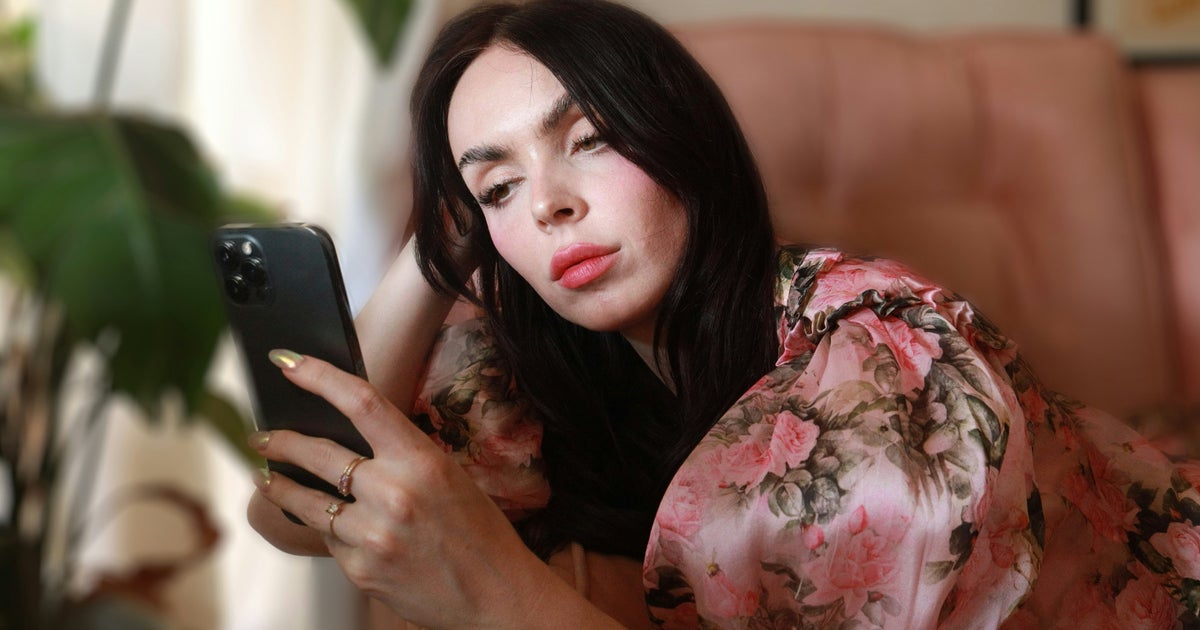
But this World Emoji Day, Anna Pyshna, a spokesperson for language learning app Preply, said how you show laughter over text might be another such marker.

One emoji in particular seems to be a part of the generational divide, she added.

Older people may be confused by the use of the skull emoji to mean laughter

The language app found that where previous generations might use a smiling face with tears of joy to signal laughter, younger people might prefer a skull.

“This shift has swept through social platforms like TikTok, Instagram, and X, where the skull emoji’s ironic tone matches Gen Z’s preference for dry, surreal, or exaggerated humour,” she shared.

“It’s a kind of emotional hyperbole, saying something’s so funny it ‘killed’ you. To older generations, that can sound dark or even offensive. But to younger users, it’s just another way to say ‘LOL.’”

Another option includes the crying face emoji, which indicates someone is laughing so hard they’re weeping.

“Emojis feel like a shared language, but their meanings evolve just like words do,” the expert continued.

“Emojis are an extension of how we speak, think, and joke. They’re not static, but are instead shaped by pop culture, memes, and even literature. That’s why they resonate differently depending on who’s using them.”

Death and humour are increasingly being linked in daily language, too

Preply found that the association between death and laughing has been growing in general, not just in emoji use, since the ’40s (they used Google’s Books Ngram Viewer to find these numbers).

Across Spanish, Italian, French, and English, phrases like “dying laughing” and “dead funny” have been on the rise in everyday speech in that period, it seems.

“For grandparents born in the 1940s, the idea of pairing death with laughter would have been unfamiliar,” Anna claimed.

“As the data shows, phrases like ‘dying of laughter’ and ‘dead funny’ were virtually nonexistent in literature during their formative years.

“This dramatic linguistic shift suggests that associating death with humour is a modern, global phenomenon and one that’s only in the past few years started influencing how we use emojis.”

Who knew so much went into a little text…

Share Button

Wake Up Sweating At 3am? This May Be Why

Try as I might (and believe me, I’ve tried), I constantly manage to wake up hot and sweaty at 3am.

I’ve always attributed that to my insomnia. But hormone and sleep specialists have shared my issues might be partly down to my biology.

We know it’s crucial to keep bedrooms cool (experts recommend 16-18°C) to be able to sleep well – and this is perhaps even more important for women.

When a study found rising temperatures are impacting sleep globally, it also revealed women were impacted more than men. The Guardian noted “women’s bodies cool earlier in the evening than men’s when going to sleep, meaning higher night time temperatures may have a bigger impact on women”.

Women’s slightly higher core body temperatures can also make us “feel” external cold and warmth more intensely, Dr Karan Rajan previously shared.

Women appear to wake up overheated more often than men – but why?

Dr Renee Young, an endocrinologist and founder of the Young Naturopathic Centre For Wellness, told Pretty You London that “hormones like oestrogen and progesterone play a central role in how the brain regulates body temperature”.

She added: “Even slight fluctuations can confuse the body into thinking it needs to cool down. That often looks like a hot flush or a sudden sweat episode, especially at night.”

These are not exclusive to menopause or perimenopause, though both of these can lead to similar symptoms.

Clinical dietitian Dr Colleen Fogarty-Draper said it’s not just hormones, though.

“Women in midlife often have a lower stress threshold… Higher cortisol levels, especially when they don’t follow their normal rhythm, can interfere with sleep and make overheating worse,” she shared.

How can I stop overheating at night?

Though you might be tempted to take a cooling shower before settling down, NHS GP Dr Hana Patel said this may not be the answer.

“A cold shower can cause your body to generate more heat as a response,” she advised, while the cool-down period following a warm shower “tells your brain it’s time to sleep”.

Wearing thinner pyjamas, avoiding heavy bedding, and even keeping your partner out of your bed (if needed) may help, The Sleep Foundation said.

Whatever the cause, though, you should see your GP if your sleep is consistently interrupted.

“Menopause and hormonal changes don’t have to steal your sleep,” Dr Fogarty-Draper stressed. “When we understand the cause, we can take back control.”

Share Button

3 Longevity Myths An Expert Wants Us To Ignore

Longevity seems to be the word of the moment, with the exciting potential for a longer, healthier life capturing the attention of millionaires and the Vatican alike.

But while the more extreme steps some take in the hopes of an unnaturally extended lifespan may grab headlines, expert after expert recommends simple steps: eat well, exercise, get enough sleep, and stay social.

Author and public health researcher Professor Devi Sridhar, whose longevity-focused book How Not To Die (Too Soon) is set to come out on 12 June, says even that doesn’t take it far enough.

“Have you ever questioned why, despite the avalanche of self-help books and optimisation hacks, we remain embroiled in multiple global health crises?” her book’s blurb reads.

“The stark reality is that we’ve been sold a monumental lie.”

HuffPost UK spoke to Professor Sridhar about some of those myths.

Myth #1: Your lifespan is completely in your hands

Professor Sridhar’s book focuses on how individual health tips “distract” us from the reality: our lifespan isn’t all in our control.

A Social Determinants Of Health paper found that “40% of an individual’s health is determined by socioeconomic factors such as education, occupation, or income,” compared to only 30% determined by lifestyle choices (such as not drinking or exercising).

So, she said, we should see government policy as a far more effective way to “significantly extend our lifespans” than the latest superfood.

Myth #2: Lifespans are getting longer across the board

As financial inequality booms, Professor Sridhar said some people may be left with shorter lives, despite healthcare improvements.

Life expectancy is “tightly linked to income,” she explained.

“The basic drivers of health are linked to resources – whether money, time, social networks, access to green space or leisure centres and gyms, nutritious food, and so increased inequality means the bottom quintile struggling to maintain existing life expectancy, or even going backwards.”

In England, the life expectancy for men in the most deprived areas is 73.5 years, compared with 83.2 years in the least deprived areas (where life expectancy has fallen over the past decade).

Earlier this year it was reported that the number of children living in poverty in the UK is at an all-time high (since records began in 2002). There are 4.45 million children living in a household of relative low income, according to the BBC.

Myth #3: You need to get everything just right to achieve a longer life

When it comes to health and longevity, the professor told us that “perfection is a myth”.

Let’s say you have a “nutritionally poor” day of eating, she said – “just make the next day different with more vegetables, fruits and grains, and [the] same with exercise.”

Speaking of which, the movement enthusiast said those who expend “mild to moderate effort (even weekend warriors who exercise just 1-2 times per week) get the bulk of the benefits” of working out.

“Same for diet. What are you eating 80% of the time?” she added.

“Basically, don’t make food or diet or sleep something to stress about. Stress is also implicated in dying too soon!”

Though we do have some control over our longevity, then, ignoring the impact of policy on our lifespan, assuming they’ll improve no matter what, and stressing too much about your individual one might not be the best way forward.

Share Button

Dani Harmer’s Not Alone – 62 Perimenopause Symptoms That Can Start In Your 30s

In a recent TikTok, former Tracy Beaker actor Dani Harmer spoke about her recent perimenopause diagnosis as she sought advice for her “thinning” hair.

The former Strictly Come Dancing contestant, 36, says her husband asked her to see her GP when he noticed her “whole personality had pretty much changed.”

Before she learned she was perimenopausal, the star added, “I was so down”.

She continued, “I’ve struggled with depression and anxiety pretty much since I was a teenager, but there was something really different about me, and in myself, I knew that something was off”.

Dani said she had also been affected by brain fog, night sweats, and bad sleep, all of which are common signs of perimenopause.

Though some commenters were surprised to learn about the actor’s condition (with one TikTok user saying, “Whaaaat? You’re about 17 years old”), perimenopause in your 30s is perfectly possible.

Here’s what perimenopause means, 62 of its signs, and what to do if you suspect it (like Dani, you should seek help if you struggle with any symptoms).

What is perimenopause, and why can it start in your 30s?

Perimenopause is “when you have symptoms of menopause but your periods have not stopped,” the NHS says.

You are officially in menopause when you have not had your period for 12 months.

The average age to start menopause in the UK is 51. You count as being in “early” menopause if it begins before you turn 45, and “premature” menopause if you’re under 40, the NHS says.

But perimenopause can start as many as 14 years before menopause officially begins. Cleveland Clinic says perimenopause can start “as early as your mid-30s or as late as your mid-50s”.

Just because your periods don’t stop during perimenopause doesn’t mean it can’t “have a big impact on your life, including relationships and work,” the NHS says.

Anxiety, mood swings, brain fog, hot flushes and irregular periods are common signs.

Don’t wait until you lose your period to see your GP about perimenopause symptoms if they’re affecting your life.

What are the symptoms of perimenopause?

The symptoms of perimenopause are the same as those of menopause, minus the absence of periods. Some women will experience them at different levels of intensity during menopause or perimenopause.

Some signs, like irregular periods, will be more noticeable during perimenopause.

A BMC Women’s Health study found that, on average, people experiencing menopause or perimenopause had about 10.7 symptoms.

Menopause care specialist Dr Naomi Potter previously shared 62 possible symptoms with HuffPost UK, which are:

  1. Palpitations
  2. Chest pain
  3. Breast tenderness
  4. Itchy skin
  5. Dry skin
  6. Rosacea
  7. Acne
  8. Thin skin
  9. Collagen loss
  10. Crying
  11. Brain fog
  12. Memory loss
  13. Poor concentration
  14. Difficulty finding the right words
  15. Anxiety
  16. Low mood
  17. Worsening PMS
  18. Anger or rage
  19. Irritability
  20. Headache
  21. Migraines
  22. Joint pain
  23. Joint stiffness
  24. Vaginal dryness
  25. Vaginal discharge
  26. Vulval itch
  27. Perineal itch
  28. Vulval/vaginal ‘electric shocks’
  29. Increase in thrush
  30. Increase in bacterial vaginosis
  31. Poor libido
  32. High libido
  33. Weight gain
  34. Hair loss (on your scalp)
  35. Unwanted hair growth
  36. Urinary infections
  37. Urinary incontinence
  38. Urinary urgency
  39. Nocturia (getting up at night to pee)
  40. Sexual dysfunction
  41. Chest tightness
  42. Constipation
  43. Gastric reflux
  44. Fatigue
  45. Night sweats
  46. Hot flushes
  47. Cold flushes
  48. Increased period frequency
  49. Decreased period frequency
  50. Heavier periods
  51. Muscle loss
  52. Tinnitus
  53. Dry eyes
  54. Watery eyes
  55. Burning mouth
  56. Gum disease
  57. Foot pain
  58. Frozen shoulder
  59. Insomnia
  60. Histamine sensitivity
  61. New allergy
  62. Body odour change.

What if I think I’m perimenopausal?

It bears repeating ― don’t wait until menopause begins to see your GP if you are experiencing symptoms, no matter what age you are.

Even if you aren’t in perimenopause, the symptoms are worth investigating.

And if you are, hormone replacement therapy (HRT) can help replace the oestrogen and progesterone your body loses during menopause and perimenopause.

According to the NHS, “The main benefit of HRT is that it can help relieve most menopause and perimenopause symptoms, including hot flushes, brain fog, joint pains, mood swings and vaginal dryness”.

Dani has said, “I’m really glad that I went and I got help. My doctor was more than happy to put me on HRT, and I’ve been on it for about 18 months now”.

She says her symptoms have mostly gone, except for hair thinning and the occasional hot flush.

Your doctor can help you to work out which solutions are best for you, so speak to a professional as soon as you notice symptoms.

Share Button

Dementia Is The UK’s Leading Cause Of Death, But How Does It Actually Kill?

Dementia has been the leading cause of death in England and Wales for years now, with Dementia UK adding that more people die from dementia in the UK overall than of any other condition.

Still, a 2017 YouGov poll found that roughly half of us have no idea that dementia, which kills about 55 million people worldwide, can be a direct cause of death.

That means the dementia itself leads to their death.

So, we spoke to Simon Wheeler, Senior Knowledge Officer at Alzheimer’s Society, about how dementia actually kills.

“Dementia is a terminal condition”

Speaking to HuffPost UK, Wheeler explains: “Around 1 in 3 people born today will develop dementia. It’s the UK’s biggest killer, but many people don’t understand why.

“It shortens a person’s life by several years if they are already old, and potentially by several decades if they have young-onset dementia,” he continues.

One of the ways it does this is by diminishing a person’s ability to perform the essential skills and bodily functions that are needed to stay well.

“At first, these changes are mainly cognitive – for example, not remembering to take medicines or not being able to react to dangers around the house or outside,” Wheeler tells us.

“If they need surgery for other health problems, their dementia can make these procedures more challenging and recovery more difficult. This is why people with dementia tend to have much worse outcomes when they have to go to hospital.”

The later stages of dementia have more physical effects

“As the condition progresses to its later stages, its effects become more physical as the parts of the brain involved in eating, swallowing, moving, and communicating become severely damaged,” the expert adds.

That’s when people with dementia tend to notice physical, as well as cognitive, changes.

“They become increasingly frail,” Wheeler explains.

“Injuries and infections become more difficult to recover from. Eventually, an illness or other event happens that they can’t recover from and this is what ultimately causes the person to die.

“There is the near cause of death, such as pneumonia, and then there is the underlying condition that has resulted in the person being in such a frail and vulnerable condition – this is what dementia does.”

Early intervention still matters

More than half of those with suspected dementia wait for over a year to get a diagnosis.

But the NHS says that’s not ideal, because “an accurate early, or timely, diagnosis of dementia can have many benefits.”

These include getting the right support, getting access to treatments that can make your symptoms easier to manage and slow down the progress of the disease, and giving you more time to plan.

If you’re worried about yourself or someone close to you, speak to your GP.

You can also check your symptoms using Alzheimer’s Society’s symptom checklist or call the Dementia Support Line on 0333 150 3456.

Share Button

What You Call This Time May Reveal Your Age, Language Expert Says

Do you say “zed” or “zee”?

If you’re in the UK, the answer might reveal your age, clinical linguist Dr Coral Hoh previously told HuffPost UK; younger people tend to prefer the Americanised version.

Even your use of the space bar can be a tell-tale sign of your generation.

And now, a new post shared to Reddit’s r/AskUK suggests new horror: apparently, the kids don’t say “noon”.

When booking a pub reservation, u/Gloomy_Stage says the young worker on the phone didn’t understand what they meant by the word.

“I was taken aback that the girl didn’t know what noon meant, she was probably young… but I had always assumed it was a commonly used word or am I getting old?” they asked.

We spoke to Anna Pyshna, spokesperson at online language learning platform Preply, about what was really going on.

Younger people almost always know the word but aren’t as likely to use it

There are some generational changes, Pyshna says, but not so much that the word has disappeared from young peoples’ minds entirely.

“Language changes over time, but that doesn’t mean older words just vanish,” she explained.

″‘Noon’ isn’t something most young people in the UK say often, but they still know what it means ― they’re just more likely to say ’12,′ ‘midday,’ or even ‘lunchtime’ instead.”

I’ll be honest, I don’t say it much as a woman in her 20s. And now that I think about it, I’m not sure my friends do either.

“The reason ‘noon’ might sound old-fashioned is because it has a more formal, almost clinical vibe to it,” she added (yep, I definitely think of it as a little stiff).

“Younger people tend to gravitate towards words that feel more fluid and less rigid. ‘Lunchtime,’ for example, is more relaxed and practical – often used in the context of daily routines.

″‘Noon,’ on the other hand, feels more tied to a schedule or specific time, which can feel a bit disconnected from the more laid-back way younger people communicate these days.”

The trend has even affected her teaching

Pyshna says that language tutors try to focus on language that is “current and natural,” meaning she’s less likely to teach the word to those learning English.

Tutors “understand that younger learners want to communicate in a way that aligns with how they actually speak ― rather than relying on older terms,” she added.

“So, while ‘noon’ might still be in the dictionary, it’s not something you’ll hear in everyday conversations among younger Brits.”

Share Button

How You Pronounce This Letter May Reveal Your Age, Linguist Says

You might already know that how long you can stand on one leg has been linked to your brain age ― the position involves coordinating different parts of your body and mind, making it uniquely useful as a marker of ageing.

But not all the signs are medical, as anyone who’s ever looked at a festival lineup and thought “I don’t recognise a single name here” knows.

And recently, members of r/AskUK wondered whether or not the pronunciation of the letter “z” counts as one such marker.

“I was horrified to learn that a fully British colleague of mine says ‘zee’ for the letter zed and he says he always has. Is this now common and I have just lost touch?”, a now-deleted poster asked.

So, we spoke to clinical linguist and CEO of Dysolve, Dr Coral Hoh, about what was really going on.

Yep, it does seem to be an age thing

“Yes, it’s generational but not confined to the UK alone,” the linguist said of the Americanised pronunciation.

“It is also the case in other English-speaking regions,” she told HuffPost UK.

“For example, in Southeast Asia, in countries like Singapore and Malaysia, speakers in their 30s-40s may use ‘zee’ and ‘zed’ interchangeably.”

Meanwhile, she says, “their younger counterparts prefer the former, thanks to American influence.”

Indeed New Zealand magazine North And South have written about increased Americanisms among their younger people.

Growing up in Ireland, people in my Disney Channel-reared age group were constantly being accused of the same thing (I’ll admit I choose “zee” over “zed,” though my older relatives would never).

People think the trend is coming from media, including social media

“Americanisms are becoming more and more common, I blame YouTube,” Redditor u/Frst-Lengthiness-16 opined.

“My kids refuse to call biscuits by the correct name, calling them fucking ‘cookies.’”

Jane Setter, a professor of phonetics at the University of Reading, agrees, telling The Guardian: “For children, it could simply be because everyone is watching a particular trending YouTube influencer or group of influencers, or playing particular online interactive games, through word of mouth and a desire to fit in with their friends, that these people speak in a particular way, and the kids are using the features of those speakers with other kids to show they “belong” to that group.”

This may be part of the reason why Americanisms are so common among Gen Z (never said “Gen Zed,” I note) and younger…

Share Button

I’m A Longevity Expert – This 30-Second Test May Reveal Your Risk Of Early Death

In a recent episode of the ZOE podcast, Bryan Johnson – a man famous for trying pretty much every supposed longevity booster going – spoke with the gut health company’s co-founder Dr Tim Spector and CEO Jonathan Wolf.

Bryan said that his progress was being measured with a “few different modalities,” adding that it’s possible to “measure the biological age of the heart anatomically.”

Though many of the methods the controversial millionaire uses to track, preserve, and even try to reverse his body’s age are experimental, researchers have found that one of the metrics he uses – resting heart rate – really can be linked to mortality.

<div class="js-react-hydrator" data-component-name="YouTube" data-component-id="8660" data-component-props="{"itemType":"video","index":5,"contentIndexByType":1,"contentListType":"embed","code":"

","type":"video","meta":{"author":"ZOE","author_url":"https://www.youtube.com/channel/UCa09am-cOsC-FSgr_nLkFFA","cache_age":86400,"description":"🥑 Make smarter food choices. Become a member at http://zoe.com \n\nWhat if optimizing your sleep could significantly extend your lifespan?\n\nIn this episode, we dive into the science of longevity with Bryan Johnson, the entrepreneur spending millions to reverse aging, and Professor Tim Spector, one of the world’s top 100 most-cited scientists and an expert in nutrition and the gut microbiome.\n\nBryan has dedicated his life – and his body – to testing cutting-edge health interventions to slow down aging. His meticulous approach to sleep, diet, and exercise has sparked global debate. But how much of it is backed by science? Tim Spector joins the conversation to separate fact from fiction, revealing what actually works when it comes to sleep, longevity, and optimizing health.\n\n🌱 Try our new plant based wholefood supplement – Daily30: https://zoe.com/daily30?utm_medium=zoe_podcast&utm_source=podcast_platform&utm_campaign=d30\n\nFollow ZOE on Instagram | https://www.instagram.com/zoe/\n\nTimecodes\n00:00 No.1 anti aging hack\n02:05 Quickfire questions\n04:01 Bryan’s longevity protocol\n06:20 Biological age markers\n08:16 How to measure aging\n13:40 Can AI help stop aging?\n18:50 What science can we trust?\n21:40 Bryan’s self-experiments\n25:40 The most surprising sleep discovery\n31:20 The McDonald’s diet\n34:10 How to try this yourself\n37:15 Transfusing his son’s blood\n39:50 Microbiome supplement\n41:26 Bryan’s daily diet\n46:30 Truth about vitamin supplements\n\n📚Books by our ZOE Scientists\nThe Food For Life Cookbook | https://amzn.to/4amfIMX\nEvery Body Should Know This by Dr Federica Amati | https://amzn.to/4blJsLg\nFood For Life by Prof. Tim Spector | https://amzn.to/4amZinu\n\nFree resources from ZOE:\nLive Healthier: Top 10 Tips From ZOE Science & Nutrition | https://zoe.com/freeguide\nGut Guide – For a Healthier Microbiome in Weeks | https://zoe.com/gutguide\n\nMentioned in today’s episode\nReviewing the cardiovascular and other health effects of olive oil: Limitations and future directions of current supplement formulations, 2023, published in Nutrition, Metabolism and Cardiovascular Diseases https://pmc.ncbi.nlm.nih.gov/articles/PMC10346407/\n\nMortality Associated with Short Sleep Duration: The Evidence, The Possible Mechanisms, and The Future, 2011, published in Sleep Medicine Reviews https://www.sciencedirect.com/science/article/abs/pii/S093947532300337X\n\nSleep regularity is a stronger predictor of mortality risk than sleep duration: A prospective cohort study, 2024, published in Sleep https://academic.oup.com/sleep/article/47/1/zsad253/7280269\n\nObjectively Assessed Cardiorespiratory Fitness and All-Cause Mortality Risk, 2022, published in Mayo Clinic Proceedings https://www.mayoclinicproceedings.org/article/S0025-6196(22)00133-1/abstract\n\n\nHave feedback or a topic you’d like us to cover? Let us know here: https://gf6hx47iu5g.typeform.com/topicsuggestion\n\nEpisode transcripts are available here: https://zoe.com/learn/category/podcasts","options":{"_cc_load_policy":{"label":"Closed captions","value":false},"_end":{"label":"End on","placeholder":"ex.: 11, 1m10s","value":""},"_start":{"label":"Start from","placeholder":"ex.: 11, 1m10s","value":""},"click_to_play":{"label":"Add your own player cover","value":false}},"provider_name":"YouTube","thumbnail_height":720,"thumbnail_url":"https://i.ytimg.com/vi/PH-PjiE7ep4/maxresdefault.jpg","thumbnail_width":1280,"title":"Bryan Johnson: The man who spent $10m to cheat death and age in reverse | Prof. Tim Spector","type":"video","url":"https://www.youtube.com/watch?v=PH-PjiE7ep4","version":"1.0"},"flags":[],"enhancements":{"fonts":{"primary":{},"accent":{},"caption":{}}},"fullBleed":false,"options":{"theme":"life","device":"desktop","editionInfo":{"id":"uk","name":"U.K.","link":"https://www.huffingtonpost.co.uk","locale":"en_GB"},"originalEdition":"uk","isMapi":false,"isAmp":false,"isAdsFree":false,"isVideoEntry":false,"isEntry":true,"isMt":false,"entryId":"67dd6b36e4b008723252f5db","entryPermalink":"https://www.huffingtonpost.co.uk/entry/resting-heart-rate-longevity_uk_67dd6b36e4b008723252f5db","entryTagsList":"health,ageing,longevity","sectionSlug":"lifestyle","deptSlug":null,"sectionRedirectUrl":null,"subcategories":"","isWide":false,"headerOverride":null,"noVideoAds":false,"disableFloat":false,"isNative":false,"commercialVideo":{"provider":"custom","site_and_category":"uk.lifestyle","package":null},"isHighline":false,"vidibleConfigValues":{"cid":"60afc140cf94592c45d7390c","disabledWithMapiEntries":false,"overrides":{"all":"60b8e525cdd90620331baaf4"},"whitelisted":["56c5f12ee4b03a39c93c9439","56c6056ee4b01f2b7e1b5f35","59bfee7f9e451049f87f550b","5acccbaac269d609ef44c529","570278d2e4b070ff77b98217","57027b4be4b070ff77b98d5c","56fe95c4e4b0041c4242016b","570279cfe4b06d08e3629954","5ba9e8821c2e65639162ccf1","5bcd9904821576674bc55ced","5d076ca127f25f504327c72e","5b35266b158f855373e28256","5ebac2e8abddfb04f877dff2","60b8e525cdd90620331baaf4","60b64354b171b7444beaff4d","60d0d8e09340d7032ad0fb1a","60d0d90f9340d7032ad0fbeb","60d0d9949340d7032ad0fed3","60d0d9f99340d7032ad10113","60d0daa69340d7032ad104cf","60d0de02b627221e9d819408"],"playlists":{"default":"57bc306888d2ff1a7f6b5579","news":"56c6dbcee4b04edee8beb49c","politics":"56c6dbcee4b04edee8beb49c","entertainment":"56c6e7f2e4b0983aa64c60fc","tech":"56c6f70ae4b043c5bdcaebf9","parents":"56cc65c2e4b0239099455b42","lifestyle":"56cc66a9e4b01f81ef94e98c"},"playerUpdates":{"56c6056ee4b01f2b7e1b5f35":"60b8e525cdd90620331baaf4","56c5f12ee4b03a39c93c9439":"60d0d8e09340d7032ad0fb1a","59bfee7f9e451049f87f550b":"60d0d90f9340d7032ad0fbeb","5acccbaac269d609ef44c529":"60d0d9949340d7032ad0fed3","5bcd9904821576674bc55ced":"60d0d9f99340d7032ad10113","5d076ca127f25f504327c72e":"60d0daa69340d7032ad104cf","5ebac2e8abddfb04f877dff2":"60d0de02b627221e9d819408"}},"connatixConfigValues":{"defaultPlayer":"8b034f64-513c-4987-b16f-42d6008f7feb","clickToPlayPlayer":"5a777b9b-81fe-41a6-8302-59e9953ee8a2","videoPagePlayer":"19654b65-409c-4b38-90db-80cbdea02cf4"},"topConnatixThumnbailSrc":"data:image/png;base64,iVBORw0KGgoAAAANSUhEUgAAAAEAAAABCAQAAAC1HAwCAAAAC0lEQVR42mNkYAAAAAYAAjCB0C8AAAAASUVORK5CYII=","customAmpComponents":[],"ampAssetsUrl":"https://amp.assets.huffpost.com","videoTraits":null,"positionInUnitCounts":{"buzz_head":{"count":0},"buzz_body":{"count":0},"buzz_bottom":{"count":0}},"positionInSubUnitCounts":{"article_body":{"count":13},"blog_summary":{"count":0},"before_you_go_content":{"count":0}},"connatixCountsHelper":{"count":0},"buzzfeedTracking":{"context_page_id":"67dd6b36e4b008723252f5db","context_page_type":"buzz","destination":"huffpost","mode":"desktop","page_edition":"en-uk"},"tags":[{"name":"Health","slug":"health","links":{"relativeLink":"news/health","permalink":"https://www.huffingtonpost.co.uk/news/health","mobileWebLink":"https://www.huffingtonpost.co.uk/news/health"},"section":{"title":"Life","slug":"lifestyle"},"topic":{"title":"Health","slug":"health","overridesSectionLabel":false},"url":"https://www.huffingtonpost.co.uk/news/health/"},{"name":"ageing","slug":"ageing","links":{"relativeLink":"news/ageing","permalink":"https://www.huffingtonpost.co.uk/news/ageing","mobileWebLink":"https://www.huffingtonpost.co.uk/news/ageing"},"url":"https://www.huffingtonpost.co.uk/news/ageing/"},{"name":"longevity","slug":"longevity","links":{"relativeLink":"news/longevity","permalink":"https://www.huffingtonpost.co.uk/news/longevity","mobileWebLink":"https://www.huffingtonpost.co.uk/news/longevity"},"url":"https://www.huffingtonpost.co.uk/news/longevity/"}],"isLiveblogLive":null,"isLiveblog":false,"cetUnit":"buzz_body","bodyAds":["

\r\n\r\n HPGam.cmd.push(function(){\r\n\t\treturn HPGam.render(\"inline-1\", \"entry_paragraph_1\", false, false);\r\n });\r\n\r\n","

\r\n\r\n HPGam.cmd.push(function(){\r\n\t\treturn HPGam.render(\"inline\", \"entry_paragraph_2\", false, false);\r\n });\r\n\r\n","

\r\n\r\n HPGam.cmd.push(function(){\r\n\t\treturn HPGam.render(\"inline-2\", \"entry_paragraph_3\", false, false);\r\n });\r\n\r\n","

\r\n\r\n HPGam.cmd.push(function(){\r\n\t\treturn HPGam.render(\"inline-infinite\", \"repeating_dynamic_display\", false, false);\r\n });\r\n\r\n"],"adCount":0},"isCollectionEmbed":false}”>

How does resting heart rate affect longevity?

Harvard’s site says that measuring your resting heart rate, or the number of times your heart beats in a set period while you’re relaxed, is “one of the easiest, and maybe most effective” health markers we have.

Dr Jason Wasfy, director of quality and analytics at Massachusetts General Hospital Heart Center, said: “A lower resting heart rate can mean a higher degree of physical fitness, which is associated with reduced rates of cardiac events like heart attacks”.

Meanwhile, a higher resting heart rate could belie an increased risk of cardiac risk “as the more beats your heart has to take eventually takes a toll on its overall function”.

A 2013 study found that men who had a resting heart rate between 81 and 90 had double the risk of premature death than those with a lower heart rate (50 bpm), while those with a resting heart rate above 90 had triple the risk.

With every 10 added beats per minute, they found, the likelihood of premature death upped by 16%.

What’s an ideal resting heart rate?

The British Heart Foundation says an ideal resting heart rate is between 60-100 BPM (beats per minute).

Sometimes, very fit people have a lower heart rate than 60 BPM. A lower resting heart rate warrants a GP visit if it’s accompanied by symptoms like dizziness, fainting, and fatigue.

Your heart rate can dip as low as 40 BPM when you sleep without any cause for cencern.

A heart rate over 100 BPM is too fast for most of us. See a doctor if you notice palpitations, dizziness, fatigue, or fainting.

How can I measure my resting heart rate?

It takes about 30 seconds to measure your resting heart rate. You just need to make sure you’re really, well, rested when you check it; soon after waking up is a great time to check your resting heart rate.

Put your index and middle fingers on your wrist or neck – anywhere you can feel a pulse.

Don’t use your thumb, because that has its own pulse.

Measure the beats across 30 seconds and then double it to get your beats per minute (BPM).

You should repeat it a few times to make sure your reading is accurate, making sure it’s not within an hour of either drinking caffeine or taking exercise (those elevate your heart rate).

For the most accurate stats, take your resting heart rate multiple times across that week at different times of day.

Share Button