Well-Intentioned Parents Often Say This 1 Common Phrase – And It’s More Damaging Than You Realise

Many parents nonchalantly refer to their children, whether babies or adults, as their “best friend”. It can be an offhanded comment about an infant daughter or a declaration to the room at your child’s 30th birthday party.

It’s a phrase that, generally, comes from a good place. But if a parent actually treats their child as a best friend, such as by sharing personal stories or swapping gossip, it can become a problem.

“There is absolutely nothing wrong with you wanting to spend time with your child and [if] you find that you have fun hanging out with them, that is great, but when you are referring to your child as your best friend, that is a blurring of boundaries,” said Holly Humphreys, a licensed professional counsellor with Thriveworks in Roanoke, Virginia.

This can cause the relationship dynamics to move from parent-child to parent-friend or parent-counsellor, she noted.

“So, you’re actually putting your child into a different category when you say that they’re your best friend, and then that can lead into oversharing of personal details that your child should not know about,” Humphreys noted.

It can also cause problems for both the kid and the parent in other realms, too. Here’s what therapists want you to know:

Your young children should absolutely never be your “best friend”

It’s always a no-no for parents to refer to and treat a young child as their best friend, therapists say. And that’s true whether you have kids in elementary school, middle school, high school or college.

The idea that your young child is “your best friend” may come from a loving place, “but even with good intentions, it points to a deeper issue,” said Carrie Howard, a licensed clinical social worker and anxiety coach.

“Kids need their parents to be their parents. They need [their parents] to be the safe, guiding adults in their lives, not their peers. And when those lines get blurred, it makes it harder to set boundaries and actually parent well,” Howard explained.

If you treat your kid like your best friend, they may not want to listen to you when you do set rules. Or, they may feel pressure to care for you, either emotionally, practically or both. This role-reversal is known as parentification, Howard explained.

“A child can’t be their parent’s best friend without feeling some unspoken pressure to meet the needs of the parent that just aren’t theirs to meet,” said Howard.

“Children aren’t developmentally equipped to be a parent’s primary emotional support system.”

– Kyndal Coote, licensed social worker

Kyndal Coote, a psychotherapist, said when she hears a parent refer to their young child as their best friend, her first concern is the emotional burden that’s falling on the child.

“Children aren’t developmentally equipped to be a parent’s primary emotional support system. They don’t have the tools to do that, their brain is not even developed,” Coote said.

If a child is a parent’s primary emotional support system, the child may feel responsible for managing a parent’s feelings, she noted. “And that is a very, very heavy burden for someone who should just be focused on learning how to manage their own development,” added Coote.

As children get older, this kind of emotional burden can cause the child to feel insecure in their decision-making and lead to guilt when prioritising other relationships, such as romantic partnerships, Coote said.

“When we rely too heavily on our children in adolescence or in childhood, that relationship is just going to continue to be enmeshed as the child grows into an adult child,” said Meredith Van Ness, a psychotherapist and the owner of Meredith Van Ness Therapy.

(Enmeshment is a dysfunctional relationship pattern in which someone lacks boundaries and autonomy in a family.)

The line is a little more blurred with adult children, but they still shouldn’t be your “best friend.”

With adult children, this is a much more nuanced issue and likely depends on the relationship and the family, Van Ness said.

Treating your adult child as your best friend isn’t as damaging as treating a young child that way, because adult children can understand grown-up issues, but it can still be problematic and is not advisable.

“With adult kids, the dynamic is a bit different. Sometimes these relationships can feel very close and even look like a friendship in some ways – you might talk on the phone every day or spend a lot of time together, and that can be really wonderful, but I caution parents not to mistake that closeness for a peer-to-peer best friend relationship,” Howard said.

When your child becomes an adult, they’ll start to have their own relationship woes and other grown-up problems. “And they should still be able to come to you as their parent,” Humphreys said.

More, the parent-child history doesn’t just disappear when a child grows up, which can lead to an imbalance in the so-called “best friendship,” Howard said.

“Think of it this way, in my role as a therapist, ethically, I can’t be friends with my clients when they discharge from treatment, even though we’re both consenting adults, and there’s an important reason for this. It’s really hard to have a truly mutual, healthy, give-and-take relationship when there’s been a significant power differential in the past, like with therapist [and] client or parent and child,“
Howard explained.

Former roles in a relationship leave an imprint, Howard added. “It’s hard to erase that history of who had more power, influence or responsibility in the relationship,” Howard noted.

This can then make the relationship vulnerable to bad boundaries and blurred lines, Howard noted.

Finance adds another power dynamic to this relationship, Van Ness added.

Parents often pay the dinner bill for their grown-up children or give them money for the grandkids. This isn’t so common in friendships.

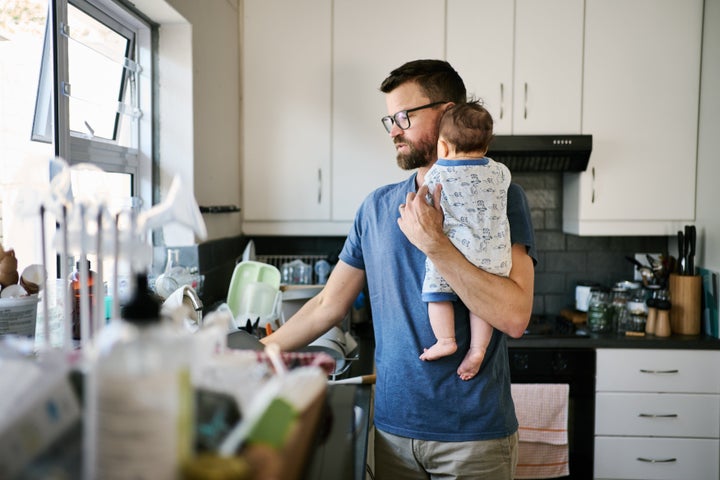
While it's OK to be friendly and warm to your child, you shouldn't lean on them as you would with a best friend.

The Good Brigade via Getty Images

While it’s OK to be friendly and warm to your child, you shouldn’t lean on them as you would with a best friend.

There are red flags that the parent-child friendship has gone too far

There can certainly be an aspect of friendship within a parent-child relationship, but you have to understand when that goes too far, Howard said.

“We want to maintain boundaries with our kids … these are long-standing relationships, so we don’t want to infringe on those boundaries by burdening [our kids] with our emotions that we really need to rely on someone else for,” Van Ness said.

If a child, no matter the age, has to become the emotional caretaker of the parent, it’s a red flag that the parent-child friendship has crossed a line, said Van Ness.

“Unfortunately, that happens with young children when parents get divorced,” said Van Ness.

This may look like one divorced parent trying to get a child to “side with them” instead of the other parent, Van Ness said.

Oversharing personal details that your child shouldn’t know is another sign that the relationship isn’t healthy, Humphreys said.

“You should not be going to your child to discuss marital difficulties, problems with other people, that sort of thing,” Humphreys added.

“If you find yourself doing that, then that’s a red flag that you need to have more peer-to-peer relationships,” said Humphreys.

“It’s hard to erase that history of who had more power, influence or responsibility in the relationship.”

– Carrie Howard, licensed clinical social worker and anxiety coach

Instead of reaching out to your child about these things, you should aim to talk to your significant other, a friend, another parent, or a sibling, Humphreys noted.

“You should not be relying on your child to help you get through situations. That puts a lot of pressure on a child, and also, if you are going to them when you’re having marital issues or relationship issues, that puts them in the middle a lot of times with the other parent or the other significant person in your life,” Humphreys said.

If you find yourself getting jealous of your child’s friendships or romantic relationships because you feel threatened by the bond, that’s also a bad sign, Coote said. You should want your child to have other happy and healthy relationships.

If you lean on your parent or child too much for support, there are other places to go

If you think you’ve been leaning on your parent or child a little too hard and treating them as that “best friend” role, it’s OK. In most cases, it comes from a place of love.

“This is everybody’s first human experience, so the first thing I tell parents is, it’s not your fault that you weren’t taught healthy relationship skills and you didn’t have the tools to develop that — most of us didn’t get an education on managing your emotions and [emotional] intelligence and relational intelligence and that sort of thing — but, even if you didn’t get that education and you didn’t have that healthy example, it’s not your fault, but it is your responsibility to do something about it and develop those skills as adults so you don’t unintentionally harm your kids,” said Coote.

The first step in breaking this pattern is developing your own support system, Coote added.

“Do you have healthy adult friendships? Are you good at managing your own emotions independently? Do you know how to regulate your emotions? Can you sit with difficult emotions?” Coote asked.

“You can have warm, loving relationships while still maintaining that role as their parent. It’s almost like mentorship rather than friendship. You’re not their equal, you’ve been on the planet much longer than them, so you really shouldn’t even developmentally feel like they’re equal,” Coote said.

Whether your child is six, 16 or 36, the parent’s job is to “guide them toward independence, not keep them close to meet your emotional needs,” Coote noted.

“Our goal as a parent is to raise our kids so that they can be independent,” Van Ness said.

“We really need to know that our parents are going to be OK without us and that our kids are going to be OK without being in their lives so fully,” said Van Ness.

Leaning on your child (or your parent) as your best friend only puts unfair pressure on them and takes away from all the great aspects that can exist in a parent-child relationship.

Share Button

My Kids Are Asking About All The England Flags. What Should I Tell Them?

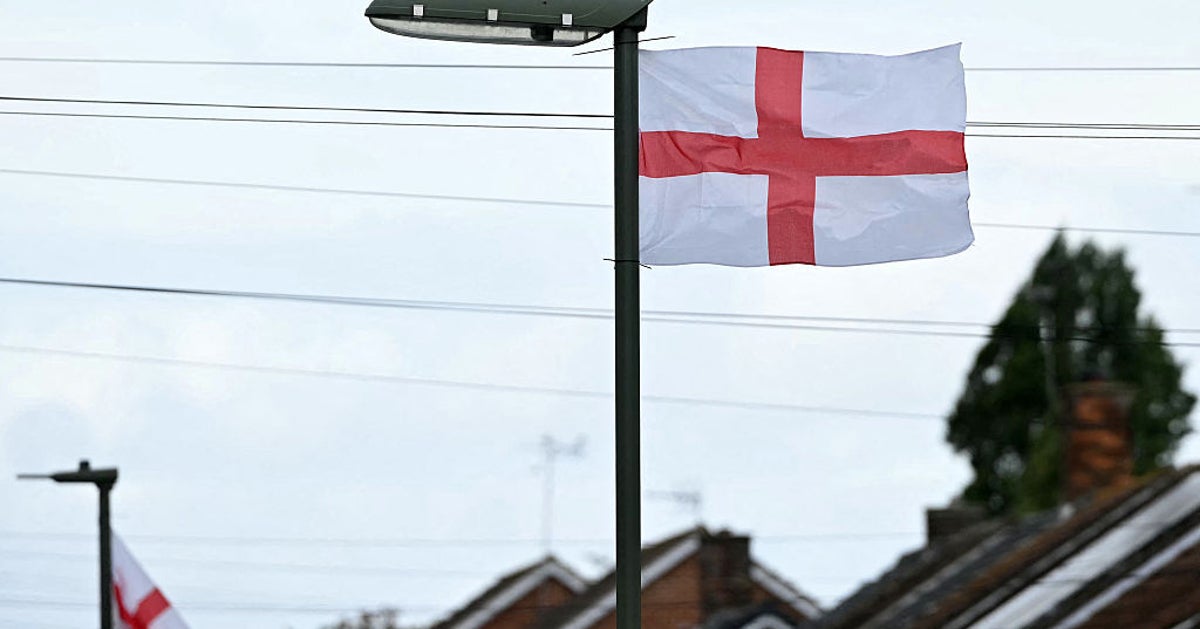
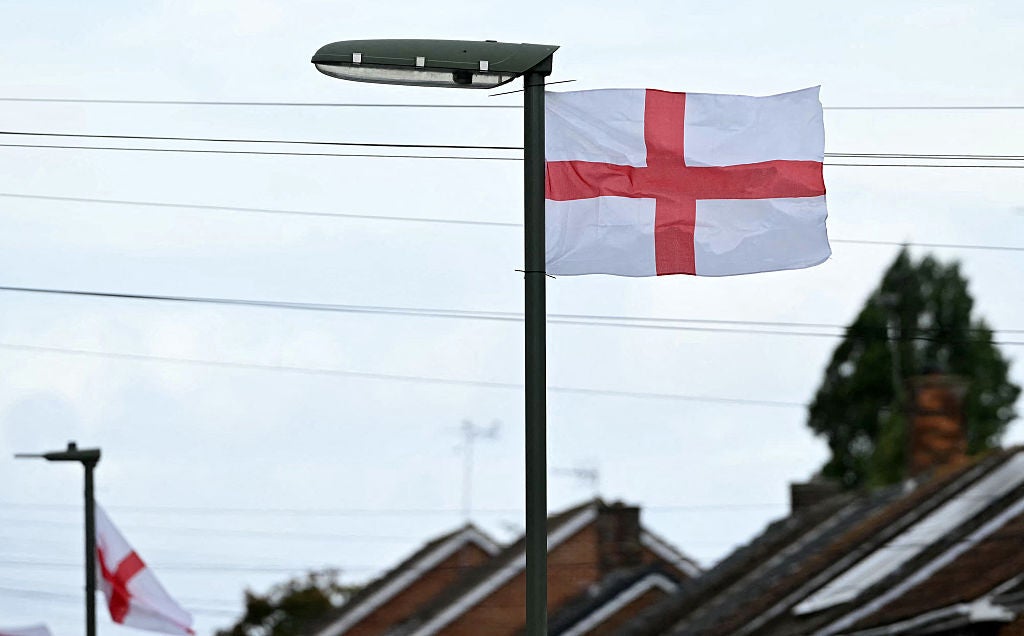
English flags are cropping up in towns and cities across much of the country – and even further afield (a village in Wales woke up one morning to find St George’s Cross graffiti plastered across signs and bus stops).

While these flags usually crop up during football tournaments, children are asking why they’re being flown – and in some cases, graffitied, now – and for some parents, they don’t know where to even begin.

Such was the case for one parent who took to Mumsnet to say their children, aged eight and 11 years old, were “asking about the current influx of England flags”.

“How do you explain it?” asked the parent. “I’ve tried to explain it but to be honest I don’t really understand it fully myself, and think I’ve just bumbled out a lot of rubbish that they don’t really get. Any ideas on an age appropriate way?”

While some people say they are being proud and patriotic by flying the flag, given the wider context and division around immigration right now, as well as how the flag has been co-opted by far-right groups, it can be a tricky area for parents to navigate when kids ask what it all means.

Responses were mixed. One commenter said: “In a nutshell people are displaying the flag in what they feel is a rebellious act against a government which doesn’t listen to them or, in fact, care about them in any way at all.”

Another said: “At 8 and 11, I would presume that they have an understanding of racism? I would just explain that there are sadly still a lot of racists around, and that some of them like to express this by flying the flag.

“I would also explain, of course, that there is nothing inherently racist about the flag itself, but that the racists were trying to claim it for their own cause.”

It’s certainly a tricky one – and not something they write about in your average parenting advice books. So, I enlisted the help of a therapist who works with young people, and a clinical psychologist, to advise parents on the best approach to take.

How to talk to kids about the influx of England flags

The issue is the flag has multiple meanings – and not only this, it means different things to different people. While some might see it as a way to say you’re proud to be English, others might see it as a sign of division and hatred.

And this is even more confusing for children.

Fiona Yassin, family psychotherapist and founder of The Wave Clinic, told HuffPost UK: “The double meaning of some flags and symbols can leave children and young people confused.

“It’s important to remember that children are often asking questions from a place of curiosity, not judgement. When a question feels loaded for parents, they may try and defend it, which can create anxiety in parenting.

“Avoid answering questions from this standpoint and try not to parent through the lens of anxiety. Stick to short, understandable sentences and simple, age appropriate explanations.”

Both experts agree that a balanced and open approach is best. But how much detail you offer will depend on the age of your child.

For primary school-age children

Yassin suggested connecting the discussion to real-life examples to help make it more meaningful for a child. For this conversation, parents may want to use the concept of team or house colours at school.

“You could explain that flags are similar to team colours at school. Just like cheering for the purple team on sports day shows that you’re part of a team, a flag can show pride in a place or a group,” she explained.

The therapist said parents could share that being excited about a team or a flag “doesn’t mean that we are better than anyone else” or that “we should leave anyone out”.

“For example, cheering for the purple team doesn’t mean the green, yellow or red teams are less important,” she said.

“Introduce the idea of different messages. You might say ‘Flags can have nice meanings, like being proud of your home, but sometimes people use them to say unkind things about others. It’s important to be kind and inclusive, no matter what team you are in or flag you are waving’.”

Dr Patapia Tzotzoli, clinical psychologist and founder of My Triage Network, told HuffPost UK the goal during these conversations is not to provide a single answer, “but to open a space for dialogue, showing children that it is possible to hold multiple perspectives while keeping compassion at the centre”.

“In this way, they learn that while symbols may sometimes divide or unite, what matters most is treating people with kindness, fairness, and inclusion,” she said.

For tweens and teens

If your child is a bit older, it might also help to ask them what they think the flags mean. “Acknowledge and validate their feelings – whether they find the flags exciting or unsettling – and then explain that symbols can carry different meanings for different people,” said Dr Tzotzoli.

“For example, for some, flags represent pride and belonging, while for others they may bring discomfort because of how flags are being used or have been used in the past.”

Yassin urges parents to be “honest and balanced” when talking to kids about the flags. “Acknowledge that some people use flags to show unity, whilst others may use the same symbols in a way that are not kind or inclusive. Encourage them to think critically rather than telling them what to believe,” she said.

The therapist stressed that “our job as parents is to empower children to be critical thinkers and make solid, valuable decisions, and to do that, we need to provide them with factual information”.

You could discuss values and choices with your child, as part of this discussion. It might be helpful to show them that being part of something – whether that’s a team, a community, or a country – “should involve curiosity, respect, and fairness”, she added.

“It’s okay to celebrate identity, but it should never come at the expense of being unkind or excluding others.”

And if your child does share their viewpoint on the flags, the therapist warns not to “dismiss it”.

“When children express their thoughts on these issues, as parents it’s important we actively listen and validate our child’s experiences. Being present and open for discussion is essential,” she said.

“Ensure they know they will not be judged. Let your child know that there is no question too small or too silly to ask. If we encourage children to talk, we must ensure we meet it with empathy, and reassurance that they will not be judged. If children fear talking to us, it’s unlikely they will come to us when they need help the most.”

Share Button

These Eyebrow-Raising Hacks For Stopping Tantrums Actually Worked

Sometimes we have to get very creative to get our kids to a) comply and b) not meltdown over certain events (namely peeling a banana incorrectly).

Parents have previously opened up about the slightly unhinged hacks that helped make their lives easier – from buying 15 of the same t-shirt to leaving food on the counter and telling their child they can’t eat it (the only way to guarantee they will eat it).

And now it’s time to talk turkey on the thing every parent wants so desperately to master: tantrums. While one parenting coach recommended to just verbalise what’s going on and acknowledge the feeling mid-tantrum, others have found distraction can be a big help. (The NHS also recommends distraction as a technique.)

Here’s what parents on Reddit say worked for them when their kids’ big feelings got the better of them…

“My GO TO is say something wrong.”

“For example, if [you’re] trying to get their shoes on ‘Hey we need to get your shoes on, here let’s put them on, they go on your head right?’ Or ‘Lets put on your green shoes’ (when they are red shoes).

“Saying something obviously wrong will snap my 3 year old out of it almost instantly. You can use it as kind of a distraction too, ‘Let’s go see your ‘wrong coloured’ room.’”

“I bent over and made a fart noise with my mouth, then looked surprised and said ‘oops! Excuse me!’”

“My toddler lost it and we both started laughing hysterically for several minutes. Sadly one of my prouder parenting moments.”

“This sounds so weird but sometimes I run away from him.”

“He thinks it’s hilarious and starts chasing me and forgets whatever he was pitching a fit over.”

“If it’s a throwing things tantrum, I give him a bunch of balls…”

“And tell him to rage throw them down the hallway (where he can’t break anything). I demonstrate by whipping one as hard as I can and say ‘phew! I feel better now. Wanna try?’ He always goes for it.”

“If it’s a screamy tantrum, I ask ‘do you smell/hear that?’”

“And he often stops and tries to smell or hear it, then I ask him what he thinks it is and we talk about that for a bit before moving on.”

“I say, ‘Quick! Tell me 5 things you see that are blue!’”

“He’ll look at me like I’m crazy but then start looking around. Name things. If he’s still upset, I’ll ask him to name 4 things he can hear. Usually by now he’s over it.”

“When my son screams no I like to pretend he’s [saying] the name Moe, so I’ll be like ‘Moe? Who is Moe?!?? I don’t know a Moe?’”

“And it makes him giggle 90% of the time.”

″‘Baby, can mummy have a turn at crying?’”

“Cries dramatically. ′Okay baby mummy has finished using the cry do you need it back or shall I hold on to it?’”

Share Button

Meghan Markle Opens Up About A Painful Parenting Moment She’s Never Shared Before

The Duchess of Sussex has opened up about a challenging time during her journey through motherhood.

Meghan, who shares two children – Prince Archie and Princess Lilibet – with Prince Harry, got candid during Season 2 of her Netflix series, With Love, Meghan, which premiered on Tuesday.

During the season’s third episode, Meghan shared an emotional memory with Queer Eye star Tan France – a father himself who has two boys with his partner.

While in conversation, Meghan said parenting has been “better” than she ever presumed, according to a story published by People on Tuesday.

The two discussed various aspects of parenting, including how they will “miss” their little ones when they eventually grow up and move out. People noted that France took it a bit further, saying, “I might die without my kids. I need my boys. If I don’t see them for a couple of days, I feel like my heart is broken.”

Meghan, Duchess of Sussex, looks on as she attends a Sit Out at the Nigerian Defence Headquarters in Abuja on May 11, 2024.

KOLA SULAIMON/AFP via Getty Images

Meghan, Duchess of Sussex, looks on as she attends a Sit Out at the Nigerian Defence Headquarters in Abuja on May 11, 2024.

It was then that Meghan revealed she was away from her children for an extended period following the death of Queen Elizabeth II.

“The longest I went without being around our kids was almost three weeks,” she recalled. “I was… not well.”

In his 2023 memoir Spare, Harry detailed the time the couple had to be apart from their children.

“Our quick trip would now be an odyssey. Another ten days, at least. Difficult days at that,” he said, in an excerpt cited by the outlet. “More, we’d have to be away from the children for longer than we’d planned, longer than we’d ever been.”

In April, the Duchess of Sussex opened up about experiencing postpartum preeclampsia after the birth of one of her children. During an episode of her podcast Confessions of a Female Founder With Meghan, she discussed the experience with Bumble CEO Whitney Wolfe Herd – who also experienced the condition.

“It’s so rare,” Meghan said. “And so scary! And you’re still trying to juggle all of these things, and the world doesn’t know what’s happening quietly. And in the quiet, you’re still trying to show up for people.”

Share Button

People Love To Ask Invasive Questions About My Son’s Autism. These Are The Only Ones I’ll Answer

My son, who starts second grade soon, is autistic and largely nonverbal.

We don’t live in a world that’s made for neurodiverse folks. And while there’s so much out there that tries to push kids like mine to conform into neurotypical spaces, it’s really on us to bend the world for them.

That’s why I talk to our neighbours, the folks running nearby stores, members of our community, about his autism. As a result, he has a favourite corner deli, where the owners know him. A thrift store where, when we walk in, an employee turns the music down, smiling at me from across the aisles. A bookshop where the booksellers don’t mind him sitting at the little kid’s table for half an hour, even when he unpacks a bag of Lego.

As a father, I will pry the world apart with my bare hands if I have to, if it means he can find a way through. But outside of these specific situations, I’ve never liked talking about my son’s autism with other people.

Growing up as a marginalised person, particularly as an adopted person of colour who didn’t really fit into any one space, a lot of irritating questions regularly came my way. “Where are you from, from?” perhaps being the favourite.

And while I had plenty of canned responses, none were ever satisfying, and I was always tired. No one likes to continuously explain their existence.

It wasn’t until I was an adult that I learned the concept of “it’s not your job to educate everyone”. It quickly became a core part of how I walk through the world. I was frustrated. I didn’t want to keep justifying myself to people who didn’t understand.

They could just go Google. It’s not that hard to learn about adoption, or what being a transracial adoptee means. Why waste my time, why make me cut myself open for you?

When our son was first diagnosed, there were a lot of questions from family and friends. Most of them were genuinely well-meaning, but as he grew older, some of them started to feel more and more ignorant and intrusive. I got angry. I snapped on phone calls, out at dinner. And that shield went up once again.

It wasn’t my job to educate everyone.

But in the last two years, something has changed. My child started going to school, then started wanting to go to the park, to playgrounds. He was trying to be social, even without the words. And in that world that tries to make neurodiverse folks bend and change, he deserved every opportunity, every run on a slide, every jump in a splash pad. A classroom, a summer camp. A childhood.

Then the questions started to happen again.

But they weren’t coming from the adults. The other parents mostly looked at us silently, from the corner of their eyes, as I showed up with my kiddo in a wagon while the rest of their children walked; or when he jumped around as their kids sat still; or when he got wildly upset over someone touching his backpack and had to unpack the entire thing so he could make sure everything was just the way he needed it to be.

The side eyes and furrowed brows are seared in my brain. Even if they don’t recognise me at the local grocery store, I sure remember them. I’m a father first and a Scorpio second.

So no, the questions didn’t come from those adults. They came from their kids.

“Hi, are you his Dad?”

“Why do you take him everywhere in that wagon?”

“What’s wrong with him?”

“Why doesn’t he talk?”

“He won’t play with me, why not?”

“Why does he keep spinning around like that?

“How can I help?”

At 6 or 7 years old, they were full of questions, but they were also full of empathy. Between drop off and pick up at school, at neighbourhood block parties, and at this year’s summer camp, little kids frequently asked these gentle questions, sometimes while a nearby parent tried to shoo them away or tell them what they were asking was inappropriate.

Maybe Past Me would have felt the same. The part of me that insisted “it’s not my job to educate everyone”. But I think that changes when the person you’re trying to educate people about can’t do it for themselves. When you have a chance to alter the world for your child, even a little bit.

So, I started to answer the questions. Just a quick sentence here or there.

“Oh, well he’s autistic. He experiences the world in another way.”

“Sometimes he gets overstimulated, and moving around helps. It’s called stimming.”

“It’s called being nonverbal. Words are hard, but he does communicate.”

“He experiences sensory things differently. So touching is sometimes very uncomfortable.”

And so on. My responses were always met with a thoughtful look, a smile. An “I want to try that!” and a kid spinning around themselves, arms stretched out in the morning sun.

I’m hopeful, staring down second grade. He’s got great teachers and a great community. And there are kids with empathy everywhere, even if some of the adults have lost it over the years.

Where I once thought it wasn’t my job to educate everyone, now I wish that more people would ask these questions in the gentle, well-meaning way kids do. That instead of the stares and the whispers, they would be curious and brave, like children who only want to understand.

Do you have a compelling personal story you’d like to see published on HuffPost? Find out what we’re looking for here and send us a pitch at pitch@huffpost.com.

Share Button

What Happens When You ‘Convince’ Your Partner To Have Kids? 4 People Share Their Stories

We all know – or know of – a couple who broke up because only one of them wanted children, even if that couple is just Sofía Vergara and Joe Manganiello.

Whether or not to become parents is one of the most important issues for couples to align on – and when they disagree, it can understandably be their undoing.

But life is never that straightforward, and in some cases, one person in the couple can sometimes change their mind about having kids. The other may even make the case to try and “convince” them to reconsider. This sometimes works out for them and sometimes doesn’t, but it’s certainly a fine line to tread.

“Deciding to have children isn’t something anyone should be pushed into,” Teresha Young, an international wellness and relationship coach told HuffPost.

“If a couple talks things through openly and honestly, and a partner decides of their own accord that they now want children, it can be a natural, healthy and positive shift. This often comes from finding common ground as a team, sharing hopes, and imagining a future together.”

We’re using the term “convincing” with a large helping of salt here, because this isn’t about coercion or putting pressure on a partner who simply does not want children. It’s much more nuanced than that.

“If anyone is being emotionally manipulated, guilt-tripped or blackmailed into parenthood, that’s a recipe for disaster,” Young said.

“No one should be forced into making such a significant life decision. That kind of pressure can breed resentment, bitterness, emotional disconnection and withdrawal. It might not surface straight away, but over time it can chip away at the relationship.”

In an ideal world, dating experts would typically advise that people start talking about whether or not they want kids in the long term in the first few dates.

“The conversations should begin with discussing your positive childhood memories, what you loved about how you were raised, and then transition into what you may do differently with your kids,” Spicy Mari, a relationship expert featured on Netflix’s Sneaky Links and founder of The Spicy Life, told HuffPost.

These conversations, Mari said, should take place whether you’re in your 20s or your 40s, especially if you know that you feel strongly one way or the other.

“If anyone is being emotionally manipulated, guilt-tripped or blackmailed into parenthood, that’s a recipe for disaster.”

– Teresha Young, international wellness and relationship coach

Still, people often find themselves in a long-term relationship where they don’t align with their partner on the kids question, whether they didn’t discuss it until they were already invested or one person changed their mind along the way. In this case, Young said to start with curiosity about your partner’s position.

“This is not about proving who is ‘right,’” the expert said. “It’s about listening with empathy, respecting each other’s perspectives, and exploring whether there’s room for alignment without pressure or guilt.”

If these conversations don’t yield any movement on either side, the couple will have to consider whether or not to continue the relationship given this information.

For obvious reasons, this isn’t a decision to take lightly. “Every child deserves to grow up in an environment that feels physically, emotionally and psychologically safe,” said Young. “For that to happen, both people need to genuinely want to become parents. If there’s hesitation or a lack of shared desire, there’s a risk of creating a situation where a child may not have the best chance to thrive.”

HuffPost spoke to people who say they felt they were “convinced” by their partner to have children, whether or not their relationship worked out in the end. Here’s what they told us.

1. The conference bargain

“My husband and I have been together for the past 10 years. On our second date, he said he was looking for something serious and wanted to know if I was looking for the same. I was too busy in my life to invest myself emotionally in a relationship without direction so I gave us a chance.

When I was younger I did not know I wanted children. It wasn’t until the opportunity to have children presented itself that I knew having children would be a natural next step for me. My husband did not have a strong opinion about having children or not having children. He has two children from a previous marriage, so he did not have a sense of urgency.

[He] changed his mind about having a child with me when I was accepted to speak at the International Peace Research Association’s conference in Sierra Leone. He was concerned I would not be safe [as an Iranian American psychologist] traveling to Sierra Leone and tried to convince me not to go. I didn’t see a point in putting my safety first unless I had a child, so my husband agreed to have a child with me.

For this reason, I upheld my end of the bargain by cancelling my speaking engagement at the conference in Sierra Leone. [Today], our 8-year old is funny, dynamic and cute. Parenting is a challenge, yet it is a false dichotomy to think that just because something is not easy that it is not worthwhile.”

— Dr. Azadeh Weber

2. Slow build

“My wife didn’t want kids at first […] because she grew up watching family members who lost their independence after becoming parents. She loved her work, and the idea of trading that in for diapers and sleepless nights didn’t seem like a path she wanted to take. But I really wanted kids. I didn’t pressure her, though.

I started with small conversations, usually while we were doing something relaxed like walking or cooking. I’d say things like, ‘If we had a daughter, I think you’d be the one teaching her how to travel light and figure out any airport like a pro,’ or, ‘I think you’d be the kind of mum who keeps her style and independence, even with a kid on her hip.’

I brought it into our day-to-day in a way that wasn’t heavy. I made changes to show her it didn’t have to look like what she feared. We blocked out full weekends just for ourselves, travelled often, and split all chores. I told her I’d take night shifts if we ever had a baby and that I’d make sure her work still came first when she needed it to. We even talked through how child care would work, who could help us, and what we’d keep doing as individuals and as a couple.

None of it happened in one moment. It was a slow build, always honest. Now we have two kids, and she’s still doing the work she loves, still travelling, still herself. I didn’t convince her with words. I helped her picture a life where having children added to what she already valued, not replaced it.”

— James Myers

Communication is key to making sure that you and your partner are on the same page about what parenthood (or staying child-free) means to you.

AJ_Watt via Getty Images

Communication is key to making sure that you and your partner are on the same page about what parenthood (or staying child-free) means to you.

3. Technical glitch

“We started dating in September 2020. We were together for a year before he allowed me to meet his daughter. (I always knew I wanted children.) I was one of three and from a very big family. I had also lost a child during a brutal miscarriage in my previous relationship. That kind of made it worse for me, I felt that the only way I could get over that was to have a child that survived. I was painfully aware that time was ticking by when we met so I told him during our first phone call that having children was a ‘dealbreaker’.

He didn’t explicitly tell me no. I think that he tried to on our first date, but I maybe didn’t want to hear it. He didn’t want another child as he had raised his daughter on his own from [when she was] five months old. He didn’t want to have to go through all that again when he was just ‘getting his life back’. I didn’t want any stepchildren as that had been my previous situation, and I found it challenging. We blame the app that we met on because we both thought that we had put in our preferences for children.

José discussed it with a friend – his words were, ‘I don’t want another child, but I want her, so that is the price’. We didn’t explicitly have the conversation either that I didn’t want a stepchild, but I knew that his daughter came with him as a package. I think having our own child has brought the four of us together as a family. His daughter now has a baby brother, and he brings so much joy and light into our lives that we all bond over our love for him. It has been the best thing I’ve ever done. And my partner says, ‘I didn’t want this, but now I couldn’t be without him.’

— Sophie Wilson

4. Baby bucket list

“In the beginning of our marriage, my husband worked at an adolescent psychiatric centre. He saw things there that were really hard on him. When I started bringing up that we should start trying, he would get silent and push the subject away. Then one day, he broke the news to me that he didn’t want kids anymore. I felt trapped, as I had always wanted to be a mum, and now I’m married to a guy who is taking that dream away from me.

The next day, I called my husband’s mum and shared with her what he had told me. My in-laws waited a few days and called my husband when they knew I wouldn’t be around. I’m so thankful for that phone call as I know my father-in-law told my husband, ‘You are going to lose her if you don’t give her children. It is your husband responsibility to do so.’

A few weeks later […] I sat down with my husband and explained to him that while I love him so much, I cannot be with someone that I resent for the rest of my life. That was the turning point for us. He finally opened up about the things that he saw at the psychiatric centre and how it scared him to have kids. He told me, ‘I will give you kids, but I just need some more time to get over what I saw.’

Time – OK, I can work with that! We had time. We were only 26 at this point! We worked on a ‘Baby Bucket List’ of things that we wanted to accomplish before we started trying to have kids. The last thing we had on our Baby Bucket List was to go skydiving together. In the plane 10,000 feet up, I looked at him and said, ‘This is the last thing.’

Two months later, we went out for a Christmas Eve dinner, just the two of us. It was there that he looked at me and said, ‘I’m ready. Thank you for waiting.’

We now have two kids, a boy who is 12 and a girl who is 10, and it is wild to me that the scared 20-something guy is the same guy who is helping me raise our kids. Our kids are so lucky to have him as a dad, and I am so blessed to have him as a husband.”

— Natasha Colkmire

Share Button

Research Just Confirmed Why Bluey Is A Great TV Show For Kids *And* Parents

I’m not sure who loves Bluey more: my kids or, well, me.

No, actually, I do. It’s me. I know the names of most of the characters; Sleepytime is flat-out my favourite episode (I cry every time I watch it); and when I heard there was a Bluey movie in production, I actually gasped.

The show is often praised for it’s progressive approach to parenting – and for being entertaining, even for adults.

And it turns out there’s yet another reason to tune in to the Australian children’s TV show…

While the parenting lessons are great (they’re often either highly amusing, or heart-wrenchingly relatable), so too are the lessons kids can take away from the show – in particular, the themes of resilience, according to a new study.

Why is resilience important?

Resilience is the ability to cope when something difficult or bad has happened – it’s important for kids to learn and build on throughout their lives.

With one in five young people (aged 8-25 years old) in England thought to have a mental health disorder, and a health service that’s struggling to cope with demand, a lot of talk in the UK has recently shifted to improving children’s resilience as a solution.

Experts believe that encouraging better resilience in children and young people would help equip those with low-level mental health problems with improved coping skills.

You can read more on building resilience in kids, here.

If you haven’t yet watched the cartoon series, it follows a blue dog called (yep, you guessed it) Bluey, her younger sister Bingo and their parents as they try to navigate life’s highs and lows.

Researchers had the enviable task of watching 150 episodes (all three seasons) and found almost half of the episodes (48.7%) featured resilience as either a primary or secondary theme.

Bluey, the main character, featured in 54.8% of resilience storylines. Parents were the main facilitators (64.4%), with Bluey’s mum Chilli being the most common (46.6%).

Researchers concluded that the popular TV show frequently portrays resilience-building behaviours, especially through family relationships and coping strategies.

“These findings highlight Bluey as a strong example of how children’s television can support emotional learning and model adaptive behaviours relevant to real-life challenges,” the researchers said.

In a linked piece for The Conversation, one of the study’s authors, Bradley Smith, senior lecturer in Psychology at CQUniversity Australia, pointed out that research shows “the earlier we support resilience-building, the better”. And that early interventions can help build healthy coping skills.

He added: “Storytelling in films, books and TV can show children how to navigate challenges – not through lectures, but by modelling behaviours like emotional regulation, problem-solving and empathy.”

While TV shows can’t replace parenting and real relationships, Smith encouraged parents to watch episodes with their kids and to use them as conversation starters to discuss themes of resilience.

For example, he suggested you could ask them: what do you think Bluey felt then? Or, what would you do in that situation? Or how would you feel if that happened to you?

“Talking about what kids see on screen can help them reflect, process, and build the skills they need to cope, adapt and grow,” he added.

Share Button

‘My Boys, 8 And 11, Still Bath Together – My Friends Think It’s Inappropriate’

A parent has asked if they should be enforcing separate bath times now their sons are eight and 11 years old – and it’s proven to be a divisive topic.

Writing on Mumsnet’s Am I Being Unreasonable forum, the parent said their sons “adore each other and are pretty much inseparable, which also includes bath time”.

“I have never had a problem with them bathing together as that’s what they choose to do, but some of my friends who have children of a similar age have started making comments that it isn’t appropriate,” they said.

In particular, the parent’s friends have taken issue with the eldest son sharing a bath because he is approaching the age of puberty (the average age for girls to start puberty is 11, while for boys it’s 12).

The parent pointed out that they’re not making their children share a bath – they simply like bathing together. “I give them [the] option to bathe alone if that’s what they’d prefer, but they don’t want to,” they added, before asking if they should be enforcing separate baths.

Some commenters were of the opinion that their comes a certain age – usually when kids start secondary school or hit puberty – where it might be wise to start implementing privacy around bathing.

“I think this is [a] time where as their parent you start encouraging them to bathe alone. I do think it’s too old now and your eldest needs to start having some privacy,” said one respondent.

Another said: “I’d be enforcing separate bath times. I’d do it in a gentle way rather than make them feel they were wrong for it but they do need to know that bathing together isn’t appropriate.”

But there were also many commenters who didn’t see any issue. “Personally I think as long as they are happy, it is fine,” said one respondent.

“In the UK we are quite conservative about nudity, which influences people’s views. It would seem odd if you prevented then having a bath together when they are used to it. I imagine your eldest will decide to stop soon enough without your interference.”

Another said: “I imagine your elder son will decide soon enough that he doesn’t want to share anymore. I think if the boys are both happy with it then it’s fine.”

Is there an age when siblings should stop bathing together?

First up, consider safety

There is no strict clinical or legal age when children should start bathing independently, Dr Patapia Tzotzoli, clinical psychologist and founder of My Triage Network, told HuffPost UK.

“Readiness depends more on maturity, motor skills, and safety awareness than age, and parents should adjust for each child’s needs,” she explained.

In the UK, safety guidance states children under the age of five must never be left alone in the bath. Yet “between about five and eight years, parents need to stay nearby for supervision”, warned Dr Tzotzoli.

You can be gradually handing over tasks, such as teaching them how to properly wash themselves and wash their hair, during this time.

“The goal is to build autonomy and competence over time. Parents can start by framing bath time as their private time, important for relaxation and self-care. They should talk about privacy and use correct anatomical terms when discussing private parts with their children,” said Dr Tzotzoli.

“By around 8-10 years, many children can manage the full routine independently with an adult nearby and periodically checking on them,” the psychologist said.

A survey found the average age that adults believed a child could bathe alone was 7.5 years old.

Former sex education teacher Kathleen Hema suggests parents can start offering separate baths once safety isn’t a concern. “This age can be different for each child and when parents feel there is no safety risk,” she explained.

See how your kids feel about it

Once they’ve reached an age where safety is less of an issue, it’s worth telling your children they can bathe separately if they want – perhaps to gauge how they would feel about it, and whether they would want to.

“There’s nothing inherently wrong with siblings bathing together. Nor is there anything wrong with siblings bathing separately,” Hema told HuffPost UK.

“If the kids aren’t respecting each other during bath time (not respecting boundaries), then there is a reason to end it. Or if one kid says they want to bathe separately, then there is a reason to end it.”

It’s important to set boundaries from a young age around not touching other people’s genitals – including siblings.

“Ensuring safety and comfort for all siblings is the parent’s job,” Hema continued. “Parents can check in with their kids by reminding them they can shower separately whenever they want.

“They can also discuss privacy and what that means to them and let their kids know that they can request privacy at any time.”

Erica Miller, clinical psychologist and director at Connected Minds NYC, previously told Scary Mommy in her experience, children “begin to express more of a desire for privacy around 10 years old”.

Although she noted “this may come earlier for girls than boys who often begin puberty earlier”.

Ultimately, the time when siblings might no longer want to have a bath together can depend on a range of things – a child’s comfort levels, maturation, desire for more privacy, or simply wanting more space (it can be a tight squeeze in the tub as kids get bigger!).

If a child decides they no longer want to bathe with siblings, the important thing for us to do as parents is respect that wish.

Share Button

The 1 Response To Have Up Your Sleeve When Kids Say ‘I’m Bored’

Today, 12 August, is the day that kids reach peak school summer holiday boredom, apparently – yet chances are you’ve already heard your fair share of ‘I’m bored’ and ‘can you play with me?’ comments over the six-week break.

If this resonates, parents on Reddit might just have a handy retort to try which can encourage kids to either help tick things off your daily to-do list – or go off and play with something while you get things done.

In a recent post on r/Parenting, a parent of a nine-year-old said if their son isn’t allowed on the Playstation or iPad, “he literally follows us around the house”.

“We suggest all types of things and he doesn’t want to do any of them,” said the baffled parent before listing all the toys available to him. “He just doesn’t want to do anything by himself.”

They asked Redditors (and fellow parents) for tips on how to get their child playing independently – and the top comment has been upvoted over 400 times for good reason.

“When mine follow me around while I’m doing chores, I give them a chore to do,” said the parent of a three- and five-year-old.

“I’ve told them ‘if you keep following me around while I’m doing chores, I’m gonna give you a chore to do’ and when I say that they’ll usually go find something else to do.”

“I do this, too,” said another parent. “Half the time they help. The other half, they pout and storm off into their room. Within 10 minutes or so, they miraculously remember they have toys, crayons, books, and imaginations.”

It turns out this incredibly simple response seems to encourage a lot of kids to find something else to do, sharpish.

“I started doing this when my 6 year old whines about how bored she is. She usually takes off and hides,” said one commenter.

Another affirmed it worked on them growing up: “Was raised on ‘if you tell me you are bored, I’ll find a chore for you.’ Can confirm this works.”

And it turns out getting kids involved in chores could benefit them well into adulthood.

A 75-year study from Harvard found that children who were encouraged to do chores around the house were more likely to be happier as adults, have more empathy towards others, and be more successful in their careers.

Listing the benefits, a paediatrician from Utah – known as TikTok Kid Doc – said “having your children do chores gives them a sense of self-worth and it helps them to realise that they’re contributing to a larger ecosystem”.

“They become more selfless, they become more willing and able to see the needs of other people around them.

“Chores also strengthen family bonds with siblings and with parents. And chores help to instil a better work ethic which translates pretty well into school and career success.”

Using this hack today, tomorrow and always.

Share Button

Mums Are Sharing When The Mental Load Peaks – And I’m Exhausted Just Thinking About It

If you’re a parent, particularly a mother, you’ll likely be well acquainted with the mental load – or as UCLA Health describes it, the “behind-the-scenes, cognitive and emotional work needed to manage a household”.

Studies have found mums take on 71% of all household mental load tasks (in comparison to dads, who take on 45%), ranging from planning meals and arranging activities to managing household finances.

The impact of this unequal division of tasks, which can often go unnoticed, is not to be underestimated. “It can lead to stress, burnout and even impact women’s careers. In many cases, resentment can build, creating strain between couples,” political scientist Dr Ana Catalano Weeks said.

The weight of the mental load can vary dramatically over the years, depending on a range of factors including the age of your kids, their needs at the time and how many hobbies they have.

One parent took to Reddit recently to ask whether other mums felt there was an age where the mental load peaked.

“I have two kids, different school ages so in two different schools and schedules,” she said. “The mental load feels substantially larger than when they were smaller and only dealing with baby and toddler stages.”

The overarching theme was that there were two key peaks: the baby and toddler years; and then the tween years. But it turns out even university-age kids can come with their fair share of admin, too.

The baby and toddler peak

As a member of this camp, I can wholeheartedly say the mental load is exhausting – especially when you’re breastfeeding, as it’s not something you can technically “hand over”.

Similarly, keeping a child from harming themselves 24/7 (we’re currently in the climb everything and try-to-throw-ourselves-down-the-stairs phase of toddlerhood) is tiring.

Then there’s the sheer amount of sickness young kids have – and trying to juggle that around work, and who needs to take which day off to look after who, or who needs to be calling family members for backup childcare – as well as all the cleaning, weaning, and having to take the entire house with you when you go out anywhere for a significant period of time (aka more than 20 minutes).

One mum of four children aged 15, 18, 20 and 24 said the toddler years were “the worst” in terms of mental load.

Another parent noted they experienced “two mental load peaks” which had “very different flavours”, one of which was the baby and toddlerhood peak, “which was very much about keeping them alive and uninjured”.

They continued: “A lot of my mental energy was consumed by constant feeding, cleaning, and supervision of irrational creatures with no self-preservation instinct.” Told you.

But the tween years are also hard

The same mum added: “There was another mental load peak in the preteen years. This one was more about keeping everything on the rails. It was a combo of puberty issues like hygiene resistance and emotional meltdowns, and admin issues like keeping track of school schedules, projects, activities, trips, and social engagements.

“It started to settle down for us in high school, when the kids are more reliably handling their own personal, school, and social stuff.”

Another parent agreed that tweens require a lot of extra organisation: “As a parent of teens and tweens, I think there is more mental load for tweens. I’m still texting/arranging with other parents, still in charge of signing them up for things and transportation to/from everywhere, and still needing to support school a lot more.”

Older teens

Some parents did find that even with older children – we’re talking college-age kids and young adults – their mental load peaked.

“Mine are 17 and 22,” said a mother. “It’s peak emotional mental load. One is transitioning to adulthood after college and struggling to find a career. One is entering last year of high school and is anxious about the future. And I’m transitioning through perimenopause!!! It’s a very different mental load at this stage. It’s by far my worst time.”

Another parent agreed: “I can relate. I have an almost 19 year old and 21 year old. The 19 year old is starting college, and the twenty one year old has about a year and a half to go. And I am in menopause now, so my anxiety is high, and my sleep is all over the place.

“I feel like this is the hardest stage for me because they don’t listen as much to you.”

How to cope

Regardless of which stage you’re in, know that you’re certainly not alone.

If you’re struggling under the sheer weight of the mental load, UCLA Health experts have shared the following tips:

  • Speak to your partner about it and find a way to divide this invisible labour more equally. “Plan to meet weekly to review the mental labour for the upcoming week and assign those tasks,” experts suggest. There’s loads of advice on how to broach the topic here.
  • Make a daily or weekly to-do list so you can get them out of your head.
  • Set boundaries by saying “no” to things if it doesn’t work for you. Encourage older children to be independent – as the experts advise, “make them responsible for packing their own school and sports bags”.
  • Prioritise you time – that means taking rest where you can, exercising, eating well, and doing activities that fill your cup.
  • Don’t be afraid to ask for help if you’re struggling – whether that’s from your partner, friends and family members, or your GP or therapist.

Help and support:

  • Mind, open Monday to Friday, 9am-6pm on 0300 123 3393.
  • Samaritans offers a listening service which is open 24 hours a day, on 116 123 (UK and ROI – this number is FREE to call and will not appear on your phone bill).
  • CALM (the Campaign Against Living Miserably) offer a helpline open 5pm-midnight, 365 days a year, on 0800 58 58 58, and a webchat service.
  • The Mix is a free support service for people under 25. Call 0808 808 4994 or email help@themix.org.uk
  • Rethink Mental Illness offers practical help through its advice line which can be reached on 0808 801 0525 (Monday to Friday 10am-4pm). More info can be found on rethink.org.
Share Button