Your Kid Walks In On You Having Sex – This Is The First Thing You Should Say

If there’s one thing that comes with the territory of being a parent, it’s lack of privacy – and sometimes that means your child walking in on intimate moments.

It’s nothing new. Parents have been experiencing this intrusion since time began (spare a thought for the 69 dad!). But whereas once kids might’ve been hurried back to their rooms, never to discuss what happened again, these days some parents are being more open with their children about what they’ve just witnessed.

But how open should you be exactly?

I asked former sex education teacher Kathleen Hema to walk me through how’s best to respond when a kid walks in on you having sex – and the key takeaway is, it doesn’t have to be a big a deal as you think.

What to say when your child walks in on you having sex

Hema, who can often be found on social media teaching parents how to answer their kid’s sex questions, told HuffPost UK it’s important for parents to teach basic boundary setting early on in a child’s life.

This is because “when parents are setting and maintaining boundaries from an early age with their kid, it’s going to be so much easier to respond to a child walking in on you”.

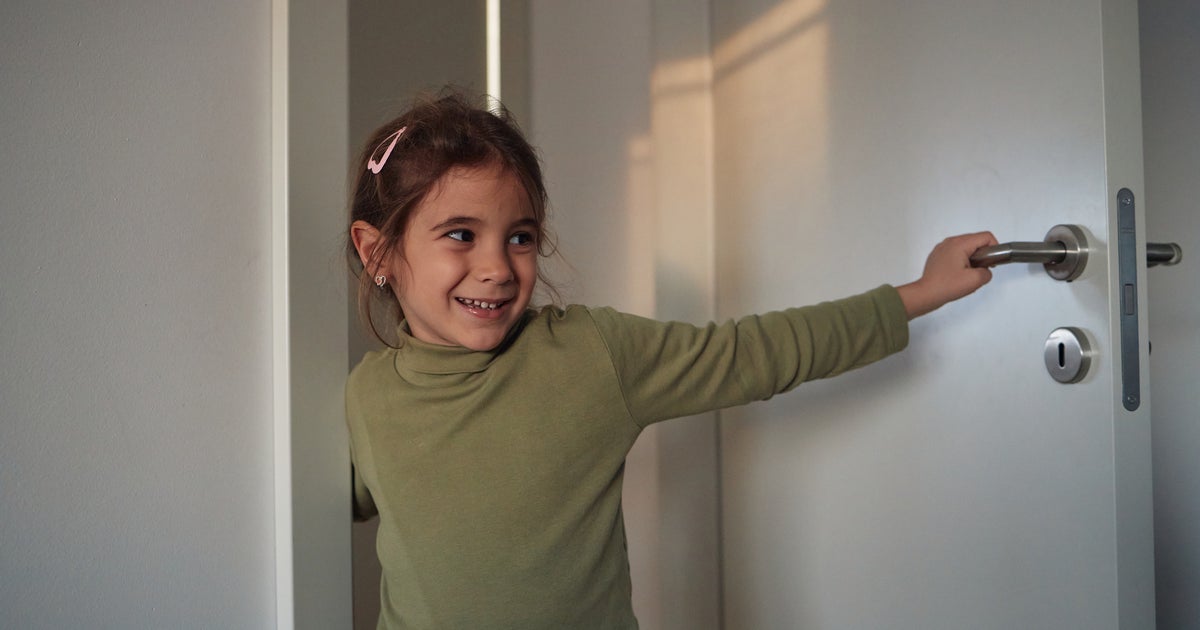
Boundary setting can include teaching kids to knock on your bedroom door before entering (same goes for the bathroom) – and equally, you can reciprocate by knocking on their bedroom door.

This means that when a young child walks in and you’re in the middle of business, you could say: “Are you OK?” and the child might respond with “yeah” or “I thought I heard something”.

At this point, you can say: “OK. I didn’t hear you knock. It’s respectful to knock before entering someone’s room. Since you are OK, can we practice knocking? Can you go back out and shut the door and knock?”

This simple response gives parents a moment to gather themselves and put their clothes on, Hema suggested.

“When you go to the door and open it, you must praise them for knocking and then you can ask them a question,” she added.

You could say something like, “Great job knocking! I really appreciate you knocking when the door is closed. What’s up? I wanna help you. What do you need?”

She continued: “This type of response is positive and immediately focuses the conversation back to why they came into the room in the first place. For many young kids, that’s enough! They tell you they need a drink of water and you assist them with that request and walk them back to bed.

“Oftentimes with young kids, they don’t have any questions because they may not have really seen anything.”

Sometimes, with primary school-age children (aged five and up), a bit more explaining might be needed as a child might ask their parent “was [name] hurting you?”.

Hema said this is a common question from a young child when this situation happens and said parents can respond by saying: “Nope. [Name] wasn’t hurting me. I am OK. When adults are alone, we sometimes do adult activities and it may have looked uncomfortable to you, but I will reassure you that I am OK.”

You can then redirect them with another question: “Do you need anything else before going back to bed?”

You don’t even have to call it sex. In fact, Hema said she recommends for parents to say “adult activities” because kids understand this.

“There are loads of things that kids observe as ‘adult stuff’. For example, drinking coffee or alcohol, driving, going to work. This is just another thing they can tack on to this list,” she said.

If your child does have questions, the crucial thing is that you stay calm and relaxed while you have these conversations. Parent Map advises using “factual, plain language” and answering any questions a child asks “without supplying additional information or answering questions the child isn’t asking”.

And maybe a trip to B&Q for a bedroom lock could be a wise move afterwards, too.

Share Button

So, That Sweet Little Kid You Knew Grew Up To Be A Jerk…

You adored them as a kid – their joy, their wonder, their lopsided art projects and endless asking of “why?” But now they’re 19 and only care about TikTok, or designer shoes, or conspiracy podcasts.

Or maybe they’ve grown into someone you find unrecognisable, even unsettling.

It’s a quiet heartbreak many family members and caregivers face but rarely talk about: What do you do when a child you love grows into a teen or adult you don’t really… like anymore?

Mandy Morris, a licensed professional counsellor and EMDR clinician, said it’s “a particular kind of heartbreak I find quietly devastating: when a child you once loved deeply grows into an adult whose beliefs or behaviours you find difficult, or even impossible, to reconcile with your values,” she said.

Maybe they’re casually cruel, deeply self-absorbed, or espousing problematic ideologies. Maybe they’re just… not who you hoped they’d be. Experts say all of the above are quite common, and that it’s OK to feel grief, anger and even guilt in relation to a beloved child who is now a confusing, semi-grown human.

Ahead, here are tips for how to process those feelings, how to find the line between individuality and harmful behaviour, and how to draw boundaries that protect your peace and the possibility of reconnection in the future.

Selfish phase or a personality type?

It’s important to acknowledge that there are myriad reasons we may find ourselves disliking how a grown child is behaving at the moment. Each of those reasons falls somewhere on a wide spectrum – from disappointing to deeply deleterious. Let’s start with the former.

“When my goddaughter started going to this fancy private high school, everything changed,” said Liana*, in Tennessee. “Suddenly all she cared about was, I don’t know, absurdly expensive shoes? And we used to be super close when she was little, so now I’m like, I don’t know how to connect with her anymore. Do I just… buy her the shoes? Or is it my job to push back and call out that she’s become so superficial?”

Mary, an American who lives in Italy, said her stateside nephew’s “very obnoxious behaviours were never corrected when he was younger,” and it has led to difficulties being around him now that he’s older. As a little kid, “he could be fun and silly,” but as a teen he “doesn’t say hi… he’ll pull his hoodie around his face at the dinner table, he’ll barely utter a ‘thank you’ for gifts,” Mary explains. “Unfortunately, it’s hard not to blame the parenting.”

Therapist Sloane Previdi specialises in families navigating boundaries and conflicts, and notes that the teen tendency towards selfishness or consumerism is certainly nothing new. But it’s important to remember that “as kids grow, they develop into their own person – shaped by many things outside your influence,” Previdi said.

To the aunties and godparents wondering what, exactly, your role should be when a beloved teen tends towards the selfish or misanthropic: “Your job isn’t to fix them,” Previdi said. Rather, your job is to stay grounded in your own values. “Hold space for complexity,” Previdi adds. “People change – but they don’t always do it on your timeline.”

When your fears are confirmed

Of course, sometimes you monitor the situation for a decade and realise that kid is now nearly 30 and certainly not going back to their old, big-hearted self anytime soon. Andrea, from New York, had to make some changes in how she deals with her younger brother due to his problematic politics.

“We were very close as kids, and got each other through a lot of shit,” she said. “As he turned into a young adult, it started to emerge that he was more conservative. Which, OK, fine. Nowadays I’m nostalgic for the days when I was just ragging him for voting for Mitt Romney – oh, if only Mitt Romney were our problem in 2025!” Andrea says her brother’s vote for Trump in 2016 led to a real falling-out between them, and he started to post racist and transphobic comments.

“We didn’t speak for nearly a year,” Andrea said. “And it wasn’t because I was pissed; it was because he was pissed. He blocked me because I wasn’t on board with his politics.”

Today, they can at least see each other at family events — but only because they’ve made the unspoken decision to never talk politics.

“It hurts my heart because the kid I love is in there somewhere,” Andrea said. “I want to believe that little kid believes in his heart that, you know, trans kids should have human rights. But I just don’t know.”

“That emotional dissonance — the clash between who they were and who they’ve become — isn’t just disorienting; it’s grief.”

– Mandy Morris, LPC, EMDR Therapist

Coming to terms with a loss like this – the loss of the brother Andrea imagined she’d grow up to have – is huge. Previdi said you may feel guilt or confusion towards a once-beloved child who has changed, and “it’s OK to feel all of that. But your love can remain, even if your relationship changes,” she explains. One of the best coping mechanisms, Previdi adds, is “accepting that love and disappointment can coexist.”

“Maybe they’ve adopted ideologies rooted in misogyny, racism, or other forms of harm,” Morris said. “And maybe you remember when they were 8 years old and asked you to read them one more bedtime story. That emotional dissonance — the clash between who they were and who they’ve become – isn’t just disorienting; it’s grief. And not the kind of grief we’re taught to expect.”

Morris explains that psychologists call this “ambiguous loss,” a form of mourning that comes without a death “when the person is physically present but emotionally or morally unrecognisable,” she said.

What about Andrea’s decision to simply not talk about the issues with her brother? Therapist and licensed clinical social worker Jennifer Kelman said it’s a valid way to cope.

“Sometimes, taking a step back and letting things be” can be a great compromise, Kelman said, especially “if you feel that if you voiced your opinions, that it could fracture the relationship.” On the other hand, “if you feel that the potential of the fracture is worth the risk, then it might be time to sit with this loved one and share your feelings.”

When behaviours cross the line

Alex, from North Carolina, has had to actively distance himself from a cousin whose behaviours took a turn for the worse.

“I grew up playing with my little cousin Brad all the time,” Alex said. “We’d go to the beach together every summer. Then, when I was in my 20s and he was an older teen, he would get drunk and kept trying to start physical fights with me.” Alex had begun to be successful in his career and had moved away from their small town. Meanwhile, he saw his younger cousin start leaning more into problematic stereotypes about masculinity and inciting violence.

“I think it stems from mental health issues in the family that nobody talks about – which are often deeply rooted, Southern family dynamics,” Alex explains. As for the physical fights, “I refused to do it,” Alex said. He stopped seeing Brad entirely. Now in his 40s, he and his former favourite cousin are “not in touch. I don’t think he’s doing well. If I run into him by accident, he doesn’t ever look well.”

Alex said he knows many of Brad’s family members have struggled with drug abuse, and he assumes his little cousin has also gone down that path.

When “behaviours become harmful, such as with addiction and aggression, it’s time to set boundaries,” Previdi said. That doesn’t necessarily mean cutting someone off entirely. Instead, it can mean saying, “I love you, and I also won’t tolerate this behaviour.”

“Dangerous or chronically dishonest behaviour deserves your firm limits,” Previdi adds. “It’s loving to say no to harm.”

Morris said that staying in connection with a problematic young person without sacrificing your own emotional safety “might look like declining certain conversations, stepping back from constant contact, or clearly stating what behaviours you won’t tolerate.” She reiterates that if the behaviour crosses into harm, whether physical, verbal, ideological, or psychological, “it’s not just acceptable to step away; it may be necessary.”

The pain behind the problem

Whether the grown kid you’re struggling with has veered into harmful territory or is just plain annoying, it’s important to remember that many “problematic” teens and young adults were once children conditioned to shut down their feelings, said Rachel Marmor, a licensed mental health counsellor.

“The neurotic adaptations they made to survive often persist into adulthood, manifesting as cynicism, disconnection, or extremism,” she explains, adding that a young adult spewing hate or retreating into their phone is likely still protecting an old emotional wound.

So start with compassion.

“Be with that person and show your empathy, concern and care,” Kelman said, “and let them know that you are worried for them.” She urges adults not to judge or accuse, but rather “lend an open ear and a warm heart.” Marmor agrees, and says to “speak honestly, even if it’s painful. Invite emotional openness, even if it’s rejected.” Set your boundaries, but don’t give up on the possibility of connection in the future.

And remember: You’re not alone in your disappointment. “Many adults are grieving the loss of a child they once knew,” said Marmor. “But grief can open the door to a new kind of relationship — one based on the adult-to-adult honesty that allows for healing.”

How to move forward

It’s not your job to save someone from the beliefs they’ve chosen to adopt. “You can’t out-love someone’s commitment to harmful thinking,” reminds Morris.

What you can do, however, is “choose what role you want to play going forward,” Morris adds. That might mean continuing to express care from a distance. It might mean breaking off the relationship.

“And it might mean holding space for the version of them you once knew,” she says, “while accepting that the present version is someone you have to relate to differently.”

“Many adults are grieving the loss of a child they once knew. But grief can open the door to a new kind of relationship — one based on the adult-to-adult honesty that allows for healing.”

– Rachel Marmor, LMHC

Perhaps most importantly, though, if you’re struggling with a child you love turning into someone you don’t like or understand, know that disliking them doesn’t make you unloving.

“It makes you human,” Morris said. “And protecting your peace is not a betrayal of the bond you once had with that child. It may, in fact, be the only way to honor it.”

*Names of those who shared their personal stories have been changed throughout this piece to preserve anonymity.

Share Button

This Hands-Off Parenting Trend Is Going Viral. Here’s What Experts Make Of It

Kylie Kelce recently shared on her podcast that she supports a specific style of parenting, and it’s raising some controversy.

The mum of four and wife of retired Philadelphia Eagles Super Bowl champ Jason Kelce explained she came across the term FAFO (“fuck around and find out”) on an Instagram post. “[It’s] the act of having your kids experience the natural consequences of their actions without getting too involved.”

It also happens to be a viral social media trend: there are now dozens of posts on MomTok singing the virtues of allowing your toddler to take a bite of a fiery hot chili pepper, all in the name of figuring things out for themselves.

Some of these mums claim they need to “out-feral their feral children” and one even shows her young son the door when he says he’s mad she won’t let him sleep in her bed (“You wanna go to someone else’s house? See ya!”). Despite the resulting tears and tantrums, the comments on these posts are generally celebratory (“Good job! Good for you! Yes, Mama!”).

I can relate to some of what these women are saying because I had that kid – the too-smart-for-her-own-good, fiercely independent middle schooler who told me she didn’t need to wear a hat in 20-degree weather. This usually resulted in me begging, pleading and threatening – then running after her, beanie in hand, until she grabbed it and furiously pulled it over her ears.

Today she’s 22, and little has changed. She has gone out in snowstorms in heels and insists that taking the subway at night is “perfectly safe.” I know, I know: she’s a full-grown adult living on her own and I need to hang up my helicopter mum cap and let her make her own mistakes.

Would I have been better off taking a more laissez-faire approach to parenting?

FAFO supporters believe that a child needs to confront consequences – even if they are uncomfortable or painful – to learn and grow.

Clinical psychologist Elina Telford agrees that it “supports the brain to learn, creating opportunities for resilience, independence and problem-solving.”

Still, to me and many other parents, it sounds scary, dangerous and a little mean. What about younger kids who can’t easily anticipate cause and effect? And what about outcomes that aren’t immediate? Do we really want our children to learn things the hard way and be subject to possible harm?

Experts say there are both pros and cons to this parenting style and aren’t surprised it’s trending.

FAFO parenting appears to have emerged from the clash between helicopter parenting and gentle parenting,” explained Sean O’Neill, an LA-based licensed marriage and family therapist. “While gentle parenting focuses on empathy and connection, it often falls short on personal responsibility and accountability. FAFO fills that gap by allowing children to take on more responsibility while teaching them self-reliance. ”

“If you give them the power to choose and then retract it, it may have a negative effect. Your discomfort may send your child the message that you actually think they are incapable, which is the opposite of the desired result.”

– Trisha Sanders, licensed clinical social worker

Children need to be able to go out in the world to explore for themselves but they also need a safe place to come back to when they get scared, overwhelmed or tired, added Trisha Sanders, a licensed clinical social worker and owner of Wholefamily Therapy and Wellness in New Jersey.

“A sense of competence is achieved when children can try things on their own, combined with caregivers giving grace when mistakes are made and help when it is requested. The downside can appear when there is a lack of appropriate caregiver support received by the child after they mess around and can’t quite figure it out.”

FAFO parenting can be tough on parents who tend to be anxious. “It can be hard to knowingly let something adverse happen to your child,” said kid empowerment coach Mark Papadas. “Many parents ‘shield’ their kids from any and all negative actions or consequences. But think back on your life. Which life lessons have had the biggest impact on you: What you learned from your own experience or something that someone told you?”

Ready to give FAFO parenting a try?

The best strategy is to ease into it. “Start on a small scale, giving simple options and enabling the child to encounter minimal consequences, like choosing not to wear a raincoat and subsequently getting wet,” O’Neill advised. “Parents need to explain risks and step back to let the child manage things.”

The idea is to do less, but not disconnect. Be clear in your expectations, communicate potential outcomes and let go when it’s safe. “FAFO can be a smart technique if it’s balanced with emotional availability and guidance,” said Eden Garcia-Balis, a Los Angeles-based licensed marriage and family therapist. “This parenting strategy is not about being completely hands-off, it’s about being strategically hands-off and allowing your child to slowly develop enough confidence and independence to take charge of their own actions and consequences.”

How much freedom you allow also depends on your child’s readiness to roam free — their age as well as their personal development. “This approach can be helpful with children from toddlers through teens,” Sanders insisted. “The differences will be largely about how much detail you provide about consequences of choices and what kinds of choices you allow your child to ‘fuck around’ with. The abstract thinking of long-term consequences may be lost on a little one. For older children and teens, you can use this approach for many decisions and you can empower them more and more as you both grow more confident with this process.”

Sanders also suggests not chickening out when you grant your child autonomy. “If you give them the power to choose and then retract it, it may have a negative effect. Your discomfort may send your child the message that you actually think they are incapable, which is the opposite of the desired result.”

In the end, for both parents and children, there is a learning curve to the FAFO technique.

“Hold on to the fact that learning does happen through trial and error and part of it is learning how to tolerate and navigate uncomfortable feelings,” Telford said. “With accurate information and a careful approach, you can feel free to explore FAFO, see if it fits with your identity as a parent and grow a sense of competence right along with your child.”

Share Button

‘Where’s My Village?’: Millennial Parents Say Grandparents Are Missing In Action

Venting to Mumsnet members, a site user expressed a sentiment many parents seem to relate to online: they are “sad about grandparents not helping [with] childcare,” and feel let down by their lack of a “village”.

In a separate TikTok video, a millennial mum asked: “What if childcare costs are so expensive because there is a lack of grandparents’ willingness to help watch the kids?”

Responding to that video, a Gen X grandmother argued: “It’s not that grandparents are unwilling to watch their grandchildren – it’s that grandparents are still working full-time.”

And according to gerontologist Athena Chan, she’s right.

Grandparenting looks “significantly different” nowadays

Speaking to HuffPost UK, Chan said: “Grandparenting in 2025 looks significantly different from what Baby Boomers experienced” ― not least because grandparents themselves aren’t, as older generations’ parents may have been, comfortably retired from a single-income home.

“According to the Grandparents Today National Survey by AARP, the youngest grandparent today is around 38 years old, and the average age for becoming a first-time grandparent is 50,” she said.

“Many grandparents today are still in their prime working years,” and that’s before you even take into consideration that retirement is happening later and later in life.

“This shift challenges the traditional image of grandparents as retired figures with abundant free time,” Chan said.

Baby boomers and Gen X “recall their grandparents as retired, financially stable figures who could indulge them,” she added, but can’t always say the same about themselves.

Then, there’s location to consider.

While “weekly visits remain a regular part of life” for those who still live close to their grandchildren, adult children increasingly live far away from their own mums and dads.

Proximity has declined more for mums than dads, too.

So, “with increasing geographic distance, Baby Boomers are turning to smartphones and video calls to stay emotionally connected,” Chan added.

Many grandparents are trying the best they can, the expert said

Of course, some grandparents might simply be uninterested in their grandchildren’s lives – that’s unfortunate and can feel very difficult.

But many are trying their best in the same difficult economy all of us are struggling through, Chan said.

Using a grandfather in his 70s as an example, Chan shared: “Despite still working part-time, he takes immense pride in supporting his granddaughter, particularly as she navigates life after her parents separated.

“He shared how he helped her purchase essential household appliances for her new home, eager to ensure she had what she needed to start fresh,” she added.

“This generational shift in grandparenting highlights the changing dynamics of family life. Baby Boomers grew up with grandparents who were mostly retired, financially secure, and had time to indulge in their lives.

“Today’s grandparents are more active and involved, balancing work, caregiving, and financial pressures. Yet, through it all, they remain deeply committed to their grandchildren’s well-being.”

She concluded: “The core of grandparenting hasn’t changed, what has evolved is how grandparents show up for their families.”

Share Button

‘Orgasms Made Me A More Patient, Less Stressed Mum’

It was a typical weekday afternoon when Catherine S., a mother of four and part-time office clerk, decided to start taking her pleasure seriously.

“I was stressed, tired … and didn’t feel like making dinner,” she recalled. Glancing over her calendar, she felt even worse.

“It wasn’t that I didn’t love my life, because I did,” she added. “It was just becoming obvious that I needed to do something to feel a little better.”

So she started listening to spicy podcasts during her work commutes. Soon, she felt inspired to put her own erotic pleasure on her to-do list.

“My goal wasn’t to have orgasms, exactly, but I gave myself 15 minutes with my vibrator once a week, which is how I [climax] easiest,” she said.

Catherine nearly skipped her first session due to a headache. But when her phone alert sounded, she raced to her bedroom and went for it. “My headache was better after [my orgasm],” she said, “and so were my moods.”

Now, several months of weekly sessions later, she often anticipates the practice as much as her morning coffee. The most dramatic benefit, she said, came as a surprise: “Orgasms have made me a more patient, less stressed out, and more loving mum.”

Results like Catherine’s aren’t surprising to sexuality experts. While orgasms can’t alleviate all parenting-related challenges, they offer a range of advantages worth embracing.

More pleasure, less stress

Orgasms flood your system with feel-good chemicals like dopamine and oxytocin, explained board-certified sexologist and sex coach Lanae St. John.

“Basically, they’re a shortcut from wired and overwhelmed to calm and content,” she said. “If stress has you clenched up like a fist, an orgasm is the unclench … the kind that makes you think, ′Why don’t I do that more often?’”

If you do up the frequency, even better. “When orgasms become a regular part of your routine, they’re not just reactive stress relief – they’re proactive emotional maintenance,” she said.

“Think of it like watering your nervous system. Don’t wait until the plant’s wilted.”

Emotional regulation and patience

It makes sense that erotic releases help Catherine feel more patient with her kids. Beyond stress relief, orgasms can guard against a short emotional fuse.

“Orgasms help regulate the central nervous system, calming you down,” said Nicolle Dirksen, a sex and couples therapist and clinic owner at Clover Counseling. “This can help you respond to parenting challenges with a calmer, cooler head.”

Improved rest from orgasms may help your emotional health, too. A study using Fitbit technology showed that women who orgasmed before bed slept longer than women who didn’t.

Given that sleep loss interferes with the parts of your brain that regulate your moods, more sleep can mean fewer angry, anxious and irritable moods.

Modelling body positivity and self-love

While your little ones obviously won’t be around for your orgasms, they can benefit from any emotional strength they facilitate.

“Kids are sponges, soaking up all of the vibes you give off — even, sometimes, those feelings you hold about yourself,” Dirksen explained.

“Prioritising your own pleasure can help reinforce positive feelings about your body, which means you can model for your children self-love and a positive relationship with your body.”

Catherine feels that her orgasmic play is bolstering her body confidence, and that her kids reap benefits. She especially appreciates that her nonbinary teen, who recently went through appearance-related bullying, will increasingly see “someone who’s unafraid to be in their body … without looking like a model”.

Improved partner connection

If you’re co-parenting with a sexual partner, shared orgasmic forays may deepen your bond, according to Dirksen.

“Regularly orgasming with a partner increases and improves intimacy and connection, two things that [tend] to decline once you become parents,” she said.

“This increased connection can help remind you that you’re teammates, something that can be super important during those tougher days of parenthood.”

Catherine and her husband often feel like “sliding doors,” she said, given their contrasting schedules.

When she told him about her orgasm sessions, they decided to plan occasional pleasure dates. “We may or may not have sex,” she said, “but we make time, even 20 minutes, to connect … where we both get to have pleasure.”

When pleasure feels out of reach

Prioritising your pleasure can be challenging while child-rearing. And your mindset can play a big role.

“Parenting often comes with a lot of guilt … especially about anything we think might be self-serving,” Dirksen explained. “Self-pleasure feels like a luxury, saved only for the perfect circumstances: enough time, privacy, energy … things parents have very little of.”

To turn that around, she suggests a reframe: “Focusing on and prioritising your kids’ needs makes you a great parent. But making time for your own needs and pleasure is also a sign of a great parent.”

And when time runs scarce, incorporate delight into the mundane. “Wear something that makes you feel sexy or listen to music that moves you while you wash the dishes or do the laundry,” she said. “Savour your morning coffee, distraction-free.”

Giving yourself grace (and pleasure)

Lastly, don’t stress if sex doesn’t appeal to you like it used to, which is common during baby years and for mums (and any parents) who bear the brunt of caregiving. That may change as your kids gain independence or you gain support. Regardless, there’s no sexual epitome to strive for.

For many parents, it’s challenging to “switch seamlessly between the roles of caregiver and sexual being,” according to Jillian Amodio, a licensed therapist and author. “It’s OK to be exactly where you are, to explore the ‘why’ behind these changes, and, if desired, to take steps toward reconnecting with your sensual self in a way that feels authentic to you.”

What matters most, it seems, is prioritising personal pleasure of some kind, starting with whatever mental shift it takes to get there.

“Stop treating pleasure like it’s dessert, something you get after everything else is done,” said St. John. “It’s a resource…[that] helps you function, connect and recharge. Sometimes it’s three minutes of quiet. Sometimes it’s dancing in the kitchen. Sometimes it is a quick solo sesh before bed, because you know it’ll help you sleep.”

Share Button

‘My Wife Wants Me To Become A Stay-At-Home Dad. Are My Financial Terms Fair?’

In a 2020 YouGov poll, 38% of mothers and 14% of fathers said they thought having kids hurt their careers.

That can take the form of reduced hours, taking fewer opportunities, and leaving the workplace entirely, respondents shared. “All of these factors tend to lead to stagnating or lower pay,” YouGov added.

In a now-deleted Reddit post, a site user asked members of r/AITAH (Am I The A**hole Here) whether that trade-off deserved financial compensation from their spouse.

So, we spoke to divorce lawyer and CEO of OW Lawyers Michelle O’Neil about whether the demands were fair.

A father wants a share of his wife’s property in return for becoming a stay-at-home dad

The post author said his pregnant wife, who makes substantially more money than he does, told him he was expected to become a stay-at-home dad when their first child was born.

The suggestion – which had not been discussed with the father beforehand – left the poster uneasy because he didn’t like how that might play out in the event of a divorce.

When he brought this up to his wife, he suggested she offer him a share of her property as a safety net in return for the career stagnation, lack of pay, and financial insecurity the lifestyle change could expose him to.

She didn’t seem comfortable with the arrangement, leading the poster to wonder whether or not his demands were unfair.

A divorce lawyer said his demand makes sense

O’Neil said that in her decades-long career, she’s seen firsthand “how decisions like this can create significant financial disadvantages for the spouse who steps away from their career”.

“While becoming a stay-at-home parent is a deeply personal decision, it must be made with full awareness of the long-term financial risks,” she continued, “particularly in the event of a divorce.”

Additionally, the divorce lawyer calls the discussion – or lack thereof – around the change a “red flag”.

“When one spouse dictates a major life change rather than engaging in a collaborative discussion, it often signals deeper power imbalances in the relationship which lead to bigger issues,” she told HuffPost UK.

“Decisions about career sacrifices, parenting roles, and financial security should be mutual, not unilateral.”

Explaining that staying home to look after a child can lead to a loss of earning potential, a smaller pension, a lack of asset equality, and financial dependence, O’Neil said the husband’s request for equity in the home is “a smart negotiation move”.

Though not everyone can offer a share of their home to mitigate those risks, the divorce lawyer advised: “Marriage is a partnership, and both spouses’ contributions – financial and otherwise – must be valued and protected.

“If one spouse makes a career sacrifice, the financial risks should be acknowledged and mitigated before the decision is made, not after.”

Share Button

Congrats! You’ve Officially Entered The ‘Why’ Era Of Parenting. Now What?

There comes a time in every parent’s life when their child starts to question everything.

You mention something and their reaction is: why? Then you explain why that is, and they ask again. They dig deeper and deeper, until you realise you actually have no idea why soil is brown, and you simply respond, a little exasperated: “I don’t know.”

If you’re stuck in the depths of the why?! phase then, first of all, solidarity.

Secondly, therapists have revealed a handy phrase you can respond with when you’re deep in the “why?!” cycle – and parents on social media are loving the tip.

Why do kids say ‘why?’ a lot

Before we talk about how to respond, it might help to think about the reasons behind why (sorry) children ask their parents for more information.

In short: they’re trying to discover more about the world we live in.

Clinical psychologist Linda Blair told the BBC that around the age of two or three, connections are being formed in their brains about how certain things are categorised or how one thing can lead to another thing happening.

Once this clicks into place, they want to know more and they obviously realise that the best way to find out more is to ask you – their parent – about this.

Blair said this incessant questioning usually happens around the ages of three and four – and the reasons behind it are actually quite sweet.

“Firstly, they want you to clarify and explain things to them so that they can make predictions about the world and what will happen within it. Just like adults, children are most afraid when they’re not sure what is going to happen,” Blair said.

And secondly, they get excited to share things they’re interested in with you and “by sharing an interest with you, they feel valued, and that also grows their self-esteem”.

How to respond when a child keeps asking ‘why?’

Deena Margolin, a family therapist who shares helpful parenting tips on the popular Instagram account Big Little Feelings, urged caregivers to respond to kids with the question: “Why do you think?”

“You’re empowering them to pause, build self-awareness by looking inside, and notice their own thoughts and opinions,” said Margolin in a reel.

“And you’re still staying connected in the relationship with them because you’re not totally shutting them down or ignoring them.”

The therapist added that parents would “be surprised how well this works” and caveated that this obviously isn’t the way to respond every time your child asks “why?” but it can help to give you a break from the cycle every now and then.

Linda Blair also suggested this phrase as a good way to get a better idea of what your child really wants to know. She offered the example of if it’s raining and they ask why it rains.

“Maybe what they really want to know isn’t the literal reason why it’s raining. Maybe it’s what they should wear when it’s raining? Or if they are allowed to run around in the rain?” she added.

While some parents swear by this technique (“yessss we do this and it’s so beautiful watching her process and come to whatever conclusion,” said one person in response to Margolin’s Instagram post), it’s worth noting that sometimes it doesn’t quite have the desired effect.

As one poor parent found out: “Mine replies ‘you tell me’ and we bat it back and forth until I give up.”

Share Button

This 1 Phrase Held My Mum Back Her Whole Life. Now I Worry It Will Impact My Daughter Too

Before becoming a parent, I often heard from other mums about how self-aware you become when you have kids, but I never imagined how something as simple as a passing comment could ignite such deep reflection — and even make me fearful.

In early December, my daughter and I flew back to Colombia to visit my family. It was the kind of day I’ve come to cherish when raising a child abroad. But in the midst of all the warmth, I heard a phrase that made my heart sink.

“Don’t ask for too much; be grateful for what you have,” my grandmother said to my mum.

It wasn’t the first time I’d heard her say it. She had said it to me when I started many of my jobs, and she meant it with the best intentions of a caring grandma. In all of those instances, I didn’t think much of it. This time, however, it hit differently. This time, I pictured my 10-month-old daughter hearing those words one day, and the thought terrified me.

Beliefs like this one are not unique to my grandmother; many of us have them. However, working with female entrepreneurs to overcome financial trauma has taught me that phrases like these create a turmoil of mixed signals between pursuing what you want and staying where you are.

Why this phrase is so limiting

I’ve learned that every phrase reflects a belief system that makes sense for the season and context in which you grew up. For my grandmother, “don’t ask for too much” represented humility, gratitude and holding on to what she had accomplished with much effort. But it also discouraged her from taking further risks and continuing to nurture her ambition — and, consequently, my mum’s ambition.

I remember my mum once telling me how she had wanted to become a flight attendant when she was younger. Her face lit up when she talked about it.

Still, she never pursued it because, while deciding whether to stick with her current career — which offered security — or take a leap and pursue her dream, the phrase “don’t ask for too much; be grateful for what you have” echoed in her head.

How that phrase shaped me

I was only able to grasp the extent of how this phrase had shaped me when I left home at 19 years old and started living on my own. I started noticing the same patterns in my own life, and whenever I felt I wanted to reach for something different, aim higher, dream bigger, or ask for what I deserved, I had a little voice in the back of my mind that would make me hesitate to take the step. I’d feel as though I wasn’t being grateful enough or was asking for too much if, for instance, I wanted to ask for a raise.

This inner conflict only worsened when I started my business. I had to dream more significantly to create the kind of movement I wanted for female entrepreneurs and finances; I needed to ask for more. Although I had been very blessed to have already experienced things that nobody else in my social circle was experiencing — like traveling around the world — that inner hesitation made me question if I truly deserved and was capable of the career and lifestyle I was pursuing.

It wasn’t until much later — through my studies of financial trauma, therapy, self-reflection and the building of my frameworks for helping entrepreneurs achieve wealth — that I began to unpack how deeply ingrained those beliefs were.

Surrounding myself with ambitious, like-minded women also helped me see that those beliefs weren’t mine. They had been passed down, generation after generation, like an heirloom I never asked for.

Breaking the cycle for my daughter

Now, as a mum, I’m determined to rewrite what was once a subconscious narrative. I want my daughter to grow up with a mindset that supports her in her dreams and growth and encourages her to seek as many opportunities as she desires. I want her to believe — and genuinely know — that she can dream big, ask for what she wants and deserves, and take up space in any room she enters.

But breaking the cycle isn’t easy. It starts with unlearning my subconscious beliefs, so I don’t unintentionally pass them on to her. For instance, when she asks for something — whether it’s a new toy or a more significant goal down the road — resist the urge to say, “you don’t need that” or “you already have enough.” Instead, I try to understand her context, explore what she wants, and help her determine what makes sense in her environment.

It also means modelling what I preach. I can’t tell my daughter to be ambitious while shrugging off opportunities myself. So, I’ve made it a point to dream big and take risks, even when they scare me.

Share Button

Supernanny Jo Frost Delivers Punchy Riposte To Those Shaming Parents For Sleep Training

Is there anything more divisive in the parenting sphere than sleep training? Probably not. And TV personality Jo Frost has had enough.

In an Instagram post shared on Tuesday, the Supernanny star shared a video in which she targeted those who are making parents feel bad for trying it.

“Enough with the guilt-tripping against parents who sleep train their toddler-age children,” she said. “Most times it’s needed for the entire family.

“Let’s not normalise parent and child functioning every day on sleep deprivation – because that is what’s harmful to a child’s developing brain and a parent’s mental health.”

She continued: “If you don’t do it, that’s up to you. But let’s stop putting information out there … that’s misleading parents and guilt-tripping them, because that’s just unkind.”

What is sleep training?

The premise of sleep training is fairly simple: parents are aiming to teach their little ones to fall asleep without their help. So that means no rocking, swaying, feeding to sleep, etc.

But putting it into practice is less than simple. Often it involves a bit of trial and error and possibly some crying while your child figures out how to get themselves to sleep.

When are you meant to start sleep training?

The Sleep Foundation suggests babies aren’t ready for sleep training until they’re about six months old. This is because prior to that “they haven’t developed the circadian rhythms that will help them sleep through the night”.

“Just as there’s no exact right age to begin sleep training, you also don’t have to sleep train,” the foundation says.

“Babies will eventually learn to sleep on their own. However, sleep training is effective and offers significant benefits to both babies and parents, with no evidence of negative long-term effects.”

There are a few different methods parents try, from the Ferber method to the fading method and the more controversial cry-it-out method.

Here, we’ll quickly break down what they entail:

Ferber method

This involves putting your baby in their cot while they’re “drowsy but awake” and then leaving the room. If they cry, wait for three minutes (roughly) before going back in to check on them and comfort them.

The idea is that you console them but you don’t pick them up.

Then you leave the room again, this time for five minutes. And repeat. Each time you increase the amount of time you leave the room for until they’ve fallen asleep.

And if your little one wakes up in the night, the idea is you repeat the process to help settle them again.

With sleep training, parents are aiming to teach their little ones to fall asleep without their help.

Laura Ohlman on Unsplash

With sleep training, parents are aiming to teach their little ones to fall asleep without their help.

Cry-it-out method

This strategy involves leaving your baby to fall asleep on their own without comforting them and then leaving them until a set time in the morning.

“Parents are instructed not to intervene and to ignore crying and tantrums unless there’s a concern that the child is ill or hurt,” according to Huckleberry.

Fading method

This is another more gradual approach where parents camp out in the child’s room until they fall asleep. The premise is that you pop your child into their cot when they’re drowsy and then stand nearby or sit on a chair in their room, offering minimal levels of comfort, until they fall asleep.

“Each night, the parent gradually moves further away from their child while still remaining in their sight,” explains the Sleep Foundation.

Pick up/put down method

This one requires a little more patience. According to The Mother Baby Centre, parents put their baby down drowsy and if they start to then cry, you let it happen for a bit before picking them up and soothing them.

Then you put them back down again while still awake and repeat the process until they go to sleep.

Controlled timed crying method (CTCT) method

In the caption for her Instagram video, Jo Frost talked about her own CTCT technique.

Her approach is that you do your bedtime ritual as usual, say ‘goodnight’ to your child after popping them in their cot and then leave the room.

When your child cries, take no action for two minutes. Then, go back into the bedroom and comfort them but without picking them up (this might involve lying them back down and putting your hand on their tummy while shh-ing them).

Go back out of the bedroom and then stay out for four minutes. Then repeat the exercise until your child goes to sleep.

Is sleep training good or bad?

It’s hard to definitively answer this.

“Looking at how babies slept for most of human history (together with caretakers) we realise that sleep training today is more about suiting parental lifestyles than what’s biologically and evolutionary normal for babies,” explained science communicator Violeta Gordeljevic, on the Science for Parents Instagram account.

She advised proceeding with caution if you do try it: “When in doubt about physical and emotional safety, choose caution. This may mean choosing gentler methods.”

In a video that might put parents’ minds at ease, Professor Emily Oster recently set out to share what the research on sleep training says in an informative video.

The CEO of ParentData, who has two children of her own, said sleep training can be a “very polarising” topic but suggested the data is “pretty good” in this area (although Gordeljevic disagrees) and came up with a summary for parents who are deliberating whether to give it a go.

“First, on average, sleep training improves the quality of infant sleep,” said Prof Oster. “It is not a panacea, it doesn’t work perfectly for every kid, but on average it improves sleep.”

Her second point is that sleep training, on average, “improves mood and happiness for parents” probably because “parents are sleeping better”.

And her last point is that when looking at either the short-term or the long-term impact, “we do not see any differences in attachment measures, in emotional regulation, in any of the metrics you might worry about with sleep training”.

“It just does not look like sleep training makes kids worse off,” she concluded.

Share Button

29 Funny Tweets About Santa, From Parents Keeping Up The Charade

Parenthood comes with many different responsibilities, but one of the most challenging and hilarious is definitely the Santa Claus charade.

Parents have a complicated relationship with the jolly old man in red. After all, saying he exists is a lie, and lying is wrong. But so is ruining the joy of Christmas …

It takes work to keep the magic of Santa Claus alive, which inevitably leads to a lot of funny moments (and a lot of funny tweets). Here are 29 tweets from parents about keeping up the Santa charade. Enjoy!

Share Button