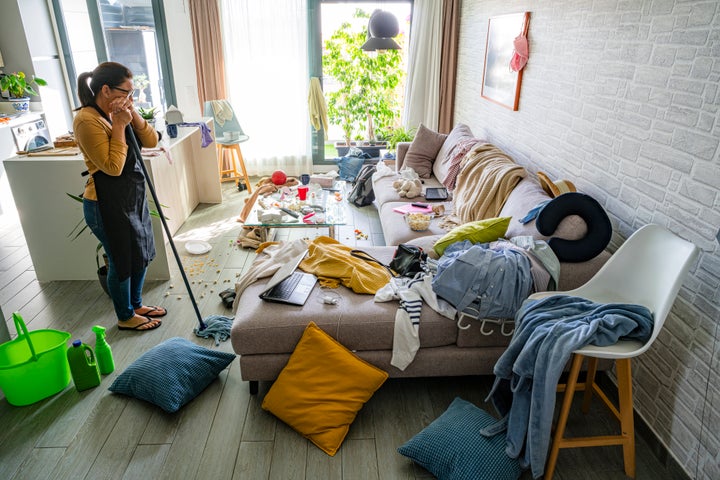
How Bad Is It To Walk Around Barefoot At Home? Doctors’ Answers May Surprise You.

When you walk in the door and kick off your shoes, does it actually hurt the health of your feet to walk around barefoot on hard floors? It’s not the most comfortable feeling, but doctors say there can be some benefits — with a few caveats.

First, let’s start with a definition of barefoot: According to the Cambridge Dictionary — and experts ranging from podiatrists to dermatologists — walking barefoot means having no shoes or socks on.

“Barefoot is skin to ground,” explained licensed clinical podiatrist Dr. Robert Conenello. “Anything else is considered to be shod, as even socks alter the mechanics of movement.”

There are benefits to going barefoot at home.

“I’m a big advocate for going barefoot at home,” Conenello said. “[The practice] increases intrinsic muscular strength within the feet.”

He explained that the primary benefit of walking barefoot is the reinforcement of the muscles in the feet, which tend to weaken “as we age and wear shoes.” These muscles are closely linked to our overall mobility, so their deterioration can contribute to reduced movement as we get older.

“Many of the pathologies that I see in my practice are due to the inability to engage these muscles for normal movements and metabolic efficiency,” Conenello added.

Dermatologist Dr. Hannah Kopelman agreed with that overall assessment, and also mentioned that going barefoot at home can have some unexpected benefits for the skin on your feet.

“Walking barefoot at home … allows your skin to breathe, which can help prevent moisture buildup and reduce the risk of fungal infections like athlete’s foot,” she explained.

Although not directly related to dermatology, walking barefoot at home can also offer a secondary skin-related advantage, one connected to sensory stimulation and overall wellness.

“Feeling the texture of different surfaces underfoot can be grounding and relaxing, almost like a mini reflexology session,” Kopelman said. “For those without underlying skin or foot conditions, this can be a natural way to connect with your environment and promote mindfulness.”

To put it concisely, opting to go shoeless and sockless in your clean home helps fortify your feet, providing long-term rewards while also reducing the risk of skin conditions. Additionally, it offers a kind of natural massage, which can be surprisingly relaxing.

But there are some potential downsides.

One potential downside of walking barefoot indoors is the increased exposure to irritants or allergens on the floor, such as dust, pet dander or cleaning chemicals, as Kopelman pointed out. For individuals with sensitive skin or chronic conditions like contact dermatitis or eczema, this could be a significant concern.

While Conenello acknowledges similar risks — such as stepping on pathogens like fungi in moist environments — he is quick to emphasise that “proper hygiene can help mitigate these risks.”

“Wash your feet frequently, dry them thoroughly and moisturise,” he advised.

Other painful risks associated with going barefoot include the potential for slipping on slick or wet surfaces, or stepping on something hard and sharp that could cause injury. As anyone who has ever stubbed a toe or accidentally stepped on a Lego can attest, such incidents can be excruciating. Kopelman points out that individuals with diabetes or poor circulation are more vulnerable to severe consequences, as “even a minor foot injury can lead to serious health issues.”

It's a good idea to wear something protective on your feet if you're standing to cook for a long period of time.

Vladimir Vladimirov via Getty Images

It’s a good idea to wear something protective on your feet if you’re standing to cook for a long period of time.

Kopelman also noted that, while walking barefoot can help strengthen muscles, the repeated practice of doing so on hard surfaces could potentially lead to foot fatigue or plantar fasciitis, a condition where the tissue connecting the heel bone to the toes becomes inflamed.

“Over time, the lack of cushioning can put stress on the joints, especially in those who already have foot or joint issues,” she explained.

There are times when you should wear shoes or socks.

Though Conenello is generally a proponent of going barefoot, he advises wearing foot support when engaging in tasks that involve standing for extended periods of time — like when cooking.

“When standing for long periods barefoot, there can be excessive load to one area of the foot,” he said. “Even my professional cooks usually benefit from a shoe that allows them to balance weight over their entire foot.”

To illustrate the concept further, he made an analogy. “[Let’s say] that you developed some decent core strength through performing some planks,” he said. “I would not suggest you start adding significant time or weight to your exercise routine prematurely.”

There is, of course, a middle ground: socks.

According to Conenello, “there is nothing wrong with wearing socks.” They’ll simply decrease the benefits associated with being barefoot. “There is now a filter between the ground and the foot,” he said.

Kopelman added that socks can offer “minimal protection from minor abrasions or allergens while still allowing your feet to feel relatively free.” Direct contact with surfaces that may harbor bacteria or irritants is also minimised when wearing socks.

Taking all the pros and cons into account, walking barefoot at home — especially on clean and well-maintained floors — is not only safe, but generally healthy … unless you’re dealing with some sort of skin condition (think psoriasis, eczema or athlete’s foot, for example) that could be exacerbated by the presence of bacteria.

“Likewise, individuals with diabetes, neuropathy or poor circulation should avoid barefoot walking due to the increased risk of unnoticed injuries or infections,” Kopelman said.

Going barefoot selectively seems to be the best option. Moderation is, indeed, key.

Share Button

Dental Hygienist Warns Against The 1 Flossing Mistake We All Make

I saw a tweet (well, post on X) in which someone advised, “only floss the teeth you want to keep”. I reached for the minty spool pretty swiftly after reading that.

But, after viewing a TikTok post from dental hygienist Anna Peterson, I’ve realised my efforts may have been in vain ― turns out, I’ve been flossing my teeth wrong for years.

“Do you know how deep you’re meant to go with floss?” Peterson began the video, quoting a question that had been asked of her in the comments of another TikTok video.

“The only way for me to properly answer is to show it to you,” the dental hygienist revealed.

Spoiler ― it’s further than you think

Tearing off a length of dental tape, Anna Peterson said, “when it comes to flossing, it’s really important that you do go to the right depth, or you won’t be doing it effectively, and you could still have gum disease, even though you’re flossing.”

She then revealed that “the floss needs to go to the gum level and then some more,” sharing a closeup that revealed a thin strip of dental floss sliding into the curve at the top of her tooth (I was surprised, too).

That’s possible, she says, because “the gum is not attached to the actual crown of the tooth, and the crown of the tooth is the bit that we can actually see.”

Instead, the gum attaches to the root of the tooth ― there’s no direct attachment between the front of your gnashers and your gums. I’m still reeling from that.

“This means that bacteria are in between that bit of gum and crown of the tooth that we can’t see,” the dental hygienist said. “And it’s why it’s so important that with the floss, we are going right up and under.”

She then shared that, if your gums are healthy, you can go about 1-3mm in depth. “Keep doing it, even if it’s bleeding,” she advises.

Well, that’s changed how I clean my teeth forever…

Share Button

This Is How Long You’re Only Meant To Sit On The Toilet For

I hope this isn’t too disgusting to share, but honestly, I’ve long maintained that a sneaky five-minute sit-and-scroll on the loo is one of the greatest pleasures in life.

But if colorectal surgeon Karen Zaghiyan, MD, is to be believed, we all need to ensure we’re not sitting on the loo for too long.

In a video, the surgeon shared ten things she’d never do as a colorectal surgeon. Along with not using wet wipes and avoiding colonics, Zaghiyan says she “would never sit [for] more than five minutes on the toilet.” (gulp).

Why?

It’s all to do with strain ― which you should avoid where possible when going number two.

Many of us will be aware that not drinking enough water or eating enough fibre can cause constipation, hard-to-pass stools, and subsequent fissures, haemorrhoids, and more.

But it turns out that simply sitting on the can might take its own toll on your tushy.

“Sitting, especially if you are finished having a bowel movement or waiting to have a bowel movement and you’re just sitting there and scrolling the internet looking at social media, is really bad for your haemorrhoids,” the surgeon shared.

That’s because “there’s a vacuum effect on the toilet that pulls on the hemorrhoidal veins and aggravates them.”

So, your seemingly harmless number two routine could be causing you more bowels more harm than good ― especially if you’re sitting for more than five minutes.

What if I need that much time to get the job done?

“If you have not finished or begun your bowel movement in five minutes, get up, come back another time when you have the urge to go again,” Zaghiyan says.

“But do not sit there a long time ― obviously, this varies and it’s different for people that have gut conditions, have had surgeries, etc. ― I’m not talking about that, I’m talking about the average Joe who’s just sitting there spending half an hour in the toilet. Do not do that,” she finished.

Well, that’s us told…

Share Button

As Flu Cases Rise Rapidly In The UK, These Are The Symptoms To Look Out For

Flu cases are continuing to rise, with some NHS Trusts declaring critical incidents due to “exceptionally high demands” in emergency departments.

The latest surveillance data from UKHSA shows that flu activity continued to increase over the Christmas break, with hospitalisations also increasing.

Data suggests hospitalisations are three times what they were at this point last year and around 5,000 hospital beds in England are currently occupied by flu patients, the Evening Standard reported.

The UKHSA said on 6 Jan that flu is now circulating at “high levels” in the community and figures are expected to rise further as children go back to school and more people return to the workplace.

They urged parents especially to encourage good hygiene habits – such as catching coughs and sneezes in tissues and washing hands regularly.

What are the symptoms?

Typically, flu symptoms come on very quickly. The symptoms are similar in adults and children, however some children may also get ear pain and seem less active than usual.

Symptoms of flu typically include:

  • a fever
  • aches
  • feeling tired
  • dry cough
  • sore throat
  • headache
  • difficulty sleeping
  • loss of appetite
  • diarrhoea
  • stomach ache
  • feeling nauseous
  • vomiting.

What to do if you have flu

The NHS advises staying home and avoiding contact with others if you have a fever or don’t feel well enough to do normal day-to-day activities.

The UKHSA said children can stay in school with symptoms such as a runny nose, sore throat or slight cough if otherwise well and do not have a high temperature – but they should stay home if they’ve got a fever.

There are plenty of things you can do at home to try and recover such as getting lots of rest, keeping warm, taking painkillers to lower a fever and staying hydrated.

When to go to hospital

While most people can recover from flu at home, there are some instances in which you need to seek medical help.

If any of the following apply to you, it’s advised you call NHS 111 or get an urgent GP appointment:

  • you’re worried about your baby’s or child’s symptoms
  • you’re 65 or over
  • you’re pregnant
  • you have a long-term medical condition – for example, diabetes or a condition that affects your heart, lungs, kidneys, brain or nerves
  • you have a weakened immune system – for example, because of chemotherapy or HIV
  • your symptoms do not improve after seven days.

If you experience sudden chest pain, have difficulty breathing or are coughing up a lot of blood you should get someone to drive you to A&E or call 999 for an ambulance.

How to prevent flu

To steer clear of any unwanted nasties this winter, it’s imperative you regularly wash your hands, and catch sneezes and coughs in tissues (binning said tissues straight away).

Some people are also eligible for a free flu vaccine – while it’s late in the season, you can still have one if you call up your GP.

Share Button

If Your Poo Looks Like This, It’s Time To See A Doctor

(This story was originally published in 2019.)

It can be pretty, um, crappy dealing with bowel issues.

Figuring out what’s normal and what isn’t can be a challenge if you don’t know what to look for. Stools come in all shapes and sizes and can shift forms depending on what you’re eating or what is going on in your life at the moment.

Bowel movements change from person to person depending on his or her diet, physical activity, how much water they consume and what medications they take,” said M. Nuri Kalkay, a retired gastroenterologist and health blogger.

Everyone has their own barometer of how often their body is used to going and what a typical stool looks like for them. But what if things change and you see something beyond the norm in the toilet? We chatted with some experts to determine what bowel habits are aren’t so ordinary and might require a trip to the doctor.

Black and/or tarry stools

Jeffery M. Nelson, surgical director at the Center for Inflammatory Bowel and Colorectal Diseases at Baltimore’s Mercy Medical Center, said if your poo is black, “not just dark brown,” you should be concerned.

“This means bleeding is happening from an upper GI source like the esophagus, stomach or small bowel,” he explained.

There are some exceptions to this: If you’re taking iron supplements, for example, your stools may appear dark green to the point where they almost look black. If you’ve taken bismuth medication like Pepto Bismol, that can also make your stools look almost black. It’s always best to check with a doctor if you’re unsure.

Bright red blood in your stools

If you find blood in your stool either by itself on the toilet paper, in the water or streaked in the stools, this can indicate a bleeding source from the anal canal or a low rectal source.

“Things like internal haemorrhoids, anal fissures, rectal polyps or rectal cancers can all do this,” said Nelson. All of these are reasons to see a doctor.

Maroon-coloured stools

If your stools are this colour, then they’re likely also more liquid in consistency and paired with an unpleasant, distinct odour. According to Nelson, this can indicate bleeding from the very end of the small bowel or the colon.

“Diverticulosis and arteriovenous malformations are the classic causes of this presentation,” and a reason to go to the emergency room, he said.

Pale, oily and especially foul-smelling stools

“This finding is called steatorrhea and is due to excess fat in the stool,” explained Chris Carrubba, an internal medicine doctor in Jacksonville, Florida.

Carrubba said steatorrhea is often seen with malabsorption syndromes, pancreatic insufficiency and biliary disease. “The presence of steatorrhea indicates difficulty absorbing fat and these patients are at risk of developing deficiencies in fat soluble vitamins,” like vitamins A, D, E and K, he said.

Stools that are different than your typical bowel movements

Your body is a creature of habit in a lot of ways. For example, if you consistently have smooth, long sausage-like stools and suddenly they change to a completely different size, you should speak to your doctor.

“Pencil thin versus log-like routinely could mean that an inflammatory condition may be present such as Crohn’s or infection,” said Karen Soika, a general surgeon in Greenwich, Connecticut.

If the consistency of your stools has changed to watery or diarrhoea, this could signify irritable bowel syndrome, an infectious cause or an inflammatory bowel disease such as Ulcerative colitis.

IBS or infections can also increase constipation.

Watery diarrhoea after a camping trip

This can be due to giardia, “a protozoal organism that is found in freshwater and the reason that you should always boil and sanitise water from mountain streams or lakes,” Carrubba said.

Ingestion of this organism can result in giardiasis, which leads to abdominal pain and persistent, watery diarrhoea. The issue can be treated with antimicrobials. In addition to drinking contaminated water, you can also be exposed to giardia by eating uncooked vegetables or fruits that were rinsed in contaminated water and by improperly washing hands after coming into contact with faeces or an infected human or animal.

Mucus in the stool

This is usually due to inflammation of the intestines, said Peyton Berookim, a gastroenterologist in Los Angeles. He noted that the condition can be seen in inflammatory bowel diseases like ulcerative colitis or Crohn’s. It can also be due to inflammation caused by a bacterial infection or IBS.

“Mucus associated with blood and or abdominal pain should not be ignored and requires medical attention,” he explained.

Hard or infrequent stools

This signifies constipation and is usually caused by a lack of fibre in your diet, as well as low water intake. However, this issue may also be caused by medications, blockages in the intestine, or in more rare cases, colon cancer.

“Constipation can be treated in many ways and I always begin with increasing fibre and water intake. The recommended daily intake of fibre is at least 25 grams and the amount of water needed varies from person to person,” said Jack Braha, a gastroenterologist at Brooklyn Gastroenterology and Endoscopy Associates.

Laxatives are available over-the-counter to help with this issue and work by either increasing the motility in your gut or increasing the amount of water delivered to the colon, Braha said.

“But for symptoms that do not rapidly improve or begin after the age of 50, it is important to seek advice from a gastroenterologist in order to determine if further testing like a colonoscopy is needed to check for more serious issues such as an intestinal obstruction or colon cancer,” he said.

Loose, watery or frequent stools

“Diarrhoea is common after eating bad food or from an infection and should not last more than a week in most instances,” Braha explained.

Loose stools may be a cause for concern if the diarrhoea lasts longer than two weeks or when it is in conjunction with bleeding, weight loss or symptoms that keep you awake at night.

“When diarrhoea is not from an infectious source, we look for other common causes like lactose intolerance, irritable bowel syndrome, inflammatory bowel disease or celiac disease,” Braha said. “Gastroenterologists can usually find the cause of diarrhoea by checking certain blood tests, stool tests and performing a colonoscopy.”

Generally, it’s a good idea to make an appointment with your doctor if you’re concerned about your bowel movements at all. Your poo may be trying to tell you something.

Share Button

6 Seemingly Harmless Habits That May Increase Your Risk Of Dementia

Dementia is the loss of memory, language, problem-solving and other abilities that require thinking. It is often caused by Alzheimer’s disease, and mainly affects those 65 and older. Unfortunately, dementia can be severe enough that it interferes with daily life, and those who have dementia often require additional care.

“Dementia is a group of conditions characterised by impairment of at least two brain functions, such as judgment and memory loss,” explained Blair Steel, a psychologist at Carrara Treatment, Wellness & Spa. “Symptoms of dementia include forgetfulness, limited social skills and impairment in thinking that interferes with daily functioning.”

So what causes dementia? Your age, family history, race and ethnicity, heart health and history of a traumatic brain injury are all factors that increase your risk of developing the condition. But another big category is lifestyle habits. So while you can’t control your genetics, there are a few seemingly harmless behaviours you may be doing that can increase your risk. Read on to learn more about them below:

Not moving your body enough or sitting for too long

Exercising ― aerobic exercise, especially ― can help reduce cognitive impairment and dementia risk. Long-term, regular exercise can affect your brain and your overall health in a positive way, especially if you’re nearing 60. Getting your body moving daily is something you can do to decrease your risk of dementia.

Steel said “being inactive does a number on the brain.” Just like other muscles, a good thing to remember is, “If you don’t use it, you lose it.”

Not socialising enough

Social health plays a role in the development of dementia; an active and socially integrated lifestyle can protect against the disease. Stimulating the brain with social interaction is important for everyone, especially as they age. Though, in the age of social media, socialising has become a broader term.

“We spend a lot of hours on social media, however this likely does not stimulate the brain’s experience of connection as much as socialising in person,” Steel explained.

Poor social health can overstimulate the body’s stress response through increased levels of the stress hormone cortisol, raise blood pressure and decrease blood flow to vital organs amongst other health issues.

Getting inadequate sleep

Sleep disturbances and dementia are two common and significant health problems in older adults. (Let’s face it, sleep tends to be put on the back burner.) Whether due to family obligations, work or staying up late on your phone or watching TV, there’s always something in the way of adequate sleep.

Unfortunately, sleep patterns in earlier life may contribute to later problems. If you’re having trouble sleeping, or not sleeping at all, sleep deprivation could increase your dementia risk.

“Avoid screens and light after a certain hour and try to not reach for your phone if your sleep is interrupted,” Steel suggested. Try unplugging at least 30 minutes before bed.

Not getting enough sleep can have a huge impact on your brain health.

jeffbergen via Getty Images

Not getting enough sleep can have a huge impact on your brain health.

Being chronically stressed

According to the Alzheimer’s Society, stress is linked to dementia because when you’re stressed and cortisol is released, it can create problems with your memory. The negative effects of stress, particularly chronic stress, on the brain can lead to cognitive decline due to prolonged elevations of cortisol — which plays an important role in how your body responds to stress.

Working to reduce your stress through healthy habits can be key to mitigating this risk. Exercise, creative activities or hobbies, spending time with loved ones, meditation, watching a good show or reading a good book can all help you relax.

Additionally, “try to be flexible with your reactions and avoid the ‘my way or the highway’ mentality, which can be common in older adults,” Steel said.

Consuming excessive amounts of alcohol

The Alzheimer’s Society also says there’s a specific type of alcohol-related dementia that is considered alcohol-related brain damage (ARBD). This is due to the damage of the brain caused by drinking too much alcohol on a regular basis, usually over many years.

Those with this type of dementia may have issues like cooking a meal, remembering things, thinking things through, and even struggle with more complex tasks like managing finances.

Eating an unbalanced diet

Research shows a diet high in ultra-processed foods can increase dementia risk in adults. While no one’s diet is perfect, ensuring that the majority of the time you are sticking with well-balanced, healthy meals can be extremely beneficial.

Try eating leafy greens, berries, whole grains, beans, nuts, fish, and healthy fats like olive oil while limiting red meat, sweets, cheese, butter, and fast and fried food. These are healthy options that optimise your brain health.

You can lower your risk of dementia by altering the habits mentioned above, but you should also speak to a doctor if you’re struggling with your cognition.

“If you or a loved one is experiencing signs of dementia, it is important to speak to a doctor and get an assessment,” Steel said. Your primary care physician will be able to assess you, and if needed, refer you to a specialist.

Share Button

Keep Butter Out Of The Fridge? We’ve Got Grim News For You

Despite what I’ll tactfully call conflicting opinions in my household, it turns out that yes, butter is almost always safe to eat after being left out on the counter.

Not only is room-temperature butter better for spreading and creaming sugar while baking, it turns out that you can leave properly stored butter out for a surprisingly long time.

“Butter is safe to eat after being out at room temperature,” Bri Bell, a registered dietitian, and food safety expert, told Allrecipes.

“One reason it doesn’t go bad as quickly as other dairy products at room temperature is because it’s low in carbohydrates and proteins, which are mould and bacteria’s preferred food sources.“

But does safe mean tasty? Is there an upper limit to how long you can leave butter out on the side? And if so, what is it?

It’ll be safe for ages ― but delicious for as little as a couple of hours

Part of it has to do with storage. On one, more extreme end, bog butter ― butter buried under a bog to preserve it for longer ― has been found to last for literally hundreds of years without posing a health threat to anyone who eats it.

But unless you’ve got an airtight, subterranean cubby-hole of your own, your best bet is probably a butter dish or something similarly airtight that won’t absorb smells from your cooking. This should keep it safe to eat for ages, provided your kitchen isn’t too hot.

However, the question of safety is different to the question of flavour. While butter might be safe to eat after a couple of days on your countertops, its taste might be impacted by leaving the fridge.

Tonja Engen, Culinary Content Specialist for butter experts Land O’Lakes, told Allrecipes “Do not leave butter at room temperature for more than 4 hours. Always return any unused butter to the refrigerator and be aware that butter left outside refrigeration may become darker in colour and have the flavour affected.”

If you need to soften butter for baking or spreading, she says that “you can cut the butter into small chunks and let stand at room temperature for about 15 minutes.”

Or grate frozen butter for a quick-fix for baking, she adds.

The United States Department of Agriculture’s recommendations say that “Butter and margarine are safe at room temperature. However, if butter is left out at room temperature for several days, the flavour can turn rancid so it’s best to leave out whatever you can use within a day or two.”

In other words, while your butter is safe out on the counters for a remarkably long time, its creamy flavour might degrade in a matter of hours.

Honestly, this is the most clear-cut case of “ignorance is bliss” I’ve ever seen…

Share Button

Noticing This While Brushing Your Teeth Could Be A Sign Of Dementia

In his new book How To Prevent Dementia, Dr. Richard Restak (neurologist, neuropsychiatrist, author, and professor) shared that some signs of dementia can show up first in everyday tasks ― including brushing your teeth.

“Four impairments underlie the outer expressions and inner experiences of the Alzheimer patient,” the doctor shared in his book. He called these the “four As.”

One sign is amnesia, he says ― simply forgetting things. Then, there’s aphasia, which involves not being able to understand, find, or use the right words.

“Neither amnesia nor aphasia in their milder forms is always abnormal,” Restak says. But “the third and fourth of the four A’s are always a sign something is amiss,” he adds.

One of these is agnosia, or “an impairment of correctly understanding information provided by the senses of seeing, hearing, touching, smelling, and tasting.” For instance, someone might not be able to recognise a beloved family member by sight.

The final one, apraxia, refers to an inability to perform “purposeful and highly practiced actions despite normal muscle strength and tone.”

Brushing your teeth is a good example of where apraxia may show up

It’s not necessarily about forgetting how to do the task, nor is it about not being strong enough to follow the steps, Restak says. Instead, the issue lies in tying all the actions and thoughts together correctly and in the right order.

“A person with apraxia may be able to recognise and even name a toothbrush and toothpaste but may be unable to carry out the act (praxis) of squeezing the toothpaste onto the toothbrush.”

Or they could struggle to put the brush in their mouth and scrub their teeth. “All the muscle components are present but can’t be coordinated,” Restak shared.

Tooth decay has been linked to increased dementia risk, though Dr. Restak doesn’t suggest apraxia is the cause of this in his book.

Other forms of apraxia can cause people to fall, speak, and, for those in the later stages of Alzheimer’s, dress and bathe themselves, the neurologist says.

“Many, if not all, expressions of Alzheimer’s can be explained by reference to the four A’s,” Restak stated in How To Prevent Dementia.

What if I suspect dementia?

If you think you or someone you love could have the condition, the NHS advises you to see a GP as soon as possible.

If you’re supporting a loved one, “You may like to suggest you go with your friend or relative to see a GP so you can support them. You’ll also be able to help them recall what has been discussed,” they say.

“A diagnosis of dementia can also help people with these symptoms, and their families and friends, make plans so they’re prepared for the future,” they add.

How To Prevent Dementia is available from Penguin

Share Button

The Secret To Sparkling Baking Trays Is Hiding In Your Food Cupboard

I don’t know what it is about baking trays. Maybe it’s the fact that we’ve designed them for a lifetime of inferno-like suffering in our ovens – but no matter how carefully I clean mine, they seem to get incredibly filthy in a matter of months ― almost as if they’re doing it on purpose.

Forget sponges. Forget dish brushes. Once my baking trays have achieved the crusted-on hue of shame, it feels like nothing will help to clean them.

So you can imagine how intrigued I was to hear from Tasting Table that the humble spud could help to remove the rust from my trays.

All I have to do, they advise, is halve a raw spud, dip the potato in washing-up liquid and salt or baking soda, and get to scrubbing. I was sceptical too ― but having tried it, I’ll never go back.

I know! It works because potatoes are high in something called oxalic acid, which is sometimes sold in its pure form as a rust remover.

When this comes into contact with rust, it creates a substance called iron oxalate, which can easily be washed away with water and soap.

The addition of washing-up liquid will help to cut through grease, while salt and baking powder will exfoliate the surface of your trays.

Sweet potatoes are higher in rust-reducing oxalic acid than other kinds, Tasting Table points out.

Yep! I’ve tried wrapping my entire oven (baking trays included) in clingfilm overnight after applying a baking soda paste before ― this worked brilliantly.

You can also try submerging your baking trays in hot, soapy water for a minimum of half an hour before scrubbing away the grime. This works, but requires a lot of sink space.

Baking soda and boiling water can also do the trick, Oven Pride suggests (though keep your hands safe during this method).

And of course, you can’t go too far wrong with a wire scourer and good ol’ elbow grease…

Share Button

The 1 Place You Should Go Every Time You Visit A New City

Many travellers eagerly research the best restaurants or food tours before heading somewhere new, but you don’t necessarily need to make a reservation or spend a lot of money to experience a truly local food scene.

When I first started traveling, I was on a strict budget and didn’t have money for gourmet restaurants. I sustained myself largely by shopping in ordinary supermarkets. They were always cheap, and I knew I would easily find an array of local foods in one place.

Going to supermarkets started as a money-saving measure, but I now realise how much those shopping excursions enriched my travels.

My budget these days is a little more generous, but I still find myself seeking out local supermarkets wherever I travel. It’s the one place I know I will brush shoulders with locals, even in towns overrun with tourists. Often, I will ask my fellow shoppers or check-out clerks for advice about what to buy or where to go in their town.

Supermarkets are also a great place to get a good look at local culture. I can usually tell at a glance if the local culture values fresh fruits and vegetables over highly processed foods, how people snack and what they drink. Now that I frequently travel with my kids, we always discover new candies and treats at supermarkets. (And we usually bring some home.)

I’m not alone in thinking a visit to a supermarket can be a highlight of any trip. We spoke with several travel experts who suggest you do the same.

A visit to a supermarket is an anthropological experience.

Michael Soud, the co-founder of Travel Insighter, has been to 106 countries. He makes it a point to visit supermarkets wherever he goes. “A visit to a supermarket is an anthropological experience every single time,” he said. “There is an infinite number of products that can be on the shelves of a supermarket, so the choice the supermarket makes is the best insight into what a local community values.” He always checks out the frozen food aisle because “invariably, if something has been turned into a frozen food, it’s a local staple,” he said.

Supermarkets “are more than just shopping spaces. They’re cultural hubs. They offer insights into local life and are fun,” Abdellah Bouraihan, an Intrepid Tour Leader in Morocco who regularly takes his tour groups to local supermarkets, said. Bouraihan thinks these visits are an important part of getting to know the local culture. He explained going to supermarkets provides travellers with “an authentic look into the daily lives of locals and allows them to see how people shop, what products are popular, and the cost of everyday items.” He added it’s also a great place to buy snacks, spices and goods you won’t find in typical tourist shops catering to foreigners.

Bouraihan also thinks that supermarkets are a great look into how culinary preferences have evolved. “The types of bread, spices and olives in Moroccan supermarkets not only showcase the country’s culinary preferences, they also show how modernity blends with tradition,” Bouraihan said. That’s because these traditional items are often displayed alongside international foods that have found their way to Morocco, he explained. Plus, he likes that going to a supermarket is a quick, inexpensive way to expose travellers to a variety of local specialties at once, especially if they are only in the country for a short time. In Morocco, tourists can try traditional cookies and locally made almond milk in one visit, he said.

Supermarkets give insight into demographic trends.

My hometown of Washington, D.C., is best known for its national monuments and Smithsonian museums. It’s easy for visitors to overlook that D.C. is home to the largest Ethiopian population outside of Ethiopia. However, walk into almost any D.C.-area supermarket, and you will likely find Ethiopian foods and spices, such as Injera crisps, a clear sign of the significant Ethiopian presence in the area.

Sound has noticed similar trends in supermarkets elsewhere. For example, on a trip to western Sydney, Australia, he noticed that supermarkets increased the size and range of their halal sections to accommodate the dietary preferences of newly arrived immigrants from Afghanistan.

Supermarket finds can transform your cooking.

Many professional chefs, including Amanda K. Lindquist, executive chef at Wailea Beach Resort and the Marriott Culinary Council Lead in Maui, make it a point to shop at supermarkets when she travels. “It has truly enriched my cooking style as well as broadened my horizons,” she said. Lindquist eats at plenty of restaurants when she travels but says that going to supermarkets allows her to understand regional cuisine better and provides additional inspiration for her own cooking. She’s also discovered spices at supermarkets abroad that she hadn’t come across before. This has enhanced her cooking at home and work.

Lindquist especially enjoys buying local salts and olive oil. “Each salt has a slightly different taste and texture,” depending on the region, she said. Lindquist discovered a great salt cured with red wine from the Basque region of Spain, which is known for its wines. Similarly, the taste of olives oils Lindquist has found in supermarkets varies “depending on where the olives are grown, the climate, the soil, the method,” she said. By venturing into local supermarkets, Lindquist has found olive oils with sweet, vanilla flavours and rich flavours she describes as “almost like meat.”

Visiting a supermarket can even create memories that last. While travellers are often exposed to new flavours at restaurants, supermarkets are where they can delve into the raw ingredients used to create their favourite dishes.

Bouraihan says that former tour group members often tell him they try to recreate Moroccan dishes at home, using the spices or ingredients they bought at a supermarket during their trip. Favourites include mint tea and experimenting with tagine recipes. “It becomes a way for them to stay connected to the culture and memories of their trip,” he said.

In her kitchen, Lindquist has several items she’s gathered from supermarkets during her travels, saying they “take me back to the amazing places that I have traveled to and the people that I met.”

Share Button