One more clue to the Moon’s origin

Humankind has maintained an enduring fascination with the Moon. It was not until Galileo’s time, however, that scientists really began study it. Over the course of nearly five centuries, researchers put forward numerous, much debated theories as to how the Moon was formed. Now, geochemists, cosmochemists, and petrologists at ETH Zurich shed new light on the Moon’s origin story. In a study just published in the journal, Science Advances, the research team reports findings that show that the Moon inherited the indigenous noble gases of helium and neon from Earth’s mantle. The discovery adds to the already strong constraints on the currently favoured “Giant Impact” theory that hypothesizes the Moon was formed by a massive collision between Earth and another celestial body.

Meteorites from the Moon to Antarctica

During her doctoral research at ETH Zurich, Patrizia Will analysed six samples of lunar meteorites from an Antarctic collection, obtained from NASA. The meteorites consist of basalt rock that formed when magma welled up from the interior of the Moon and cooled quickly. They remained covered by additional basalt layers after their formation, which protected the rock from cosmic rays and, particularly, the solar wind. The cooling process resulted in the formation of lunar glass particles amongst the other minerals found in magma. Will and the team discovered that the glass particles retain the chemical fingerprints (isotopic signatures) of the solar gases: helium and neon from the Moon’s interior. Their findings strongly support that the Moon inherited noble gases indigenous to the Earth. “Finding solar gases, for the first time, in basaltic materials from the Moon that are unrelated to any exposure on the lunar surface was such an exciting result,” says Will.

Without the protection of an atmosphere, asteroids continually pelt the Moon’s surface. It likely took a high-energy impact to eject the meteorites from the middle layers of the lava flow similar to the vast plains known as the Lunar Mare. Eventually the rock fragments made their way to Earth in the form of meteorites. Many of these meteorite samples are picked up in the deserts of North Africa or in, in this case, the “cold desert” of Antarctica where they are easier to spot in the landscape.

Grateful Dead lyrics inspire lab instrument

In the Noble Gas Laboratory at ETH Zurich resides a state-of-the-art noble gas mass spectrometer named, “Tom Dooley” — sung about in the Grateful Dead tune by the same name. The instrument got its name, when earlier researchers, at one point, suspended the highly sensitive equipment from the ceiling of the lab to avoid interference from the vibrations of everyday life. Using the Tom Dooley instrument, the research team was able to measure sub-millimetre glass particles from the meteorites and rule out solar wind as the source of the detected gases. The helium and neon that they detected were in a much higher abundance than expected.

The Tom Dooley is so sensitive that it is, in fact, the only instrument in the world capable of detecting such minimal concentrations of helium and neon. It was used to detect these noble gases in the 7 billion years old grains in the Murchison meteorite — the oldest known solid matter to-date.

Searching for the origins of life

Knowing where to look inside NASA’s vast collection of some 70,000 approved meteorites represents a major step forward. “I am strongly convinced that there will be a race to study heavy noble gases and isotopes in meteoritic materials,” says ETH Zurich Professor Henner Busemann, one of the world’s leading scientists in the field of extra-terrestrial noble gas geochemistry. He anticipates that soon researchers will be looking for noble gases such as xenon and krypton which are more challenging to identify. They will also be searching for other volatile elements such as hydrogen or halogens in the lunar meteorites.

Busemann comments, “While such gases are not necessary for life, it would be interesting to know how some of these noble gases survived the brutal and violent formation of the moon. Such knowledge might help scientists in geochemistry and geophysics to create new models that show more generally how such most volatile elements can survive planet formation, in our solar system and beyond.”

Story Source:

Materials provided by ETH Zurich. Original written by Marianne Lucien. Note: Content may be edited for style and length.


Share Button

Stillbirths Increased Last Year. Why Is Nobody Talking About It?

After years of progress, the number of stillbirths increased across England and Wales in 2021 – but it’s not the story you’ll read about elsewhere.

When the new ONS data was released this week, most newspapers focused on a jolly little fact: last year, more babies were born out of wedlock than among married couples for the first time since records began.

But the figures also show there were 2,597 stillbirths in 2021, an increase of 226 from 2020.

These statistics were barely a footnote in most national newspapers, something the baby loss charity, Tommy’s, was disappointed by.

Kath Abrahams, chief executive at the charity says the latest figures are “unacceptable”. She believes they reflect the “direct and indirect” impact Covid-19 had on pregnant women and people in 2021.

“Indirectly, the pandemic had a significant impact on maternity services, putting them under greater pressure,” she tells HuffPost UK. “There were higher rates of stillbirth in January 2021, which coincided with the peak of the second wave of Covid-19.”

Throughout the pandemic, HuffPost UK reported on the disproportionate impact on maternity services, with pregnant women saying they felt “forgotten” as lockdown restrictions eased. While pubs reopened, mums-to-be reported having routine antenatal appointments cancelled or conducted over the phone.

Though there’s no research to link these practices directly to stillbirth rates, the individual stories paint a picture of incomplete care, at a time of high-anxiety for pregnant women.

Pregnant women also faced misinformation regarding vaccine safety, with some even mistakingly told not to take the jab at vaccine centres. Data from October 2021 found just 15% of pregnant women were fully vaccinated amidst the fear and confusion.

Because of this, Tommy’s says Covid-19 infection is likely to have had a direct impact on the 2021 stillbirth rate.

“Our research has shown that getting Covid-19 during pregnancy could cause problems in the placenta, increasing the risk of pregnancy complications, which is why it’s important pregnant women and people get vaccinated if they can,” Abrahams says.

“Rates of stillbirth had been following a consistent decline over recent years, and we believe 2021’s increase is unacceptable. It highlights exactly why we need to increase efforts to meet NHS England’s aim of reducing stillbirth rates by 50% by 2025.”

The data also uncovered that stillbirth rates differed across the country last year, with more deprived areas, including the North East and Yorkshire, experiencing higher rates than the most affluent regions.

“It is unacceptable that who you are and where you live continues to have an impact on whether your baby is born healthy – and it’s vital that our government and health services continue to focus on tackling these inequalities,” Abrahams adds.

“Action to reduce stillbirth must be a national priority as health services recover following the Covid-19 pandemic, and more work must be done to understand the reasons for the increase in stillbirths and help improve care for pregnant women and people at risk.”

Commenting on the latest figures, Professor Asma Khalil, spokesperson for the Royal College of Obstetricians and Gynaecologists, said every stillbirth “is a tragedy for the families affected as well as the maternity staff involved”.

“Stillbirth rates are still higher in the UK than many other high-income countries and vary widely across the UK,” she said. “We continue to advise women who have concerns or worries about their or their baby’s health – including the baby’s movements – to seek medical advice from their midwife or hospital as soon as possible. We also advise pregnant women to ensure they are fully vaccinated against Covid as this can increase the risk of stillbirth.”

HuffPost UK contacted the Department of Health and Social Care about the increased stillbirth rates, sharing the concerns raised by Tommy’s about stretched maternity services.

In response, a DHSC spokesperson told us: “We are committed to making the NHS the best place in the world to give birth through personalised, high-quality support.

“Since 2010, the rate of stillbirths has reduced by 20.9%, the rate of neonatal mortality for babies born over 24 weeks has reduced by 36% and maternal mortality has reduced by 17%.

“The NHS is investing £127m into the maternity system in the next year to support the workforce and improve neonatal care – which is on top of £95m to recruit 1,200 more midwives and 100 more consultant obstetricians.”

Share Button

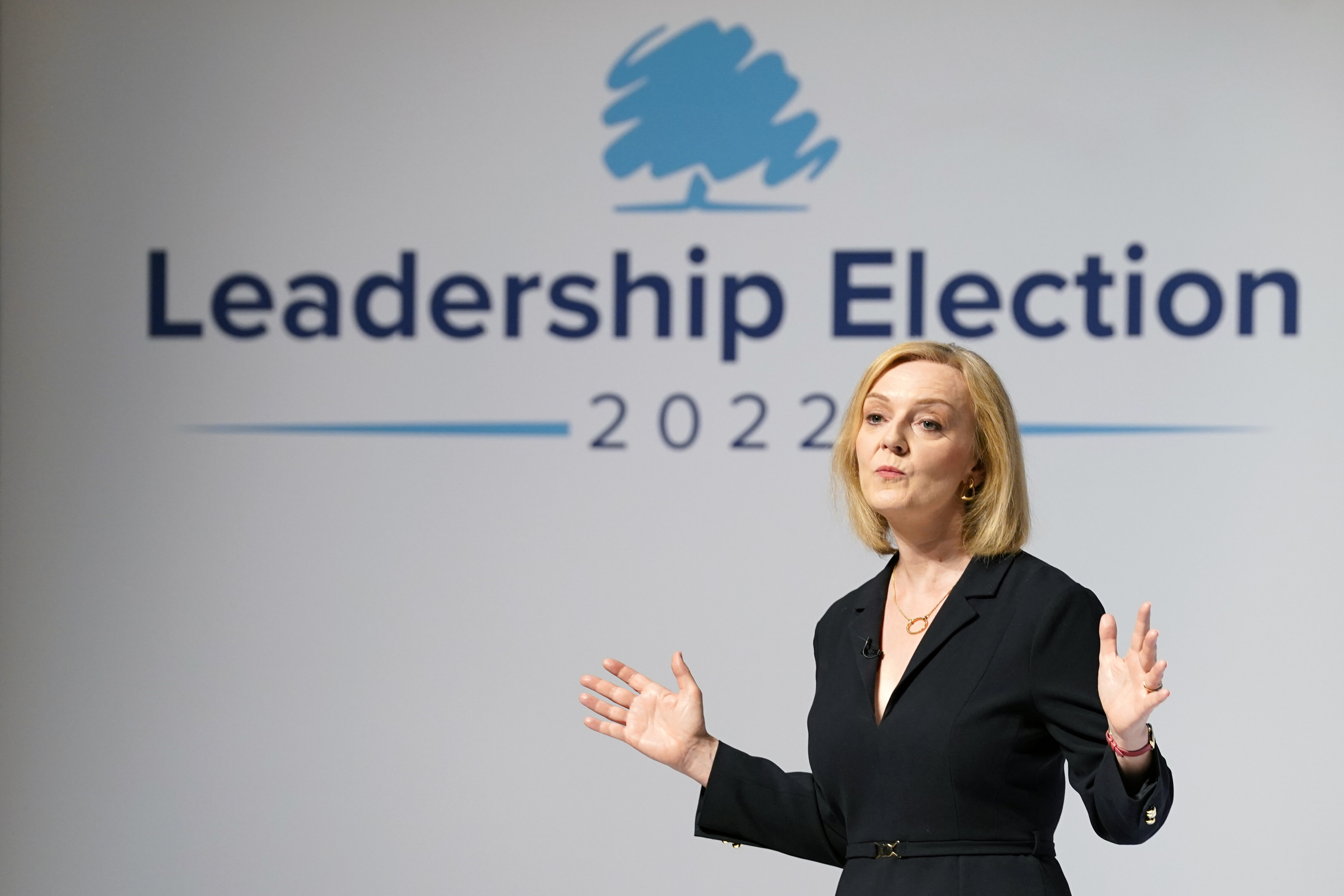
Liz Truss Accused Of Cost Of Living U-Turn After Pledging To ‘Do All I Can’ To Help Struggling Families

Liz Truss has been accused of “a major U-turn” after pledging to “do all that I can to help struggling households” cope with the cost of living crisis.

The Tory leadership favourite has been under pressure since the weekend, when she told the Financial Times: “The way I would do things is in a Conservative way of lowering the tax burden, not giving out handouts.”

Since then, experts have predicted that the energy price cap will rise to more than £4,200 a year, threatening millions of people with poverty.

Both Truss and Sunak have also been urged to meet with Boris Johnson to agree an emergency cost of living support package – something which has been ruled out by the government.

In an apparent change of tack from her previous stance, Truss said today: “As a Conservative I am clear that our first port of call should always be to let people keep more of their own money.

“I understand how difficult the rising cost of living is making life for many, and if elected I will do all that I canto help struggling households.

“As it stands we are hurtling towards a recession. If we don’t get our economy growing we won’t be able to help anyone.

“That’s why I have a bold plan to cut taxes, for individuals and businesses, to turbocharge our economy, grow the size of the pie and increase prosperity for everyone.”

A spokesperson for Sunak’s campaign said: “This is a major u-turn on the biggest issue currently facing the country.

“It’s all very well offering empty words about ‘doing all you can’. But there aren’t lots of different ways to act on this. Taking action means providing direct support, which Truss had previously dismissed as ‘handouts’.

“Twice now, Truss has made a serious moral and political misjudgement on a policy affecting millions of people, after last week reversing plans to cut the pay of teachers and the armed forces outside London. Mistakes like this in Government would cost the Conservative Party the next General Election.”

A spokesperson for Truss said: “Rishi Sunak wouldn’t know how people benefit from a tax cut because he has never cut a tax in his life. People didn’t vote for the Conservative Party to be subjected to old fashioned Gordon Brown style politics of envy.

“You cannot tax your way to growth and Liz’s agenda is to build a high wage, high growth, low tax economy that supports people.

“Liz believes in people keeping more of their own money, not Rishi’s socialist tax and spend which will lead us to recession.”

Share Button

‘I’ve been let down – I shouldn’t have stage-4 cancer’

Caroline Boulton says there have been delays at every stage of her treatment for breast cancer.

Share Button

UK heatwave: Four-day extreme heat warning for parts of UK

The Met Office says temperatures will be below July’s record highs – but this heatwave will last longer.

Share Button

There Are 3 Types Of Female Orgasm, According To A Male Professor

The big ‘O’, the climax also known as an orgasm. Sure you can have fun without one, but, let’s be honest, ut’s the part of sex we all want to experience, which is why we can’t stop talking about how we can get one, especially as women.

The female orgasm has been studied and researched for centuries, but now there’s new research that suggests there are actually three different types.

The study from Charles University in Prague, found that when women have an orgasm, their pelvic floor muscles tend to move in one of three patterns: a wave, a volcano, or an avalanche.

A ‘wave’ is everything you’d expect to feel – waves of tension and release of your pelvic floor muscles.

A ‘volcano’ feels like more of an explosion towards the end of the orgasm, as your pelvic floor explodes into a swift tension and release.

An ‘avalanche’ involves higher pelvic floor tensions in the build up, which drop when you orgasm.

James Pfaus, professor of neuroscience at Charles University in Prague led the study, which invited 54 women to use the ‘Lioness’, a Bluetooth-connected vibrator, to reach orgasm.

Volunteers were asked to masturbate at home using the device over a period of a few days. The vibrator was programmed to measure the force of their pelvic floor contractions via two sensors – which researchers analysed remotely to work out the rhythm and pattern of these movements in the participants.

‘Wave’ orgasms were most common – 26 out of 54 women experienced this type, whilst 17 had ‘avalanche’ orgasms and 11 had a ‘volcano’ orgasm.

Professor Pfaus said: “We are doing a long-term study of women using the Lioness to see how these different patterns are experienced subjectively as orgasms, as levels of pleasure, [and] where the stimulation that induces them largely comes from.”

Many women may have experienced more than one orgasm pattern, while others might say that even one orgasm is better than none, especially with recent studies pointing to a major gender-based orgasm gap.

For every sexual encounter, men orgasm on average 87% of the time, while women experience them 65%.

Orgasm rates also vary depending on your sexuality, with heterosexual men orgasming most regularly, followed by gay men, bisexual men, lesbians, bisexual women – and finally, at the bottom of the list, heterosexual women.

Lisa Williams, co-author of More Orgasms Please: Why Female Pleasure Matters, previously told HuffPost UK that this orgasm gap isn’t down to anatomy, as women are able to orgasm as quickly as men when they masturbate.

“It can take as little as four minutes for a woman, which is the same as men, but there is a perception it’s going to take about 40 minutes during sex,” she said.

No one should feel compelled to have an orgasm – many people have a fulfilling experience without reaching this point – and some people are anorgasmic (or unable to orgasm).

But Williams encourages women to become more familiar with their bodies and what they like. Then, when they get into a sexual situation with a partner, they can be less afraid to say what they do and don’t enjoy.

If this new research isn’t an excuse to start exploring, we don’t know what is. So, wave, volcano or avalanche? Which one will you be having next?

Share Button

Urgent polio boosters for London children

Nearly a million children, aged one to nine, will be offered a jab in the next month after virus found in sewage.

Share Button

Do you have a living will?

Reprint Permissions

A single copy of these materials may be reprinted for noncommercial personal use only. “Mayo,” “Mayo Clinic,” “MayoClinic.org,” “Mayo Clinic Healthy Living,” and the triple-shield Mayo Clinic logo are trademarks of Mayo Foundation for Medical Education and Research.

Share Button

Do ‘bouncing universes’ have a beginning?

In trying to understand the nature of the cosmos, some theorists propose that the universe expands and contracts in endless cycles.

Because this behavior is hypothesized to be perpetual, the universe should have no beginning and no end — only eternal cycles of growing and shrinking that extend forever into the future, and forever into the past.

It’s an appealing concept in part because it removes the need for a state called a singularity that corresponds to the “beginning of time” in other models.

But a new study by University at Buffalo physicists Will Kinney and Nina Stein highlights one way that cyclic or “bouncing” cosmologies fall flat.

The research shows that the latest version of this theory — a cyclic model that resolves long-standing concerns about entropy — introduces a new problem (or rather, returns to an old one). Cyclic universes described under this model must have a beginning, Kinney and Stein conclude.

“People proposed bouncing universes to make the universe infinite into the past, but what we show is that one of the newest types of these models doesn’t work,” says Kinney, PhD, professor of physics in the UB College of Arts and Sciences. “In this new type of model, which addresses problems with entropy, even if the universe has cycles, it still has to have a beginning.”

“There are a lot of reasons to be curious about the early universe, but I think my favorite is the natural human tendency to want to know what came before,” says Stein, a UB PhD student in physics, regarding the importance of such research. “Across cultures and histories, humans have told stories about creation, about ‘in the beginning.’ We always want to know where we came from.”

The study, funded by the National Science Foundation, was published in June in the Journal of Cosmology and Astroparticle Physics. The paper is titled, “Cyclic cosmology and geodesic completeness.”

If the universe had a beginning, how did it begin?

Kinney is author of a 2022 book titled, “An Infinity of Worlds,” which tells the epic story of cosmic inflation, a competing theory about the origins of the universe. Under this model, the early universe was characterized by a period of rapid expansion from a singularity, followed by the superhot Big Bang, which forged the primordial elements that went on to make galaxies and stars and planets, and the atoms in our bodies and all other living things.

Cosmic inflation is a leading theory. But it focuses on what happens during and after the age of rapid expansion. It doesn’t explain what came before that, and it doesn’t describe the conditions of the initial singularity.

A truly cyclic universe would circumvent these problems: If the universe is engaged in endless cycles of expansion and contraction, it need not have a beginning at all. But as Kinney notes, these bouncing models raise their own array of untenable questions.

“Unfortunately, it’s been known for almost 100 years that these cyclic models don’t work because disorder, or entropy, builds up in the universe over time, so each cycle is different from the last one. It’s not truly cyclic,” Kinney says. “A recent cyclic model gets around this entropy build-up problem by proposing that the universe expands a whole bunch with each cycle, diluting the entropy. You stretch everything out to get rid of cosmic structures such as black holes, which returns the universe to its original homogenous state before another bounce begins.”

“But,” he adds, “long story short, we showed that in solving the entropy problem, you create a situation where the universe had to have a beginning. Our proof shows in general that any cyclic model which removes entropy by expansion must have a beginning.”

“The idea that there was a point in time before which there was nothing, no time, bothers us, and we want to know what there was before that — scientists included,” Stein says. “But as far as we can tell, in models that address entropy, there must have been a ‘beginning.’ There is a point for which there is no answer to the question, ‘What came before that?’ “

And, of course, there are further research questions, Kinney says: “Our proof does not apply to a cyclic model proposed by Roger Penrose, in which the universe expands infinitely in each cycle. We’re working on that one.”

Share Button

CT scanner captures entire woolly mammoth tusk

For the first time, researchers successfully captured CT images of an entire woolly mammoth tusk, according to a new “Images in Radiology” article published in the journal Radiology — the premier journal of the Radiological Society of North America (RSNA). Researchers were able to do a full scan of the tusk in its entirety — or in toto — using a newer clinical CT scanner. The new technology allows for large-scale imaging without having to do multiple partial scans.

“Working with precious fossils is a challenge since it is important not to destroy or harm the specimen,” said the article’s senior author, Tilo Niemann, M.D., head of CT, and cardiac and thoracic radiology in the Department of Radiology at Kantonsspital Baden in Baden, Switzerland. “Even if there exist various imaging techniques to evaluate the internal structure, it was not possible to scan a whole tusk in toto without the need for fragmentation or at least having to do multiple scans that then had to be painstakingly assembled.”

The extinct woolly mammoth (Mammuthus primigenius) was the size of a modern-day African elephant and lived throughout Eurasia and North America. Most of the woolly mammoths went extinct with the conclusion of the last Ice Age, and the last specimens lived approximately 6,000 years ago. They belong to the order Proboscidea, which includes today’s elephants as well as other extinct mammoths, mastodons and gomphotheres.

Mammoths were covered in fur and had small ears and a small tail to abate frostbite. They also had tusks that they used for scraping bark off trees, digging on the ground for food and fighting. The tusks of proboscideans have allowed researchers to determine the age and identification of specific life-altering occurrences based on annual growth increment analysis.

Newer CT scanners have larger gantries, which is the ring or cylinder into which a patient, or in this case the tusk, is placed. The introduction of larger gantries now allows the opportunity for scanning larger objects that was not possible before, Dr. Niemann noted.

The tusk that the researchers examined was found in central Switzerland and excavated by the heritage and archaeology office of Canton Zug. The tusk is a total of 206 centimeters (cm) in length — nearly 7 feet. It has a basal (measurement at the base) diameter of 16 cm — just over 6 inches. The total object diameter — taking into account its helical, or spiral, curvature — is 80 cm, or just over 2.5 feet.

Tusks mostly consist of two types of material: cementum, a bonelike substance, and dentin, which lies beneath the cementum and accounts for the majority of the tusk’s mass. Mammoth tusks are internally structured by annual increments of dentin apposition which, when viewed in longitudinal section (as opposed to cross-section), resemble cone-shaped cups stacked on top of one another. The first “cone” a mammoth creates forms the tip of the tusk, while the cone at the tusk base is the most recent, generated just prior to the animal’s death. The cones in between are formed throughout the mammoth’s lifetime.

Using the larger-gantry CT scanner, researchers, in collaboration with the Institute of Evolutionary Medicine, University of Zurich, were able to capture a clear image of the entire tusk’s interior.

“It was fascinating to see the internal structure of the mammoth tusk,” Dr. Niemann said.

The researchers found a total of 32 cones, resulting in a minimum age of 32 years at the time of death. Even though the mammoth tusk is well-preserved, it is missing the tip, so the estimate obtained is slightly below the actual age of the animal at the time of death.

“Our mammoth had died at the age of around 32 years, approximately 17,000 years ago,” Dr. Niemann said.

Share Button