Punch The Monkey’s Plush: Why Animals, Including Humans, Love ‘Cuddle Therapy’

Primate expertise provided by Dr Luke Duncan, a postdoctoral research fellow, primatologist, and part of the University of Warwick’s ApeTank. Therapy comment by relationship therapist and author at Passionerad, Sofie Roos.

If you’re 1) on social media and 2) have something resembling a heart, chances are it’s been broken by the Japanese macaque, Punch, from Ichikawa City Zoo in Japan.

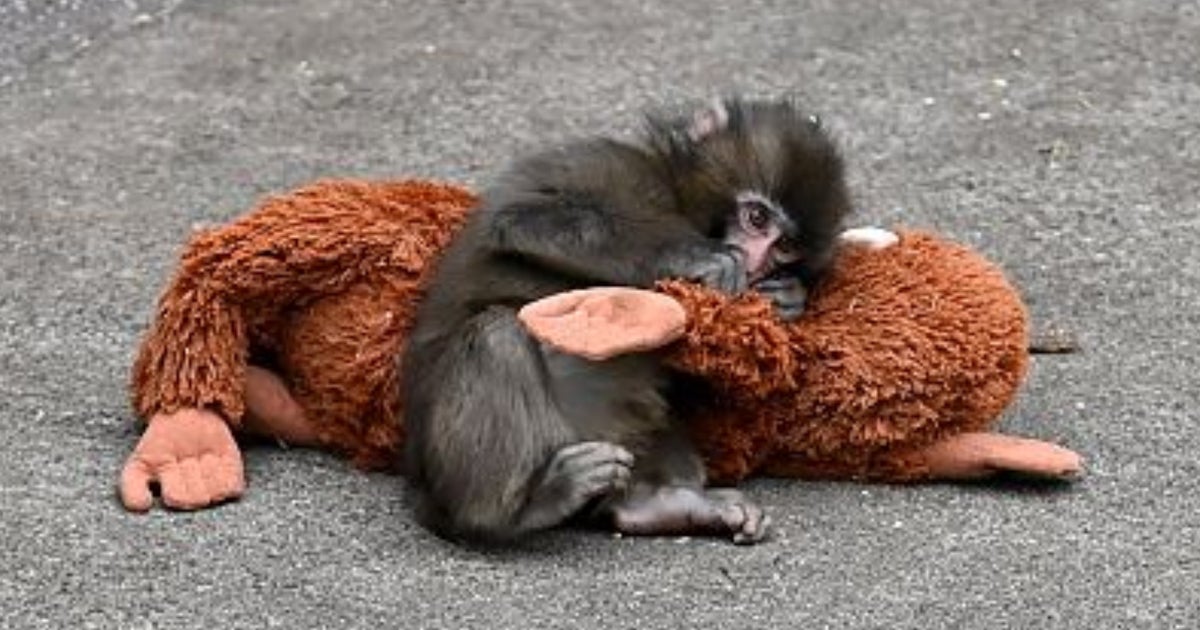
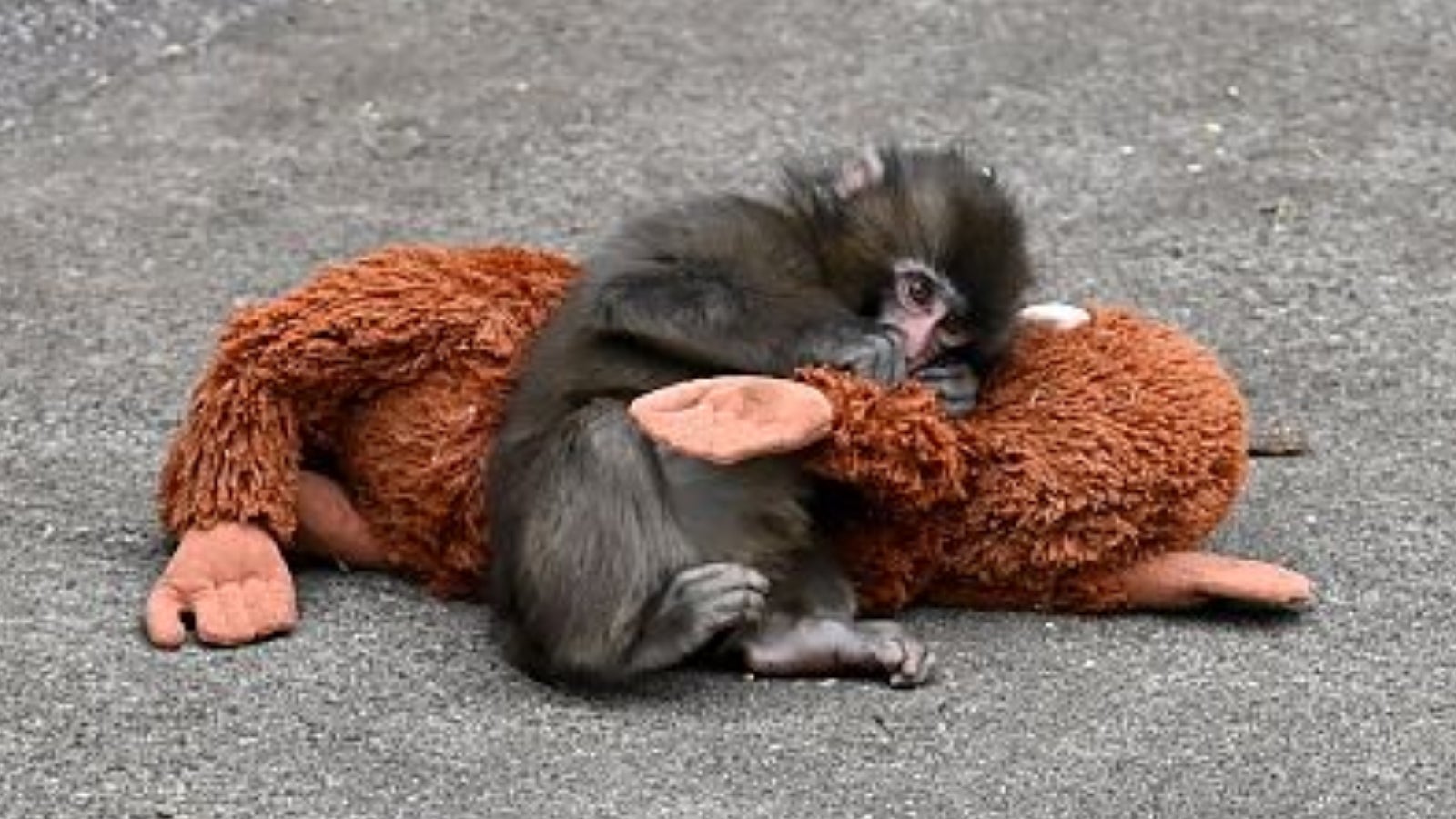
The adorable monkey, whose mother abandoned him, has gone viral for clutching an IKEA orangutan plush to help manage his feelings of abandonment (the burnt orange stuffed toy has since sold out in multiple stores).

But why do animals, including humans, so often turn to stuffed toys in our times of need, or as a more everyday source of comfort?

One study suggests that dogs can become almost “addicted” to their toys, which another paper says may boost their welfare. Over a third of adults sleep with a plush every night.

Here, we spoke to primate expert Dr Luke Duncan and therapist Sofie Roos about the “cuddle therapy” a variety of species can get from stuffed toys.

Emotional support plushes are pretty common among adults, and could be helpful for distressed animals

Punch’s toy orangutan was given to him to help him handle the loss of his parent. According to Dr Duncan, that move makes sense.

“Young primates are biologically programmed to cling to their mother ― it’s a normal and essential part of emotional and psychological development,” he told us.

“Harry Harlow’s foundational research in the 1950s and 1960s showed that infant rhesus monkeys overwhelmingly preferred a soft cloth surrogate over a wire one that provided milk, demonstrating that tactile comfort is a powerful driver of attachment behaviour in infants.”

So, while the goal should always be to provide a “safe, living social partner of the same species,” in a pinch, “A soft surrogate, in the form of a plush toy, can… provide meaningful comfort for an orphaned infant primate.

“While a plush toy cannot replace a real mother, it may help alleviate distress in the short term.”

And Roos said that while humans – and almost certainly other animals – know our toys aren’t really alive, they can “work as a ‘transition object’, which… stands as a symbol for safety when an important person is no longer with us”.

Among adults, she added, stuffed toy use offers a kind of “cuddle therapy”, which provides a combination of physical touch and pressure that a lot of animals find soothing.

“Physical touch, [even] from an object, can make our body calm and feel safe.”

Then, there’s the fact that, generally, toys don’t leave us.

“For people who lose someone important, and have wounds connected to abandonment and an insecure attachment, the cuddly toy can give a feeling of not being completely alone, which for some becomes a saviour,” the therapist said.

“We’re born with a… need to… belong, and this need stays with us until the day we die. A stuffed animal doesn’t get any less good at giving us this just because we grow older.”

Perhaps that’s why 44% of adults hold on to their childhood toys.

The therapist doesn’t think it’s that different to using meditation apps

Lots of animals, including humans, “are born social, and seek closeness, warmth and touch. A cuddle toy can work as a complement to give that safety, care and attachment we so strongly seek, especially if we feel lonely,” said Roos.

This is not unlike what may be happening with Punch: Dr Duncan shared, “Physical contact with a soft object can help regulate [primate] stress responses and provide a sense of security during a vulnerable period”.

Roos continued, “Many also connect the cuddle toy with childhood, a time most look back at as easier and more protected, where the stuffed animal can stand as a symbol for that time when we felt cared for, comforted and soothed in another way.”

In fact, the therapist doesn’t think relying on a stuffed toy for “cuddle therapy” is all that different to other forms of self-soothing.

“When looking at what the cuddle toy does for you, it’s not far away from what using mindfulness apps, yoga, stress balls or weighted blankets do – the stuffed animal is just less socially accepted, even though in my [opinion], it works better than many other more accepted methods of dealing with stress, loneliness, overthinking and anxiety.”
Share Button

The Claudia Winkleman Show: BBC Announces Start Date And Celebrity Line-Up For First Episode

The first guests to appear on Claudia Winkleman’s new BBC talk show have been unveiled.

Back in December, it was confirmed that Claudia had landed her own celebrity chat show, from the makers of The Graham Norton Show, after winning over viewers when she filled in for the Irish presenter earlier in 2025.

On Wednesday afternoon, the BBC announced the start date for The Claudia Winkleman show – and fans don’t have long to wait.

When does The Claudia Winkleman Show start – and which celebrities will be interviewed?

It’s been confirmed that the inaugural episode of The Claudia Winkleman Show will premiere on Friday 13 March at 10.40pm on BBC One – with a star-studded line-up of guests.

Joining Claudia for her first ever show will be Wicked star Jeff Goldblum, British screen treasure Jennifer Saunders, three-time Emmy nominee Vanessa Williams and comedian Josh Widdicombe.

The BBC previously revealed that the initial series will run for a total of seven episodes.

Self-deprecatingly as ever, the Traitors enthused (sort of…) last year: “I can’t quite believe it and I’m incredibly grateful to the BBC for this amazing opportunity.

“I’m obviously going to be awful, that goes without saying, but I’m over the moon they’re letting me try.”

Last year, Claudia and her Strictly Come Dancing co-host Tess Daly announced they were both stepping down from the long-running BBC reality series.

Since then, she’s fronted the hugely successful fourth season of The Traitors, with a second run of the show’s celebrity counterpart due to premiere in the autumn.

Claudia will also present the fourth season of the cult Channel 4 talent search The Piano later this year, alongside returning judges Mika and Jon Batiste.

Share Button

New drug target discovered for devastating “brain on fire” disease

Researchers have uncovered a promising new treatment target for a severe autoimmune brain disorder. The finding could help drive the development of more precise therapies for a condition caused by the immune system attacking a critical brain receptor known as the NMDA receptor. It may also open the door to a future blood test that could detect signs of the disease earlier and allow patients to begin treatment sooner.

The research was conducted at Oregon Health & Science University and published in the journal Science Advances.

The Disease Behind “Brain on Fire”

Many people recognize this disorder from the bestselling memoir and the 2016 film “Brain on Fire.” Although widely publicized, the condition is rare, affecting roughly 1 in 1 million people each year, most often adults in their 20s and 30s.

The illness occurs when the immune system mistakenly attacks NMDA receptors in the brain. These receptors play an essential role in memory and thinking. The attack is driven in part by anti-NMDA receptor autoantibodies. Patients can experience dramatic personality changes, profound memory loss, seizures, and in severe cases, death.

Pinpointing the Antibody Binding Sites

In the new study, scientists identified specific locations on a subunit of the NMDA receptor where these harmful antibodies attach. Blocking these precise sites could potentially slow or even reverse the progression of the disease.

Lead author Junhoe Kim, Ph.D., a postdoctoral fellow at the OHSU Vollum Institute, analyzed anti-NMDA receptor autoantibodies taken from a specially engineered mouse model of the disease. He then compared those findings with detailed images of the same types of antibodies collected from people diagnosed with the disorder.

The binding locations observed in mice closely matched those seen in human patients.

“We have really solid evidence because the autoantibody binding sites that Junhoe identified overlap with those from people,” said senior author Eric Gouaux, Ph.D., senior scientist in the Vollum and an investigator with the Howard Hughes Medical Institute. “We’re focused now on this area as literally a hot spot for the interaction that underpins at least one component of the disease.”

Kim explained that earlier research had narrowed down the general region where antibodies might attach.

“From previous studies, people knew where the antibodies might bind,” he said. “But we collected the entire native autoimmune antibody panel from a mouse model with the disease, and we elucidated where specifically they bind onto the receptor.”

Near-Atomic Imaging Reveals a Critical Hot Spot

The team used advanced near-atomic imaging at the Pacific Northwest Cryo-EM Center on OHSU’s South Waterfront campus. The facility is one of three national centers dedicated to this state-of-the-art imaging technology. It is jointly operated by OHSU and the Pacific Northwest National Laboratory and supported by the National Institutes of Health.

Their analysis showed that nearly all of the antibodies concentrated on a single region of the receptor.

“Nearly all of the antibodies bound to a single domain of the receptor that happens to be the part of the receptor that’s simplest to target,” Gouaux said. “It’s a super exciting result, actually.”

Toward More Precise Treatments

According to co-author Gary Westbrook, M.D., a neurologist and senior scientist at the Vollum Institute, the discovery could help pharmaceutical companies design drugs that specifically block the damaging antibody interactions. Current treatments rely largely on immunosuppression, which does not work for everyone and can leave patients vulnerable to relapse.

“More specific approaches are definitely needed,” he said.

In addition to Kim, Gouaux, and Westbrook, the research team included Farzad Jalali-Yazdi, Ph.D., and Brian Jones, Ph.D., of OHSU.

The study was supported by the National Research Foundation of Korea, award RS202400334731; the National Institute of Mental Health and the National Institute of Neurological Disorders and Stroke, both part of the National Institutes of Health, under award numbers F32MH115595, R01NS117371 and R01NS038631; the Howard Hughes Medical Institute; and Jennifer and Bernard LaCroute. The content is solely the responsibility of the authors and does not necessarily represent the official views of the NIH.

All animal research at OHSU undergoes review and approval by the university’s Institutional Animal Care and Use Committee (IACUC). The IACUC ensures the welfare of animal subjects and the safety of research personnel. It also evaluates all proposed animal studies to confirm their scientific merit and justify the use of live animals.

Share Button

NASA study finds ancient life could survive 50 million years in Martian ice

Future missions to Mars may want to dig into ice rather than rock. Scientists say ancient microbes, or traces of them, could be locked inside Martian ice deposits, preserved for tens of millions of years.

Researchers from NASA Goddard Space Flight Center and Penn State recreated Mars like conditions in the laboratory to test that idea. They found that pieces of amino acids from E. coli bacteria, if trapped in Martian permafrost or ice caps, could survive more than 50 million years even under constant cosmic radiation. The findings, published in Astrobiology, suggest that missions searching for life on Mars should prioritize pure ice or ice rich permafrost instead of focusing mainly on rocks, clay, or soil.

“Fifty million years is far greater than the expected age for some current surface ice deposits on Mars, which are often less than two million years old, meaning any organic life present within the ice would be preserved,” said co author Christopher House, professor of geosciences, affiliate of the Huck Institutes of the Life Sciences and the Earth and Environment Systems Institute, and director of the Penn State Consortium for Planetary and Exoplanetary Science and Technology. “That means if there are bacteria near the surface of Mars, future missions can find it.”

Simulating Mars and Cosmic Radiation in the Lab

The study was led by Alexander Pavlov, a space scientist at NASA Goddard who completed a doctorate in geosciences at Penn State in 2001. The team sealed E. coli bacteria inside test tubes filled with pure water ice. Other samples were combined with water and materials commonly found in Martian sediment, including silicate based rocks and clay.

The frozen samples were placed in a gamma radiation chamber at Penn State’s Radiation Science and Engineering Center. The chamber was cooled to minus 60 degrees Fahrenheit to match temperatures in icy regions of Mars. The bacteria were then exposed to radiation equivalent to 20 million years of cosmic ray bombardment on the Martian surface. Afterward, the samples were vacuum sealed and shipped back to NASA Goddard under cold conditions for amino acid testing. Researchers then modeled an additional 30 years of radiation exposure, bringing the total to 50 million years.

Pure Ice Protects Organic Molecules

The results were striking. In pure water ice, more than 10 percent of the amino acids, which are the building blocks of proteins, survived the full 50 million year simulation. By contrast, samples mixed with Mars like sediment broke down 10 times faster and did not survive.

A 2022 study by the same team had shown that amino acids preserved in a mixture of 10% water ice and 90% Martian soil were destroyed more quickly than samples containing only sediment.

“Based on the 2022 study findings, it was thought that organic material in ice or water alone would be destroyed even more rapidly than the 10% water mixture,” Pavlov said. “So, it was surprising to find that the organic materials placed in water ice alone are destroyed at a much slower rate than the samples containing water and soil.”

Researchers think the faster breakdown in mixed samples may happen because a thin film forms where ice touches minerals. That layer could allow radiation to move more freely and damage amino acids.

“While in solid ice, harmful particles created by radiation get frozen in place and may not be able to reach organic compounds,” Pavlov said. “These results suggest that pure ice or ice-dominated regions are an ideal place to look for recent biological material on Mars.”

Implications for Europa and Enceladus

The team also tested organic material at temperatures similar to those on Europa, an icy moon of Jupiter, and Enceladus, an icy moon of Saturn. At those even colder temperatures, deterioration slowed down further.

Pavlov said the findings are encouraging for NASA’s Europa Clipper mission, which will study Europa’s ice shell and subsurface ocean. Europa is the fourth largest of Jupiter’s 95 moons. Europa Clipper launched in 2024 and is traveling 1.8 billion miles to reach Jupiter in 2030. The spacecraft will perform 49 close flybys to determine whether environments beneath the surface could support life.

Drilling Into Martian Ice

When it comes to Mars, accessing buried ice will require the right tools. The 2008 NASA Mars Phoenix mission was the first to dig down and photograph ice in the Martian equivalent of the Arctic Circle.

“There is a lot of ice on Mars, but most of it is just below the surface,” House said. “Future missions need a large enough drill or a powerful scoop to access it, similar to the design and capabilities of Phoenix.”

In addition to House and Pavlov, the research team included Zhidan Zhang, a retired lab technologist in the Penn State Department of Geosciences, along with Hannah McLain, Kendra Farnsworth, Daniel Glavin, Jamie Elsila, and Jason Dworkin of NASA Goddard.

The work was funded by NASA’s Planetary Science Division Internal Scientist Funding Program through the Fundamental Laboratory Research work package at Goddard Space Flight Center.

Share Button

From BDSM To Sordid Affairs: What Emerald Fennell’s Wuthering Heights Gets Right About 18th Century Sex

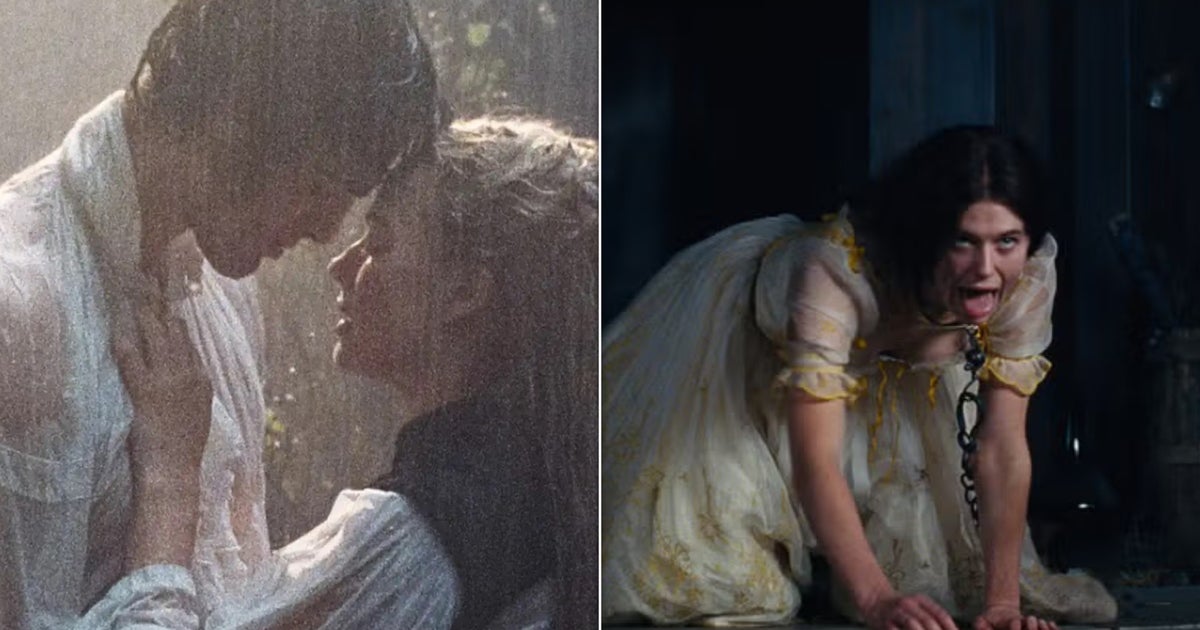
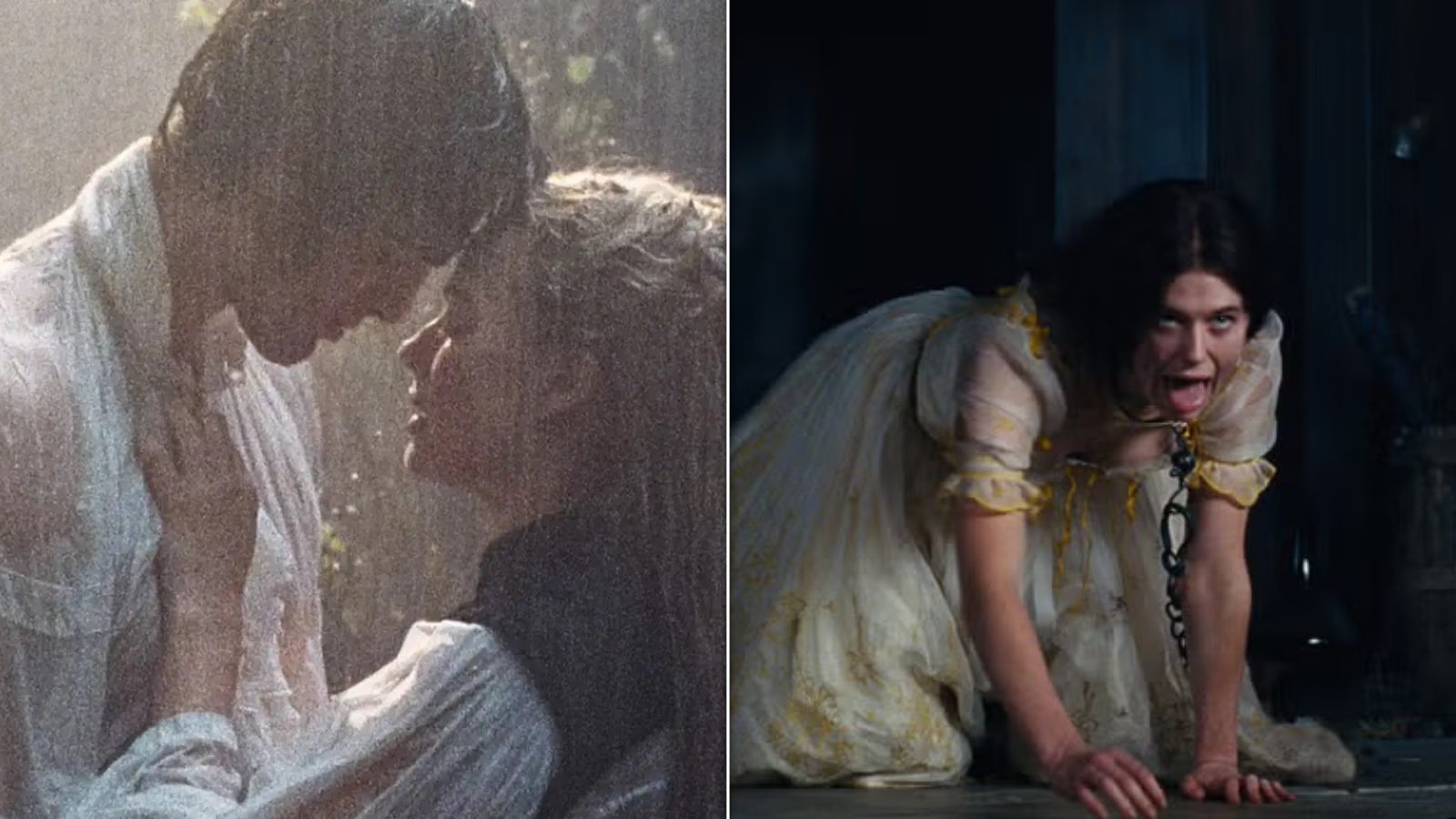
Whether you loved it or you hated it, Emerald Fennell’s sexually-charged reimagining of Emily Bronte’s Wuthering Heights – featuring a brooding Jacob Elordi – still has us all talking over a week after its cinematic release. While the original 1847 novel didn’t feature any sex scenes, Fennell’s film is far more ‘Heathcliff, it’s me, it’s Cathy, I’m horny.’

But for all the sneaking out of bedroom windows, romping in carriages, grinding in the moors, finger sucking and… puppy play that Fennell portrays in her take of Wuthering Heights, how much of this raunchery was actually going on during the period in which the original novel was set?

When you think of sexy periods of time in history, we tend to think of the promiscuity of the Ancient Romans or even the more recent free love movement of the 1970s – not the late Georgian era. So before we all start wishing that we could jump in a time machine to 1770 and find our own Heathcliff to romp about the moors with, we asked leading UK historians what sex and relationships back then were actually like.

Social Class Dictated Your Sex Life

Right from the first opening scene, Fennell’s version of Wuthering Heights features public hand jobs at the gallows and crowds snogging during a frenzied public hanging in an impoverished town centre – and you’ll be surprised to know the film was actually onto something historically accurate.

As the London Museum explains, public executions were more like a fair and a party atmosphere would be in the air as thousands of people gathered to watch someone’s final moments. Gruesome, we know – however, apparently it wouldn’t be enough to turn the Georgians off.

You see, according to Dr. Ruth Larsen, Senior Lecturer in History at the University of Derby, pre-marital sex was really common among poorer classes during the time in which Wuthering Heights was set (1770 to around 1801). “Poorer people tended to marry older and engage in sexual activity prior to that, especially those living in urban areas,” she tells HuffPost UK.

So: thousands of people, likely from poorer classes, gathering en masse in an urban area with drinking and partying going on? You do the math – it would appear that this is a big old tick for Fennell’s uninhibited Wuthering Heights adaptation.

But what about those lucky enough to be born into aristocracy? Unfortunately you wouldn’t be ‘getting lucky’ as often as your less well-off counterparts.

“For the wealthier classes, it was very unusual for women to have sexual relations before wedlock,” Dr. Larsen explains. For people like Cathy, pre-marital sex would be off the cards as “the usual form of courting would have been through assemblies, formal gathering and family acquaintances.”

The sense of familial obligation, to uphold the positive reputation of the family, was felt by many, not just the richest in society – and the film yet again gets this right with Edgar Linton, whom Cathy marries, despite her love for Heathcliff in order to improve her family’s social standing.

And her choice wouldn’t have been uncommon in the late Georgian era either. As Dr. Larsen adds: “For most young women, marriages were an opportunity to find their place in society, to become mistress of the house and, if they were landed, of the estate. To decide to take a different path would have been seen by most people as unwise.”

The Logistical Nightmare Of Affairs In Georgian Britain

Of course, the sauciness in Fennell’s Wuthering Heights really ramps up when Heathcliff and Cathy give up yearning and instead start a steamy affair (cue the famous sex scene montage).

However, as easy as the duo make it look, having an affair in the late 18th century was far from plain-sailing.

“The scenes where Heathcliff crawls in through Cathy’s window are very much representative of the literary tropes we love today, but this might have been difficult to pull off in historical reality,” Lauren Good, Senior Content Producer from HistoryExtra, tells HuffPost UK.

If you were rich enough, you’d be lucky enough to have a separate bedroom to that of your spouse (as Margot Robbie’s iteration of Cathy thoroughly enjoys), however your bedroom would be adjoined – which, as Good points out, “isn’t ideal in allowing for a quick exit from your illicit lover!”

And if you did manage to get some time alone with your ‘bit on the side’, trying to then have sex wasn’t straightforward thanks to the fashion of the era.

“Women’s dress of the era wouldn’t have been so easy to get into,” Nichi Hodgson, author of the Curious History of Dating: From Jane Austen to Tinder explains.

“Women typically wore a chemise, corset, under petticoat, hoop skirt or crinoline, over petticoat and long sleeved gown – plus gloves.” Good luck trying to remove all of that while your husband snores next door.

At least Cathy wouldn’t have had to try and get her knickers off, as Hodgson points out that drawers did not come into fashion until the 1870s: “If a hooped skirt tipped to one side, you may have got an eyeful!”

In fairness to Fennell, we don’t see a nude Cathy in any of the film as Heathcliff navigates her many, many layers of opulent clothing during the daytime sex scenes in the montage – so once again, we have another historical accuracy win!

The Surprising Sadomasochism Of The Late 18th Century

Excuse our phrasing but buckle up – this might be the most surprising historical accuracy of the entire film.

Arguably the most shocking portrayals of sex in Fennell’s film come in the shape of sadomasochistic relationships, namely two servants enjoying off screen flagellation in the stables and Isabella Linton’s submissive role to Heathcliff’s dominant. And it turns out, in the words of Hodgson, “bondage and kink were alive and well in the 18th century!”

“We often assume that the stricter societal expectations placed upon those who lived centuries before us translated into their intimate lives, but that wasn’t always the case,” Good explains.

“We might dismiss this as shock factor in Wuthering Heights but flagellation, as Hilary Mitchell told us at HistoryExtra, ‘played a prominent role in English sex work from about 1700 onwards’.”

But before we get ahead of ourselves, it’s worth noting that BSDM-inspired activities were most likely services that men paid for, or engaged in with women in their service (female maids were often treated as household sex workers) as Hodgson explains.

And as for Isabella panting on a lead, you can forget about it happening in real life she adds – “not because those sort of dynamics didn’t exist but because no middle class gentleman and woman would ever be that brazen in front of a visitor like Nelly Dean in the film.”

While the release of Wuthering Heights has us yearning for moody Georgian era romance, it’s surprising how much of it is rooted in reality. If we do hop in that time machine, we’ll just have to remember to pack easier to remove clothing.

Share Button

Matthew Lillard Says Quentin Tarantino Jibes Felt Like A ‘Punch In The Mouth’

Matthew Lillard has admitted he had a profound reaction to the support he received after Quentin Tarantino’s recent disparaging comments about him.

Late last year, during an interview on The Bret Easton Ellis Podcast, Tarantino said he didn’t “care for” Lillard, as well as taking shots at fellow actors Paul Dano and Owen Wilson.

Talking to People magazine, the Scream actor joked that the outpouring of love he received in the wake of the controversial interview made him feel like he was going to his own funeral.

“It felt like I had died and was in heaven watching everyone send out their RIP tweets,” he explained, adding that the likes of George Clooney and Superman director James Gunn had “been really generous” by sticking up for him and “telling me how much they loved me and liked my work”.

“I mean, it was really nice being a part of your own wake, sort of sitting there living through all the nice things people say after you die,” the Scooby-Doo star quipped.

He admitted that Tarantino’s remarks were especially painful because he had previously been a big fan of the Pulp Fiction director, and would “love” to work with him in the future.

Quentin Tarantino
Quentin Tarantino

Jordan Strauss/Invision/AP

“I think he’s a lovely filmmaker, and to just sort of get punched in the mouth was kind of a bummer,” he admitted.

Lillard first addressed Tarantino’s comments in December during an appearance at GalaxyCon in Ohio.

Reflecting on what had been said, Lillard admitted his feelings had been hurt, and that it “fucking [sucked]” that the One Upon A Time In Hollywood director had aired his negative views.

“You wouldn’t say that to Tom Cruise. You wouldn’t say that to somebody who’s a top-line actor in Hollywood,” he said.

While Paul Dano never commented publicly on Tarantino calling him the “weakest fucking actor in SAG,” he did admit the many comments defending him were “nice”.

“I was also incredibly grateful that the world spoke up for me so I didn’t have to,” Dano told Variety earlier this year.

Share Button

GPs told to guarantee same-day appointments for urgent cases

New contract will require patients in England to be given immediate appointment if needed.

Share Button

BBC Confirms Second Racist Slur Was Edited Out Of Its Baftas Coverage

The BBC has confirmed that a second racist slur was edited out of Sunday night’s Baftas broadcast, after the corporation has faced widespread backlash over its coverage of this year’s event.

In the last two days, the BBC has come under fire over the decision to include an uncensored slur in this year’s Baftas broadcast, which aired on a two-hour time delay.

Early on in the ceremony, Tourette’s campaigner John Davidson shouted the N-word after experiencing an involuntary tic while Sinners actor Michael B Jordan and Delroy Lindo were presenting an award.

This backlash was then exacerbated by the news that an acceptance speech by filmmaker Akinola Davies Jr had been edited to remove a message of solidarity with Palestine from the broadcast.

Eventually, on Monday afternoon, the BBC issued an apology, and confirmed that the use of the N-word was being removed from the version of the Baftas streaming on its iPlayer service.

Tourette's advocate John Davidson at the 2026 Baftas
Tourette’s advocate John Davidson at the 2026 Baftas

Anthony Harvey/Shutterstock

The following afternoon, BBC News reported that a second slur had been successfully removed from the broadcast ahead of time, which a BBC spokesperson confirmed to be the case in an internal memo shared with HuffPost UK.

This memo, sent by the BBC’s chief content officer Kate Phillips, reads: “I’m so sorry that a racial slur was not edited out of our broadcast. We understand how distressing this was.

“Award attendees were pre-warned about the possibility of involuntary verbal tics associated with Tourette Syndrome at the start of the show, and Alan Cumming addressed it during the broadcast. Of course, this doesn’t lessen the impact and upset.

“The edit team removed another racial slur from the broadcast. This one was aired in error and we would never have knowingly allowed this to be broadcast. We take full responsibility for what happened. When I was made aware it was audible on iPlayer, I asked for it to be taken down.”

A BBC rep also reiterated to HuffPost UK: “Some viewers may have heard strong and offensive language during the BAFTA Film Awards. This arose from involuntary verbal tics associated with Tourette syndrome, and as explained during the ceremony it was not intentional.

“We apologise that this was not edited out prior to broadcast and it has been removed from BBC iPlayer.”

Michael B Jordan and Delroy Lindo on stage at the 2026 Baftas

Stuart Wilson via Getty Images for BAFTA

BBC News has claimed that the reason producers did not edit out the original slur was because they were working from a truck, and therefore missed the moment when it happened in the room, though this remains unconfirmed by Bafta and the broadcaster itself.

Meanwhile, after Delroy Lindo expressed his disappointment at the way Bafta handled the incident, a spokesperson issued a lengthy apology taking “full responsibility” for what transpired.

John also released a statement of his own, saying: “I am, and always have been, deeply mortified if anyone considers my involuntary tics to be intentional or to carry any meaning.”

Share Button

Something strange is happening in the Milky Way’s magnetic field

For generations, scientists have studied the stars and planets to better understand how our galaxy works. Now, Dr. Jo-Anne Brown, PhD, is focused on charting something we cannot see at all: the Milky Way’s magnetic field.

“Without a magnetic field, the galaxy would collapse in on itself due to gravity,” says Brown, a professor in the Department of Physics and Astronomy at the University of Calgary.

“We need to know what the magnetic field of the galaxy looks like now, so we can create accurate models that predict how it will evolve.”

New Milky Way Magnetic Field Data and Models

This month, Brown and her colleagues published two new studies in The Astrophysical Journal and The Astrophysical Journal Supplement Series. Together, the papers introduce a complete dataset that astronomers around the world can use, along with a new model designed to improve understanding of how the Milky Way’s magnetic field developed over time.

To gather the data, the team relied on a new radio telescope at the Dominion Radio Astrophysical Observatory in B.C., a National Research Council Canada facility. The instrument allowed them to scan the northern sky at multiple radio frequencies, offering a detailed look at the structure of the galaxy’s magnetic field.

“The broad coverage really lets you get at the details about the magnetic field structure,” says Dr. Anna Ordog, PhD, lead author of the first study.

The result is a high quality, wide ranging dataset collected as part of the Global Magneto-Ionic Medium Survey (GMIMS), an international effort to chart the Milky Way’s magnetic field.

Tracking Faraday Rotation Across the Galaxy

The researchers measured a phenomenon known as Faraday rotation to trace the magnetic field. This effect occurs when radio waves pass through regions filled with electrons and magnetic fields, causing the waves to shift.

“You can think of it like refraction. A straw in a glass of water looks bent because of how light interacts with matter,” says Rebecca Booth, a PhD candidate working with Brown and lead author of the second study. “Faraday rotation is a similar concept, but it’s electrons and magnetic fields in space interacting with radio waves.”

By analyzing these subtle changes in radio signals, the team was able to map how the magnetic field is arranged across vast stretches of the galaxy.

A Diagonal Magnetic Reversal in the Sagittarius Arm

In the second study, Booth focused on a striking feature within the Milky Way known as the Sagittarius Arm, where the magnetic field runs in the opposite direction compared to the rest of the galaxy.

“If you could look at the galaxy from above, the overall magnetic field is going clockwise,” says Brown. “But, in the Sagittarius Arm, it’s going counterclockwise. We didn’t understand how the transition occurred. Then one day, Anna brought in some data, and I went, ‘O.M.G., the reversal’s diagonal!'”

Building on Ordog’s findings, Booth used the newly assembled dataset to construct a three dimensional model explaining this reversal.

“My work presents a new three-dimensional model for the magnetic field reversal. From Earth, this would appear as the diagonal that we observe in the data,” Booth explains.

Share Button

Can solar storms trigger earthquakes? Scientists propose surprising link

Scientists at Kyoto University have developed a theoretical model examining whether disturbances in the ionosphere could apply electrostatic forces deep within the Earth’s crust. Under certain conditions, these forces might contribute to the start of large earthquakes.

The research is not designed to forecast earthquakes. Instead, it outlines a possible physical mechanism showing how shifts in ionospheric charge levels — triggered by intense solar activity such as solar flares — might interact with already weakened areas of the crust and influence how fractures develop.

How the Ionosphere Could Affect Fault Zones

In this model, cracked regions of the crust are thought to contain water at extremely high temperatures and pressures, possibly in a supercritical state. Electrically, these fractured zones may act like capacitors. They are coupled both to the Earth’s surface and to the lower ionosphere, creating a vast electrostatic system that links the ground to the upper atmosphere.

When solar activity surges, electron density in the ionosphere can rise significantly. This can produce a negatively charged layer in the lower ionosphere. Through capacitive coupling, that charge may generate intense electric fields inside microscopic voids within fractured rock. The resulting electrostatic pressure could approach levels similar to tidal or gravitational stresses that are already known to influence fault stability.

According to the team’s calculations, ionospheric disturbances tied to major solar flares — involving increases in total electron content of several tens of TEC units — might create electrostatic pressures of several megapascals within these crustal voids.

Ionospheric Anomalies Observed Before Major Quakes

Unusual ionospheric behavior has often been detected before powerful earthquakes. Observations have included spikes in electron density, drops in ionospheric altitude, and slower propagation of medium-scale traveling ionospheric disturbances. Traditionally, scientists have interpreted these changes as effects caused by stress building up inside the crust.

This new framework offers an additional perspective. It suggests a two way interaction in which processes inside the Earth can influence the ionosphere, while ionospheric disturbances may also send feedback forces back down into the crust. The model connects space weather and seismic activity without claiming that solar activity directly causes earthquakes.

Solar Activity and the 2024 Noto Peninsula Earthquake

The researchers point to recent major earthquakes in Japan, including the 2024 Noto Peninsula earthquake, as events that occurred shortly after periods of intense solar flare activity. They stress that this timing does not prove cause and effect. However, it aligns with the idea that ionospheric disturbances could act as a contributing factor when faults are already close to failure.

Rethinking Earthquakes Beyond Internal Forces

By drawing on plasma physics, atmospheric science, and geophysics, this approach expands the traditional view that earthquakes are driven solely by forces inside the planet. The findings indicate that tracking ionospheric conditions alongside underground measurements could improve understanding of how earthquakes begin and how seismic risk is assessed.

Future work will combine high-resolution GNSS-based ionospheric tomography with detailed space weather data. The goal is to determine when and how ionospheric disturbances might exert meaningful electrostatic effects on the Earth’s crust.

Share Button