6 Ways To Celebrate Winter Solstice This Year

Turns out the word “solstice” comes from a Latin term meaning “to stand still”. In the actual moment of the solstice, the sun lies exactly over the Tropic of Capricorn and appears to stall in the sky.

This event has been celebrated for thousands of years. Even the word “Yule,” which is used interchangeably with “Christmas” in many countries, has its origins in Jol, a pre-Christian solstice celebration held across northern Europe and Scandinavia.

Royal Museums Greenwich said that this year in the UK, the event will happen at roughly 93:03pm, December 21.

But the solstice sunrise is going to start between 8am and 9am in the UK, depending on your location. This is the event many won’t want to miss.

Here, we shared some ways to mark the occasion:

1) Stream the Stonehenge sunrise…

This year, parking spaces for the real-life Stonehenge have already sold out, though the stones are open to the public.

But if you’re not in the area, you can stream the moment the sun rises behind the monument’s “heel stone” and reaches into the centre of the ancient structure.

These are set to go live on December 21, with the YouTube one scheduled for 7:30am onwards.

2) …Or pick one of the many other viewing spots

Newgrange in the Republic of Ireland is an ancient burial tomb. Light hits the back of its passage every winter solstice, and while only those who win a lottery can see it in person on the day, the rest of us can watch the livestream on Heritage Ireland’s site.

Avebury, Glastonbury Tor, and the Calanais Standing Stones are also stunning sunrise locations for this time of year.

3) Light a log

The festival of Juul, which we mentioned earlier, used to involve the burning of an entire tree. That’s why we call it a “Yule log”.

If that seems a bit dramatic, though, try burning a log in your fireplace instead. And to truly stick to tradition, try keeping the log burning all day ― and use the ashes for your garden to encourage a bumper crop.

4) Eat tang yuan

The glutinous rice-covered dumpling is traditionally eaten at China’s Dōngzhì Festival, which celebrates the solstice.

It symbolises family togetherness.

5) Light a candle

One of the reasons people have celebrated the winter solstice for so long is because it signals the end of the darkest parts of winter. As a result, lights and fire are associated with multiple solstice celebrations.

Take part in the tradition by lighting a candle, if you like.

6) Feast!

Another common thread throughout traditional solstice celebrations? Feasting (and gifting).

And while this later became linked to decadent Christmas dinners, I reckon it’s as good a reason as any to tuck into that delicious fare early.

Share Button

Christmas Dinner Foods That Can Be Prepped In Advance

Confession: I love Christmas Dinner but I am deathly afraid of cooking it. I’m actually a great cook (if I do say so myself…) but the thought of spending almost the entire day in a roasting hot kitchen cooking and keeping up with timers etc is frankly unbearable.

I am wholly grateful to my lovely partner who takes on the duty every year as I swan about the living room reading my festive books and watching Christmas flicks on tv.

Don’t worry, I am the cook throughout the year.

This year though, I am determined to play more of a part in my festive feast and spoke with two chefs about what can be prepped and frozen ahead of the Big Day.

Which foods can be frozen ahead of Christmas Day

Robbie Smith, head chef at Glasgow restaurant Zique’s says: “There are plenty of things you can do ahead of time to make Christmas dinner feel a lot less daunting. Making your stuffing in advance is a big one. Roll it in clingfilm, freeze it, then simply slice and cook it on the day.

“If you’re making gravy, the stock can also be done well in advance. Roast your bones and vegetables, simmer, strain and freeze it, then bring it straight back to the stove on Christmas Day, adding the resting juices from your meat, of course.”

UM. Who knew?!

As for veg, he advises: “Braised red cabbage and roast potatoes are also ideal for prepping ahead. Parboil the potatoes, cool and freeze them, then defrost on the day and put them straight into hot oil in the oven.

“If I’m cooking Christmas dinner, I also like to have a batch of croquettes in the freezer, cooked straight from frozen, so people have something to snack on and are not constantly asking when the turkey will be ready.”

Snacking croquettes is definitely something I can get behind…

Danny Carruthers, head chef at Sebb’s advises that changing your choice of meat could help: “Beef is a brilliant alternative to turkey, especially if you need something that can be pre-cooked without losing quality.

“Cuts like beef short rib, feather blade or ox cheek are rich in fat and collagen, which means they really come into their own when slow-cooked or braised, and they reheat beautifully in the oven or even the microwave in small portions.”

As for vegetables, he suggests a good slow roast: “For veg, keep things whole or in large pieces and roast them slowly. You’re aiming for a deep, caramelised crust, which helps protect the veg when thawing and re-roasting.

“Think slow-roast carrots with plenty of butter and salt, or even those viral glass parsnips from chef Adam Byatt.”

Gosh I’m hungry…

Share Button

‘I thought I had flu but was told I had cancer’

Sophie Claxton, from Burnley, was 16 when she was diagnosed with acute lymphoblastic leukaemia.

Share Button

Chef Shares How To Prevent Pigs In Blankets From Splitting

Call me a hypocrite: even though I toss and turn when I sleep, I hate when my sausage bigs in their bacon blankets wiggle out of their salty duvets as they cook.

I’m always left with tough, rubbery rashers and half-burnt, half-pale sausages, neither of which taste anything like as good as their combined selves.

But executive head chef Aaron Craig at The Milner York said I may be “making Christmas dinner harder than it needs to be” – preventing them from bursting is simpler than you might think.

How can I stop pigs in blankets from splitting open?

It’s down to one factor, Craig said: your oven settings.

“If your pigs in blankets burst, it’s not the sausages – it’s the temperature,” he said.

“Once you’ve wrapped them, chill them. Pop them in the fridge for about 30 minutes or into the freezer for 10. It firms up the fat, so they cook evenly without splitting,” he explained.

Want even more delicious festive food? Try coating the pigs in blankets in a delicious dressing.

“Right before they go in the oven, brush them with a little honey and wholegrain mustard,” the chef said.

“You get a glossy, golden coating and a lovely sweet–savory kick.”

Any other tips?

Yes. The chef said gravies really complete the Yuletide meal, but too many of us rush the process.

“Most home gravies end up way too pale,” he said.

“If you want proper rich flavour, don’t rush the roasting stage. Get your onions, carrots, celery, garlic and any poultry trimmings really deep brown ― not just lightly golden. That colour gives you depth.”

After you add your stock, simmer it gently.

“And here’s a little chef trick: a teaspoon of soy sauce or Marmite gives it an incredible umami boost without making it taste any less ‘Christmas’. It just rounds everything out,” he added.

Share Button

What’s really going on with flu this winter?

We’ve been told we’re facing an unprecedented superflu. Is it?

Share Button

Christmas Number One 2025: Kylie Minogue Ends Wham!’s Winning Streak

After two years of Wham! at the top of the festive chart, the UK has a new Christmas number one in 2025.

On Friday evening, it was announced that Kylie Minogue’s latest single XMAS was number one on this year’s Christmas chart.

The accolade is noteworthy for a number of reasons, not least because XMAS is an Amazon Music exclusive, meaning it’s not available to stream on the most popular platforms like Spotify, Apple Music or Tidal.

Kylie is also celebrating her first UK number one in more than two decades, having last topped the charts in 2003 with Slow.

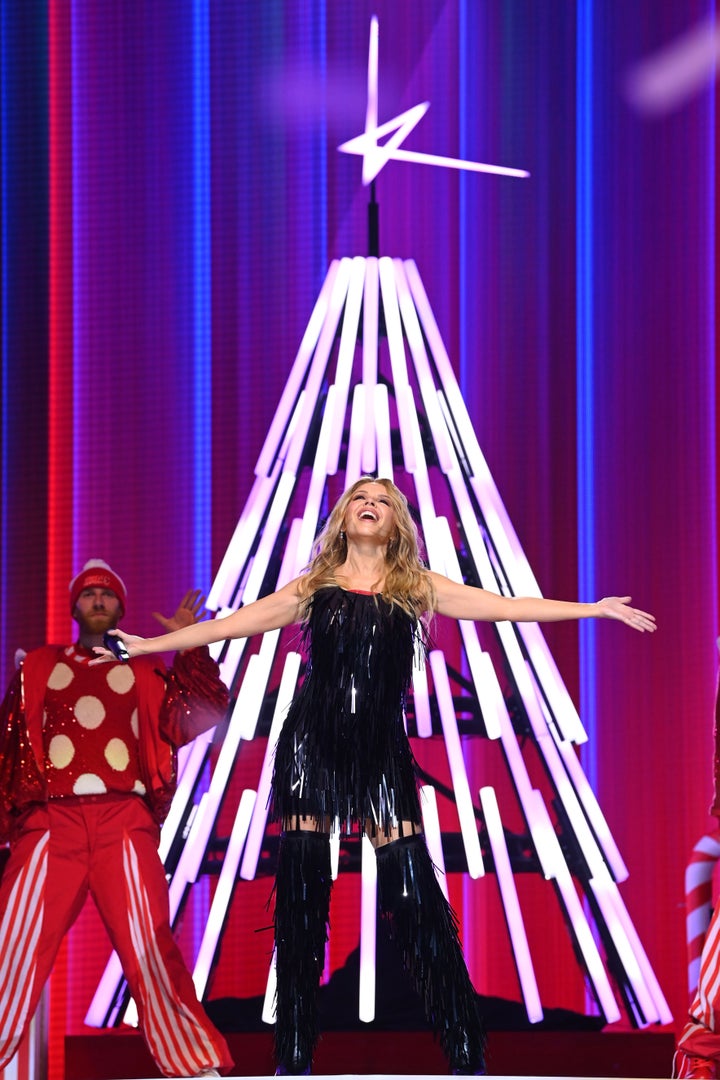
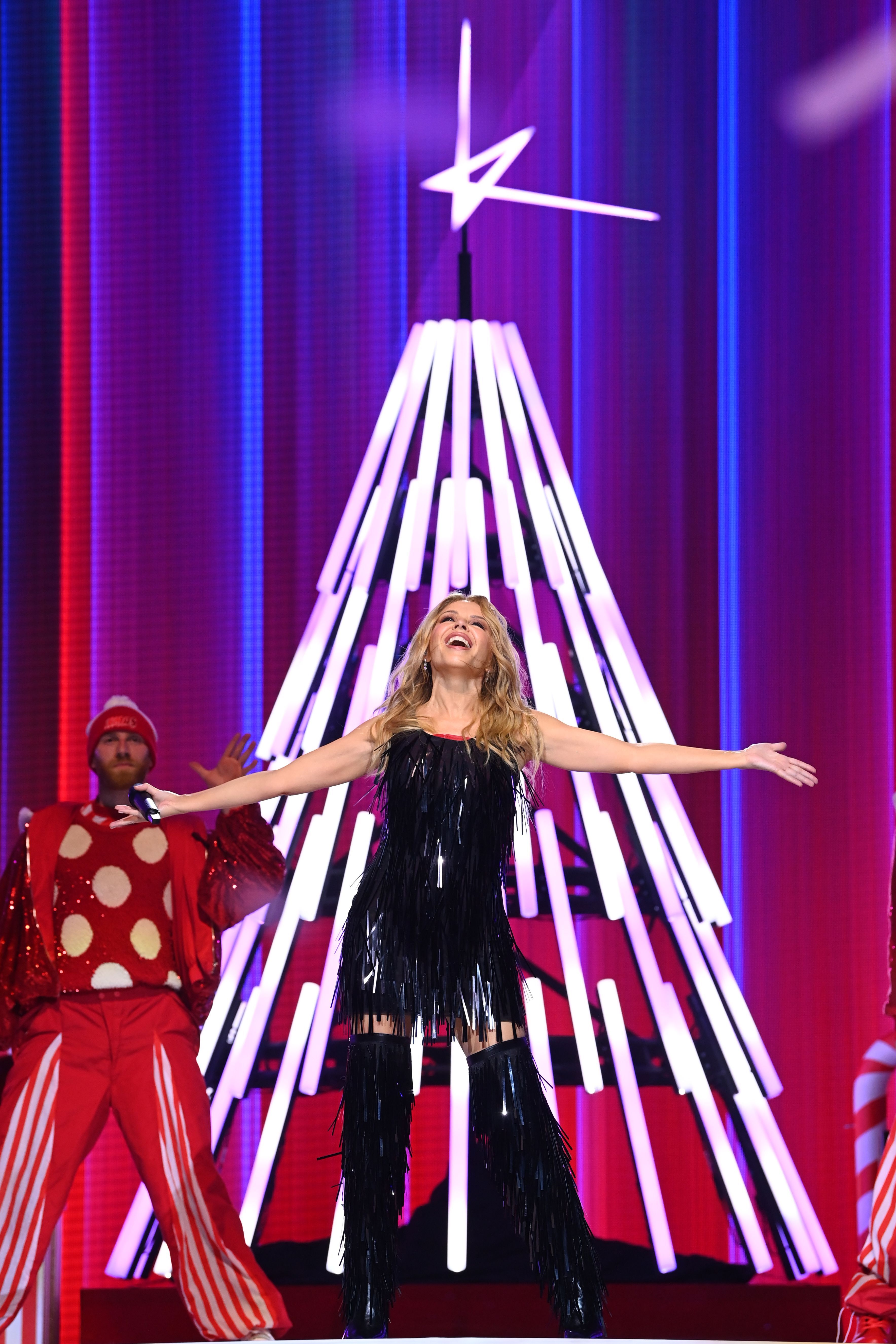
Kylie Minogue performing at the Jingle Bell Ball earlier this month

David Fisher/Shutterstock for Global

In response to her first solo Christmas number one – and her eighth overall – the Australian pop superstar enthused: “It’s hard to put into words how special this feels. Being Christmas number one really is the most wonderful gift!

“I’m so thankful to everyone who’s been listening and sharing the love and I’m wishing you all a very Merry Christmas!”

As for the rest of the chart, Wham!’s Last Christmas gets the silver medal for this week at number two, while Mariah Carey’s All I Want For Christmas Is You is at three.

Rounding off the top five are Brenda Lee’s classic Rockin’ Around The Christmas Is You and Together For Palestine’s new charity single Lullaby.

Kylie is now the only woman to have had number one in four different decades – the 1980s, 1990s, 2000s and 2020s – with only Elvis Presley, Elton John and Queen being able to boast the same.

XMAS is taken from the reissued version of Kylie’s seasonal album Christmas, which was revamped earlier this year in celebration of its 10th anniversary.

She was previously a featured vocalist on the oft-overlooked second version of Band Aid’s Do They Know It’s Christmas?, which was released in 1989 and topped the Christmas chart in the UK that year, though XMAS is her first festive number one as a solo performing.

Share Button

David Walliams Dropped By Publisher HarperCollins Over ‘Inappropriate Behaviour’

Comedian, children’s author and former Britain’s Got Talent star David Walliams has been dropped by HarperCollins UK following an investigation into his conduct.

A spokesperson for the publisher told the The Telegraph: “After careful consideration, and under the leadership of its new CEO, HarperCollins UK has decided not to publish any new titles by David Walliams.

“HarperCollins takes employee well-being extremely seriously and has processes in place for reporting and investigating concerns.”

However, HarperCollins UK commented in their statement to The Telegraph that “to respect the privacy of individuals, we do not comment on internal matters.”

Former employees also told the publication that they were advised to work in pairs when meeting with Walliams and not to visit his home.

The Little Britain star is one of the UK’s most successful children’s authors, having written 40 books, which have sold more than 60 million copies worldwide and been translated into 55 languages.

HuffPost UK has contacted Walliams’ representatives for comment.

Share Button

Resident doctors in Scotland to go on strike for first time

Their union BMA Scotland has accused the government of reneging on a commitment to restore pay to 2008 levels.

Share Button

I Went Into Nursing To Help People – Until I Could No Longer Defend What I Was Being Asked To Do

It is hard to explain what it is really like to work as a nurse inside a hospital. The experience is almost impossible to understand unless you have lived it. There is no real-world equivalent to a bad shift in nursing.

Most people do not understand how working three days a week can drain a person so deeply that they spend their days off unable to function. Or why night shift nurses sleep through almost their entire stretch of days off. Or why we cannot always be fully present for our families.

The answer is exhaustion — physical, mental and moral.

When I graduated, I knew nursing would be difficult, but I did not understand what difficult truly meant. My first medical-surgical job showed me immediately. Our ratio was eight patients to one nurse. The charge nurse, the person meant to be the extra support, also carried a full patient load.

Normal was med passes that took hours, often starting one round of medications before finishing the last. Normal meant having to push charting to the end of the shift, and hoping your documentation made sense when you were already 15 hours into a 12-hour shift. Breaks were rare. Getting to go to the bathroom was luck. There was no time to think, much less feel.

Early in my career, one of the most capable nurses I knew accidentally gave the wrong medication to a patient because she was drowning in the workload. Instead of asking what changes could prevent something like that from happening again, our manager asked me what I thought. I was a brand new nurse. I told the truth: The system set her up to fail. She has eight patients. No one can do this safely.

He looked at me and said, “If that is your opinion, you are never going to make it in nursing.”

I carried that moment with me for years. It was the first time I understood that in hospital culture, leadership said the right things about honesty and safety, but the reality did not match the words. Speaking up about real problems was treated as an inconvenience. Vulnerability was something you were expected to swallow. What mattered was endurance.

Eventually, I moved into paediatrics. The ratio was better, but it wasn’t any less intense. Children can look fine one moment and be critically unstable the next. Parents needed reassurance, explanations and someone to translate what was happening. It was a different kind of emotional work.

When the pressure mounted, communication was always the first thing to break. Once, a child went to surgery and never returned to the room. No one told the parents or the unit that the child had been transferred to the ICU. They waited quietly, expecting their child to come back until I told them their child was in intensive care and that we needed to go immediately. Under normal circumstances, someone would have updated them. It was another cut.

I asked leadership whether anyone was tracking these lapses. In every setting I had worked before, investigating what went wrong was standard practice. Leadership told me someone, somewhere, was handling it. It never felt like an answer.

So I moved into leadership as a house supervisor, where I could see the hospital from the top down. I believed that if I could understand the system at a higher level, maybe I could help fix what was breaking.

Instead, I learned how powerless we really were.

As house supervisor, I existed between two worlds. Floor nurses often blamed me for every gap in staffing. Upper leadership expected me to justify every instinct I had. If I believed a unit needed more help, even as I could feel the tension rising on the floor, I had to wake up a director in the middle of the night and explain why. Most of the time, the answer was no.

But the hardest part was not staffing. It was enforcing policies I no longer believed in.

People imagine a nurse quits after one traumatic night or a tragic patient death. That is not how it happens. Most of us enter nursing because we want to help people, because we believe it is our calling, because we think we can make a difference. What breaks you is not one catastrophe. It is the accumulation of moments when you knew what should have been done and were not allowed to do it.

There were nights when I had to walk into a room with security behind me and tell a family member they had to leave. Not because the situation was unsafe. Not because they were disruptive. But because the rulebook said they could not stay.

One night stands out more than any other. A parent begged me to let both of their children stay. One child had been admitted. The other could not be left alone. They pleaded for them to remain together. I called leadership and asked for an exception. I was told there were no exceptions.

I was placed in the position of having to enforce a rule that would separate a family in the middle of the night, with one child remaining in the hospital and the other sent home. That was the moment I knew I was not practicing nursing anymore. I was enforcing rules that made no human sense. Rules that hurt families. Rules that I could not find a way to defend.

Burnout did not hit me all at once. It settled into my body and refused to leave. I began experiencing chest tightness and hyperventilation on the drive to work. I had my heart checked, but I knew it was not cardiac. Panic attacks mimic heart failure. I had seen enough of both to know the difference.

I thought stepping into leadership would give me the tools to fix what was breaking. It did not. The panic worsened. That was when I realised I did not need a new unit or a new specialty. I needed a new life. Something quieter. Something more human.

So I left.

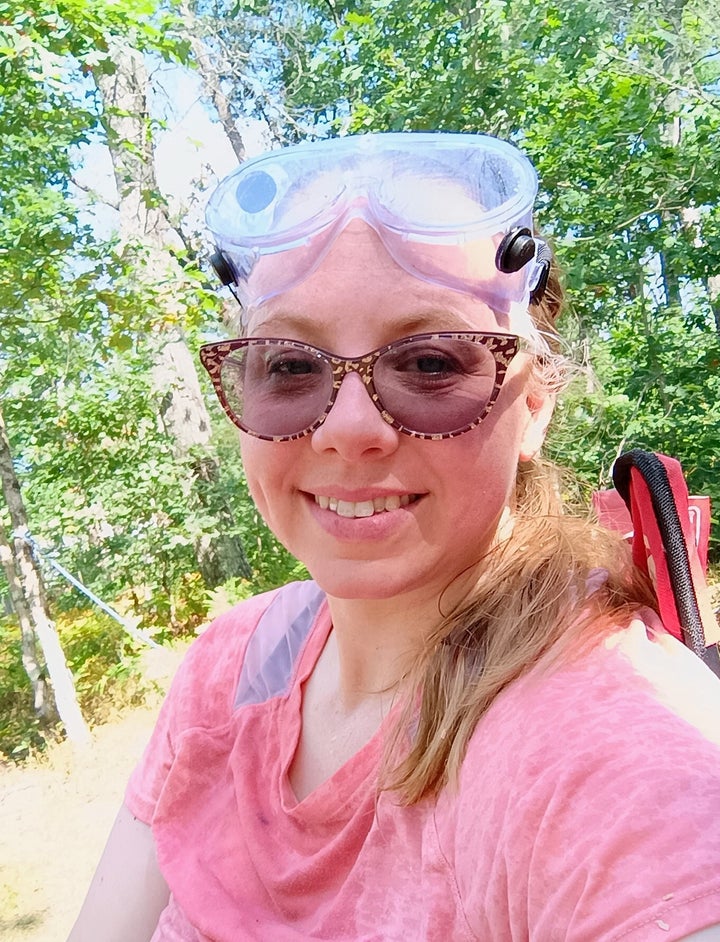
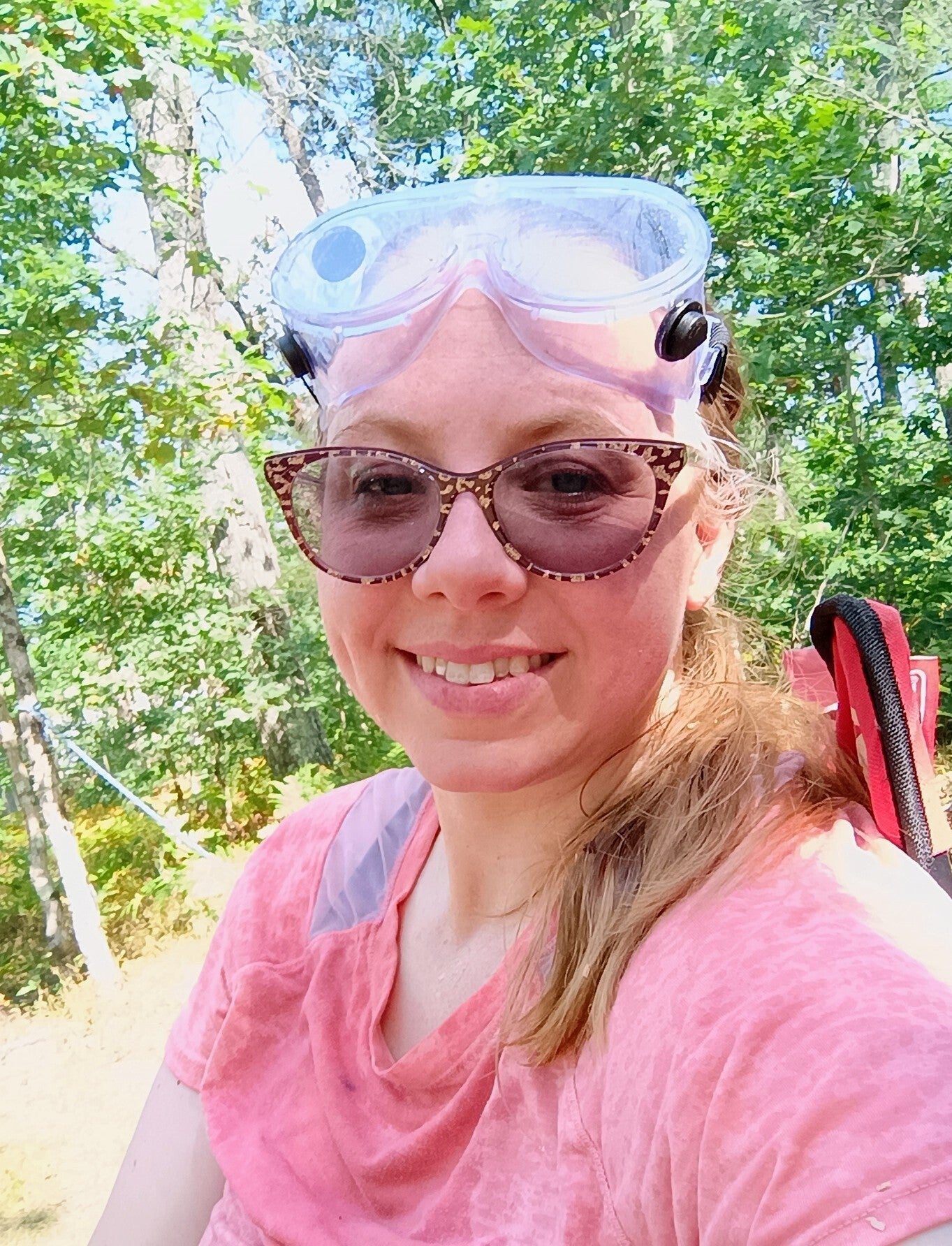
The author working outside in her new life.

Photo Courtesy Of Melissa Main

The author working outside in her new life.

Public health felt like the one corner of nursing where the stakes were not life or death every single minute. I moved to a rural county where many families lived off-grid, and I became the only public health nurse for the region. I imagined helping with water access, housing instability, food shortages and clothing needs. My family started our own life in Michigan in a camper, filling five-gallon jugs by hand and navigating limited heat and water, so I understood the community.

But even in public health, the work was limited by funding and politics. Instead of addressing big problems, I found myself focused on vaccines, birth control and disease contact tracing. All important, but much smaller scale than the work the community needed. Then the funding cuts began. Programs froze. Jobs were eliminated. Leadership reminded us every few months that no one’s job was safe, not even theirs. Instead of building long-term public health, we were waiting for the next round of layoffs.

Then the shutdown happened, and the writing was on the wall. How do you serve a community when the structure meant to support it is being dismantled faster than you can help? I realised I could not keep practicing nursing inside systems that were dissolving beneath me.

We say nurses “leave the profession,” but you never really do. I did not stop being a nurse, but I stepped to the side of nursing.

Out here in the woods, I began to feel like myself again. I wake with the sun. I tend to the animals who depend on me. Building a homestead was not only survival. It became a new way to serve. When I gather eggs or bottle-feed calves, I am reminded that even now, in small ways like giving free eggs to neighbours, I am building the kind of community I always wanted. A community where people support one another directly instead of relying on systems that continue to fail them.

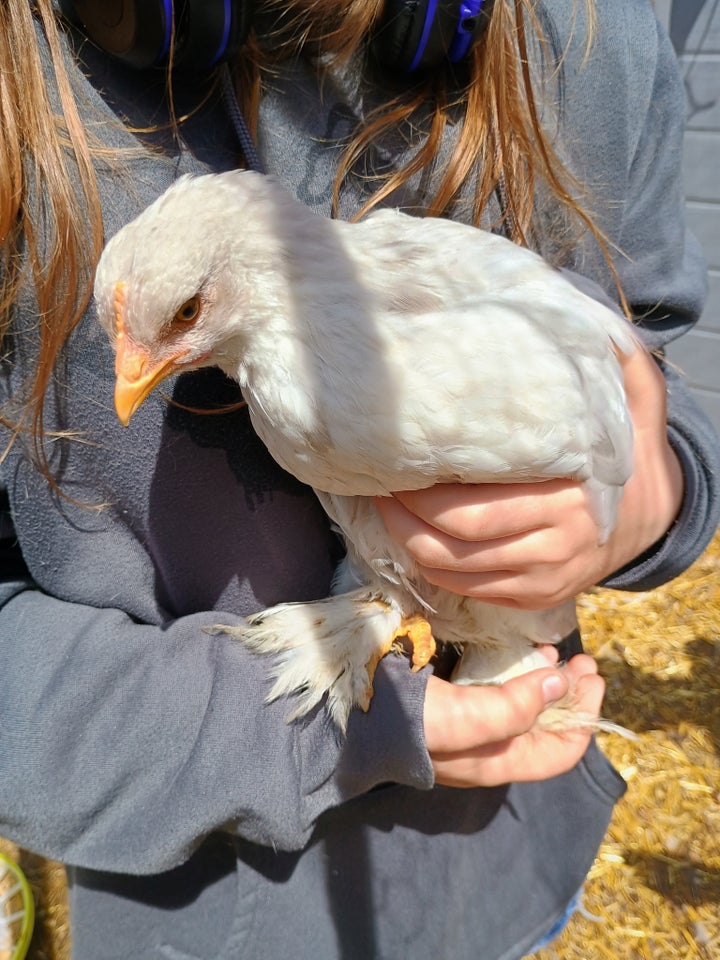
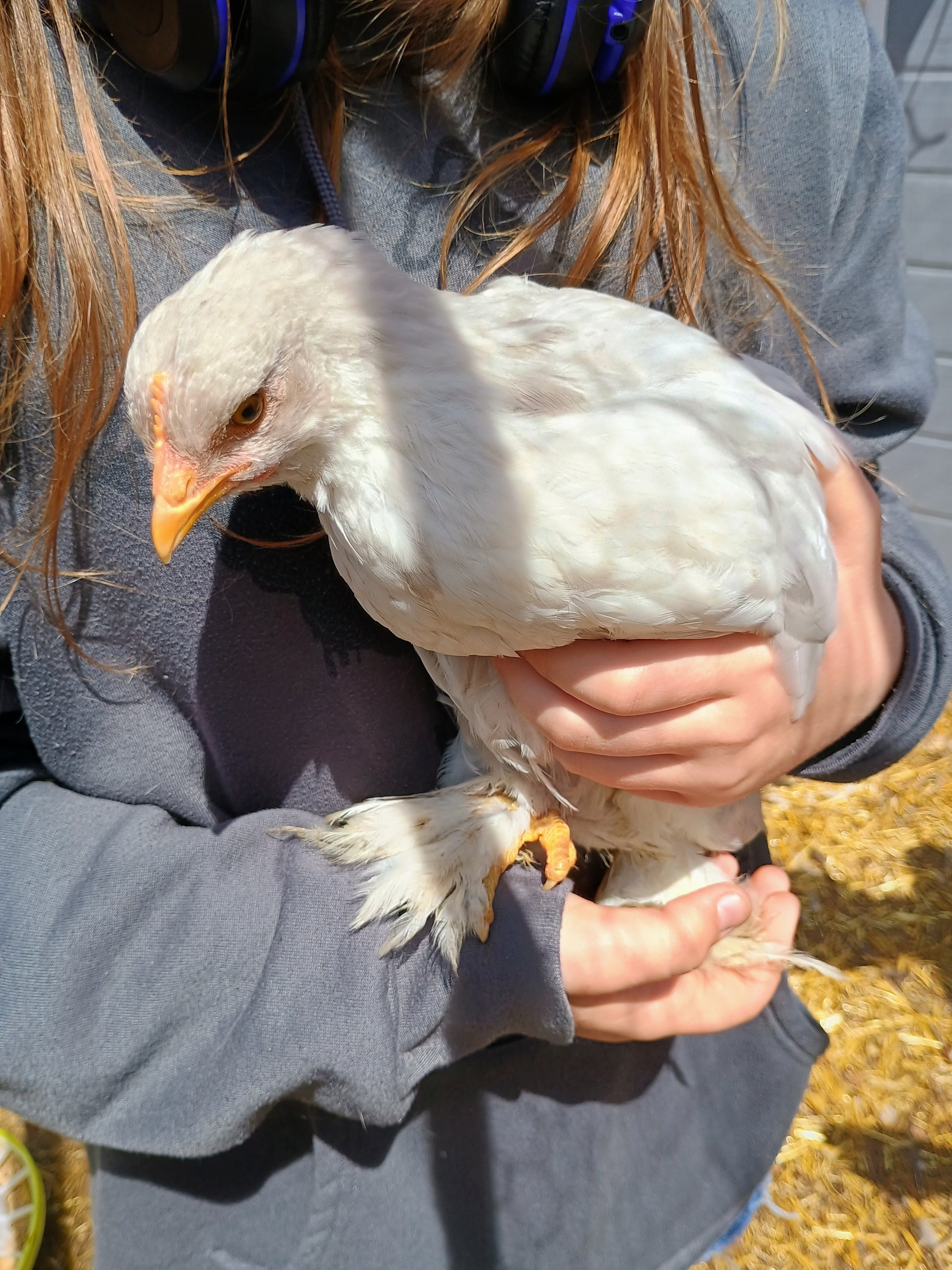
One of the chickens on the author cares for.

Photo Courtesy Of Melissa Main

One of the chickens on the author cares for.

But this story is not about me. It is about the nurses still showing up every day to a system full of cracks they did not create but are expected to hold together. They deserve a health care system that cares for them with the same intensity they give to everyone else.

Instead, nurses across the nation are watching their profession be reclassified so that the education required for it is no longer considered a professional degree. The wording alone is in poor taste, and it lands like salt in a wound that nurses have never been given the time or space to heal. For many of us, it is one more reminder that the system does not value the work we do.

I have built a peaceful life, one that lets me breathe. But nurses should not have to leave the bedside to save themselves. Nurses do not need more resilience. What they need is support, respect and a health care system that gives them a reason to stay.

Share Button

The 98% mystery: Scientists just cracked the code on “junk DNA” linked to Alzheimer’s

When people picture DNA, they often imagine a set of genes that shape our physical traits, influence behavior, and help keep our cells and organs functioning.

But genes make up only a small slice of our genetic code. Just around 2% of DNA contains our 20,000-odd genes. The other 98% has long been labelled the non-coding genome, or so-called ‘junk’ DNA. This larger portion includes many of the control switches that determine when genes turn on and how strongly they act.

Astrocytes and hidden DNA switches in the brain

Researchers from UNSW Sydney have now pinpointed DNA switches that help regulate astrocytes. Astrocytes are brain cells that support neurons, and they are known to be involved in Alzheimer’s disease.

In research published on December 18 in Nature Neuroscience, a team from UNSW’s School of Biotechnology & Biomolecular Sciences reported that they tested nearly 1000 possible switches in lab-grown human astrocytes. These switches are strings of DNA called enhancers. Enhancers can sit far from the genes they influence, sometimes separated by hundreds of thousands of DNA letters, which makes them difficult to investigate.

Testing nearly 1000 enhancers at once

To tackle that problem, the researchers combined CRISPRi with single-cell RNA sequencing. CRISPRi is a method that can switch off small stretches of DNA without cutting it. Single-cell RNA sequencing measures gene activity in individual cells. Together, the tools let the team examine the effects of nearly 1000 enhancers in a single large-scale test.

“We used CRISPRi to turn off potential enhancers in the astrocytes to see whether it changed gene expression,” says lead author Dr. Nicole Green.

“And if it did, then we knew we’d found a functional enhancer and could then figure out which gene — or genes — it controls. That’s what happened for about 150 of the potential enhancers we tested. And strikingly, a large fraction of these functional enhancers controlled genes implicated in Alzheimer’s disease.”

Cutting the list from 1000 candidates to about 150 confirmed switches greatly reduces the search area in the non-coding genome for genetic clues linked to Alzheimer’s disease.

“These findings suggest that similar studies in other brain cell types are needed to highlight the functional enhancers in the vast space of non-coding DNA”

Why “in-between” DNA matters for many diseases

Professor Irina Voineagu, who oversaw the study, says the results also provide a useful reference for interpreting other genetic research. The team’s findings create a catalogue of DNA regions that can help explain results from studies looking for disease-related genetic changes.

“When researchers look for genetic changes that explain diseases like hypertension, diabetes and also psychiatric and neurodegenerative disorders like Alzheimer’s disease — we often end up with changes not within genes so much, but in-between,” she says.

Her team directly tested those “in-between” stretches in human astrocytes and showed which enhancers truly control key brain genes.

“We’re not talking about therapies yet. But you can’t develop them unless you first understand the wiring diagram. That’s what this gives us — a deeper view into the circuitry of gene control in astrocytes.”

From gene switches to AI prediction models

Running nearly a thousand enhancer tests in the lab took painstaking effort. The researchers say this is the first time a CRISPRi enhancer screen of this size has been carried out in brain cells. Now that the groundwork has been done, the dataset can also be used to train computer models to predict which suspected enhancers are real gene switches, potentially saving years of lab work.

“This dataset can help computational biologists test how good their prediction models are at predicting enhancer function,” says Prof. Voineagu.

She adds that Google’s DeepMind team is already using the dataset to benchmark their recent deep learning model called AlphaGenome.

Potential tools for gene therapy and precision medicine

Because many enhancers are active only in specific cell types, targeting them could offer a way to fine-tune gene expression in astrocytes without changing neurons or other brain cells.

“While this is not close to being used in the clinic yet — and much work remains before these findings could lead to treatments — there is a clear precedent,” Prof. Voineagu says.

“The first gene editing drug approved for a blood disease — sickle cell anemia — targets a cell-type specific enhancer.”

Dr. Green says enhancer research could become an important part of precision medicine.

“This is something we want to look at more deeply: finding out which enhancers we can use to turn genes on or off in a single brain cell type, and in a very controlled way,” she says.

Share Button