Regular pop-up vaccination clinics are available at The Bevy community pub in Brighton.


Regular pop-up vaccination clinics are available at The Bevy community pub in Brighton.
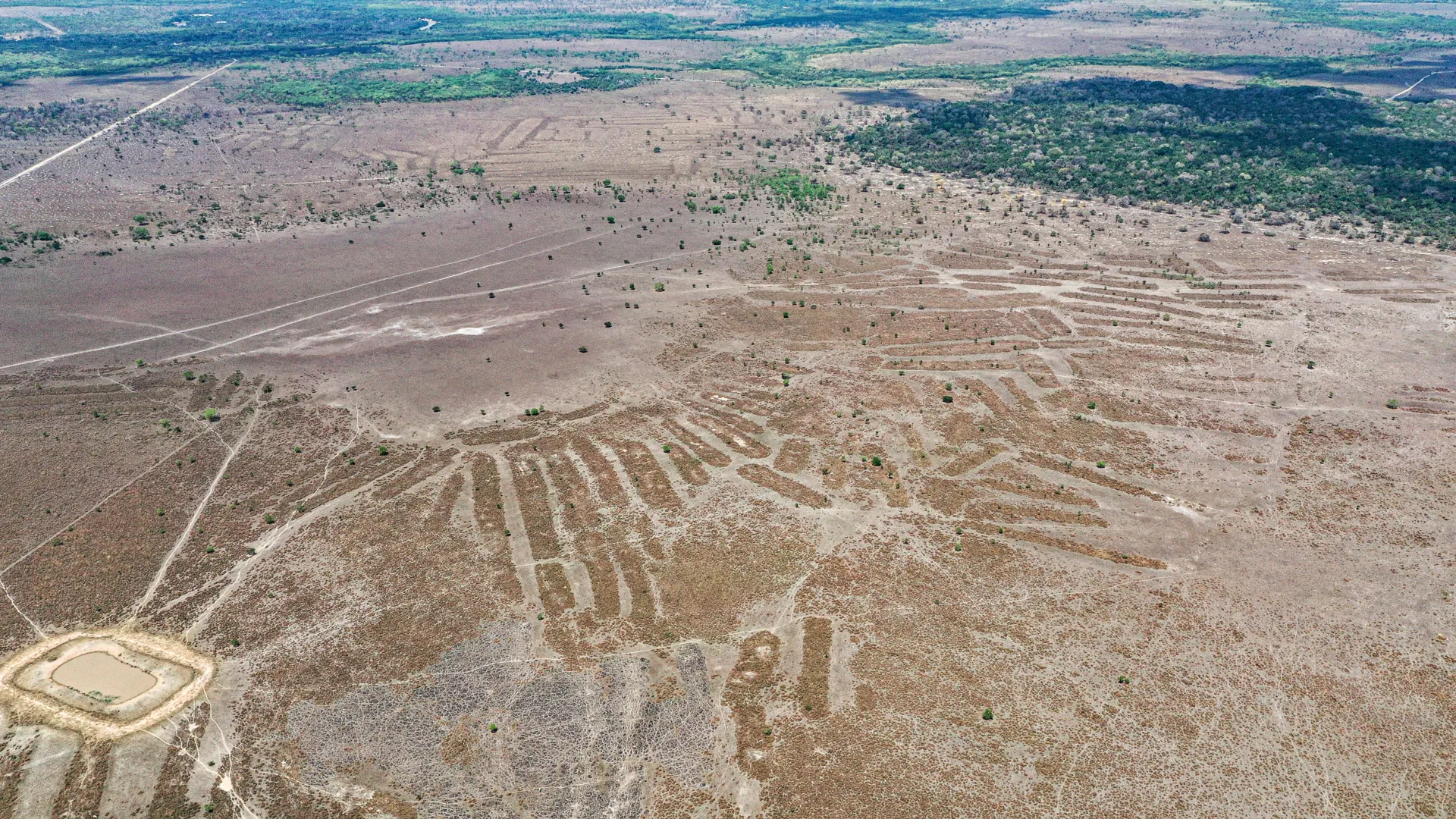
In September 2021, a team of specialists traveled to one of the least-documented areas of the Bolivian Amazon: the Great Tectonic Lakes of Exaltación in the department of Beni. The expedition, organized by the Grupo de Trabajo para los Llanos de Moxos (GTLM), brought together experts from the Wildlife Conservation Society, the National Museum of Natural History, the Institute of Ecology, the Biodiversity and Environment Research Center, the Aquatic Resources Research Center, and the Department of Anthropology of the Americas at the University of Bonn.
In the southwestern Amazon, the tectonic Lakes Rogaguado and Ginebra reveal a landscape shaped by generations of human innovation. Beneath the open grasslands and shallow waters lie the remains of extensive earthworks, raised agricultural fields, and interconnected canals that reflect a long history of people adapting to a dynamic environment.
These lakes sit within the Municipal Protected Area of Grandes Lagos Tectónicos de Exaltación and form part of the Río Yata Ramsar wetland complex, which is recognized by UNESCO for both its ecological and cultural value. Set in the Llanos de Moxos, a vast network of savannas, gallery forests, and floodplains that make up the largest wetland system in the Amazon basin, this area has inspired curiosity for centuries. Ethnohistorical accounts even linked it to the legendary ‘Land of Paititi.’ Only recently has its deep human past begun to come into clearer view.
Mapping a Long History of Settlement
Using a combination of surveys, excavations, and LiDAR imaging, the research team documented several archaeological sites: Paquío, Coquinal, Isla del Tesoro, and Jasschaja. Each site represents a different stage in the long sequence of habitation across this region.
Radiocarbon dates reveal repeated occupations from roughly 600 to 1400 CE. Findings at Paquío show an early settlement beginning around 600 CE, followed by a more intensive occupation between 1000 and 1200 CE. This later phase included shell middens, dense ceramic refuse, and a sophisticated system of canals and raised fields connected to maize-based farming. Jasschaja, which dates from 1300 to 1400 CE, reflects broader landscape alterations and greater botanical diversity, suggesting intensified forest and crop management during its occupation.
Innovations in Water Management and Agriculture
The terrain of the Llanos de Moxos is filled with geometric forms that reveal themselves on closer inspection. Circular and rectangular ditches, drainage channels, raised planting platforms, and clusters of mounds create a complex network designed for water control and cultivation. These structures were built to regulate seasonal flooding, guide water flow, and create stable areas for living and farming within a wetland that changes dramatically throughout the year.
Their many shapes, ranging from geometric enclosures to long elevated fields, indicate that there was no single standardized design. Instead, they represent centuries of experimentation as communities responded to shifting ecological and social conditions. Together, these features highlight the cultural diversity and long-term resilience of the people who developed them.
Excavations at Paquío and Jasschaja also revealed details about a varied pre-Hispanic diet that relied on wetland resources. Fish such as wolf fish, peacock bass, and South American lungfish were especially common, accompanied by reptiles including caimans and turtles, and mammals such as capybaras, pacas, and armadillos. Plant remains show the use of maize, legumes, and multiple palm species — moriche palm, corozo palm, cumare palm, totai palm, palmita, and peach palm. Together, these remains point to a balanced subsistence strategy that combined fishing, hunting, gathering, and farming.
Biocultural Knowledge and Indigenous Leadership
The Cayubaba and Movima communities continue to live in these landscapes, where rich biodiversity is deeply connected to cultural heritage. Their long-standing presence and environmental knowledge help maintain a unique form of biocultural heritage in which ecological and cultural diversity have developed side by side over many generations.
During the post-Covid-19 field seasons, collaboration with local communities was rooted in open communication and mutual respect. Representatives of the Cayubaba Indigenous Council, which includes 21 Cayubaba and Movima communities, assisted researchers in identifying areas for study, providing access to culturally important places, and specifying sites that should not be disturbed. While interactions were limited for health reasons, this partnership ensured that the research reflected community priorities and contributed to a fuller understanding of the living heritage of the region.
Through the GTLM, Indigenous leaders and scientists are working together to link archaeological and ecological research with conservation initiatives. These efforts emphasize that the Llanos de Moxos is not only a center of biodiversity but also a landscape shaped through long human histories, and they support continued management of the Yata River Ramsar site and the protected areas connected to it.
Lessons From the Past for a Changing Amazon
As deforestation, expanding agriculture, and climate change put increasing pressure on the Amazon, the landscapes around Lakes Rogaguado and Ginebra highlight the importance of sustainable land-use traditions. Archaeological evidence shows that past communities developed flexible ways of living that combined farming, fishing, and forest management. Rather than seeking to control or overexploit the environment, they adapted to its seasonal cycles and used periodic flooding as an opportunity.
Although raised-field agriculture eventually ended — likely because of population decline and social upheaval after European colonization — this does not diminish the effectiveness of these systems. For centuries, communities maintained productive landscapes by working with the region’s natural rhythms. Their practices challenge modern assumptions about what counts as “development” and remind us that resilience often emerges from diversity: of species, of knowledge, and of cultural traditions.
Protecting this biocultural heritage is now a global responsibility. The wetlands of the Llanos de Moxos continue to store carbon, moderate water systems, and support a wide range of species. Conservation efforts must also respect the people who have cared for these landscapes for generations. In this way, archaeology becomes more than a study of the past; it becomes a means of reconnecting ancient knowledge with today’s urgent debates about sustainability and environmental justice.
The Llanos de Moxos demonstrate that the Amazon has always been a place where people and nature have shaped one another. Its monumental earthworks, forest islands, and living cultural traditions suggest that part of our shared future may depend on listening more closely to these landscapes that remember.

Though you might associate menopause with hot flushes, that’s just one of 62 symptoms linked to the phase.
Menopause and perimenopause are also associated with changes to your sex drive and even differences in your vaginal and vulvar tissue.
Advertisement
And seeing as the entire menopausal process can last for decades, it seems unfair to expect people to navigate it without much guidance on their changing bodies and needs.
Which is why we spoke to licensed sexologist, relationship therapist and author at Passionerad, Sofie Roos, about how to establish a healthy sex life during and after menopause.
Here, she shared her seven rules:
“During and after the menopause, your lust tends to change. Some people get less interested in sex, while others [develop] a [stronger] desire,” Roos said.
Advertisement
“It’s also common to experience a different or deeper and more emotionally based lust than before.”
As much as possible, the sexologist advised, try not to “panic” about these changes.
“See it as a chance to discover something new, rather than trying to go back to how things used to be… if you can accept that things won’t be the same, you also open up the door for better pleasure than pre-menopause.”
Vaginal dryness can increase during menopause thanks to changes in your oestrogen levels. This “tends to make sex uncomfortable, which puts many in a negative loop where they get less interested in sex due to it not feeling as good anymore,” Roos stated.
“Therefore, take the help of lube, ideally a silicone-based option of good quality, and make sure to use a lot – this will be a saviour!”
Advertisement
Some research suggests that menopause may mean some people take longer to “get going” in the bedroom, as hormonal changes lead to different levels of sensitivity.
“This means that you should invest more time in foreplay, and switch up how you do it,” advised Roos.
“Try a sensual massage, kiss and cuddle longer, focus more on slow touches that build up in intensity, and don’t be afraid to take the help of sex toys such as vibrators, which can help blood to flow [more easily] to the vagina.”
Advertisement
Partnered sex is only one side of the equation here. Roos said menopause is a great opportunity to work out how to offer your own body what it needs, too.
“Discover new ways of turning yourself on, for example, by reading sex novels or watching new types of porn… invest in sex toys, especially vibrators, use lots of lube, and build up the pleasure [over] a longer time,” she stated.
“Also, be open to adapting and changing the way you masturbate based on how things feel and what works, and don’t give up if it takes some time to find solo sex that feels as amazing as before… You will get there eventually.”
Advertisement
If you have a partner, they may benefit from learning about any changing needs, too, Roos said.
“Try to have a good, honest and respectful communication around intimacy. Boundaries and needs get even more important when the body changes, so make sure to open up [about] what feels good, what doesn’t work as it used to, and what you’re curious about trying.
“Invite and help your partner to help you have good sex, and don’t keep it to yourself, as that often leads to stress and anxiety, which is a real killer for [your] sex drive. It’s the two of you in this!”
“I really recommend strengthening the pelvic floor as that helps manage many menopause symptoms, especially symptoms related to sex… it leads to higher sensitivity, more pleasurable intimacy, and a better ability to orgasm,” said Roos.
Advertisement
A 2022 paper found that Kegels and lube both improved sexual function in menopausal women, with Kegels potentially being the more effective of the two.
It sounds obvious, but Roos said that remembering sex is meant to be fun is key to a better connection with your body – whether you’re pre-, post-, or mid-menopause.
“Switch the mindset of sex being something you need to perform, to it instead being a moment of emotional and physical intimacy, playfulness and… pleasure.
Advertisement
“The less pressure, the easier it is to find your own lust and sexiness during and after menopause,” she ended.

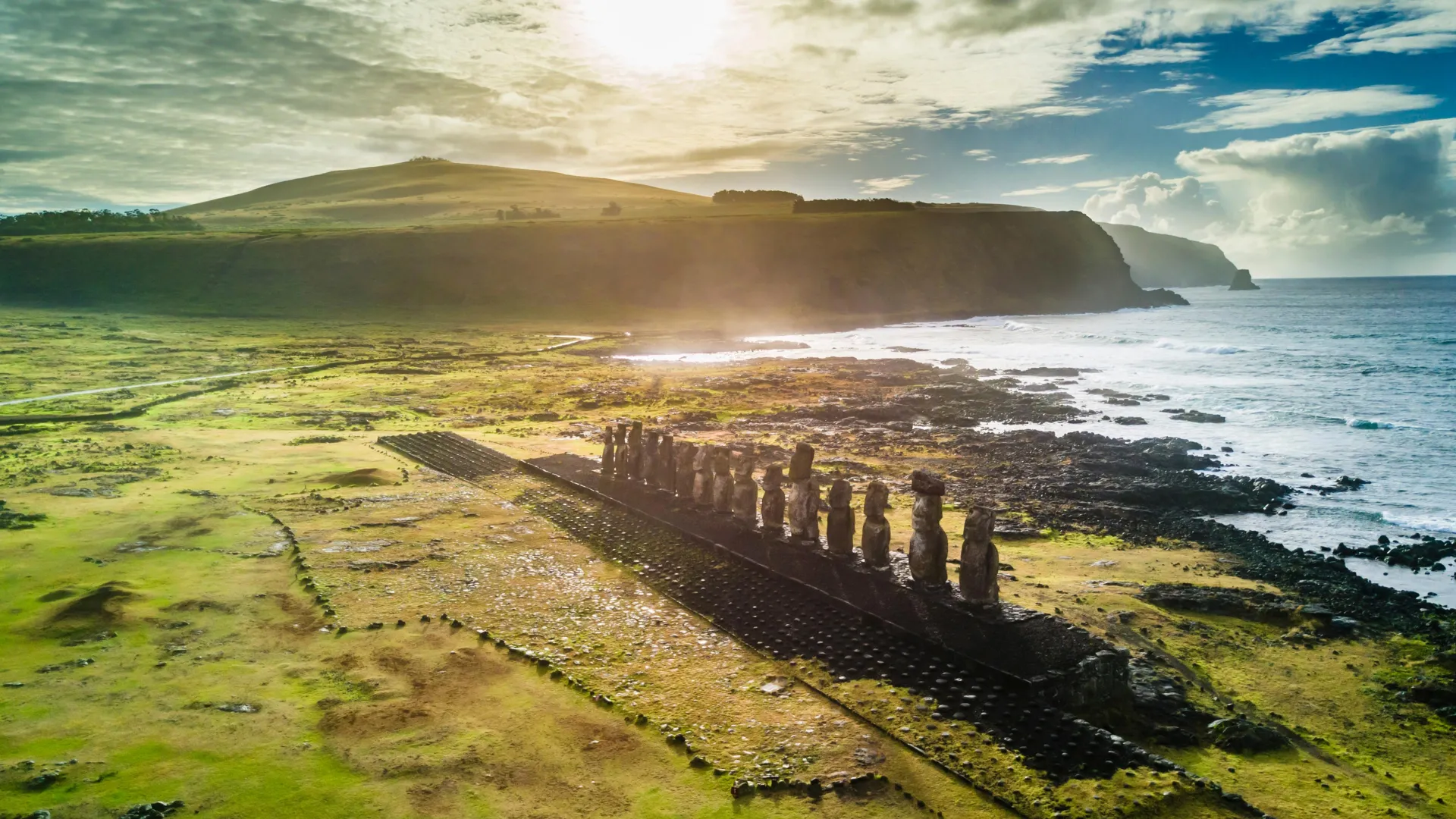
A new study published November 26, 2025 in the open-access journal PLOS One reports that the well-known stone figures of Rapa Nui (Easter Island) were created by many separate carving groups. The research team, led by Carl Philipp Lipo of Binghamton University, New York and colleagues, examined how these communities contributed to the making of the island’s famous monuments.
Rapa Nui is widely recognized for its hundreds of stone statues (moai), crafted by Polynesian settlers beginning in the 13th century. Archaeological work has repeatedly shown that the island was home to many small family groups rather than a unified political system. This background has prompted researchers to explore whether the carving of moai followed the same decentralized structure.
High-Resolution 3D Modeling Reveals 30 Quarry Work Zones
For this study, scientists gathered more than 11,000 photographs of Rano Raraku, the primary moai quarry. These images were merged into a detailed 3D reconstruction that captured hundreds of moai preserved in different stages of production. After analyzing the model, the team identified 30 distinct quarrying areas, each showing unique carving approaches. Additional clues indicate that completed or partially shaped moai were moved away from the quarry along several different paths. Taken together, these patterns suggest that statue creation reflected the island’s broader social organization, with carving efforts carried out independently rather than through centralized oversight.
New Evidence Challenges Long-Held Assumptions
The findings call into question the idea that projects of this scale require strict hierarchy or a single coordinating authority. Similarities between moai appear to come from the sharing of cultural knowledge instead of coordinated, joint labor. The new quarry model also provides a valuable dataset that can support future investigations and guide cultural management at this UNESCO World Heritage site. The same methods used here can also be applied to study other archaeological locations.
The authors explain: “Much of the so-called “mystery” of Rapa Nui (Easter Island) comes from the lack of openly available, detailed evidence that would allow researchers to evaluate hypotheses and construct explanations. Here, we present the first high-resolution 3D model of the moai quarry at Rano Raraku, the central quarry for nearly 1,000 statues, offering new insights into the organizational and manufacturing processes of these giant megalithic figures.”
Fieldwork for this research was supported by a National Science Foundation grant (Award #2218602). The funders had no involvement in study design, data collection and analysis, decisions related to publication, or manuscript preparation.

Jeremy Corbyn has suffered a major blow after his new party’s rank-and-file rejected his bid to become its leader.
Members of the left-wing Your Party voted narrowly against having a single elected leader, opting instead for a collective model that put a committee of activists in charge.
Advertisement
Corbyn had previously said he backed the “sole leader” model and would stand for the position.
The collective model was supported by former Labour MP Zarah Sultana, who is engaged in a bitter power struggle with Corbyn and his supporters.
She said: Together, we’re building a new socialist party – radically democratic and powered by a mass movement. This party will be led by its members, not MPs.”
A Your Party spokesperson said the vote “shows that we really are doing politics differently: from the bottom up, not the top down”.
Advertisement
The new party’s inaugural conference in Liverpool has highlighted the deep splits within the organisation even before it is properly up and running.
Sultana, who sits as an independent MP after losing the Labour whip last year, boycotted the first day of the conference following the expulsion of a number of members said to also belong to the Socialist Workers Party.
She claimed they were the victims of a “witch hunt” by Corbyn supporters.
The Coventry South MP is still due to give a speech in the main conference hall on Sunday afternoon as scheduled.
Advertisement
Corbyn will close the conference by announcing the result of a ballot on the new party’s formal name, with members choosing between Your Party, Our Party, Popular Alliance and For The Many.


Vision guides an animal’s actions, but new research from MIT shows that the relationship goes both ways. The study, published November 25 in Neuron, reports that behavior and internal conditions directly influence how visual information is processed. In mice, the brain’s prefrontal cortex, which serves as a major center for executive control, sends tailored signals to regions involved in vision and movement. These signals adjust how those regions operate depending on factors such as how alert the mouse is and whether it is actively moving.
“That’s the major conclusion of this paper: There are targeted projections for targeted impact,” said senior author Mriganka Sur, Paul and Lilah Newton Professor in The Picower Institute for Learning and Memory and MIT’s Department of Brain and Cognitive Sciences.
Investigating Customized Prefrontal Signals
Scientists have long proposed, including Sur’s colleague Earl K. Miller at MIT, that the prefrontal cortex can guide the activity of more posterior areas of the brain. While anatomical evidence has supported this idea, the goal of the new study was to determine whether the prefrontal cortex sends one broad type of signal or instead crafts distinct messages for different target regions. Lead author and Sur Lab postdoctoral researcher Sofie Ährlund-Richter also sought to identify which specific neurons receive these signals and how the communication influences downstream processing.
Different Prefrontal Regions Serve Different Roles
The team identified a number of new insights. Two areas in the prefrontal cortex, the orbitofrontal cortex (ORB) and the anterior cingulate area (ACA), were found to relay information about both arousal and movement to two other regions: the primary visual cortex (VISp) and the primary motor cortex (MOp). These messages appear to have unique effects. For example, higher arousal increased ACA’s tendency to help VISp sharpen its visual representations. ORB, however, became influential only when arousal was very high, and its involvement appeared to decrease the clarity of visual encoding. According to Ährlund-Richter, ACA may help the brain focus on potentially meaningful visual details as arousal rises, while ORB may act to reduce attention to distracting or overly strong stimuli.
“These two PFC subregions are kind of balancing each other,” Ährlund-Richter said. “While one will enhance stimuli that might be more uncertain or more difficult to detect, the other one kind of dampens strong stimuli that might be irrelevant.”
Mapping and Monitoring Brain Circuits
To better understand the involved pathways, Ährlund-Richter performed detailed anatomical tracing of the connections ACA and ORB form with VISp and MOp. In additional experiments, mice ran freely on a wheel while viewing structured images or naturalistic movies at different contrast levels. At certain moments, small air puffs increased the animals’ arousal level. Throughout these tasks, researchers recorded the activity of neurons in ACA, ORB, VISp and MOp, with particular attention to the signals traveling along the axons linking prefrontal and posterior areas.
The tracing work showed that ACA and ORB each communicate with a variety of cell types in their target regions rather than a single cell class. They also connect in distinct spatial patterns. In VISp, ACA primarily targeted layer 6, while ORB communicated mainly with layer 5.
How Arousal and Movement Shift Visual Processing
When the team examined the transmitted information and neural activity, several consistent patterns emerged. ACA neurons conveyed more detailed visual information than ORB neurons and were more responsive to changes in contrast. ACA activity also tracked closely with arousal level, while ORB responded only when arousal reached a high threshold. When signaling to MOp, both regions conveyed information about running speed. When signaling to VISp, however, they only indicated whether the mouse was moving or still. The two prefrontal regions also carried information about arousal and a small amount of visual detail to MOp.
To see how this communication affects visual processing, the researchers temporarily blocked the pathways leading from ACA and ORB to VISp. This allowed them to measure how VISp neurons responded without these inputs. They found that ACA and ORB exerted specific and opposing effects on visual encoding depending on the mouse’s movement and level of arousal.
A Specialized Model of Prefrontal Feedback
“Our data support a model of PFC feedback that is specialized at both the level of PFC subregions and their targets, enabling each region to selectively shape target-specific cortical activity rather than modulating it globally,” the authors wrote in Neuron.
In addition to Sur and Ährlund-Richter, the research team included Yuma Osako, Kyle R. Jenks, Emma Odom, Haoyang Huang, and Don B. Arnold.
The work was supported by a Wenner-Gren foundations Postdoctoral Fellowship, the National Institutes of Health, and the Freedom Together Foundation.

Every day, the brain turns passing impressions, creative sparks, and emotional experiences into lasting memories that shape our identity and guide our decisions. A central question in neuroscience has been how the brain determines which pieces of information are worth storing and how long those memories should remain.
Recent findings show that long-term memories form through a sequence of molecular timing mechanisms that activate across different parts of the brain. Using a virtual reality behavioral system in mice, scientists identified regulatory factors that help move memories into increasingly stable states or allow them to fade entirely.
A study published in Nature highlights how several brain regions work together to reorganize memories over time, with checkpoints that help assess how significant each memory is and how durable it should be.
“This is a key revelation because it explains how we adjust the durability of memories,” says Priya Rajasethupathy, head of the Skoler Horbach Family Laboratory of Neural Dynamics and Cognition. “What we choose to remember is a continuously evolving process rather than a one-time flipping of a switch.”
Moving Beyond the Classic Memory Model
For many years, researchers focused on two primary memory centers: the hippocampus, which supports short-term memory, and the cortex, which was believed to store long-term memories. These long-term memories were thought to sit behind biological on-and-off switches.
“Existing models of memory in the brain involved transistor-like memory molecules that act as on/off switches,” says Rajasethupathy.
This older view suggested that once a memory was marked for long-term storage, it would persist indefinitely. Although this framework provided useful insights, it did not explain why some long-term memories last for weeks while others remain vivid for decades.
A Key Pathway Linking Short and Long-Term Memory
In 2023, Rajasethupathy and colleagues described a brain circuit that connects short-term and long-term memory systems. A central element of this pathway is the thalamus, which helps determine which memories should be kept and directs them to the cortex for long-term stabilization.
These discoveries opened the door to deeper questions: What happens to memories once they leave the hippocampus, and what molecular processes decide whether a memory becomes lasting or disappears?
Virtual Reality Experiments Reveal Memory Persistence
To investigate these mechanisms, the team built a virtual reality setup that allowed mice to form specific memories. “Andrea Terceros, a postdoc in my lab, created an elegant behavioral model allowed us to break open this problem in a new way,” Rajasethupathy says. “By varying how often certain experiences were repeated, we were able to get the mice to remember some things better than others, and then look into the brain to see what mechanisms were correlated with memory persistence.”
Correlation alone could not answer the key questions, so co-lead Celine Chen created a CRISPR-based screening platform to alter gene activity in the thalamus and cortex. This approach showed that removing certain molecules changed how long memories lasted, and each molecule operated on its own timescale.
Timed Programs Guide Memory Stability
The results indicate that long-term memory relies not on a single on/off switch, but on a sequence of gene-regulating programs that unfold like molecular timers across the brain.
Early timers activate quickly but fade fast, allowing memories to disappear. Later timers turn on more gradually, giving important experiences the structural support needed to persist. In this study, repetition served as a stand-in for importance, letting researchers compare frequently repeated contexts with those seen only occasionally.
The team identified three transcriptional regulators essential for maintaining memories: Camta1 and Tcf4 in the thalamus, and Ash1l in the anterior cingulate cortex. These molecules are not required to form the initial memory but are crucial for preserving it. Disrupting Camta1 and Tcf4 weakened connections between the thalamus and cortex and caused memory loss.
According to the model, memory formation begins in the hippocampus. Camta1 and its downstream targets help keep that early memory intact. Over time, Tcf4 and its targets activate to strengthen cell adhesion and structural support. Finally, Ash1l promotes chromatin remodeling programs that reinforce memory stability.
“Unless you promote memories onto these timers, we believe you’re primed to forget it quickly,” Rajasethupathy says.
Shared Memory Mechanisms Across Biology
Ash1l is part of a protein family known as histone methyltransferases, which help maintain memory-like functions in other systems. “In the immune system, these molecules help the body remember past infections; during development, those same molecules help cells remember that they’ve become a neuron or muscle and maintain that identity long-term,” Rajasethupathy says. “The brain may be repurposing these ubiquitous forms of cellular memory to support cognitive memories.”
These discoveries may eventually help researchers address memory-related diseases. Rajasethupathy suggests that, by understanding the gene programs that preserve memory, scientists may be able to redirect memory pathways around damaged brain regions in conditions such as Alzheimer’s. “If we know the second and third areas that are important for memory consolidation, and we have neurons dying in the first area, perhaps we can bypass the damaged region and let healthy parts of the brain take over,” she says.
Next Steps: Decoding the Memory Timer System
Rajasethupathy’s team now aims to uncover how these molecular timers are activated and what determines their duration. This includes investigating how the brain evaluates the importance of a memory and decides how long it should last. Their work continues to point toward the thalamus as a central hub in this decision-making process.
“We’re interested in understanding the life of a memory beyond its initial formation in the hippocampus,” Rajasethupathy says. “We think the thalamus, and its parallel streams of communication with cortex, are central in this process.”

I regret to inform you that Christmas is scarily close – a matter of weeks away.
While in theory that’s a good thing (peace and goodwill, mince pies, etc, etc), the reality is often pretty hectic.
The buying, decorating, planning, and endless cooking are one thing; the post-unwrapping living room carnage is another, especially if your kids don’t exactly embrace a minimalist lifestyle when it comes to their toys as it is.
Advertisement
Which is why some experts, like Max Wilson, co-founder of Pocket Storage, say trying a “toy rotation” now can help you come 25 December.
Organisation blogger Tidy Dad described a situation many parents will be familiar with: when he kept all of his kids’ toys in a single playroom, his daughter would “eventually move every toy from a bin onto the floor, leaving no room to play or to walk through the space”.
Since then, though, he adopted a “toy rotation” system: basically, he leaves the majority of his children’s toys in a kitchen pantry out of reach, swapping them out every couple of days so they can still enjoy some variety.
Advertisement
That way, there are never enough items in a single space to truly crowd the carpet.
Speaking to Homes & Gardens, Wilson said he’s a huge fan of the strategy.
“The secret to a stress-free Christmas morning is making space now… By implementing a strategic toy rotation… you instantly clear physical space, curb impulse buying, and make room for the new gifts without feeling overwhelmed.”
He recommended getting going in November. But with vanishingly few days left in the month as of the time of writing, we reckon “ASAP” is the second-best start date.
Advertisement
Wilson said it’s a good idea to change the “curated” toys you have out every few weeks.
Life With Less Mess said that, depending on how many toys you have out at any given time, anything from once a week to once or twice a month could work.
They added that you might get some cues from your child or children when it’s time to change the rotation, too – they might start fighting over toys, leaving them on the floor, and/or seeming bored.
When this happens, the organisation site advised, “either involve your kids or wait until they’re gone or sleeping and surprise them with a ‘new’ space”.
Advertisement
If you can, try placing toys in labelled containers – this’ll make packing and unpacking a lot easier.

Russell T Davies says misinformation about the virus made him “despair”.
Russell T Davies says misinformation about the virus made him “despair”.
