Commonly used antibiotics can seriously damage the hearing of some babies.


Commonly used antibiotics can seriously damage the hearing of some babies.

Cornell University researchers have unearthed precise, microscopic clues to where magma is stored, offering a way to better assess the risk of volcanic eruptions.
In recent years, scientists have used satellite imagery, earthquake data and GPS to search for ground deformation near active volcanoes, but those techniques can be inaccurate in locating the depth of magma storage.
By finding microscopic, carbon dioxide-rich fluids encased in cooled volcanic crystals, scientists can accurately determine — within one hundred meters — where magma is located.
“A fundamental question is where magma is stored in Earth’s crust and mantle,” said Esteban Gazel, professor of engineering and lead author of the study, published in Science Advances. “That location matters because you can gauge the risk of an eruption by pinpointing the specific location of magma, instead of other signals like hydrothermal system of a volcano.”
Gazel notes that speed and precision are essential. “We’re demonstrating the enormous potential of this improved technique in terms of its rapidity and unprecedented accuracy,” he said. “We can produce data within days of the samples arriving from a site, which provides better, near real-time results.”
In volcanic events, magma reaches the Earth’s surface, and it erupts as lava and — depending on how much gas it contains — could be explosive in nature. When deposited as part of the fallout of the eruption, fragmented fine-grained material — called tephra — can be collected and evaluated.
Gazel and doctoral student Kyle Dayton deduced how to use inclusions of carbon dioxide-rich fluids trapped within olivine crystals to precisely indicate depth, as the carbon dioxide density of these inclusions is controlled by pressure.
These fluids can be measured quickly using an instrument to determine — in terms of kilometers — how far down the magma was stored and the depth of the scorching reservoir.
Gazel and Dayton joined a small, elite team of international researchers to study the Cumbre Vieja volcano on La Palma in the Canary Islands. Gazel and Dayton picked through tephra to find crystals, which in turn provide data to improve eruption models and forecasts.

Many of the hallmarks of human civilization — from roads and power lines to pet dogs — are taking a larger-than-expected toll on non-human primates living in Africa, according to two recent studies.
The findings result from a collaboration between the University of Colorado Boulder and three South Africa-based institutions: the University of Venda, Lajuma Research Centre and the conservation organization the Endangered Wildlife Trust (EWT). They take an almost forensic look at what is killing wild animals in South Africa. The country is home to five species of non-human primates, including greater (Otolemur crassicaudatus) and southern lesser (Galago moholis) bushbabies. These primates spend most of their lives in trees, and some are so small they can fit in the palm of your hand.
In one study, scientists led by Birthe Linden at Lajuma analyzed hundreds of cases in which non-human primates had been killed on roads or around power lines across the country. In a companion paper, the researchers explored the growing risks that domestic dogs pose to the animals.
The research shows that the threats facing the world’s monkeys, apes and other non-human primates aren’t always easy to see, particularly for lesser-studied animals like bushbabies.
“Bushbabies, especially, are an example of species that may be having problems, but we don’t know what they are until we go looking,” said Michelle Sauther, co-author of the two studies and professor of anthropology at CU Boulder.
For her, the results border on personal.
In the process of studying bushbabies in South Africa for more than a decade, Sauther and her colleagues got to know one male, in particular — a greater bushbaby with one eye who the team nicknamed Bruiser because he reminded them of an old prize fighter.
Then in 2019 Bruiser, who had bad and missing teeth, tried to move on the ground to reach a fig tree with easy-to-grab fruit. A pet dog found and killed him.
“These are small stories,” Sauther said. “They’re not the big stories of conservation, but they really do matter, especially as we have no good data on bushbaby mortality and thus cannot easily judge their conservation status.”
They’re also small stories that likely touch almost all non-human primate species, not just in South Africa but across the continent.
“We found that all South African non-human primates are in one way or the other impacted by human linear infrastructure, such as power lines or roads,” Linden said.
Roadkill on the rise
Linden, a primatologist from South Africa, first became interested in the hidden dangers facing primates on her almost daily drives to the University of Venda in South Africa’s Soutpansberg Mountains.
She kept seeing samango monkeys (Cercopithecus albogularis) run over on the side of the road. These monkeys are listed in the “Red List of Mammals of South Africa, Swaziland and Lesotho” as “vulnerable,” one step up from “endangered.”
“It’s one stretch where the road is quite close to indigenous forest, which is where samango monkeys typically live,” Linden said.
She wondered if a lot more non-human primates could be dying as roadkill than researchers suspected. South Africa is home to more than 675,000 miles (1,090,000 kilometers) of roads and power lines — and the number keeps climbing.
To explore this pervasive threat, Linden and her colleagues drew from a wide range of data sources. They include Road Watch, a citizen science app released by the EWT that allows anyone in South Africa to upload reports of roadkill. In all, the team gathered 483 examples of primates killed on roads or around power lines, some dating back to the late 1990s. Species included the two bushbabies, samango monkeys, chacma baboons (Papio ursinus) and vervet monkeys (Chlorocebus pygerythrus).
Next up, Frank Cuozzo of the Lajuma Research Centre and a research fellow at the University of Pretoria’s Mammal Research Institute led the group in exploring a different kind of peril: domestic dogs. The researchers tracked down 13 reports of greater bushbabies like Bruiser killed by dogs in South Africa since 2014. In one case, humans intentionally released dogs to hunt down a bushbaby that had gotten too close to town.
“These reports are clearly a sliver of what’s actually happening,” said Cuozzo who earned his doctorate in biological anthropology from CU Boulder in 2000. “It’s happening in the towns and suburban areas, in the rural areas, the reserve areas, and it’s happening far more than anyone would think.”
Why did the monkey cross the road?
The researchers aren’t sure how big of a dent roads, power lines and domestic dogs are making in non-human primate numbers in South Africa or surrounding nations. But they argue that these deaths are important to follow — especially for animals already struggling to survive amid climate change and habitat loss.
Wendy Collinson-Jonker, co-author of the infrastructure study and a researcher at the EWT, noted that these problems are widespread, but the fixes may be surprisingly simple.
Studies have shown, for example, that monkeys and other forest critters can hop across roads safely on “canopy bridges,” such as a rope bridge hanging between trees.
Humans can also keep dogs away from primates by being careful to not leave food out, especially at night.
“We know the solutions,” Collinson-Jonker said. “It’s a case of now getting them implemented.”
As for Bruiser the bushbaby, Sauther noted that his story ended with a small bit of consolation. The team was able to recover his body and collected X-rays that helped reveal a deeper picture of his more than a decade of life — down to the arthritis building up between his joints that likely led him to climb down to the ground.
“We were able to document his whole life story,” Sauther said. “We knew him right to the end.”

Charlie, Jari, and Kiwi are pet dogs with a superpower: Their sensitive noses can distinguish between a healthy deer and one sick with chronic wasting disease (CWD), all from a whiff of the deer’s poop.
That’s the finding of a study by scientists from Penn’s School of Veterinary Medicine, published in the journal Prion. Using feces samples from CWD-positive deer and deer in which CWD was not detected, the researchers trained the dogs to identify the odor of CWD, alerting their handlers to its presence in the lab and in the field.
“We were already quite certain that the dogs could detect the volatile organic compounds released by chronic wasting disease in feces,” says Amritha Mallikarjun, a postdoctoral researcher in Penn Vet’s Working Dog Center and lead author on the study. “Not only did we show this was possible, but we also answered a second, more interesting question, which is, Can they detect the disease in a simulated field setting, as they would if we were using the dogs to find the disease in the landscape of a forest or on a deer farm?”
The dogs indeed could, with enough accuracy to suggest that detection dogs could be a useful strategy in the fight to manage CWD.
“We learned a lot through the study and are now set up well to continue refining our training,” says Cynthia Otto, the senior author on the study and director of the Working Dog Center.
CWD is a disease that affects a variety of deer species, including white-tailed deer, mule deer, and elk. Always fatal and highly contagious, the disease can hide away in an affected animal for a year or two before symptoms manifest: the deer losing weight — “wasting” — and developing neurological signs, like stumbling and drooling. No cure or treatment exists.
The disease has been in Pennsylvania since 2012, and the state has invested significantly in trying to contain it, with several tools in place for keeping tabs on its spread. One hurdle is figuring out which deer are affected. A healthy-looking but infected animal could shed prions, malformed and infectious proteins, for many months or even years before succumbing to the illness. What’s more, prions are known to bind to soil, potentially contaminating the land on which other animals may roam.
The gold-standard diagnostic test can only be performed after death by assessing an affected animal’s brain. Some alternative tests have been trialed that involve taking a biopsy from a potentially infected animal while it’s still alive, but deer are known to be highly stressed by being captured, and collecting these samples can be physically and logistically difficult for the people involved as well.
The Working Dog Center, the Pennsylvania Department of Agriculture, and the Wildlife Futures Program, a partnership between Penn Vet and the Pennsylvania Game Commission, were well positioned to try to contribute an additional technique for managing the disease: dogs and their highly sensitive noses. Ideally, dogs trained to discern CWD-positive from CWD-not-detected feces in a forest or deer farm could help state agencies and private landowners understand whether further testing or management would be needed to keep their land and herds free from the disease.
First, scientists had to prove the dogs could make this distinction reliably. The Working Dog Center began by enlisting three dogs from their citizen science program — Labrador retrievers Charlie and Kiwi and Finnish spitz Jari — to train on the Center’s “scent wheel,” a contraption equipped with eight ports, each containing a specific substance or scent.
The dogs proved adept at this task. Once they had been trained, using samples provided by the U.S. Department of Agriculture and processed by the Wildlife Futures Program, the dogs responded with great specificity, passing by the not-detected samples 90-95% of the time. Their sensitivity, however, was not as strong, alerting to just 40% of the positive samples. Overall, the researchers found that the dogs spent more time at the ports containing positive samples than those with not-detected samples, suggesting that they perceived a difference even if they didn’t always produce the trained response, such as a bark or sitting down when they smelled the positive sample.
Moving toward a more naturalistic setting, the researchers then experimented with having the dogs and their handlers try to discern CWD-positive samples placed throughout a large, privately owned field. To avoid contaminating the soil or having the dogs come in contact with the samples, two-gram samples of feces were placed in jars with mesh lids to allow the odor to waft out and then partially buried in the ground in different areas.
The researchers observed that the dogs responded to the positive samples more often than the not-detect samples in the field trial. In total, they detected eight of 11 positive samples in the field, with a false negative rate of 13%. Both handlers and dogs seemed to improve as they went, their accuracy increasing after their first field search.
“Given the amount of time that we trained these dogs and the novel environment, not to mention the fact that these are pet dogs and not trained search dogs, our results are promising,” says Mallikarjun. “As we move forward and work with dogs that are specifically trained to search in a field setting and devote their entire lives to detecting this odor, they are going to do an even better job.”
That’s a step the Wildlife Futures Program is already taking, with canine handlers training “professional” detection dogs how to canvas fields and forests, searching for CWD.
The researchers believe that, while dogs don’t represent a silver bullet in the fight against CWD, they may prove useful as an early warning system, helping fill gaps in knowledge from other monitoring systems and management approaches.
“These dogs could increase the odds of catching an outbreak early,” says Lisa Murphy, a study co-author and co-director of the Wildlife Futures Program.
The Penn Vet team is also collaborating with other groups not only to work with detection dogs but also to identify the odor dogs may be responding to in order to develop other systems for early detection. The lessons learned could be broadly useful.
“If we’re able to tap into what we’ve learned with chronic wasting disease and apply it to other issues in agriculture and conservation, these dogs could be a major asset,” Otto says.
Amritha Mallikarjun is a postdoctoral fellow in the University of Pennsylvania School of Veterinary Medicine.
Lisa Murphy is resident director of PADLS New Bolton Center, a professor of toxicology, associate director of the Institute for Infectious and Zoonotic Diseases, and co-director of the Wildlife Futures Program at Penn’s School of Veterinary Medicine.
Cynthia Otto is a professor of working dog sciences and sports medicine and director of the Working Dog Center in Penn’s School of Veterinary Medicine.
Mallikarjun, Murphy, and Otto’s coauthors were Penn Vet’s Ben Swartz, Sarah A. Kane, Michelle Gibison, Isabella Wilson, Amanda Collins, Madison B. Moore, Ila Charendoff, and Julie Ellis and the U.S. Department of Agriculture’s Tracy Nichols. Mallikarjun is corresponding author on the study.
The work was supported by the Pennsylvania Department of Agriculture and the Wildlife Futures Program at the University of Pennsylvania School of Veterinary Medicine.
The 12-year-old was found unconscious at his home and died after a legal battle over life support.

Some of us see sleeping with a partner as an act of intimacy, however for others it can cause discomfort and have a negative effect on sleep. If the latter rings true, you might want to opt for a “sleep divorce”.
A sleep divorce is simply sleeping apart, in separate beds or bedrooms, so that both partners can get a good night’s rest.
Advertisement
“No one talks about sleep divorce and it is so common,” says relationship psychologist Mairead Molloy, from elite dating agency Berkeley International.
She’s right – a survey by the National Sleep Foundation in 2017 found that one in four married couples chose to sleep in separate rooms.
There are lots of reasons why a couple might choose to sleep separately. You might work different shifts, one of you might be a loud sleeper, or you might have children and co-sleep.
“If your partner snores, moves a lot or gets up in the middle of the night, you wake up, interrupting your rest,” says Molloy. “This takes a toll on you both physically and psychologically.”
Advertisement
While the name “sleep divorce” doesn’t exactly have the most positive connotations, it doesn’t have to be a negative experience.
“Sleeping in another room helps not only improve your comfort and rest but also to keep your personal space,” says Molloy.
Peter Saddington, a sex and relationship counsellor,previously told HuffPost UK he works with lots of couples who want to entertain the idea of sleeping separately but are worried about what it will mean for their marriage and sex life.
People get anxious about what it means, he said, because they worry it’s “a sign of the end days”.
But while some might worry that sleeping apart spells the end for intimacy, Molloy and Saddington believe the opposite is true.
“Sleeping in the same bed can become mundane,” said Saddington. “You see your partner not always necessarily looking their best – sweaty, disheveled – but if you’re just there for sex you can put more effort in and present yourself when you’re feeling at your best. For some people it can even heighten excitement.”
Advertisement
Molloy agrees a sleep divorce can give your sex life a boost. “Being separated at night favours the existence of an erotic space in which you miss the other person. Thus, it increases your desire to be together,” she suggests.
If you are tempted, it might be worth trialling it for a couple of months. That way, if it doesn’t work for you, you can go back to your previous arrangement.
But if you do see an improvement in how rested you feel, “keep going,” Saddington advised. “It is not always bad news to sleep separately.”
If you’re a very romantic person who’s horrified by the idea of spending the night alone, an intermediate solution could be sleeping in the same bed but with separate duvets or blankets, known as the Scandinavian sleep method, suggests Molloy.
“Overall, this is a good way to sleep together,” she says, “but still comfortable if your partner moves a lot and invades your space.”
Advertisement

Susanna Reid has defended Madonna after the star spoke out against misogynistic and ageist comments about her appearance.
The Good Morning Britain presenter said the Like A Prayer singer should “feel proud of herself”, while criticising those who have been passing comment on Madonna since she popped up at the Grammys over the weekend.
Advertisement
Discussing a recent Instagram post, in which Madonna said she was once again “caught in the glare of ageism and misogyny that permeates the world we live in”, on the ITV breakfast show, Susanna said: “She’s 64 years old and I think she is damned if she does, damned if she doesn’t. If she aged naturally people would still be focused and obsessed with her appearance.
“People are going to be obsessed with how Madonna appears and she thinks it is an example of misogyny, ageism and she also blames the long lens of the camera which took her photo.”

Frazer Harrison via Getty Images
She continued: “Frankly, do you know what? I think she should just look however she wants to look and there we go and there you have it.
Advertisement
“She should feel proud of herself whatever she does.”
The Queen of Pop appeared on stage at Sunday’s Grammys to introduce Sam Smith and Kim Petras’ performance of their hit collaboration, Unholy, during which she paid tribute to her fellow “troublemakers and rebels”.
It prompted scrutiny and speculation on social media and in the press, with some questioning if the 64-year-old had undergone cosmetic surgery.
Responding to the criticism on Instagram, Madonna said: “Many people chose to only talk about close-up photos of me taken with a long lens camera by a press photographer that would distort anyone’s face.
“Once again I am caught in the glare of ageism and misogyny that permeates the world we live in. A world that refuses to celebrate women pass [sic] the age of 45 and feels the need to punish her if she continues to be strong-willed, hard-working, and adventurous.
“I have never apologised for any of the creative choices I have made nor the way that I look or dress and I’m not going to start.”
Advertisement
Madonna pointed out that she’s been “degraded by the media since the beginning of my career but I understand that this is all a test and I am happy to do the trailblazing so that all the women behind me can have an easier time in the years to come.”
She concluded: “I look forward to many more years of subversive behaviour – pushing boundaries – Standing up to the patriarchy – and Most of all enjoying my life.”
Good Morning Britain airs weekdays at 6am on ITV1.



A group called GPs at the Deep End is concerned patients are lacking in basic vitamins and minerals.
A Glasgow project tries to manage homeless alcoholics by giving them regular measures of booze.
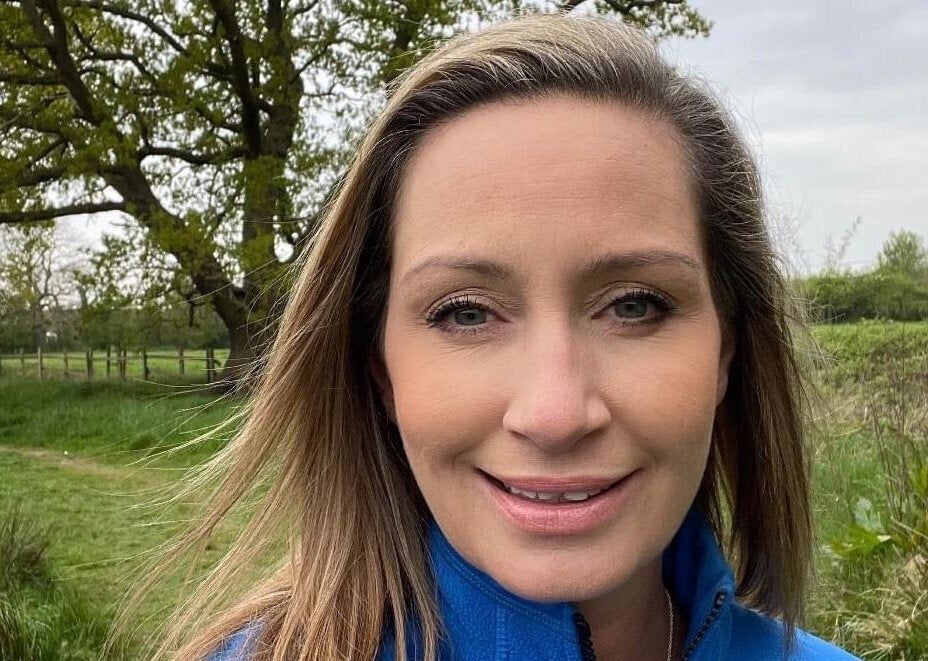
The search for missing mother-of-two Nicola Bulley in Lancashire has entered its thirteenth day, and questions are mounting.
Police think the mortgage adviser tragically fell into the water while walking her dog along the River Wyre.
Advertisement
But family and friends have questioned the theory, and diving experts have been recruited to help get to the bottom of the mystery.
Nicola, 45, of Inskip, Lancashire, went missing on January 27 in St Michael’s on Wyre after dropping her daughters, aged six and nine, off at school.
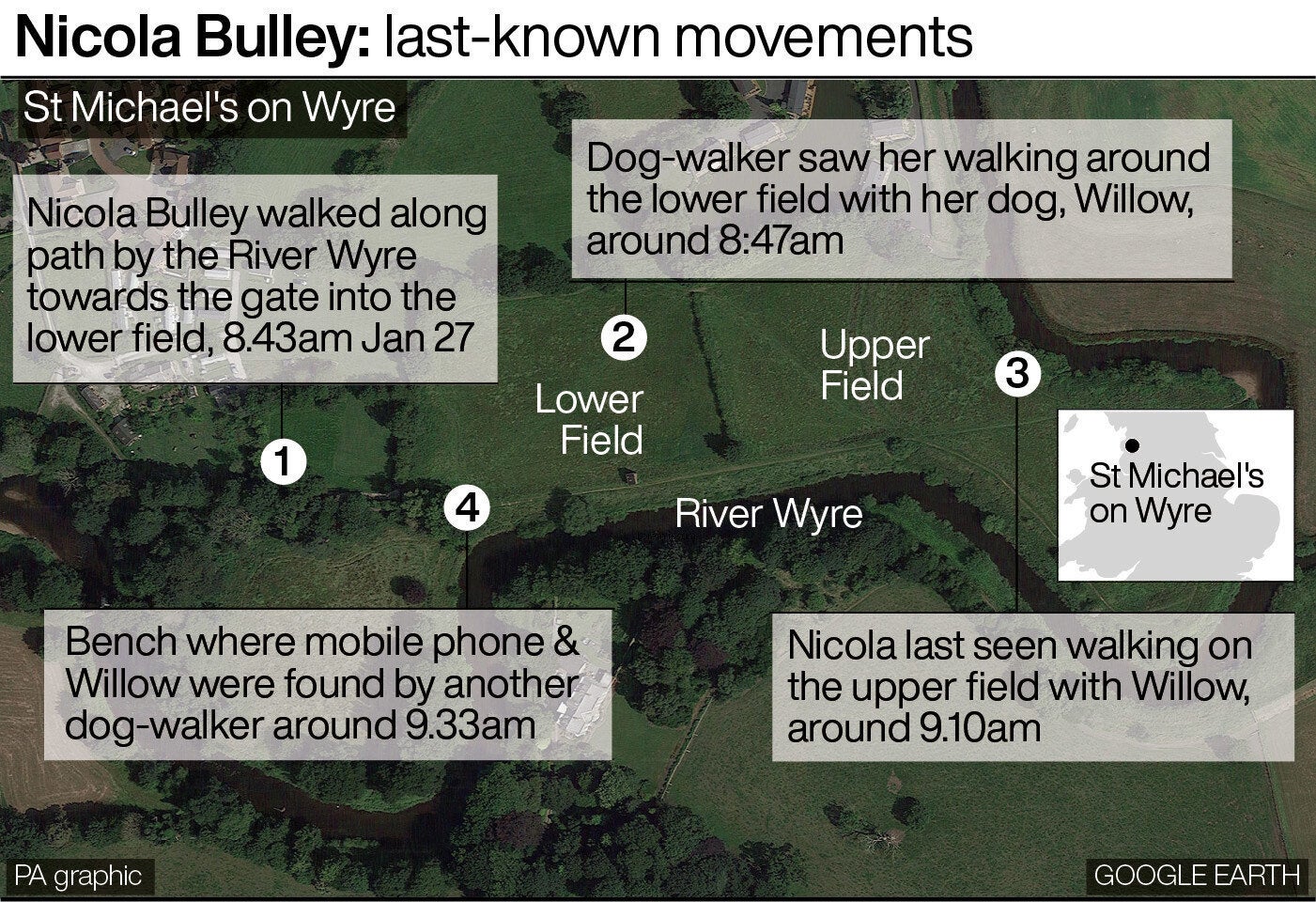
Lancashire Police say she took her spaniel, Willow, for a walk along the path by the River Wyre, heading towards a gate and bench in the lower field.
Nicola sent an email to her boss, followed by a text message to her friends to book a playdate at 8.57am, before logging on to a Microsoft Teams call.
Advertisement
Her phone was back in the area of the bench before the Teams call ended ten minutes later, at 9.30am, with her mobile remaining logged on after the call.
Another dog walker found her phone on a bench beside the river, with Willow darting between the two.
According to police, she was wearing a black Engelbert Strauss coat, black jeans and had long green walking socks tucked into her trousers under ankle length green wellington boots.
Her hair was tied into a ponytail and she was wearing a pale blue fitbit.

via PA Graphics/Press Association Images
Lancashire Police has said it was working on the hypothesis that Nicola may have fallen into the River Wyre.
Superintendent Sally Riley urged against speculation, but said it was “possible” that an “issue” with Nicola’s dog may have led her to the water’s edge.
Advertisement
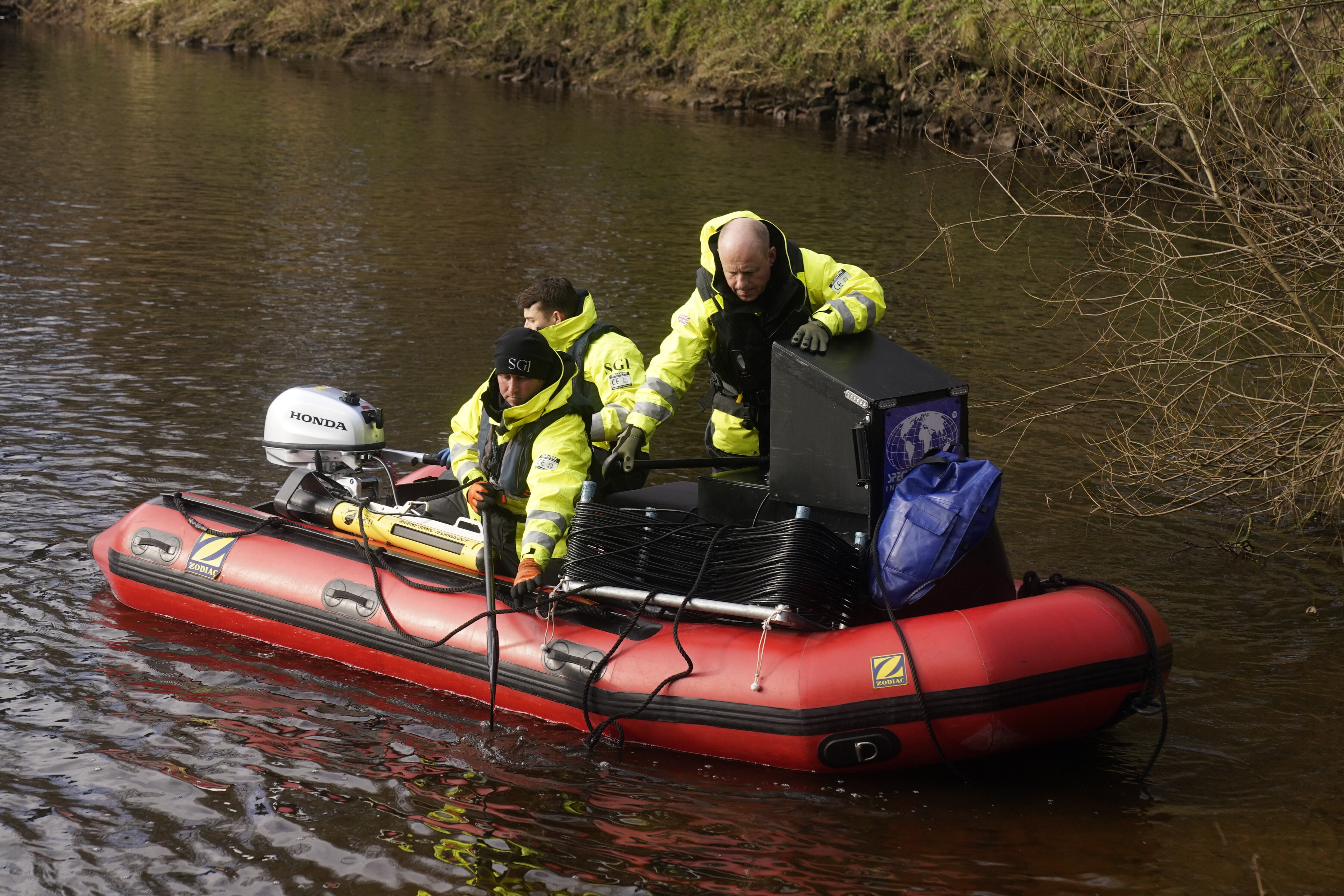
The force has been working with the Coastguard, Lancashire Fire and Rescue and underwater experts to search the river and riverbank using sonar, pole cameras and underwater drones.
Police say they will also be searching an area upstream, where the River Wyre empties into the sea at Morecambe Bay.
Police have described the search for Nicola as “unprecedented”, with a team of 40 detectives investigating 500 different lines of inquiry and police receiving “thousands” of pieces of information.
Peter Byrne via PA Wire/PA Images
Family and friends have questioned the police theory that she fell into a river.
In a Facebook post, her sister Louise Cunningham urged people to “keep an open mind” as there is “no evidence whatsoever” to support the hypothesis.
Advertisement
A family friend, Heather Gibbons, has said “nothing is making sense” and that speculation, rife on social media, about the disappearance, was “hard” for the family to take.
She said her disappearance has led to members of the public arriving from far and wide, some bringing children and taking selfies, making the area feel like a “tourist spot”.
Nicola’s two daughters “desperately” miss their mother and “need her back”, her partner, Paul Ansell, said in statement last week.
Peter Faulding, leader of underwater search experts Specialist Group International (SGI), has been searching the river for two days after being called in by the family to help.
Faulding, who is sometimes used by police, has said if his team cannot locate Nicola in the river then she is not there and he would not rule out “third party involvement” in her disappearance.
Advertisement
He has suggested the phone being left on a bench overlooking the river could be a “decoy”.
Danny Lawson – PA Images via Getty Images
Faulding said that in his 20 years of search experience he had never seen such an “unusual” case and was “baffled” as to what had happened.
He said: “If Nicola is not in that stretch of the river my view is there could be a third party involvement and this (phone) was a decoy placed by the river.”
Questions have also being raised about gaps in CCTV coverage of the area where she vanished from.
A camera close to where Nicola vanished was not working at the time of her disappearance, and the force says it is still a “possibility” she left the area by one path not covered by cameras which is crossed by the main road through the village.
Officers are trying to trace dashcam footage from 700 drivers who passed along the road at the time she disappeared.
Advertisement
Police acknowledge there is a ten-minute window where they cannot account for Nicola’s movements: between 9.10am, the last confirmed sighting, and 9.20am when Nicola’s phone is believed to have been on the bench.
But police have rejected suggestions that Nicola could have been a victim of crime.
Superintendent Riley said “every single” potential suspicion or criminal suggestion that had come in had been looked at by detectives and discounted.
She said: “I would like to reassure the community that nothing in this investigation so far, it has been checked out if it has come in suggesting crime, it has been checked and discounted.
“So every single potential third party line of inquiry and potential suspicious or criminal element has been looked at and discounted.
“It does remain our belief that Nicola sadly fell into the river and that this is a missing persons inquiry.”
Advertisement
The National Crime Agency had also looked at the investigation by Lancashire Police and had also failed to identify any other suspicious line of inquiry, she said.
Riley told reporters at a press conference in the village that Faulding is not included in “all the investigation detail”.
She said: “Our search has not found Nicola in the river and then a re-search in parts by SGI has found the same.
“That does not mean … that Nicola has not been in the river.”