Peptide 3D-printing inks could advance regenerative medicine

How do you build complex structures for housing cells using a material as soft as jelly? Rice University scientists have the answer, and it represents a potential leap forward for regenerative medicine and medical research in general.

Researchers in the lab of Rice’s Jeffrey Hartgerink have figured out how to 3D-print the well-defined structures using a self-assembling peptide ink. “Eventually, the goal is to print structures with cells and grow mature tissue in a petri dish. These tissues can then be transplanted to treat injuries, or used to learn about how an illness works and to test drug candidates,” said Adam Farsheed, a Rice bioengineering graduate student and lead author of the study, which appeared in Advanced Materials.

“There are 20 naturally occurring amino acids that make up proteins in the human body,” Farsheed said. “Amino acids can be linked together into larger chains, like Lego blocks. When amino acid chains are longer than 50 amino acids, they are called proteins, but when these chains are shorter than 50 amino acids they are called peptides. In this work, we used peptides as our base material in our 3D-printing inks.”

Developed by Hartgerink and collaborators, these “multidomain peptides” are designed to be hydrophobic on one side and hydrophilic on the other. When placed in water, “one of the molecules will flip itself on top of another, creating what we call a hydrophobic sandwich,” Farsheed said.

These sandwiches stack onto one another and form long fibers, which then form a hydrogel, a water-based material with a gelatinous texture that can be useful for a wide range of applications such as tissue engineering, soft robotics and wastewater treatment.

Multidomain peptides have been used for nerve regeneration, cancer treatment and wound healing, and have been shown to promote high levels of cell infiltration and tissue development when implanted in living organisms.

“We know that the multidomain peptides can safely be implanted in the body,” Farsheed said. “But what I was looking to do in this project was to go in a different direction and show that these peptides are a great 3D-printing ink.

“It might be counterintuitive since our material is so soft, but I recognized that our multidomain peptides are an ideal ink candidate because of the way they self-assemble,” he continued. “Our material can reassemble after being deformed, similar to how toothpaste forms a nice fiber when pushed out of a tube.”

Farsheed’s mechanical engineering background allowed him to take an unconventional approach when testing his hypothesis.

“I had more of a brute-force engineering approach where instead of chemically modifying the material to make it more amenable to 3D printing, I tested to see what would happen if I simply added more material,” he said. “I increased the concentration about fourfold, and it worked extremely well.

“There have been only a handful of attempts to 3D-print using other self-assembling peptides, and that work is all great, but this is the first time that any self-assembling peptide system has been used to successfully 3D-print such complex structures,” Farsheed continued.

The structures were printed with either positively charged or negatively charged multidomain peptides, and immature muscle cells placed on the structures behaved differently depending on the charge. Cells remained balled up on the substrate with a negative charge, while on the positively charged material the cells spread out and began to mature.

“It shows that we can control cell behavior using both structural and chemical complexity,” Farsheed said.

Hartgerink is a professor of chemistry and bioengineering and associate chair for undergraduate studies. Farsheed is a bioengineering graduate student and lead author on the study. Additional study co-authors are undergraduate student Adam Thomas and graduate student Brett Pogostin.

The National Institutes of Health (R01 DE021798) and the National Science Foundation Graduate Research Fellowships Program supported the research.


Share Button

New Zealand one of few island nations with potential to produce enough food in a nuclear winter, researchers say

New Zealand is one of only a few island nations that could continue to produce enough food to feed its population in a nuclear winter, researchers have found.

In a new study Professor Nick Wilson, from the University of Otago and independent researcher Dr Matt Boyd, from Adapt Research in New Zealand, say five island nations, including New Zealand, could be well placed to continue to produce food despite the reduced sunlight and cooler temperatures caused by soot in the atmosphere following a nuclear war in the Northern Hemisphere. Australia (an island continent), Iceland, Vanuatu and the Solomon Islands were also likely to have robust food self-sufficiency, even in an extreme nuclear winter.

Their research is published in the international journal Risk Analysis.

Professor Wilson says while New Zealand was likely to continue to be able to produce enough food, its production and distribution was still threatened by the country’s extreme dependence on imported commodities, such as refined fuel.

The researchers investigated the impact of abrupt sunlight reducing scenarios caused by nuclear war, super volcano eruptions or asteroid impacts on agricultural production globally. They applied published crop models under ‘nuclear winter’ conditions to 38 island nations, combining this with other methods to estimate the food calorie supply. They also assessed a range of resilience factors that might protect countries from the impacts of a nuclear winter.

Dr Boyd says although some other nations would likely be able to produce enough food, other factors, such as the collapse of industry and social functioning placed their resilience in doubt.

Professor Wilson says the findings are consistent with a 1980s study on the impact of nuclear war on New Zealand, although the country’s resilience has declined since then as its dependence on imported diesel and digital infrastructure has grown.

“Islands such as New Zealand are often very dependent on imports of refined liquid fuel, may lack energy self-sufficiency and are susceptible to breakdowns and shortages of critical commodities. While New Zealand could divert a high proportion of its dairy exports to supply the local market, it lacks the ability to manufacture many replacement parts for farm and food processing machinery.”

Dr Boyd says the findings of the study reinforce the precarious position many countries would find themselves in during a global catastrophe.

“New Zealand has the potential to preserve an industrial society through this kind of catastrophe, but it is not ‘plug-and-play’. A decent amount of strategic planning needs to happen and across a long period of time, but this planning would have benefits in dealing with a wide range of extreme risks.”

Dr Boyd says the findings show there is a need to analyse nuclear winter and other abrupt sunlight reducing scenarios as part of a comprehensive national risk assessment.

“We are not aware of any plan for this kind of global catastrophe, including whether priorities for rationing have been considered.

“With the Government expected to release New Zealand’s first National Security Strategy this year it is important that the catastrophic risks associated with abrupt sunlight reducing scenarios do not slip through the cracks.”

Share Button

Biosensor could lead to new drugs, sensory organs on a chip

A synthetic biosensor that mimics properties found in cell membranes and provides an electronic readout of activity could lead to a better understanding of cell biology, development of new drugs, and the creation of sensory organs on a chip capable of detecting chemicals, similar to how noses and tongues work.

A study, “Cell-Free Synthesis Goes Electric: Dual Optical and Electronic Biosensor vie Direct Channel Integration into a Supported Membrane Electrode,” was published Jan. 18 in the Synthetic Biology journal of the American Chemical Society.

The bioengineering feat described in the paper uses synthetic biology to re-create a cell membrane and its embedded proteins, which are gatekeepers of cellular functions. A conducting sensing platform allows for an electronic readout when a protein is activated. Being able to test if and how a molecule reacts with proteins in a cell membrane could generate a great many applications.

But embedding membrane proteins into sensors had been notoriously difficult until the study’s authors combined bioelectronic sensors with a new approach to synthesize proteins.

“This technology really allows us to study these proteins in ways that would be incredibly challenging, if not impossible, with current technology,” said first author Zachary Manzer, a doctoral student in the lab of senior author Susan Daniel, the Fred H. Rhodes Professor and director of the Robert Frederick Smith School of Chemical and Biomolecular Engineering at Cornell Engineering.

Proteins within cell membranes serve many important functions, including communicating with the environment, catalyzing chemical reactions, and moving compounds and ions across the membranes. When a membrane protein receptor is activated, charged ions move across a membrane channel, triggering a function in the cell. For example, brain neurons or muscle cells fire when cues from nerves signal charged calcium-ion channels to open.

The researchers have created a biosensor that starts with a conducting polymer, which is soft and easy to work with, on top of a support that together act as an electric circuit that is monitored by a computer. A layer of lipid (fat) molecules, which forms the membrane, lies on top of the polymer, and the proteins of interest are placed within the lipids.

In this proof of concept, the researchers have created a cell-free platform that allowed them to synthesize a model protein directly into this artificial membrane. The system has a dual readout technology built in. Since the components of the sensor are transparent, researchers can use optical techniques, such as engineering proteins that fluoresce when activated, which allows scientists to study the fundamentals via microscope, and observe what happens to the protein itself during a cellular process. They can also record electronic activity to see how the protein is functioning through clever circuit design.

“This really is the first demonstration of leveraging cell-free synthesis of transmembrane proteins into biosensors,” Daniel said. “There’s no reason why we wouldn’t be able to express many different kinds of proteins into this general platform.”

Currently, researchers have used proteins grown and extracted from living cells for similar applications, but given this advance, users won’t have to grow proteins in cells and then harvest and embed them in the membrane platform. Instead, they can synthesize them directly from DNA, the basic template for proteins.

“We can bypass the whole process of the cell as the factory that produces the protein,” Daniel said, “and biomanufacture the proteins ourselves.”

With such a system, a drug chemist interested in a particular protein implicated in a disease might flow potentially therapeutic molecules across that protein to see how it responds. Or a scientist looking to create an environmental sensor could place on the platform a particular protein that is sensitive to a chemical or pollutant, such as those found in lake water.

“If you think of your nose, or your tongue, every time you smell or taste something, ion channels are firing,” Manzer said. Scientists may now take the proteins being activated when we smell something and translate the results into this electronic system to sense things that might be undetectable with a chemical sensor.”

The new sensor opens the door for pharmacologists to research how to create non-opioid pain medicines, or drugs to treat Alzheimer’s or Parkinson’s disease, which interact with cell membrane proteins.

Surajit Ghosh, a postdoctoral researcher in Daniel’s lab, is a co-first author. Neha Kamat, assistant professor of biomedical engineering at Northwestern University, is a senior co-author of the paper.

The study was funded by the National Science Foundation, the Air Force Office of Scientific Research, the American Heart Association, the National Institute of General Medical Sciences and the Defense Advanced Research Projects Agency.

Share Button

Kourtney Kardashian’s Lemme vagina gummies? Don’t bother, say experts

Doctors have doubts about the vitamin sweets being advertised on Instagram by Kourtney Kardashian.

Share Button

Norwich surgeon given warning over life-changing injuries

Panel finds surgeon Camilo Valero’s actions “risked damaging public confidence in the profession”.

Share Button

NHS Strikes: Unite ambulance staff on second day of strike

The Welsh government has said there is no more money to offer NHS workers.

Share Button

Rishi Sunak Orders Dramatic Whitehall Shake-Up In Bid To Reboot His Leadership

Rishi Sunak has created a new energy department as part of a dramatic shakeup of government departments, in an attempt to reset his premiership after 100 days in office.

They cabinet reshuffle on Tuesday has seen Greg Hands appointed chairman of the Conservative Party, replacing Nadhim Zahawi who was sacked over his tax affairs.

Under the new structure, the department for business, energy & industrial strategy (BEIS) has been broken up into three.

Grant Shapps has moved sideways to lead a new energy security and net zero department. Its creation fulfils a pledge Sunak made during the summer Tory leadership contest.

There is a new department of science, innovation and technology to be led by Michelle Donelan.

Kemi Badenoch has been appointed business secretary, after the remaining parts of BEIS were merged with the department for international trade, creating the business and trade department (BaT).

Lucy Frazer has been promoted from housing minister to replace Donelan as culture secretary.

The government said the new departments would “ensure the right skills and teams are focused on the prime minister’s five promises”.

Sunak has chosen to keep Dominic Raab in post, despite the deputy prime minister being subject to an investigation in to multiple claims of bullying, which he denies.

Share Button

Netflix Announces Cast For New Drama Based On Prince Andrew’s Newsnight Interview

The cast has been announced for Scoop, Netflix’s new film based around Prince Andrew’s infamous interview on Newsnight back in 2019.

Over the summer, it was revealed that Newsnight producer Sam McAlister’s book – which went into detail about what went on behind the scenes to secure the interview – was being adapted for the big screen.

It’s now been revealed that Rufus Sewell, whose credits include Victoria, The Man In The High Castle and The Holiday will portray the Duke of York in the drama.

Rufus Sewell
Rufus Sewell

Taylor Hill via Getty Images

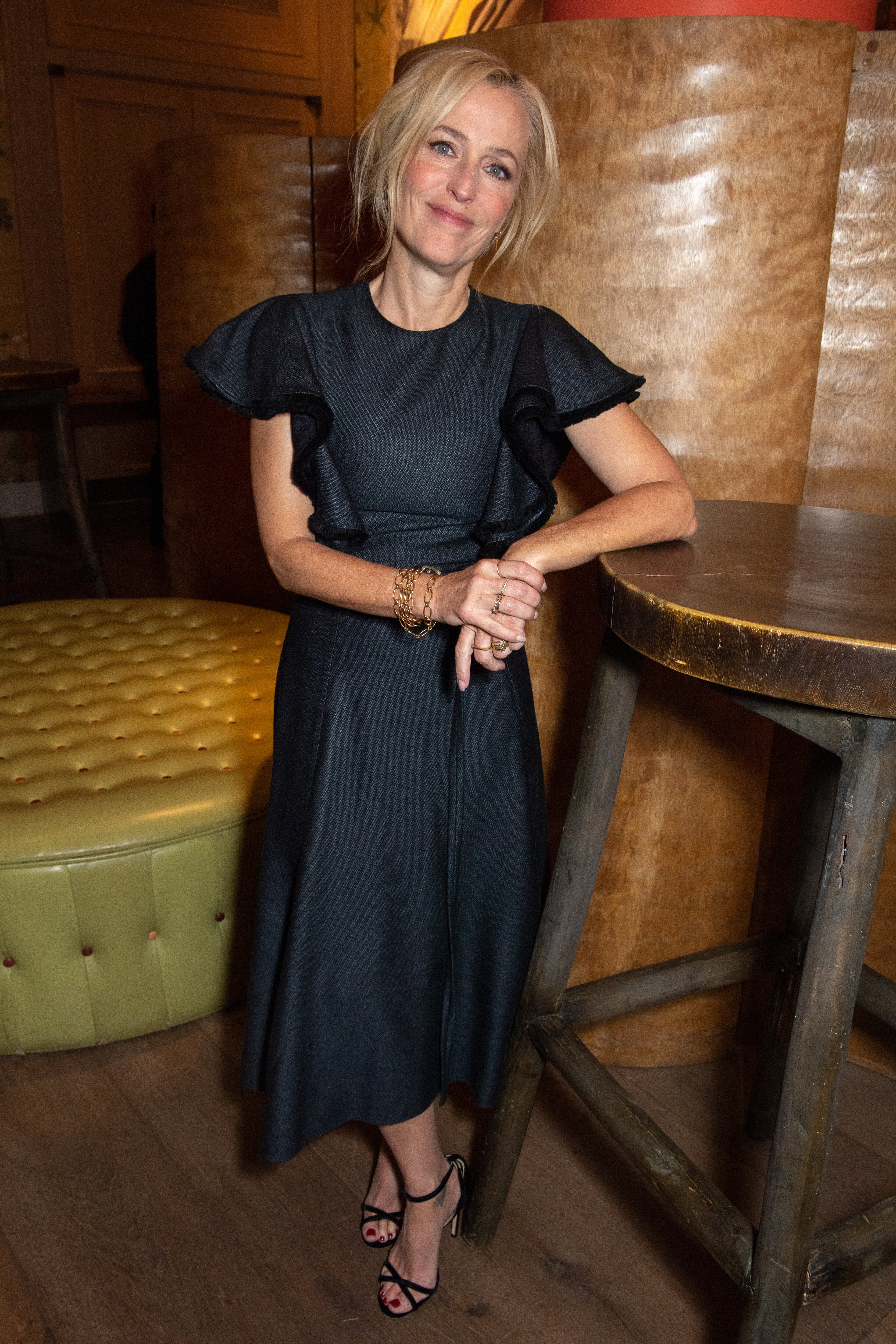
Meanwhile, Gillian Anderson will play former BBC journalist Emily Maitlis.

Gillian is best known for her roles in the TV series The X-Files, The Fall and Sex Education.

Gillian Anderson
Gillian Anderson

David M. Benett via Getty Images

In 2021, she also won an Emmy for her portrayal of Margaret Thatcher in the fourth season of The Crown.

Billie Piper and Keeley Hawes will also make appearances as Sam McAlister herself and Prince Andrew’s former private secretary Amanda Thirsk, respectively.

Netflix has said Scoop will give viewers the “inside track” on how Prince Andrew first came to be grilled by presenter Emily Maitlis over his relationship with billionaire sex offender Jeffrey Epstein.

The streaming giant added that it will look at “navigating Palace vetoes, to breaking through to Prince Andrew’s inner circle, the high-stakes negotiations and intensity of rehearsal – to the jaw-dropping interview itself”.

The Crown producer Philip Martin, who directs Scoop, said: “Uptempo, immersive and cinematic, I want to put the audience inside the breathtaking sequence of events that led to the interview with Prince Andrew – to tell a story about a search for answers, in a world of speculation and varying recollections.

“It’s a film about power, privilege and differing perspectives and how – whether in glittering palaces or hi-tech newsrooms – we judge what’s true.”

Following the interview in November 2019, and the furore over his friendship with Epstein, the Duke stepped away from public life.

The interview was recently sent up in the Channel 4 special Prince Andrew: The Musical, which aired over Christmas.

Share Button

Nick Ferrari’s ‘Shocking’ Toothbrush Comments Have Left People Enraged

As the cost of living crisis rages on, LBC presenter Nick Ferrari has left many angered and shocked after saying people shouldn’t become parents if they can’t afford to buy their children toothbrushes.

His comments were in response to figures released by the charity Beauty Banks and the British Dental Association, which found 83% of secondary school teachers said they or their school have given students toothbrushes or toothpaste.

Responding to this heartbreaking stat, Ferrari said: “If you are a mum – and/or a dad – and you haven’t got money to buy your child a toothbrush, you should never have become a parent in the first place.” Yes, you heard correctly.

The repercussions of oral hygiene poverty are huge and devastating for children.

The new report found one in two teachers said children isolate themselves because of oral hygiene issues, while one in four miss school because of it. One in three have witnessed bullying directly linked to a student’s oral hygiene issues.

Sali Hughes, co-founder of Beauty Banks which donates personal hygiene products to people living in poverty, branded Ferrari’s comments as “shocking”.

She told HuffPost UK: “Suggesting that women who find themselves poor should never have had children, at the very best fails to comprehend the unprecedented scale of financial difficulty for families since Covid, a global energy crisis, recession, and a cost of living crisis that has seen essentials like food and toiletries rise sharply – and unmanageably – in price.

“Circumstances have changed so dramatically for so many families that Beauty Banks has seen a 75% increase in product requests from food banks, hostels and schools, with toothpaste and toothbrushes now being the most asked for toiletries items.”

She concluded: “If Nick Ferrari can’t conceive of such poverty, then he is very fortunate. But this is the demonstrable reality for many modern Britons. I suggest that rather than belittling people living in poverty, and rubbishing frontline teacher testimony, he should listen, try to understand, and affect change.”

Many factors can contribute to people ending up in poverty, including rising living costs, low pay, lack of work, and inadequate social security benefits.

According to the Joseph Rowntree Foundation, around one in five people in the UK (20%) were in poverty between 2020-21. That’s 13.4 million people. (And this data was compiled well before the worst of the energy crisis took hold.)

It’s believed around one in four children in the UK are living in poverty and, according to the Child Poverty Action Group, 75% of these children have at least one parent in work.

After LBC shared a clip of Ferrari’s response to the report, hundreds of people – including TV host Carol Vorderman – had plenty to say about it, with the former Countdown star calling his language “humiliating”.

There were also plenty of reminders that not every parent is already living in poverty when they have children – and that circumstances can (and sadly often do) change.

Photographer and activist Misan Harriman, who is an ambassador for Save The Children UK, issued a video statement in response to the comments, which he branded “unacceptable”.

“We have to have a duty of care to the most vulnerable in our society and if a parent cannot afford a toothbrush, they are vulnerable. They need help, not criticism.

“As a nation we need to ask ourselves who we are – and I do not recognise any place where parents that are going through hell are stamped on. We have to be better than this.”

Share Button

Gloucester mother died after post-birth treatment delay

Rana Abdelkarim thought she was going for a routine check-up but was induced then suffered a bleed.

Share Button