Motion capture suits used to create alien characters can track the onset of diseases of movement, researchers say.


Motion capture suits used to create alien characters can track the onset of diseases of movement, researchers say.

An international consortium co-led by Vanderbilt University Medical Center immunogeneticist Rubén Martínez-Barricarte, PhD, has discovered a new genetic disorder that causes immunodeficiency and profound susceptibility to opportunistic infections including a life-threatening fungal pneumonia.
The discovery, reported Jan. 20 in the journal Science Immunology, will help identify people who carry this in-born error of immunity (IEI). “Our findings will provide the basis for genetic diagnosis and preventive treatment for these groups of patients,” Martínez-Barricarte said.
IEIs, also known as primary immunodeficiencies, are genetic defects characterized by increased susceptibility to infectious diseases, autoimmunity, anti-inflammatory disorders, allergy, and in some cases, cancer.
To date, 485 different IEIs have been identified. It is now thought that they occur in one of every 1,000 to 5,000 births, making them as prevalent as other genetic disorders, including cystic fibrosis and Duchene’s muscular dystrophy.
Despite recent medical advances, about half of patients with IEIs still lack a genetic diagnosis that could help them avoid debilitating illness and death. That’s why this research is so important.
The error in this case is a mutation in the gene for the protein IRF4, a transcription factor that is pivotal for the development and function of B and T white blood cells, as well as other immune cells.
As a postdoctoral fellow at The Rockefeller University, Martínez-Barricarte was part of an international research team that, in 2018, identified an IRF4 mutation associated with Whipple’s disease, a rare bacterial infection of the intestine that causes diarrhea, weight loss, and abdominal and joint pain.
Martínez-Barricarte is now an assistant professor of Medicine in the Division of Genetic Medicine, and of Pathology, Microbiology & Immunology in the Division of Molecular Pathogenesis.
In 2020, after moving his lab to VUMC, he began collaborating with Aide Tamara Staines-Boone, MD, and her colleagues in Monterrey, Mexico. They were caring for a young boy who was suffering from severe and recurrent fungal, viral, mycobacterial, and other infections.
Martínez-Barricarte and his team sequenced the protein-encoding regions of the boy’s genome and discovered a de novo IRF4 mutation, which originated in the patient and was not inherited from his parents.
Upon consulting with IRF4 experts at the Imagine Institute for the study and treatment of genetic diseases in Paris, they were told that seven other groups were independently characterizing the same mutation. They now collaborate as the IRF4 International Consortium.
In the current study, the consortium identified seven patients from six unrelated families across four continents with profound combination immunodeficiency who experienced recurrent and serious infections, including pneumonia caused by the fungus Pneumocystis jirovecii. Each patient had the same mutation in the DNA-binding domain of IRF4.
Extensive phenotyping of patients’ blood cells revealed immune cell abnormalities associated with the disease, including impaired maturation of antibody-producing B cells, and reduced T-cell production of infection-fighting cytokines.
Two knock-in mouse models, in which the mutation was inserted into the mouse genome, exhibited a severe defect in antibody production consistent with the combined immune deficiency observed in the patients.
The researchers also discovered the mutation had a “multimorphic” effect detrimental to the activation and differentiation of immune cells.
While the mutant IRF4 binds to DNA with a higher affinity than the native form of the protein (in a hypermorphic way), its transcriptional activity in common, canonical genes is reduced (hypomorphic), and it binds to other DNA sites (in a neomorphic way), altering the protein’s normal gene expression profile.
This multimorphic activity is a new mechanism for human disease. “We anticipate that variants with multimorphic activity may be more widespread in health and disease,” the researchers concluded.
Co-authors from Martínez-Barricarte’s lab included graduate students Jareb Pérez Caraballo and Xin Zhen, and research assistant Linh Tran. His research was supported by the National Institute of Allergy and Infectious Diseases of the National Institutes of Health (grant #AI171466).
Conflict. It’s a word that can strike fear into the hearts of many, especially those who consider themselves “spiritual” people. After all, isn’t the goal of spirituality to move beyond conflict and find inner peace?
Conflict is not something to be feared or avoided. Conflict is a powerful aspect of human life to embrace and even celebrate.
The existence of conflict in this reality is not a mistake. Conflict has many benefits, both for our individual growth and for society as a whole. It helps us sculpt our characters, upgrade our thinking, and add more depth and nuance to our understanding of the world. It may be uncomfortable or destructive at times, but it’s also necessary for our growth and evolution.
You didn’t create the presence of conflict in this reality. It’s been around long before your current life, and it will continue to exist long afterwards. You’re not going to suppress or eliminate it. Conflict exists here for good reasons. If you don’t currently grasp or respect those reasons, that isn’t going to force reality to bend to your ignorance because plenty of other people do grasp and respect the value of conflict.
But wait… doesn’t everyone want a conflict-free world? Heck no! Not everyone here is conflict avoidant, and trying to create a peace-only, conflict-free world doesn’t serve them. In fact, such efforts will actively be opposed by many. Just try to create a conflict-free world – or even a microcosm of it – and you’ll see that the world resists your efforts. That’s not a mistake; it’s because conflict is incredibly useful.
I love peace, and I also love conflict. Both are different frequencies of this human experience, and I value and appreciate them essentially equally. If you’d assumed that one of my goals was to create a conflict-free world, you’d be mistaken. Blech! I don’t want that at all. I want conflict to remain very much a part of this world. If I want to change anything about it, I’d seek to upgrade how people relate to conflict, how they form intentions around it, and how they find purpose and meaning within it. That includes continuing to upgrade and improve how I relate to conflict.
Conflict can take many forms, from random and pointless to meaningful and purposeful. Take the example of a parent preventing their child from doing something really stupid or dangerous while the child resists such efforts. This is a purposeful and necessary step in the child’s growth and development. Or consider a sports team competing against a rival. This conflict fuels the growth and development of the team and the individual players – often in ways that impact their lives off the field too. And it can be very entertaining to watch as well. And then we have rich and meaningful social conflicts such as the Civil Rights Movement, which are still generating powerful ripples. We even have conflicts about conflicts, and we have some conflicts about conflicts about conflicts too.
Do you ever enjoy watching conflict? Do you really want it to go away entirely? Be honest.
I really don’t want a life or reality without conflict. That would be so incredibly boring.
At the very least, even when you’re engaging in a conflict that you’re resisting, you’re probably entertaining other people who are observing you, even when you aren’t aware of this.
How do you relate to the part of yourself that finds conflict attractive? Do you ever shame it or try to suppress it? Do you pretend that you’re really not that kind of person? What if you dropped the shame and guilt? Consider that your fascination with conflict, however big or small it may be, isn’t a mistake and that there are powerful and productive reasons that you’re secretly drawn to it.
Isn’t the goal of spirituality to avoid conflict and find inner peace? I’d agree that one aspect of spiritual development is to cultivate inner peace. But that doesn’t mean avoiding conflict. It actually includes making peace with the presence of conflict in this reality – and especially in your own life. Resisting, fearing, or avoiding conflict doesn’t actually help you align with peace.
Peace and conflict aren’t opposites. They actually arise together. You can’t have one without the other because each serves to define the other.
There’s a scene in the two-part “Redemption” episode of Star Trek: The Next Generation that provides a powerful and insightful – and fun – way to frame conflict, both on a physical and a spiritual level. In that episode the Klingons are engaged in a brutal civil war. But after a vicious battle, they all go to a neutral bar, drink blood wine, and hang out and celebrate their warrior fierceness together. On the battlefield they are bitter enemies, but at the bar they’re all friends and comrades. They get pretty drunk and rowdy celebrating the glory of conflict together. Then when they sober up the next day, they return to the battlefield and continue fighting.
One particular Klingon named Worf, however, goes to that bar and doesn’t get it. Worf was raised by humans and struggles to grasp how all these enemies could be foolishly celebrating together when they ought to be preparing for the next battle engagement. Worf wants to go back and make repairs to their ship, so they can be more battle-ready. But his brother Kurn explains it: “You and I will fight battles that others can only dream of. The time for glory is here. It is not a time to worry about stabilizers; it is a time to celebrate. For tomorrow we all may die!”
This is how I love to think about conflict in our human lives. On one level we may do battle, but on another level, we can also love and respect each other as co-warriors. When we die, the human conflict dissolves, but while we’re here on Earth, it may be very worthwhile to wholeheartedly engage in it. Every conflict we create and experience here is temporary. Every conflict has a limited lifespan, and one way or another it will end.
Conflict and peace go hand-in-hand. Again, they arise together, so I encourage you to embrace both aspects of life. One is not better than the other. Peace isn’t superior to conflict.
How would you like to deal with Trump supporters (i.e. supreme idiots) in your life? Do you want to make peace with them? Or would you rather fight? You can do both, you know. Some pretty intelligent people I know have tried to talk to them to develop an understanding, and they’ve returned dejected and disappointed for the most part. Then they vent about those encounters and give up on trying it again. And there are those who proclaim success in maintaining positive relationships with Trumpers, while adding, “but we avoid talking about politics at all costs,” as if that’s some kind of meaningful success. This reminds me of the “Massive Head Wound Harry” Saturday Night Live skit where everyone tries to avoid addressing the obvious. What head wound? Everything seems normal to me.
Embracing conflict doesn’t mean glorifying violence. It means fighting the good fights while we’re here. There are many good fights to be fought these days, so let’s get to fighting them. And then afterwards we can all go to that Klingon bar, drink blood wine, and celebrate our warrior fierceness.
I enjoy pushing back against racist and fascist idiocy these days. On the one hand, it seems odd that common sense still needs defenders, but it clearly does, so that one is an easy opt-in, is it not?
Yet I can still hug Trump supporters when we meet up at the bar – while we’re still here on Earth. The smell can be a bit rough, but I manage. 😉
Remember that we all die in the end. All our human conflicts will eventually be over and done with. We’re going to leave them all behind no matter what. But while we’re here, let’s embrace the conflicts that are the richest and most purposeful for us. Grab the sword and the armor that you like best, and play the role of warrior when it suits you. That is your path to peace.
Marie McLean is scared to go to sleep after discovering her records tell medics not to attempt CPR.

On Thursday, the model posted an Instagram photo of the couple’s two older children, Luna and Miles, holding the new baby, named Esti Maxine.
“The house is bustling and our family could not be happier,” Teigen wrote in a caption for the post.
“Daddy sheds nightly tears of joy seeing Luna and Miles so full of love, and I am learning you still need diapers with a c section!? We are in bliss. Thank you for all the love and well wishes – we feel it all!”
Legend shared the same photo on his Instagram account, writing that he was in awe of Teigen’s “strength and resilience.”
Esti Maxine was born Jan. 13, Legend said, adding that Luna, 6, and Miles, 4, have embraced the newborn.
In an Instagram post from December, the cookbook author poked fun at people who have said that her pregnancy felt longer than it actually was.
“Omg I feel like she’s been pregnant foreverrrrrr,” she wrote, imitating the kinds of remarks she would hear. “How do you think I feel thank u.”


Cheryl has opened up about how her mental health was impacted at the height of her fame, and how she struggled to cope.
The former Girls Aloud star has taken a step back from the spotlight in recent years following the birth of her son Bear in 2017.
The singer, who is about to return to the stage in her debut acting role in the West End play 2:22 A Ghost Story, admits the media attention and scrutiny she faced around her divorce from footballer Ashley Cole in 2010 when she was also a judge on The X Factor and a successful solo artist, was “the perfect storm” and was “too much pressure”.
Advertisement

David M. Benett via Getty Images
She told The Independent: “I was already known with Girls Aloud and it [grew] slowly for the first four or five years, just being at a certain level of fame. And then The X Factor hit, and I had a lot of personal stuff going on at that time.
“It was all just like a perfect storm,” she said. “I was caught up in it, I couldn’t get out of it. It was too much for me. There was too much pressure and that made it less enjoyable. And it was constant.”
When she was asked how she coped, she replied: “I honestly didn’t.”
As a well as dealing with an unhealthy “level of intrusion” from the press, the 39-year-old reveals she also had to deal with stalkers.
Advertisement
“I had people waiting outside my house, people stalking me, people stalking people I was associated with,” she said.
“It was quite isolating in the end. it wasn’t a healthy state to be in or a healthy level of intrusion.”
She added: “But I got through it somehow. I survived.”
Cheryl’s return to the stage comes 16 months after the death of her Girls Aloud bandmate Sarah Harding from breast cancer in September 2021.
She says there are no plans for the band to reform, but hasn’t ruled it out entirely.

Dave Hogan/Girls Aloud via Getty Images
“We’re not there. We’re not there yet,” she told the newspaper. “I wouldn’t ever say never because I’ve learned in life to not do that. But there isn’t anything on the cards and we haven’t spoken [about anything] outside of friendship in the last few years. We haven’t spoken about Girls Aloud; we’ve only spoken about life.”
Advertisement
In July last year, Cheryl reunited with her Girls Aloud bandmates Kimberly Walsh, Nadine Coyle and Nicola Roberts to join fans and supporters in Race For Life For Sarah, a 5k run to raise money and celebrate the life of Sarah.
Read the full interview with Cheryl in The Independent here.


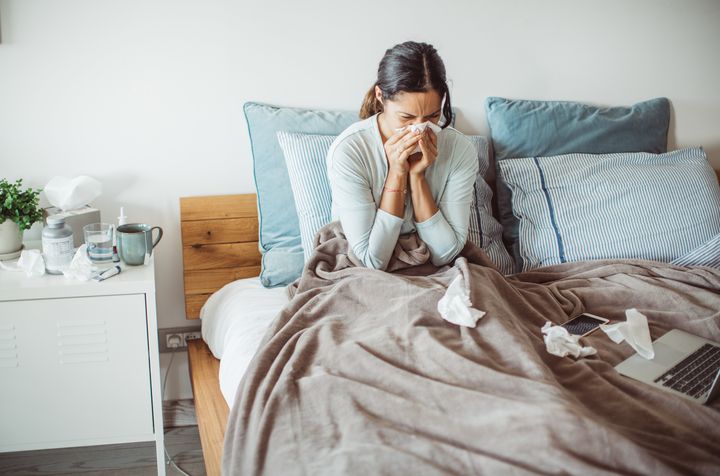
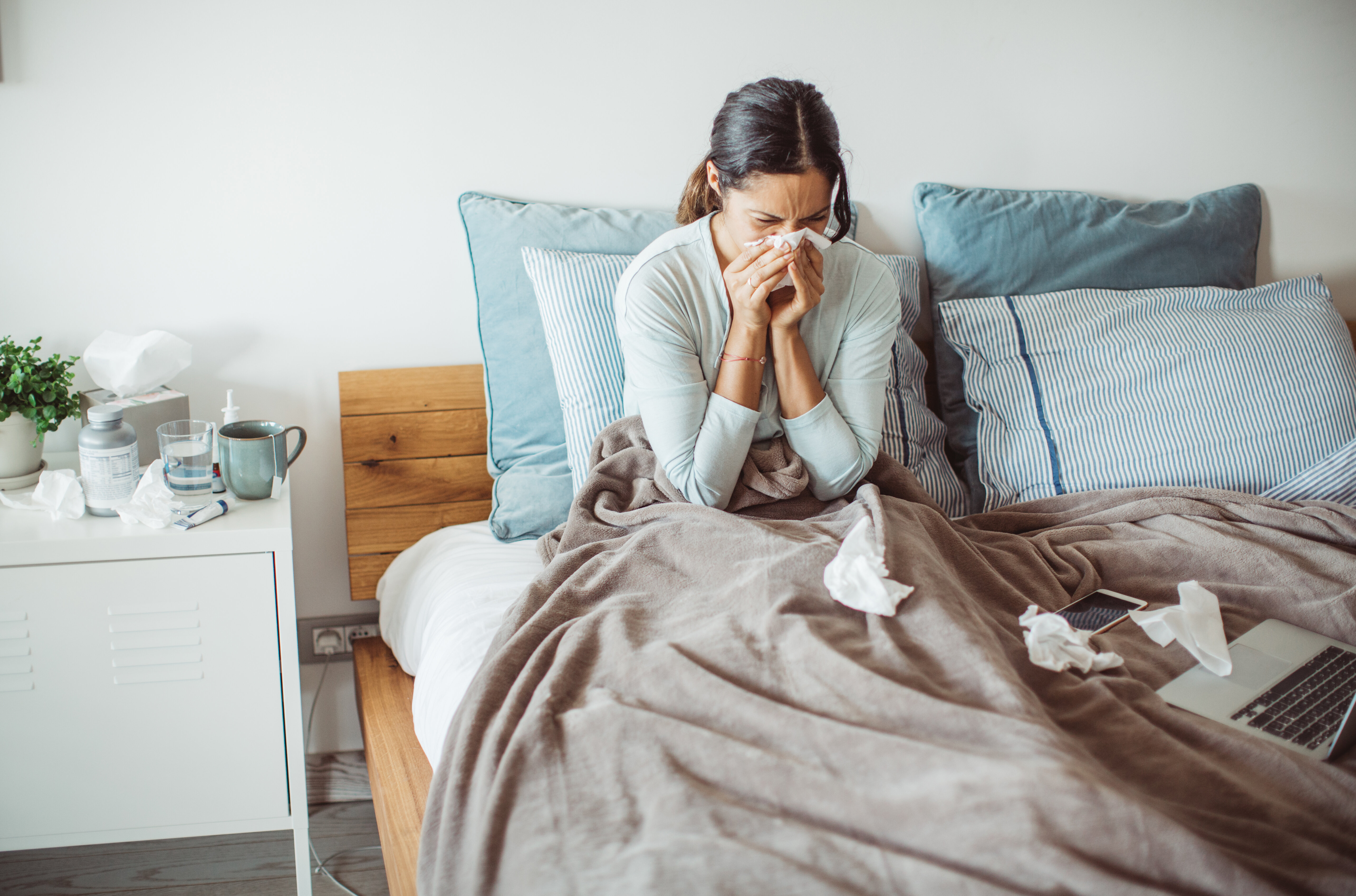
Nobody wants to give Covid to a loved one (or anyone). But determining just how long you’re contagious isn’t an exact science, as it can vary from person to person.
So you may have a hard time figuring out whether you’re putting others at risk. However, there are rules you can follow and things you can know to help protect those around you — and to ease other concerns about your infection, too.
Advertisement
Here, experts share guidelines for how long you might be able to spread Covid and when you’re most contagious, including with the viral strain that is currently dominant.
It’s not always clear how long a person is contagious because, like a lot of things with Covid, the exact timeline depends on many factors, said Dr Stuart Ray, a professor of medicine and infectious diseases at the Johns Hopkins University School of Medicine in Baltimore.
But, Ray said, the conventional wisdom is that you are contagious and must isolate for five full days after your symptoms begin — with your first day of symptoms counting as day zero.
But keep in mind that you aren’t in the clear after five days.
“It’s often said then that you should wear a mask after that to try and protect others because it’s hard to be certain how long you’re infectious,” Ray said.
Advertisement
“That period often lasts up to 10 days,” he added — and once again, your first day of symptoms counts as day zero.
Long story short, you are likely contagious for about 10 days after symptoms begin. You should isolate for the first five days and wear a mask on at least days six through 10.
The phase when you’re most contagious starts about 48 hours before you test positive and ends five days after your symptoms begin, according to Dr Neha Vyas, a family medicine doctor at Cleveland Clinic in Ohio. She called this the “period of maximal contagiousness.”
So, you’ll want to be extra careful at this stage — though it’s hard to know if you’re sick before you have symptoms, which makes those first 48 hours really tricky.
Meanwhile, the amount of time between infection and symptoms has got shorter and shorter as Covid mutates, which means omicron sub-variants like XBB — currently the dominant strain in the US — can spread faster.
Advertisement
If you’re exposed to someone who tests positive for Covid, you can test yourself even before you have symptoms. Or, if you recently attended a crowded indoor event, you can take a test a few days later. Beyond that, there isn’t really a way to know you’re infected before you start showing symptoms.
And in the later period of your illness, remember that you can still spread Covid, which is why it’s important to wear a mask until at least the 10-day mark.
Anyone whose symptoms persist past day 10 and who continues to test positive can likely pass the virus to others. If that’s you, keep wearing a mask and avoiding indoor spaces and events, Ray said.
“If you are immunocompromised or you had a really [severe] Covid infection … then you could be contagious still for 20 days” after symptoms begin, added Vyas.
Long periods of contagiousness like this are rare, she stressed. But if you fall into either of those two categories, talk to your doctor for further guidance.
Advertisement
svetikd via Getty Images
It’s not uncommon for someone to test positive on a lab test for weeks after a COVID-19 infection, “but it would be very unusual for someone to test positive for weeks on an antigen test,” Ray said.
Antigen tests are the type that you may have picked up from the pharmacy or received from the government.
Ray added that a positive antigen test is correlated with a virus’s ability to grow and infect. So if you have a positive antigen test, you are likely contagious.
And that works the other way around, too.
“We generally say if your symptoms are completely resolved and you have a negative test, you’re unlikely to be infectious,” Ray said.
Advertisement
If you’re past the 10-day mark and no longer symptomatic, but you’re feeling anxious about potentially spreading the virus to a loved one, there are things you can do.
“You can take two Covid tests 48 hours apart,” Vyas said. “If they’re both negative, you can [be] fairly certain that you’re not contagious anymore.”
She added that most people won’t need to do this as long as they follow the 10-day guidance. But if you’re nervous about passing on the virus, this is a good tactic.
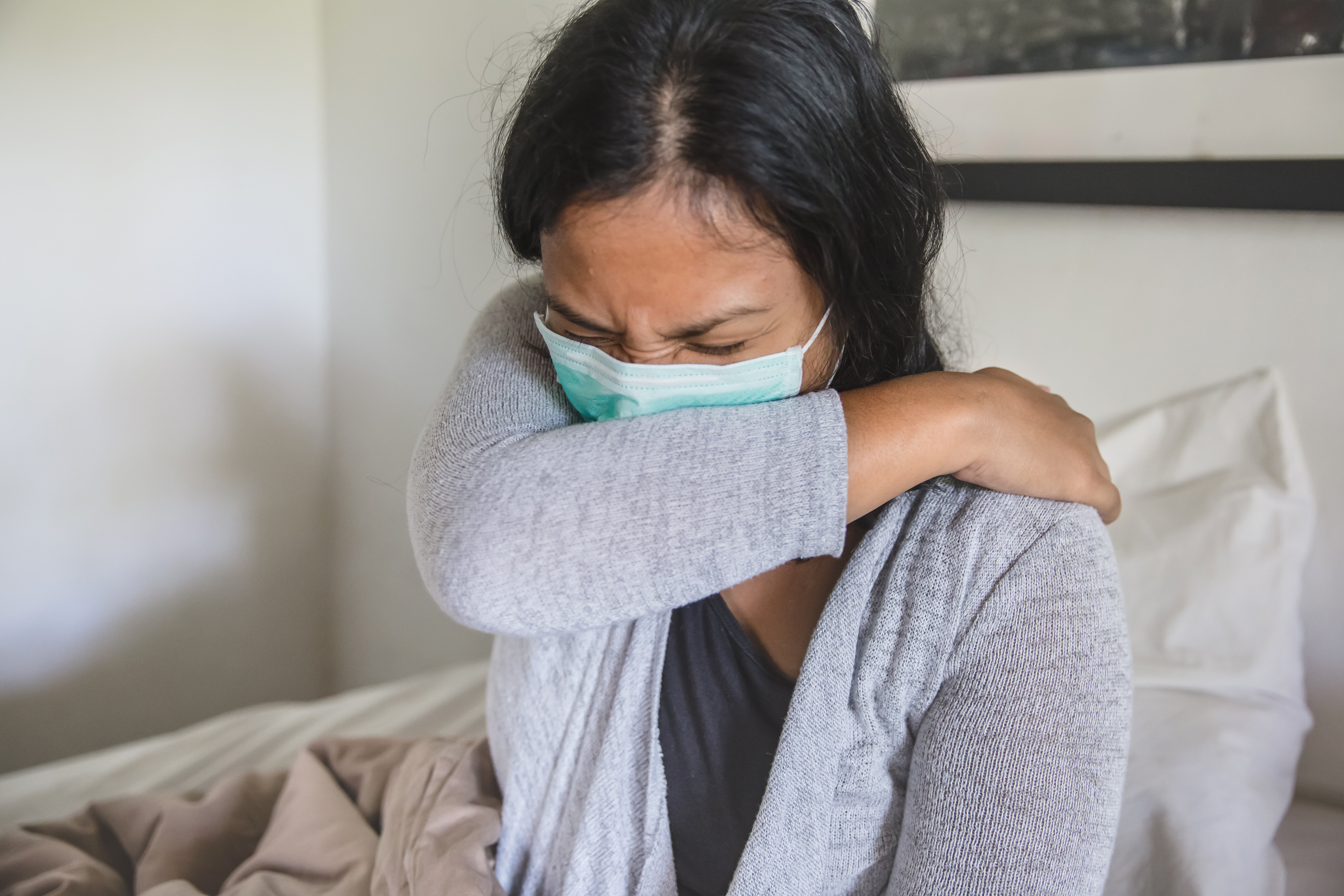
“If possible, a contagious individual should use a separate bedroom and bathroom, especially during this five-day period [after symptoms begin],” said Dr Ali Khan, the chief medical officer at Oak Street Health.
When that isn’t possible, wear a well-fitting mask around other people in your home.
Khan added that an infected person should have their own tableware and sheets, and that they should avoid high-touch items.
Advertisement
“Don’t forget to wash your hands frequently,” Khan said — and this goes for people who are not infected, too.
Lastly, to protect both yourself and your loved ones, make sure you’re up to date on your Covid boosters.
“It’s definitely not too late to get Covid and flu shots, as they will still curb severe symptoms, even if you do contract illness,” Khan said.

Patients are at risk as hundreds of thousands of helpline calls go unanswered, BBC research finds.
NHS England’s chief executive says extended industrial action is “clearly having an impact”.
One worker found social care “very rewarding” and would return if he could get truck driver wages.
