The case of Latin America’s mysterious disappearing (and reappearing) white-lipped peccaries

A collaborative study published in PLOS ONE,  documents the periodic disappearance (and reappearance) of white-lipped peccaries in nine countries in South and Central America. The authors say the population fluctuations may represent the first documented case of natural population cyclicity in a Neotropical mammal.

The study is led by the Departamento de Zoologia, Universidade de Brasilia, and co-authored by more than 20 other organizations including the Wildlife Conservation Society (WCS).

White-lipped peccaries (Tayassu pecari) are pig-like hoofed mammals native to the tropical forests of Central and South America. They are extremely social, forming large herds of up to hundreds of animals. Peccary researchers from Mexico to the Amazon have been intrigued by the sudden disappearance of white-lipped peccary populations across large areas, as well as reports of previous disappearances and subsequent reappearance.

The study shows that over 20–30-year population cycles, the disappearances represent seven-to-twelve-year troughs when peccaries vanish. These can occur simultaneously at regional and perhaps continent-wide spatial scales as large as 10,000–5 million square kilometers (3,861-1.9 million square miles).

The study suggests that the mysterious disappearances may be triggered by populations growing too big, and crashes are likely facilitated by different causes, including disease outbreaks, and underscores the need for more long-term studies to better understand the causes.

The ground-breaking study, which relies on collaboration and detective work to document 43 different disappearances at 38 sites in nine countries, also incorporates 88 years of commercial and subsistence harvest data from the Amazon. It confirms that this poorly-known species which is so ecologically important to neotropical forests, as well as culturally and socio-economically crucial to the Indigenous Peoples and local communities who live in these forests, has large-scale and long-term population cycles.

From an ecological perspective, the white-lipped peccaryis considered a keystone species as they influence forest regeneration and plant populations, especially palms, through seed predation and foraging and turnover of leaf litter. They are also considered ecological engineers through their maintenance and expansion of forest mineral licks and wallows, which benefit many other wildlife species. In addition, they are the preferred prey of Latin Americas’ apex predator, the jaguar (Panthera onca). When peccaries disappear, jaguar populations decline.

White-lipped peccaries are immensely important from a socio-cultural perspective, as a preferred subsistence hunting target for Indigenous Peoples and riverine and rural communities across their range. This significance is reflected in the stories, oral history and art of many of Latin America’s Indigenous Peoples. Indeed, some Indigenous Peoples have stories which refer to the peccaries disappearing and reappearing.

The lead author of the study, Dr. Jose Fragoso from the Departamento de Zoologia, Universidade de Brasilia, Brasilia, DF, Brazil, the Instituto Nacional de Pesquisas da Amazonia (INPA/MCTIC), Manaus, Brazil and the California Academy of Sciences, San Francisco, California, said: “This analysis highlights the importance of very large, continuous natural areas that enable source-sink population dynamics and ensure re-colonization and local population persistence in time and space for perhaps the fundamental keystone species for neotropical forests. It also highlights how working with indigenous peoples can help resolve mysteries in biology.  Our work also resolves a key question in tropical ecology, what happens to white-lipped peccaries when they disappear.”

Senior author Dr. Mariana Altricher, from the Environmental Studies Department, Prescott College, Arizona, believes that “this work clarifies an enduring mystery in tropical forests. It will help guide future research and conservation efforts in the tropics. Most importantly we must continue to monitor peccary populations, especially in fragmented protected areas”.

Dr. Harald Beck, Co-Chair of the IUCN Peccary Specialist Group, and one of the authors of the study, said: “This unique publication has a large-scale focus (Central and South America), utilized historical and current data, and state of the art new modeling methods to answer critical ecological questions about the spatial-temporal population fluctuations of the dominant Neotropical mammal, the white-lipped peccary. The paper will guide future research in the Neotropics, as well as influence conservation efforts and policies.”

Dr. Rob Wallace, Senior Conservation Scientist at WCS and one of the co-authors of the study remarked: “WCS remains committed to landscape-scale conservation at a series of Nature’s Strongholds in Latin America, which is fundamental for wide-ranging species like the white-lipped peccary, especially considering these population cycles. Understanding these natural population cycles will be crucial for interpreting our population monitoring efforts, which represents the gold standard for evaluating our conservation impact, not just for white-lipped peccaries themselves as a keystone species and socio-cultural touchstone, but also the other wildlife with which they coexist – lowland tapir, collared peccaries, leaf litter biodiversity, a number of palm species, plant diversity, and, of course, the jaguar.”

Study authors were: Jose ? M. V. Fragoso1,2,3*, Andre ? P. Antunes2,4, Kirsten M. Silvius5, Pedro A.L. Constantino4, Galo Zapata-Rios6, Hani R. El Bizri7,8, Richard E. Bodmer9,10, Micaela Camino11,12, Benoit de Thoisy13, Robert B. Wallace14, Thais Q. Morcatty8,15, Pedro Mayor16,17, Cecile Richard-Hansen18, Mathew T. Hallett19,20,21, Rafael A. Reyna- Hurtado22, H. Harald Beck23, Soledad de Bustos24,25, Alexine Keuroghlian26, Alessandra Nava27, Olga L. Montenegro28, Ennio Painkow Neto29, Mariana Altrichter30.

1 Departamento de Zoologia, Universidade de Brasilia, Brasilia, DF, Brazil

2 Instituto Nacional de Pesquisas da Amazonia (INPA/MCTIC), Manaus, Brazil

3 California Academy of Sciences, San Francisco, California, USA

4 RedeFauna–Rede de Pesquisa em Diversidade, Conservaca?o e Uso da Fauna da Amazonia, Tefe ?, Amazonas, Brazil

5 Department of Forest Resources and Environmental Conservation, Virginia Tech, Blacksburg, Virginia, USA

6 Wildlife Conservation Society– Ecuador Program, Quito, Ecuador

7 Department of Natural Sciences, Manchester Metropolitan University, Manchester, UK

8 Instituto de Desenvolvimento Sustentavel Mamiraua ?, Tefe ?, Amazonas, Brazil

9 Museum of Amazonian Cultures-Fundamazonia, Iquitos, Loreto, Peru ?

10 DICE, School of Anthropology & Conservation, University of Kent, Canterbury, UK

11 Proyecto Quimilero, Roosevelt 4344, CABA, Resistencia, Argentina

12 EDGE of Existence—Zoological Society of London, Regent’s Park, London, England, UK

13 Kwata NGO, Cayenne, French Guiana

14 Wildlife Conservation Society, Bronx, New York, USA

15 Department of Social Sciences, Oxford Brookes University, Oxford, United Kingdom

16 Departament de Sanitat i d’Anatomia Animals, Facultat de Veterina?ria, Universitat Auto?noma de Barcelona, Bellaterra, Spain

17 Museo de Culturas Indigenas Amazonicas, Loreto, Iquitos, Peru

18 Office Francais de la Biodiversite ?-DRAS/SCGEEUMREcoFoG, Kourou, France

19 Department of Wildlife Ecology & Conservation, University of Florida, Gainesville, Florida, USA

20 Institute for the Environment & Sustainability, Miami University, Oxford, Ohio, USA

21 Center for International Forestry Research (CIFOR), Bogor, Indonesia

22 El Colegio de la Frontera Sur -Unidad Campeche, Campeche, Campeche, Mexico

23 Department of Biological Sciences, Towson University, Towson, Baltimore, Maryland, USA

24 Secretari?a de Ambiente y Desarrollo Sustentable de Salta, Santiago del Estero, Salta, Argentina

25 Fundacio ? n Biodiversidad Argentina, Suipacha, Argentina

26 Peccary Project/IUCN/SSC Peccary Specialist Group, Campo Grande, Brazil

27 Fiocruz ILMD Amazon, Adriano ? polis, Manaus, Amazonas, Brazil

28 Instituto de Ciencias Naturales, Universidad Nacional de Colombia, Bogota ?, Colombia

29 Tropical Sustainability Institute–TSI, Carapicu ??ba, Sa?o Paulo, Brazil

30 Faculty Environmental Studies, Prescott College, Prescott, Arizona, USA

Share Button

Companies’ ‘deforestation-free’ supply chain pledges have barely impacted forest clearance in the Amazon, researchers say

More companies must make and implement zero-deforestation supply chain commitments in order to significantly reduce deforestation and protect diverse ecosystems, say researchers.

Corporate pledges not to buy soybeans produced on land deforested after 2006 have reduced tree clearance in the Brazilian Amazon by just 1.6% between 2006 and 2015.

This equates to a protected area of 2,300 km2 in the Amazon rainforest: barely the size of Oxfordshire in the UK.

The findings, made by tracing traders’ soy supplies back to their source, are published today in the journal Environmental Research Letters. The work involved a team from the University of Cambridge, Boston University, ETH Zurich and New York University.

The researchers also discovered that in the Cerrado, Brazil’s tropical savannah, zero-deforestation commitments have not been adopted effectively — leaving over 50% of soy-suitable forests and their biodiversity without protection.

Brazil has the largest remaining tropical forests on the planet, but these are being rapidly cleared to rear cattle and grow crops including soybean. Demand for soy is surging around the world, and an estimated 4,800 km2 of rainforest is cleared each year to grow soybeans.

The majority of soy is consumed indirectly by humans: soybean is widely used as feed for factory-farmed chickens, pigs, fish and cattle. It also accounts for around 27% of global vegetable oil production, and as a complete protein source it often forms a key part of vegetarian and vegan diets.

By 2021, at least 94 companies had adopted zero-deforestation commitments — pledging to eliminate deforestation from their supply chains. But the study revealed that many of these commitments are not put into practice.

And the researchers say that adoption of zero-deforestation commitments is lagging among small and medium sized food companies.

“Zero-deforestation pledges are a great first step, but they need to be implemented to have an effect on forests — and right now it’s mainly the bigger companies that have the resources to do this,” said Professor Rachael Garrett, Moran Professor of Conservation and Development at the University of Cambridge Conservation Research Institute, a joint senior author of the report.

She added: “If soybean traders actually implemented their global commitments for zero-deforestation production, current levels of forest clearance in Brazil could be reduced by around 40 percent.”

Deforestation is the second largest contributor to global greenhouse gas emissions after fossil fuel use. It also causes the loss of diverse animal and plant life, threatens the livelihoods of indigenous groups, and increases inequality and conflict.

The researchers say that the supply chains of other food products including cattle, oil palm and cocoa supply chains are more complex than soy, making them even more difficult to monitor.

“If supply chain policies intend to contribute to the task of tackling deforestation in Brazil, it’s crucial to expand zero-deforestation supply chain policies beyond soy,” said Garrett, who is also Professor of Environmental Policy at ETH Zurich.

A ‘soy moratorium’ was the first voluntary zero-deforestation commitment in the tropics — by signing it, companies agreed not to buy soybeans produced on land deforested after 2006. But while the commitment was implemented in the Brazilian Amazon, most Brazilian soy is produced in the Cerrado — which is rich in biodiversity.

The researchers say their findings suggest private sector efforts are not enough to halt deforestation: supportive political leadership is also vital to conservation efforts.

“Supply chain governance should not be a substitute for state-led forest policies, which are critical to enable zero deforestation monitoring and enforcement, have better potential to cover different crops, land users, and regions,” said Garrett.

In 2021, the COP26 Glasgow Leaders’ Declaration on Forests and Land Use committed to halt and reverse deforestation by 2030. It was signed by over 100 countries, representing 85% of global forests.

Share Button

Australians clueless about their country’s most endangered species

Australia holds an unenviable conservation status: it’s the fourth-worst country in the world for species extinctions and is in the top three for critically endangered animals.

This week’s Federal Budget included a $224 million allocation to help save threatened species – news that coincides with some concerning findings of a new paper authored by University of South Australia (UniSA) researchers.

A study led by UniSA conservation psychologist Dr Elissa Pearson reveals overwhelming public ignorance of Australia’s most threatened species, a factor that is contributing to the extinction crisis of endangered animals.

UniSA researchers, alongside colleagues from Zoos Victoria and Edith Cowan University, polled more than 300 zoo visitors and community members, testing their awareness of seven endangered species at risk of extinction within the next decade.

“More than 90 per cent of those surveyed did not recognise six of the seven species; the exception being the Tasmanian devil,” Dr Pearson says.

The other species were the Leadbeater’s possum, eastern barred bandicoot, helmeted honeyeater, southern corroboree frog, Lord Howe Island (LHI) stick insect, and orange-bellied parrot.

The Journal for Nature Conservation paper outlines a clear link between species recognition, likeability and conservation support, showing that people are far more inclined to donate toward conserving Australia’s iconic koala, kangaroo and wombat populations, despite these not being endangered.

“There are huge gaps in community knowledge regarding native Australian wildlife, with less than eight per cent of people able to correctly name six of seven endangered species when shown photographs.

“Apart from the Tasmanian devil, which 86 per cent of people recognised, the level of familiarity and knowledge of our vulnerable species is limited. Misidentification is also common, particularly the eastern barred bandicoot which is often mistaken for a bilby.”

The most likeable Australian animals – the koala and kangaroo – also reflect the ‘similarity principle’, which suggests that people tend to prefer animals most like humans, and that when only a limited number of species can be conserved, mammals are favoured over other species, regardless of their endangered status.

The helmeted honeyeater, southern corroboree frog and LHI stick insect were consistently the least liked species.

“Apart from the likeability factor, our study showed that being able to recognise species increased people’s willingness to support their conservation, so that is a starting point we need to address.”

Endangered insects are fighting an uphill battle for support, with 85 per cent of people disliking them, putting their survival at most risk. However, this perception could be changed with some clever marketing initiatives, the researchers suggest.

“The LHI stick insect has some exceptional qualities, such as their resilience and survival against all odds, their ability to reproduce without males, their tendency to form large social groups during the day, or even the fact that their foot pads are heart shaped. If people knew these facts the likeability factor would likely shoot up,” Dr Pearson says.

Share Button

There Are Two New Covid Variants In England, Here’s What We Know

The UK Health Security Agency (UKHSA) has identified two new Covid-19 variants circulating in England, named BQ.1 and XBB. Both appear to come from the Omicron variant.

“A number of Omicron variants are currently circulating in England, many of which have acquired mutations which may produce a degree of immune escape,” the agency said. “Omicron sublineages BQ.1 and XBB have been given UKHSA variant designations to facilitate continued studies.”

BQ.1 is a sub-lineage of the previous Omicron variant, BA.5. It has been “designated on the basis of rapid growth”, the UKHSA said.

XBB, meanwhile, is what’s known as a “recombinant lineage”, meaning it derives from two previous Omicron sublineages. It has been already been found in 17 countries.

The variant may be a factor in the recent spike in cases in Singapore. So far, it has successfully evaded drug therapies and vaccines by working around the body’s immune system – potentially making it a more potent strain than its predecessors.

But, the most damaging element of this sub-variant is that scientists expect it will be just one of many which could emerge at the same time this winter.

XBB is causing concern among scientists after being detected in Europe, Asia and Australia.

XBB is spreading rapidly in Singapore in particular, having pushed Covid cases from 4,719 on October 9, to 11,732 on October 10, according to data from Johns Hopkins’ Coronavirus Resource Centre.

However, the country expects this wave to be “short and sharp”, averaging at around 15,000 daily cases by mid-November – although it could peak at around 20,000 on some days.

Previously BA.5 was the dominant variant in the UK, nearly 78.7% of confirmed cases in England were BA.5 which was first identified in April and was designated as a Variant of Concern on May 18.

Both new variants are not a cause for concern for some scientists. “It is not unexpected to see new variants of SARS-CoV-2 emerge. Neither BQ.1 nor XBB have been designated as Variants of Concern and UKHSA is monitoring the situation closely, as always,” Dr Meera Chand, Director of Clinical and Emerging Infection at UKHSA said.

Chand continued: “Vaccination remains our best defence against future COVID-19 waves, so it is still as important as ever that people come take up all the doses for which they are eligible as soon as possible.”

While early signs suggest it is more resistant to antibody treatments, the world is starting to create more boosters which broader protection, by producing vaccines with half the original vaccine and half protection against the dominant strains BA.4 and BA.5.

Lead respiratory virus immunology specialist Natalie Thornburg at the US Centres for Disease Control and Prevention, also said in a webinar this week: “XBB is a chimera. I think there have been a couple of sequences identified in the US. But it’s way, way, way, way below that 1% threshold. I mean, it’s really like a handful of sequences.”

Share Button

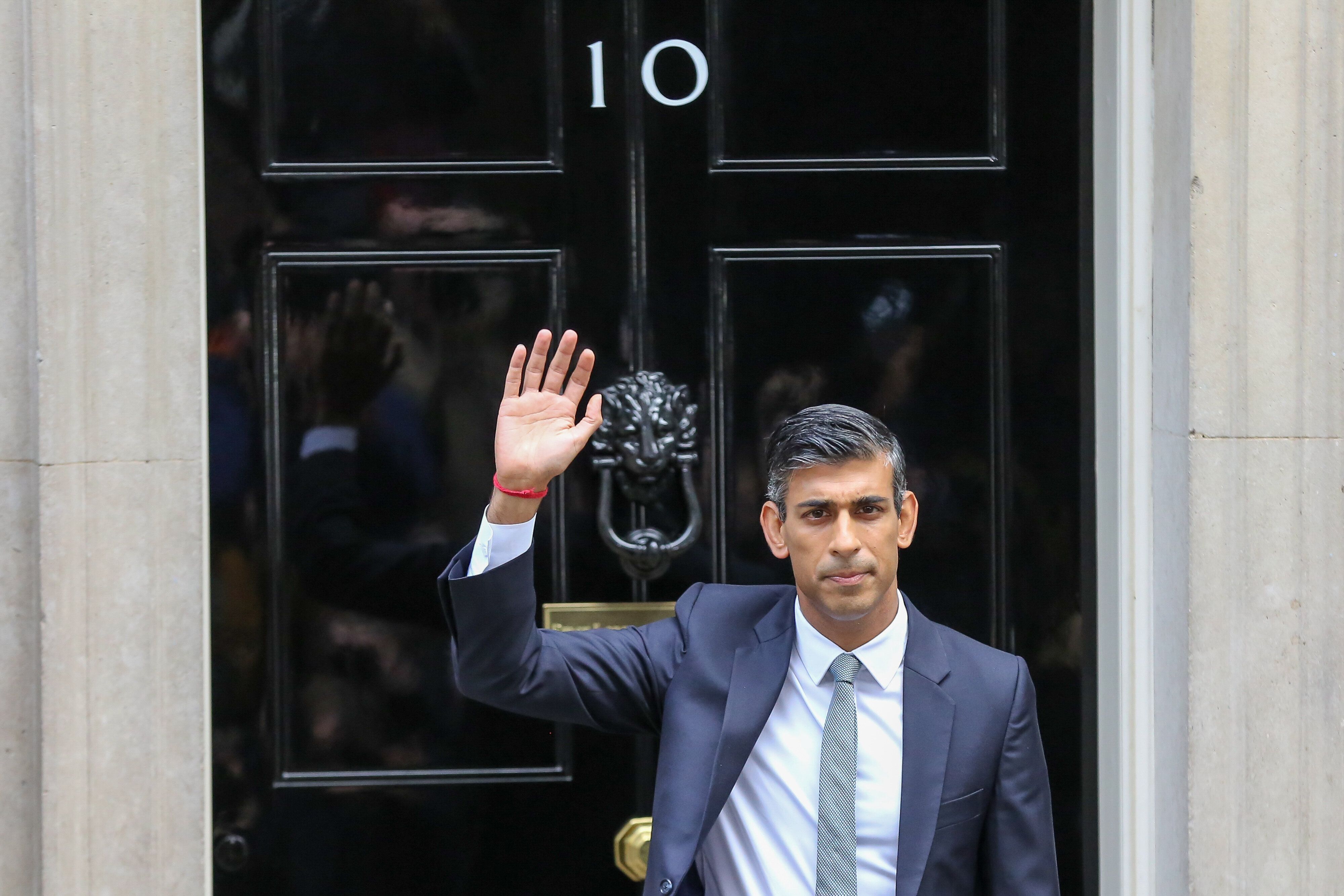
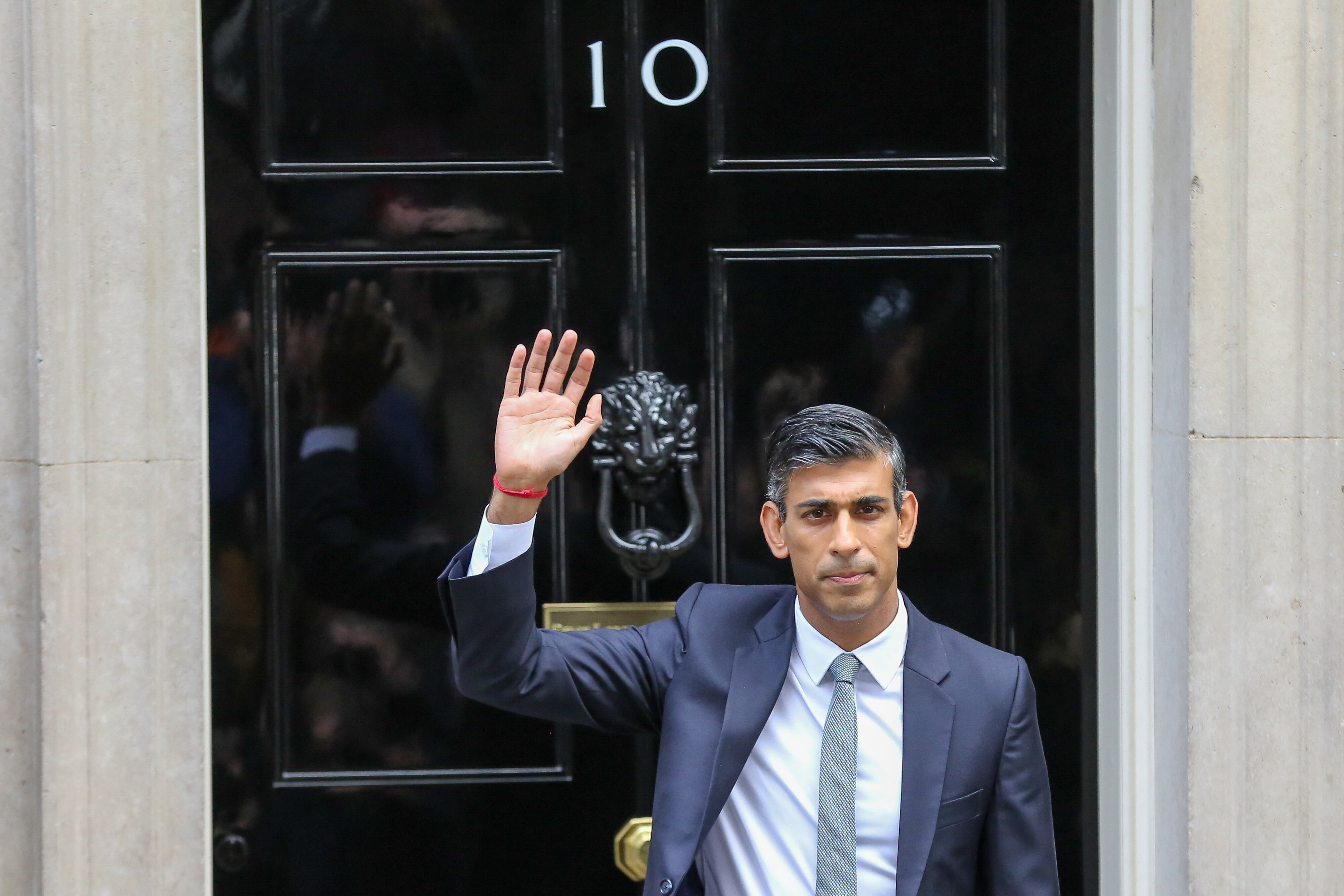
Want To Know Rishi Sunak’s Height? So Does Everyone, Apparently

In four months, we’ve had three different prime ministers: Boris Johnson, Liz Truss and now, Rishi Sunak.

On October 25, the multi-millionaire officially took the top job, becoming the first UK prime minister of Asian descent and the youngest one too.

Nearly all of us have strong opinions about the government, but the public awaits to see how the latest leader of the Conservative Party will lead the country. His policies aren’t the only thing people are discussing though, the public have another obsession regarding Rishi: his height.

The new prime minister is 1.7m, which means that he’s 5ft 6 – and people have strong feelings about this. The average height for men in the UK is 5ft 10, a fact which has made the PM’s height the talk of the town.

Some people are mocking his height

Others think the discussions around his height are unfair and mean

But some of the ‘short kings’ are celebrating

Jokes about men’s height aren’t new, but they’re getting old. If you know it’s wrong to comment on women’s appearances, the same grace should be applied to men.

Men are more than just their height, but unfortunately, people do take the height of men into consideration.

A study conducted by the researchers at the University of St Andrews in Scotland found a link between height and the perception of masculinity. Whilst another 2005 study stated that men who said they were 6’3” or 6’4” got about 60% more messages on dating sites than men who were 5’7” or 5’8.

But the tide is slowly changing for short men. The term ‘short king’ increased during awards season when celebrity couples like Sophie Turner and Joe Jonas and Spider-Man’s Tom Holland and Zendaya took to the red carpet. Though both women are taller than their partners, they clearly couldn’t care less about height.

So the next time you want to critique Rishi Sunak, make sure it’s about his policies, not his height.

Share Button

Taylor Swift Recalls ‘Nightmare’ Film Audition Alongside Eddie Redmayne

Taylor Swift has recounted a “nightmare” audition she had for the film adaption of Les Miserables opposite Eddie Redmayne.

The singer spoke about the screen test for Tom Hooper’s 2012 version of the musical as she appeared alongside Eddie on Friday’s edition of The Graham Norton Show.

Taylor, who did ultimately not land a part in the film, joked the audition became hellish after she was made to look “like death”.

She recalled: “Basically I was up for two roles – I had the look of Cosette and the range vocally of Eponine, so it was established I was there for a good time but not for a long time, I wasn’t going to get the role.

“But they asked if I would like to go to London to do a screen test with Eddie, who is one of my favourite actors, and I thought ‘This isn’t an experience I am going to get again in my life’, so I said yes.

“When I got there they put me in full 19th century street urchin costume and told me they were going to paint my teeth brown and I was like, ‘You are going to do that after I meet Eddie Redmayne, right?’

“But no, they made me look like death and it became a nightmare. When I met Eddie I didn’t open my mouth to speak!”

Bono, Taylor Swift, Eddie Redmayne and Alex Scott during filming for The Graham Norton Show

Matt Crossick via PA Wire/PA Images

Eddie, who was cast to play Marius Pontmercy in Les Miserables added: “I thought we would just be singing off each other – I didn’t know we would be in each other’s arms.

“My overriding memory of it is that I had had pizza and garlic dough balls beforehand and all I could think about was my garlic breath while Taylor was dying in my arms and I was trying to show emotion.”

I’d Do Anything star Samantha Barks ultimately landed the role of Eponine in the film, with Hollywood star Anne Hathaway playing Fantine and Mamma Mia! actress Amanda Seyfried playing Cosette alongside Hugh Jackman’s Jean Valjean.

The Graham Norton Show airs on BBC One on Friday at 10.40pm.

Share Button

Concern over flu and winter viruses but Covid levels unchanged

The flu season has started early and some young children under five are ending up in hospital.

Share Button

Nancy Pelosi’s Husband Assaulted Inside Their Home

An attacker broke into the San Francisco home of House Speaker Nancy Pelosi and assaulted her husband with a hammer, police said Friday.

San Francisco Police Chief Bill Scott said officers arrived at Pelosi’s house for a “well-being check” at around 2:27 am, where they saw Paul Pelosi and an adult male both holding a hammer.

“The suspect pulled the hammer away from Mr Pelosi and violently assaulted him with it,” Scott said. “Our officers immediately tackled the suspect, disarmed him, took him into custody, requested emergency backup, and rendered medical aid.”

Scott identified the suspect as a 42-year-old named David DePape. The man will be charged with attempted homicide, assault with a deadly weapon, elder abuse and burglary.

Both Pelosi and DePape were taken to a hospital, Scott said.

“Mr Pelosi was admitted to Zuckerberg San Francisco General Hospital where he underwent successful surgery to repair a skull fracture and serious injuries to his right arm and hands,” Pelosi’s office said later on Friday. “His doctors expect a full recovery.”

DePape entered the home looking for the speaker, a source briefed on the assault told HuffPost, but she wasn’t there. Before the attack, the intruder confronted Paul Pelosi, saying, “Where is Nancy, where is Nancy?”

It’s eerily similar to what a Donald Trump supporter chanted as a mob searched for Nancy Pelosi during the siege of the U.S. Capitol on January 6, 2021. Rioters ransacked the speaker’s office that day.

DePape’s internet presence suggests an obsession with far-right conspiracy theories, and some Democrats quickly condemned Republicans for the attack.

“Now is not a moment for timidity. Let’s be direct. Today’s violence seems to be the direct product of Big Lies from many Republicans and Republican propaganda organs about Democrats and American democracy,” representative Bill Pascrell said in a release.

“Turn on rightwing media on any given day or night. You will see frothing hosts shrieking unspeakable lies and unfounded conspiracy theories about women, religious and ethnic minorities, city residents, young people, and scores of others Americans,” Pascrell said.

The US Capitol Police announced that they and the Federal Bureau of Investigation are helping San Francisco police investigate the attack.

Senate Majority Leader Chuck Schumer called the attack “a dastardly act.” The White House said President Joe Biden called Nancy Pelosi to express support. House Minority Leader Kevin McCarthy also reached out to the speaker, NBC News reported.

The attack comes amid heightened concerns over both crime and political violence. Within minutes of Pelosi’s statement, a Fox News host described the attack as an example of how “crime hits everybody”.

Democratic representative Jackie Speier, whose district includes part of San Francisco, suggested early on Friday that the attack could be political.

“While the motive is still unknown we know where this kind of violence is sanctioned and modeled,” Speier wrote on Twitter.

Nancy Pelosi is one of the best-known politicians in the country. She is also one of the most vilified Democrats in Republican campaigns, which invoke her name as a symbol of Beltway liberalism.

In August, Paul Pelosi pleaded guilty to misdemeanour charges of driving under the influence. He also has faced scrutiny for his stock trades, and some lawmakers have pushed for a ban on members’ spouses trading stocks.

Years-old blogs that appear to belong to DePape show posts about LSD, Burning Man and quartz crystals. But more recent posts show disturbing signs of right-wing radicalization. Two posts from August 26 of this year read “Pedophile normalization” and “black pilled”, the latter being internet slang for becoming hopelessly nihilistic regarding the government, society or one’s own life. Another post, from August 26, reads, “Hitlery did nothing wrong.”

Others complain about “communist propaganda”. One post, simply labeled “Q” ― an apparent reference to the QAnon conspiracy theory universe ― references a meme about the conspiracy theory involving wealthy pedophiles trafficking children through the furniture website Wayfair.

Another website with posts authored by a David DePape shows him closely following various right-wing political obsessions, like false claims of widespread voter fraud, Justice Department special counsel John Durham’s investigation. Many others show his obsession with “the Jew media”, including a recent post about the war in Ukraine: “The more Ukrainians die NEEDLESSLY the cheaper the land will be for Jews to buy up.”

“This morning’s terrifying attack on Paul Pelosi by a man obsessed with election conspiracies is a dangerous reality encouraged by some members of my own party,” representative Adam Kinzinger wrote Friday.

In earlier years, DePape apparently had other fringe interests.

A 2008 article in The Oakland Tribune noted that DePape and Gypsy Taub, a well-known nudist activist in San Francisco, were hosting a community Thanksgiving meal for hundreds of people.

In 2013, Taub staged a naked wedding to Jaymz Smith on the steps of San Francisco’s city hall. Ahead of the occasion, SF Gate referenced a “David dePappe”, spelled with an extra “p”, who it reported was “a hemp jewelry maker and father figure who will double as best man.”

Matt Shuham, Mollie Reilly, Will Tooke and Paul Blumenthal contributed reporting.

Share Button

Croydon Hospital: Patient tells PM to pay NHS staff more

Rishi Sunak is told he is needs to “try harder” over plans to give pay rises to hospital staff.

Share Button

‘I wouldn’t bring a member of my family to this hospital,’ says medic

Gloucestershire Royal has some of England’s worst ambulance waiting times, with a hard winter to come.

Share Button