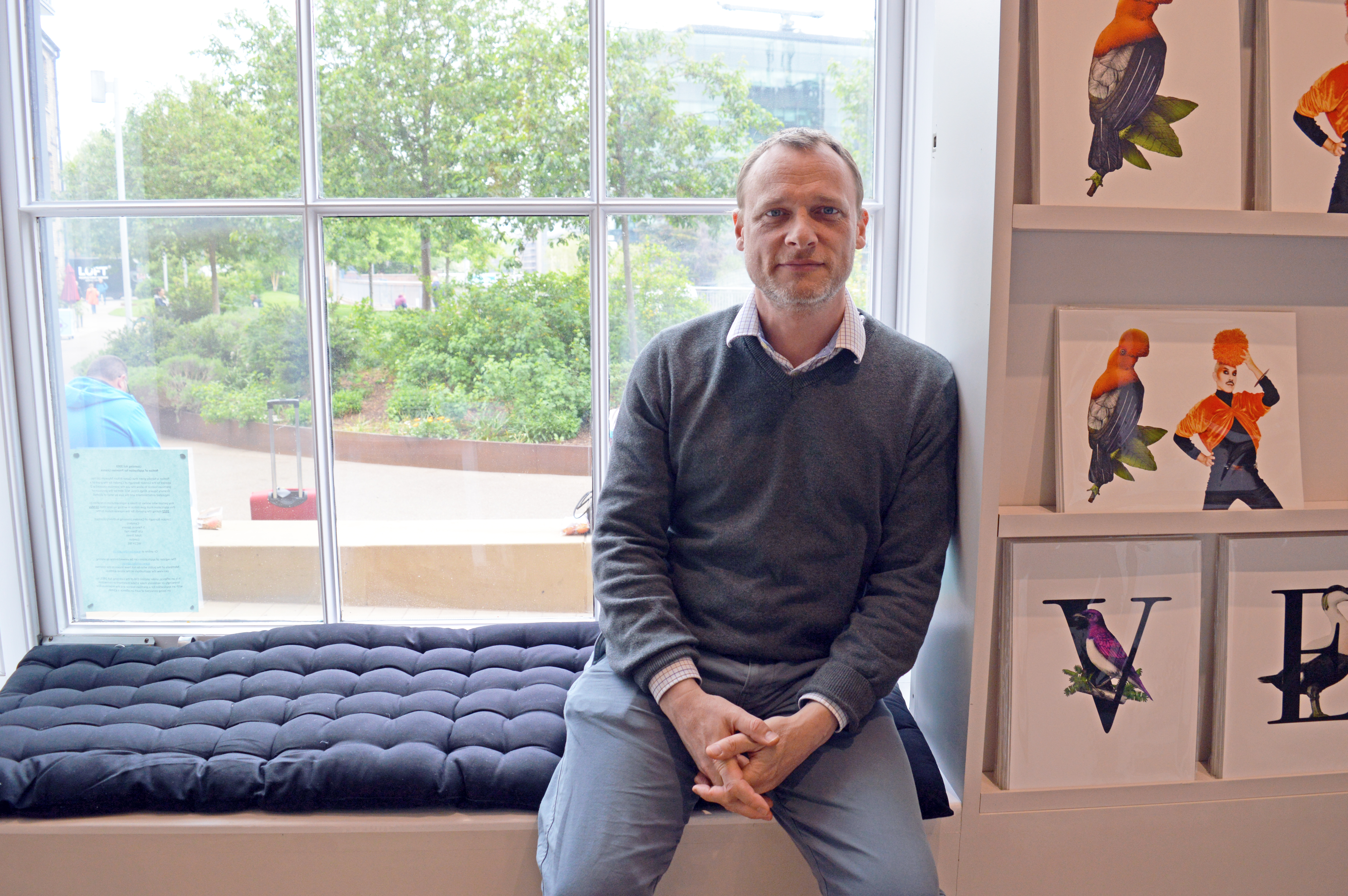
Recurrent UTIs linked to gut microbiome, chronic inflammation

One of the greatest frustrations regarding urinary tract infections (UTIs) is that they so often recur. UTIs are caused by bacteria in the urinary tract and characterized by frequent and painful urination. A round of antibiotics usually clears up the symptoms, but the relief is often temporary: A quarter of women go on to develop a second UTI within six months. Some unfortunate individuals get UTIs over and over, and require antibiotics every few months.

A new study suggests that women who get recurrent UTIs may be caught in a vicious cycle in which antibiotics given to eradicate one infection predispose them to develop another. The study, by researchers at Washington University School of Medicine in St. Louis and the Broad Institute of MIT and Harvard, showed that a round of antibiotics eliminates disease-causing bacteria from the bladder but not from the intestines. Surviving bacteria in the gut can multiply and spread to the bladder again, causing another UTI.

At the same time, repeated cycles of antibiotics wreak havoc on the community of helpful bacteria that normally live in the intestines, the so-called gut microbiome. Similar to other disorders in which gut microbes and the immune system are linked, women with recurrent UTIs in the study had less diverse microbiomes that were deficient in an important group of bacteria that helps regulate inflammation, and a distinct immunological signature in their blood indicative of inflammation.

The study is published May 2 in Nature Microbiology.

“It’s frustrating for women who are coming in to the doctor with recurrence after recurrence after recurrence, and the doctor, who’s typically male, gives them advice about hygiene,” said co-senior author Scott J. Hultgren, PhD, the Helen L. Stoever Professor of Molecular Microbiology at Washington University. “That’s not necessarily what the problem is. It’s not necessarily poor hygiene that’s causing this. The problem lies in the disease itself, in this connection between the gut and the bladder and levels of inflammation. Basically, physicians don’t know what to do with recurrent UTI. All they have is antibiotics, so they throw more antibiotics at the problem, which probably just makes things worse.”

Most UTIs are caused by Escherichia coli (E. coli) bacteria from the intestines that get into the urinary tract. To understand why some women get infection after infection and others get one or none, Hultgren teamed up with Broad Institute scientists Ashlee Earl, PhD, the senior group leader for the Bacterial Genomics Group at Broad and the paper’s co-senior author, and Colin Worby, PhD, a computational biologist and the paper’s lead author.

The researchers studied 15 women with histories of recurrent UTIs and 16 women without. All participants provided urine and blood samples at the start of the study and monthly stool samples. The team analyzed the bacterial composition in the stool samples, tested the urine for the presence of bacteria, and measured gene expression in blood samples.

Over the course of a year, 24 UTIs occurred, all in participants with histories of repeated UTIs. When participants were diagnosed with a UTI, the team took additional urine, blood and stool samples.

The difference between the women who got repeated UTIs and those who didn’t, surprisingly, didn’t come down to the kind of E. coli in their intestines or even the presence of E. coli in their bladders. Both groups carried E. coli strains in their guts capable of causing UTIs, and such strains occasionally spread to their bladders.

The real difference was in the makeup of their gut microbiomes. Patients with repeat infections showed decreased diversity of healthy gut microbial species, which could provide more opportunities for disease-causing species to gain a foothold and multiply. Notably, the microbiomes of women with recurrent UTIs were particularly scarce in bacteria that produce butyrate, a short-chain fatty acid with anti-inflammatory effects.

“We think that women in the control group were able to clear the bacteria from their bladders before they caused disease, and women with recurrent UTI were not, because of a distinct immune response to bacterial invasion of the bladder potentially mediated by the gut microbiome,” Worby said.

The findings highlight the importance of finding alternatives to antibiotics for treating UTIs.

“Our study clearly demonstrates that antibiotics do not prevent future infections or clear UTI-causing strains from the gut, and they may even make recurrence more likely by keeping the microbiome in a disrupted state,” Worby said

Hultgren has long worked on finding innovative therapies to eradicate disease-causing strains of E. coli from the body while sparing the rest of the bacterial community. His research forms the basis of an experimental drug based on the sugar mannosideand an investigational vaccine, both of which are being tested in people. Another strategy would be to rebalance the microbiome through fecal transplants, probiotic foods or other means.

“This is one of the most common infections in the United States, if not the world,” Hultgren said. “A good percentage of these UTI patients go on to get these chronic recurrences, and it results in decreased quality of life. There is a real need to develop better therapeutics that break this vicious cycle.”

Share Button

Covid: World’s true pandemic death toll nearly 15 million, says WHO

These include deaths from Covid and from the indirect effects of the pandemic over two years worldwide.

Share Button

Hospitals urged to use retired staff to cut backlog

NHS bosses are also recommending offering staff more overtime and scrapping caps on consultant hours.

Share Button

‘My Partner Is Watching Porn And Won’t Have Sex With Me’

You’re reading Love Stuck, where trained therapists answer your dating, sex and relationship dilemmas. You can submit a question here.

The topic of porn can be a taboo subject, but we need to talk about it – especially in relationships. This week’s reader, Jenny, wrote in to ask for advice related to her husband’s porn consumption.

“My partner is watching porn and won’t have sex with me,” she said. “I found out that my husband is into porn and he won’t turn from his ways. He’s pleasuring himself but won’t have sex with me, what should I do?”

Navigating a situation like this can be tricky, but Counselling Directory member Georgina Smith is here to help.

How can this reader speak to her husband about this?

“Like any difficult subject in a relationship, pick a time when you are both able to talk freely, raising it when you are both calm and able to discuss rationally, don’t wait until an argument,” Smith says.

“Invite some open conversation about his feelings around his porn habit and how that makes you feel – try to use empathy and good listening skills.

“Explore how you could find your way back to a sex life you both enjoy to feel more connected. You are entitled to express your desire for sex in a relationship and how their rejection may be causing you hurt.”

When does watching porn become an issue in a relationship?

Smith believes that watching porn in a relationship becomes an issue when it causes harm to the partner. “Some people perceive watching porn as a form of infidelity, especially if it is done in secret,” she says.

“If porn watching is essentially a substitution for actual sex and that is impacting on the relationship (by stopping a couple connecting via sex and intimacy), I would consider that to be an issue.

“If watching porn has become addictive (i.e. unable to stop even if viewer wants to stop) then that person may need specialist help.”

What should we do when porn becomes an issue in our relationship?

Smith emphasises that we should “communicate effectively around the subject, don’t avoid it just because it can sometimes be an uncomfortable conversation.”

“Try to understand where you are both coming from if you have opposing views around porn and figure out how you might find a common ground that keeps both of you happy,” Smith says.

“Get some couple counselling to unpack in a safe space and reflect individually why you feel the way you do about porn would be two helpful places to start.”

Love Stuck is for those who’ve hit a romantic wall, whether you’re single or have been coupled up for decades. With the help of trained sex and relationship therapists, HuffPost UK will help answer your dilemmas. Submit a question here.

Share Button

Inside Queer Britain, The UK’s First National LGBTQ+ Museum

A few students from nearby Central Saint Martins chat on the steps of the Queer Britain Museum, which is tucked away on one side of Granary Square in King’s Cross, London, on the ground floor of a large 19th century building.

After years in the making, this is the UK’s first permanent, national LGBTQ+ museum – and it’s much needed. As the founders point out, queer people have impacted every part of culture, yet all too often their lives have been written in the margins of history books. This is a space for queer history to be “preserved, explored and celebrated”.

The museum itself is all on one floor, spread across three rooms, and opens with ‘Welcome to Queer Britain’ – a display showcasing artwork from the LGBTQ+ community alongside historical photographs.

Once inside the step-free threshold, the gift shop to the left is most immediately obvious. Laden with colourful memorabilia, it’s got the usual staples: high-end chocolate, greetings cards and candles. But it’s clear that this is an LGBTQ+ space: a table of books curated by the Gay’s the Word bookshop sits in the centre, and there are plenty of rainbows – on badges, bottles and fridge magnets – plus Queer Britain’s own branded merchandise.

Ella Braidwood

The museum comes after the successes of multiple temporary exhibitions in this area. Earlier this year, the Barbican held its Out and About! installation, exploring LGBTQ+ history in London, while last year, Museums & Galleries Edinburgh launched an online exhibition celebrating young Scottish LGBTQ+ people. Queer Britain will also not be the last: in June, another long-term LGBTQ+ cultural space in London will open, Queercircle in Greenwich.

In fact, Queer’s Britain’s co-founder and director Joseph Galliano explains that it was while at another LGBTQ+ exhibition, the Tate Britain’s Queer British Art, that his vision for a permanent museum really solidified. (Though, he had first had the idea as far back as 2007, when he was editor of Gay Times.) Held in 2017, the exhibit marked the 50th anniversary of the partial decriminalisation of male homosexuality.

“I was struck by the fact that so much momentum had been built up around that anniversary within the museums sector,” says Galliano. He spotted an “opportunity to take that momentum, and broaden it” with his vision of a bricks-and-mortar museum truly reflective of the UK’s LGBTQ+ community, including “women’s stories, people of colour, [and] trans people”.

Museum co-founder Joseph Galliano.

Ella Braidwood

Museum co-founder Joseph Galliano.

With that, Galliano set about putting Queer Britain into action, which he co-founded with Ian Mehrtens alongside a diverse committee of trustees and advisors, including Stonewall co-founder Lisa Power, Trans Britain author Christine Burns, and gal-dem founder Liv Little.

“We made sure that the leadership structures are very diverse,” adds Galliano. Of his hopes for the museum, trustee Krishna Omkar says in an email: “Our relationship with our past defines our present, and helps direct what is to come. Telling stories that have remained untold, and collating a collective memory of the past is crucial. Representation matters. Remembrance matters.”

In the first room, there are two large images: Sadie Lee’s domineering oil painting of cabaret artist David Hoyle, whose eyes, shrouded in bright make-up, fixate on the viewer, plus Paul Harfleet’s aptly-named Cock of the Rock, named after the South American bird.

The second and largest room is split into two sections, the first dedicated to the topic of “chosen family”, originally shown by Queer Britain as a pop-up in collaboration with Levi’s in 2019. For this, a series of bright images by four artists – Alia Romagnoli, Bex Day, Kuba Ryniewicz and Robert Taylor – show the diversity of the LGBTQ+ community, including people of colour and those of marginalised gender identities.

En Route Solutions Ltd

Also in this room are a series of wide-ranging historical photographs, dating as far back as the 1870s. These cover various milestones in the UK’s LGBTQ+ history, such as the introduction of Section 28 in 1988, which banned schools and local authorities from “promoting” homosexuality, and the legalisation of equal marriage from 2014 in England, Wales and Scotland (followed by Northern Ireland in 2020). Among the imagery are notable figures including Leo Abse, the MP behind the bill that partially decriminalised homosexuality in 1967; TV presenter Sandi Toksvig; and Margeurite Radclyffe Hall, who wrote the classic lesbian novel The Well of Loneliness.

The museum’s opening comes during a time of increased visibility for LGBTQ+ people, with millions tuning in to watch Netflix’s hit series Heartstopper. However, visibility and equality have not come hand-in-hand. Last December, it was reported that homophobic and transgender hate crimes soared in the summer of that year; in the five financial years up to 2021, anti-LGBTQ+ hate crimes rose annually, according to official Home Offices figures.

Ella Braidwood

The museum’s theme is generally jubilant and celebratory, though, with little on the harrowing parts of LGBTQ+ history. For instance, while the AIDS epidemic is briefly referenced, including with a photograph of Princess Diana comforting an HIV-positive man, the museum does not delve into the sheer tragedy of the thousands of gay and bisexual men whose lives were lost during this crisis. A placard highlights the accomplishments of Justin Fashanu, the first openly gay professional footballer – and Britain’s first black footballer to command a £1 million transfer fee – with no mention of his tragic early death, at the age of 37 by suicide.

For Galliano, it was a deliberate choice to focus on celebrating queer accomplishments, rather than the tragic parts. “There is stuff there that needs to be celebrated, rather than just always starting with the sad ending,” he explains. “That said we have to be telling hard stories and we have to be asking the hard questions.” Still, Galliano notes that displays may be adjusted depending on how they are received by the public.

Since being registered as a charity in 2018, Galliano explains how Queer Britain has come up against multiple challenges, most notably financially. “Funding was always a challenge from the start, [it] will always be a challenge,” he says. This is even more so given that entry to the museum is free, including for its exhibitions. “If we’re going to talk about inclusion, we need to talk about economic inclusion as well,” adds Galliano.

Ella Braidwood

The space, too, leased from the Art Fund, came up in January, which, says Galliano, was “a year earlier than we were expecting…but it was too good an opportunity to not run full tilt”, and so what is on display was pulled together quickly, in time for this Spring opening.

In July, Queer Britain will host its first exhibition, marking the 50th anniversary of the UK’s first pride parade. Though Galliano is tight-lipped about its content, he says this will consist of a “heritage items and community voices” which will also go towards “addressing” representation of all four nations that make up the UK.

The current final room includes portraits from award-winning photographer Allie Crewe, which celebrate the trans and non-binary communities, and two images – both arresting and beautiful – donated by Robert Taylor, who is also a trustee of the museum.

For Galliano, this museum is all about giving back to the queer community, alongside showing the richness – and diversity – of its history, not only to those who are LGBTQ+, but also to their heterosexual counterparts. “I want queer people to feel celebrated, and belonging, and lifted up,” he says, “and all their friends and families to recognise [where] their stories start and the importance of those.”

Queer Britain opens May 5 2022 and is located at 2 Granary Square, London, N1C 4BH and open Wednesday to Sunday from 12pm – 6pm.

Share Button

What Doctors Want You To Know About Abortion Right Now

Since 1973, Roe v. Wade has protected the right of all Americans to access safe and legal abortions. But a leaked document published by Politico on Monday shows that the federal protections conferred by Roe may be struck down by the US Supreme Court this summer.

If Roe falls, the legality of abortion will be determined by each state. And though a handful of states are passing legislation that will protect the right to get an abortion, many others — 26 to be exact — are expected to quickly ban or restrict abortions.

If this happens, millions of people in the US will no longer be able to access safe abortion care within their communities. They’ll have to wait longer and travel farther to access help. The impact on people’s mental and physical health – along with their finances, families and livelihoods – will be astronomical.

Despite the misinformation that swirls around the internet (and beyond), abortions are extremely safe procedures. They’re also incredible common – about one in four women will have an abortion by the time they are 45 – and, in many cases, they are life-saving.

“It is a common procedure, it is very safe, and I can’t emphasise that enough. This draft ruling is egregious, it is a basically a war against women,” Dr. Melissa Simon, a Northwestern Medicine OB/GYN, tells HuffPost.

Here’s what people get wrong about abortion

One of the most common misconceptions about abortions is that the procedure is dangerous or detrimental to one’s health.

A report from 2018 examined the safety of various methods of abortion – medication, aspiration, dilation and evacuation, and induction – and concluded that abortions are safe and effective and that complications from all types of abortions are rare.

It’s the barriers and restrictions that legislators sign to prevent patients from easily and swiftly accessing abortion that jeopardise their health. It’s well known that delaying abortion care increases the risk of complications.

Some US states require doctors to tell their patients that there’s a link between breast cancer and abortion – despite the fact that many high-quality studies have put this question to rest, according to Dr. Jennifer Kerns, an associate professor in the department of obstetrics, gynaecology and reproductive sciences at the University of California, San Francisco.

Others fear that abortions cause infertility, but research hasn’t found a link between abortions and the ability to conceive in the future. There’s also no evidence that abortions increase the risk of complications (ie. preterm birth or low birth weight delivery) in the event of a future pregnancy.

Another long-running mistruth is that abortions increase the risk of developing mental health issues. “There is a huge body of work demonstrating that abortion in and of itself does not cause mental health problems,” Kerns says, noting that people often feel relief after getting an abortion.

What we do know is that unwanted pregnancies can cause significant maternal depression and parenting stress. And those mental health issues don’t clear up with time; they are often long-lasting, afflicting the women who carried the unwanted pregnancies to term well into their 30s, 40s and 50s.

“Even in the setting of using contraception and safe-sex practices, having the option of an abortion is critical to the life and both physical and mental health of the woman.”

– Melissa Simon

Many people falsely believe pregnancy is easy to avoid, but it’s not that straightforward. Kerns sees many people, from all walks of life and phases of reproductive health, seeking an abortion. Contraception – though invaluable – is not foolproof. Birth control is not 100% effective; it can fail and lead to a pregnancy.

“Even in the setting of using contraception and safe-sex practices, having the option of an abortion is critical to the life and both physical and mental health of the woman,” Simon says.

Many anti-abortion bills have been labelled “heartbeat bills” because they ban abortions at the first sign of foetal cardiac activity. This nomenclature is wildly misleading – while primordial electrical activity can be detected around six weeks of pregnancy, this does not mean a foetus has a functioning heart. The heart, valves and vessels do not form until 16-18 weeks of pregnancy.

“Just having cardiac activity does not mean the foetus, if born at that moment, would be able to survive,” Simon says.

Restricting abortion impacts people’s health and livelihoods

Evidence shows that being denied an abortion has a devastating impact on one’s physical health, mental health and overall well-being.

The Turnaway Study, conducted by scientists at the University of California, San Francisco, found that women who carry an unwanted pregnancy to term have a four times greater chance of being below the US federal poverty level.

They’re also more likely to experience serious health complications, such as eclampsia and death, and to develop mental health issues, including anxiety, depression and suicidal ideation. They’re more likely to stick with an abusive partner; their life goals tend to take a back seat, and their families’ livelihoods suffer. Many go on to experience chronic pain.

“The health and welfare of the citizens of this country suffer – we see increased illness, we see increased poverty and we see increased death,” Kerns says.

“The health and welfare of the citizens of this country suffer — we see increased illness, we see increased poverty and we see increased death.”

– Jennifer Kerns

Restricting the right to an abortion does not mean the need for an abortion disappears. A recent study predicted that banning abortion will lead to a 21% increase in pregnancy-related deaths; that jumps to 33% among Black women.

Maternal mortality rates are at an all-time high. The US already has the highest maternal death rate among developed nations — and that crisis would only get worse without access to safe abortion.

“There are some women who get pregnant who could die if they continue with the pregnancy, and, therefore, an abortion is a life-saving procedure in those circumstances,” says Simon, adding that those circumstances are not rare. Abortions, in many cases, can save the life of the mother.

Here’s what the fall of Roe could mean for health care

Kerns said the leaked document demonstrates that the court is no longer a neutral group. “It really lays bare how out of touch their rulings are with people’s lives,” Kerns said.

Much of the language used in abortion restrictions and bans – like “abortionists” – really deeply divides people and shames those who get an abortion or provide an abortion.

Simon says the potential fall of Roe reflects a crisis in women’s health care, specifically when it comes to maternal health. The end of Roe would mark a war against women and people who can get pregnant, who, for the record, comprise over 50% of the US population, she adds.

Simon is exceedingly concerned about what will happen to the growing maternal death rate if Roe falls and safe abortion care becomes harder and harder to access.

“That is what I am very worried about in this country – that we are going to go even more in the wrong direction than we already are with respect to caring for over half of our population: women,” Simon says.

Share Button

A ‘factory reset’ for the brain may cure anxiety, drinking behavior, study suggests

Gene editing may be a potential treatment for anxiety and alcohol use disorder in adults who were exposed to binge drinking in their adolescence, according to the results of an animal study published in the journal Science Advances.

The study is issued by researchers from the University of Illinois Chicago who have been studying the effects of early life binge drinking on health later in life.

In prior research, the UIC team found that binge drinking in adolescence alters brain chemistry at the enhancer region of the Arc gene — for activity-regulated cytoskeleton-associated protein immediate-early gene — and decreases Arc expression in the amygdala of both rodents and humans. This epigenetic reprogramming of the Arc gene in the brain’s emotion and memory center contributes to a predisposition to anxiety and alcohol use disorder in adulthood.

In the new study, the researchers show that this epigenetic reprogramming, which persists throughout life, actually can be reversed with gene editing.

“Early binge drinking can have long-lasting and significant effects on the brain and the results of this study offer evidence that gene editing is a potential antidote to these effects, offering a kind of factory reset for the brain, if you will,” said study senior author Subhash Pandey, the Joseph A. Flaherty Endowed Professor of Psychiatry and director of the Center for Alcohol Research in Epigenetics at UIC.

Pandey and his team used a gene-editing tool called CRISPR-dCas9 in their experiments to manipulate the histone acetylation and methylation processes at the Arc gene in models of adult rats. These processes make genes more or less accessible for activation.

First, the researchers studied adult rats with intermittent alcohol exposure in their adolescence, corresponding to about age 10 to 18 in human years. They observed that when dCas9 was used to promote acetylation, a process that loosens chromatin and allows transcription factors to bind to the DNA, Arc gene expression normalized. And, indicators of anxiety and alcohol consumption decreased.

Anxiety was measured through behavioral testing, such as by documenting the exploratory activity of rats placed in maze tests, and preference for alcohol was measured by monitoring the amount of liquid consumed when the rats were presented with a choice of two bottles consisting of options such as tap water, sugar water and varying concentrations of alcohol (3%, 7% and 9%).

In a second model, the researchers studied adult rats without early alcohol exposure. When inhibitory dCas9 was used to promote methylation, which tightens chromatin and prevents transcription factors from binding to DNA, Arc expression decreased and indicators of anxiety and alcohol consumption increased.

“These results demonstrate that epigenomic editing in the amygdala can ameliorate adult psychopathology after adolescent alcohol exposure,” the authors report.

“Adolescent binge drinking is a serious public health issue, and this study not only helps us better understand what happens in developing brains when they are exposed to high concentrations of alcohol but more importantly gives us hope that one day we will have effective treatments for the complex and multifaceted diseases of anxiety and alcohol use disorder,” said Pandey, who is also a senior research career scientist at Jesse Brown VA Medical Center. “That this effect was seen bidirectionally validates the significance of the Arc enhancer gene in the amygdala in epigenetic reprogramming from adolescent binge drinking.”

The research was supported by the National Institute on Alcohol Abuse and Alcoholism (U01AA019971, U24AA024605, P50AA022538, and F32AA027410) and the Department of Veterans Affairs.

Story Source:

Materials provided by University of Illinois Chicago. Note: Content may be edited for style and length.

Share Button

Will climate change increase the risk of aflatoxin in U.S. corn?

As climate change continues to alter weather patterns around the planet including the Midwest, researchers at Michigan State University are modeling the impact on crops such as corn.

“The United States is the largest exporter and donor of field corn around the world,” said Felicia Wu, a John A. Hannah Distinguished Professor and an international expert on food safety in the Department of Food Science and Human Nutrition and the Department of Agricultural, Food, and Resource Economics in the College of Agriculture and Natural Resources at MSU. “Here in the U.S., we consume field corn in the form of corn chips, corn flakes, corn grits and corn tortillas; as opposed to sweet corn, which is frozen, canned and eaten off the cob. Field corn is also used for animal feed and for ethanol production.”

The fungi Aspergillus flavus and Aspergillus parasiticus produce aflatoxin which can infect peanuts, tree nuts and corn. Aflatoxin not only degrades corn quality but can also cause health problems for humans and animals depending on the amount and length of time it is ingested. While aflatoxin contamination occurs annually in the southern United States because of the hot and dry climate, it has rarely been a serious problem in the Corn Belt region of the U.S.

“When we ran our near-term climate model scenarios, we found that between 2031-2040, aflatoxin is going to become more of a problem in the U.S. Corn Belt in the Midwest,” Wu said. “The last time there was a serious problem was in 2012 when we had an unusually hot and dry summer throughout the Midwest; particularly Iowa, Illinois and Indiana.”

Wu’s research was published April 5, 2022 in the journal Environmental Research Letters. Co-authors on the paper include her former doctoral student Jina Yu (Hong Kong Baptist University), David Hennessy (Iowa State University) and Jesse Tack (Kansas State University).

Hot and dry conditions encourage fungi spores to be airborne which increases their chances of contaminating crops. Water helps plants withstand stress that makes them vulnerable to harmful fungi. Steps growers, grain elevators and processors can take to reduce the risk of aflatoxin contamination include storing corn harvests in cool, dry conditions and keeping crops irrigated to the extent possible given declining water tables.

Researchers are already using both biotechnological and conventional breeding techniques to develop hybrid crops that can withstand drought, insect damage and fungal infections. In many parts of the world, corn growers are using biocontrol to reduce aflatoxin. Biocontrol infects plants with Aspergillus fungi which is unable to produce aflatoxin because this these fungi competitively exclude the fungi that produce aflatoxin.

Another possibility shifts crop production further north or further south geographically where the climate is cooler or wetter to reduce aflatoxin risk. That, however, impacts farms that have been passed down for generations.

For consumers concerned about eating field corn and their aflatoxin risk, Wu suggests eating your greens and garlic. “Green leafy vegetables are good for your overall health,” Wu said. “Chlorophyll has a sandwich molecular structure that traps aflatoxin molecules so that humans excrete them before the toxin can enter our bloodstream.”

Also, cruciferous vegetables like broccoli, cauliflower, kale and allium vegetables like garlic, onions and leeks can help detoxify carcinogens in our bodies.

“We predict seeing an increase in aflatoxin problems over the next 10-20 years,” Wu said. “So, we need to rely on technologies and a whole suite of interventions that can reduce the problem.”

Story Source:

Materials provided by Michigan State University. Original written by Emilie Lorditch. Note: Content may be edited for style and length.

Share Button

Hundreds of injured singers profiled

An analysis of more than 400 singers who sought treatment at UT Southwestern Medical Center for vocal injuries provides a wealth of data on a topic that’s often considered taboo to discuss in the singing community.

The findings, published in The Laryngoscope, show that only 1 in 7 subsequently needed surgery for injuries that weren’t resolved with vocal therapy and other conservative management. Researchers determined which vocal injuries were most common by sex, age, training, and professional/amateur status, and what kinds of treatment these patients subsequently required.

“When you’re an injured singer, especially when you depend on singing for your livelihood, the stakes are really high. Injured singers are often reluctant to talk about their injury or ask questions among their colleagues or community because injuries carry a stigma,” said study leader Lesley Childs, M.D., Associate Professor of Otolaryngology — Head and Neck Surgery and Medical Director of the Voice Center at UT Southwestern. “There are many opportunities for misinformation, so we wanted to gather data to help dispel myths and counsel our patients on the facts.”

Toward that end, Dr. Childs and her colleagues, including UTSW resident physician Ashwin Rao, M.D., and Ted Mau, M.D., Ph.D., Professor of Otolaryngology — Head and Neck Surgery, reviewed charts of all singers who sought care for vocal injuries at the Voice Center between 2011 and 2019. A total of 438 patients between ages 8 and 78 who had never undergone prior surgery to correct vocal fold injuries were seen during this period.

Searching for patterns, the researchers discovered that the most prevalent injury by far was nodules, a callous-like injury that affected 58% of these singers, followed by blister-like injuries called pseudocysts, as well as polyps, cysts, and vocal fold hemorrhages. Although female singers were more likely to develop nodules and pseudocysts, polyps and cysts were more common in male singers. Polyps developed more frequently with age in female patients, while young male singers were more likely to develop nodules.

Dr. Childs and her colleagues found that professional status and a lack of prior vocal training were the greatest risk factors. Professional singers who had not taken voice lessons were eight times more likely to need surgery than amateur singers with prior voice lessons.

Although the increased risk among professional singers is probably due to the greater amount of singing time overall, the link with vocal training is unclear, Dr. Childs said. Training may increase vocal proficiency, and a history of voice lessons might make it easier for the injured to follow vocal therapy protocols.

Regardless, she added, the data can help physicians reassure patients who seek help at the Voice Center.

“For amateur and professional singers alike, vocal injuries can be devastating, but our study suggests that these injuries need not be career-ending,” Dr. Childs said. “With conservative management, most singers can get back on track.”

UT Southwestern’s Voice Center, one of the largest in the South, employs a collaborative, multidisciplinary team of passionate voice care specialists to care for injured singers. Several members of the Voice Center are singers themselves: Dr. Childs is a classically trained soprano with experience in various professional chamber ensembles as well as recording for Walt Disney Records, and all six of the Voice Center’s speech language pathologists are singers.

“We’re very proud that we can offer this personal experience to our patients and speak the unique language that singers use,” she said.

Share Button

Hepatitis detected in nearly 300 children worldwide

There is mounting evidence that a common adenovirus is linked to these rare cases.

Share Button