Genetic diversity of C. difficile, a particularly problematic pathogen

Researchers at University of California San Diego School of Medicine and Jacobs School of Engineering, with colleagues at Baylor College of Medicine, have used a systems biology approach to parse the genetic diversity of Clostridioides difficile, a particularly problematic pathogen in health care settings.

The Centers for Disease Control estimates that the bacterium causes approximately 500,000 infections in the United States annually, with severe diarrhea and colitis (inflammation of the colon) as characteristic symptoms.

The researchers’ findings are published in the April 27, 2022 online issue of PNAS.

C. difficile is the most dominant cause of hospital-associated infections, in part from the use of antibiotics, which can kill enough healthy bacteria to allow C. difficile to grow unchecked. Infections are particularly dangerous in older persons. One in 11 people over the age of 65 who are diagnosed with a hospital-associated case of C. difficile die within one month, reports the CDC.

“C. diff is persistent and pervasive,” said senior author Jonathan M. Monk, PhD, a research scientist in the Systems Biology Research Group at UC San Diego, directed by Bernhard O. Palsson, PhD, professor of bioengineering and an adjunct professor in the UC San Diego School of Medicine. “It doesn’t cause typical diarrhea. Most people do recover, but some become seriously ill, require hospitalization and some die from complications like kidney failure or sepsis.”

To better understand the genetic features of C. difficile — and thus develop models that can identify and predict its complex and constant evolution — researchers used whole-genome sequencing, high-throughput phenotypic screening and metabolic modeling of 451 bacterial strains.

This data was used to construct a “pangenome” or entire set of genes representative of all known C. difficile strains, from which they identified 9,924 distinct gene clusters, of which 2,899 were considered to be core (found in all strains) while 7,025 were “accessory” (present in some strains but missing in others).

Using a new typing method, they categorized 176 genetically distinct groups of strains.

“Typing by accessory genome allows for the discovery of newly acquired genes in genomes of pathogens that may otherwise go unnoticed with standard typing methods,” said co-author Jennifer K. Spinler, PhD, an instructor in pathology and immunology at the Baylor College of Medicine. “This could be critical in understanding what drives an outbreak and how to fight its spread.”

Thirty-five strains representing the overall set were experimentally profiled with 95 different nutrient sources, revealing 26 distinct growth profiles. The team then built 451 strain-specific genome scale models of metabolism to computationally produce phenotype diversity in 28,864 unique conditions. The models were able to correctly predict growth in 76 percent of measured cases.

“One of the strengths of the presented work is the cohesion of distinct biological data types into comprehensive systems biology frameworks that enable analysis at scale,” said first author Charles J. Norsigian, PhD, a data scientist in the Systems Biology Research Group. “By interpreting strains of C. difficile in a population context, we were able to bring to light pertinent strain features regarding nutrient niche, virulence factors, and antimicrobial resistance determinants that might have otherwise gone undetected.”

Co-authors include: Bernhard O. Palsson, UC San Diego; Heather A. Danhof, Colleen K. Brand, Firas S. Midani, Robert A. Britton and Tor C. Savidge, Baylor College of Medicine; and Jared T. Broddrick and Jennifer K. Spinier, NASA Ames Research Center.

Story Source:

Materials provided by University of California – San Diego. Original written by Scott LaFee. Note: Content may be edited for style and length.


Share Button

A new polymer system to revolutionize the delivery of therapeutics

Researchers at the University of Massachusetts Amherst recently announced that they have engineered a new class of material, called a “polyzwitterionic complex,” or “pZC,” which is able to both withstand the harsh acidic conditions of the stomach and then dissolve predictably in the comparatively gentle environment of the small intestine. This property means that pZCs could help revolutionize the delivery of medicines of all sorts, from familiar oral antibiotics to new classes of delicate protein therapeutics.

“Despite the common experience of swallowing medications orally, there is a huge number of therapies that are not available orally,” says Khatcher Margossian, the lead author of the study and a candidate for a dual M.D./Ph.D. from Rush Medical College and the UMass Amherst Department of Polymer Science and Engineering, respectively. This is because there are many drugs that can’t withstand the stomach’s harshly acidic environment. Two ways around this problem are to either inject or implant medications; but in both cases, the pain, fear and potential side effects can limit a patient’s willingness to undergo treatment or to stick with the treatment plan through its full course. And even those drugs that are strong enough to withstand the stomach’s acid and make it through to the small intestine, where they can be absorbed into the bloodstream, often do not make it through entirely intact. “The doses of oral medications are usually larger than what our body really needs,” explains Murugappan Muthukumar, the Wilmer D. Barrett Professor in Polymer Science and Engineering at UMass Amherst and the study’s senior author. “This is because some of the medication decomposes in the stomach.”

“If there were some way to protect this precious therapeutic cargo,” says Margossian, “we could expand the library of medications that we can deliver orally.” Figuring out how to protect the precious cargo is exactly what Margossian, Muthukumar, and their colleagues have done.

The study, recently published in Nature Communications, details a new class of material, called a pZC, which forms through a process known as “complex coacervation.” In their system, two types of charged polymers, a polyzwitterion and a polyelectrolyte, associate to form a protective droplet inside of which medications can travel. The trick that the pZC has to perform is that it not only needs to be tough enough to withstand the highly acidic stomach environment, it also has to disassemble in the much gentler, neutral conditions of the small intestine.

Paradoxically, the key to the group’s success was not to strengthen the bonds between the polyzwitterion and polyelectrolyte but to weaken them. “Weakening the association between the two materials,” says Muthukumar, “allows us to control precisely when they come apart. If the bonds are too strong, then there’s no room to play.”

The group’s research is driven by the real-life needs of medical practitioners. Not only will these materials allow clinicians to more efficiently deliver the right dosages of drugs, but they will vastly increase the number of medications that can be taken orally. “This is a foundational technology that can alter how we treat disease,” says Margossian. “We hope that our work will make its way into clinicians’ hands and help them save lives.”

This research was supported by the National Science Foundation and the Air Force Office of Scientific Research.

Story Source:

Materials provided by University of Massachusetts Amherst. Note: Content may be edited for style and length.

Share Button

Scientists implicate non-cardiac genes in congenital heart disease

Inside embryonic cells, specific proteins control the rate at which genetic information is transcribed from DNA to messenger RNA — a crucial regulatory step before proteins are created. Then, organs develop and hopefully function properly. Those specific “regulatory” proteins are called transcription factors, and they do their thing by binding to specific DNA sequences at just the right time.

Scientists have known that mutations to three cardiac transcription factors — GATA4, NKX2-5 and TBX5 — lead to a range of congenital heart disease states. Researchers have thought that an inability of these mutated genes to “turn on” cardiac genes is what led to heart disease.

Now, the lab of Frank Conlon, PhD, professor of biology and genetics at the University of North Carolina at Chapel Hill, discovered there’s more to the story. It involves non-cardiac genes, as well as answering a question researchers have struggled with for years.

Aside from the aforementioned transcription factors, past research showed that a protein complex subunit called CHD4 seems to play a major role in congenital heart disease. Deleting it causes embryonic death in animal models. Mutations to it cause major problems with proteins involved in skeletal and muscle development.

Turns out, CHD4 is essential for numerous developmental events, such as ensuring proper timing of the switch from stem cell lineages to differentiated cell types — that is, the moment when stem cells turn into, say, heart cells or leg muscle cells. CDH4 also is essential for maintaining cell differentiation — keeping heart cells healthy heart cells. And CDH4 is a player in activating cellular processes to deal with DNA damage.

Yet, CHD4 cannot bind DNA. It needs to be brought to a specific location, or genetic loci, of a cardiac gene to do its things. So, scientists could not answer the key question of how CHD4 played its role in cardiac disease.

Conlon’s lab, in collaboration with colleagues at UNC-Chapel Hill, Princeton, and Boston Children’s Hospital, shows that GATA4, NKX2-5 and TBX5 interact with CHD4 inside the embryonic heart, recruiting it for action, and that’s how CHD4 plays its role in heart health and disease.

These findings, published in the journal Genes & Development, imply that heart disease states are not only due to loss of cardiac gene expression, but that these genes’ recruitment of CHD4 can lead to a misexpression of non-cardiac genes, leading in the end to faulty heart development.

To put this implication to the test, Conlon and his collaborators removed the binding site for Nkx2-5 in the skeletal muscle gene Acta1 in mice and, independently, the GATA4 binding site in the smooth muscle gene Myh11.

“In both instances, the mutation led to the inappropriate expression of the non-cardiac genes in the heart in a dominant manner,” said Conlon, a member of the UNC McAllister Heart Institute. “This provides a mechanism for the prevalence of congenital heart disease in humans with just one mutated copy of Nkx2-5, Gata4 or Tbx5.”

Other authors include, co-first authors Zachary L. Robbe and Wei Shi in the Conlon lab; Lauren K. Wasson, Angel P. Scialdone, Caralynn M. Wilczewski1, Austin J. Hepperla, and Ian J. Davis at UNC-Chapel Hill; Brynn N. Akerberg and William T. Pu at Boston Children’s Hospital; and Ileana M. Cristea and Xinlei Sheng at Princeton University.

This work was supported by grants from the NIH/NHLBI (R01HL156424) to Frank Conlon, and (R01HD089275) to Frank Conlon and and Ileana Cristae, and (NIH-2UM1HL098166) to William Pu.

Share Button

People Are Muting Their Favourite Influencers. They Tell Us Why

Instagram and influencers – it’s difficult to imagine one without the other. I’ve happily followed fashion influencers on Instagram since I first downloaded the app in 2014. And there’s no doubt the limited representation of Black women in mainstream media made me feel connected to Black influencers specifically.

These were the people I ran to for makeup recommendations, to ogle their clothing choices and tap up their lifestyle content, from food to travel. I’ve kept up with everything my favourite influencers are wearing and buying for years.

That is, until the pandemic.

It was during lockdown when I started feeling less inclined to scroll influencer content. This was partly because my own life, like many others at the time, wasn’t where I wanted it to be. I was job-hunting, while freelancing through a pandemic. It was difficult and I wanted social media to be a form of escapism.

But the content I’d once found aspirational began to feel out of touch. Seeing people the same age as me buying things I couldn’t afford didn’t want to make me want to work harder – it made me feel like I was doing something wrong.

I knew the influencers weren’t really the problem, but I had to control how they were leaving me feeling. As someone who spends a lot of time on social media, it was up to me to decide which content I wanted to consume.

So I started to unfollow or mute some of their accounts.

Like me, Toju, a 21-year old student from Glasgow, also noticed a shift during the Covid lockdowns in how she felt about the influencers she followed.

These were the weeks and months when it was easy to think other people had more space, more time, were being more productive or having more fun than you, despite the challenges we were all facing. Remember when it seemed like every past Love Island contestant ever was in Dubai over Christmas 2021?

“During that time, a lot of influencers were travelling or just living very different lives to me,” she says. “I’ve also recently felt a shift again this year as more influencers have moved towards luxury or designer items in their content.”

More influencers that ever seem to be publishing elevated content, from showcasing their designer clothes and bags to eating out at expensive restaurants and generally living a life of luxury.

Of course, this content can be seen variously as aspirational or a form of escapism. It can also make you feel wholly inadequate in the here and now.

The cost of living crisis is playing out in real time. It’s hardly surprising Toju and many other social media users no longer feel inspired by influencer accounts.

“I can’t even be ‘influenced’ because these items are simply entirely out of my reach and budget, so I gain nothing but feelings of inadequacy from them,” she says.

“I’m seeing more things that would like to have but can’t afford on a daily basis, something I probably wouldn’t see if I wasn’t on social media.”

But the answer isn’t necessarily coming off social media entirely. It could just be changing who you do follow or which platforms you use and for what.

Data analyst, Hena J. Bryan, 25, a content creator herself, says that she’s put many of the influencers she used to follow on mute for over a year now.

“They just don’t align with a lot of the things I find important,” she says. “I think relatability, for me anyways, goes beyond finances, especially as I can afford the things they’re advertising. I want to discover more influencers who offer more than pretty pictures, and I’ve found a few who speak to my interests.”

Bryan creates content about the books she is reading and enjoys engaging with others doing the same. She adds: “I think people should curate their feed. You literally have to be militant and protect your digital footprint/experience.”

If you want to follow influencers, seek out those who genuinely speak to your interests.

SDI Productions via Getty Images

If you want to follow influencers, seek out those who genuinely speak to your interests.

It’s also worth being aware that how you engage with social media shifts over time. Akachi Priscilla Mbakwe, 32, a marketer from south London has lived online since her early teens. “I’ve been following influencers since I was on Tumblr,” she tells HuffPost UK. “People like Justine Skye who at the time were influencers, but the term wasn’t invented yet.”

When she was younger, Mbakwe says she followed people “for aspirational reasons”, and for their fashion and make-up content.

“I started to feel different in the pandemic especially during the resurgence of Black Lives Matter. I saw influencers uploading pictures of themselves whist the caption was about George Floyd – they just looked silly to me.”

There’s self-preservation at play here, too. “I started to unfollow influencers because I realised subconsciously that I was constantly comparing myself to them,” says Mbakwe. “Now I have such a better relationship with myself and how I look and I don’t want to compromise.

“I still look at them from time to time but not like I used to. Also, now I feel that most influencers make the same content. They’re all following the same formula. If you follow one it feels like you follow all of them.”

So, where does ultimate responsibility lie: with the followed or their followers?

Though the life of an influencer looks perfect, influencers themselves will tell you that sometimes it’s far from that. A lot of work goes on behind the scenes and many posters rely on rented or gifted products to project the image they do, some earning little more than the followers who aspire to their lifestyle.

“I don’t feel like influencers should change their content to suit us,” weighs in Mbakwe. “I think we (the consumers) should curate and have better boundaries with our feed if the content you’re viewing is making you feel bad.”

Bryan echoes this: “I believe we should all have social responsibility, but we shouldn’t have to force influencers to do/say things they don’t want to. You’re responsible for what you consume and I think TikTok has created a wave of new influencers who don’t lend themselves to perfectionism and are more relatable.”

With living costs only set to increase, it might be time for be more conscious about the content we choose to see. Arguably Influencers aren’t the ones to blame, just a byproduct of a capitalist society that rewards people for flaunting their wealth.

You have the power to choose who and what you engage with, so be honest about how your Instagram feed leaves you feeling – and make the changes you need.

Share Button

Exercising With Long Covid Is Tough. This Gentle 5-Minute Workout Can Ease You In

You’re reading Move, the nudge we need to get active, however makes us happiest and healthiest.

Re-establishing your fitness routine after having Covid can have major benefits for your physical and mental health, but it needs to be approached cautiously if you’re still experiencing long Covid symptoms.

The NHS advises those experiencing long Covid to ease themselves back into exercise slowly. “Exercise is very important for regaining your muscle strength and endurance but this needs to be safe and managed alongside other long Covid symptoms,” it says. You can read further information about exercising after Covid infection on the NHS website.

Jeannie Di Bon, founder of the Moovlite app, is a movement therapist specialising in working with people experiencing chronic fatigue and chronic pain. More recently, she’s been designing workouts for those experiencing long Covid.

“You may find that your energy levels have dropped post-Covid and you may experience fatigue and post-exertion malaise (PEM),” she explains. “With this in mind, I recommend taking it gently and slowly. We need to keep the nervous system calm to allow the body to repair and we need to start moving without causing a fatigue flare-up.

“Listen to your body and try not to push yourself to pre-Covid fitness too soon. The more you fight the impact of long Covid, the harder it may be to recover.”

Below, Di Bon has shared a gentle, five-minute workout created for those who feel ready to start moving again.

But remember, always speak to a healthcare professional about resuming physical activity if you’re experiencing chest pain or severe breathlessness, or if physical activity is worsening your long Covid symptoms.

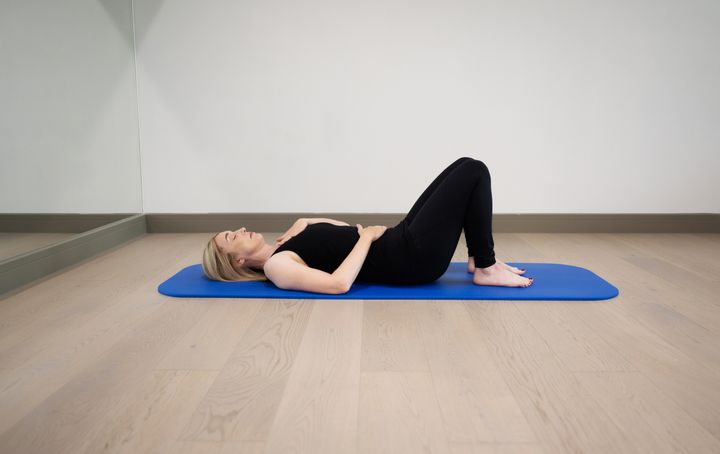
Exercise 1: Belly breathing

Jeannie Di Bon

Start with some gentle belly breathing, allowing the lower ribs to expand. For many people, Covid causes a cough and cold so we want to start moving the lung tissue in the right way. Try to breathe quietly in through the nose and out through the nose. Lying on your back does not require strong inhales so take it very gently, allowing the breath to come to you.

Exercise 2: Arm rolls

Jeannie Di Bon

Staying supine (lying on your back) is a good way to start moving – especially as some people experience dizziness with long Covid. You may find you don’t want to be standing for too long or doing exercises that involve inversions or squats. Keep it simple. This arm roll exercise can help stretch into the thorax and open the chest.

Start with your arms by your side. Try to keep the back heavy as you move the arms above your head and gently stretch. Let your breath settle the spine into the floor and allow the tissues to relax. You can add arm circles to this for a beautiful stretch across the chest.

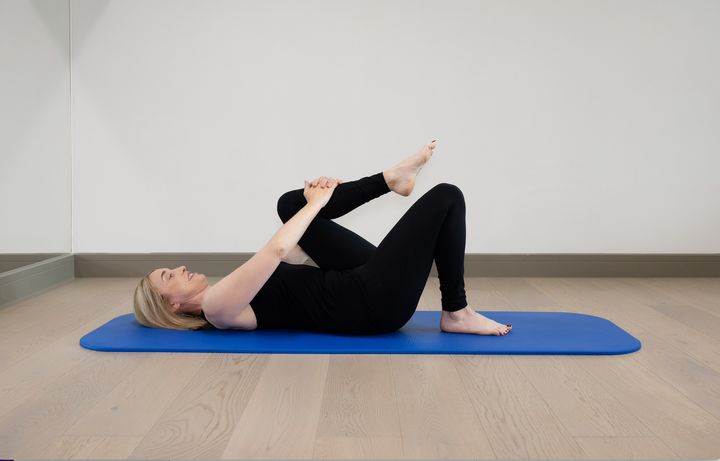
Exercise 3: Ankle roll

Jeannie Di Bon

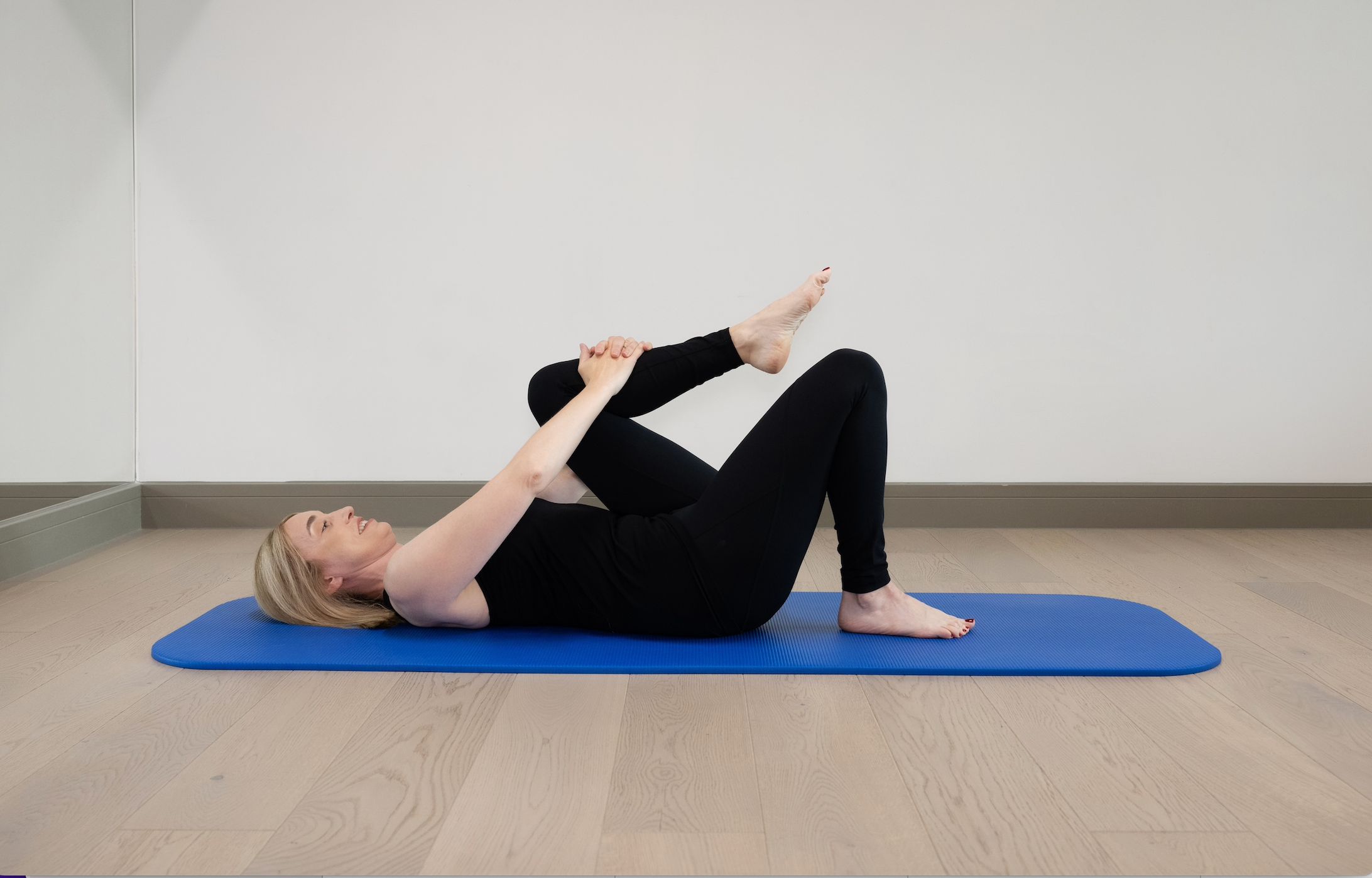
To help with the dizziness that can happen, some simple leg exercises like calf pumps or ankle circles are recommended. You can do these lying on your back: hold on to one leg and try to circle to the ankle without the rest of the leg moving. Gently lower it back to the ground and repeat on the other leg.

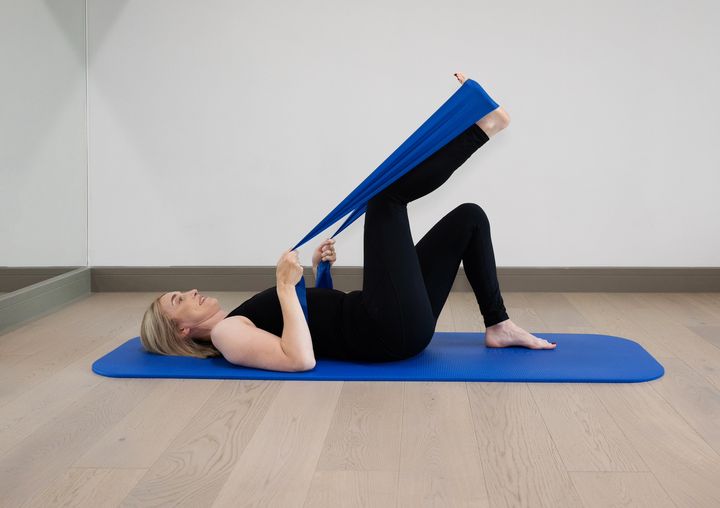
Exercise 4: Resistance training

Jeannie Di Bon

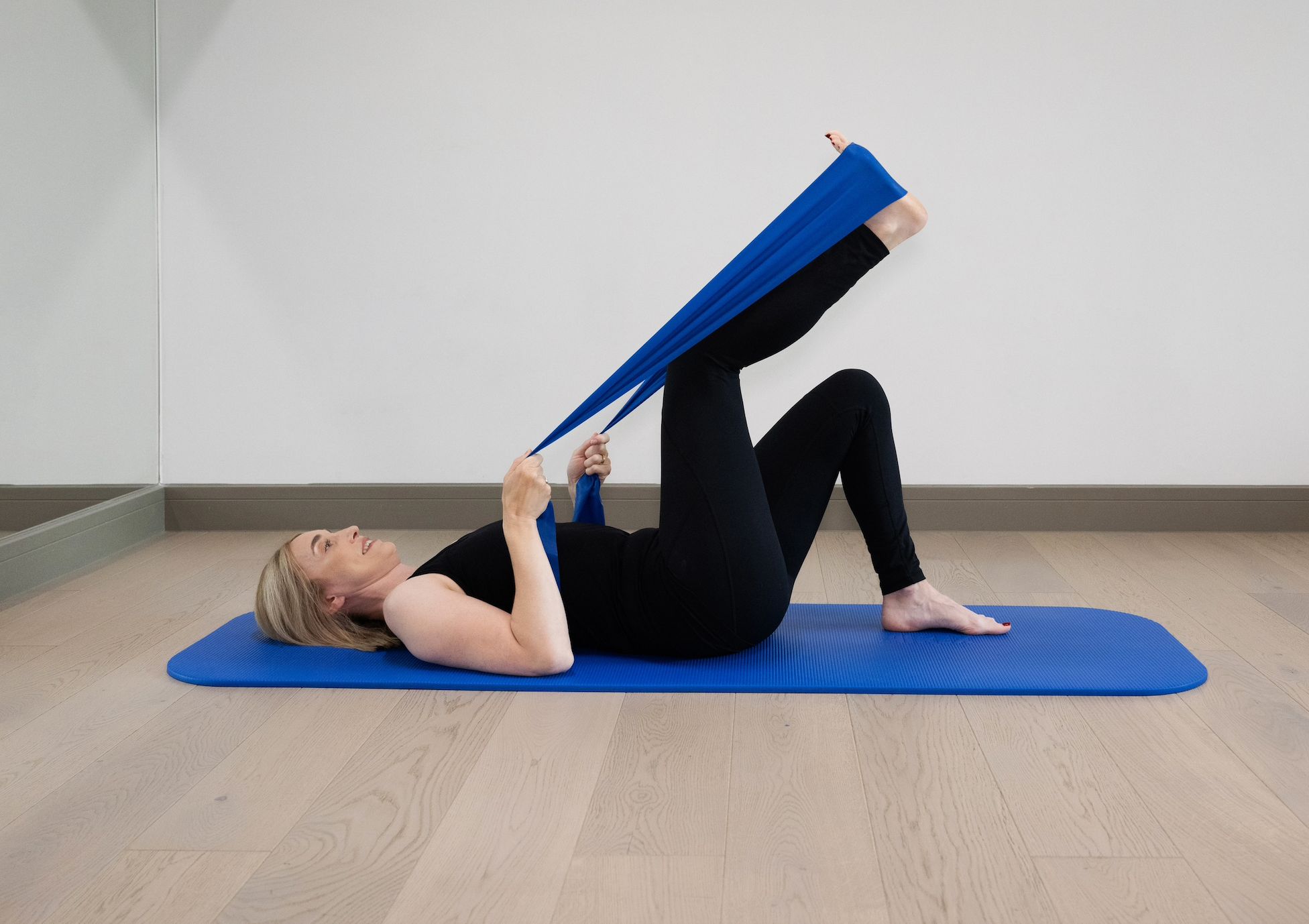
To build leg strength further, you can add a band for resistance work that is also gentle. This is another great exercise for circulation and helps prevent dizziness. Take a band and place it around your foot with the knee bent. Focus on gentle rolling the back of the thigh along the mat until the leg straightens.

Try not to lock the knee or hang into the band. Keep the energy flowing down the leg into the band. The back stays heavy into the mat – if your back is arching, raise the leg higher. Once the leg is straight, press the balls of the feet into the band and start to point and flex the foot. This is a brilliant way to utilise the calf pump.

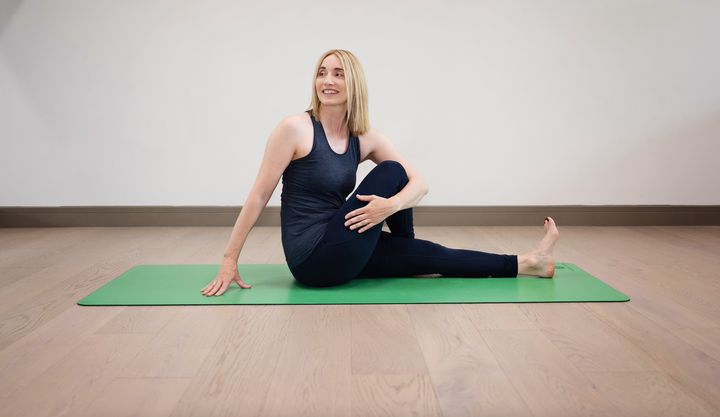
Exercise 5: Seated twist

Jeannie Di Bon

Jeannie Di Bon

Jeannie Di Bon

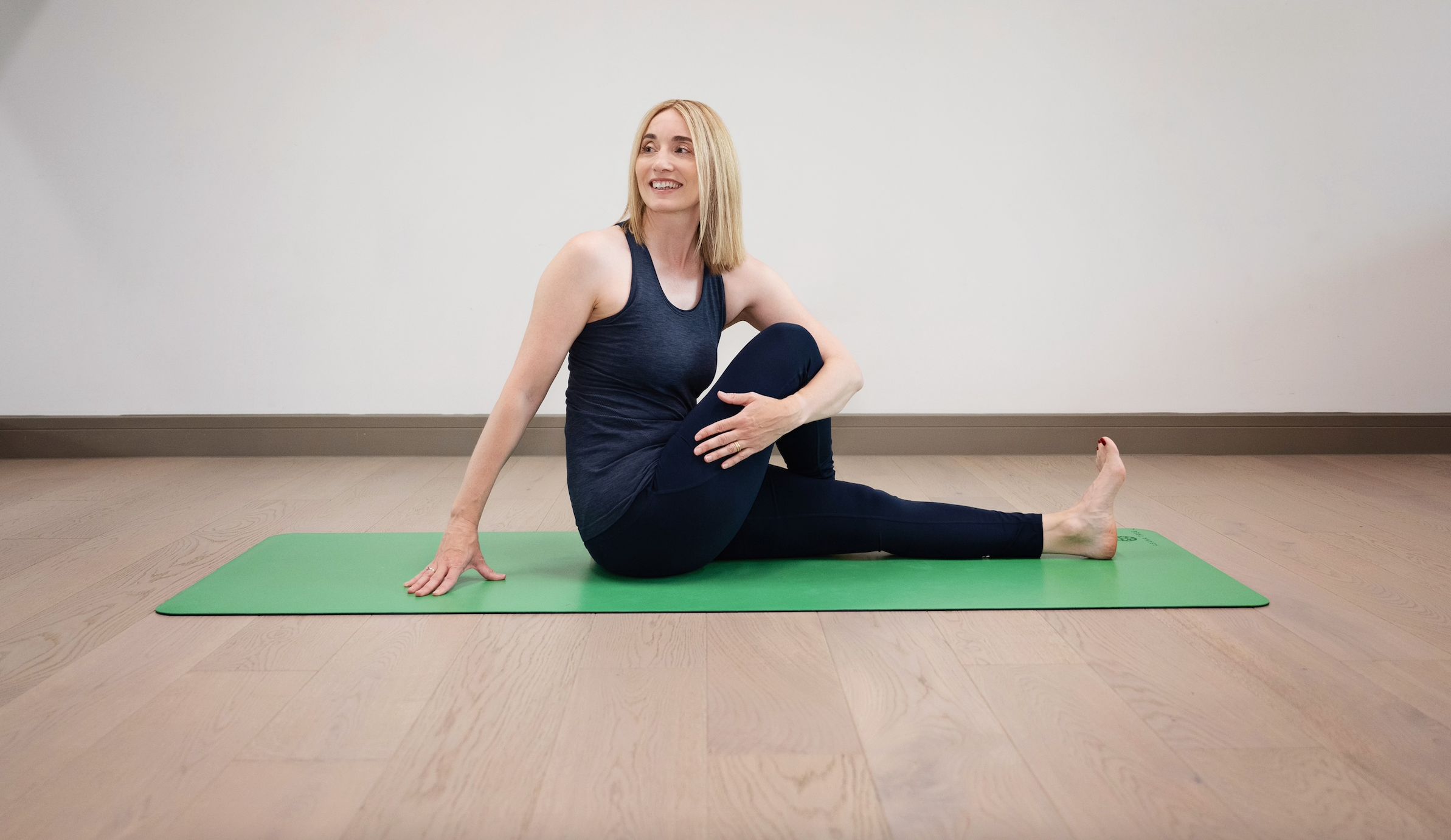
A seated twist is great to help circulation and digestion. Many people do experience stomach cramps and pain with Covid. Find a comfortable seated position and cross one leg over the other straight leg. Use your arms to guide yourself around to look over the opposite shoulder. Try to lift the spine up as you twist, rather than compress the spine. It’s also important to go gentle and not force into the twist. Stay in the position and breathe softly allowing tight muscles to release. You can then repeat on the other side.

Move celebrates exercise in all its forms, with accessible features encouraging you to add movement into your day – because it’s not just good for the body, but the mind, too. We get it: workouts can be a bit of a slog, but there are ways you can move more without dreading it. Whether you love hikes, bike rides, YouTube workouts or hula hoop routines, exercise should be something to enjoy.

HuffPost UK / Rebecca Zisser

Share Button

How Alcohol Affects Your Body When You’re On A Flight

Ordering beer, wine or a cocktail while flying is a common move. For some, having an alcoholic beverage on the plane is a travel day essential to relax, take the edge off, celebrate a vacation or even to fall asleep on a long flight.

But is this really the best option? Alcohol can leave you groggy and dehydrated. When consumed in excess, it may lower inhibitions and lead to unruly behavior, which we saw a lot of when people reacted negatively to federal mask mandates.

We reached out to some experts in medicine and nutrition, and asked if alcoholic beverages were a good idea while flying. Here’s what we found out about how alcohol affects your body while you’re up in the air.

Is it a bad idea to order alcohol on a flight?

There’s no easy answer to this question, experts say. Ordering a beer or wine while flying is a personal decision that might work for one person and not for the person sitting next to them. “If a person is on edge due to flying in general — and doesn’t become more so with alcohol — sometimes having a beverage might relax them or make the process feel a little bit more pleasant or more ordinary,” said Wendy Bazilian, a registered dietitian nutritionist.

But while some may grab a drink as a celebratory kickoff for a long-awaited trip, others may experience side effects while drinking on a plane.

You may not sleep well.

It’s tempting to order a drink in hopes that it will help you fall asleep and get some much-needed rest on an overnight flight. But this isn’t necessarily the greatest idea, according to the experts we spoke to. “Even though you think it relaxes you, your sleep will be disrupted and you likely will not get into REM sleep, the type of sleep that is restorative,” said Amy Shapiro, a registered dietitian at Real Nutrition.

You may doze off after a glass of wine, but your sleep won't be as restful.

Jaromir Chalabala/EyeEm via Getty Images

You may doze off after a glass of wine, but your sleep won’t be as restful.

Drinking on a flight doesn’t promote restorative sleep but can help some people fall asleep, Bazilian points out. “If in moderation … if she or he believes it helps a little to ease into sleep, then that can be fine.”

You may become dehydrated.

Alcohol is a diuretic, which means your body will increase its output of urine. If you don’t drink additional water to make up for this fluid loss, you may quickly become dehydrated, Shapiro said.

You may become intoxicated without even realizing.

“There is usually very little food available on most flights — or it is not particularly appetizing — and it would be easy to drink too much on a relatively empty stomach,” said Dr. Karen Jubanyik, an associate professor of emergency medicine at Yale University School of Medicine. It would be very easy to drink the same amount you drink at home, but without adequate food intake, this amount might be too much, she said.

There’s also the fact that most people are pretty sedentary on a flight, rarely leaving their seat. When you do get up, you may find you’re feeling the effects of alcohol more than expected.

You could become disruptive.

We all know that drinking alcohol can lower inhibitions. This could cause an individual to become loud and disrespectful to the flight crew and fellow passengers. People with lowered inhibitions may have a harder time staying calm when annoyed by small inconveniences and actions of people nearby, like a fully reclined seat back. “If someone has lowered inhibitions, they may speak their mind or start a confrontation with another passenger over relatively small things, which can also land them in trouble,” Jubanyik said.

You may have trouble moving around the plane.

“Progressive intoxication can lead to slurred speech, trouble with coordination and trouble walking,” Jubanyik said. “Just walking to and using the bathroom or exiting the plane could be difficult.”

The good news? You can drink on a flight if you keep some recommendations in mind.

Sipping a cocktail while commuting home from a work trip or while en route to a vacation doesn’t carry a ton of benefits, but you can still enjoy a drink while flying if it’s a behavior that works for you.

“It can be helpful in relaxing you or easing anxiety in the beginning, and since many people are anxious flyers, this can help,” Shapiro said, while also pointing out that drinking too much can lead to increased anxiety and have a boomerang effect, so it is important to know your limit.

Sometimes you may just want to order a drink simply because you feel like having one (many of us regularly do so after work or on the weekends), and this is fine when done in moderation and with a few tips in mind.

Don’t drink on an empty stomach.

If you plan to drink alcohol on a flight, pack some snacks and make sure to eat a meal before boarding if you know there won’t be any in-flight food service.

“Eating food alongside alcohol can help maintain energy and steady blood sugar while your body processes the alcohol,” Bazilian said.

Stay hydrated.

The experts we spoke to recommend alternating each alcoholic drink with at least one or two glasses of water. “This will help you to remain hydrated and to feel the negative effects less,” Shapiro said. Electrolyte drinks can also help, and if you have the chance, fill up your water bottle in the airport before takeoff. Water and other nonalcoholic drinks aren’t always readily available throughout the flight, so sometimes it’s just easier to carry your own.

Don’t drink if you’re going to be renting a car upon arrival.

“It is particularly a bad idea to drink alcohol if you will be renting a car and will need to drive upon arriving at your destination,” Jubanyik said. “Even if not technically drunk, driving in an unfamiliar location will likely require additional attention and reaction time than one needs in their local environment.”

Pace yourself.

It’s easy to drink quickly on a flight or to grab another drink simply as a way to pass time. Along with staying hydrated and taking a breather between drinks, Bazilian recommends paying close attention to how much alcohol you’re consuming. “One of those little alcohol bottles on a plane is typically 1.5 or 1.7 ounces, not a 1-ounce pour, and the mini-bottles of wine may be more than a 3-ounce pour. Just be aware that one drink [on a flight] may be more than you count as one when you’re on the ground.”

Share Button

Asthma: Women at higher risk of attacks than men, charity says

More research to examine the sex-related differences in asthma is needed, says Asthma and Lung UK.

Share Button

Fear over high rates of diabetes foot amputations

Five-fold variation seen between areas with highest and lowest rates, government data shows.

Share Button

Vitamin C: An essential nutrient

Reprint Permissions

A single copy of these materials may be reprinted for noncommercial personal use only. “Mayo,” “Mayo Clinic,” “MayoClinic.org,” “Mayo Clinic Healthy Living,” and the triple-shield Mayo Clinic logo are trademarks of Mayo Foundation for Medical Education and Research.

Share Button

Physicists embark on a hunt for a long-sought quantum glow

For “Star Wars” fans, the streaking stars seen from the cockpit of the Millennium Falcon as it jumps to hyperspace is a canonical image. But what would a pilot actually see if she could accelerate in an instant through the vacuum of space? According to a prediction known as the Unruh effect, she would more likely see a warm glow.

Since the 1970s when it was first proposed, the Unruh effect has eluded detection, mainly because the probability of seeing the effect is infinitesimally small, requiring either enormous accelerations or vast amounts of observation time. But researchers at MIT and the University of Waterloo believe they have found a way to significantly increase the probability of observing the Unruh effect, which they detail in a study appearing in Physical Review Letters.

Rather than observe the effect spontaneously as others have attempted in the past, the team proposes stimulating the phenomenon, in a very particular way that enhances the Unruh effect while suppressing other competing effects. The researchers liken their idea to throwing an invisibility cloak over other conventional phenomena, which should then reveal the much less obvious Unruh effect.

If it can be realized in a practical experiment, this new stimulated approach, with an added layer of invisibility (or “acceleration-induced transparency,” as described in the paper) could vastly increase the probability of observing the Unruh effect. Instead of waiting longer than the age of the universe for an accelerating particle to produce a warm glow as the Unruh effect predicts, the team’s approach would shave that wait time down to a few hours.

“Now at least we know there is a chance in our lifetimes where we might actually see this effect,” says study co-author Vivishek Sudhir, assistant professor of mechanical engineering at MIT, who is designing an experiment to catch the effect based on the group’s theory. “It’s a hard experiment, and there’s no guarantee that we’d be able to do it, but this idea is our nearest hope.”

The study’s co-authors also include Barbara Šoda and Achim Kempf of the University of Waterloo.

Close connection

The Unruh effect is also known as the Fulling-Davies-Unruh effect, after the three physicists who initially proposed it. The prediction states that a body that is accelerating through a vacuum should in fact feel the presence of warm radiation purely as an effect of the body’s acceleration. This effect has to do with quantum interactions between accelerated matter and quantum fluctuations within the vacuum of empty space.

To produce a glow warm enough for detectors to measure, a body such as an atom would have to accelerate to the speed of light in less than a millionth of a second. Such an acceleration would be equivalent to a g-force of a quadrillion meters per second squared (a fighter pilot typically experiences a g-force of 10 meters per second squared).

“To see this effect in a short amount of time, you’d have to have some incredible acceleration,” Sudhir says. “If you instead had some reasonable acceleration, you’d have to wait a ginormous amount of time — longer than the age of the universe — to see a measurable effect.”

What, then, would be the point? For one, he says that observing the Unruh effect would be a validation of fundamental quantum interactions between matter and light. And for another, the detection could represent a mirror of the Hawking effect — a proposal by the physicist Stephen Hawking that predicts a similar thermal glow, or “Hawking radiation,” from light and matter interactions in an extreme gravitational field, such as around a black hole.

“There’s a close connection between the Hawking effect and the Unruh effect — they’re exactly the complementary effect of each other,” says Sudhir, who adds that if one were to observe the Unruh effect, “one would have observed a mechanism that is common to both effects.”

A transparent trajectory

The Unruh effect is predicted to occur spontaneously in a vacuum. According to quantum field theory, a vacuum is not simply empty space, but rather a field of restless quantum fluctuations, with each frequency band measuring about the size of half a photon. Unruh predicted that a body accelerating through a vacuum should amplify these fluctuations, in a way that produces a warm, thermal glow of particles.

In their study, the researchers introduced a new approach to increase the probability of the Unruh effect, by adding light to the entire scenario — an approach known as stimulation.

“When you add photons into the field, you’re adding ‘n’ times more of those fluctuations than this half a photon that’s in the vacuum,” Sudhir explains. “So, if you accelerate through this new state of the field, you’d expect to see effects that also scale ‘n’ times what you would see from just the vacuum alone.”

However, in addition to the quantum Unruh effect, the additional photons would also amplify other effects in the vacuum — a major drawback that has kept other hunters of the Unruh effect from taking the stimulation approach.

Šoda, Sudhir, and Kempf, however, found a work-around, through “acceleration-induced transparency,” a concept they introduce in the paper. They showed theoretically that if a body such as an atom could be made to accelerate with a very specific trajectory through a field of photons, the atom would interact with the field in such a way that photons of a certain frequency would essentially appear invisible to the atom.

“When we stimulate the Unruh effect, at the same time we also stimulate the conventional, or resonant, effects, but we show that by engineering the trajectory of the particle, we can essentially turn off those effects,” Šoda says.

By making all other effects transparent, the researchers could then have a better chance of measuring the photons, or the thermal radiation coming from only the Unruh effect, as the physicists predicted.

The researchers already have some ideas for how to design an experiment based on their hypothesis. They plan to build a laboratory-sized particle accelerator capable of accelerating an electron to close to the speed of light, which they would then stimulate using a laser beam at microwave wavelengths. They are looking for ways to engineer the electron’s path to suppress classical effects, while amplifying the elusive Unruh effect.

“Now we have this mechanism that seems to statistically amplify this effect via stimulation,” Sudhir says. “Given the 40-year history of this problem, we’ve now in theory fixed the biggest bottleneck.”

This research was supported, in part, by the National Science and Engineering Research Council of Canada, the Australian Research Council, and a Google Faculty Research Award.

Share Button