Oh Good – Your Inheritance May Include UTIs

I’ve always thought UTIs were a bit like period pain; they just seem to be the luck of the draw.

The NHS explains that they’re more likely to happen to women, as: “Women have a shorter urethra than men. This means bacteria are more likely to reach the bladder or kidneys and cause an infection.”

Having sex, pregnancy, not drinking enough fluids, a weakened immune system, and “not keeping the genital area clean and dry” can increase your risk, they say, though they add that some people are simply more susceptible to chronic UTIs than others.

But according to Harvard Health, if you get UTI after UTI, “You may be surprised to learn that family history may also play a role.”

How?

It’s down to genetics, which experts think can make you more or less likely to get the condition many times over.

“Having a first-degree female relative (parent, sister, or child) with a history of more than five UTIs means you may be at higher risk for recurrent UTIs,” Harvard shared.

A 2010 study found that “six out of 14 genes investigated in humans may be associated with susceptibility to recurrent UTI in humans.”

Harvard adds that “recurrent” UTIs are defined by someone having three infections or more in any 12-month period, or two infections in any six-month period.

They add that “abnormalities in the urinary tract or trouble completely emptying the bladder may make a person more vulnerable to frequent UTIs.”

The NHS says chronic UTIs may not show up in urine tests and “can have a big impact on your quality of life.”

How can I protect myself against UTIs?

If you have recurrent UTIs, it can be helpful to see your doctor.

For one-offs or less serious cases, the NHS advises we:

  • do not use scented soap

  • do not hold your pee in if you feel the urge to go

  • do not rush when going for a pee – try to fully empty your bladder

  • do not wear tight synthetic underwear, such as nylon

  • do not drink lots of alcoholic drinks, as they may irritate your bladder

  • do not have lots of sugary food or drinks, as they may encourage bacteria to grow

  • do not use condoms or a diaphragm or cap with spermicidal lube on them – try non-spermicidal lube or a different type of contraception.

Instead they say we should:

  • wipe from front to back when you go to the toilet

  • keep the genital area clean and dry

  • drink plenty of fluids, particularly water – so that you regularly pee during the day and do not feel thirsty

  • wash the skin around the vagina with water before and after sex

  • pee as soon as possible after sex

  • promptly change nappies or incontinence pads if they’re soiled.

Participating pharmacists are able to prescribe antibiotics for UTIs ― you don’t need to go to your doctor.

Share Button

The 3 Cold ‘Prevention’ Supplements The NHS Says Are Likely A Waste Of Money

As we head into winter, cold and flu season draws ever nearer.

Those of us trying to prime our immune system for the onslaught of diseases might be reaching for supplements alongside staying active and trying to eat well.

But the NHS says some of those efforts may be in vain.

Though the service advises British adults to consider taking vitamin D in the darker months, their entry on the common cold reads: “There’s little evidence that supplements such as vitamin C, echinacea or garlic prevent colds or help you get better more quickly.”

Why not?!

It can be a tough pill to swallow, even if it means one less actual capsule to gulp down.

But it’s not so much that supplements like these are proven to be bad or even completely ineffective: it’s just that the NHS isn’t convinced by the conflicting evidence that they do work.

Microbiologist Morticia shared a video explaining that “there is actually no such thing as an ‘immune booster’” outside of vaccines, adding that ingredients like vitamin C and ginger root are “not boosting your immune system.”

That’s not to say eating a balanced and varied diet isn’t good for your immune system or even that vitamin C isn’t part of a good immune response, but that vitamin supplements may not act as straightforwardly on our bodies as we think.

Morticia mentions how iron supplements for iron deficiency can take months to work, despite seeming like a straightforward answer to the issue: she also points out that hydrogen peroxide is crucial to white blood cells’ disease-fighting power, but nobody is suggesting drinking that to see us through a sniffle.

A 2013 review of studies by Cochrane found that “trials of high doses of vitamin C administered therapeutically, starting after the onset of symptoms, showed no consistent effect on the duration or severity of common cold symptoms.”

Why is the immune system so complicated?

Akiko Iwasaki, an immunologist at Yale University, told BBC Future that “There are three different components to immunity.”

“There’s things like skin, the airways and the mucus membranes that are there to begin with, and they provide a barrier to infection. But once the virus gets past these defences, then you have to induce the ‘innate’ immune response,” the immunologist explained.

If those fail, Dr Iwasaki added, our adaptive immune system, which provides specific antibodies to fight the disease, comes online: though these antibodies can take “a few days or weeks to emerge.”

That last stage is triggered by infection or vaccines, hence the microbiologist’s comments earlier.

In fact the BBC says most symptoms of a cold “aren’t actually caused by the virus itself. Instead, they’re triggered by your own body, on purpose: they’re part of the innate immune response.”

So truly “boosting” these would more likely lead to a runny nose or muscle aches (a little like some people experience after a vaccine) than glowy skin or a sniffle-free winter.

“Vitamin supplements aren’t beneficial to your immune system unless you are deficient,” Dr Iwasaki shared.

Share Button

Take Forever To Fall Asleep? This Method Can Help You Nod Off In 2 Minutes

It’s happened again; this morning, I missed my pre-work gym session because I hadn’t gotten enough sleep.

Despite my strict 9:30 pm bedtime, I regularly fail to get my full eight hours in ― like many of us, I find going to bed and falling asleep two completely different challenges, with the latter behind much harder.

If you also struggle to snooze, though, there may be hope: the University of Minnesota says the “Military Sleep Method” can help you nod off far faster.

One fan of the method said it cut their falling asleep time down to two measly minutes.

What is the military sleep method?

Per the University of Minnesota (UMN), the technique involves a mix of visualisation and muscle relaxation.

“You lie on your back, being still, and intentionally relax each muscle group, one at a time, while focusing on slow, calming breaths,” they say.

That includes your eyelids, tongue, jaw, and more ― make sure your sleep “scan” is thorough.

You should move from the top of your head to the bottom of your toes, imagining yourself sinking into the bed the entire time.

After that, the Sleep Foundation says you should clear your mind for ten seconds, imagining something soothing like rolling hills or lying in a treehouse in a forest.

If you can’t clear your mind, don’t fight your thoughts, they add; just let them float into and out of your head.

UMN says that what you do before sleep matters too ― overstimulating yourself or getting too distracted won’t help, they suggest.

Why is it called the military method?

The Sleep Foundation explains that the method got its name because it was used by some soldiers.

Military service isn’t exactly conducive to a good night’s sleep, they say, so the “military sleep method was used by World War II soldiers to fall asleep within two minutes.”

It was later “popularized in the [1981] book Relax and Win: Championship Performance,” they add (for some reason, a copy of that book is going for over £200 on Amazon).

Share Button

I’m A Doctor ― You Should Never Eat From Cans With These 5 Signs

Most of us grew up hearing that dented or chipped cans are no good to eat from, as there’s a higher likelihood that the food’s sterile environment has been ruined.

But being possibly too honest here, my family for one would simply eat them anyway.

According to Dr Karan Rajan, who’s known for dispelling medical myths on TikTok, however, there’s a better way to check when you really have to bin the tin.

“If you have dented cans, here’s what to look for to know if it’s safe,” he began.

What should I keep an eye out for?

You should “look for dents on the side seam” of the tin, the doctor explained.

These are the lines on the can that show where the material has been fused together.

They’re usually hidden by the products’ label “so make sure you peel if off to inspect it carefully,” Dr Rajan advised.

If the dent covers that area of the can, the doctor says we should “throw the can away because it’s likely compromised.”

There’s a higher chance of oxygen, bacteria, and other food-spoiling nasties making their way into the can if its weakest point has been damaged.

A side dent which doesn’t involve the side seam and doesn’t cause a sharp pointy edge is “okay to use,” the doctor shared.

If there’s a sharp edge at the end of your dent, there’s a higher risk a small hole has been created at its point ― meaning the bad stuff has a way in.

Dents which include the top seam of the can (the rim you place your can opener under), dents which make your can look like it’s been crushed, and cans that look like they’re about to explode all mean your tin needs to be thrown away.

What if I’m not sure?

“Not every single dented or damaged can needs to be thrown away,” Dr Rajan says.

“But if you find yourself with a dented can and you’re unsure, if in doubt, throw it out.”

The USDA writes: “If a can containing food has a small dent, but is otherwise in good shape, the food should be safe to eat. Discard deeply dented cans.”

“A deep dent is one that you can lay your finger into. Deep dents often have sharp points,” they add.

“A sharp dent on either the top or side seam can damage the seam and allow bacteria to enter the can. Discard any can with a deep dent on any seam.”

Share Button

Healthy Blood Pressure Changes With Age — Here’s What’s Normal For Each Age Group

We all hear a lot about blood pressure, but depending on how often you take a trip to your doctor’s, you might not know what yours is.

The term refers to “the strength with which your blood pushes on the sides of your arteries as it’s pumped around your body,” the NHS says (how bad is it that I didn’t know that?).

Low blood pressure isn’t usually a concern, though it can make some of us feel dizzy and sometimes causes fainting.

But high blood pressure “can increase your risk of developing serious problems, such as heart attacks and strokes, if it’s not treated.”

You can get your blood pressure checked using a blood pressure machine (if you’re over 40, you can get this done for free in participating pharmacies).

Once you get those numbers you might be wondering what’s normal for your age ― and according to the Heart Research Institute, “normal blood pressure varies from person to person” and by age and gender.

These are:

1) Newborns up to 1 month

  • Systolic (top number): 60–90 mm Hg
  • Diastolic (bottom number): 20–60 mm Hg

2) Infants

  • Systolic (top number): 87–105 mm Hg
  • Diastolic (bottom number): 53–66 mm Hg

3) Toddlers

  • Systolic (top number): 95–105 mm Hg
  • Diastolic (bottom number): 53–66 mm Hg

4) Preschoolers

  • Systolic (top number): 95–110 mm Hg
  • Diastolic (bottom number): 56–70 mm Hg

5) School-aged children

  • Systolic (top number): 97–112 mm Hg
  • Diastolic (bottom number): 57–71 mm Hg

6) Adolescents

  • Systolic (top number): 112–128 mm Hg
  • Diastolic (bottom number): 66–80 mm Hg

7) 18–39 years

  • Women: 110/68 mm Hg
  • Men: 119/70 mm Hg

8) 40–59 years

  • Women: 122/74 mm Hg
  • Men: 124/77 mm Hg

9) 60+ years

  • Women: 139/68 mm Hg
  • Men: 133/69 mm Hg

Why does age and gender affect normal blood pressure levels?

According to the National Institute of Aging, “normal” blood pressure levels differ among different age groups because “Your body’s network of blood vessels, known as the vascular system, changes with age.”

“Arteries get stiffer, causing blood pressure to go up,” they add. That’s true even for very health and heart-conscious people.

And “Although the mechanisms responsible for the gender differences in blood pressure control are not clear, there is significant evidence that androgens, such as testosterone, play an important role in gender-associated differences in blood pressure regulation,” a research paper published by the American Heart Association (AHA) says.

The AHA wrote on a separate page that pre-menopausal women tend to have lower blood pressure than men, but added that “after menopause, however, blood pressure increases in women to levels even higher than in men.”

Share Button

Let’s Settle This ― Are Oats Bad For You Or Not?

You might have read that the SNP categorised porridge oats as “junk food” under new government advertising rules.

To nobody’s surprise, Brits didn’t seem to agree with that categorisation ― according to a YouGov poll, only 2% reckon the classification is appropriate.

But even though we all seem to think porridge isn’t junk, does that mean it’s actually good for us?

After all, only 16% agree that fruit juice ― which often has the same sugar content as fizzy drinks, albeit with more nutrients ― fits that description.

So… what’s the verdict?

Speaking to the American Heart Organisation (AHA), Candida Rebello, director of the nutrition and chronic disease research program at Louisiana State University’s Pennington Biomedical Research Center in Baton Rouge, said porridge has “many, many good qualities.”

Dr Frankie Phillips, a dietitian at The British Dietetic Association, seems to agree, telling HuffPost UK: “There isn’t a single dietitian who would consider oats to be anything but a valuable food for all ages.”

Oats are high in fibre, which Dr Phillips says “we eat far too little” of in the UK (20g on average rather than the recommended daily 30g).

They’re also a cheap source of vitamin B1, phytonutrients, and manganese.

Studies have linked the consumption of oats to lower harmful cholesterol and better weight management.

Additionally, the type of fibre oats have (beta-glucan) is a soluble fibre that helps you to stay fuller for longer and feeds your good gut bacteria.

“The fibre component alone is a nutritional wonder as it is a type of fibre called Beta-glucan, which studies have shown to be effective in helping to lower blood cholesterol levels and may also help to reduce rises in blood glucose levels after a meal,” Dr Phillips shared.

Beta-glucan is “quite unequivocally” good for our heart and gut health, Rebello says.

What about processed oats?

“Even when they’ve been refined as porridge oats they remain a highly nutritious, low-cost and versatile food containing fibre, B vitamins, a range of minerals and antioxidants,” Dr Phillips told HuffPost UK.

Instant oats may have a slightly higher glycemic index than their less-refined alternatives, Rebello says, meaning they’ll cause your blood sugar to spike a little more.

But it’s very hard to avoid any processing with oats ― even jumbo oats that take longer to cook have been steamed and rolled flat.

Oats aren’t like wheat, though. Their inedible hulls are always removed, but the fibrous bran makes up part of the body of the food rather than encasing it.

“In other whole grains, like in wheat, you can remove that bran layer,” Rebello shared.

“But in oats, this groat is very soft, so that bran layer cannot really be removed.”

That means all oats are wholegrain.

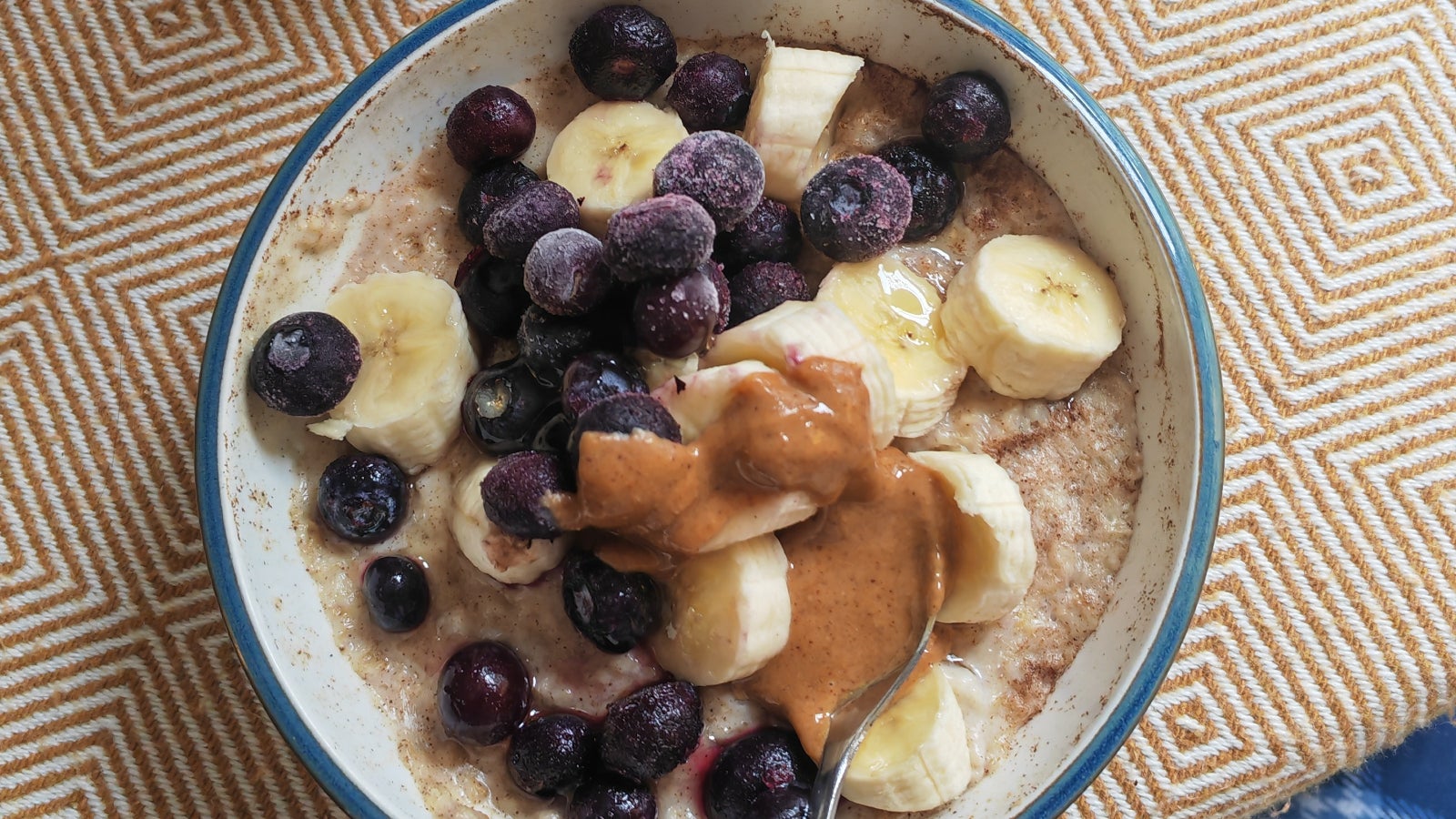
“Clearly, adding a heap of syrup or sugar to a bowl of porridge isn’t a great way of achieving balance, but a topping of chopped nuts, berries or dried fruit can pack in even more nutrients to an already top-notch breakfast choice,” Dr Phillips shared.

“If you’re limited to instant pots of porridge though, I’d suggest going for the plain type and adding your own toppings rather than pre-mixed pots which have added sugars,” he added.

But as for the oats themselves? Those are pretty great, experts seem to agree.

Share Button

3 Unexpected Ways That Menopause Impacts Your Skin

According to Menopause Support UK, there are approximately 13 million peri or post menopausal women in the UK.

Despite it being so common, and something that all women will go through eventually, there is so much we still don’t know about menopause. It’s not all hot flushes and mood swings.

In fact, according to Rebecca Elsdon, advanced skin specialist and owner of the re/skin clinic, “It’s important to shift the conversation from ‘fighting’ ageing to embracing skin health at every stage. After all, ageing is a privilege, and the focus should be on feeling confident in one’s skin, regardless of age.”

Elsdon partnered with global beauty and wellness brand Fresha, to discuss three skin issues you may not know are linked to menopause – and how to tackle them with the right skincare regime…

Sensitive to bruising and infections

Elsdon revealed that, as oestrogen levels drop, so does the skin’s ability to repair itself. Meaning that your skin may become more prone to infections and super sensitive to the environment. Suddenly, redness, irritation, and even conditions like rosacea can appear out of nowhere, with delayed wound healing also affecting the skin.

What to do: Strengthen your skin’s defences with antioxidant-rich products. Look for formulas with vitamin C and E to help your skin stand up to environmental stressors.

Visible dark spots

Hormonal shifts often make hyperpigmentation, like melasma or sunspots, more visible. These stubborn spots can linger and feel impossible to shift. However, according to Elsdon, the solution is quite simple.

What to do: Brightening ingredients like tranexamic acid, niacinamide, and vitamin C can help even out your skin tone. For tougher pigmentation, professional treatments like chemical peels or laser therapy might be the answer!

Yeast overgrowth

Finally, Elsdon revealed that a drop in oestrogen can mess with your skin’s natural microbiome, leading to yeast infections, especially in areas like skin folds. It’s an issue many women face but don’t often talk about.

What to do: Keep the area clean, use breathable fabrics like cotton, and if necessary, apply an anti-fungal cream. For extra protection, probiotic skincare can help restore your skin’s balance.

Share Button

Millions Of Women In The UK Haven’t Been Tested For This Crucial Breast Cancer Risk Factor

According to Cancer Research UK, there are over 56,000 new cases of breast cancer each year in the UK.

While research is constantly evolving and the survival rate is 76%, knowing the symptoms is essential for early diagnosis, treatment, and recovery.

That’s why it’s so concerning that despite women getting their first invites for breast screening between the ages of 50 and 53, followed by screenings every three years until they’re 71, there is a key risk factor that’s not being tested in the UK.

According to research from Micrima, a Bristol-based health tech company on a mission to save millions of lives lost to the late detection of breast cancer, there’s a stark lack of awareness around breast density among UK women, despite it being a key breast cancer risk factor.

Micrima’s research, conducted in partnership with Opinium, found that 86% of women in the UK do not know their breast density, and are in fact six times more likely to know their childhood phone number.

This comes in spite of the fact that dense breasts increase the risk of developing breast cancer and pose a barrier to breast cancer detection.

Dense breasts are a breast cancer risk factor

Dense breasts are breasts with more fibrous or glandular tissue, and less fat. Global evidence suggests that as many as 40% of women over 40 have dense breasts.

The standard screening method for breast cancer — mammography — is not as effective at detecting breast cancer, and, according to Micrima’s data, most women don’t know this, with 67% admitting they didn’t know, and 5% of women thinking that dense breasts make screenings easier.

Based on the data, Micrima estimates that four million women over the age of 40 in the UK have dense breasts and don’t realise that they are at greater risk. Worryingly, as many as 41% of women said they have good knowledge of the risks associated with developing breast cancer, which highlights the lack of awareness and understanding of breast density consequences in the UK.

Adrian Waller, CEO Micrima commented “It is deeply concerning that awareness of breast density, and how it contributes to the risk of developing breast cancer, is so low among women in the UK. While mammography is the standard screening method for breast cancer worldwide, it is not as effective at detecting cancer in dense breasts. As a result, cancer is being undetected and left to spread.

“If we want more positive outcomes for breast cancer, we need to increase awareness of this problem and help build the infrastructure needed to tackle this issue. By equipping medical practitioners with the right technology, they can select the right diagnostic test for cancer, potentially saving the lives of millions of women who die having experienced late detection of breast cancer.”

“I was told by the sonographer that I had ‘the densest breasts’ they had ever seen”

Cancer survivor, Clare Cowhig, was 51 when she was first concerned about a strange area on her breast.

She explained: “Although it was nine months after my last clear mammogram, I booked a private ultrasound.

“I was told by the sonographer that I had ‘the densest breasts’ they had ever seen and was questioned about why I hadn’t been having MRIs due to the reduced sensitivity of mammography to find tumours in dense breasts.”

Until this point, Cowhig had been very careful to ensure she was getting regular testing, as there is a significant history of breast cancer in her family.

“I had no idea I had dense breasts, or why that was significant. Unfortunately, after further investigation, it was confirmed I had an invasive ductal cancer in each breast.

“I had highly dense breasts and these tumours never showed up on my mammograms. One tumour was stage-three and over five centimetres, the other was stage two and two centimetres. I had further areas of ‘in-situ’ disease in both.”

Following this revelation, Cowhig wanted to learn more about her breasts, and if their density had been noted in medical records. She explained: “I discovered that my dense breast tissue had been noted after each of my annual mammograms, yet this information was never shared with me.

“If I had been told about my dense breasts, I would have sought additional screening. I believe my tumours could have been found at a smaller and less advanced stage and I wouldn’t have had to endure such extensive treatment, including a double mastectomy.”

Learn more about breast density and how to discover yours at My Density Matters.

Share Button

This Is When You Should Worry About Heart Palpitations

If you’ve experienced heart palpitations, you’ll be all too familiar with how concerning they can be.

The rapid and unusual beating of your heart can often lead to anxious thoughts and before you know it, you’re in an overwhelming cycle between your body and brain. This can also feel like pounding, thumping or even fluttering heartbeats.

However, as difficult as this can feel, these palpitations are often actually quite harmless and not a sign of anything more concerning.

When should you worry about heart palpitations, though?

The heart health experts at British Heart Foundation advised: “If you’re experiencing what feels like frequent or prolonged episodes of palpitations, or you’re also having symptoms such as chest pain or dizziness when you have these episodes, it’s a good idea to talk to your GP.

“They can organise some tests to check whether these are harmless palpitations or a sign of a heart rhythm problem, support you with managing your palpitations or refer you to a specialist if needed.”

The NHS states that common causes of heart palpitations include strenuous exercise, lack of sleep, stress and anxiety, medicine, caffeine, alcohol and recreational drugs.

However, less frequently, they can be caused by anaemia, an overactive thyroid, a heart rhythm problem or even menopause.

If you also feel chest pain, shortness of breath or faint, call 999 or go to A&E.

How to manage heart palpitations

If you’re not in immediate danger, managing your heart palpitations is pretty simple.

NHS Inform recommends reducing stress levels, practising deep breathing exercises, drinking less caffeinated drinks and eating a healthy diet.

Help and support:

  • Mind, open Monday to Friday, 9am-6pm on 0300 123 3393.
  • Samaritans offers a listening service which is open 24 hours a day, on 116 123 (UK and ROI – this number is FREE to call and will not appear on your phone bill).
  • CALM (the Campaign Against Living Miserably) offer a helpline open 5pm-midnight, 365 days a year, on 0800 58 58 58, and a webchat service.
  • The Mix is a free support service for people under 25. Call 0808 808 4994 or email help@themix.org.uk
  • Rethink Mental Illness offers practical help through its advice line which can be reached on 0808 801 0525 (Monday to Friday 10am-4pm). More info can be found on rethink.org.
Share Button

These 8 Small Lifestyle Changes Could Help You Live A Longer Life

We all know that healthier lifestyles will benefit our physical and mental health in many ways, but between our busy lives and understanding that rest is equally important, it can be hard to identify how exactly to start living a little healthier.

However, the stats are hard to ignore, and a recent study published by the BMJ Evidence-Based Journal a healthy diet can add up to 5 years onto your lifespan and even offset the impact of harmful genetic conditions by 62%.

HuffPost UK spoke exclusively with Joanna Dase, a global fitness coach at thwomen’s health and fitness organisation Curves, to learn more about how we can take small steps to make a big difference to our wellbeing, and live a little longer.

How to improve your lifespan in eight easy steps

Take the hilly route

Listen, it doesn’t appeal to us either, but by choosing a hillier route instead of a flatter path, you’re doing wonders for your body.

Dase said: “Whether its during your commute or a casual walk, climbing at an incline helps to challenge your cardiovascular system and helps you burn more calories.

“As lung health improves over time, the risk of chronic lung and heart disease decreases due to better oxygen delivery throughout the body. Oxygen is vital for energy production, so this will help combat symptoms of fatigue too.”

Plus, walking downhill also has health benefits.

“Downhill walking trains your body in deceleration and makes use of different muscles and joints. As people age, downhill walking is important as it can help prevent injury.”

Develop a consistent sleep routine

Many of us are guilty of letting our sleep habits fall by the wayside, but according to Dase, resting is a key to staying healthy.

She explained: “During deep sleep, the body produces cytokines, proteins that fight infection and inflammation. By getting eight to nine hours of sleep each night, the immune system can be strengthened.

“Chronic sleep deprivation has been linked to an increased risk of cardiovascular diseases, including heart attacks and stroke. To ensure your body properly recharges and gets enough rest, create a calming pre-sleep ritual consisting of mindfulness, reading and self-care rituals.”

Unfortunately you should also avoid technology in the evening to signal to your body that it’s time to wind down.

Goodbye, late-night Wikipedia scrolls.

Swap pudding for a starter

Dase said: “Instead of finishing your meal with a sugary dessert, opt for a healthy starter.

“This could be a small salad, a bowl of soup, or a serving of vegetables. When overconsumed, processed desserts such as ice-cream, cake and cookies have been linked to a variety of health issues including obesity, heart disease and diabetes.”

By starting your meal with a nutritious starter, you’ll help to control your appetite and make overeating during the main course less likely.

Dase also pointed out that dessert can still be enjoyed as part of a balanced diet – but focusing on nutrient-rich foods throughout the day is essential for your wellbeing.

Limit screen time

Dase says that even taking 15 minutes away from your phone as a “digital detox” can be very beneficial and allow for a mental reset.

She explained: “Excessive screen time can lead to a cognitive overload, decreasing attention span and affecting sleep quality due to blue light exposure. This can also increase stress levels, contributing to health conditions such as depression and anxiety.”

She recommended setting boundaries with your phone which could include no phone during mealtimes and before bed.

“During these time periods, engage in activities that stimulate the mind such as reading or problem-solving with puzzles, wordsearches or sudoku,” she advised. “This will help maintain cognitive health and reduce the risk of cognitive decline as you age.”

Try a bodyweight circuit

Dase said: “Bodyweight circuits are a great way to workout and improve overall fitness when you don’t have time to travel to the gym.

“A 30-minute full body workout can be done with no equipment at home, consisting of exercises such as push-ups, glute bridges, plank and squats in your routine. This will help improve your balance and co-ordination as you age, and help with healthy weight management.”

She recommends following quick workouts online with a certified coach to guide your training. Start with two to three times a week, and gradually increase up to five times a week as you get stronger.

Pack in protein

According to Dase, protein has a higher thermic effect compared to fats and carbohydrates, meaning your body uses more energy to digest it. This increased energy expenditure can help boost your metabolism which means your body can burn more calories while at rest.

She added: “As well as this, as you age, maintaining muscle mass becomes increasingly important for mobility. Protein helps preserve muscle mass, decreasing your risk of falls and fractures as you get older. Also, adequate protein intake aids the immune system in producing more antibodies to fight off infections.

“As a general rule, most adults need around 0.8grams of protein per kilogram of bodyweight. Foods rich in lean protein include grilled chicken, fish, eggs, tofu, chickpeas and lentils.”

Dase recommended eating more protein in the morning to help regulate blood sugar levels and set you up for a day of steadier energy.

Join a local club

Dase said: “Joining a local club might seem like a daunting, large task to undertake at first but it’s often as simple as signing up and attending a meet-up in your area. Social connections are essential for our mental and emotional wellbeing.”

This is true. Social isolation has been linked to increased risk for heart disease, stroke, type 2 diabetes, depression, and anxiety. Therefore, chronic loneliness can be crippling and extremely harmful.

“Whether it’s joining your local fitness club, a book club, or a volunteer group, socialising with others fosters a sense of belonging and reduces feelings of loneliness.”

Make sure you get regular check ups

Dase advised: “Routine screenings and tests can identify risk factors for chronic diseases like hypertension, diabetes, and cancer before they become more serious, so it’s important to prioritise checkups in your calendar.

“Regular discussions with a healthcare professional about your lifestyle habits can provide tailored guidance to help you live a longer, happier and healthier life.”

Share Button