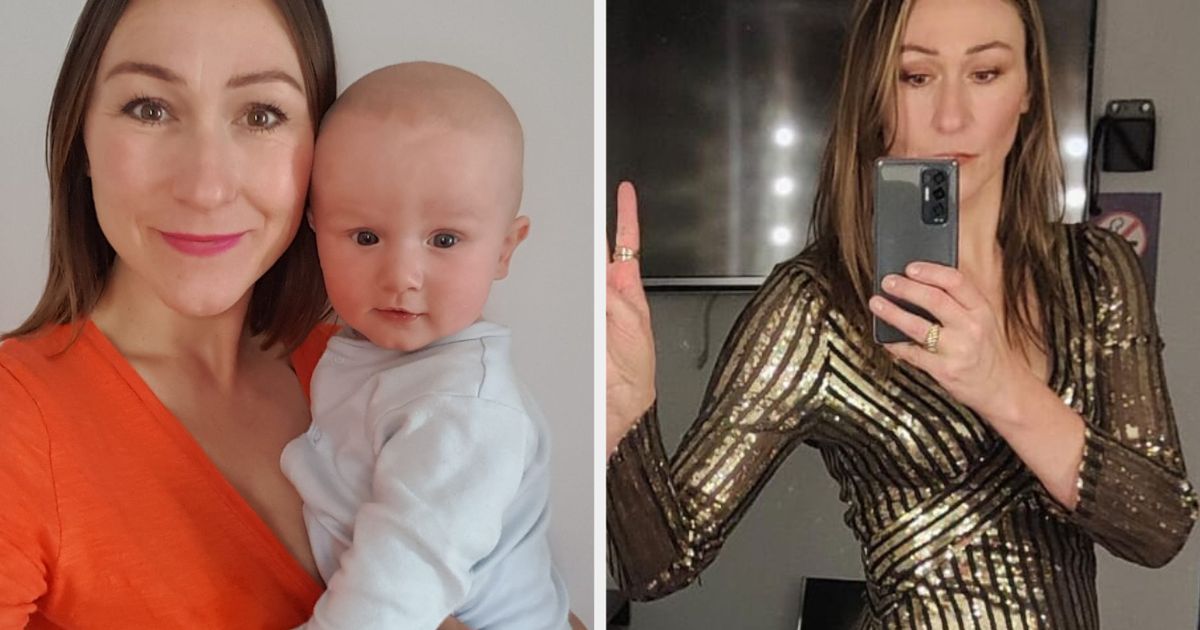
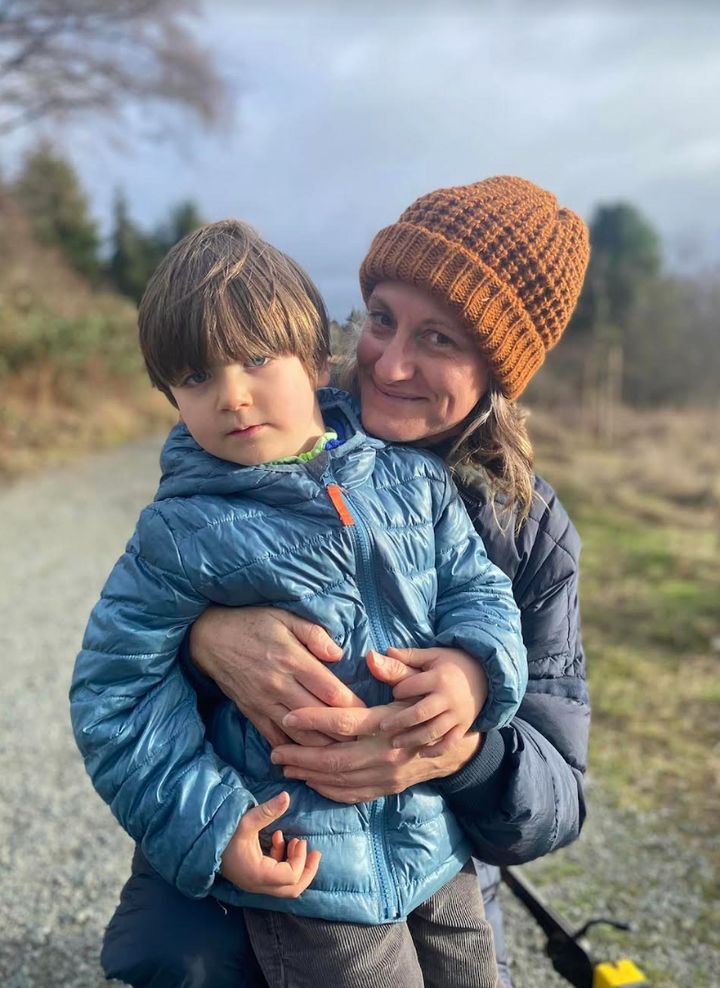
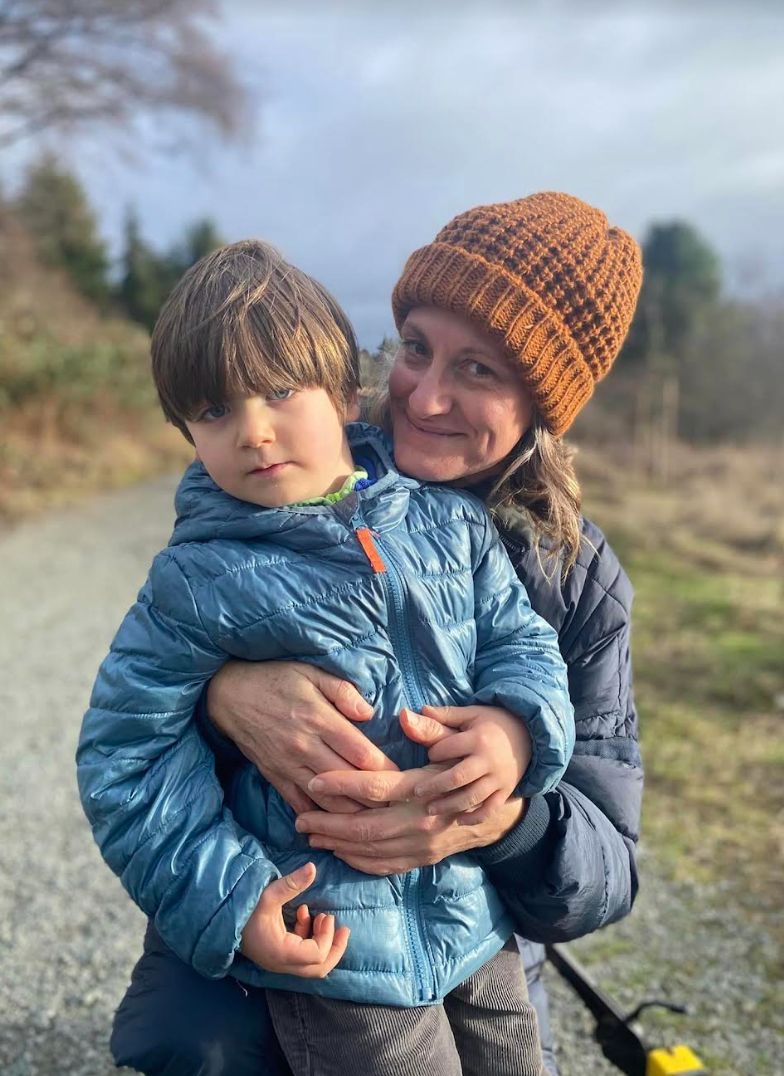
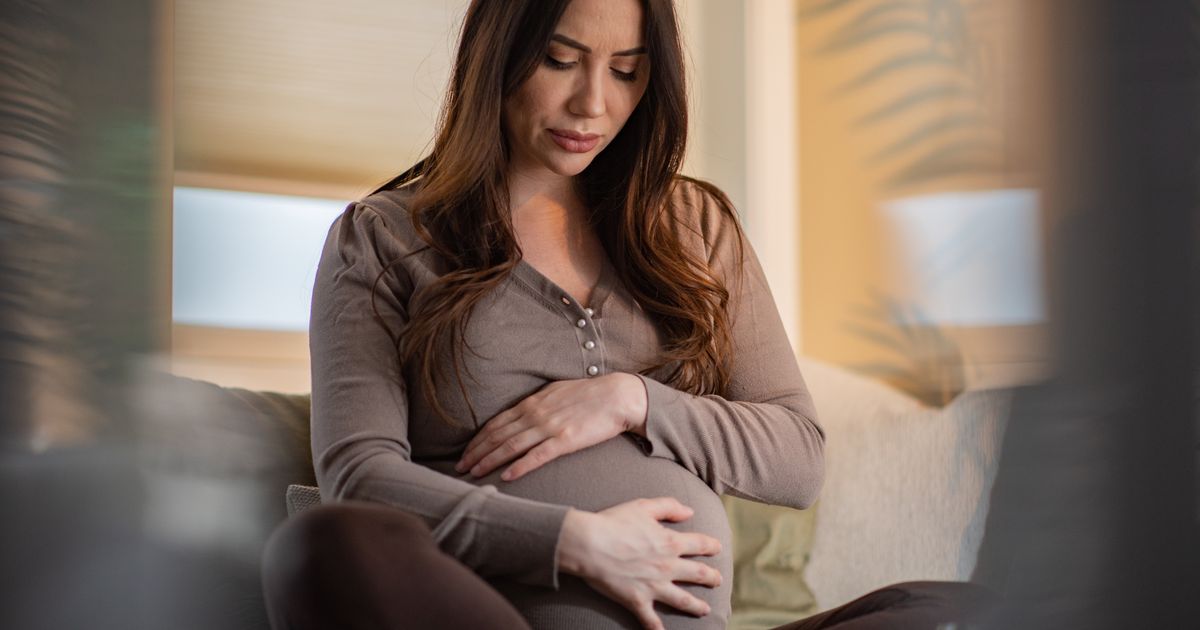
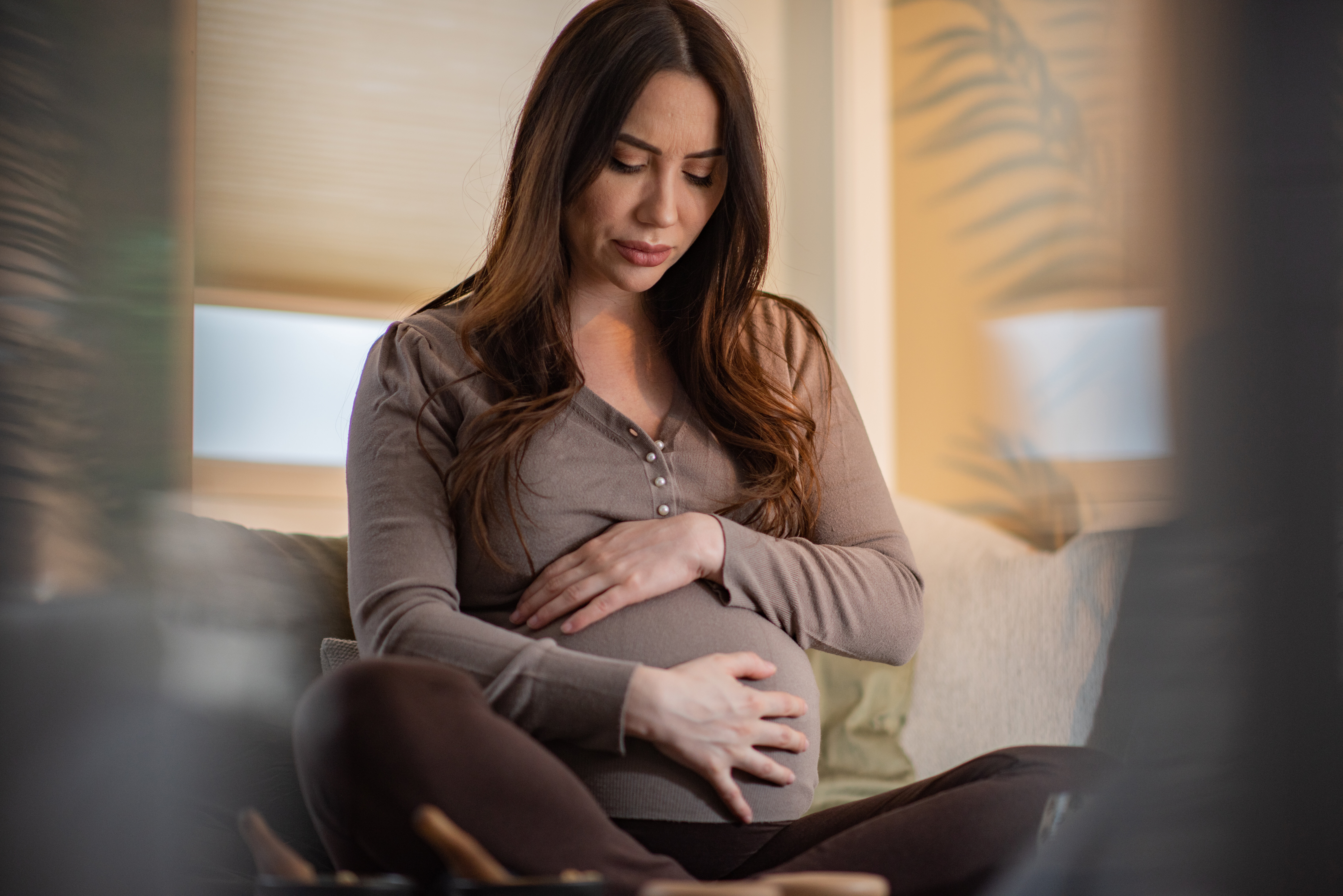
When Lucy Baker was five months pregnant with her third child, a mum on the school playground exclaimed rather bluntly: “But you’re going to be 47 when the baby starts school!”
It wasn’t the first negative comment she’d faced since revealing she was pregnant at 42 – other “judgy, thoughtless comments” she’d been on the receiving end of included, “Why are you having another baby?” and “Was it a mistake?”
Advertisement
But the comment on the school playground really stuck with her.
At the time, she says she was “aghast”, but she later turned her negative experience into a positive, launching her blog the Geriatric Mum, which celebrates older mums.
“It’s been a real driver for me in some ways because I thought: you know what, I’ll bloody show you,” Baker, who lives in Lincolnshire and has three children aged 13, 10 and four, tells HuffPost UK.
Fast forward five years and Baker’s youngest child is set to start school in September.
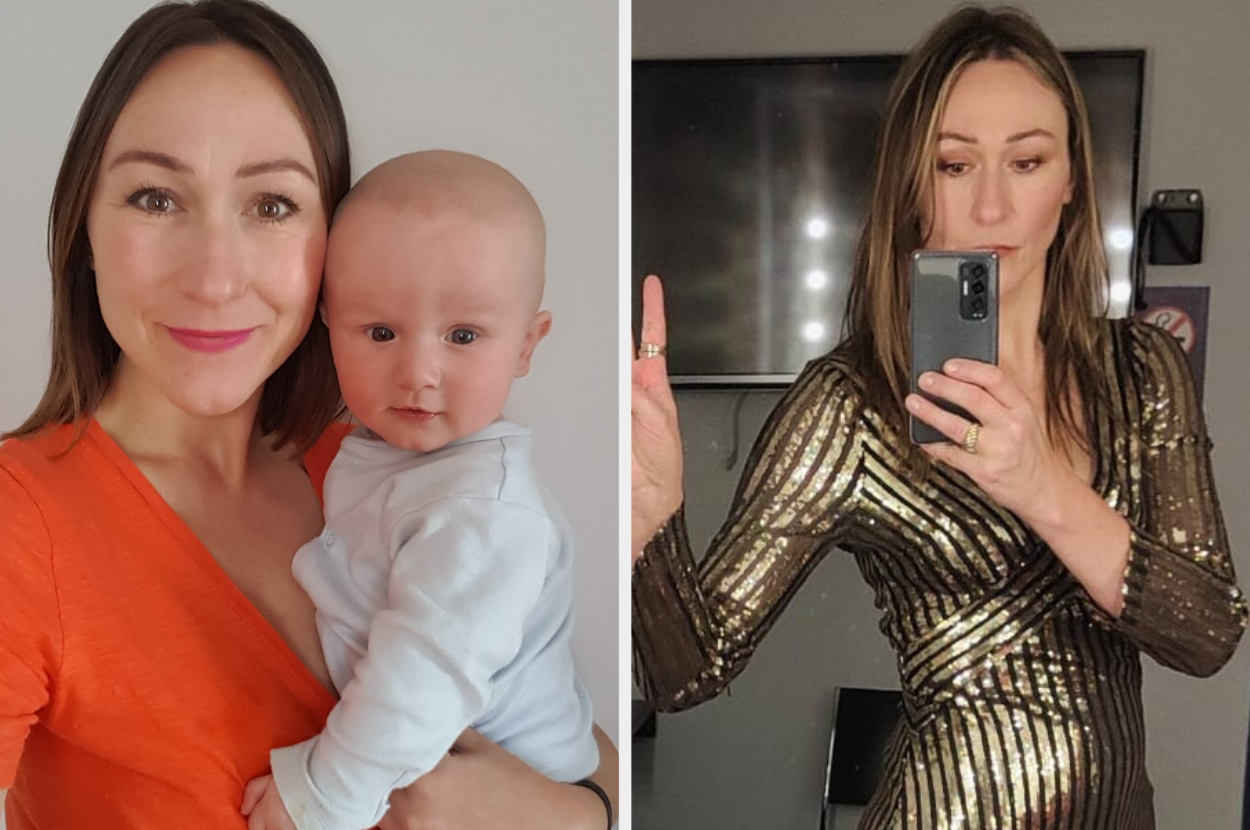
To honour the occasion and “show the world how great being an older mummy can be,” the confidence coach plans to wear a gold, sparkly dress to drop him off on his first day.
Advertisement
The idea came about while she was doing a panel talk in London and was wearing the gold dress in question. “I talked about the Geriatric Mum story and the fact my son starts school in September,” she recalls.
“I said to the audience: ‘Actually I should do something big on the day, should I wear this gold dress?’ And the whole place cheered, so I thought: Well, I’ve committed to it now.”
Baker plans to wear the dress as a way of sticking two fingers up to society’s ageist views – which especially impact women.
“I want to do it as a celebration of geriatric mums – and for me and my little boy,” she says.
There is a deeper message she wants to convey by getting parents, particularly mothers – both on the playground, and reading this article – considering their actions towards others.
“As a geriatric mum, I’m trying to spread the message of: please don’t judge other women for their life circumstances, their choices, their situations because it’s really boring and actually hurts – these words stick,” she says, referring back to the comments she received during her pregnancy.
“I get messages on Instagram and women are feeling judged because of their age. It’s still happening and those labels are 100% out there.”
Advertisement
She adds: “I was really judged and nobody knows what I was feeling behind the scenes or what I’d been through to have my third child. Nobody knows what anyone else is going through.
“The journey to pregnancy is so unknown, but people are still judging other people for the age they have their children.
“I just want people to hold back on that judgement and pause for a minute and think: I don’t know that person’s story, so why am I judging them?”
But above all, she wants people to know she’s “loving being an older mum” – and endeavours to give other women who are striving to become mothers in their 40s hope.
“I’m in a great place in my life, I’m confident, I’m happy,” she says. “Motherhood is tricky whatever age – it’s really difficult, it can be very hard work, it changes your life. But I’m loving it – and I want the message to be: it can be glorious no matter how old you are.”
Shocking new research from the campaign group Pregnant Then Screwed has revealed that 1 in every 61 pregnant workers says their boss has insinuated they should terminate their pregnancy for the sake of their career.
Pregnant Then Screwed, who campaign for the rights of parents and against sex discrimination, surveyed over 24,000 parents to uncover the discrimination that women face in the workplace when they become mothers.
Advertisement
The data shows that over half of all mothers (52%) have faced some form of discrimination when pregnant, on maternity leave, or when they returned to work.
One woman involved in the study, Connie*, told her boss about her pregnancy at eight weeks and was told, “It would be easier for your future career if you just brought a coat hanger”. Three colleagues went on to tell Connie that she had ruined her career and should have had an abortion.
For some women, the consequences of having children can have life-changing consequences on their career, with one in five mothers (19%) making the decision to leave their employer due to a negative experience.
Additionally, one in 10 women (10%) revealed they were bullied or harassed when pregnant or returning to work, and 7% of women lost their job — through redundancy, sacking, or feeling forced to leave due to a flexible working request being declined or due to health and safety issues.
Advertisement
If scaled up, this could mean as many as 41,752 pregnant women or mothers are sacked or made redundant every year.
“These stats show how far we have to go before mothers are truly accepted as equal members of the workplace,” says Joeli Brearley, CEO and founder of Pregnant Then Screwed.
“We know that women are treated differently from the point they get pregnant. They are viewed as distracted and less committed to their work, despite there being no change to their performance. This bias plays out in numerous ways, affecting women’s earnings and career potential. There is absolutely no excuse for bosses, who hold the power, to tell their employees to abort a pregnancy. It is sex discrimination and it is inhumane.”
Abraham Gonzalez Fernandez via Getty Images
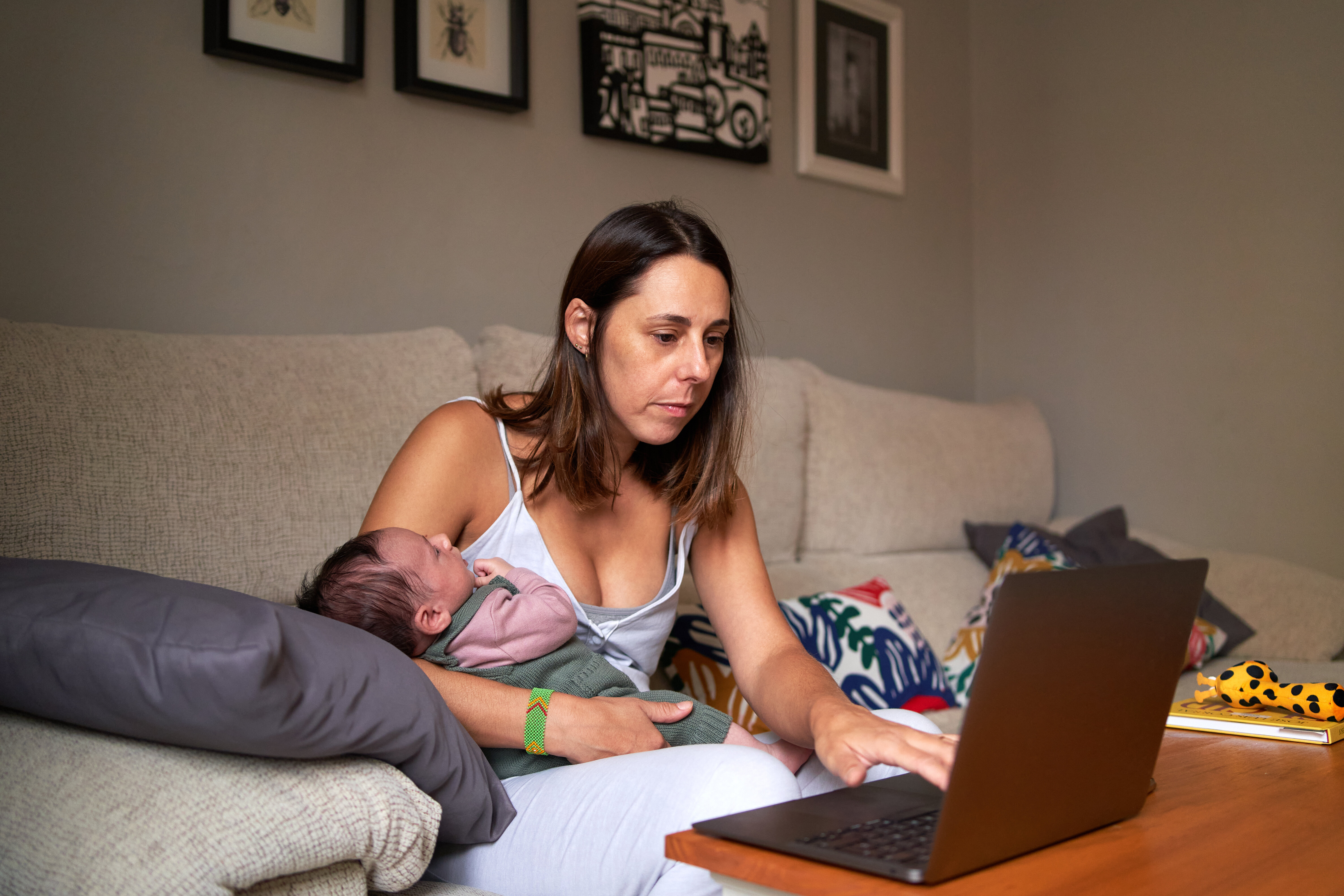
Portrait of a stressed woman tries to work from home with baby in arms
The discrimination that women face doesn’t always come from their boss; in fact, 73% of women shared that a colleague made hurtful comments about their pregnancy or maternity leave, and 74% of women said that a colleague insinuated that their performance had dipped due to pregnancy or maternity leave. Some women even experience criticism based on the way they look when they are pregnant – with 64% saying their boss or a colleague had made inappropriate comments about their looks.
Advertisement
“The fact that the majority of pregnant women have experienced inappropriate and degrading comments from a colleague or their boss about the way they look is shameful,” says Brearley.
“Why as a society do we accept women being a target for such abuse? These hurtful comments chip away at women’s confidence, ambition and feeling of belonging,” she says.
“Pregnant women are made to feel like an unsightly burden, no wonder a high proportion of women report feeling depressed or anxious when pregnant and one in five women leave their employer after becoming pregnant.’’
The study’s data and the shocking stories shared by pregnant women in workplaces around the UK highlight the worrying and pervasive attitudes towards women in society — even in a supposedly equal one like the UK.
It isn’t just about having children; women are being treated differently for decisions relating to their reproductive health, too. An especially worrying trend in our post-Roe v Wade world, which is seeing our rights rolled back across the globe.
Advertisement
For instance, a third of women (31.58%) who told their employer about having an abortion felt that they experienced discrimination or were unfairly treated as a result. And the majority of women (57.6%) didn’t even tell their employer they had an abortion, presumably for fear of being judged negatively.
Women being bullied out of the workplace for being pregnant, or choosing not to be, is just one more example of the ways women’s freedoms are being infringed upon, and shows that, in the end, the patriarchy doesn’t want us to win.
It’s something we should all vehemently stand against, together.
If you or anyone you know has experienced discrimination in the workplace, please call the Pregnant Then Screwed helpline on Tel: 0161 2229879
After weekly medical check-ins at the end of pregnancy, most people won’t see a health care provider until six weeks postpartum. At that point, if it looks like healing is proceeding well, they are officially “cleared” to have sex and exercise again.
Following delivery, the focus tends to shift to the baby’s health (how much are they eating, sleeping or crying?) and away from the person who gave birth.
Advertisement
Common postpartum physical complaints such as incontinence or pain in the back, pelvis or genitals are often written off as par for the course, as though pregnancy and birth are expected to do some damage to the body.
While postpartum healing is a process, and most people need some time before they feel “back to normal,” there are things that you can do to support healing and lessen pain and discomfort.
One proactive step you can take is to make an appointment with a physical therapist, who can evaluate you for common postpartum issues and recommend exercises to prevent incontinence and pain.
Postpartum physical therapy isn’t the norm in the U.S., but in other countries, such as France, it’s standard care.
Advertisement
Pregnancy’s impact on the body
Cavan Images / Rebecca Tien via Getty Images
After weekly medical check-ins at the end of pregnancy, most people won’t see a health care provider until six weeks postpartum.
There are multiple ways that pregnancy can put a strain on your musculoskeletal system. The hormonal shifts of pregnancy don’t only affect your reproductive organs.
“What happens is the joints can become a little more loose and lax,” Jenni Limoges, a physical therapist in Nevada specialising in pelvic floor issues, told HuffPost. This loosening helps your pelvis expand to make room for the baby, but it can also trigger pain from a previous back or hip injury or result in new discomfort.
In addition, as your belly grows, your body has to adjust to a new centre of gravity. “It tends to pull people forward. It creates instability,” said Limoges.
Your pelvis tips forward, and the muscles in your back, pelvis and hips all shift, either lengthening or shortening. Your abdominal muscles separate to make space for the baby. Even your feet change, flattening out to support your pregnant body (many people find they go up a shoe size following pregnancy).
Advertisement
Your pelvic floor muscles provide a sort of shelf inside your hip bones that supports all of the internal organs, including the uterus. There are three layers and nine different muscles that work in concert, Limoges explained.
“These muscles help us stay dry,” she said, and play a key role in sexual functioning. The way these muscles have to stretch to accommodate pregnancy and allow for delivery can cause them to become too stiff or too loose, causing pain or incontinence (urinary and/or faecal).
“I often times hear of people saying that they want to opt for a C-section because they think this protects their pelvic floor,” said Ruba Raza, a North Carolina-based physical therapist who also specialises in pelvic floor, pregnancy and postpartum issues. However, Raza told HuffPost that you can still have pelvic floor issues following a C-section.
“Regardless of the mode of delivery, it is important to see a pelvic floor physical therapist if you are having symptoms during or after pregnancy,” Raza said.
“A lot of people do not seek out our services during pregnancy because they assume that their symptoms will improve postpartum, but with most concerns, these can continue and even worsen if they are not addressed.”
Advertisement
Common postpartum issues
In addition to urinary and faecal incontinence, other common postpartum complaints that can be addressed with physical therapy, Raza said, include: “Sacroiliac joint pain [the sacroiliac joints link the pelvis to the bottom of the spine], constipation, low back pain, pelvic floor pain, C-section scar sensitivity, pain with intercourse and rectal pain.”
Rawlstock via Getty Images
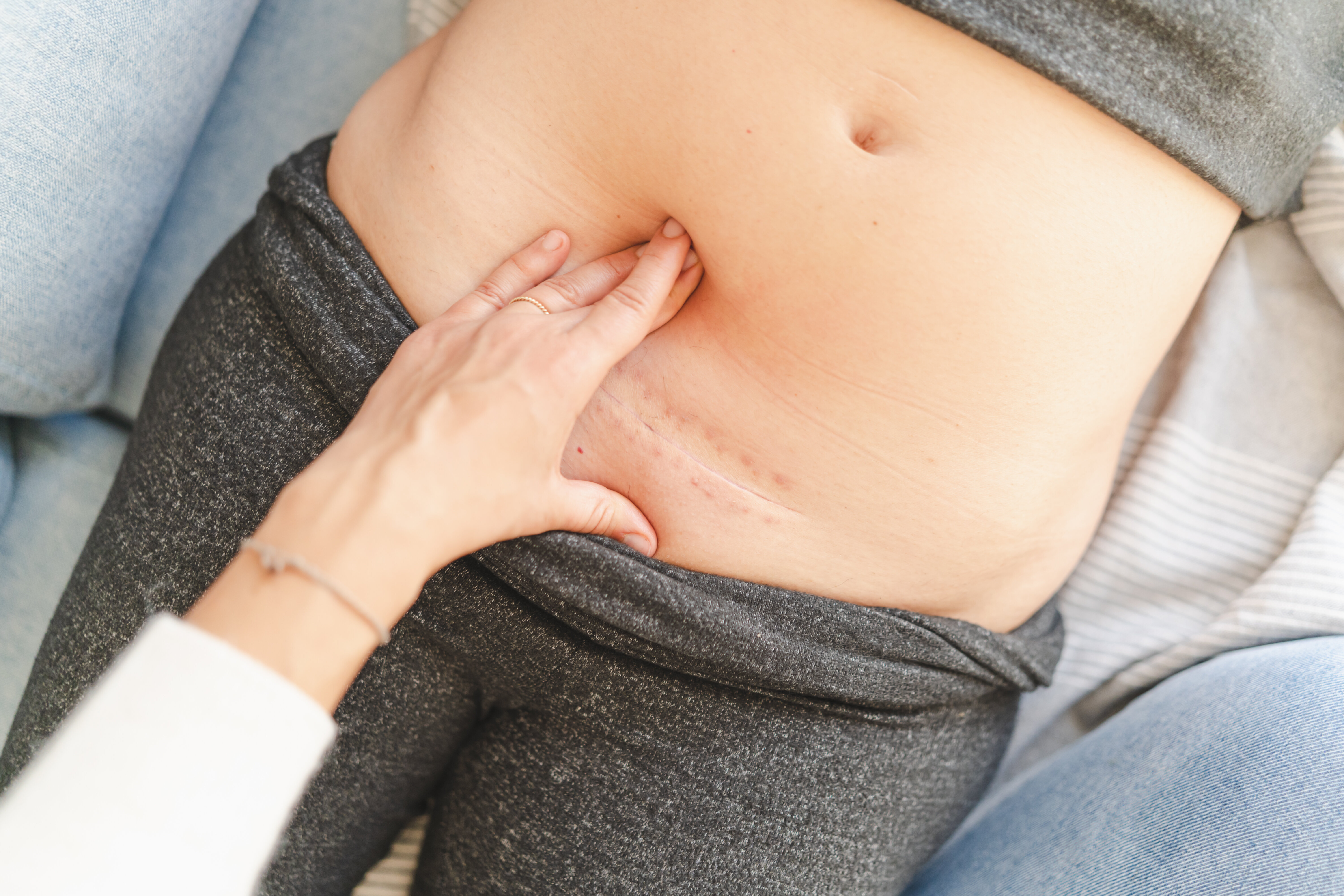
Many of the common postpartum complaints such as pelvic floor pain, C-section scar sensitivity and back pain can be addressed with physical therapy,
Another issue you may have heard about is diastasis recti. A line of connective tissue called the linea alba runs down the middle of your stomach and fastens together on both sides of your abdominal muscles.
During pregnancy, this tissue stretches out and often separates to accommodate your growing uterus. After delivery, it generally closes back up again over the course of eight weeks or so. If it doesn’t close back up, you may notice that you continue to have a belly pouch, as though you were still pregnant. You may also have pain or incontinence.
Because movements like traditional abdominal crunches can worsen diastasis recti, it’s important to work with a knowledgeable provider who can prescribe exercises to help your diastasis recti heal.
Advertisement
What treatment looks like
Physical therapy for postpartum issues generally involves weekly visits.
“The typical model for the pelvic floor is one-on-one for an hour,” said Limoges, adding that you should feel the results as soon as a couple of weeks in.
“I definitely expect within four to six weeks you’re seeing some improvements,” she continued.
Raza said she typically sees patients once a week for six to eight weeks, but of course, this varies based on the nature and severity of the issue they’re dealing with.
“The plan is very individualised to the patient’s concerns or symptoms,” she said. There are a multitude of exercises your physical therapist may teach you and have you practice at home.
Limoges explained that the treatment for pelvic floor issues such as incontinence depends on whether the problem is that the muscles are too stiff or overstretched and lacking in tone.
With incontinence, it’s common to hear the blanket advice to do Kegel exercises (contracting the pelvic floor muscles — the ones you use to stop urination mid-stream), but these can be counterproductive if the issue is stiffness. For this reason, it’s a good idea to have an evaluation with a physical therapist before starting any exercise program to address your problem.
Advertisement
While a good portion of the evaluation involves the physical therapist learning what your symptoms are, and sometimes this can even be done via a remote telehealth visit, if you’re having a pelvic floor issue, an internal pelvic exam is usually necessary at some point.
“I like to tell people, ‘I’m not the gynaecologist’s office, so I don’t use stirrups,’” said Limoges.
“I typically do a scan of tissue first, just to make sure everything looks OK. And then for the internal assessment, I insert my finger vaginally, and I’m checking each layer of muscles.” This internal exam allows the physical therapist to assess the muscle’s flexibility and to see if there is organ prolapse.
Your therapist will likely want to see how long you can hold a contraction of your pelvic muscles (a Kegel). The standard goal is ten seconds. They will also want to see how quickly you can contract the muscles and whether you have any pain.
While a physical therapist may recommend Kegel exercises if they find a lack of tone in your pelvic floor muscles, there are many other types of exercises they may prescribe.
Advertisement
Twenty47studio via Getty Images
Each physical therapist stressed the importance of finding a way for a new parent to work these exercises into their day in a way that is feasible.
Raza and Limoges discussed using breathing exercises with postpartum pelvic floor patients. Other possibilities include stretches, squats, and what Limoges called “self-tissue mobilization,” in which you apply gentle, internal pressure to the layers of muscle.
Each physical therapist stressed the importance of finding a way for a new parent to work these exercises into their day in a way that is feasible.
“I love incorporating exercises into activities that the patient is already doing, such as adding in a pelvic floor and core contraction every time the patient completes a transitional movement or working on diaphragmatic breathing and pelvic floor relaxation while they are breastfeeding their baby,” said Raza.
Limoges also mentioned feeding/pumping as an opportunity to do Kegels or breathing exercises, as your life during those first few months tends to revolve around these moments. She recalled working with one mom caring for her newborn while homeschooling her older children. She needed exercises that she could do while standing and wearing the baby, so Limoges prescribed some wall sets and lunges she could do.
Advertisement
Postpartum or not, Limoges said she limits treatment to a few daily exercises that a person can work into their routine without too much trouble and works with the patients to address their most urgent concerns within the context of their lives.
A mother of twins, Limoges recalled, was having issues with urgency to urinate. “But she was running into a problem because she couldn’t get the twins in a place that she could watch them and go to the bathroom at the same time.” She padded her bathtub so she could set them safely in it to pee without leaking or holding it too long.
While your body will never return exactly to what it was before pregnancy, Limoges believes that improvement is always possible with any of these physical issues.
“My goal is to get people to 90% at least,” Limoges said. “Can you get yourself to where you’re not hunting for the bathroom or worrying about wearing a pad everywhere you go or [not] leaving your house and those kinds of things? Absolutely.”
Being pregnant and birthing a baby can be stressful enough, but getting pregnant and going into labour without even knowing about it? Well, that’s unlocked a new fear.
Some people are taking to TikTok to share their accounts of ‘cryptic’ or ‘invisible’ pregnancies.
Doctors swiftly realised she was crowning and she was rushed to the labour ward where, in 15 minutes, she’d given birth to a baby girl.
“Throughout my so-called pregnancy I had lost 30lbs, was the flattest I had ever been and had my period every month,” Simpson recalled.
What is a cryptic pregnancy?
In short, it’s where you don’t realise you’re pregnant because your body doesn’t really give you any of the tell-tale signs.
While for a very small amount of people they might not realise they’re pregnant until labour, a cryptic pregnancy can also apply to people who don’t realise they’re pregnant until at least 20 weeks.
Advertisement
Some people might not experience any symptoms, or very mild symptoms of pregnancy; others might blame their pregnancy symptoms on issues, like stress; and some might not grow a baby bump at all.
Why do some women not get a baby bump?
TikTok creator Nikki Salazer shared a video of her story. While she knew she was pregnant, it didn’t take away from the fact that not getting a bump felt a bit strange.
“As the months went by, I still had nothing,” she explained. “But I still had all the symptoms and felt kicking regularly. At eight months, I started to feel very heavy – but still, no bump.
“No-one could believe I was pregnant – even at the hospital. Thankfully, I had a healthy birth and delivery.”
Dr Karan Raj stitched Salazer’s video with some commentary of his own to explain just why these hidden bump pregnancies occur. “There are a number of factors that could contribute to this,” he said.
Advertisement
Apparently, it’s all to do with the shape of your uterus – and if you have a retroverted uterus, it’s easier for your baby to hide.
“Most women have an ‘anteverted’ uterus where it’s slightly tilted forwards,” said Dr Raj.
“But one in five have a backwards tilt towards the spine. For some women, it may remain tilted backwards for the duration of the pregnancy. This backwards growth could hide any bump.”
He explained that previous surgery, endometriosis and other gynaecological conditions could scar what’s known as the uterosacral ligaments, which “keep the uterus fixed to the spine and inside the pelvic cavities”.
“If these are stiff because of scarring, these ligaments can literally hold the uterus back and stop it from protruding too far out,” he said, which will result in a tiny little bump, or no bump at all.
Advertisement
And bad news if you’re tall… “If you’re taller, you’ll have a longer torso, so there’ll be more space for the uterus to develop upwards rather than just outwards,” added Dr Raj.
Gym bunnies should be wary, too, as a super strong stomach could have the same effect.“If you have well-developed rectus abdominal muscles, the uterus may develop closer to your core, rather than protruding out,” he said.
Other causes can include:
Having recently given birth,
PCOS,
Peri-menopause.
How common are cryptic pregnancies?
The good news is cryptic pregnancies are relatively rare. Studies suggest that around one in 475 pregnancies aren’t noticed until about 20 weeks gestation, which is halfway into the pregnancy.
And around one in 2,500 pregnancies go completely unnoticed until delivery.
On the upside, not having a huge bump getting in the way of tying your shoes, picking things up and generally moving around can be super beneficial.
But the emotional trauma of suddenly going into labour must be… well, a lot.
Although as Kayla Simpson said: “Within those 15 minutes my life changed forever – and now I can say for the better … Obviously I was in shock but I do think that things happen for a reason.”
I turned 51 this year, and one of the many things I’ve learned over the course of five decades on this planet is that our dreams rarely manifest exactly as we envisioned them. We can spend years and years longing for something and then, when it finally arrives, we either don’t realise it or we’re disappointed because it doesn’t look quite the way we expected it to.
I never dreamed that a “normal” family was in the cards for me. It was something that happened to other people. People who were better at finding themselves in the right places at the right times. People who weren’t so guarded with their hearts. People who were unbroken. But a part of me yearned for it. I remember thinking that a loving family must feel like the safest place in the world.
Advertisement
I’d been told, my entire adult life, by a battery of soft-spoken doctors and specialists, that I would never conceive a child naturally. While there were times when I considered alternative avenues to motherhood, ultimately I felt content in my child-free life. I was a dog mom and an auntie, and I relished those roles. I was also a mountain girl: adventuring into the alpine each weekend in my Jeep or on foot to leap into remote crystalline lakes. I loved my adventurous single gal existence and my freedom. I had plans to travel, continue building my creative business so I could work from anywhere, and collect stories that I would one day, just maybe, compile into a book.
One month after my 46th birthday, I missed a period. Though I’d been casually dating someone, I assumed, considering my history, that this was menopause rearing its head at last. A couple more weeks passed and I started to have some other symptoms that were unusual for me. I figured these were further indications that my hormones were changing. But — maybe on a whim, maybe at the urging of my best friend, maybe in a burst of intuition — I bought a pregnancy test at my local drugstore and went into the bathroom at the adjacent Whole Foods to take it.
I sat there in the stall staring in disbelief at a very crisp, clear blue line in the little window on the test stick. Surely this was an error — yet another artefact of my hormones gone awry. I immediately consulted Dr. Google and learned there is a kind of ovarian cyst that can release hormones that mimic the signs of pregnancy. That was it. I was certain I had one of those cysts. I just needed to get the confirmation from my doctor.
That confirmation wouldn’t come. What would arrive was a phone call from a jovial nurse, the announcement that my HCG levels were so high it was in fact possible I was pregnant with twins, and a referral for an ultrasound that would reveal what was now undeniable: I was pregnant. PREGNANT. Impossibly. At 46. With a man who was certain about few things in life save for the fact that he didn’t want to be a father.
Advertisement
Courtesy of Natasha Dworkin
The author and her partner, unwitting parents at midlife, in 2023.
He was a performing circus artist — an aerial acrobat seven years my junior. We’d dated briefly several years prior and had at this point been rekindled for a few months. Our connection was mostly physical and it was far from serious. On our first date, I texted my best friend, “I’m not gonna spend the rest of my life with him, but he sure is cute.” He told me on many occasions that he didn’t want to have kids, and I thought I couldn’t conceive, so we were well-matched, in that regard at least.
Now I had to bestow on him a piece of news that could forever alter the course of his life. I remember driving to his apartment the evening I planned to tell him, half in a daze, almost numb with uncertainty. We had already made plans for that particular night — get pho and hang out at his place listening to podcasts — so I remember him opening the door with a smile, then ducking back inside to grab his coat. I recall that, as usual, he was warm when he hugged me, warm and strong. And he seemed happy to see me. My heart was leaden in my chest as I asked him if we could sit down for a minute before we left. As soon as we did, I began to cry. He put his hand on my knee and looked at me in a way that said, “Hey, whatever it is, I’m here.” You have no idea, I thought.
I managed to utter the words, and he managed to receive them, setting in motion a period that was both miraculous and fraught. I felt stunned, terrified, sad, thrilled, hopeful and humbled all at once. He felt disempowered, grieving for a future he’d envisioned that might not come to fruition in the ways he’d hoped. I think back on that time as both a whirring blur and a slow-motion free-fall.
We attended therapy together, spent hours and hours talking about all the possible scenarios. He promised he’d be there for me no matter what I decided to do, but he also begged me not to have our baby. I came close so many times to assuring him that I wouldn’t, but I always, inexplicably, stopped short. I wondered: If I chose to have an abortion, would I have regrets? And would that experience, and those regrets, leave me forever heartbroken? I also thought about how I’d be in my mid-60s when this child graduated high school, and about the end of those solo summer days high in the mountains, the travels, and the book.
Advertisement
While I’ve always vehemently supported a woman’s right to determine what she does with her own body — and while I was very clear about the choice in front of me — the gravity of that choice, now that it was mine to make, was almost too much to bear. I felt crushed under the weight of making it for the both of us. For the three of us. Crushed and paralysed. In my state, in-clinic abortion is legal into the second trimester, and other options are available until a foetus is viable. I would need every single minute, hour, day, week and month I could get to process my own conflicting emotions, to be counselled, to get clear with myself, to gain some level of certainty that I was making a decision that was truly right for me, that was pure of heart, that was mine.
Ultimately, my choice was to meet my child.
Courtesy of Natasha Dworkin
The author and her family.
When I finally knew what I was going to do, and when I eventually began telling my friends and family about the decision I’d made, what stood out to them was the unlikeliness of my story. I got pregnant naturally at midlife, after decades of infertility. Their faces lit up with the news that perennially single me would now, along with my soon-to-arrive babe and his inadvertent father, have a family. Congratulatory texts arrived from people I hadn’t spoken to in years, cards came in the mail, packages appeared containing hand-knitted baby blankets and wise, loving notes. People used words like “miracle,” “wonder,” “blessing,” “full circle.” And so much of that was true. It was a wonder. My son was a tiny miracle.
But the journey of the midlife mother is rarely so black and white. No matter which road leads us to motherhood, we each end up in a place where we have to reconcile the woman we spent half our lifetimes becoming with the mother we’ll spend the rest of our lives being. Even after my son was born, big and healthy after an uneventful pregnancy, I found that my identity was still firmly rooted in the soil — for lack of a better word — of childlessness. I still felt like the woman at the party who couldn’t relate to the moms in the corner swapping milestones, like the auntie whose nieces confide in her things they’d never tell their moms, like the single gal sneaking peeks at the handsome dad in the grocery store wearing his baby, wondering about the partner waiting at home, and if it would ever be me.
I still felt like her because I still was her. But I was a mom now, too. This clumsy dance of identities is one of the more profound grapplings of later-in-life motherhood: straddling adjacent chapters, one just beginning, the other not yet closed, attempting in real time to bridge the two. It’s disorienting to lose access to things we’ve always known. But we also get the thrill and delight of peeking into new places in our hearts that we didn’t know were there before and of discovering new pieces of ourselves in the process.
Four years later, I’m a mother and partner, fully immersed in a family of my own. It doesn’t look like the family I imagined. My son’s father and I stumbled from non-exclusive dating into sudden partnership and parenting in a matter of months. Our road to becoming parents together, and eventually a family, has been a winding one, but we are a family nonetheless. We rallied to bring our child into an environment of love and laughter and kindness and mutual respect. Along the way we had to get to know ourselves, each other, and a new vision for what the rest of our lives would look like. We are still growing and fumbling and learning every day but we are among the most devoted parents you’ll ever meet.
And now, I find myself planning different travels, collecting different stories, working on a different book.
One recent weekend, my partner packed me up and sent me off to my cabin in the country on my own so I could write, refresh and connect with the land where I grew up. While I was there, a neighbour invited me to pick apples from her tree. I picked a huge bag full and then brought them back to the city, to my boys, and made a lovely apple tart. It was an offering of thanks for these two magical souls who have become my accidental dream come true.
Courtesy of Natasha Dworkin
The author and her son in 2023.
Advertisement
Natasha Dworkin is an agency founder, strategic storyteller, and midlife mama. For more than 20 years, she has helped her purpose-driven clients tell their stories, amplify their impact, and change the world. She now leverages her professional expertise with her personal experience becoming a first-time mom at the age of 46, to help other midlife women make transformative change in their own lives and communities. Connect with her through her website, natasha-dworkin.com, on Substack at natashadworkin.substack.com, and on Instagram at @midlife.mama.
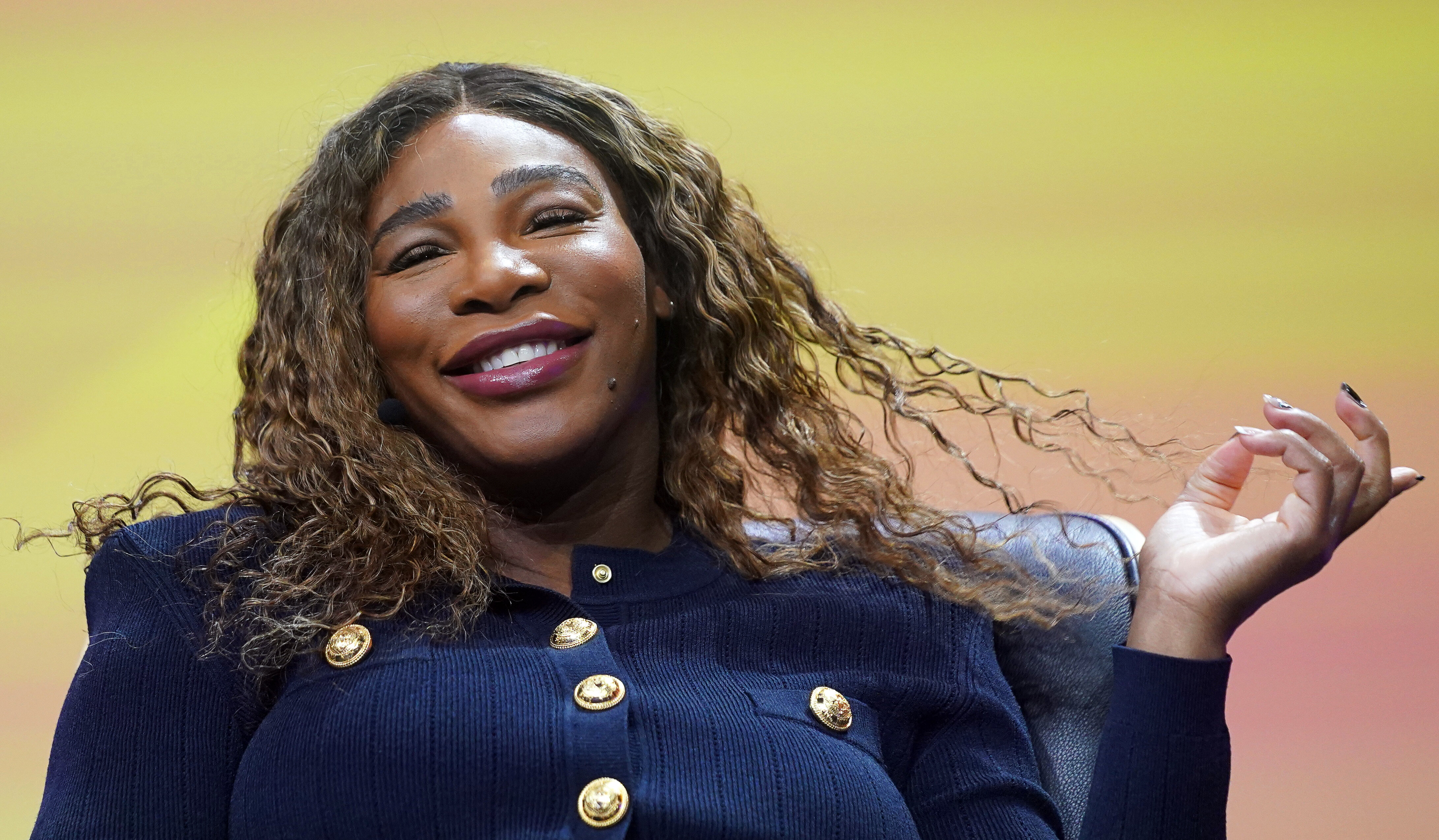
Tennis great Serena Williams can still serve up entertainment – and now she’s doing it at home.
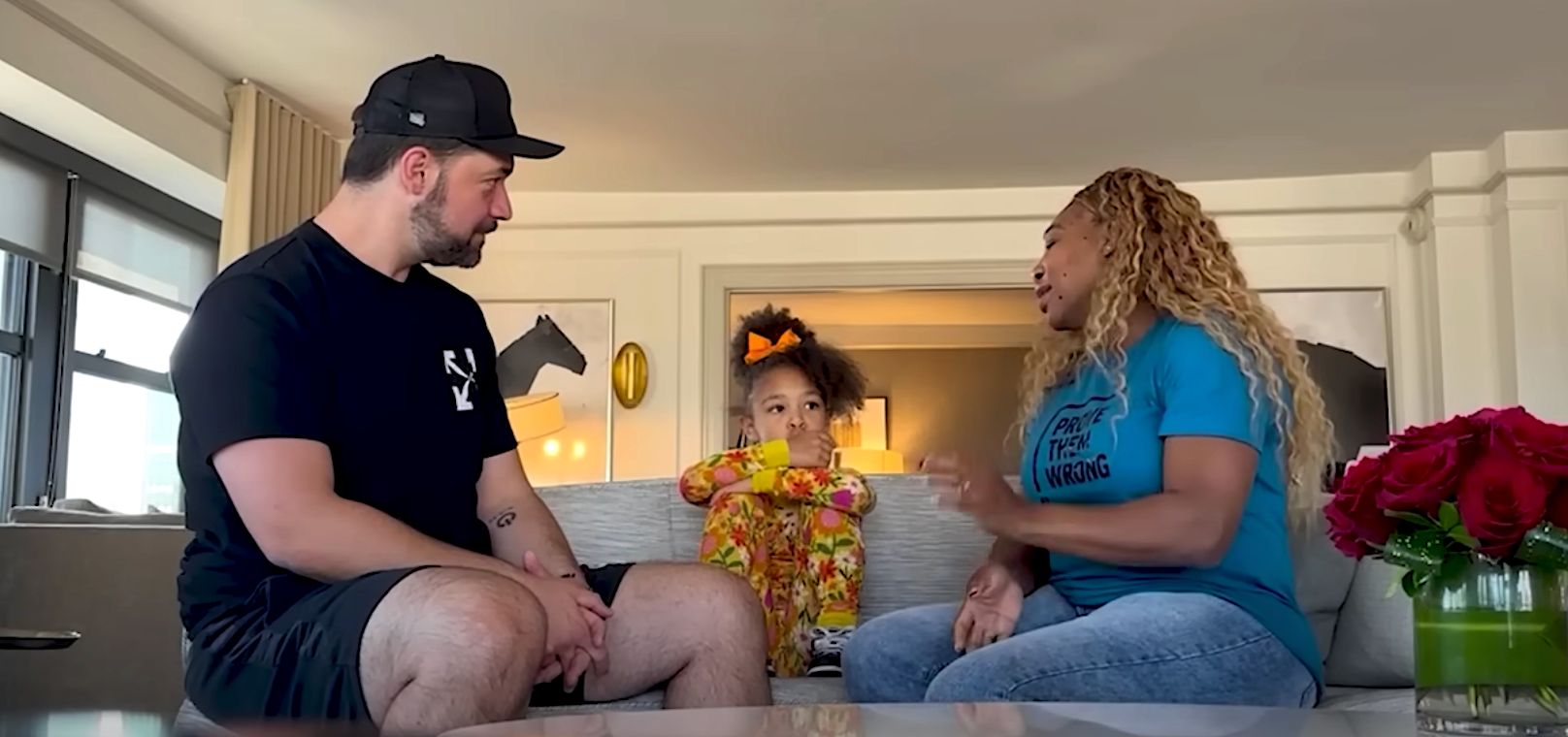
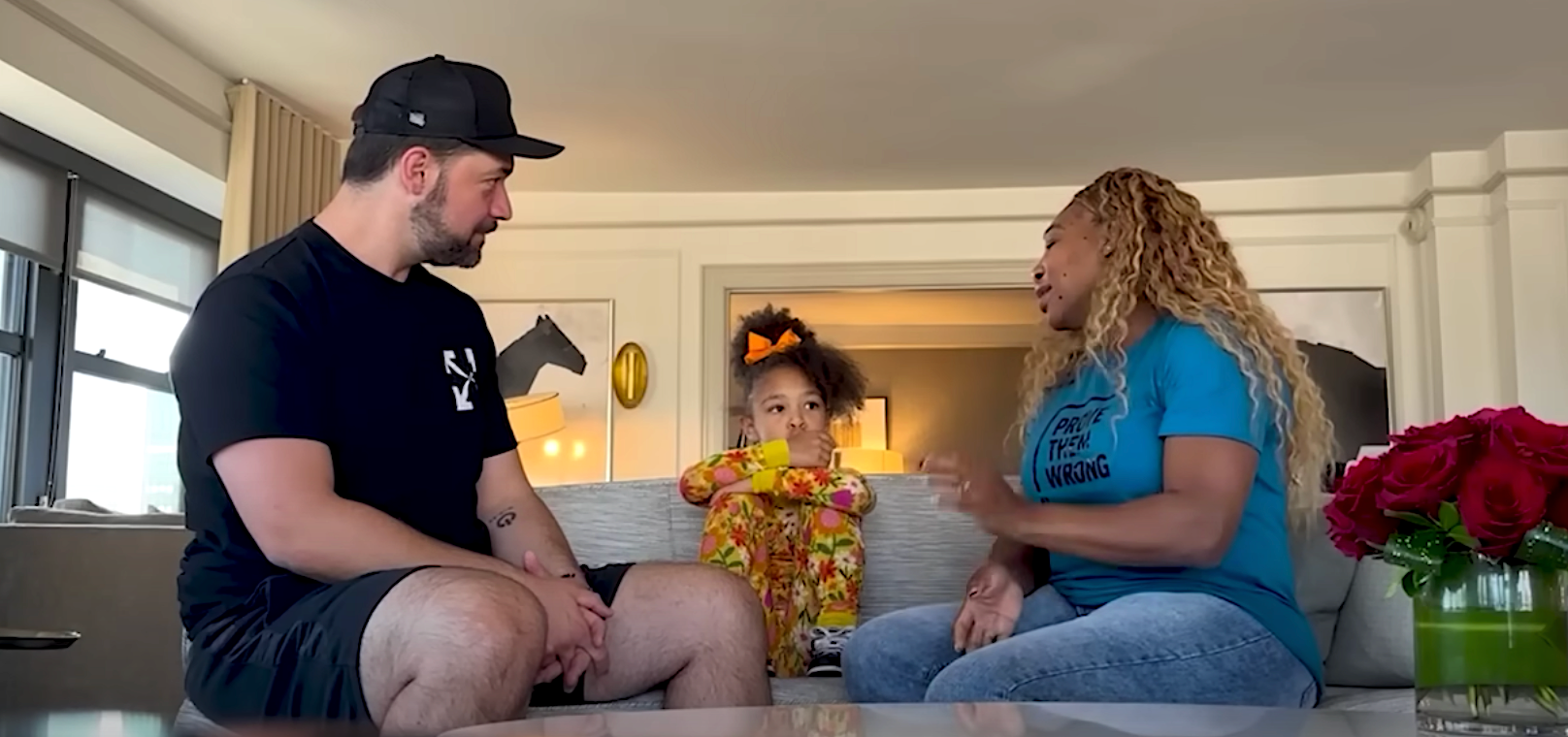
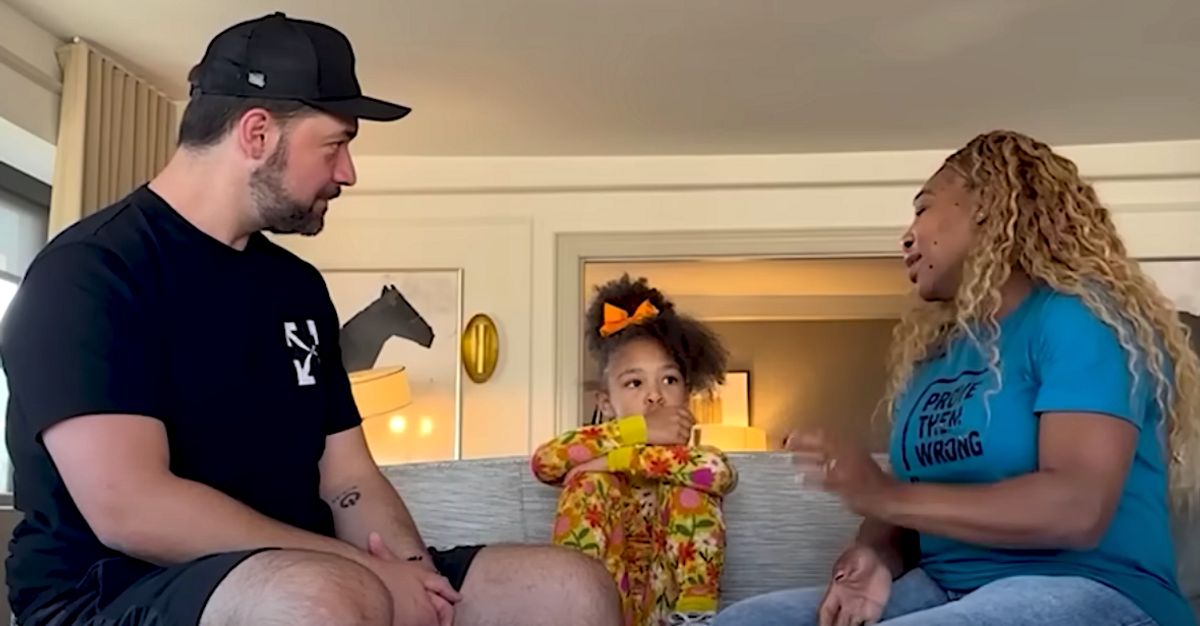
The 23-time Grand Slam singles champion shared a video this week of her telling daughter Olympia that she’s pregnant.
The five-year-old, whom Williams was carrying when she won the Australian Open in 2017, had been worrying about Serena’s weight gain, the athlete explains in the video.
“Remember how you’ve been praying/planning for a little sister or brother?” Williams says to her daughter. “Well, we went to the doctor, and it turns out I’m not getting fat, but I have a baby in my belly.”
“Are you kidding me?” Olympia replies.
“You’re gonna be a big sister,” confirms Alexis Ohanian, Williams’ husband and Olympia’s father.
Olympia shrieks and hugs her mum.
“Oh, my god! I’m so excited!” she says.
She screams again as she sprints out of the room ― where she apparently falls.
“I’m OK!” Olympia yells off-camera.
Williams, 41, has ostensibly been retired since last year’s U.S. Open, and one of the reasons she cited was to grow her family.
But the new video shows the funny exchange in full:
Rihanna is sharing some of the most intimate moments from pregnancy with her son.
The Umbrella singer posted a series of maternity photos Thursday to celebrate her son, RZA Athelston Mayers, who has since celebrated his first birthday. Dressed in nothing but high heels, underwear and jewelry, Rihanna didn’t need an umbrella — and was shaded by palm trees.
The seven-photo Instagram carousel showed Rihanna posing with a mysterious book while cupping her breasts; she stood on a balcony near an unspecified ocean — and captioned the series “Rub on ya titties”.
Advertisement
“In honour of my first pregnancy, embracing motherhood like a g, and the magic that this body made!” Rihanna captioned the Instagram post. “Baby RZA… he in there not having a clue how nuts his mama is, or how obsessed he was bout to make me”.
Many of her whopping 150 million followers commented on the post, with Pharoahe Monch perhaps most notable. The rapper practically coined the phrase “rub on ya titties” with the chorus of his 1999 song Simon Says — and wrote it out in the comments for her.
Rihanna famously announced her second pregnancy during the Super Bowl this year.
Evan Agostini/Invision/Associated Press
Advertisement
Rihanna received further praise from Wu-Tang Clan rapper GZA, whose fellow group member RZA inspired the name of Rihanna’s son. Kathy Hilton, the mother of socialite Paris Hilton, left red heart emojis behind — while rapper Bia called Rihanna “the most beautiful”.
“You really don’t remember life before, that’s the craziest thing ever,” she told the outlet. “You literally try to remember it — and there are photos of my life before — but the feeling, the desires…everything, you just don’t identify with it because…it doesn’t matter.”
Despite the fact that more and more people are waiting longer to get pregnant, having a baby later on in life still comes with a great deal of stigma.
The phrase “geriatric pregnancy” was once commonly used to categorise pregnancies in people over the age 35 before it was eventually replaced by the term “advanced maternal age.” Describing one’s pregnancy as geriatric or elderly was and is not only harmful, causing many people to feel high levels of anxiety about their so-called ticking body clock, it’s flat-out inaccurate.
Advertisement
While it’s true that the risk of experiencing pregnancy complications or infertility increases with age relative to those who are younger, the vastmajority of people 35 and up have smooth and successful pregnancies. Not to mention, even if there is an issue, there are many tests and treatments available to help people over 35 go on to have healthy pregnancies in most cases.
“The most likely thing in these pregnancies is that absolutely everything will be fine,” Melissa Rosenstein, a maternal-fetal medicine specialist, and obstetrician and gynaecologist with the University of California, San Francisco, tells HuffPost.
Where the phrase ‘geriatric pregnancy’ came from
Advanced maternal age pregnancies occur when the mother is going to give birth after the age of 35.The risk of any issues goes up as you get older, according to Rosenstein.
But there isn’t anything special about age 35 when it comes to pregnancy risks and complications. It’s not like the risk of your baby having a chromosome abnormality is lower at 34 and suddenly sky rockets the next year. “It’s a gradual progression,” Rosenstein says.
Advertisement
The age 35 was selected decades ago when doctors needed a way to inform which pregnant patients received genetic testing. Back then, studies had indicated that people over 35 had a greater risk of pregnancy loss from amniocentesis – a procedure that evaluates the foetus’s genetics — and doctors decided that only people 35 and up would qualify for this type of genetic testing.
Now, amniocentesis is a much safer procedure, offered to all pregnant people, but there is some remaining stigma about being pregnant after 35.
These days, it’s much more common to get pregnant after 35 as more people delay parenthood and marriage in order to prioritise their careers and education, or because of other personal circumstances.
“Many to most of my patients are over 35 — it’s not really a big deal,” Rosenstein says.
Adene Sanchez via Getty Images
While it’s true that the risk of experiencing pregnancy complications or infertility increases with age relative to those who are younger, the vast majority of people 35 and up have smooth and successful pregnancies.
The actual risks of being pregnant after age 35
Women and people with uteruses are born with all of the eggs they will have in their lifetime, and as they age, their egg supply – and quality – diminishes. With that, the chances that something will go wrong with the chromosomes during ovulation – the release of the egg from the ovary – also increases.
Advertisement
Research has shown that pregnant people of advanced maternal age are more likely to experience ectopic pregnancy, chromosomal abnormalities, gestational diabetes, preeclampsia and need to undergo caesarean delivery.
The risk of infertility also increases as you get older — it may take you longer to get pregnant and you may have a higher chance of having a miscarriage if you get pregnant, according to Rosenstein. But if you have regular periods every month, there is a good chance that you will be fine.
This doesn’t mean that all people who get pregnant over the age of 35 are doomed. In fact, in the vast majority of advanced maternal age pregnancies, everything is completely fine.
“When you do studies, you see that the risk of complications is higher in the older women, but the absolute risk is still very low,” Rosenstein says.
According to Jill Purdie, obstetrician and gynaecologist, and medical director at Northside Women’s Specialists of Pediatrix Medical Group, we now have more accurate tests that can be done early in pregnancy to assess if the mother or foetus have any health issues.
Advertisement
“With early and routine prenatal care, many pregnancy complications can be caught and treated early before they cause a significant issue,” Purdie says. Certain lifestyle choices – like maintaining a healthy body weight and exercising – may help mitigate some of these risks as well.
That said, it’s really hard to predict who is going to have trouble getting pregnant, and being pregnant, in the future. If you are concerned, it’s worth talking to your doctor about how regular, or irregular, your menstrual cycles are and when your mother went through menopause.
Having a baby is a big decision, and Rosenstein says it’s important to do it when you’re ready, at whatever age that may be.
“Although there is some increased risk as outlined above for women of advanced maternal age in pregnancy, the majority of women are able to have a successful and healthy pregnancy at a later age,” Purdie says.
When you’re pregnant, levels of worry can ramp up to never-before-seen levels.
Much of those nine months can be spent worrying obsessively about miscarriage, whether you’re eating or doing the right things to keep your baby healthy, whether your baby is moving enough, and the impending birth.
It’s a lot. So it’s perhaps no surprise then that one in 10 women will struggle with pregnancy anxiety, which can begin to rule their lives.
Advertisement
It’s the subject of Break Free From Maternal Anxiety, a new book penned by three NHS clinical psychologists: Dr Fiona Challacombe, Dr Catherine Green and Dr Victoria Bream.
The trio use cognitive behaviour therapy (CBT) techniques to explore how women can cope with persistent and distressing worries about pregnancy and becoming a mother. Here are some of the things we learned from it.
1. Pretty much every mum-to-be will feel anxious at some point during their pregnancy
If you’re pregnant and feeling anxious, know you’re not alone.
From worries about whether your baby is moving enough to how you’ll cope with the birth (and all of the uncertainty that surrounds that), pretty much every mum-to-be on the planet will experience anxious thoughts at some point.
“They aren’t pleasant or comfortable and they certainly aren’t spoken about enough,” write the authors, “but they are a near universal part of pregnancy and parenthood.”
Advertisement
In fact, research has shown that 100% of new mothers experience intrusive, unwanted thoughts about something bad happening to their newborn in the first weeks after birth.
If you have the odd worry here and there, you probably don’t need to read a book on pregnancy anxiety. But if worries seem to crop up daily and they’re stopping you from doing things, read on.
2. ‘Problematic worry’ is something to watch out for
There’s a difference between the odd anxious thought and problematic worry, where you get stuck in repeated loops of negative anxious thinking that feel hard to stop, control or turn away from.
It’s one of the most common problems in pregnancy and postnatally, according to the book, with about 8% of women experiencing it.
The authors share the story of one mum, Hestia, who was 32 weeks pregnant and constantly worrying about every decision she made about her baby. Some worries she had included: ‘What if I haven’t included everything on my birth plan?’ and ‘What if lose my job when I am on maternity leave?’.
Advertisement
While some people might have these kinds of thoughts and move on, she would find it difficult to move her attention to other things and would become irritable, unable to concentrate on work or reading books and then she became reluctant to leave her house.
When anxiety starts to impact your day-to-day life, it’s time to seek help. As Dr Fiona Challacombe explains: “The perinatal period is a time of big changes, emotionally, physically and socially, so it’s often assumed that anxiety is a normal part of this.
“However, when anxiety persists and is having an impact on your daily life and functioning then it is likely to be an anxiety problem.”
3. Tackling worry isn’t about what you worry about, but the way you think about it.
One of the things the book is keen to convey is that rather than trying to tackle the worry itself, you need to focus on solutions which tackle the way that worry works.
A strategy the authors advise is to ask yourself whether the worry you are having is actually important – ie. will anyone else care about this tomorrow? Or will you care it about it on your deathbed?
Advertisement
If it isn’t important – and you firmly believe that – they recommend trying to continue with what you are doing, and if your worries come back, to treat them as white noise in the background.
If it is an important worry, then they recommend defining what the problem is that underlies the worry – and then generating as many solutions as possible for that problem.
4. Setting a ‘worry-free zone’ or planning a time to worry could help
Another way to tackle worry is to set a worry zone, say the authors. This is basically where you make a conscious decision to put your worries to one side for a set time in the day.
One idea they suggest is that whenever you have a snack, you can “try to focus away from worry and enjoy every second of your crisps or chocolate”.
It’s a well-used technique in CBT for worry problems, they add, and as you get more practice, you can try to increase the worry-free zones and take control.
Advertisement
It sounds weird but the clinical psychologists also suggest planning a time when you will worry, and deliberately postponing worrying until that specific time.
“This is a useful strategy to free yourself from the relentless worrying, by setting a particular time when you can come back to worries you have noted in the day,” they say.
There are tonnes of strategies like this in the book, as well as advice on coping with intrusive thoughts and phobias.
Dr Fiona Challacombe says: “CBT is a very effective treatment for persistent anxiety and our own research trials show that it can be effective for maternal anxiety in various forms.
“We have seen many parents use the techniques described in the book to get control of and overcome their anxiety, with benefits to them and their families.”
Advertisement
Break Free from Maternal Anxiety: A Self-Help Guide for Pregnancy, Birth and the First Postnatal Year will be published October 27 by Cambridge University Press (£12.99).
Help and support:
Mind, open Monday to Friday, 9am-6pm on 0300 123 3393.
Samaritans offers a listening service which is open 24 hours a day, on 116 123 (UK and ROI – this number is FREE to call and will not appear on your phone bill).
CALM (the Campaign Against Living Miserably) offer a helpline open 5pm-midnight, 365 days a year, on 0800 58 58 58, and a webchat service.
The Mix is a free support service for people under 25. Call 0808 808 4994 or email help@themix.org.uk
Rethink Mental Illness offers practical help through its advice line which can be reached on 0808 801 0525 (Monday to Friday 10am-4pm). More info can be found on rethink.org.
Patients are expressing concern that some Covid booster jabs, flu vaccinations, as well as key hospital appointments, are being cancelled ahead of the Queen’s funeral on September 19 since it was made a last-minute Bank Holiday.
Kate Brodie, 62, a retired NHS GP who is about to start a second round of chemotherapy for breast cancer, had specifically timed the date of her Covid booster so it fell before her hospital treatment started.
Advertisement
The vaccine was booked for September 19. However Brodie, who lives in south Devon, says she received a text message on September 12 saying the appointment had been cancelled due to the unexpected bank holiday.
“Having cancer is a huge stress with all the worry about survival, the process of going through gruesome treatment and hoping to continue to avoid Covid 19 while my immune system is down,” she tells HuffPost UK.
“The death of the Queen is very sad, but the reaction by NHSE [NHS England] to cancel delivery of much-needed services at short notice will cause harm and hardship to many.”
Advertisement
Many GP practices across England will be closed for the Bank Holiday, which has been given to allow individuals, businesses and other organisations to pay their respects to the Queen on the day of her state funeral.
A letter from Dr Ursula Montgomery, director of primary care at NHS England, said that out-of-hours services will be in place during the day to meet patients’ urgent primary medical care needs.
The funeral has come at a busy time for the NHS, as it implements its Covid booster and flu vaccination programmes ahead of the winter.
A text message from one GP surgery on the outskirts of London, seen by HuffPost UK, said flu vaccine appointments scheduled for this week would need to be rescheduled by a few days because of “the unfortunate news the nation is facing at the moment”.
Dr Helen Salisbury, a GP and medical educator from Oxford, explained on Twitter how a last minute bank holiday can be a “nightmare” for those trying to run health services, especially with lots of patients already booked in.
“What to do?” she tweeted. “Implore staff to work and pay extra? Reschedule and delay all the appointments?”
Advertisement
A bank holiday at short notice is a nightmare for those of us trying to run health services. Loads of patients booked in do what to do? Implore staff to work and pay extra? Reschedule and delay all the appointments?
Other staff working in general practice responded to say that even when they do open on Bank Holidays, they often aren’t busy. Some added that they suspect lots of patients won’t turn up because they’ll be watching the funeral.
I worked GP OOH the Saturday of Princess Diana’s Funeral and it was deserted. No one phoned us and we didn’t see anyone despite being there waiting and available. It’s like GP surgeries being open on Sundays or bank holidays during the pandemic when no one wants to come then.
Scheduled Covid boosters are still going ahead in care homes, said NHS England, which has also issued guidance urging clinics to stay open to deliver the boosters “where there is a high population need”.
But a report by openDemocracy found thousands of non-urgent hospital appointments – for issues such as hip and knee replacements, cataract surgery, maternity checks and some cancer treatments – are being postponed.
One pregnant woman revealed how her foetal scan had been cancelled, leaving her anxious about her baby’s health.
“I’m really disappointed,” she told openDemocracy. “Yes, it’s a routine scan, but that’s another week or two until I’m seen and wondering whether my baby is healthy – which means quite a lot of anxiety, sitting and waiting.”
Hospital appointment I’ve had booked for 6 months cancelled because it’s on the day of the funeral. What a weird little island we live on
Kate Brodie has since tried to rebook her Covid booster for the next cycle, but was told there were no dates free near to where she lives.
“Thankfully I have found a centre 15 miles away that I can attend on Sunday instead,” she says. “I am lucky I am mobile and have transport to reach the further venue.”
Meanwhile, Greg Hadfield, 66, from Brighton, also found out his Covid booster vaccine appointment on September 19 has been cancelled and is now having to travel nearly 40 minutes by car to get another one.
The 66-year-old was originally invited to have the booster at his local Waitrose. However because the store will now be closed for the Bank Holiday – as many supermarkets will be – his appointment won’t go ahead.
“When I tried to re-book for another day at the same centre, the system offered only dates that were 14 days-plus ahead, by which time I will be abroad for a month,” he tells HuffPost UK.
Advertisement
He has managed to book an appointment 40 minutes away for the same date, September 19, which hasn’t been cancelled – so far.
“I am just relieved to get the booster before leaving for Turkey and Greece later this month,” he says.