DfE’s Mock Apology Post To Parents Seriously Misread The Room

A Department for Education social media statement went viral, but not in a good way.

The Department published a mock ‘apology’ celebrating the impact of its Breakfast Club initiative.

Unfortunately, instead of sounding human or witty, it read as self-congratulatory and oddly patronising – and within hours, was circulating widely as an example of political comms gone wrong.

As CEO of nanny company Koru Kids, I watched this with dismay for several reasons.

I was saddened because the policy itself is well-evidenced and successful. Breakfast clubs are essential childcare infrastructure, and it’s great that they’ve served over 2.6 million meals. That’s something to celebrate.

But the botched announcement also revealed something deeper about trust, empathy and the currently fragile relationship between families and the state.

One jarring aspect of the statement was its self-congratulatory tone. The government seemed to be taking credit for outcomes actually delivered by exhausted frontline workers.

Breakfast clubs have run because kitchen staff show up at dawn. Childcare works because early years educators absorb the strain every day. Attendance has improved because teachers, SENCOs and safeguarding teams grind constantly.

Parents, too, commented the tone of the statement was ‘off’. One section said the Department’s policy has given parents “alarming amounts of unexpected free time”, suggesting British parents are now luxuriating in extra hours at the spa.

Any parent could tell you this is absurd. Parents use childcare to keep their jobs and put food on the table.

But the humour in these cases was gentle, well-judged, and didn’t punch down.

Satire only works when the audience knows you get them. That’s why your friends can take the mickey out of you, but it’s rude if strangers do – because the jokes have to rest on a base of trust.

Sadly, the Department of Education just has not earned the right to joke about how hard it is to be a parent. They’ve misread the room.

What’s actually happening is that life is becoming ever harder for families.

Brand-new data from Buttle UK shows that 43% of young people in crisis think they might need to drop out of education to work. More than half (55%) of children say they’re sometimes too hungry to learn. 60% of parents can’t afford school shoes. 59% can’t afford uniforms.

Against this backdrop, a joke about parents gaining “unexpected free time” doesn’t just misjudge the tone – it makes people wonder whether policymakers understand what life is like for most people at the moment.

This matters, because we are living through a profound crisis of confidence in institutions.

People reading this statement quite reasonably think, “If they don’t get it, how can we trust them to make policies in our interests?”

Empathy isn’t just a layer of comms you add at the end, it needs to be an integral part of the whole process. When it’s missing, it makes you question the process itself.

And that’s something that really threatens us all.

Rachel Carrell is the CEO of Koru Kids.

Share Button

Advent Has Begun. But What Does That Actually Mean, And Why Do We Have Advent Calendars?

Not to alarm you, but we’re a matter of weeks away from Christmas – and already in Advent.

Advent, which begins on the Sunday closest to November 30, lasts for four weeks. This year, it started on Sunday, November 30; the earliest it can begin is November 27.

But what does Advent mean, and why do we celebrate it?

Advent means “coming”

Per Britannica, Advent comes from the Latin word “Adventus,” meaning “coming”.

In the Christian faith, it refers to the coming of Christ, celebrated at Christmas.

It can also, the BBC shared, be a “time of preparation when Christians think about the second coming of Christ and what they need to do to be ready for his return.”

The dates have not always been the same. For instance, under Bishop Perpetuus of Tours (461–490), Advent used to involve a fasting period which began on November 11.

Advent is linked to the Advent wreath, made from a circle of evergreen leaves used to represent eternal life. There are also four candles, one for each of the Sundays ’til Christmas. Some add a fifth candle that symbolises Jesus Christ.

This final candle, if present, is not usually lit until Christmas begins. The other candles are traditionally lit on each Sunday before Christmas.

Why do we have Advent calendars?

Like Christmas trees, these started out as a German tradition – though Advent calendars took off a little later, in the 19th century.

It was simply a way to count down to Christmas.

Traditional Advent calendars often had Bible verses or pictures, though NPR pointed out Advent calendars weren’t the only way Germans built anticipation at the time – less long-lasting versions included keeping a chalk tally on walls and doors, and placing extra straws in the crib of a Nativity scene.

So, though it took a few decades, perhaps it’s not surprising that German publisher Gerhard Lang is credited with the first printed Advent calendar, as well as the first Advent calendar with doors.

And though the first chocolate version is believed to have been made in the ’50s, it took Cadbury’s about 20 years to make the first mass-produced version in 1971.

Only in the ’90s did demand become high enough for them to keep the calendars in continuous production.

Because Advent does not always begin on December 1, though, they don’t follow the exact dates every year – it is just easier to go 1-25, or 1-24.

Share Button

‘My Boyfriend’s Jokes Started Including Creepy Details. Can I Ever Trust Him Again?’

Though closeness is an important part of a great relationship, the cofounder and COO of Fresh Starts Registry, Genevieve Dreizen, says that privacy is key, too.

“As a person who spends a great deal of time helping people navigate life transitions and emotional crossroads, I always remind people that privacy is not a threat to intimacy,” the etiquette expert said.

In fact, she calls it a “necessary ingredient” for a healthy partnership.

Perhaps that’s why Redditor u/taliv_03 said she feels so “disgusted” after learning that her partner had been rifling through her diary.

Writing to the forum r/TwoHotTakes, the original poster (OP) said that she first suspected him of reading her journal about a month ago, when his jokes about her changed.

Here, we asked Dreizen to weigh in on the tricky situation.

OP’s partner began joking about details only shared in her journal

The poster, a 27-year-old woman, said that her partner (a 29-year-old man) had been together for a little over a year when she noticed the change.

Throughout that period, she had a paper diary that her boyfriend knew about. It is a “non-negotiable” for her, she says; her partner had previously “teased me [about it] once in a sweet way, calling it my ‘brain compost bin.’”

About a month ago, though, she started noticing something strange about her partner’s jokes.

“We were with friends, and he made a joke about how I [research] symptoms for my cat more than for myself… It stung because that exact line was in my journal the night before, word for word,” OP wrote.

“A week later, he told this story to my sister about how I still feel guilty for breaking a snow globe when I was five. I have never told that story out loud, only wrote it down after a therapy session.”

Two nights ago, she said she walked in to see her diary open on a coffee table in front of her. He claimed he had moved it to save it from the cat, she said.

After he mentioned yet another private musing, though, she raised her suspicions with him, “and he got defensive, said I should not write things down if I don’t want them to be ‘found art’, and that I was overreacting because ‘partners should not have secrets.’”

Since then, OP writes, she has felt “disgusted and stupid, like my safe place just got ripped open for someone else’s stand-up routine.

“At the same time, I keep wondering if I am making this bigger than it is. Is reading a partner’s journal and then using their thoughts as jokes a hard deal breaker, or something you can actually rebuild trust from?” she ended.

“This is a boundary violation”

Speaking to HuffPost UK, Dreizen explained: “When a partner reads your diary, they aren’t just crossing a line of etiquette; they are trespassing on the internal space where you tell the truth to yourself. That space is sacred.

“A diary is not a shared document, not a negotiation, not a relationship ledger.”

And when someone snoops in your diary, “You’re dealing with a breach of trust that destabilises the foundation of emotional safety in the relationship.”

It turns a private space into an arena where you suddenly have to worry about leaving yourself open to teasing and jokes, the expert added.

“That kind of emotional exposure can make you question your reality, tiptoe around your own inner world, or feel ashamed of feelings you were never meant to defend.

“The injury is not just about the reading – it’s about the casualness with which your boundaries were dismissed, the entitlement to your inner life, and the refusal to take accountability afterwards.”

For her part, Dreizen said, “The first step is acknowledging that this isn’t a difference in opinion about privacy. This is a boundary violation. The partner’s belief that ‘partners shouldn’t have secrets’ is a misconception wrapped in control.

She said that in this case, repair is only possible once OP’s partner has proven that he understands that he’s wrong and why and has taken concrete steps to change.

Dreizen asked the poster, should she wish to give her partner another try, to say something like, “I’m open to moving forward, but only if you take responsibility without minimising and commit to respecting my boundaries. What steps are you willing to take to make that happen?”

Share Button

WHO warning over shortage of obesity jabs

Too few people who could benefit from so-called “skinny jabs” are able to access them, says WHO.

Share Button

Satellites spot rapid “Doomsday Glacier” collapse

Thwaites Glacier in West Antarctica — widely known as the “Doomsday Glacier” — is changing more quickly than almost any other ice-ocean system on the planet. Its future behavior remains one of the biggest unknowns in forecasts of global sea-level rise. One part of this system, the Thwaites Eastern Ice Shelf (TEIS), floats on the ocean and is partly held in place by a pinning point at its northern edge. Over the past twenty years, this shelf has developed increasing fractures around a major shear zone located upstream of that pinning point.

A new study published in the Journal of Geophysical Research: Earth Surface (AGU, 2025) offers the most detailed account yet of how this slow breakdown has unfolded. The research was produced at the Centre for Earth Observation Sciences and led by Debangshu Banerjee, a recent graduate student from the Centre for Earth Observation Science (CEOS), along with Dr. Karen Alley (Assistant Professor, CEOS) and Dr. David Lilien (Assistant Professor, Indiana University Bloomington and former Research Associate at CEOS). Their work contributes to the TARSAN (Thwaites-Amundsen Regional Survey and Network) project, one of the programs within the International Thwaites Glacier Collaboration (ITGC) — a major U.S.-U.K. effort to understand the forces driving change in Thwaites Glacier. Several well-known glaciologists, including Dr. Ted Scambos, Dr. Martin Truffer, Dr. Adrian Luckman, and Dr. Erin Pettitt, also contributed to this research.

Fracture Growth, Ice Dynamics, and a Strengthening Feedback Loop

Using twenty years (2002-2022) of satellite observations, ice-flow speed measurements, and in-situ GPS data, the team documented how fractures within the TEIS shear zone formed and evolved. Their analysis shows that the gradual growth of these fractures weakened the shelf’s connection to the pinning point. As this attachment deteriorated, the ice upstream began to flow more quickly, reducing the shelf’s mechanical stability.

The researchers identified four clear stages in this weakening and highlighted two major findings. The first is that the fractures expanded in two distinct phases: long fractures aligned with the direction of ice flow appeared first, followed later by shorter fractures that cut across the flow. The second is evidence of a positive feedback cycle in which these fractures increased ice acceleration, which in turn caused further damage. This accelerating loop played a significant role in the shelf’s recent decline.

A Shift From Stabilizing Force to Source of Weakness

The study notes that the pinning point, once a key factor holding the TEIS in place, has slowly shifted into a feature that now contributes to its instability. This four-stage pattern of structural decline may be a signal for other Antarctic ice shelves that appear to be entering similar phases of weakness. If these floating shelves continue to deteriorate, the Antarctic Ice Sheet could contribute even more to future sea-level rise.

Share Button

Flu jabs offered in pub in vaccination drive

Regular pop-up vaccination clinics are available at The Bevy community pub in Brighton.

Share Button

A lost Amazon world just reappeared in Bolivia

In September 2021, a team of specialists traveled to one of the least-documented areas of the Bolivian Amazon: the Great Tectonic Lakes of Exaltación in the department of Beni. The expedition, organized by the Grupo de Trabajo para los Llanos de Moxos (GTLM), brought together experts from the Wildlife Conservation Society, the National Museum of Natural History, the Institute of Ecology, the Biodiversity and Environment Research Center, the Aquatic Resources Research Center, and the Department of Anthropology of the Americas at the University of Bonn.

In the southwestern Amazon, the tectonic Lakes Rogaguado and Ginebra reveal a landscape shaped by generations of human innovation. Beneath the open grasslands and shallow waters lie the remains of extensive earthworks, raised agricultural fields, and interconnected canals that reflect a long history of people adapting to a dynamic environment.

These lakes sit within the Municipal Protected Area of Grandes Lagos Tectónicos de Exaltación and form part of the Río Yata Ramsar wetland complex, which is recognized by UNESCO for both its ecological and cultural value. Set in the Llanos de Moxos, a vast network of savannas, gallery forests, and floodplains that make up the largest wetland system in the Amazon basin, this area has inspired curiosity for centuries. Ethnohistorical accounts even linked it to the legendary ‘Land of Paititi.’ Only recently has its deep human past begun to come into clearer view.

Mapping a Long History of Settlement

Using a combination of surveys, excavations, and LiDAR imaging, the research team documented several archaeological sites: Paquío, Coquinal, Isla del Tesoro, and Jasschaja. Each site represents a different stage in the long sequence of habitation across this region.

Radiocarbon dates reveal repeated occupations from roughly 600 to 1400 CE. Findings at Paquío show an early settlement beginning around 600 CE, followed by a more intensive occupation between 1000 and 1200 CE. This later phase included shell middens, dense ceramic refuse, and a sophisticated system of canals and raised fields connected to maize-based farming. Jasschaja, which dates from 1300 to 1400 CE, reflects broader landscape alterations and greater botanical diversity, suggesting intensified forest and crop management during its occupation.

Innovations in Water Management and Agriculture

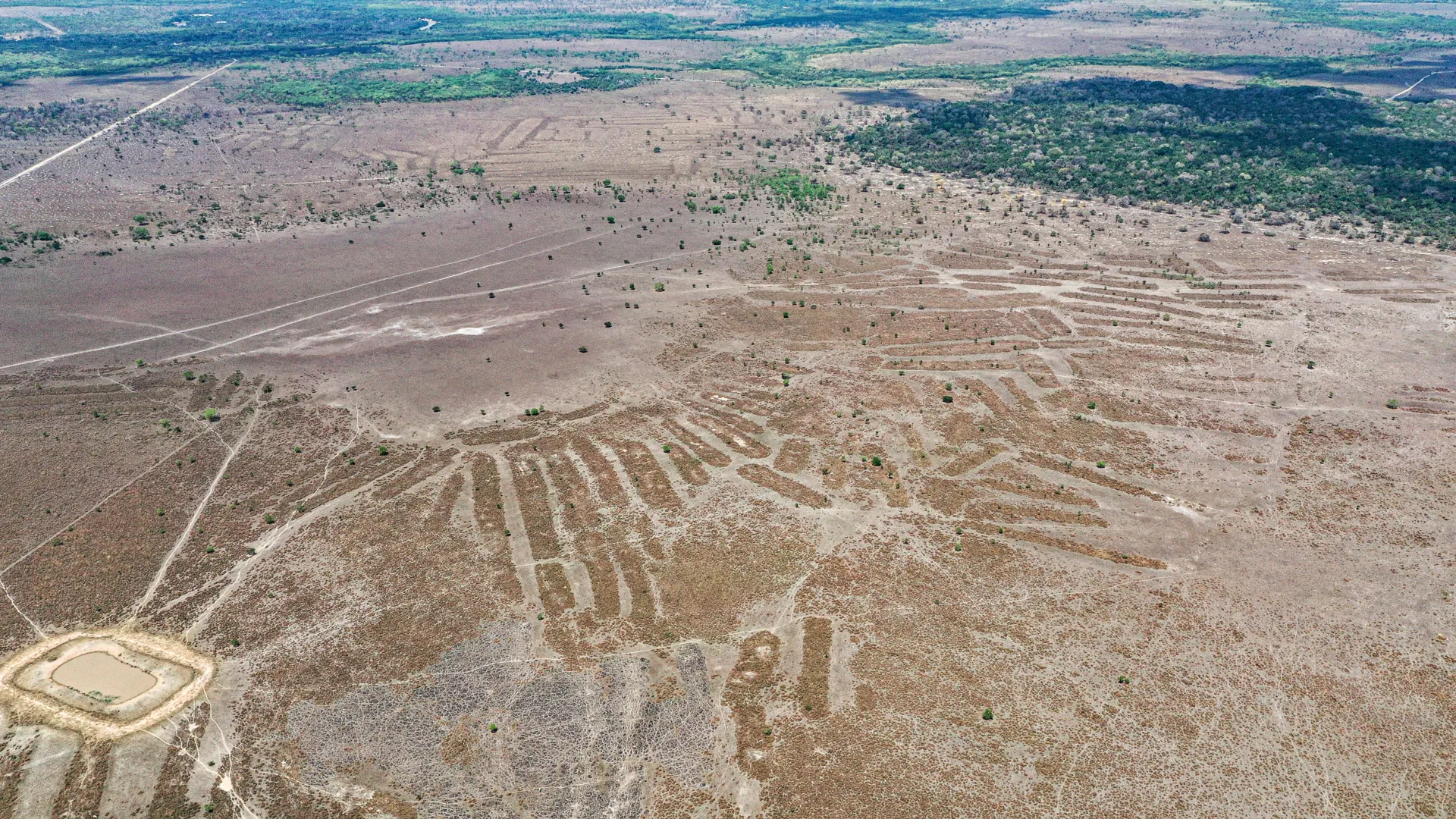
The terrain of the Llanos de Moxos is filled with geometric forms that reveal themselves on closer inspection. Circular and rectangular ditches, drainage channels, raised planting platforms, and clusters of mounds create a complex network designed for water control and cultivation. These structures were built to regulate seasonal flooding, guide water flow, and create stable areas for living and farming within a wetland that changes dramatically throughout the year.

Their many shapes, ranging from geometric enclosures to long elevated fields, indicate that there was no single standardized design. Instead, they represent centuries of experimentation as communities responded to shifting ecological and social conditions. Together, these features highlight the cultural diversity and long-term resilience of the people who developed them.

Excavations at Paquío and Jasschaja also revealed details about a varied pre-Hispanic diet that relied on wetland resources. Fish such as wolf fish, peacock bass, and South American lungfish were especially common, accompanied by reptiles including caimans and turtles, and mammals such as capybaras, pacas, and armadillos. Plant remains show the use of maize, legumes, and multiple palm species — moriche palm, corozo palm, cumare palm, totai palm, palmita, and peach palm. Together, these remains point to a balanced subsistence strategy that combined fishing, hunting, gathering, and farming.

Biocultural Knowledge and Indigenous Leadership

The Cayubaba and Movima communities continue to live in these landscapes, where rich biodiversity is deeply connected to cultural heritage. Their long-standing presence and environmental knowledge help maintain a unique form of biocultural heritage in which ecological and cultural diversity have developed side by side over many generations.

During the post-Covid-19 field seasons, collaboration with local communities was rooted in open communication and mutual respect. Representatives of the Cayubaba Indigenous Council, which includes 21 Cayubaba and Movima communities, assisted researchers in identifying areas for study, providing access to culturally important places, and specifying sites that should not be disturbed. While interactions were limited for health reasons, this partnership ensured that the research reflected community priorities and contributed to a fuller understanding of the living heritage of the region.

Through the GTLM, Indigenous leaders and scientists are working together to link archaeological and ecological research with conservation initiatives. These efforts emphasize that the Llanos de Moxos is not only a center of biodiversity but also a landscape shaped through long human histories, and they support continued management of the Yata River Ramsar site and the protected areas connected to it.

Lessons From the Past for a Changing Amazon

As deforestation, expanding agriculture, and climate change put increasing pressure on the Amazon, the landscapes around Lakes Rogaguado and Ginebra highlight the importance of sustainable land-use traditions. Archaeological evidence shows that past communities developed flexible ways of living that combined farming, fishing, and forest management. Rather than seeking to control or overexploit the environment, they adapted to its seasonal cycles and used periodic flooding as an opportunity.

Although raised-field agriculture eventually ended — likely because of population decline and social upheaval after European colonization — this does not diminish the effectiveness of these systems. For centuries, communities maintained productive landscapes by working with the region’s natural rhythms. Their practices challenge modern assumptions about what counts as “development” and remind us that resilience often emerges from diversity: of species, of knowledge, and of cultural traditions.

Protecting this biocultural heritage is now a global responsibility. The wetlands of the Llanos de Moxos continue to store carbon, moderate water systems, and support a wide range of species. Conservation efforts must also respect the people who have cared for these landscapes for generations. In this way, archaeology becomes more than a study of the past; it becomes a means of reconnecting ancient knowledge with today’s urgent debates about sustainability and environmental justice.

The Llanos de Moxos demonstrate that the Amazon has always been a place where people and nature have shaped one another. Its monumental earthworks, forest islands, and living cultural traditions suggest that part of our shared future may depend on listening more closely to these landscapes that remember.


Share Button

A Sexologist’s 7 Rules For Great Sex During And After Menopause

Though you might associate menopause with hot flushes, that’s just one of 62 symptoms linked to the phase.

Menopause and perimenopause are also associated with changes to your sex drive and even differences in your vaginal and vulvar tissue.

And seeing as the entire menopausal process can last for decades, it seems unfair to expect people to navigate it without much guidance on their changing bodies and needs.

Which is why we spoke to licensed sexologist, relationship therapist and author at Passionerad, Sofie Roos, about how to establish a healthy sex life during and after menopause.

Here, she shared her seven rules:

1) Accept changes to your lust levels

“During and after the menopause, your lust tends to change. Some people get less interested in sex, while others [develop] a [stronger] desire,” Roos said.

“It’s also common to experience a different or deeper and more emotionally based lust than before.”

As much as possible, the sexologist advised, try not to “panic” about these changes.

“See it as a chance to discover something new, rather than trying to go back to how things used to be… if you can accept that things won’t be the same, you also open up the door for better pleasure than pre-menopause.”

2) Lube is your BFF

Vaginal dryness can increase during menopause thanks to changes in your oestrogen levels. This “tends to make sex uncomfortable, which puts many in a negative loop where they get less interested in sex due to it not feeling as good anymore,” Roos stated.

“Therefore, take the help of lube, ideally a silicone-based option of good quality, and make sure to use a lot – this will be a saviour!”

3) Take more time to warm up

Some research suggests that menopause may mean some people take longer to “get going” in the bedroom, as hormonal changes lead to different levels of sensitivity.

“This means that you should invest more time in foreplay, and switch up how you do it,” advised Roos.

“Try a sensual massage, kiss and cuddle longer, focus more on slow touches that build up in intensity, and don’t be afraid to take the help of sex toys such as vibrators, which can help blood to flow [more easily] to the vagina.”

4) Rediscover masturbation

Partnered sex is only one side of the equation here. Roos said menopause is a great opportunity to work out how to offer your own body what it needs, too.

“Discover new ways of turning yourself on, for example, by reading sex novels or watching new types of porn… invest in sex toys, especially vibrators, use lots of lube, and build up the pleasure [over] a longer time,” she stated.

“Also, be open to adapting and changing the way you masturbate based on how things feel and what works, and don’t give up if it takes some time to find solo sex that feels as amazing as before… You will get there eventually.”

5) Communicate with your partner

If you have a partner, they may benefit from learning about any changing needs, too, Roos said.

“Try to have a good, honest and respectful communication around intimacy. Boundaries and needs get even more important when the body changes, so make sure to open up [about] what feels good, what doesn’t work as it used to, and what you’re curious about trying.

“Invite and help your partner to help you have good sex, and don’t keep it to yourself, as that often leads to stress and anxiety, which is a real killer for [your] sex drive. It’s the two of you in this!”

6) Try pelvic floor exercises

“I really recommend strengthening the pelvic floor as that helps manage many menopause symptoms, especially symptoms related to sex… it leads to higher sensitivity, more pleasurable intimacy, and a better ability to orgasm,” said Roos.

A 2022 paper found that Kegels and lube both improved sexual function in menopausal women, with Kegels potentially being the more effective of the two.

7) Stay playful

It sounds obvious, but Roos said that remembering sex is meant to be fun is key to a better connection with your body – whether you’re pre-, post-, or mid-menopause.

“Switch the mindset of sex being something you need to perform, to it instead being a moment of emotional and physical intimacy, playfulness and… pleasure.

“The less pressure, the easier it is to find your own lust and sexiness during and after menopause,” she ended.

Share Button

New 3D scan reveals a hidden network of moai carvers on Easter Island

A new study published November 26, 2025 in the open-access journal PLOS One reports that the well-known stone figures of Rapa Nui (Easter Island) were created by many separate carving groups. The research team, led by Carl Philipp Lipo of Binghamton University, New York and colleagues, examined how these communities contributed to the making of the island’s famous monuments.

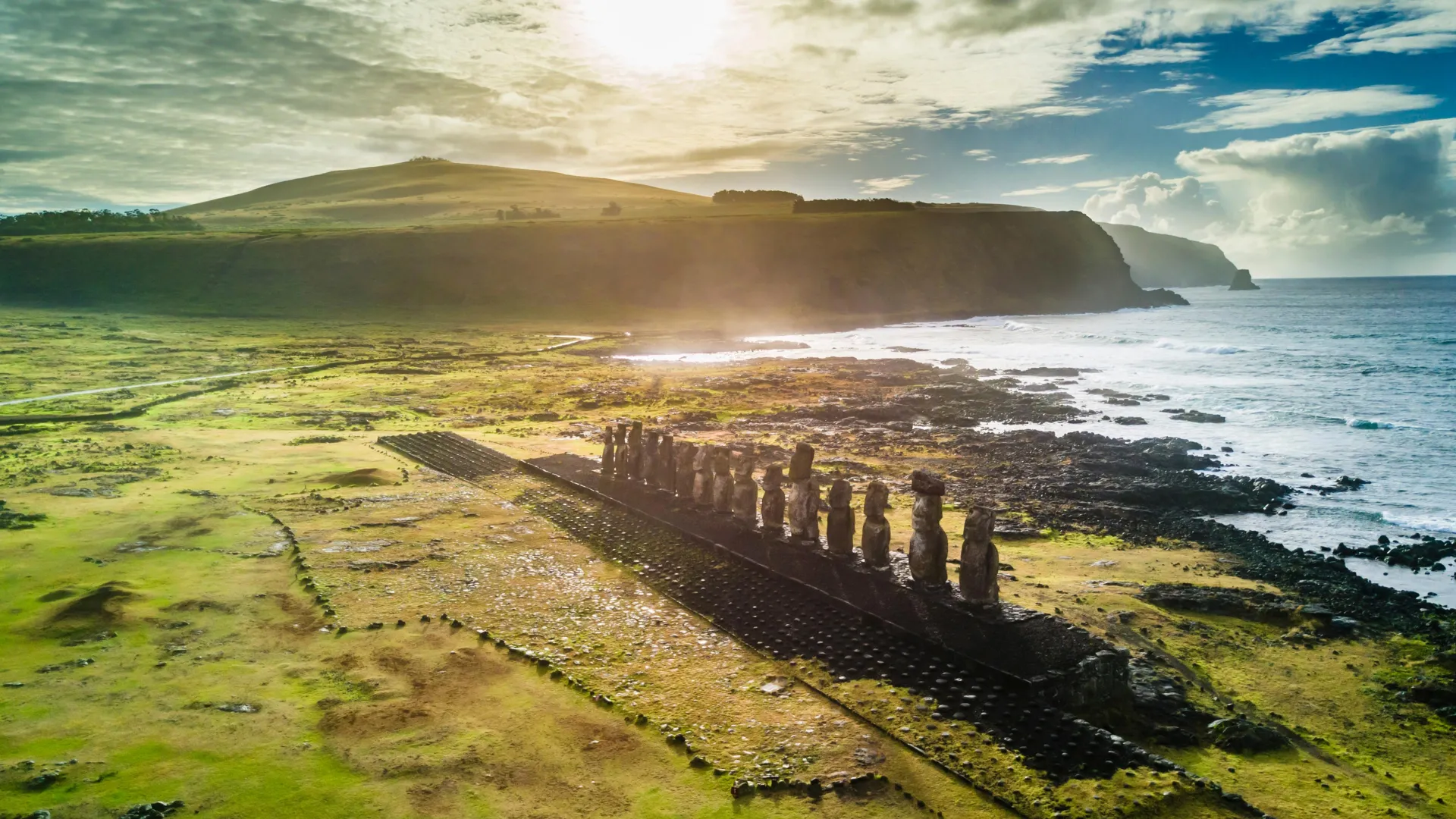
Rapa Nui is widely recognized for its hundreds of stone statues (moai), crafted by Polynesian settlers beginning in the 13th century. Archaeological work has repeatedly shown that the island was home to many small family groups rather than a unified political system. This background has prompted researchers to explore whether the carving of moai followed the same decentralized structure.

High-Resolution 3D Modeling Reveals 30 Quarry Work Zones

For this study, scientists gathered more than 11,000 photographs of Rano Raraku, the primary moai quarry. These images were merged into a detailed 3D reconstruction that captured hundreds of moai preserved in different stages of production. After analyzing the model, the team identified 30 distinct quarrying areas, each showing unique carving approaches. Additional clues indicate that completed or partially shaped moai were moved away from the quarry along several different paths. Taken together, these patterns suggest that statue creation reflected the island’s broader social organization, with carving efforts carried out independently rather than through centralized oversight.

New Evidence Challenges Long-Held Assumptions

The findings call into question the idea that projects of this scale require strict hierarchy or a single coordinating authority. Similarities between moai appear to come from the sharing of cultural knowledge instead of coordinated, joint labor. The new quarry model also provides a valuable dataset that can support future investigations and guide cultural management at this UNESCO World Heritage site. The same methods used here can also be applied to study other archaeological locations.

The authors explain: “Much of the so-called “mystery” of Rapa Nui (Easter Island) comes from the lack of openly available, detailed evidence that would allow researchers to evaluate hypotheses and construct explanations. Here, we present the first high-resolution 3D model of the moai quarry at Rano Raraku, the central quarry for nearly 1,000 statues, offering new insights into the organizational and manufacturing processes of these giant megalithic figures.”

Fieldwork for this research was supported by a National Science Foundation grant (Award #2218602). The funders had no involvement in study design, data collection and analysis, decisions related to publication, or manuscript preparation.

Share Button

Blow For Jeremy Corbyn As Your Party Members Say He Can’t Run For Leader

Jeremy Corbyn has suffered a major blow after his new party’s rank-and-file rejected his bid to become its leader.

Members of the left-wing Your Party voted narrowly against having a single elected leader, opting instead for a collective model that put a committee of activists in charge.

Corbyn had previously said he backed the “sole leader” model and would stand for the position.

The collective model was supported by former Labour MP Zarah Sultana, who is engaged in a bitter power struggle with Corbyn and his supporters.

She said: Together, we’re building a new socialist party – radically democratic and powered by a mass movement. This party will be led by its members, not MPs.”

A Your Party spokesperson said the vote “shows that we really are doing politics differently: from the bottom up, not the top down”.

The new party’s inaugural conference in Liverpool has highlighted the deep splits within the organisation even before it is properly up and running.

Sultana, who sits as an independent MP after losing the Labour whip last year, boycotted the first day of the conference following the expulsion of a number of members said to also belong to the Socialist Workers Party.

She claimed they were the victims of a “witch hunt” by Corbyn supporters.

The Coventry South MP is still due to give a speech in the main conference hall on Sunday afternoon as scheduled.

Corbyn will close the conference by announcing the result of a ballot on the new party’s formal name, with members choosing between Your Party, Our Party, Popular Alliance and For The Many.

Share Button