MIT quantum breakthrough edges toward room-temp superconductors

Superconductors work like express trains for electricity. Once electric current enters one, it can travel through without resistance or energy loss. Because of this remarkable efficiency, superconductors are already key to technologies such as MRI scanners and particle accelerators.

However, these “conventional” superconductors only operate at extremely cold temperatures. They must be kept in specialized cooling systems to remain in their superconducting state. If materials could superconduct at warmer, more practical temperatures, they could transform modern technology — from creating energy grids that waste no power to enabling more functional quantum computers. To reach that goal, researchers at MIT and other institutions are exploring “unconventional” superconductors, materials that defy the rules of traditional ones and may lead to the next big breakthrough.

MIT’s Magic-Angle Graphene Discovery

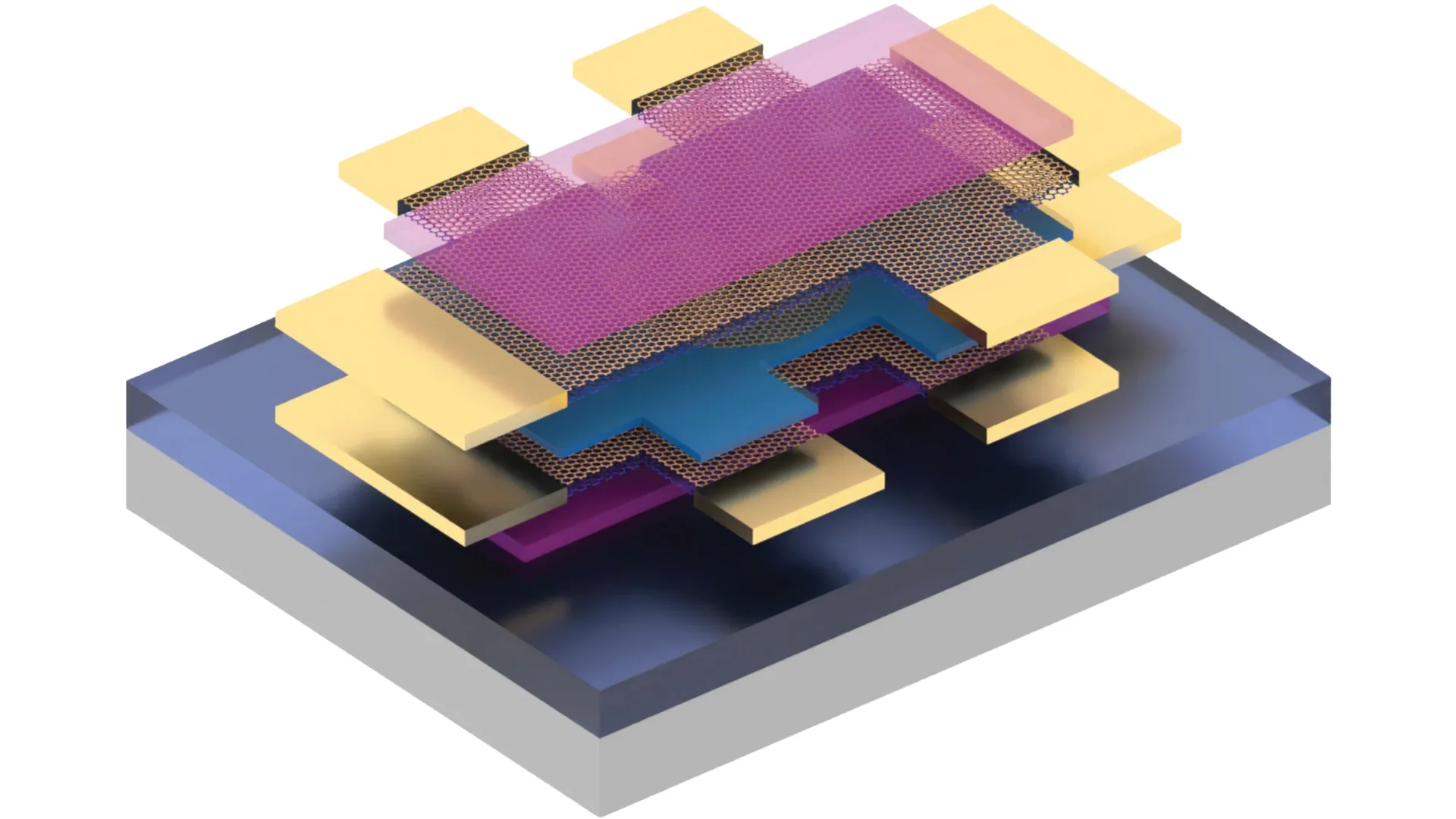
In a major step forward, MIT physicists have observed clear evidence of unconventional superconductivity in “magic-angle” twisted tri-layer graphene (MATTG). This unique material is created by stacking three atom-thin sheets of graphene at a very specific angle. That tiny twist dramatically alters the material’s properties, giving rise to strange and promising quantum effects.

While earlier studies hinted that MATTG might host unconventional superconductivity, the new findings, published in Science, offer the most direct confirmation to date.

A New Look at the Superconducting Gap

The MIT team successfully measured MATTG’s superconducting gap, which indicates how strong a material’s superconducting state is at different temperatures. They found that the gap in MATTG looked completely different from what is seen in conventional superconductors. This difference suggests that the way MATTG becomes superconducting relies on a distinct, unconventional mechanism.

“There are many different mechanisms that can lead to superconductivity in materials,” explains co-lead author Shuwen Sun, a graduate student in MIT’s Department of Physics. “The superconducting gap gives us a clue to what kind of mechanism can lead to things like room-temperature superconductors that will eventually benefit human society.”

The team made this discovery with a new experimental system that lets them directly observe how the superconducting gap forms in two-dimensional materials. They plan to use the technique to study MATTG and other 2D materials in more detail, hoping to identify new candidates for advanced technologies.

“Understanding one unconventional superconductor very well may trigger our understanding of the rest,” says Pablo Jarillo-Herrero, the Cecil and Ida Green Professor of Physics at MIT and senior author of the study. “This understanding may guide the design of superconductors that work at room temperature, for example, which is sort of the Holy Grail of the entire field.”

The Origins of Twistronics

Graphene is made of a single layer of carbon atoms arranged in a hexagonal pattern that looks like chicken wire. Scientists can peel off a sheet of graphene from graphite (the same material in pencil lead) to study its properties. In the 2010s, researchers predicted that stacking two layers of graphene at a very precise angle could create new electronic behaviors.

In 2018, Jarillo-Herrero’s group became the first to experimentally produce this so-called “magic-angle” graphene and reveal its extraordinary properties. That work launched a new field of research known as “twistronics,” which studies the surprising effects that emerge when ultra-thin materials are stacked and twisted at exact orientations. Since then, the team and others have explored a variety of graphene structures with multiple layers, revealing further signs of unconventional superconductivity.

How Electrons Cooperate

Superconductivity occurs when electrons form pairs rather than scattering apart as they move through a material. These paired electrons, known as “Cooper pairs,” can travel without resistance, creating a perfect flow of current.

“In conventional superconductors, the electrons in these pairs are very far away from each other, and weakly bound,” says co-lead author Jeong Min Park PhD ’24. “But in magic-angle graphene, we could already see signatures that these pairs are very tightly bound, almost like a molecule. There were hints that there is something very different about this material.”

Probing the Quantum World Through Tunneling

To prove that MATTG truly exhibits unconventional superconductivity, the MIT researchers needed to measure its superconducting gap directly. As Park explains, “When a material becomes superconducting, electrons move together as pairs rather than individually, and there’s an energy ‘gap’ that reflects how they’re bound. The shape and symmetry of that gap tells us the underlying nature of the superconductivity.”

To do this, scientists used a quantum-scale technique known as tunneling spectroscopy. At this level, electrons act both as particles and as waves, which allows them to “tunnel” through barriers that would normally stop them. By studying how easily electrons can tunnel through a material, researchers can learn how strongly they are bound inside it. However, tunneling results alone don’t always prove that a material is superconducting, making direct measurements both crucial and challenging.

A Closer Look at the Superconducting Gap

Park’s team developed a new platform that combines tunneling spectroscopy with electrical transport measurements, which involve tracking how current moves through the material while monitoring its resistance (zero resistance means it’s superconducting).

Using this method on MATTG, the researchers could clearly pinpoint the superconducting tunneling gap — it appeared only when the material reached zero resistance, the defining mark of superconductivity. As they changed the temperature and magnetic field, the gap displayed a sharp V-shaped curve, very different from the smooth, flat pattern typical of conventional superconductors.

This unusual V shape points to a new mechanism behind MATTG’s superconductivity. Although the exact process is still unknown, it’s now clear that this material behaves unlike any conventional superconductor discovered before.

A Different Kind of Electron Pairing

In most superconductors, electrons pair up due to vibrations in the surrounding atomic lattice, which gently push them together. Park believes MATTG operates differently.

“In this magic-angle graphene system, there are theories explaining that the pairing likely arises from strong electronic interactions rather than lattice vibrations,” she says. “That means electrons themselves help each other pair up, forming a superconducting state with special symmetry.”

The Path Ahead: Next-Generation Quantum Materials

The MIT team plans to apply their new experimental setup to study other twisted and layered materials.

“This allows us to both identify and study the underlying electronic structures of superconductivity and other quantum phases as they happen, within the same sample,” Park explains. “This direct view can reveal how electrons pair and compete with other states, paving the way to design and control new superconductors and quantum materials that could one day power more efficient technologies or quantum computers.”

This research received support from the U.S. Army Research Office, the U.S. Air Force Office of Scientific Research, the MIT/MTL Samsung Semiconductor Research Fund, the Sagol WIS-MIT Bridge Program, the National Science Foundation, the Gordon and Betty Moore Foundation, and the Ramon Areces Foundation.


Share Button

Yes, Science Says Exercising In Winter Really Is Harder

Who was summertime me? I don’t recognise that running, strength-training, “Japanese walking” powerhouse – winter me is an immobile hermit.

I know, I know, staying active in the colder months is great for your health.

But I just can’t bring myself to work out often now that the clocks have gone back. The motivation simply won’t kick in.

If that sounds like you, though, some reassuring (or depressing, depending on your mindset) news: you’re not alone. There is real science behind your cold-weather sluggishness.

No wonder we tend to spend more time staying still in the final season of the year.

Why is it so much harder to exercise in winter?

If you are a member of the many people affected by Seasonal Affective Disorder (SAD), your motivation to head to the gym may be shot.

A paper suggested that vitamin D may potentially increase athletic performance, though more research is needed. Many of us lack the vitamin, linked to bone, muscle, and tooth health, in the darker months, the NHS said.

Some research conducted on military service members suggested that “The combination of cold temperatures with other environmental stressors, including altitude, wind, and wet environments, exacerbates the overall metabolic strain on military service members.”

In other words, it just takes more out of you to work out when it’s chilly out.

Another paper found that people who stood outside in the cold before attempting cycling saw a decrease in performance of 30%.

Your muscles might not work as well in the cold, either (in fact, they can tense up so much in response to cool weather that it may increase your risk of injury).

Want to warm them up ahead of your training session? Fine – but that might take you more energy, too.

More great news: once you’ve completed a chilly session, your hormones may make you hungrier than you would have been if you’d exercised in warmer weather.

How can I motivate myself to work out in winter?

BBC Sports recommends reframing sport as “me time,” working out with others, wrapping up warm, changing your routine to an indoor one, and rewarding yourself when you do get active.

PureGym says that sticking to a routine and seeing exercise as a way to get sunlight – which can help you regulate your sleep, especially after the clock change – may help too.

Even committing to a quick burst of activity on your lunch break can be useful, experts told TODAY.

Share Button

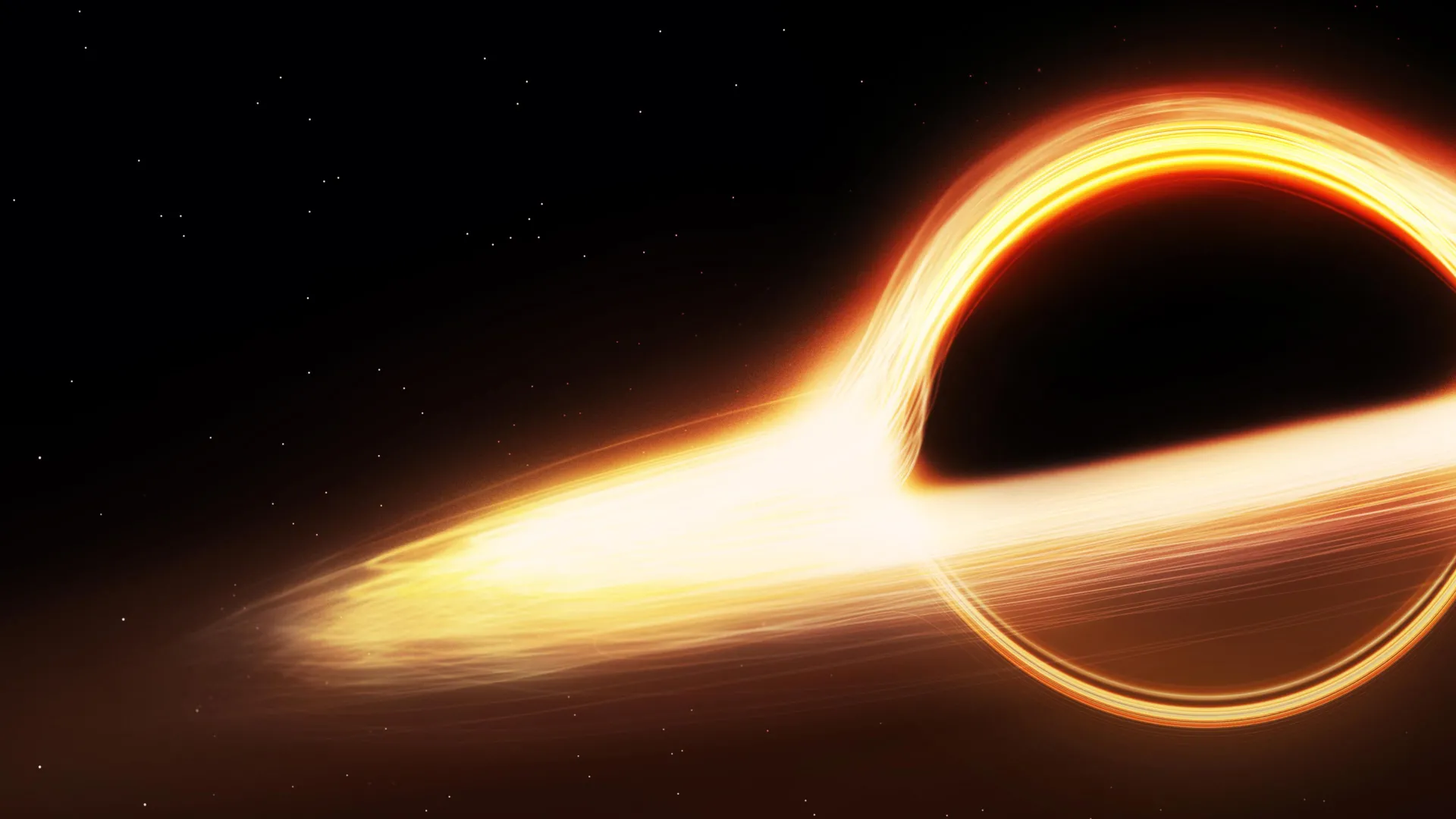
Einstein might have been wrong about black holes

Black holes are often described as cosmic gluttons, consuming everything that drifts too close — including light itself. This is what makes the images of the supermassive black holes at the centers of the galaxy M87 and our own Milky Way so remarkable. Captured by the Event Horizon Telescope (EHT) collaboration a few years ago, these observations marked a major milestone in astronomy.

“What you see on these images is not the black hole itself, but rather the hot matter in its immediate vicinity,” explains Prof. Luciano Rezzolla of Goethe University Frankfurt, whose team played a crucial role in the discovery. “As long as the matter is still rotating outside the event horizon — before being inevitably pulled in — it can emit final signals of light that we can, in principle, detect.”

Einstein’s Theory and the Mystery of Black Holes

These striking images reveal what scientists call the “shadow” of a black hole, offering a new way to probe the physics behind these mysterious cosmic giants. For over a century, Einstein’s general theory of relativity has been the foundation of our understanding of space and time. It predicts the existence of black holes and the event horizon, a boundary beyond which nothing — not even light — can escape.

“There are, however, also other, still hypothetical theories that likewise predict the existence of black holes,” Rezzolla notes. “Some of these approaches require the presence of matter with very specific properties or even the violation of the physical laws we currently know.”

Testing Einstein’s Ideas With Black Hole Shadows

In collaboration with colleagues from the Tsung-Dao Lee Institute in Shanghai (China), Rezzolla and his team proposed a new way to test these alternative theories. Their work, published in Nature Astronomy, outlines how future black hole observations could help confirm or challenge Einstein’s model of gravity. Until now, there has not been enough data to verify or reject competing ideas, but that may soon change through detailed analysis of black hole shadow images.

“This requires two things,” Rezzolla explains. “On the one hand, high-resolution shadow images of black holes to determine their radius as accurately as possible, and on the other hand, a theoretical description of how strongly the various approaches deviate from Einstein’s theory of relativity.”

Simulations Reveal How Theories Diverge

To tackle this, the team produced a thorough framework describing how different theoretical types of black holes would vary from Einstein’s predictions and how those differences would appear in images. They used advanced three-dimensional computer simulations to reproduce the motion of matter and magnetic fields in the warped spacetime surrounding black holes. From these simulations, they created synthetic images of the glowing plasma that circles these immense objects.

“The central question was: How significantly do images of black holes differ across various theories?” says lead author Akhil Uniyal of the Tsung-Dao Lee Institute. The researchers identified clear patterns that, with sharper images in the future, could help scientists determine which theory best matches reality. Although today’s EHT resolution cannot yet detect these fine distinctions, improvements in technology will gradually make such comparisons possible. To prepare for this, the physicists developed a universal description of black holes that can encompass many different theoretical frameworks.

Einstein’s Theory Still Holding Strong — for Now

“One of the EHT collaboration’s most important contributions to astrophysics is turning black holes into testable objects,” Rezzolla emphasizes. “Our expectation is that relativity theory will continue to prove itself, just as it has time and again up to now.” So far, the findings remain consistent with Einstein’s theory, although uncertainties in measurement mean that only a few exotic ideas have been ruled out. For example, the black holes in M87 and the Milky Way are almost certainly not “naked singularities” (without an event horizon) or wormholes. Still, Rezzolla notes, “Even the established theory must be continuously tested, especially with extreme objects like black holes.” If Einstein’s model were ever shown to fail, it would mark a revolutionary moment in physics.

A New Era of Cosmic Observation

The EHT provides an unprecedented opportunity for these investigations. By combining data from multiple large radio telescopes across the world, it effectively creates a telescope as large as Earth, capable of capturing fine details around black holes. Plans are already underway to add more observatories to the network and, eventually, to include a radio telescope in space, which would greatly boost its resolution.

Such advancements could make it possible to perform truly definitive tests of competing black hole theories. According to the new study, this would require achieving an angular resolution of less than one millionth of an arcsecond — roughly equivalent to spotting a coin on the surface of the Moon from Earth. While that level of precision is not yet possible, scientists expect it to be within reach in the coming years, potentially unlocking a new chapter in our understanding of gravity and the universe itself.

Share Button

Can’t Imagine Yourself Old And Happy? You May Have A ‘Sense Of Foreshortened Future’

I’m a little embarrassed to admit it, but I’ve always blanked when someone asked me about my five-year plan or inquired whether I wanted to get married or have kids.

My future feels like it has nothing to do with me, and I struggle to envision it – in general, though, the idea of hitting milestones never felt like it “fit” me.

I also felt vaguely as though I was going to die at 20, then 30 (I wonder if the goalposts will move again). It’s a phenomenon friends have described, too.

So, I felt enormous relief in discovering the term “a sense of foreshortened future”, which may be more common than you realise.

What is a “sense of foreshortened future”?

BACP member Alec Williams, a trauma-focused therapist based in London, said: “A ‘sense of foreshortened future’ isn’t simply just thinking that one’s life will be short”, though that can be a part of it.

“It often goes much deeper and can undermine a person’s entire worldview.

“Often,” he explained, “it happens due to an individual experiencing an extreme traumatic event… that shakes the very foundation of how they experience the world.”

Those with a “foreshortened sense of future” might lose all sense of trust in their environment, no longer believing that it can be a safe place where they are valued and cared for.

“Previous commitments, projects, interests or things they were looking forward to can begin to feel meaningless and become difficult to make sense of. The future of one’s life can often feel collapsed and insignificant,” the therapist added.

“In everyday life, this might mean not making long‐term plans, feeling separate or disconnected from the world or people, or believing that investing in the future is pointless.

“Over time, this can affect all aspects of someone’s life and heap a heavy strain on interpersonal relationships. How do you plan a future with someone who no longer trusts or believes in it?”

Why does “a sense of foreshortened future” happen?

Per Williams, trauma can leave you mentally stuck in your time (or times) of distress.

It “can disrupt continuity in time so that a person feels cut off from a
’before’ and an ‘after’”, he said.

“A catastrophic traumatic event, such as torture, can lead to a change in the
structure of time-based experience… they might not just have difficulty in
imagining the future, but experiencing time in a way where the future fails to
present itself as fully meaningful or available.”

This can sometimes make you feel “othered”.

Because people with a sense of foreshortened future may have a different understanding of both the past and the present (as well as what’s coming next), Williams says that “The future may still exist intellectually, but it lacks the availability and meaning that often allows for planning and hope.

“The world as they knew it has gone, and things that once held meaning are no longer relevant. The future is now either too unknown or too unsafe to engage with.”

It is not as simple as a fear of death, he added. “It’s a seismic shift in worldview that alters a person’s ability to move forward with their life and comprehend a future.

“This can lead to withdrawal. If the future life feels insignificant or meaningless,
the effort required to stay connected and invest in relationships, work, and
long‐term planning can feel futile.”

What can I do if I have a “sense of foreshortened future”?

Therapy can be a great step forward, says Williams. “We can help clients reconnect to what they care about, restore trust in the world, and rebuild time-based experience around past, present and future, helping them to put trauma back on the timeline.”

This way, he hopes, “once again, the future can belong to them, rather than being unreachable due to trauma”.

Per VeryWell Health, being mindful of your thoughts, seeking positive activities, connecting with others and reducing avoidance where possible, practising self-care, and choosing actions aligned with your values often may help too.

Help and support:

  • Mind, open Monday to Friday, 9am-6pm on 0300 123 3393.
  • Samaritans offers a listening service which is open 24 hours a day, on 116 123 (UK and ROI – this number is FREE to call and will not appear on your phone bill).
  • CALM (the Campaign Against Living Miserably) offer a helpline open 5pm-midnight, 365 days a year, on 0800 58 58 58, and a webchat service.
  • The Mix is a free support service for people under 25. Call 0808 808 4994 or email help@themix.org.uk
  • Rethink Mental Illness offers practical help through its advice line which can be reached on 0808 801 0525 (Monday to Friday 10am-4pm). More info can be found on rethink.org.
Share Button

Donald Trump’s Spokeswoman Brands BBC ‘100% Fake News’ Over Panorama Row

Donald Trump’s spokeswoman has branded the BBC “100% fake news” over claims the broadcaster doctored a speech made by the US president.

Panorama has been accused of misrepresenting comments Trump made outside the White House prior to the riots on January 6, 2020.

An internal memo said an edition of the BBC’s Panorama programme broadcast last October had spliced together two sections of President Trump’s speech to supporters to give a misleading impression of what he actually said.

In one section, Trump appears to say he was going to walk to the Capitol with them to “fight like hell”.

However, Trump actually said he would walk with them “to peacefully and patriotically make your voices heard”.

He called on his supporters to “fight like hell” later in the speech amid false claims that the 2020 election had been stolen from him.

A 19-page dossier on the incident, seen by the Daily Telegraph, was sent to the BBC board by Michael Prescott, a former external adviser to the corporation’s editorial guidelines and standards committee.

Trump’s son, Donald Trump Jr, has already branded the BBC “full of shit” over the controversy.

Speaking to the Telegraph, Trump’s spokeswoman Karoline Leavitt said: “This purposefully dishonest, selectively edited clip by the BBC is further evidence that they are total, 100 per cent fake news that should no longer be worth the time on the television screens of the great people of the United Kingdom.

“Every time I travel to the United Kingdom with President Trump and am forced to watch the BBC in our hotel rooms, it ruins my day listening to their blatant propaganda and lies about the president of the United States and all that he’s doing to make America better and the world a safer place.”

A BBC spokesman told the Telegraph: “While we don’t comment on leaked documents, when the BBC receives feedback it takes it seriously and considers it carefully.

“Michael Prescott is a former adviser to a board committee where differing views and opinions of our coverage are routinely discussed and debated.”

Leavitt has previously attacked the BBC over its coverage of the war in Gaza.

She accused the broadcaster of spreading “misinformation” over the way it covered claims that Israel had killed Palestinians near an aid distribution centre in June.

But in a video posted on X, BBC News analysis editor Ros Atkins said Leavitt’s diatribe “was repeatedly false”.

“This contains a mix of misrepresentation and untruths,” he added.

Share Button

Laser satellites expose a secret Antarctic carbon burst

A team of scientists has found that the Southern Ocean emits far more carbon dioxide (CO2) during the lightless Antarctic winter than researchers once believed. According to their new study, this wintertime release of CO2 has been underestimated by as much as 40%.

The research was led by scientists from the Second Institute of Oceanography, Ministry of Natural Resources (SIO-MNR), and the Nanjing Institute of Geography and Limnology (NIGLAS) of the Chinese Academy of Sciences. Their results were published in Science Advances on Nov. 5.

The Ocean’s Role in Earth’s Carbon Balance

The Southern Ocean is a major regulator of the global carbon cycle, absorbing a large share of the carbon released by human activity. Yet despite its importance, it remains the “largest source of uncertainty” in global CO2 flux calculations.

That uncertainty comes from a lack of winter observations. For months each year, the Southern Ocean lies in complete darkness and is lashed by extreme weather, making direct measurement nearly impossible. During this time, the region becomes an “observational black box.” Traditional satellites, which depend on reflected sunlight (passive sensors) to detect ocean properties, cannot collect data under these conditions, leaving scientists reliant on incomplete or estimated models.

Using Lasers to See in the Dark

To overcome this limitation, the researchers used an advanced approach that combined 14 years of data from a laser-based satellite instrument called LIDAR (on the CALIPSO mission) with machine learning analysis.

LIDAR, unlike passive sensors, sends out its own light signals, working similarly to radar but with lasers instead of radio waves. This technology allowed the team to observe the ocean even during the polar night and create the first continuous, observation-based record of winter CO2 exchange in the Southern Ocean.

The results revealed that earlier estimates had missed nearly 40% of the Southern Ocean’s wintertime CO2 output. “Our findings suggest that the Southern Ocean’s role in the global carbon cycle is more complex and dynamic than previously known,” said Prof. Kun Shi of NIGLAS.

Rethinking the Ocean’s Carbon Dynamics

Beyond updating the numbers, the study redefines how scientists understand carbon movement in the Southern Ocean. The team introduced a new “three-loop framework” to explain how CO2 exchange varies across different regions.

In the Antarctic Loop (south of 60°S), physical factors such as sea ice and salinity are the main drivers of CO2 exchange. In the Polar Front Loop (45°S-60°S), the interaction between atmospheric CO2 and biological activity (chlorophyll) becomes more influential. Meanwhile, in the Subpolar Loop (north of 45°S), sea surface temperature plays the dominant role.

Global Climate Implications

Filling this long-standing data gap could lead to more accurate global carbon budgets, which form the foundation of climate projections used by organizations such as the Intergovernmental Panel on Climate Change (IPCC).

This research highlights the power of combining active satellite sensing with machine learning to study the planet’s most remote and dynamic regions, opening new possibilities for understanding the Earth’s climate system year-round.

Share Button

You can now book online to see your GP. But is it any easier to get an appointment?

A month since GPs in England started offering online appointment bookings, patients recount their experiences.

Share Button

DNA pioneer James Watson dies at 97

The Nobel Prize winner felt ostracised by the scientific community over his comments on race and intelligence.

Share Button

Sourdough Bread May Have Health Benefits, But Some Doctors Recommend Reading The Label Carefully

We don’t know for sure whether sourdough bread definitely has health benefits.

But dietitians like Lizzy Traxler, MS, RDN, also a diabetes educator at University Hospitals, say: “Over time, and in combination with other healthy lifestyle choices and a balanced diet, choosing sourdough over regular bread may provide numerous health benefits.”

These, she told University Hospitals, may include improved digestion. “The improved mineral absorption from the fermentation process supports cardiovascular function,” they add (this might be especially true of sourdough rye bread).

And the British Heart Foundation says sourdough bread may make your blood rise more slowly, too.

So why did Dr Karan Rajan, an NHS surgeon and author, advise we “check the ingredients list” on sourdough loaves before buying?

“Sourfauxs” use different fermentation methods

Quality wholegrain, sourdough, and high-fibre breads may contribute to the “replacement of hyper-palatable baked goods, which are high in sugar, fat, and salt,” which can be beneficial to our health, a 2023 paper reads.

But, they add, one of the reasons sourdough research is so tricky is because “there is no established and internationally recognised legal definition of sourdough bread”. In fact, they found, the artisanal products usually included in trials may differ from the sorts found on most shelves.

“Analysis of bread samples purchased in the market showed that most of these had pH levels of >5.0, substantially above desired levels of pH 4.5 to obtain desired changes in composition,” they wrote.

This paper did not say that this difference definitely meant one was better than the other, or that the higher pH versions were sourfauxs ― though traditional sourdoughs tend to have a lower pH, which is linked to their sour taste.

But if you would like to eat sourdough made from traditional starter, Dr Rajan advises you look at the labels of sourdough breads in search of “added yeast”.

“Authentic sourdough doesn’t mention any added yeast,” he explained, “because it uses a natural fermentation process.”

He added, “Imitation sourdough, or ‘sourfauxs,’ often contain commercial yeast like baker’s yeast and even chemical raising agents like baking powder in addition to, or instead of, live sourdough starter culture.”

To be clear, the doctor didn’t say there’s anything wrong with eating non-sourdough bread.

It’s just that he felt it was important consumers know what they’re really buying (especially considering sourdough bread could be easier for people who usually struggle to digest food to eat).

The Real Bread Campaign has called for more research into the topic. For now, though, the group, which is against “sourfaux” breads, list some studies which suggest the real thing might have some health benefits.

Why might supermarkets create “sourfaux” breads?

“Sourdough” is not a legally-protected term, Swie Joo, head baker at The Palmerston restaurant in Edinburgh, told The Independent (like Dr Rajan, by the way, the chef advised customers to check for the word “yeast” on packages if you want a traditional sourdough loaf).

That means you can add commercial, or non-fermented, yeast to “sourdough” breads.

This can make the rise of bread more predictable and easier to replicate. It can be cheaper and less time-consuming, too.

The combination could make mass production a lot easier.

The Real Bread Campaign write that their campaign “is to better protect us from the risk of being misled by cynical marketing and to allow us all to make better-informed choices about the food we eat”.

Share Button

Lose weight or lose your jobs, offshore workers told

Thousands of offshore workers are too heavy for the limitations of helicopter winch systems.

Share Button