Engage 16: Open Up the High End

Lesson 16 of the free Engage course explores how to shift your reality from needing, striving, and wanting to already being inside the life you truly wish to embody.

You’ll find the rest of the Engage course videos in the Video section.

Join the Engage Email List

Join the Engage notification list to get an email whenever a new Engage lesson is published. I also encourage you to subscribe to my YouTube channel to follow the course there.

Enjoy!

Share Button

Exclusive: Green Party Frontrunner Zack Polanski On Trying To Make It From Outside ‘Dull’ Westminster

Zack Polanski has become something of an internet phenomenon of late.

Despite being the deputy Green leader since 2022 and a member of the London Assembly since 2021, he was definitely not among the most well-known politicians, even within his own party.

But something changed in May when, after years of membership, he announced he was running to lead the Greens on a socialist ticket, as an “eco-populist”.

Although the party has not officially declared how many members it has, leaked figures suggest the membership grew by 8,000 in the weeks after his declaration – taking them to at least 65,000.

Rumours of potential defections from disillusioned Labour MPs have even been swirling, although any concrete details have been kept under wraps.

He told HuffPost UK he’s slowly drawing in voters from across the political spectrum – including Tories – and winning back old supporters, including those who helped establish the precursor to the Greens, the Ecology Party.

Green sources also say Polanski was already very popular within the party when he decided to throw his hat into the ring earlier this year, and he had reportedly been encouraged to put himself forward for leadership for some time.

He’s since gone viral with his proposals to introduce bold leadership and break through the malaise around Westminster politics.

But his campaign hit a small snag this week.

Hours before we spoke, former Labour leader Jeremy Corbyn and ex-Labour MP Zarah Sultana announced they were launching a new party on the left and invited everyone to join, for free.

By Friday, the group claimed to have nearly 230,000 sign-ups – eclipsing the so-called “Polanski surge” within the Greens. But Polanski did not seem too concerned.

“I’ve read their statement and I can’t see a single thing in there that’s not Green Party policy or doesn’t align already with the Green Party,” he said.

He then suggested those two MPs should just join the party with those values that already exists – the Greens.

Green Party co-leaders Adrian Ramsay and Carla Denyer pose with supporters at their General Election Manifesto launch - Real Hope, Real Change, at Sussex County Cricket Ground in Hove, June 12, 2024.
Green Party co-leaders Adrian Ramsay and Carla Denyer pose with supporters at their General Election Manifesto launch – Real Hope, Real Change, at Sussex County Cricket Ground in Hove, June 12, 2024.

via Associated Press

He also warned that one downside of running a party very democratically – members get to choose the name of Corbyn’s new group – is that it ends up operating rather slowly and so may take a while to get off the ground.

That criticism of acting in a rather glacial pace is often pitched at the Greens, from insiders and outsiders alike.

Corbyn’s party would have one advantage over the Greens if Polanski wins the leadership contest: its leader would be an MP in the Commons.

Polanski does not see that as a major sticking point in this leadership race though, even as his opponents, running on a joint ticket, both have seats.

He said Westminster is “dull” and it’s actually a “huge positive” to be able to tour the country to spread their message without being tethered to a constituency.

“I find it intensely frustrating that this Labour government get described as the sensibles or the adults in the room”

Although, of course, the politician said he would love to be an MP and will be standing at the next general election – but he still insisted: “Westminster is an important place for scrutiny, for accountability and for democracy. It’s a very dull place, not a place for storytelling.”

“I think we need at the top of the party a communicator who can speak to the country, who can excite, and inspire people,” he said. “And I think parliament at this core, is not an exciting, inspiring place, and that is no criticism of our MPs or indeed any MPs.”

What about Nigel Farage, the leader of Reform UK, whose party has gone from strength to strength and now dominates the polls after they got five MPs elected last year?

Polanski said he thinks Farage was having more of an impact before he became an MP.

“It’s very much more difficult for him now to criticise the establishment when it’s very clear that he’s at the heart of that establishment,” Polanski said.

When it’s pointed out that Farage has an avenue to hold Starmer to account now he’s in the Commons, he said: “I don’t think I’ve seen any clip of Farage holding Starmer to account.”

He also claimed Farage is a millionaire who is “pretending to serve working class communities but actually serving billionaires”.

“I think Reform have got real problems ahead of them in terms of where their donations come from and the people who are supporting them, who have not been exposed yet to the transparency of that,” he said.

Despite his words of criticism for the Clacton MP, it’s hard to deny that the two are indirectly tethered as both are seen as populists – although Polanski calls himself an “eco-populist”.

And, according to the London Assembly member, Farage’s anti-immigration stance and support for nationalisation does not reflect populism.

“I don’t believe Farage is a populist. I don’t think we should cede these words to the right,” he said. “Populism, for me, is about the 99% versus the 1%. Farage is protecting that 1%.”

Starmer, of course, is his main political target though.

“I think the number one goal is to make the Labour Party more scared of losing vote seats to a Green Party than to Reform,” he said.

Pointing to their welfare cuts, Polanski said: “I find it intensely frustrating that this Labour government get described as the sensibles or the adults in the room when the consequences of their decisions are literally killing people and despite the fact that all the evidence is pointing to what they are doing is creating more inequality in society.”

Of course, this is a criticism levelled at Starmer across the board – that Labour is just not making the right decisions at the right time, particularly over Gaza.

But the Greens are not fully aligned, either.

Insiders fear the party is not doing enough to seize the pro-Palestine vote, which could go to Corbyn’s group instead, while old tropes that the Greens are “too white” continue.

However, Polanski said: “People of colour are voting for us, as polling showed last week.”

He said the Asian vote has increased by around 17% for the Green Party, pointing to FocalData stats.

He added: “So I think the kind of old tropes about the Green Party just aren’t true anymore.”

HuffPost UK was unable to find that particular data.

Polanski has also been at the centre of some negative coverage online, sparking speculation that not everything is as rosy within the Greens as previously indicated.

The Greens’ current co-leader MP Adrian Ramsay, who is running against Polanski with Green MP Ellie Chowns, was asked if he liked his opponent during a joint debate on LBC after all of their agitated televised exchanges.

Ramsay refused to say initially, even as Polanski insisted he likes Ramsay.

Polanski told HuffPost UK that he was “upset” at Ramsay’s response.

He said: “I was… upset last night when he refused to say that he liked me. He did eventually get there.

“I also shrug my shoulders and say, that doesn’t matter. We work perfectly well together. These are professional relationships, and I like him.”

But he notably added: “But, you know, I’m a human being. And if someone doesn’t like you, then, yeah… that was… it was bizarre.”

Ramsay – and Chowns – are promising to be “insurgents” in politics, too, just in a different way to Polanski.

Chowns previously told HuffPost UK that Farage relies on “complete distraction politics”, adding: “I really don’t think that we win Green power by aping Donald Trump or Farage in any way.”

While the Greens may have just four MPs in parliament right now, there’s no denying that public appetite for something a little different is growing.

But which direction will the Greens end up moving towards: headline-grabbing populist tactics, or sticking to slow-and steady establishment strategies?

Only the members can decide – but it’s clear results it could create a ripple across Westminster.

Share Button

NHS faces challenging few days during doctors strike, warns Streeting

Hospitals in England battle to keep both emergency and non-urgent work going in five-day walkout.

Share Button

This Handwriting Change May Be An Early Sign Of Parkinson’s

Parkinson’s disease, the condition Ozzy Osborne was diagnosed with roughly five years before his death, affects about 153,000 people in the UK at the moment.

It is a progressive neurological disease. While there is no single, outright cure for it yet, the NHS says therapies like medication and physiotherapy can minimise its symptoms for many.

But sadly, the condition is often misdiagnosed, even though early diagnosis can be very beneficial.

That’s why organisations like Parkinson’s UK champion better, earlier diagnoses, and hope one day for a single test that can accurately spot the disease as soon as possible.

In the meantime, however, they’ve shared early signs of the condition; one of which involves changes to your handwriting.

How is handwriting linked to Parkinson’s?

Parkinson’s UK says that noticing smaller handwriting over time is one potential early sign.

This is called micrographia, and could affect as many as 50-60% of people living with Parkinson’s, though the numbers are not settled.

“You may notice the way you write words on a page has changed, such as letter sizes are smaller and the words are crowded together,” the charity shared.

A 2022 paper suggested that the handwriting change may precede other motor symptoms of Parkinson’s, like tremors.

Parkinson’s is not the only cause of handwriting changes – it’s been linked to other neurological changes, while Parkinson’s UK says “writing can change as you get older, if you have stiff hands or fingers or poor vision” – but it may be worth seeing your doctor about it, especially if it comes with other symptoms.

What are the other early symptoms of Parkinson’s?

According to Parkinson’s UK, having a single early symptom doesn’t mean you’ve got the disorder.

But “if you have more than one sign, you should consider making an appointment to talk to your doctor,” they wrote.

Aside from micographia, the other possible symptoms they listed were:

  • Tremors. Shaking in your finger, thumb, hand, or chin while at rest is a common early symptom.
  • Loss of smell, especially for strongly-scented foods like bananas, liquorice, and gherkins.
  • Moving a lot in your sleep, especially if you start acting out your dreams or thrashing around a lot.
  • Trouble with movement or walking. You might find your arms don’t swing as much as they used to when you walk, that your limbs or stiff, that your shoulders of hips feel tight, or that your feet feel “stuck to the floor.”
  • Constipation. This can be normal, but it can persist with Parkinson’s.
  • Developing a soft, low voice that others might describe as hoarse or breathy and which might sound quieter than usual.
  • ’Facial masking,′ or a sad or angry expression on your face that happens regardless of your mood.
  • Dizziness or fainting, for instance, when getting up out of a chair – this can be linked to low blood pressure, which is associated with Parkinson’s.
  • Stooping or hunching over, especially if this is new for you.
Share Button

Khloé Kardashian Opens Up About Tristan Thompson’s Comment On Their Daughter’s Clothes

From infidelity to paternity scandals, it’s no secret that Khloé Kardashian and her ex Tristan Thompson have gone through public struggles during their former on-and-off relationship.

But despite all of the drama, the reality star has maintained that co–parenting with Thompson, the father of her children True and Tatum, has been relatively “seamless”.

Kardashian has been open about co-parenting with Thompson in the past. But in a new episode of her podcast Khloé in Wonder Land, the star got candid about how being a “co-parenter” can be hard emotionally at times and admitted that she can get “defensive” as a mum when she and Thompson have opposing opinions.

Kardashian then recalled an instance where the NBA star once questioned her over the length of seven-year-old True’s shorts.

“Tristan’s not wrong, but he’s like, ‘Don’t you think those shorts are too short on her?’” she explained during Wednesday’s episode. “You wanna almost be like, ‘Yeah, she’s my kid!’ But it’s our kid. You just want to have that ownership.”

Kardashian continued: “I’m like, ’Yes, they’re short, but we’re just hanging out at the house pool – because I will send pictures to him or whatever.”

In moments like those, Kardashian said she gives herself and the Canadian basketball player grace.

“You still wanna let your co-parenter be the parent as much as they want to. And you also have to give them grace [and] yourself grace,” she shared.

Tristan Thompson and Khloe Kardashian first began dating in 2016.

Jerritt Clark via Getty Images

Tristan Thompson and Khloe Kardashian first began dating in 2016.

Kardashian added: “Sometimes, you have to take a breath and be like, ‘It’s OK. He’s doing what’s right. Yes, the shorts are short, but we’re at home lounging, so let me explain the context of these photos.’”

Wrapping up her comments, Kardashian noted that her exchanges with Thompson can cause an “emotional battle” within herself.

“That is an emotional battle I have [with] myself. I can’t be like, ‘This is my kid.’ I have to allow for Tristan to be the dad, too,” she said.

Despite their occasional difference in parenting styles, the mum of two said elsewhere in the episode that there’s ultimately “no drama” when it comes to co-parenting with Thompson.

“Him and I are seamless co-parents. I’m really grateful for that,” she said. “Tristan trusts me as a mom, so I don’t get a lot of pushback … he just knows that I’m not going to do anything to harm the kids.”

Watch Kardashian’s Khloe in Wonder Land podcast below.

Share Button

Harvard’s ultra-thin chip could revolutionize quantum computing

  • New research shows that metasurfaces could be used as strong linear quantum optical networks
  • This approach could eliminate the need for waveguides and other conventional optical components
  • Graph theory is helpful for designing the functionalities of quantum optical networks into a single metasurface

In the race toward practical quantum computers and networks, photons — fundamental particles of light — hold intriguing possibilities as fast carriers of information at room temperature. Photons are typically controlled and coaxed into quantum states via waveguides on extended microchips, or through bulky devices built from lenses, mirrors, and beam splitters. The photons become entangled – enabling them to encode and process quantum information in parallel – through complex networks of these optical components. But such systems are notoriously difficult to scale up due to the large numbers and imperfections of parts required to do any meaningful computation or networking.

Could all those optical components could be collapsed into a single, flat, ultra-thin array of subwavelength elements that control light in the exact same way, but with far fewer fabricated parts?

Optics researchers in the Harvard John A. Paulson School of Engineering and Applied Sciences (SEAS) did just that. The research team led by Federico Capasso, the Robert L. Wallace Professor of Applied Physics and Vinton Hayes Senior Research Fellow in Electrical Engineering, created specially designed metasurfaces — flat devices etched with nanoscale light-manipulating patterns — to act as ultra-thin upgrades for quantum-optical chips and setups.

The research was published in Science and funded by the Air Force Office of Scientific Research (AFOSR).

Capasso and his team showed that a metasurface can create complex, entangled states of photons to carry out quantum operations – like those done with larger optical devices with many different components.

“We’re introducing a major technological advantage when it comes to solving the scalability problem,” said graduate student and first author Kerolos M.A. Yousef. “Now we can miniaturize an entire optical setup into a single metasurface that is very stable and robust.”

Metasurfaces: Robust and scalable quantum photonics processors

Their results hint at the possibility of paradigm-shifting optical quantum devices based not on conventional, difficult-to-scale components like waveguides and beam splitters, or even extended optical microchips, but instead on error-resistant metasurfaces that offer a host of advantages: designs that don’t require intricate alignments, robustness to perturbations, cost-effectiveness, simplicity of fabrication, and low optical loss. Broadly speaking, the work embodies metasurface-based quantum optics which, beyond carving a path toward room-temperature quantum computers and networks, could also benefit quantum sensing or offer “lab-on-a-chip” capabilities for fundamental science

Designing a single metasurface that can finely control properties like brightness, phase, and polarization presented unique challenges because of the mathematical complexity that arises once the number of photons and therefore the number of qubits begins to increase. Every additional photon introduces many new interference pathways, which in a conventional setup would require a rapidly growing number of beam splitters and output ports.

Graph theory for metasurface design

To bring order to the complexity, the researchers leaned on a branch of mathematics called graph theory, which uses points and lines to represent connections and relationships. By representing entangled photon states as many connected lines and points, they were able to visually determine how photons interfere with each other, and to predict their effects in experiments. Graph theory is also used in certain types of quantum computing and quantum error correction but is not typically considered in the context of metasurfaces, including their design and operation.

The resulting paper was a collaboration with the lab of Marko Loncar, whose team specializes in quantum optics and integrated photonics and provided needed expertise and equipment.

“I’m excited about this approach, because it could efficiently scale optical quantum computers and networks — which has long been their biggest challenge compared to other platforms like superconductors or atoms,” said research scientist Neal Sinclair. “It also offers fresh insight into the understanding, design, and application of metasurfaces, especially for generating and controlling quantum light. With the graph approach, in a way, metasurface design and the optical quantum state become two sides of the same coin.”

The research received support from federal sources including the AFOSR under award No. FA9550-21-1-0312. The work was performed at the Harvard University Center for Nanoscale Systems

Share Button

Scientists modeled nuclear winter—the global food collapse was worse than expected

A nuclear winter is a theoretical concept, but if the climate scenario expected to follow a large-scale nuclear war, in which smoke and soot from firestorms block sunlight, came to fruition, global temperatures would sharply drop, extinguishing most agriculture. A nuclear winter could last for more than a decade, potentially leading to widespread famine for those who survive the devastation of the bomb blasts. Now, a team led by researchers at Penn State have modeled precisely how various nuclear winter scenarios could impact global production of corn — the most widely planted grain crop in the world. They also recommended preparing “agricultural resilience kits” with seeds for faster-growing varieties better adapted to colder temperatures that could potentially help offset the impact of nuclear winter, as well as natural disasters like volcanic eruptions.

In findings recently published in Environmental Research Letters, the team reported that the level of corn crop decline would vary, depending on the scale of the conflict. A regional nuclear war, which would send about 5.5 tons of soot into the atmosphere, could reduce world-wide annual corn production by 7%. A large-scale global war, injecting 165 tons of soot into the atmosphere, could lead to an 80% drop in annual corn yields. In all, the study simulated six nuclear war scenarios with varying soot injections.

Because of the crop’s global significance, the researchers chose to model corn’s collapse in a nuclear winter to represent the expected fate of agriculture overall, according to study first author Yuning Shi, associate research professor in Penn State’s Department of Plant Science. He noted that an 80% drop in global crop production would have catastrophic consequences, leading to a widespread global food crisis. Even a 7% drop in global crop production would have a severe impact on the global food system and economy, likely resulting in increased food insecurity and hunger.

The simulations were possible thanks to the Cycles agroecosystem model, created a few years ago by scientists in Penn State’s College of Agricultural Sciences, including lead developer Armen Kemanian, professor of production systems and modeling and corresponding author on this study. Using high-performance computing and considering atmospheric conditions, Cycles enables large-scale, high-resolution, multi-year simulations of crop growth by meticulously tracking the carbon and nitrogen cycles within the soil-plant-atmosphere system.

“We simulated corn production in 38,572 locations under the six nuclear war scenarios of increasing severity — with soot injections ranging from 5 to 165 tons,” Shi said. “This investigation advances our understanding of global agricultural resilience and adaptation in response to catastrophic climatic disruptions.”

In addition to considering the effects of massive amounts of soot in the atmosphere, the researchers modeled the increase in UV-B radiation — a type of ultraviolet radiation that can lead to DNA damage, oxidative stress and reduced photosynthesis in plants — that would reach Earth’s surface in a nuclear winter that could further limit agriculture.

Shi said he believes that this was the first study to estimate the extent of UV-B radiation damage to agriculture after nuclear explosions, which the researchers predicted would peak six to eight years after a global war. They estimated this could further cut corn production by an additional 7%, for a total worst-case scenario of an 87% drop in corn production.

Ozone high in Earth’s atmosphere effectively absorbs the bulk of UV radiation the planet receives from the sun, but nuclear war would dismantle this ability, Shi explained.

“The blast and fireball of atomic explosions produce nitrogen oxides in the stratosphere,” he said. “The presence of both nitrogen oxides and heating from absorptive soot could rapidly destroy ozone, increasing UV-B radiation levels at the Earth’s surface. This would damage plant tissue and further limit global food production.”

While the predictions point to potentially catastrophic drops in the production of corn varieties currently grown, Shi said, switching to crop varieties that can grow under cooler conditions in shorter growing seasons could boost global crop production by 10% compared to no adaptation. However, seed availability for these crops could become a serious problem — a “bottleneck to adaptation,” the researchers said.

Their proposed solution is to prepare “agricultural resilience kits” ahead of any nuclear disaster, containing region- and climate-specific seeds for crop varieties that can grow under cooler conditions with shorter growing seasons to survive lower temperatures.

“These kits would help sustain food production during the unstable years following a nuclear war, while supply chains and infrastructure recover,” Kemanian said. “The agricultural resilience kits concept can be expanded to other disasters — when catastrophes of these magnitude strike, resilience is of the essence.”

Shi noted that while proactive, internationally coordinated planning for such kits is unlikely, simply increasing awareness could help lead to better preparedness. “If we want to survive, we must be prepared, even for unthinkable consequences,” he said.

Kemanian said he sees value in the research beyond human-caused calamity.

“Recall that catastrophes of this nature can happen not just because of nuclear war, but due to, for example, violent volcanic eruptions,” he said. “One may think that studies of this nature are just navel gazing, but they force us to realize the fragility of the biosphere — the totality of all living things and how they interact with one another and the environment.”

Contributing to the research at Penn State were Felipe Montes, associate research professor of cropping systems modeling; Francesco Di Gioia, associate professor of vegetable crop science; and Charles Anderson, professor of biology and principal investigator of the project funding this work; as well as Charles Bardeen, with the Atmospheric Chemistry Observations and Modeling Laboratory, National Center for Atmospheric Research, Boulder, Colorado; and Yolanda Gil, Deborah Khider and Varun Ratnakar, all with the Information Sciences Institute, University of Southern California.

This research was supported by Open Philanthropy, the Defense Advanced Research Projects Agency, the U.S. Department of Agriculture National Institute of Food and Agriculture, the U.S. National Science Foundation and the Future of Life Institute.

Share Button

This plastic disappears in the deep sea—and microbes make it happen

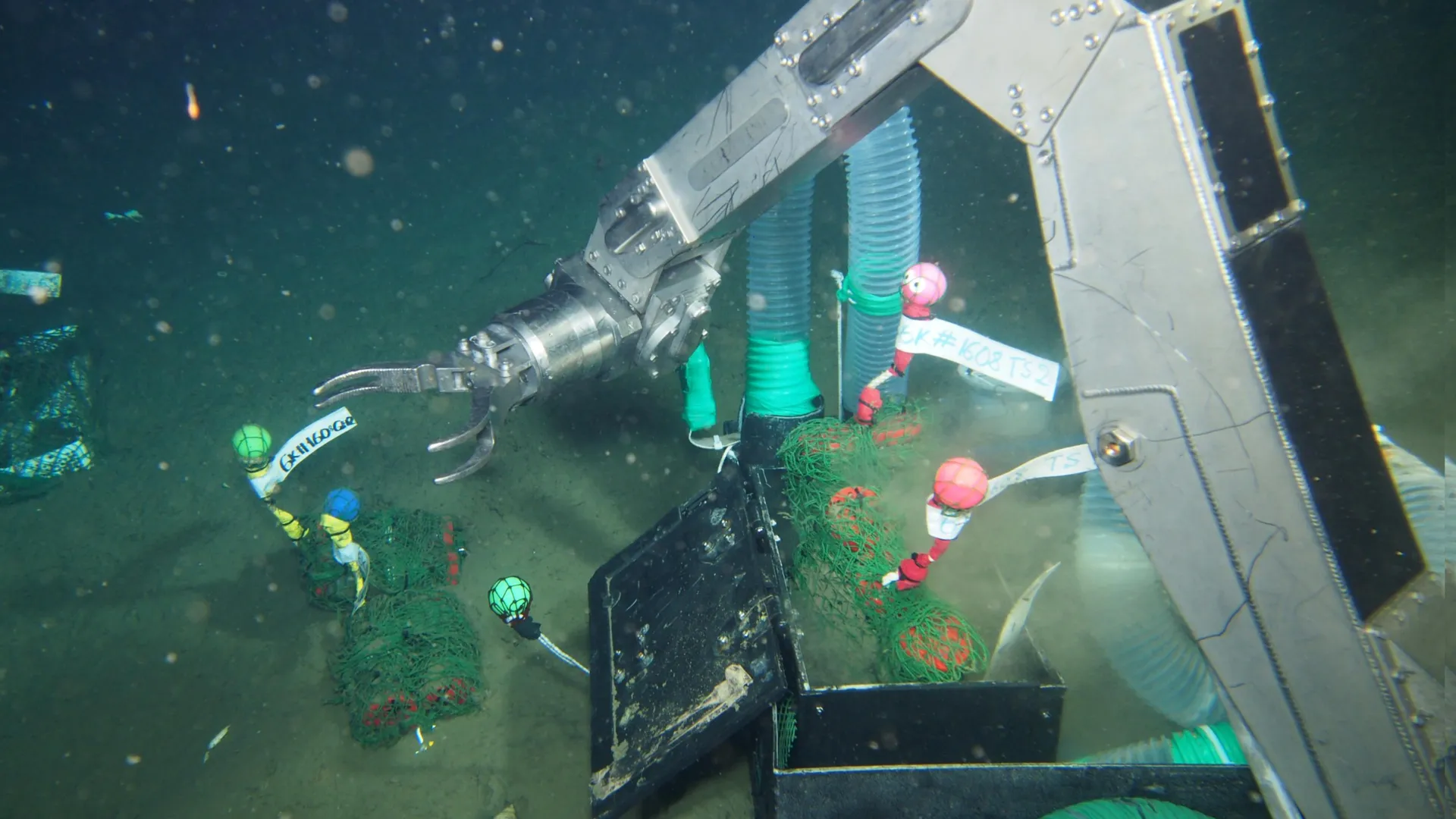
Researchers have demonstrated a new eco-friendly plastic that decomposes in deep ocean conditions. In a deep-sea experiment, the microbially synthesized poly(d-lactate-co-3-hydroxybutyrate) (LAHB) biodegraded, while conventional plastics such as a representative bio-based polylactide (PLA) persisted. Submerged 855 meters (~2,800 feet) underwater, LAHB films lost over 80% of their mass after 13 months as microbial biofilms actively broke down the material. This real-world test establishes LAHB as a safer biodegradable plastic, supporting global efforts to reduce marine plastic waste.

Despite the growing popularity of bio-based plastics, plastic pollution remains one of the world’s most pressing environmental issues. According to the OECD’s Global Plastics Outlook (2022), about 353 million metric tons of plastic waste were produced globally in 2019, with nearly 1.7 million metric tons flowing directly into aquatic ecosystems. Much of this waste becomes trapped in large rotating ocean currents, known as gyres, forming the infamous “garbage patches” found in the Pacific, Atlantic, and Indian Oceans.

To tackle this, researchers have been searching for plastics that can be degraded more reliably in deep-sea environments. One promising candidate is poly(d-lactate-co-3-hydroxybutyrate) or LAHB, a lactate-based polyester biosynthesized using engineered Escherichia coli. So far, LAHB has shown strong potential as a biodegradable polymer that breaks down in river water and shallow seawater.

Now, in a study made available online on July 1, 2025, and published in Volume 240 of the journal Polymer Degradation and Stability on October 1, 2025, researchers from Japan have shown for the first time that LAHB can also get biodegraded under deep-sea conditions, where low temperatures, high pressure, and too limited nutrients make breakdown of plastic extremely difficult. The study was led by Professor Seiichi Taguchi at the Institute for Aqua Regeneration, Shinshu University, Japan, together with Dr. Shun’ichi Ishii from the Japan Agency for Marine-Earth Science and Technology (JAMSTEC), Japan and Professor Ken-ichi Kasuya from Gunma University Center for Food Science and Wellness, Japan.

“Our study demonstrates for the first time that LAHB, a microbial lactate-based polyester, undergoes active biodegradation and complete mineralization even on the deep-sea floor, where conventional PLA remains completely non-degradable,” explains Prof. Taguchi.

The research team submerged two types of LAHB films — one containing about 6% lactic acid (P6LAHB) and another with 13% lactic acid (P13LAHB) — alongside a conventional PLA film for comparison. The samples were submerged at a depth of 855 meters near Hatsushima Island, where deep-sea conditions, cold temperatures (3.6 °C), high salinity, and low dissolved oxygen levels make it hard for microbes to degrade plastic.

After 7 and 13 months of immersion, the LAHB films revealed clear signs of biodegradation under deep-sea conditions. The P13LAHB film lost 30.9% of its weight after 7 months and over 82% after 13 months. The P6LAHB film showed similar trends. By contrast, the PLA film showed no measurable weight loss or visible degradation during the same period, underscoring its resistance to microbial degradation. The surfaces of the LAHB films had developed cracks and were covered by biofilms made up of oval- and rod-shaped microbes, indicating that deep-sea microorganisms were colonizing and decomposing the LAHB plastic. The PLA film, however, remained completely free of biofilm.

To understand how the plastic decomposes, the researchers analyzed the plastisphere, the microbial community that formed on the plastic’s surface. They found that different microbial groups played distinct roles. Dominant Gammaproteobacterial genera, including Colwellia, Pseudoteredinibacter, Agarilytica, and UBA7957, produced specialized enzymes known as extracellular poly[3-hydroxybutyrate (3HB)] depolymerases. These enzymes break down long polymer chains into smaller fragments like dimers and trimers. Certain species, such as UBA7959, also produce oligomer hydrolases (like PhaZ2) that further cleave these fragments, splitting 3HB-3HB or 3HB-LA dimers into their monomers.

Once the polymers are broken down into these simpler building blocks, other microbes, including various Alpha-proteobacteria and Desulfobacterota, continue the process by consuming the monomers like 3HB and lactate. Working together, these microbial communities ultimately convert the plastic into carbon dioxide, water, and other harmless compounds that ideally return to the marine ecosystem.

The findings of this study fill a critical gap in our understanding of how bio-based plastics degrade in remote marine environments. Its proven biodegradability makes it a promising option for creating safer, more biodegradable materials.

“This research addresses one of the most critical limitations of current bioplastics — their lack of biodegradability in marine environments. By showing that LAHB can decompose and mineralize even in deep-sea conditions, the study provides a pathway for safer alternatives to conventional plastics and supports the transition to a circular bioeconomy,” says Prof. Taguchi.

Share Button

AI turns immune cells into precision cancer killers—in just weeks

Precision cancer treatment on a larger scale is moving closer after researchers have developed an AI platform that can tailor protein components and arm the patient’s immune cells to fight cancer. The new method, published in the scientific journal Science, demonstrates for the first time, that it is possible to design proteins in the computer for redirecting immune cells to target cancer cells through pMHC molecules.

This dramatically shortens the process of finding effective molecules for cancer treatment from years to a few weeks.

“We are essentially creating a new set of eyes for the immune system. Current methods for individual cancer treatment are based on finding so-called T-cell receptors in the immune system of a patient or donor that can be used for treatment. This is a very time-consuming and challenging process. Our platform designs molecular keys to target cancer cells using the AI platform, and it does so at incredible speed, so that a new lead molecule can be ready within 4-6 weeks,” says Associate Professor at the Technical University of Denmark (DTU) and last author of the study Timothy P. Jenkins.

Targeted missiles against cancer

The AI platform, developed by a team from DTU and the American Scripps Research Institute, aims to solve a major challenge in cancer immunotherapy by demonstrating how scientists can generate target treatments for tumor cells and avoid damaging healthy tissue.

Normally, T cells naturally identify cancer cells by recognizing specific protein fragments, known as peptides, presented on the cell surface by molecules called pMHCs.It is a slow and challenging process to utilize this knowledge for therapy, often because the variation in the body’s own T-cell receptors makes it challenging to create a personalized treatment.

Boosting the body’s immune system

In the study, the researchers tested the strength of the AI platform on a well-known cancer target, NY-ESO-1, which is found in a wide range of cancers. The team succeeded in designing a minibinder that bound tightly to the NY-ESO-1 pMHC molecules. When the designed protein was inserted into T cells, it created a unique new cell product named ‘IMPAC-T’ cells by the researchers, which effectively guided the T cells to kill cancer cells in laboratory experiments.

“It was incredibly exciting to take these minibinders, which were created entirely on a computer, and see them work so effectively in the laboratory,” says postdoc Kristoffer Haurum Johansen, co-author of the study and researcher at DTU.

The researchers also applied the pipeline to design binders for a cancer target identified in a metastatic melanoma patient, successfully generating binders for this target as well. This documented that the method also can be used for tailored immunotherapy against novel cancer targets.

Screening of treatments

A crucial step in the researchers’ innovation was the development of a ‘virtual safety check’. The team used AI to screen their designed minibinders and assess them in relation to pMHC molecules found on healthy cells. This method enabled them to filter out minibinders that could cause dangerous side effects before any experiments were carried out.

“Precision in cancer treatment is crucial. By predicting and ruling out cross-reactions already in the design phase, we were able to reduce the risk associated with the designed proteins and increase the likelihood of designing a safe and effective therapy,” says DTU professor and co-author of the study Sine Reker Hadrup.

Five years to treatment

Timothy Patrick Jenkins expects that it will take up to five years before the new method is ready for initial clinical trials in humans. Once the method is ready, the treatment process will resemble current cancer treatments using genetically modified T cells, known as CAR-T cells, which are currently used to treat lymphoma and leukemia.Patients will first have blood drawn at the hospital, similar to a routine blood test. Their immune cells will then be extracted from this blood sample and modified in the laboratory to carry the AI-designed minibinders. These enhanced immune cells are returned to the patient, where they act like targeted missiles, precisely finding and eliminating cancer cells in the body.

Share Button

Google’s deepfake hunter sees what you can’t—even in videos without faces

In an era where manipulated videos can spread disinformation, bully people, and incite harm, UC Riverside researchers have created a powerful new system to expose these fakes.

Amit Roy-Chowdhury, a professor of electrical and computer engineering, and doctoral candidate Rohit Kundu, both from UCR’s Marlan and Rosemary Bourns College of Engineering, teamed up with Google scientists to develop an artificial intelligence model that detects video tampering — even when manipulations go far beyond face swaps and altered speech. (Roy-Chowdhury is also the co-director of the UC Riverside Artificial Intelligence Research and Education (RAISE) Institute, a new interdisciplinary research center at UCR.)

Their new system, called the Universal Network for Identifying Tampered and synthEtic videos (UNITE), detects forgeries by examining not just faces but full video frames, including backgrounds and motion patterns. This analysis makes it one of the first tools capable of identifying synthetic or doctored videos that do not rely on facial content.

“Deepfakes have evolved,” Kundu said. “They’re not just about face swaps anymore. People are now creating entirely fake videos — from faces to backgrounds — using powerful generative models. Our system is built to catch all of that.”

UNITE’s development comes as text-to-video and image-to-video generation have become widely available online. These AI platforms enable virtually anyone to fabricate highly convincing videos, posing serious risks to individuals, institutions, and democracy itself.

“It’s scary how accessible these tools have become,” Kundu said. “Anyone with moderate skills can bypass safety filters and generate realistic videos of public figures saying things they never said.”

Kundu explained that earlier deepfake detectors focused almost entirely on face cues.

“If there’s no face in the frame, many detectors simply don’t work,” he said. “But disinformation can come in many forms. Altering a scene’s background can distort the truth just as easily.”

To address this, UNITE uses a transformer-based deep learning model to analyze video clips. It detects subtle spatial and temporal inconsistencies — cues often missed by previous systems. The model draws on a foundational AI framework known as SigLIP, which extracts features not bound to a specific person or object. A novel training method, dubbed “attention-diversity loss,” prompts the system to monitor multiple visual regions in each frame, preventing it from focusing solely on faces.

The result is a universal detector capable of flagging a range of forgeries — from simple facial swaps to complex, fully synthetic videos generated without any real footage.

“It’s one model that handles all these scenarios,” Kundu said. “That’s what makes it universal.”

The researchers presented their findings at the high ranking 2025 Conference on Computer Vision and Pattern Recognition (CVPR) in Nashville, Tenn. Titled “Towards a Universal Synthetic Video Detector: From Face or Background Manipulations to Fully AI-Generated Content,” their paper, led by Kundu, outlines UNITE’s architecture and training methodology. Co-authors include Google researchers Hao Xiong, Vishal Mohanty, and Athula Balachandra. Co-sponsored by the IEEE Computer Society and the Computer Vision Foundation, CVPR is among the highest-impact scientific publication venues in the world.

The collaboration with Google, where Kundu interned, provided access to expansive datasets and computing resources needed to train the model on a broad range of synthetic content, including videos generated from text or still images — formats that often stump existing detectors.

Though still in development, UNITE could soon play a vital role in defending against video disinformation. Potential users include social media platforms, fact-checkers, and newsrooms working to prevent manipulated videos from going viral.

“People deserve to know whether what they’re seeing is real,” Kundu said. “And as AI gets better at faking reality, we have to get better at revealing the truth.”

Share Button