Do you need to spend more to get the best for your chapped lips?


Do you need to spend more to get the best for your chapped lips?
The group hopes to help women with newborn care, maternal health, and mental wellbeing.
The doctors’ union says it will seek fresh talks with ministers before setting strike days.
Until now, there had only been drugs for older children which carried an overdose risk for the young.
“I want you to squeeze 30%, then 60% and then 90% when I tell you to, OK?” said the physiotherapist, referring to my pelvic floor muscles.
“OK,” I replied, feeling a little overwhelmed. I’d walked into this appointment completely unsure of whether I knew how to do a kegel properly. Thankfully, we swiftly established that I could.
Advertisement
I focused as hard as I could and slowly, carefully clenched my pelvic floor muscles. I squeezed a little, then some more, and then as much as possible.
“Good,” said physiotherapist Maria Elliott. She then proceeded to tell me I was doing it properly, and my muscles were working well, but the muscle was weaker at the back than at the front.
This, she explained, is likely why I’m having occasional trouble with bladder control.
Don’t get me wrong, I can (usually) cough and sneeze and not have any problems. But ever since having two kids, if I’m physically sick, the evacuation of my stomach is usually accompanied by an evacuation of my bladder. Not ideal.
Advertisement
Maria Elliott founded The Mummy MOT in 2015. The specialist postnatal examination, for those who’ve had either vaginal or C-section deliveries, assesses how posture, pelvic floor muscles, and stomach muscles are recovering after childbirth.
The physiotherapist has since gone on to train around 900 practitioners so they can deliver the same service to new parents across the UK.
While I was lucky enough to attend a session with Maria for free for the purpose of understanding how they work, in central London, an hour-long consultation costs around £150 (the same price as a cut and colour at the hairdresser’s), while follow up sessions can be £200 each.
Advertisement
During pregnancy, it’s normal to attend multiple antenatal appointments (roughly seven to 10 depending on whether it’s your first baby or not), but once that baby is born, new mums can often feel like they’re left in the lurch.
Bar a few midwife and health visitor check-ups in the weeks after birth (usually focusing on your baby), a GP appointment at 6-8 weeks postpartum is pretty much all you get – and even that is tacked onto the baby check-up, so if the appointment runs over, you’re left with approximately five minutes to explain where your head, and body, is at.
And let’s face it, at almost eight weeks postpartum, you’re still very much healing and trying to figure out how you feel in your body and mind, all while existing on very little sleep.
Advertisement
I wasn’t really aware of any issues with my pelvic floor at eight weeks postpartum after my second child. It was only months later, when I caught a stomach bug, that I realised it wasn’t working like it should.
Around the same time I started noticing that if my bladder was fuller than usual, the odd sneeze would wreak havoc, too. Now I realise why a relative of mine always crosses her legs when she sneezes.
But we shouldn’t have to put up with this, stressed Maria.
I thought my pelvic floor issues weren’t that bad, and that other women had it far worse. I’ve interviewed women left with devastating bowel injuries after giving birth, so it seemed acceptable almost to just keep calm and carry on. But during my appointment, which took just over an hour, we addressed a handful of issues, spanning from sex to posture and continence.
Advertisement
Yasmine Ghadache, an osteopath, was also on hand to help. In a weird turn of events, the night before my appointment I somehow managed to pull a muscle in my back and was in a lot of pain – she explained it was likely as a result of me carrying my baby (now a two-stone toddler) repeatedly on one side.
She manipulated the area and within a couple of days, I was back to normal.
Both Yasmine and Maria were very knowledgeable and so passionate. Sitting with them, talking about women’s health, I dared to imagine a world where women got proper postnatal care.
The sessions are up-close-and-personal at points. To check how well my pelvic floor muscles were working, Maria popped a gloved finger into my vagina (she did ask first) and told me to squeeze – all while we had a friendly chat.
Advertisement
During the exam, she discovered I have a very tight internal pelvic floor muscle, which needs some follow-up work. (I’m going to be honest, I didn’t fully know what a pelvic floor muscle was before this session and now we are WELL acquainted.)
Both Maria and Yasmine made me feel incredibly comfortable throughout the process, though. It wasn’t painful at any point. I felt genuinely supported and cared for. These women clearly wanted to help me feel my best.
With a rapid national investigation into NHS maternity and neonatal services underway, it’s as clear as day that too many mothers and birthing people are not supported enough during pregnancy, birth and beyond.
Advertisement
Roughly one in three women experience urinary incontinence three months after pregnancy, around one in seven experience anal incontinence six months after birth, and one in 12 women report symptoms of pelvic organ prolapse.
All of these issues can affect a woman’s ability to work, as well as their sexual and social relationships, and their mental health.
Mums put everyone but themselves first, but we should also be able to stand up and say: I deserve to feel good about myself, too. If Mummy MOTs were available to every birthing parent on the NHS, well, I think we’d be unstoppable.
Advertisement
Alas, they’re not. But if you have had a baby – whether six weeks or six years ago – and you’ve been struggling with pelvic floor issues, or problems with separated stomach muscles or posture, I would recommend a consultation.
You deserve to have your body back – you’ve certainly given enough.

Two-thirds of Brits believe Keir Starmer does not respect people like them, according to a new poll.
Researchers at More in Common and UCL Policy Lab found 63% of the 7,000 people polled in June say the prime minister does not respect them now, compared to 32% a year ago.
Only a quarter (24%) of respondents said they still believe he does respect them.
Meanwhile, 65% of voters say the Labour Party as a whole lacks respect for them – double the amount who said that in 2024.
Advertisement
The results are yet another blow to the prime minister, who has just marked a year in office, but has very little to celebrate.
Last week, he was forced to water down his welfare reforms to prevent his own backbenchers from voting them down, although 48 Labour MPs still rebelled.
The decision also blew a £5 billion hole in chancellor Rachel Reeves’ autumn Budget, leaving more tax rises all-but inevitable.
Advertisement
So it’s no surprise that Brits told More in Common and UCL Policy Lab they would give the party an E on their report card after a year in office.
Most voters said nothing had changed in the year since the last Tory government was kicked out of office.
Only three in five Labour voters from last year would still support the party now, the researchers found.
Advertisement
Former Labour supporters are now heading to other parties – 11% to Reform, 8% to the Lib Dems, 4% to the Greens and 4% to the Conservatives.
More than a third of those disillusioned voters (36%) said they were moving away from Labour due to broken promises and U-turns.
A further 31% blamed the government’s inability to reduce the cost of living, and 27% cited the changes to the winter fuel allowance.
Advertisement
Other top reasons included a lack of control over immigration, improving the NHS and changes to the benefit system.
But, despite believing he does not respect them, only 13% said they would not vote for Labour because they don’t like Starmer, the same proportion who said the party is now too right-wing.
Meanwhile, the poll found Reform UK’s Nigel Farage is now seen as the most respectful political leader.
Advertisement
A third (33%) said the MP for Clacton respects people like them, compared to 24% who felt the same about either Starmer or Tory leader Kemi Badenoch.
Half (50%) of Brits said Farage felt the opposite – but that’s still significantly lower than those who feel the same about Starmer (63%) or Badenoch (56%).


The UK’s recent heatwave has ended (for now), meaning watering and mowing rules have gone back to normal for gardeners.
Still, a bowl of water left in your garden remains useful for animals like hedgehogs, and though this week is safer than last for trimming your grass, you might want to keep your cut shreds on the lawn.
Advertisement
And according to author and former garden manager for various Royal Horticultural Society and National Trust sites, Simon Akeroyd, apparently, we should be peeing in our watering cans too.
“Sorry if this horrifies you,” a recent Instagram Reel of his read, “But the key to successfully growing plants is natural fertiliser.”
Why pay for specially-made products, the gardener argued, when “you have free access to the best natural stuff out there” – pee?
Advertisement
Calling your very own liquid gold the “best plant food” out there, Akeroyd shared that wee is “high in the three main plant nutrients needed for healthy plant growth – nitrogen, phosphorus and potassium.
“It’s particularly high in nitrogen,” he continued.
Nitrogen is key to plant health as it provides the building blocks of their DNA (though too much isn’t great for them either – nitrogen created by sewage can throw off the ecosystems of waterways, leading to too much algae).
That may be why Akeroyd recommends diluting your free plant feed “at a rate of about ten parts water to one part wee.”
Advertisement
Once placed in a watering can, t can be used to treat plants “once a week,” he added.
The expert isn’t alone – a 2017 paper published in Environmental Science and Technology reads, “Human urine contains significant amounts of N (nitrogen) and P (phosphorus); therefore, it has been successfully used as fertiliser in different crops.”
“Humans have been collecting urine and using it for fertiliser for a long, long time, but then in the west that really stopped with the invention of [the] sewage system,” Dr Krista Wigginton, who researched the topic, told The Guardian.
“We are just trying now to figure out with this infrastructure system that we have, how do we pull back and think differently about what goes into this sewage system and capture some of those valuable products before [they] get mixed and diluted with everything else?”
Advertisement
Some people report that male human pee, and especially the first one of the day, can repel foxes by interrupting their scent markers.
“Once the fox’s scent has been masked, they will feel more vulnerable and leave your garden altogether. This is a free, effective, if not a bit strange way to get rid of foxes without killing them,” Shield Pest Control wrote.
Advertisement
As Black Foxes UK said, there’s no empirical evidence to prove this definitely works yet.
But hey – if you’re using it to feed your plants anyway, it might be a welcome side-effect.


Russia’s former transport minister has been found dead in his car just hours after it was revealed he had been sacked by Vladimir Putin.
Initial investigations suggest Roman Starovoit took his own life using a handgun.
In a statement, the Investigative Committee of Russia said: “The body of the former minister of transport of the Russian Federation, Roman Vladimirovich Starovoit, was discovered in his personal vehicle with a gunshot wound today in the Odintsovo city district.”
Advertisement
The statement added: “The main version is suicide.”
Andrei Kartapolov, head of the Russian parliament’s defence committee, said Starovoit had died “quite a while ago”.
Earlier on Monday, it was announced that Putin had sacked Starovoit after just over a year in the job.
He had been governor of the Kursk region, which borders Ukraine, for nearly five years before taking on his ministerial role.
Advertisement
Before Starovoit’s dismissal, Russian airlines had cancelled nearly 500 flights and delayed almost 2,000 since Saturday because of the threat of Ukrainian drones.
He was replaced as transport minister by his deputy, Andrei Nikitin.
A Kremlin spokesperson said: “At present, in the president’s opinion, Andrei Nikitin’s professional qualities and experience will best contribute to ensuring that this agency, which the president described as extremely important, fulfils its tasks and functions.”

Singer says tests following surgery to remove her breast show no spread of the disease
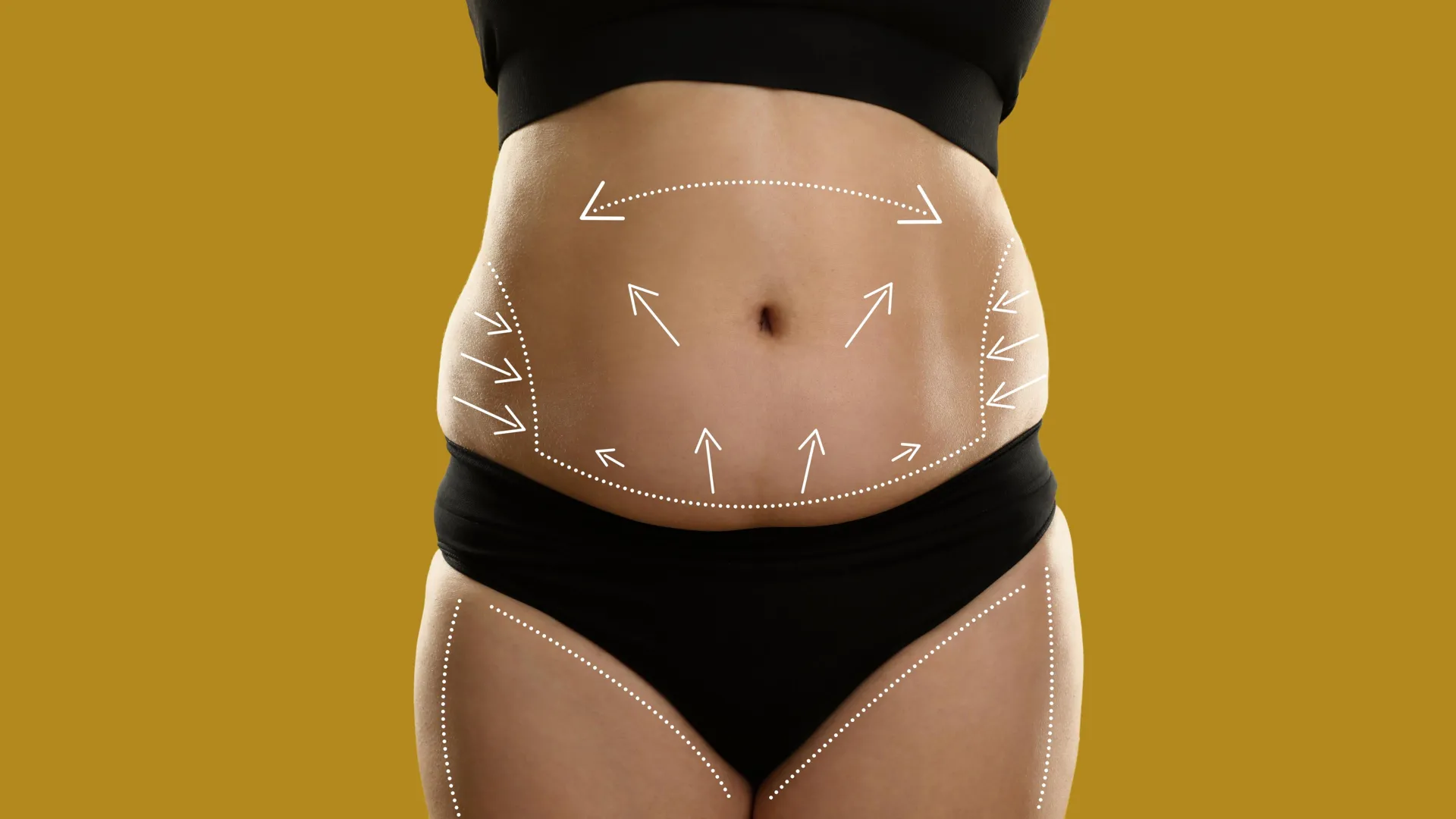
Most patients undergoing “tummy tuck” surgery (abdominoplasty) to remove excess skin and tissue after weight loss continue to lose weight in the months and years after surgery, suggests a follow-up study in the July issue of Plastic and Reconstructive Surgery®, the official medical journal of the American Society of Plastic Surgeons (ASPS). The journal is published in the Lippincott portfolio by Wolters Kluwer.
“We found that patients not only maintained their weight loss after abdominoplasty, but also continued to lose weight over time – up to ten pounds, on average,” comments senior author John Y.S. Kim of Northwestern University Feinberg School of Medicine, Chicago. “This postoperative weight loss appears greater, and increases at later follow-up times, in patients with initially higher body mass index [BMI].”
Continued weight loss up to five years after tummy tuck
Abdominoplasty is a cosmetic surgical procedure to improve the appearance of the abdomen. In 2023, ASPS Member Surgeons performed more than 170,000 abdominoplasties, according to ASPS statistics. Many of these procedures are performed in patients with massive weight loss that leaves them with excess, sagging skin.
Plastic surgeons have observed that patients may continue to lose weight after abdominoplasty. However, there is little research evidence on this issue, including whether the abdominoplasty procedure itself contributes to long-term weight loss.
Dr. Kim and colleagues performed a study to assess changes in body weight in 188 patients who underwent abdominoplasty between 2018 and 2022. Ninety-seven percent of patients were women. The average preoperative weight was about 168 pounds with a BMI of 27.7. Most patients underwent liposuction or a further procedure to remove excess fat (lipectomy) at the same time as abdominoplasty. Trends in body weight were assessed through up to five years after surgery.
The results showed continued weight loss after abdominoplasty. At three to six months, average weight loss was between five and six pounds, with about a three percent decrease in BMI. From one to four years, weight loss was about five pounds, for a BMI reduction of about two percent. By five years (in a limited number of patients), average weight loss was nearly ten pounds, with more than a five percent decrease in BMI.
‘Near-constant negative change in body weight’ after abdominoplasty
Overall, about 60% of patients lost weight during follow-up. Further analysis showed a “near constant negative change in body weight that did not significantly change over time,” the researchers write.
After adjustment for other factors, continued weight loss was more likely for older patients, for those who underwent liposuction/lipectomy, and those who had never smoked. Weight loss was greater for patients who had higher body weight and BMI before surgery, and for a small number of patients who used the newer weight loss medication semaglutide.
The study adds new evidence that “post-abdominoplasty weight reduction is a quantifiable phenomenon and that patients undergoing abdominoplasty continue to lose a significant amount of weight for up to five years after surgery,” the researchers write. They note some key limitations of their study, including varying follow-up times and potential confounding factors.
The study cannot definitively explain why patients continue to lose weight after surgery. However, Dr. Kim and coauthors write, “We have found that patients who were able to achieve weight loss after their abdominoplasty succeeded in developing healthy habits that centered around nutrition and exercise.” They highlight the need for an “evidence-based platform” to assess weight changes after abdominoplasty and to identify factors associated with long-term weight loss.
