Bella Ramsey Opens Up About ‘Freeing’ Autism Diagnosis

The British actor has previously disclosed that they were told that they were neurodivergent while working on the first season of The Last Of Us.

“I’ve spoken a bit about neurodivergence before, but I always for some reason didn’t want to… I felt like I didn’t want to say what it was,” they said, before sharing: “I got diagnosed with autism when I was filming season one of The Last Of Us.”

Describing the diagnosis as “freeing”, Bella continued: “It enables me to walk through the world with more grace towards myself about not being able to do the easy everyday tasks that everyone else seems to be able to do.”

The former Game Of Thrones star told British Vogue they first pursued an autism diagnosis after a crew member on The Last Of Us who had a child with autism “assumed” that Bella did too.

According to the magazine, this diagnosis confirmed something Bella had “always wondered” about themself, having grown up feeling out of place and often experienced sensory issues and what Vogue described as a “painful hyperawareness of other people’s micro-expressions and body language”, which are often associated with people within the autism community.

Bella is currently gearing up for the return of The Last Of Us, in which they reprise their acclaimed performance as Ellie from the first series.

Read Bella Ramsey’s full interview in British Vogue here. The Last Of Us returns to UK screens on 14 April.

Share Button

Three deaths linked to listeria detected in NHS desserts

Listeriosis listed as cause of death in one NHS patient and two other deaths being investigated.

Share Button

What are the Pip and universal credit changes and who is affected?

The government says changes to the welfare system will save £5bn and get people into work.

Share Button

Chris Mason: Flurry of worry over benefit changes

It could be some time before people know how they may be affected by the government’s benefits overhaul.

Share Button

Benefits crackdown unveiled with aim to save £5bn a year by 2030

Measures include restricting eligibility for disability payments and cutting benefits for health conditions.

Share Button

Wingless shapes the fly intestine

During embryonic development, the intestine of the Drosophila fly divides into distinct chambers thanks to the formation of constrictions at specific points of the tissue. The Wingless (Wg) signalling pathway is known to be responsible for one of these constrictions but until now the underlying mechanism regulating this was not known.

A study led by Dr. Delia Ricolo and Dr. Jordi Casanova at IRB Barcelona, published in the journal EMBO reports, has unveiled that Wingless triggers calcium entry, which leads to a change in cell polarity, reorganizing the cytoskeleton and allowing contraction of the tissue. As a result, the intestine becomes divided into distinct specialized regions.

A new mechanism for embryonic development

“We knew that Wingless participates in the development of the intestine, but the underlying mechanism remained unclear. We now know that calcium plays a key role in this process,” explains Dr. Ricolo, first author of the work.

The research demonstrates that the activation of Wingless triggers cellular reorganization that allows contraction of the tissue and the formation of the constrictions that lead to the final shape of the fly intestine.

This finding not only contributes to our understanding of embryonic development in insects but also expands the effects of the Wingless signalling pathway, which has been highly conserved throughout evolution. This study sheds light on how biochemical signals can transform cellular architecture during embryonic development. A greater understanding of these mechanisms could give insights into diseases related to morphogenesis and organ development in distinct organisms.

Share Button

Scientists discover protein key to bacteria’s survival in extreme environments

Scientists have discovered a protein that enables bacteria to shut down into dormant spores under extreme conditions. The process, which enables the bacteria to become practically indestructible, explains why bacteria can survive in uninhabitable places such as under the permafrost, in the depths of the ocean or in outer space.

This ability to sporulate, known as sporulation, also enables superbugs to evade hospital cleaning and then come back to life in the guts of compromised patients.

By discovering a new protein involved in sporulation in a group of bacteria, scientists hope it could deepen our understanding of bacteria’s ability to survive against the odds, and even open up new avenues for antimicrobial therapies.

The study, covered in two separate papers published in Genes and Development today, looks at Bacillus — a group of bacteria including cereus, which is responsible for food poisoning, and anthrax. The research team included scientists from the Department of Chemistry, King’s College London, the University of California San Diego, the Max Planck Unit for the Science of Pathogens in Berlin, and Mount Holyoke College in the USA.

Professor Rivka Isaacson, co-author of the papers, said: “We have known for a long time that bacteria are able to perform metabolic shut-down in unfavourable environments, transforming into long-lived, indestructible dormant spores which can survive for thousands of years.”

“This happens through asymmetrical cell division, where the bigger part — the ‘mother cell’ — engulfs the smaller part, the ‘forespore’, providing it with nutrients and a protective outer layer. It continues to build up protective layers around its genetic materials until it is ready to be released as a spore.”

Whilst this process is well understood, the mechanisms behind shutting down metabolism have remained a mystery until the scientists discovered a previously uncharacterised protein called MdfA was behind it.

Professor Isaacson explained: “Every cell has a ‘recycling centre’ called a protease, responsible for breaking down old or damaged proteins. We discovered that MdfA — a protein we didn’t know the function of previously, acts as an adaptor that recruits the proteins for recycling.

“In the case of sporulation, this protein instructs the cell to get rid of its metabolic enzymes responsible for active growth, by destruction through the protease, thereby effecting the metabolic shutdown part of sporulation.”

Once MdfA had been identified, chemists at King’s were able to solve the crystal structure of the protein using x-ray crystallography, revealing a completely new molecular shape. This has enabled them to further understand how MdfA binds to a part of the recycling chute in cells, a protein called ClpC.

The scientists also found that when they forced happily growing cells to overexpress MdfA, it became toxic to the cells and they burst.

Whilst MdfA isn’t present in most other forms of bacteria, ClpC and the recycling machine is, so similar proteins may be behind sporulation in other bacteria, including those that cause disease.

Professor Isaacson said: “This discovery has improved our understanding of how bacteria operate and opens up a new way of exploring sporulation. Given that sporulation plays a key part in bacteria’s survival, the more we understand this process, the more we will be able to control and eliminate harmful bacteria.”

The scientists also hope their findings might lead to new strategies for developing antimicrobials.

Professor Isaacson added: “If you can target the cell degradation machinery to remove particular proteins, this can open new avenues for anti-microbial therapies, similar to an emerging form of cancer treatment, known as targeted protein degradation or PROTAC, which repurposes a cell’s recycling system for therapy.”


Share Button

How to stop being surprised by extreme weather

Helping communities predict extreme weather events that have never been recorded in modern history is the focus of a new study published in Nature Communications.

A team from the Climate Adaptation Services Foundation, the University of Reading and other international institutions has brought together methods to see beyond the limitations of conventional weather records, which typically only cover the last century.

The study reveals how, for example, nature’s own archives — like tree rings — combined with forgotten historical documents can unlock centuries of climate data that modern instruments have missed.

Lead author Timo Kelder said: “We’ve been limited by thinking extreme weather is only as bad as what we’ve measured since weather stations were invented. But our research shows we can use weather models to look back hundreds or even thousands of years to discover what’s truly possible in our climate system.”

A toolkit for scientists and practitioners

The researchers identified four approaches that together create a more complete picture of possible extreme weather:

● Analysing conventional records

● Studying historical and natural archives like tree rings

● Creating “what-if” scenarios based on past events

● Using climate models to simulate physically possible extremes

Tree rings proved especially valuable, with each ring preserving a year’s worth of climate history. Researchers used these natural time capsules to reconstruct 850 years of drought patterns in northwestern China, revealing extreme events that would have been invisible in modern records.

The team also highlighted forgotten weather extremes by digging through historical archives. They found that June 1846 in Durham, UK was significantly hotter than any modern June temperature. Similarly, September 1774 in Oxford was wetter than any month recorded in the 250 years since.

Adapt, adapt, adapt

The study emphasises that with these methods to anticipate the unseen, communities can better prepare for unprecedented weather. The methods can support three layers of preparation:

● Improved early warning systems

● Upgraded infrastructure

● Transformative social changes to reduce vulnerability

The researchers conclude that by breaking free from the constraints of limited modern records, we can finally stop being surprised by “unprecedented” weather events.

Dorothy Heinrich, co-author at the University of Reading, said : “Unprecedented weather doesn’t just break records — it breaks communities, infrastructure, and lives. When the unimaginable happens, being unprepared is a disaster waiting to unfold. But science can help us to imagine the unimaginable, to uncover these risks, and prepare. Our future depends on how quickly and thoroughly we adapt today.”

Share Button

At-a-glance: Key changes to benefits in welfare shake-up

How Personal Independence Payments (Pip) and other health-related benefits could change under government plans.

Share Button

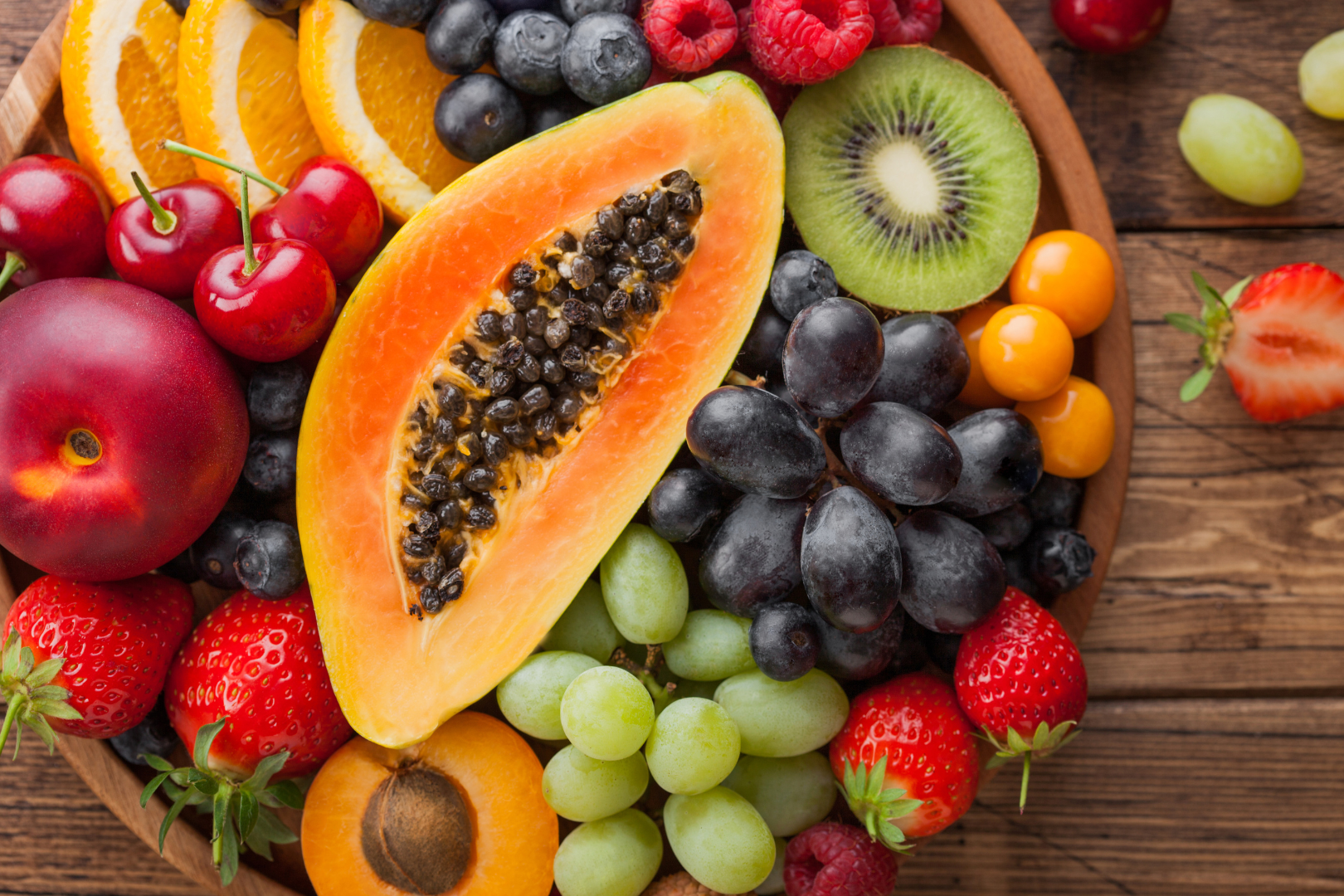
Eating These 7 Fruits Before Bed Will Seriously Improve Your Sleep

According to Mental Health UK, 1 in 5 people in the UK aren’t getting enough sleep and a lack of quality sleep can lead to health problems such as lowered concentration, being more susceptible to illness and infection as well as contributing to the effects of anxiety and depression.

However, according to Panda London’s Sleep Expert Max Kirsten, there are some foods that can aid a better, more restful sleep. This is due to a multitude of benefits such as anti-inflammatory properties, melatonin, and potassium.

Which fruits can help you sleep bettter?

According to Kirsten, having one of these fruits before bed regularly will make a huge difference to your sleep:

Pineapples contain bromelain which has anti-inflammatory properties and helps with muscle relaxation, easing you into a gentle sleep.

Cherries, particularly tart cherries, can be particularly beneficial for sleep, as this viral TikTok beverage show. This is because they are a natural source of melatonin, a hormone that regulates sleep-wake cycles. According to Kirsten, eating tart cherries or even tart cherry juice can help increase melatonin levels in the body which can potentially improve sleep quality and duration.

Kirsten recommends having some tart cherries just a couple of hours before bed to trigger the sleepy feeling that helps you to drift off.

Thanks to the magnesium and potassium in bananas, the fruit can help relax muscle and promote better sleep. Kirsten adds that, “anything that contains magnesium can encourage relaxation, the best thing about eating bananas before bed is the tryptophan they contain can encourage sleepiness and aid a deep, restful sleep.”

This is because Tryptophan is an amino acid that plays a role in producing serotonin; a neurotransmitter associated with relaxation and mood regulation.

Speaking of serotonin, kiwis encourage higher levels of serotonin, which makes it ideal for just before bed. This is because you’ll find yourself more relaxed and, thanks to the vitamin C in kiwi fruit, the quality and duration of your sleep will be improved, too.

Oranges

Of course, oranges are also a great source of vitamin C. Kirsten says that the natural sugars in oranges can provide a gentle energy boost during the day and may improve moods, making it easier to unwind before bedtime.

An unlikely everyday fruit perhaps but papaya is rich in both vitamins C and E, as well as folate and potassium. Potassium, of course, helps to relax muscles and eating foods like papaya can encourage a deeper, higher quality rest. The nutrients within potassium can relax muscles and lower blood pressure, making dropping off much easier.

Finally, good old apples contain fibre and natural sugars which stabilise blood sugar levels. This helps to prevent nighttime wakefulness as well as improving general mood and wellbeing.

If you continue to have sleep problems, speak to your GP for support.

Share Button