Go Rogue Happens Live on Zoom January 28-31, 2025

This Tuesday through Friday, January 28-31, I’m hosting a series of four Zoom calls (one per day, 2 hours per call), and I invite you to join me.

It’s called Go Rogue, and the purpose is to help you honor and strengthen your relationship with your inner rogue – those parts of you that tend to be rebellious, resistant, and uncooperative with your other goals, plans, and desires.

Instead of trying to suppress your inner rogue, I invite you to discover a new way of relating to these aspects of yourself – so you can recapture the energy within and enjoy greater harmony and flow in your life.

Read the Invite – Get the Details

We’ll also be doing some unique energy work together each day, as shared in the invitation above.

When you’re ready to sign up, use this link to enroll (it’s also in the invite above):

Join “Go Rogue”

Come join us and forge an empowering new relationship with your inner rogue. Reclaim, re-harmonize, and re-integrate this powerful source of motivation, drive, and energy within you.

This is a one-of-kind event, and you’ll get the recordings too. I’ll see you inside!

Share Button

Recommendations for mitochondria transfer and transplantation research

Most animal, plant and fungal cells contain organelles called mitochondria. These descendants of a primordial bacterial endosymbiont still preserve distinct genes and are known for their ability to create ATP as chemical energy. They also have other important functions, including cell signaling, viral and bacterial sensing, cell division, cell death, and innate and adaptive immune responses. Consequently, impairment in mitochondrial function can result in aging and age-related diseases.

An emerging area of research is the evolutionarily conserved transfer of mitochondria between cells. Yet researchers have lacked unique and universally accepted terms and practices to describe such transfers. Absent an agreed nomenclature and standard practices, different researchers may use different methods and terminology to describe the same event, or they may employ the same term that actually describe two different processes.

“Over the past few years, we have come to understand that mitochondria can be transferred from one cell to another, and that isolated mitochondria can be transplanted like an organ transplant,” said Keshav K. Singh, Ph.D., professor in the University of Alabama at Birmingham Department of Genetics. “Though the origins of mitochondria transfer are unclear, it has been observed in evolutionarily diverse eukaryotes, including yeast, mollusks, fish and rodents, as well as human cells. We are just beginning to understand how alterations in this process contribute to disease pathogenesis and how to harness mitochondria transfer and transplantation biology to develop new therapies.”

In 2024, Singh and Jonathan Brestoff, M.D., Ph.D., Washington University School of Medicine, Saint Louis, Missouri, set up an international consortium on mitochondria transfer and transplantation and led an international team of 31 researchers to develop consensus and recommendations about how to advance the field by providing common terminology and characterizations for the transfer or transplantation of mitochondria. Their consensus paper, “Recommendations for mitochondria transfer and transplantation nomenclature and characterization,” is published in the journal Nature Metabolism.

The paper begins with a brief history of the field — some foundational early discoveries, recent studies of mitochondrial transfer and development of therapeutic approaches, including cell engineering and clinical trials for children requiring extracorporeal membrane oxygenation.

The paper defines types of mitochondria transfer and mitochondria transplantation, and when both the donor and acceptor cell types are established in vivo, that defines a mitochondria transfer axis. The paper reviews methods to define mitochondria transfer, including mitochondria reporter proteins and dyes, methods to enforce transfer, and discussion of the fate of mitochondria after cell entry. Mechanism-based nomenclature is roughly grouped into contact-dependent mitochondria transfer, where the donor cell and recipient cell touch each other, and contact-independent mitochondria transfer.

The recommendations also review therapeutic approaches of mitochondria transplantation, including the definition of transplants; the types, durability, degree of engraftment and heterogeneity of transplants; cell engineering using extracellular mitochondria; and drugs that affect mitochondria transfer. Extracellular mitochondria are common in humans — for example there are about 3 billion to 12 billion extracellular mitochondria in a unit of blood platelets, a blood product that is routinely and safely transfused to patients intravenously.

The paper concludes that “the goal of this proposed nomenclature is to reduce the confusion that can be caused by the introduction of different names for similar processes or extracellular mitochondria subsets as this field has evolved. We recognize that mitochondria transfer and transplantation are very active areas of research and that it is possible that new findings and insights may necessitate updates to the proposed nomenclature.”

Singh has a long-standing interest in mitochondria. He was founding editor-in-chief of the journal Mitochondrion and the founder of the Society for Mitochondria Research and Medicine. In 2007 and 2009, his laboratory showed that isolated mouse mitochondria can be transferred to human cells by co-incubation, providing a proof of principle for transfer of mitochondria by diffusion, and that xeno-transplanted platelet mitochondria from an African American woman who suffered aggressive breast cancer at young age was able to recapitulate aggressiveness of breast cancer in mice. At that time, these findings were not appreciated by the field, Singh says.

Share Button

Young adults more active after starting work, but sleep less — unless working from home

When young adults start working, the amount of daily physical activity they do increases sharply, only to fall away again over the new few years, while the amount of sleep they get falls slightly, according to new research led by scientists at the University of Cambridge.

The increase in physical activity was mainly seen in those doing semi-routine occupations such as bus driving or hairdressing, and routine occupations such as cleaning or waiting, or technical jobs. There was little change seen among people entering managerial or professional occupations.

The largest drop in levels of physical activity was seen among people who work from home — though their sleep levels did not change when they started work.

Young adulthood — ages 16 to 30 years — is an important time in terms of health. Although we are typically at our peak physical health, it is also a time when many risk factors for long term diseases such as heart disease, type 2 diabetes and cancer begin to develop.

Health guidelines recommend young adults get between seven and nine hours of sleep a night, engage in 150 minutes or more of moderate physical activity per week, and consume at least five portions of fruit and vegetables per day.

Young adulthood is also the time when most people start work, which changes their daily routines and activities, resources such as time and money, and social and physical environments — all of which affect health behaviours and health in later life.

To quantify the impact that starting work has on health-related behaviours, a team led by researchers at the Medical Research Council (MRC) Epidemiology Unit at the University of Cambridge examined repeated data taken over time from more than 3,000 participants in the UK Household Longitudinal Study. All the participants were aged 16-30 years and started work for the first time between 2015 and 2023.

The results are published today in the International Journal of Behavioral Nutrition and Physical Activity.

Dr Eleanor Winpenny, who was based at the University of Cambridge when she carried out the work, but is now at Imperial College London, said: “We know about physical activity and sleep patterns among young people while they’re at school, but very little about what happens when they start work. Given the impact that work can have on our lives — and the lasting impacts this can have on our health — it’s important to try and understand what happens at this transition.”

The analysis showed that when people started work, their physical activity increased by an amount equivalent to around 28 min of moderate activity (such as cycling) per day on average — but then decreased each year after starting work by around 7 min per day.

The biggest increase was among males — up by an equivalent of around 45 min of moderate activity per day compared to an increase of around 16 min for females. People who did not have a university degree also showed a greater increase in physical activity compared to those with a university degree — equivalent to around a 42 min increase of moderate physical activity per day compared to 15 min per day.

Working from home, however, appeared to be associated with an initial decrease in physical activity, equivalent to around 32 min of moderate activity per day.

When young adults started work, the amount of time they slept per night dropped immediately by almost 10 minutes and remained stable at this level over time; however, people without a degree showed a continuing decrease of about 3 minutes of sleep per night each year after starting work, while those with a degree slowly increased back to their pre-work sleep levels.

There was little change in the amount of fruit and vegetables consumed after starting work.

Alena Oxenham, from the MRC Epidemiology Unit, said: “Beginning work can have a profound impact on our lifestyles and on behaviours that might make a difference to our health, if not immediately then later in life.

“Although we found that people tend to do more physical activity when they begin work, which is good news, these are averages, and some people — particularly those who work from home and, to a lesser degree, those with office-based jobs — may do less.

“If we want to stay healthy throughout our lives, we need to remember that keeping active is an important way of helping us achieve this goal. Those working at home might want to consider incorporating physical activity into their day, for example by going for a walk before or after work, or during a lunch break.”

Dr Winpenny added: “Workplaces provide an opportunity to create environments and cultures that support healthier diets, more physical activity and better sleep for young adults. This could result in healthier employees and fewer sick days in the immediate term, but also have long term benefits, helping prevent health issues in later life.”

Share Button

Coca-Cola recalls drinks over safety concerns

The company says the drinks contain “higher levels” of chlorate, but says the risk is “very low”.

Share Button

Farm worker contracts human case of bird flu

The UK Health Security Agency says cases of bird-to-human transmission were rare.

Share Button

People Are Sharing The Things They Believed As Kids (Which Turned Out To Be Untrue)

When you’re a kid there are lots of things you believe that aren’t necessarily true.

Most of the time this is down to what your parents have told you (like the police will tell you pull you over if you don’t turn the light off in the back of the car), but other times it’s just what you’ve made up in your head – and nobody has questioned it, so it’s taken as gospel.

In an amusing thread posted on Mumsnet, user @Carryonrunning asked the masses: “What do you remember from your childhood that you now realise you really misunderstood?”

Cue, a hilarious thread of eyebrow-raising confessions… (If you’re a parent reading this, it’s a useful reminder that kids take things very literally.)

I thought you got given an actual sack when you lose your job

“My dad came home from work one day with a hessian sack he’d acquired from somewhere. He then told my mum, ‘I’ve been given the sack’. It took me years to realise that a) he was joking and b) you don’t get given an actual sack when you lose your job.”

– BlossomCat

I thought you became an adult at 100 years old

“As a young child I thought you became an adult at 100 years old. Imagine my shock when someone at primary school told me it was just 18. I had a full on existential crisis when I realised most people don’t even live to 100!”

– Flustration

I thought you were meant to drive with one wheel either side of the central road line

“My family didn’t have a car, so my main experience of driving when I was really young was my grandad. He only drove us occasionally and from these rare experiences I worked out that the white line in the road was a guideline to keep you straight – a wheel each side of it. When I got to about 8 I began to wonder how cars going in opposite directions could both straddle the centre line without crashing. As I got older I realised my grandad was a really bad driver.”

I thought ‘cash back’ was free money

“In the shop when my mum and dad answered that they didn’t want cash back I always wondered why they turned down free money.”

– EdithGrantham

I thought it was the last day of the world

“I remember leaving primary school one day and I heard the teacher say to a friend’s Mum, ‘It’s the last day tomorrow.’ I must have been about five. I actually thought she meant that it was the last day of the world. I remember laying in bed that evening and worrying and worrying… In the end I went downstairs, crying to my Mum and asked her if it really was the last day of the world the next day.

“To my amazement, she looked at the calendar. I remember thinking, surely the people who make the calendars wouldn’t know when the last day is?! In reality she was just checking that it definitely was the last day of term. She hugged me and explained that the next day was just the last day of term, not Armageddon!”

– Feelinghurt2

I thought my mum’s heart would miss a beat and she would die

“I heard my mum talking on the way home from picking me up at school, to some of her mum friends. She said something like ‘my heart missed a beat’ and from that moment on for YEARS I was afraid that hearts could do this. I worried that my mum’s heart would miss more beats and she would die, or that my heart might miss a beat and something bad would happen. I’d lie in bed listening to my heartbeat and wondering if I’d notice if it missed one…”

– Vroomfondleswaistcoat

I thought giving the middle finger meant ‘up and over’

“I remember my dad giving the 1 finger salute when driving and me asking my mum what that meant. With a rather frosty look at my dad she said it meant up and over. I then got confused as to why I got into trouble doing it.”

I thought the olden days were actually black and white

“I thought that the ‘olden days’ really were black and white and there really was no colour – just like the photographs. I thought that at least they had grey and different tones of black and white.”

– Whatthechicken

I thought To Let signs meant public toilet

“I used to think that when you saw a ‘To let’ sign on a building, it was a polite way of saying there’s a public toilet in there.”

– MathsMum3

Share Button

Here’s How Often You’re Actually Meant To Replace Your Toothbrush, And Oh Dear

I only recently realised that you’re not actually meant to “scrub” your teeth with an electric toothbrush ― instead, we’re meant to glide the head gently over each tooth, neither moving it up or down nor side to side.

This comes after I learned you’re meant to floss your teeth far deeper than first thought and that the floss picks I’ve relied on for so long are nowhere near as good as the string kinds.

I’ve even messed up using mouthwash.

All of which is to say it’s not so surprising that I’ve just discovered how often you’re meant to change your toothbrush or toothbrush head.

What do the experts say?

You should get a new toothbrush every three to four months, according to NHS Greater Glasgow and Clyde.

Health information site Healthline agrees, adding that electric toothbrush heads might need to be changed as often as every 12 weeks ― especially if you apply a lot of pressure to your toothbrush.

By that stage, they say, the bristles may have started to warp, mesh or mat.

That’s an issue because, according to toothbrush manufacturer Philips, “brush head bristles are designed to reach between your teeth, and pressing too hard actually mashes them, rendering them incapable of doing their intended job”.

A 2012 study found that bristle flaring ― that spread-out look your brush gets after a while, especially if you brush hard ― results in less effective brushing, leaving way more bacteria and plaque behind than a fresh brush would.

No matter how long it’s been since you last changed your toothbrush or brush head, the NHS recommends changing it as soon as you notice any wear.

Should I change my toothbrush after being sick?

Healthline says that ideally, yes ― especially if you’ve had a disease like strep throat or viral infections that affect your throat and mouth.

But they add that trying to “sanitise” your brush, for example by dipping it in mouthwash or very hot water, can actually spreads more germs than it kills off.

For everyday use, simply running tap water over your brush when it’s done is the best method, they add.

Well, at least I’ve got one single dental hygiene rule right…

Share Button

Here’s What Spain’s So-Called ‘Tourist Ban’ Will Really Mean For Brits

Holiday-loving Brits have begun to panic about an imprecisely-named “tourism ban” in Spain, which is the UK’s number two holiday destination after domestic stays.

It’s true that some rules and regulations have changed in Málaga, the capital of Costa del Sol, this month, as the protests against over-tourism that took place last year have had an effect on legislation across the country.

But rest assured, sun-seekers; there are no signs an outright “tourism ban” is set to come into place in Spain, or even in Costa Del Sol.

The region, which includes cities like Marbella and Torremolinos, has introduced a three-year ban on the registration of any new holiday rentals in 43 areas.

Alicante and Madrid introduced similar laws last year.

Here’s what the new legislations actually mean for Brits:

Yes, you can still book a holiday

The new ban prevents new holiday rentals from being registered. It doesn’t get rid of existing holiday accommodation, except for some holiday flats that were registered after February 22.

Those will have to give up their licences if their access and resources aren’t separate to those of the other residents.

Many Airbnbs, hotels, and other tourist accommodation will remain as-is.

Málaga’s ban is expected to extend past the three-year proposal it’s currently based on. It’s part of a larger plan to lower disruptive noise in the city.

In parts of Costa Del Sol, tourist accommodation makes up 8% of the rental market.

Cities like Seville may follow suit, the Mirror reports.

Are there any other changes to visiting Spain?

Yes. Those hoping to buy a house in Spain from outside of the EU, including the UK, will soon have to pay a 100% property tax if they’re non-residents (ie if you live in Spain less than 183 days a year).

This is yet another measure to try to address Spain’s mounting housing crisis, the country’s leader says.

Meanwhile sleeping, camping, or swimming at Benidorm’s beaches between 00:00 am and 7 am will be met with fines of up to €1,200 this year.

Fires and BBQs are banned; smoking and drinking on the beach, as well as peeing in the sea and bringing your dog to a non-pet-friendly beach will also result in fines.

You’ll also need to provide more info than most Brits are used to giving (including home addresses) when booking cars or hiring a hotel. This will apply to locals, too.

Share Button

Pharmacists in warning over weight-loss jab sales

Pharmacists say they are aware of people being wrongly prescribed weight-loss drugs.

Share Button

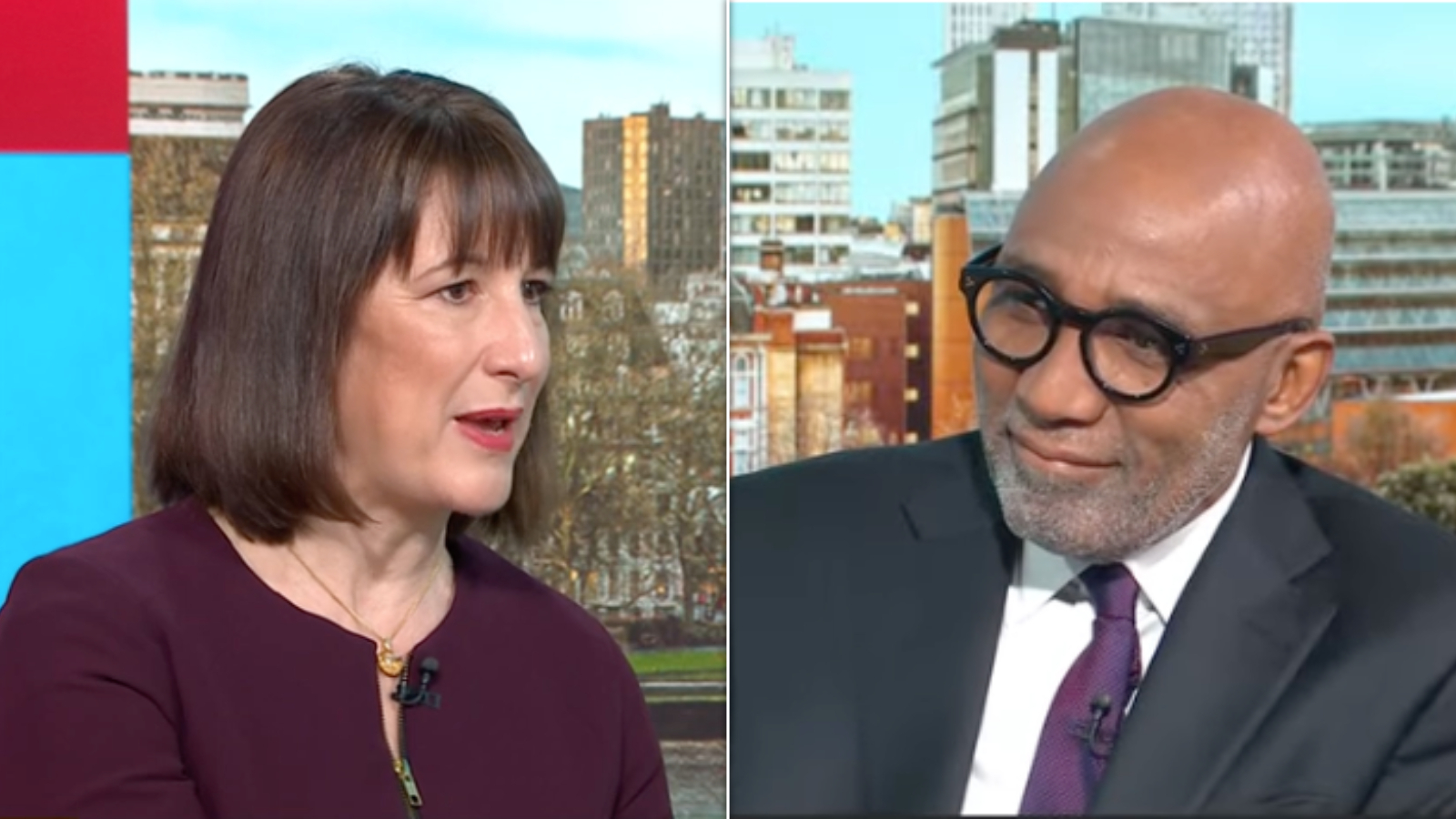
Trevor Phillips Accuses Rachel Reeves Of ‘Sounding Like’ Liz-Truss In Brutal Takedown

Presenter Trevor Phillips compared Rachel Reeves to Liz Truss today after her recent decisions on non-doms and benefits during a scathing interview.

The chancellor watered down plans to make wealthy foreigners pay more tax on their overseas earnings this week, despite previously promising to crack down on this “non-dom” loophole.

She has also promised to crack down on benefit fraud this week.

So the Sky News host put a quote to her, which read: “We must break down the barriers to growth built up in our system over decades.

“Decisions take too long, Burdens on business are too high.

“Infrastructure projects get delayed for years, and years and years. As a result, we have seen economic growth choked off.”

“What you’ve been saying this morning sounds very like that,” Phillips said – before revealing it was a comment from former PM Truss, who famously crashed the economy in 2022 with £45bn of unfunded tax cuts.

But Reeves said Truss and other Tory PMs “did not do the practical things which were necessary to grow our economy”.

Phillips’ remark came after he called out Reeves for going to “Davos, the capitalist shin-wag” and listening to “millionaires” by changing her promise to close the non-dom tax loophole.

The chancellor just replied that if you make Britain your home, you should pay your taxes here, “and under Labour you will”.

But Phillips pointed out that she has changed the amount of money she was going to charge non-doms.

However, Reeves argued she was only changing the scheme so non-doms have to pay lower rates of tax on the overseas income for the next three years.

“What we are doing is making it easier for people to bring money in from overseas to the UK, without facing punitive tax rates,” she said, saying Labour are still removing the non-dom status from the UK tax system.

Phillips said he was not “nit-picking,” and pointed out that Reeves imposed a £40bn of tax hikes with her autumn Budget, reduced the winter fuel allowance for pensioners and reduced inheritance tax relief for farmers.

He said: “You can see that this week, people watching you in Davos amongst all these millionaires, and you saying, ‘well I’ve listened to this community’, are wondering why you can’t listen to the farmers.”

Reeves replied she had to raise significant funds in the Budget and “people would never forgive me if we lost control of public finances in the way that Liz Truss did”.

Reeves also added that her non-dom changes had not cost the public anything.

But Phillips said it seemed as though “non-doms get sympathy and people on welfare get tough love.”

Reeves just said it was about tackling fraud, “If people aren’t entitled to benefits, they shouldn’t be getting them.”

Phillips also skewered the chancellor over her attempt to be more positive with the UK, following months of pessimism over the state of the British finances.

He said: “When you said we needed to be more positive with our outlook, more like Donald Trump, did you forget that America’s GDP was growing at the end of last year while ours was just flat? He’s got something to boast about.”

Reeves said the UK has “loads” to boast about, although she admitted we have not had 3% growth “for a long time”.

“We need to go further and faster in delivering that growth, exploring the massive opportunities that we have as a country,” she said, saying everyone needs to “be championing Britain”.

Phillips hit back: “In the autumn, you and the prime minister were channelling Eeyore. How come Tigger has suddenly turned up, what’s changed?”

Reeves deflected and just said the IMF revised up the predictions for the UK economy, to become the “fastest growing major economy in Europe”.

Share Button