Age matters: Kidney disorder indicator gains precision

Annual health checkups regularly include urine tests that serve several purposes, including checking for symptoms of kidney disease. The presence of albumin in the urine is one indicator as is glomerular filtration rate. In diabetic nephropathy, albuminuria first appears, leading to excessive filtration and eventually a decrease in GFR.

In the elderly, however, excessive filtration cannot be detected due to age-related GFR decline. To accurately assess GFR, Osaka Metropolitan University researchers have come up with a new calculation method.

The group led by Dr. Akihiro Tsuda, a lecturer at the Graduate School of Medicine, assessed 180 kidney transplant donor candidates to define a new formula for determining the threshold value for hyperfiltration based on age and GFR values.

Among other findings, the conventional method of correcting for body surface area in obese patients was determined to be inaccurate as excessive filtration cannot be detected. The researchers suggest calculating GFR without the correction but by taking into account the decline in the filtration rate due to aging.

“Since hyperfiltration is a precursor to diabetic nephropathy, we hope that using this new formula will more accurately diagnose the condition, leading to early detection and treatment,” stated Dr. Tsuda.

The findings were published in Hypertension Research.

Share Button

Government unveils plan to cut NHS waiting list backlog

The government pledged to cut the list of patients waiting more than 18 weeks for treatment in England by nearly half a million over the next year.

Share Button

NHS App upgrade to give patients more choice over treatment

Plans for an upgraded NHS app to allow more patients in England to book treatments will be announced by the health secretary on Monday.

Share Button

If Your Poo Looks Like This, It’s Time To See A Doctor

(This story was originally published in 2019.)

It can be pretty, um, crappy dealing with bowel issues.

Figuring out what’s normal and what isn’t can be a challenge if you don’t know what to look for. Stools come in all shapes and sizes and can shift forms depending on what you’re eating or what is going on in your life at the moment.

“Bowel movements change from person to person depending on his or her diet, physical activity, how much water they consume and what medications they take,” said M. Nuri Kalkay, a retired gastroenterologist and health blogger.

Everyone has their own barometer of how often their body is used to going and what a typical stool looks like for them. But what if things change and you see something beyond the norm in the toilet? We chatted with some experts to determine what bowel habits are aren’t so ordinary and might require a trip to the doctor.

Black and/or tarry stools

Jeffery M. Nelson, surgical director at the Center for Inflammatory Bowel and Colorectal Diseases at Baltimore’s Mercy Medical Center, said if your poo is black, “not just dark brown,” you should be concerned.

“This means bleeding is happening from an upper GI source like the esophagus, stomach or small bowel,” he explained.

There are some exceptions to this: If you’re taking iron supplements, for example, your stools may appear dark green to the point where they almost look black. If you’ve taken bismuth medication like Pepto Bismol, that can also make your stools look almost black. It’s always best to check with a doctor if you’re unsure.

Bright red blood in your stools

If you find blood in your stool either by itself on the toilet paper, in the water or streaked in the stools, this can indicate a bleeding source from the anal canal or a low rectal source.

“Things like internal haemorrhoids, anal fissures, rectal polyps or rectal cancers can all do this,” said Nelson. All of these are reasons to see a doctor.

Maroon-coloured stools

If your stools are this colour, then they’re likely also more liquid in consistency and paired with an unpleasant, distinct odour. According to Nelson, this can indicate bleeding from the very end of the small bowel or the colon.

“Diverticulosis and arteriovenous malformations are the classic causes of this presentation,” and a reason to go to the emergency room, he said.

Pale, oily and especially foul-smelling stools

“This finding is called steatorrhea and is due to excess fat in the stool,” explained Chris Carrubba, an internal medicine doctor in Jacksonville, Florida.

Carrubba said steatorrhea is often seen with malabsorption syndromes, pancreatic insufficiency and biliary disease. “The presence of steatorrhea indicates difficulty absorbing fat and these patients are at risk of developing deficiencies in fat soluble vitamins,” like vitamins A, D, E and K, he said.

Stools that are different than your typical bowel movements

Your body is a creature of habit in a lot of ways. For example, if you consistently have smooth, long sausage-like stools and suddenly they change to a completely different size, you should speak to your doctor.

“Pencil thin versus log-like routinely could mean that an inflammatory condition may be present such as Crohn’s or infection,” said Karen Soika, a general surgeon in Greenwich, Connecticut.

If the consistency of your stools has changed to watery or diarrhoea, this could signify irritable bowel syndrome, an infectious cause or an inflammatory bowel disease such as Ulcerative colitis.

IBS or infections can also increase constipation.

Watery diarrhoea after a camping trip

This can be due to giardia, “a protozoal organism that is found in freshwater and the reason that you should always boil and sanitise water from mountain streams or lakes,” Carrubba said.

Ingestion of this organism can result in giardiasis, which leads to abdominal pain and persistent, watery diarrhoea. The issue can be treated with antimicrobials. In addition to drinking contaminated water, you can also be exposed to giardia by eating uncooked vegetables or fruits that were rinsed in contaminated water and by improperly washing hands after coming into contact with faeces or an infected human or animal.

Mucus in the stool

This is usually due to inflammation of the intestines, said Peyton Berookim, a gastroenterologist in Los Angeles. He noted that the condition can be seen in inflammatory bowel diseases like ulcerative colitis or Crohn’s. It can also be due to inflammation caused by a bacterial infection or IBS.

“Mucus associated with blood and or abdominal pain should not be ignored and requires medical attention,” he explained.

Hard or infrequent stools

This signifies constipation and is usually caused by a lack of fibre in your diet, as well as low water intake. However, this issue may also be caused by medications, blockages in the intestine, or in more rare cases, colon cancer.

“Constipation can be treated in many ways and I always begin with increasing fibre and water intake. The recommended daily intake of fibre is at least 25 grams and the amount of water needed varies from person to person,” said Jack Braha, a gastroenterologist at Brooklyn Gastroenterology and Endoscopy Associates.

Laxatives are available over-the-counter to help with this issue and work by either increasing the motility in your gut or increasing the amount of water delivered to the colon, Braha said.

“But for symptoms that do not rapidly improve or begin after the age of 50, it is important to seek advice from a gastroenterologist in order to determine if further testing like a colonoscopy is needed to check for more serious issues such as an intestinal obstruction or colon cancer,” he said.

Loose, watery or frequent stools

“Diarrhoea is common after eating bad food or from an infection and should not last more than a week in most instances,” Braha explained.

Loose stools may be a cause for concern if the diarrhoea lasts longer than two weeks or when it is in conjunction with bleeding, weight loss or symptoms that keep you awake at night.

“When diarrhoea is not from an infectious source, we look for other common causes like lactose intolerance, irritable bowel syndrome, inflammatory bowel disease or celiac disease,” Braha said. “Gastroenterologists can usually find the cause of diarrhoea by checking certain blood tests, stool tests and performing a colonoscopy.”

Generally, it’s a good idea to make an appointment with your doctor if you’re concerned about your bowel movements at all. Your poo may be trying to tell you something.

Share Button

6 Seemingly Harmless Habits That May Increase Your Risk Of Dementia

Dementia is the loss of memory, language, problem-solving and other abilities that require thinking. It is often caused by Alzheimer’s disease, and mainly affects those 65 and older. Unfortunately, dementia can be severe enough that it interferes with daily life, and those who have dementia often require additional care.

“Dementia is a group of conditions characterised by impairment of at least two brain functions, such as judgment and memory loss,” explained Blair Steel, a psychologist at Carrara Treatment, Wellness & Spa. “Symptoms of dementia include forgetfulness, limited social skills and impairment in thinking that interferes with daily functioning.”

So what causes dementia? Your age, family history, race and ethnicity, heart health and history of a traumatic brain injury are all factors that increase your risk of developing the condition. But another big category is lifestyle habits. So while you can’t control your genetics, there are a few seemingly harmless behaviours you may be doing that can increase your risk. Read on to learn more about them below:

Not moving your body enough or sitting for too long

Exercising ― aerobic exercise, especially ― can help reduce cognitive impairment and dementia risk. Long-term, regular exercise can affect your brain and your overall health in a positive way, especially if you’re nearing 60. Getting your body moving daily is something you can do to decrease your risk of dementia.

Steel said “being inactive does a number on the brain.” Just like other muscles, a good thing to remember is, “If you don’t use it, you lose it.”

Not socialising enough

Social health plays a role in the development of dementia; an active and socially integrated lifestyle can protect against the disease. Stimulating the brain with social interaction is important for everyone, especially as they age. Though, in the age of social media, socialising has become a broader term.

“We spend a lot of hours on social media, however this likely does not stimulate the brain’s experience of connection as much as socialising in person,” Steel explained.

Poor social health can overstimulate the body’s stress response through increased levels of the stress hormone cortisol, raise blood pressure and decrease blood flow to vital organs amongst other health issues.

Getting inadequate sleep

Sleep disturbances and dementia are two common and significant health problems in older adults. (Let’s face it, sleep tends to be put on the back burner.) Whether due to family obligations, work or staying up late on your phone or watching TV, there’s always something in the way of adequate sleep.

Unfortunately, sleep patterns in earlier life may contribute to later problems. If you’re having trouble sleeping, or not sleeping at all, sleep deprivation could increase your dementia risk.

“Avoid screens and light after a certain hour and try to not reach for your phone if your sleep is interrupted,” Steel suggested. Try unplugging at least 30 minutes before bed.

Not getting enough sleep can have a huge impact on your brain health.

jeffbergen via Getty Images

Not getting enough sleep can have a huge impact on your brain health.

Being chronically stressed

According to the Alzheimer’s Society, stress is linked to dementia because when you’re stressed and cortisol is released, it can create problems with your memory. The negative effects of stress, particularly chronic stress, on the brain can lead to cognitive decline due to prolonged elevations of cortisol — which plays an important role in how your body responds to stress.

Working to reduce your stress through healthy habits can be key to mitigating this risk. Exercise, creative activities or hobbies, spending time with loved ones, meditation, watching a good show or reading a good book can all help you relax.

Additionally, “try to be flexible with your reactions and avoid the ‘my way or the highway’ mentality, which can be common in older adults,” Steel said.

Consuming excessive amounts of alcohol

The Alzheimer’s Society also says there’s a specific type of alcohol-related dementia that is considered alcohol-related brain damage (ARBD). This is due to the damage of the brain caused by drinking too much alcohol on a regular basis, usually over many years.

Those with this type of dementia may have issues like cooking a meal, remembering things, thinking things through, and even struggle with more complex tasks like managing finances.

Eating an unbalanced diet

Research shows a diet high in ultra-processed foods can increase dementia risk in adults. While no one’s diet is perfect, ensuring that the majority of the time you are sticking with well-balanced, healthy meals can be extremely beneficial.

Try eating leafy greens, berries, whole grains, beans, nuts, fish, and healthy fats like olive oil while limiting red meat, sweets, cheese, butter, and fast and fried food. These are healthy options that optimise your brain health.

You can lower your risk of dementia by altering the habits mentioned above, but you should also speak to a doctor if you’re struggling with your cognition.

“If you or a loved one is experiencing signs of dementia, it is important to speak to a doctor and get an assessment,” Steel said. Your primary care physician will be able to assess you, and if needed, refer you to a specialist.

Share Button

‘Fatal Mistake’: Democrats Blame Justice Department As Trump Escapes Accountability For Jan. 6

After a mob of his supporters attacked the US Capitol on January 6, 2021, it looked like Donald Trump’s political career was over.

Democrats and Republicans alike blamed Trump for inciting the attack, and he only escaped conviction at his Senate impeachment trial — which would have barred him from the presidency forever — because Republican senators insisted it was too late to convict a president who had already left office.

Besides, then-Senate Majority Leader Mitch McConnell argued at the time, Trump would face another kind of reckoning.

“We have a criminal justice system in this country. We have civil litigation. And former presidents are not immune from being held accountable by either one,” McConnell said.

That never happened, and many Democrats are ready to place the blame on one man: Attorney General Merrick Garland. They argue he waited too long to appoint a special prosecutor, which allowed Trump and his legal team to stall the case long enough for Trump to win the presidency a second time. Garland made the appointment in November 2022, saying he’d done so partly because Trump had just formalised his bid for the presidency.

The announcement also followed a series of high-profile public hearings by a bipartisan House committee airing the evidence against the former president.

“Garland only started the prosecution after he was in effect forced to by the report of the January 6 committee and the criminal referral,” former House Judiciary Committee chair Jerrold Nadler told HuffPost. “The evidence the January 6 committee used was available from the beginning.”

“Had they proceeded with those prosecutions, I think he would have been convicted and we’d have a different president now,” Nadler said. “Merrick Garland wasted a year.”

Nadler is not alone in thinking so. The Washington Post reported last month that President Joe Biden has expressed regret about picking Garland, believing the nation’s top law enforcement officer took too long to pursue Trump after January 6.

Representatives Bennie Thompson and Zoe Lofgren, members of the January 6 committee, also told HuffPost they thought Garland waited too long.

“I didn’t realise that they were not looking at the whole picture,” Lofgren said. “I think they were taking a look at the foot soldiers.”

While the Justice Department indicted Trump for the mob attack on the Capitol and other crimes related to his attempt to overturn the 2020 election, it did not do so until August 2023, long after the Republican Party had purged most members who spoke out against Trump.

A Supreme Court decision relating to presidential immunity created further delays, and ultimately, Trump won the 2024 election before the case could finish up and he could stand trial. Since longstanding Justice Department policy bars prosecuting a sitting president, the Department of Justice dropped the case after Trump’s November victory, allowing him to escape responsibility and walk back into the White House.

Garland reportedly told prosecutors early on in 2021 that they could pursue cases against people involved in the January 6 riot wherever the evidence led, even if it implicated the former president. But it turned out investigators couldn’t pinpoint financial ties between Trump and key players on the ground.

Prosecutors apparently did not initially consider building a case out of Trump’s public election-fraud lies, or his well-publicised efforts to coerce various officials into undoing the 2020 election, including his demand during a phone call that Georgia’s secretary of state fraudulently “find” him 11,000 votes. Details of the call became public within a day. That material became a key component of special counsel Jack Smith’s eventual case.

Still, it was likely inevitable that if the Justice Department prosecuted a former president, the Supreme Court could get involved to settle questions of presidential immunity that Trump would raise in court. It’s possible that even if the Justice Department had acted swiftly, appeals to the Supreme Court could have bogged the case for years.

The Justice Department declined to comment for this story.

Trump is now expected to continue his efforts to rewrite history by following through on pardons for those who participated in the attack ― whom he has hailed as “heroes” and “patriots” ― after his swearing-in on Jan. 20 at the East Front of the Capitol, the very scene of the crime.

Democrat Senator Adam Schiff, who served on the House select committee that investigated the attack, said the Justice Department “moved with expedition when it came to the people who broke into the building, but were those at a higher level, they waited almost a year on.”

“That was a fatal mistake,” he added.

Federal prosecutors have secured more than 1,000 convictions so far relating to the Jan. 6 attack, and more than 600 rioters have been sentenced to prison, with terms ranging from a few days behind bars to 22 years in federal prison for the head of the Proud Boys.

Still, when it comes to the person who spread dangerous lies about the 2020 presidential election, and who urged hundreds of his supporters to march on the Capitol in protest of Biden’s electoral certification, the same cannot be said.

“I think the department was so focused on being kind of by the book, and being so clear that there wasn’t any political interference,” said Democrat Senator Tina Smith. “I really worry that, you know, he’ll become president, and he’s going to pardon a bunch of people and [a] great sort of whitewashing of what happened will continue.”

Other Democrats were more charitable toward the Justice Department, noting that ― unfairly or not ― Trump was reelected with a popular-vote win over Vice President Kamala Harris even in spite of his role in the Jan. 6 attack and his efforts to fraudulently overturn an election.

“This isn’t about the DOJ. This is about Trump being successful in rewriting history,” Senator Peter Welch said. “He’s validated the folks who attacked the Capitol, and I don’t think a month earlier, a month later, six months earlier, that would have made a difference.”

“The reality is the American people reelected him after that. Who would have thought that?” Welch added. “Trump insisted that this was a peaceful demonstration, continued to insist that the election was stolen, he hasn’t backed down from that at all ― and he got reelected.”

Trump’s reelection, however, largely happened despite the American public’s disapproval of his behavior on January 6. Roughly two-thirds of the people who voted in the 2024 election believed Trump had “a lot” or “some” responsibility for violence on January 6, according to exit polls. The problem for Trump’s opponent is that 70% of those who believed he had some responsibility for the violence voted for him anyway.

Similarly, two-thirds of American adults oppose Trump’s plans to pardon people convicted of crimes related to the insurrection, according to a Washington Post-University of Maryland survey last month.

Though the criminal cases against Trump are all but dead, he could be on the hook for damages as a result of a handful of civil lawsuits brought against him relating to the Jan. 6 insurrection, including by law enforcement officers, congressional Democrats and the estate of a police officer who died. Unlike federal suits, civil litigation can proceed against a sitting president.

Moreover, outgoing Republican Senator Mitt Romney, who voted to convict Trump over the January 6 attack, said he believes history will judge Trump’s wrongdoing harshly.

“I think the people who write history are serious people, and they will recognize, as the world does, that it was a terrible assault on the world’s model democracy,” Romney said. “It will be seen as such, and the effort to try and pretend it was something else will fly in the face of reality.”

Share Button

75 Hard: Is the TikTok fitness challenge really worth it?

The challenge involves forgoing alcohol and unhealthy food for 75 days and doing multiple daily workouts.

Share Button

Keep Butter Out Of The Fridge? We’ve Got Grim News For You

Despite what I’ll tactfully call conflicting opinions in my household, it turns out that yes, butter is almost always safe to eat after being left out on the counter.

Not only is room-temperature butter better for spreading and creaming sugar while baking, it turns out that you can leave properly stored butter out for a surprisingly long time.

“Butter is safe to eat after being out at room temperature,” Bri Bell, a registered dietitian, and food safety expert, told Allrecipes.

“One reason it doesn’t go bad as quickly as other dairy products at room temperature is because it’s low in carbohydrates and proteins, which are mould and bacteria’s preferred food sources.“

But does safe mean tasty? Is there an upper limit to how long you can leave butter out on the side? And if so, what is it?

It’ll be safe for ages ― but delicious for as little as a couple of hours

Part of it has to do with storage. On one, more extreme end, bog butter ― butter buried under a bog to preserve it for longer ― has been found to last for literally hundreds of years without posing a health threat to anyone who eats it.

But unless you’ve got an airtight, subterranean cubby-hole of your own, your best bet is probably a butter dish or something similarly airtight that won’t absorb smells from your cooking. This should keep it safe to eat for ages, provided your kitchen isn’t too hot.

However, the question of safety is different to the question of flavour. While butter might be safe to eat after a couple of days on your countertops, its taste might be impacted by leaving the fridge.

Tonja Engen, Culinary Content Specialist for butter experts Land O’Lakes, told Allrecipes “Do not leave butter at room temperature for more than 4 hours. Always return any unused butter to the refrigerator and be aware that butter left outside refrigeration may become darker in colour and have the flavour affected.”

If you need to soften butter for baking or spreading, she says that “you can cut the butter into small chunks and let stand at room temperature for about 15 minutes.”

Or grate frozen butter for a quick-fix for baking, she adds.

The United States Department of Agriculture’s recommendations say that “Butter and margarine are safe at room temperature. However, if butter is left out at room temperature for several days, the flavour can turn rancid so it’s best to leave out whatever you can use within a day or two.”

In other words, while your butter is safe out on the counters for a remarkably long time, its creamy flavour might degrade in a matter of hours.

Honestly, this is the most clear-cut case of “ignorance is bliss” I’ve ever seen…

Share Button

Noticing This While Brushing Your Teeth Could Be A Sign Of Dementia

In his new book How To Prevent Dementia, Dr. Richard Restak (neurologist, neuropsychiatrist, author, and professor) shared that some signs of dementia can show up first in everyday tasks ― including brushing your teeth.

“Four impairments underlie the outer expressions and inner experiences of the Alzheimer patient,” the doctor shared in his book. He called these the “four As.”

One sign is amnesia, he says ― simply forgetting things. Then, there’s aphasia, which involves not being able to understand, find, or use the right words.

“Neither amnesia nor aphasia in their milder forms is always abnormal,” Restak says. But “the third and fourth of the four A’s are always a sign something is amiss,” he adds.

One of these is agnosia, or “an impairment of correctly understanding information provided by the senses of seeing, hearing, touching, smelling, and tasting.” For instance, someone might not be able to recognise a beloved family member by sight.

The final one, apraxia, refers to an inability to perform “purposeful and highly practiced actions despite normal muscle strength and tone.”

Brushing your teeth is a good example of where apraxia may show up

It’s not necessarily about forgetting how to do the task, nor is it about not being strong enough to follow the steps, Restak says. Instead, the issue lies in tying all the actions and thoughts together correctly and in the right order.


“A person with apraxia may be able to recognise and even name a toothbrush and toothpaste but may be unable to carry out the act (praxis) of squeezing the toothpaste onto the toothbrush.”

Or they could struggle to put the brush in their mouth and scrub their teeth. “All the muscle components are present but can’t be coordinated,” Restak shared.

Tooth decay has been linked to increased dementia risk, though Dr. Restak doesn’t suggest apraxia is the cause of this in his book.

Other forms of apraxia can cause people to fall, speak, and, for those in the later stages of Alzheimer’s, dress and bathe themselves, the neurologist says.

“Many, if not all, expressions of Alzheimer’s can be explained by reference to the four A’s,” Restak stated in How To Prevent Dementia.

What if I suspect dementia?

If you think you or someone you love could have the condition, the NHS advises you to see a GP as soon as possible.

If you’re supporting a loved one, “You may like to suggest you go with your friend or relative to see a GP so you can support them. You’ll also be able to help them recall what has been discussed,” they say.

“A diagnosis of dementia can also help people with these symptoms, and their families and friends, make plans so they’re prepared for the future,” they add.

How To Prevent Dementia is available from Penguin

Share Button

The Secret To Sparkling Baking Trays Is Hiding In Your Food Cupboard

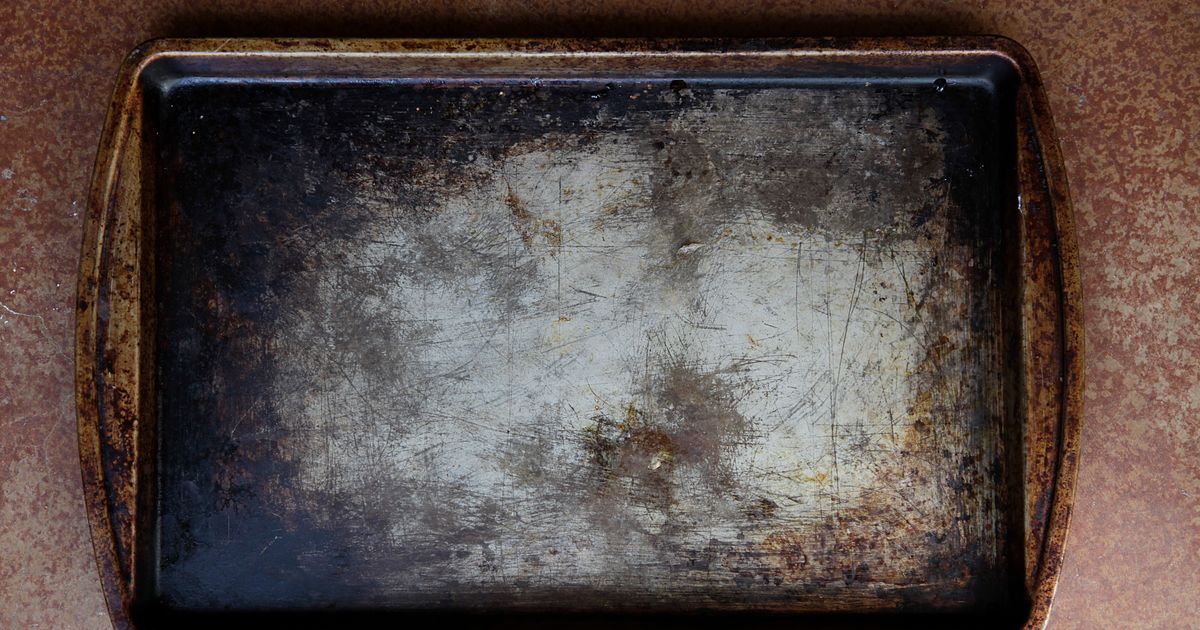
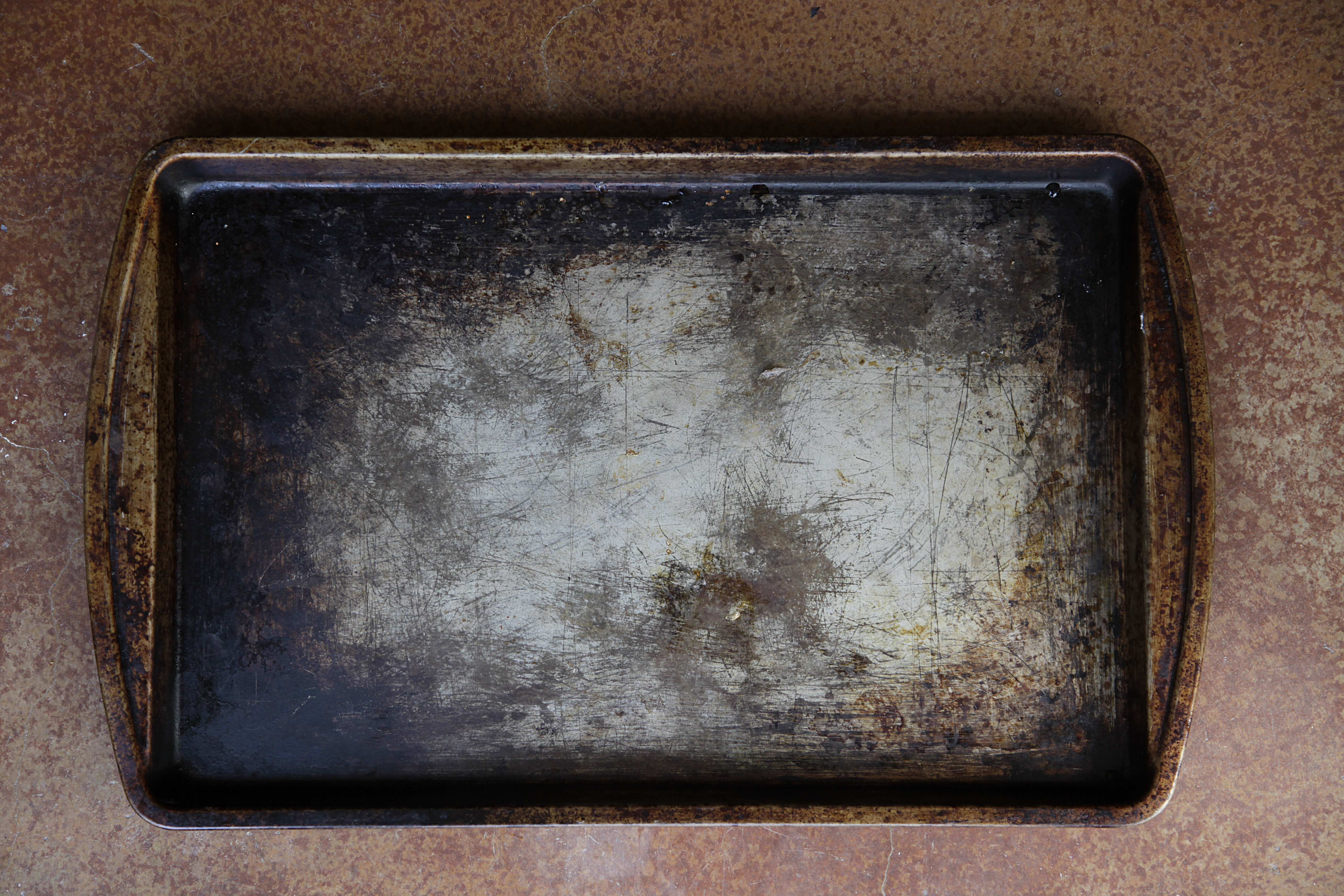
I don’t know what it is about baking trays. Maybe it’s the fact that we’ve designed them for a lifetime of inferno-like suffering in our ovens – but no matter how carefully I clean mine, they seem to get incredibly filthy in a matter of months ― almost as if they’re doing it on purpose.

Forget sponges. Forget dish brushes. Once my baking trays have achieved the crusted-on hue of shame, it feels like nothing will help to clean them.

So you can imagine how intrigued I was to hear from Tasting Table that the humble spud could help to remove the rust from my trays.

All I have to do, they advise, is halve a raw spud, dip the potato in washing-up liquid and salt or baking soda, and get to scrubbing. I was sceptical too ― but having tried it, I’ll never go back.

I know! It works because potatoes are high in something called oxalic acid, which is sometimes sold in its pure form as a rust remover.

When this comes into contact with rust, it creates a substance called iron oxalate, which can easily be washed away with water and soap.

The addition of washing-up liquid will help to cut through grease, while salt and baking powder will exfoliate the surface of your trays.

Sweet potatoes are higher in rust-reducing oxalic acid than other kinds, Tasting Table points out.

Yep! I’ve tried wrapping my entire oven (baking trays included) in clingfilm overnight after applying a baking soda paste before ― this worked brilliantly.

You can also try submerging your baking trays in hot, soapy water for a minimum of half an hour before scrubbing away the grime. This works, but requires a lot of sink space.

Baking soda and boiling water can also do the trick, Oven Pride suggests (though keep your hands safe during this method).

And of course, you can’t go too far wrong with a wire scourer and good ol’ elbow grease…

Share Button