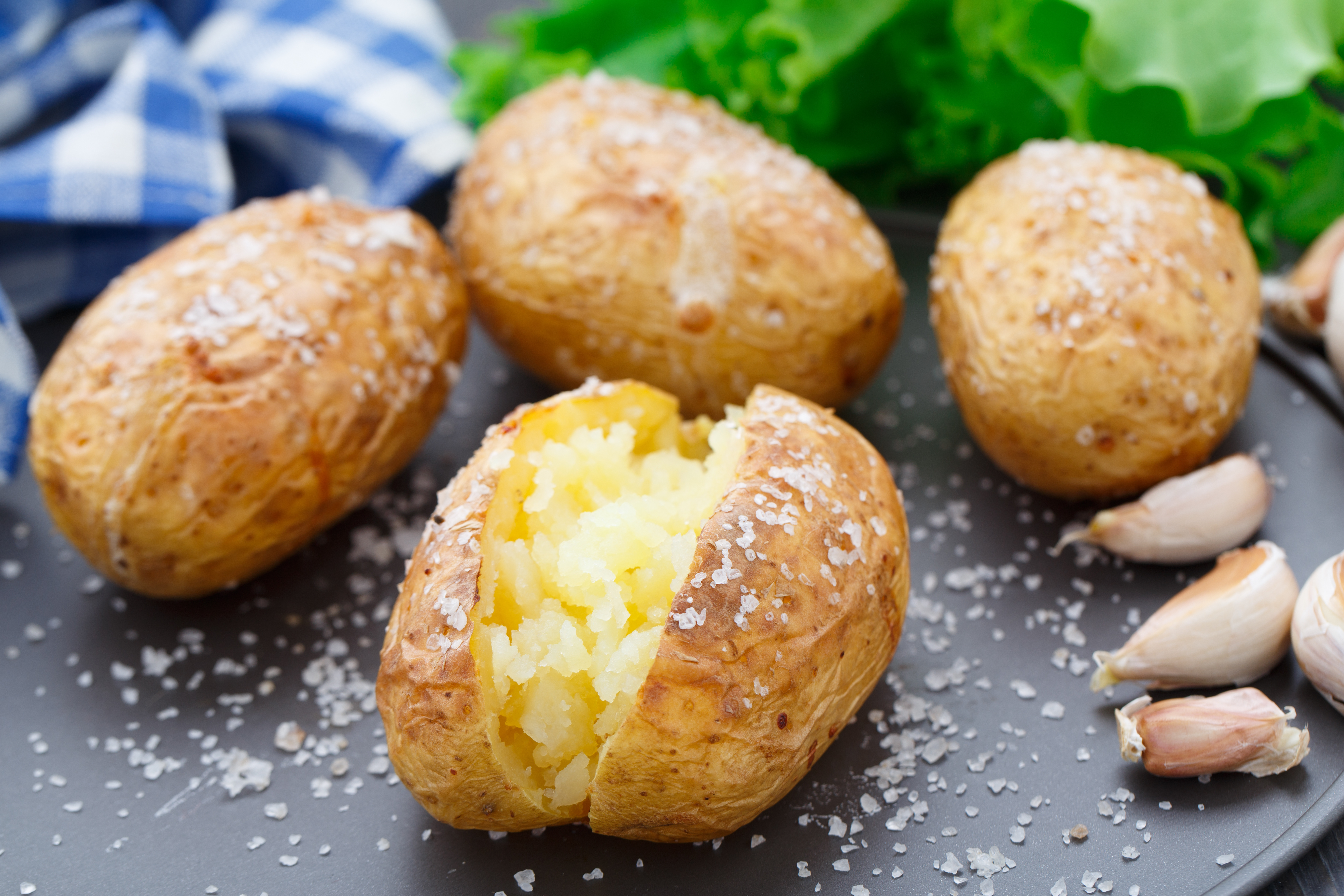
Jacket potatoes are so close to being the perfect midweek winter meal. They’re filling; they’re tasty; they go with basically anything. They’re also cheap, and spuds take much longer to go off than lots of other veggies.
But there’s one problem; it feels like you can basically while away an entire evening waiting for them to cook in an oven.
Advertisement
I can hear the purists now – and yes, I do agree that a lot of the time, the extra wait time is worth it. It’s a great way to ensure perfect, fluffy spuds with delicate, crispy skins, and other cooking methods (like air frying) take a similar amount of time.
But hear me out ― thanks to TikTok, I’ve been converted to a 10-minute microwave jacket potato-cooking method (yes, really).
What’s the method?
TikToker @harley.salem shared a microwave-based recipe for fluffy, crispy jacket spuds – and it’s racked up almost two hundred thousand likes.
Advertisement
The method is pretty simple: you wash the potato, shallowly stab it with a fork a LOT, deeply stab it with a fork a few times, and then wrap the spud in wet kitchen roll.
Place the damp parcel in the microwave for six minutes, and then carefully remove the VERY HOT cooked spud from your microwave. We recommend doing this with a tool like tongs, as it’s literally steaming at this point.
Then, also using a tool like tongs, peel the kitchen roll away from the potato ― et voila, you’ve got a perfectly fluffy spud.
Advertisement
If your spud isn’t fully cooked by the time it’s come out of the microwave, that’s simple to fix – simply re-wrap it in more damp kitchen roll and let it microwave for a couple more minutes (the bigger the spud, the longer you’ll need).
Potatoes are pretty watery, however microwaving them can cause all of this water to evaporate really quickly, drying out your beloved baked spud.
Advertisement
The thinking is that wrapping the potato in wet kitchen roll acts as an “evaporation buffer” helping the spud to retain enough moisture to stay fluffy and delicious.
“Best hack ever … sooo easy,” one commenter shared on TikTok. And having tried it myself, I completely agree – the texture is so far from the soggy, grainy mess microwaves sometimes create.
I will say that it’s not the crispiest skin I’ve ever eaten on a potato and the damp kitchen roll gets very, very hot, so you need to be careful (we weren’t joking about those tongs).
Advertisement
But for speed, efficiency and overall flavour, this gets a solid 9/10 from me.
In a culture of toxic positivity, it can feel particularly bad when you wake up and aren’t feeling totally happy. This is likely exacerbated when you open up your Instagram or Facebook feeds only to see smiling friends on vacation or at their wedding.
It’s easy to feel like you just should be happy, but experts say it is much bigger than that ― and there are probably some behaviours and beliefs that keep you from feeling your best.
Advertisement
Below, mental health professionals share the thought patterns, limiting behaviours and beliefs that affect your happiness and fulfilment most, plus their best advice for combating the negativity.
Shame, Guilt And Worry
“I think shame, guilt and worry are the most common disruptors of happiness, just in what I see in working with people,” said Tamika Lewis, the clinical director and founder of WOC Therapy in California.
When you’re experiencing one of these feelings, you’re holding yourself hostage to past life experiences or worrying about the future, she said. “So we’re not in the present moment, and that really disrupts … that contentment and joy.”
Advertisement
Practicing self-compassion is one way to combat these feelings, Lewis noted. She said it’s also important to have grace for yourself and practice mindfulness so you stay in the present moment.
Additionally, Lewis said she talks a lot about the Hawaiian practice of ho’oponopono with her clients.
“It’s four phrases, simply saying, ‘I’m sorry, please forgive me, thank you, I love you,’” she explained. Lewis encourages folks to close their eyes and recite this mantra four times.
Advertisement
“They really hit all these areas; the guilt, the shame, all of that. And then the love as a reminder of self-love, and sometimes it could help too to even do this in the mirror as you’re looking at yourself,” Lewis explained.
She said gratitude is another way to help combat feelings of shame, guilt and worry.
“I know it’s kind of cliché, but I think if we can keep our focus on the things we are grateful for … . So, if we tend to be critical about our bodies or our performance, really just giving thanks to the ways that our bodies are holding us or the ways that we’re showing up can be a quick hack,” Lewis said. (For any Peloton fans, this is exactly like instructor Jess Sims’ exercise mantra: “You don’t have to, you get to.”)
Not Taking Action In Your Life
Some of the therapists we spoke to said many of their clients often don’t pursue the activities, decisions or passions that make them happy. This might look like staying in an unfulfilling relationship or avoiding a job switch because you’re comfortable.
Advertisement
“I think for some people, they get stuck in these cycles of rumination. And what that prevents them from doing is actually taking action, right?” said Sadaf Siddiqi, a psychotherapist and mental health consultant in New York City.
Procrastination can be at play here or even fear and anxiety, “but for other people, it’s a way of deflecting behaviour in the sense that they’re so overly focused on someone else and not attuned to what they need to be doing,” she said.
Do you find yourself obsessing about your sister’s bad love life decisions? Then you may fall into the category of deflection.
Advertisement
“Not taking action in your life is sometimes also linked to not having a strong connection with yourself, so maybe those are two branches … to happiness,” Siddiqi said.
Taking action to live a more joy-filled life has to be intentional. In a society that overproduces and is always on the go, sometimes action can actually be a step back, she said. Taking action needs to be relevant to what’s going on in your life — like your goals and aspirations.
Doing this can feel scary to many people because of the risk involved. So it’s important to understand that “no matter what trajectory you take, you will make mistakes; it’s a non-negotiable in your path,” she said.
Advertisement
“So if you’re always preventing taking action because you’re so afraid of messing up, it’s going to really be a paralysis — it’s almost going to be a decision paralysis, an action paralysis,” Siddiqi said.
When it comes to taking action, Siddiqi said she tells her clients to take micro-steps, which may not feel as exciting as big steps because there isn’t immediate gratification, but change often comes from the small shifts, she noted.
“Comparative thinking is what you think of when you think about scrolling through social media and you see this person who seems to have it all … their lives on the little pictures and posts are just amazing,” Dahlberg said.
Even if you aren’t actually saying or thinking to yourself “I want this” or “I wish I had this,” just seeing a different situation can make you naturally compare yourself to the folks you follow on social media, she noted.
“I think our culture and our society is kind of set up that way, unfortunately,” Dahlberg said. “Sometimes it can be good, keeps things competitive and keeps us learning and growing and always striving to be the best, but I think sometimes our culture and society kind of goes a little too far with it, where you’re kind of constantly comparing yourself to everyone else or comparing what you have to what someone else has or doesn’t have.”
Advertisement
To stop comparing yourself to others so much, Dahlberg said, you can limit your time on social media. Instead of opening up Instagram or Facebook as soon as you wake up, open up your Notes app and write down five things you’re grateful for, she said.
“Starting the day with gratitude … can be a great way to frame your day in a positive way and get those endorphins going and having more of those happy feelings,” Dahlberg said.
Additionally, try to remember that what you’re seeing on social media or the curated stories you hear from loved ones aren’t the full picture.
Advertisement
“It can be really hard to be satisfied with your life when you’re comparing yourself to other people who are really showing the best of their life,” said Shavonne Moore-Lobban, a psychologist in Washington, D.C., and author of “The Black Woman’s Guide to Overcoming Domestic Violence.” “We don’t often have a lot of access to people’s most challenging moments, the natural ebb and flow of the ups and downs.”
Moore-Lobban noted that kind of vulnerability is often not affirmed by society. Just think about times when you’ve thought someone was “oversharing” or “attention-seeking” when they share information that isn’t positive.
“I think in this unintentional way, we’ve really encouraged people to present the best sides of themselves and to show the good moments and to be optimistic,” Moore-Lobban said.
Advertisement
So remember that the next time your favourite celebrity shares photos from a glitzy party or your neighbour posts an update about their home renovation.
Morsa Images via Getty Images
Instead of scrolling social media and comparing yourself to the lives on your phone screen, take a few moments to jot down what you’re grateful for.
‘Should’ Statements
“Another thing that kind of goes along with comparative thinking is expectations, like what your life should be or should look like,” Dahlberg said.
Advertisement
These are called “should” statements. They could be as minor as “I should have done the laundry today” or, more often, nebulous, like “I should be further along in my career by now” or “I should be more fulfilled.”
When thinking about “should” statements, Dahlberg noted you’re leaving the present moment.
“If you can, try and focus on really being present where you are, taking a look at what’s around you, what’s right in front of you in the moment and trying to find what you can appreciate from it, even … in a really difficult circumstance,” she said. This can help you feel lighter and happier.
Not Having A Strong Connection With Yourself
According to Siddiqi, when it comes to adults, lacking a strong connection with yourself damages your happiness. “That can look like outsourcing your worth, not knowing your own values, your own limitations, your own strengths,” she said.
Advertisement
If you’re someone who outsources your own worth, your feelings about yourself come from the opinions of other people and society as a whole. Additionally, if you don’t know your own values, limitations and strengths, you’ll have trouble determining the things that make you feel fulfilled — or, on the contrary, empty.
It’s important to understand yourself, which includes accepting your flaws, she said.
“It doesn’t mean you turn a blind eye to what your limitations are, but it’s really about how you approach them,” Siddiqi said.
And when you have a stronger connection with yourself, you can learn what you need to fill your cup, such as setting healthy boundaries.
Advertisement
“It really starts with those small things. Positive small talk, affirmation, doing things independently … so you feel more confident taking action,” Siddiqi said.
Ignoring Deeper Problems
It can feel hard to be honest and vulnerable in a society that encourages a glass-half-full mentality. But when you push down deep-seated issues, you’re actually harming your happiness — and this especially goes for trauma, Moore-Lobban said.
“We know that trauma is very prevalent in our society in lots of different ways, right? Whether it’s trauma that people have experienced in relationships or with family and their childhood, in their adulthood, racial trauma … homophobia against folks, xenophobia: All the things of life that are hard and really overwhelm our ability to cope for a particular time stick with us,” Moore-Lobban said.
Advertisement
As difficult as it is, she said it’s important to unpack your trauma to achieve the joy you deserve in life.“[We have to] look at what has happened underneath if we’re really going to find a place of healing from it,” Moore-Lobban said.
“I think that being able to explore and understand the experiences that people have had in life, even when they are challenging and negative, I think that’s a part of getting to happiness,” she added.
If you don’t find a way to address and be honest about the challenges in your life, then you’re being inauthentic to yourself, “which isn’t fair to yourself and is not going to help your happiness or your healing,” Moore-Lobban said.
Advertisement
Additionally, Siddiqi said she thinks “it is hard for people to feel happy because of underlying mental health issues that biologically prevent them from feeling joy — things like depression, mood disorders.”
In these cases, additional interventions may be necessary, such as lifestyle changes, medication management or support from a therapist. If you think you fall into this category, you can look to databases like Psychology Today to find a mental health provider to help you feel better.
Isolation
Isolation is a major source of unhappiness and even depression, according to Lewis. “We’re connected on social media, but I think it’s important for us to think about who are we connecting with in our day.”
Advertisement
Lewis said it’s becoming all too common to go days without connecting with loved ones or your community, and that can lead to feelings of loneliness and can make you feel isolated.
“We’re all interconnected. We’re all in this together,” Lewis stressed.
To keep yourself from feeling isolated, call your family members, invite a friend or neighbour over for a drink or make plans with a co-worker to get dinner after work.
How Else To Capture More Joy In Your Everyday Life
The first step is creating an intention. “When we wake up, most people think about their extensive to-do list … I like to think about how do I want to feel today — you know that sets the day off in a different way,” Lewis said.
Advertisement
For example, if she says that she wants to feel at ease today, she will think about the things she can add to her day to evoke that feeling.
“Then I think about, too ― it could be a little dark ― but I do consider, what if this were my last day? How do I want to do this life?” Lewis said. “And I try to remember that and make choices from that place.”
So if Lewis doesn’t want to be in a funk or doesn’t want to hold a grudge, she makes sure her actions mirror this throughout the day.
Advertisement
“And I know there [are] deeper traumas that we’re all likely working through, but the one thing we can control is really just the moment we have in front of us,” she said.
Additionally, try not to make “happiness” your final outcome.
“For my young adult clients, one thing I always encourage them to remember is that you have to avoid thinking of happiness as a goal or your final outcome,” Siddiqi said.
“One thing I see all the time: My clients will say ‘I just want to be happy,’ and then I’ll ask them ‘What does happiness look like for you?’ and they’ll say ‘I want to get married,’ ‘I want to get into this graduate program,’ ‘I want to lose 10 pounds,’ and there are all these concrete goals … a lot of them find that when they [reach their goals], there are still a lot of problems in life, there are still issues, they haven’t reached this ‘happiness,’” Siddiqi said.
Advertisement
Instead of looking at happiness as a destination, think of it as the choices along the way, she noted. “Part of embracing and being open to happiness is accepting the ups and downs,” Siddiqi said.
She encourages folks to remember that even in your lowest moments you have to be open to finding things that are good, and even in your highest moments you have to be grounded enough to remember that everything is temporary and the ebbs and flows of life are normal.
“It’s not one goal, it’s not one final outcome that I need to associate my happiness with,” she said. Because, if you do that, you’ll forever be searching for a fleeting moment.
Advertisement
Lewis added that even beyond happiness, you should strive for a life full of joy and fulfilment. “There’s a lot of toxic positivity around ‘I just want you to be happy,’” Lewis said.
Lewis said happiness looks different for different people, which can put pressure on the term “happiness.” It’s much easier to decipher if you feel joyful and if you feel fulfilled in your life.
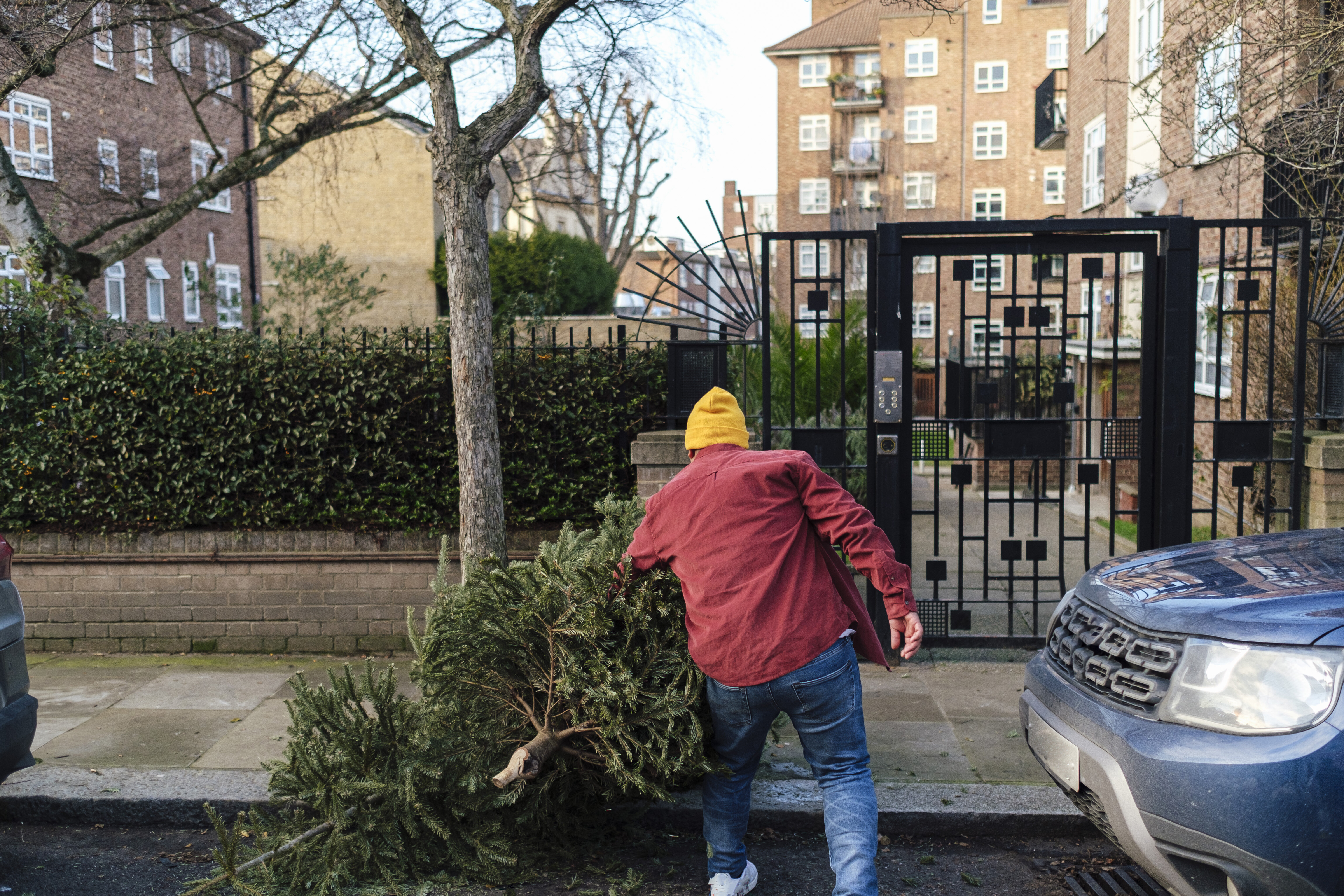
We all tend to focus on the best practices when it comes to putting up real Christmas trees, but there is a lot to be said about what to do when getting rid of it. Specifically, is there a best time to do it?
According to experts, the answer is yes. You may want to prolong the merriment into the new year (or just don’t have the energy to take it down), but it turns out there’s one major reason why you should: “Once that tree dries out … it can burn,” said Jill Sidebottom, a spokeswoman for the National Christmas Tree Association.
Advertisement
Firefighters see about 160 home structure fires per year as a result of a Christmas tree, according to the National Fire Protection Association.
To further protect yourself, the NFPA suggests placing the tree at least 3 feet from any heat source, making sure it’s not blocking an exit and ensuring that decorative lights are in good working order.
Although the risk overall is rare, it’s certainly an issue worth discussing when decorating ― and choosing when to undecorate ― your space for the holidays.
Advertisement
“A fresh-cut, well-watered tree will not burn,” said J. Scott Edwards, the general manager at Maple Row Farm. “However, a very dry tree can be of concern.”
How do I know if my Christmas tree is dry?
There are a few ways to figure out if a tree is dry, starting with its colour. If you notice your tree changes in hue to a lighter green, brown or even red, Sidebottom said, you should start thinking about taking it down.
Also keep an eye on the tree’s needles. “When the tree dries out, the needles and small shoots will become stiffer and less bendable,” Sidebottom explained.
Advertisement
The tree’s engagement with water could also be indicative of its condition. “If a tree that has been taking up water quits doing so, that’s a sign,” Sidebottom said. “The tree will also be lighter, as it is no longer full of water.”
Any or all of the above characteristics could appear in your tree, Sidebottom said.
Westend61 via Getty Images
You can tell your tree is drying house based on factors like the color and the needles.
Advertisement
When you bought your tree also influences when you should take it down.
About 33% of people buy their tree right after Thanksgiving and another 33% do so the first week of December, according to a survey the Real Christmas Tree Board released this year.
When you actually cut down your tree will influence when you should think about removing it from your home, Edwards said.
“The earlier you cut the tree, the earlier it needs to be taken down,” he explained, noting that the drying process kicks off as soon as the tree is removed from the farm. “We often refer to cut flowers when talking about tree care,” he added. “It’s really just a big flower. It doesn’t last forever.”
Advertisement
Overall, Sidebottom urged people to “use their common sense” when it comes to taking down the tree. Removing your tree when it’s dry keeps everything – and everyone – in the house safe.
For what it’s worth, she suggested, try not to think of the cleanup process as the end of the usually happy, sentimental holiday season.
“I always enjoy putting the tree up, but I enjoy taking it down too,” Sidebottom said. “Putting all those memories away and tidying up the house is like getting ready for the new year.”
Still, knowing you’re not alone during your backed-up time of pain doesn’t necessarily make the condition easier.
So it’s a good thing surgeon, lecturer, and author Dr Karan Rajan has shared a simple massage method that can help to get your BMs back on track.
Why does massage help to relieve constipation and how do I do it?
The doctor began his video by saying that the pendulum method ― swaying your torso as you sit on the porcelain throne ― is a good way to unblock your bowels.
Advertisement
Imagine you’re blowing up a balloon as you attempt to go number two is also a good method, the gastrointestinal surgeon continued.
But he adds that “there’s evidence that abdominal massages in a sweeping clockwise motion can help.”
Dr Rajan advises we “always ensure you’re going from right to left” because this mimics the direction of our intestines.
Advertisement
This stimulates peristalsis, the movement of your guts that helps stool to pass through the system.
The doctor pointed to a 2022 randomised placebo-controlled study which found that “Abdominal massage should be one of the first-line conservative approaches in the management of functional chronic constipation.”
How can I prevent getting backed up in the future?
Eating a fibre-filled diet with lots of fruits and veggies, drinking enough water, exercising, and avoiding booze can all help your toilet routine, the NHS says.
They add that adopting a squat position can make the passage more efficient: “To make it easier to poo, try resting your feet on a low stool while going to the toilet. If possible, raise your knees above your hips,” the health service advises.
Advertisement
Per the NHS, you should see a GP about the condition if you:
are constipated and it’s not getting better with treatment
are regularly constipated
are regularly bloated
have blood in your poo
have lost weight without trying
are constipated and feel tired all the time
are taking medicine that’s causing constipation – such as opioid painkillers
notice sudden changes in how you poo (your bowel habits)
Don’t get me wrong ― I love leftovers. But after day two of bubble and squeak and this (delicious) roast potato hash, I’m getting desperate for a different way to repackage my uneaten roast veggies.
Thankfully, the best recipe I’ve found is a fuss-free air fryer recipe that creates zero washing-up ― an easy, goes-with-everything air fryer frittata.
Back in June, TikToker and nutritionist Emma Claire shared a foolproof recipe for air fryer frittatas that’s ready in under 15 minutes ― and having recently tried a Christmas leftover variation, I can confirm that it’s as delicious as it is easy.
To start with, you’ll need to line the airy fryer basket with baking paper so that it covers the sides of the basket, too. You can also use specially-designed paper air fryer inserts if you have them ― so long as the base and sides are protected from the eggs.
Then, drizzle some olive oil on the paper before cracking six eggs into the basket. Claire chucked in her veggies at this point ― I used sliced Brussels sprouts, some fairly small roast potato cubes, old broccoli, and peas. Use whatever you have leftover.
Then, add whatever seasoning you like ― Emma Claire went with paprika on top of regular salt and pepper. I like chilli flakes in mine too, but that’s the beauty of the recipe ― you can personalise it to your exact taste and supplies.
Then, add a thin layer of grated cheese to the top and cook for 15 minutes at 180°C.
“I sliced it in half to make two servings ― perfect for a quick and easy lunch or dinner,” Claire shared. I also found it’s perfect for two!
’Tis the season for festive feasting ― and, if you’re not careful, food poisoning.
NHS Shetland says that “Campylobacter is one of the most common bacteria causing food poisoning, and it is closely associated with raw poultry such as chicken or turkey.”
But cooking your food correctly is only one part of the equation ― it also matters how, and when, you store leftovers, public health body Safefood says.
Advertisement
They add that “If you store your Christmas dinner leftovers carefully in the fridge you can hold on to the glow of Christmas Day and use them up over the next three days.”
“Don’t eat food that has been standing at room temperature for more than 2 hours,” the health pros advised.
If your turkey still feels hot long after you’ve cooked it, you can slice it into smaller pieces before placing them in airtight containers to prevent cross-contamination.
Advertisement
Safefood stresses that “Leftovers stored in the fridge should be eaten within three days. ”
NHS Shetland Health Protection Nurse Chloe Umphray gives an even shorter reheat window: “Storing food incorrectly and for longer than recommended can increase the risk of bacterial growth, which can lead to food poisoning,” she warned.
“Key safety tips include: store it in the fridge, eat it within two days and only reheat it once.”
How do I safely reheat leftovers?
As Chloe says, you can only reheat leftovers once.
However you cook them, Safefood says they “should be reheated until they are piping hot all the way through. And leftover gravy should be brought to a rolling boil.”
Even if you’re eating the leftover meat cold, Food Standards Scotland adds that you should only take as much turkey as you’ll actually need out of the fridge.
Advertisement
They advise against leaving plates of cold cuts out, and suggest we punt the meat back in the fridge within an hour of taking it out if needed.
A 2018 study found that about 10% of Millenials were hoping their in-laws would disinvite them from Christmas dinner at the last moment.
Regardless of which age group you’re in, you may know the feeling ― whether you outright hate your in-laws or just wish for the comfort of your own Crimbo traditions, it’s no secret some struggle to deal with spouses’ parents at Christmas.
Advertisement
If you’re among them, I can at least assure you you’re far from alone.
1) “Bought my toddler a gigantic John Deere ride-on tractor toy which is now taking up my entire lounge.”
2) “My MIL bought me a hair brush set. I have alopecia.”
“And I shave the rest so definitely do not need it. She also bought my male partner I floral bath bomb and a Christmas candle set. She does it on my purpose and it winds me up because my partner spends so much time looking for the perfect gifts for them!” Abz75
Advertisement
3) “Mother-in-law (who lives in a posh apartment and dresses in Gucci) arrived at my daughter’s for Christmas day. Her contribution was a bottle of lime cordial.”
8) “They turned up just in time to sit on their arses scrolling for an hour while we prepared both days’ Christmas meals, and returned to the couch immediately when it was time to clear up.”
“Then when we’d waited until after lunch and a walk to open the presents so that everyone would be there, they decided they needed a snack and made the rest of the family sit waiting for them to work out where the snacks were, then they returned with their snack without even considering asking if anyone else wanted anything.” u/bluntbangs
Advertisement
9) “Argued that all TV on Christmas day had to be live, and not recorded months before.”
10) “MIL saw the mountain of ingredients and other things I had bought for Christmas dinner and desserts. She was happy with our plan and didn’t want to change anything.”
“As I’m assembling a massive trifle (made from scratch), after cooking for hours, she waltzes in with a huge jelly dessert and a prepared ham under the other arm.
There’s obviously no room in the fridge and of course, absolutely no way the FOUR of us will be in any way able to eat all of it.
Advertisement
I didn’t say anything of course but I’m mightily pissed off.” u/daniel625
11) “We woke up early to FaceTime them when they were all together for Christmas and my MIL then spent 25 minutes going one by one through the Christmas cards one of them made with AI.”
“She’d already shared all of the images via text.” u/annedroiid
Do you have anything to add? Let us know in the comments!
The computer said she was an 88-year-old female with a chief complaint of fatigue. From experience, I knew fatigue in an older person could be caused by almost anything. So … was it a heart attack? Depression? Cancer? An infection somewhere? Or was she just … fatigued?
The real reason she was there never crossed my mind.
The tiny woman had positioned herself precisely in the centre of the gurney. Her white tennis shoes sat under the chair with a thick, flesh-coloured knee-high stocking tucked inside each one. On the seat of the chair was a neatly folded yellow cardigan atop an equally neatly folded brown dress.
She wore her hospital gown like a jacket, open to the front, and her knobby hand clutched it closed over her cross-your-heart bra and waist-high white cotton panties. A Catholic cloth scapular with an image of the Virgin Mary hung on a string around her neck, and a tiny gold cross on a fine gold chain nestled in the hollow at the base of her neck.
Advertisement
“Hola. Mi nombre es Doctora Birnbaumer. Como se llama?” I said to her.
“Hola, Doctora. Mi nombre es Maria,” she replied.
Her eyes sparkled, and she sat up straighter, her posture that of someone who found life interesting. I checked her armband and offered to cover her with the sheet folded at her feet. She nodded.
I asked her how she was feeling. Fine, she told me. Was anything bothering her? No, she said. Any pain? No. Any shortness of breath, chest pain, headache? No, no and no. I went through my list and she denied anything being amiss.
Maria’s only encounters with the medical system had been for the births of her many children, several of whom she had outlived. She had been widowed over two decades before. She lived alone, with family nearby. She wasn’t working but had spent most of her life as a housekeeper. No meds, no allergies, no surgeries.
Advertisement
I asked if I could examine her, and she nodded. From head to toe, she was remarkably fit. Her bright, curious eyes nestled in a sea of soft skin and were bracketed by deep crow’s feet sculpted by years of smiling. The rest of her head and neck exam were normal. A tiny bit of curvature of the spine. Clear lungs, a strong, steady heartbeat with no abnormal sounds. Abdomen, extremities, neuro exam… all normal.
I was flummoxed. She watched me expectantly.
“So, are you sure nothing is bothering you today?” I asked.
She shrugged and raised her hands in a “what can you do?” gesture.
I was getting nowhere. Time for a different tactic.
I asked her why she was in the emergency room. She said she didn’t know.
New angle: “How did you get here today?”
Her face blossomed into a smile. Her daughter, granddaughter and great-grandson had come by her home, picked her up and brought her to the emergency department.
Finally. Maybe an answer.
With Maria’s permission, I sought out her family members in the waiting room. They were easy to find, all three resembling the petite woman on that gurney. The same dark eyes stared at me as I approached them, but while hers were bright and inquisitive, theirs were red-rimmed, and their eyelids were swollen.
Advertisement
As we entered the “family room” to talk, the two women deferred to the teenage boy, who acted as spokesman. He remained standing as the women and I sat.
They all turned to me, waiting. I cleared my throat.
“So, I was wondering, why did you bring Maria to the hospital today?”
Instantly all three sets of eyes filled with tears. The oldest woman nodded to the boy, and he spoke, dropping his gaze to the floor.
“My cousin. He died. The police came to my aunt’s house and told her he got shot.”
“Oh! I’m so sorry.” Now I understood the tears.
We sat for a few more moments in silence. No one moved. And I still didn’t know why Maria was there. I ventured, “So, is there something wrong with your great-grandmother?”
Advertisement
The boy answered. “My cousin. He is… was… Abuelita’s favorite. Everyone in the family knows it.” The boy’s voice was pleading, but I still didn’t understand. “We want you to tell her he’s dead,” he blurted.
And there it was.
Courtesy Diane Birnbaumer
The author at work in the emergency room.
I wish I could deny it, but my first reaction was irritation. Really? There was nothing medically wrong with her? The emergency room was packed with people, some were really sick, and I just spent 15 precious minutes on this? Did people really think the emergency room fixed everything?
Advertisement
Then the three of them started talking at once. They feared she’d have a heart attack or a stroke when she found out. They were terrified the news might kill her. They didn’t want to tell her. They wanted someone else to do it, and she needed to be somewhere that, if something terrible happened, she’d be taken care of.
I sat with what they told me for a moment. I recalled how I felt when my dad called me with the news that his thigh pain was from a tumour that had spread from a mass in his lung. I remembered how much I wanted someone to tell me it would be OK, that we would all survive this, that the world, now horrifyingly askew, would somehow right itself.
The healing that eventually happened didn’t result from any discussions with a doctor but grew from the love and support we gave each other as a family, from the times we would lean together, our hands and heads touching, creating an edifice, a steeple from which we could all draw strength.
Advertisement
Through these memories, my path forward became clear.
I took a breath and leaned forward to look each of them in the eyes. I made sure they heard me when I told them I was there for them, all of them… including Maria. I said I would be there with them, in the room, and around for hours to watch Maria if she needed anything and to make sure she was safe and taken care of. I told them I had their backs, but that the news needed to come from them.
They searched each other’s faces, and then they all nodded.
As we all walked into Maria’s room, her bright smile faded when she saw our faces. They moved to her bedside. I slid a box of tissues onto the table near Maria and stepped away.
Maria was now surrounded by the three generations of her progeny. They spoke to her in Spanish in hushed tones, and I watched as four lives — four generations — confronted the dreadful news.
Advertisement
Maria listened quietly. Her straight posture sagged the tiniest bit, her smile disappeared, and her face aged decades in moments. She reached one hand, spotted with age and deformed by years of labor, out to her family, and they all joined hands. With her other hand, she clutched her scapular, pulling gently on the string that attached it around her neck.
I eased out of the room, leaned against the wall in the hallway and remembered.
I remembered being a young woman deeply invested in caring for others and deciding my future was in medicine. I happily took on the years of schooling and training and debt required to become a doctor. I recalled the thrill of learning about the human body, how it works and what to do when it doesn’t.
I remembered cringing when I learned to start an IV and the patient gasped in pain. My heart broke the first time I told a patient they had a terminal disease. I cried myself to sleep the night when, as a third-year medical student, the man I assured would do fine during his coronary bypass surgery died on the operating table.
Advertisement
But I couldn’t remember exactly when my empathy started to slip away.
I knew that when I started my shifts, I walked through an ambulance bay packed with paramedics, gurneys and patients. I knew that no matter how hard or how fast I worked, the waiting room would never be empty. Patients came to the emergency department when they were injured and ill, but also when they could not get in to see their own physicians or when they lost their insurance or because after-hours was the only time they had off between jobs. Police brought in patients who had nowhere to go or had behavioural problems or whose addictions had consumed their lives.
There were never enough beds, patients waited for hours, and everyone — patients and staff alike — was understandably tired and angry. There was no way to do a good job — at least not as good a job as I had been trained to do. Despite that, administrative bean counters reduced my performance to counting how many patients I saw per hour and how many tests I ordered.
When I became an emergency physician, I had been all in on taking on the hard work and the erratic schedule, the difficult decisions and the busy shifts that went with the job. Over time, though, I had let the demands of a changing, overstressed and broken system knock me off course.
Advertisement
Standing in that hallway, listening to the soft murmurs of Maria and her family, I remembered why I was there — why I chose this profession, why I worked these crazy hours, why I did this job.
I pulled away from the wall and headed off to care for the next patient waiting to be seen.
Maria didn’t have a heart attack or a stroke. An hour later, she sent her great-grandson to find me to tell me she wanted to leave. Her family helped her into her clothing and gathered her things as I prepared what was needed to send her home. At the door to her room, I hugged each of them in turn, Maria last, knowing her visit to the emergency room was exactly what she and her family needed.
Apparently, it was exactly what I needed, too.
Note: Some names and identifying details have been changed to protect the privacy of individuals mentioned in this essay.
Advertisement
Diane Birnbaumer is an emergency physician and writer living in Los Angeles. Her poems and essays have appeared in Intima: A Journal of Narrative Medicine and the medical journals Annals of Emergency Medicine and Annals of Internal Medicine, as well as the anthology “The Things They Wrote: A Writing/Healing Project,” published by Room: A Sketchbook for Analytic Action. She is an ambassador for The OpEd Project and attends The Writers’ Program at UCLA Extension.
As the office radio blared the Christmas classic “I Wish It Could Be Christmas Everyday” by Wizzard, I was racing outside to take a call from my mum telling me that my nan had been taken to hospital and it wasn’t looking good.
My nan, who had played a huge part in raising me, had called me her ‘one true friend’ and who shamelessly loved Christmas more than anybody I knew, died four days later. She didn’t make it to Christmas but the celebrations went on, even as I felt my world had stopped.
Advertisement
Seven years later, I sat in a taxi as the driver blared ‘Stay Another Day’ in what was a cruel twist of fate as I’d just learned that my uncle was going to die within days from an aggressive form of cancer.
The song that was once a tacky festive favourite of mine was almost mocking my unthinkable situation.
Thankfully, my uncle did see Christmas that year but had spent it knowing he was about to die and he left us on December 29th.
Advertisement
Now, Christmas feels like a very different beast than it used to. Instead of wandering mindlessly around festive markets, I instead feel suffocated by the ‘joy’ that this season supposedly brings. I feel sick to my stomach with grief and nostalgia for a time when my family was bigger, happier and not in an apparently endless state of mourning.
A time when December didn’t fill me with dread.
According to Bianca Neumann, Assistant Director of Bereavement at Sue Ryder, my experience is common. She said: “The anticipation of Christmas can often be worse than the actual day itself. But unfortunately, for many, it is very common that grief is more intense and harder to deal with throughout the holiday season.”
It’s a complex mix for me, at least. Not only do I not feel like celebrating but even when I try to, all I can think about is how they should be here with us, celebrating too.
Advertisement
Neumann urges that this grief can come in many forms, saying: “Maybe you’re bursting into tears when you least expect it, perhaps you feel angry at the people around you, or maybe you’re feeling anxious, worrying about how you’ll feel or how you’ll get through it.
“Know that these feelings are all normal, and that you’re not on your own this Christmas.”
How to cope with Christmas when you’re grieving
Bianca Neumann shared her tips for getting through this not-so-festive season if you’re missing somebody:
Think about what you want to do
Neumman says: “You shouldn’t feel pressured to have Christmas as usual if it doesn’t feel right, although celebrating as you normally would, might be a comfort to you.
Advertisement
“This will be different for each person after a bereavement, so plan for a Christmas you feel comfortable with and give yourself permission to do what you want to do.”
Of course, no plan has to stay firm, either. Neumann urges that if you’re finding things difficult, you have the right to step away from the usual traditions and rituals until you feel that you’re ready to pick them up again.
She added: “Remember that all emotions, whether they are ones of sadness, joy or any other, take up energy. You might not know how you’ll be feeling from one day to the next, so be kind to yourself and try not to ‘over-do’ things.
Advertisement
“Take a break and, if you’ve got a hectic couple of days ahead of you, schedule in some quiet time – whether that’s going for a walk if you need to, setting aside a few minutes to yourself with a cup of tea, or spending some time writing in a journal.”
Forget the ‘should’
While it’s easy to get caught up in the expectations of Christmas, Neumann says: “Don’t feel guilty about the things you think you ‘should’ be doing and know that it’s okay to not be okay.
“Christmas can be a difficult time for anyone grieving and it can be tricky to escape with festive songs playing in every shop, cards coming in the post and re-runs of old favourites on TV.”
Advertisement
Let the tears flow if you need to
Neumann says letting yourself feel your feelings is essential: “As much as you may fear that you won’t stop crying once you start – you will, and you may even feel a little better for doing so. Tears can make us feel relaxed and less anxious, that’s why we often feel relief after a good cry.
“They are also a visible sign to others, signalling the need for support.”
Be open about your decisions
Once you’ve had a think about how you want to approach the holiday season, you may find it helpful to be open with those close to you.
Having conversations with friends and family about how you feel and what your plans are can help everyone support you in ways which are sensitive to your grief.
Advertisement
Consider old and new traditions
Neumann advises: “For many people, Christmas comes hand in hand with a number of traditions that can be linked to memories of the person you are grieving. This can leave you feeling upset, especially when you aren’t able to do these traditions in the same way.
“To help you get through this difficult time, consider the traditions and what they mean for you and those around you.”
She suggests that changing old or creating new traditions may help the children in your family, particularly if they’re struggling, too.
Advertisement
Some ideas include:
Buying or making your own Christmas ornament or bauble to remember those who have died. If a photograph feels too much, then perhaps use a ribbon of their favourite colour or a sentimental object.
Bringing out the person’s stocking, or make one for them, so that you, your friends and family can fill it with cards, messages or letters. You can decide as a family whether you then would like to share these out-loud or keep them private.
Having a small Christmas tree or memory wreath set up somewhere within your home in honour of the person who has died. You could decorate this tree or wreath with their favourite colours, photographs or any meaningful objects or messages.
Making a paper chain with a message or memory of the person written on to each ‘link’.
Buying a big candle in honour of them and lighting it for periods of reflection and remembrance.
Making an object or cash donation to a charity you know the person you are mourning would have supported in their honour.
Setting a place at the dinner table for the person who is not there or making a toast to them at the Christmas meal.
Decorating their headstone or plaque on Christmas Day.
Representing the person who has died through an object or symbol in your annual family Christmas photograph, if that’s something you do.
Do something from your own bucket list or something the person who has died has missed out on. For example, join an annual Christmas/Boxing Day swim, volunteer on Christmas Day or spend it in nature and go for a hike. Whatever you choose, it is OK to do something that makes that time meaningful to you.
Mind, open Monday to Friday, 9am-6pm on 0300 123 3393.
Samaritans offers a listening service which is open 24 hours a day, on 116 123 (UK and ROI – this number is FREE to call and will not appear on your phone bill).
CALM (the Campaign Against Living Miserably) offer a helpline open 5pm-midnight, 365 days a year, on 0800 58 58 58, and a webchat service.
The Mix is a free support service for people under 25. Call 0808 808 4994 or email help@themix.org.uk
Rethink Mental Illness offers practical help through its advice line which can be reached on 0808 801 0525 (Monday to Friday 10am-4pm). More info can be found on rethink.org.
With Christmas day being only days away, it’s almost time to start prepping the turkey. It’s not often the most pleasant of activities, what with the uh, giblets removal and all but with the right preparation comes the most succulent of Christmas meats.
This year, we’re looking to none other than the queen of the kitchen herself, Mary Berry, for our turkey recipe. After all, who better to help us cook up a storm and impress our family with our kitchen tricks?
Advertisement
Of course, by this point we all have our own traditions for cooking the Christmas turkey but this year, we’ll be adding a little of Mary Berry’s finishing touches to the skin with orange slices.
The perfect finishing touch to roast turkey
So, in Mary Berry’s turkey crown recipe as featured on Mary Berry’s Absolute Christmas Favourites, she has two oranges ― one cut into slices and one cut in half and these add finishing touches to the cooking of the turkey.
So, once you’ve done your own preparations, loosen the skin on the turkey using your fingers or a spatula, gently so as not to tear anything. Then, mix two teaspoons of thyme leaves with 50g of softened butter and smear the mixture underneath the skin of the bird.
Advertisement
Then, arrange orange slices in two neat rows, under the skin and on top of the herb butter.
As for those orange halves? Place one under the skin at the neck end of the bird and any orange trimmings in the cavity.
This mix of citrus and herbs gives a perfectly Christmas flavour to the tastebuds and with not-too-much effort.
Plus, if you have any leftovers, these can be frozen for up to a month. Just make sure you wrap them up well!