Can engineered plants help make baby formula as nutritious as breast milk?

Worldwide, a majority of babies — approximately 75% — drink infant formula in their first six months of life, either as a sole source of nutrition or as a supplement to breastfeeding. But while formula provides essential food for growing babies, it currently does not replicate the full nutritional profile of breast milk.

That’s in part because human breast milk contains a unique blend of approximately 200 prebiotic sugar molecules that help prevent disease and support the growth of healthy gut bacteria. However, most of these sugars remain difficult, if not impossible, to manufacture.

New research led by scientists at the University of California, Berkeley, and the University of California, Davis, shows how genetically engineered plants may help close this gap.

In a new study published today in the journal Nature Food, the study team reprogrammed plants’ sugar-making machinery to produce a diverse array of these human milk sugars, also called human milk oligosaccharides. The findings could lead to healthier and more affordable formula for babies, or more nutritious non-dairy plant milk for adults.

“Plants are these phenomenal organisms that take sunlight and carbon dioxide from our atmosphere and use them to make sugars. And they don’t just make one sugar — they make a whole diversity of simple and complex sugars,” said study senior author Patrick Shih, an assistant professor of plant and microbial biology and an investigator at UC Berkeley’s Innovative Genomics Institute. “We thought, since plants already have this underlying sugar metabolism, why don’t we try rerouting it to make human milk oligosaccharides?”

All complex sugars — including human milk oligosaccharides — are made from building blocks of simple sugars, called monosaccharides, which can be linked together to form a vast array of chains and branched chains. What makes human milk oligosaccharides unique are the specific set of linkages, or rules, for connecting simple sugars together that are found in these molecules.

To convince plants to make human milk oligosaccharides, study first author Collin Barnum engineered the genes responsible for the enzymes that make these specific linkages. Working with Daniela Barile, David Mills and Carlito Lebrilla at UC Davis, he then introduced the genes into the Nicotiana benthamiana plant, a close relative of tobacco.

The genetically modified plants produced 11 known human milk oligosaccharides, along with a variety of other complex sugars with similar linkage patterns.

“We made all three major groups of human milk oligosaccharides,” Shih said. “To my knowledge, no one has ever demonstrated that you could make all three of these groups simultaneously in a single organism.“

Barnum then worked to create a stable line of N. benthamiana plants that were optimized to produce a single human milk oligosaccharide called LNFP1.

“LNFP1 is a five-monosaccharide-long human milk oligosaccharide that is supposed to be really beneficial, but so far cannot be made at scale using traditional methods of microbial fermentation,” said Barnum, who completed the work as a graduate student at UC Davis. “We thought that if we could start making these larger, more complex human milk oligosaccharides, we could solve a problem that that industry currently can’t solve.”

Currently, a small handful of human milk oligosaccharides can be manufactured using engineered E. coli bacteria. However, isolating the beneficial molecules from other toxic byproducts is a costly process, and only a limited number of baby formulas include these sugars in their mixtures.

As part of the study, Shih and Barnum worked with collaborator Minliang Yang at North Carolina State University to estimate the cost of producing human milk oligosaccharides from plants at an industrial scale and found that it would likely be cheaper than using microbial platforms.

“Imagine being able to make all the human milk oligosaccharides in a single plant. Then you could just grind up that plant, extract all the oligosaccharides simultaneously and add that directly into infant formula,” Shih said. “There would be a lot of challenges in implementation and commercialization, but this is the big goal that we’re trying to move toward.”

Additional authors include Bruna Paviani, Garret Couture, Chad Masarweh, Ye Chen, Yu-Ping Huang, David A. Mills, Carlito B. Lebrilla and Daniela Barile of UC Davis; Kasey Markel of UC Berkeley; and Minliang Yang of North Carolina State University.

This work was supported in part by the National Institutes of Health (NIGMS T32 Training Program), the U.S. Department of Energy and the National Center for Complementary and Integrative Health (R00AT009573)

Share Button

‘Do not cry for me’, says cancer campaigner in final post

Tributes are paid to Kate Rackham who helped set up the Fighting to be Heard charity after her diagnosis.

Share Button

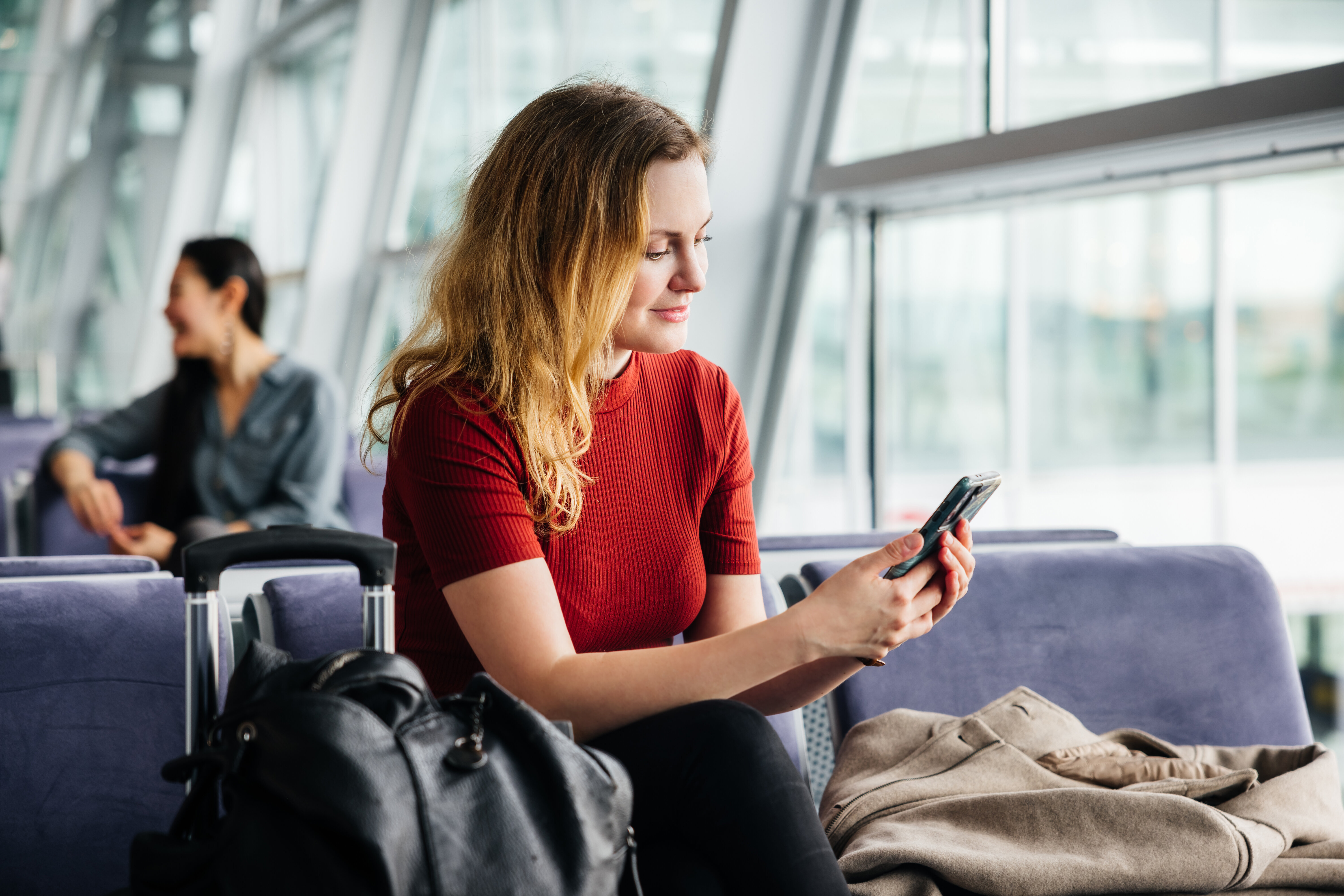
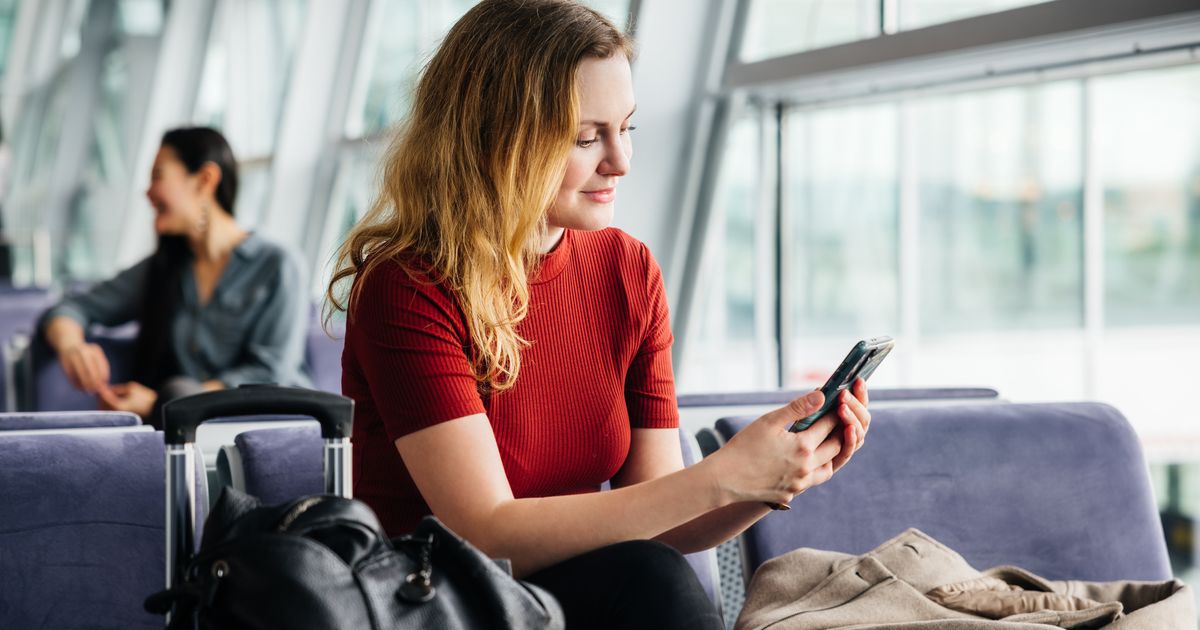
UK Travellers Urged To Avoid Doing 1 Very Common Departure Lounge Habit

Departure lounges in airports are, at the best of times, incredibly dull and if your flight is delayed, you may find yourself cycling through apps on your phone, grasping at straws for entertainment and distraction.

Of course, this drains your battery and what is the first thing you do when you see that all-important battery running down? Look for an outlet to plug your phone into.

Now, personally, I never travel without at least two charged battery packs but less anxious people tend to find USB ports in airport lounges which may seem handy but according to multiple UK airlines, you shouldn’t be so readily using these outlets.

Why you should never charge your phone in the airport

Travel expert Megan who shares travel tips on advice on her YouTube channel Portable Professional said: “Using an airport USB to charge your devices can expose you to a scam called ‘juice jacking’. This happens when public USB ports are manipulated to steal data from your devices that are connected to them.”

Cool, cool, cool.

Instead, Megan advises using a travel adapter for your plugs.

She said: “Using an adapter allows you to safely connect to outlets. Unlike USB ports, AC outlets are purely for power and they don’t transfer data, ensuring there is no risk to your personal information while it’s charging.

“Navigating airport layovers with multiple devices can be tricky, and a big mistake that travellers make is not having a plan to keep all of their devices charged.”

<div class="js-react-hydrator" data-component-name="YouTube" data-component-id="5035" data-component-props="{"itemType":"video","index":12,"contentIndexByType":1,"contentListType":"embed","code":"

","type":"video","meta":{"author":"Portable Professional (Travel Tips with Megan)","author_url":"https://www.youtube.com/channel/UC5XIgzc2Qm7BhWl1vjyQoQQ","cache_age":86400,"description":"Use code Megan10 for 10% off Unbound Merino clothing: https://bit.ly/PP-Merino\nMy favorite pants for travel (I’m obsessed!): https://bit.ly/PP-MerinoPants\n\nThere are 8 common mistakes travelers make at the gate before boarding a flight. In today’s video we will break down each travel mistake and share some sneaky insider hacks that will make you feel like an airport expert the next time you fly. Pay special attention to #8 if you are checking a bag at the airport or taking an international flight. \n\nDon’t forget to SUBSCRIBE for weekly tips & hacks: https://bit.ly/subscribe-travel-hacks\n\nMy Recommended TSA-FRIENDLY Snacks for the Plane: https://bit.ly/AirportSnacks-PP\n\n✈️ TRAVEL RESOURCES\nBest Travel Insurance for Seniors: https://bit.ly/Travel-coverage\nTop rated VPN for Travel (only $3!): https://bit.ly/PP-nordvpn\nBest Value Luggage (discount code: Megan15): https://bit.ly/level8-1\nIncredible Tour Deals: https://bit.ly/3sok4mt\nMost Affordable Travel Insurance: http://bit.ly/PortableProfessional-Insurance\nTop-rated E-Sim to Use Phone Internationally: https://bit.ly/PP-holafly\nMy Go-To Travel Clothing: https://bit.ly/PP-Merino\nMy Most-Loved Travel Gear on Amazon: https://www.amazon.com/shop/megan.gougeon\nFree Travel Hack Newsletter: https://bit.ly/PP-travelnewsletter\nFree eBook with my Top Travel Hacks: https://bit.ly/PP-TravelHacks\n\n🌎 WATCH NEXT\nhttps://www.youtube.com/watch?v=6O5in_2Pz-A&t=233s&list=UULF5XIgzc2Qm7BhWl1vjyQoQQ\nhttps://www.youtube.com/watch?v=Ds-CWngjItU&list=UULF5XIgzc2Qm7BhWl1vjyQoQQ&feature=youtu.be\nhttps://www.youtube.com/watch?v=IBQIlgCTiew&list=UULF5XIgzc2Qm7BhWl1vjyQoQQ\nhttps://www.youtube.com/watch?v=VslV_lj9-SM&list=UULF5XIgzc2Qm7BhWl1vjyQoQQ\nhttps://www.youtube.com/watch?v=ud-2dsFd5zI&list=UULF5XIgzc2Qm7BhWl1vjyQoQQ&feature=youtu.be\n\nWelcome to Portable Professional, where I, Megan, use my experience from over 300 flights to offer you simple, practical and game-changing travel tips and hacks. Our mission is to help you reduce stress and make the most of every trip.\n\nDon’t forget to SUBSCRIBE for weekly tips & hacks: https://bit.ly/subscribe-travel-hacks\n\n🐶 Chapters\n00:00 Introduction\n00:13 Check this at the gate!\n00:45 Iphone travel hack\n01:47 Must-have for flight\n02:41 Wear THIS (not THAT!)\n03:51 Do before boarding (or regret it!)\n04:41 Food & drink rules\n05:07 Plane charger warning\n06:14 Luggage mistake\n06:39 Essential boarding documents\n07:25 Mobile ticket tip\n07:57 Gate checked luggage \n08:31 Gate check vs. checked bag\n08:53 Personal item packing tip\n09:27 Don’t rush this…\n\n\nAffiliate Disclosure: This content contains affiliate links. We may receive compensation at no additional cost to you if you click through and make a purchase. Thank you for your support!\n#UnboundMerino","options":{"_cc_load_policy":{"label":"Closed captions","value":false},"_end":{"label":"End on","placeholder":"ex.: 11, 1m10s","value":""},"_start":{"label":"Start from","placeholder":"ex.: 11, 1m10s","value":""},"click_to_play":{"label":"Hold load & play until clicked","value":false}},"provider_name":"YouTube","thumbnail_height":720,"thumbnail_url":"https://i.ytimg.com/vi/aXh5C-Ss4-k/maxresdefault.jpg","thumbnail_width":1280,"title":"8 Things to NEVER do at the Airport Before Boarding a Flight","type":"video","url":"https://www.youtube.com/watch?v=aXh5C-Ss4-k","version":"1.0"},"flags":[],"enhancements":{},"fullBleed":false,"options":{"theme":"life","device":"desktop","editionInfo":{"id":"uk","name":"U.K.","link":"https://www.huffingtonpost.co.uk","locale":"en_GB"},"originalEdition":"uk","slideshowAd":{"scriptTags":[],"otherHtml":""},"slideshowEndCard":{"scriptTags":[],"otherHtml":""},"isMapi":false,"isAmp":false,"isVideoEntry":false,"isEntry":true,"isMt":false,"entryId":"666ada04e4b0dabf8cf68fe9","entryPermalink":"https://www.huffingtonpost.co.uk/entry/uk-travellers-urged-to-avoid-doing-1-very-common-departure-lounge-habit_uk_666ada04e4b0dabf8cf68fe9","entryTagsList":"travel,safety","sectionSlug":"lifestyle","deptSlug":null,"sectionRedirectUrl":null,"subcategories":"","isWide":false,"headerOverride":null,"noVideoAds":false,"disableFloat":false,"isNative":false,"commercialVideo":{"provider":"custom","site_and_category":"uk.lifestyle","package":null},"isHighline":false,"vidibleConfigValues":{"cid":"60afc140cf94592c45d7390c","disabledWithMapiEntries":false,"overrides":{"all":"60b8e525cdd90620331baaf4"},"whitelisted":["56c5f12ee4b03a39c93c9439","56c6056ee4b01f2b7e1b5f35","59bfee7f9e451049f87f550b","5acccbaac269d609ef44c529","570278d2e4b070ff77b98217","57027b4be4b070ff77b98d5c","56fe95c4e4b0041c4242016b","570279cfe4b06d08e3629954","5ba9e8821c2e65639162ccf1","5bcd9904821576674bc55ced","5d076ca127f25f504327c72e","5b35266b158f855373e28256","5ebac2e8abddfb04f877dff2","60b8e525cdd90620331baaf4","60b64354b171b7444beaff4d","60d0d8e09340d7032ad0fb1a","60d0d90f9340d7032ad0fbeb","60d0d9949340d7032ad0fed3","60d0d9f99340d7032ad10113","60d0daa69340d7032ad104cf","60d0de02b627221e9d819408"],"playlists":{"default":"57bc306888d2ff1a7f6b5579","news":"56c6dbcee4b04edee8beb49c","politics":"56c6dbcee4b04edee8beb49c","entertainment":"56c6e7f2e4b0983aa64c60fc","tech":"56c6f70ae4b043c5bdcaebf9","parents":"56cc65c2e4b0239099455b42","lifestyle":"56cc66a9e4b01f81ef94e98c"},"playerUpdates":{"56c6056ee4b01f2b7e1b5f35":"60b8e525cdd90620331baaf4","56c5f12ee4b03a39c93c9439":"60d0d8e09340d7032ad0fb1a","59bfee7f9e451049f87f550b":"60d0d90f9340d7032ad0fbeb","5acccbaac269d609ef44c529":"60d0d9949340d7032ad0fed3","5bcd9904821576674bc55ced":"60d0d9f99340d7032ad10113","5d076ca127f25f504327c72e":"60d0daa69340d7032ad104cf","5ebac2e8abddfb04f877dff2":"60d0de02b627221e9d819408"}},"connatixConfigValues":{"defaultPlayer":"8b034f64-513c-4987-b16f-42d6008f7feb","clickToPlayPlayer":"5a777b9b-81fe-41a6-8302-59e9953ee8a2","videoPagePlayer":"19654b65-409c-4b38-90db-80cbdea02cf4"},"topConnatixThumnbailSrc":"data:image/png;base64,iVBORw0KGgoAAAANSUhEUgAAAAEAAAABCAQAAAC1HAwCAAAAC0lEQVR42mNkYAAAAAYAAjCB0C8AAAAASUVORK5CYII=","customAmpComponents":[],"ampAssetsUrl":"https://amp.assets.huffpost.com","videoTraits":null,"positionInUnitCounts":{"buzz_head":{"count":0},"buzz_body":{"count":0},"buzz_bottom":{"count":0}},"positionInSubUnitCounts":{"article_body":{"count":7},"blog_summary":{"count":0},"before_you_go_slideshow":{"count":0}},"connatixCountsHelper":{"count":0},"buzzfeedTracking":{"context_page_id":"666ada04e4b0dabf8cf68fe9","context_page_type":"buzz","destination":"huffpost","mode":"desktop","page_edition":"en-uk"},"tags":[{"name":"travel","slug":"travel","links":{"relativeLink":"news/travel","permalink":"https://www.huffingtonpost.co.uk/news/travel","mobileWebLink":"https://www.huffingtonpost.co.uk/news/travel"},"section":{"title":"Life","slug":"lifestyle"},"topic":{"title":"Travel","slug":"travel","overridesSectionLabel":false},"url":"https://www.huffingtonpost.co.uk/news/travel/"},{"name":"safety","slug":"safety","links":{"relativeLink":"news/safety","permalink":"https://www.huffingtonpost.co.uk/news/safety","mobileWebLink":"https://www.huffingtonpost.co.uk/news/safety"},"url":"https://www.huffingtonpost.co.uk/news/safety/"}],"isLiveblogLive":null,"cetUnit":"buzz_body","bodyAds":["

\r\n\r\n HPGam.cmd.push(function(){\r\n\t\treturn HPGam.render(\"inline-1\", \"entry_paragraph_1\", false, false);\r\n });\r\n\r\n","

\r\n\r\n HPGam.cmd.push(function(){\r\n\t\treturn HPGam.render(\"inline\", \"entry_paragraph_2\", false, false);\r\n });\r\n\r\n","

\r\n\r\n HPGam.cmd.push(function(){\r\n\t\treturn HPGam.render(\"inline-2\", \"entry_paragraph_3\", false, false);\r\n });\r\n\r\n","

\r\n\r\n HPGam.cmd.push(function(){\r\n\t\treturn HPGam.render(\"inline-infinite\", \"repeating_dynamic_display\", false, false);\r\n });\r\n\r\n"],"adCount":0},"isCollectionEmbed":false}”>

How to keep your information safe when travelling

According to the National Security Alliance, these are the steps we must take to keep our information safe while travelling: “Back up your data and make sure your software is updated.

“Use complex, unique, and long passwords for every account, along with multi-factor authentication (MFA). Use a password manager to generate, maintain, and store your strong passwords! Secure every device with a password and MFA.”

Stay safe out there!

Share Button