Slumbering among thousands of bacterial strains in a collection of natural specimens at The Herbert Wertheim UF Scripps Institute for Biomedical Innovation & Technology, several fragile vials held something unexpected, and possibly very useful.
Writing in the journal Nature Chemical Biology, a team led by chemist Ben Shen, Ph.D., described discovery of two new enzymes, ones with uniquely useful properties that could help in the fight against human diseases including cancer. The discovery, published last week, offers potentially easier ways to study and manufacture complex natural chemicals, including those that could become medicines.
The contribution of bacterial chemicals to the history of drug discovery is remarkable, said Shen, who directs the Natural Products Discovery Center at the institute, one of the world’s largest microbial natural product collections.
“Few people realize that nearly half of the FDA-approved antibiotics and anticancer drugs on the market are natural products or are inspired by them,” Shen said. “Nature is the best chemist to make these complex natural products. We are applying modern genomic technologies and computational tools to understand their fascinating chemistry and enzymology, and this is leading to progress at unprecedented speed. These enzymes are the latest exciting example.”
The enzymes the team discovered have a descriptive, if unwieldy, name. They are called “cofactorless oxygenases.” This means the bacterial enzymes pull oxygen from the air and incorporate it into new compounds, without requiring the typical metals or other cofactors to initiate the necessary chemical reaction.
This new way of synthesizing defensive substances would confer a survival advantage, enabling the organism to fend off infections or invaders. And because enzymes are to chemists what drill bits or saw blades are to a carpenter, they offer scientists new ways to create useful things, said the paper’s first authors, postdoctoral researchers Chun Gui, Ph.D., and Edward Kalkreuter, Ph.D.
Most immediately, the discovery of the enzymes, TnmJ and TnmK2, solves a lingering mystery of how a potential antibiotic and anticancer compound the Shen lab had first discovered in 2016, tiancimycin A, achieved such potency, Gui and Kalkreuter said.
advertisement
The enzymes enable the bacteria to produce compounds for targeting and breaking up DNA, Gui said. This would be immensely useful in fighting off a virus or other germ — or killing cancer.
Tiancimycin A is being developed as part of a cancer-targeting antibody therapy. These types of combined antibody-drug therapeutics represent a rapidly growing new approach to fighting cancer. But a critical step to using tiancimycin A as an antibody’s payload is making enough to study it at a larger scale. That proved challenging.
“Even after we identified genes responsible for encoding tiancimycin A, several of the steps required to synthesize it could not be predicted,” Gui said. “The two enzymes described in the current study are highly unusual.”
Tiancimycin A was first found in a soil-dwelling bacteria, a type of Streptomyces from the strain collection at the Natural Products Discovery Center. To make its powerful chemical weapon, the organism had to solve a problem. It somehow had to break three highly stable carbon-carbon bonds and replace them with more reactive carbon-oxygen bonds. For a long time, the scientists couldn’t understand how the bacteria managed that feat.
Cracking the mystery involved finding other tiancimycin A-like natural product-producing bacteria among the institute’s Natural Products Discovery Center collection of 125,000 bacterial strains, and analyzing their genomes to search for the evolutionary hints.
The historic collection had long been housed in a pharmaceutical company’s basement, collected over decades following the discovery of penicillin in the scientific community’s hopeful rush to find the next great antibiotic. The collection did generate several historically important drugs through the years, including the tuberculosis antibiotic streptomycin and the organ transplant drug sirolimus. But the majority of the collection’s freeze-dried bacterial strains had rested in their glass vials, unexplored.
In 2018, Shen won a competition for the collection, so that it could be fully investigated in an academic setting, where it would be open to science. His team is now developing ways to study the strains, read their genomes and deposit the information into a searchable database for the scientific community to access. Modern genome sequencing and bioinformatics techniques are proving that there may be as many as 30 interesting gene clusters in each strain of bacteria they study, and many of them code for natural products never before documented by scientists, said Shen, who is a member of the UF Health Cancer Center.
The discovery of the new cofactorless enzymes is but the latest example of the chemical riches that lie within The Wertheim UF Scripps Institute’s collection, Shen said. Their discovery has sparked new excitement about further investigating the reasons the unique chemistry evolved, and the ways it may prove useful.
“This publication underscores how many surprises nature still has for us,” Shen said, “It can teach us much about fundamental chemistry and biology and provide us with the tools and inspiration we need to translate laboratory findings into medicines that impact society and address many problems faced by humanity.”
Greg Hands has been sacked as chairman of the Conservative Party, as Rishi Sunak conducted a major cabinet reshuffle ahead of next year’s election.
He has finally paid the price for a succession of humiliating by-election defeats.
Richard Holden, who was only elected as an MP in 2019, has been given a big promotion to take over the job of running the Tory party machine.
Advertisement
Less than a month ago, Hands said he would not quit in the wake of two heavy by-election defeats in Mid Bedfordshire and Tamworth.
At the time, he said the losses were caused “by legacy issues” that predated Sunak’s time in No.10.
Hands remains in government, but has been demoted to a minister of state job at the department for business and trade.
Richard Holden leaves 10 Downing Street after he was made the new Conservative chairman (Photo by Victoria Jones/PA Images via Getty Images)
Victoria Jones – PA Images via Getty Images
Holden snatched the red wall seat of North West Durham for the Tories in 2019, but the constituency is disappearing due to boundary changes and he is now on the lookout for somewhere else to stand at the next election.
Advertisement
Holden was appointed transport minister when Sunak became prime minister last October.
He now has the extremely difficult job of helping the prime minister overhaul a huge Labour poll lead over the next 12 months.
Leaving No.10 on Monday afternoon, Holden gave a thumbs-up when asked if the Tories could win the election.
Meanwhile, Therese Coffey has also been sacked as environment secretary, with Steve Barclay replacing her.
He has been replaced as health secretary by Victoria Atkins, with Laura Trott also being appointed chief secretary to the Treasury as the reshuffle continued.
Former President Donald Trump brought along an army of friends with him to watch UFC action at Madison Square Garden this weekend but his entrance didn’t go without two middle fingers from the crowd.
The former president continued shaking hands with the crowd before one woman flipped the double bird in his direction in a clip that has since gone viral.
The woman, who sat beside stand-up comedian Bill Burr, appears to be the comic’s wife Nia Renée Hill.
Social media users on X (formerly Twitter) gave the woman props for giving Trump the bird and called for the image to be put in a museum.
Nadine Dorries has been criticised after she accused Michael Gove was “drunk” as pro-Palestine protesters marched through central London.
The levelling up secretary was heckled as he walked towards Victoria Station on Saturday afternoon.
People chanted “shame on you” at the cabinet minister, who had to be bundled into a police car to escape.
Advertisement
It is understood Gove was being driven back to London from his Surrey Heath constituency, but was forced to get out and walk because the roads were blocked. He was said to be “shaken” following the incident.
On BBC One’s Sunday with Laura Kuenssberg this morning, Dorries said: “What was Michael Gove doing in the middle of Victoria Station on a day when any other sentient politician did not want to make the police’s job any harder?
“Was he drunk? What was he doing there? What judgement made him walk through Victoria Station?”
Left: Nadine Dorries, “Why was Michael Gove there? Was he drunk? Was that playing to the gallery?”
Right: Michael Gove walks through a crowd of pro-Palestinian ceasefire marchers chanting ‘shame on you’ at Victoria station on Armistice day pic.twitter.com/hmPjBRY8Dr
In a post on X (formerly Twitter) later, Dorries said: “The point is, he was playing to the gallery. It was a stunt and those of us who have watched his unstable Machiavellian behaviour from the sidelines – his backstabbings, leaking and briefings, we can see right through him. There’s good reason why David Cameron has cast him into the outer darkness.”
Advertisement
And, another take.
The point is, he was playing to the gallery. It was a stunt and those of us who have watched his unstable Machiavellian behaviour from the sidelines – his backstabbing’s, leaking and briefings, we can see right through him. There’s good reason why David… https://t.co/UaRVUujr1G
Hitting back at Dorries, a source close to Gove told HuffPost UK: “It’s sad really, but she has a book to sell.”
That is a reference to The Plot, the former culture secretary’s book about the downfall of Boris Johnson as prime minister.
Gove’s ex-wife, Sarah Vine, also criticised Dorries on X (formerly Twitter).
Meanwhile, Stephen Flynn, the SNP’s leader at Westminster, condemned those who had targeted Gove.
Responding to a post on X which said it was “bizarre” for Gove to be walking in central London at that time, he said : “It’s not ‘bizarre’ for Michael Gove to use a major tube/train station. He should be able to travel in peace like everyone else.
Advertisement
“Those acting in this fashion damage their cause and, along with those displaying abhorrent anti-semitism amongst the rally today, must be condemned.”
Keir Starmer is on course to lead Labour to an even bigger victory than Tony Blair’s landslide in 1997, according to a major new poll.
The Survation survey of more than 12,000 people for the UK Spirits Alliance predicts the Tories will return just 156 MPs – around 200 less than they have now.
Labour, on the other hand, would see their number of MPs soar to 431, handing Starmer a 212-seat majority.
In 1997, Blair’s New Labour won a majority of 179 and ended up holding on to power for 13 years.
In recent days he has also been embroiled in a row with home secretary Suella Braverman over her article in The Times accusing the police of having a left-wing bias.
Sunak is now under intense pressure from many within his own party to sack the home secretary, but that could spark an angry backlash from right-wing Tory MPs.
Starmer, on the other hand, will be delighted at the poll’s findings, which come despite his own internal problems.
The Labour leader is facing a major rebellion by dozens of his own MPs – including many frontbenchers – over his refusal to support calls for a ceasefire in the Israel/Hamas war.
“Feel her toes and feet. When they turn cold, you’ll know. You’ll know she’s ready to go,” the hospice nurse told me. “Human bodies are predictable.” She had witnessed life’s final act hundreds of times.
This was my Sue’s 13th day in hospice. I held her hand, still warm.
My wife of almost 45 years, my Sue, lay motionless, life draining from her body.
Her thin, grey hair fell in tufts around her head. Her eyes were closed. Her body was a wisp under the blankets. Her breathing was shallow. Her cold toes pointed toward the ceiling, and I wrapped my fingers around her heels. They felt hard, as if they were only bones, and the coldness was like a wetness that I couldn’t get off my hands, even though I kept wiping them on my pants, a towel and the bedspread.
Advertisement
Sue arched her back as if she were trying to touch her shoulders together and then her body fell back, relaxed, and was still.
She died at 10:22am, April 18, 2018.
No pulse, no heartbeat, no finger squeeze like the day before.
Sue was 73, killed by breast cancer that had gone undiagnosed for years despite regular checkups. The radiologist had missed the malignancy hiding behind scar tissue, and it spread without mercy.
Sue gave me instructions when she knew she was dying: “Think about one thing you’ll do right after I die. Just do the one thing, and then do another and then another.”
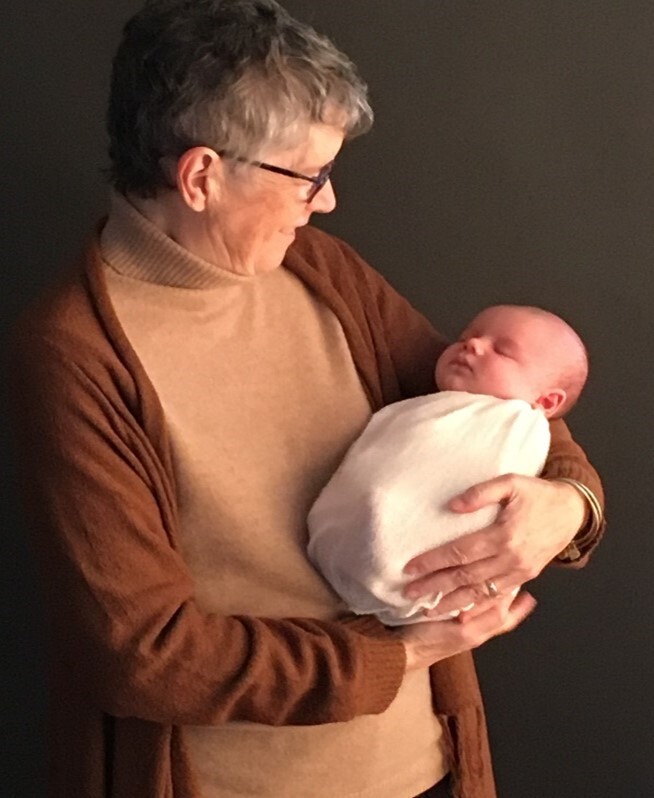
Courtesy of Dan Fogel
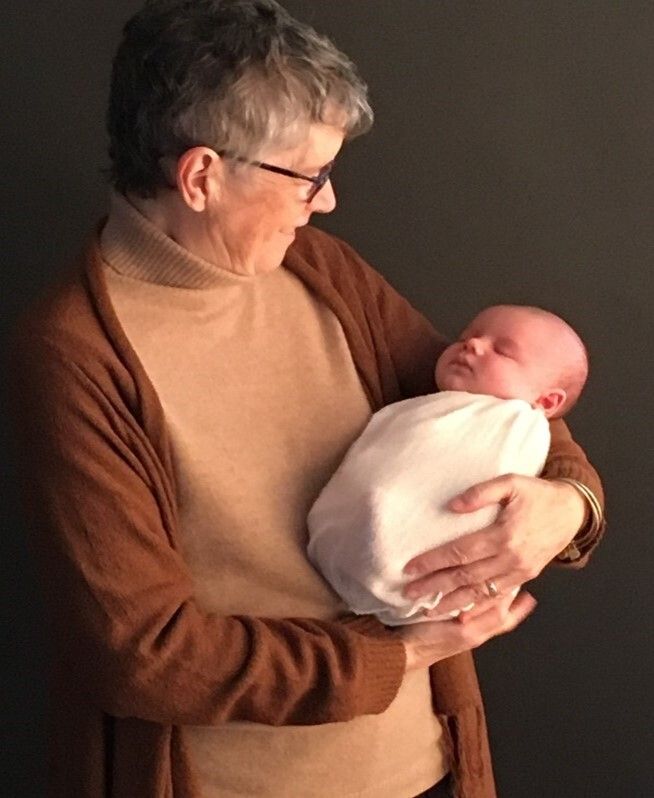
Sue is pictured meeting her sixth grandchild, just six weeks before she died.
Advertisement
She understood me. If I thought about the enormity of losing her, I might go nuts, or do impulsive and stupid things. I had done many impulsive and stupid things in my life, which is why my father called me Schmendrick (a Yiddish term for a stupid person or fool).
Wasn’t the fact that Sue and I were together proof of my ability to jump headfirst into situations that many people would consider foolish?
I knew Sue was smarter than me, and she was right: The first moment without her was paralysing, so I did nothing.
I just stood there holding her hand. If I let go, the hospice staff would take her body away. She would no longer exist. She would be erased, other than in our memories. I couldn’t bear that, and I was not ready. Sue had known I wouldn’t be.
I couldn’t cry. I was silent. I looked at my daughters, my two-month-old grandson, and then back at Sue.
Advertisement
I waited for her to tell me what to do, how to react, how to feel and when to leave, as she had always done. I needed her to tell the family when to gather again. I needed her to explain this death.
“Just do the one thing,” I heard her say again in my head.
People thought Sue was shy. Pleasant. Practical. She kept her emotions tight inside her. I reasoned that Sue was stoic — a person who could endure pain without complaining, and handle life’s inevitable deep hurts and disappointments without sharing the load. And I never asked her directly about her emotions.
After 45 years, I thought I knew her. But I didn’t.
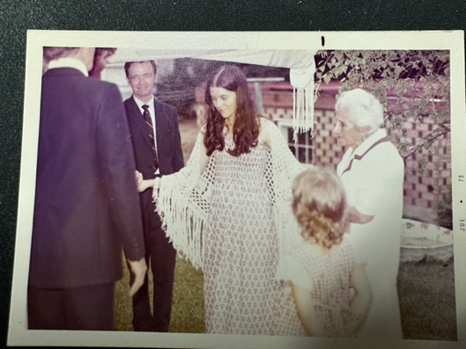
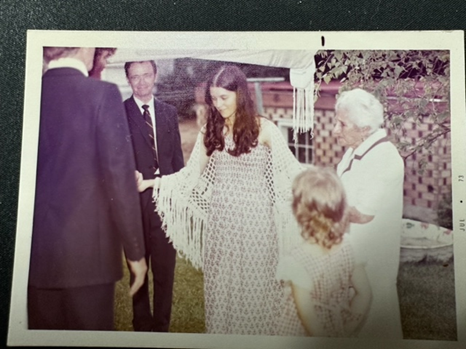
Days after she died, I pulled out a wedding-day photograph from June 26, 1973. Sue, 29, looks like a delicate hippie goddess with her long brown hair and peasant dress. I am 26. Skinny, redheaded, bearded, an eager Schmendrick ready to smash the glass under my foot at our wedding ceremony, under the chuppah, and in one firm stomp.
We broke with Jewish tradition and decided that both of us would smash a glass. This was all new to Sue, who grew up on a farm in Union City, Pennsylvania, as a Presbyterian.
“Whatever you do,” I said, “Don’t miss the glass. That’s lifelong bad luck.”
Sue’s stomp was tentative, and the glass rolled out from under her foot. Perhaps, at that moment, she realised how hard it would be to put her foot down when it came to me.
Advertisement
Courtesy of Dan Fogel
The author and Sue’s wedding day, June 26, 1973.
No wonder she was nervous. We had met 10 months before that photo was taken. We worked together at Penn State. She was married, in the process of divorcing her husband of seven years, with a four-year-old daughter, Cathy, and another daughter who wasn’t mine on the way.
During our first lunch date, Sue said she knew early on that she never should have married her first husband. I didn’t ask why. I was distracted by the sexy dip in her upper lip, her tender smile, her soft voice, and how her body fit with mine.
I had proved myself a screw-up in ways that mattered to most people. I got kicked out of Penn State’s undergraduate school, and had to claw my way back to get my bachelor’s degree in international economics and then my master’s in psycholinguistics. Sue got a master’s scholarship from Penn State in horticulture. I was going to get a Ph.D. scholarship from the University of Wisconsin and Sue told me that she would go with me, but only if we got married.
Yep, Sue wanted to marry Schmendrick. She had two little girls who depended on her, yet somehow this smart woman decided she would depend on me. Trust me. That she needed me.
Advertisement
Sue was the most mature woman I had ever dated. Did I marry her to show the world I wasn’t a screw-up? I realised that I needed to be mothered by a person who was more centred than me. And being a father gave me a serious job. I adopted Cathy and Cristene, who was just seven months old when Sue and I got married. Our daughter Jessica came along in 1980.
I did many things to show the world, like getting my Ph.D., becoming a university dean, and attaining wide recognition for my international work. I started the first private business school in Central and Eastern Europe, in Budapest, Hungary.
Our lives seemed to roll along like a Lexus that was comfortable and dependable, until Sue got terminal cancer. I became numb and couldn’t cry following her death. Still, I somehow managed to “just do the one thing,” like keeping appointments and arranging her memorial … until I couldn’t.
Courtesy of Dan Fogel
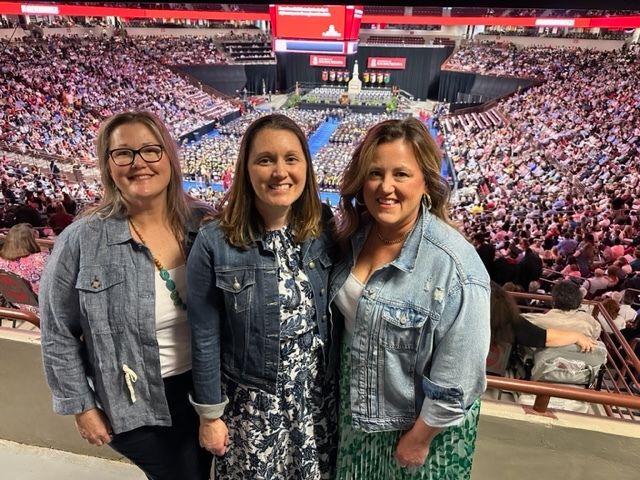
The author and Sue’s daughters (from left): Cristene, Jessica and Cathy.
Two months after Sue’s death, I walked into an optometrist’s office. The receptionist had a frowning face and a bored smirk, which I suspected was from asking the same questions every 15 minutes: “Name? Insurance? Address?” I answered each one rapidly.
Advertisement
“Marital status?” she asked.
Marital status? I panicked. I am married. Wait, no, I’m not. I’m single — well, sort of. Am I a widower who is single? A single person who had a wife, and therefore a widower? Am I still married without a spouse?
The receptionist asked again, “Sir, marital status?”
“Widower,” I said out loud for the first time. When I left the appointment, I sobbed in the parking lot the way that most people cry the day of a person’s death. I felt a gut-twisting feeling: I may not stop crying.
That’s the day I understood how little I knew about what was happening to me. I felt as if a part of me had been amputated, and I had no idea what was left.
That’s the day my grieving started for real and became a constant companion.
Then I did what I’d always done when confronted with a challenge: read others’ experiences in research, memoirs and fiction, watched films, and talked to people.
I watched Ricky Gervais’ fictional TV series After Life and saw how his character struggled with losing his wife. I could relate to everything he felt. His anger was mine. My anger came out at family gatherings, when I insisted that my daughters tell me how they felt, and at work, where I found myself defying authority.
Advertisement
Grieving became a chisel. It broke away the shell of what I had believed about Sue, myself and our relationship, and forced me to see that I didn’t know Sue deeply.
We had used unspoken rules of conduct, dimmed our intimacy and foiled self-inspection. I learned that despite our years together, Sue had locked away secrets. We used loving gestures and words to avoid authentic and painful truths — what Buddhists call “near enemies.” We never asked each other the important question: “Who are you in the deepest part of your heart and soul?”
My Sue left a few handwritten notes in books and files around the house, as well as several journals. When I began to read them, I found that she was not stoic. She had plenty of painful thoughts that she’d never said out loud.
“I think I hate him,” she once wrote, referring to me.
Courtesy of Dan Fogel
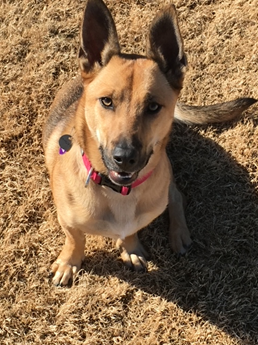
Shayna Punim (Yiddish for “beautiful face”), the author’s chow chow/shepherd mix.
I was successful but chronically bored, so I hopped around impulsively, securing jobs in various cities and dragging Sue and the kids with me. I was blind to her desires, and she was reluctant to rip me a new one.
Advertisement
I never knew that she hated our move to Pittsburgh in 1990, our seventh relocation since 1973, including one to Budapest. I learned from her journals that Sue had been tired of the changes, but she never said so to me. She picked out two Pittsburgh houses she liked. We had to buy one quickly, and I chose the wrong one. Sue asked me to walk away from the deal the day of signing. Why didn’t I?
Was that why she hated me? Or was it because she wanted to get her Ph.D. in horticulture, a desire I discovered in her journals, yet my demands took precedent over hers? Or was it that I did not see her for who she was? And if she had something to say, why didn’t she say it out loud?
I went to therapy after her death and kept reading. I was forced to unravel the assumptions that we had based our lives upon. I felt lost about who she was at the core. My feelings were like that glass I had shattered under my foot all those years ago — broken and unfixable.
My therapist diagnosed me with attention-deficit/hyperactivity disorder, a neurodifference that makes me impulsive, lose focus, and have trouble using my brain’s executive functioning. My mind wanders like a pinball machine, a series of hyperlinks, tying together thoughts that have minimal connections. My teachers and parents, unaware of my ADHD, had told me, “You need to focus and try harder.” I was focusing and trying hard by attending to multiple things at once and moving fast.
I spent most of my time with Shayna Punim, the dog Sue got one year before she died so that I’d have a companion.
Advertisement
I began dating six months after Sue died — another example of my impulsive behaviour. I swiped left and right on eHarmony. As Mary-Frances O’Connor said in the book The Grieving Brain, my brain was searching for what it lost, and I thought finding another woman would resolve that search. It didn’t. I felt more lost, less in touch with myself, and more confused about Sue and what we had together.
It took Sue’s words — “just do the one thing” — to keep me from doing too many impulsive and stupid things, like marrying the first woman who bought me a scotch at a bar.
My therapy, dating, research and discussions have helped me realise grief can be a stern, persistent teacher.
Courtesy of Dan Fogel
Sue Fogel: June 15, 1944, to April 18, 2018.
I see how much pain I caused by not recognising Sue’s needs, and not asking what she wanted and why.
I see Sue when I look at the garden she planted, the place where we spread her ashes. The flowers bloom anew, year after year … and so does my hope that I’ll discover more about her and myself.
Advertisement
I want another chance to ask my Sue all my questions, but I am not going to get it.
Still, despite what I learned about Sue after she died, I know that journals and diaries tell only part of the story. I don’t doubt that Sue loved me ― and I know that I loved and still love her ― but I now realise that her life might not have been exactly the life I thought it was. But isn’t that the way for all of us? How much do we share ― even with our closest loved ones ― and how much do we keep hidden? How much is left unsaid across almost half a century?
Why do we do this? And at what cost to us, and to the ones we love? What’s most important for me now is to understand more about Sue, who she was, and to reconsider my own life ― then and now. How can I honour my Sue as I knew her and as I didn’t? How can I take responsibility for the mistakes I made? Maybe it begins with this essay. Maybe my true grieving starts with processing who I was with Sue, who I am now — without her — and who I want to be going forward. As Sue said, just do the one thing.
Dan Fogel is a semiretired academic and entrepreneur living north of Charlotte, North Carolina, on Lake Norman. He spends most of his time writing and completing his memoir, visiting with family and friends, and walking with his dog, Shayna Punim. His academic career includes research, publications, teaching and consulting focused on environmental sustainability principles and practices in organizations. This work took him to various parts of the world, most notably Western, Central and Eastern Europe, and South America. You can find him at SP3 and dan@spthree.com.
Do you have a compelling personal story you’d like to see published on HuffPost? Find out what we’re looking for here and send us a pitch.