Youngest children in class with ADHD as likely to keep diagnosis in adulthood as older pupils, find scientists

Children who are the youngest in their class to be identified with ADHD are just as likely to keep the diagnosis as older pupils in their year group, scientists have found.

Experts from the University of Southampton and Paris Nanterre University, working with researchers worldwide, made the discovery after examining data from thousands of patients with attention deficit hyperactivity disorder.

In the past, scientists have questioned the validity of an ADHD diagnosis in younger pupils — arguing they receive it because they are less mature than those born towards the start of the school year.

But the study, published in Lancet Psychiatry, revealed children who are the youngest in the class and get diagnosed with the condition were still as likely to retain it later on as their older peers.

Senior lead author Professor Samuele Cortese, a child and adolescent psychiatrist at the University of Southampton, said: “We know the youngest children in their year group are more likely to be diagnosed with ADHD — but many believe this is because they lag behind their older classmates.

“However, no one has ever explored if these younger children who are diagnosed with ADHD retain the diagnosis later on — until now. Our study shows for the first time that these youngsters are no more likely to lose the diagnosis over time than older children.”

Around 360 million people worldwide have been diagnosed with ADHD, according to the World Health Organisation, with around a third under the age of 18.

advertisement


Symptoms include impulsiveness, disorganisation, poor time management skills, difficulty focusing and restlessness.

The study by Southampton and Paris Nanterre, undertaken with 161 scientists worldwide, was based on the largest data set ever created to explore the effect of month of birth on the persistence of ADHD.

In total, it examined data from more than 6,500 patients globally who have been followed up for a period between the ages of four and 33 years old.

Dr Corentin Gosling, an associate professor from the University Paris Nanterre in France and visiting researcher at Southampton, was the first author on the study.

He said: “Our work shows the diagnosis of ADHD in children with a young relative age is not especially unstable.

“However, it could not assess whether it is an appropriate diagnosis or it is because, once a child receives the ADHD label, parents and teachers consider the child as having ADHD and are influenced by the diagnosis. Future studies should solve this question.”

Share Button

Common chemotherapy drugs don’t work like doctors thought, with big implications for drug discovery

A new study from the University of Wisconsin-Madison suggests that chemotherapy may not be reaching its full potential, in part because researchers and doctors have long misunderstood how some of the most common cancer drugs actually ward off tumors.

For decades, researchers have believed that a class of drugs called microtubule poisons treat cancerous tumors by halting mitosis, or the division of cells. Now, a team of UW-Madison scientists has found that in patients, microtubule poisons don’t actually stop cancer cells from dividing. Instead, these drugs alter mitosis — sometimes enough to cause new cancer cells to die and the disease to regress.

Cancers grow and spread because cancerous cells divide and multiply indefinitely, unlike normal cells which are limited in the number of times they can split into new cells. The assumption that microtubule poisons stop cancer cells from dividing is based on lab studies demonstrating just that.

The new study was led by Beth Weaver, a professor in the departments of oncology and cell and regenerative biology, in collaboration with Mark Burkard in the departments of oncology and medicine. Published Oct. 26 in the journal PLOS Biology and supported in part by the National Institutes of Health, the study broadens previous findings the group made about a specific microtubule poison called paclitaxel. Sometimes prescribed under the brand name Taxol, paclitaxel is used to treat common malignancies including those originating in the ovaries and lungs.

“This was sort of mind-blowing,” Weaver says about the previous research. “For decades, we all thought that the way paclitaxel works in patient tumors is by arresting them in mitosis. This is what I was taught as a graduate student. We all ‘knew’ this. In cells in a dish, labs all over the world have shown this. The problem was we were all using it at concentrations higher than those that actually get into the tumor.”

Weaver and her colleagues wanted to know if other microtubule poisons work the same way as paclitaxel — not by stopping mitosis but by messing it up.

The question has significant implications for scientists searching for new cancer treatments. That’s because drug discovery efforts often hinge on identifying, reproducing and improving upon the mechanisms believed to be responsible for a compound’s therapeutic effect.

advertisement


While microtubule poisons are no panacea, they are effective for many patients, and researchers have long sought to develop other therapies that mimic what they believe the drugs do. These efforts are ongoing even though past attempts to identify new compounds that treat cancer by stopping cell division have reached frustrating dead ends.

“There’s still a lot of the scientific community that’s investigating mitotic arrest as a mechanism to kill tumors,” Weaver says. “We wanted to know — does that matter for patients?”

With Burkard, the team studied tumor samples taken from breast cancer patients who received standard anti-microtubule chemotherapy at the UW Carbone Cancer Center.

They measured how much of the drugs made it into the tumors and studied how the tumor cells responded. They found that while the cells continued to divide after being exposed to the drug, they did so abnormally. This abnormal division can lead to tumor cell death.

Normally, a cell’s chromosomes are duplicated before the two identical sets migrate to opposite ends of the cell mitosis in a process called chromosomal segregation. One set of chromosomes is sorted into each of two new cells.

This migration occurs because the chromosomes are attached to a cellular machine known as the mitotic spindle. Spindles are made from cellular building blocks called microtubules. Normal spindles have two ends, known as spindle poles.

advertisement


Weaver and her colleagues found that paclitaxel and other microtubule poisons cause abnormalities that lead cells to form three, four or sometimes five poles during mitosis even as they continue to make just one copy of chromosomes. These poles then attract the two complete sets of chromosomes in more than two directions, scrambling the genome.

“So, after mitosis you have daughter cells that are no longer genetically identical and have lost chromosomes,” Weaver says. “We calculated that if a cell loses at least 20% of its DNA content, it is very likely going to die.”

These findings reveal the likely reason why microtubule poisons are effective for many patients. Importantly, they also help explain why attempts to find new chemo drugs based solely on stopping mitosis have been so disappointing, Weaver says.

“We’ve been barking up the wrong tree,” she says. “We need to refocus our efforts on screwing up mitosis — on making chromosomal segregation worse.”

This research was supported in part by the National Institutes of Health (P30 CA014520; R01CA234904; T32 GM008688; T32 CA009135; F31CA254247; T32 GM141013).

Share Button

Controlling waves in magnets with superconductors for the first time

Quantum physicists at Delft University of Technology have shown that it’s possible to control and manipulate spin waves on a chip using superconductors for the first time. These tiny waves in magnets may offer an alternative to electronics in the future, interesting for energy-efficient information technology or connecting pieces in a quantum computer, for example. The breakthrough, published in Science, primarily gives physicists new insight into the interaction between magnets and superconductors.

Energy-efficient substitute

“Spin waves are waves in a magnetic material that we can use to transmit information,” explains Michael Borst, who led the experiment. “Because spin waves can be a promising building block for an energy-efficient replacement for electronics, scientists have been searching for an efficient way to control and manipulate spin waves for years.”

Theory predicts that metal electrodes give control over spin waves, but physicists have barely seen such effects in experiments until now. “The breakthrough of our research team is that we show that we can indeed control spin waves properly if we use a superconducting electrode,” says Toeno van der Sar, Associate Professor in the Department of Quantum Nanoscience.

Superconducting mirror

It works as follows: a spin wave generates a magnetic field that in turn generates a supercurrent in the superconductor. That supercurrent acts as a mirror for the spin wave: the superconducting electrode reflects the magnetic field back to the spin wave. The superconducting mirror causes spin waves to move up and down more slowly, and that makes the waves easily controllable. Borst: “When spin waves pass under the superconducting electrode, it turns out that their wavelength changes completely! And by varying the temperature of the electrode slightly, we can tune the magnitude of the change very accurately.”

“We started with a thin magnetic layer of yttrium iron garnet (YIG), known as the best magnet on Earth. On top of that we laid a superconducting electrode and another electrode to induce the spin waves. By cooling to -268 degrees, we got the electrode into a superconducting state,” Van der Sar says. “It was amazing to see that the spin waves got slower and slower as it got colder. That gives us a unique handle to manipulate the spin waves; we can deflect them, reflect them, make them resonate and more. But it also gives us tremendous new insights into the properties of superconductors.”

Unique sensor

advertisement


The researchers imaged the spin waves by measuring their magnetic field with a unique sensor, something that was essential to the experiment. Van der Sar: “We use electrons in diamond as sensors for the magnetic fields of the spin waves. Our lab is pioneering that technique. The cool thing about it is that we can look through the opaque superconductor at the spin waves underneath, just like an MRI scanner can look through the skin into someone’s body.”

New circuits

“Spin wave technology is still in its infancy,” Borst says. “For example, to make energy-efficient computers with this technology, we first have to start building small circuits to perform calculations. Our discovery opens a door: superconducting electrodes allow countless new and energy-efficient spin-wave circuits.”

“We can now design devices based on spin waves and superconductors that produce little heat and sound waves,” Van der Sar adds. “Think of the spintronics version of frequency filters or resonators, components that can be found in electronic circuits of cell phones, for example. Or circuits that can serve as transistors or connectors between qubits in a quantum computer.”

Share Button

Scientists find two ways that hurricanes rapidly intensify

Hurricanes that rapidly intensify for mysterious reasons pose a particularly frightening threat to those in harm’s way. Forecasters have struggled for many years to understand why a seemingly commonplace tropical depression or tropical storm sometimes blows up into a major hurricane, packing catastrophic winds and driving a potentially deadly surge of water toward shore.

Now scientists have shed some light on why this forecasting challenge has been so difficult to overcome: there’s more than one mechanism that causes rapid intensification. New research by scientists at the U.S. National Science Foundation (NSF) National Center for Atmospheric Research (NCAR) uses the latest computer modeling techniques to identify two entirely different modes of rapid intensification. The findings may lead to better understanding and prediction of these dangerous events.

“Trying to find the holy grail behind rapid intensification is the wrong approach because there isn’t just one holy grail,” said NCAR scientist Falko Judt, lead author of the new study. “There are at least two different modes or flavors of rapid intensification, and each one has a different set of conditions that must be met in order for the storm to strengthen so quickly.”

One of the modes discussed by Judt and his co-authors occurs when a hurricane intensifies symmetrically, fueled by favorable environmental conditions such as warm surface waters and low wind shear. This type of abrupt strengthening is associated with some of the most destructive storms in history, such as Hurricanes Andrew, Katrina, and Maria. Meteorologists were stunned this week when the winds of Hurricane Otis defied predictions and exploded by 110 miles per hour in just 24 hours, plowing into the west coast of Mexico at category 5 strength.

Judt and his co-authors also identified a second mode of rapid intensification that had previously been overlooked because it doesn’t lead to peak winds reaching such destructive levels. In the case of this mode, the strengthening can be linked to major bursts of thunderstorms far from the storm’s center. These bursts trigger a reconfiguration of the cyclone’s circulation, enabling it to intensify rapidly, reaching category 1 or 2 intensity within a matter of hours.

This second mode is more unexpected because it typically occurs in the face of unfavorable conditions, such as countervailing upper-level winds that shear the storm by blowing the top in a different direction than the bottom.

“Those storms are not as memorable and they’re not as significant,” Judt said. “But forecasters need to be aware that even a storm that’s strongly sheared and asymmetric can undergo a mode of rapid intensification.”

The new study appeared in the Monthly Weather Review, a journal of the American Meteorological Society. It was funded by the U.S. Navy Office of Naval Research and by the U.S. National Science Foundation, which is NCAR’s sponsor. It was co-authored by NCAR scientists Rosimar Rios-Berrios and George Bryan.

advertisement


A serendipitous finding

Rapid intensification occurs when the winds of a tropical cyclone increase by 30 knots (about 35 miles per hour) in a 24-hour period. Judt came across the two modes of rapid intensification when working on an unrelated project.

The discovery emerged after Judt produced a very high-resolution, 40-day computer simulation of the global atmosphere, using the NCAR-based Model for Prediction Across Scales (MPAS). That simulation, run at the NCAR-Wyoming Supercomputing Center, was designed for an international project comparing the output of leading atmospheric models, which have achieved unprecedented detail because of increasingly powerful supercomputers.

Once Judt produced the model, he was curious to examine storms in the simulation that rapidly intensified. By looking at a number of cases across the world’s ocean basins, he noticed that rapid intensification occurred in two distinct ways. This had not previously been apparent in models, partly because previous simulations captured only individual regions instead of allowing scientists to track a spectrum of hurricanes and typhoons across the world’s oceans.

Judt and his co-authors then combed through actual observations of tropical cyclones and found a number of real-world instances of both modes of rapid intensification.

“It was kind of a serendipitous finding,” Judt said. “Just by looking at the storms in the simulation and making plots, I realized that storms that rapidly intensify fall into two different camps. One is the canonical mode in which there’s a tropical storm when you go to bed and when you wake up it’s a category 4. But then there’s another mode that goes from a tropical storm to a category 1 or 2, and it fits the definition of rapid intensification. Since nobody has those storms on their radar, that mode of rapid intensification went undetected until I went through the simulation.”

Meteorologists have long known that favorable environmental conditions, including very warm surface waters and minimal wind shear, can generate rapid intensification and bring a cyclone to category 4 or 5 strength with sustained winds of 130 mph or higher. In their new paper, Judt and his co-authors referred to that mode of rapid intensification as a marathon because the storm keeps intensifying symmetrically at a moderate pace while the primary vortex steadily amplifies.

advertisement


Judt described Hurricane Otis as a fast marathon because it intensified symmetrically but at an unusually rapid pace, marked by an 80 mph increase in wind speed during a 12-hour period.

The study team labeled the other mode of rapid intensification as a sprint because the intensification is extremely quick but generally doesn’t last as long, with storms peaking at category 1 or 2 strength and sustained winds of 110 mph or less. In such cases, explosive bursts of thunderstorms lead to a rearrangement of the cyclone and the emergence of a new center, enabling the storm to become more powerful — even in the face of adverse environmental conditions.

The paper concludes that the two modes may represent opposite ends of a spectrum, with many cases of rapid intensification falling somewhere in between. For instance, rapid intensification may begin with a chain of discrete events such as a burst of thunderstorms that are characteristic of the sprint mode, but then transition into a more symmetrical mode of intensification that is characteristic of the marathon mode.

A question for future research is why bursts of thunderstorms can cause about 10% of storms in an unconducive environment to rapidly intensify, even though the other 90% do not, Judt said.

“There could be a mechanism we haven’t discovered yet that would enable us to identify the 10 from the 90,” he said. “My working hypothesis is that it’s random, but it’s important for forecasters to be aware that rapid intensification is a typical process even in an unfavorable environment.”


Share Button

Breakthrough synthesis method improves solar cell stability

Solar cell efficiency has soared in recent years due to light-harvesting materials like halide perovskites, but the ability to produce them reliably at scale continues to be a challenge.

A process developed by Rice University chemical and biomolecular engineer Aditya Mohite and collaborators at Northwestern University, the University of Pennsylvania and the University of Rennes yields 2D perovskite-based semiconductor layers of ideal thickness and purity by controlling the temperature and duration of the crystallization process.

Known as kinetically controlled space confinement, the process could help improve the stability and reduce the cost of halide perovskite-based emerging technologies like optoelectronics and photovoltaics.

“Producing 2D perovskite crystals with layer thicknesses ⎯ or quantum well thickness, also known as ‘n value’⎯ greater than two is a major bottleneck,” said Jin Hou, a Ph.D. student in Rice’s George R. Brown School of Engineering who is a lead author on a study about the process published in Nature Synthesis. “An n value higher than four means materials have a narrower band gap and higher electrical conductivity ⎯ a crucial factor for application in electronic devices.”

As they form into crystals, atoms or molecules arrange themselves into highly organized, regular lattices. Ice, for instance, has 18 possible atomic arrangements, or phases. Like the hydrogen and oxygen atoms in ice, the particles that make up halide perovskites can also form multiple lattice arrangements. Because material properties are phase-dependent, scientists aim to synthesize 2D halide perovskite layers that exhibit only a single phase throughout. The problem, however, is that traditional synthesis methods for higher n value 2D perovskites generate uneven crystal growth, which impacts the material’s performance reliability.

“In traditional methods of 2D perovskite synthesis, you get crystals with mixed phases due to the lack of control over crystallization kinetics, which is basically the dynamic interplay between temperature and time,” Hou said. “We designed a way to slow down the crystallization and tune each kinetics parameter gradually to hit the sweet spot for phase-pure synthesis.”

In addition to designing a synthesis method that can achieve a gradual n value increase in 2D halide perovskites, the researchers also created a map ⎯ or phase diagram ⎯ of the process through characterization, optical spectroscopy and machine learning.

“This work pushes the boundaries of higher quantum well 2D perovskites synthesis, making them a viable and stable option for a variety of applications,” Hou said.

“We have developed a new method to improve the purity of the crystals and resolved a long-standing question in the field on how to approach high n value, phase-pure crystal synthesis,” said Mohite, an associate professor of chemical and biomolecular engineering and materials science and nanoengineering whose lab has pioneered various methods of improving halide perovskite semiconductor quality and performance, from calibrating the initial stage of crystallization to fine-tuning solvent design.

“This research breakthrough is critical for the synthesis of 2D perovskites, which hold the key to achieving commercially relevant stability for solar cells and for many other optoelectronic device applications and fundamental light matter interactions,” Mohite added.

Share Button

A superatomic semiconductor sets a speed record

The search is on for better semiconductors. Writing in Science, a team of chemists at Columbia University led by Jack Tulyag, a PhD student working with chemistry professor Milan Delor, describes the fastest and most efficient semiconductor yet: a superatomic material called Re6Se8Cl2.

Semiconductors — most notably, silicon — underpin the computers, cellphones, and other electronic devices that power our daily lives, including the device on which you are reading this article. As ubiquitous as semiconductors have become, they come with limitations. The atomic structure of any material vibrates, which creates quantum particles called phonons. Phonons in turn cause the particles — either electrons or electron-hole pairs called excitons — that carry energy and information around electronic devices to scatter in a matter of nanometers and femtoseconds. This means that energy is lost in the form of heat, and that information transfer has a speed limit.

The search is on for better options. Writing in Science, a team of chemists at Columbia University led by Jack Tulyag, a PhD student working with chemistry professor Milan Delor, describes the fastest and most efficient semiconductor yet: a superatomic material called Re6Se8Cl2.

Rather than scattering when they come into contact with phonons, excitons in Re6Se8Cl2 actually bind with phonons to create new quasiparticles called acoustic exciton-polarons. Although polarons are found in many materials, those in Re6Se8Cl2 have a special property: they are capable of ballistic, or scatter-free, flow. This ballistic behavior could mean faster and more efficient devices one day.

In experiments run by the team, acoustic exciton-polarons in Re6Se8Cl2 moved fast — twice as fast as electrons in silicon — and crossed several microns of the sample in less than a nanosecond. Given that polarons can last for about 11 nanoseconds, the team thinks the exciton-polarons could cover more than 25 micrometers at a time. And because these quasiparticles are controlled by light rather than an electrical current and gating, processing speeds in theoretical devices have the potential to reach femtoseconds — six orders of magnitude faster than the nanoseconds achievable in current Gigahertz electronics. All at room temperature.

“In terms of energy transport, Re6Se8Cl2 is the best semiconductor that we know of, at least so far,” Delor said.

A Quantum Version of the Tortoise and the Hare

Re6Se8Cl2 is a superatomic semiconductor created in the lab of collaborator Xavier Roy. Superatoms are clusters of atoms bound together that behave like one big atom, but with different properties than the elements used to build them. Synthesizing superatoms is a specialty of the Roy lab, and they are a main focus of Columbia’s NSF-funded Material Research Science and Engineering Center on Precision Assembled Quantum Materials. Delor is interested in controlling and manipulating the transport of energy through superatoms and other unique materials developed at Columbia. To do this, the team builds super-resolution imaging tools that can capture particles moving at ultrasmall, ultrafast scales.

advertisement


When Tulyag first brought Re6Se8Cl2 into the lab, it wasn’t to search for a new and improved semiconductor — it was to test the resolution of the lab’s microscopes with a material that, in principle, shouldn’t have conducted much of anything. “It was the opposite of what we expected,” said Delor. “Instead of the slow movement we expected, we saw the fastest thing we’ve ever seen.”

Tulyag and his peers in the Delor group spent the next two years working to pinpoint why Re6Se8Cl2 showed such remarkable behavior, including developing an advanced microscope with extreme spatial and temporal resolution that can directly image polarons as they form and move through the material. Theoretical chemist Petra Shih, a PhD student working in Timothy Berkelbach’s group, also developed a quantum mechanical model that provides an explanation for the observations.

The new quasiparticles are fast, but, counterintuitively, they accomplish that speed by pacing themselves — a bit like the story of the tortoise and the hare, Delor explained. What makes silicon a desirable semiconductor is that electrons can move through it very quickly, but like the proverbial hare, they bounce around too much and don’t actually make it very far, very fast in the end. Excitons in Re6Se8Cl2 are, comparatively, very slow, but it’s precisely because they are so slow that they are able to meet and pair up with equally slow-moving acoustic phonons. The resulting quasiparticles are “heavy” and, like the tortoise, advance slowly but steadily along. Unimpeded by other phonons along the way, acoustic exciton-polarons in Re6Se8Cl2 ultimately move faster than electrons in silicon.

The Semiconductor Search Continues

Like many of the emerging quantum materials being explored at Columbia, Re6Se8Cl2 can be peeled into atom-thin sheets, a feature that means they can potentially be combined with other similar materials in the search for additional unique properties. Re6Se8Cl2, however, is unlikely to ever make its way into a commercial product — the first element in the molecule, Rhenium, is one of the rarest on earth and extremely expensive as a result.

But with the new theory from the Berkelbach group in hand along with the advanced imaging technique that Tulyag and the Delor group developed to directly track the formation and movement of polarons in the first place, the team is ready to see if there are other superatomic contenders capable of beating Re6Se8Cl2′‘s speed record.

“This is the only material that anyone has seen sustained room-temperature ballistic exciton transport in. But we can now start to predict what other materials might be capable of this behavior that we just haven’t considered before,” said Delor. “There is a whole family of superatomic and other 2D semiconductor materials out there with properties favorable for acoustic polaron formation.”

Share Button

Scottish Government accused of withholding Covid WhatsApps

A lawyer for the UK Covid Inquiry says it is surprising that so many messages have been deleted.

Share Button

I Was 6 When My Dad Decided We’d Sail Around The World. I Was Trapped On That Boat For Nearly A Decade

It has taken me decades to be ready to tell this story. Until I reached the safety of adulthood and created my own family, I wasn’t able to confront my parents’ story about my past. In their telling, I was “privileged.” After all, I grew up on a beautiful boat called Wavewalker, sailing around the world.

Of course I knew their story wasn’t true. Although I had grown up on Wavewalker from the age of seven for almost a decade, I was trapped there — unable to go to school or have friends. While my brother was allowed to help out on deck, I was expected to cook and clean down below for hours each day.

My normal life in England ended when I was six years old and my father announced that we were going to sail around the world. He wanted to recreate Captain Cook’s third voyage, which would take three years. This was a long time – but we would be back, he promised, before I was 10. That meant that even though I was leaving my best friend Sarah, my beloved water spaniel Rusty, and my dollhouse behind, they would all be waiting for me when we returned.

Except that wasn’t what happened. We set sail from England a year after that announcement, and it was a decade before I returned alone at the age of 17. Most of the time in between I lived on Wavewalker and was unable to go to school. We often ran out of fresh food – and sometimes almost ran out of water – on longer voyages. When that happened, we relied on canned and dried food, and my father allowed us each a cup of water a day for drinking and washing.

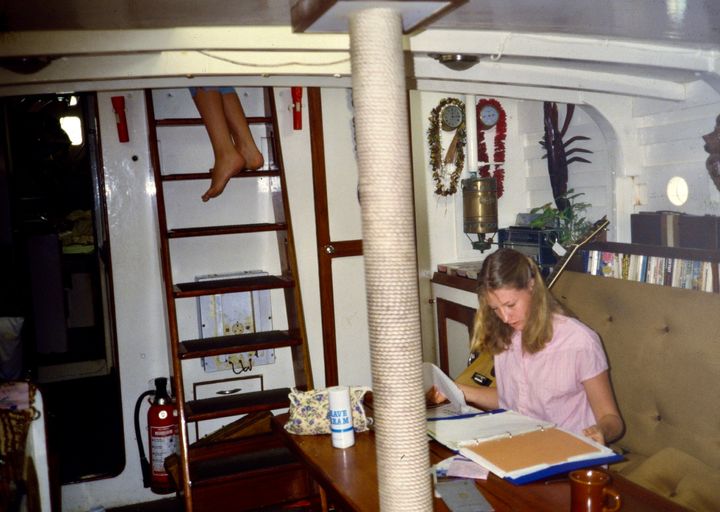
The author on Wavewalker.

Photo Courtesy Of Suzanne Heywood

The author on Wavewalker.

One of the challenges of my childhood, I grew to understand, was that my parents’ narrative looked true – we seemed to be living a privileged life by being able to sail to gorgeous places like Vanuatu and Fiji in the South Pacific. But the reality was very different.

For a start, I learned early on our voyage how dangerous the ocean could be. A few months after we left England, we were hit by an enormous wave when my father attempted to cross the Southern Indian Ocean accompanied only by two novice crew members, my mother (who didn’t like sailing) and his two small children. I fractured my skull and broke my nose in that accident and had to endure multiple head operations without anaesthesia on the small atoll that we eventually found in the middle of the ocean.

But my life on Wavewalker wasn’t just physically dangerous. Living on a boat for a decade meant that I could rarely have friendships, I had little or no access to medical care and I couldn’t attend school.

As I turned into a teenager, I had no private space. Instead I had to share the one working toilet we had on board with my family and up to eight or nine crew, and to share a cabin with adult crew members.

As the years went on, it became clear that my parents had no intention of fulfilling their promise to return home. I had no way of leaving the boat — I had no passport or money. But more than that, I had nowhere to go.

We’d set sail when I was a small child, and after that I never saw any of my relatives again. Apart from my parents, I had no other adults in my life apart from the crew members who came and went. The only people I saw in authority were the customs and immigration officials who boarded our boat when we arrived in each new country, and they never expressed any interest in the welfare of the two children they found there.

While Wavewalker represented freedom for my parents — they could pull up the anchor and sail away whenever they wanted — it was a prison for me.

I eventually realised that the only way I would ever escape Wavewalker was if I found a way to educate myself. I tried to convince my parents to let me go to school, and six years after setting sail, they finally agreed to allow me to enroll in an Australian correspondence school. I was 13 years old.

While it was clear to me that my only possible escape was through education, studying by correspondence on a boat was very difficult. By this time my father had turned our boat into a sort of “floating hotel” to pay for our endless voyage, and my parents wanted me to work rather than spending my days with my nose in my books.

There were also more practical issues. I had no postal address and I had no space in which to study apart from the one small table in our main cabin. Sometimes I would hide myself inside a sail at the front of the boat to study, knowing no one would come looking for me there. I had to fight my father for paper, which was an expensive commodity in the South Pacific. Whenever we reached a major port, I sent off the lessons I’d completed and asked the school to send them back to the post office at our next port of call, but if my father decided to change course, my lessons went astray.

I found the correspondence lessons very challenging, partially because I had missed a lot of education and because it was very difficult to learn remotely without being able to talk to a teacher. I knew, however, that I had no choice ― it was my only way out.

The author studying on Wavewalker.

Photo Courtesy Of Suzanne Heywood

The author studying on Wavewalker.

After three years of studying by correspondence while at sea, when I was 16 and my brother was 15, my parents decided to put my brother into a school in New Zealand. (As my father once explained it to me, my education was less important since I would never have to support a family.)

When my parents sailed away, I was left behind to look after my brother, doing the shopping, cooking and cleaning while he went to school each day and I tried to keep studying by correspondence. For nine months, we lived alone in a small hut beside a lake in a country in which I only knew one adult (who lived several hours away). My father left a small amount of money in a bank account that I could only access by forging his signature.

I kept working through my correspondence lessons, posting them off each week. I also wrote to every university I’d ever heard of, asking them if they would let me apply to be a student. Most wrote back saying that they would not consider me.

The local universities wouldn’t consider me because I was an English citizen, and the English ones wouldn’t consider me because they thought my qualifications were too hard to assess. But eventually Oxford University wrote back and ― after I sent them two essays – offered to interview me if I could find some way to get myself back to England. So I used money I’d earned picking kiwis, together with a small contribution from my father, to buy a one-way plane ticket, betting everything on that meeting.

Amazingly, Oxford gave me a place, and I went to university the following year. By that time, however, my relationship with my parents was tenuous. I really struggled that first year at university — not only because I had almost no money and survived mainly on cans of tomatoes and dried pasta, but also because I found it hard to fit in socially after so many years of isolation.

The good news is that after that tough first year, I started to make friends, and with access at last to libraries and laboratories, I thrived academically. After finishing my degree, I went on to do a Ph.D. at Cambridge University and then joined the U.K. government, working in the Treasury. It was there that I met my wonderful husband, Jeremy. When I became a parent myself — Jeremy and I had three lovely children ― I was determined to treat my children very differently. I make it clear to them that my love will always be unconditional, and that I will always be there for them if they need me.

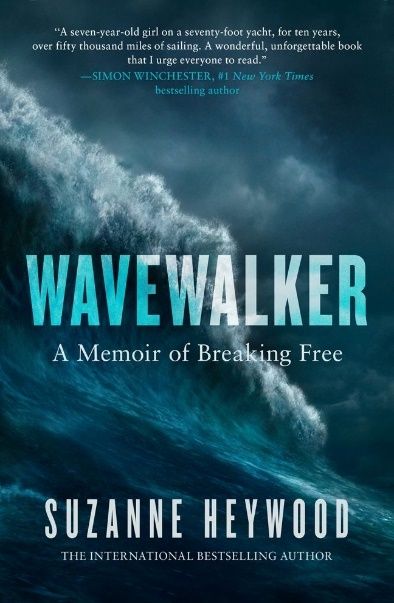
The author's book about her time on the boat.

Harper Collins

The author’s book about her time on the boat.

When my parents eventually returned to the UK, I tried several times to talk to them about the past, but they always reacted defensively, stating that it had “all worked out fine in the end.”

I knew I would probably lose the remaining relationship I had with them when I told the true story about my childhood. However, I never doubted that I would write about my time on Wavewalker.

When my children reached the same age I was when I was struggling with my loneliness and lack of access to education, I at last saw my childhood through a mother’s eyes. I knew that I no longer had an obligation to maintain my parents’ narrative: My childhood was certainly unusual, but it was never privileged.

Author’s Note: This essay is an account of my childhood as I experienced it, and based on extensive diaries and other documents from the time. Others who were present may have experienced it differently. But this is my story.

Do you have a compelling personal story you’d like to see published on HuffPost? Find out what we’re looking for here and send us a pitch.

Share Button

Dawn French Recalls Terrifying Incident That Nearly Killed Her And Jennifer Saunders

Dawn French has recalled an incident that nearly killed her and fellow comic Jennifer Saunders in the 80s.

The pair starred as a comedy duo and writers for the BBC sketch show French and Saunders. In her latest book The Tw*t Files, the 66-year-old revealed they almost died while working on a film in Spain.

“We made a film for The Comic Strip called A Fistful of Travellers’ Cheques in 1984,” she wrote in an excerpt published by The Mirror.

“We were sharing a villa with two bedrooms – Fatty (Dawn’s nickname for Jennifer) and her then-boyfriend in one room and me in the other. About five days in, we were called to set. A car would pick us up at 6 am and it was my job to be the alarm. I duly woke up and, in an effort not to fall back to sleep, I attempted to sit up.”

Dawn said what occurred next felt like something out of a cartoon show.

The duo were poisoned by a carbon monoxide leak leaving them feeling dazed and muddled. But she thanks her early call time as to why they are alive today.

She continued: “What happened next was very odd. It was as if I’d been thwacked in the face with a frying pan in a Tom and Jerry cartoon. Eventually, I managed to roll onto the floor. I was groggy and confused. I crawled to the door, opened it, and shouted to Jennifer. She mumbled something and then I heard a thud. None of us could stand up, so we crawled outside.

“It later transpired that we were being poisoned by a carbon monoxide leak from a faulty boiler. I’m pretty sure that, if we hadn’t had that early morning call, we wouldn’t be here now because we wouldn’t have attempted to wake up and the gas would’ve finished us off,” she said.

The pair have been comedy partners since the 1980s

Comic Relief via Getty Images

During a recent appearance on The Graham Norton Show, Dawn spoke of how she hoped her new book would “start up an anti-perfection league.”

She explained: “We carry a lot of shame, humiliation, and guilt about our mistakes, and I thought, ‘These mistakes are where I have learnt the most and where the fun is.’

“So, if you can wrangle back some of that shame and shine a light on it, it dissipates. If you own your mistakes, it’s very empowering.”

Dawn French: The Tw*t Files is on sale now.

Share Button

Turns Out You Need More Than A Good Sense Of Humour To Bag ‘The One’

Listen, we all love to laugh. But according to new relationships research from the University of Queensland, being funny isn’t necessarily the key to bagging you a second date.

A team of researchers tested heterosexual couples to find out if humour really is as attractive as we think it is.

They tested two predictions. Firstly, that humour is an attractive trait and secondly that men are more attracted to how women receive their humour, and women are more attracted to men who make them laugh.

Henry Wainright, lead author of the research paper, said the results were quite surprising.

They found that irrespective of sex, participants who laughed more at their partner or people who received more laughs didn’t rate their partner as more or less attractive.

“It’s interesting that this result opposes the commonly held belief that women are more attracted to funny men and that men are more attracted to women who find them funny,” Wainright told PhysOrg.

He continues: “In the past, it was thought that being attracted to funny individuals was useful because your children were more likely to inherit beneficial characteristics, like intelligence.

“However, our results suggest that trying too hard to be funny on a date might be more counterproductive than helpful – you should just be yourself.”

Gigi Engle, a sex and relationships psychotherapist, says we put too much stock in believing that humour is the thing that people are on the lookout for when dating.

“I do think that a shared sense of humour, that shared value, can be really helpful. But what I think is more important for us to have is a sense of emotional connection and emotional safety,” she says.

“Some people might attribute a shared sense of humour to a shared sense of emotional connectedness.”

She suggests that while it’s true that a shared sense of humour can mean you’re on the same page, misunderstanding each other’s sense of humour can also cause rifts in relationships.

“There’s a big difference between thinking your partner is funny, and being safe in the knowledge that your partner understands you,” she adds.

In short: look for emotional connection and laugh away to your heart’s content – or don’t. Just be yourself.

Share Button