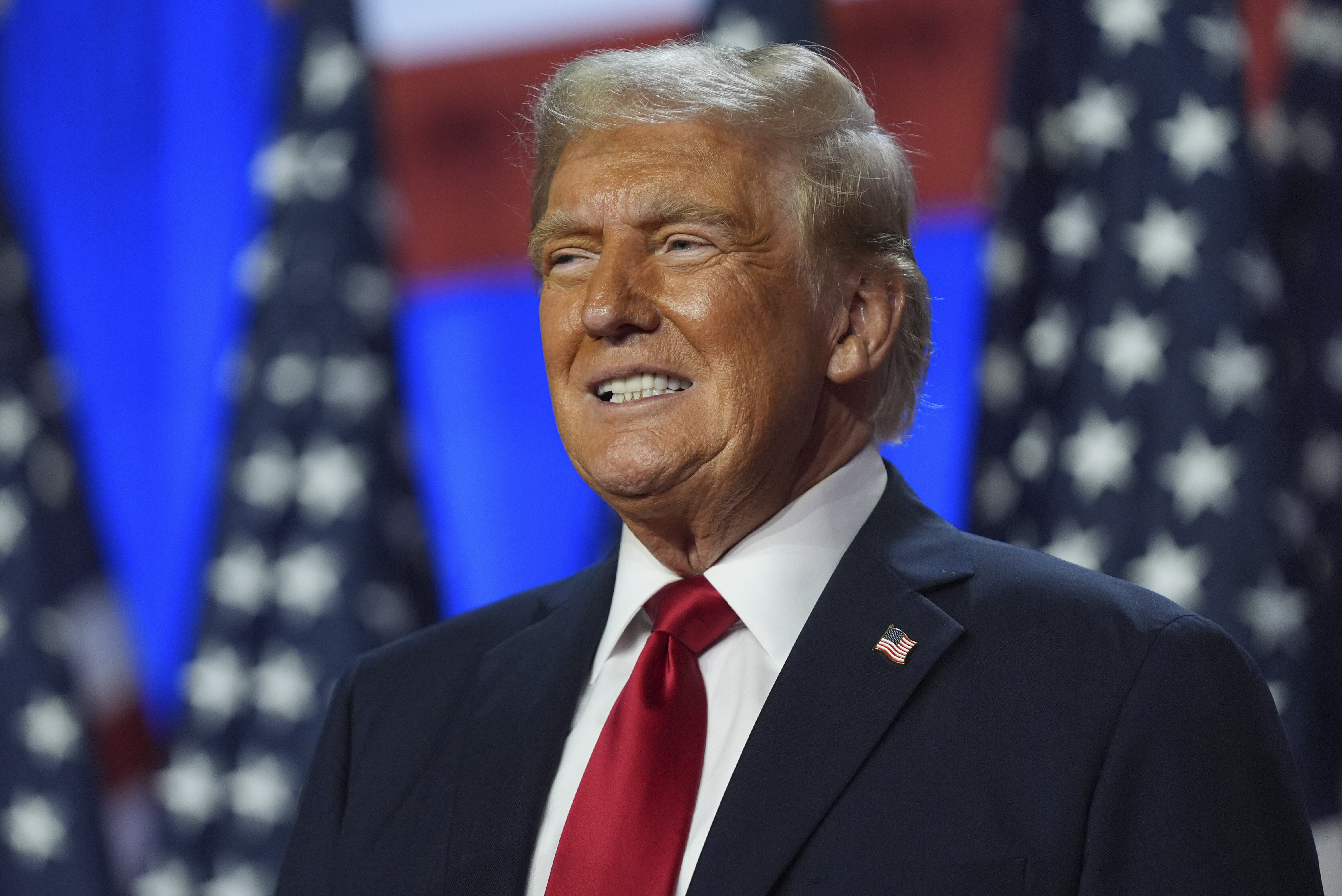
Europe has to take Donald Trump’s plan to end the war in Ukraine seriously, according to the Finnish president.
The Republican has vowed to bring the conflict to a close within his first 24 hours of getting into the White House in January.
Advertisement
However Trump has not said how he intends to do that, sparking fears he would pressure Kyiv to cede occupied land to Russian president Vladimir Putin.
Speaking on Bloomberg TV on Tuesday, Finland’s Alexander Stubb revealed he had spoken to Trump on the phone on Monday night.
He warned: “We in Europe and the rest of the world need to understand that Donald Trump is very serious about getting a peace deal sooner rather than later.
“There’s a window of opportunity for these negotiations between the election and inauguration day.”
Speaking at the COP29climate summit in Azerbaijan, Stubb said peace requirements must include territory disputes – although he prefaced that “we don’t know where things are going to settle” on this topic.
Advertisement
Russia still occupies around 18% of Ukraine, while Ukrainian troops are gradually being pushed out of the Russian region of Kursk after temporarily seizing it in August.
Stubb added that security guarantees, justice and reconstruction all needed to be on the agenda, too.
After Russia’s aggression against Ukraine escalated in 2022, Finland quickly applied to join Nato for protection.
Finland’s 800-mile border with Russia now makes up more than half of Nato’s eastern flank.
It means if Moscow were to attack Finland, all Nato members would rally behind Finland and help defend it.
Like much of the West, Finland has also been funding Ukraine – which is still not a Nato member – ever since Russia invaded, providing military aid and financial backing.
Advertisement
Trump has repeatedly praised Putin over the years, once calling his invasion of Ukraine “savvy” and genius”.
The Republican did not deny reports the two had spoken on the phone on multiple occasions since Trump left the White House in 2021, but said, if they had spoken, it was a “smart thing”.
Meanwhile, a Putin ally Dmitry Medvedev told reporters last week that Trump’s victory was bad news for Ukraine.
In the latest episode of his Kill Tony podcast, which was recorded the day after the rally but debuted on Monday, Hinchcliffe said the set was “about free speech” and rued being “under attack” by the pundits, celebrities and social media users who deemed the joke racist.
Advertisement
“I referenced Puerto Rico, which currently has a landfill problem in which all of their landfills are filled to the brim,” said Hinchcliffe on the podcast, which was recorded at Joe Rogan’s comedy club in Austin, Texas. “I am the only person who knew about this, unfortunately.”
Environmentalist bloggers and regional outlets have noted that Puerto Rico does have an actual problem regarding its garbage, and that a goal set in 1992 to increase the recycling rate to 35% has reportedly only reached between 9% and 14%.
“With that said, I just want to say that I love Puerto Ricans, they’re very smart people — they’re smart, they’re street smart, they’re smart enough to know when they’re being used as political fodder,” said Hinchcliffe on the podcast. “Right now that is happening.”
Hinchcliffe had set his joke up by welcoming migrants “with open arms,” before laughingly using those arms to wave said migrants away. He then noted “there’s a lot going on,” like “a floating island of garbage in the middle of the ocean,” and delivered the vexing punchline: “I think it’s called Puerto Rico.”
Advertisement
“I apologise to absolutely nobody,” Hinchcliffe said on the podcast. “Not to the Puerto Ricans, not to the whites, not to the Blacks, not to the Palestinians, not to the Jews, and not to my own mother, who I made fun of during the set. Nobody clipped that.”
“No headlines about me making fun of my own mother,” he continued.
Hinchcliffe said Tuesday that “perhaps that … wasn’t the best fucking place to do this set at.”
Even Rogan, while certainly supportive of his arguable protégé, argued in the aftermath of the outrage that his stand-up should only be performed at comedy venues — and not at political rallies — but that Hinchcliffe merely delivered the crass humor he’s known for.
“Perhaps that venue at that time wasn’t the best fucking place to do this set at,” said Hinchcliffe during the podcast. “But in any matter, to the mainstream media and to anybody trying to slander me online: That’s what I do, and that’s never going to change.”
Labourarranged to give up sovereignty over the archipelago, which contains a UK-US military base, last month, after holding it for more than 50 years.
Advertisement
It was praised by outgoing US president Joe Biden at the time as a “historic agreement”.
But, according to Reform UK leader and close Trump ally Farage, the next administration has a different take.
In the Commons on Wednesday afternoon, Farage said: “I can assure you, having been in America last week, knowing also the incoming defence secretary [Pete Hegseth] very well, there is outright hostility to this deal.
“Whatever is said about a lease agreement, as we saw with Hong Kong, these agreements can very, very easily be broken.
“Diego Garcia [where the military base is] was described to me by a senior Trump adviser as the most important island on the planet as far as America was concerned.”
Advertisement
Farage claimed: “There is no basis for this agreement to continue what it is, and if you do, you will be at conflict with a country without which we would be defenceless.”
He added that there was “no legal reason” why the UK had to give sovereignty of Chagos to Mauritius, as the International Court of Justice’s ruling – saying the islands should change hands – was only advisory.
The Reform leader also claimed that Chagossian people “do not wish to live under Mauritian rule”.
When the deal was first struck, critics said it was a strategic error because of the islands’ location in the Indian Ocean.
They expressed fears it would put other contested territories like Gibraltar and Falkland Islands under threat.
The Independent also reported on Wednesday that the Trump transition team has requested legal advice from the Pentagon over the agreement.
Advertisement
US government sources allegedly told the newspaper Trump might veto the deal – not to set to take place until after the president-elect’s inauguration – over global security fears.
However, Foreign Office minister Stephen Doughty told Farage in the Commons that he “fundamentally disagrees” with his claims about US attitudes to the deal.
He said: “This government inherited a situation where the long-term secure operation of this crucial military base [Diego Garcia] was under threat.
“International courts were reaching judgments. International organisations were taking steps not to undermine Mauritian sovereignty, and this threatened the secure and effective operation of the base.
“And, in the absence of a negotiated solution, a legally binding decision against the UK seemed inevitable. This would have threatened the secure and effective operation of the base and that was not sustainable.”
Advertisement
He added that when the Trump administration have been fully briefed, he was “confident that the details of this arrangement will allay any concerns”.
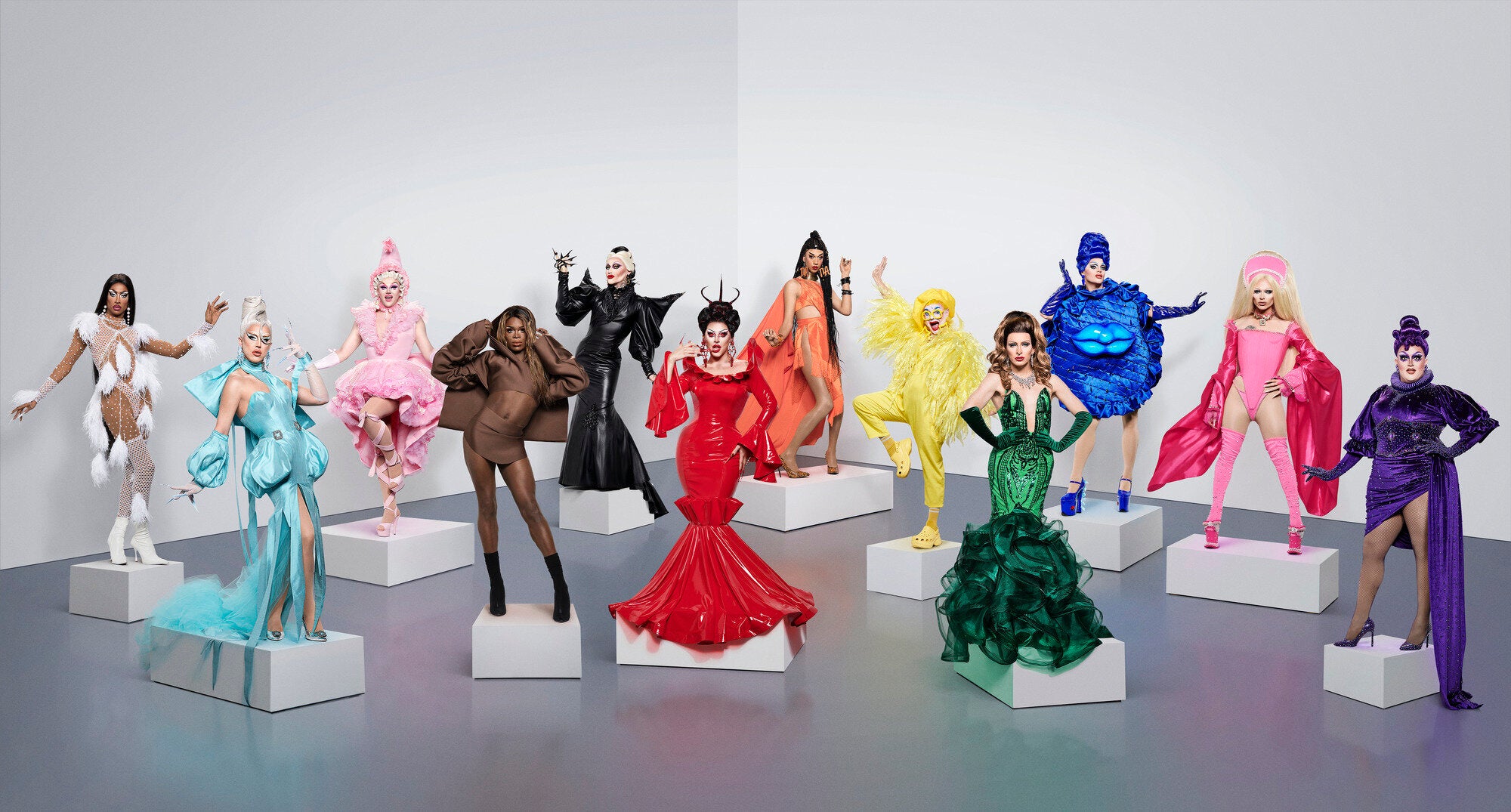

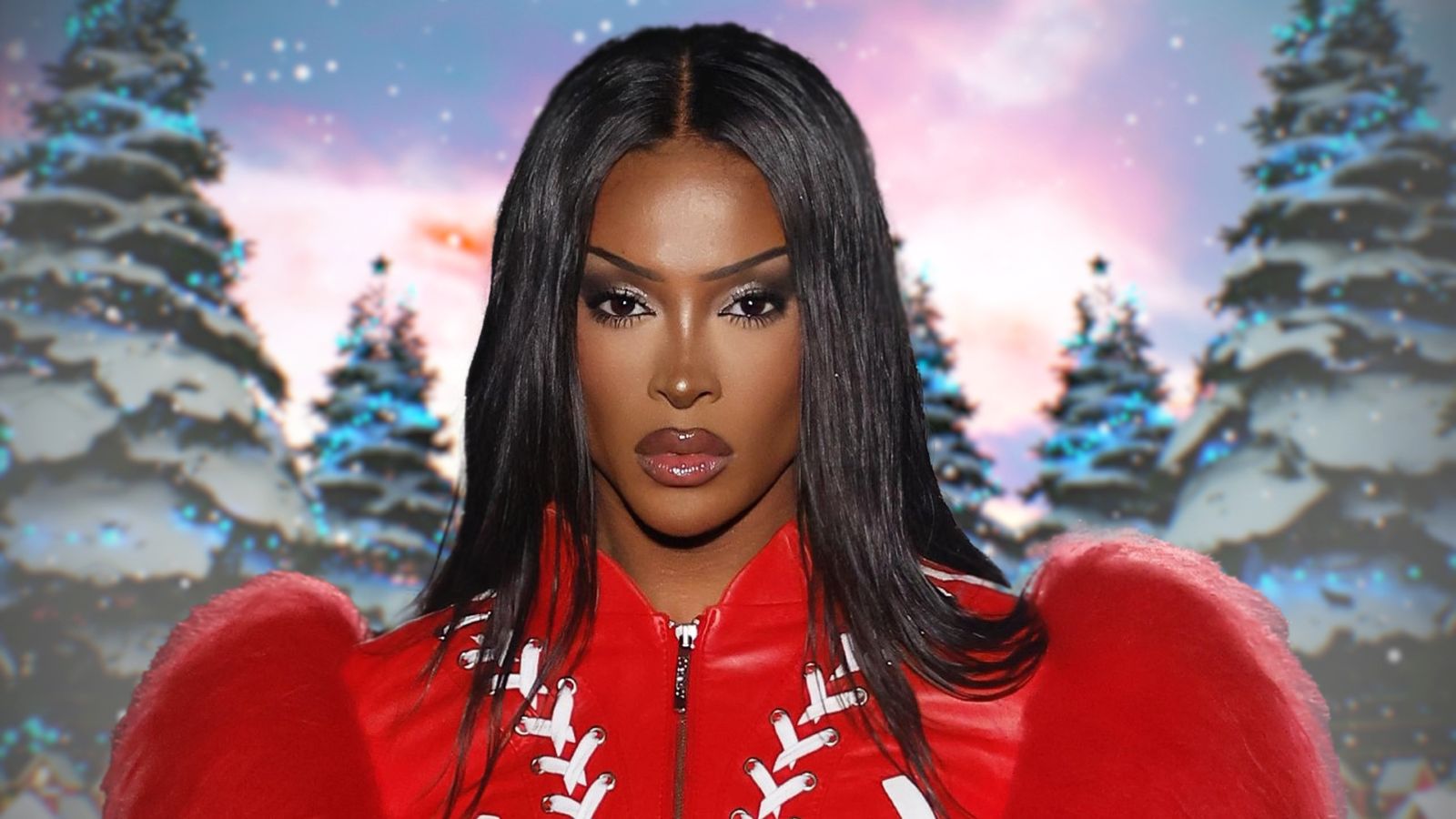
On Tuesday evening, it was revealed that the RuPaul’s Drag Race UK finalist will be one of six celebrities taking part in Strictly’s annual Christmas special next month.
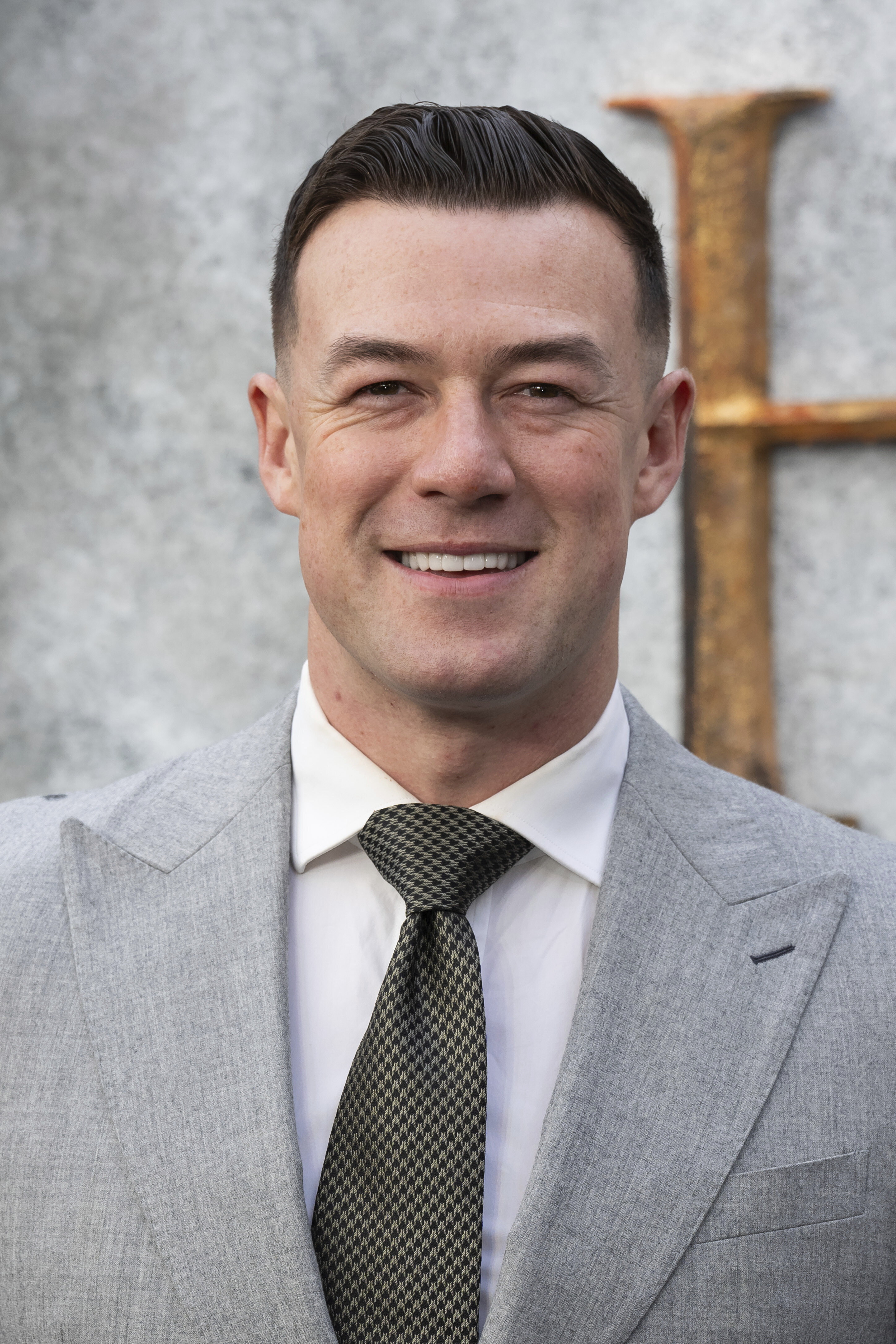
She’ll be performing in the one-off special alongside professional dancer Kai Widdrington.
Kai Widdrington
via Associated Press
Advertisement
“I cannot wait to sleigh on the Strictly ballroom floor,” she enthused. “My partner and I are going to dance for our lives!”
Tayce added: “In all seriousness, it’s an incredible honour to be the first drag artist to be taking part in Strictly Come Dancing.
“I hope I do all of my Drag Race and Welsh fans proud! Sign me up for all the glitz, glam and disco balls.”
Tayce will be competing on Strictly’s Christmas special next month
Advertisement
The Welsh queen first rose to prominence on the second season of Drag Race UK back in 2021.
The other four celebrities on the line-up will be announced later this week.
Josh Widdicombe is taking part in this year’s Strictly Christmas special
Traditionally, the Strictly Christmas episode features six new celebs competing in a one-off special for the Silver Star trophy.
Advertisement
However, two of the contestants on this year’s regular series of Strictly are former Christmas champions.
JLS singer JB Gill triumphed on Christmas Day back in 2012, while Jamie Borthwick’s festive win was a little more recent.
The EastEnders star came out on top during the 2023 Christmas special, during which he and Nancy Xu landed a perfect score for their Quickstep routine.
Keir Starmer’s former chief of staff Sue Gray is not coming back to work with the PM, HuffPost UK understands.
No.10 announced on October 6 that she was being made the prime minister’s envoy for nations and regions as part of a major Downing Street shake-up.
Advertisement
At the time, Starmer said he was “delighted” that she had accepted the newly-created role.
But it has now been confirmed that she will not be starting the job after all.
The prime minister’s spokesperson told reporters on Tuesday: “I can confirm she has now decided to not take up the role.
“Subsequent to that, we confirmed she was taking a break and I can now update she has decided not to take up the role following her break.”
They said she had already “played a vital role strengthening relations with nations and regions”, for which she had the PM’s thanks.
They did not say if she had been paid during her break between jobs.
No.10 said the envoy role will now be kept “under review”, adding: “Beyond that, respectfully, we won’t comment further on individual staffing matters.”
Advertisement
The comments come hours after a source close to the former chief of staff told the Financial Times: “Sue has taken a decision not to take the role. She’s going to focus on other things.
“She’s taken time to think about it properly, talking to stakeholders, but ultimately she’s decided she doesn’t want to do it.”
However, a cabinet minister told HuffPost UK that it had been No.10′s decision for her not to do the job.
Gray, who attracted national attention after leading the civil service’s partygate probe during Boris Johnson’s premiership, was appointed Starmer’s chief of staff when Labour was still in opposition.
She continued in the role after the election, but clashed with Morgan McSweeney, Starmer’s director of strategy.
Advertisement
After weeks of No.10 turmoil, Gray was sacked and replaced by McSweeney.
She immediately went on what the PM’s official spokesman described as a “short” break and never returned to take up her new job.
In a statement in October, Gray said she was “pleased to accept the new envoy role.”
The PM also issued a statement saying he was “delighted she would continue to support our work”.
But the job change was seen by many as a demotion, especially as it was not clear exactly what the new role would entail – or if it would even be paid.
After weeks of silence from Gray, No.10 confirmed to HuffPost UK that she would not be coming back to work for the PM.
A Downing Street source then told the BBC: “We think she has made the right decision.”
Gray went on a “short break” after quitting as Starmer’s chief of staff, where she had been paid more than the prime minister with an annual salary of £170,000.
She did not attend a regional investment summit in mid-October, as she was taking “a bit of downtime” following an intense period in the spotlight, according to cabinet office minister Pat McFadden.
Advertisement
The Guardian reported on Tuesday that Starmer was planning to withdraw the job offer to Gray allegedly due to concerns about the media attention which could stop her from working effectively.
A government source told the newspaper: “Sue hasn’t been told for sure that the job is no longer on offer, but she has been warned that this is the direction of travel. The way some people are behaving towards her is really horrible.”
As if the promise of Blackpool in a few days wasn’t an exciting enough prospect for Strictly Come Dancing, the first celebrity taking part in this year’s Christmas special has now been unveiled.
And folks, we’re off to a good start.
On Monday evening, it was revealed that comedian Josh Widdicombe would be getting his dancing shoes on this festive season, with an appearance in Strictly’s annual Christmas Day special.
Advertisement
“I am utterly terrified this will end in humiliation and worried I’m going to be so bad I will ruin Christmas for the nation,” he admitted, questioning: “Why have I done this?”
Josh Widdicombe is taking part in this year’s Strictly Christmas special
Josh will be paired with Kauren Hauer in the Christmas special, competing alongside five more famous contestants to be revealed in the coming days.
The stand-up comedian is known for his appearances on shows like Taskmaster, Have I Got News For You and Live At The Apollo, as well as co-hosting the podcast Parenting Hell with fellow comic Rob Beckett.
Advertisement
Traditionally, the Strictly Christmas episode will see six brand new celebrities competing in a one-off special for the Silver Star trophy.
However, two of the contestants on this year’s regular series of Strictly are former Christmas winners.
JLS singer JB Gill triumphed on Christmas Day back in 2012, while Jamie Borthwick’s festive victory was much more recent.
The EastEnders star came out on top during last year’s Christmas special, where he and Nancy Xu landed a perfect score for their Quickstep routine.
Strictly will continue to announce the Christmas line-up for 2024 over the next week on spin-off show It Takes Two.
This year, negotiators from nearly 200 countries are looking to hash out a climate finance deal in an effort to fund poorer countries who are still struggling to go green.
But, almost three decades since the climate summit began, scientists are still sounding alarm and pleading for more action from governments while previous agreements hang in the balance.
Brits do not have high expectations for COP29
According to the latest YouGov poll, just 9% of Brits are feeling optimistic, saying it’s either very likely (1%) or fairly likely (8%) that COP will result in significant action to tackle climate change.
A whopping 73% have a more pessimistic view, saying it’s either fairly (44%) or very unlikely (29%) to result in anything noteworthy.
Advertisement
While 53% of Brits think there’s a chance summits like COP could offer significant progress on tackling the threat to the environment, they also said there are plenty of other methods which might be more important.
For instance, 78% think the development of cleaner and more environmentally friendly technologies is one of the most important ways to tackle climate change, and 71% think encouraging companies and corporations to promote more environmentally friendly practices is key.
A further 68% believe trade deals which encourage countries to cut carbon emissions are essential, while 59% think more UN action of the environment would have a significant impact.
More than half (59%) also believe pressure from the public for governments to act is essential for the fight against climate change.
Advertisement
Temperatures continue to soar, despite years of warnings
There’s no doubt that some COP summits over the years have achieved significant deals between countries at their close.
The meetings have established an annual platform for climate change discussion, secured international promises to reduce greenhouse gas emissions, created the Paris agreement, pledged to move away from coal and vowed to help developing countries which are especially vulnerable to climate change.
But, as the specialists warns that 2024 is set to be the warmest year on record, it’s hard not to escape the sense of hopelessness that comes with the 29th COP talks.
That’s because the world has been too slow to reduce carbon emissions.
In fact, some scientists believe the path to limit global warming to 1.5C has already disappeared.
YouGov also found 17% of Brits think it is too late to avoid the worst effects of climate change – up six percentage points on 2019 – while 57% of those surveyed think the UK can still avoid the worst effects of climate change, but it would take drastic action.
Advertisement

Meanwhile, climate disasters continue to destroy communities around the world – just last month, Spain was hit with intense flooding leading to more than 200 deaths.
Emergency services remove cars in an area affected by floods in Catarroja, Spain, on Sunday, Nov. 3, 2024.
via Associated Press
Donald Trump’s impact this year
The 2015 Paris agreement was meant to a pivotal moment as almost 200 countries signed the deal to limit global warming to 1.5 degrees Celsius.
But Trump pulled the US out of the agreement when his term began in 2017, even though the country is the second largest emitter in the world.
Joe Biden signed the US back up in 2021, but, now Trump has been re-elected, he is expected to pull the country out once again when his second term starts.
Advertisement
The Republican president-elect has also promised to increase US oil and gas production, even though it is already the largest in the world.
China is currently the world’s largest greenhouse gas polluter, but even the country’s top climate envoy Liu Zhenmin told journalists on Monday that Beijing is “concerned about the United States after the election”.
Liu said: “Everyone’s concerned about he next steps, whether after the US election, US climate policy will or won’t change. But most [COP] colleagues still feel that regardless if a country’s climate policy changes or doesn’t change, international multilateral climate cooperation should continue.”
Keir Starmer’s spokesperson would not be drawn on whether the UK was concerned over Trump’s potential changes to US climate policy on Monday, only saying they were waiting for the new administration to get into power first.
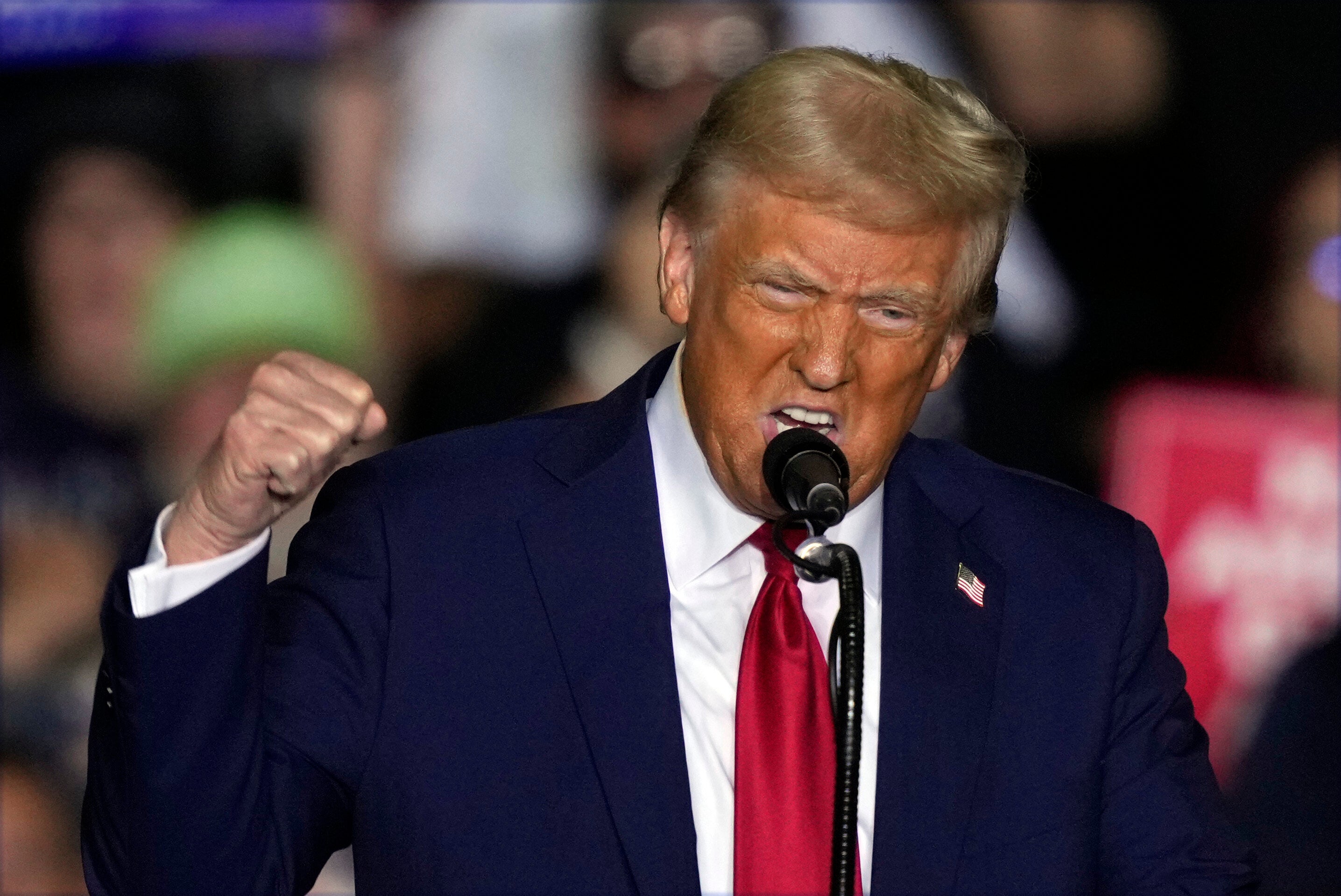
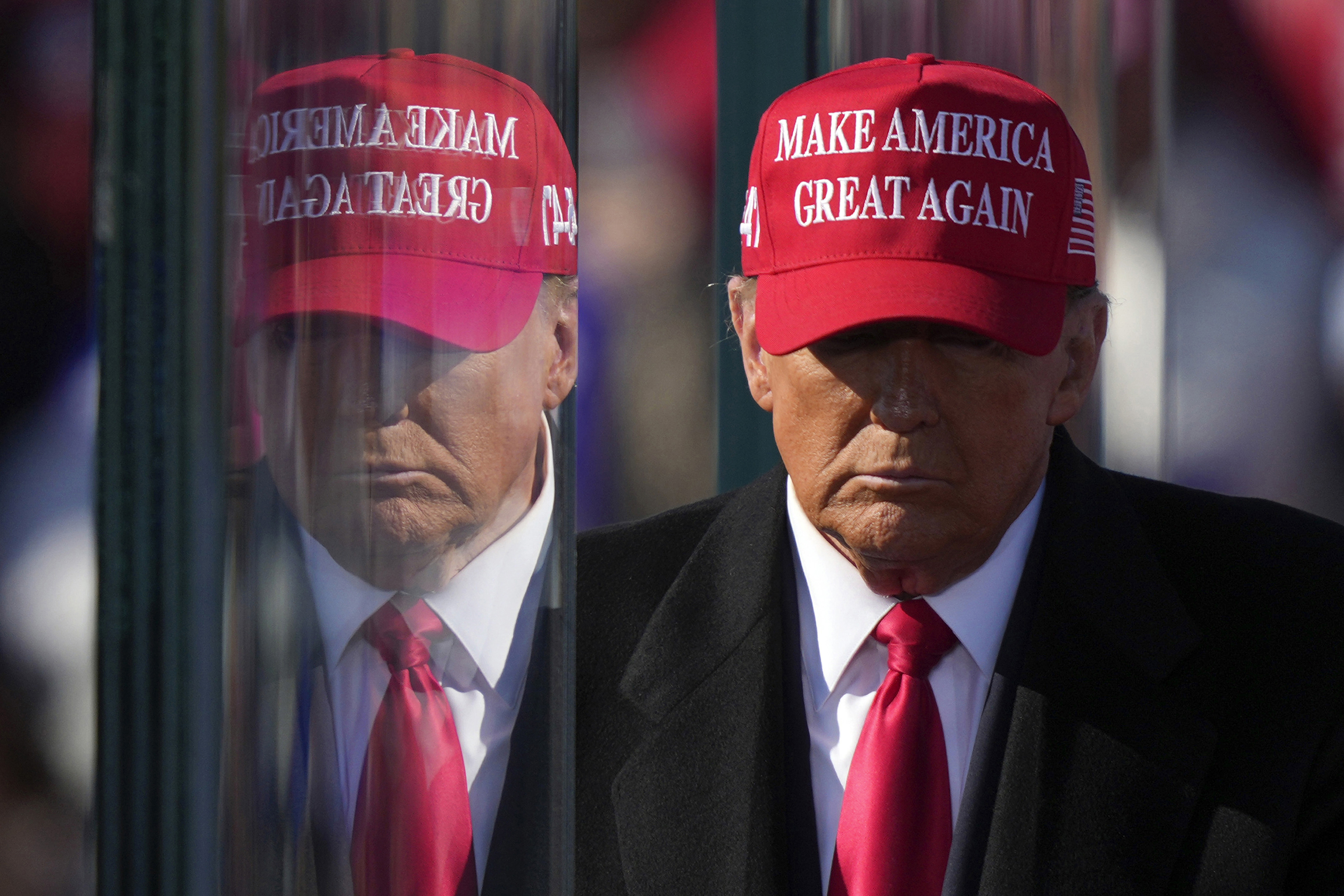
Republican presidential nominee former President Donald Trump is reflected in the bullet proof glass as he finishes speaking at a campaign rally in Lititz, Pa., Nov. 3, 2024.
via Associated Press
Advertisement
Other leaders’ absence
While around 100 world leaders have said they plan to visit COP29 within the first three days of the 11-day conference, there are concerns that too many heads of state might just skip it.
After all, Starmer is one of only two G7 leaders who will be speaking at the summit.
Outgoing US president Biden will not be present, nor will his successor Trump, although an American contingency will still attend the negotiations.
French president Emmanuel Macron will not be there due to tensions with Azerbaijan’s conflict with Armenia, while German chancellor Olaf Scholz will also miss the summit after his ruling coalition fell.
The EU delegation will be a bit thin too and European Commission president Ursula von der Leyen abstained as the EU parliament is in a state of transition.
Despite being very vulnerable to the effects of climate change, Papua New Guinea will not be attending either with the country’s prime minister James Marape saying it was a “total waste of time” with “empty promises and inaction”
Advertisement
Narendra Modi, India’s prime minister, is also unlikely to attend, as is China’s president Xi Jinping.
COP26 president, Sir Alok Sharma, told BBC Radio 4’s Today programme: “I think it is disappointing that we don’t have more world leaders coming to this Cop and, I mean, Keir Starmer is coming, and I think that’s great. It’s showing UK leadership.”
But, he continued: “What also matters is what all of these countries and the delegations actually announce in terms of the pledges, and also, really importantly, what progress has been made in implementing … existing climate commitments.
“Ultimately those detailed negotiations are led by ministers rather than heads of government, so those ministers are obviously coming. Some of them are already here, so we’ll have to see what progress they managed to make.”
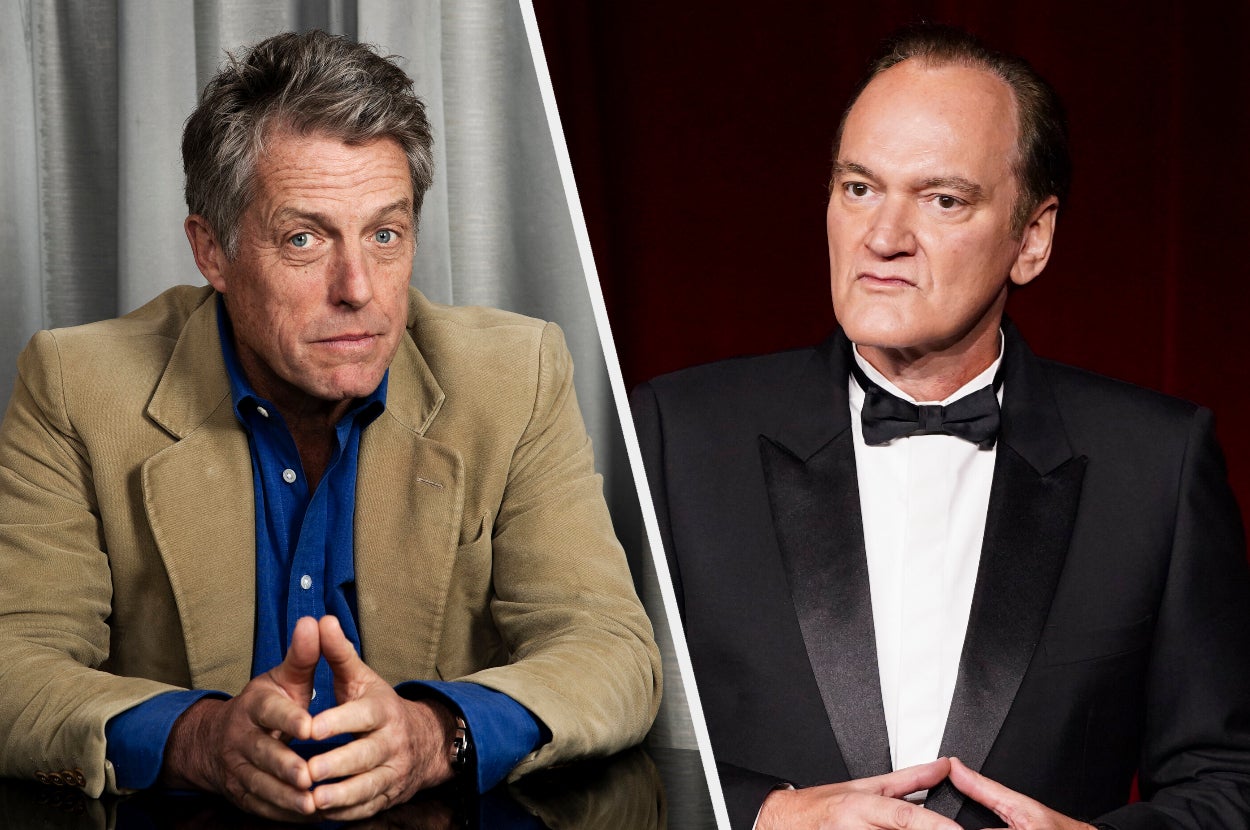
Hugh Grant has revealed Quentin Tarantino surprised him when he revealed his favourite film from the British actor’s vast back catalogue.
In a new interview with Letterboxd, the Heretic star recalled a “weird experience” at an event in London, in which a “sweaty person pushed his way through the crowd to me”, only to reveal himself as the Pulp Fiction filmmaker.
“To my enormous surprise, he said, ‘Oh, man, I love Music And Lyrics’,” Hugh continued.
“He said he watched it on a plane, and was so disappointed that the plane landed before the film ended, that he had to quickly go and order it from Blockbuster or something. And I thought, ‘Surely not, not Quentin Tarantino’…?”
Music And Lyrics featured Hugh as a former 80s music icon, who leans on an unlikely source when he’s tasked with writing a new song for a modern-day pop star.
Elsewhere in his Letterboxd interview, Hugh opened up about shooting those musical scenes, admitting: “[The dancing in Music And Lyrics] was hell, because it was freeform, just kind of ‘express yourself’, ‘enjoy the music’, ‘feel it’ like a real rock star, and I’m so not that person, and I really struggled with that.
“I had to have my charming makeup lady in New York bring me little swigs of whisky in a 7Up bottle and a certain amount of lorazepam to really get in the mood for that one.”
In his September debate with Vice President Kamala Harris, Republican presidential nominee Donald Trump was asked if he wanted Ukraine to be victorious in its efforts to fight off Russia’s brutal invasion.
“I want the war to stop,” Trump, now president-elect, replied. “That is a war that is dying to be settled. I will get it settled before I even become president.”
Advertisement
Now, after Trump’s win Tuesday, Ukraine and its allies in the US are preparing for the worst — a complete end to US military aid, forcing the embattled European country to choose between capitulation and limping along — and hoping Trump’s affinity for Russian President Vladimir Putin won’t win out.
What hopes they have appear to rest on the idea that Trump considers himself the consummate dealmaker — and if he wants to have any leverage in trying to broker a peace, he needs to help Ukraine keep the pressure on Russia on the battlefield.
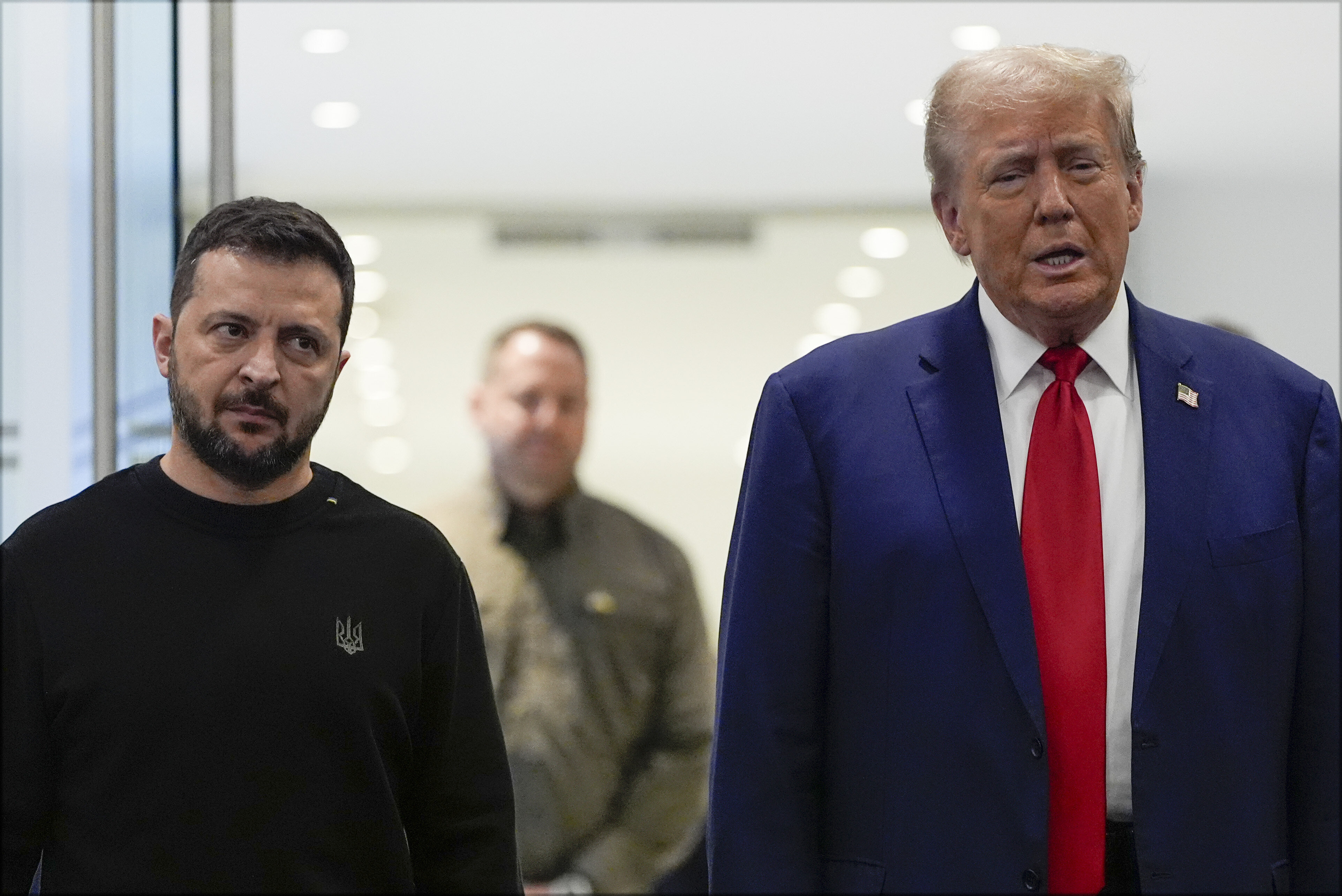
Donald Trump meets with Ukraine’s President Volodymyr Zelenskyy at Trump Tower on Sept. 27 in New York.
via Associated Press
Putin, through his military, has sought to show Ukrainians this week the cost of continuing to resist. On Thursday, waves of armed drones led to an eight hour air alert in in Kyiv, keeping many of its residents huddled in the subway for safety.
Advertisement
In the Black Sea port city of Odesa, Russian drones armed with thermobaric bombs hit residential areas Thursday, local media reported. These bombs contain two stages — an initial explosive that spreads a flammable accelerant, and a second stage that ignites that fuel, drawing the air out of the surrounding area to make a larger explosion. In addition to the blast, these “vacuum bombs” literally suck the air out of the lungs of those nearby.
Stopping these attacks will require more US military aid, on top of the $52.7 billion already committed to Ukraine since the invasion began in February 2022. The Biden administration has been criticised by Ukrainian officials and military experts for providing too little aid to Ukraine, and too slowly, even as Ukraine’s president, Volodymyr Zelenskyy, has asked for new weapons to strike into the interior of Russia.
After the election, the pro-Ukraine advocacy group Razom urged Congress to pass a new aid package in the post-election lame duck session before Trump takes office in January.
Children sit on a floor inside Arsenalna metro station during air alert in Kyiv, Ukraine on Wednesday.
via Associated Press
Advertisement
“The aid package must enable Ukrainians to survive the winter, push Putin’s forces back, and give President-elect Trump the flexibility he needs to act from a position of strength,” Razom said.
“Failure to urgently pass a supplemental package risks undermining President-elect Trump’s position before he assumes office.”
Why would Republicans in Congress agree to fund more weapons for a war Trump has said he would like to end, and has signalled he will end, by threatening to cut off weapons to Ukraine?
Leverage, according to Doug Klain, policy analyst for Razom.
Biden is planning to exhaust the current amount of so-called drawdown authority by the end of the year. Drawdown authority allows the president to declare some US weapons to be surplus, and thus available to be sent to allies abroad. It has been one of the main ways US weaponry has been donated to Ukraine.
Trump would need to go back to Congress to get similar authority if Biden follows through.
That would give Trump a way to show Russia he wasn’t going to just ”[let] Putin do what he wants,” Klain said.
Advertisement
Drawdown authority is discretionary — Trump alone could decide whether to use it or not. Being able to credibly threaten to send Ukraine more weapons without needing congressional approval would bring a recalcitrant Putin to the bargaining table, the argument goes.
A soldier of Ukraine’s National Guard 15th Brigade carries a reconnaissance drone Leleka on a wheat field near the front line in Zaporizhzhia region in Ukraine in July.
via Associated Press
“All that Republicans would be doing by passing a new supplemental during the lame duck session is giving Trump options,” Klain said.
A spokesperson for House Speaker Mike Johnson (Republican, Louisana) told HuffPost that the Republican majority had no interest in taking up a Ukraine supplemental soon. In April, Johnson put his political life on the line by bringing forward a Ukraine funding bill to the House floor, against the wishes of many in his party.
Oleksiy Goncharenko, a Ukrainian parliament member representing Odesa, also held onto the idea of Trump as a wild card.
Advertisement
“Yes, there are a lot of challenges, but also there are possibilities,” Goncharenko told HuffPost. “What’s good about Trump? Good is that he’s unpredictable, not only for us, but for Putin, too.”
Goncharenko said the world was devolving from a rules-based international order to “a deals-based international order.”
“I think that President Trump will try to make a deal with Putin. But the question is, will he succeed or not? And if he will not succeed, how will he react?”
The bedrock assumption underlying much of Trump’s thinking about Ukraine may be that Putin — after losing, by Kyiv’s count, 700,000 soldiers in just under 1,000 days — would be happy simply to consolidate his gains in eastern and southern Ukraine in return for a ceasefire.
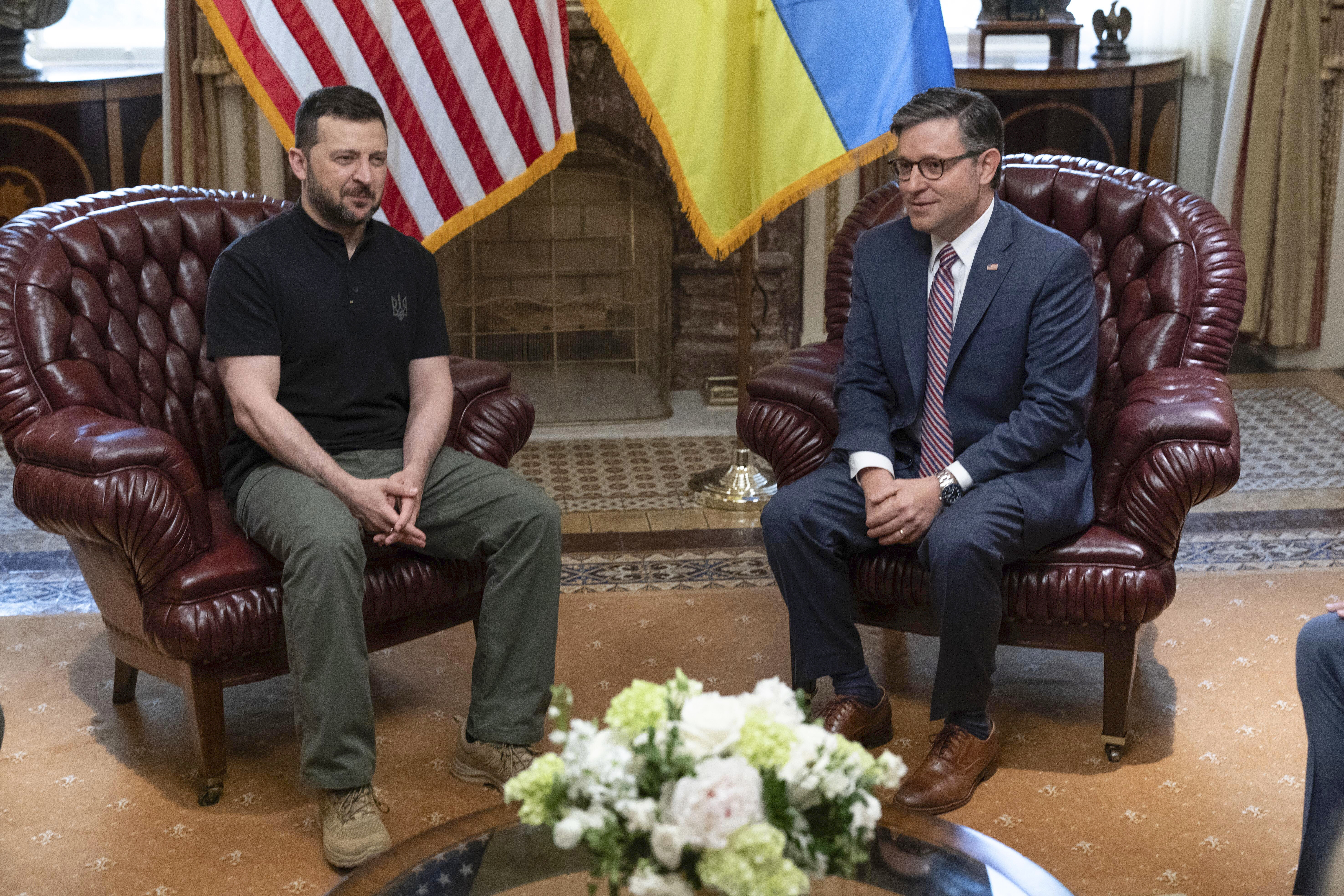
Speaker of the House Mike Johnson (R-La.), right, meets with Ukrainian President Volodymyr Zelenskyy at the Capitol July 10 in Washington.
via Associated Press
Advertisement
But Ukrainians believe Putin would use a ceasefire to rearm for another war, and even Russian public officials hint that he would not have achieved his objective if the war were to end now.
“We control only what we do. We can’t control what the Russians do. And the Russians are very clear about what they’ll do,” Klain said.
Another assumption that may be behind Trump’s thinking — that Ukrainians would simply give up and accept Russian control over Ukraine’s territory — is also questionable.
Advertisement
“Ukraine will never, ever accept Ukrainian territories to be Russian. Not Donald Trump, nor anybody else, will make us accept this. But the question is how to reclaim them,” Goncharenko said.
Ukrainian military veterans with amputations rest on bench on Khreshchatyk street in August in Kyiv, Ukraine.
Global Images Ukraine via Getty Images
Goncharenko did say he thought Zelenskyy made “a big mistake” in visiting a Scranton, Pa., artillery factory in September to thank the workers there. Zelenskyy made the visit while in the US to speak to the United Nations and consult with Washington. But the visit included no Republican elected officials, leading top Republicans to slam it as partisan.
The Times did not report what the subject of the call was, but Musk is a key supplier to the Ukrainian military as the CEO of satellite Internet provider Starlink, which has become vital for Ukraine’s battlefield communications. Ukraine’s Donbas region, one of the key fronts in the war, is also rich in rare earth minerals, such as lithium, that are important in the production of electric cars — like those built by Tesla.
Advertisement
Ukrainians could take heart that Trump appears to be considering at least one well-known Ukraine hawk for a top job in his administration. House Armed Services Committee Chair Mike Rogers (Republican, Alaska) is reportedly under consideration to lead the Pentagon.

Children from Gymnasium No. 6 head to a basement set up with classrooms during an air alert in Zaporizhzhia, Ukraine, Sept. 3. The city is building a dozen subterranean schools designed to be radiation- and bomb-proof.
via Associated Press
Goncharenko was philosophical about what was next in the conflict. Given Trump’s stance and Harris’ stout defence of Ukraine aid, the choice of who Ukrainians should root for had been an easy one.
But Goncharenko said he personally was not despairing.
“We are where we are,” Goncharenko said. “We can’t change anything [in the U.S.]. We just can’t. So we just need to watch what will happen and we should do the best we can do.”
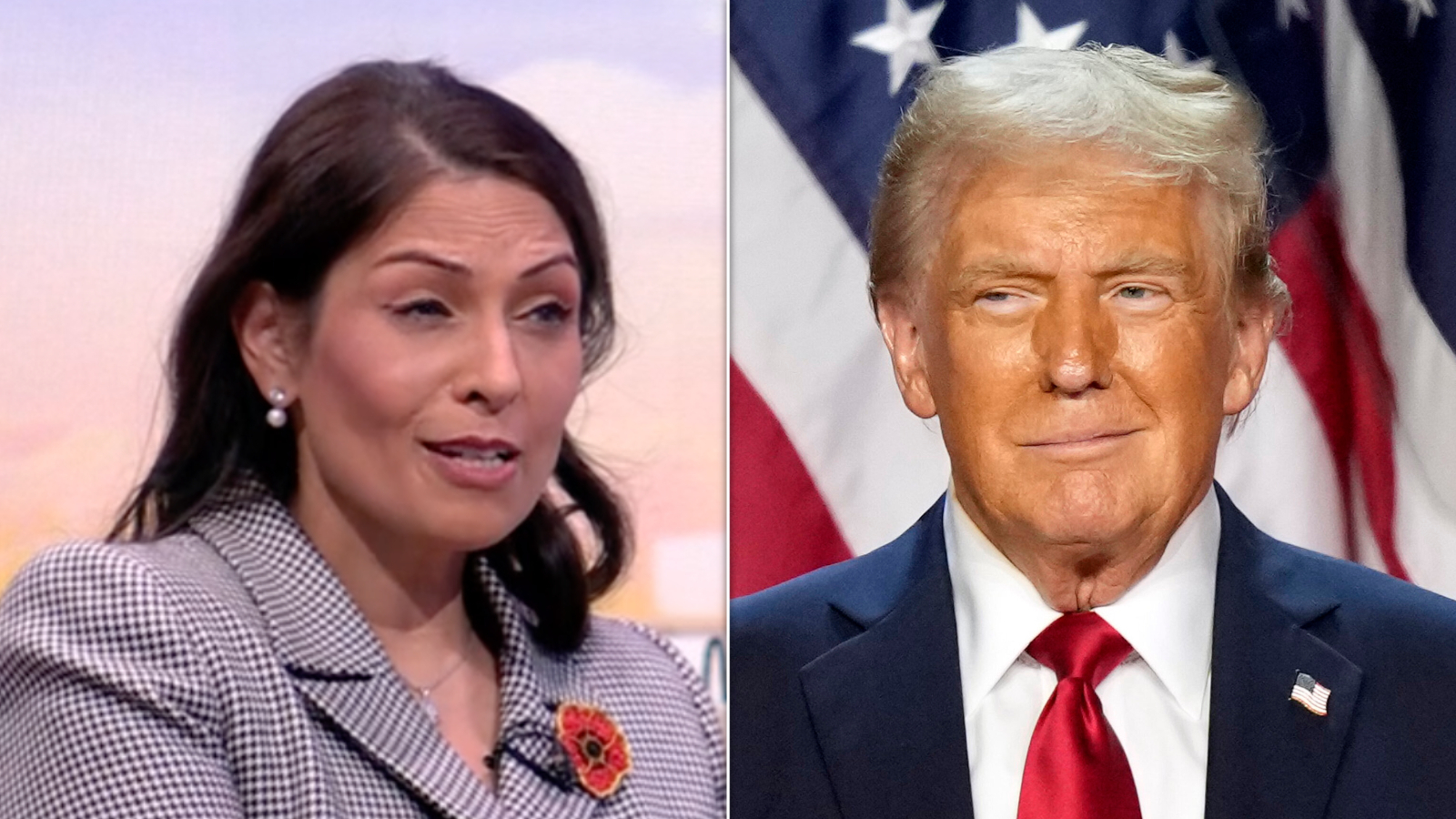
The shadow foreign secretary began her interview with the BBC presenter by slamming the Labour Party for previously insulting the president-elect on social media.
Advertisement
However, Kuenssberg quickly reminded Patel how, the day after the January 6 2021 riots on the US Capitol, the Conservative MP said the scenes were “horrendous” at the “heart of democracy”.
At the time, Patel said: ”[Trump’s] comments of being associated with that violence, and he has failed to condemn that violence, and I think that is completely wrong. People have died.”
“There is no justification for it,” the then-home secretary said, adding that there is “clearly more he could have done and should have done.”
So on Sunday, Kuenssberg said: “I just wonder, after the Capitol riots – back in January 6 [2021] those famous days – you yourself said that Donald Trump’s comments directly led to violence and he did very little to de-escalate the situation.
Advertisement
“Do you want to apologise to him for saying that, as you’re urging Labour politicians to do?”
Patel replied: “That was a major situation, I was home secretary at the time and I was obviously working with our US counterparts on security issues.
“No one wants to see violence after elections.”
Kuenssberg asked again if she stood by her comments, but Patel just repeated that it was a “serious situation” at the time.
“You clearly pointed the finger at Donald Trump for stoking that situation,” the presenter reminded her.
“Well, times have moved on,” Patel said, while saying that the riots “undermined democracy”.
“Do you stand by that? You were clearly very worried about democracy,” Kuenssberg pushed.
Patel replied: “We were absolutely worried at the time, I think those comments – in light of what happened – were absolutely right and fair and relevant.”
She then deflected back to Labour, saying: “The previous comments of our chief diplomat [David Lammy] were much more personal, much more personal and undiplomatic to the president-elect of the US.”
Advertisement
The current foreign secretary David Lammy called him “neo-Nazi-sympathising sociopath” during Trump’s first administration – although he has since dismissed those comments as “old news”.
Patel also told the BBC that that she had a “very strong working relationship” with the US in the past, and one that is built on “trust and respect” – and claimed this government will have to work “harder” to earn that.
“Any violence of that scale is unacceptable,” she said. “Within that context, those comments were absolutely right and appropriate.”