You don’t need to open an app or switch on your TV to know that it’s, to use a technical term, bloody freezing right now.
And it’s probably not escaped your attention that the ice and frost that can build up on your car, roads, and gardens can sometimes be seriously disruptive.
Advertisement
In fact, sporting events have already been cancelled under the current snowy conditions ― drivers have been warned of roads becoming ’ice rinks.’
So, shovelling snow might become a part of your morning routine over the next couple of days. But it turns out that there’s a simple, cheap trick to keep your shovel blade smooth ― simply spray some cooking oil onto the base.
Why?
In short, it’s a simple case of lubrication.
Oil freezes at a much lower temperature than water, so it won’t seize up in cold weather ― unlike water-based alternatives.
So, using cooking spray, vegetable oil, or wax on your spade before you start shovelling snow can help it to slide through the snow and ice faster than it would otherwise, without running the risk of getting stuck.
Advertisement
“If the snow begins to stick to the shovel, it is time to reapply the spray or oil. It is best to apply it before every use,” AccuWeather adds.
Any other tips?
Yes! Wearing thick socks over your shows can provide extra grip, meaning you’re less likely to slip and slide on ice and snow.
And while we’re speaking about footwear, stuffing your shoes with newspaper after heavy snow exposure can help them to dry out faster and maintain their shape.
We’ve written before about how rubbing a cut potato over your windshield the night freezing temps take hold can lead to condensation-free glass in the morning (yes, really).
Most of all though, stay as warm and as safe as possible during the cold blast (ah, UK weather…).
A Tory minister was told that the only person the government has managed to send to Rwanda is home secretary James Cleverly as a Sky News presenter mocked the stalled policy.
The prime minister has pledged to introduce “emergency legislation” too address the judges’ concerns about the policy.
Meanwhile, the Sunday Times reports today the government is planning to give the Rwandan government another £15 million to secure a new immigration treaty between the two countries.
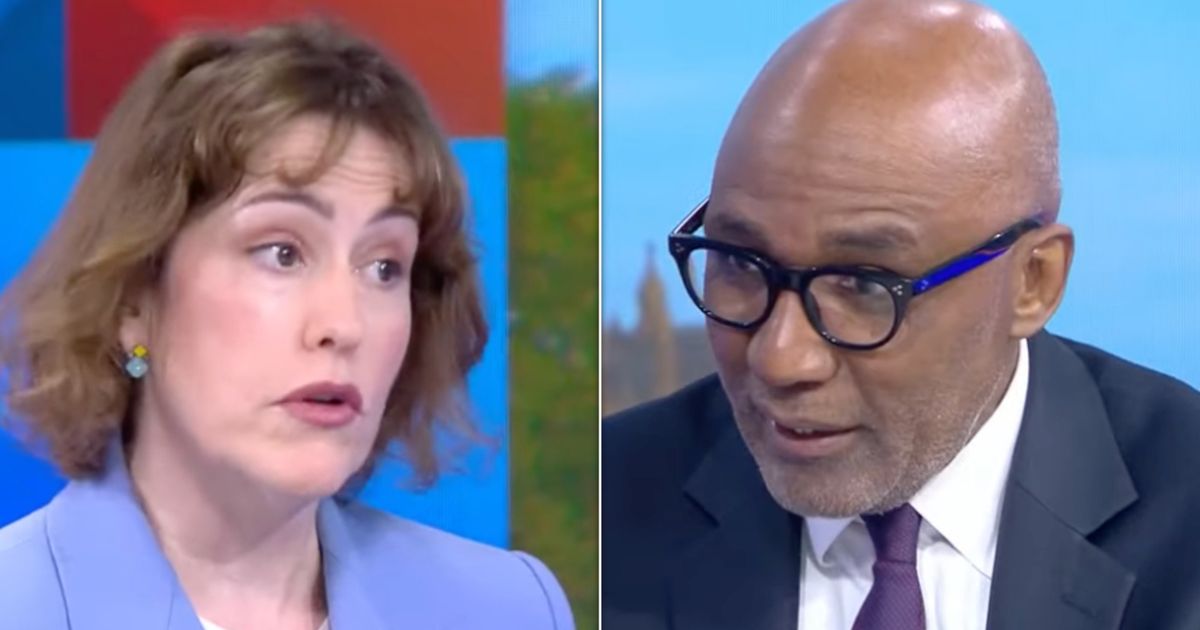
On Trevor Phillips on Sunday this morning, health secretary Victoria Atkins was put on the spot over the policy’s ongoing problems.
Phillips told her: “The only person who seems to be on their way to Rwanda at the moment actually is the home secretary, James Cleverly. There’s no asylum seekers going there any time soon.
Advertisement
″When he was here, he told me they were going to introduce emergency legislation urgently to make it possible to send asylum seekers to Rwanda for processing and that was weeks ago.
″It can’t be that much of an emergency because we haven’t seen the legislation.”
Atkins replied: “We are very much working across government on this. It will take a little bit of time to draw up this legislation because we want to make sure it’s in the right form.”
Asked if the legislation would be ready by Christmas, she would only say: “I know that the home secretary is working incredibly hard and quickly on this.”
Sunak is under huge pressure from his backbenchers to get flights to Rwanda off the ground to give him a chance of meeting his pledge to “stop the boats” carrying asylum seekers across the Channel.
Advertisement
But the cabinet is split over whether the new legislation should give the government the right to ignore rulings under the European Convention on Human Rights and the Human Rights Act.
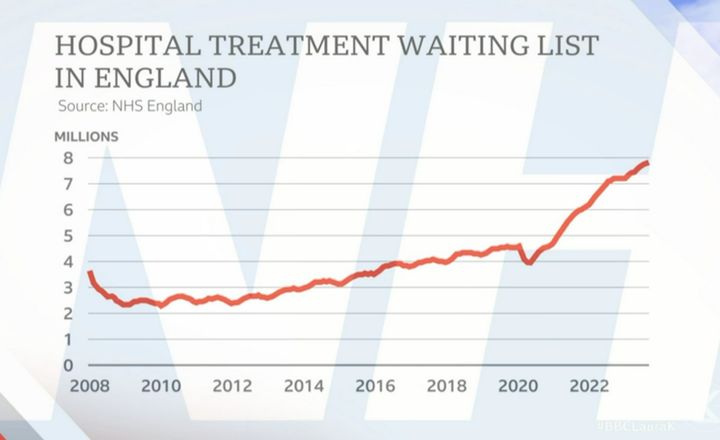
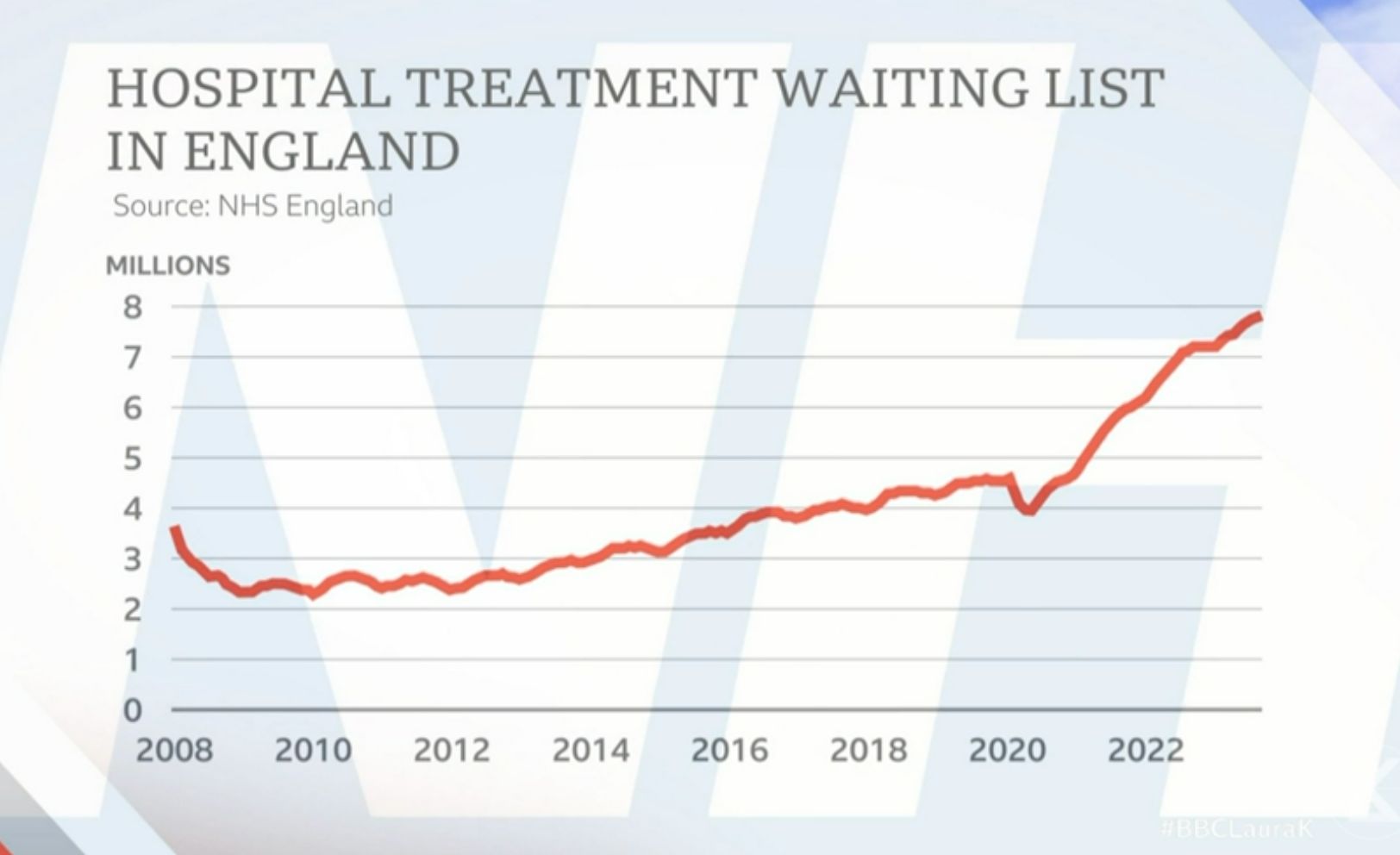
Health secretary Victoria Atkins was shown a damning graph setting out how the lists have almost doubled in the last five years to almost 8 million.
Advertisement
That is despite the prime minister vowing at the start of the year that they would be lower within 12 months.
Appearing on Sunday with Laura Kuenssberg on BBC One this morning, Atkins refused to confirm that the lists would be down in time for the next election.
Pointing to the graph, Kuenssberg said: “This is what has happened to waiting lists. We know of course the pandemic made things much more challenging, but our viewers can see it was going up well before the pandemic.
“Lots more money has gone in, there are many, many more staff. This is the situation that people are having to deal with.
Advertisement
“This is the prime minister’s target and it’s going the wrong way.”
The minister claimed the long-running industrial action by doctors and nurses was to blame for the government’s failure.
“Since December last year we’ve seen some 1.1 million appointments have to be rescheduled,” she said.
Atkins said the government has reached a pay agreement with unions representing NHS consultants, and that talks were ongoing with junior doctors as well.
But Kuenssberg pointed out that Atkins’ predecessor as health secretary, Steve Barclay, had refused to negotiate with the trade unions for months.
“You’ve said that the strikes are a big reason why the waiting lists are sky high and people are suffering,” she said. “Why then did the government sit on its hands for months refusing to talk to the doctors. Isn’t that responsibility on you too?”
Advertisement
The presenter went on: “With the numbers going the wrong way, can you commit that you’re actually going to hit these targets before the general election?”
The minister replied: “We are looking to meet those targets, but I need the consultants to pass this settlement that we have put forward.”
Kuenssberg replied: “You’re saying that if the doctors accept the new deal, the prime minister might hit his targets. But if you don’t, he won’t.”
Atkins said: “We’re doing everything we can.”
The graph Atkins was shown setting out how waiting lists have soared.
Keir Starmer is facing a left-wing backlash after he lavished praise on Margaret Thatcher as he attempts to persuade Tory voters to back Labour at the next election.
He said the former prime minister – a hate figure for many – had “sought to drag Britain out of its stupor by setting loose our natural entrepreneurialism” during her 11 years in office.
Advertisement
The Labour leader also said Thatcher, like ex-Labour PMs Tony Blair and Clement Attlee, had brought about “meaningful change” in the UK.
But his comments, in an article for the Sunday Telegraph, received fierce criticism from many of those on the left of British politics.
Andrew Fisher, a former senior adviser to Jeremy Corbyn when he was Labour leader said Thatcher had “set loose unemployment and inequality” in the country.
Writing in the Telegraph today, Keir Starmer says:
“Margaret Thatcher sought to drag Britain out of its stupor by setting loose our natural entrepreneurialism”
Avg GDP growth/year in the 1970s: 3.1% Avg GDP growth/year in the 1980s: 2.7%
Former Labour mayor Jamie Driscoll, who left the party after failing to get selected as an election candidate, accused Starmer of “abandoning the Red Wall”.
.@Keir_Starmer has abandoned his 10 pledges. He’s even deleted them from his own website. Now he’s abandoning the Red Wall. The North East lost 100,000 manufacturing jobs under Margaret Thatcher, my Dad’s job at ICI included. This is adding insult to injury. No wonder Labour… pic.twitter.com/b2feXQncPR
Left-wing singer Billy Bragg posted on X: “Oh fuck off.”
Labour-supporting Daily Mirror journalist Kevin Maguire said Thatcher had “turbo-charged inequality, created mass unemployment, flogged public assets on the cheap to her mates and tried to crush trade unions”.
Thinking of Keir Starmer’s praise for a Margaret Thatcher who turbo-charged inequality, created mass unemployment, flogged public assets on the cheap to her mates and tried to crush trades unions. pic.twitter.com/HcazPCgC1i
Asked about Starmer’s words on Sky News this morning, health secretary Victoria Atkins said: “I think the public will see this for what it is.
“Don’t forget he wasn’t appealing to Margaret Thatcher’s entrepreneurial spirit when he was courting votes from the hard left.
“And I suspect the great lady herself would view a man who is trying to ride on the coattails of her success with the following words: No, no, no.”
Elsewhere in his Sunday Telegraph article, Starmer said he wanted to “extend the hand of friendship to you, no matter where you are or who you have voted for in the past” – a clear pitch to disaffected Tories.
He said: “Across Britain there are people who feel disillusioned, frustrated, angry, worried. Many of them have always voted Conservative but feel that their party has left them. I understand that.
Advertisement
“I saw that with my own party and acted to fix it. But I also understand that many will still be uncertain about Labour. I ask them to take a look at us again.”
The Labour leader also accused the Conservatives of squandering “the possibilities of Brexit”.
Of the estimated 1.2 million people with HIV in the United States, 13% are unaware they have it. This is despite ongoing scientific advancements enabling people with HIV to live long, healthy lives, and a vast increase in frank and candid conversations from people in the public eye, like Billy Porter and Jonathan Van Ness, to dispel the stigma surrounding the virus.
What gives?
“I still think there is a lot of stigma surrounding HIV and prevention, and I also think there’s still a distrust from certain communities of the medical establishment, lack of education and comfort with providers,” said Dr. Antonio E. Urbina, medical director at the Mount Sinai Institute for Advanced Medicine and a professor of medicine at the Icahn School of Medicine at Mount Sinai in New York City.
Advertisement
“We have made strides in terms of decreasing the number of new infections, but we still need to demystify the tools we have to prevent it by universally adopting a more sex-positive attitude,” Urbina told HuffPost
Feeling comfortable with and empowered by your medical provider to speak openly about your status, ask questions and seek treatment are crucial tools in the fight to eradicate HIV and treat those living with it. But there are plenty of other things infectious disease doctors recommend that people do in order to keep themselves safe.
Know your status.
The most obvious-sounding one is also one of the most important. It’s not only for the benefit of your sexual partners and for the betterment of your health but also to ensure you’re getting the correct and most effective treatment possible.
“When a person is aware of their status, they can engage in informed conversations with health care providers to explore personalized prevention strategies,” Dr. Taimur Khan, associate medical research director of the Fenway Institute in Boston, told HuffPost.
Advertisement
“Regular testing facilitates early detection, which can lead to early treatment, reducing the risk of HIV transmission and contributing to better health outcomes. It also opens the door to other preventive measures, like PrEP, which can be tailored to individual needs and circumstances.”
Inquire about new treatment options.
PrEP, or pre-exposure prophylaxis, is already a widely known method of protection and prevention. When taken in pill form as prescribed, PrEP reduces the risk of getting HIV from sex by 99%.
It also helps to maintain the U=U, or undetectable equals untransmittable, status. When your viral load is undetectable, it’s also untransmittable. When someone has HIV and is taking antiretroviral therapy (ART) to maintain their undetectable status, they cannot spread the virus. Since PrEP assists in preventing someone from contracting HIV even if they are exposed to it, it also helps to protect the wider community.
But not everyone feels like taking a pill every day. For those people, it might be worth inquiring about other options.
“We already have approved a long-acting bimonthly injectable called Apretude,” Khan said. “That might be able to option the window for capturing the most vulnerable populations or most impacted. It’s widely available and FDA-approved, most insurances will cover it. It just hasn’t really scaled up significantly because it’s still new, and I also think it takes a bit of infrastructure at a site or clinic to have a flow and process for getting it approved and actually doing the injections.”
Advertisement
Practice safe sex and injection.
Every doctor we spoke to stressed the effectiveness of consistently wearing condoms when engaging in anal, vaginal or oral sex, and for those who inject drugs, participating in needle exchanges or ensuring clean needles are used. For more information about syringe services programs, click here.
Prioritise being in a safe space.
It’s just as important to feel empowered to discuss your sexual health with a partner as it is with your health care provider.
“There should be no shame or judgment surrounding sex. This is one of the reasons transmission continues to occur,” said Robin Hardwicke, a professor of obstetrics and gynaecology at UTHealth Houston who specialises in infectious diseases. “Sex is a natural part of human life; an expectation. Be free to have sex, but be responsible enough to protect yourself and your partner.”
“Find a provider or clinic where you feel comfortable talking about these issues,” Urbina added. “If you start to talk about this and you get shut down or they’re not responsive to your needs, you should go somewhere else until you really feel comfortable. If you feel you have to hide or not disclose something so important, it’s not a fit.”
Treat HIV as part of your overall health.
Finally, it’s important for both medical professionals and their patients to remember that they would be better served looking at HIV through the lens of overall health and not just sexual health, Khan told HuffPost.
Advertisement
“The stigma that has long been associated with HIV is being challenged by emphasising a shift from discussing ‘risky’ behaviour to promoting sexual practices that are safe, consensual and enjoyable,” he said. “By addressing HIV as one aspect of a broader sexual health conversation that includes other [sexually transmitted infections], vaccinations, mental health and substance use, the focus is placed on comprehensive care and well-being. This inclusive approach helps to dismantle the blame and shame often associated with HIV and repositions it as a manageable health condition.”
When it comes to lowering your risk of getting infected with HIV, there is one immensely valuable yet grossly underused medication that doctors recommend.
The drug is known as PrEP, or pre-exposure prophylaxis,and is a medication that reduces the risk of someone getting HIV, said Dr. Shivanjali Shankaran, an infectious disease physician who specializes in HIV at RUSH University Medical Group in Chicago.
Advertisement
PrEP is an important HIV infection prevention tool that many folks either don’t know about or don’t think they’re eligible for. It’s estimated that only “about 30% of the people who should be on PrEP are on PrEP and of them in the U.S., only 7% of PrEP users are women,” Shankaran said.
“The different studies had varying levels of protection, but most of those were related to how well someone adhered to taking the pills,” Shankaran explained. “So if you took the pills most of the time, if not all of the time, it’s very, very effective — obviously, if you don’t take it, it’s not going to be effective.”
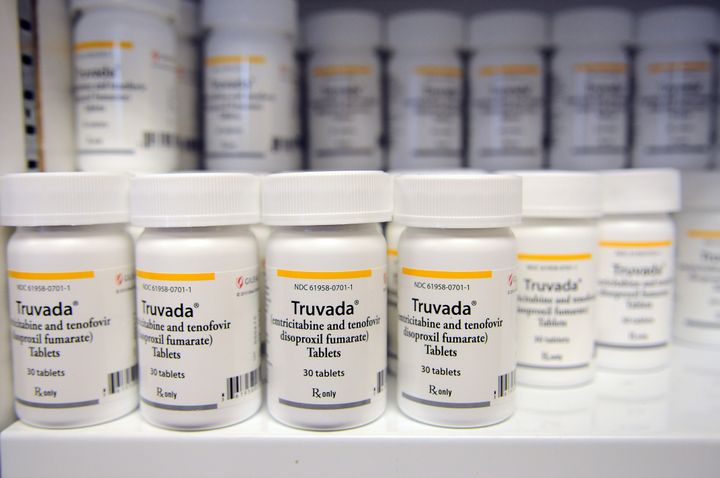
There are currently three options for PrEP in the U.S.; two of the treatments are pills and one is an injectable. Cisgender women are eligible for two of the three treatments, according to Shankaran: Truvada, a pill treatment, and Apretude, which is the injectable medication.
MCT via Getty Images
Truvada is one PrEP medication that women can take. (Astrid Riecken/Tribune News Service via Getty Images)
“The CDC currently recommends that if you’re a cis woman, you take the medication, the Truvada, for example, if it is a pill, you take it every day, and about after about 21 days or so you’re fully protected,” Shankaran said.
Advertisement
For Apretude, the injectable medication, the time it takes for someone to be fully protected is unknown, according to the CDC. This is because the medication has been available for a shorter time, Shankaran said.
“The duration is shorter for men, also [men] can do sort of on-demand PrEP, where you take it if you’re going to have sex,” Shankaran explained. However, taking the medication “on demand” is not currently recommended for cis women.
Additionally, cisgender women cannot take Descovy, the third PrEP medication, which is also administered in pill form. “Because, unfortunately, studies were not done in cis women, and so there was not enough data in the use of Descovy … which is why it’s not approved for that use,” Shankaran said.
PrEP is just one part of a full strategy for people to stay HIV-free.
“The reason I say it’s a strategy because I think the medication, whether it be a pill, or injectable, is sort of just part of it — so, it’s either a pill a day that people can take, or an injectable medication every two months,” said Dr. Oni Blackstock, the founder and executive director of Health Justice, an organisation that works with health care groups to reduce health inequities and centre anti-racism.
But, beyond the pill or injectable, there are additional levels of care someone receives when they start PrEP.
Advertisement
“They’re going to be seeing a provider every few months, they’re going to be tested for sexually transmitted infections that can co-occur with HIV, they’ll be checked for how they’re tolerating the medication, they’ll be counselled on any sort of sexual or drug use behaviours that may be associated with HIV,” Blackstock said.
“So, I just think of it as sort of a bundle of care to help people who are HIV-negative stay HIV-negative,” she added.
d3sign via Getty Images
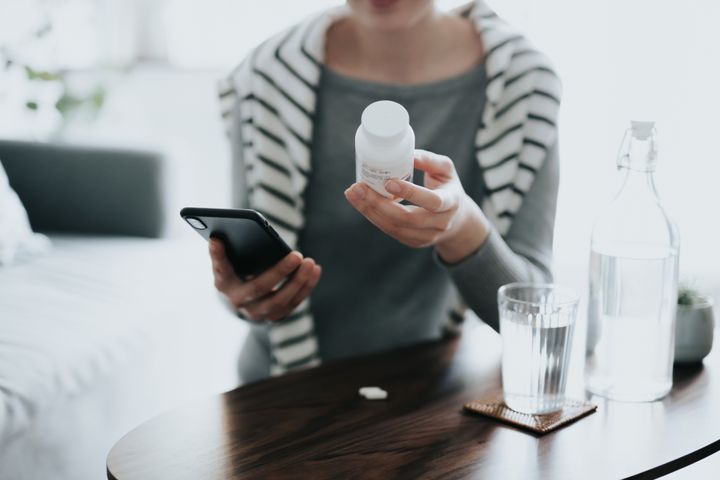
A daily pill treatment can reduce your risk of becoming infected with HIV.
The marketing of PrEP, along with misinformation, has created the inaccurate idea that cisgender women can’t take the medication.
Through no fault of their own, many cisgender women do not know that PrEP is a medication they can use to reduce their risk of contracting HIV.
Advertisement
“Because PrEP has been historically heavily marketed to men who have sex with men … it really gave the impression that PrEP was not something that … cisgender women could take, and unfortunately, this is sort of reinforced by many health care providers.” Blackstock said, “I’ve heard stories of women saying, ‘Well, my doctor said this is something only gay men take or that I can’t take it if I’m pregnant or if I’m breastfeeding or if I’m trying to get pregnant.’”
(For the record, oral PrEP is safe for use in people who are pregnant, breastfeeding and trying to get pregnant.)
“So, there’s a lot of misinformation also from health care providers as well,” Blackstock noted.
The misinformation combined with the lack of marketing toward cisgender women has led to a low uptake of PrEP among this group, Blackstock said. Black women, who account for half of new HIV infections in women, are on PrEP even less.
When asked why this is the case, Blackstock said “it’s multifactorial.”
“Some of that has to do with women, particularly Black women thinking that they may not be at risk, so sort of low perceived risk of HIV, but it’s also because a lot of women may not be aware of PrEP because it’s something that health care providers aren’t talking to them about or offering.”
Additionally, it may have to do with health insurance coverage. “We know that the South is the epicentre of the HIV epidemic [and] there are many states in the South that haven’t expanded Medicaid, so for various reasons, Black women may not have access to PrEP,” Blackstock added.
Advertisement
Shankaran noted that for uninsured or underinsured people, there are still options.
“You can get access to medications, either via the CDC, they have something called a Ready Set PrEP program, as well as the manufacturer, they have programs where they can help you get medications, even if you are uninsured,” Shankaran said. (Keep in mind that everyone won’t qualify for these programs.)
PrEP is a powerful tool that puts women in control of their health.
You can take PrEP for as long as you are at risk of contracting HIV, Shankaran said, and you can stop taking it when you are no longer at risk. You can also pick it up again if necessary.
Additionally, you don’t have to go to an HIV doctor of infectious disease doctor for the medication. “Your primary care physician can prescribe it, some places family medicine [can prescribe], adolescent clinics [and] some places GYN clinics will prescribe it,” Shankaran said.
What’s more, you’re given peace of mind when you properly take PrEP.
“The really wonderful thing about PrEP is that it’s user-controlled, a woman can take it with or without her partner’s awareness and knowledge — some women may be in a situation where it may not be safe to share with their partner that they’re taking PrEP, but it allows a woman to protect herself,” Blackstock noted.
And just to underscore this point: PrEP is for people of all gender identities and sexual orientations and is an immensely valuable way to stay HIV-free.
When I was 8 years old, my mom, who was about 20 weeks pregnant, flew to Boston with my then-stepdad. She returned without a bump or a baby.
When she got home, she was devastated. So was I, because I’d always wanted a little sister. I’d been thrilled when my mother’s belly started to grow, and people began congratulating her everywhere we went.
Advertisement
She’d remarried less than a year before that, and the transition of having a new man in the house had been tough for my younger brother and me. A new baby was something we could all rally around, so it was especially difficult for all of us when my mom started experiencing complications.
At the beginning of her second trimester, right after she’d started telling people she was pregnant, she began bleeding and cramping. I spent a lot of afternoons at my cousin’s house while my mom attended doctor appointments. She’d return to pick me up, and I’d find her whispering in the driveway with my aunt. One night after dinner, we had a family meeting where she told us that the baby had a heart problem and would need surgery right after it was born.
The bleeding continued, and there were more doctor appointments and late-afternoon pickups and whispered conversations. A few weeks later, my mom went to Boston. When she returned, a new word was added to my second-grade vocabulary: miscarriage. At the time, I was old enough to know the baby was gone, but too young to understand or remember any specifics.
Still, my mom’s “miscarriage” shaped my perception of pregnancy. I understood its fragility.
Courtesy of Sarah Hunter Simanson
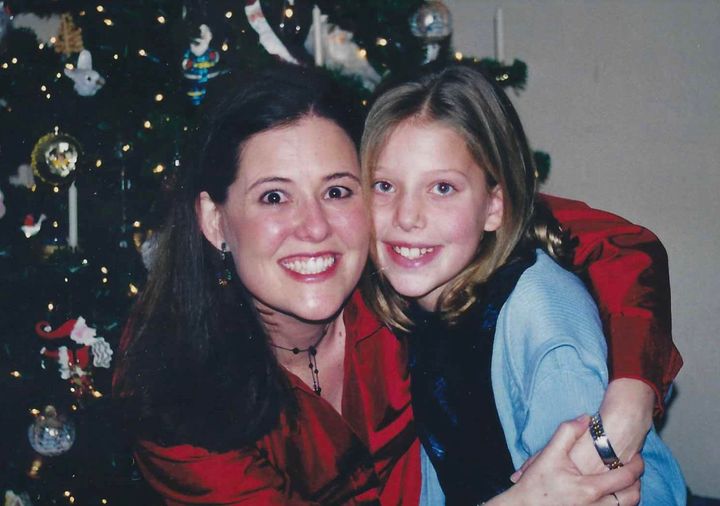
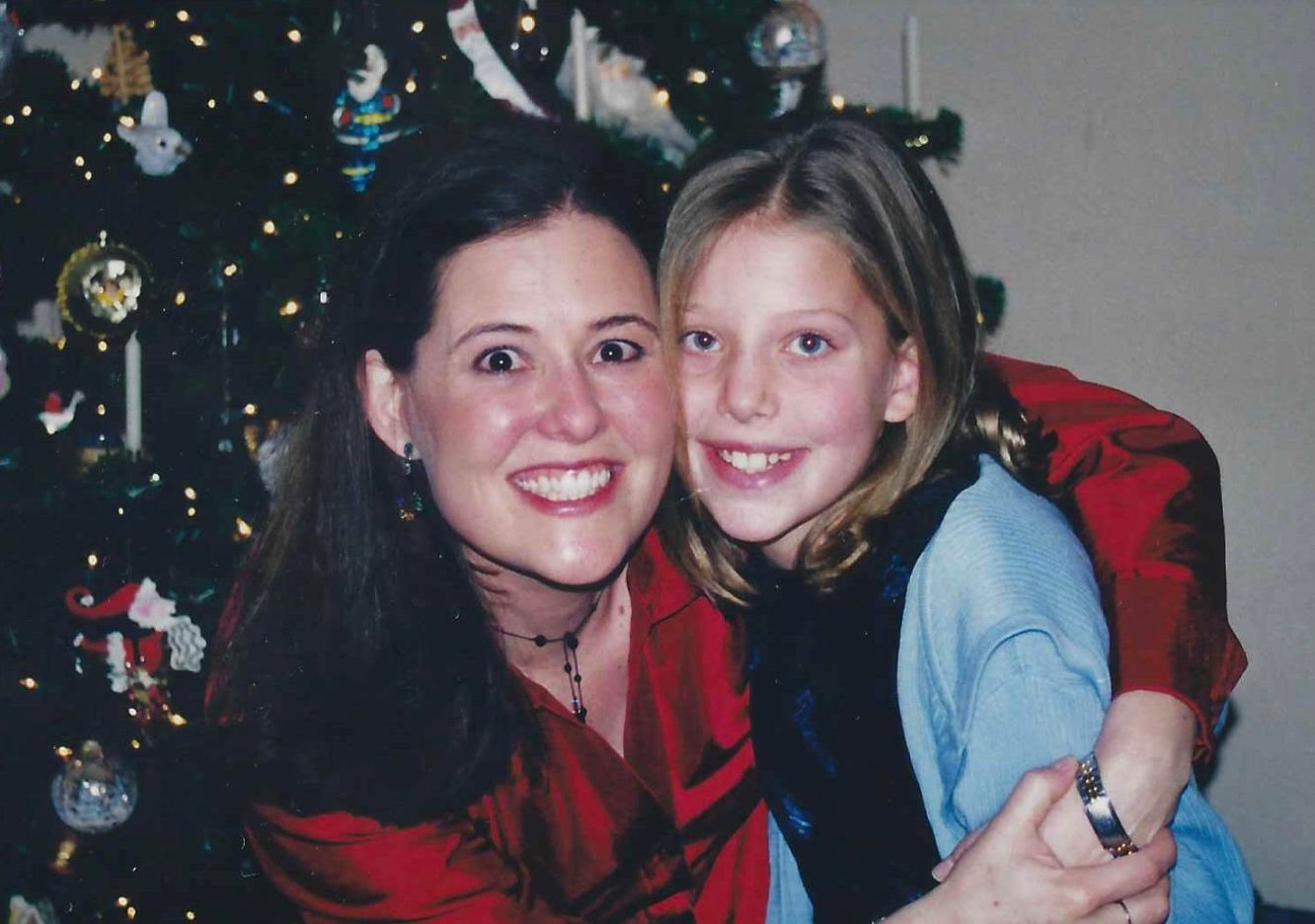
The author and her mom at Christmastime when the author was in elementary school.
Advertisement
In the fall of 2017, just as the Memphis air was turning from humid to crisp, my mom and I went for one of our regular morning walks. She was between chemo treatments for the stage 4 cholangiocarcinoma she was battling, and I had just taken my first positive pregnancy test. I hadn’t told her yet. My mom didn’t even know my husband and I were trying. I was only about four weeks pregnant, and I was afraid of getting her hopes up at a time when she really needed things to believe in, so I decided to wait to share my news until my doctor detected a heartbeat at the six-week appointment and I had an ultrasound picture to show her.
As we walked under the canopy of brown and burnt orange leaves, I asked her questions about when she was pregnant with me: “How did you feel? What was it like? Did it hurt?” This was something I’d started doing about many different topics ― I sought out information I wanted to know from her and asked questions while she was still around to answer them.
But that morning, my mom didn’t have many answers about when she was pregnant with me. “I don’t remember,” she told me. “You forget the hard parts, so you can do it again.”
We walked around a big curve in the road, and I thought about the poppy seed-sized embryo inside of me. My mom turned to look at me. I expected her to offer some insight about morning sickness or food cravings, but she changed the subject.
”You know it had genetic abnormalities, too?” she said out of nowhere. Actually, I didn’t know this, because she never talked about the baby she lost. ”My body kept trying to abort it, but it couldn’t. That’s why I kept haemorrhaging.” Her voice was faraway as she mentally traveled back to that time.
Advertisement
Now, almost four years after my mom’s death and five years after that conversation, I still remember it vividly — the crunch of leaves under our feet, the exact bend of that road, the mild weather of the day. The moment was a glimpse into the experiences of my mom’s that I could never access ― a reminder that she’d die with so many untold stories.
One day last summer, as I watched my two kids playing under the bright pink blooms of the crepe myrtles in our backyard, I began bleeding. It was a very early miscarriage, nothing like what my mom had been through. But it still made me think of her and that conversation. I couldn’t know the extent of her much-worse tragedy, but I, too, was experiencing a third pregnancy that would never be. My miscarriage — this third baby that would not be — made me feel connected to her.
It wasn’t until last month, when Tennessee’s total abortion ban went into effect, that I finally understood my mom didn’t have a miscarriage. Technically, legally, she had an abortion.
Courtesy of Sarah Hunter Simanson
The author and her mom in November 2016. “This was right after I got engaged, two days after doctors found a mass in her liver,” she writes.
Tennessee’s ban is one of the strictest in the country. It does not include an exception for incest or rape, or for the life of the mother. Instead, the law offers the possibility of an “affirmative defence,” which allows the doctor, if charged with a Class C felony, to argue that an abortion was necessary “to prevent the death of the pregnant woman or to prevent serious risk of substantial and irreversible impairment to a major bodily function of the pregnant woman.”
Advertisement
As I read the law’s language and understood that women in Tennessee were no longer guaranteed equitable, potentially lifesaving health care, I thought back to my mom’s words: That’s why I kept haemorrhaging.
I had to know what happened in Boston. I was almost certain the pregnancy had put my mom’s life at risk and that she’d had to get an abortion, but I needed corroboration. I called my great-aunt who lives in Boston, and she immediately answered the questions I’d never known to ask.
“Yes, it was an abortion,” my great-aunt told me. “It wasn’t a viable pregnancy. It was endangering your mom’s life. It was an extremely difficult situation, and she’d had to travel to Boston for the procedure because it wasn’t legal in Tennessee.”
My great-aunt didn’t remember the specifics about why the pregnancy wasn’t viable. I knew there was only one person who’d been to those appointments with my mom and might know everything: my former stepdad.
It took me weeks to text him. We hadn’t spoken since their acrimonious divorce, the year after I graduated from college. I wasn’t even sure he’d be receptive to these questions. The experience was so long ago, and it had been so painful.
Advertisement
But he was immediately responsive, and willing to share the details he remembered. He told me the foetus had a chromosomal abnormality, misshapen kidneys, a hole in the heart, and structures at the oesophagus and rectum that prevented the processing of amniotic fluids. My mom’s health was also at risk because she kept bleeding. The neonatologist said they needed to make a decision.
The specialist referred them to an abortion clinic in Tulsa, Oklahoma. When my mom called the clinic for more information, the receptionist warned her that patients were usually harassed when entering the facility. So my mom called her aunt in Boston, and she connected her to a doctor at a hospital there.
Photo by Madison Yen
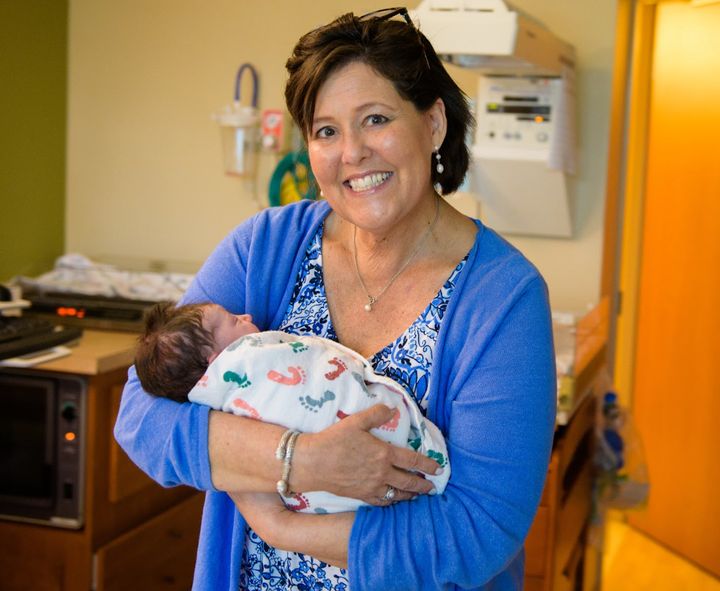
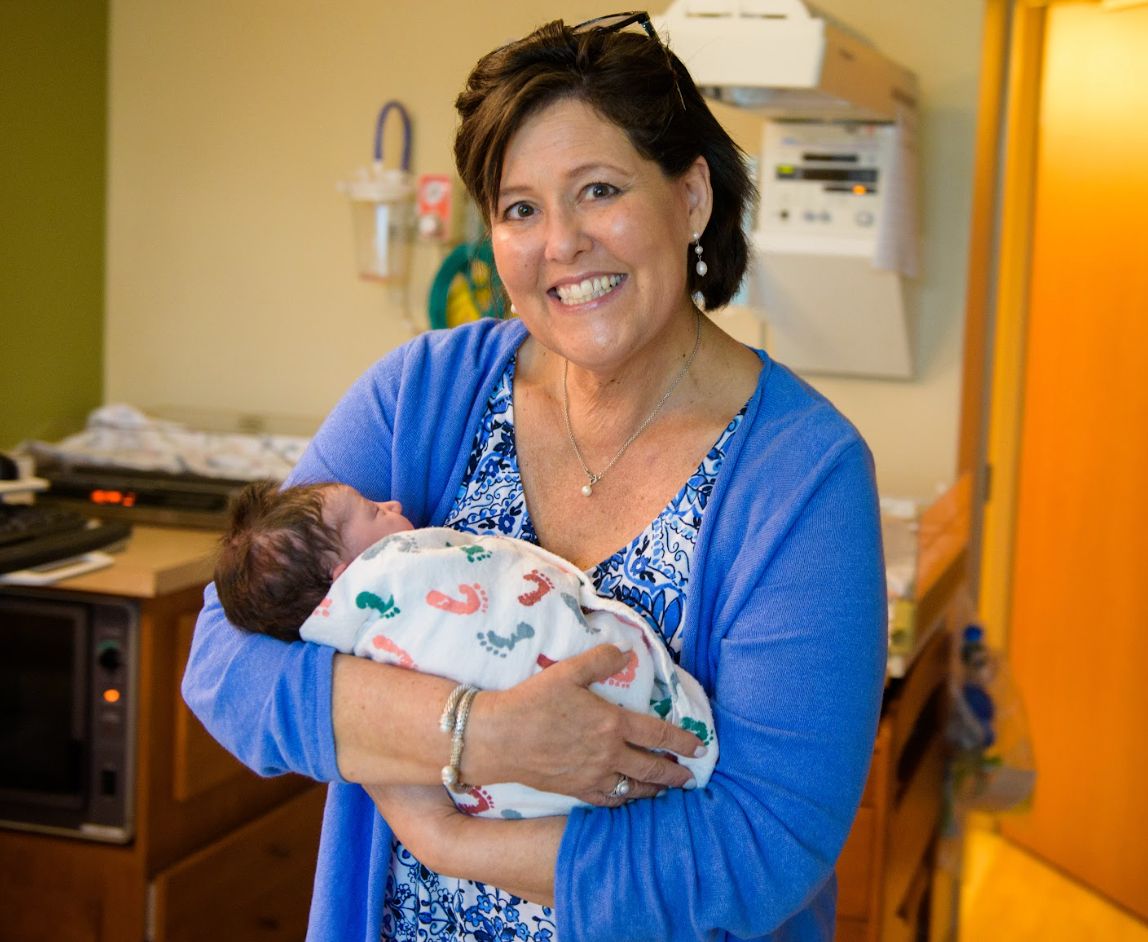
The author’s mother holds the author’s daughter a few minutes after she was born in August 2018. “It is one of the few pictures I have of them together,” the author writes. “My mom’s health declined quickly, and she died four months later.”
Even though the baby had chromosomal abnormalities and too many physiologic issues to correct, and even though my mom’s body kept trying to abort the baby naturally, it was still an unthinkable decision, my former stepdad said. They sought counsel from their Episcopal priest and diocesan bishop. They consulted another doctor in Memphis. Ultimately, the doctor in Boston reaffirmed that the foetus was not viable and wouldn’t live if carried to term. Because of this, and because of the risk to my mom’s health, they decided to proceed with the abortion.
I’ll never know what my mom experienced during that procedure. Though it was an abortion ― and a choice she made ― she still considered it a “miscarriage,” and went on to describe it that way to the few close friends with whom she discussed it. I know it was traumatic, and that is why my family never talked about it. Most importantly, I know it was a procedure my mom needed for her safety, and one that other women will need for their own.
Advertisement
Chrissy Teigen recently revealed that, like my mom, what she had claimed was a miscarriage was actually an abortion. “I told the world we had a miscarriage, the world agreed we had a miscarriage, all the headlines said it was a miscarriage,” the model said. “And I became really frustrated that I didn’t, in the first place, say what it was, and I felt silly that it had taken me over a year to actually understand that we had had an abortion.”
There are so many reasons why someone may not admit that they’ve had an abortion ― from fear and grief to the nightmarish political climate and simply wanting to keep their medical decisions private ― and all of them are valid. The bottom line is abortion needs to be safe, legal and accessible for anyone who wants or needs one.
Despite the deep trauma of her abortion, I know that my mom was profoundly grateful she could get one. It ensured she’d live and allowed her to keep being my mom. While I did not know my mom’s story until recently, I know that if she were here today, she would be outraged by what has happened in this country ― and what’s still happening. I know she’d want lawyers to challenge the abortion bans that various states have enacted. I know she’d want Lindsey Graham to understand the devastating effect that a federal 15-week abortion ban would have on the health of women and people with uteruses. I know she’d want voters to support candidates who champion abortion rights. And I believe she’d be proud of me for speaking up now and telling her story in the hope that it might matter ― that it might mean something and maybe even help do something.
Ultimately, she’d want women to have access to the procedure that protected her life. And she’d want them to have it regardless of where they are in their pregnancy, or which state they live in.
Advertisement
Sarah Hunter Simanson received her MFA from Vermont College of Fine Arts. Her writing has appeared in Salon, Romper and The Daily Memphian. She is currently working on her first novel.
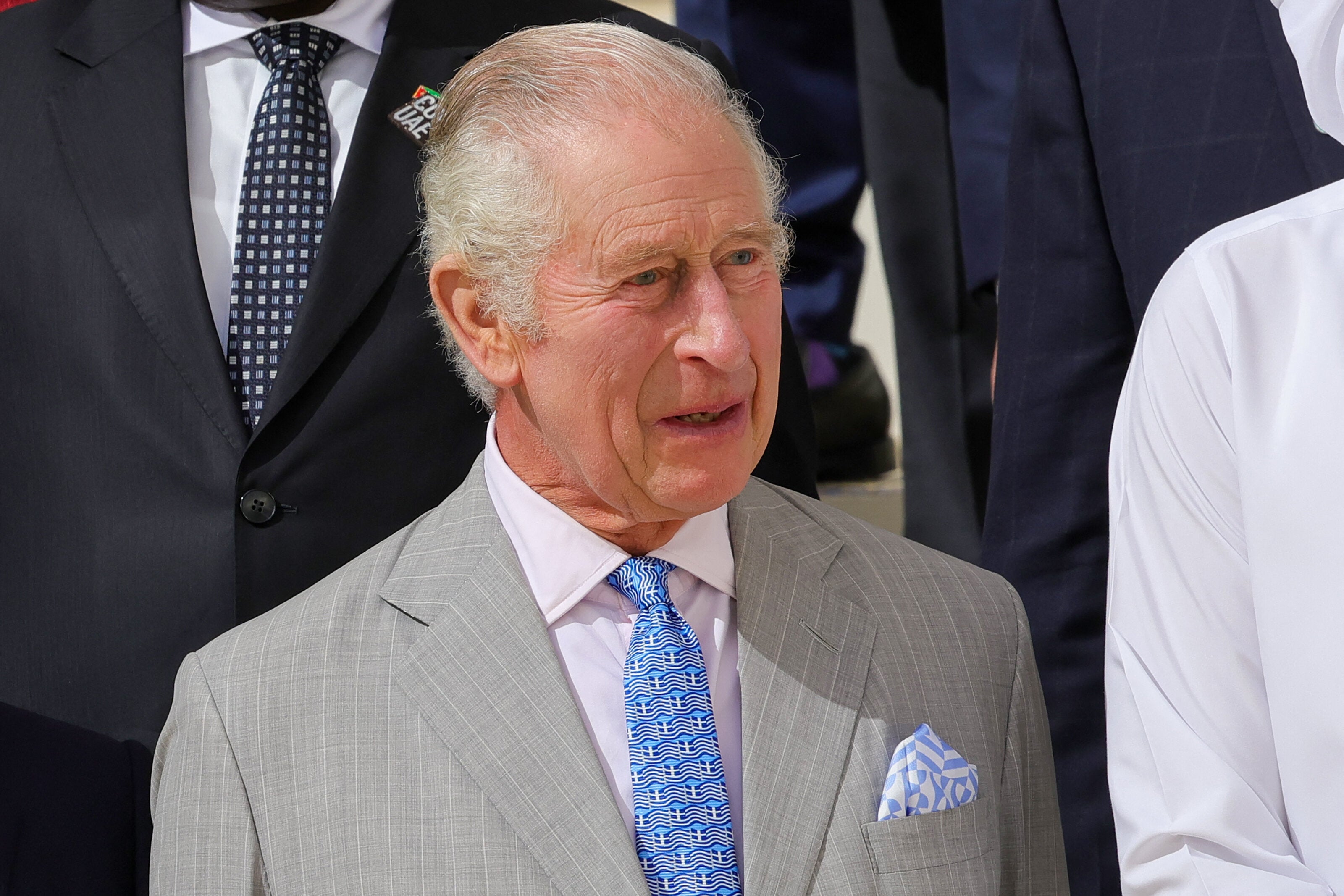
King Charles caused quite the stir with his outfit choice during his keynote speech at COP28 on Friday.
While at first glance it may appear pretty subtle, upon closer inspection, the Greek flag appears to have been printed on the monarch’s blue and white tie, with a similar pattern seen on his pocket-square.
Advertisement
Earlier this week, prime minister Rishi Sunak triggered a diplomatic row with Greece when he decided to cancel a meeting with his Greek counterpart at the last minute.
No.10 claim it was because Kyriakos Mitsotakis broke his promise not to publicly discuss Greece’s demand for the UK to return the 2,500-year-old Elgin Marbles (or Parthenon sculptures) to their place of origin – Greece.
This has led to significant public backlash against Sunak for his supposed “petulance”.
Sending subtle political messages through clothing, while outwardly maintaining your place as an apolitical figurehead, was an art Charles’ mother Queen Elizabeth II was well-known for.
Worth looking closely, the King today, wearing a Greek flag tie at COP, after days of a simmering diplomatic row btw UK and Greek PM 👀👀👀 pic.twitter.com/CEwaFmBYW4
The Queen’s decision to wear a blue hat with yellow circles on it at the 2017 state opening of parliament was widely perceived as a sign of solidarity with the EU at a time when Brexit negotiations were pulling Westminster apart.
The Queen’s dresser Angela Kelly later denied any political intent behind the outfit, saying it “never occurred to her” that it would be comparable to the EU flag.
The King has managed to steer clear of direct intervention in politics since ascending the throne in September last year – as his role demands – despite his reputation as the “activist prince” when he was the heir apparent.
He does have Greek heritage through his father, the late Prince Philip who was born in Corfu as the Prince of Greece and Denmark, and has visited the European country on multiple occasions.
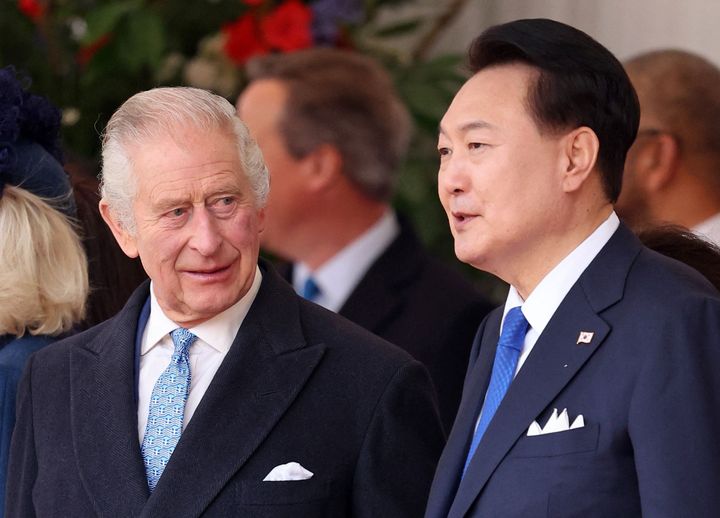
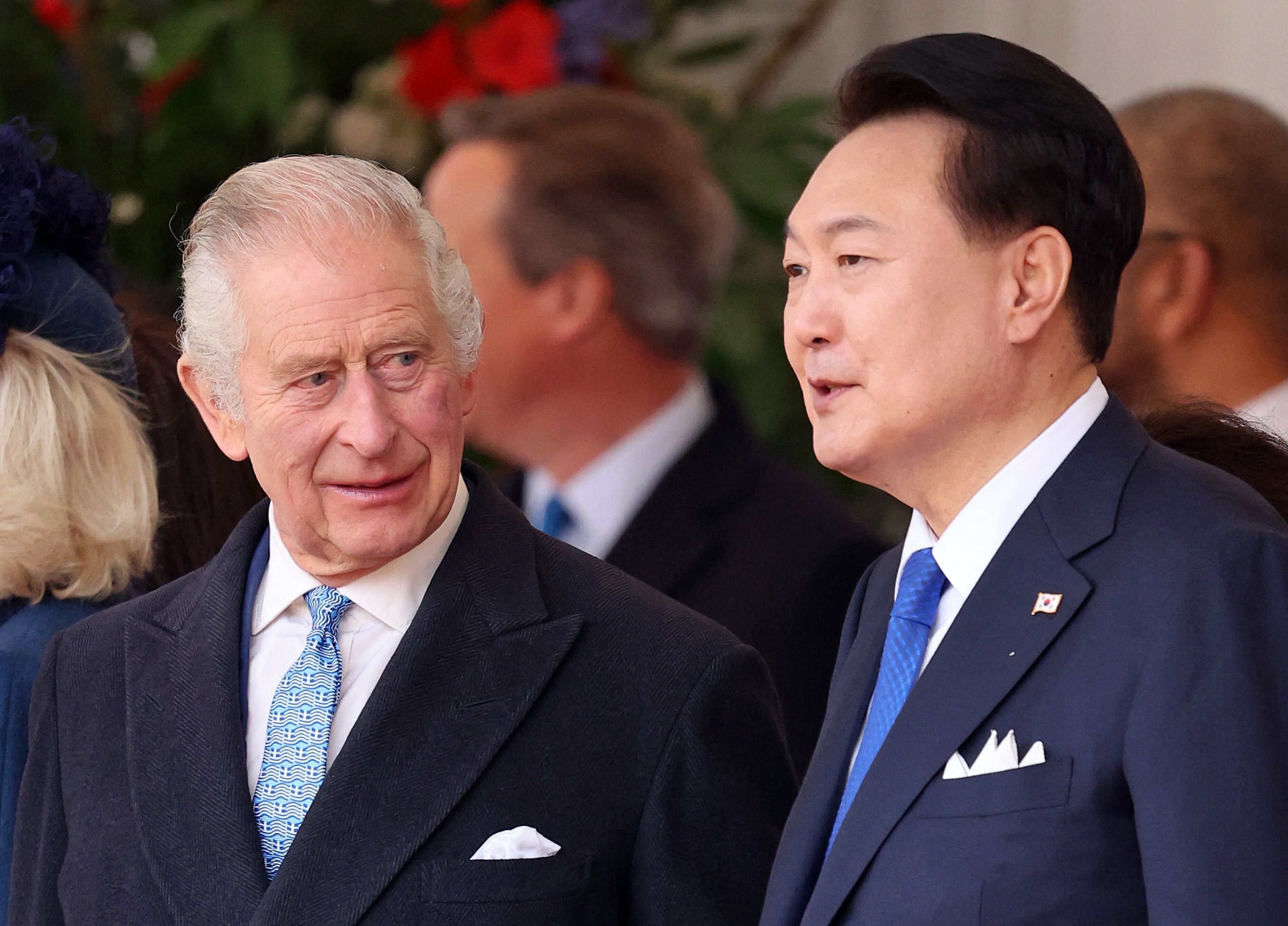
However, the King did also seem to wear the same tie last week, when meeting the South Korean president – before the Elgin Marbles row kicked off.
Advertisement
Charles meeting the South Korea president on November 21
The largest climate summit of the year began this week amid hope that world leaders may actually agree to an effective deal to target the environmental crisis.
The 28th Conference Of Parties – COP28 – is being held in Dubai, UAE, this year, and will run from November 30 to December 12.
Advertisement
Activists are looking for governments to agree for a more equitable management of the environment this year, as extreme weather hit almost every part of the planet over the last 12 months.
What’s decided at COP28 could therefore be very consequential – but it can be hard to understand what’s happening through all of the jargon.
So here’s a breakdown of some of the phrases we can expect to see this year.
It pops up regularly in climate commitment plans – it turned up seven times in the April G7 summit’s final statement – but the exact definition has not been spelt out by governments.
Critics see that as a means for the fossil fuel companies to continue selling the product, and it has been widely described as a delay tactic which stops companies from having to phase out fuels.
Supporters of abatement argue that this is needed for the foreseeable future, as the planet is not even close to phasing out fossil fuels altogether.
2. Climate finance
The UN describes climate finance as “local, national or transnational financing—drawn from public, private and alternative sources of financing—that seeks to support mitigation and adaptation actions that will address climate change”.
Effectively, developed nations promise to pass some funds onto developing countries that have fewer resources to defend against the climate crisis.
Advertisement
COPs have repeatedly agreed to pass more finances onto other countries since 1992.
Back in 2009, the parties agreed to share $100 billion a year from developed countries to developing countries by 2020, but this target was missed.
This year’s COP will see countries debate several controversial elements of climate financing: how the finance is allocated; how much goes to adaptation; and how much goes to loss and damage.
3. Carbon pricing
Carbon pricing ties the cost the public ends up paying for greenhouse gas emissions – from crop damage to sea level rise – to their sources through a price, according to the World Bank Group.
This usually means putting a price on the amount of CO2 emitted, in an effort to put the carbon burden back onto the producers of the fossil fuels, while also boosting revenue to help the environment.
President of the European Commission, Ursula von der Leyen, said in her opening remarks that there must be a “price on carbon”.
Advertisement
She said: “Carbon pricing nudges the private sector towards innovation. It makes heavy polluters pay a fair price. And the revenues can be reinvested in the fight against climate change, in innovation and in a just transition.”
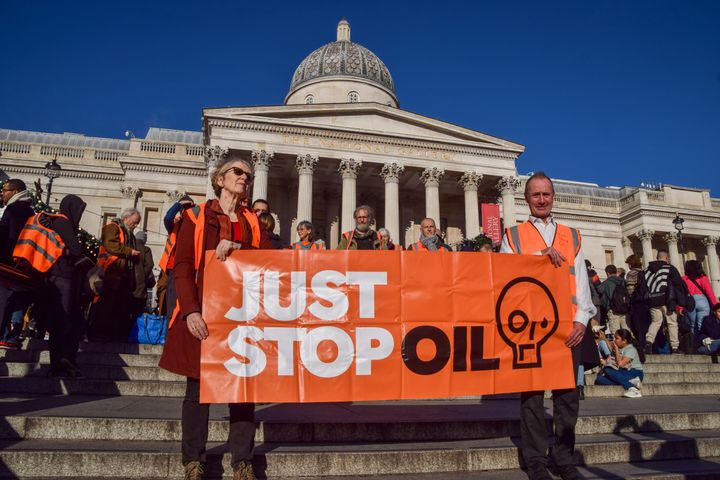
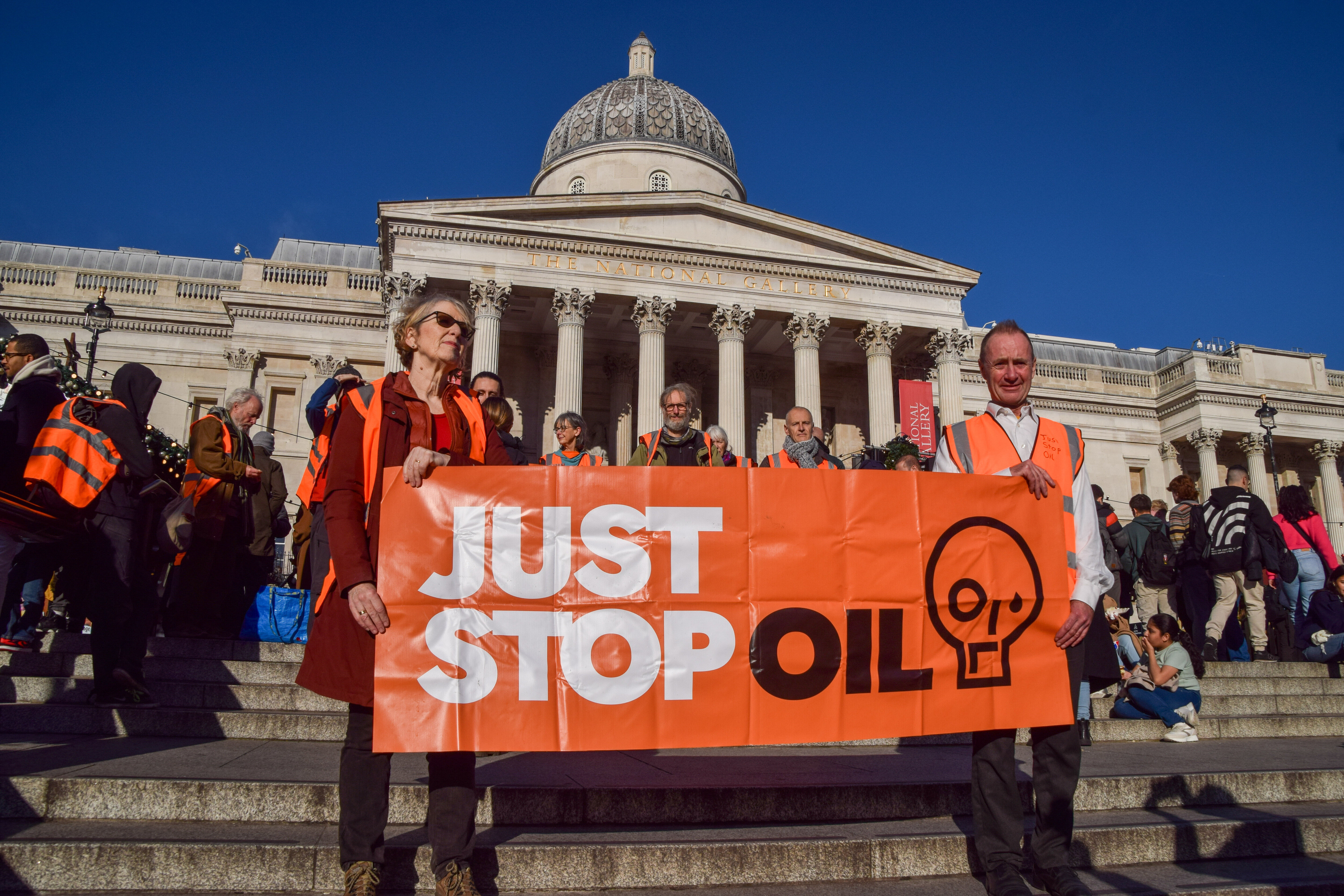
Activists march with a Just Stop Oil banner during a demonstration in Trafalgar Square.
SOPA Images via Getty Images
4. The UN Global Stocktake (GST)
This is a measure for countries (and other stakeholders) to see where they’re collectively making progress toward meeting the goals of the Paris Agreement, according to the UN.
It describes this as a “critical turning point” when it comes to addressing climate change, and akin to “taking inventory”.
The first ever global stocktake is going to conclude at the end of COP28, and will take place every five years after that.
Advertisement
It’s likely to be pretty damning considering scientists have warned we are still a long way off limiting global temperature change to 1.5C compared to pre-industrial levels.
“Governments will take a decision on the global stocktake at COP28, which can be leveraged to accelerate ambition in their next round of climate action plans due in 2025,” the UN said.
The GST is also meant to inform future NDCs.
5. Nationally Determined Contributions (NDCs)
These are the pledges at the centre of the Paris Agreement, and they’re unique to each country. They are submitted every five years to the UN – so the next ones will be due in 2025.
Each nation tries to see how it can reduce national emissions and adapt to climate change by taking these actions.
The UN understands these targets will be harder for developing countries to achieve, so emission reduction is “undertaken on the basis of equity, and in the context of sustainable development as well as efforts to eradicate poverty”.
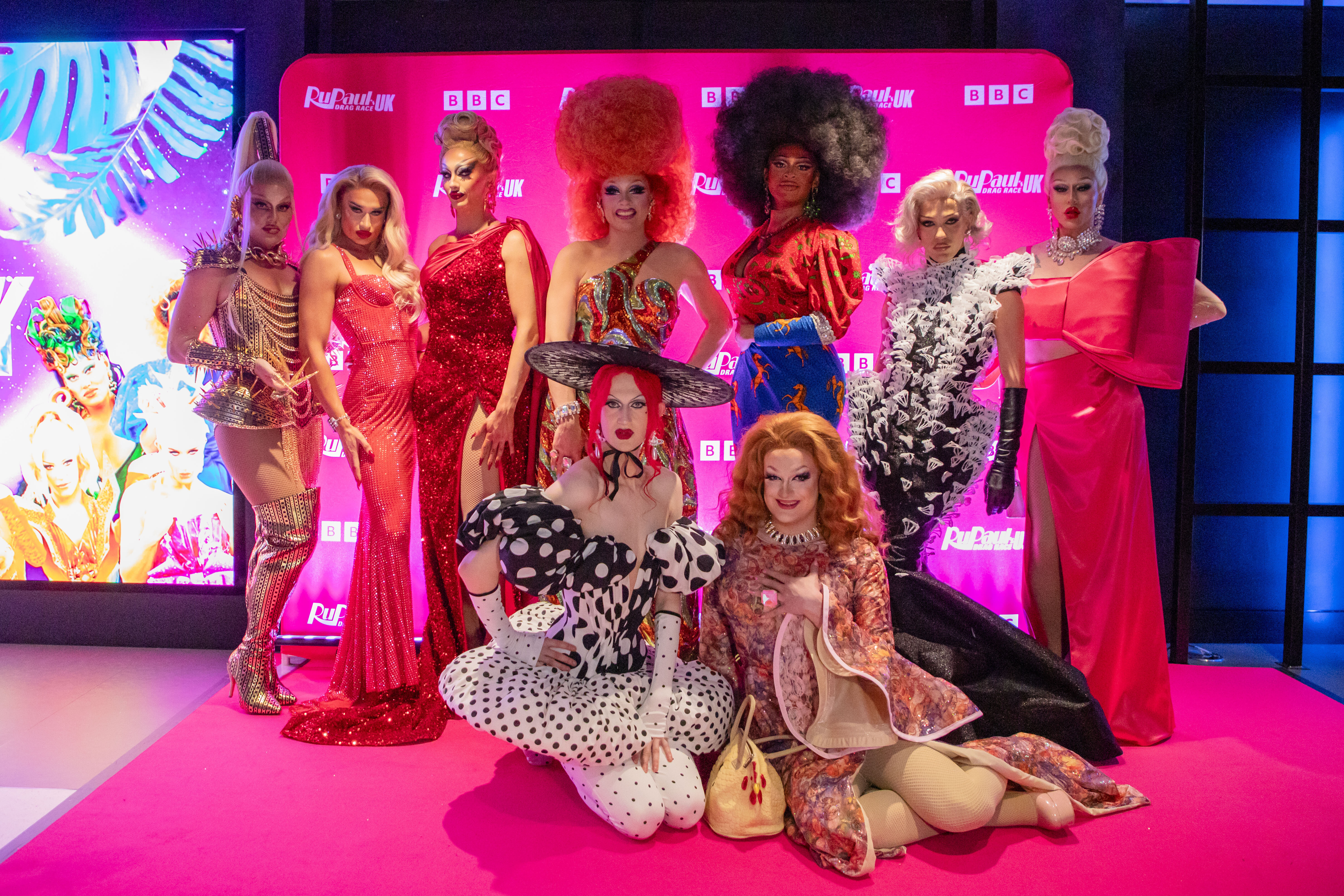
After ten weeks of the fiercest competition around, a new queen has taken the crown of Drag Race UK.
Ginger Johnson, Michael Marouli and Tomara Thomas – the ‘Angels of the North’, so called because of all three of the trio’s North-Eastern background – made it to the finale of Drag Race UK season five, with one of them superseding Danny Beard, who won season four a year ago.
In the queens’ final challenge, they had to write and perform a verse on RuPaul’s song ‘Spotlight’, and appear in a sexy, cat burglar themed video.
Advertisement
Elsewhere in the episode, the queens had sit down with RuPaul and Michelle Visage, got to enjoy a visit from their biggest supporters and reflected on the season as a whole.
Beware: spoilers below.
After a stellar season, the top three were rejoined on the main stage by six eliminated queens of the season, including the recently fallen Dede Licious and the iconic Kate Butch; Cara Melle was absent due to illness.
With the badge count stacked against her, Tomara Thomas and her single challenge win were told to sashay away from the competition, with the star leaving the stage with a signature cackle and good humour.
It was then up to Ginger Johnson and Michael Marouli, with three challenge wins apiece, to lip sync for the crown to ‘A Little Respect’ by Erasure.
Advertisement
After a fierce battle (and a cameo from Danny Beard), the winner of season five of RuPaul’s Drag Race UK was announced as… Ginger Johnson!
Now, a bit of behind-the-scenes tea; at the end of a Drag Race season, multiple endings are filmed, so not even the queens know who’s won before it airs on TV – so here’s the moment Ginger actually found out she’d snatched the crown.
In the clip, season five’s top two (Ginger and Michael) can be seen reacting to the announcement with an appropriate amount of tears and celebration. Tomara, to her credit, looks thrilled to be there.
Advertisement
And here’s the moment we at HuffPost UK found out during the finale screening!
Drag Race UK Seasons 1-5 and Drag Race UK Vs. The World are available to stream on BBC iPlayer.