I Was Given 6 Months To Live. I Made 1 Unexpected Decision That Helped Me Beat The Odds.

On October 1, 2021, after having what I had thought was routine thyroid surgery, I was diagnosed with anaplastic thyroid cancer, a cancer so rare that none of my doctors had ever seen it before. It’s so aggressive that it only exists as Stage IV.

The typical survival rate? Six months or less. One in five patients lives 12 months.

It’s October 2023.

I did a 10K race in July. At 6,000 feet. Last winter, I was a ski instructor. I’m a rock ’n’ roll DJ at the mountain town station that I used to stream when I lived in New York, fantasising that I was living here. Now I am. I have the life I’d longed dreamed of.

Every morning, as I watch the sun come up over the mountains I never thought I’d live in again, I give thanks for everything in my life that brought me to this moment. Especially that diagnosis. It taught me that I had no time to waste. It taught me how much I love life — rough, bumpy and hard as it often is. It taught me how much more I wanted to do. And now I’m doing it.

But on that fall day in 2021, I was terrified. I was also furious.

I was two years out from a divorce after an unhappy marriage that I had long wanted to escape but had been afraid to leave. I felt I’d spent years quashing my voice and my spirit to keep that marriage going. Being a wife had become my identity. When the marriage tanked, I felt betrayed by the society that still pushed the fallacy that a woman had to have a man to be something. I felt betrayed by the husband who dumped me. Most of all, I felt I had betrayed myself by staying instead of standing up for myself and leaving.

I was desperate to resurrect the young woman I’d been back when I’d first gone to New York for grad school after ski bumming in Aspen. That me had planned on spending just a few years in the city before returning to the mountains. But you know how it goes: I met a guy, fell in love, marriage, kids, mortgages. And, hey, New York is pretty damn fun — until it nearly kills you.
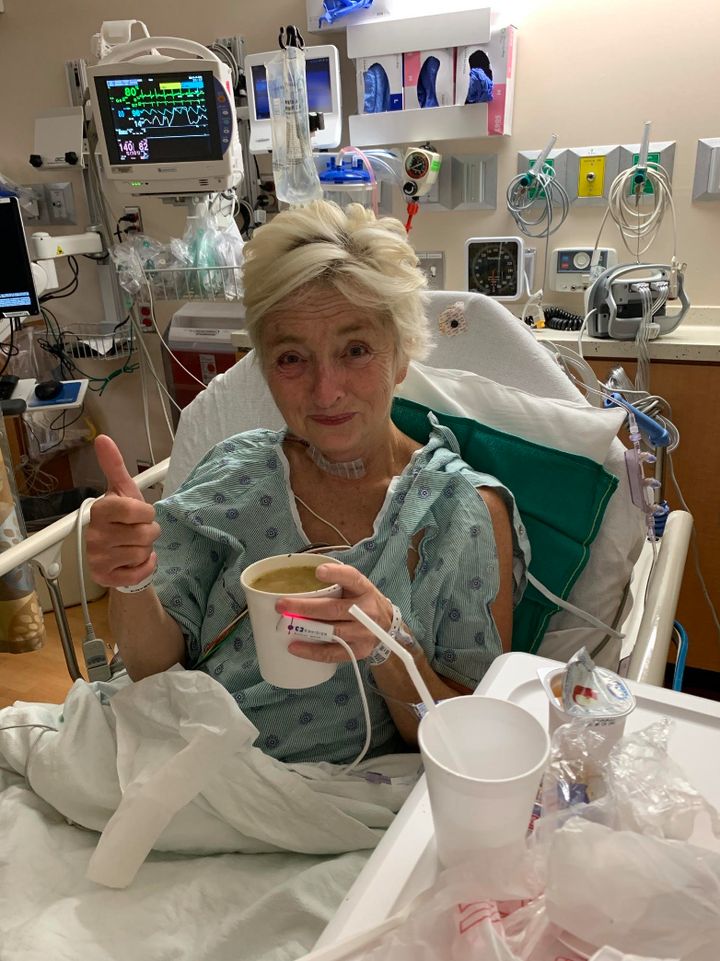
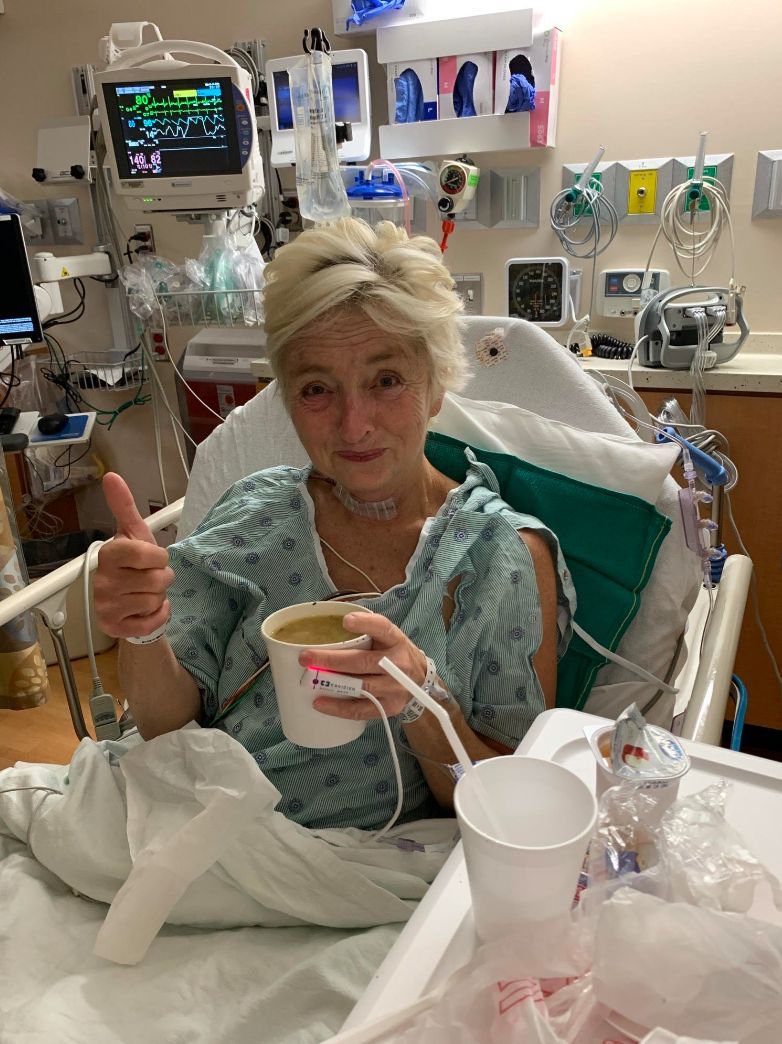
The author after her second surgery, this one at MD Anderson in Houston, in October 2021.

Courtesy of Kate Rice

The author after her second surgery, this one at MD Anderson in Houston, in October 2021.

The final years of my marriage, the divorce and its aftermath were brutal. I routinely woke at 3 a.m. staring into the darkness. My weight plummeted. I landed in the ER with what I thought might be a heart attack but was really a panic attack.

I struggled to pull myself together. I kept on running. I became a certified yoga sculpt instructor. I read self-help books. I not only talked to my therapist once a week, I sent her email after email filled with grief and fury.

And then I did something I never thought I would do: I started singing rock ’n’ roll. Onstage! Me! Who had all but died when faced with piano recitals at St. Patrick’s School. In high school plays, I stayed behind the scenes and did makeup and worked on costumes. I was solidly in the audience.

But now I was running from the firestorm of my old life. I came to a cliff, closed my eyes and jumped. I was desperation personified when I took that leap. I was shaky as hell, but singing in the spotlight gave me a solid piece of ground in a world that had turned into quicksand.

The stage was a place where I could escape my pain for a few hours. But it was still there. The wounds wrought by my past were still raw inside me, haunting my dreams and shadowing my days.

COVID hit. Stages everywhere, including mine, went dark. I lost my refuge.
I still planned to leave New York and return to the mountains, but I was waiting for my youngest child to graduate from high school.

She went off to college. I stayed in New York. COVID still raged. I rationalised it was a bad time to move to a town where I knew no one. And I thought my kids should still have their mama’s place to come home to in New York, even though my new apartment was a fraction of the size of the one they’d grown up in.
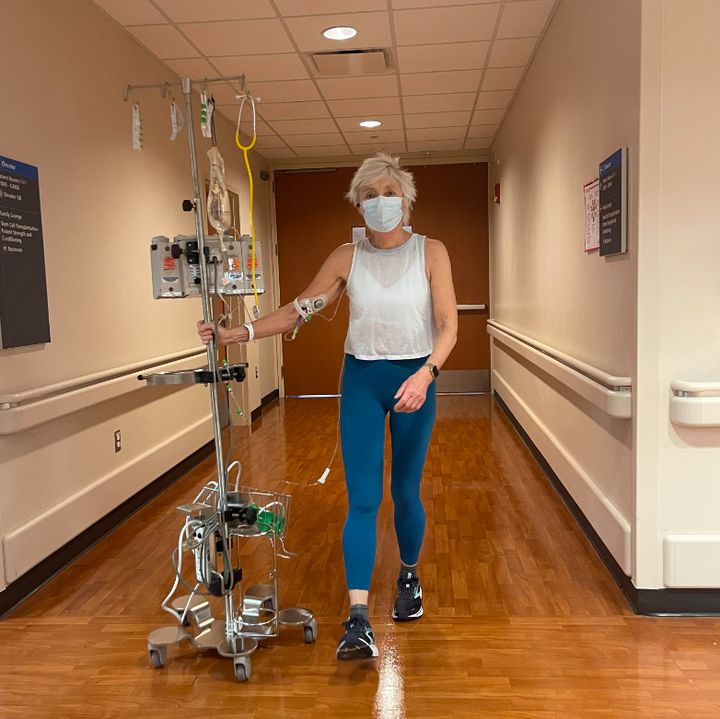
The author power-walking with her IV pole, nicknamed Slim, during her MD Anderson treatment.

Courtesy of Kate Rice

The author power-walking with her IV pole, nicknamed Slim, during her MD Anderson treatment.

What it all boiled down to, though, is that I was afraid to leave. Yet again.

So the universe kicked me in the butt. Hard.

As I lay in my bed on that October night in 2021 after being told I had just months to live, I railed against my fate. What gives, universe? I thought we were in sync! C’mon!

I knew one thing: I was getting the hell out of New York. But I wasn’t going to the mountains. I was going to Houston, one of the flattest places in the United States. It’s also home to the MD Anderson Cancer Center, which my cousin discovered has a special clinic — named FAST — that specializes in my type of cancer.

I packed up what I thought I would need in Houston. I ran around New York gathering my medical records. I went out to dinner and drank margaritas with friends.

And then I bought something many people facing cancer like mine would never think to buy: a T-Card, a discount ski pass for Telluride Ski Resort, near where one of my brothers lives in Colorado.

I bought it because of one line in the anaplastic thyroid cancer printout I’d gotten the day of my diagnosis. After learning I probably had just six months to live, I read this sentence: “Despite these discouraging figures…” (Discouraging? I had thought as I read it. What comedian wrote this?) “…there are some long-term survivors.”

“I’m going to be one of them,” I had promised my daughters. We were all crying. “I don’t know how, but I will.”

And that was why I made the decision to buy that ski pass. I was going to do more than live — I was going to be strong and healthy enough to ski. And this purchase was going to be the thing that kept me fighting no matter what came my way.

See that, universe? I thought as I clicked the “buy now” icon.
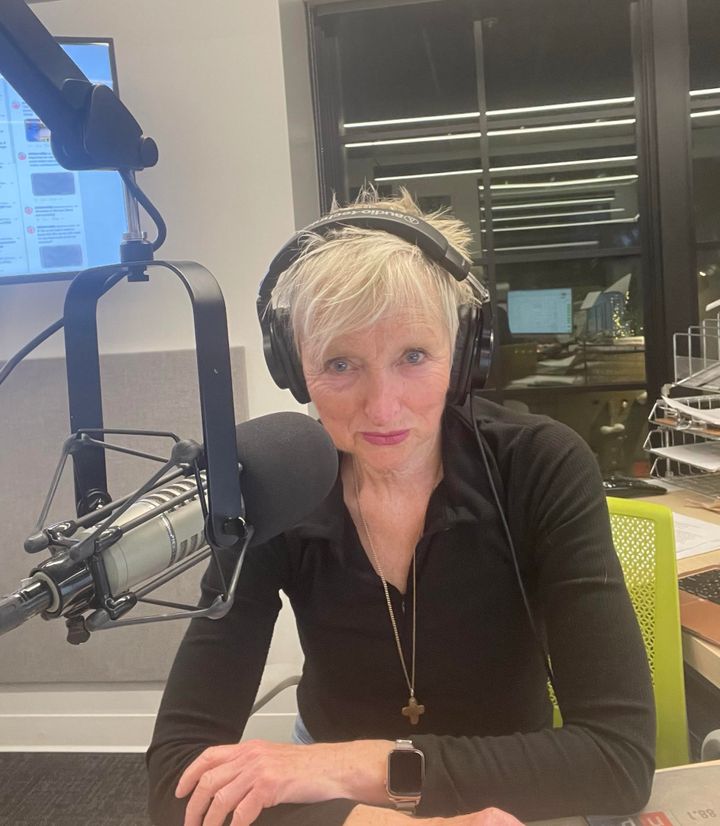
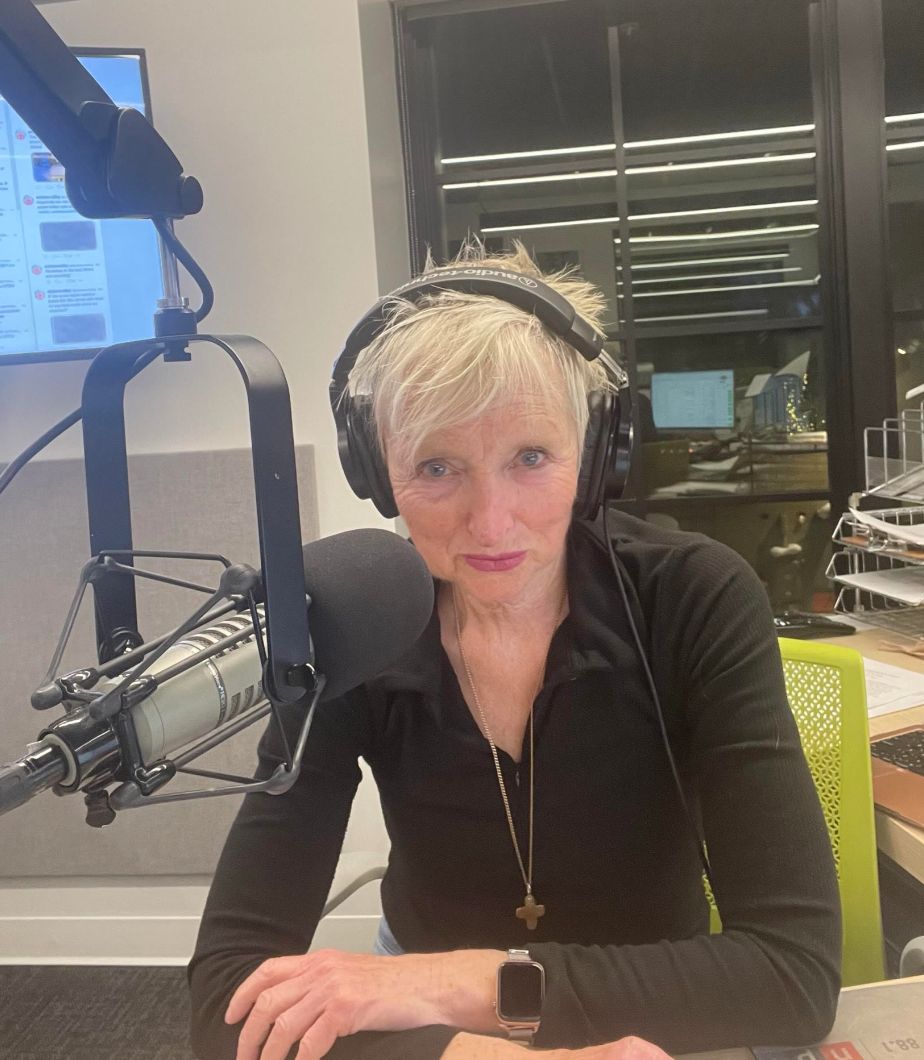
The author at the mic at KPCW radio.

Courtesy of Kate Rice

The author at the mic at KPCW radio.

Five days after my diagnosis, I walked in the doors of MD Anderson.

The FAST clinic was aptly named. MD Anderson kept me on the run. I liked that. I had CT scans, PET scans, brain scans, MRIs, blood tests. I even got to look at my vocal cords during a laryngoscopy.

I had a second surgery.

“The odds aren’t good,” the surgeon told me. And then he added, “But we do cure some people with this cancer.”

I had five weeks of radiation and chemo. I stayed with my cousin in Houston. She has a big house, a bigger heart and a long-suffering husband. Both of my daughters, one accompanied by her boyfriend, came to cheer me on. Each of my three brothers (one with his almost house-trained new puppy), my sister and three of my besties from New York came, one after another. We talked. We power-walked. We partied. I had Zoom calls with friends and family. I couldn’t drink alcohol, but I asked everyone I knew to drink for me. And they did.

I finished my treatment. I rang the proverbial bells, one for my last chemo treatment and one for my last rad cure, as I had started calling radiation. But I wasn’t done with MD Anderson. I had to come back every two months to get scanned. Anaplastic thyroid cancer is like Rasputin — it comes roaring back 80% of the time.

At one point, I noticed a small growth on my face. “It looks fine to me,” said my radiation doctor. “But you never can tell with this cancer. I’m sending you to dermatology.”

The growth was benign and the dermatologist just froze it off, but I remembered the doctor’s respect for this cancer and the need for constant surveillance.

I headed to the mountains of Colorado to be near my Telluride brother. I rented an Airbnb near his family’s home in case my radiation side effects got bad. I hired a moving company to empty my apartment back in New York and put my belongings in storage in Hoboken.

I was scared. I could feel unfamiliar prickling sensations in my neck. Was it just after effects of radiation? Or was it something terrible?
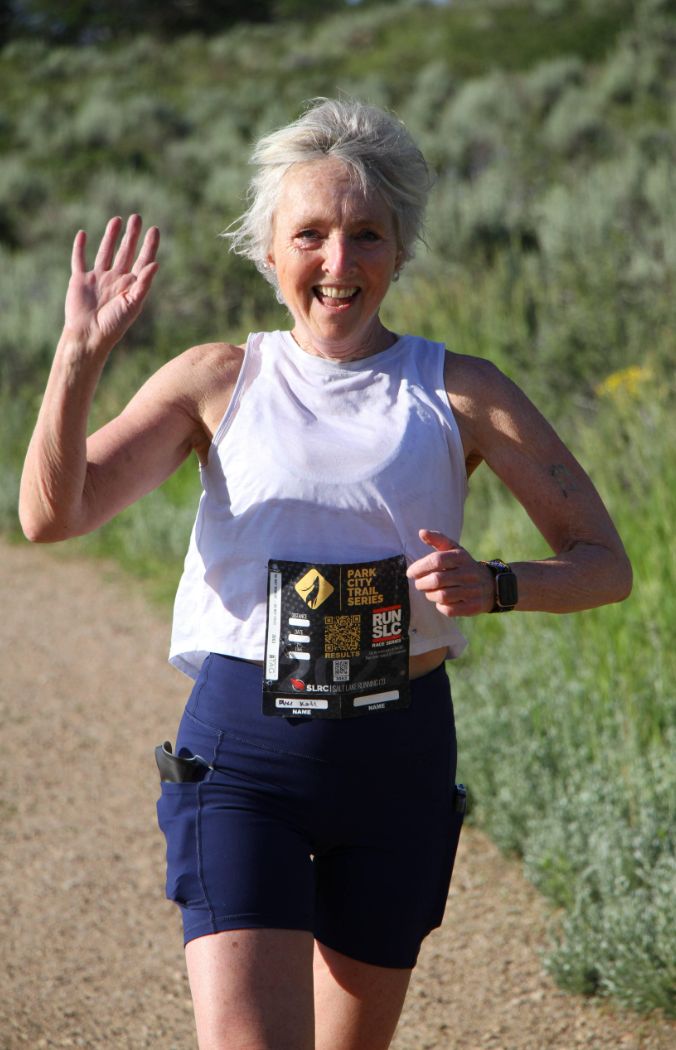
The author running a 10K in Park City, Utah, in July 2023.

Courtesy of Kate Rice

The author running a 10K in Park City, Utah, in July 2023.

Two days before Christmas, I got a call from Houston.

“We think you’re a good candidate for immunotherapy,” the nurse told me. “Can you come back to Houston next week?”

Damn straight I could.

I flew back to Houston. CT and PET scans showed I was still disease-free. I was the perfect candidate for immunotherapy.

“Basically,” my endocrinologist told me, “it opens your immune system’s eyes to cancer.”

It helps my body keep me healthy and disease-free.

“Go back to Colorado and ski,” my endocrinologist told me. “Just don’t break any bones.”

As I walked out of MD Anderson after hearing the good news, I wept tears of joy and gratitude. The deadly cancer I’d been diagnosed with had just become a disease that is chronic but manageable.

On a cold but clear blue-bird-sky January day in 2022, I stepped into my skis and glided over to Lift 7 at Telluride. The liftie scanned my T-Pass and up I went.

On that first run down the hill, I revelled in the moment. The sparkling snow. The crisp air. The sky above me. Skis, mountain, snow, gravity and me, all working together. I was alive!

I wanted to do that first run on my own, but then I caught up with my brother. He and I and one of his ski buddies rode up the Prospect Express lift together.

“What brings you here?” the friend asked me.

I took a deep breath and exhaled.
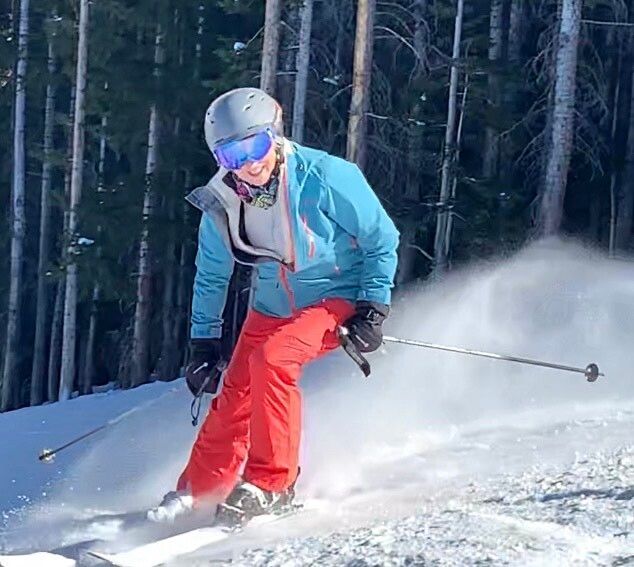
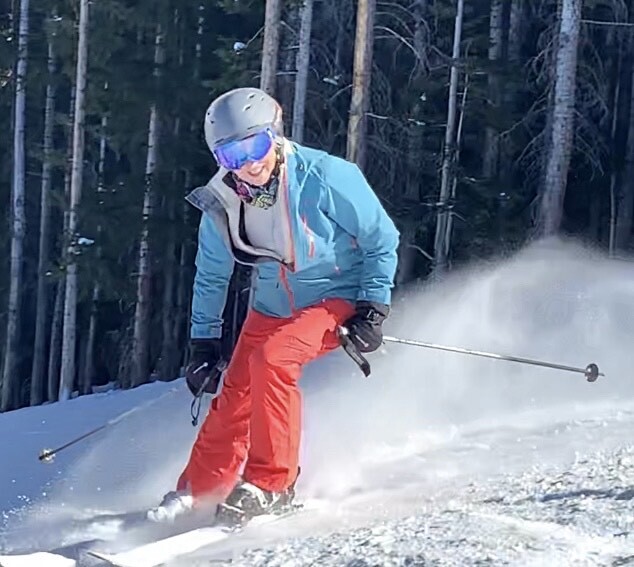
The author's first time back in her skis and using her T-Pass at Telluride after she finished her cancer treatment (January 2022).

Courtesy of Kate Rice

The author’s first time back in her skis and using her T-Pass at Telluride after she finished her cancer treatment (January 2022).

“Well,” I said. And I told my story — Aspen, New York, love, marriage, divorce. And cancer.

“I always planned on returning,” I told him. “And now, finally, I have.”

The friend was silent for a moment and then he looked at me.

“Welcome back,” he said.

Kate Rice is a runner, rock ’n roll singer and stand-up comic who performs mostly in the shower but sometimes on stage. She’s an author and former reporter. She lives in Park City, Utah, where she is a ski instructor and rock ’n roll radio DJ. Her new memoir, “Cured: A Tale of Badassery,” will be released on November 15, 2023.

Share Button

AJ Odudu Has 1 Relatable Reason Why You Won’t See Her Hosting This Morning

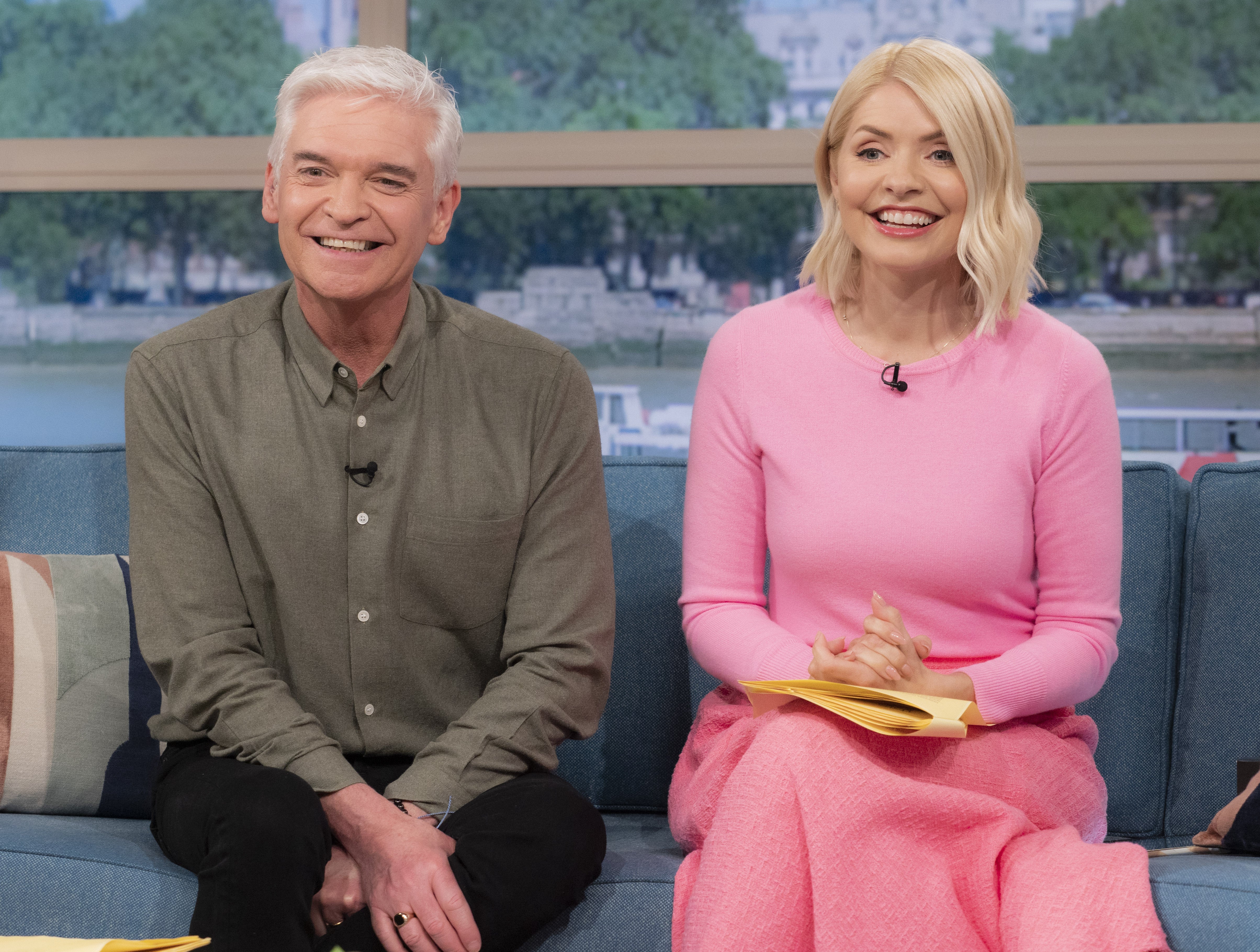
ITV’s daytime telly behemoth This Morning has really been through it recently, but is now entering a new chapter as it searches for new co-hosts to replace Phillip Schofield and Holly Willoughby.

While the team on air at the moment includes Alison Hammond and Dermot O’Leary, Josie Gibson and Craig Doyle, one person who won’t be joining joining the sofa after her current gig hosting the Big Brother reboot is AJ Odudu.

The presenter has addressed rumours that she’s set to replace Holly with a definitive, ‘No’.

Speaking to The Sun, the former Strictly Come Dancing finalist shared exactly why she’s already written herself out of the running.

She said: “I couldn’t cope with the early starts. I don’t do mornings. They have to be there at like, 8am. I’m a night owl. But, of course, the idea is flattering.”

Seems like fair reasoning to us, AJ.

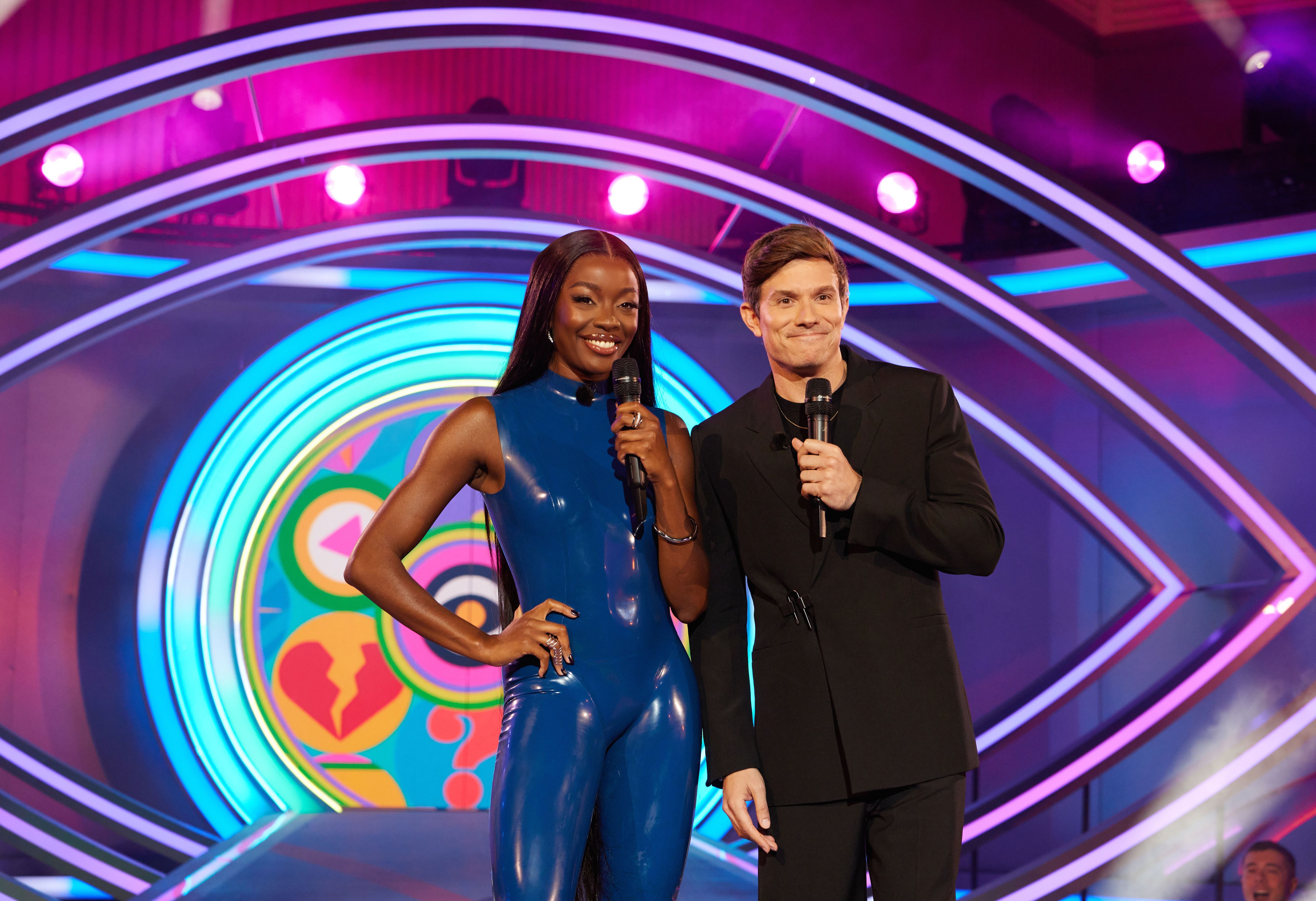
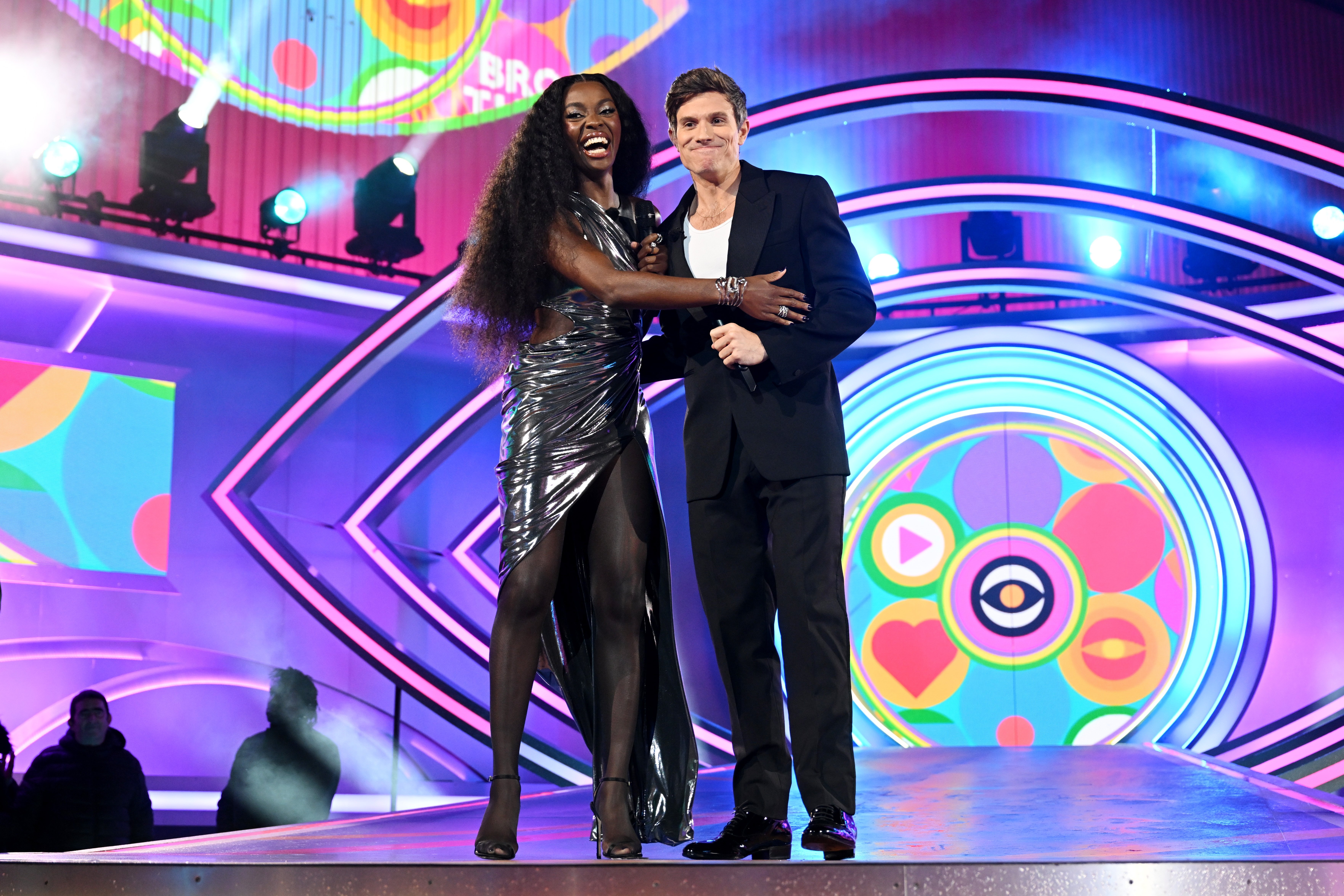
AJ with Big Brother co-host Will Best

Shutterstock for Big Brother

She also added that she prefers to keep a low-profile – despite currently being watched by the nation nightly on Big Brother.

“I think, because I live in London, everyone is quite used to seeing people and no one really gives me much notice,” she explained.

“It’s only when I open my mouth, and they hear my voice that I seem to get recognised. I think I got more attention when I was out and about when I was doing Strictly.”

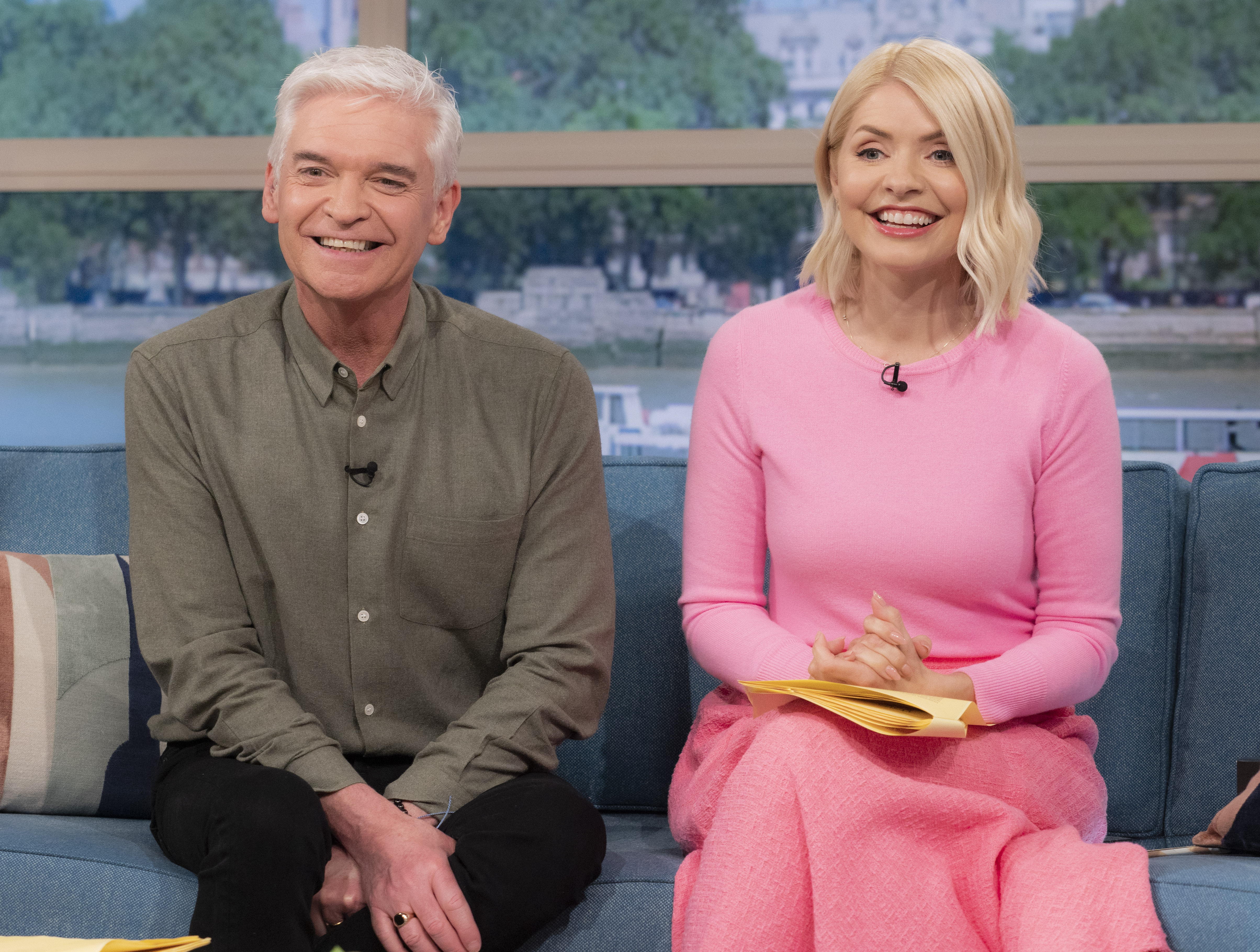
This Morning had been hosted by Phillip Schofield from 2002 and Holly Willoughby from 2009, with the pair presenting together until May this year, when the former stepped down before later admitting to an “unwise but not illegal” affair with a younger colleague.

Phillip Schofield and Holly Willoughby hosting This Morning earlier this year

Ken McKayKen McKay/ITV/Shutterstock

As the search for Phillip and Holly’s replacements continue, married couple Marvin and Rochelle Humes have been highly-touted names, while Davina McCall, Kate Garraway and Ben Shephard are also said to be in the running.

Other frontrunners include current rotating presenters like Alison, Dermot, Josie and Craig.

This Morning airs weekdays from 10am on ITV1.

Share Button

Ukraine’s Activity In 1 Occupied Territory Has Russian Sources ‘Concerned’

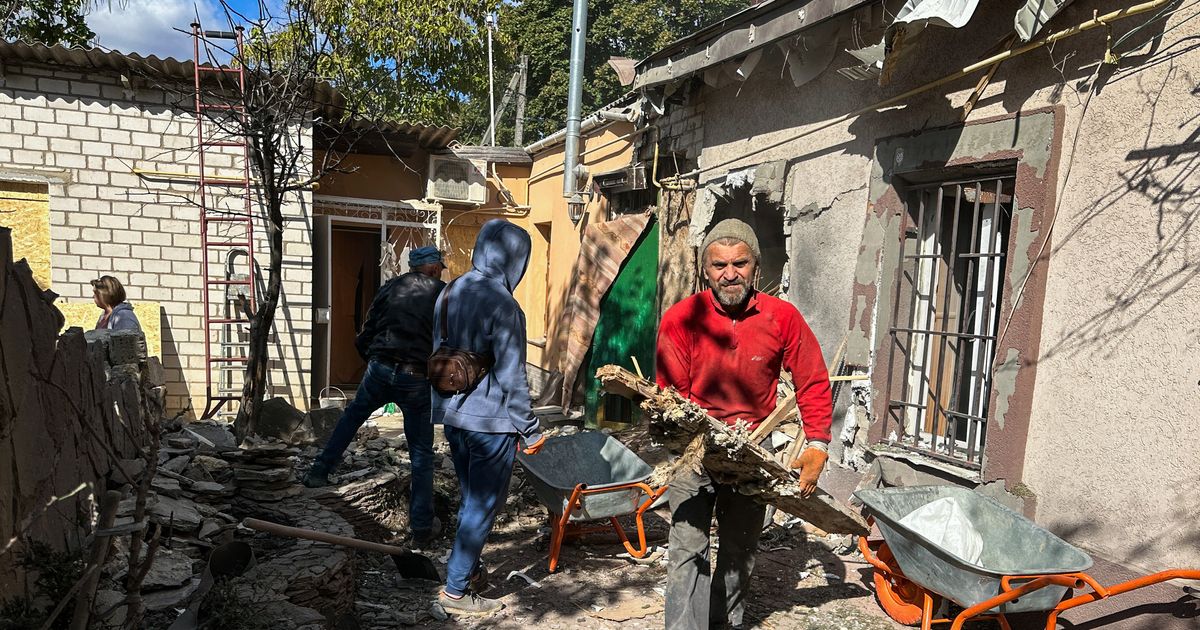
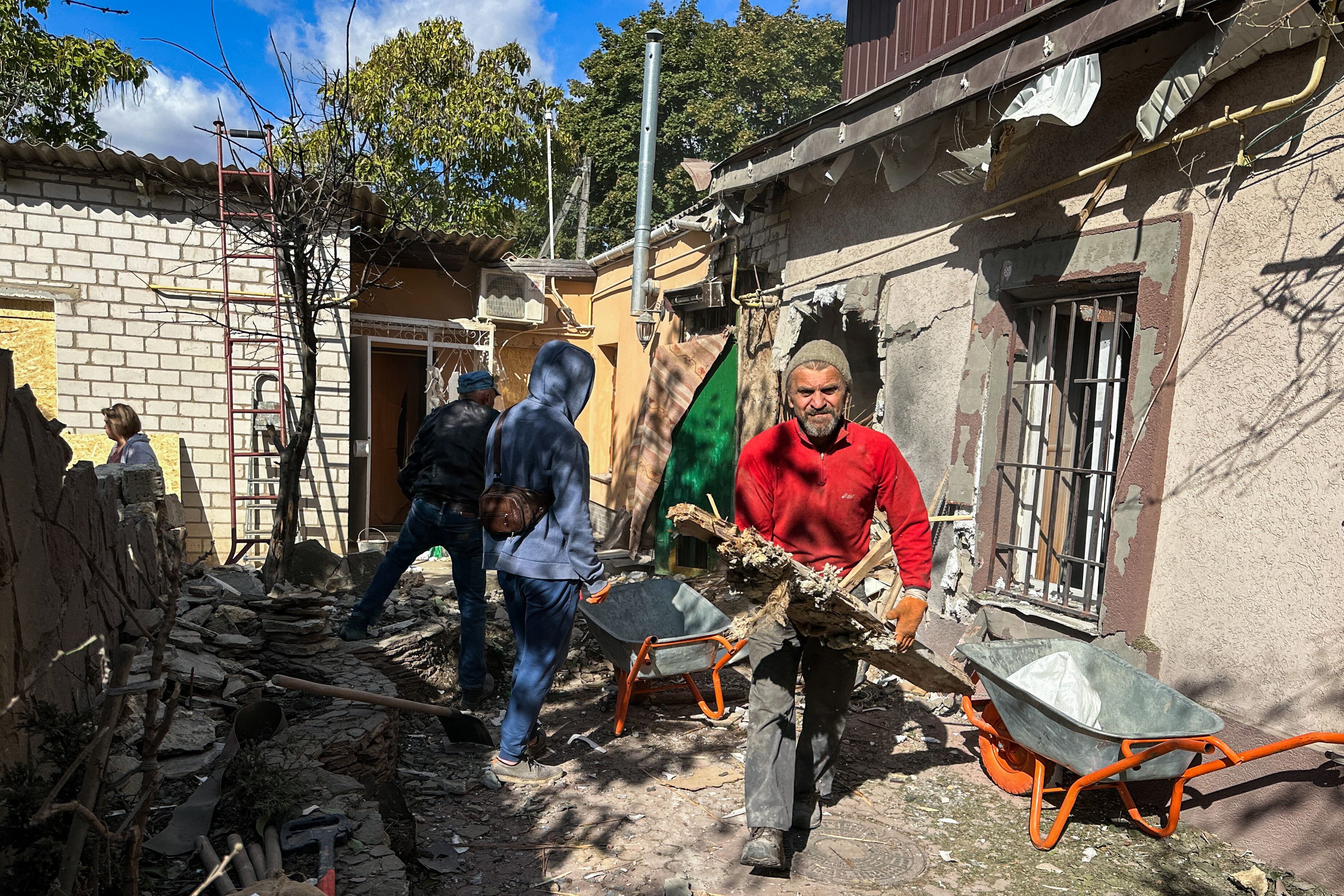
Russian sources are “concerned” over Ukraine’s activity in the occupied region of Kherson, according to a US think-tank.

The Ukrainian oblast of Kherson was illegally annexed by Moscow in September 2022 – but a flurry of military activity in the region is causing a stir as Kyiv fights to retrieve the land.

Last weekend, Russia shelled Kherson alone more than 200 times, according to the regional governor Oleksandr Prokudin.

Ukrainian president Volodymyr Zelenskyy also confirmed that these attacks had disrupted the region’s electricity and water supply.

But Ukrainian forces are now said to be crossing the region’s part of the Dnipro river – where one bank is controlled by Ukraine, the other by Russia – according to a prominent Russian military blogger named as “Rybar” by Sky News.

In its most recent update, the think tank Institute for the Study of War (ISW) explained that these worries are becoming more widespread.

It said: “Russian sources expressed pronounced concern about ongoing Ukrainian activity on the east bank of Kherson Oblast and framed these activities as part of a potential larger Ukrainian operation.”

Ukraine has previously struggled to reclaim any of this area.

Rybar claimed on Tuesday night that Ukrainian formations near the destroyed Antonisky bridge had moved forwards, and occupied a village.

Increasing its presence on the other side of the river would enable Kyiv to send troops, tanks and artillery across, and apply more pressure to the Russian forces on that long frontline.

The Russian ministry of defence has acknowledged Ukrainian operations too, according to ISW, claiming they stopped four Ukrainian sabotage and reconnaissance groups near Kherson City.

ISW also reported: “The milblogger reacted to the reported [Ukrainian] assault on the night of October 17 to 18 by accusing the Russian MoD of not taking the threat of a Ukrainian crossing seriously.”

In another indication that Ukraine’s progress in Kherson is troubling Moscow, the Russian president Vladimir Putin recently described Ukrainian activity in Kherson as the “next counteroffensive”.

But, as ISW noted, the Russian president has also “continued his typical rhetorical line by painting all Ukrainian offensive operations as a failure”.

The think tank has a policy of not forecasting Ukrainian actions though, so it did not speculate over the possibility that Kyiv will launch an offensive over the Dnipro river any time soon.

Still, ISW added: “It is noteworthy that prominent and generally reliable Russian sources are discussing Ukrainian activities on the east bank as occurring at a larger scale than previously documented.”

Share Button

Can The Tories Defy The Polls And Hold On In Today’s Crucial By-Elections?

The world’s attention has understandably been focused on the Middle East in recent days, and is likely to remain so for some time to come.

But two by-elections on Thursday have the potential to be much more politically significant for Rishi Sunak.

The Tories are defending two nominally safe seats, in Mid Bedforshire and Tamworth.

It is no exaggeration to say that, were the Conservatives to lose both of them, the party could swiftly go into meltdown.

In Mid Beds, the Tories are defending a 25,000 majority, while in Tamworth, the party won the seat in 2019 by 20,000 votes. On paper at least, they should be unassailable.

But given the government’s unpopularity, and the circumstances which led to the by-elections, both Labour and the Lib Dems still hold out hopes of causing an upset.

The contest in Mid Bedfordshire has been caused by the resignation of Nadine Dorries after she was denied the peerage promised to her by Boris Johnson.

In Tamworth, meanwhile, sitting MP Chris Pincher quit amid allegations of sexual misconduct which saw him suspended from the Commons for eight weeks.

Tory hopes of hanging on in Mid Beds have been boosted by an extraordinary war of words between Labour and the Lib Dems.

Both parties insist they are best placed to win, leading to the very real possibility of the anti-Tory vote being split, thereby allowing Conservative candidate Festus Akinbusoye to get elected.

Tamworth is a straight shoot-out between the Tories and Labour, who are odds-on favourites with the bookies.

Nevertheless, Labour insiders insist the prospect of winning either seat is a “moonshot”.

One shadow cabinet member told HuffPost UK: “They’re two very safe Tory seats and it would take a miracle for Labour to win either. Mid Beds is a genuine three way split, but still a real long shot.”

Shadow science, innovation and technology secretary Peter Kyle, who is Labour’s campaign co-ordinator in the seat, said: “I think objectively anybody looking at all of the campaigns would rather be in our position than the others, but this is unlike anything I’ve experienced and uncertainties are constantly lurking.”

But another Labour MP said: “Mid Beds is the Tories for the keeping – no chance of that turning red.

“And to be quite honest, we don’t need it anyway. It’s not a target seat of ours and this isn’t a general election. If anything, it’s amusing that the Tories will frame it as a big win when all they’ve done is keep a seat that is already theirs.”

Labour sources insist winning in Tamworth – where Pincher received 68% of the vote at the last election – would be an even bigger achievement than the party’s stunning victory in Selby and Ainsty in July.

But a senior Tory MP told HuffPost: “I reckon our chances are poor in Tamworth because of how grim Chris Pincher’s reason for leaving was. I think people will punish the party for what he did and vote against us as a protest for all the sleaze we’ve seen in recent years.”

And a Labour MP said: “We do feel good about Tamworth. We know we have the power to overturn such huge majorities, as we’ve done it before.

“This seat in particular often reflects wider politics. It was Labour under Blair and Brown, Tory after that. And now, reflecting how well Labour are doing in the polls, I think that trend will continue.“

Defeat for the Tories would be as much of a psychological blow as an electoral one.

It’s the constituency of former Conservative prime minister Robert Peel, who in 1834 published the Tamworth Manifesto, which paved the way for the modern-day Tory Party.

One Labour MP dispensed with the usual pre-by-election caution and predicted a glory night for the party.

We’ve got both seats in the bag,” the MP said. “It doesn’t matter where the constituency is, or its history – the public want a change and are fed up of Tory lies.

“Their loyal voters are doubting them too, and we will see that on Thursday.”

Share Button

I’m Almost 30 And I’ve Never Even Had A Crush. I Finally Figured Out Why.

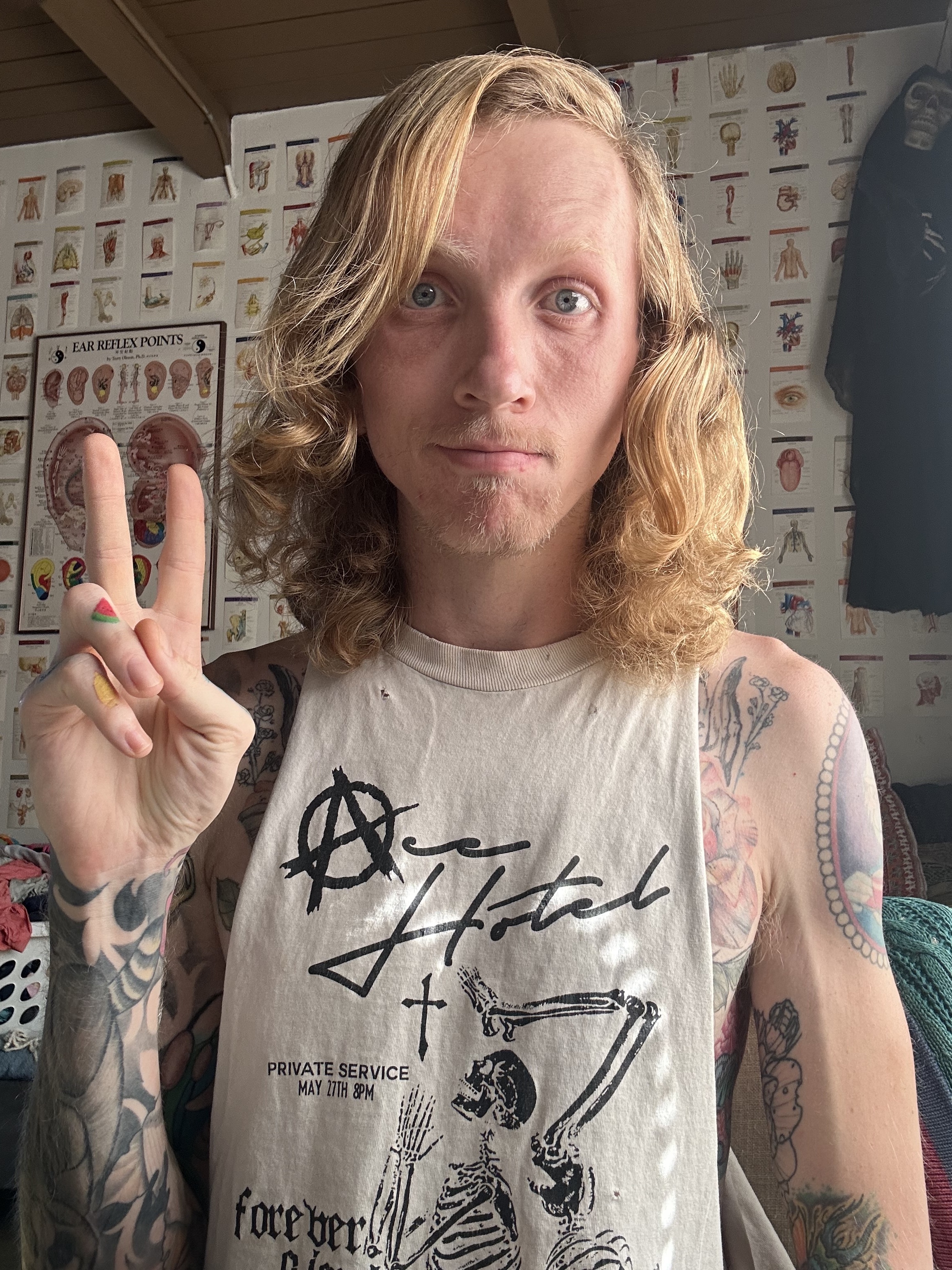
I turn 30 in less than two weeks and I’ve only been in one “relationship.”

I was 19 when I met Greg on Grindr. I understand now that the way I felt about Greg is the way I often feel about intimate partners: We enjoyed each other’s company, I found him physically attractive and I could be physically and emotionally intimate with him, but we lacked that “spark” I so often hear about when it comes to romantic partnerships.

I never had even had a crush on Greg; I just enjoyed his company and was excited to finally be in a relationship, this thing that so many people seemed to be after.

We were together for just shy of three months before he broke it off. Right before we split, my dad asked me if I loved Greg. I struggled with the question because it wasn’t something I had even considered. I wavered for a while before I finally said, “maybe … probably” — less because it was how I felt and more because it seemed like the correct answer.

I’ve tried dating a number of times since, but I could never find that warm, gushy feeling, the romance that I’d heard others describe as they pursued new relationships. I enjoyed talking with new suitors and was sometimes attracted to them, but the idea of being in a romantic relationship felt stifling and inauthentic.

Eventually, I realised I was aromantic, which means having little or no romantic attraction to others.

Romance, like gender and sexuality, can be understood as a spectrum. There are folks who fall hard and quickly, easily developing crushes on others, and there are people like me, who simply don’t gravitate to those feelings easily or at all. I am open to the possibility that one day I will have a crush or fall in love, but so far it hasn’t happened.

Not all aromantic people are asexual. I’m surely not. And aromantic people still have love in their lives; they just get it outside of romantic relationships. My life is full of love from my friends, family, even my intimate partners — it’s just not romantic love, that special bond that’s so difficult to put into words (especially as a person who’s never experienced it).

The fact that I have gone the entire decade of my 20s without being in a traditional romantic relationship is often met with a sense of confusion from my peers. This used to feel alienating, but today I know that it isn’t because of some personal fault. The traditional approach to committed relationships just isn’t for everyone.

Since I still crave physical intimacy and sex, I enjoy having partners I can explore those elements of myself with. But our relationships don’t come with many of the same feelings or tethers that a romantic relationship typically would.

I find it challenging to date in a traditional sense. In my mid-20s, after recognising that I was aromantic, I found the term “quasiplatonic relationship.” Quasiplatonic relationships are not romantic but still involve a close connection, often beyond what we may see in a friendship. They may or may not involve sex.

While these might not look like the “traditional” versions, some aromantic people have long-term partners. Some cohabitate and even get married. Seeking out this kind of relationship was a challenge for me, however. Trying to find another person who was a good fit, and who was also looking for a relationship that wasn’t traditionally romantic, started to feel just as restrictive as shooting for a committed romance.

Over time, the idea of seeking out and being with a single monogamous partner also began to feel extremely limiting. Nonmonogamy wasn’t really a conscious choice I made; rather, it eventually clicked that there was no other option for me. As an aromantic person with different relationship needs than most, having multiple partners who could offer me a number of different things felt most conducive to my identity as I was beginning to understand it.

Eventually, I stumbled upon the phrase “relationship anarchy,” which to me means my relationships have a more fluid structure, without hierarchical differentiation between sexual, romantic and platonic relationships.

After a decade of trying to fit inside one specific box society deemed “correct,” I’ve found solace in stepping outside of it and creating my own box, one that works for me.

Today, I have a number of relationships in which I embrace varying levels of intimacy. Some are mostly physical; others feel more like close friendships. We’re invested in each other’s lives, we hang out together ― some on a regular basis, and others simply when we can make it work ― and sometimes we share physical intimacy. I now understand that I operate best by simply letting things flow and figuring out naturally how a person fits into my life.

This year I started a relationship with a man who is in an open marriage. This dynamic feels comfortable for me, in that we can share a connection without there being broader romantic expectations — we aren’t necessarily aiming for anything bigger. We’re focused on the now, whatever we end up cultivating together. We talk intimately about our lives and goals. We do things that friends would do together. Sometimes we have sex, but it’s not an integral part of our relationship either.

I consider myself single, and I prioritise my relationship with myself first and foremost. After the one with myself, some of the most valuable relationships in my life are those I have with my platonic friends. Most of my spare time goes to my best friend, and my relationship with her often feels the most profound and connected.

As a queer nonbinary person who is attracted to folks of all gender identities, I’ve begun to see the idea that we are all meant to have a single romantic partner in our lives as outdated, part of a rigid cisheteronormative system that exists to uphold traditional family structure.

I don’t want children and I’m not sure I ever want to get married, so for me that concept has often felt fraudulent. There’s nothing wrong with preferring traditional monogamous relationships, but humans are complicated, and the idea that all 8 billion of us should treat relationships in this one limited way ignores how expansive our identities can be. It’s selling our species short to insist we all conform to such stringent guidelines, and it ignores history and culture to claim that this has always been the case.

I currently have no desire to date, as I pretty much have everything I need. I am always open to new relationships, but I don’t have guidelines for what they “need to” offer me. It’s simply up to me and that other person to decide what works best for us.

As I write this essay, I am preparing to fly to my home state of Colorado to celebrate the weddings of two longtime friends. I love to see those I hold close find what they need and affirm it. I think romantic love is beautiful, and I’d love to experience it for myself one day. I also accept that maybe it just isn’t in the cards for me.

I am open about my journey to give others like me, who have struggled with the standard relationship models, permission to venture out and explore their own paths. If there’s one thing my 20s have taught me, it’s that many of the rules and guidelines we have in society are arbitrary. I get so much validation from those in the younger generations who decided early on that they would go their own way, and from older folks who throw away the rulebook they’ve lived by for the majority of their adult lives.

I also admit that I don’t have it all figured out. I’ve settled on a dynamic that works for me today, but I leave myself open to any possibilities that present themselves as I journey through life, rather than comparing my experience to that of others. I can’t wait to see what lies ahead.

Share Button

Britney Spears Reveals How ‘Terrifying’ VMAs Duet With Giant Snake Really Was

Britney Spears is reflecting on one of the most iconic moments of her career.

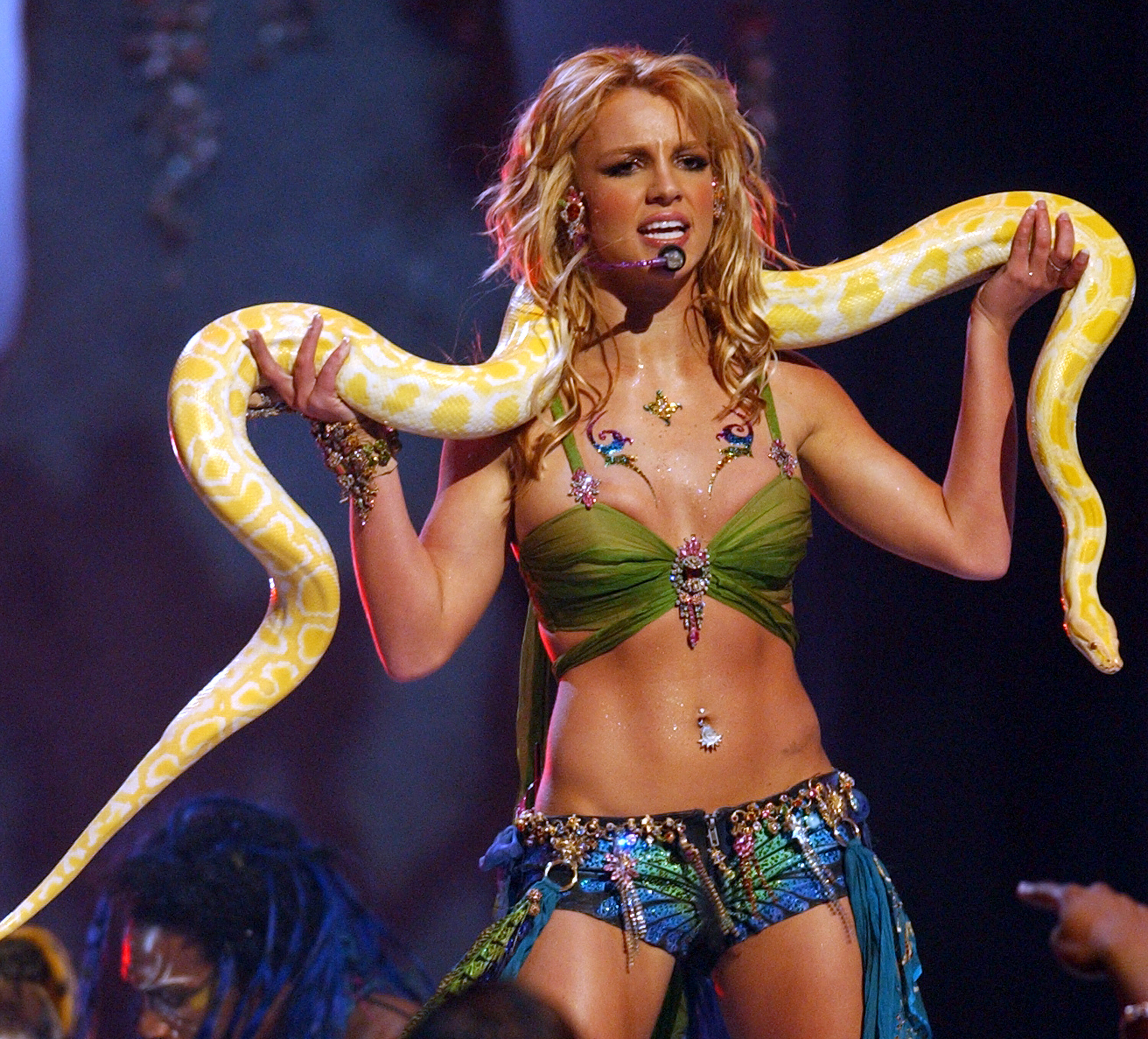
While fans undoubtedly remember her performing “I’m a Slave 4 U” with an albino Burmese python wrapped around her shoulders, Spears shares in her upcoming memoir what that iconic moment at the 2001 MTV Video Music Awards actually felt like — and says it was genuinely “terrifying.”

“The plan was for me to sing ‘I’m a Slave 4 U,’ and we decided I would use a snake as a prop,” writes Spears in an excerpt of her memoir, “The Woman in Me,” published Tuesday by People.

“It’s become an iconic moment in VMAs history, but it was even more terrifying than it appeared,” she continues. “All I knew was to look down, because I felt if I looked up and caught its eye, it would kill me.”

Despite a surprise appearance by Michael Jackson, Spears and her seemingly effortless snake-charming stole the show.

“In my head I was saying, Just perform, just use your legs and perform,” Spears, who was 19 at the time, writes in her memoir. “But what nobody knows is that as I was singing, the snake brought its head right around to my face, right up to me, and started hissing.”

She continues: “I was thinking, Are you fucking serious right now? The fucking goddamn snake’s tongue is flicking out at me. Right. Now. Finally, I got to the part where I handed it back, thank God.”

The snake itself was, hilariously, named Banana.

Her performance appeared effortless to millions, but Spears was genuinely terrified.

Kevin Mazur/WireImage/Getty Images

The moment is clearly visible around the 3-minute mark in official footage from MTV. But die-hard fans won’t have to rely on old recordings for new Spears stories much longer — she is set to candidly dish on her life and career in “The Woman in Me,” which hits shelves Oct. 24.

The millennial pop star has been on an extensive promotional run for the upcoming memoir, which her publisher says will explore “the impact of sharing her voice” in court battles over her controversial conservatorship and how “it changed the course of her life.”

Spears has already shared a handful of illuminating excerpts from the book, writing about the drinking habits of her parents, why she really shaved her head in 2007 — and saying ex-boyfriend Justin Timberlake once urged her to get an abortion.

The audiobook version will be narrated by Oscar-nominated actor Michelle Williams.

Share Button

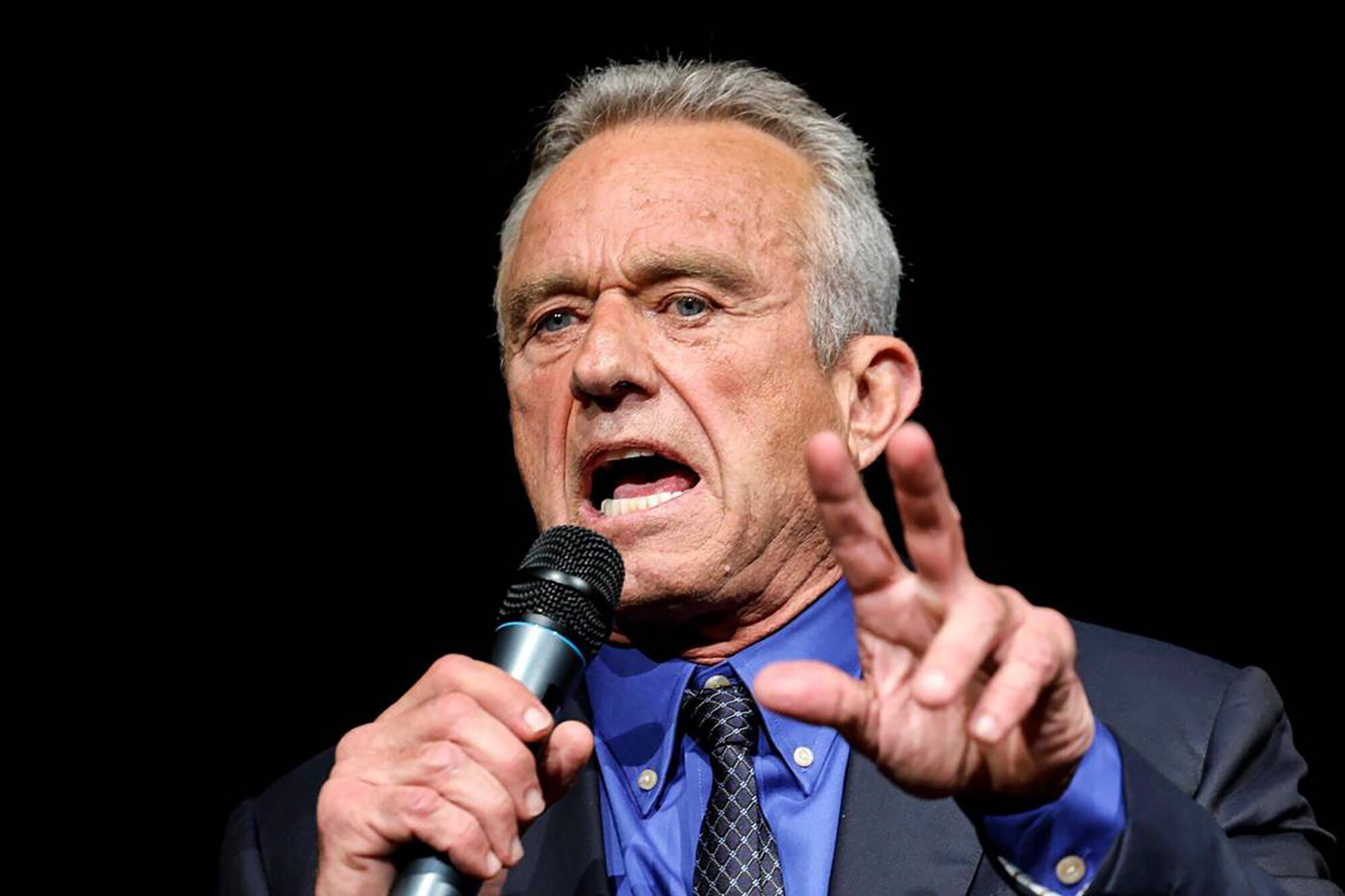
Robert F Kennedy Jr Is Destroying Donald Trump’s Election Chances, Poll Says

But an NPR/PBS NewsHour/Marist National Poll released on Tuesday offered an early prediction: Biden would beat Trump by 7 percentage points when Kennedy is factored in.

If the election were held today, Biden would snag 44% of the vote to Trump’s 37%, followed by Kennedy’s 16% with 3% undecided, according to the survey.

Kennedy, whose anti-vaccine views appeal to some conservatives, is simply siphoning off more votes from Trump than Biden.

With the political scion on the ballot, Biden loses 5 percentage points among Democrats while Trump loses 10 points among Republicans, according to the poll.

Kennedy, who has received significant air time on Fox News and other conservative outlets, has been denounced by his own family, but come November 2024, he might just end up a darling for Democrats anyway.

“Although it’s always tricky to assess the impact of a third-party candidate, right now Kennedy alters the equation in Biden’s favour,” Lee M Miringoff, director of the Marist College Institute for Public Opinion, said. “What this does speak to, however, is that about one in six voters are looking for another option, especially independents.”

The poll, conducted on October 11 among 1,313 American adults, shows Biden leading Trump by 3 percentage points in a head-to-head contest.

Share Button

Big Brother Just Confirmed A Major Tweak To This Week’s Nominations Ahead Of Second Eviction

Big Brother is set to introduce a big change to the nominations process this week, ahead of the show’s second eviction.

Following a five-year hiatus, the reality series returned to our screens earlier this month, after landing a new home on ITV2.

Last week saw Farida become the first contestant to be evicted from the newly-revamped house, after all 16 of the new additions each nominated one housemate they wanted to face the public vote.

For this weeks’ eviction, however, Big Brother has announced they will rever to the show’s original format, which will see housemates nominate two of their counterparts to face being evicted.

Nominations will be made on Tuesday (17 October), before viewers learn the results on Wednesday, at which point they’ll be given their say on who stays and who goes.

The results of the vote will air during this Friday’s live eviction.

Big Brother hosts AJ Odudu and Will Best

James Veysey/Shutterstock

Meanwhile, since Big Brother’s return to screens earlier this month, fans have been wondering whether a Celebrity Big Brother will soon follow suit.

Fans were delighted to see reports in the media outlet Broadcast claiming that ITV is, indeed, set to revive the celebrity version of the reality show next year.

The last instalment of Celebrity Big Brother aired in 2018, sparking controversy when Roxanne Pallett falsely accused housemate Ryan Thomas of deliberately punching her in the ribs, despite cameras showing this was not the case. She later issued an apology and expressed her regret.

Ryan, who played Jason Grimshaw on Coronation Street, ultimately went on to win the series.

Big Brother first premiered in 2000, with Davina McCall, Brian Dowling and Emma Willis on presenting duties over the years before AJ Odudu and Will Best stepped into the role for the revamped series.

Big Brother airs from Sunday to Friday at 9pm on ITV2.

Share Button

Inquiry Needed Into What Boris Johnson Knew About Peter Bone Allegations, Say Lib Dems

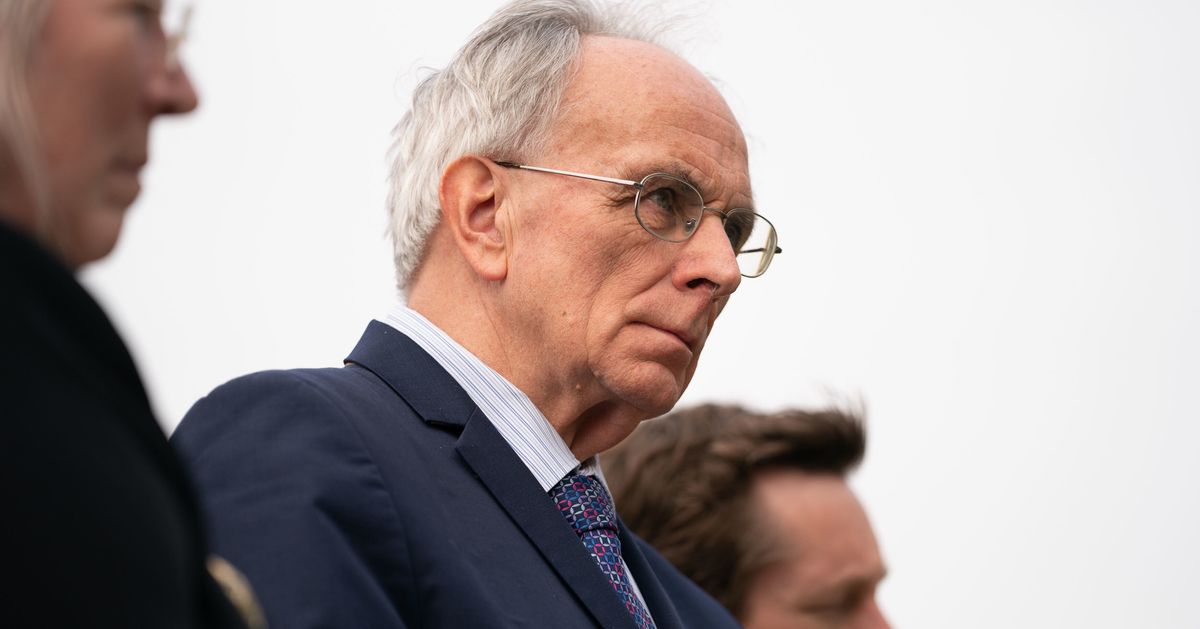
Boris Johnson’s decision to make Tory MP Peter Bone a minister despite an ongoing inquiry into allegations of sexual misconduct must be formally investigated, the country’s most powerful official has been told.

Bone faces a six-week suspension from the Commons and losing his seat in a by-election after a Westminster ethics watchdog found he bullied and sexually harassed a member of his staff.

The Lib Dems have demanded Simon Case, the cabinet secretary, access Johnson and Liz Truss’ emails and text messages about the Wellingborough MP to avoid a “Conservative Party cover up”.

In one incident, Bone “trapped” a young male employee in a Madrid hotel room and indecently exposed himself.

Bone was found by the independent expert panel inquiry to have “verbally belittled, ridiculed, abused and humiliated” the man, who was in his early 20s.

He has denied the allegations. In a statement Bone said: “None of the misconduct allegations against me ever took place. They are false and untrue claims. They are without foundation.”

A complaint was first raised about the behaviour in 2015 when David Cameron was prime minister and again in 2017 when Theresa May was in No.10. The Conservative Party opened an investigation in 2018.

Bone, who was first elected in 2005, has spent the majority of his career as a backbencher.

But in July 2022, Johnson appointed Bone to the job of deputy Commons leader. It involved handling how complaints of bullying in parliament are dealt with.

When Liz Truss’ became PM, she sacked Bone and abolished the role entirely.

Christine Jardine, the Lib Dem Cabinet Office spokesperson, said on Tuesday: “We need an urgent inquiry to understand what Conservative ministers knew about the allegations against Peter Bone when these complaints were made.

“Boris Johnson must also be held accountable for his decision to appoint Peter Bone as deputy leader of the Commons despite the complaints made against him.”

She added in a letter to Case: “There are serious questions to be answered about what Boris Johnson, Liz Truss and other Conservative ministers knew about these allegations including when Peter Bone was appointed to a ministerial position.

“It is therefore crucial that any inquiry has full access to communications sent by Johnson and other ministers at the time, including emails, text messages and other electronic and written correspondence.”

Asked if an inquiry would be launched into Bone’s appointment as a minister, Rishi Sunak’s spokesperson said: “I am not aware of any plans for that, no.”

Bone has been one of most notorious backbenchers for many years, and often a thorn in the side to his own party leaders. An unashamed eurosceptic, he had described Ukip as a “good thing for British politics”. And also called the idea of introducing same-sex marriage “completely nuts”.

Share Button

So THAT’s When We Should Start Preparing For Menopause

Picture this. Lately, you’ve not been feeling yourself, sex has become painful and your periods are haywire. You’re feeling anxious, depressed and all ’round things just don’t feel right. Your hair is thinning, you’re forgetting things, having heart palpitations, migraines and hot flushes. The worst part, you don’t know why.

Menopause usually begins between the ages of 45-55, with perimenopause (the period of time before menopause where symptoms begin) starting up to 15 years beforehand. While menopause usually hits in middle age, some people will experience it before the age of 40 – this is known as early menopause and affects 5% of women.

A recent study conducted by the Women’s Health Journal in 2022 found that a staggering 90% of participants had never been taught a single thing about menopause. As a result, 60% reported feeling unprepared and uninformed.

Common themes emerged in the study relating to knowledge gaps and the impact and severity of symptoms. Being unaware of menopause comes from a lack of education and social taboo surrounding “women’s troubles”. Those of us who experience menopause are more likely to speak to a friend about symptoms than their partner, or even a doctor.

It’s perhaps unsurprising, then, when HuffPost UK sat down to speak with Dr Shirin Lakhani, an award-winning cosmetic doctor and intimate health specialist, that she tells us; “When I was growing up, my grandma, and my mom never talked about going through menopause, they never talked about the symptoms they experienced.”

Menopause is caused by the natural biological decline in female fertility. Egg reserves run out, oestrogen production fizzles as the ovaries become less functional and, slowly but surely, the female reproductive organs cease to function the way they used to. Periods stop and pregnancy is no longer possible.

Dr Helen O’Neill, CEO and Founder of Hertility Health, says that; “The main perimenopausal symptoms are changes in menstrual cycles, often accompanied by hot flushes and night sweats (known as vasomotor symptoms).”

But this natural wind down doesn’t end in a soft landing for everyone.

“For men, hormones decline like a gentle stroll down a hill. For women, we fall off a cliff,” says Dr Lakhani.

The sudden onset of menopause symptoms can be debilitating.

“Perimenopause and menopause affect many other parts of the body, and cause symptoms such as mood changes, memory issues, joint pain, vaginal dryness and sexual dysfunction,” says Dr O’Neill.

For many menopausal people, it can have a huge impact on their relationships and careers.

Shelly Hatfield, Middlesbrough Manager at LUSH and Menopause CN Chair, tells me that for her, menopause almost made her resign. “At one point I was going to throw in the towel and pack in my job because I was having a hard time,” she says, “And then I realised it was just that I wasn’t being open enough about it.”

Shelly isn’t alone in this. Shame can prevent many women from reaching out to employers for help. Up to 10% of people leave the workplace because of menopause despite the fact that those in this age group are typically at the peak of their careers. This is because employers are failing those experiencing menopause. Eight out of ten women say their employer hasn’t shared information, trained staff, or put in place a menopause absence policy.

Shelly knew she would have to take it upon herself to make change happen. “I started talking to the right people, and people were listening and very interested so we set up the menopause network community and soon we had 66 members,” she tells HuffPost UK.

Her proactive thinking has now meant LUSH sales assistants have received specialist training on menopausal symptoms and are able to recommend products that can help with symptoms like restless leg syndrome, general aches and pains and sleep disturbances.

This training has normalised conversations surrounding menopause, creating space for their customers to feel supported and seen. Additionally, staff at LUSH now have access to training materials and internal support systems that create something of a safety net for menopausal employees.

Education on menopause is seriously lacking, and the workplace is only one location that needs more resources. Dr Lakhani tells HuffPost UK that, in her opinion, schools should be teaching menopause as part of the sex education curriculum. “I think you need to have the education in place to understand what’s happening to your bodies,” she says.

And yet, menopause isn’t something we learn about in school, despite 86% of women reporting that they would very much like it to be.

Truth is, little is done proactively to assist those experiencing menopause symptoms across the board. Sometimes this is because of cultural taboos, but there is also discrimination at play.

One 2023 study found that doctors were significantly more likely to prescribe HRT (hormone replacement therapy) for white women than for other ethnicities. Highlighting the need for more education surrounding racial bias and menopause amongst GPs.

So, when should I start prepping? And, how do I prepare?

“You’re never too young to start learning about menopause,” says Dr Lakhani, who is of the belief that having as much knowledge as possible on what symptoms can look like, and being in tune with how those symptoms appear in your body is of great importance.

She says that most people think of hot flushes and the absence of periods when they think of menopause. But, when it comes to seeking support, these symptoms are the last thing on their mind. She explains that while the physical symptoms can be an inconvenience for her patients, and in some cases quite debilitating, most of them can take it in their stride.

“What they’re not prepared for, is the mental health issues that go along with the hormonal changes. Anxiety, depression, losing all their confidence, feeling like they don’t belong in the environment that they’re in, they get impostor syndrome,” Dr Lakhani lists.

Explaining further, Dr Lakhani says that the best way to prepare is to get to know your base level of normal and monitor any symptoms you feel creeping up on you. Be that achy joints or sudden feelings of anxiety or depression (especially if you’ve never experienced these things in the past).

If you’re concerned you’re beginning perimenopausal, the best thing to do is speak with your GP about your symptoms. “A thorough medical evaluation and discussion of symptoms with a healthcare professional are vital steps in understanding your menopausal transition,” advises Dr O’Neill.

Dr O’Neill explains that there are several tests that can provide valuable information on where you’re up to. “Hormone level testing, such as measuring follicle-stimulating hormone (FSH) can help determine if you’re approaching menopause. Other hormones (such as oestradiol and luteinising hormone) can also be helpful to assess whether you are going through menopause,” she says.

Continuing, she states that, importantly, these tests should be analysed along with your menstrual cycle patterns and symptoms. “This is why you cannot diagnose menopause in people who are using hormonal contraception, as these medications skew natural levels of FSH as well as affect your menstrual cycles,” she says.

Her advice to anyone worrying about menopause, or wanting to know more, is to learn about the symptoms, available treatments and lifestyle adjustments you can make.

“They will empower you to manage this phase effectively,” she encourages. “By fostering open dialogue and eradicating the stigma associated with menopause, we empower women to take charge of their health and well-being during this significant life transition.”

Share Button