34 Of Prince Harry’s Bombshells From His ‘Spare’ Interviews

Prince Harry has given the world access to his own life like no royal ever has before – and not just through his new memoir Spare.

The Duke of Sussex has gone on a bombshell-filled media tour to promote his autobiography, from intense 90 minutes with ITV to a tequila-fuelled more light-hearted appearance on late night US TV.

Here’s a round-up of some of the most insightful things the royal said.

Released: January 8
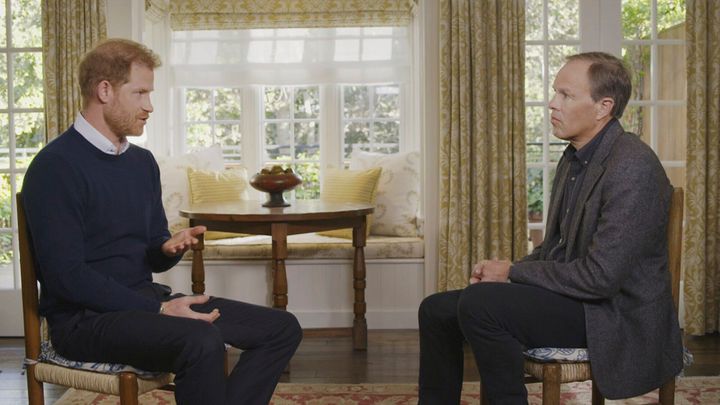
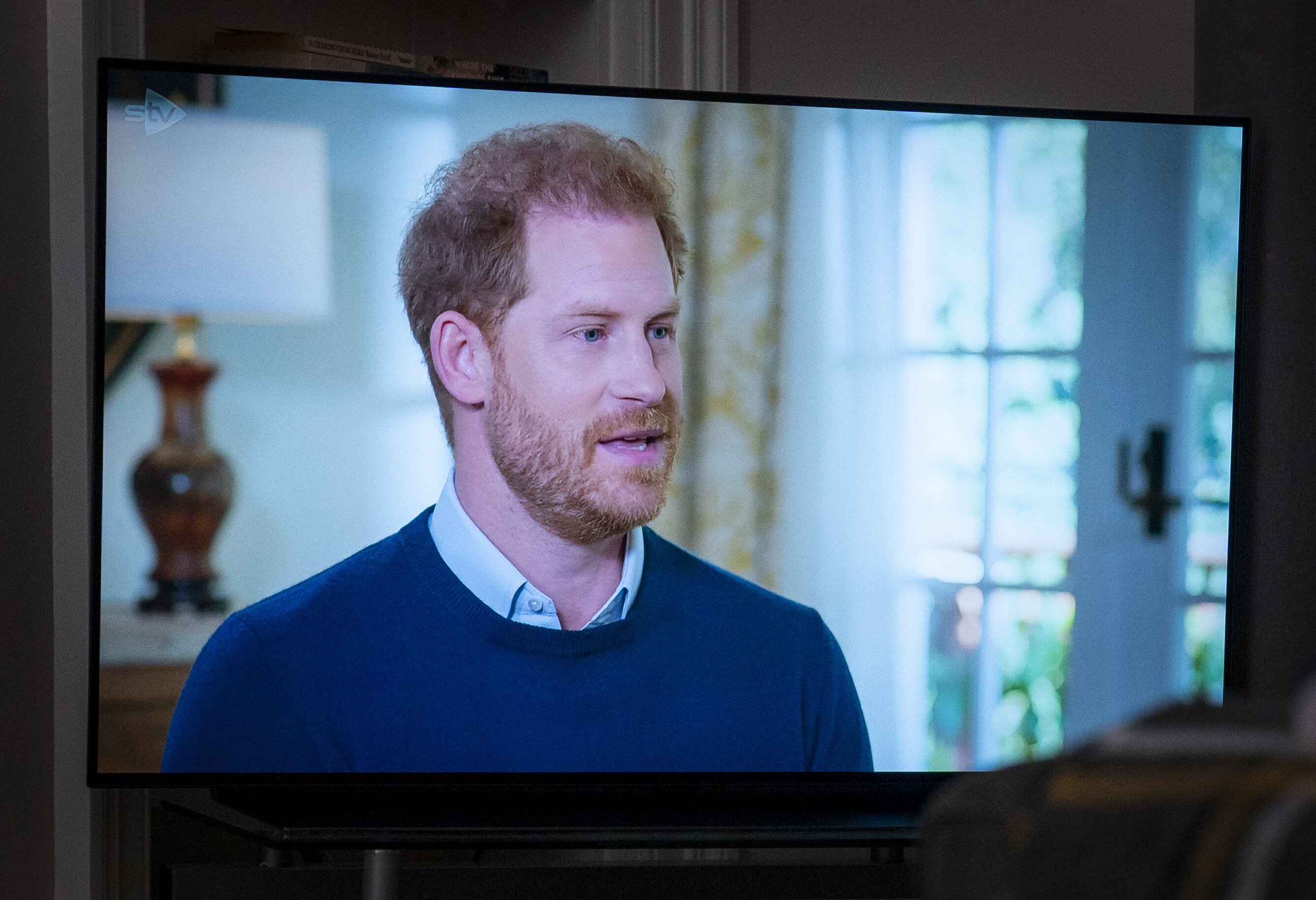
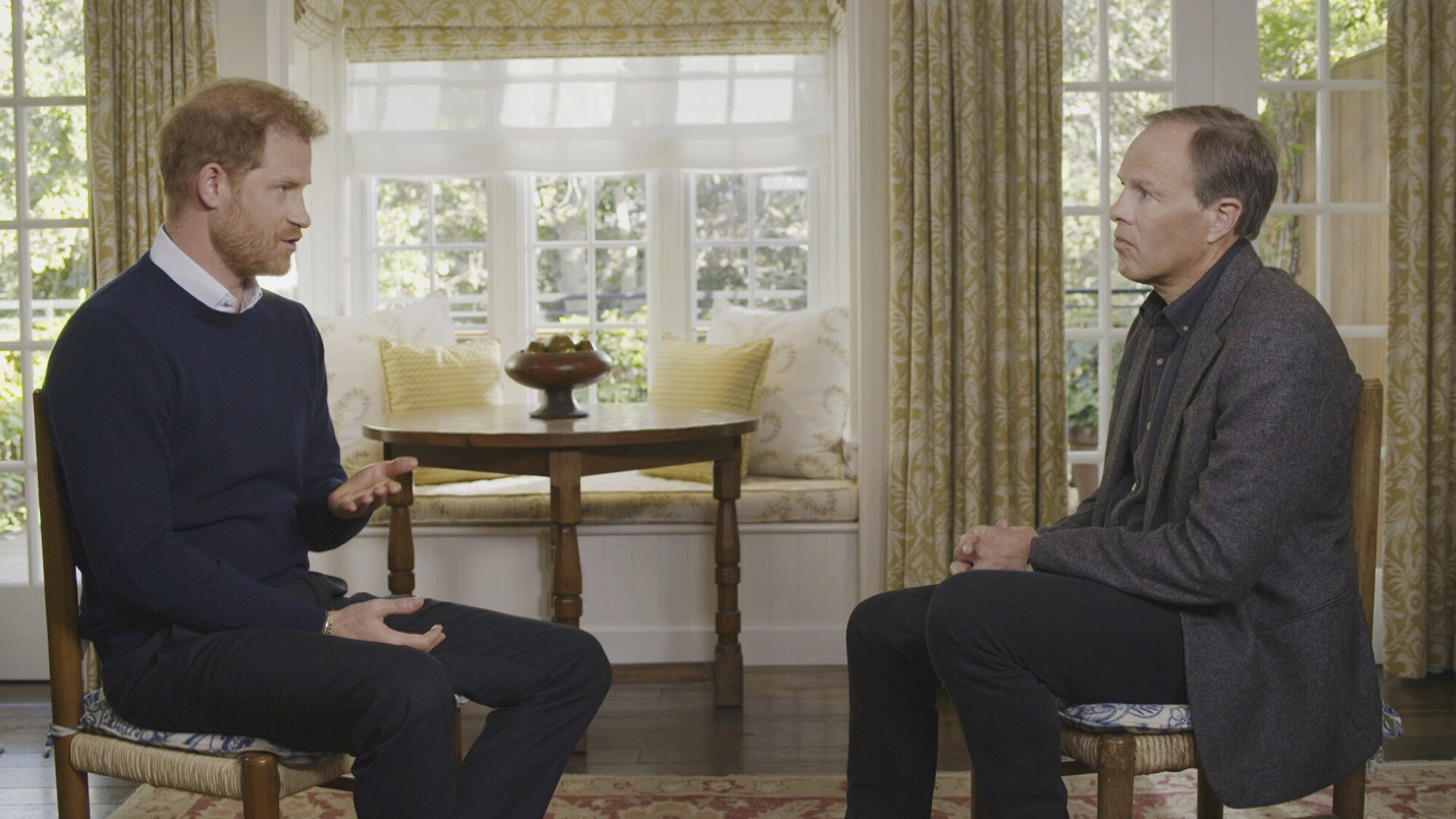
 Prince Harry, left, speaking during an interview with ITV's Tom Bradby for the programme Harry: The Interview.

via Associated Press

Prince Harry, left, speaking during an interview with ITV’s Tom Bradby for the programme Harry: The Interview.

1. Harry accused some royals of ‘getting into bed with the devil’

“After many, many years of lies being told about me and my family, there comes a point where again, going back to the relationship between certain members of the family and the tabloid press, those certain members have decided to get into bed with the devil,” the Duke claimed.

“If you need to do that, or you want to do that, you choose to do that – well, that is a choice. That’s up to you.

“But the moment that rehabilitation comes at the detriment of others – me, other members of my family – then that’s where I draw the line.”

2. Harry denies that he ever suggested the Royal Family was racist

Harry denied that he and Meghan had ever meant to imply the royals were racist for supposedly enquiring about the skin colour of their firstborn, a revelation they made in 2021 during an interview with Oprah Winfrey.

When Bradby noted that the Duke of Sussex had “accused members of your family of racism” in the Winfrey interview, Harry pushed back.

“No, I didn’t. The British press said that,” Harry said. “Did Meghan ever mention that they’re racist?”

Bradby mentioned Meghan’s revelation that “there were troubling comments about Archie’s skin colour”.

“There was concern about his skin colour,” Harry replied.

“Right. Wouldn’t you describe that as essentially racist?” Bradby followed up.

“I wouldn’t,” Harry said. “Not having lived within that family.”

“The difference between racism and unconscious bias, the two things are different,” he continued. “But once it’s been acknowledged, or pointed out to you as an individual, or as an institution, that you have unconscious bias, you therefore have an opportunity to learn and grow from that in order so that you are part of the solution rather than part of the problem. Otherwise, unconscious bias then moves into the category of racism.”

3. Harry wants Charles and William ‘back’

Harry says he wants “a family, not an institution”, and says “they’ve shown absolutely no willingness to reconcile”.

He also talks about King Charles and Prince William. “I would like to get my father back,” he says. “I would like to have my brother back.”

But, Harry added, “At the moment, I don’t recognise them,” he said of his father and brother, noting: “As much as they probably don’t recognise me.”

4. William ordered Harry to shave his beard off for his wedding

The Duke revealed that his older sibling had ordered him to go clean shaven for his 2018 wedding.

He explained: “I think there’s a level of competition there. I remembered that William had a beard himself and that Granny, and other people, the ones to tell him – told him that he had to shave it off.”

He said the difference was that the beard was “a shield to my anxiety” – but that he thought William still “found it hard that other people told him to shave it off”.

5. Harry and Meghan ‘love’ Lady Susan Hussey

Hussey, a former royal aide, was criticised last year for making racist comments towards charity boss Ngozi Fulani at the Palace, and subsequently stepped down.

Harry touched on the incident in his interview and said he was “very happy” that the Palace had organised a reconciliatory meeting between the two parties, as he and Meghan “love Susan Hussey”.

He added: “And I also know that what she meant – she never meant any hard at all. But the response from the British press, and from people online because of the stories that they wrote was horrendous.”

He said he and Meghan had only ever wanted the same kind of “accountability” from the royals – but pointed out the Palace had not even introduced the diversity tsar they had promised to back in 2021.

“I’ve always been open to wanting to help them understand their part in it, and especially when you are the monarchy – you have a responsibility, and quite rightly people hold you to a higher standard than others.”

6. Harry’s fury over Jeremy Clarkson’s column – and the Palace’s inaction

Clarkson faced a widespread backlash in December when he wrote in an opinion column for The Sun that he “hates” the Duchess of Sussex on a “cellular level”.

Speaking to ITV, the Duke of Sussex brought up the piece of his own accord while discussing “accountability”.

Harry said: “Not only was what he said horrific, and is hurtful and cruel towards my wife, but it also encourages other people around the UK, and around the world – men particularly – to think that it’s acceptable to treat women that way.

“To use my stepmother’s words recently as well, there is a global pandemic of violence against women.”

He also said he was frustrated by the royals’ silence, while his wife continues to receive criticism from the press. He said: “The world is asking for some form of comment from the monarchy but the silence is deafening. To put it mildly.

“Everything to do with my wife, after six years, they haven’t said a single thing.”

7. Harry defends writing about his family

On why now felt like the right time to write his memoir, Harry told Bradby: “38 years of having my story told by so many different people with intentional spin and distortion felt like a good time to own my story and be able to tell it for myself.

“You know, I don’t, I don’t think that if I was still part of the institution that I would have been given this chance to.

“So, I’m actually really grateful that I’ve had the opportunity to tell my story because it’s my story to tell.”

Asked what his brother would have to say after reading Spare, Harry continued: “He’d probably say all sorts of different things.

“But you know, for the last however many years, let’s just focus on the last six years, the level of planting and leaking from other members of the family means that in my mind they have written countless books – certainly millions of words have been dedicated to trying to trash my wife and myself to the point of where I had to leave my country.”

8. Harry rejects claims he has burnt his bridges

Bradby put to Harry that he’d not so much “burned bridges” with his family as “taken a flamethrower to them”, although that’s now how the Duke saw it.

“Silence only allows the abuser to abuse. I’m not sure how honesty is burning bridges,” he replied.

9. Harry is still hopeful of a family reconciliation

“I genuinely believe, and I hope, that reconciliation between my family and us will have a ripple effect across the entire world,” he said. “Maybe that’s lofty, maybe that’s naïve, whatever. But I genuinely feel that.

“And knowing the monarchy as I know it from something that I was brought up in, for me it’s always been about uniting people.”

However, he added: “They’ve shown absolutely no willingness to reconcile up until this point.”

10. Harry said the royals ‘stereotyped’ Meghan

Harry said William and Kate never got on with Meghan “from the get-go”, and that there was “a lot” of stereotyping her as a “divorced biracial American actress”.

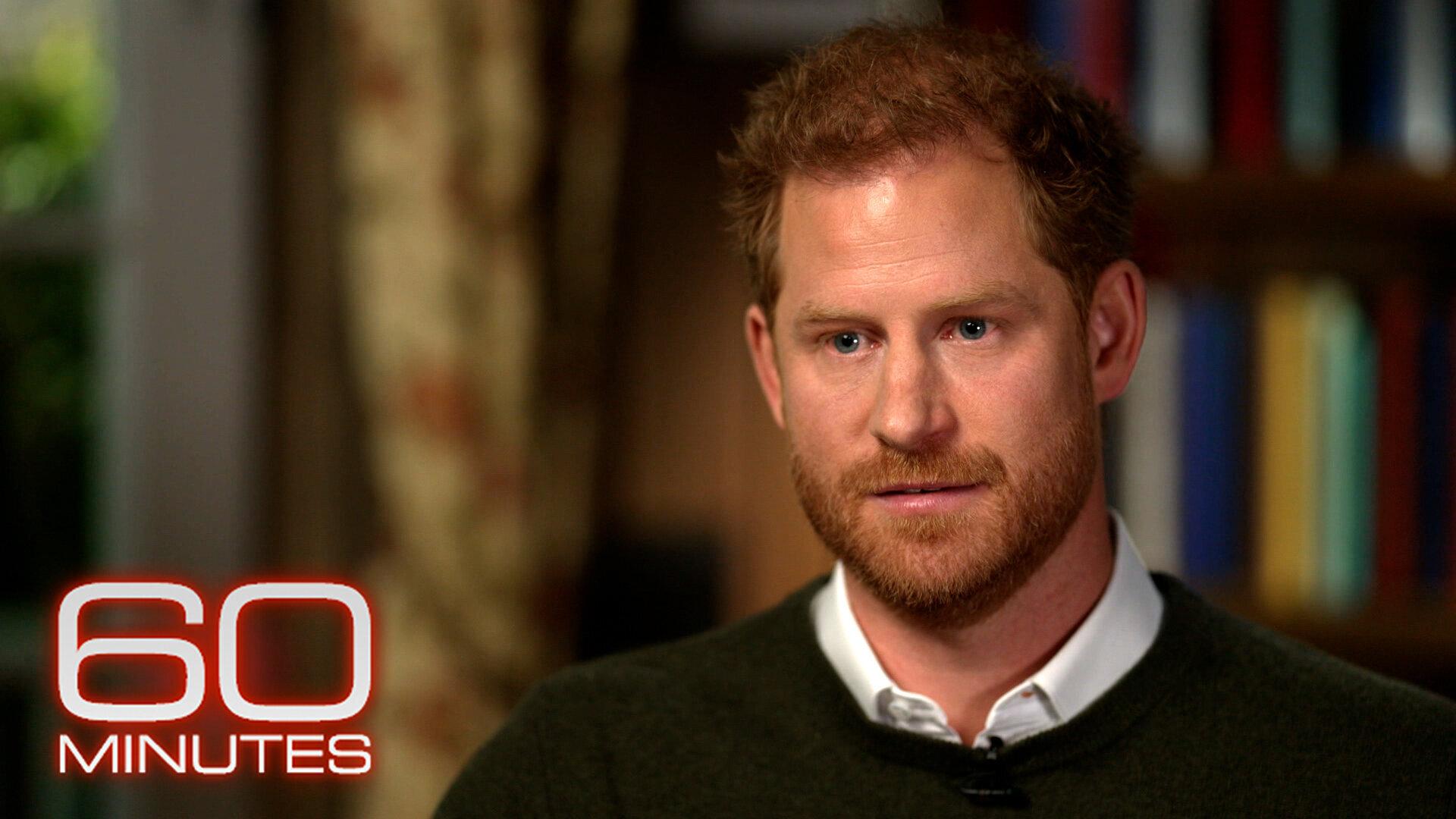
Anderson Cooper: 60 Minutes, CBS

Released: January 8
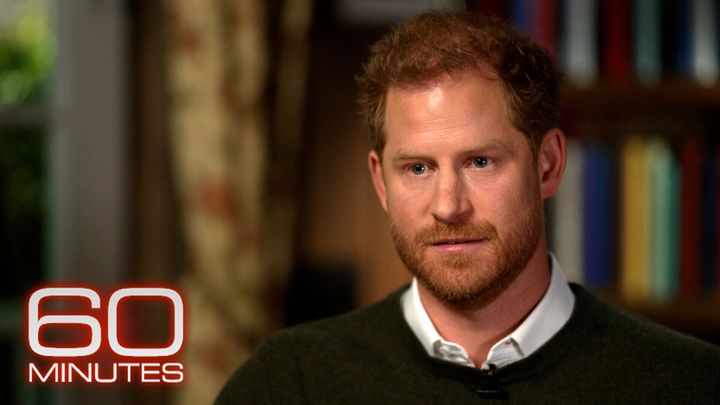
Harry sat down with Anderson Cooper for the show, 60 Minutes

CBS Photo Archive via Getty Images

Harry sat down with Anderson Cooper for the show, 60 Minutes

11. Harry says he was ‘probably bigoted’ before meeting Meghan

The Duke was touching on the struggles many newcomers to the royal family face when he said: “What Meghan had to go through, in some part, was similar to what Kate and Camilla went through.”

However, he added that the women faced “very different circumstances”.

“But then you add in the race element, which was what the press – the British press – jumped on straightaway. I went into this incredibly naive.

“I had no idea the British press were so bigoted. How I was probably bigoted before the relationship with Meghan.”

“You think you were bigoted before the relationship with Meghan?” Cooper pressed.

“I don’t know,” Harry answered. “Put it this way – I didn’t see what I now see.”

12. Harry didn’t believe Diana was actually dead ‘for a long time’

He said for “many many years” he did not believe she had actually died, adding: “I refused to accept she was gone.”

13. Harry claimed again that Palace leak royal stories

Harry spoke about leaks to the press and the royal family’s motto of “never complain, never explain”, while claiming that some royal correspondents are “spoon-fed information” to write stories.

“At the bottom of it, they will say that they’ve reached out to Buckingham Palace for comment. But the whole story is Buckingham Palace commenting,” he told Cooper. “So when we’re being told for the last six years, ‘We can’t put a statement out to protect you’ – but you do it for other members of the family. There becomes a point when silence is betrayal.”

14. He has no plans to return as a full-time member of the royal family

The Duke of Sussex also gave a firm “no” when Cooper asked in a separate clip if he would ever return as a full-time member of the royal family.

15. Harry admits he has not spoken to Camilla, Charles or William recently

Harry said that he and Camilla “haven’t spoken for a long time”.

Asked if he was texting William, Harry replied: “Currently, no. But I look forward to – I look forward to us being able to find peace.”

“How long has it been since you spoke?” Cooper said.

“A while,” the Duke of Sussex answered.

He gave a similar answer when asked about communication with his father. “We aren’t – we haven’t spoken for quite a while. Um, no, not recently.”

16. He gave a confusing depiction of his relationship with Camilla

Talking about her supposed closeness with the media, he said: “She was the villain. She was the third person in their marriage. She needed to rehabilitate her image.

“That made her dangerous because of the connections she was forging within the British press. And there was open willingness on both sides to trade information.”

However, he also said: “I love every member of my family, despite the differences. So, when I see her, we’re perfectly pleasant with each other,” he said with a smile. “She’s my stepmother. I don’t look at her as an evil stepmother.”

“I see someone who has married into this institution and done everything that she can to improve her reputation and her own image, for her own sake,” he continued.

17. Harry says he and Meghan will apologise for any wrongdoing

When Cooper asked if the “rupture” between Harry and Meghan and the rest of the royal family could be healed, the Duke answered “absolutely”.

“The ball is very much in their court,” he explained. “Meghan and I have continued to say that we will openly apologise for anything that we did wrong, but every time we ask that question, no one’s telling us the specifics or anything. There needs to be a constructive conversation, one that can happen in private that doesn’t get leaked.”

18. The Duke dismissed the idea of giving up royal titles

“Why not renounce your titles as Duke and Duchess?” Cooper also asked Harry directly.

“And what difference would that make?” Harry retorted.

19. Harry was not invited to share the plane which took royals to see Queen before her death

Harry arrived several hours after his relatives in Scotland, where the Queen died, despite also being in the south of England when his family left to see the dying matriarch.

He claimed: “I asked my brother – I said, ‘What are your plans? How are you and Kate getting up there?’ And then, a couple of hours later, you know, all of the family members that live within the Windsor and Ascot area were jumping on a plane together, a plane with 12, 14, maybe 16 seats.

“I was not invited.”

Prince Harry: In His Own Words with Michael Strahan, ABC

Released: January 9
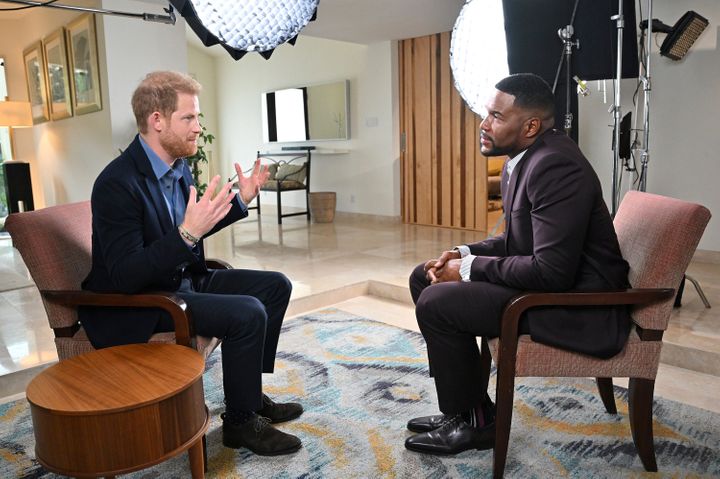
Prince Harry during an interview with "Good Morning America" co-host Michael Strahan in Los Angeles.

via Associated Press

Prince Harry during an interview with “Good Morning America” co-host Michael Strahan in Los Angeles.

20. Queen was not angry about him leaving royal life

The Queen never told Harry she was angry about him changing role, according to the royal.

He said he thought she was “sad” about it, but “it was never a surprise to anybody, least of all to her”.

“She knew what was going on. She knew how hard it was. She never said to me that she was angry. I think she was sad that it got to that point.”

21. Diana would be ‘heartbroken’ if she knew about the brothers’ rift

“I think she would be heartbroken about the fact that William, his office were part of these [negative] stories,” he said. “I think she’d be looking at it long-term to know that there are certain things that we need to go through to be able to heal the relationship.”

22. Harry admitted partial responsibility to relationship breakdown with William

Strahan asked if Harry had any responsibility for the breakdown of the relationship with his brother. The Duke of Sussex replied: “Without question, I’m sure.”

“But what people don’t know is the efforts I’ve gone to to resolve this privately,” he continued. “Both with my brother and with my father.”

23. Harry refutes the idea that the book would make rift worse

“I thought about it long and hard, and as far as I see it the divide couldn’t be greater before this book.”

23. Harry’s not ‘angry any more’

The royal said: “I am exactly where I am supposed to be.” But he admitted that not reconciling with his family would be “very sad”.

If that were the case, Harry said, he would focus on his life and family in California.

24. Sussexes would support the Commonwealth

Harry ruled out the possibility of returning to the UK as a working royal, explaining: “Even if there was an agreement or an arrangement between me and my family, there is that third party that is going to do everything they can to make sure that that isn’t possible.”

That was presumably an allusion to the UK press.

He added: “If there was something in the future where we can continue to support the Commonwealth, then that’s of course on the table.”

He also revealed that he made a “hybrid” proposal for Sussexes to split time between Canada and UK but there was no compromise. He said this was “really sad because I still to this day believe that this was entirely possible”.

25. Harry said he was speaking out to help protect other royal children

He said his role in the line of succession was “used against me for a long part of my life”, and that he worries about other “young kids” still in the institution.

“There are some people, especially in the UK, who have been led to believe that because you are a member of the royal family, somehow everyone owns you or has a stake in you,” he said.

“And that’s a message that has been purely pushed out by the British tabloids, and it creates real problems within that family and that relationship.”

Harry added: “Of course, there has to be some sort of relationship, but where it’s got too now is incredibly unhealthy.”

He said he hoped he could help future generations. “I also worry about other young kids within that family if this continues,” he said.

26. Harry refuted claims he sees Camilla as ‘evil stepmother’

He said: “I love every member of my family… so when I see her we’re perfectly pleasant with each other.

“She’s my stepmother. I don’t see her as an evil stepmother, I think she’s someone who married into this institution and done everything she can to improve her own reputation, her own image, for her own sake.”

27. Harry rejected hypocrisy claims

Strahan pointed out: “There are going to be people who say ‘Why don’t they either be in or get out, because if you get out there’s no hypocrisy’.”

Harry said: “I can’t ever get out and I’m incredibly aware of my position.

“I’m incredibly grateful for the life that I’ve had and continue to live.

“But there’s no version of me being ever able to get out of this. I was stunned that my family would allow security to be taken away, especially at the most vulnerable point for us.”

He added that writing the book was his only way to protect his family by correcting mistruths: “I fully accept that writing a book is feeding the beast anyway.”

28. Harry ‘genuinely’ believes in the monarchy still

But, he called for it to be reformed and modernised, saying: “I think the same process that I went through regarding my own unconscious bias would be hugely beneficial to them.

“It’s not racism, but unconscious bias if not confronted, if not acknowledged, if not learned and grown from, that can then move into racism.”

People magazine cover

Released: January 10

29. Diana is his ‘guardian angel’

“I struggled for years to accept or even speak about my mother’s death. I was unable to process that she was gone. I’m not sure anyone can ever truly have closure when they lose a parent, or anyone for that matter, especially when that grief may be the only thing left of them,” he told People.

“The healing process has allowed me to get to a place where I now feel the presence of my mum more than ever before. She’s with me all the time – my guardian angel.”

30. He wants his kids to have a relationship with the royals

“I’ve said before that I’ve wanted a family, not an institution – so of course, I would love nothing more than for our children to have relationships with members of my family, and they do with some, which brings me great joy,” he said.

The Late Show with Stephen Colbert, CBS

Released: January 10
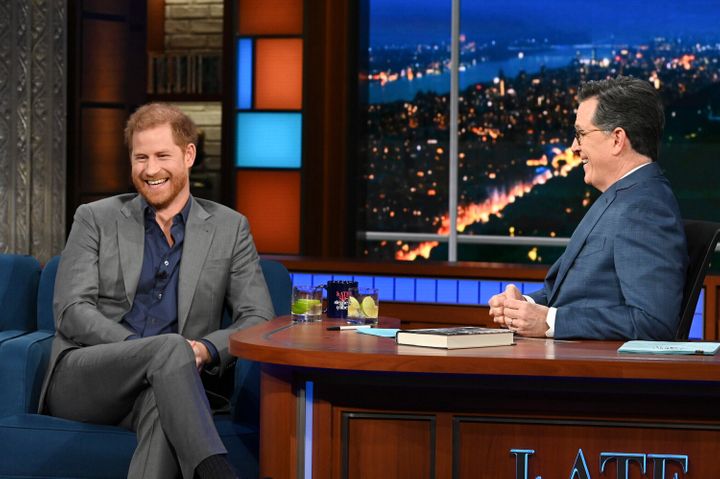
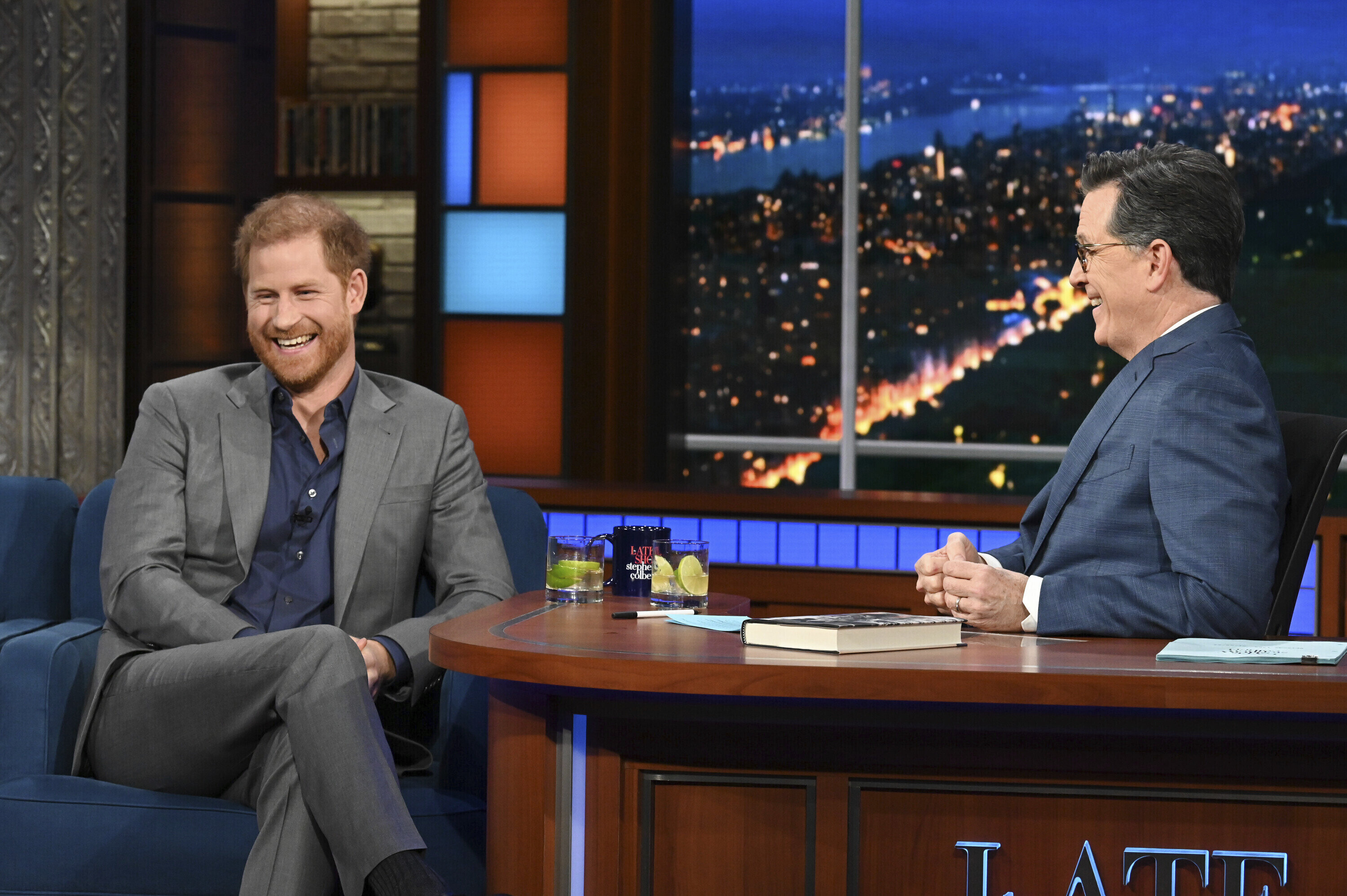
Harry with host Stephen Colbert during a taping of "The Late Show with Stephen Colbert".

via Associated Press

Harry with host Stephen Colbert during a taping of “The Late Show with Stephen Colbert”.

31. Prince Harry blasts ‘dangerous lie’ he ‘boasted’ about Taliban killings

Harry slammed reports that he “somehow boasted about the number of people that I killed in Afghanistan” and called it “the most dangerous lie”.

“If I heard anyone boasting about that kind of thing, I would be angry. But it’s a lie. And hopefully now that the book is out, people will be able to see the context. It’s really troubling and very disturbing that they can get away with it. They had the context. It wasn’t like, ‘Here’s just one line.’”

Harry told Colbert that “the reason why I decided to share this in my book” was to “reduce the number of suicides” in the soldier and veteran communities.

Harry claimed this was a dangerous lie because it makes you “an increased target”, alleging this was a “choice” the media made.

32. Harry ‘fact-checks’ The Crown

The royal confirmed that he watched both “the older stuff and the more recent stuff” aired on the dramatised Netflix series.

Asked if he did any fact-checking, he said: “Yes, I do, actually. Which, by the way, is another reason why it’s so important that history has it right.”

33. Harry believes royals are trying to ‘undermine’ his book

Colbert asked Harry if he believed there was an “active campaign by the rest of your family, by the royal house…to undermine this book”.

The royal replied: “Of course, mainly by the British press.”

Colbert pushed the question again, this time adding if the UK media was “aided and abetted by the Palace”.

He said: “Yes, again, of course. This is the other side of the story, right?

“After 38 years, they have told their side of the story. This is the other side of the story, and there’s a lot in there that, perhaps, makes people feel uncomfortable and scared.”

34. If Diana were still alive, he and William would be in a different place

Harry claimed that if his mother were still alive, his relationship with his brother would be different.

He said: “It’s impossible to say where we would be now, where those relationships would be now, but there is no way that the distance between my brother and I would be the same.”

Share Button

Putin’s Decision To Dump Army Chief Shows Russia Is Failing In Ukraine, Says UK

Vladimir Putin has replaced the army chief in charge of Russian troops in Ukraine because his invasion of the country is failing, according to UK intelligence.

Chief of the general staff (CGS) Valery Gerasimov, the head of the Russian military, has taken over from General Sergei Surovikin, who will now be one of his three deputies.

In their latest intelligence update on the war, the Ministry of Defence said: “This is a significant development in Russian president Vladimir Putin’s approach to managing the war.

“The deployment of the CGS as theatre commander is an indicator of the increasing seriousness of the situation Russia is facing, and a clear acknowledgement that the campaign is falling short of Russia’s strategic goals.”

The MoD also said the surprise move “is likely to be greeted with extreme displeasure by much of the Russian ultra-nationalist and military blogger community, who have increasingly blamed Gerasimov for the poor execution of the war”.

They said that in contrast, Surovikin “has been widely praised by this community for his championing of a more realistic approach”.

The changes are further evidence of Russia’s struggles in Ukraine.

Earlier this week, Kyiv denied Russia’s claim that it had killed more than 600 Ukrainian troops in a deadly attack.

Russia claimed that this was its “retaliatory strike” for the New Year’s Day attack, which Moscow says killed 89 of its own soldiers while they were in a Russian base.

It came after Vladimir Putin suggested a 36-hour ceasefire last week, so Russian citizens could mark the Orthodox Christmas, although shelling began very soon after.

Ukraine’s military intelligence has also alleged that Russia is looking to mobilise as many as 500,000 conscripts in mid-January, on top of the 300,000 brought into the army back in October.

Russia has denied any plans for a second wave of mobilisation – it’s worth noting that the September call-up sparked protests across the country.

Share Button

Boris Johnson Described A Lockdown Leaving Do As ‘Most Unsocially Distanced Party In UK’

Boris Johnson described a Downing Street leaving do during lockdown as “the most unsocially distanced party in the UK right now”, it has been claimed.

According to a new podcast by ITV, staff were left stunned when Johnson later denied knowledge of any rule-breaking in Number 10.

The fresh partygate allegations come amid speculation that the former prime minister is plotting a Downing Street comeback.

Johnson is accused of making the comment at a leaving party for his director of communications, Lee Cain.

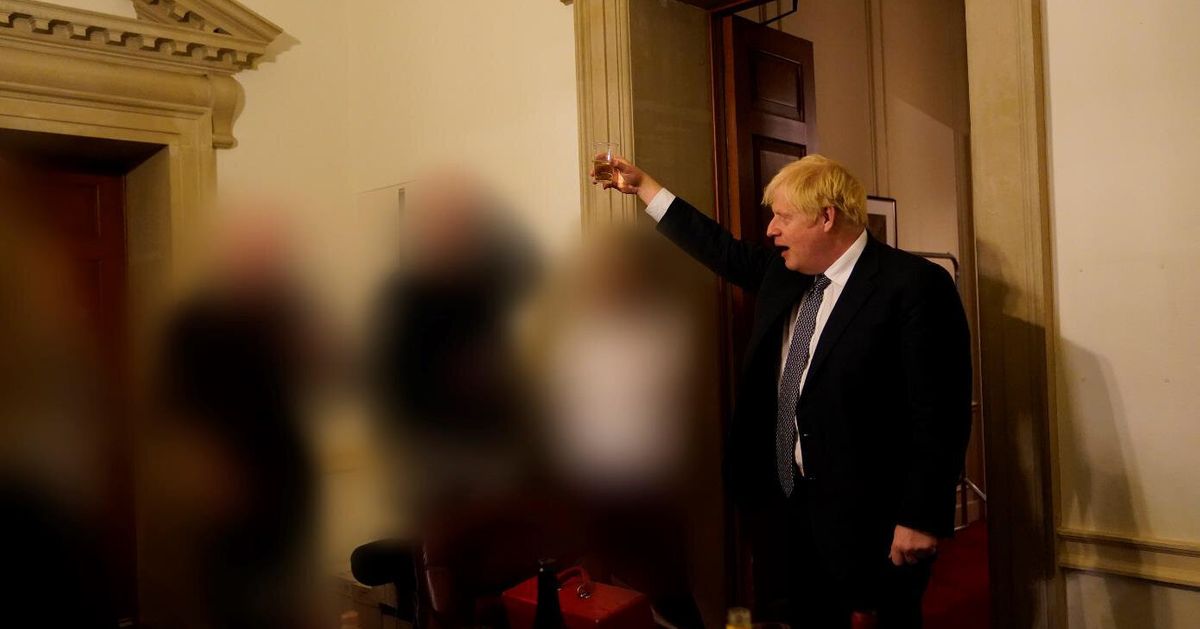
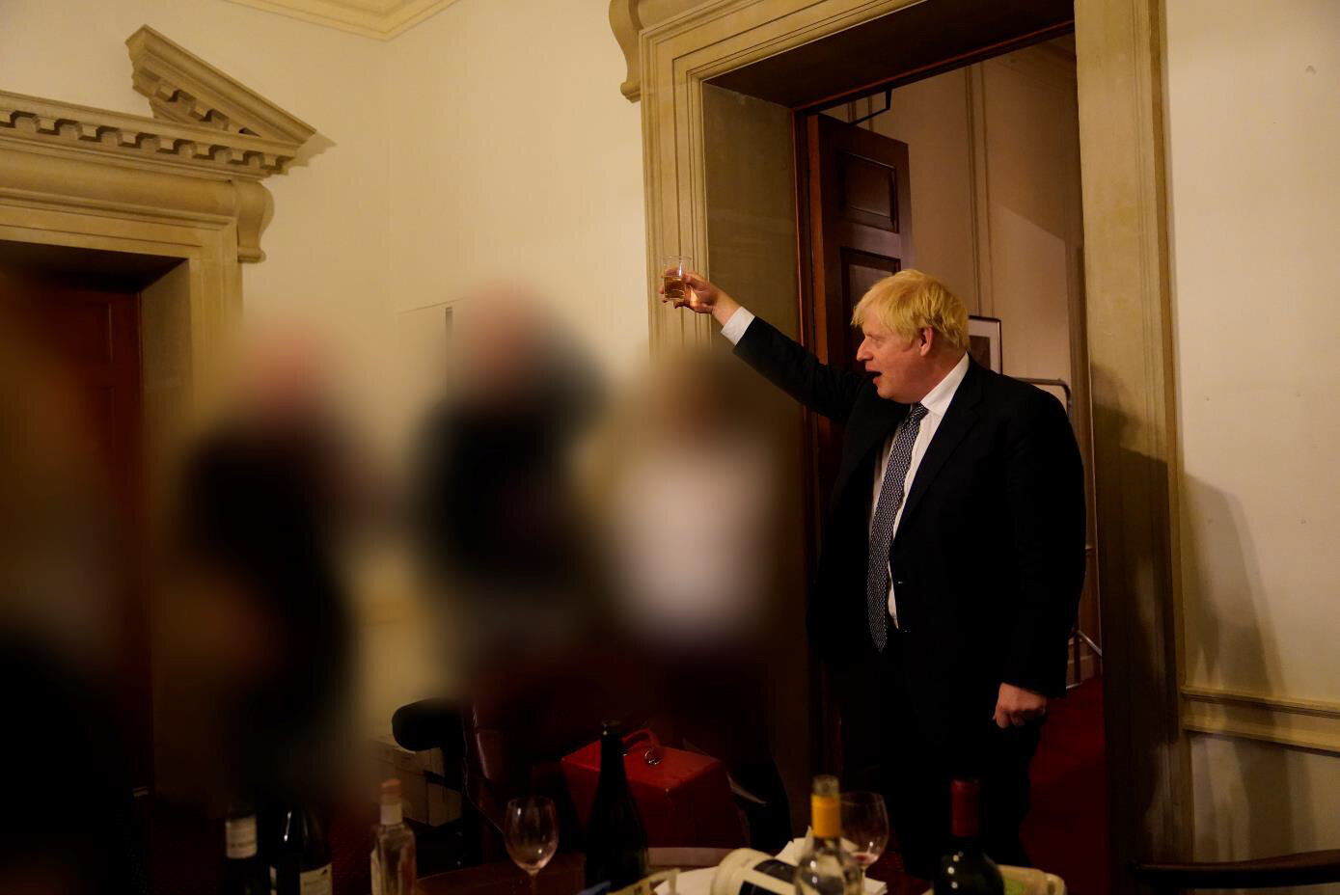
Pictures later emerged of the then PM raining a glass after delivering a speech at the gathering.

One source told the ‘Partygate – The Inside Story’ podcast: “I was working late – some music came on, the mumbling sort of rose, and there were loads of people stood around, but this time I came out because I heard the prime minister speaking and that’s when I heard the quote: ‘This is the most unsocially distanced party in the UK right now’ and everyone was laughing about it.”

The source added: “The PM making that comment really sticks out in my mind, that was pretty bad, because the picture showed one side of this going on.

“But what it didn’t capture is the 20 odd people sat on top of each other on the opposite side – they’re literally shoulder to shoulder, clamped in like a tube carriage.

“And he was there seeing people sat on other people’s laps (in) close proximity, crowded, scrunched up in front of him. He saw that, he saw people with drinks. You saw the picture. It had booze all over that desk. He’s not blind, he’s not stupid. He saw that and didn’t shut it down.

“That was really bad, but that was a normal sight, a regular occurrence, so it wasn’t unusual to see that sort of thing.”

Johnson later told MPs that no lockdown rules were broken in Number 10 – comments which are now the subject of a Commons inquiry.

Another source said of the PM’s comments: “We all watched it live and we were just gobsmacked. We all looked at each other and thought ‘why the hell is he saying this?’ We all know it had happened, he knew it happened – he was there.

“We were all just shocked that he would even deny it. He was there. We were there. We were all there together. And suddenly he’s denying it.”

The podcast also claimed that staff “shredded” key documents ahead of Sue Gray’s partygate investigation and corroborated their stories before filling out Metropolitan Police questionnaires on the scandal.

Johnson, along with his wife Carrie and Rishi Sunak, was fined for attending a birthday party thrown for him in 10 Downing Street during lockdown – but not over Lee Cain’s leaving party.

A spokesperson for Johnson did not deny he had made the “unsocially distanced party” comment.

They said: “During the pandemic, 10 Downing Street staff worked to coordinate the UK government’s national response.

“The work of Downing Street staff was crucial as they helped marshal the UK’s response to a national emergency.”

Liberal Democrat chief whip Wendy Chamberlain said: “These shocking revelations confirm Boris Johnson’s total disregard for the rules he asked us all to follow. He laughed and partied while the rest of the country suffered.

“Conservative MPs should be ashamed that they backed Johnson for so long and that some are even considering putting him back in Number 10.”

Share Button

‘Life And Limb Must Come First’ – Grant Shapps Defends Controversial Anti-Strikes Bill

Grant Shapps today said “life and limb must come first” as he defended a controversial new anti-strike bill.

The Business Secretary was promoting the new law aimed at ensuring a minimum level of service in crucial sectors during industrial action.

Shapps said the government want to end “forever strikes” and argued that the government’s legislation would bring the UK “into line” with other European countries.

The move has sparked threats of legal challenges, while Labour has said it would likely repeal the legislation.

The bill will be introduced to parliament on Tuesday afternoon, a day after crisis talks between ministers and unions failed to resolve industrial disputes involving nurses, teachers and rail workers.

Shapps told GB News: “I’ll be introducing a minimum safety level bill, which will sort of say, ‘look, we will never withdraw the right to strike from people but when there are strikes on life and limb must come first, and there has to be a minimum safety standard put in place for that’.”

He added: “We don’t really ever want to have to use that legislation.

“In those most recent strikes, the Royal College of Nursing, the nurses, agreed a set national level of support.

“Unfortunately, we couldn’t get there with ambulances across the country, meaning there was a bit of a postcode lottery as to whether an ambulance would turn up in the case of something serious, like a heart attack or a stroke.

“We can’t have that, so common sense tells us that we need to have minimum safety levels.”

Health Secretary Steve Barclay is considering backdating next year’s NHS staff pay increase to prevent further strikes.

He suggested that improvements in efficiency could “unlock additional funding”, leading to an increased offer for the 2023/24 pay settlement in the spring.

Sara Gorton, from Unison, said there had been an “acknowledgement” that avoiding strikes would “involve a reach-back” into the current pay year.

It raises the prospect that the pay deal for 2023/24, which is due to be agreed in time for April, could be backdated and applied to the final quarter of the 2022/23 financial year.

Ministers have previously refused to discuss wages for nurses and other public-sector workers, insisting those were matters for the independent pay review bodies.

Prime minister Rishi Sunak will chair his first Cabinet meeting of in 2023 on Tuesday morning.

Share Button

Protein Isn’t Just For The Gym. Here’s How Much We All Need

A stroll through a grocery store used to include lots of packages touting the sought-after term “low fat.” Years later, it was replaced with exciting-looking “low carb” claims.

These days, “high in protein” is a benefit you’ll see touted on lots of products, whether that’s protein powder, bone broth, salty snacks or ready meals. But people are more confused than ever about how much protein they should eat.

How much protein do you really need? We spoke with experts who explained its importance, why it’s not a one-size-fits-all nutrient and how to figure out what your body needs.

Why you need protein

It’s a pretty simple situation: Protein is good for us, and we ought to eat some every day. What’s most important to remember is that our body really does need what protein provides.

“Most people think of eating protein simply to maintain or help improve muscle size, but it does far more in our bodies,” says Michael J. Ormsbee, a Florida State University professor in the department of nutrition and integrative physiology and director at the Institute of Sports Sciences and Medicine. “Proteins serve as enzymes, hormones, receptors, signalling molecules and much more.”

Because protein is not something our bodies keep in reserve, like body fat, it’s a daily essential, explains Floris Wardenaar, an assistant professor at the College of Health Solutions at Arizona State University. “Protein provides essential amino acids, which we need to consume as part of our daily diets,” he says. “That’s because the body constantly breaks down protein to create the building blocks for new protein, resulting in a loss that needs to be replaced with food.”

If you notice that you feel fuller after a protein-rich meal, you’ve discovered another of protein’s benefits. “It keeps us satisfied and fuller for longer,” says Jane Burrell, an associate teaching professor at Syracuse University.

What’s the magic number?

How much protein is enough to realise all of these benefits? As a basic guideline, the US Food and Drug Administration recommends that adults consume 50g of protein a day as part of a 2,000-calorie diet. The British Heart Foundation puts it this way: most adults need around 0.75g of protein per kilo of body weight daily (45g for the average woman, or 55g for men).

Some experts take a more nuanced approach. “Adequate protein intake isn’t one number or target to hit, but more of a range that depends on your age, sex, overall health and lean body mass,” says registered dietitian Jaclyn London.

“A generally healthy person who’s not very active should consume 0.8 to 1g of protein for each kilogram of body weight a day as a minimum,” she advises. (That would be about 68g of protein for someone who weighs 68kg.)

“Someone who’s super active with things like running, cycling or training for an endurance event will require more, about 1.2-1.7g/kg per day,” which would be from 82 to 116g of protein for a 68kg person, she continued. “When I’m working with individuals who are active and generally healthy, I typically recommend something closer to 1.2g/kg per day to 1.5g/kg per day.”

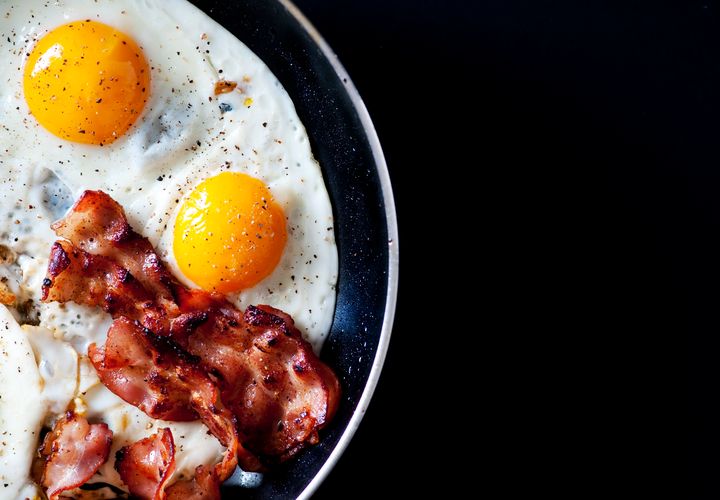
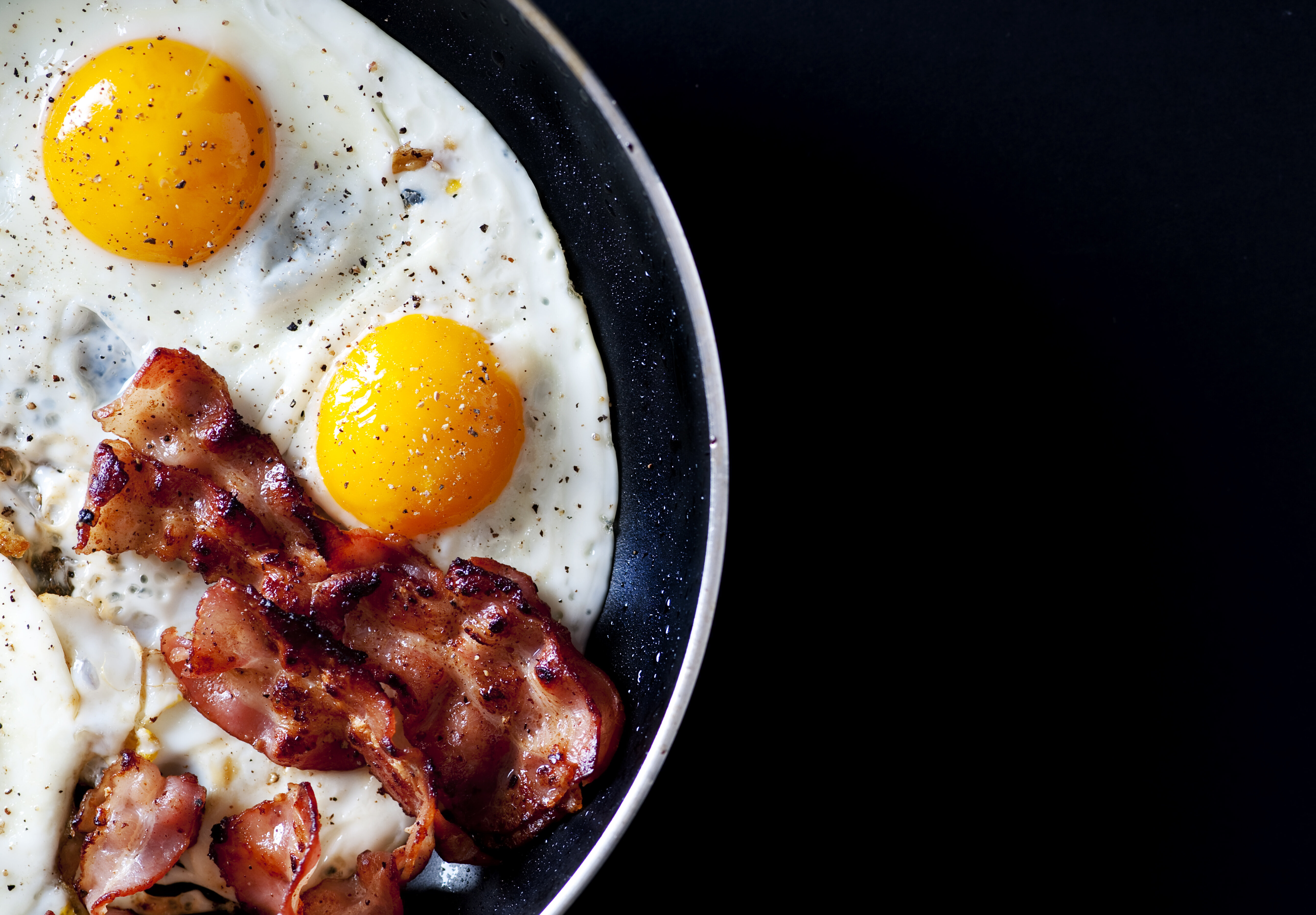
Not all proteins are created equal. Consider the amount of cholesterol in bacon and eggs, compared to vegetarian-based proteins or even chicken or fish.

Carlo A via Getty Images

Not all proteins are created equal. Consider the amount of cholesterol in bacon and eggs, compared to vegetarian-based proteins or even chicken or fish.

The best protein sources

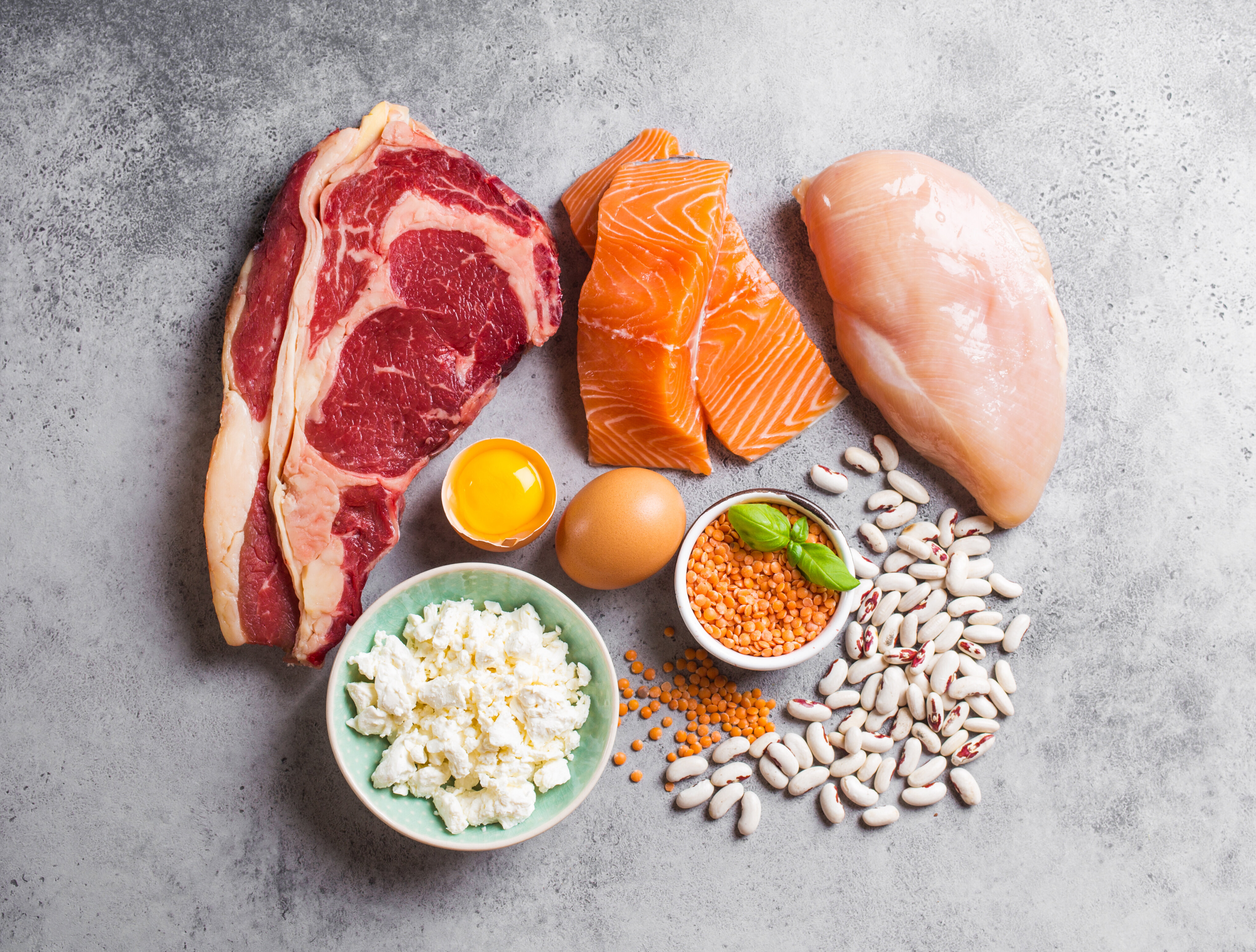
“Proteins can not only be found in animal-based foods, but also in plants,” says board-certified naturopathic physician Dr. Kellyann Petrucci. “In fact, some studies have indicated that getting protein from non-meat sources could actually be better for your health. Think low-fat dairy products, fish, beans and soy. These foods are delicious, and they may even help lower blood pressure and cholesterol levels.”

Pay attention to fat content, which can go hand-in-hand with high-protein foods. “Not all protein is created equal,” Petrucci says. “Bacon, sausage or processed meats might be high in protein, but they’re also high in saturated fat, which could be harmful for your heart.”

Finally, food is always better than a supplement or a powder, London says. “When it comes to meeting your nutritional needs, dietary supplements are meant to be used only to fill in the gaps from what might be missing in your diet, not to take the place of attempting to meet nutrient needs through food sources.”

High-protein foods

Protein content in foods (30g/one ounce portions unless noted), according to Johns Hopkins Medicine:

  • Beef or turkey jerky: 10 to 15g of protein
  • 5 ounces Greek yogurt: 12 to 18g of protein
  • Roasted edamame: 13g of protein
  • 3/4 to 1 1/3 cup of high-protein cereal: 7 to 15g of protein
  • Meat or fish: 7g of protein
  • 1/3 cup of hummus: 7g of protein
  • 2 tablespoons of peanut butter: 7g of protein
  • 1 egg: 6g of protein

Spreading out your protein intake

How much protein you eat is important, but so is when you eat it. “I encourage people to aim for 15 to 25g of protein each time they eat,” Burrell says. “If you eat that amount of protein only at lunch and dinner, but not at other times of day, you might be left feeling unsatisfied or hungry.”

You need to get enough calories overall to give that protein what it needs to be most effective, she adds. “I work with college students, and many will be on high-protein diets, but they don’t eat enough calories overall,” Burrell says. “For protein to be used to build new proteins, first you need enough calories. Otherwise, your body will just use this extra protein for energy. And if carbohydrate intake is low, your body will break down functioning proteins and use some of those amino acids to make glucose in order to maintain blood glucose.”

Popular myths about protein

There’s a lot of misinformation out there about protein, experts says. Here’s one example: “We still hear that protein causes kidney damage,” Ormsbee says. “The data simply do not support this.”

On its own, protein can’t make you bulk up, either, they agreed. “One misconception about protein is that eating it means you’ll get big muscles,” Petrucci says. “In fact, muscle growth is a complicated process that takes into account protein consumption, exercise and hormones. Athletes may have higher protein needs compared to their peers, but eating this way doesn’t mean they’ll get bigger muscles.”

In fact, smart protein choices are an important part of a nutritious diet. “It’s an absolute essential component of meals and snacks, especially for people looking to adopt small-but-impactful strategies or habits that can result in weight loss or weight management over time,” London says.

Share Button

Here’s How To Tell If You’re Over-Applying Your Skincare Products

If you’re overdoing it with your skincare products, you might want to dial things back a notch or two, for the sake of both your budget and your face.

You could be wasting some serious cash by slathering on a product that’s already getting absorbed as much as possible. What’s more, you could be clogging up your pores.

And products like retinoids can have even more serious issues, since applying too much carries the risk of skin irritation.

“I always tell my patients that overusing retinol, either in the amount applied or in the frequency of application, will not bring about anti-aging benefits any faster nor reduce acne quicker,” warns dermatologist and Mount Sinai clinical instructor Dr. Rachel Westbay. “It will only lead to dryness, redness, peeling or burning.”

If a little bit of something is good for your skin, why isn’t more better? According to chemist and science educator Michelle Wong, the “depot effect” comes into play.

“This means that ingredients will absorb into the top layers of your skin and slowly absorb into the lower layers over time. And once the top layers are saturated, any extra won’t add much,” says Wong, the founder of Lab Muffin Beauty Science, a resource explaining the science behind beauty products.

“This doesn’t happen with stronger retinoids, since they’re already very irritating before the saturation point is reached. But with a lot of other products, it means that applying something five times a day isn’t going to bring much more benefit than applying it twice.”

Take it easy with retinoids

If you’re concerned about over-applying retinols in particular, dermatologist Dr. Karyn Grossman offers a helpful visual. “We’re often told to limit application to a ‘pea size,’ but some people have no idea how big or small a pea is. So I tell them to think about the size of a mechanical pencil eraser,” says Grossman, who co-founded the skincare company Raf Five.

“I recommend placing a small dot on the palm, then using the finger to tap this dot and blend tiny amounts on the forehead, cheeks, nose and chin.”

Westbay points out that it’s good to start slowly. “Begin using a retinol product just one or two nights a week at first and work up to greater frequency,” she advises.

The Mount Sinai instructor also notes that acne spot treatments are often over-applied. “Unless the product has been designed specifically to cover an entire area, like a roll-on, it should be applied in a microdot amount, like the tip of a ballpoint pen,” she says.

Advice for moisturisers, toners and serums

Other products, even moisturisers, require careful application as well. “If you use occlusive moisturisers that may clog pores, applying a very thick layer could lead to acne or other issues with occlusion of the skin,” notes dermatologist Dr. Jeremy Fenton.

Toner, which can be drying, should similarly be applied in the correct amount. “I usually advise using enough product to moisten a cotton round that can then be swiped over the desired areas,” says Dr. Courtney Rubin, a dermatologist and co-founder of skincare brand Fig.1. “If you aren’t using a cotton pad, probably a dime- or nickel-sized amount in the palm of the hand can then be pressed into the skin.”


She shouldn't be dropping that directly on her face — find out why.

Artem Varnitsin / EyeEm via Getty Images

She shouldn’t be dropping that directly on her face — find out why.

Joie Tavernise, a medical aesthetician and the founder of company JTAV Clinical Skincare, cautions that a little bit of toner goes a long way. “If you see that the cotton pad is dirty after going over your face once, you can apply more to a second cotton pad. Continue until it looks clean after wiping your face,” she says.

Serums don’t require very much product to be effective, says dermatologist Dr. Nkem Ugonabo, so save your money by applying with a light touch. “I usually tell my patients that a little goes a long way,” she says. “Typically only a couple of drops are needed for the entire face. Also, I recommend applying it with your hands, rather than using the dropper and touching it directly on your face.”

But wait… there’s sunscreen

The one exception to these guidelines is sunscreen, which calls for a heavier application than you probably realise.

“Most people only apply 25 to 50% of the recommended amount of sunscreen,” says dermatologist Dr. Hadley King. “For our body, apply about a shot glass worth, and use a nickel-sized dollop to the face.”

But if you overdo it a bit, that’s totally OK, according to Tavernise. “This is the only product that you can’t use too much of” when protecting your skin from the sun’s damaging rays, “and you should reapply it throughout the day,” she says.

Layer up and pay attention

As long as you’re considering how much to apply, it also makes sense to think about the order of application, experts say. “Start with double-cleansing, then toner, then a treatment product like serum and finally moisturiser that has SPF [sun protection factor] for the day or without SPF at night,” suggests aesthetician Rachel Roff, who is the founder and CEO of the brand Urban Skin Rx.

Another good rule of thumb came from Jennifer Weiss, a physician assistant at dermatology practice Marmur Medical, who says: “A skincare routine should always start off with the thinnest to thickest products. To prevent potential irritation, sandwich the retinol with moisturiser before and after application.”

Many experts offered a “your mileage may vary” caveat, suggesting that you pay attention to each product and how your skin responds to it. “With very nourishing products, you might not need too much. And other times it’s important to apply liberally, taking extra time to massage a nourishing blend into the skin,” says aesthetician Tammy Fender. “I like to observe how a product absorbs as I massage it in, giving it time and making sure that the skin is taking in the benefits. Otherwise you risk over-application.”

Being cautious and paying attention can save you money in the long run, experts say. Dermatologist Dr. Kseniya Kobets offers this suggestion: “Of course, companies want you to use up their products faster so you can buy more. But often if you are pumping out eye serum or cream, you can do a half a pump and see if it spreads over both eyes. If there’s extra product that doesn’t absorb after a few minutes, you may be over-applying. And if you notice new bumps, whiteheads or breakouts, reconsider how much you’re using.”

Dermatologist Dr. Michelle Henry agrees. “If you’ve just applied moisturiser and your skin feels very tacky, slimy and somewhat oily, then chances are you’ve used too much,” she says. “Your skin should feel rejuvenated and not weighed down by your skincare products.”

She also suggests adding a dollop of patience to your routine. “On average, our skin need around two to four weeks to show positive or negative reactions to new skincare products,” Henry says. “If you notice new breakouts, irritated skin or dry patches, these may be the signs that you are using too much or even the wrong products.”

Slow and steady wins the skincare race

Make sure to read the label before applying anything. “Only use products that have been clinically tested in the listed amount, and follow the product’s directions,” says facial plastic surgeon Dr. Amir Karam.

“It’s all about finding the right skincare regimen that works best for you and your skin,” Henry says. “Just be patient, listen to your skin and look for specific ingredients that work well on your skin type. Start with one new product and advance slowly.”

If you’re wondering whether all this effort is worth it, the experts HuffPost spoke to were absolutely positive about the long-term rewards of a well-planned, well-applied skincare regime. Dermatologist Dr. Ellen Marmur, who founded the brand MMSkincare, offers this inspiration: “Reward yourself with a ‘virtual’ $50 bonus every time you moisturise your skin. A happy skin barrier will be radiant and younger looking, which is like money in the bank, so you won’t need to spend as much on makeup or laser treatments later on.”

Share Button

Prince Harry Denies Royal Family Was Racist For Worrying About Archie’s Skin Colour

In a new interview, Prince Harry offered a confusing perspective on one of the most explosive revelations from his and Meghan Markle’s sit-down with Oprah Winfrey.

In the 2021 interview, Meghan said members of the royal family had “concerns and conversations” when she was pregnant with her son, Archie, about how dark his skin would be ― a claim that was widely understood and reported as an allegation of racism and prompted global uproar.

In an interview that aired on UK television Sunday, Harry denied that was the implication. When ITV’s Tom Bradby noted that the Duke of Sussex had “accused members of your family of racism” in the Winfrey interview, Harry pushed back.

“No, I didn’t. The British press said that,” Harry said. “Did Meghan ever mention that they’re racist?”

Bradby mentioned Meghan’s revelation that “there were troubling comments about Archie’s skin colour.”

“There was concern about his skin colour,” Harry replied.

“Right. Wouldn’t you describe that as essentially racist?” Bradby followed up.

“I wouldn’t,” Harry said. “Not having lived within that family.”

“The difference between racism and unconscious bias, the two things are different,” he continued. “But once it’s been acknowledged, or pointed out to you as an individual, or as an institution, that you have unconscious bias, you therefore have an opportunity to learn and grow from that in order so that you are part of the solution rather than part of the problem. Otherwise, unconscious bias then moves into the category of racism.”

The Sussexes have declined to name the members of the royal family involved in the conversations about Archie’s skin, though the couple clarified after the interview that the comments were not made by Queen Elizabeth or Prince Philip.

Prince William responded to the claims by saying that the royals are “very much not a racist family,” while Buckingham Palace issued a statement after the interview saying that “the issues raised, particularly that of race, are concerning” and would be “addressed by the family privately.”

Amid ongoing backlash at the time, royal sources told media the palace was considering appointing a diversity tsar as part of an effort to modernise the monarchy.

The Duke of Sussex spoke to ITV's Tom Bradby in an interview that aired two days before the official publication of his autobiography, "Spare."
The Duke of Sussex spoke to ITV’s Tom Bradby in an interview that aired two days before the official publication of his autobiography, “Spare.”

Jane Barlow – PA Images via Getty Images

While Harry defended his family in Sunday’s interview, he also called out the royal institution for its failure to take the opportunity for change, noting that no diversity tsar materialized.

“Everything they said was gonna happen hasn’t happened. I’ve always been open to wanting to help them understand their part in it, and especially when you are the monarchy ― you have a responsibility and quite rightly people hold you to a higher standard than others,” he said.

He pointed to a recent racist incident as a “very good example of the environment within the institution.” In December, a royal aide who had served for decades as the late Queen Elizabeth’s lady in waiting, Lady Susan Hussey, apologised and resigned after she was called out for repeatedly asking Black charity founder Ngozi Fulani where she “really came from” during a palace reception.

Later in the interview, however, Harry defended Lady Hussey and insisted she meant no harm.

“All we’ve ever asked for in the last … few years is some accountability [from the monarchy],” he said. “And I’m very happy for Ngozi Fulani to be invited into the Palace to sit down with Lady Susan Hussey to reconcile because Meghan and I love Susan Hussey. She thinks she’s great.”

“And I also know that what she meant – she never meant any harm at all, but the response from the British press and from people online because of the stories that they wrote was horrendous. Was absolutely horrendous the response.”

Harry has given a series of interviews as part of a media blitz to promote his new memoir, “Spare,” which accidentally went on sale in Spain several days before its official Jan. 10 publication date.

More bombshells from Prince Harry’s leaked memoir, “Spare”:

Share Button

January Is Notorious For Job Layoffs. Here’s To Manage The Anxiety

January marks the start of a new year and many fresh beginnings – but it also kickstarts a grim month of layoffs.

In the first week of January alone, Amazon, Vimeo and Salesforce disclosed plans for mass layoffs. In a letter to employees, Salesforce CEO Marc Benioff said the company is cutting 10% of its workforce, explaining it had “hired too many people leading into this economic downturn we’re now facing.”

Over the last 10 years, January has been on average one of the most common months for layoffs, according to the US Bureau of Labor Statistics data. The reason is largely calendar-driven, experts say.

“We often see quite a bit of layoffs in January,” says Sarah Rodehorst, co-founder of Onwards HR, a company that helps businesses conduct layoffs.

“As they analyse their data from the last year, what budgets they have going forward, they really are planning strategies for the year, so there’s often a lot of restructures, reorganisations.”

Rodehorst says she is seeing an uptick in layoffs for the tech, retail, banking and insurance industries in the new year. If a company in those fields hasn’t made an announcement, she says, “chances are there is some planning happening.”

Another reason could be that many bonuses are typically awarded in January, too. “That’s a time when you also give bonuses, and so if you are trying to be mindful and not particularly ethical about who gets those and how much they get, some companies may try to take advantage of this” and lay off eligible employees instead of giving them their bonus, says Sandra Sucher, a professor of management at Harvard Business School who has researched layoffs.

If you’re worried about losing your job this month, that can send you into a spiral of panic and deep anxiety. Take a deep breath and plan accordingly. Here’s how to deal if you know or suspect a layoff is coming.

Recognise first that these intense feelings are totally normal

Losing a job is among the most psychologically stressful things we ever go through. One study asked 112 professionals to do a retrospective checklist of their most stressful life events, and losing a job as head of the household ranked above divorce, hospitalisation due to illness or injury and the death of a close friend.

Something that can help alleviate the anxiety? Focusing on what you can control instead of worrying about whether you will be laid off on some uncertain date. The decision to lay you off may have already been made weeks ago, so Gregory Tall, a workshop facilitator who coaches managers, does not recommend “working your tail off” in an attempt to be spared.

If you have heard rumours about layoffs coming, Tall instead advises assuming that you will be laid off and planning for that future. “It’s easier to cease all preparations than to begin all preparations if you don’t,” he points out.

Calculate your finances and document what you want to save now. This is the time to calculate and save for your emergency fund. Tall says to ask yourself, “Am I immediately in trouble? Because if so, I need to think right now about how to generate income.”

And while you have a job, save client testimonials and past performance evaluations that will aid you in a future job hunt. If you believe you may lose your job for discriminatory reasons, legal experts advise documenting everything now so that if you are suddenly let go, you can be prepared to take your evidence to a lawyer.

Reflect on what you’re good at and what you want to be good at. Losing a job can also be a time to reset and do a career pivot. If you do not know what you want to do next, Sucher recommends take a week or two to note which company stories interest you, what industries they are in, and what it is about them that interested you.

And if you have trusted colleagues, try asking them about your strengths. When she was contemplating a career move from Fidelity Investments to the faculty at Harvard Business School, Sucher says she asked trusted co-workers, “What was I good at?” to get insights that were helpful and sometimes surprising.

This exercise can also be a much-needed boost to your confidence.

“If you do get laid off, that is an assault to your ego,” Sucher says, noting that questions of “Why was I chosen when they weren’t?” are painful, regardless of how quickly you find your next job. “The people who do best at recovering from layoffs are people – and this is demonstrated from research – who have a positive mindset and they don’t blame themselves for the fact that they got laid off.“

See it as an opportunity to job-hunt. Although January is a month with heavy layoffs, it’s also a month where you are more likely to get a new job, too. Rodehorst says it’s the month where companies make the most new hires.

“A company that may be having layoffs may also be hiring in other areas,” she says, adding later that, “It’s the month with the highest level of change. The hiring and firing side, just as companies look to restructure their organisation and plan for the future.”

Share Button

‘It’s Never Been A Better Time To Be Someone Who Doesn’t Drink’

I first removed alcohol from my life around 2015. I have alcohol use disorder, which is how I came to reckon with my relationship with the substance.

This was at a time in New York when alcohol-free cocktails were starting to be taken more seriously. I’m lucky that my alcohol use disorder doesn’t present in a way that makes me uncomfortable being in spaces where alcohol is also being served. So, serendipitously, I entered into the phase of my life where I was no longer drinking alcohol, right when some changes were happening with alcohol-free options.

Bartenders were pushing against the boundaries that had previously limited “mocktails” to unbalanced, syrupy juices. The imagination of the drinks world was moving beyond the Shirley Temple. For someone who wrote about food and drinks and so whose job required her to, in part, be dining out and picking up on what was going on in bars and restaurants, this was impossible not to notice.

“I appreciate things like Dry January, [but] it’s important to remember that sobriety has likely been painful for those with substance use disorders. They make a hard decision every day to stay sober.”

– Julia Bainbridge

Beverage menu real estate was being given to alcohol-free drinks ― those drinks were being given fun names, just like the cocktails were ― that all showed a level of care and intention. So I got in my car and drove cross country a couple of times; that’s how I did research for my book, Good Drinks. It was so clear that something was happening, and I just wanted to celebrate it. It was certainly happening in New York; I guess I wanted to see if it was happening coast to coast.

I really cast a wide net. I wanted to be on the ground, tasting with people and talking to people. There was just such passion and talent across the board, even in smaller towns that you wouldn’t anticipate. So with the book, I almost struggle with saying I wrote it. It rests on the work of professional bartenders, who were the ones thinking about and developing these beverages, and I’m lucky that they allowed me to capitalise on that newfound energy and take a snapshot of what adult alcohol-free drinking was looking like around the country at that point in time.

Something I saw was bartenders who had come to not drinking themselves, and a light bulb kind of going off the next time they looked at their offerings, deciding that they wanted to better serve people like themselves or their friends who no longer drank alcohol, but still enjoyed the pleasure of a good drink.

I think we almost do these drinks a disservice by comparing them to cocktails. Stop worrying about whether or not it tastes akin to an alcoholic version of the drink and just focus on whether or not it tastes good, you know?

I’m lucky to currently live in New York, where you’re sort of hard-pressed to find a restaurant that’s not being more thoughtful about that. It’s never been a better time to be someone who doesn’t drink.

And when it comes to the drinks themselves, most of the spirits, the non-alcoholic spirits on the market, are not meant to be drunk neat, or without some kind of mixer, even if that mixer is just tonic or soda water. And I think brands have done a good job of showing consumers how to use these products via recipes on their websites, but you have to know to seek out that information. And many people don’t; I wouldn’t if I weren’t, in essence, studying this category. I would encourage people to go to the websites of the products they buy to get some guidance.

So that said, just like consumers need to be educated about how to use these products, so do professional bartenders, and not all of them are taking that on. Someone who is skilled at making classic alcoholic cocktails won’t necessarily be skilled in this realm because the liquids themselves operate differently. It’s not a plug-and-play situation. By which I mean you can’t necessarily substitute two ounces of alcohol-free gin for the gin and a cocktail recipe.

“I’m not anti-alcohol. … It’s pleasurable, and it’s fine for those who can manage it consistently well. But I’m also glad that there’s increasingly more room to talk about the many and nuanced ways in which it’s hard to do that.”

But in these past few years, brands really are showing up strong. I think wine, in particular, is improving as the technology has improved, to allow for gentler dealcoholisation methods. Alcohol-free wines are getting legitimately good. And some even are able to carry through a subtle varietal character. And that’s hard, that’s hard to do. But finally, we just have people actually putting money and effort into this. I think we’re going to see more functional alcohol-free beverages come to the market in the near future.

I think the popularity of Dry January, and certainly that there are all these products on the market, says something. Maybe I’m also reluctant to overstate the alcohol-free trend because what we also know about people’s drinking behaviour, and certainly through Covid, is that there’s still a lot of problematic and unhealthy drinking going on. But in general, I like Dry January. It started as a public health campaign, and I think it’s safe to say it has become a real cultural phenomenon.

In my opinion, it lowers the barrier to entry into examining one’s relationship to alcohol. And we have to remember alcohol is a drug, and it’s a highly addictive one. It’s really not unusual to develop some kind of problem with it, at least for a little while. My point is that most of us have had, at least, a brush with alcohol’s more destructive side. And I think it could be argued that that’s part of the reason that Dry January has become such a welcome pause.

I’m not anti-alcohol. I think it’s inextricably linked with our history. It’s pleasurable, and it’s fine for those who can manage it consistently well. But I’m also glad that there’s increasingly more room to talk about the many and nuanced ways in which it’s hard to do that. And by that I mean, like, consume it in a healthy way on a regular basis. I think it really does help open the door to that conversation a little further.

I guess I’ll get on my soapbox a little. I do think we should be careful not to lump together the sober curious and those in recovery. I think one day, hopefully, the distinction won’t matter, and the paradigm will shift to the point that this just isn’t a thing. Drink, don’t drink, whatever. We don’t need a label. We don’t need a dedicated dry month.

But while I very much appreciate that some people are choosing a sober lifestyle, and as I said, I appreciate things like Dry January, it’s important to remember that sobriety has likely been painful for those with substance use disorders. They make a hard decision every day to stay sober. And to do that, they usually have to engage in multiple forms of treatment. I think we do have to acknowledge that sobriety has been hard-won for many people.

Julia Bainbridge is a James Beard Award-nominated writer and editor who has worked at and written for a variety of publications, including Condé Nast Traveler, Bon Appétit, The New York Times, The Wall Street Journal and The Washington Post. In 2020, her book Good Drinks: Alcohol-Free Recipes for When You’re Not Drinking for Whatever Reason was named one of the best cookbooks of 2020 by the LA Times, Wires and Esquires magazines. She is currently pursuing a master’s degree in social work at Columbia University.

Help and support:

Share Button

Netflix Finally Gives Wednesday Fans The Update We’ve Been Waiting For

After captivating audiences around the globe, becoming Netflix’s third most-watched series ever and even landing at the centre of rumours it may be leaving the platform altogether, the streaming giant finally has an update about the future of Wednesday.

On Friday evening, a short video posted on the show’s official social media accounts confirmed that the Addams Family spin-off would be back for a new season in 2023.

In the clip, lead actor Jenna Ortega was heard saying, in character as Wednesday: “Over the past few weeks I’ve been hunted, haunted and mimicked millions of times across the internet. It’s been torture. Thank you.”

The teaser then confirmed: “More misery is coming. The global phenomenon will return for season two.”

Following its debut in November 2022, Wednesday quickly became one of the year’s most popular shows, racking up over one billion viewing hours in the space of three weeks.

The show depicts Jenna Ortega as the Addams’ eldest child, who lands herself at a new boarding school when she’s expelled for sticking up for her brother.

Catherine Zeta-Jones and Luis Guzmán portray Wednesday’s parents Morticia and Gomez Adams, while former Addams Family Values star Christina Ricci plays a teacher at the Nevermore Academy.

Jenna Ortega busts a move in one of Wednesday's most iconic scenes
Jenna Ortega busts a move in one of Wednesday’s most iconic scenes

Earlier this week, speculation broke out that Wednesday could be leaving Netflix in the future after Amazon officially acquired MGM, who own the rights to the Addams Family.

Fortunately, fans can breathe a sigh of relief, as the show will be apparently be staying put.

Share Button