I Have An Unusual Skin Condition. After 10 Years, I’m Done Hiding It.

I was 19 years old when I noticed a large lump forming in the centre of my chest. My teenage face had always been scattered with pimples, and on my shoulders I had what was referred to at the time as “bacne.” But this felt ― and looked ― different.

At first I thought it was one of those under-the-skin pimples that had led to a diagnosis of cystic acne and prescription of Lymecycline when I was 15, but the red, raised lump on my chest was much firmer and didn’t have a “head.”

The lumps gradually spread across my shoulders and neck, hardening like small red stones on my body. It took me years to admit something was wrong. Instead, I avoided the mirror when I undressed so that I didn’t have to notice the growing number of large, protruding bumps. It wasn’t until they started to become irritated and itchy that I finally visited my doctor, who referred me to a dermatologist immediately.

At the dermatology clinic, the doctor examined me with the kind of squint that suggested my skin was a medical mystery she might enjoy unraveling. “You have a form of keloid scarring that develops from acne called keloid acne vulgaris,” she announced. It sounded to me like a rare disease that people in the 1600s would have been shunned for.

My mind was stuck on one thing: How do I get rid of them? Dr. Haddon explained there wasn’t a “cure,” but steroid injections could help shrink the scars. A few weeks later, however, I received a call from Dr Haddon: “We’re running a dermatology case study open day for unusual cases. It might be a good opportunity for you to get advice from multiple specialists. Would you be interested?”

That’s how I found myself standing in a hospital room, stripped down to a vest top, while a group of dermatologists — clipboards in hand — filed in. Instead of my name, there was a sheet of paper stuck to the outside of the door with “Case Study 6” on it.

One by one, the doctors walked up to peer at my scars and make notes. Occasionally, one would reach out and prod my shoulder like I was some kind of interactive display at a museum. My skin wasn’t just a problem, it was a spectacle. One doctor asked how long the bumps had been there, but for the most part the room was silent other than the sounds of note-taking and shuffling of shoes on the squeaky hospital floor. Nobody asked how I felt about any of this.

The dermatologists moved on to the next patient — No. 7, presumably ― and I walked out feeling more alien in my skin than ever.

Although I began the steroid injections, my scars didn’t seem to fade much. They were sore, and they itched a lot, especially at night. I would wake up to red scratches over my keloids, which made them look even more inflamed.

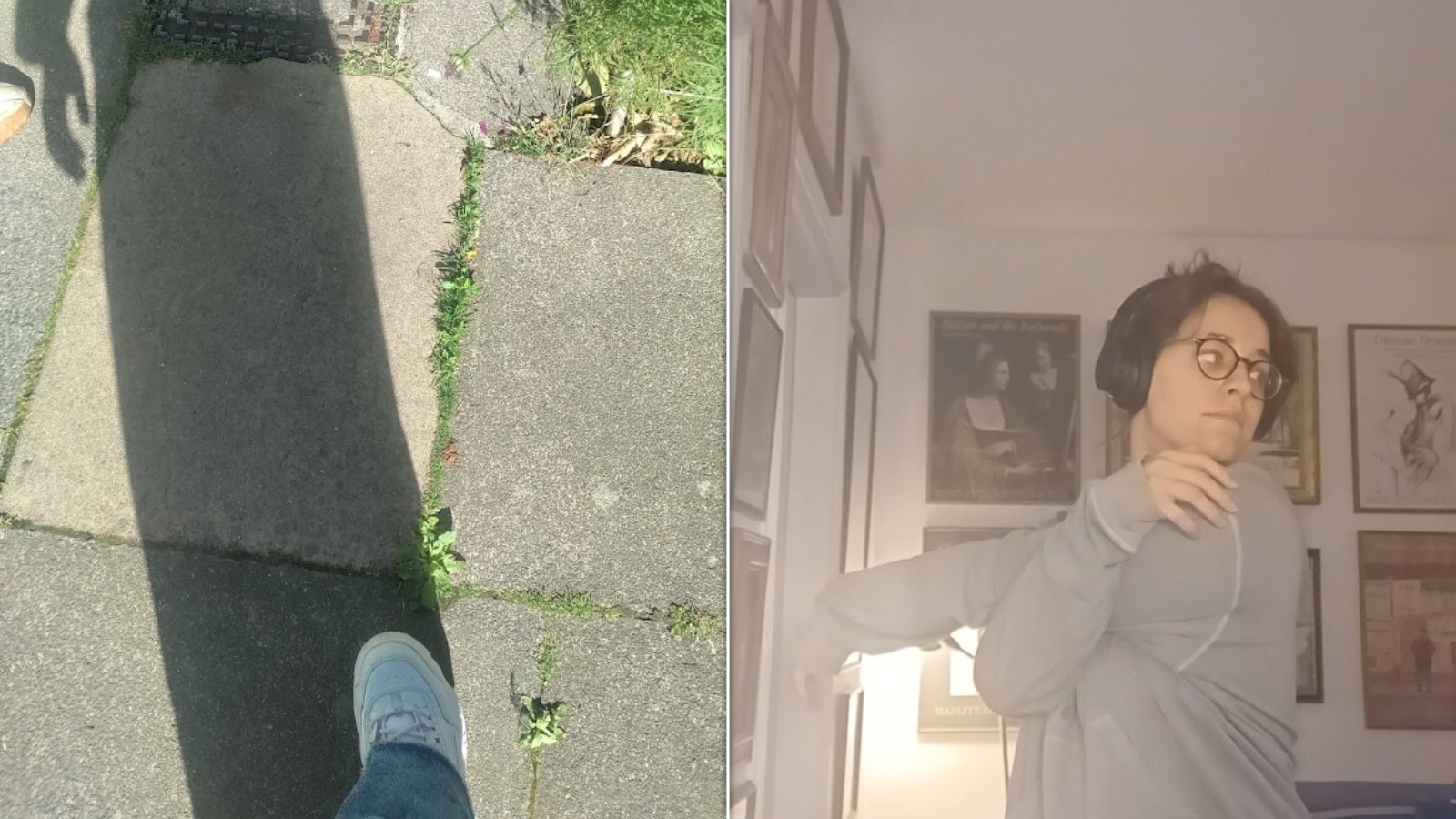
The author at 25 years old, months after her first full year of steroid injections.

Photo Courtesy Of Emily Tisshaw

The author at 25 years old, months after her first full year of steroid injections.

My keloid scars aren’t anything like the regular acne scars I have on my face. Those I can easily hide with a high-coverage foundation and a touch of concealer. These are large lumps that only sleeves and turtlenecks can cover. So that’s what I wore for the next 10 years.

In my 20s, I became an expert in covering up. Winters suited me. In summer, when everyone else was in backless tops, their shoulders golden and glowing, I layered T-shirts under my dresses. Everyone around would be in strappy tops and slip dresses while I was stuck sweating through the armpits of my T-shirts.

The worst thing was seeing friends casually throw their hair up into messy buns, their smooth backs catching the sunlight while I was feeling like an outcast in my layers. I told myself I was making a fashion choice, not deploying a shame-based survival tactic.

I would “warn” partners about my scars before undressing. No one ever outwardly expressed any discomfort with my skin ― I seemed to be alone in that feeling. I even once had a girlfriend who told me she thought my scars were “cool.”

The author in a rare crop top she found that covered her shoulders.

Photo Courtesy Of Emily Tisshaw

The author in a rare crop top she found that covered her shoulders.

Every six weeks, I went back to Dr. Haddon for my steroid injections. It was a routine I despised. The process was painful, the results were minimal, and every visit reminded me that I was permanently stuck in this cycle of trying to “fix” myself. At one appointment, I asked, “How long do I need to keep getting these?” She hesitated before saying, “As long as you feel you need them.” Something about that answer sat differently with me.

Years passed and I continued on in my normal routine of black turtleneck winters and shirt-under-dress summers, until I started sea swimming. I had worn a bathing suit occasionally over the past decade, on holidays abroad and family outings to indoor pools, but I always felt uncomfortable, and it was never something I would’ve chosen to do on my own. But now I was willingly getting into a bikini, because I had realised that I needed to get sober.

In recovery, the ice-cold British ocean became my replacement for the highs I once desperately chased. The shock of the water jolted me awake in a way nothing else could, numbing every thought except the one telling me to keep breathing.

For the first time in years, I stood on a beach, scars exposed, and walked into the sea without thinking about who might be looking. It was terrifying. And then, it wasn’t.

It felt like with every swim, I got more comfortable. The water didn’t care what I looked like. The sea wasn’t judging me.

I spent almost every morning for two years splashing in the cold ocean. I stayed away from drugs. I found a community of other women who liked to sea swim. They called themselves The Blue Tits. Their bodies were all different sizes, some had stretch marks and some were covered in beautiful coloured tattoos. I wasn’t judging their bodies like I judged my own. And after a decade of shame, I could feel something shifting. I was tired of hiding. I realised I didn’t owe anyone “perfect” skin. If I could stand on a beach as the rain fell, and the icy water pelted my skin, I knew I could wear a damn dress without the extra layer.

The truth was, I was exhausted. Exhausted from the constant anxiety over whether someone might notice my scars, or question why I always covered my shoulders. Exhausted from missing out on clothes I loved. Exhausted from feeling like my body was something to be hidden.

The author, always pairing her dresses with tees (age 28).

Photo Courtesy Of Emily Tisshaw

The author, always pairing her dresses with tees (age 28).

After years of sharp needles that burnt like a hot rod on my skin, Dr. Haddon agreed that further steroid injections weren’t necessary, and also that the skin could be tattooed on after a few months had passed — something I had wanted to do for a while. I visited an artist who had prior experience covering scars with tattoos. “I once tattooed a guy who was run over by a car!” he told me.

I asked him to do “something big,” and he covered my right shoulder with a large green snake that twisted down my arm intertwined with orange peonies. Snakes are supposed to symbolise new life: the shedding of skin, releasing the weight of the past. But I wasn’t letting go of my old self, I was embracing her for the first time. After years of running, it felt like I had finally come home.

At 30, the author is embracing her skin and showing off her tattoos.

Photo Courtesy Of Emily TIsshaw

At 30, the author is embracing her skin and showing off her tattoos.

I wish I could say that I am now cured of all insecurity, but the truth is, self-acceptance isn’t an overnight transformation. I still have days where I wish my skin told a different story. But I’ve learned to love who I am, scars and all. Today, I’ve swapped the turtlenecks for tank tops. I let the sun touch my shoulders. I let myself be seen.

Share Button

3 Influencers Explain Why They Still Use Beauty Filters, Even After Knowing Their Dangers

When the “Bold Glamour” filter on TikTok was created in early 2023, people were shocked by how seamless it looked, and that it wasn’t glitching like other face-altering filters. Despite everyone admiring its technological improvement, it led to an uproar online and offline, with celebrities like Katherine Heigl showing the shocking difference it made.

It’s been widely reported that filters on social media can create a disconnect between online and real life and lower one’s self-esteem. The issue doesn’t just affect teens — it can negatively affect anyone. The curation of social media leads many people to use filters in order to receive positive feedback, which then reinforces the belief that we should be relying on them, explained Natalie Buchwald, a therapist and founder of Manhattan Mental Health Counseling.

You can, of course, still use filters and have a healthy self-image, but experts advise considering the reasons you use filters in the first place.

“While occasional use of filters doesn’t inherently indicate low self-esteem, dependence on them can be problematic,” Buchwald said. “Maintaining a healthy self-image involves recognizing one’s intrinsic worth without relying on digital enhancements.”

Long-term exposure to a filtered image of yourself may create issues in your self-image, even leading to seeking cosmetic surgery to achieve that image of yourself. “Often called ‘Snapchat dysmorphia,’ it describes individuals seeking cosmetic surgery to replicate their filtered selfies. This can manifest in body insecurity and dysmorphia,” Buchwald added.

HuffPost spoke to three influencers who regularly use beauty filters to understand why and how these filters affect their self-esteem.

“I’m super open about beauty standards, filters and treatments on my page. I use beauty filters pretty often! Most of the time, while filming on TikTok I’m using one because of ease, and sometimes TikTok automatically puts them on your face.

“I prefer filters that don’t make me look like a completely different person. I try to remind myself that skin texture, blemishes, redness, undereye bags are all normal. Most things you see online are very unrealistic and you shouldn’t compare yourself to them.

“Filters did change how I saw myself. Social media is so unrealistic, so when you look at yourself in a mirror and you don’t have a smooth foundation filter on, it will look different. A few years back when the filters were heavier, I would wear a lot more makeup in real life to really smooth out my skin or contour my face, and I also ended up getting lip filler and Botox done because I was comparing myself to a filter that made my lips bigger or my skin smooth. Seeing myself with plumper lips or no wrinkles has influenced the treatments I’ve done. I still get minimal lip filler to this day. I’ve always been super transparent about getting procedures done online, even back then. Now I’m pretty confident in myself with or without makeup.

“Looking at the ‘perfect’ version of yourself can make you a bit critical of your natural features. Generally, being a content creator can make you critical about yourself and your appearance; with or without filters, I’m staring at my face all day long editing videos. This often will make you notice things most people probably don’t see.

“If social media removed beauty filters, it wouldn’t affect my content at all! I’m super open on my page, with and without filters, and always will be. I think I might put a little bit of makeup on before I film some of my content to make myself more presentable than I do now, but I would be totally fine with that. I think it would make social media a healthier space for everyone, including myself.”

“I use beauty filters occasionally when filming my TikTok videos, usually ones that enhance smoothness subtly without drastically changing my features. Without a filter, I feel just as confident. For me, it’s less about changing how I look and more about maintaining a particular style, visually.

“I wouldn’t say I’m addicted to using filters. They don’t necessarily make me criticize myself, but more aware of how different enhancements can affect one’s perception. I don’t rely on them to define my self-image.

“Filters can certainly influence beauty standards and make people more self-critical. I think that’s all a byproduct of being on social media. Unless people are openly mentioning they are using filters, it’s hard to tell. As consumers, we may assume these creators are like this in real life, too.

“Personally, using filters hasn’t influenced me to get cosmetic treatments, but I can see how constant exposure to ‘perfect’ images can create unrealistic expectations, which is why I make it known to my audience when I use beauty filters, rather than hide the fact that I am using them. I do have lip filler, and in hindsight, I may have been influenced by the ‘perfect’ images we see on social media.”

Stella Dadini, influencer and business owner

“I use filters that smooth out the skin very often. I initially started using them out of curiosity, and now it has become a habit — I do it automatically. Honestly, I have no issue with how I look without filters. The only reason I use light filters is because I used to have acne, and it used to bother me.

“I have created content without a filter many times, and I have no problem with that, nor does it make me uncomfortable.

“I wouldn’t say filters make me critical of my natural features, just that I liked how my skin looked without blemishes and acne marks when I had acne. Many women have been influenced by filters, trying to achieve this smooth image in real life. I know from some doctor friends that people ask to look like their filtered selves [via medical intervention]. However, that has never happened to me.”

What’s the best way to navigate filters?

Of course, users aren’t necessarily to blame; the platforms have to take responsibility, noted Buchwald. “Similar to how certain posts are highlighted as #Advertisement, the social media platforms need to demand users who edit their photos to add a similar #filtered tag to avoid skewing the public perception of what is normal.”

There may be some changes soon on that front, as TikTok is said to be banning face-altering filters like “Bold Glamour” for teen use, as these can have dramatic effects on the self-esteem of impressionable young people.

“Young people and parents saw the benefit in being authentic online and recognised the positive impact of belonging and connecting online,” wrote Christine Grahn, head of public policy and government relations for TikTok in Europe, in a recent newsroom statement.

Comparing yourself to online filtered images can trigger social comparison, explained Buchwald. “This can lead to feelings of inadequacy and diminished self-worth, as one’s unfiltered reality may not match the enhanced images presented online. It’s a competition where no one can win as there’s always ‘something else you can improve,’ which can be a very toxic mentality to have about your self-image.”

There are ways to combat negative self-image created by one’s online presence. Buchwald recommends a few different ways; seeking professional advice like therapy to foster self-acceptance, mindfulness practices and spending time in nature as a way to ground yourself and distance yourself from the bubble of the online world. Finally, avoid consuming content that makes you feel bad about yourself or even limit your social media usage until these feelings don’t consume you.

Interviews have been condensed and edited for clarity and length.

Help and support:

  • Mind, open Monday to Friday, 9am-6pm on 0300 123 3393.
  • Samaritans offers a listening service which is open 24 hours a day, on 116 123 (UK and ROI – this number is FREE to call and will not appear on your phone bill).
  • CALM (the Campaign Against Living Miserably) offer a helpline open 5pm-midnight, 365 days a year, on 0800 58 58 58, and a webchat service.
  • The Mix is a free support service for people under 25. Call 0808 808 4994 or email help@themix.org.uk
  • Rethink Mental Illness offers practical help through its advice line which can be reached on 0808 801 0525 (Monday to Friday 10am-4pm). More info can be found on rethink.org.
Share Button

7 Text Messages You May Not Realize Are Condescending

Most people these days rely on text messages as their main form of communication; for some, the thought of making a phone call is even scary. That said, since a text can’t capture one’s body language and nonverbal cues, it is easy for certain messages to come across as condescending or blatantly rude.

Condescension isn’t just about words but making another person feel small,” said Logan Jones, a licensed clinical psychologist and founder at Clarity Therapy NYC. “Text messages feel condescending when one person assumes superiority, implies incompetence, feels dismissive or [gives] unnecessary explanations.”

We spoke with licensed mental health professionals about common text messages you may not realise are condescending ― and how not to take them personally should you be on the receiving end. Here’s what experts say:

1. “K”

We’ve all likely sent this at least once, whether it was intentionally to someone who annoyed us or when we simply didn’t feel like answering.

Bottom line: “It feels short, dismissive, and passive aggressive and implies annoyance or disinterest because it lacks any warmth and engagement,” said Lauren Palumbo, a licensed psychotherapist at Clarity Therapy NYC.

2. A thumbs-up

According to Palumbo, simply “thumbs-upping” or “liking” a text message can feel condescending in its own right, especially if you just shared a juicy or personal story and were hoping for a reaction that matches your energy.

“These types of reactions can stop conversational momentum dead in its tracks, making it clear that others aren’t interested in keeping it going, which can feel disappointing and deflating,” she said.

3. “No offence, but…”

You sometimes hear this during in-person conversation, and it goes over just as poorly via text message, according to Michele Leno, a psychologist and host at Mind Matters with Dr. Michele.

Despite the phrasing, the verbiage lets you know that someone is about to say something offensive and likely rude, too. “In such cases, being direct is less condescending,” Leno said.

4. “Google it.”

Who hasn’t texted their friends worried about a health ailment? Although mostly everything can be found on Google with a quick search, you don’t want to tell someone to “Google it” since that can come off as extremely condescending.

Few things shut down a conversation faster than this because it’s dismissive and shows that someone’s curiosity or isn’t worth your time or energy,” Jones said.

5. “You always do this.”

It can be hard to effectively communicate through text messages, and lobbing accusatory, blanket “always” or “never” statements like this can prohibit more meaningful conversation. It’s also difficult to defend over text, according to Jones.

“This is hyperbolic, accusatory and a trap,” Jones said. “Saying something like this turns your minor frustration into painting someone as having a character flaw and trapping them in a pattern they can’t easily defend against via text.”

6. “I told you so.”

Hearing this doesn’t get easier no matter how old you are ― especially when it’s over text. It’s hard to glean any sort of care or nuance when it’s written out, so it feels more smug than anything.

“Saying ‘I told you so’ offers nothing but cheap and quick self-satisfaction at the expense of someone else’s hurt feelings,” Jones said.

7. “Yikes.”

According to Palumbo, “yikes” can feel condescending and judgmental, especially if there’s no elaboration. “It sends the message that whatever was shared was embarrassing, wrong or cringeworthy,” she said.

While some texts may have good intentions (or neutral intentions), experts say your tone may come off hurtful. However, there are ways to fix it.

Tim Robberts via Getty Images

While some texts may have good intentions (or neutral intentions), experts say your tone may come off hurtful. However, there are ways to fix it.

How can you make text messages sound less condescending?

Very few people want to intentionally send rude or off-putting texts. If you want to communicate more effectively and not sound condescending, here are some therapist-approved tips to get you started:

Don’t make assumptions.

Leno recommended using neutral language if you’re looking to sound less condescending. “For example, ‘I’m available to help if needed’ is better than, ‘It looks like you need help.’”

Use emotive and clarifying language.

Jones suggested using more emotive and clarifying language in an attempt to make text messages come across as less condescending. “A simple ‘haha’ or ‘I see what you mean, *smiley face*’ can make a big difference,” he said.

Call them instead.

Michelle English, a licensed clinical social worker and executive clinical manager at Healthy Life Recovery, recommended engaging in more direct communication. “Give them a call or hop on a video chat to clear things up,” she said. “Direct communication is always the best way to bridge any misunderstandings.”

Plus, if you’re on a video call, you can see body language and other nonverbal cues that can help with effective communication.

At the end of the day, condescending text messages can be frustrating to navigate since they often lead us to question our own intelligence and worth.

That said, people who send condescending text messages might not realize they’re doing it. A little grace ― and some punctuation changes ― can go a long way.

Share Button

I Tracked My Periods For Six Months And Realised Something That Changed My Life

Before my last period, I was inconsolable. Nothing much had happened but it felt like the world was closing in on me and it was hard to imagine ever feeling happy again.

I couldn’t pinpoint what had caused such a significant drop in my mental health. I lost my granddad at the start of January and I have some personal struggles that I’m grappling with but even with those in mind… it seemed pretty out-of-nowhere.

I cried every day in the week leading to my period, several times a day. I was so worried I was falling back into the dark depression that swallowed me whole around 15 years ago.

Quite sooner after, the darkness lifted

Almost as soon as this deep depression had hit, it left again. I wasn’t fully out of the woods but I could definitely bring myself to make a cup of tea, to ask my partner for a hug and could get out of bed with my alarm rather than hours after it had gone off.

I made the most of the new burst of energy by doing the things you’re supposed to do to support your mental health; I ate well, I spent a good amount of time soaking up the sun in my garden and I made sure that I went to bed around the same time every night.

I still wondered, though, what had caused the crash I’d just experienced.

Then my period tracking app delivered a report

Since my temporary menopause ended, I’ve been using the period tracking app Flo to log not just my periods but my moods before, during and after my period as well as other symptoms I experience throughout my cycle.

Unbeknownst to me, this app also delivers full reports of the data you’ve given them and highlights patterns that may help to decode your physical and mental health.

The most common symptom that I logged around 1-4 days before the end of my cycle was depression. Every month, for six months.

My first response was to feel ashamed — I’ve been getting periods since I was 9 years old, the past 25 years of my life, how did I not notice? Then, I gave myself some much-needed grace: life happens, you can’t keep on top of all of it.

Immediately, I booked a doctor’s appointment. I knew what this could be and even knowing this happens every month was a huge weight off my shoulders.

I was immediately diagnosed

The doctor confirmed what I already knew: I have premenstrual dysphoric disorder (PMDD).

It’s a condition that 800,000 women in the UK live with, and according to leading mental health charity Mind: ”[PMDD] is a very severe form of premenstrual syndrome (PMS). It causes a range of emotional and physical symptoms every month during the week or two before your period. It is sometimes referred to as ‘severe PMS’”.

According to the Royal College of Nursing, around 8% of people who get periods have this condition.

Treatment can involve medications, talk therapy or even surgery to remove the ovaries, according to Bupa. For me, we’re still figuring out what my next steps should be but even understanding this about myself has given me something I can work with once my cycle is coming to an end.

Help and support:

  • Mind, open Monday to Friday, 9am-6pm on 0300 123 3393.
  • Samaritans offers a listening service which is open 24 hours a day, on 116 123 (UK and ROI – this number is FREE to call and will not appear on your phone bill).
  • CALM (the Campaign Against Living Miserably) offer a helpline open 5pm-midnight, 365 days a year, on 0800 58 58 58, and a webchat service.
  • The Mix is a free support service for people under 25. Call 0808 808 4994 or email help@themix.org.uk
  • Rethink Mental Illness offers practical help through its advice line which can be reached on 0808 801 0525 (Monday to Friday 10am-4pm). More info can be found on rethink.org.
Share Button

Is Self-Diagnosing ADHD From TikTok So Bad? I Asked A Psychotherapist

A recent headline about ADHD (attention deficit hyperactivity disorder), which more and more UK adults have received treatment for over the past couple of years, said the condition is being “wildly overdiagnosed”.

The article’s author adds the condition “has become a scam” because so many people say they have it.

Some worry that apps like TikTok are giving people misinformation that leads them to inaccurately “self-diagnose” the condition, too.

But, perhaps down in part to long and highly variable NHS ADHD assessment wait times, ADHD UK says roughly two million cases are still undiagnosed in the UK.

So, we spoke to psychotherapist and founder of Philadelphia Talk Therapy Matt Sosnowsky about what he thinks about the increase in diagnoses, including self-diagnosis, from social media videos.

Sosnowsky doesn’t think regular people are mental health experts, but that’s not always the point

Sosnowsky says that he works with people of all ages, and says “very few clients” have a professional-level understanding of mental health diagnoses.

But they are, he told us, “the authority on how they feel and what they’re experiencing – which is critical.”

“Perhaps surprisingly, I’m not against folks using media and social media to get a sense of what might be troubling them,” the therapist added.

After all, he points out, “Mental illness remains disproportionately unrecognised and underdiagnosed” (2024 research from the UK Longitudinal Household Study found 12 times as many people in the ‘undiagnosed distress’ category than those considered ‘overdiagnosed’).

“Further, many mental health issues are quite subtle,” Sosnowsky adds.

“Pure ‘O’ OCD, for example, involves constant mental checking – a version of OCD different from what we see in movies, and not dissimilar to regular old rumination. Yet, I’ve had clients suffer from this for decades with absolutely no idea that they had a very treatable diagnosis.

“If seeing your own struggles mirrored back to you in a TikTok video prompts one [person] to seek help, that’s a win to me.”

That’s not to say actual diagnoses should be left to non-professionals, though

“Of course, the devil is in the details and moderation is key,” Sosnowsky said.

He doesn’t, for instance, think identifying with a social media clip amounts to a formal diagnosis or anything like it.

“If you suspect you have a diagnosis, that’s your cue to get it checked out with a professional,” he told HuffPost UK.

“In the interim, avoid jumping to conclusions or catastrophising as neither is likely to give you good data or the help you need.”

That’s not to say you should ignore any signs of ADHD you think are worth exploring completely, he writes.

“Instead, consider doing some light-touch research from responsible sources to educate yourself.

“Not only will this empower you, but it will improve your ability to convey concrete symptoms to your future therapist or psychiatrist.”

Help and support:

  • Mind, open Monday to Friday, 9am-6pm on 0300 123 3393.
  • Samaritans offers a listening service which is open 24 hours a day, on 116 123 (UK and ROI – this number is FREE to call and will not appear on your phone bill).
  • CALM (the Campaign Against Living Miserably) offer a helpline open 5pm-midnight, 365 days a year, on 0800 58 58 58, and a webchat service.
  • The Mix is a free support service for people under 25. Call 0808 808 4994 or email help@themix.org.uk
  • Rethink Mental Illness offers practical help through its advice line which can be reached on 0808 801 0525 (Monday to Friday 10am-4pm). More info can be found on rethink.org.
Share Button

I’m A Longevity Expert – This 30-Second Test May Reveal Your Risk Of Early Death

In a recent episode of the ZOE podcast, Bryan Johnson – a man famous for trying pretty much every supposed longevity booster going – spoke with the gut health company’s co-founder Dr Tim Spector and CEO Jonathan Wolf.

Bryan said that his progress was being measured with a “few different modalities,” adding that it’s possible to “measure the biological age of the heart anatomically.”

Though many of the methods the controversial millionaire uses to track, preserve, and even try to reverse his body’s age are experimental, researchers have found that one of the metrics he uses – resting heart rate – really can be linked to mortality.

<div class="js-react-hydrator" data-component-name="YouTube" data-component-id="8660" data-component-props="{"itemType":"video","index":5,"contentIndexByType":1,"contentListType":"embed","code":"

","type":"video","meta":{"author":"ZOE","author_url":"https://www.youtube.com/channel/UCa09am-cOsC-FSgr_nLkFFA","cache_age":86400,"description":"🥑 Make smarter food choices. Become a member at http://zoe.com \n\nWhat if optimizing your sleep could significantly extend your lifespan?\n\nIn this episode, we dive into the science of longevity with Bryan Johnson, the entrepreneur spending millions to reverse aging, and Professor Tim Spector, one of the world’s top 100 most-cited scientists and an expert in nutrition and the gut microbiome.\n\nBryan has dedicated his life – and his body – to testing cutting-edge health interventions to slow down aging. His meticulous approach to sleep, diet, and exercise has sparked global debate. But how much of it is backed by science? Tim Spector joins the conversation to separate fact from fiction, revealing what actually works when it comes to sleep, longevity, and optimizing health.\n\n🌱 Try our new plant based wholefood supplement – Daily30: https://zoe.com/daily30?utm_medium=zoe_podcast&utm_source=podcast_platform&utm_campaign=d30\n\nFollow ZOE on Instagram | https://www.instagram.com/zoe/\n\nTimecodes\n00:00 No.1 anti aging hack\n02:05 Quickfire questions\n04:01 Bryan’s longevity protocol\n06:20 Biological age markers\n08:16 How to measure aging\n13:40 Can AI help stop aging?\n18:50 What science can we trust?\n21:40 Bryan’s self-experiments\n25:40 The most surprising sleep discovery\n31:20 The McDonald’s diet\n34:10 How to try this yourself\n37:15 Transfusing his son’s blood\n39:50 Microbiome supplement\n41:26 Bryan’s daily diet\n46:30 Truth about vitamin supplements\n\n📚Books by our ZOE Scientists\nThe Food For Life Cookbook | https://amzn.to/4amfIMX\nEvery Body Should Know This by Dr Federica Amati | https://amzn.to/4blJsLg\nFood For Life by Prof. Tim Spector | https://amzn.to/4amZinu\n\nFree resources from ZOE:\nLive Healthier: Top 10 Tips From ZOE Science & Nutrition | https://zoe.com/freeguide\nGut Guide – For a Healthier Microbiome in Weeks | https://zoe.com/gutguide\n\nMentioned in today’s episode\nReviewing the cardiovascular and other health effects of olive oil: Limitations and future directions of current supplement formulations, 2023, published in Nutrition, Metabolism and Cardiovascular Diseases https://pmc.ncbi.nlm.nih.gov/articles/PMC10346407/\n\nMortality Associated with Short Sleep Duration: The Evidence, The Possible Mechanisms, and The Future, 2011, published in Sleep Medicine Reviews https://www.sciencedirect.com/science/article/abs/pii/S093947532300337X\n\nSleep regularity is a stronger predictor of mortality risk than sleep duration: A prospective cohort study, 2024, published in Sleep https://academic.oup.com/sleep/article/47/1/zsad253/7280269\n\nObjectively Assessed Cardiorespiratory Fitness and All-Cause Mortality Risk, 2022, published in Mayo Clinic Proceedings https://www.mayoclinicproceedings.org/article/S0025-6196(22)00133-1/abstract\n\n\nHave feedback or a topic you’d like us to cover? Let us know here: https://gf6hx47iu5g.typeform.com/topicsuggestion\n\nEpisode transcripts are available here: https://zoe.com/learn/category/podcasts","options":{"_cc_load_policy":{"label":"Closed captions","value":false},"_end":{"label":"End on","placeholder":"ex.: 11, 1m10s","value":""},"_start":{"label":"Start from","placeholder":"ex.: 11, 1m10s","value":""},"click_to_play":{"label":"Add your own player cover","value":false}},"provider_name":"YouTube","thumbnail_height":720,"thumbnail_url":"https://i.ytimg.com/vi/PH-PjiE7ep4/maxresdefault.jpg","thumbnail_width":1280,"title":"Bryan Johnson: The man who spent $10m to cheat death and age in reverse | Prof. Tim Spector","type":"video","url":"https://www.youtube.com/watch?v=PH-PjiE7ep4","version":"1.0"},"flags":[],"enhancements":{"fonts":{"primary":{},"accent":{},"caption":{}}},"fullBleed":false,"options":{"theme":"life","device":"desktop","editionInfo":{"id":"uk","name":"U.K.","link":"https://www.huffingtonpost.co.uk","locale":"en_GB"},"originalEdition":"uk","isMapi":false,"isAmp":false,"isAdsFree":false,"isVideoEntry":false,"isEntry":true,"isMt":false,"entryId":"67dd6b36e4b008723252f5db","entryPermalink":"https://www.huffingtonpost.co.uk/entry/resting-heart-rate-longevity_uk_67dd6b36e4b008723252f5db","entryTagsList":"health,ageing,longevity","sectionSlug":"lifestyle","deptSlug":null,"sectionRedirectUrl":null,"subcategories":"","isWide":false,"headerOverride":null,"noVideoAds":false,"disableFloat":false,"isNative":false,"commercialVideo":{"provider":"custom","site_and_category":"uk.lifestyle","package":null},"isHighline":false,"vidibleConfigValues":{"cid":"60afc140cf94592c45d7390c","disabledWithMapiEntries":false,"overrides":{"all":"60b8e525cdd90620331baaf4"},"whitelisted":["56c5f12ee4b03a39c93c9439","56c6056ee4b01f2b7e1b5f35","59bfee7f9e451049f87f550b","5acccbaac269d609ef44c529","570278d2e4b070ff77b98217","57027b4be4b070ff77b98d5c","56fe95c4e4b0041c4242016b","570279cfe4b06d08e3629954","5ba9e8821c2e65639162ccf1","5bcd9904821576674bc55ced","5d076ca127f25f504327c72e","5b35266b158f855373e28256","5ebac2e8abddfb04f877dff2","60b8e525cdd90620331baaf4","60b64354b171b7444beaff4d","60d0d8e09340d7032ad0fb1a","60d0d90f9340d7032ad0fbeb","60d0d9949340d7032ad0fed3","60d0d9f99340d7032ad10113","60d0daa69340d7032ad104cf","60d0de02b627221e9d819408"],"playlists":{"default":"57bc306888d2ff1a7f6b5579","news":"56c6dbcee4b04edee8beb49c","politics":"56c6dbcee4b04edee8beb49c","entertainment":"56c6e7f2e4b0983aa64c60fc","tech":"56c6f70ae4b043c5bdcaebf9","parents":"56cc65c2e4b0239099455b42","lifestyle":"56cc66a9e4b01f81ef94e98c"},"playerUpdates":{"56c6056ee4b01f2b7e1b5f35":"60b8e525cdd90620331baaf4","56c5f12ee4b03a39c93c9439":"60d0d8e09340d7032ad0fb1a","59bfee7f9e451049f87f550b":"60d0d90f9340d7032ad0fbeb","5acccbaac269d609ef44c529":"60d0d9949340d7032ad0fed3","5bcd9904821576674bc55ced":"60d0d9f99340d7032ad10113","5d076ca127f25f504327c72e":"60d0daa69340d7032ad104cf","5ebac2e8abddfb04f877dff2":"60d0de02b627221e9d819408"}},"connatixConfigValues":{"defaultPlayer":"8b034f64-513c-4987-b16f-42d6008f7feb","clickToPlayPlayer":"5a777b9b-81fe-41a6-8302-59e9953ee8a2","videoPagePlayer":"19654b65-409c-4b38-90db-80cbdea02cf4"},"topConnatixThumnbailSrc":"data:image/png;base64,iVBORw0KGgoAAAANSUhEUgAAAAEAAAABCAQAAAC1HAwCAAAAC0lEQVR42mNkYAAAAAYAAjCB0C8AAAAASUVORK5CYII=","customAmpComponents":[],"ampAssetsUrl":"https://amp.assets.huffpost.com","videoTraits":null,"positionInUnitCounts":{"buzz_head":{"count":0},"buzz_body":{"count":0},"buzz_bottom":{"count":0}},"positionInSubUnitCounts":{"article_body":{"count":13},"blog_summary":{"count":0},"before_you_go_content":{"count":0}},"connatixCountsHelper":{"count":0},"buzzfeedTracking":{"context_page_id":"67dd6b36e4b008723252f5db","context_page_type":"buzz","destination":"huffpost","mode":"desktop","page_edition":"en-uk"},"tags":[{"name":"Health","slug":"health","links":{"relativeLink":"news/health","permalink":"https://www.huffingtonpost.co.uk/news/health","mobileWebLink":"https://www.huffingtonpost.co.uk/news/health"},"section":{"title":"Life","slug":"lifestyle"},"topic":{"title":"Health","slug":"health","overridesSectionLabel":false},"url":"https://www.huffingtonpost.co.uk/news/health/"},{"name":"ageing","slug":"ageing","links":{"relativeLink":"news/ageing","permalink":"https://www.huffingtonpost.co.uk/news/ageing","mobileWebLink":"https://www.huffingtonpost.co.uk/news/ageing"},"url":"https://www.huffingtonpost.co.uk/news/ageing/"},{"name":"longevity","slug":"longevity","links":{"relativeLink":"news/longevity","permalink":"https://www.huffingtonpost.co.uk/news/longevity","mobileWebLink":"https://www.huffingtonpost.co.uk/news/longevity"},"url":"https://www.huffingtonpost.co.uk/news/longevity/"}],"isLiveblogLive":null,"isLiveblog":false,"cetUnit":"buzz_body","bodyAds":["

\r\n\r\n HPGam.cmd.push(function(){\r\n\t\treturn HPGam.render(\"inline-1\", \"entry_paragraph_1\", false, false);\r\n });\r\n\r\n","

\r\n\r\n HPGam.cmd.push(function(){\r\n\t\treturn HPGam.render(\"inline\", \"entry_paragraph_2\", false, false);\r\n });\r\n\r\n","

\r\n\r\n HPGam.cmd.push(function(){\r\n\t\treturn HPGam.render(\"inline-2\", \"entry_paragraph_3\", false, false);\r\n });\r\n\r\n","

\r\n\r\n HPGam.cmd.push(function(){\r\n\t\treturn HPGam.render(\"inline-infinite\", \"repeating_dynamic_display\", false, false);\r\n });\r\n\r\n"],"adCount":0},"isCollectionEmbed":false}”>

How does resting heart rate affect longevity?

Harvard’s site says that measuring your resting heart rate, or the number of times your heart beats in a set period while you’re relaxed, is “one of the easiest, and maybe most effective” health markers we have.

Dr Jason Wasfy, director of quality and analytics at Massachusetts General Hospital Heart Center, said: “A lower resting heart rate can mean a higher degree of physical fitness, which is associated with reduced rates of cardiac events like heart attacks”.

Meanwhile, a higher resting heart rate could belie an increased risk of cardiac risk “as the more beats your heart has to take eventually takes a toll on its overall function”.

A 2013 study found that men who had a resting heart rate between 81 and 90 had double the risk of premature death than those with a lower heart rate (50 bpm), while those with a resting heart rate above 90 had triple the risk.

With every 10 added beats per minute, they found, the likelihood of premature death upped by 16%.

What’s an ideal resting heart rate?

The British Heart Foundation says an ideal resting heart rate is between 60-100 BPM (beats per minute).

Sometimes, very fit people have a lower heart rate than 60 BPM. A lower resting heart rate warrants a GP visit if it’s accompanied by symptoms like dizziness, fainting, and fatigue.

Your heart rate can dip as low as 40 BPM when you sleep without any cause for cencern.

A heart rate over 100 BPM is too fast for most of us. See a doctor if you notice palpitations, dizziness, fatigue, or fainting.

How can I measure my resting heart rate?

It takes about 30 seconds to measure your resting heart rate. You just need to make sure you’re really, well, rested when you check it; soon after waking up is a great time to check your resting heart rate.

Put your index and middle fingers on your wrist or neck – anywhere you can feel a pulse.

Don’t use your thumb, because that has its own pulse.

Measure the beats across 30 seconds and then double it to get your beats per minute (BPM).

You should repeat it a few times to make sure your reading is accurate, making sure it’s not within an hour of either drinking caffeine or taking exercise (those elevate your heart rate).

For the most accurate stats, take your resting heart rate multiple times across that week at different times of day.

Share Button