Bad news for fellow heatwave haters, especially in the south and east of the UK – “hot spells remain possible” this month, the Met Office says.
The BBC has predicted temperatures as high as 31C in parts of the country this Sunday, July 13.
And according to appliance repair company Atomic Tech, that can spell bad news for your fridge (and the food in it).
Advertisement
“Refrigerators are sensitive to heat and may struggle to cool if they are in an environment too hot (or too cold),” they wrote.
That’s why it’s important, they shared, to “keep the doors closed and ensure the gaskets seal completely… to maintain a consistent temperature inside.”
But gasket issues (problems with the accordion-like rubber seal that closes your fridge door) can be hard to spot – unless, of course, you own a torch.
Advertisement
How can a torch help me to spot issues with my fridge door’s seal?
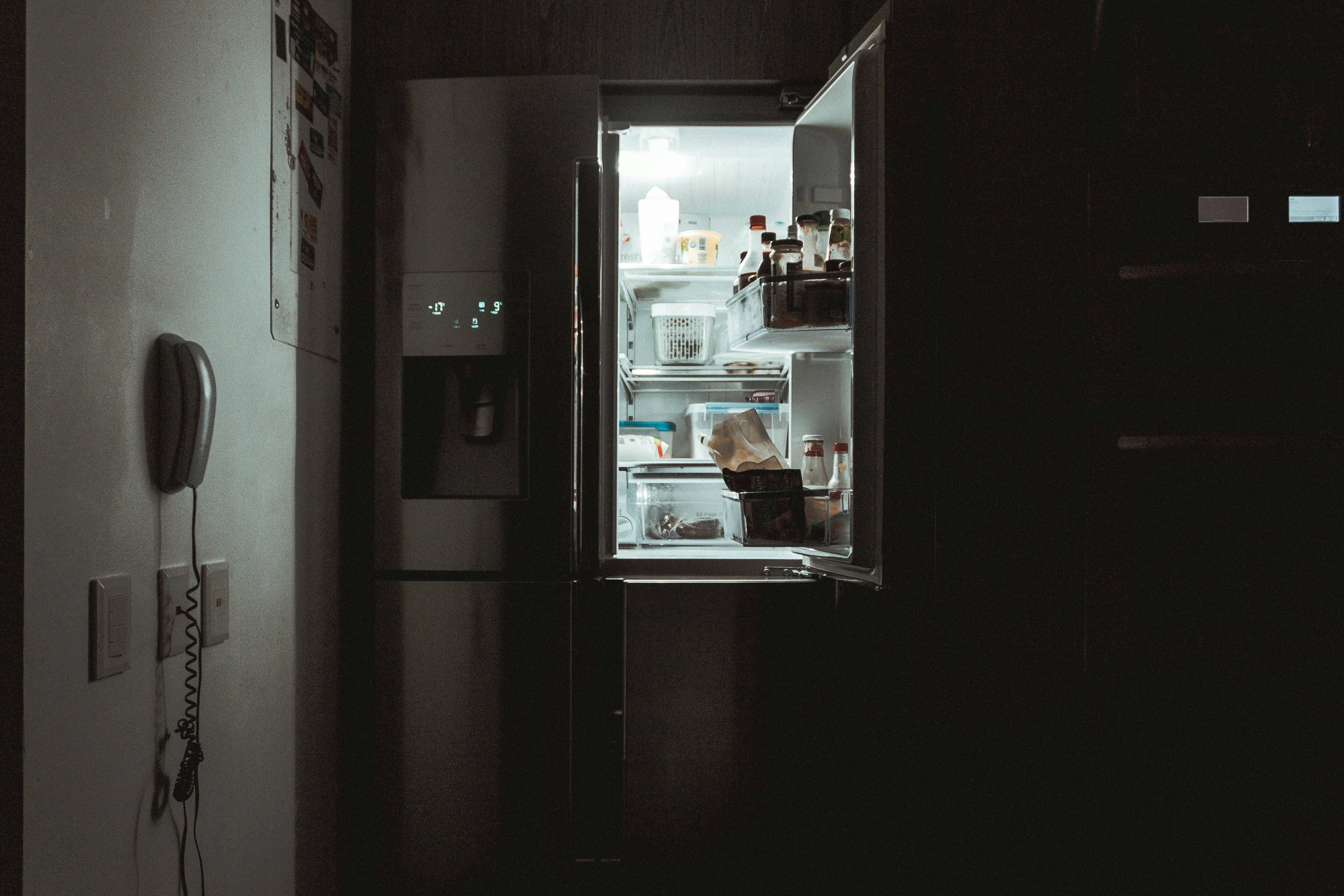
According to House Digest, placing a lit torch (or your phone’s flashlight) in the fridge and then closing the door can reveal any seal issues.
Place the light facing out.
If any light seeps through the gasket, the seal isn’t as tight as it needs to be.
That means air is escaping your fridge, making it harder to keep your food cool.
It could even raise your electricity bill as your appliance struggles to circulate cooling air around your food, the publication says.
It helps if you do this earlier or later in the day, when it’s darker in your kitchen.
Keep other lights off to make the beams easier to spot.
The UK’s recent heatwave has ended (for now), meaning watering and mowing rules have gone back to normal for gardeners.
Still, a bowl of water left in your garden remains useful for animals like hedgehogs, and though this week is safer than last for trimming your grass, you might want to keep your cut shreds on the lawn.
Advertisement
And according to author and former garden manager for various Royal Horticultural Society and National Trust sites, Simon Akeroyd, apparently, we should be peeing in our watering cans too.
“Sorry if this horrifies you,” a recent Instagram Reel of his read, “But the key to successfully growing plants is natural fertiliser.”
Why pay for specially-made products, the gardener argued, when “you have free access to the best natural stuff out there” – pee?
Advertisement
How could pee possibly help plants grow?
Calling your very own liquid gold the “best plant food” out there, Akeroyd shared that wee is “high in the three main plant nutrients needed for healthy plant growth – nitrogen, phosphorus and potassium.
Nitrogen is key to plant health as it provides the building blocks of their DNA (though too much isn’t great for them either – nitrogen created by sewage can throw off the ecosystems of waterways, leading to too much algae).
That may be why Akeroyd recommends diluting your free plant feed “at a rate of about ten parts water to one part wee.”
Advertisement
Once placed in a watering can, t can be used to treat plants “once a week,” he added.
The expert isn’t alone – a 2017 paper published in Environmental Science and Technology reads, “Human urine contains significant amounts of N (nitrogen) and P (phosphorus); therefore, it has been successfully used as fertiliser in different crops.”
“Humans have been collecting urine and using it for fertiliser for a long, long time, but then in the west that really stopped with the invention of [the] sewage system,” Dr Krista Wigginton, who researched the topic, told The Guardian.
“We are just trying now to figure out with this infrastructure system that we have, how do we pull back and think differently about what goes into this sewage system and capture some of those valuable products before [they] get mixed and diluted with everything else?”
Advertisement
Does pee get rid of foxes?
Some people report that male human pee, and especially the first one of the day, can repel foxes by interrupting their scent markers.
“Once the fox’s scent has been masked, they will feel more vulnerable and leave your garden altogether. This is a free, effective, if not a bit strange way to get rid of foxes without killing them,” Shield Pest Control wrote.
Advertisement
As Black Foxes UK said, there’s no empirical evidence to prove this definitely works yet.
But hey – if you’re using it to feed your plants anyway, it might be a welcome side-effect.
I couldn’t have been more than 19 years old when, as a happy-go-lucky UCLA student, I looked down at my penis and decided I was dying.
Cancer, I thought, noticing small red bumps at the tip of my penis. Since I wasn’t having sex with anyone — not for lack of trying, I might add — what else could they be? I was doomed before it was even legal for me to drink.
A quick trip to the university’s emergency room followed, where, under harsh lights, a female doctor held and studied my genitals, then, in front of a female nurse, broke out into laughter.
Advertisement
“My husband has those,” she told me. “They’re varicose veins in an uncommon place. Nothing to worry about. Go Bruins!”
It turns out, I had a lot to worry about… but not for reasons the doctor dismissed.
As a young, gay actor who moved to New York City right after college, in 1987, having red bumps on my penis wasn’t exactly the invitation to sex that I was hoping to find. Not every guy I slept with noticed, but the ones who did often thought they were a sign of AIDS, herpes or god knows what else. I’ve never forgotten the man who said, simply, that I was “a whore,” and, since he was in a relationship with another man, he couldn’t take any risks. Um, kettle…?
That said, jovially saying to guys, “relax, they’re just varicose veins,” didn’t work as well as my former doctor insinuated. Perhaps I should have had her write a note.
Advertisement
In reality, who could really blame these men for being suspicious? Guys were dropping dead from AIDS on a daily basis, and vigilance was everything. I spent a lot of time trying to have sex in the dark or simply praying that guys wouldn’t examine my tip too closely. Many a hard-on was deflated just worrying one of my hook-ups would suddenly scream out, “Dude, what’s wrong with your dick?!” One guy did just that.
Even in the midst of the AIDS pandemic, I slept with a lot of strangers (I always used protection for intercourse), and to them, I was just another dick — pun intended. I’m certain that, if the situation had been reversed, I’d have had a difficult time believing the varicose vein story, too.
During the periods when I had steady boyfriends, the situation diminished because they trusted me and knew I wouldn’t place them in harm’s way. (Although I’ve read reports to the contrary, I’ve never once had one of the blood vessels break, during sex or otherwise.)
Advertisement
However, even those men weren’t always polite about my “deformity.” One guy I dated for a long time told me that having oral sex with me was like eating ice cream with nuts — and he didn’t like nuts. Charmed!
Courtesy of David Toussaint
The author when he was in college
I’ve spent a lot of my life single, though, and as I grew older in a new century, I learned that no matter what time of life you choose to be sex-positive, there will always be a target on your back from groups who find sex with multiple partners shameful.
Advertisement
I also found that as I got older, most complaints would come from men much younger than myself. Being a “Dilf” or a “Daddy” has been a sweet time of life for me, but the sexual scrutiny from millennials and Generation Z has become more intense. I’ve had guys show up at my door and get naked, then, after foreplay, examine my penis like I was having a medical exam. Some were polite when they walked out the door, some were not.
Since this rarely happens with men close to my age, I chalked it up to retro-fear of older men — an AIDS-era residue that meant those of us who were sexually active during that horrifying time were still physically scarred.
By 2022, I’d had enough. I was seeing a man 20 years younger than myself and having a great time, until the night he abruptly stopped oral sex and demanded to know why I had bumps on my penis. I told him they’d always been there and that he’d just never noticed, which he didn’t believe, and he said he never wanted to see or talk to me again. I’ve not spoken to him since.
Advertisement
I immediately made an appointment with my doctor, pulled down my pants in the office, and asked if there was anything that could be done about my grotesque abnormality.
After yet another bright-light examination, mixed in with small talk of his impending wedding and honeymoon, he told me that, contrary to what my initial doctor said, the bumps were not varicose veins, but more than likely angiokeratoma, benign blood vessels that form on the skin. His diagnosis was delivered in a tone so carefree I definitely wanted him to write a note to future lovers.
He gave me a referral to an excellent dermatologist in New York, Dr. Bradley Glodny, who, when he studied my penis — sometimes I think my flaccid package has gotten more attention than the stiff version — confirmed that I had genital angiokeratoma, and said that, for an affordable price, he could remove them via laser.
Advertisement
“Yes, please,” I said faster than he could turn on the equipment to fix my equipment.
When I told him that my dates were often repulsed by my groin area, he asked, flatly, “What kind of people do you go out with?”
Fair point.
I haven’t always been the best judge of character when hormones get in the way.
“What I’m baffled by — and what shocks me upon reflection — is that I ignored seeking help for my condition for 40 years, and, just as insane, I took the opinion of one doctor without seeking a second opinion.”
A week of healing went by, and, as promised, almost all of the bumps disappeared (some were too tiny to remove). My self-esteem and self-confidence jumped up 100%, and my sex life since then has become substantially more fulfilling. I had no idea that hearing Dr. Glodny say that one word could change everything.
Advertisement
In the bedroom, I’ve become, like, “Hey, feel free to examine my penis. Nice, isn’t it?” and “Sure, we can have sex in bright light. Sounds like fun!”
Since an internet search returned lopsided statistics on how many people have my condition, I asked Dr. Glodny for his thoughts.
“While I cannot give you an exact statistic, I believe that most men over the age of 30 have at least a few angiokeratomas in their genital area,” he said, adding that they become more prevalent as we age.
Advertisement
What I’m baffled by — and what shocks me upon reflection — is that I ignored seeking help for my condition for 40 years, and, just as insane, I took the opinion of one doctor without seeking a second opinion. Varicose veins run in my family, and I have them on my legs, so it did seem like a legit diagnosis. But doctors, lest we forget, are simply professionals with theories, and should always be questioned.
Part of me was embarrassed, too, to even discuss such a sensitive part of my anatomy with a stranger, let alone have them examine it. Clearly, I’ve grown up on that front. I hope that if you’re reading this and have any skin condition that scares or confuses you, you won’t be as stubborn as I was and seek help immediately.
I don’t regret having an active sex life — quite the opposite. But I should have been more dismissive of the men who disbelieved me when I told them they were safe. I accepted humiliation in the hopes that I could score some hot ass. (Remember the guy who called me a liar? I recently reached out to him so he could see the “new and improved” me. He never responded, and, frankly, I think I dodged a bullet.)
Advertisement
Like most guys I know, I want all of my body to be appreciated — the muscles, the hairy chest, the penis. We all have physical imperfections, wherever and whatever they may be. When we are humiliated on any level, it only increases the kind of body fascism that needs to be eradicated.
Laser removal for angiokeratoma doesn’t last forever, and I have them tweaked about once a year. Yeah, it hurts — a lot. Yes, insurance doesn’t cover it because it’s considered cosmetic. And, yes, I have to go off the market for a good week or two afterward. But at this point in my life, skipping out on the procedure and going back to hiding in the sexual shadows would be just plain nuts.
David Toussaint is a four-time book author, journalist, professional screenwriter and playwright, and actor. He lives in Manhattan with his pug, Deja.
A sex toy can be an exciting and confidence-boosting gift to buy for yourself.
But is such an intimate item ever an appropriate thing to give as a gift to someone else, particularly if you don’t have a sexual or romantic relationship with them?
According to sexologists and relationship experts, the answer is… it depends.
Who should you give a sex toy to?
“Gifting a sex toy to a friend can be a fun, empowering gesture – but context and consent matter,” said Rachel Needle, a licensed psychologist and co-director of Modern Sex Therapy Institute.
Advertisement
“It’s usually appropriate when you have the kind of relationship where sex and pleasure are openly discussed, and you’re confident they’d receive it in the spirit it’s intended: playful, supportive, or celebratory.”
She recommended considering their sense of humour, comfort level and any cultural or religious beliefs that might influence their response to such a gift.
“Are they someone who celebrates their sensuality? Do they feel safe exploring? Trust your intuition, and always come from a place of love and respect,” said relationship therapist and sexologist Joy Berkheimer. “The goal of the gift should be to uplift, not to pry or push boundaries.”
Advertisement
Think about the closeness of your relationship as well.
“If your friendship is open, playful, and you’ve talked about sex before, then you probably have a green light, and a pleasure toy can be a great gift,” said Sadie Allison, a sexologist, author and founder of sex toy retailer TickleKitty.
“‘Giving the gift of pleasure’ is thoughtful and unique, and you’re almost always guaranteed a big smile out of it.”
Avoiding the awkward – and keeping it classy
Allison suggested giving your friend a sex toy as a gift for their bachelorette party or birthday – or as a self-love boost, perhaps after a breakup. As for specific products, consider if they’re more reserved or new to sex toys.
Advertisement
“In those cases, keep it subtle and pick a beginner-friendly product,” she said, recommending “a rechargeable bullet vibe that’s small and not intimidating” or pleasure lubricant.
“Have they expressed curiosity about toys or pleasure products?” Needle said. “If you’re unsure, err on the side of caution or opt for a gift card to a reputable sexual wellness store, which gives them the autonomy to choose.”
She emphasised that presentation is everything when it comes to giving such an intimate gift.
“Keep it classy, light-hearted, and respectful,” Needle advised. “Avoid public gifting unless you’re 100% sure they’ll love the attention.”
Advertisement
In larger group situations like a party, ask yourself whether your friend would be OK opening this gift in front of the other guests present.
“If you feel it may be awkward, give it to them on the side and let them know there’s something ‘frisky’ inside as a heads-up,” Allison said.
Irena Sowinska via Getty Images
Context and consent are important when it comes to this kind of gift and how you present it.
Advertisement
You don’t need to go overboard with the gift wrapping, either. “Wrap it like you would any other thoughtful gift – no gag wrapping unless that’s clearly your shared vibe,” Needle said.
She also suggested including a little note with the gift, sharing why you thought of it for them – “because everyone deserves some self-love” or “you don’t need them” after a break-up.
“Try something like, ‘I saw this and thought of you, hope it adds a little spark and joy to your journey,’” Berkheimer said. “Keep it simple, genuine, and free of shame or judgment.”
Advertisement
If you think they’ll be surprised by the gift, a little card can provide some context and reassurance.
“If you’re nervous, pairing it with a more traditional item ― like bath products or a wellness-themed gift basket ― can soften the edges while still making a statement,” Needle said.
When it’s not a good idea to give sex toys
As noted, consent and context are incredibly important. Although times have changed and sex toys are less stigmatised, this kind of gift could cross boundaries, cause discomfort or even be considered harassment under the wrong circumstances.
Advertisement
If you don’t know this person very well and have never discussed intimacy or pleasure, you probably aren’t in the type of relationship where this would be an appropriate gift. If you’re on the fence, you could ask to gauge how they’d feel about that kind of present, but be respectful of the answer.
For someone with whom you have a professional relationship where specific power dynamics are at play, this kind of gift would also probably be a no-no.
Clinical psychologist and sex and intimacy coach Lori Beth Bisbey believes gifting a sex toy to a platonic friend can feel easy and uncomplicated if it’s someone you talk with about partners and sex. But advises to be mindful of situations where you have a different motive, though.
Advertisement
“If there is a flirtation between you, you need to be more careful about gifting a sex toy,” she said. “You need to be clear with yourself as to why you are giving this toy and what message you are trying to send. I would suggest thinking twice if the friend doesn’t know you have an interest in them.”
As someone with insomnia, I struggle to get to sleep in the first place. I’m not alone – 21% of us find it hard to nod off at least once a week.
So when we do finally reach dreamland, it’s pretty unpleasant to be yanked out of it by heartburn or indigestion.
Advertisement
One paper called nighttime heartburn an “under-appreciated clinical problem that impacts sleep and daytime function” among adults with gastroesophageal reflux disease (GERD).
Meanwhile, some researchers think indigestion and acid reflux create a vicious cycle; they affect your sleep, which may in turn increase your risk of indigestion, and so on.
Though you should see a GP if you have indigestion often, if it comes alongside other symptoms (like iron deficiency anaemia, pain, trouble swallowing, and weight loss), doctors like GI surgeon Dr Karan Rajan say that sleeping on one side over another may help for one-off cases.
Advertisement
Don’t sleep on your right side
Your stomach is not a perfectly balanced or symmetrical organ.
Instead, it’s curved, with much of its bulk (which contains the acid that causes indigestion and heartburn) lying on the left-hand side.
That bend means that it’s harder for stomach acid to make its way into your oesophagus because it’s got a steeper curve to climb than your more gently sloping right-hand side.
Per the Gastrointestinal Society: “Due to gravity, the shape of the stomach, and the angle of the connection between it and the oesophagus, sleeping on your left side can greatly reduce reflux.”
Advertisement
“By the same principle, if you lie on your right-hand side, at this point the stomach and its contents are slightly higher than the lowest of your sphincter,” Dr Karan Rajan agreed.
That means “more chance of reflux back into the oesophagus,” which creates that horrid indigestion burn.
What else can I do to reduce the risk of nighttime indigestion?
The NHS says that indigestion is common and is usually “not a sign of anything more serious… you can treat it yourself.”
Advertisement
Solutions can include cutting down on coffee, tea, and booze, raising your stomach above your head when you sleep and avoiding eating closer than thre to four hours before bedtime.
Skip spicy, fatty foods if you’re struggling with indigestion, don’t smoke, and speak to your pharmacist about getting over-the-counter treatments if needed.
The health service adds you should see a GP if you:
The many protestors who spoke out against Bezos’ Venice wedding took issue with the event for reasons far more significant than the couple’s taste level.
“Truly fascinating how money seems to destroy taste,” an X posted soon after ABC News shared the butterfly-adorned sheet.
Perhaps predictably, the rest of the event has received a similar response.
“Millennial grey Amazon warehouse carpet at your billionaire wedding is an insane, dead inside choice,” one X post ― which focused on the office-chic flooring choice the couple made ― reads.
“This is a dinner suit (aka tuxedo) and thus requires a formal waistcoat, which is cut lower on the body. He’s wearing a business vest, which is designed for business suits. Needs a waistcoat like the right,” the pro said.
″$50 million can’t buy class and taste: Things from the Bezos/Sanchez wedding that I have rated from 1 to 10 by how tacky/embarrassing they are,” their post title reads. To be fair, though, Forbes puts it at a still-unfathomable ”$20-plus million.”
Advertisement
Top offenders included a “tacky” outfit donned by guest Kim Kardashian, along with the 90 private jets which appear to have arrived in Venice for the event (“Sad, unnecessary, maddening, but also embarrassing”).
via Associated Press
Kim Kardashian at the Bezos wedding
“Having a foam party on a $500 million yacht is still pretty tacky,” poster u/Potato3487 added (because yes, they really had one).
Advertisement
“I don’t think the selling point of my aisle should be ‘hides stains well’”, u/StasRutt chimed in.
In short, it seems most netizens have a uniform reaction to one of the richest men in the world’s nuptials: money, after all, can’t buy everything (including taste).
Attention-deficit/hyperactivity disorder impacts many different aspects of life, from laundry habits to behavior at work. Another area where ADHD can pose major challenges is sexual intimacy, thanks to a condition known as rejection sensitive dysphoria, or RSD.
So what exactly is RSD, and how does it harm your sex life? Below, experts break down the concept, how it manifests and what you can do if the experience sounds familiar.
Advertisement
What is rejection sensitive dysphoria?
“Rejection sensitive dysphoria, or RSD, means having an intense negative emotional reaction ― often emotional pain ― to real or perceived instances of rejection, dislike or critical statements by others,” Dr. Lidia Zylowska, an associate professor at the University of Minnesota School of Medicine and author of The Mindfulness Prescription for Adult ADHD, told HuffPost.
“It often means being vigilant and sensitive to others’ negative reactions, trying to pre-empt them, and having difficulty shaking off the intense negative feeling triggered by feeling rejected or disliked in some way.”
RSD is not a formal designation in the DSM-5, which is the official handbook for mental health diagnoses, but the term has been popularised by psychiatrist Dr. William Dodson. As Dodson writes, this kind of extreme emotional sensitivity and pain can be triggered by someone’s perception of criticism or rejection ― or “by a sense of falling short ― failing to meet their own high standards or others’ expectations.”
Advertisement
RSD is particularly common in people with ADHD, as they tend to struggle with emotional regulation due to imbalanced dopamine levels and brain activity.
“One significant reason for its prevalence in ADHD is that the very nature of ADHD symptoms can lead to more frequent experiences of perceived or actual criticism and rejection,” said clinical psychologist Cristina Louk. “Impulsivity, difficulty with social cues, struggles with organization, and challenges in completing tasks can inadvertently lead to misunderstandings, critiques, or situations where individuals with ADHD feel they have fallen short.”
“Sexual intimacy demands profound vulnerability, which directly clashes with the intense fear of rejection and criticism that defines RSD.”
– Cristina Louk, clinical psychologist
Advertisement
Many neurodivergent individuals also have a long history of being bullied. All of these lived experiences can make the brain hypervigilant to any hint of dissatisfaction. For someone with RSD, even a seemingly neutral or minor interaction can trigger a disproportionate emotional response.
“Events such as a someone being reminded to close a window, or that they forgot to put a dish in the dishwasher, or a boss requesting some edits to a report can trigger extreme emotional reactions, rage or sadness,” said J. Russell Ramsay, a psychologist who co-founded and formerly co-directed the University of Pennsylvania’s adult ADHD treatment and research program.
These feelings are swift and overwhelming, regardless of whether there’s anything negative happening in one’s present reality. A manager could be requesting a meeting to discuss positive feedback and new opportunities, but someone with RSD might immediately assume they’re being fired and start to spiral.
Advertisement
“Similarly, a fleeting memory of a childhood event, like being bullied or excluded, can trigger the same intense emotional pain as if it were happening in the present moment,” Louk said.
People often compare the sensation to a physical wound, like a punch to the gut, ache in the chest or crushing sensation, she added. These episodes of emotional distress can last for a few hours or even a few days ― thus affecting someone’s ability to function in daily life.
“To cope, individuals with RSD may withdraw from social situations entirely to protect themselves from potential hurt, further exacerbating feelings of isolation and low self-worth,” Louk said.
Advertisement
They may also take excessive steps to avoid any perceived negative reactions from others.
“People might become people-pleasers, being overly deferential to avoid negative feedback,” Ramsay noted. “They might avoid situations that they view as ‘risky’ or overcompensate by being very perfectionistic, trying to do everything right to avoid criticisms. Reactions and impulsive over-reactions can lead to arguments in relationships, including in the workplace.”
How can RSD impact your sex life?
“Rejection sensitive dysphoria can significantly complicate a person’s sex life, transforming what should be an arena of connection and pleasure into one fraught with anxiety and potential pain,” Louk said. “At its core, sexual intimacy demands profound vulnerability, which directly clashes with the intense fear of rejection and criticism that defines RSD. This often leads individuals to emotionally withdraw, making it difficult to fully open up and express authentic desires or needs, ultimately creating a chasm in emotional and physical closeness.”
Another challenge is the tendency to misinterpret neutral responses as personal slights: “A partner’s momentary distraction or fatigue might be perceived as disinterest or disapproval,” Louk said, “triggering disproportionate emotional reactions like anger, sadness, or immediate defensiveness, which can quickly escalate minor issues into significant conflicts.”
Advertisement
She noted that this hypervigilance can lead to a self-perpetuating cycle of dissatisfaction, with performance anxiety and physical difficulties with arousal and orgasm. Individuals with RSD might actively avoid initiating sexual encounters or even general physical affection to prevent any sense of failure or rejection.
Xuanyu Han via Getty Images
RSD can create challenges in your sex life, but there are ways to overcome these issues.
“For someone with RSD, a partner simply saying that they’re tired, or not in the mood may trigger a spiral of anxiety, fear, and shame,” said therapist Rachael Bloom. “Fear of rejection may also cause someone to prioritise their partner’s needs over their own, as they want to make sure to get it ‘right.’ It might also make someone less likely to openly share sexual preferences or desires. This lack of openness can significantly impact someone’s sexual satisfaction.”
Advertisement
Individuals with RSD might even sabotage their relationships to avoid potentially feeling hurt and rejected in the future. Psychotherapist and ADHD coach Terry Matlen noted that adults with ADHD often feel lingering self-doubt and insecurities from childhood and question whether their partner is even attracted to them.
“They may be overly sensitive about their looks, perhaps perceived imperfections, weight, ability to sexually express themselves, for example,” she said. “One can also shut down sexually and not enjoy the full experience as a way to avoid being rejected or criticised.”
How can you keep RSD from hindering intimacy?
There are things you can do ― both with a partner and on your own ― to keep rejection sensitive dysphoria from derailing your sex life.
Advertisement
“Educating yourselves together about RSD fosters deeper empathy and understanding, and preemptive communication about potential triggers ― perhaps establishing a ‘safe word’ for needed breaks ― can prevent escalation,” Louk said.
She also recommended reinforcing the strength of your relationship by focusing on non-sexual intimacy with shared activities and emotional connection. The positive effects can carry over into your sex life as well.
“Recognise that your automatic assumptions about how someone else sees you can be mistaken,” Ramsay advised. “Look at all the positive aspects of a relationship, including the physical relationship.”
Advertisement
Making an effort to understand your sensitivities and reactions can help you anticipate and prepare for them.
“The key to managing RSD is to regulate the emotions involved ― shame, guilt, fear,” said Billy Roberts, a therapist at Focused Mind ADHD Counseling. “One way to regulate emotions within a relationship is by being open about RSD. Identify when you’re experiencing RSD, and check the facts with your partner. For example, ‘I’m feeling worried that you’re mad at me. Is that true?’ You might also share that it would help if they delivered their response in a supportive manner.”
Roberts emphasised that vulnerability and honest communication foster security, which builds a better sex life.
Advertisement
“It is helpful to recognise what happens in the moment a feeling of rejection comes up ― how does the body reacts or tenses, what feelings or thoughts bubble up,” Zylowska said. In these moments, she recommended you try to practice calming yourself with deep breathing and self-compassion.
“Instead of thinking ‘I am not liked,’ give the benefit of the doubt ― ‘what if I am liked?’” she said. “It can be helpful to ask yourself if there is too much personalising of a partner’s behaviour ― ‘maybe their lower libido is not about me but something going on with them.’”
Try to practice being brave and honest about your preferences, even in small ways, as you have sex or talk about intimacy with your partner.
Advertisement
“Tell your partner of your emotional sensitivities and what words and behaviours are most troublesome,” Matlen said. “Educate your partner on RSD and how it’s related to your ADHD and that it’s not about them. And it’s important to be kind to yourself, to know that it’s part of how your ADHD brain works, and that you aren’t broken, weird, or psychologically weak.”
If you’re having issues, consider seeking professional help through individual and/or couples therapy. Don’t be discouraged if you need time to figure out the right multifaceted approach for you.
“In my practice, I treat RSD using a combination of cognitive behavior therapy, acceptance and commitment therapy and somatic therapies,” Bloom said. “People with ADHD absolutely deserve to have satisfying and authentic sex lives, and developing an awareness around certain fears and how they are impacting behavior is so important.”
You might have heard of quiet quitting, taskmasking, and “conscious unbossing” ― all trends which see workers opt out of added responsibilities, busy work, and unrewarding jobs in the subtlest way they can.
But according to Guy Thornton, Founder of human resource company PracticeAptitudeTests, “quiet cracking” is on the rise, too.
Advertisement
The term refers to the sometimes unwitting disconnect from work that happens when employees are stressed and burned out.
“Quiet cracking isn’t laziness or a flaw in your work ethic,” Thornton said.
“It’s often a sign that your mind and body are trying to cope with something unsustainable.”
Here are some signs you might be “quiet cracking” without even realising it:
1) You’re constantly busy, but don’t get much done
Always rushing around, but never feel particularly productive? Thornton warns that it could be a red flag.
“This relates to another workplace trend known as fauxductivity, which iswhen you appear productive while feeling unmotivated and disconnected,” he said.
Advertisement
“It’s often an early sign of quiet cracking that can happen when you’re overwhelmed or unsure what your priorities are any more.”
2) You constantly ignore work messages and emails
If your inbox is bursting and your Slack notifications have built up, you may be “quiet cracking” under the pressure of constant communication.
“This doesn’t necessarily mean you’re lazy or disengaged. Your brain might simply be overloaded,” Thornton advised.
Advertisement
3) Handing in work at the last minute
Always scrambling to hand in that report at the last minute? It might just feel like your working style, but Thornton says it could also “be a sign you’ve mentally checked out.
“Ask yourself, are you struggling with motivation, or is the workload too much?” he continued.
“Quiet cracking often begins when expectations feel unclear or unmanageable.”
4) You’ve stopped collaborating with your coworkers
If the thought of working with others has felt more and more unenjoyable ― maybe leading you to skip meetings, avoid team get-togethers, and crave working alone ― it can show you’re disconnecting from your workplace.
“Disengagement can be subtle, and you might not even realise it until someone points it out,” Thornton wrote.
Advertisement
5) You’re constantly putting off work by doing small, “busy work” tasks
A great example is researching endlessly before you actually start your main task, the expert said.
“If it’s become your go-to method for delaying the real work, it might be a sign of stress or fear of failure,” he shared.
What if I think I’m “quiet cracking”?
Recognising the condition can make it easier to manage, Thornton stated.
Don’t wait to seek help if you think something’s amiss.
“It’s important to talk to people you trust in the workplace and use mental health resources if you start to experience something like this,” he said.
“Even just acknowledging that something is off is an important way to start taking steps in the right direction.”
Advertisement
Help and support:
Mind, open Monday to Friday, 9am-6pm on 0300 123 3393.
Samaritans offers a listening service which is open 24 hours a day, on 116 123 (UK and ROI – this number is FREE to call and will not appear on your phone bill).
CALM (the Campaign Against Living Miserably) offer a helpline open 5pm-midnight, 365 days a year, on 0800 58 58 58, and a webchat service.
The Mix is a free support service for people under 25. Call 0808 808 4994 or email help@themix.org.uk
Rethink Mental Illness offers practical help through its advice line which can be reached on 0808 801 0525 (Monday to Friday 10am-4pm). More info can be found on rethink.org.
Speaking to HuffPost UK previously, Richard Millard, senior sustainability consultant at Building Energy Experts, explained that buildings in the UK provide uniquely uncomfortable conditions in hot weather.
Not only are they designed to hold onto heat for longer, have smaller windows, and offer less ventilation, but – crucially – “Unlike many hotter climates (and increasingly, northern European countries), air conditioning is not standard in most UK homes, workplaces, or public buildings.”
Advertisement
Many houses, especially older ones, in the UK are unsuitable for air conditioning (and that’s not considering the eye-watering cost).

So it’s a good thing members of r/Frugal have shared their “frugal ways to stay cool without an air conditioner.”
Writer’s note: Other commenters have suggested freezing a water bottle instead, while some experts say freezing a hot water bottle filled with water works great too.
Author and psychologist Devon Price doesn’t just think “lazy” is a harsh term – in an interview with NPR, he said he doesn’t think the attribute really even exists.
Instead, the expert suggests, the word is bandied about to shame people into prioritising productivity over health.
Advertisement
Speaking to HuffPost UK, consultant psychologist and founder of London mental health clinic Nos Curare, Dr Bijal Chheda, said that so-called “laziness” really can be a sign of mental health issues and neurodivergence.
She shared seven behaviours some may label “lazy” that might indicate you actually need more support:
1) Struggling to get out of bed
“For many people living with mood disorders, such as depression or bipolar disorder, just getting out of bed in the morning can feel impossible,” Dr Chheda said.
Advertisement
“This is especially the case after high-energy periods where intense emotional highs are followed by a sudden crash that reflects physically.”
During very high-activity spells, people with bipolar can push themselves far beyond their limits, the psychologist told us.
“In these cases, exhaustion is so overwhelming it can feel physically paralysing, making even simple tasks feel impossible.”
Advertisement
2) Skipping basic self-care steps
Missing showers, not brushing your teeth, and wearing the same clothes for days can leave some people feeling “lazy.”
But, Dr Chheda told us, “Neglecting personal hygiene or even basic self-maintenance tasks, such as eating regularly, can actually stem from feelings of numbness or hopelessness, symptoms often linked to major depressive disorder (MDD).”
During these times, the brain shifts into survival mode, leaving your previous routine in the dust.
“It’s not a lack of responsibility, but a sign that the mind is prioritising basic emotional survival over everyday functioning,” she shared.
Advertisement
3) Withdrawing from social occasions
Cancelling plans, though impolite, can be a sign of overwhelm, says Dr Chheda.
“To many neurodivergent individuals, especially on the autism spectrum, this can be a protective response to overstimulation,” she wrote.
“This type of sensory overload is typically triggered by loud environments or unpredictable social dynamics, causing them to retreat from group settings for indefinite periods at a time. In these instances, even brief conversations or small talk can be extremely mentally taxing.”
4) Procrastinating
Sometimes, the psychologist explained, there’s a science behind why you keep putting that one task off.
Advertisement
“Due to low dopamine levels (the hormone associated with motivation and reward), for example, individuals with Attention-Deficit Hyperactivity Disorder (ADHD) often have difficulty with task initiation,” she told us.
“Combined with time blindness (the inability to keep track of time) it makes it harder to gauge how long certain tasks will take.”
5) Decision fatigue
If the thought of choosing dinner one more time is enough to make you nope out of the meal altogether, Dr Chheda says that may be a red flag.
Advertisement
“If someone’s default answers are ‘I don’t care’ or ‘you choose,’ they might not be indecisive or indifferent. In fact, they might just be mentally exhausted,” she advised.
People living with generalised anxiety disorder or high-functioning depression may be especially more likely to show the sign, the expert continued.
“While often appearing composed on the outside, their minds work in overdrive, internalising their issues. As such, the burden of making daily decisions while battling intrusive thoughts wears down the brain, making even the simplest choices feel debilitating.”
Advertisement
6) Not following through on your goals
Not doing what you said you would can make you feel guilty, but sometimes it’s down to your dopamine, Dr Chheda said.
“These patterns are… classic symptoms of emotional dysregulation caused by low dopamine levels, common in individuals who suffer from bipolar disorder and ADHD. This is why these two conditions are often misdiagnosed as one another.”
Some with the condition can have weeks or months of intense, overactive motivation, followed by long, uninterrupted lulls.
Advertisement
“The turbulence makes it difficult to maintain momentum, forcing them to leave goals unfinished, even ones they were once excited about,” the psychologist ended.
Noticing one, more, or all of these signs does not definitely mean you are neurodivergent or have a mental health issue.
But if your day-to-day life is affected by your mood, stress, or exhaustion, speak to a professional about how to address it.
Advertisement
Help and support:
Mind, open Monday to Friday, 9am-6pm on 0300 123 3393.
Samaritans offers a listening service which is open 24 hours a day, on 116 123 (UK and ROI – this number is FREE to call and will not appear on your phone bill).
CALM (the Campaign Against Living Miserably) offer a helpline open 5pm-midnight, 365 days a year, on 0800 58 58 58, and a webchat service.
The Mix is a free support service for people under 25. Call 0808 808 4994 or email help@themix.org.uk
Rethink Mental Illness offers practical help through its advice line which can be reached on 0808 801 0525 (Monday to Friday 10am-4pm). More info can be found on rethink.org.